




Abstract
This study provides a comprehensive empirical analysis of the foreign aid policies of two prominent non-Western donors, China and Qatar, with a particular focus on the Middle East and North Africa (MENA-17) region from 2014–2021. Utilizing Heckman Poisson selection models and unique datasets—AidData for China and QATARAID for Qatar—the research compares their distinct motivations, aid modalities, and geographical priorities. Findings reveal a stark contrast between their approaches. Qatar’s aid strategy is overwhelmingly concentrated within MENA-17, driven primarily by humanitarian concerns, recipient need, and diplomatic leveraging for regional stability, with negligible influence from commercial interests. In contrast, China’s aid exhibits a more globally diversified portfolio, deeply rooted in economic statecraft and broader geopolitical objectives. Chinese aid is strongly correlated with its commercial interests, particularly exports, and aims to foster political alignment, emphasizing infrastructure development, trade facilitation, and long-term economic engagement. This comparative analysis significantly contributes to understanding the evolving global aid architecture and the diverse strategic roles played by emerging donors, unmasking the heterogeneous nature of non-Western aid.
Introduction
The landscape of international development assistance is undergoing a profound transformation, marked by the increasing prominence of non-Western donors whose approaches often diverge significantly from established Western models. In this evolving global aid architecture, China and Qatar have ascended to influential positions, each leveraging their unique economic capacities and geopolitical aspirations to shape development trajectories worldwide. A crucial aspect of this study’s design, which warrants explicit justification, is the selection of China and Qatar as a comparative pair. Indeed, these two nations represent stark contrasts in terms of their demographic size, economic scale, geopolitical influence, and regime types. However, it is precisely these profound divergences that underpin the conceptual strength and empirical utility of this comparative analysis. By juxtaposing donors from opposing ends of the non-Western aid spectrum—China as a global economic powerhouse driven by economic statecraft and long-term geopolitical objectives, and Qatar as a smaller, wealthy humanitarian actor with a concentrated regional and diplomatic focus—this study provides a maximalist comparison. This approach allows for a clearer, more theoretically grounded unmasking of the heterogeneous nature of non-Western aid motivations and modalities, moving beyond monolithic classifications of emerging donors. Furthermore, the availability of comprehensive and novel datasets for both China (AidData) and Qatar (QATARAID) enables a rigorous empirical investigation into their distinct aid allocation patterns, particularly within the strategically significant MENA-17 region. Examining how their disparate global strategies manifest within this shared regional context enhances the analytical coherence by offering a controlled environment for observation. Ultimately, this deliberate comparative design is not merely about identifying differences, but about systematically demonstrating how diverse strategic drivers shape foreign aid as a tool of national interest and international influence in the evolving global development landscape.
The key characteristics of the MENA-17 countries.
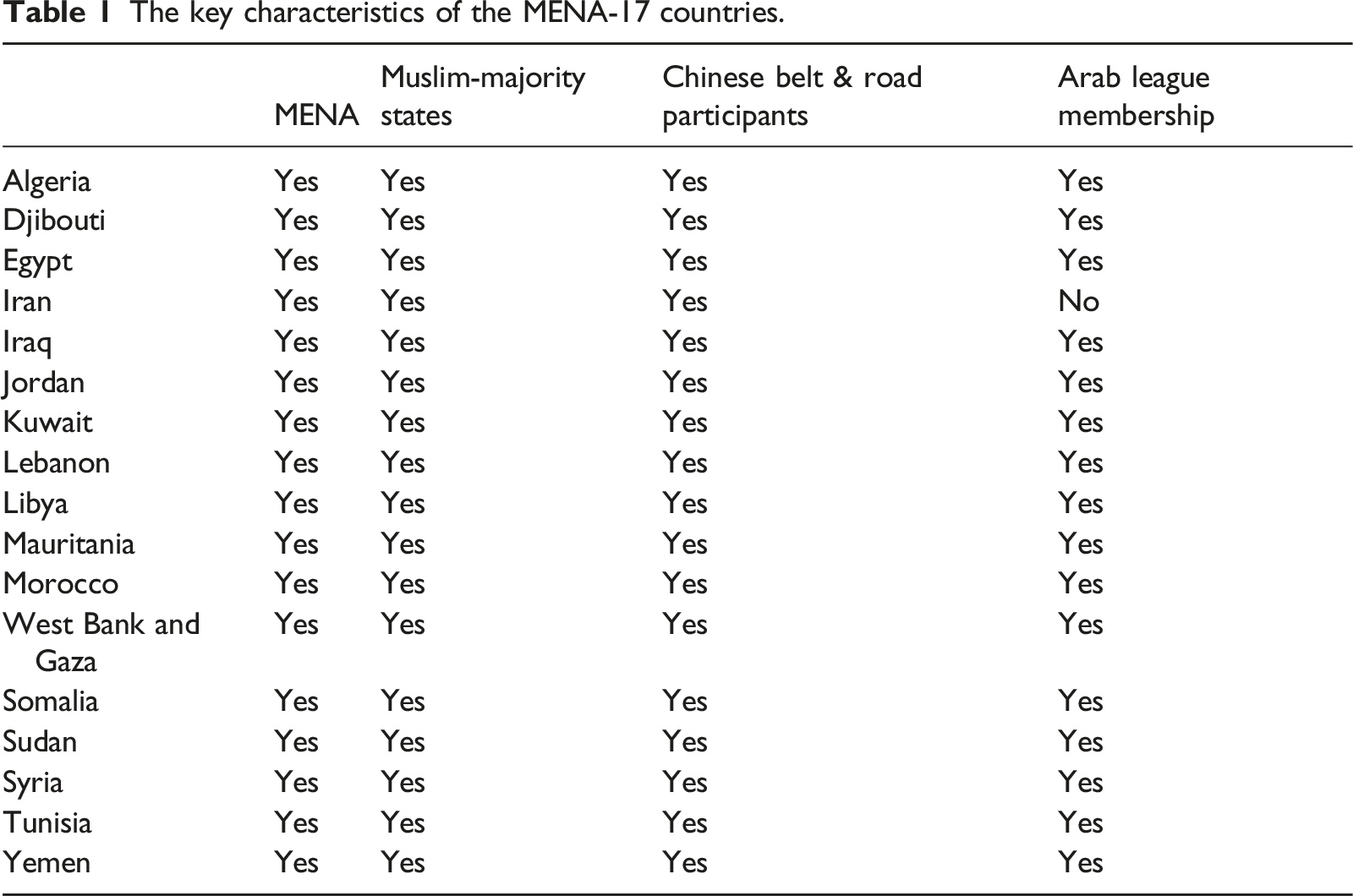
Despite their growing prominence and distinctiveness, a notable lacuna exists in the systematic, comparative empirical analysis of the non-Western donors. Individual studies on national aid policies are increasingly prevalent. However, a deep and direct comparison that illuminates their divergent motivations, strategic objectives, and operational modalities is notably lacking, particularly concerning the geopolitically critical Middle East and North Africa (MENA) region. Understanding the underlying drivers of their aid allocations, whether primarily driven by recipient needs, donor strategic interests, or a blend of both, is crucial for comprehending how these emerging actors—China and Qatar—are fundamentally reshaping global development paradigms and international cooperation.
Addressing this critical gap, this study unmasks the foreign aid policies of China and Qatar, specifically examining the factors driving their aid allocation decisions and their impact on our selection of countries referred as MENA-17 region in this study. The research delves into multifaceted questions: What factors influence Qatar’s global aid allocation, and is there a particular prioritization of MENA-17 countries? How do MENA-17 countries receiving Qatari aid differ from those that do not? Similarly, what determines China’s foreign aid allocation decisions, and does the MENA-17 region hold a distinct place in China’s aid strategy? Finally, how do MENA-17 countries receiving Chinese aid differ from those that do not, focusing on donor selectivity within this strategically and culturally significant group?
Grounded in a rigorous empirical framework, this study utilizes Heckman Poisson selection models to analyze unique and comprehensive datasets: the “QATARAID Database for Qatar” and AidData’s “Global Chinese Development Finance Dataset” for China, both spanning the period 2014–2021. This approach reveals robust distinctions in their respective aid philosophies. Preliminary analysis reveals that China’s aid is predominantly anchored in long-term economic statecraft, characterized by infrastructure development and trade facilitation, while Qatar’s emphasizes regional stability, humanitarian assistance, and diplomatic leveraging, with a pronounced concentration in its immediate neighborhood. By dissecting these varied approaches, this study significantly contributes to the broader literature on foreign aid, international relations, and development studies, offering vital insights into the evolving power dynamics and the changing nature of international cooperation in the 21st century.
Qatar and China’s Foreign AID Policies
The evolving landscape of international development assistance has been profoundly reshaped by the increasing prominence of non-Western donors, whose approaches frequently diverge from established Western models (Pericoli & Donelli, 2024; Woods, 2008). Among these emerging actors, China and Qatar stand out as influential players, each leveraging their distinct economic capacities and geopolitical aspirations to influence global development trajectories (Alarabeed, 2024; Aras et al., 2024; Dreher et al., 2018). This section delves into the foreign aid policies of China and Qatar, dissecting their motivations, modalities, and geographical priorities to build a conceptual foundation for understanding their transformative impact on the global aid architecture. This analysis highlights that foreign aid is rarely a purely altruistic endeavor, but rather a strategic instrument influenced by both external systemic pressures and internal unit-level factors, including elite perceptions, state-society relations, and strategic culture (Donelli & Pericoli, 2024; Pericoli & Donelli, 2024; Telias & Urdinez, 2022). By examining these two distinct emerging donors, this discussion aims to clarify how their unique contexts lead to fundamentally different aid philosophies, thus enriching the broader academic debates on aid, foreign policy, and the shifting dynamics of international cooperation.
China’s Foreign Aid Policies: Economic Statecraft and Geopolitical Ambitions
China’s foreign aid program, often termed aid with Chinese characteristics, has grown significantly, sparking extensive debates about alternative development cooperation approaches (Gülseven, 2021). Despite often encountering skepticism in Western analyses due to its perceived subversion of established aid modalities, it is, conversely, championed by some as a compelling alternative to the dominant neoliberal development framework (Gülseven, 2021). China’s aid is argued to serve the overall objectives and interests of the neoliberal historical bloc, yet simultaneously contributes to increasing tensions and competitions within it, particularly between China and Western countries amidst global financial crises (Pan, 2015). This duality underscores the complex interplay of economic and political motivations driving China’s engagement in the global aid sphere.
Historically, China’s foreign aid evolved significantly. Commencing in the early 1950s, China’s nascent foreign aid initiatives were primarily driven by the imperative to advance global anti-imperialist efforts and consolidate communist solidarity, providing substantial support to revolutionary and communist movements in North Korea, Vietnam, Mongolia, and Albania (Gülseven, 2021). As the Sino-Soviet split deepened in the 1960s, Chinese aid became a mechanism for competing with the Soviet Union for influence in the Third World, expanding significantly in scope and quantity (Gülseven, 2021). China’s substantial foreign aid activities, notably its prominent infrastructure development in Africa—encompassing projects such as ports, railways, and stadiums—played a pivotal role in facilitating its entry into the United Nations by 1971 (Gülseven, 2021). However, the growing financial burden led China to reassess its policy in the late 1970s, coinciding with the Sino-American rapprochement and a shift away from aiding revolutions towards market-oriented relations (Gülseven, 2021). This historical overview illustrates how China’s aid has consistently served its foreign policy and geopolitical interests, adapting to changing international and domestic contexts.
The post-1978 reform and opening up agenda fundamentally reoriented China’s foreign aid policy towards mutual economic benefits, emphasizing cooperation through investment and trade over one-way aid (Gülseven, 2021). This strategic shift was clearly reflected in the “Four Principles of Economic and Technological Cooperation” announced in 1983: mutual benefit, practical results, diverse forms, and common development (Gülseven, 2021). China’s experience as an aid recipient, particularly from Japan in the 1980s, had a crucial impact on its aid philosophy, inspiring the idea of trinity development cooperation—a synthesis of aid, trade, and investment (Gülseven, 2021). This pragmatic approach led to the injection of new market mechanisms into foreign aid projects, such as concessional loans administered by China’s Export-Import Bank (Eximbank) since 1994, which tied aid loans to the use of Chinese goods, services, and companies (Pan, 2015). By the mid-1990s, business-oriented foreign aid, often structured as “resources for infrastructure” deals (e.g., providing infrastructure in exchange for natural resources like oil), became the dominant theme, driven by China’s concept of economic security (Pan, 2015; Yu, 2024). This clearly articulates China’s strategic motivation through an economic lens, aiming to secure vital resources and develop markets for its rapidly growing economy.
Contemporary analyses strongly validate the assertion that China’s aid is predominantly anchored in economic statecraft and broader geopolitical objectives (Dreher et al., 2018). China’s aid is highly correlated with its commercial interests, particularly exports, and aims to foster political alignment, especially with countries less aligned with the U.S. (Telias & Urdinez, 2022). Initiatives like the Belt and Road Initiative (BRI) exemplify this, linking large-scale investments across Africa, Asia, and Latin America to trade ties and political alliances. Underpinned by extensive infrastructure investment and aid, the BRI is broadly construed as a key mechanism for accelerating the integration of less developed nations into the international economic system, a process intrinsically linked to the advancement of China’s strategic interests. This endeavor simultaneously contends with existing U.S. regional and global economic alliances (Dreher & Parks, 2024).
While China officially adheres to a principle of non-interference in the domestic affairs of recipient countries, implying no policy conditions, empirical evidence reveals a more nuanced reality (Dreher et al., 2018). A prominent instance is China’s practice of making development cooperation contingent upon partner states’ recognition of the “one-China” principle, specifically requiring them to sever diplomatic ties with Taiwan (Telias & Urdinez, 2022). Furthermore, Chinese aid often comes with project-level conditionalities, such as requirements to use Chinese labor and equipment. Studies by Dreher et al. (2018) indicate that while China’s Official Development Assistance (ODA) is primarily driven by foreign policy considerations like UN General Assembly voting alignment and Taiwan recognition, its less concessional “Other Official Flows” (OOF) are better explained by economic interests like trade and natural resource endowments. Notably, Chinese ODA is not found to be tied to the institutional quality of recipient countries, nor does it flow disproportionately to corrupt or authoritarian regimes in the strict sense of ODA; rather, OOF tends to go to poorly governed countries (Dreher et al., 2018). Telias and Urdinez (2022) further confirm that political drivers, including partnership status and the One China Policy, influenced not only Chinese central government aid but also that of Chinese companies, cities, and foundations during the “mask diplomacy” of the COVID-19 pandemic, with central government aid being larger in autocracies (Telias & Urdinez, 2022). This suggests a strategic alignment with certain regime types, often perceived as the promotion of a “Beijing Model” of autocratic development (Telias & Urdinez, 2022).
China’s emphasis on infrastructure projects has even influenced traditional donors like the World Bank, pushing them to refocus on physical infrastructure, and reducing their conditionalities due to competition from China (Woods, 2008). Conceived as a direct policy rejoinder to China’s ascendant infrastructure and development assistance endeavors, particularly the BRI, the U.S. BUILD Act of 2018 was established to finance infrastructure projects across Africa, Asia, and Latin America, explicitly positioning itself as a competitor (Gülseven, 2021; Yu, 2024). This demonstrates how China’s aid, rather than being an entirely counter-hegemonic alternative, is often highly compatible with the international aid architecture and even stimulates changes in traditional donor practices.
Qatar’s Foreign Aid Policies: Regional Stability and Humanitarian Diplomacy
Qatar, though smaller in size and population compared to China, has established itself as an influential donor, particularly in humanitarian aid and development assistance to conflict-affected regions (Aras et al., 2024; Pericoli & Donelli, 2024). Its aid strategy is deeply intertwined with its diplomatic ties and broader ambitions outlined in its National Vision 2030 (QFFD, nd). Unlike China’s globally diversified portfolio rooted in economic statecraft, Qatar’s aid strategy is overwhelmingly concentrated within its immediate regional environment, particularly the Middle East and North Africa (MENA) (Aras et al., 2024). This concentration reflects a normative motivation centered on humanitarian concerns and regional stability, reflecting Qatar’s role as a small state seeking to enhance its autonomy and influence (Donelli & Pericoli, 2024).
Qatar’s foreign aid policy is profoundly rooted in strategic regional stability, humanitarian concerns, and diplomatic leveraging (Aras et al., 2024; Pericoli & Donelli, 2024). The empirical findings by Aras et al. (2024) confirm that Qatar employs aid as a potent instrument to reinforce established partnerships, bolster diplomatic ties, and solidify its role as a regional mediator. This aligns with a neoclassical realist understanding, where Qatar’s elite decision-making process, filtered through domestic factors and external geopolitical shifts (such as the 2017 Gulf blockade), drives its aid allocations (Donelli & Pericoli, 2024). For Qatar, aid is not merely a tool for economic gain, but a means of survival and national fortification in a volatile geopolitical environment (Aras et al., 2024).
In terms of modalities, Qatar primarily utilizes grants, loans, and technical assistance, with an emphasis on bilateral relationships often tied directly to its diplomatic interests and deployed through institutions like the Qatar Fund for Development (QFFD) (Aras et al., 2024). This is in contrast to China’s heavy reliance on large-scale concessional loans for infrastructure. Qatar’s aid is often directed towards direct humanitarian impact, focusing on sectors such as education, healthcare, and infrastructure, particularly in conflict-affected regions (Aras et al., 2024). For example, a strong emphasis on “Humanitarian & Emergency” and “Health” is evident in Qatar’s MENA-17 aid (Aras et al., 2024). Initiatives like the Education Above All Foundation underscore Qatar’s commitment to human capital development in underserved areas (Aras et al., 2024).
The historical evolution of Qatar’s aid policy moved from initial humanitarian focus to a more formalized approach with the creation of the QFFD in 2002, aligning aid with its broader national development goals, such as those outlined in the Qatar National Vision 2030; Aras et al. (2024). Despite its historical generosity, Qatar is considered a “new donor” in terms of its current institutional organization compared to Saudi Arabia and Kuwait (Alarabeed, 2024). The Gulf crisis of 2017 further refined Qatar’s approach, leading to a shift towards multilateral channels to improve accountability and transparency, and a renewed focus on humanitarian aid (Alarabeed, 2024; Pericoli & Donelli, 2024). Despite the crisis, the volume of Qatari aid did not decline, showcasing the resilience of its humanitarian diplomacy (Aras et al., 2024).
Empirical studies demonstrate that while Qatar’s aid allocation decisions prioritize recipient needs (e.g., lower GDP per capita and higher infant mortality rates), its aid provision also heavily depends on Qatar’s foreign policy interests in the targeted countries (Aras et al., 2024). Political engagement, particularly mediation efforts in civil wars or inter-state disputes, significantly correlates with higher numbers of aid interactions, reinforcing Qatar’s image as a neutral mediator (Aras et al., 2024; Donelli & Pericoli, 2024). Geographic proximity and cultural similarities, such as being a Muslim-majority country or an Arab League member, also play a significant role in determining aid allocation (Aras et al., 2024). This highlights the constructivist dimension, where shared identities and elite perceptions influence aid strategies (Donelli & Pericoli, 2024). Notably, the political situation or democratic quality of the recipient country is not a significant determining factor for receiving Qatari aid, underscoring its non-interference stance (Aras et al., 2024).
Comparative Dynamics and Contribution to Global Aid Architecture
The comparative analysis of China and Qatar reveals fundamentally different motivations and strategies despite both having transitioned from aid recipients to influential donors, leveraging foreign aid as a key instrument for enhancing global influence (Aras et al., 2024). China’s aid, driven by long-term economic and geopolitical objectives, is integrally linked to infrastructure development and trade through initiatives like the BRI, reflecting an economic statecraft model aimed at securing resources and expanding markets (Dreher & Parks, 2024). In contrast, Qatar’s aid prioritizes regional stability, humanitarian assistance, and relationship-building, largely concentrated within its immediate neighborhood, reflecting a more humanitarian-centric approach driven by diplomatic and normative goals (Aras et al., 2024; Donelli & Pericoli, 2024).
These distinct approaches introduce competitive pressures into the existing international development assistance system, weakening the bargaining position of Western donors (Woods, 2008). While Western policy-makers often express concerns about China’s non-conditional aid undermining good governance efforts, China criticizes traditional donors for their “imperialist nature” and threats to recipient sovereignty (Gülseven, 2021). Nonetheless, a substantial degree of complementarity exists. Chinese-led infrastructure initiatives offer conducive environments for Western multinational corporations, thereby fostering their investment and market access. Concurrently, Chinese capital opportunistically leverages the liberalized economic frameworks promoted by Western institutions (Dreher et al., 2018). This illustrates that the “aid with Chinese characteristics” is compatible with the neoliberal development model, while simultaneously serving China’s strategic rivalries (Gülseven, 2021).
Qatar, on the other hand, engages in a “silent revolution” by offering alternatives to aid-receiving countries, particularly those seeking to avoid the policy conditionalities of Western aid (Woods, 2008). Its emphasis on humanitarian assistance and non-interference, coupled with its centralized aid system, allows it to act swiftly and strategically in conflict-affected regions, carving out a unique diplomatic niche (Donelli & Pericoli, 2024; Pericoli & Donelli, 2024).
This in-depth comparative analysis, drawing on recent empirical data and theoretical insights, fills a significant gap in the existing literature by systematically demonstrating how these two prominent non-Western donors operate beyond traditional frameworks. It highlights the diverse ways in which foreign aid is deployed as a tool of diplomacy and economic projection, thereby reshaping global development paradigms and international cooperation in the 21st century and enriching our understanding of the multifaceted nature of aid motivations and impacts in a multipolar world.
Data and Methodology
Data
As neither Qatar nor China is a member of the Development Assistance Committee (DAC), we could not rely on the OECD’s Official Development Assistance (ODA) database to obtain foreign aid data for these donors. Instead, we utilized two novel datasets tailored to each donor country. For Qatar, we rely on the QATARAID Database, which offers comprehensive data on Qatari foreign aid flows from 2014 to 2021 (Ansari et al., 2024). The database was constructed through a rigorous data collection process involving the scraping of open-source reports—such as annual publications from the Qatar Fund for Development (QFFD) and Qatar Charity (QC)—as well as systematic searches of the LexisNexis news archive, the United Nations OCHA Financial Tracking Service, and additional web-based searches (including Google and Twitter). Thus far, QATARAID represents the most extensive dataset on Qatari aid, encompassing 1,411 aid interactions with 128 recipient countries worldwide.
Data on Chinese aid is sourced from AidData’s “Global Chinese Development Finance Dataset version 3.0” (Custer et al., 2023). This unique dataset covers 10,291 grant-financed projects/activities and 4,776 loan-financed projects/activities that were formally approved, active, or completed across 154 countries in all major regions of the world from 2000 to 2023. This dataset includes detailed information on 10,291 grant-financed and 4,776 loan-financed projects that were formally approved, active, or completed across 154 countries between 2000 and 2023. AidData provides rich and structured information on project sources, flow types (e.g., grant, loan, and debt rescheduling), financial amounts, implementation timelines, project completion statuses, etc.
In order to make meaningful comparisons between the two donors, we restrict our analysis to the 2014–2021 period, during which both Qatari and Chinese aid data are available. For Chinese aid, we further limit the dataset to ODA-like flows, excluding Other Official Flows (OOF) and broader categories such as Official Finance. AidData defines ODA-like projects as those that meet three key criteria: (1) the primary objective must be the advancement of economic development and welfare in the recipient country; (2) the recipient country must qualify for ODA based on its income classification; and (3) the official financial commitment must be concessional—such as grants, technical assistance, scholarships, debt forgiveness, or concessional loans. Within this filtered subset, our analysis focuses specifically on grant-financed projects to ensure greater comparability with Qatari aid, which is also primarily grant-based.
Descriptive Statistics
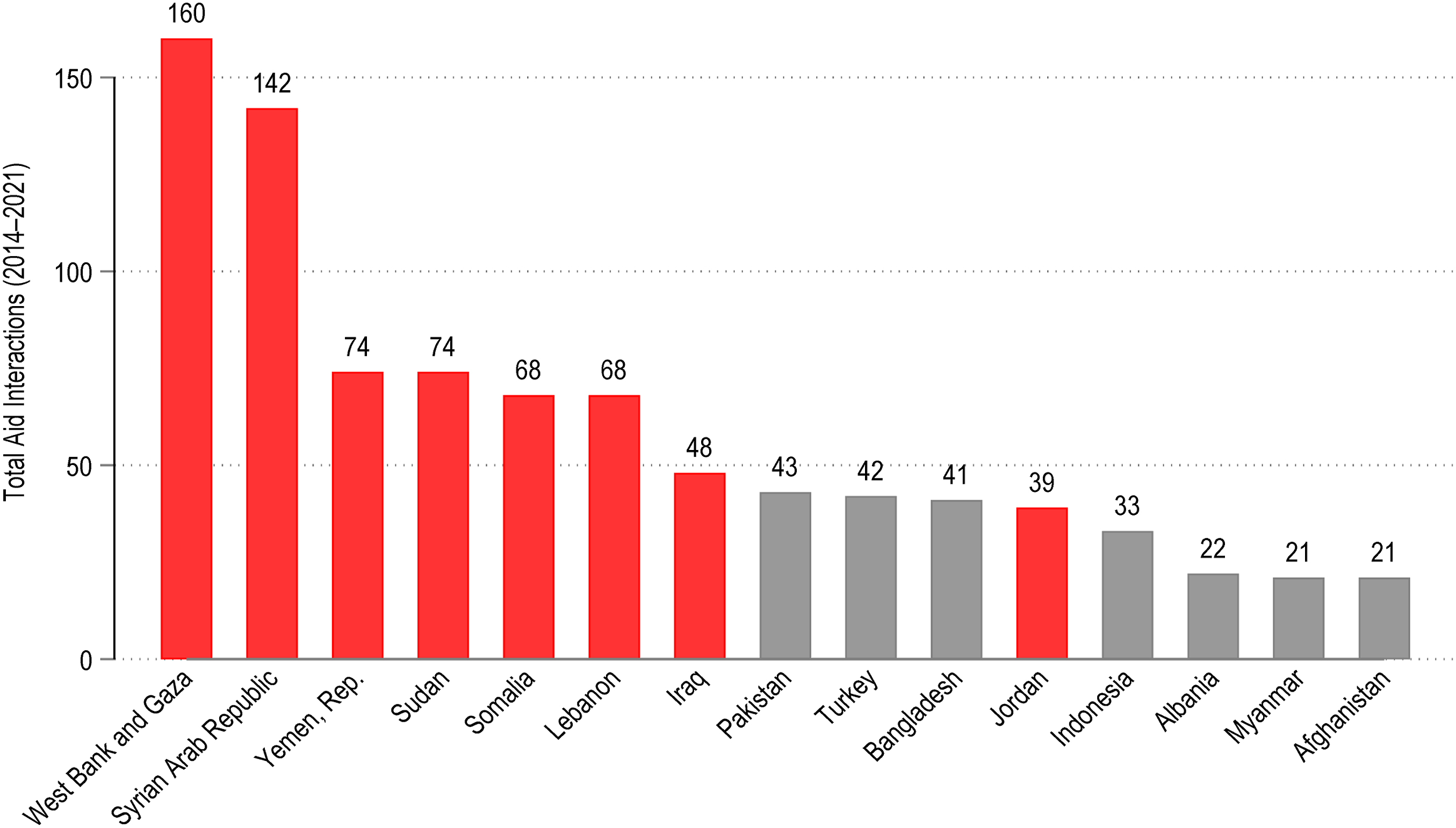
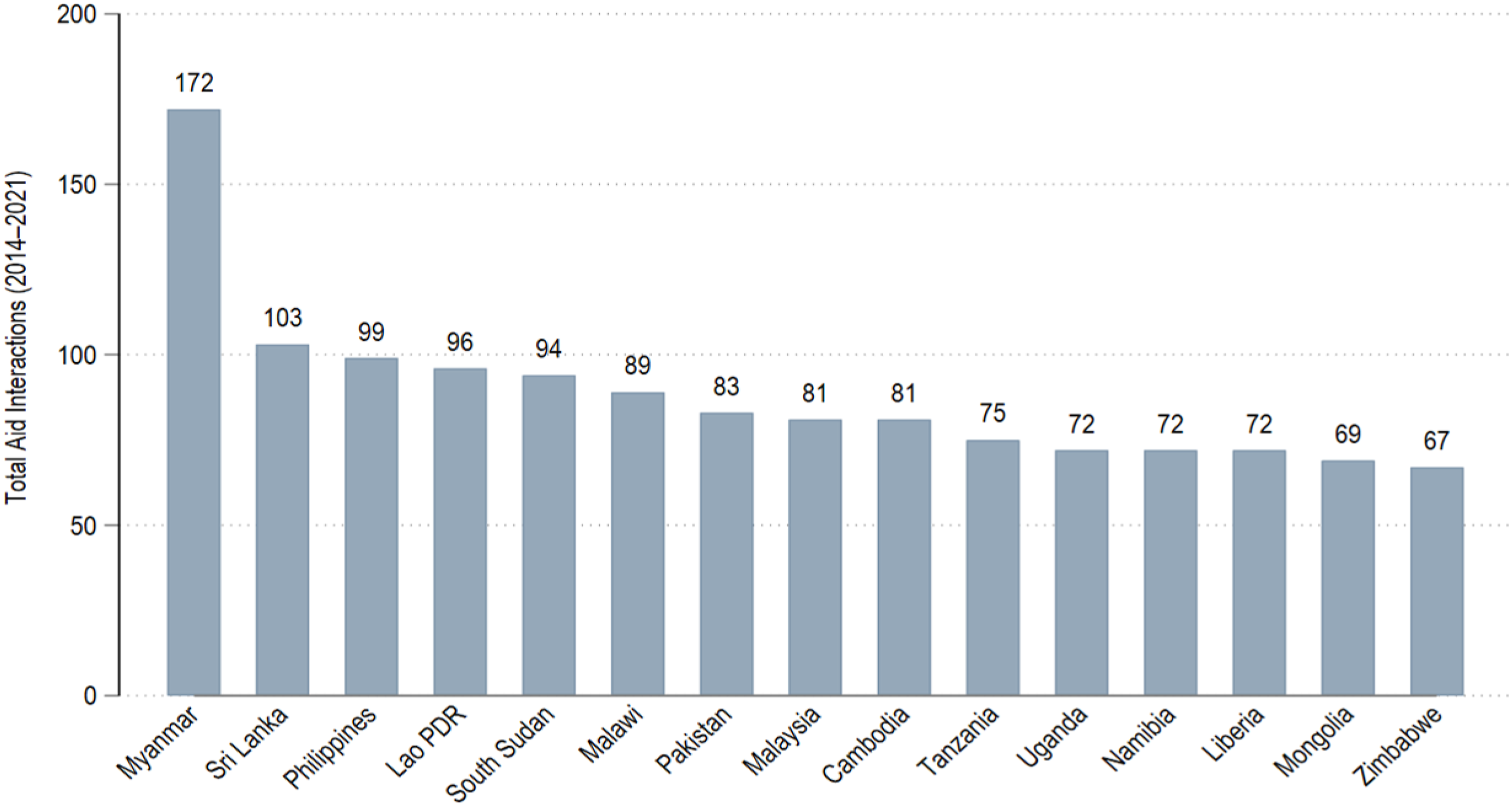
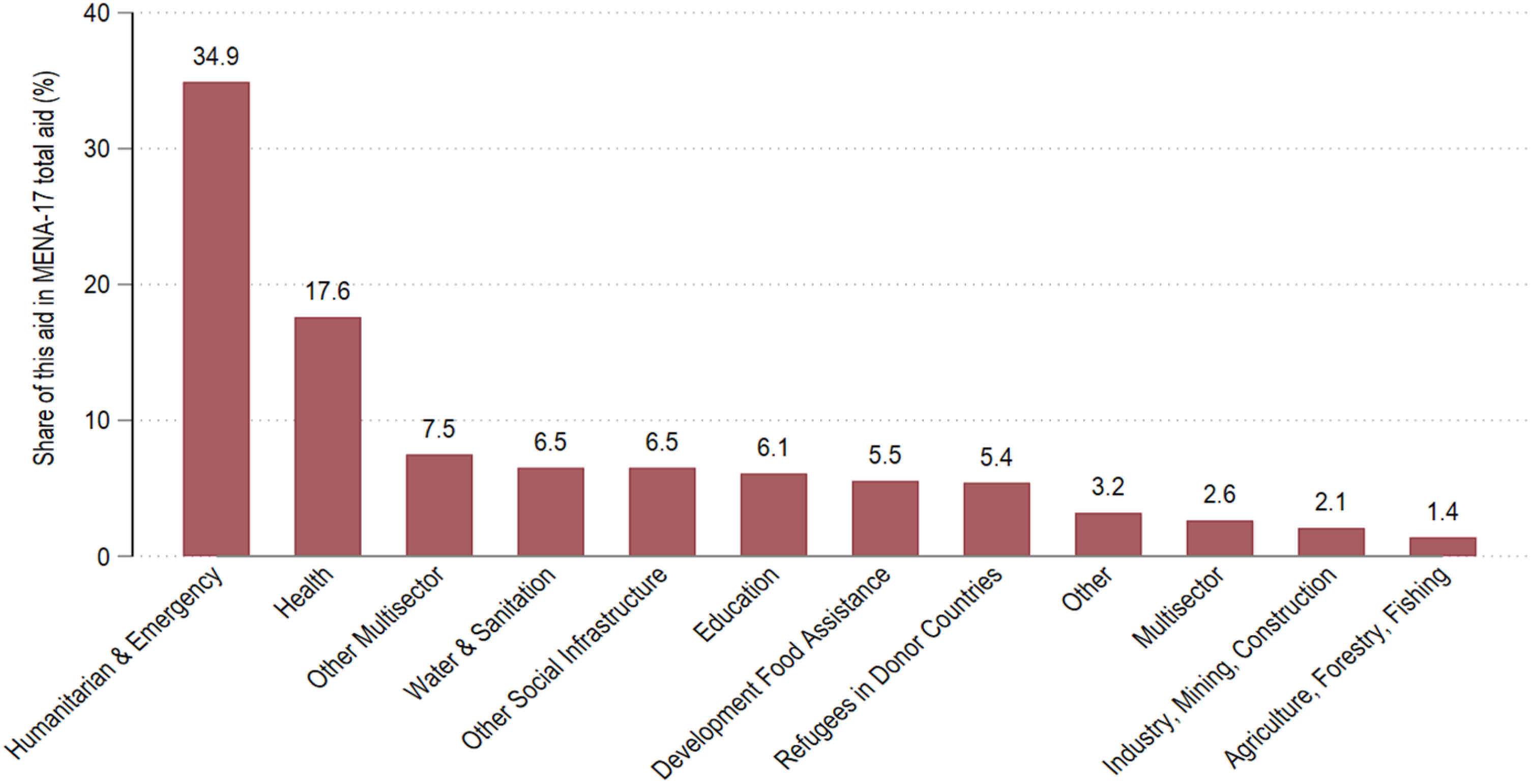
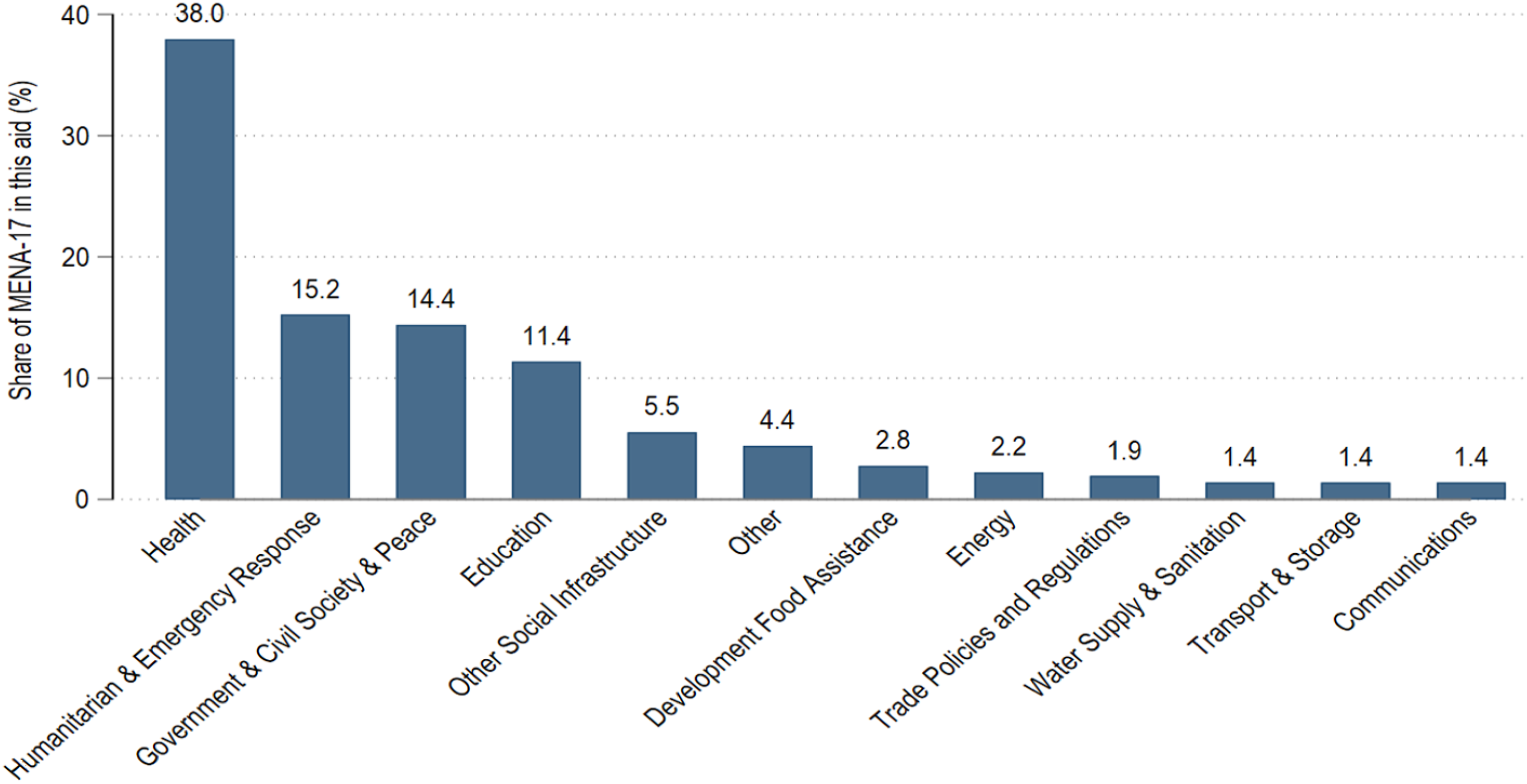
Our identification strategy focuses on assessing the relative importance of recipient needs and donor/strategic interests in explaining the allocation patterns of Qatari and Chinese foreign aid. The methodological framework and descriptive statistics, as presented in Table 1 and Figures 1–6, offer critical insights into the distinct foreign aid strategies of China and Qatar, with a particular focus on their engagement within the MENA-17 region. Our analysis includes Kuwait as a representative high-income Gulf Cooperation Council (GCC) member state. This allows for a comparative analysis of aid flows between a nation with a high GDP per capita and the MENA region as a whole. Table 1, defines the specific regional subset targeted for comparative analysis, underscoring its strategic importance by highlighting commonalities such as Muslim-majority status, Arab League membership, and participation in China’s Belt and Road Initiative (BRI). This concentrated focus allows the subsequent figures to illuminate how each donor’s broader foreign aid objectives and modalities translate into their actions within this particular geopolitical sphere. This sample allows us to isolate variation in donor behavior within a relatively homogenous group in terms of religion, culture, and regional identity—while still enabling comparison across multiple strategic dimensions. Foreign Aid Interactions of Qatar 2014–2021. Foreign Aid Interactions of China, 2014–2021. Top 15 Recipients of Qatar’s Foreign Aid. Top 15 Recipients of China’s Foreign Aid. Sectoral Composition of Qatar’s MENA-17 Aid.
1
Sectoral Composition of China’s MENA-17 Aid.
2
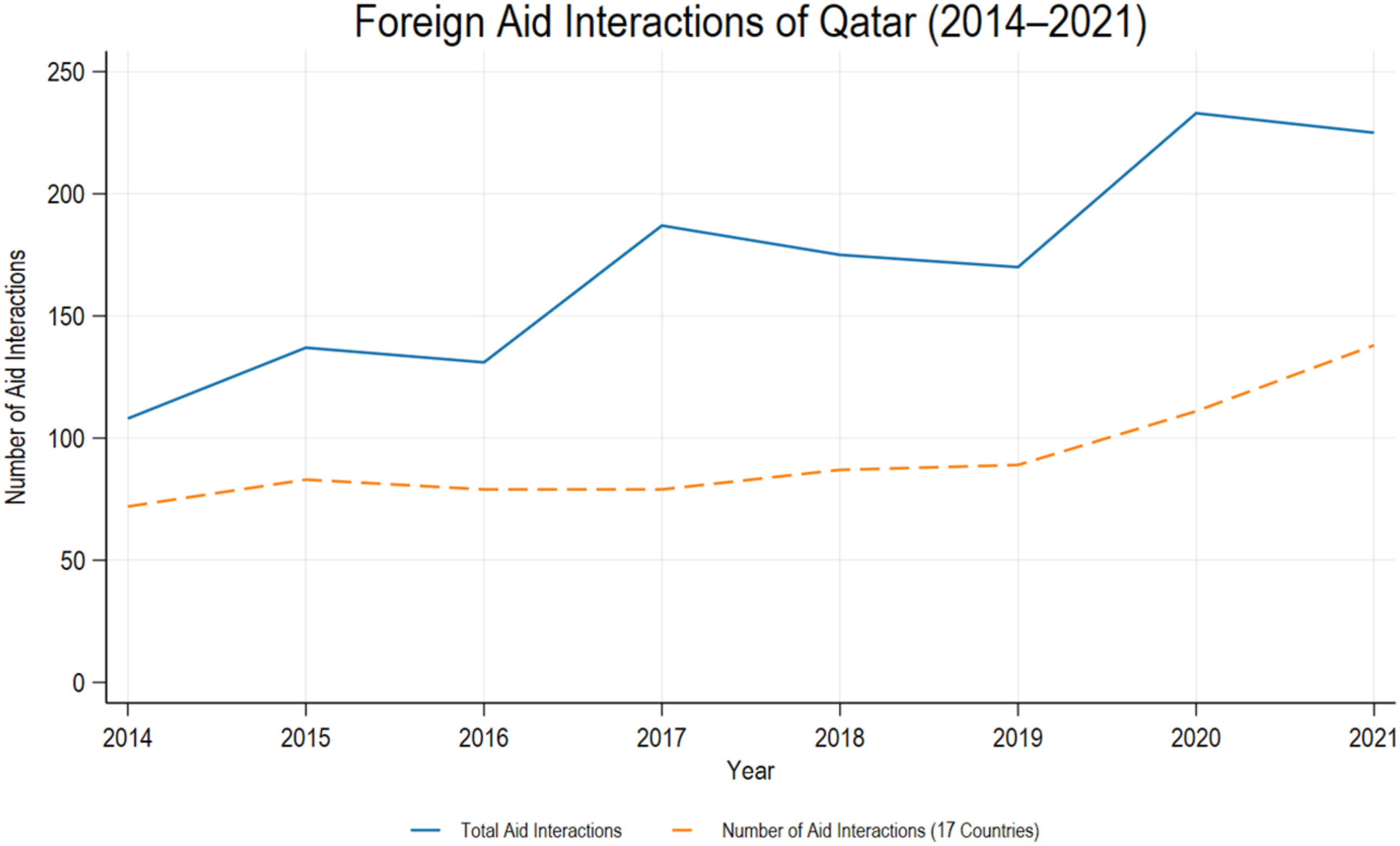
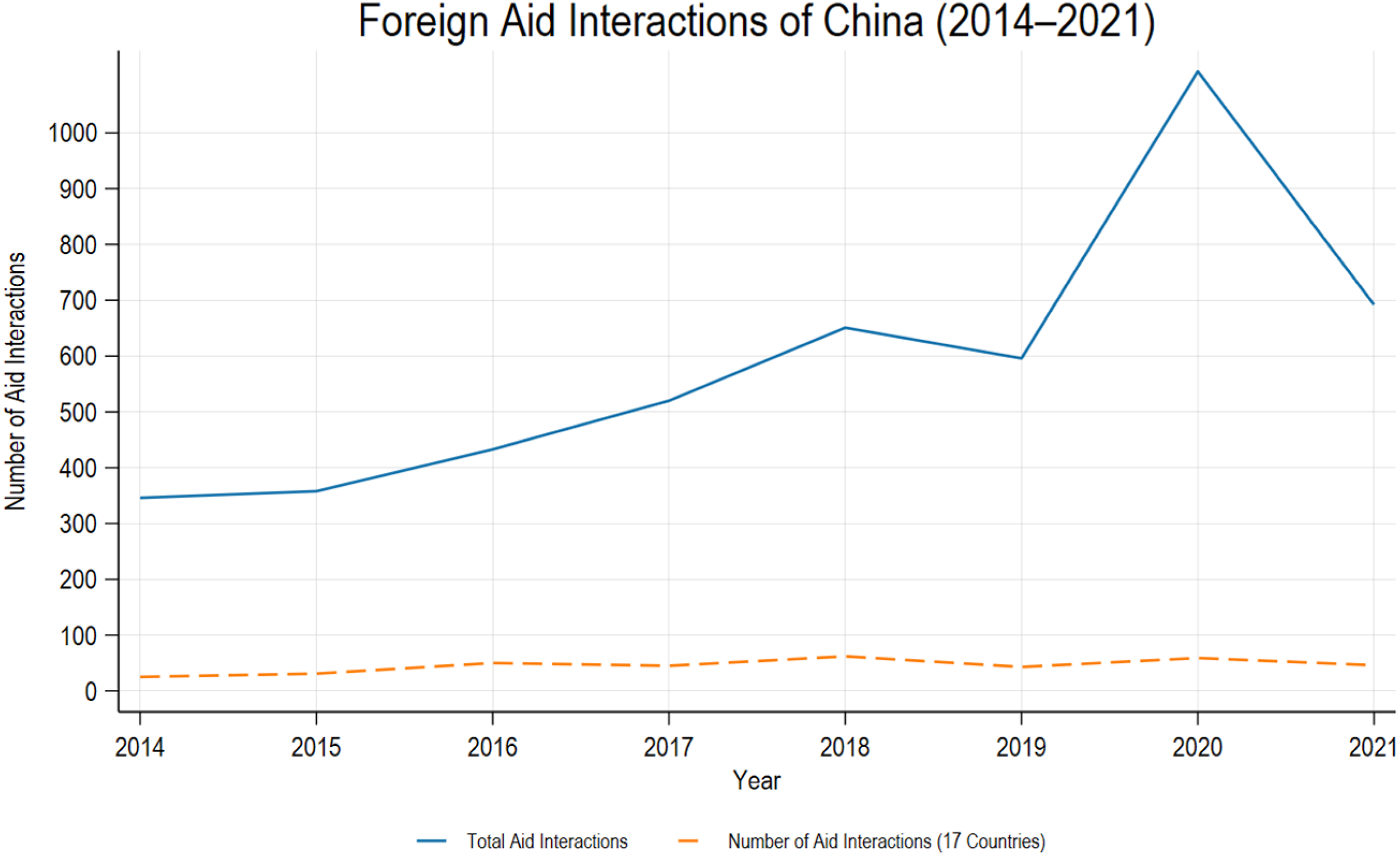
Figures 1 and 2 provide a direct comparison of the scale and trends of aid interactions, specifically dissecting the engagement within the MENA-17 countries. Figure 1 reveals that while Qatar’s total aid interactions demonstrate a general upward trend, its engagement within the focused MENA-17 group, indicated by the lower dashed line, represents a consistent and substantial portion of its overall aid. This visually reinforces the article’s assertion that Qatar’s foreign aid is heavily concentrated within its regional environment, particularly the Middle East. In contrast, Figure 2 illustrates China’s significantly larger overall aid footprint. Crucially, the line indicating interactions within the MENA-17 countries, while also showing an upward trend, appears as a relatively smaller fraction of China’s immense total aid activity. This suggests that while China is active in MENA-17, its aid portfolio is far more globally diversified, reflecting its worldwide economic and geopolitical ambitions rather than a singular regional concentration like Qatar’s.
Further deepening the understanding of geographical priorities within Mena-17, Figures 3 and 4 highlight the top aid recipients for each donor. Figure 3 overwhelmingly comprises countries from the MENA region, with West Bank and Gaza, Syrian Arab Republic, and Yemen leading the list. This stark regional concentration directly aligns with the article’s narrative of Qatar prioritizing humanitarian aid and fostering diplomatic ties in conflict-affected areas within its immediate neighborhood, reflecting a policy deeply rooted in regional stability and pan-Arab solidarity. Conversely, Figure 4 showcases a more geographically spread clientele, featuring countries across Africa (Malawi, Tanzania, Uganda, Namibia, Liberia, Zimbabwe) and Asia (Myanmar, Sri Lanka, Philippines, Lao PDR, Pakistan, Malaysia, Cambodia). While some MENA-17 countries might appear on this broader list (though none are explicitly highlighted in the top 15 given the chart’s labels, which for China extend beyond MENA-17 countries to include countries like Myanmar, Sri Lanka, Malawi, etc.), their presence is diluted by China’s extensive global reach, indicating that the MENA-17 region, while important, is one of many strategic geographic priorities for China’s aid rather than its primary focus.
Finally, Figures 5 and 6, which specifically depict the sectoral composition of MENA-17 aid for Qatar and China, respectively, vividly differentiate their aid modalities within this critical region. Figure 5 demonstrates Qatar’s strong emphasis on “Humanitarian & Emergency” and “Health” within MENA-17, validating the article’s argument that Qatar’s aid is often directed towards immediate relief and social development. This sectoral focus directly reflects its strategic objective of promoting humanitarian assistance and capacity-building in conflict-affected zones. In contrast, Figure 6, China’s sectoral composition in MENA-17, while encompassing sectors like “Health” and “Humanitarian & Emergency Response,” also prominently features “Government & Civil Society & Peace,” “Education,” and notably includes “Transport & Storage” and “Communications”—key components of infrastructure development. This blend signifies China’s preference for long-term economic engagement and infrastructure-led development typical of its BRI strategy, even within the MENA-17 context, differing from Qatar’s more humanitarian-centric approach.
Empirical Strategy and Variable Selection
Our empirical strategy employs a two-part approach. (i) First, we estimate a Heckman Poisson selection model, applied to the full global sample for each donor. This model enables us to disentangle the extensive margin (whether a country receives any aid) from the intensive margin (how frequently it receives aid, conditional on selection). The model proceeds in two stages. In the selection stage (first step) is estimated using a probit model to capture the binary likelihood of a country being chosen as an aid recipient. The outcome stage (second step) then estimates the number of aid engagements via a Poisson regression, correcting for sample selection bias through the inclusion of the inverse Mills ratio. This two-step framework provides a more comprehensive picture of donor behavior, accounting for both the probability of aid allocation and the level of aid engagement. (ii) In the second part, we narrow our focus to the MENA-17 region and compare MENA aid recipients to a broader set of countries that never received aid from either Qatar or China during the 2014–2021 period—regardless of whether they are part of the MENA region. For this analysis, we estimate logit models, structurally analogous to the selection equation, separately for each donor. This allows us to assess donor preferences and selection criteria specific to the MENA-17 region, in comparison to globally untreated (non-recipient) countries.
Dependent Variables
Our dependent variables capture two key aspects of foreign aid behavior by Qatar and China between 2014 and 2021: (i) the binary status of aid—whether a country received any aid, and (ii) the intensity of aid engagement, measured by the number of foreign aid interactions with recipient countries. In the context of the Heckman Poisson selection model, the first stage (the selection equation, Equation (1)) estimates a probit model, where the probability that a country receives any aid from Qatar is regressed on a set of independent variables that are hypothesized to influence the aid allocation decision. This stage is estimated across the full global sample of countries. Formally, the selection equation (first stage) can be expressed as follows:
The second equation (the allocation equation, Equation (2)) is estimated only for the selected sample, that is, countries that received aid. This stage models the intensity of aid engagement, using a Poisson regression to estimate the number of aid interactions, conditional on being selected as a recipient.
In the second step of our empirical strategy, we turn to the MENA-17 region compare them with countries that never received any aid from either Qatar or China between 2014 and 2021 to a broader set of countries that never received aid. To do this, we estimate logit models (equation (3), analogous to Equation (1)) for Qatar and China to examine which countries are likely to be selected as recipients where the aid status variable remains the dependent variable. The logit equation is specified as
All models include year fixed effects to control for unobserved global trends and common shocks that could influence aid allocation. We test the robustness of our findings by incrementally introducing geographic controls such as distance, region-specific dummies, and excluding potentially confounding political variables in nested model specifications.
Independent Variables
To capture whether a country belongs to the strategically and culturally relevant group under study, we constructed a MENA-17 dummy variable, coded as one for countries in the MENA-17 group and 0 otherwise. In the Heckman Poisson selection models, this variable serves as a key explanatory factor, allowing us to test whether belonging to the MENA-17 group is associated with a higher probability of receiving aid (extensive margin) and a greater number of aid interactions (intensive margin) from the donor country.
Beginning with donor interests, our initial examination focuses on political factors. To address our first hypothesis and test the role of political interests and foreign policy preferences, we utilize two different measures for Qatar. First, we generate a “political interests” variable, which is representative of Qatar’s political interests, by counting the number of Qatar’s diplomatic interactions. 4 Our political interest variable is a direct measure of to what extent Qatar is politically engaged with other countries. Next, to investigate whether Qatar’s mediation track record affects the level of foreign aid engagement with recipient countries, we control for mediation activities in recipient countries. We generated a “mediation” variable and coded countries as “1” if Qatar mediated an inter-state or domestic conflict in this country and “0” if it did not. 5 To investigate the effect of the blockade on Qatar’s prospective aid, we define a “Qatar-Blockade” dummy, which is “1” for the countries that supported the blockade against Qatar and “0” otherwise. 6 Using the blockade variable, we aim to measure if and to what extent acute geopolitical changes affect Qatar’s aid policy. China’s political interests are assessed by quantifying the frequency of its bilateral diplomatic interactions with other nations. A greater volume of these engagements is indicative of a country’s prominence and strategic importance within China’s foreign policy framework. This data is sourced from the Country and Organization Leader Travel (COLT) Database (Moyer et al., 2023), which records official visits by high-level leaders as a proxy for strategic engagement. To capture political alignment, we use a variable that measures the recipient country’s voting similarity with the United States in the United Nations General Assembly (UNGA), reflecting its broader geopolitical orientation (Voeten et al., 2009). Lower alignment with the U.S. may indicate closer political affinity with China and thus serve as a strategic determinant of aid allocation (Moyer et al., 2023).
To investigate the role of commercial interests in aid allocation, we include trade variables in our analysis. For Qatar, we use the logarithm of both exports to and imports from recipient countries. These variables capture the potential influence of bilateral trade relationships on Qatar’s aid behavior. The trade data were obtained from the Qatar Planning and Statistics Authority (PSA, nd). For China, we focus solely on logarithmic export values, as export and import flows are highly correlated and including both would introduce multicollinearity. Chinese export data are sourced from the UN Comtrade Database (UN Comtrade, 2023).
To assess domestic influences on aid allocation, we examine the role of normative preferences, particularly the extent to which democratic values shape donor behavior. To capture the influence of regime type in recipient countries, we include the Electoral Democracy Index from the Varieties of Democracy (V-Dem) Project (Coppedge et al., 2024; Pemstein et al., 2018). This index offers a nuanced and multidimensional measure of democratic quality, incorporating aspects such as electoral competitiveness, political pluralism, and civil liberties. By including this variable, we aim to evaluate whether more democratic regimes are more likely to receive aid, thereby testing whether normative alignment plays a role in donor decision-making. We include the logarithm of the distance between the donor and recipient capitals (measured in kilometers and lagged by 1 year) to account for geographic proximity, which may influence aid allocation due to logistical costs, regional focus, or strategic neighborhood effects. Distance data are sourced from the CEPII GeoDist database (Mayer & Zignago, 2011).
To test the recipient need hypothesis, we include two key variables: the size of the recipient country’s population and its GDP per capita. While population size can also be interpreted as a proxy for a country’s power and thus reflect potential geopolitical importance, it is commonly used in the aid literature as an indicator of need, particularly in contexts where large populations imply greater demand for basic services and humanitarian assistance (Kilby & Dreher, 2010). GDP per capita, on the other hand, is widely regarded as the most appropriate proxy for recipient poverty. In addition to these need-based measures, we include GDP growth as an indicator of economic performance, which some donors may consider when rewarding countries for recent reforms or macroeconomic stability. Data for both variables are sourced from the World Development Indicators (WDI, n.d). database of the World Bank. Due to multicollinearity concerns, we exclude the population variable from the Chinese aid models, as it is highly correlated with China’s export volumes to recipient countries.
Empirical Analysis
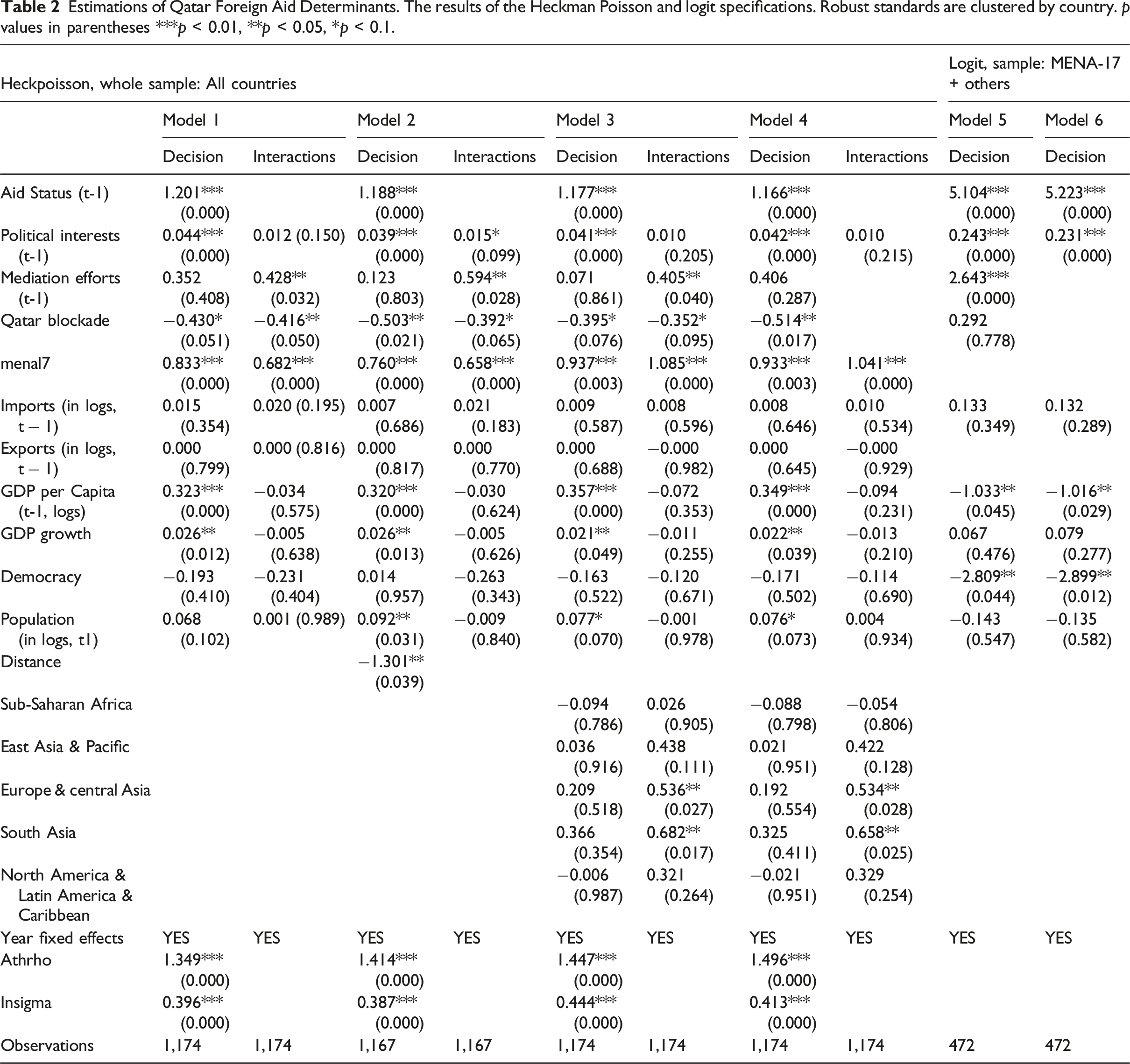
Estimations of Qatar Foreign Aid Determinants. The results of the Heckman Poisson and logit specifications. Robust standards are clustered by country. p values in parentheses ***p < 0.01, **p < 0.05, *p < 0.1.
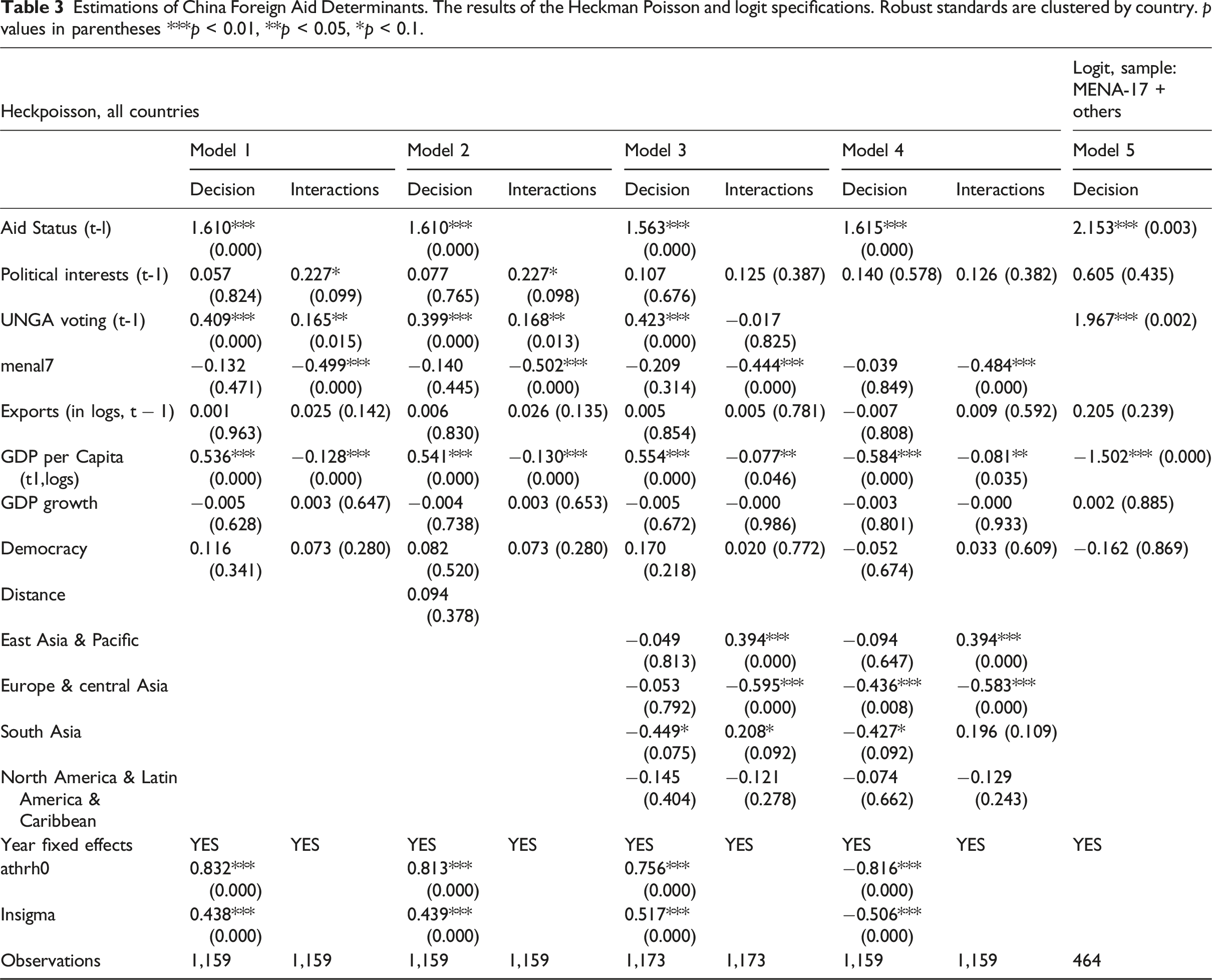
Estimations of China Foreign Aid Determinants. The results of the Heckman Poisson and logit specifications. Robust standards are clustered by country. p values in parentheses ***p < 0.01, **p < 0.05, *p < 0.1.
For Qatar (Table 2), the results consistently underscore its aid strategy’s emphasis on regional stability, humanitarian concerns, and diplomatic leveraging. The highly significant positive coefficients for Aid Status (path dependency), Political Interests, and Mediation Efforts demonstrate that Qatar utilizes aid to strengthen established partnerships, enhance diplomatic ties, and support its role as a regional mediator. Crucially, the overwhelming positive and highly significant coefficient for MENA-17 across the Heckman Poisson models confirms Qatar’s profound prioritization of this region, both in deciding whether to provide aid and the volume of that aid. Furthermore, the consistently negative and significant coefficient for GDP per Capita indicates a strong focus on recipient need, aligning with humanitarian motivations. Conversely, commercial interests, as reflected by Exports and Imports, generally do not appear as significant drivers, distinguishing Qatar’s aid from a more commercially oriented approach. The Logit Model 5 reinforces these patterns for MENA-17 selection, although the negative coefficient for Democracy suggests that Qatar’s selection within this specific subgroup may not be primarily driven by democratic values, potentially reflecting a focus on stability or other strategic interests in a complex regional landscape.
In stark contrast, China’s aid policy (Table 3), as revealed by the Heckman Poisson models, is heavily underpinned by economic statecraft and geopolitical objectives. While Aid Status shows path dependency, the highly significant positive coefficient for Political Interests and, notably, the highly significant negative coefficient for UNGA Voting clearly indicate China’s strategic use of aid to foster political alignment, particularly with countries less aligned with the US. The highly significant positive coefficient for Exports unequivocally ties China’s aid to its commercial interests, directly supporting the “economic statecraft” argument. While China does focus on recipient poverty (GDP per Capita is negative and significant), its engagement in MENA-17 (positive coefficient in the Heckman Poisson models) is part of a more globally diversified portfolio, differing from Qatar’s concentrated regional focus. The general non-significance of Democracy further supports China’s principle of non-interference and willingness to engage with diverse regime types in pursuit of its broader goals. The Logit Model 5 for China’s aid selection within the MENA-17 context largely mirrors these global drivers, highlighting the continued influence of geopolitical alignment (UNGA Voting) and commercial interests (Exports) even within this strategically important region.
In sum, the regression analyses empirically validate the conceptual distinctions drawn in the literature review, affirming that China’s aid is predominantly driven by long-term economic and geopolitical objectives, often tied to infrastructure development and trade, while Qatar’s aid prioritizes regional stability, humanitarian assistance, and relationship-building, especially within its immediate neighborhood. This comparative empirical evidence crucially fills a gap in the literature by systematically demonstrating how these two significant non-Western donors, despite engaging in foreign aid, pursue fundamentally different motivations and strategies.
Conclusion
This study provides a comprehensive empirical analysis of the foreign aid policies of two distinct non-Western donors, China and Qatar, with a particular focus on the Middle East and North Africa (MENA-17) region from 2014–2021. By meticulously comparing their motivations, aid modalities, and geographical priorities using Heckman Poisson selection models and unique datasets (AidData for China and QATARAID for Qatar), the research unmasks the heterogeneous nature of non-Western aid and significantly contributes to understanding the evolving global aid architecture. The deliberate selection of China, a global economic powerhouse, and Qatar, a smaller, wealthy humanitarian actor, represents a maximalist comparison, which proved conceptually strong and empirically useful in demonstrating how diverse strategic drivers shape foreign aid as a tool of national interest and international influence.
The findings reveal a stark contrast between the aid strategies of these two influential players. Qatar’s aid strategy is overwhelmingly concentrated within MENA-17, reflecting a profound prioritization of its immediate regional environment. Its motivations are primarily driven by humanitarian concerns, recipient need, and diplomatic leveraging for regional stability, with negligible influence from commercial interests. Empirical evidence consistently underscores Qatar’s use of aid to strengthen established partnerships, enhance diplomatic ties, and solidify its role as a regional mediator. Qatar predominantly utilizes grants, loans, and technical assistance, often directed towards direct humanitarian impact in sectors such as education, healthcare, and infrastructure, particularly in conflict-affected regions like the West Bank and Gaza, Syrian Arab Republic, and Yemen. The consistently negative and significant coefficient for GDP per Capita indicates a strong focus on recipient need, aligning with its humanitarian motivations, while commercial interests are generally not significant drivers. This approach is deeply rooted in strategic regional stability, humanitarian concerns, and diplomatic leveraging, often filtered through elite decision-making and external geopolitical shifts like the 2017 Gulf blockade.
In contrast, China’s aid exhibits a more globally diversified portfolio, deeply rooted in economic statecraft and broader geopolitical objectives. Chinese aid is strongly correlated with its commercial interests, particularly exports, and aims to foster political alignment, especially with countries less aligned with the U.S. Historically, China’s aid evolved from supporting revolutionary movements to a post-1978 focus on mutual economic benefits, emphasizing cooperation through investment and trade, exemplified by the “trinity development cooperation” model and “resources for infrastructure” deals. While China officially adheres to a principle of non-interference, empirical evidence indicates project-level conditionalities, such as demanding acceptance of the “one-China” policy and requiring the use of Chinese labor and equipment. China’s emphasis on infrastructure development, trade facilitation, and long-term economic engagement distinguishes its approach from Qatar’s more humanitarian-centric model, even within the MENA-17 context. Initiatives like the Belt and Road Initiative (BRI) exemplify this, linking large-scale investments across continents to trade ties and political alliances. Notably, China’s aid is not tied to the institutional quality of recipient countries, and tends to go to poorly governed countries, suggesting a strategic alignment with certain regime types. China’s aid activities have even influenced traditional donors like the World Bank and the U.S., pushing them to refocus on physical infrastructure and reduce conditionalities due to competition.
Ultimately, this comparative analysis effectively addresses a critical gap in the systematic, comparative empirical analysis of non-Western donors, particularly within the geopolitically critical MENA region. By empirically validating the conceptual distinctions between China’s economic statecraft and Qatar’s humanitarian-centric approach, the study affirms that these two significant non-Western donors pursue fundamentally different motivations and strategies despite both leveraging foreign aid for global influence. This research offers vital insights into the evolving power dynamics and the changing nature of international cooperation in the 21st century, demonstrating how foreign aid is deployed as a multifaceted tool of diplomacy and economic projection in a multipolar world.
Footnotes

Funding
The authors received no financial support for the research, authorship, and/or publication of this article.
Declaration of Conflicting Interests
The authors declared no potential conflicts of interest with respect to the research, authorship, and/or publication of this article.
Data Availability Statement
The author confirms that all data generated or analyzed during this study will be posted to a public data repository.