




Abstract
This study aims to increase the understanding of citizens’ different conceptions of politics. This is done by constructing a framework based on Heywood’s seminal works (2002; 2004) on three prominent understandings of politics. Guided by the framework and adopting a factor-analytic approach using the National SOM survey conducted in Sweden in autumn 2020 (N = 1845), I found two theoretically interesting dimensions: a ‘macro-politics’ dimension that covers content related to government and the welfare state and a ‘micro-politics’ dimension that concerns content associated with everyday life. The largest group of respondents consists of people whose conceptions of politics solely cover ‘macro-politics’ (76.4%). The second largest group are those who do not consider either of these two dimensions to be political (12.9%). The opposite view to this, which combines ‘macro-politics’ and ‘micro-politics’, is held by a slightly smaller group (9.4%). A minor group was also found, consisting of people whose conception of politics only covers ‘micro-politics’ (1.2%). We ran analyses based on previous important findings on people’s conceptions of politics. Contrary to prevailing knowledge, the results show that left-leaners conceptualize (only) ‘micro-politics’ content as political more frequently than right-leaners, older people do not perceive more content as political than younger people (but view different content as political), and women, compared to men, identify more areas as political irrespective of content.
Introduction
For a long time, research has implicit or explicit expected that people share the same understanding of what politics is (e.g. O’Toole, 2003). Recently however, studies have turned attention to citizens’ conceptions of politics (e.g. Manning, 2010; Eliasoph, 1998), understood as a cognitive orientation that captures individuals’ perceptions of what constitutes politics (Görtz & Dahl, 2021). These studies tell us that the long-standing scholarly dispute about a unified definition (see, e.g. Leftwich, 2008; Bartolini, 2018) is also present among the public. Similar to academia, the citizenry appears to lack a common understanding of what politics is, and thus of what the concept actually covers. More precisely, some citizens tend to have broad conceptions of it, defining various events, objects, and ideas as political, while others have a much narrower conceptions, defining very little, if anything, as pertaining to politics (e.g. Morey & Eveland, 2016; O’Toole, 2003). Moreover, some of these studies have even found that citizens’ conceptions of politics are important for the understanding of their interest in politics (Fitzgerald, 2013; Görtz et al., 2022) and their political behaviour (Morey & Eveland, 2016; Görtz & Dahl, 2021). Thus, how citizens’ conceptualize politics seem critical for the understanding of the relationship between the citizenry and their democratic societies.
So far, however, little attention has been given to how we can understand different conceptions of politics more deeply. Knowledge is limited considering what lies behind their conceptions. More precisely, recent studies discusses different conceptions of politics either in terms of narrow-to broad (e.g. Morey & Eveland, 2016; Görtz & Dahl, 2021; Fitzgerald, 2013) or whether specific societal topics are considered as being about politics or not (e.g. Ferrín et al., 2020; Hansford et al., 2018; Podschuweit & Jacobs, 2017). Hence, there is little to gain from previous research about the dimensionality of people’s conceptions of politics.
To close this gap, a framework is constructed in this study to understand different conceptions of politics. The framework is based on Heywood’s seminal works (2002; 2004) on three important understandings of politics: the strict-government conception, the public-affairs conception, and the activity conception (see also Palonen, 2006). The data used in the study was gathered using a unique battery of questions that correspond to these understandings. One set of topics that respondents are asked about covers content related to political elites, procedures of the political system, and institutions closely connected to the strict-government conception of politics. The second set, related to the public-affairs conception of politics, mentions institutions that are responsible for the collective organization of societal life or the goods and services they are in charge of. The third and final set, which is related to the activity conception of politics, comprises topics about activities and phenomena without making reference to (‘political’) institutional settings. In sum, we construct a framework based on the three content types. Designed to understand the different conceptions more deeply, the framework guides the present analyses in moving beyond the previous one-dimensional focus on conceptions of politics. Regarding this, we ask: (RQ1) What are the underlying contents of citizens’ different conceptions of politics?
Recent studies hold that conceptions of politics vary according to a pattern related to social backgrounds and attitudes. Older, male, and highly educated people are assumed to hold a broad conception of politics, while younger, female, and less educated people are expected to express a narrower view (e.g. Henn et al., 2005; Eliasoph, 1998; Fitzgerald, 2013; Manning, 2010). Interest in politics and ideological disposition are also presumed to be important factors. People who are interested in politics supposedly embrace a broader conception of it than their less interested counterparts. The same is expected of left-leaners, with their support for a more expansive government. Left-leaners are assumed to be more prone to categorizing things as political than right-leaners (e.g. Fitzgerald, 2013). We then include the factors that are expected to influence people’s ideas of what politics is and analyse whether these documented associations work differently across different conceptions of politics. People’s educational background, age, gender, political interest, and ideological disposition are included. Considering this we further ask: (RQ2a-e) Do social backgrounds and attitudes relate differently across different conceptions of politics, and if so, in what way?
To sum up, drawing on the National SOM survey carried out among Swedish people during autumn 2020, the study aims to increase the understanding of people’s varying conceptions of politics. First, the framework of three content types was invented. Guided by the framework corresponding topics were selected. Thereafter, using a factor-analytic approach, we discuss and empirically scrutinize the content of citizens’ different conceptions of politics. We then use mean comparisons and multivariate regression to discuss citizens’ different conceptions of politics in relation to previously emphasized factors such as gender, age, education, ideological disposition, and interest in politics. This novel treatment of citizens’ conceptions provides a new way in order to understand how the citizenry make meaning of the central concept of politics.
Conceptual Framework
Why Citizens’ Conceptions of Politics Matter
The interest in conceptions of politics should be viewed in the light of a broader development within the literature on political behaviour and public opinion. This development might be described as a result of the past decade’s criticism of how little is known about citizens’ own understandings of central concepts. Such criticism emphasizes problems with the traditional ‘top-down’ approach, where researchers decide upon (definitions of) concepts and measures without consulting the people they are studying (see, e.g. Doorenspleet, 2015; Bengtsson & Christensen, 2016; O’Toole, 2003). As expressed by Conover and Searing, ‘it is difficult to model how democracies think without including the demos’ (2005: 270).
Regarding the concept of politics, Thompson et al. (1990) urge us to learn more about ‘where’ citizens draw the boundary between politics the political and non-politics. This is because, according to them, every given meaning of politics is contested, under re-consideration, and culturally biased. Focusing on citizens’ conceptions may therefore help us understand differences between societies, between different groups within a society, and between individuals, regarding what is thought to belong to politics.
That being said, this study is interested in how we can constructively contribute to the emerging empirical research on this topic by attempting to offer new ways of understanding citizens’ different conceptions of politics. In the following, we review empirical studies of people’s conceptions of politics with special focus on measurement.
Measuring Conceptions of Politics
Studies have repeatedly shown that there is a great deal of interpersonal variation in how citizens conceptualize politics. These studies tell us that some citizens tend to have a rather narrow conception of it, identifying very little of their societal surroundings, if anything at all, as being about politics. Others, in contrast, hold a more expansive conception, categorizing all sorts of events and objects as political (e.g. Henn et al., 2005; Fitzgerald, 2013).
When measuring conceptions of politics in quantitative research, one procedure is dominant, and it can be described as follows: (1) Survey respondents are presented with a list of various societal topics. As an ingress to the list, participants are asked to identify the topics that they perceive as political. (2) For each topic, the participants can choose from response options that are either of dichotomized character (e.g. 1 = yes, about politics, 0 = no, not about politics) or of scale character (e.g. 1 = very little about politics … 5 = very much about politics.) (3) After that, the final measure is coded in different ways depending on whether the researcher is interested in the extent of topics that people consider to be political or is interested in whether a certain topic is perceived as such. In technical terms, the former sums up the scores of each topic and constructs an index, namely a conceptual-breadth measure (e.g. Coffé & Campbell, 2020; Eveland & Morey, 2016; Fitzgerald, 2013; Görtz & Dahl, 2021), while the latter utilizes either the mean value or descriptive statistics with regard to the topic of interest (e.g. Ferrín et al., 2020; Hansford et al., 2018; Podschuweit & Jacobs, 2017).
Reviewing these lists, one finds that they regularly contain a broad set of topics. A typical example to illustrate this is found in Podschuweit and Jacobs’ study (2017), which includes topics ranging from ‘conflicts within the coalition’ to ‘a barking dog in the neighbourhood’. Most of the topics fit into a typology based on three prominent understandings of politics within the social sciences (e.g. Heywood, 2002, 2004). 1
Firstly, a recurrent type of content relates to the classical ‘government conception’, 2 which covers topics mentioning political elites, procedures of the political system, and institutions closely related to the government. It accordingly includes topics that pertain to the context of what is popular understood as ‘formal politics’ Hay, 2007. This type of content permits considerations about whether and to what extent the public identifies issues connected to this particular context as being about politics.
Secondly, and still pertaining to a spatial understanding of politics, though moving beyond the narrow site of ‘formal politics’, the second type of content relates to a ‘public-sphere conception’ 3 of politics. Topics of this kind either (1) cite institutions that are responsible for the collective organization of societal life (e.g. the police, the army, the legal system, and other institutions that are funded by taxes and/or publicly owned) or (2) mention goods and services that these institutions are responsible for providing. Such content allows for examination of the extent to which citizens perceive public affairs and the workings of the state to be matters of politics.
Thirdly, the last type of content gathers topics that cover activities and phenomena without mentioning the contexts of the ‘government sphere’ and the ‘public sphere’. Instead, these topics mention issues connected to family life, personal health, and other phenomena described in an everyday life setting. This type of content can perhaps be linked to understandings within the tradition of an ‘activity conception’ 4 of politics. This focuses much less on spatial location, with the most important aspect of politics instead being considered to be that someone is actively trying to change the state of affairs (e.g. Dahl, 1976), or at least, as Palonen (2003: 171) points out, someone notices the present state of affairs and calls it ‘political’. The last type of content makes it possible to focus on what the public considers to be politics beyond the demarcated spheres of the ‘government’ and the ‘public’.
As discussed above and summarized in Figure 1, in terms of content validity (how well a measure captures aspects of the intended concept), studies on citizens’ conceptions have taken advantage of a rather broad set of standard definitions of politics. However, none of the previous studies have looked at how various types of content may relate to citizens’ different conceptions of politics.
5
Consequently, it remains unclear whether variations among the public could be explained by the characteristics of the topics that make up their different understandings. For this reason, we use a framework based on the three content types described above to investigate the underlying contents of people’s different conceptions of politics. Taking the framework as a guide, this study aims to find new ways to understand variations in the public. Three content types of conceptions of politics. Note: The illustrative topics are taken from Ferrín et al. (2020), Görtz and Dahl (2021), Fitzgerald (2013), and Podschuweit & Jacobs (2017).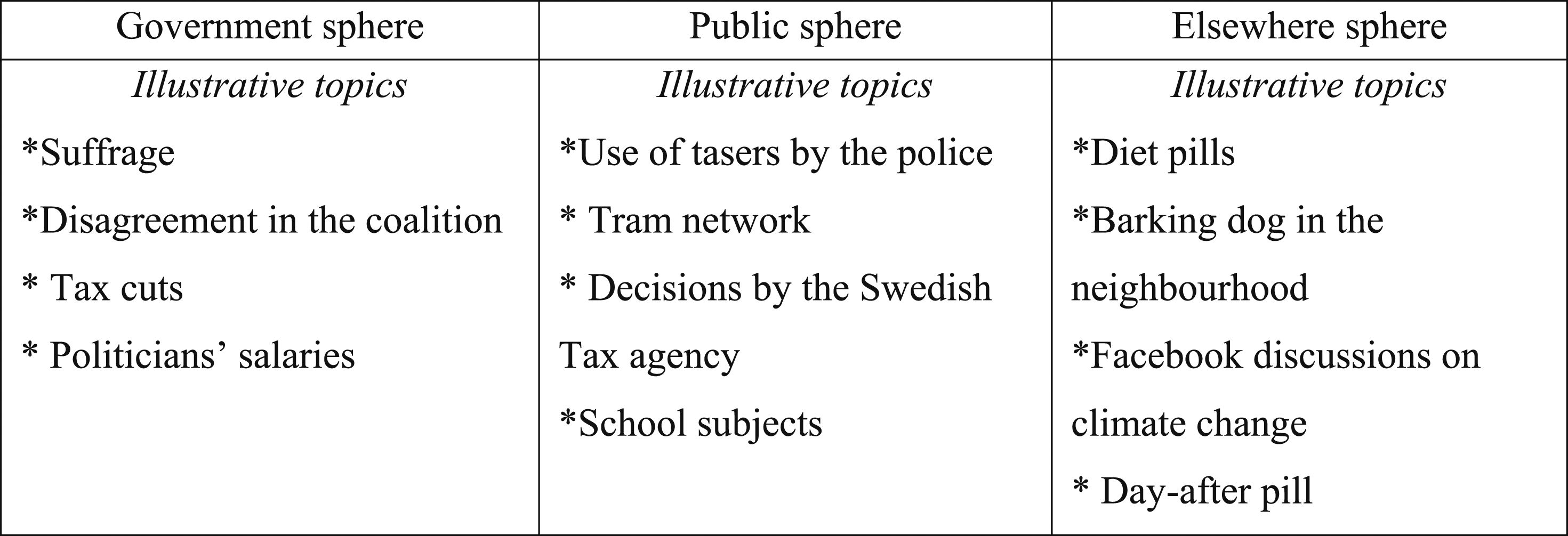
In addition, research has pointed out that people’s conceptions of politics are related to their social background and attitudes. With the help of the framework, we can ‘go back’ to these underlying relationships and analyse whether these associations differ across different content types. In the following, we discuss this issue, namely the relationship between conceptions of politics and people’s backgrounds and attitudes.
Conceptions of Politics as Related to Social Backgrounds and Attitudinal Characteristics
Education 6 is one of the most frequently recurring factors in the literatures on political behaviour (e.g. Verba et al., 1995). Theorized as a promoter of important abilities, years in school is expected to (1) increase a person’s chances to get information and learn more about politics, (2) increase opportunities, through socialization with other students, to develop an interest in politics, and (3) increase possibilities to develop cognitive skills that are important for learning (Delli Carpini & Keeter, 1996: 190).
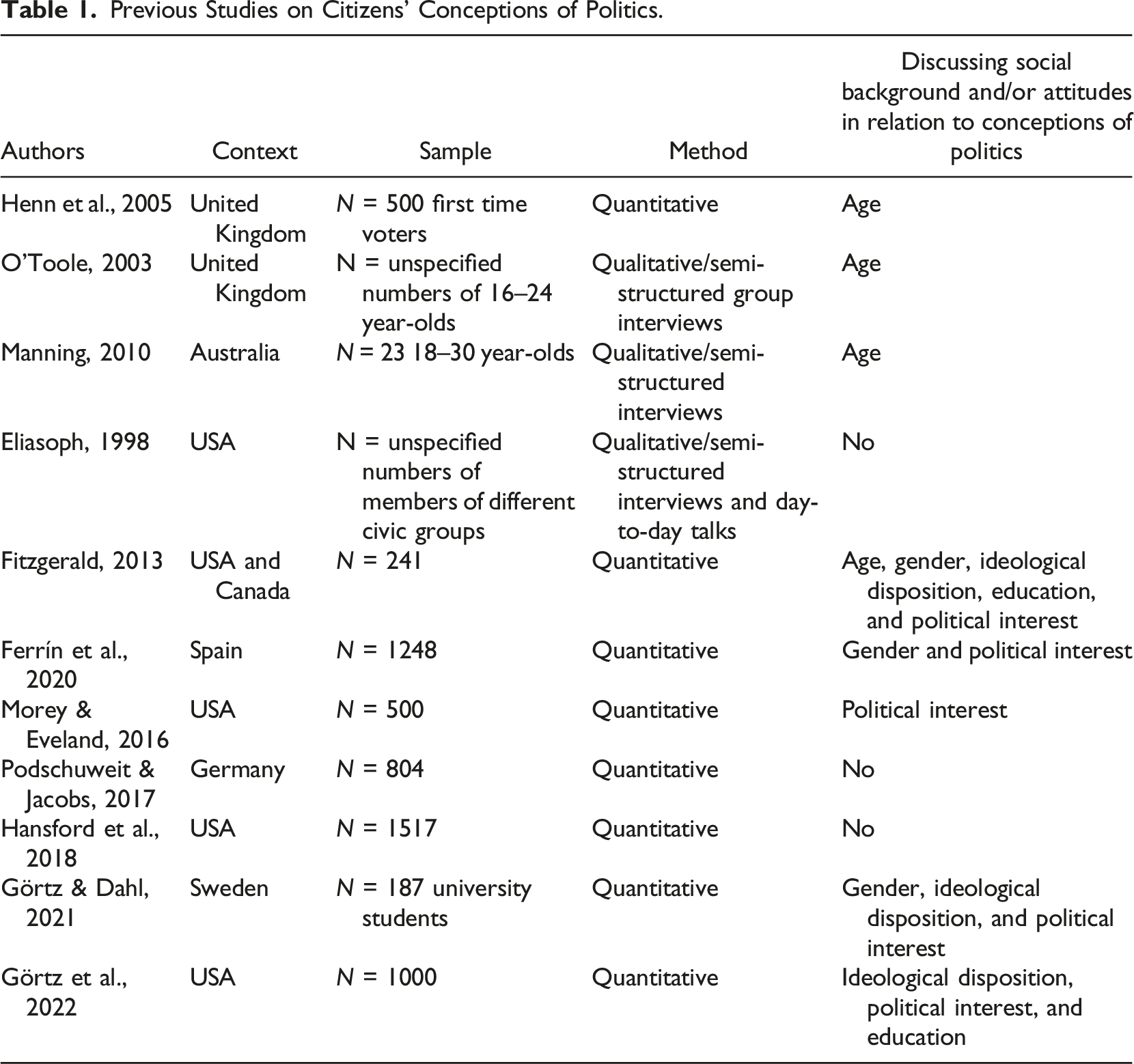
In relation to conceptions of politics, Fitzgerald (2013) reports that educated people hold broader conceptions of politics than their less-educated counterparts. 7
A further important factor is gender, which is well known for capturing variations among the public. It is traditionally assumed that women are less interested than men in politics, less informed about it, and less likely to engage with it (e.g. Burns, 2007; Delli Carpini & Keeter, 1996; Fraile, 2014; Gallego, 2007). Such assumptions must, however, be qualified. Gender differences appear to be more complex; men and women are interested in different issues and policy areas (Fraile & Gómez, 2017), they stay up-to-date on different things connected to politics (e.g. Rapeli, 2014), and they are likely to engage in different kinds of activities to influence politics (e.g. Coffé & Bolzendahl, 2010).
The results in connection to conceptions of politics are mixed. For instance, Fitzgerald (2013: 472) concludes that ‘women hold less expansive conceptualizations, resulting in a narrower repertoire of relevant topics in which to take interest or discuss’. In contrast, in their study, Ferrín et al. (2020) report that most gender differences were small (if present) and not statistically significant. Moreover, men and women also seem to agree on which topics that belong (or not) to the political domain. Thus, the four most-ticked topics among women (‘employment’; ‘politicians’ salaries’; ‘citizens’ rights’; and ‘the system of scholarships’) were also the most mentioned among men. Conceptual breadth was also identical; men and women on average categorized 13 out of the 19 topics as being about politics (2020: 279). In contrast to these results, reporting on university students, Görtz & Dahl (2021) found that women had a broader definition of politics than their male classmates.
Research has repeatedly stressed the importance of age; life experience is tied to political orientations (e.g. Inglehart & Welzel, 2005) and critical behaviours (Henn & Foard, 2012; see, e.g., Stoker, 2014 for an overview).
Considering conceptions of politics, Fitzgerald (2013) shows that older people express a more expansive definition of politics than their younger counterparts. These results led her to theorize that life experience contributes to ways of thinking that extend the range of what might be considered as politics. Adding to that, several studies have reported that young people’s conceptions of politics are narrow (e.g. O’Toole, 2003; Manning, 2010; Henn et al., 2005).
A further critical factor, apart from social background, is people’s ideological disposition. In general, the bulk of the evidence shows that people’s ideological orientations are linked to how they perceive the outside world (e.g. Zaller, 1992), which in turn influences behaviours (Maio et al., 2006) and other attitudes (e.g. Anduiza et al., 2013).
Regarding conceptions of politics, based on right-leaners’ support for limited government (compared to left-leaners), Fitzgerald (2013) hypothesized that right-leaners will hold a narrower conception of politics than their left-leaning counterparts. In the same study, the hypothesis was empirically supported.
A final notable factor is political interest. Political interest covers two motivations; a desire to learn more about politics and a desire to participate in politics (Shani, 2009). Empirical studies have repeatedly shown the relevance of this motivational concept; political interest plays a robust key role in understanding the relationship between citizens and their democratic polities (e.g. Gallego & Oberski, 2012; Prior, 2019; Ritter, 2008).
It is reasonable to assume that political interest influences ideas about what politics is. The motivations – to learn more about it and engage with it – may also fuel insight into the ways in which it is understood, and perhaps evoke perceptions that the social world, and how it is governed, can be interpreted as political.
Previous Studies on Citizens’ Conceptions of Politics.
Previous Findings on Associations With (Broad) Conceptions of Politics.
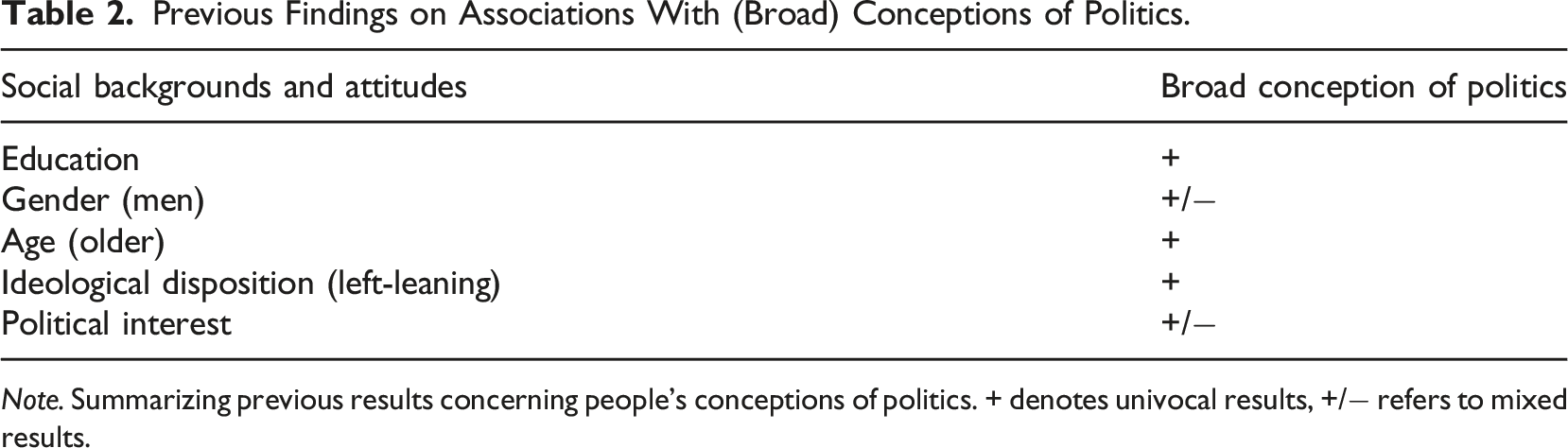
Note. Summarizing previous results concerning people’s conceptions of politics. + denotes univocal results, +/− refers to mixed results.
The Case of Sweden
The study uses data from Sweden, a country in which the population has experienced comprehensive changes of the political structures in the past decades. For long, research considered Sweden as an exceptional case (e.g. Rothstein, 2014) standing out on many measures, for example, having an extensive welfare state, dominated by one strong social democratic party, a population with strong class-voting behaviour, and absence of an anti-immigration party. Yet, as concluded by Pierre (2016: 12), ‘(…) Sweden today presents itself less as an “exceptional” country and more as one country among others on the European continent’. Many kinds of welfare services have been handed over from public in-house providers to private providers (Berg & Johansson, 2020), the social democratic party has lost its predominance and, just like all over in Europe, several parties reach about 10–20% and class-based voting has become less pronounced as issue-based voting has become more popular (Aylott, 2016; Holmberg & Oscarsson, 2016; Oskarson, 2016). Lastly, an anti-immigration party has taken place in the parliament and got 17.53% of the votes in the election 2018 8 (valmyndigheten.se; Rydgren & van der Meiden, 2019). These changes have concerned the border for politics, where the political agendas have changed their focus from traditional areas to new ones and from ‘big government’ to (at least more) ‘limited government’. We raise the issue of generalization in the concluding section.
Method and Data
Participants
The first aim of the analyses was to examine the underlying contents of people’s different conceptions of politics. Here, the three-content-types framework was adopted in order to monitor the analyses. The second aim of the analyses was to investigate the extent to which people’s different conceptions of politics relate to social background and attitudes. To do so, data from the Swedish National SOM Survey (Society, Opinion, and Media) was utilized. Carried out by the University of Gothenburg in the autumn of 2020, we had the possibility to 9 include a comprehensive battery of questions about people’s ideas of what politics is. Moreover, the SOM survey randomly selected respondents from the Swedish Tax Agency register, which includes all people residing in Sweden between the ages of 16 and 85. With a response rate of 51%, 1845 respondents answered the survey (SOM institute, 2021).
Measures
Key Variable: Conceptions of Politics
The question format was similar to that of the forerunners (e.g. Ferrín et al., 2020; Fitzgerald, 2013; Podschuweit & Jacobs, 2017). 10 The survey included a variety of topics, eight in total. In connection to the topics, the respondents were asked how much they thought they had to do with politics. The answers were given on a 5-point scale, from 1 = ‘very much about politics’ to 5 = ‘very little about politics’. 11 The responses were then recoded in reverse (0–4) so that higher scores indicate a stronger opinion that a topic is considered as about politics.
Regarding the three types of content, three of the topics were selected and judged as pertaining to the ‘government sphere’. Two of these mentioned formal institutional contexts (‘Swedish membership in NATO’ and ‘conflicts within the government’), and the third covered issues that are exclusively matters for the national parliament to handle (‘expansion of nuclear power capacity’).
Two topics were selected and assessed as ‘public-sphere’ related. One cited an institution responsible for a part of the collective organization of societal life, and one referred to services that such institutions are responsible for providing. The first such topic is ‘child care’. In the Swedish context, ‘child care’ is financed through taxation, and administered and primarily run by municipalities at the local level (e.g. Naumann, 2005). The other topic that was picked and interpreted as public-sphere relevant is ‘unemployment’. Apart from being a long-debated topic in Sweden, unemployment is closely connected to public institutions, especially the Swedish Public Employment Service (Arbetsförmedlingen), a centrally organized public agency that is the largest actor on the labour market. The Public Employment Service is not just a place for helping employers and job-seeking citizens to find each other. It is linked to the welfare state more broadly. For instance, a citizen who has lost her job has to register with the agency before she can apply for unemployment benefits.
Considering the last type of content, three topics were selected and treated as ‘elsewhere-sphere’. Two of these were rather easily selected and assessed. They described everyday-life situations: ‘grocery shopping’ and ‘distribution of household work within the home’. Neither of these is directly subject to legislation in the Swedish context. The third topic interpreted as elsewhere-relevant, ‘euthanasia’, is more complicated to assess, however. It is an interesting topic, which we selected because it could be viewed as a topic that ranges between all the content-types. That is, in contrast to the other two topics, ‘euthanasia’ is subject to legislation; Swedish law forbids it. Being prohibited by law makes it a question of how society is organized, which strengthens the argument that ‘euthanasia’ can be interpreted as belonging to a ‘public-sphere’ understanding of politics. Without reference to any institutional setting, however, it is treated as ‘elsewhere-sphere’ relevant, with a reminder that the topic may be of borderline character.
Social Background
Education
Educational background was measured by one item asking respondents to indicate the highest level of schooling they had completed. The response scale ranged from 1 = ‘Compulsory school or equivalent, fewer than 9 years’ to 10 = ‘Postgraduate education’. The responses were then aggregated into four groups for educational background: 1 = ‘Low, compulsory school (9 years or shorter)’, 2 = ‘Moderately low, upper-secondary school (or equivalent)’, 3 = ‘Moderately high, college/university (shorter than 3 years)’, 4 = ‘High, college/university (more than 3 years)’. The four groups of the educational background variable were provided by the SOM programme. 12
Age
Age was measured by one item asking respondents to report their year of birth. Thereafter, four age groups were created in the following way: 16–29 (16%), 30–49 (29.5%), 50–75 (44.8%), and 76–85 (9.7%). The age variable containing the four groups was provided by the SOM programme.
Gender
To tap this construct, respondents were asked to report their gender. In the original survey, three response options were given: 1 = ‘woman’, 2 = ‘man’, 3 = ‘other’. Too few responded with the latter option to be included in the present analyses (eight in total). The gender variable was then recoded (1 = ‘woman’ and 0 = ‘man’). 51.1% women and 48.9% men.
Attitudinal Characteristics
Political Interest
The traditional item ‘In general, how interested are you in politics?’ was employed to measure political interest. The answers were given on a scale ranging from 1 = ‘very interested’ to 4 = ‘not at all interested’. The scores were then recoded in reverse so that higher scores indicate higher levels of political interest. The mean of the political interest measure was 2.76 (SD = .78). 13
Ideological Disposition
To measure ideological view, the respondents were asked to place themselves on a 5-point left/right scale. The response options ranged from 1 = ‘clearly to the left’ to 5 = ‘clearly to the right’. The mean for the ideological disposition measure was 3.02 (SD = 1.89). 14
Statistical Analyses
To achieve the aims of the study, several statistical techniques were employed, using the statistical software SPSS 28.
To address the first question: whether different types of content can improve the understanding of people’s varying conceptions of politics, an explanatory factor-analytic approach with principal component analysis using varimax rotation was applied to the eight-topics battery. Such analysis is suitable in order to clarify relationships between items by revealing underlying factors (e.g. Norris & Inglehart, 2019). In our case, and more simply put, revealing underlying factors – by analysing the relationships between the various topics – can provide valuable insights into the ways in which people’s conceptions of politics differ. In order to dig further into how contents may play a role, a typology of citizens’ conceptions of politics was empirically tested through classification analysis.
To address the second set of questions: whether people’s social backgrounds and attitudes relate differently across different types of content, group mean comparison tests were conducted. Depending on the number of groups in a specific analysis, either Tukey’s honestly significant difference (HSD) tests or independent sample t-tests were employed in order to significance test differences. In addition to group comparisons, multivariate linear regression analysis was used. Including all the factors in one model makes it possible for such analyses to reveal whether social backgrounds and attitudes have independent connections to different contents of politics. Hence, when controlling for the rest of the factors, we can gain deeper insights into the potential link between each factor and different conceptions of politics.
Results
Descriptive Statistics – Conceptual Detail and Conceptual Breadth
Before we move on to the results of the analyses, descriptive statistics on people’s conceptions of politics are presented. Figure 2 reports on conceptual detail, that is, the extent to which each of the various topics is considered as being about politics. As can be seen, a great deal of variation is demonstrated considering the degree to which each topic concerns politics. For instance, a clear majority of the respondents report that ‘Swedish membership in Nato’ (92.7%), ‘conflicts within the government’ (85.5%), ‘expansion of nuclear power capacity’ (83.6%), and ‘unemployment’ (80.2%) are to a large extent political issues. Even if these four topics are relatively close to consensus, a group of respondents identifies these as only having little to do with politics (ranging from 2.2% to 8%). Detailed conception: Percentage of the extent to which each topic is perceived as political. Note: In Figure 2, we have recoded the scores: 4 and 3 mean it has much to do with politics, 2 means somewhere in between, and 1 and 0 mean it has little to do with politics. Source: The National SOM Survey, Riks-4, 2020.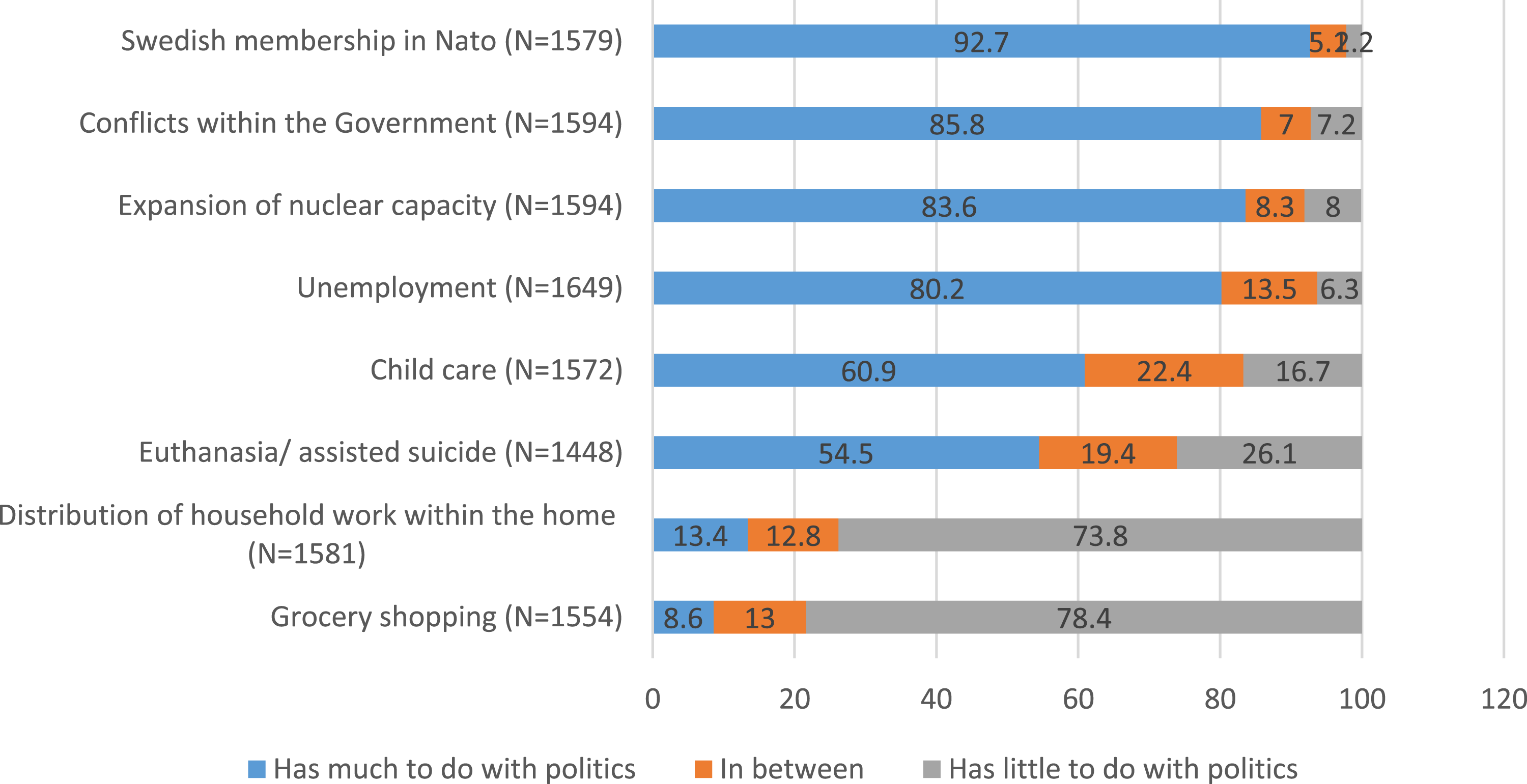
Besides these four topics, more variation is found concerning topics such as ‘child care’ and ‘euthanasia’. Just over half of the respondents report that these two topics have much to do with politics (60.9% ‘child care’ and 54.5% ‘euthanasia’), whereas a substantial proportion think they do not (16.7% ‘child care’ and 26.1% ‘euthanasia’). The rest of the respondents seem to be indecisive, responding in the middle of the scale (22.4% ‘child care’ and 26.1% ‘euthanasia’).
Moreover, at the other end of the spectrum, the most rarely identified topics were ‘grocery shopping’ and ‘distribution of household work within the home’. More precisely, 78.4% consider ‘grocery shopping’ to have little to do with politics, while 73.8% report the same regarding ‘distribution of household work within the home’.
Figure 3 reports on the respondents’ conceptual breadth. An individual additive scale based on the total score for the eight topics is used to illustrate this. As shown, there are notable variations in conceptual breadth within the public. Some respondents do not perceive any of the topics as political, while a few others perceive every single one of them as having very much to do with politics. Between these extremes, however, the average respondent has a mean value of 2.59 (SD = .59). Conceptual breadth: the sum of topics that are about politics. Note: The sum of topics that are considered to be about politics. In Figure 3, we summed up the scores for the eight topics in order to visualize the respondents’ conceptual breadth by their mean values (0–4). Source: The National SOM Survey, Riks-4, 2020.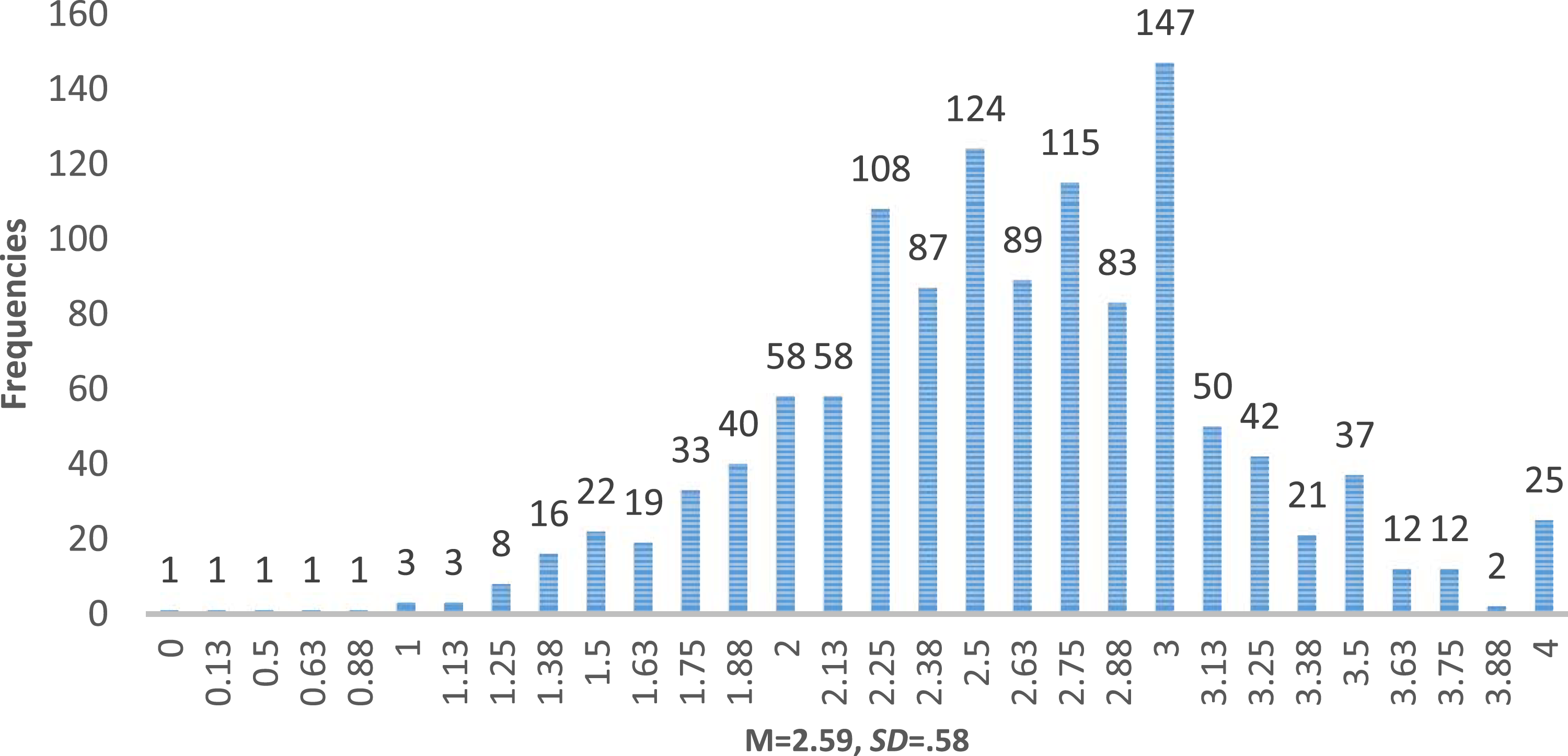
In sum, Figures 2 and 3 demonstrate heterogeneity among the public in the way they categorize things as being about politics. Overall, this is in line with previous research on conceptions of politics (e.g. Ferrín et al., 2020; Fitzgerald, 2013; Görtz & Dahl, 2021). However, in the next section, the underlying contents of people’s different conceptions of politics are examined.
The Importance of Contents – ‘Macro-Politics’ and ‘Micro-Politics’
Turning to the first research question, as illustrated in Table 2, contrary to the theoretical discussion on three separate types of content, the empirical analysis suggested a two-factor solution. All topics covering either ‘government content’ or ‘public-sphere content’ together with the borderline topic of ‘euthanasia’ loaded strongly on the same factor (1), indicating that people do not necessarily differentiate between them. Stated differently, someone who thinks ‘child care’ is absolutely a topic that belongs to the political domain is also likely to think that ‘expansion of nuclear power capacity’ belongs there too.
Factor Loadings of Topics as Being About politics.
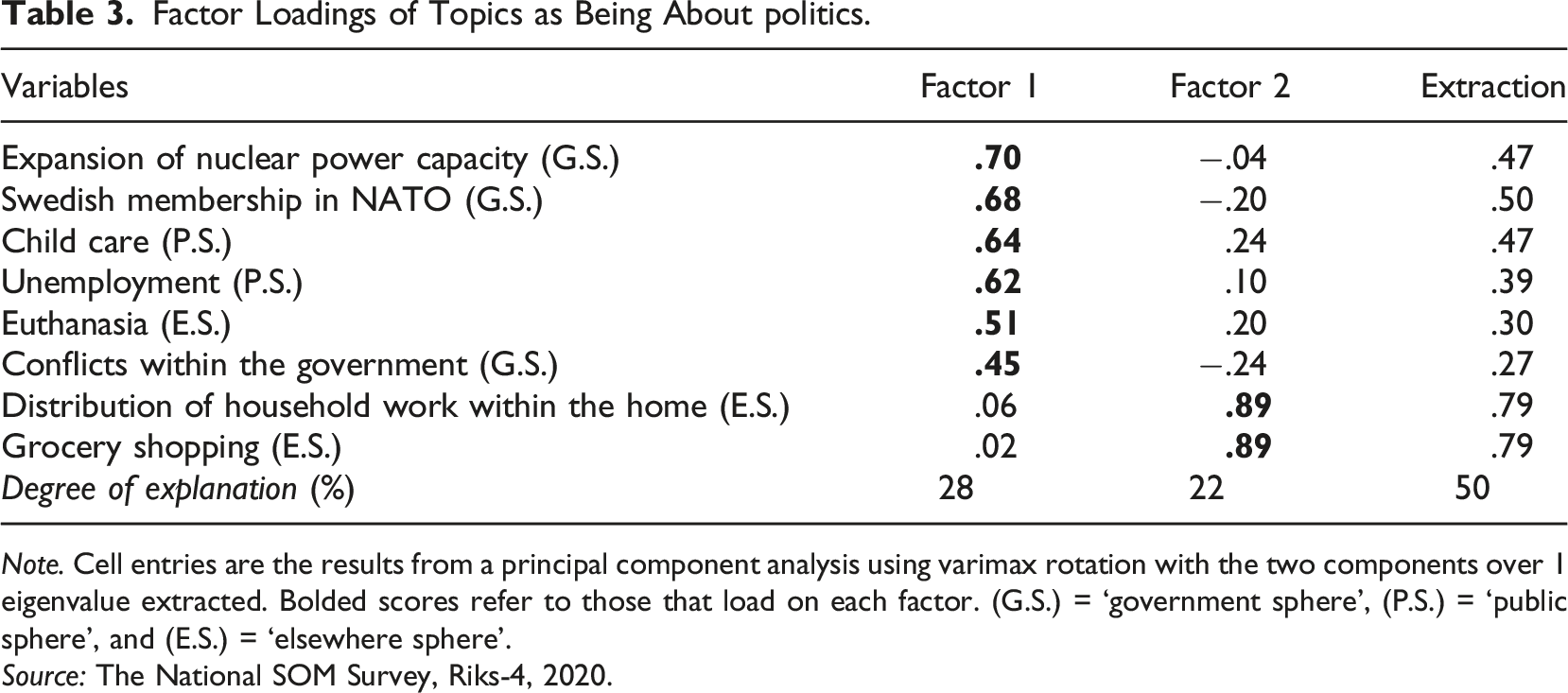
Note. Cell entries are the results from a principal component analysis using varimax rotation with the two components over 1 eigenvalue extracted. Bolded scores refer to those that load on each factor. (G.S.) = ‘government sphere’, (P.S.) = ‘public sphere’, and (E.S.) = ‘elsewhere sphere’. Source: The National SOM Survey, Riks-4, 2020.
These two factors reveal a couple of interesting theoretical dimensions. The first dimension combines topics covering government content and public-sphere content, which we henceforth refer to as ‘macro-politics’. The second dimension brings together topics from elsewhere content, henceforth referred to as ‘micro-politics’.
To prepare for the examination of whether different types of contents associate differently with social backgrounds and attitudes, the scores of the items for each respective factor were summed up. One ‘macro-politics’ index was constructed based on the means from the six items that loaded strongly on Factor 1 (M = 3.15, SD = .70). Cronbach’s alpha for the index was .63. The same was done with the two items that loaded strongly on Factor 2. The ‘micro-politics’ index had a mean of .78 (SD = 1.07). The two items correlated significantly (Pearson’s r = 686, p = <.01), indicating accurate internal reliability for the index. These indexes were used throughout the analyses connected to social backgrounds and attitudes.
Before turning to the second research question, it is worthwhile to discuss a typology based on the two dimensions, which can provide further information about the first research question. Different conceptions of politics could be understood in the following way: citizens may conceptualize one or both of these dimensions as being about politics and they may identify one or both as non-political. This is illustrated in Figure 4 where, in the upper-left cell, we find citizens who include ‘micro-politics’ in their conceptions but not ‘macro-politics’. In the upper-right cell, those who include both dimensions in their way of conceptualizing politics are found. In the lower-left cell, their counterparts can be found, citizens who do not consider any of the dimensions as having to do with politics. In the lower-right cell, citizens who identify ‘macro-politics’ but not ‘micro-politics’ as political are found. Potential distribution across the two dimensions.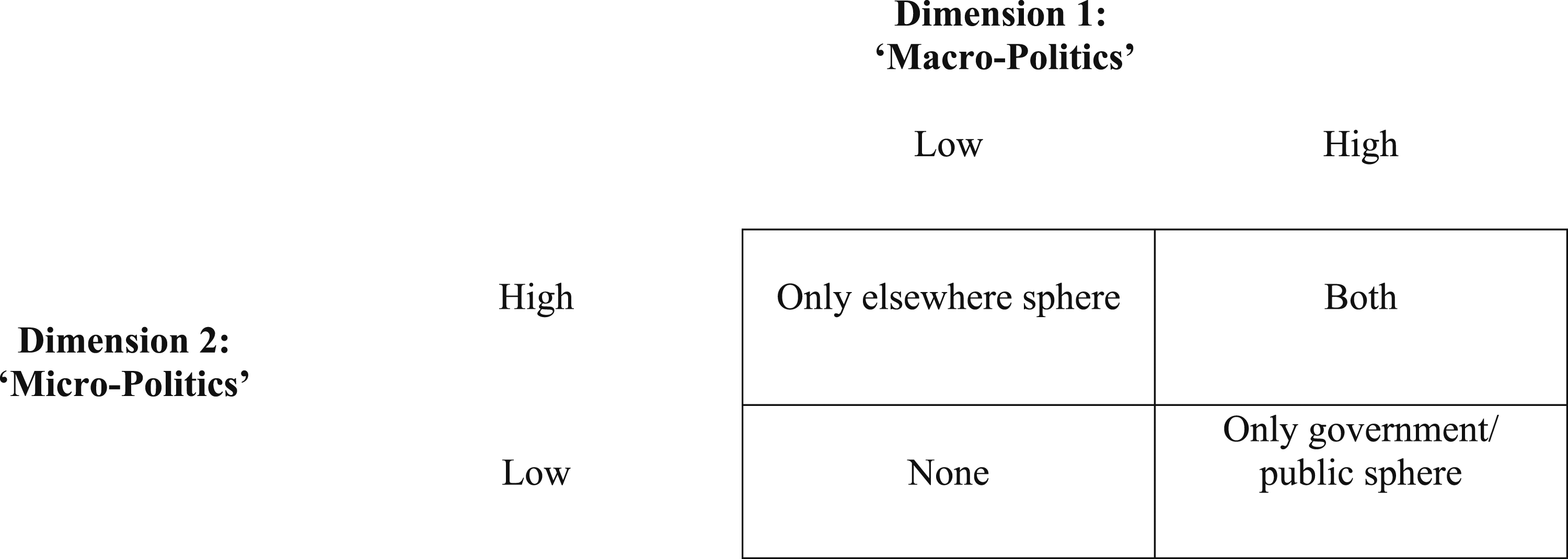
The Distribution of Respondents Across the Two Dimensions of Politics.
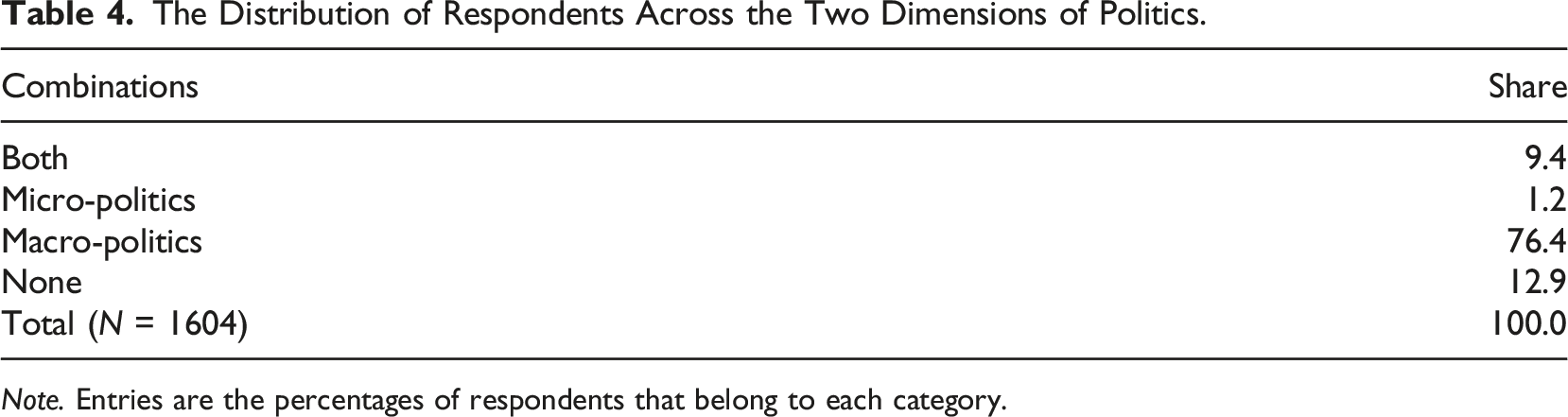
Note. Entries are the percentages of respondents that belong to each category.
Results in Relation to Social Background and Attitudes
Previous research
16
tells us that education is related to an expansive definition of politics.
17
However, as shown in Figure 5, the analyses suggest that the effort of climbing the educational ladder is not associated with ‘macro-politics’. Across the four education-level groups, the mean scores are quite similar, and the minor differences are not significant. This indicates that the ‘average’ low-educated person and the ‘average’ well-educated person categorize issues related to government and the welfare state similarly. Education and conception of politics across the two dimensions. Source: The National SOM Survey, Riks-4, 2020.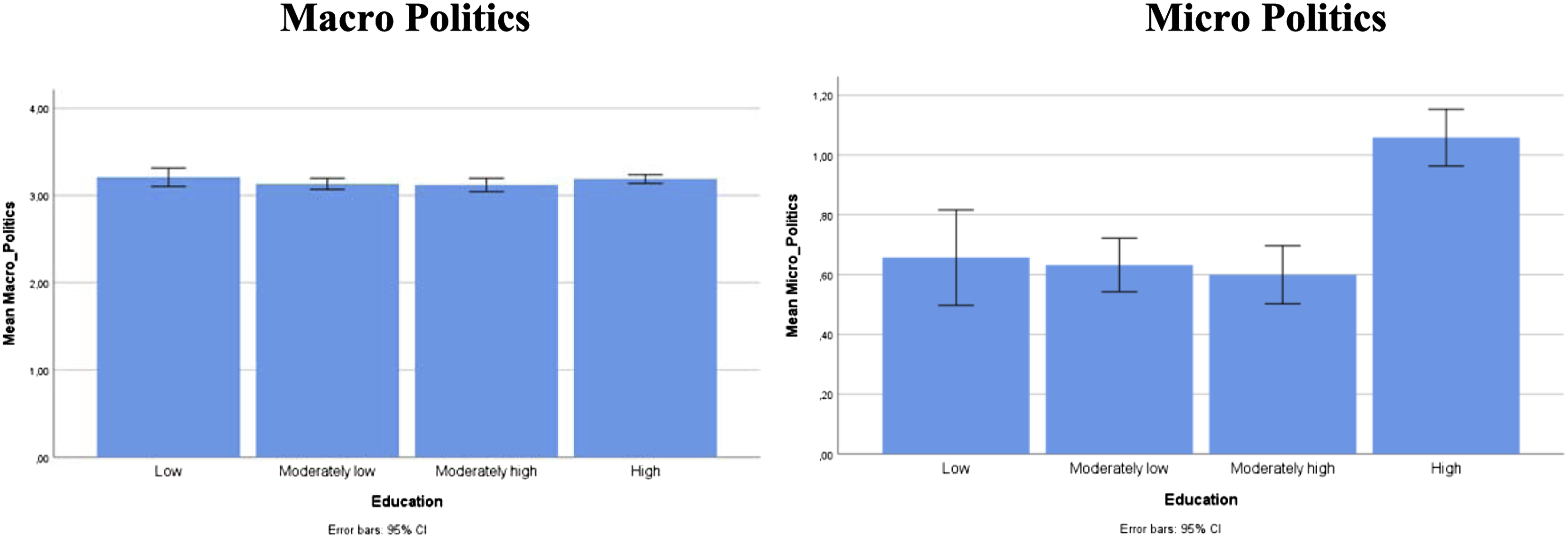
Apart from one notable exception, a similar pattern appears recurrently when we look at ‘micro-politics’. The extent to which this type of content is considered to concern politics is very similar among people with low to moderately high educational background. The exception is found among the group of people with the most years of education. On average, they categorize ‘micro-politics’ as being about politics significantly more than the other groups. Beyond that difference, education does not seem to function differently by different types of content.
Previous results on gender and conceptions of politics are mixed, some showing that men hold a more expansive definition of politics, some that there are no differences between them, and some that women are the ones who embrace a broad conception of politics. The analyses in the present study, shown in Figure 6, support the latter finding, that women on average categorize their social world as being about politics more than men do. Gender and conception of politics across the two dimensions. Source: The National SOM Survey, Riks-4, 2020.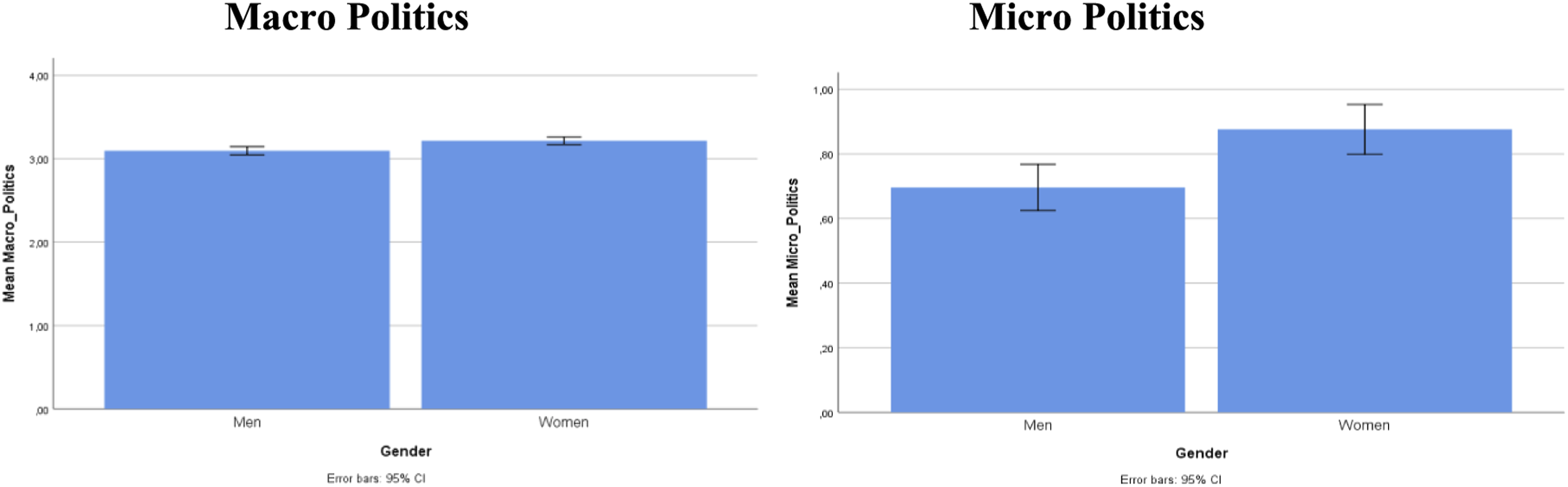
Independent of content, there are significant disparities, 18 and these are in ‘favour’ of women. In sum, according to the analyses, gender is associated with conceptions of politics in so far as women more frequently identify both ‘micro-politics’ and ‘macro-politics’ as being political.
Previous research has also suggested that age and conceptions of politics are related, since older citizens are more likely than younger ones to identify things around them as pertaining to politics. According to our analyses (Figure 7) such an assumption is partly supported. The two older cohorts (50–75 and 76–85) score significantly higher across content related to the government and the welfare state (‘macro-politics’) than the two younger cohorts (16–29 and 30–49). Age and conception of politics across the two dimensions. Source: The National SOM Survey, Riks-4, 2020.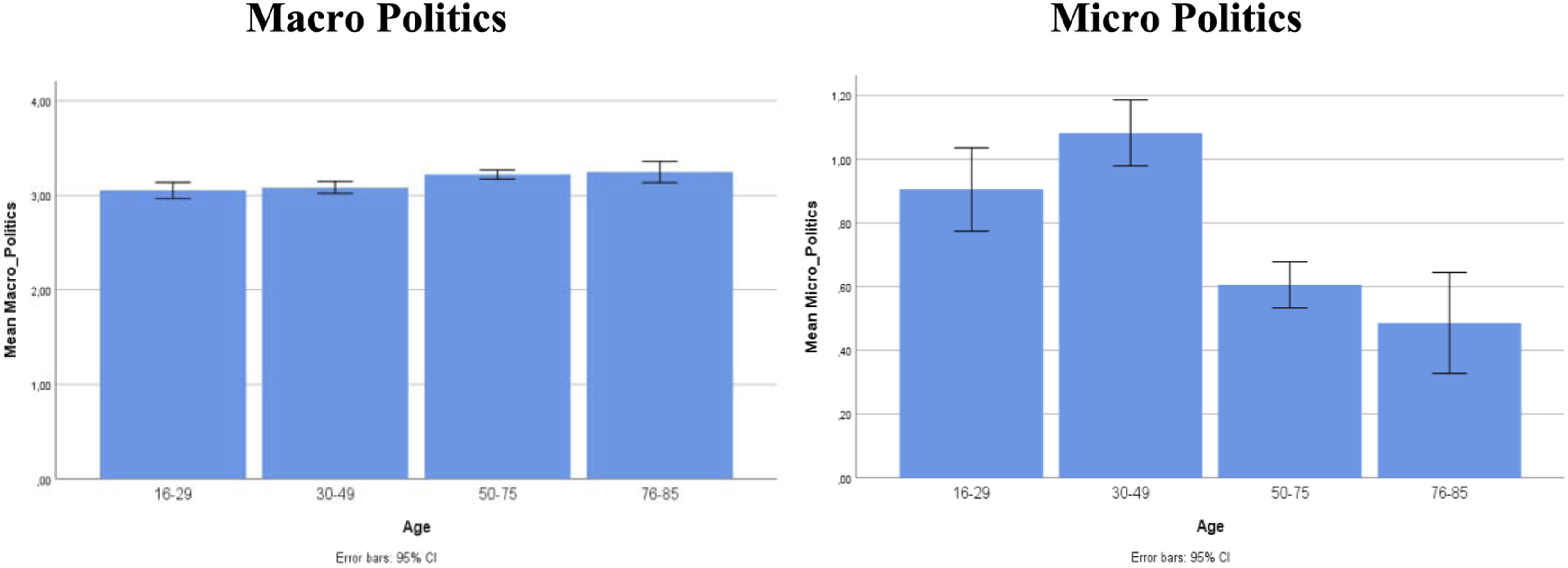
In contrast, however, when it comes to ‘micro-politics’ and age, the patterns are reversed. The ‘average’ person among the two younger cohorts is more prone to categorize content beyond ‘macro-politics’ as political. In sum, the results indicate that age is related to people’s conceptions of politics, but how and to what extent they do so seems to depend on the content.
Turning to attitudes, one of these, ideological disposition, has been claimed to be important in the sense that those who identify themselves as belonging to the political left are more likely to embrace an expansive definition. According to our analysis, such an association is quite distinct regarding one type of content (Figure 8). With regard to ‘micro-politics’, the group of people who identify themselves as ‘clearly to the left’ noticeably has the highest mean score, and the differences are significant in comparison to all other groups on the left/right scale. After them, among left-leaners, those who are ‘somewhat to the left’ score significantly higher than the two groups of right-leaners. The ‘independents’ do not differ from any group except from those identifying as ‘clearly to the left’. Ideological disposition and conception of politics across the two dimensions. Source: The National SOM Survey, Riks-4, 2020.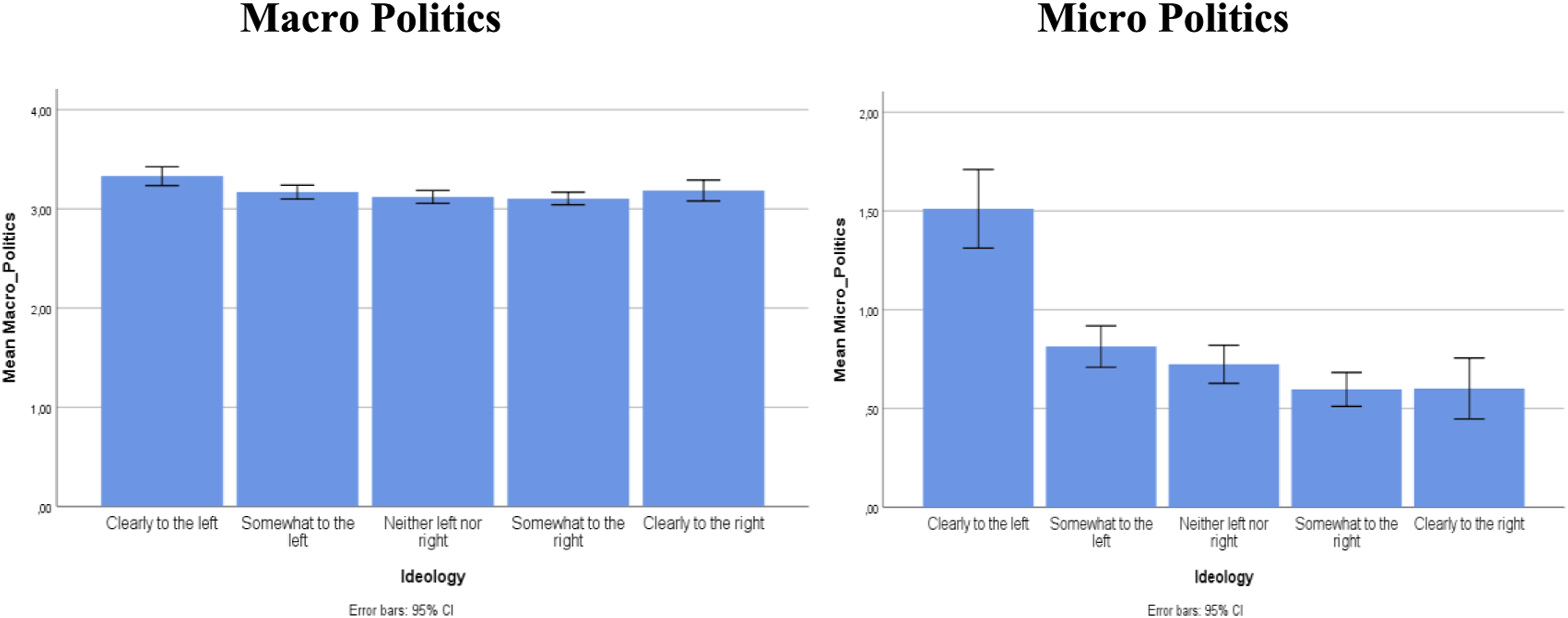
Regarding other topics than those in everyday-life settings, the associations are not very clear. As an example of this, the ‘average’ person among those who identify themselves as ‘clearly to the right’ does not differ – when it comes to categorizing ‘macro-politics’ as political or not – from the ‘average’ person in the two groups of left-leaners. The only significant differences regarding ideology and ‘macro-politics’ are found between the ‘clearly to the left’ group and the ‘independent’ and ‘somewhat to the right’ groups. In sum, the association between ideological disposition and conceptions of politics is straightforward regarding content related to ‘everyday life’. That is, left-leaners are more likely to categorize ‘micro-politics’ as political than others are. Regarding ‘macro-politics’, the associations are rather mixed across ideological dispositions.
Considering political interest, previous research has reported two different answers: either (a) that greater interest in politics corresponds to a more expansive definition of politics or (b) that the two are unrelated. These two findings are to some extent supported here. As shown in Figure 9, the ‘average’ person with the highest level of political interest scores significantly higher irrespective of content. More precisely, the most politically interested people are more prone to categorize the outside world as being about politics than members of any of the other groups classed by level of political interest. Political interest and conception of politics across the two dimensions. Source: The National SOM Survey, Riks-4, 2020.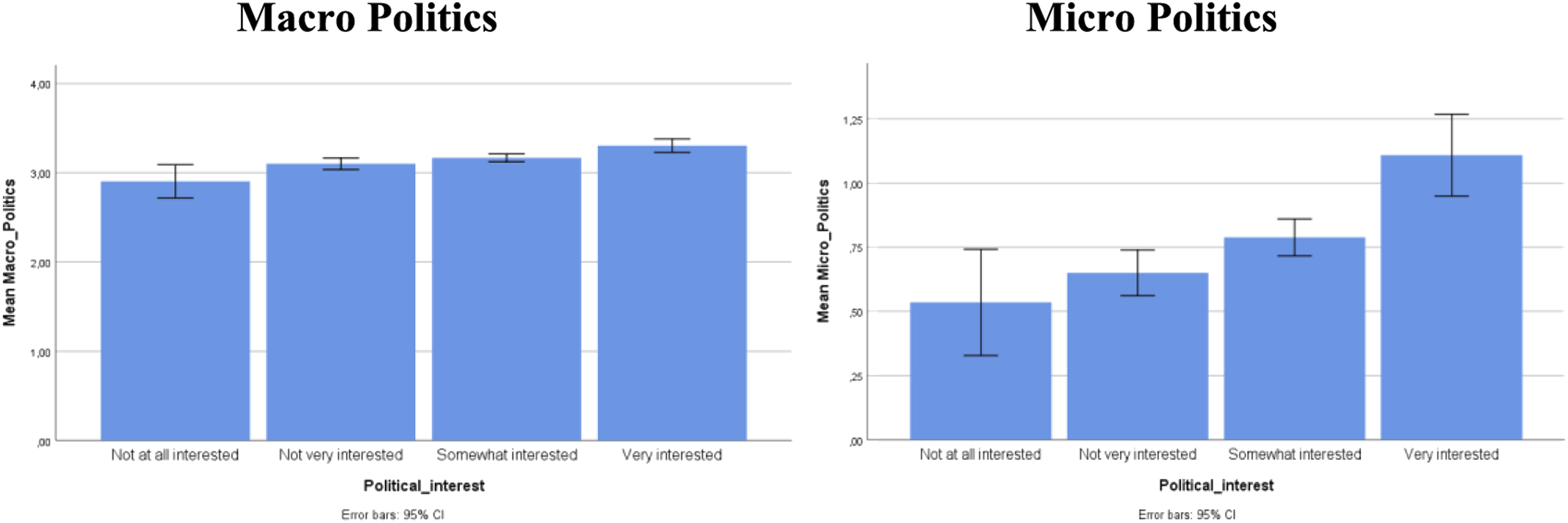
Apart from this, only one difference is significant. The moderately interested respondents score higher for ‘macro-politics’ than those with the least interest. In sum, political interest and citizens’ conceptions seem to be related, but this applies mostly to the most interested people.
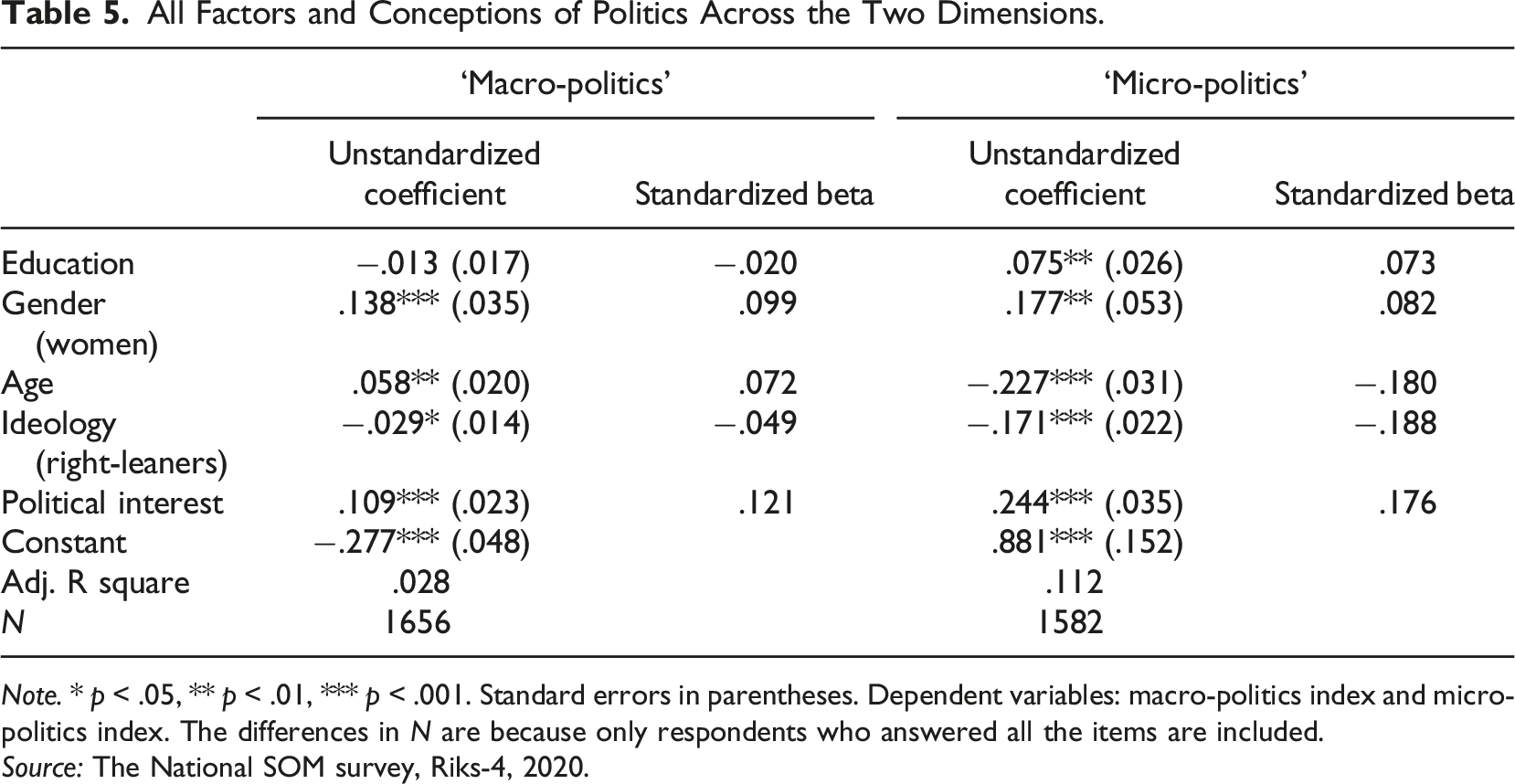
Moreover, multivariate regression analyses were employed to evaluate independent effects of each factor. As illustrated in Supplementary Table 9, the pattern follows the associations described above. On their own, gender, age (older), ideology and interest all seem important for perceiving ‘macro-politics’ as political, and these are important for ‘micro-politics’ as well, together with education, though in this case with younger age.
All Factors and Conceptions of Politics Across the Two Dimensions.
Note. * p < .05, ** p < .01, *** p < .001. Standard errors in parentheses. Dependent variables: macro-politics index and micro-politics index. The differences in N are because only respondents who answered all the items are included. Source: The National SOM survey, Riks-4, 2020.
Previous and Present Findings, Comparison.
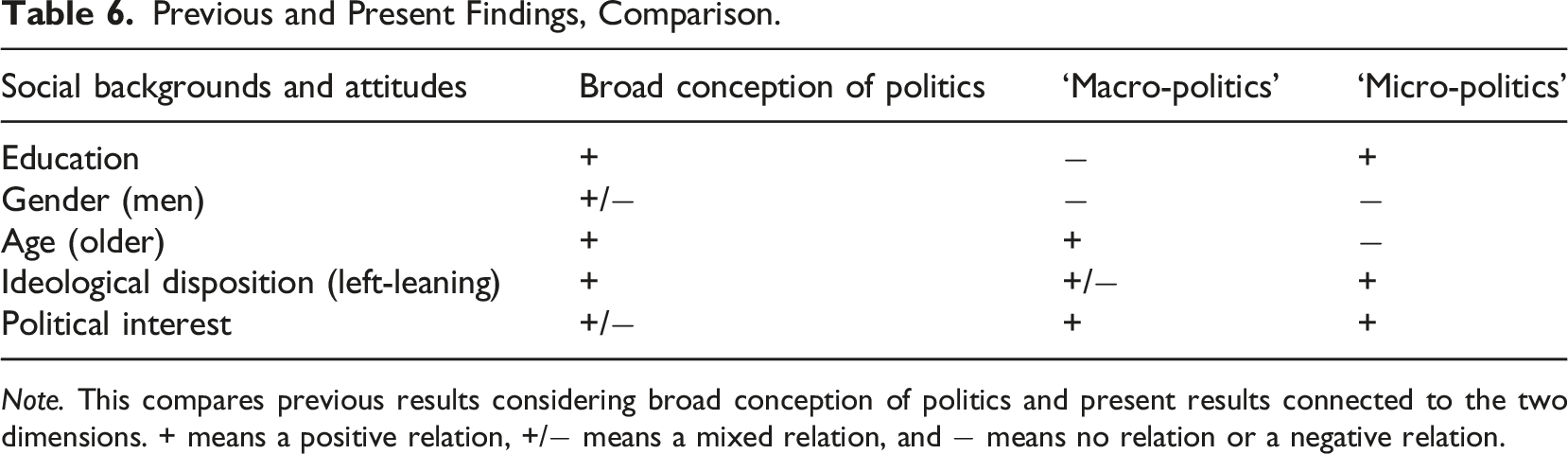
Note. This compares previous results considering broad conception of politics and present results connected to the two dimensions. + means a positive relation, +/− means a mixed relation, and − means no relation or a negative relation.
Conclusions and Discussion
This study makes a critical and much-needed contribution to the research on how citizens relate to their democratic societies in general and their conceptions of politics in particular. We began by arguing that the current treatment of people’s conceptions of politics as a one-dimensional orientation has prevented us from being able to improve our understanding of different conceptions of politics. To constructively address this gap, the study is centred around this theme. We examined the underlying contents of people’s different conceptions of politics (RQ1), and whether these different conceptions are related to social background and other attitudes (RQ2a-e).
Regarding the former, a framework was constructed from Heywood’s work on the concept of politics and designed to recognize differences among members of the public and their ideas of what constitutes politics. Two dimensions were found. Based on this, the analyses suggested that there are four different conceptions of politics among the Swedish public. By far, the largest group (76.4%) holds a conception of politics that solely covers ‘macro-politics’ content. The second largest group (12.9%) comprises citizens who do not perceive either of the two dimensions as political. After them in size (9.4%), we find a group of citizens with the opposite viewpoint, those who hold conceptions that cover both dimensions. Finally, the smallest group (1.2%) consists of citizens whose conceptions only cover ‘micro-politics’ content. With caution, these results are to some extent similar to those reported by Görtz et al. (2022). That is, among Americans, they found one group of citizens (17.2%) that perceived everything as political, while, at the same, another group (14.9%) that did not perceive anything as such. This sends an interesting message, in both countries there are groups of citizens who perceive almost nothing as political, and at the other end of the spectrum, citizens whose conceptions of politics are very broad and contain every single topic that is offered. And also, between these endpoints, there are groups of citizens with different conceptions.
Regarding the latter, the multiple analyses revealed results that nuance previous findings. For instance, climbing the educational ladder seems only to be related to including ‘micro-politics’ content (cf., Fitzgerald, 2013). Regarding age, the older generations seem more prone to include ‘macro-politics’, while younger generations’ conceptions of politics are more likely also to cover ‘micro-politics’ (cf., O’Toole, 2003; Henn et al., 2005; Manning, 2010). Moreover, according to our analyses, gender is important for both conceptions. Contrary to previous findings (cf., Fitzgerald, 2013; Ferrín et al., 2020), women are more likely than men to perceive both dimensions as political. Ideological disposition is not, according to our results, very important for whether citizens identify ‘macro-politics’ content as politics. Nevertheless, left-leaners seem more prone to think of ‘micro-politics’ as political than right-leaners (cf., Görtz & Dahl, 2021). Finally, political interest is indeed in line with previous research. The more interested people are in politics, the more likely it is that they will conceptualize various circumstances as being about politics. However, this holds only for the most interested share of the public. An critical implication of these findings is that it seems that citizens’ social backgrounds and attitudes help us to better understand why they consider certain contents as being about politics and not just how ‘broad’ their conceptions are.
Of course, we should be careful with too strong generalization claim here. This study is based on data from Sweden. The results that we compare with come from different contexts and the measures are not identical. In order to further extrapolate the relationships between citizens’ conceptions of politics and their social background and attitudes, cross-national surveys that include measures of conceptions of politics are needed. On the topic, constructing an equivalent measurement that could ‘travel’ would benefit from considering the three-types of content framework that was offered in this study. More precisely, taken the framework into account is a helpful starting point. The framework acknowledge the dominant understandings of politics among scholars, guides the selection of proper topics, and, at the same time, made to facilitate the understanding of different conceptions of politics more deeply between citizens. To conclude, ideally the framework offered will guide future research on this important orientation.
Supplemental Material
Supplemental Material - What Do We Know About People’s Politics? Testing a New Framework for Understanding Different Conceptions of Politics
Supplemental Material for What Do We Know About people’s Politics? Testing a New Framework for Understanding Different Conceptions of Politics by Carl Görtz in Alternatives
Footnotes
Declaration of Conflicting Interests
The author(s) declared no potential conflicts of interest with respect to the research, authorship, and/or publication of this article.
Funding
The author(s) received no financial support for the research, authorship, and/or publication of this article.

Supplemental Material
Supplemental material for this article is available online.
Notes
The Question and the Full List of Topics
‘There are topics that could be considered political and there are topics that could be regarded as non-political. To what extent do you think following topics are about politics?’
Expansion of nuclear power capacity
Childcare
Conflicts within the government
Distribution of household work within the home
Grocery shopping
Swedish membership in NATO
Euthanasia/assisted suicide
Unemployment
Author Biography
References
Supplementary Material
Please find the following supplemental material available below.
For Open Access articles published under a Creative Commons License, all supplemental material carries the same license as the article it is associated with.
For non-Open Access articles published, all supplemental material carries a non-exclusive license, and permission requests for re-use of supplemental material or any part of supplemental material shall be sent directly to the copyright owner as specified in the copyright notice associated with the article.
