




Abstract
Aim and Objective:
To assess the awareness of clear aligner disposal among orthodontists and general dentists.
Materials and Methods:
A cross-sectional electronic survey (e-survey) was developed based on the use of Google Forms. The survey link was randomly disseminated across social media platforms consisting of orthodontists and general dentists. The responses were subsequently tabulated and analyzed using statistical analysis with the help of Statistical Product and Services Solution software version 23.0. The survey comprised questions consisting of demographics, frequency of usage of clear aligners, and awareness on disposal of clear aligners.
Results:
The survey gathered responses from 760 participants, including 374 orthodontists and 384 general dentists from the 1,000 dentists and orthodontists who were surveyed, revealing trends in clear aligner usage, disposal practices, and awareness. Orthodontists showed higher frequency and safer disposal practices. A knowledge gap exists among dental practitioners regarding biodegradation characteristics and disposal regulations. Both groups express a shared interest in environmentally responsible practices, emphasizing the necessity for education and comprehensive guidelines from aligner companies to mitigate environmental impact.
Conclusion:
Clear aligners are popular in orthodontic treatment which contributes to environmental concerns due to improper disposal. The study explored clear aligner disposal practices among general dentists and orthodontists. The study underscores the need for increased awareness among orthodontists and general dentists, emphasizing proper clear aligner disposal methods and the importance of comprehensive instructions from aligner companies.
Introduction
Physical, social, and psychological factors significantly influence an individual’s life. 1 A significant number of individuals seek orthodontic care with the goal of enhancing their facial aesthetics and smile. The importance of aesthetics extends beyond personal satisfaction, impacting career progression and interpersonal relationships. Orthodontics has adapted to this emphasis on aesthetics, integrating it with the traditional focus on functional dental alignment. 2 The rise of adult orthodontics underscores society’s increasing recognition of the importance of appearance, particularly evident in adults’ prioritization of aesthetic outcomes during treatment. A greater number of adults seeking orthodontic services has resulted in an increased requirement for aesthetic orthodontic appliances. 3 Advancements in orthodontics, driven by greater awareness and biomechanical improvements, have resulted in a surge in demand for aesthetic alternatives. Originating in the mid-twentieth century, clear aligners have evolved significantly to achieve these goals. 4
Clear aligners are an aesthetic alternative to conventional fixed braces, predominantly driven by aesthetic preferences articulated by adults. 5 Aligners permit superior oral hygiene and also reduce the risk of soft tissue trauma and decrease the likelihood of white spot lesions as compared to fixed appliances. 6 Moreover, virtual monitoring tools improve treatment plan oversight for aligner patients, while their efficiency results in less chair time and shorter treatment periods. 5 Lastly, the decreased requirement for frequent visits makes clear aligners particularly beneficial for patients who cannot regularly travel. 7
Before clear aligners, adjunct appliances were commonly used alongside fixed braces. Kesling’s 8 positioner, initially of vulcanite and later latex, aided tooth settling and corrected positions unresolved by fixed appliances. Remmensnyder’s Flex-O-Tite, introduced in 1926, addressed gingival disease and incidentally induced tooth movement. Nahoum’s thermoformed plastic sheet, the dental contour appliance in 1964, was the first to move teeth, which was later refined by Sheridan in 1993 into the Essix appliance. 9 These innovations marked pivotal moments in orthodontics, preceding the development of modern clear aligner technology, shaping the evolution of orthodontic treatment methods. 10 Align Technology’s Invisalign, launched in 1998, revolutionized clear aligners, utilizing 3D computer imaging and vacuum thermoforming for personalized treatment plans. 11
Clear aligners are typically crafted from polymers like polyester, polyurethane, polypropylene, polycarbonate, ethylene vinyl acetate, and polyvinyl chloride. 12 Polyethylene terephthalate (PET) and polyethylene terephthalate glycol (PETG) are common in clear aligners on account of superior optical and mechanical qualities. 13 However, these plastics, categorized as resistant and slow to degrade, pose environmental challenges, taking centuries to break down in natural settings. 14 PET-containing plastic is highly crystalline which is the reason for extremely slow microbial breakdown over a time period of hundreds of years. 15 The prevalent use of PET, PETG, and other petroleum-based polymers in clear aligners contributes to plastic pollution, affecting ecosystems and climate change. 16 Plastic pollution, from macro to nanoplastics, threatens ecosystems, contaminating freshwater, marine habitats, soil, and air, endangering flora and fauna through the food chain. 17 Patients frequently use multiple aligners for 7-14 days each which are then discarded without recycling. Environmental strain due to high plastic load has therefore become a serious concern. 18
From 1950 to 2018, global production of fossil fuel-based plastic escalated significantly, reaching over 454 million tonnes. During the period between 1950 and 1980, a staggering 9.7 billion tonnes of plastics were manufactured.19, 20 Each year, approximately 343 million tonnes of plastic waste is generated, with significant amounts originating from Northern America, the European continent, Central Asia, and the East Asia-Pacific region.19, 21 Lack of concern regarding the manufacturing and disposal of plastic has led to this remarkable substance becoming the predominant form of waste in the ecosystem. 22
Apuzzo et al. 23 evaluated disparities in clear aligner experience, patient demand, and treatment of malocclusions among orthodontists and general dentists. The study found that 79% of 329 respondents, which included both orthodontists and general dentists, reported using clear aligners in their practice. Among these respondents, orthodontists were more prevalent. Most general dentists gained knowledge about clear aligners through private courses. They primarily treated adults for class I spacing or crowding. Despite initial barriers, such as limited experience, 69% of nonusers expressed interest in incorporating clear aligners into their practice.
Currently, there is a lack of specific data regarding disposal practices of clear aligners and whether they are being disposed of properly. Conducting a survey to gather detailed insights into how clinicians or patients dispose of their clear aligners would be instrumental in understanding the extent of the issue and identifying areas for improvement. Such a survey can also aid in developing effective strategies for promoting responsible disposal practices among both providers and patients. By conducting this survey, the aim was to achieve a clear understanding of the environmental implications of clear aligner disposal and to implement targeted measures to mitigate any adverse effects, ultimately fostering more sustainable orthodontic practices in India. In this effort, the attitudes and environmental awareness of aligner manufacturers, dentists, and patients are critical. This paper explores the awareness of clear aligner disposal among orthodontists and general dentals while emphasizing the need for sustainable practices in the dental community.
Materials and Methods
Questionnaires are an important instrument of research and a tool for collecting data. Questionnaires, by their design, permit objective information collection of individual’s beliefs, attitudes, knowledge, and behavior for the purpose of research. 24
Questionnaire Development
A cross-sectional, anonymous electronic survey (e-survey) was designed utilizing Google Forms. Repeated submissions by the same responders were eliminated by using cookies on web browsers. Ethical clearance was obtained from the institute review board prior to beginning the study.
Questionnaire Validity
The pilot e-survey conducted among five orthodontists and five general dentists in Hyderabad city played a crucial role in validating the study’s methodology and questionnaire. First, the survey’s length was carefully evaluated by the participants to ensure it was manageable and not overly burdensome, which is essential for maintaining respondent engagement and data quality. Second, the time it took for participants to complete the survey was assessed to gauge the efficiency of the questionnaire and ensure it could be completed within a reasonable timeframe. Third, the relevance and clarity of the questions were thoroughly reviewed by the pilot participants, confirming that the survey covered pertinent topics related to orthodontics and general dentistry while being clear and understandable. This feedback from the pilot study helped refine and improve the questionnaire, ensuring that it accurately measured the intended constructs. Additionally, the decision to exclude the pilot participants from the main study helped mitigate potential biases and maintain the integrity of the data collection process, further enhancing the overall validity of the study.
Readability Evaluation
Survey readability assessment was done using the Flesch–Kincaid grade level according to a questionnaire-based study done by Meade et al. on clear aligner therapy practice among orthodontists in the United Kingdom and the Republic of Ireland. 25 The Flesch–Kincaid readability tests explain the degree of difficulty in understanding an English passage. The Flesch–Kincaid grade level indicated that the questionnaire was easily readable and suited the target population. 26
Population Sampling and Survey Dissemination
Orthodontists and general dentists were deemed eligible for participation in the study. An online survey was conducted from November 2023 to February 2024 utilizing Google Forms. The survey link was randomly disseminated across all social media platforms (WhatsApp) which was relevant to the target population. Prior to engaging in the questionnaire, explicit informed consent which was included in the questionnaire form was obtained from all participants. We obtained 760 responses in total, 376 from orthodontists and 384 from general dentists, out of the 1,000 general dentists and orthodontists who participated in the survey. These responses were then tabulated and analyzed.
Sample Size Estimation
The sample size was calculated using an online calculator from
Statistical Analysis
Statistical analysis was carried out using Statistical Product and Service Solutions software version 23.0. Absolute values and response percentages were obtained for all questions. A chi-square and Fisher’s exact test were used for categorical data available and it was tested for association and comparison of awareness on clear aligner disposal among general dentists and orthodontists. p values were interpreted for the significance of the responses. Results were analyzed and placed in a tabular format with a 95% confidence interval and p < .05 considered significant.
Results
Results are discussed under three categories;
Demographics (Question 1)
Frequency of usage of clear aligners (Question 2)
Awareness on disposal (Questions 3, 4, 5, 6, 7, 8, 9, 10)
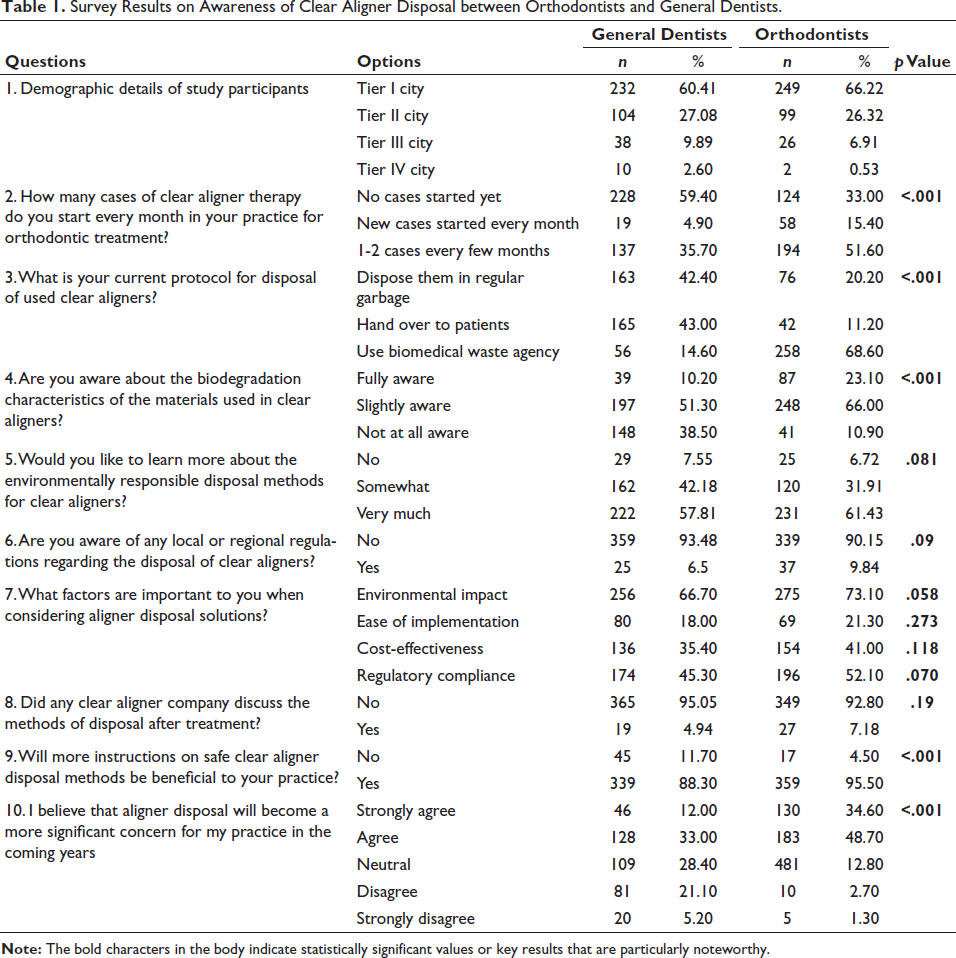
Table 1 depicts the survey questions and results obtained.
Survey Results on Awareness of Clear Aligner Disposal between Orthodontists and General Dentists.
Demographics
Of the 760 completed survey responses, 384 came from general dental practitioners, and 374 were from orthodontic specialists (Figure 1a). 60.41% of general dentists and 66.22% of orthodontists were located in tier I cities. Tier II cities were home to 27.08% general dentists and 26.32% orthodontists, while tier III cities accounted for 9.89% general dentists and 6.91% orthodontists. Only 2.60% of general dentists and 0.53% of orthodontists lived in tier IV cities.
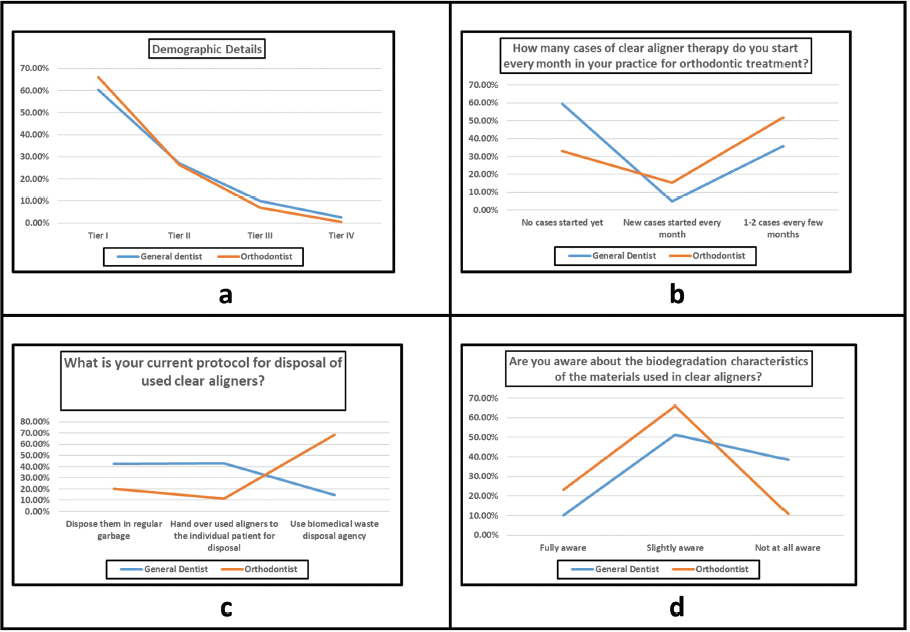
(a) Demographic Details of Participants. (b) Clear Aligner Cases Started Every Month. (c) Current Disposal Methods of Used Clear Aligners. (d) Awareness of Biodegradation of Clear Aligners.
Frequency of Usage of Clear Aligners
Orthodontists demonstrated a higher frequency of initiating clear aligner cases compared to general dentists (Figure 1b), with 51.6% of orthodontists and 35.7% of general dentists starting one or two cases every few months. In contrast, 15.4% of orthodontists and only 4.9% of general dentists reported commencing new clear aligner cases on a monthly basis. This difference in usage between orthodontists and general dentists was significant statistically (p < .001).
Awareness on Disposal of Clear Aligners
Figure 1c shows that 68.6% of orthodontists predominantly utilize biomedical waste disposal services for discarding clear aligners, while only 14.60% of general dentists follow this practice. Additionally, 43% of general dentists and 11.20% of orthodontists entrust patients with used aligners for disposal, while 42.40% of general dentists and 20.20% of orthodontists dispose of them in regular garbage.
Regarding the biodegradation characteristics of materials in clear aligners for orthodontic treatment, 23.1% of orthodontists were fully informed, 66% were somewhat aware, and 10.9% were not aware at all. For general dentists, 10.2% were fully aware, 51.3% were somewhat aware, and 38.5% were not aware of all of these characteristics (Figure 1d).
Figure 2a shows that both orthodontists and general dentists displayed a keen interest in acquiring more knowledge about environmentally responsible disposal methods for clear aligners, with 61.43% of orthodontists and 57.81% of general dentists expressing a high likelihood of learning more.
(a) Learning Environmentally Responsible Disposal Methods. (b) Awareness of Regulations Regarding Disposal. (c) Important Factors When Considering Aligner Disposal Solutions. (d) Aligner Company Norms for Used Aligner Disposal.
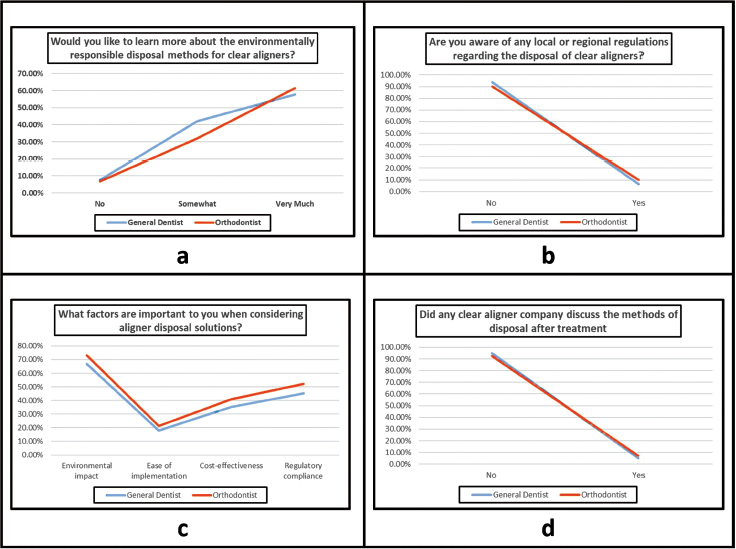
In Figure 2b, majority of both general dentists (93.48%) and orthodontists (90.15%) were not aware of any local or regional regulations concerning the disposal of clear aligners. The difference in awareness between both groups was nonsignificant statistically (p = .093).
When evaluating aligner disposal solutions, orthodontists and general dentists showed varying preferences in factors considered important. In Figure 2c, a higher percentage of orthodontists (73.1%) deemed environmental impact significant compared to general dentists (66.7%), though the difference was not significant (p = .058). Ease of implementation was considered important by 21.3% of orthodontists and 18% of general dentists, with no significant difference (p = .273). Cost-effectiveness was deemed important by 41% of orthodontists and 35.4% of general dentists, showing a nonsignificant difference (p = .118). Regulatory compliance was considered crucial by 52.1% of orthodontists and 45.3% of general dentists, with a nonsignificant difference (p = .070).
In Figure 2d, the data reveal that a slightly higher percentage of general dentists (95.05%) did not receive instructions from clear aligner companies regarding the methods of disposal after treatment as compared to orthodontists (92.80%). This difference was, however, nonsignificant statistically (p = .19).
Orthodontists and general dentists showed statistically significant differences (p < .001) regarding perceived benefit of additional instructions on safe clear aligner disposal methods (Figure 3a). Specifically, 95.5% of orthodontists expressed the belief that more instructions would be beneficial to their practice, compared to 88.3% of general dentists. Conversely, 4.50% of orthodontists and 11.70% of general dentists did not see the same benefit.
(a) Usefulness of Disposal Instructions. (b) Will Aligner Disposal Become a Concern in the Future?
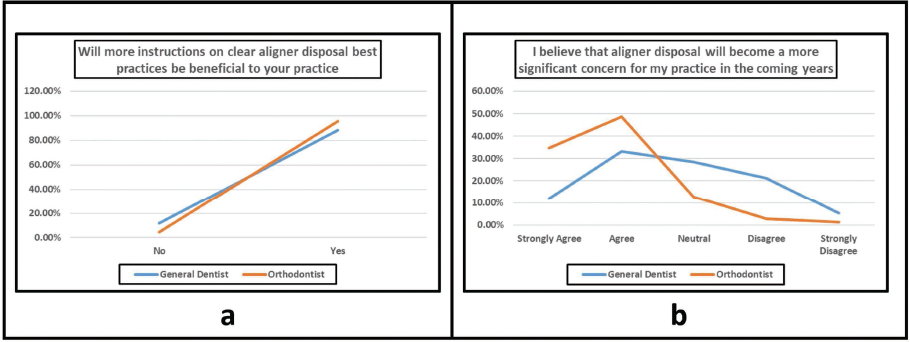
Orthodontists and general dentists displayed a significant difference in their perspectives on the value of additional instructions for proper clear aligner disposal. Figure 3b shows that a strong agreement was noted among 34.60% of orthodontists compared to 12% of general dentists, and agreement was expressed by 48.70% of orthodontists and 33.30% of general dentists. Neutral responses were given by 12.80% of orthodontists and 28.40% of general dentists. Dissenting opinions were evident, with 21.10% of general dentists and 2.70% of orthodontists in disagreement, while strong disagreement was voiced by 5.20% of orthodontists and 1.30% of general dentists.
Discussion
The surging popularity of clear aligners, evident in widespread advertisements, is attributed to their transparent thermoplastic resin and polymeric construction, primarily sourced from PETG.27, 28 These aligners, requiring at least 22 hours of daily wear, face concerns about bisphenol-A (BPA) release, a synthetic compound known for its endocrine-disrupting effects.28, 29 It is detected in blood, maternal milk, and amniotic fluid with harmful effects on the liver, adipose tissue, and pancreatic islets. 30
Thermoplastic cytotoxicity and release of BPA, which is used in manufacturing clear aligners, have been rarely studied. This includes studies, such as Katras et al.’s 31 in vitro assessment which found nonsignificant differences in BPA levels among various aligner types, with the majority released on the initial usage day.Kotyk et al.’s 32 research on simulated intraoral conditions detected BPA release below daily limits but highlighted health concerns, urging caution.Martin et al.’s 33 cytotoxicity study on aligner materials revealed mild effects, amplified during thermoforming. Similarly, Peter et al.’s 34 systematic review on BPA in clear aligners raised teratogenic concerns for childbearing-age patients, advising caution. Yazdi et al.’s 35 systematic review emphasized elevated BPA levels and adverse effects, including pain and systemic issues.
Environmental concerns arise as clear aligners, predominantly composed of plastic, decay slowly in landfills, taking centuries for degradation. 36 Improper disposal poses infection risks, and incineration releases harmful cyanide particles, contributing to air pollution. Nano plastics released into the environment, with the potential for cellular penetration, exacerbate environmental and health threats. 37 Given these issues, the study assesses orthodontists’ general dentists’ awareness regarding proper clear aligner disposal, recognizing the critical need for sustainable practices in the context of their widespread use. The survey comprised three parts:
Part 1 (Question 1) covered the survey respondents’ demographic information. Part 2 (Question 2) examined the frequency of clear aligner usage in their practices. Part 3 explored clinicians’ awareness regarding the disposal of used aligners and explored various aspects through a series of questions (Questions 3, 4, 5, 6, 7, 8, 9, 10).
The Reserve Bank of India has classified Indian cities into different tiers based on their population density as 100,000 and above (tier I), 50,000-99,9999 (tier II), 20,000-49,999 (tier III), and 10,000-19,999 (tier IV). 38 This study reveals that a greater percentage of orthodontists and general orthodontists practicing in tier I and II cities treat a higher number of clear aligner cases. Data from the Air Quality Index 2023 indicate that the most polluted regions in India are located in tier I cities. 39 The pollution levels in cities could increase if clinicians lack awareness of the correct methods for disposing of their used clear aligner trays.
Linjawi et al. 40 identified disparities in opinions, knowledge, and practices regarding clear aligners among orthodontists, general dental practitioners (GDPs), and other dental specialists. Orthodontists, demonstrating advanced knowledge and experience in complex cases, showed increased clear aligner utilization. In this survey, orthodontists initiated more clear aligner cases than general dentists, which due to the substantial patient volume treated with clear aligners, has a corresponding increase in the production of plastic waste.
In our study, a significant divergence in clear aligner disposal practices between orthodontists and general dentists was observed. The majority of orthodontists opted for biomedical waste disposal agencies, emphasizing safer practices. Conversely, general dentists tended to discard aligners in regular garbage. Highlighting the need for education, Gupta et al. 41 proposed a protocol involving patient return of used aligners in a zip lock bag for orthodontist disinfection through UV cleaning or baking soda, followed by disposal in red bags as per biomedical waste guidelines.
Kumar et al. 42 defined biodegradation as microbial breakdown of plastics through oxidation or hydrolysis, leading to polymer chain cleavage. Plastic degradation mechanisms include photodegradation, hydrolysis, thermo-oxidative degradation, and biodegradation as reported by Andrady. 43 Clear aligners, taking over centuries to fully degrade, contribute to micro- and nano-sized plastic accumulation in waste systems. 44 This study found that orthodontists showed greater awareness of aligner biodegradation than general dentists, underscoring the urgent need to enhance general dentists’ knowledge for cautious aligner use due to their extended degradation period.
Incineration of clear aligners releases harmful chemicals. 27 The study found no significant difference between orthodontists and general dentists in understanding environmentally responsible disposal methods. Both groups expressed interest in learning and advocating patient returns, sterilization, and biomedical waste adherence. Specific containers and mechanical recycling are recommended for environmentally responsible clear aligner treatment. 45
In response to plastic waste pollution issue, global efforts, including the United Nations Environment Program (UNEP) resolutions, aim at combating plastic pollution, with numerous countries enforcing regulations on single-use plastic. 46 The Government of India has proposed the Plastic Waste Management Amendment Rules 2021, which do not permit specifically identified single-use plastics. 47 As each set of aligners is discarded into the trash after use, 18 it is essential to consider local or regional regulations regarding disposal of clear aligners. Our study identified a statistically nonsignificant contrast in awareness of local or regional regulations on clear aligner disposal between orthodontists and general dentists, highlighting a potential need for increased education and awareness on this aspect within the dental community.
Hoffman et al. 48 in a public survey in Australia highlighted plastic in the ocean as a major environmental concern. Similarly, in our study, when we asked general dentists and orthodontists about factors important to them while considering aligner disposal solutions, environmental impact was the most important factor followed by ease of implementation, cost-effectiveness, and regulatory compliance revealing differing perceptions in both professional groups. Also, a notable divergence exists between general dentists and orthodontists in acknowledging benefits regarding additional instructions on safe clear aligner disposal.
Plastic waste management encompasses diverse strategies like recycling, incineration, landfilling, pyrolysis, and bioremediation, each with benefits and drawbacks. 49 Some US and European clinics, such as Impress and Spotlight Oral Care, promote aligner recycling programs, contributing to sustainability and responsible disposal. Impress allows patients to return used aligners to the clinic in special containers. These used aligners are then recycled into fuel, energy, or recycled plastic for various industries. 50 Spotlight Oral Care’s Aligner Free Recycling Program accepts aligner packaging, aligners, and cases from all brands, partnering with TerraCycle which is a global organization aimed at removing plastics and allows any brand to create reusable versions of their product by recycling. 51 However, our study revealed a nonsignificant difference between orthodontists and general dentists in receiving clear aligner disposal instructions from companies, emphasizing the necessity for comprehensive biomedical waste information for clear aligner practitioners from these companies. These initiatives aim to promote sustainability, reduce environmental impact, and encourage responsible disposal of clear aligners.
Due to technological advancements and increased awareness, a growing number of individuals prioritize aesthetics, leading to a rising preference for clear aligner treatments. However, a significant proportion of patients tend to discard their aligners as regular waste, contributing to environmental accumulation of plastics and posing a societal threat. In our study, a higher percentage of orthodontists strongly agreed that aligner disposal would become a more significant concern for their practice in the coming years as compared to general dentists.
Future Recommendations
Use of additional types of surveys in addition to online surveys and contacting potential respondents can be done in the future to improve response rates. Indian regulatory bodies like the Dental Council of India, the Indian Dental Association, along with the Indian Orthodontic Society, could create clear aligner disposal guidelines. Educating Indian aligner manufacturers on responsible waste disposal and rewarding clinicians who recycle used aligners could also help.
Limitations
The low response rate was a potential limitation in the present survey. Responses, however, were received from respondents working in a wide range of geographical locations and clinical environments, suggesting that the findings are likely to be externally valid.
Conclusion
The study shows that orthodontists and general dentists somewhat recognize the environmental risks of using clear aligners which are popular for aesthetics and comfort in orthodontics. However, their plastic disposal poses dangers due to lack of guidance and substantial waste indicating the urgent need for sustainable solutions in orthodontics.
Footnotes
Acknowledgment
We would like to thank all the respondents for taking the survey.
Data Availability
All data generated or analyzed during this study are included in this paper.
Declaration of Conflicting Interests
The authors declared no potential conflicts of interest with respect to the research, authorship, and/or publication of this article.
Ethical Approval and Informed Consent
This study adhered to institutional ethical standards and approval was granted by Army College of Dental Sciences, Institutional Ethics Committee with reference number: ACDS/IEC/103/2024.
Funding
The authors received no financial support for the research, authorship, and/or publication of this article.
