




Abstract
Aim:
The aim of the present study was to compare the effects of remineralizing agents (nano-hydroxyapatite [n-HAP], NovaMin, calcium sucrose phosphate [CaSP], and Pro-Argin) on surface characteristics of slenderized enamel using Vickers microhardness and scanning electron microscope–energy dispersive X-ray (SEM-EDX) analysis.
Materials and Method:
Sixty extracted premolar teeth were divided into 6 groups: group 1—natural teeth; group 2—slenderization and polishing; group 3—n-HAP; group 4—NovaMin; group 5—CaSP; and group 6—Pro-Argin. Remineralizing agents were applied for 21 days. Specimens were evaluated using Vickers microhardness and SEM-EDX analysis. A 1-way analysis of variance (ANOVA) and post-hoc Tukey honestly significant difference (HSD) test were used for intragroup comparisons.
Results:
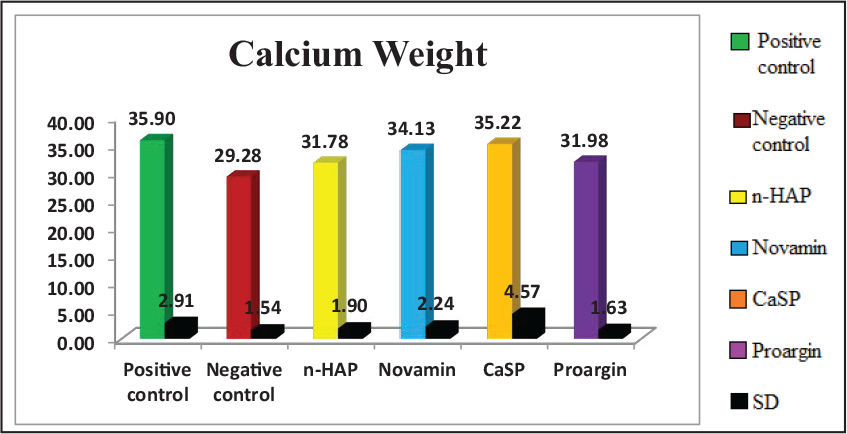
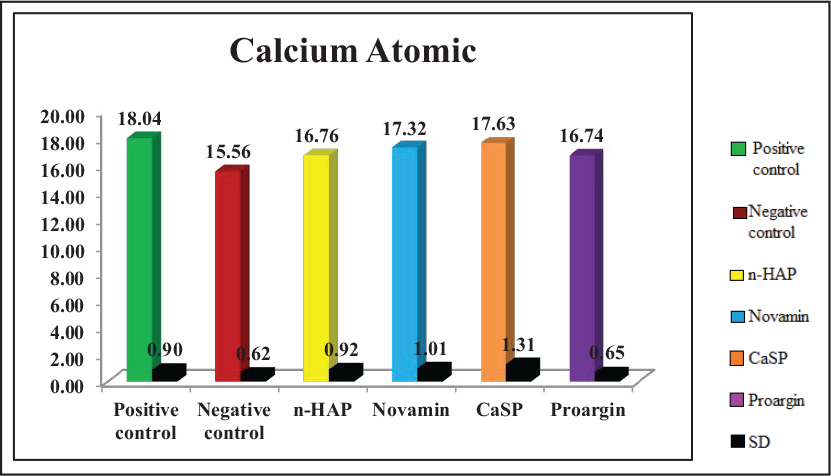
Among all remineralizing agents, CaSP showed significantly maximum surface microhardness, followed by NovaMin, n-HAP, and Pro-Argin. SEM also showed increased surface roughness for all remineralizing agents. EDX showed maximum increase in mineral content obtained with CaSP.
Conclusion:
All remineralizing agents significantly remineralized the stripped enamel surface. CaSP demonstrated promising results by effectively and significantly remineralizing the enamel lesions as compared to other test agents.
Introduction
Dental crowding is the most common problem in orthodontic patients. There are different methods to relieve dental crowding: arch expansion, anterior teeth proclination, distalization of the teeth, extraction, or slenderization. 1
Slenderization is defined as clinically removing a part of the enamel from an interproximal area by grinding. Abrasive strips, discs, or burs can be used to perform slenderization. Several studies have investigated the detrimental effects of enamel slenderization. 2 Studies have shown that air-rotor stripping leaves deep grooves/furrows on the enamel surface, which creates plaque-retentive areas, whichever polishing method is used. 3 This roughness of enamel surfaces plays a major role in initial adhesion and the retention of oral microorganisms. Therefore, these abraded enamel surfaces have been reported as having more risk for demineralization than intact surfaces under in vitro conditions. This has been attributed to the removal of less-soluble-fluorapatite-rich enamel layer. 4
Some studies have shown significant changes on the enamel surface after applying remineralizing agents. In a study conducted by Wang et al, 5 the authors concluded that bioactive-glass-containing toothpaste occludes dentinal tubules and resists acid challenge, and it may be useful for the treatment of dentine hypersensitivity and dentine remineralization. Another study conducted by Swarup and Rao 6 concluded that nano-hydroxyapatite (n-HAP) particles have more potential to remineralize initial caries than 2% sodium fluoride. George et al 7 also evaluated the microhardness of enamel after the application of Toothmin (calcium sucrose phosphate [CaSP]) on bleached enamel, and they found that Toothmin significantly improved the microhardness.
Therefore, this study was planned to investigate the remineralization effect of n-HAP particles, NovaMin, Pro-Argin (all of which are also used as desensitizing agents), and CaSP (known as a remineralizing agent) on a stripped tooth surface by measuring its surface microhardness and surface characteristics and by performing surface elemental analysis.
Materials and Method
The present in vitro study was conducted on a sample of 60 extracted human premolar teeth. The sample size required for the study was 16 proximal surfaces per group (with α = 0.05, β = 0.2, power = 90%, coefficient of variation = 10). Therefore, the sample size of 18 proximal surfaces per group was decided for the study.
Inclusion criteria for teeth selection were teeth free from caries, cracks, abrasions, stains, restoration, and demineralization. The selected teeth were stored in distilled water until needed, after rinsing with water to remove any blood/tissue remnants.
7
The samples were divided into 6 groups. Each tooth was mounted in plaster in an arch form in a group with roots embedded up to the cervical line in the plaster to enhance the control and manipulation of the samples.
Group 1: No slenderization was done. Group 2: Slenderization was done, followed by polishing. Group 3: n-HAP (Aclaim; Group Pharmaceuticals, India) was applied after slenderization and polishing. Group 4: NovaMin (Vantej Toothpaste; Dr. Reddy’s Laboratories, Hyderabad, India) was applied after slenderization and polishing. Group 5: CaSP (Toothmin; Biodental Remin, Australia) was applied after slenderization and polishing. Group 6: Pro-Argin (Colgate Sensitive Plus; Colgate-Palmolive, India) was applied after slenderization and polishing.
In all groups except group 1, slenderization was done with a diamond disc (8934A 900 220, Komet Dental Gebr. Brasseler, Lemgo, Germany), followed by polishing with a Sof-Lex disc (3M dental products) under water spray with 10 and 20 strokes, respectively. 8 The amount of enamel reduction was standardized to 0.5 mm per proximal surface, 2 which was measured using an incremental thickness gauge. After the stripping procedures, each tooth was removed from the plaster. Artificial saliva was used to store the samples at 37°C (pH 7.4) for 21 days during the procedure, which was replaced every 24 hours. 5 In groups 3 to 6, a toothbrush having extra-soft bristles, with a remineralizing agent, was applied to the occlusal surface at an inclination of about 90° for 150 strokes/min for 2 minutes. 5
After 21 days, on completing the remineralizing procedures, the root portion of the crown was removed. Each crown was sectioned with a low-speed diamond disc under water lubrication, along the long axis of the tooth, separating the mesial and distal surfaces for the study. 8 Thus, 108 enamel slices were obtained. Then, samples were used for microhardness, surface roughness, and elemental analysis.
To carry out the microhardness test, the teeth were embedded in self-curing acrylic resin, leaving the proximal enamel surfaces uncovered. Microhardness was assessed with Vickers hardness test for all the samples (Mitutoyo MVK H1, Japan). An indenter of microhardness tester with a square-based pyramidal diamond was applied on the stripped surfaces under a load of 200 g for 10 seconds. For each sample, 3 indentations were made, and then the mean value was taken to represent the Vickers hardness value of that sample.
After the microhardness test, all the samples were removed from the acrylic block and dried for scanning electron microscope–energy dispersive X-ray (SEM-EDX) analysis (JEOL JSM6510LV, Japan). The samples were then dehydrated in ascending degrees of alcohol in the following manner:
40% ethanol for 5 minutes; 70% ethanol for 5 minutes; 90% ethanol for 5 minutes; and Absolute ethanol for 15 minutes.
After the dehydration with ethanol, samples were completely dried with CPD (critical point drying; Leica EM CPD300, Vienna, Austria). Then, samples were placed in an incubator at 37°C for 3 days. Following this, dried samples were mounted on aluminum stubs, sputter coated with gold for 2 minutes, and SEM was done at the center of each test surface at standardized magnification (2500×) for comparative evaluation of surface characteristics. The quantitative assessment of the changes in the mineral profile (calcium and phosphorus content) was done through an SEM-fitted EDX analysis.
Baseline Examination
Samples obtained from group 1 as positive control and samples obtained from group 2 as negative control were subjected to microhardness analysis, SEM evaluation, and EDX elemental analysis over the tooth surface.
Statistical Analysis
The statistical analysis was done using the SPSS software (SPSS for Windows, release 7.5.1, Chicago, IL, version 23), and it included mean, standard deviations, and graphical representations using graphs and tables. A 1-way analysis of variance (ANOVA) was performed to examine the effect of remineralizing agent application on the slenderized surfaces. Intergroup comparisons were made for the evaluation of efficiency of the remineralizing agents. The post-hoc Tukey HSD test was used for intergroup comparisons. The results were evaluated with a 95% confidence interval, and the significance level was set at P < .05.
Results
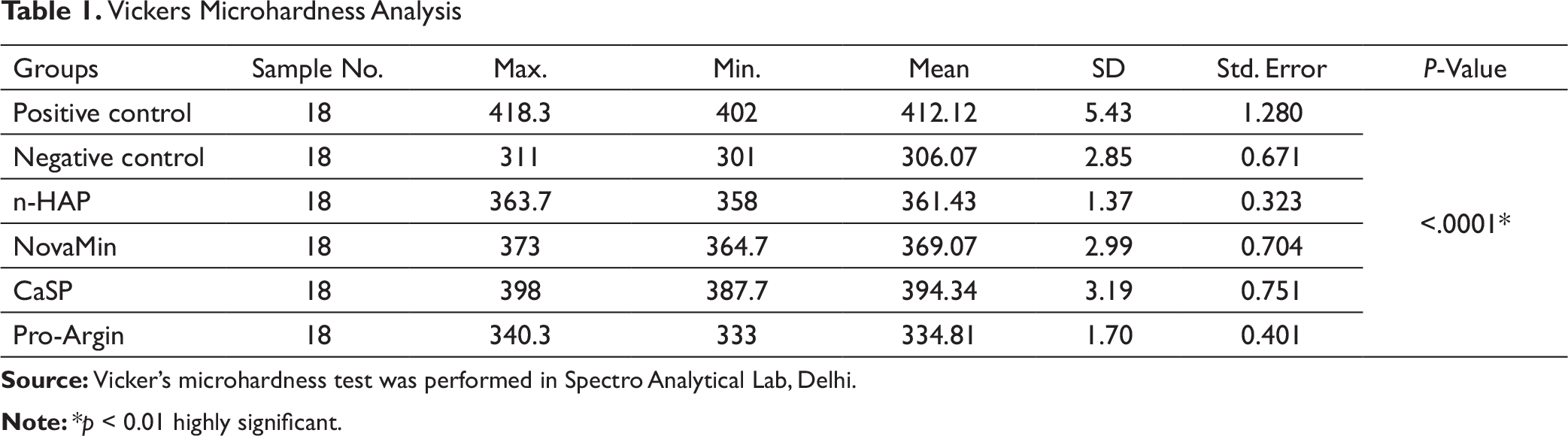
The results of the Vickers microhardness test are shown in Table 1. The hardest enamel surface was obtained for the positive control group (412.12 ± 5.43 VHN). Minimum microhardness was obtained in the negative control group (306.07 ± 2.85 VHN). Among all remineralizing agent application groups, maximum surface microhardness was obtained in the CaSP group (394.34 ± 3.19 VHN).
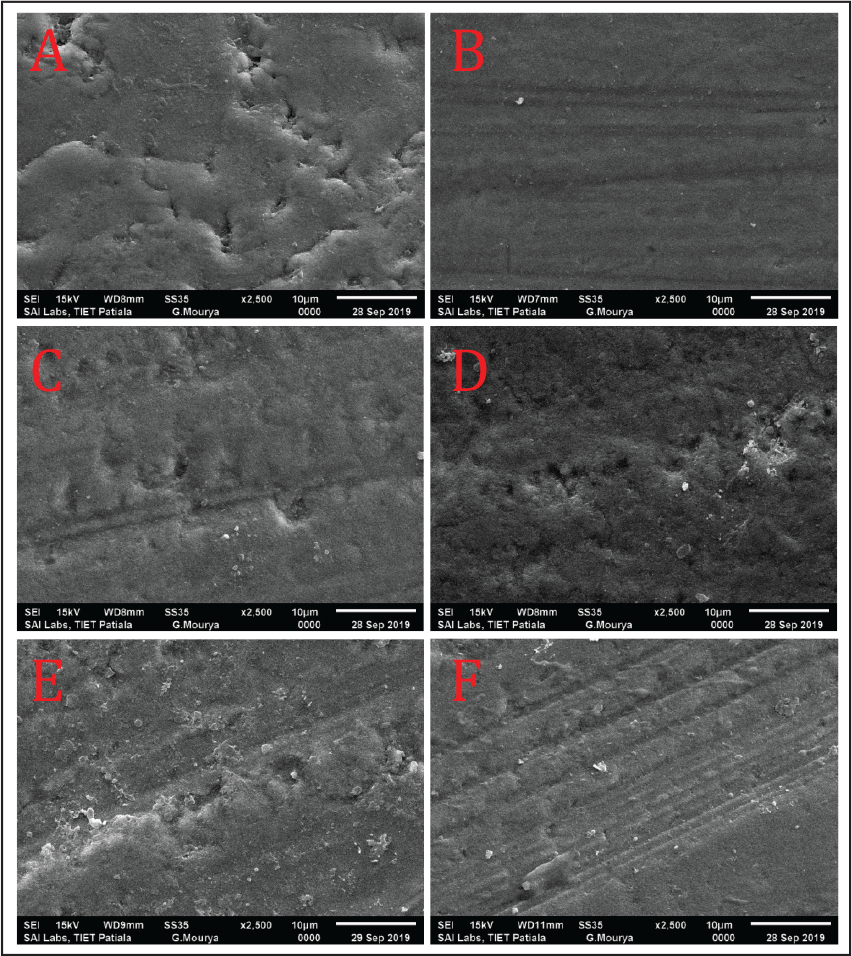
On comparing SEM images (Figure 1), the smoothest enamel surface was seen in the negative control, while the roughest enamel surface was seen in the positive control. Among all remineralizing agent application groups, the CaSP group showed the roughest enamel surface, which was comparable to the natural tooth.
Vickers Microhardness Analysis
Discussion
Interproximal enamel stripping is a common orthodontic procedure to correct tooth crowding and tooth-size discrepancies and to eliminate black triangles between adjacent teeth caused by gingival recession. 8 Some studies have shown that stripping can increase the susceptibility of proximal enamel surfaces to demineralization, risk of caries, hypersensitivity, risk of periodontal diseases, etc.9, 10 Therefore, remineralization through the application of a remineralizing agent is advocated. Remineralization is the process whereby calcium and phosphate ions are supplied from a source external to the tooth to promote ion deposition into crystal voids in demineralized enamel to produce a net mineral gain.
There are various fluoridated and non-fluoridated remineralizing agents that are available. Fluoride has certain limitations, due to which non-fluoridated remineralizing agents are recommended.
Reasons to Search for Alternatives to Fluorides 11
Fluoride is highly effective on smooth-surface caries. Its effect seems to be more limited on pit and fissure caries.
A high-fluoride strategy cannot be followed, as it has potential for adverse effects (eg, fluorosis) due to overexposure to fluoride.
Non-fluoridated remineralizing agents act through different mechanisms. Some agents interact with tooth enamel, some neutralize the bacterial acid, while others act as anti-plaque agents. 12 Several similar studies have also been done to evaluate the desensitizing and/or remineralizing efficiency of different agents like casein phosphopeptide-amorphous calcium phosphate (CPP-ACP), n-HAP, NovaMin, CaSP, Pro-Argin, etc.8, 13-15 However, no study has been done till date performing both quantitative and qualitative analysis. Therefore, this study was done to compare n-HAP, NovaMin, CaSP, and Pro-Argin using two quantitative (Vickers microhardness and EDX) analyses and one qualitative analysis (SEM) for better authentication of the results.
Group 1 showed maximum surface microhardness and elements like calcium and phosphorus, which is in accordance with various studies.4, 8, 16, 17, 20 Bayram et al 8 also found maximum surface microhardness and roughness in natural teeth. Arman et al 16 found maximum surface microhardness in permanent teeth without any stripping procedure. Swarup and Rao 6 also found maximum calcium/phosphorus ratio before demineralization. Jeong et al 17 found maximum surface microhardness before demineralization. Along with all these results, SEM also presented a higher surface roughness for the intact surface with enamel prism cores and interspersed smooth areas, which is in accordance with Bayram et al, 8 while contradictory results were seen where interproximal stripping was done with bur, either with or without polishing, which is in accordance with Meredith et al 18 and Bhambri et al. 4
Group 2 showed minimum surface microhardness and elements like calcium and phosphorus. This is in accordance with all the studies that evaluated the demineralization and remineralization efficiency of a remineralizing agent, such as Soares et al, 14 Raghu and Ananthakrishna, 19 Gangrade et al, 20 Swarup and Rao, 6 etc. Some studies have also shown decreased surface microhardness after interproximal stripping, like Bayram et al. 8 The results of these showed that a stripped enamel surface has a higher caries risk. Twesme et al 21 found more lesion depth in a stripped enamel surface than in an intact surface. Zachrisson et al 22 and Lapenaite et al 9 also found a higher caries risk in stripped enamel surfaces. In the current study, the negative control showed a smoother surface, which is in accordance with Bayram et al, 8 Bhambri et al, 4 and Meredith et al 18 who showed smoother surfaces when interproximal stripping was done with a disc followed by polishing with a disc.
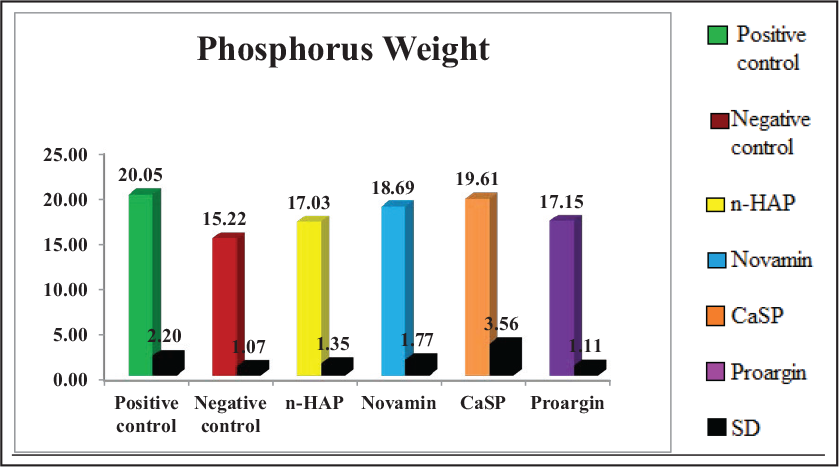
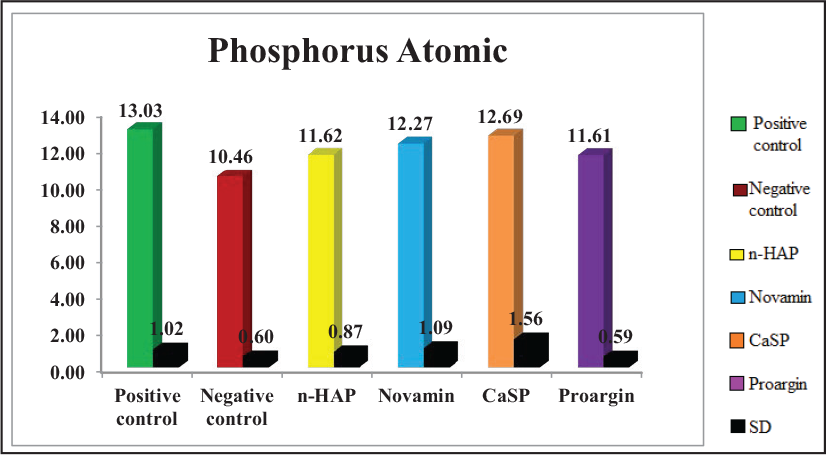
The CaSP group showed remineralization efficiency, which is in accordance with Gangrade et al, 20 Menon et al, 23 Raghu et al, 19 and George et al. 7 In the present study, the EDX analysis showing increased calcium and phosphorus ions in specimens treated with CaSP, supporting the increased surface microhardness and surface roughness as seen in the SEM images, which confirmed the remineralizing efficiency of CaSP. As surface microhardness depends mainly on mineral content, especially the inorganic content of enamel, the reason for the above findings was CaSP’s higher water solubility, which provides for higher concentrations of free calcium and phosphorus ions. 24 Toothmin contains CaSP and inorganic calcium phosphate, in which 10% to 12% calcium and 8% to 10% phosphorus by weight are found. As it is completely soluble in water at all pH values, it is able to provide high concentrations of calcium and phosphate ions in the oral cavity without precipitation. It has been suggested that a 1% Toothmin solution contains about 30 × 10−3 M calcium and 10 × 10−4 M sucrose phosphate ions, while saliva contains only about 1.4 × 10⁻³ M calcium and 4 × 10⁻³ M phosphate ions. Therefore, the high concentrations of calcium and phosphate ions in Toothmin facilitates rapid remineralization of enamel.7, 20
NovaMin also showed remineralizing efficiency in the present study, which is in accordance with Wang et al, 5 Narayana et al, 25 Sreekumar et al, 26 and Aggarwal et al. 15 In accordance with the results obtained using Vickers microhardness test and the increased surface roughness in the SEM images, in NovaMin-treated specimens, the EDX analysis showed large amounts of calcium and phosphorus, confirming the remineralizing properties of NovaMin. NovaMin (calcium sodium phosphosilicate) is an inorganic compound that reacts in aqueous environments to release calcium, sodium, and phosphate ions over time. Originally, NovaMin was developed as a bone regenerative material, but it has been shown to be effective also at physically occluding dentinal tubules through the development of a HAP-like mineral layer. 15 When it comes in contact with saliva or water, it first releases sodium ions, which elevates the pH to the range essential for HAP formation (7.5–8.5). Then, calcium and phosphate are released to supplement the normal levels found in saliva. This increase in ionic concentration, combined with an increase in pH, causes the ions to precipitate onto the tooth surface, which form calcium hydroxycarbonate apatite (HCA). HCA has a similar chemical structure to the enamel crystals, thereby almost reproducing the layer of enamel that was lost. Bioactive-glass formulation, which has been used extensively in research studies, is commonly known as 45S5. It contains 45 wt% SiO2, 24.5 wt% Na2O, Ca, O, and 6 wt% P2O5. These particles have been shown to release ions like Na, Ca, P, etc, and transform into HCA for up to 2 weeks. Finally, these particles completely transform into HCA. 20
n-HAP also showed significantly increased surface microhardness and increased surface roughness in the SEM images than the negative control, which is in accordance with the EDX results also. This confirms the remineralizing efficiency of n-HAP. This is in accordance with Carvalho et al, 27 Soares et al, 14 and Haghgoo et al. 28 HAP is the main constituent of the dental tissues presenting in enamel and dentine, with 95 wt% and 75 wt%, respectively. HAP, as in bone, is responsible for the mechanical behavior of the dental tissues. Poorly crystalline hydroxyapatite (HA) nanocrystals, in addition to the excellent biological properties of HA, such as nontoxicity and lack of inflammatory and immunizer responses, have bioresorption properties under physiological conditions. This property can be modulated by modifying its degree of crystallinity, which is achieved by the implementation of innovative synthesis with a nanosize crystals control. 20 The nanocrystals of phosphate are smaller than 100 nm, improving the bioactivity of the agent due to the increase in the superficial area and wettability of HAP nanoparticles. The calcium phosphate nanocrystals penetrate deeper into the demineralized subsurface, forming a “reservoir-like” deposit of calcium and phosphate ions. 26
The Pro-Argin group also showed significantly more surface microhardness and surface roughness in the SEM images than the negative control, which was supported by the EDX results, with increased calcium and phosphorus at the same time. These results confirm its remineralizing efficiency. Similar findings were seen in previous studies, such as Kulal et al, 29 Poggio et al, 30 and Yesilyurt et al. 13 Pro-Argin contains arginine, an amino acid naturally found in saliva, and a compound of insoluble calcium in the form of calcium carbonate. Arginine and calcium carbonate bind to the dentin–enamel negatively charged surface, creating a protective layer, resistant to acid stimuli, that covers the surface defects and occludes the exposed dentinal tubules with a consequently reduced sensitivity. 30
Comparing all results, in the present study, among all remineralizing agents, CaSP showed the maximum increase in surface microhardness, calcium and phosphorus content, and surface roughness, comparable to the natural tooth.
Limitations of the Study
The present study has some limitations. As remineralization of an enamel surface in the oral cavity is a complex procedure, the limitations of this in vitro study include difficulty in precisely simulating the biological aspects of caries and the multitude of intraoral conditions, like the role of enzymes that contribute to dental caries. Since solutions are composed of inorganic ions only, the effects of salivary proteins, pellicle, and plaque on mineralization inhibition have not been taken into consideration. Other confounding factors involve the possibility of experimental errors and dissimilarities in the microstructure of the enamel between specimens. Further clinical trials are required to authenticate the results for future clinical applications.
Conclusion
On the basis of the observations and results of the present study with its limitations, the following conclusions can be drawn:
Interproximal stripping decreased the surface microhardness, surface roughness, and mineral content. The remineralizing agents improved the surface characteristics of slenderized enamel. In terms of surface microhardness, all remineralizing agents significantly increased the surface microhardness of slenderized enamel. There were significant differences among all the remineralizing agents used. Among them, the maximum surface microhardness was achieved by CaSP, followed by NovaMin, n-HAP, and Pro-Argin. According to SEM evaluation, interproximal stripping with a disc, followed by polishing, decreased the surface roughness and created a smoother surface, as an aprismatic layer was lost in the procedure. All remineralizing agents increased the surface roughness through new apatite layer formation. EDX elemental analysis was found to be an efficient method to quantify the changes in mineral content. It provided validation of the effectiveness of remineralizing agents. According to the EDX results, all remineralizing agents were capable of increasing the mineral content that had been lost during interproximal stripping. Among all the remineralizing agents, maximum increase in mineral content was seen with CaSP, followed by NovaMin, Pro-Argin, and n-HAP, although the differences were nonsignificant. Overall, CaSP can be considered as the best remineralizing agent to prevent the detrimental effects of interproximal stripping, followed by NovaMin, n-HAP, and Pro-Argin.
Footnotes
Declaration of Conflicting Interests
Funding
The authors received no financial support for the research, authorship, and/or publication of this article.