




Abstract
Aim:
The aim of this article is to evaluate coated orthodontic aligning archwires for surface characteristics, coating stability, and associated dynamic frictional resistance and to compare and relate these results to each other. Materials and Methods: The archwire investigated were (1) group 1: American orthodontics (0.016 NiTi) (AO); (2) group 2: G and H Wire Company, USA (0.016) (G and H); (3) group 3: Orthosystems (0.016) (OS); and (4) group 4: Forestadent, Bio Cosmetic (0.017) (BC) Surface roughness (ESEM), coating stability, and frictional resistance were tested. Analysis of variance and Bonferroni test were used for analysis.
Results:
Frictional resistance from low to high—BC, AO, OS, G, and H. Coating stability from low to high—BC, AO, G and H, and OS. Surface characteristics from low to high—BC, OS, AO, G, and H.
Conclusions:
The study showed that BC has least friction coefficient, best coating stability, and less surface irregularities. Surface characteristics, friction coefficient, and coating stability may have correlation but are not statistically significant because of multifactorial conditions in the oral environment.
Introduction
The demand for better esthetics during orthodontic treatment has brought about the development of appliances that combine acceptable esthetics with adequate technical performance. Although esthetic brackets made of ceramic or composite have dramatically improved the appearance of the appliances, the presence of metallic archwires renders it unesthetic.1,2
Coated metallic and fiber-reinforced archwires have been introduced to complement the esthetic brackets in orthodontics. Fiber-reinforced wires are still in the experimental phase and are not popular clinically. Stainless steel (SS) or nickel titanium (NiTi) archwires are coated with polytetrafluoroethylene or epoxy resin. 1,3
Although this coating improves esthetics, it creates a modified surface that adversely affects a series of parameters such as friction, corrosive behavior, mechanical durability, biocompatibility, and plaque accumulation. Alteration in the surface composition (for improved esthetics or reduced friction) could affect wire’s roughness parameters, working, and corrosive properties, and as a result, the archwires could behave differently within the oral cavity. Coated aesthetic archwires have higher friction, and the aesthetic coating tends to dehisce over time.4,5
Coating of 0.002″ thickness on archwires has been introduced to decrease friction and make it esthetically acceptable to the patient. The color of the coating blends with the color of the tooth and that of the ceramic brackets. Teflon is the most frequently used coating. The white-colored coating of the archwires has routinely succumbed to the forces of mastication and enzyme activity within the oral cavity; hence, it is important to evaluate the coating to check its stability throughout the treatment for better esthetics. 4
Despite the number of disadvantages, like higher friction and coating stability esthetic wires, manufacturers are eager to continuously improve that aim to achieve properties that are sufficient or comparable to traditional archwires. The data available comparing properties of as-received coated wires and orally exposed wires are insufficient, since most of the tests have been conducted in laboratories and do not simulate clinical conditions adequately.
The objective of this study was to compare the dynamic friction coefficients, surface characteristics, and coating stability of commercially available aligning (NiTi) aesthetic archwires from four different companies after exposure to the oral environment for 4–6 weeks and also to compare and relate these results to each other.
Materials and Methods
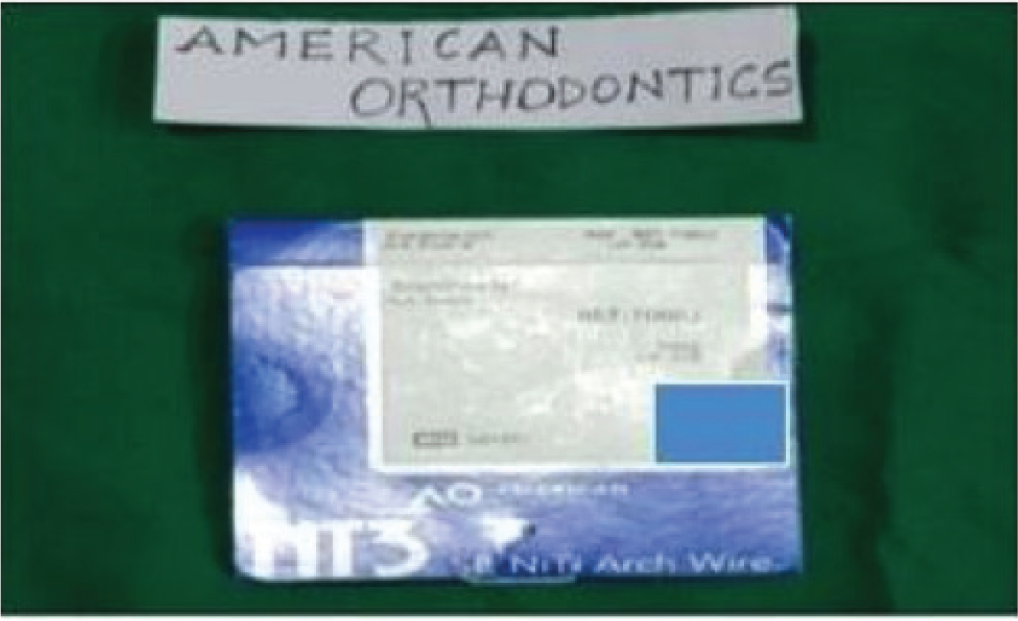
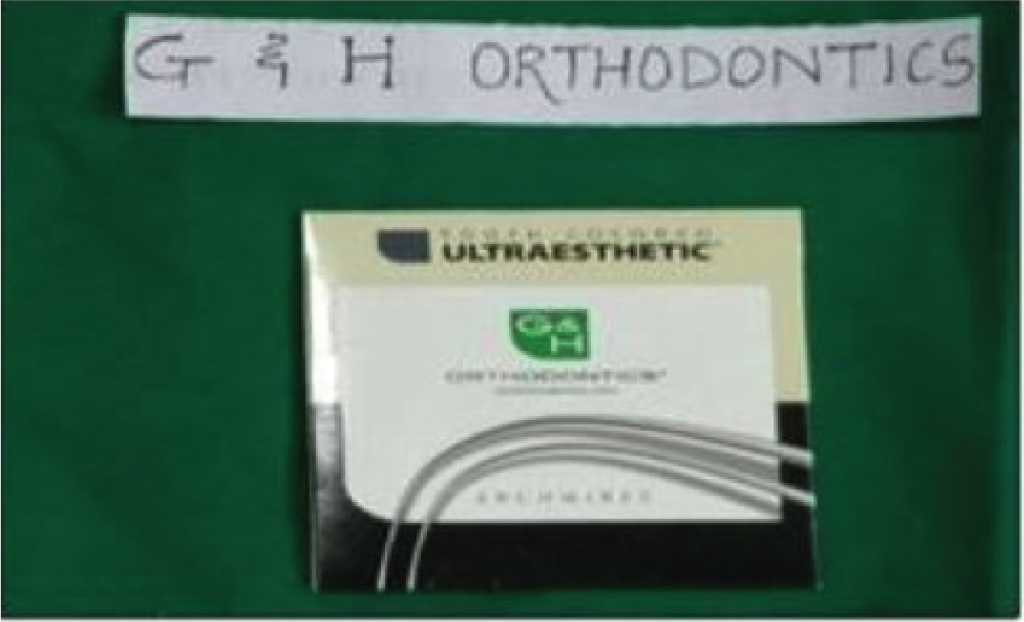
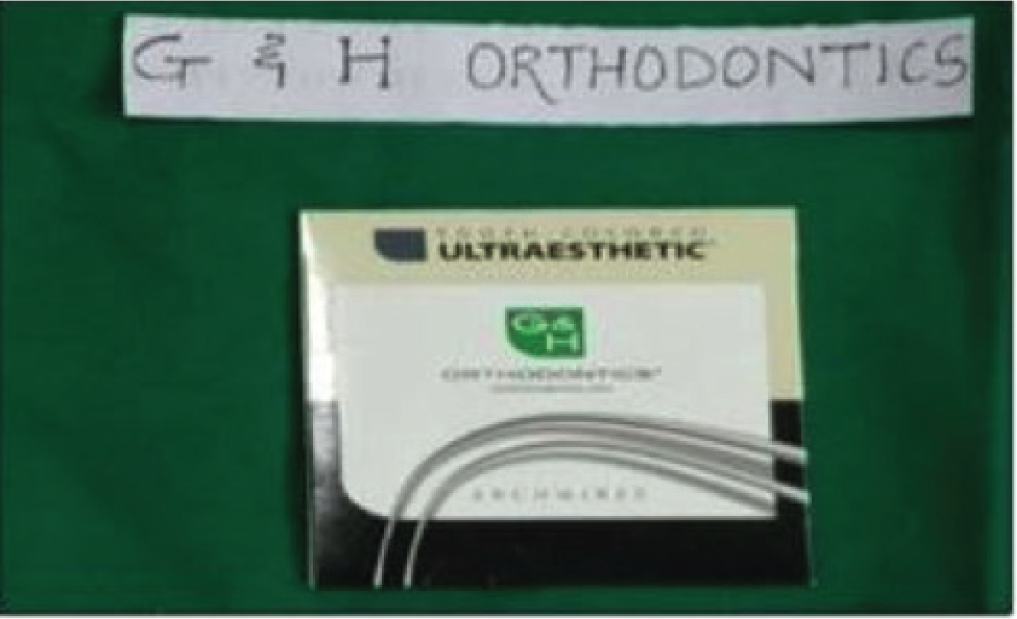
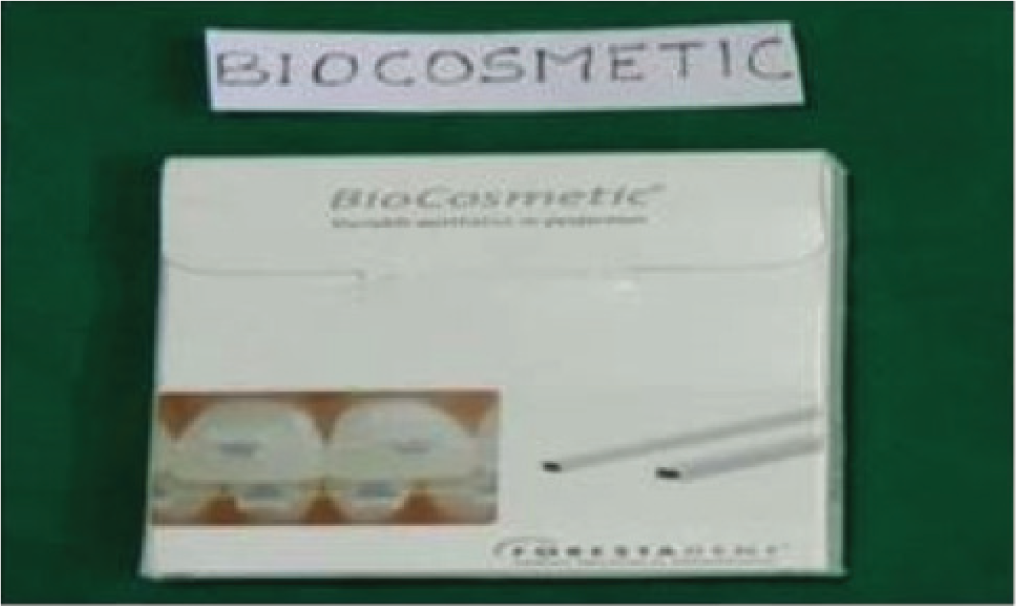
The data collection for the coated esthetic archwires was carried out from the following companies and divided into the following groups (Figure 1A-1D):
Group 1: American orthodontics (0.016 NiTi) (AO); Group 2: G and H Wire Company, USA (0.016) (G and H); Group 3: Orthosystems (0.016) (OS); and Group 4: Forestadent, Bio Cosmetic (0.017) (BC).
GROUP 1 – 0.016 NiTicoated (American Orthodontics)
GROUP 2 – 0.016 NiTi coated (G & H)
GROUP 3 – 0.016 NiTi coated (Ortho System)
Group 4 – 0.017 NiTi coated (Bio Cosmetic)
Universal Testing Machine
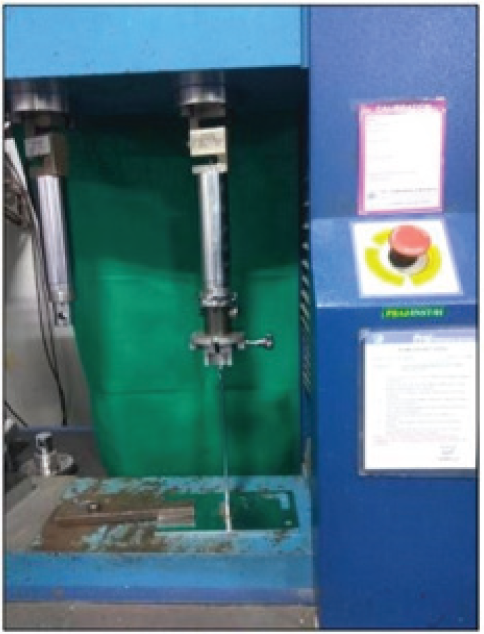
Sample Size and Sampling Procedure
Parameters given below were tested for the following four companies (15 samples × 3 parameters x 4 companies). Therefore, 180 wire samples were tested.
Equipment
Scanning electron microscope (F E I NOVA NANO SEM 450).
Universal testing machine (computerized, software based).
Stereomicroscope.
Vision inspection system. (Sipcon Measuring Systems, India).
Methods
Friction Testing
The selected test specimens were straight sections of the archwire, which represents the buccal portion. Kinetic and static frictional forces were recorded for each archwire–bracket–ligature combination in a “passive” setup (archwire–bracket angulation less than critical contact angle). Hence, the resistance to sliding was based on the classical model of friction and did not include the usual binding or notching. Testing was completed at room temperature and in dry conditions. Araldite epoxy resin was used to bond the steel bars (150 × 20 × 3 mm) to the metal brackets as described by Cash et al. 16 A bonding jig constructed of an 0.021 × 0.025″ SS wire ensured consistency in slot positions with the slot axis perpendicular to the surface of the steel bar. The buccal sections of the archwires were ligated onto the bracket with the help of silicone ligatures (Dentos company).
A new ligature was placed with mosquito forceps immediately before each test run in order to avoid forced decay. The steel rod with the bracket–archwire complex was fixed vertically to the universal testing instrument. A 10 N load cell was calibrated and the archwire was drawn through the bracket under tension for 1.25 mm at a rate of 1 mm/min. The crosshead speed was constant and chosen in light of previous studies. The mean frictional resistance was calculated (Figure 2).
Surface Characteristics and Morphology Analysis
A total of 15 wires from each group were tested for surface characteristics and morphological analysis. A 10-mm wire segment of the archwire from each group was assessed. These segments were sputter coated and then evaluated under the environmental scanning electron microscope (ESEM) to assess the micromorphological characteristics of the labial surfaces of these as received esthetic orthodontic archwires. The material used for sputtering was inert argon gas. Argon is routinely used as the sputtering gas because they do not tend to react with the target material or fuse with any other gases; they also produce high sputtering and deposition rates due to their high molecular weight. The images of each wire were recorded at 500´ and 1000´ magnification to check the surface characteristics of these wires.
Coating Stability Analysis
Samples (n = 15) were collected from each group after 4 weeks of intraoral exposure. These wires were washed with distilled water to remove the debris attached to them. Midline was marked in each wire sample collected. Overall, 20 mm wires were marked from the midline on both the right and left sides, and this 40 mm of wire was isolated and observed under the stereomicroscope. This 40-mm wire segment was stabilized between two vices for accurate observation.
The labial surfaces of these segments were later observed under the Vision Inspection System (Sipcon Measuring Systems, India) under 35× magnification for loss of coating areas. The linear measurements of all the areas where the coating had been eroded were directly calculated in millimeters by the software. An addition of the values of all the areas in the 40-mm wire segment gave the total loss of coating of that particular sample in millimeters. These values were calculated for all the wire samples from all the groups. These measurements were then subjected to statistical analysis in order to evaluate the loss of coating seen due to oral exposure in all the groups, thereby evaluating the coating stability of these wires.
Statistical Data Analysis
The inter-group statistical significance of difference in means of continuous variables is tested using one-way analysis of variance (ANOVA) with post hoc Bonferroni’s correction for multiple group comparisons. In the entire study, P < .05 was considered to be statistically significant. The entire data were statistically analyzed with the help of Statistical Package for Social Sciences (SPSS ver 21.0, IBM Corporation, USA) for MS Windows.
Results
The current study evaluated the dynamic frictional resistance, the coating loss associated with oral exposure, that is, the coating stability and the surface characteristics of the four esthetic archwire groups.
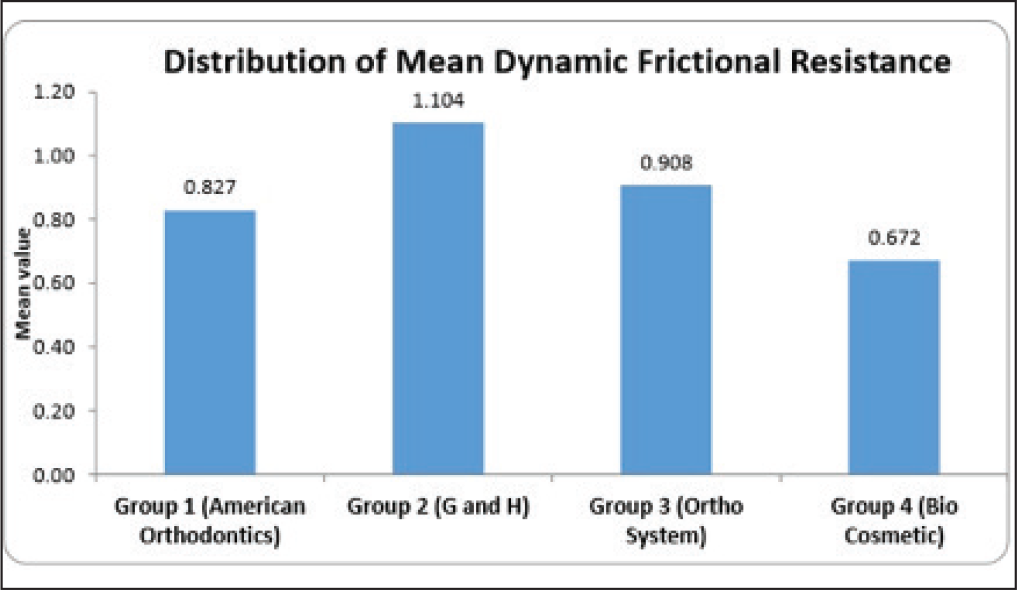
Inter-group distribution of mean dynamic friction resistance.
Frictional Resistance
The results showed that the least amount of frictional resistance was associated with group 4, that is, Bio Cosmetic wires with a mean value of 0.672, thereby implying that it was superior to the other groups tested. The least efficient group in terms of frictional resistance was group 2 (G and H wires) with a mean frictional resistance of 1.104.
The mean frictional resistance associated with group 1 (American orthodontics) was 0.827, indicating this wire group was better than groups 2 and 3, while that seen with group 3 (Orthosystems) was 0.908.
These results indicated that the distribution of mean dynamic frictional resistance is significantly higher in group 2 compared to mean dynamic frictional resistance in groups 1, 3, and 4 (P < .001 for all).
The distribution of mean dynamic frictional resistance in group 1 did not differ significantly compared to mean dynamic frictional resistance in groups 3 and 4 (P > .05 for both).
The distribution of mean dynamic frictional resistance is significantly higher in group 3 compared to the mean dynamic frictional resistance in group 4 (P < .001) (Figure 3).
Coating Stability
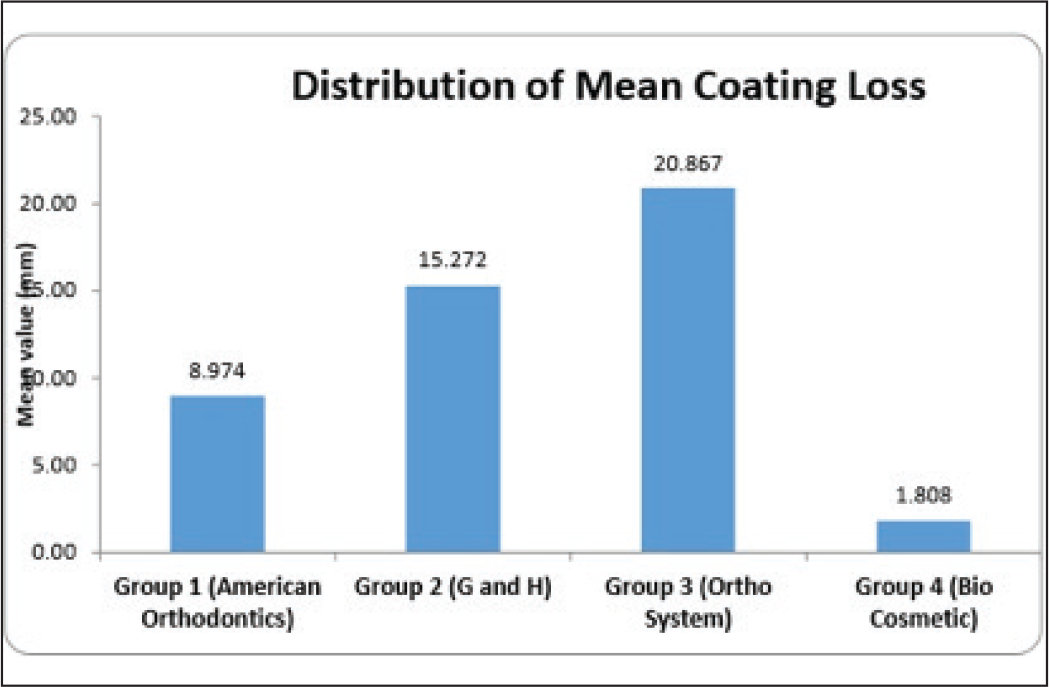
The least amount of coating loss after 4 to 6 weeks of intraoral exposure was seen with group 4 (Bio Cosmetic wire), that is, a mean loss of 1.808 mm, indicating that this was the best among the groups tested as the lesser the coating loss, the more is the coating stability of that wire. The maximum amount of coating loss after 4 to 6 weeks of intraoral exposure was associated with group 3 (Orthosystems wire) with a mean loss of 20.867 mm, indicating that this group had the least coating stability. The mean coating loss associated with group 1 (American orthodontics wire) was 8.974 mm, while that seen with group 2 (G and H wire) was 15.272 mm.
Inter-group distribution of mean coating loss.
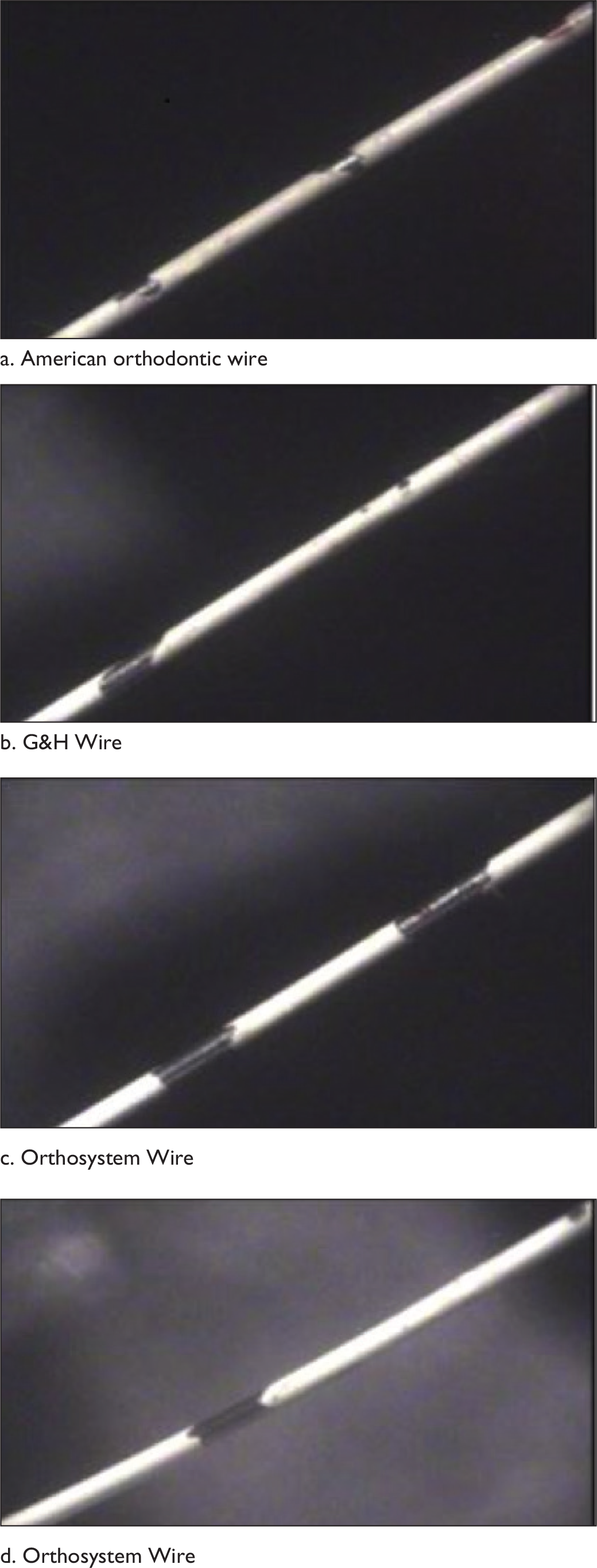
40mm wire segment observed under stereomicroscope
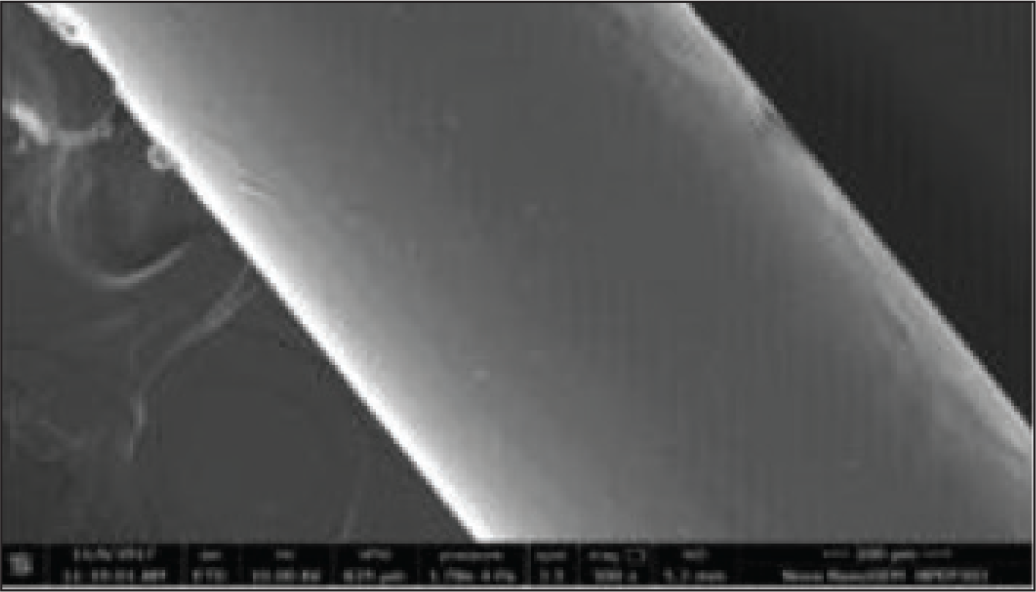
ESEM image of American Orthodontic wire (500 X) magnification
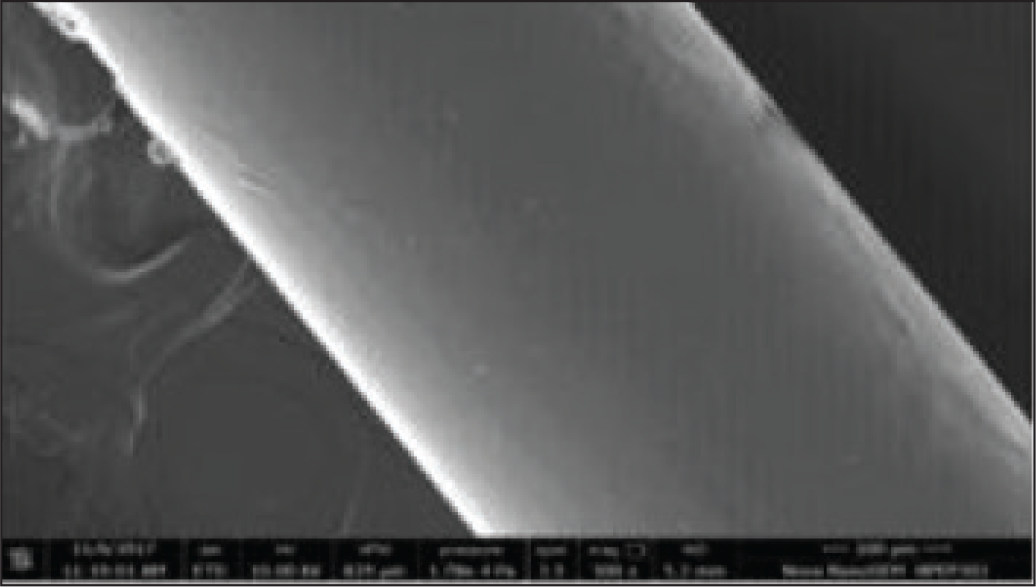
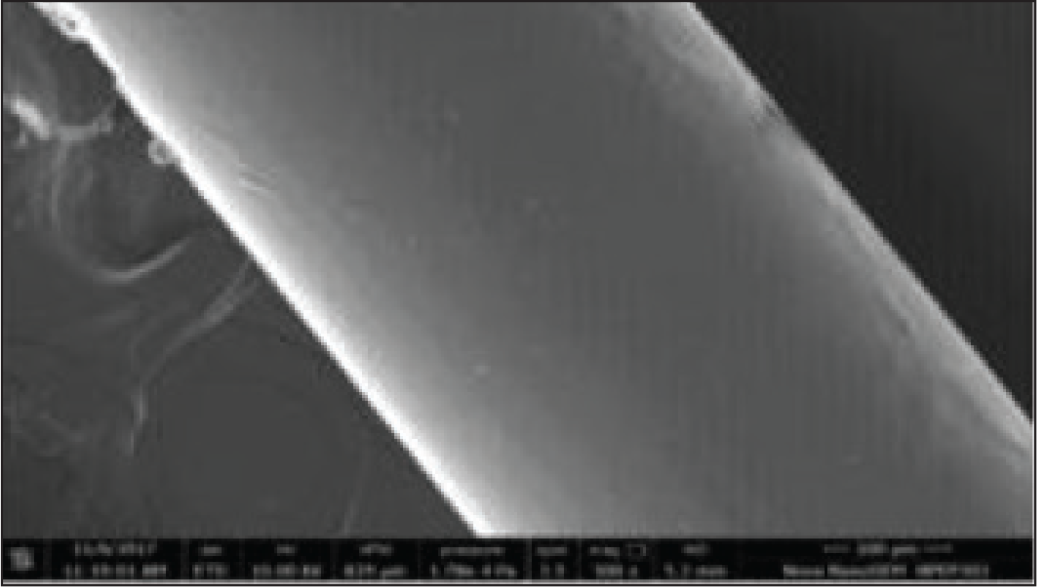
ESEM image of G & H wire (500 X) magnification
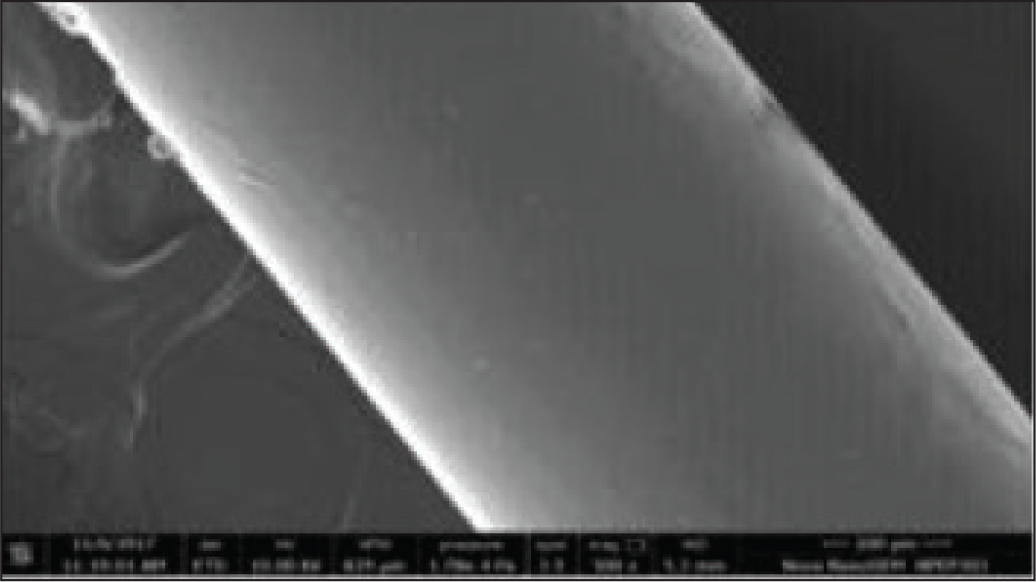
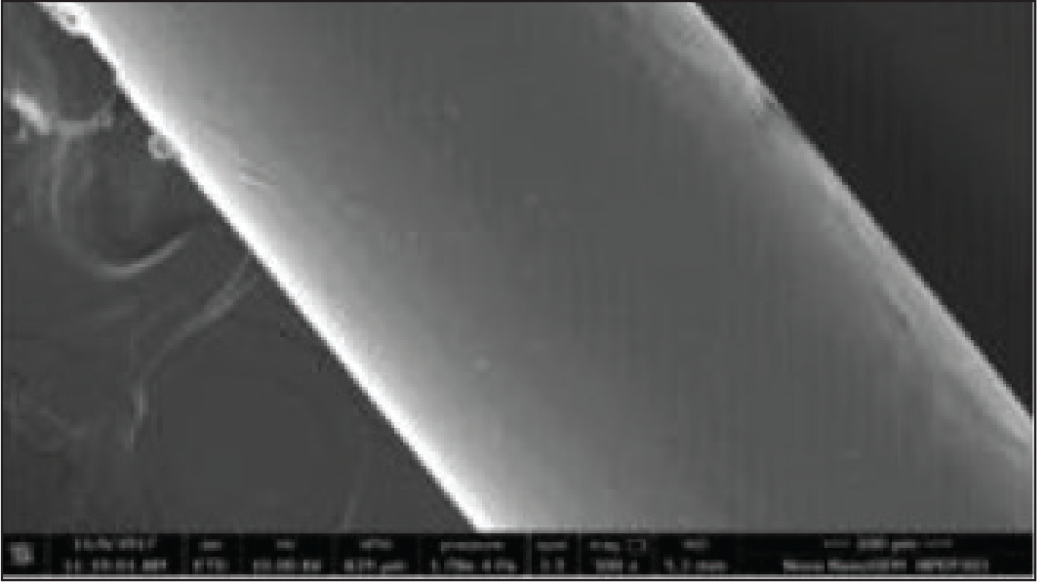
ESEM image of Orthosystem wire (500 X) magnification
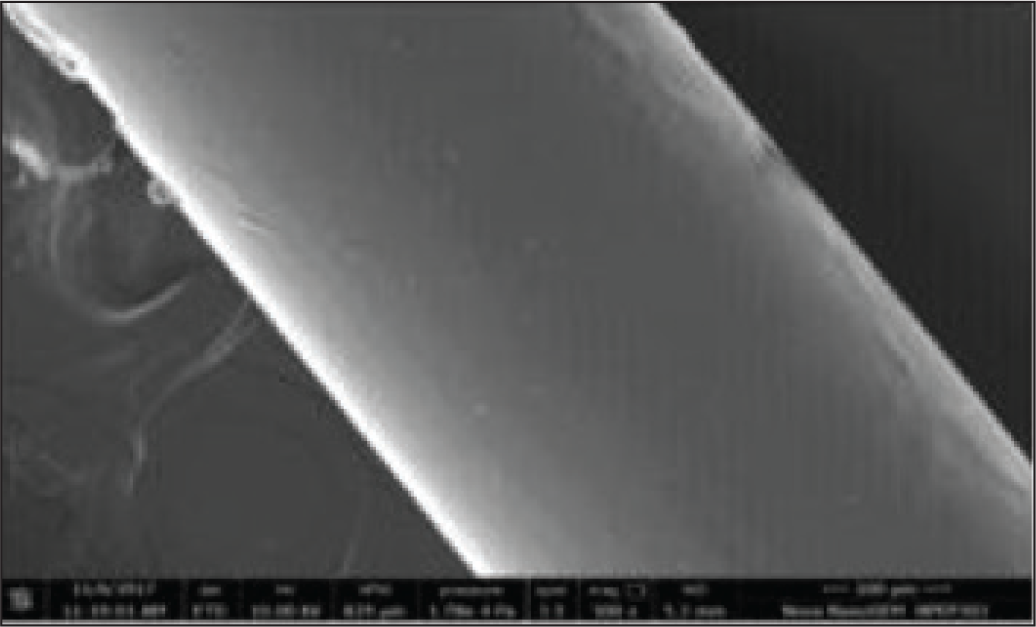
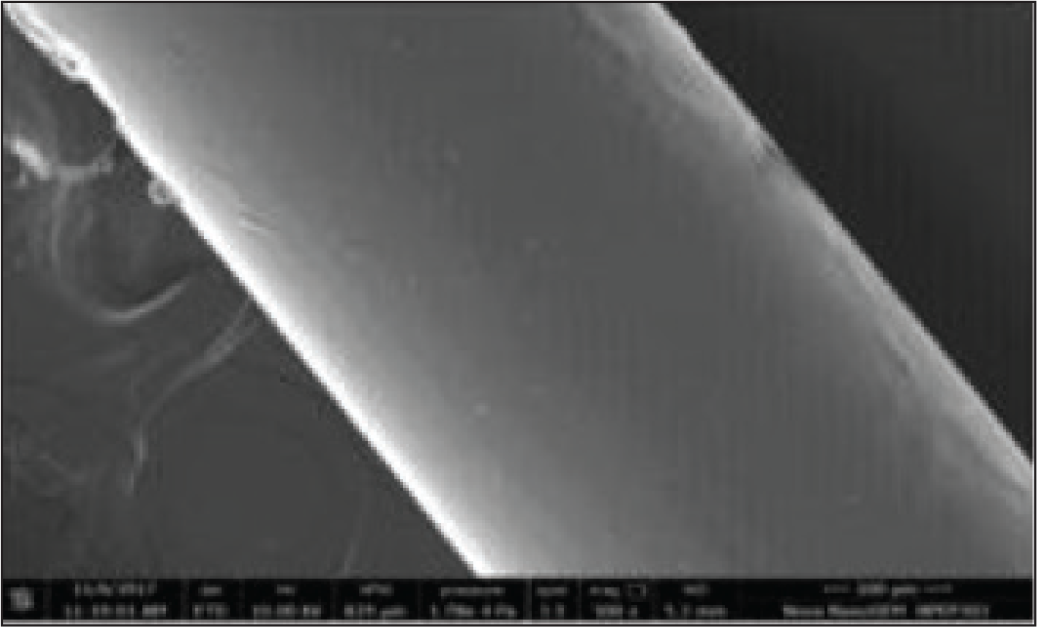
ESEM image of Bio Cosmetic wire (500 X) magnification
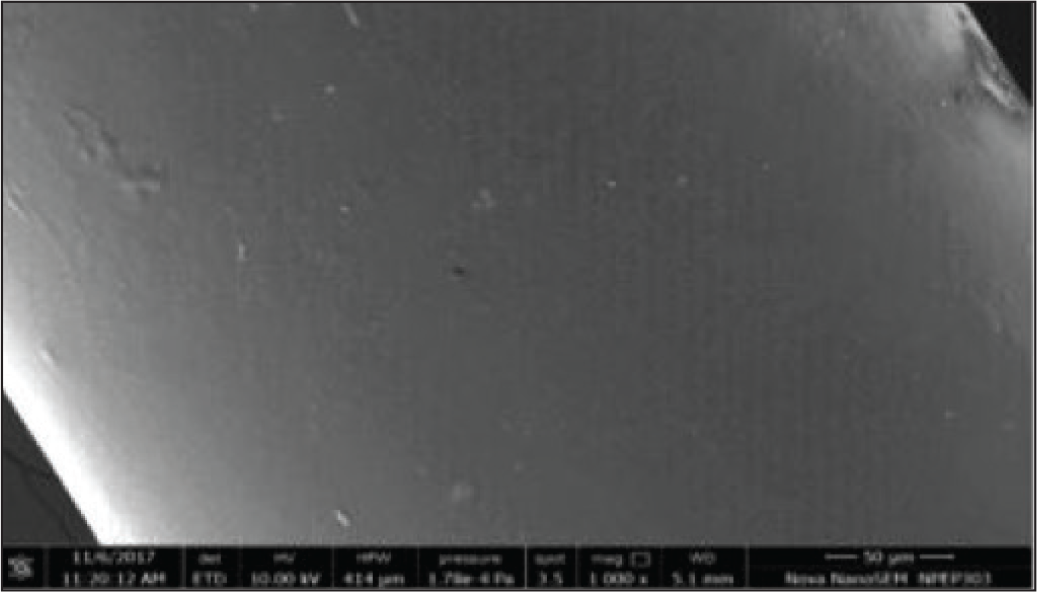
ESEM image of American Orthodontic wire (1000 X) magnification
ESEM image of G & H wire (1000 X) magnification
ESEM image of Orthosystem wire (1000 X) magnification
ESEM image of Bio Cosmetic wire (1000 X) magnification
The distribution of mean coating loss was significantly higher in group 3 compared to mean coating loss in groups 1, 2, and 4 (P < .001 for all). The distribution of mean coating loss in group 2 was significantly higher compared to mean coating loss in groups 1 and 4 (P < .001 for both). The distribution of mean coating loss in group 1 was significantly higher compared to mean coating loss in groups 4 (P < .001) (Figures 4 and 5).
Surface Characteristics and Morphology
The images of the 4 groups of wires that were recorded at 500× and 1000× magnification to check the surface characteristics of these wires under the ESEM showed that the least amount of surface irregularities was associated with group 4 (Bio Cosmetic), followed by group 3 (Orthosystems), and then group 1 (American Orthodontics). Group 2 (G and H wire) was the last in the order showing the maximum amount of surface irregularities. The results indicated that the maximum amount of surface roughness and irregularities were associated with group 3, indicating this was the least efficient wire in terms of surface characteristics, while group 4 was the most efficient among all (Figures 6 and 7).
Discussion
Esthetic appearance of orthodontic appliances has become one of the prime concerns of patients, who regularly express their dissatisfaction with a metallic smile due to a display of wires and brackets. 6 Although 97% of individuals with malocclusion prefer correcting their problem conventionally, 62% are unwilling to treat it with visible appliances. Thus, the increasing demand for esthetic orthodontic appliances in the current era has ushered in the development of materials that combine acceptable esthetics with adequate clinical performance. This challenge was partially overcome with the introduction of esthetic brackets made of ceramic or composite. Since most archwires are still made of metals like SS and NiTi, which are unesthetic, an esthetic version of the archwire is highly desirable in order to complement the esthetic brackets used in clinical orthodontics.7,8
Metallic archwires with a tooth-colored resin coating like a synthetic fluorine–containing resin or epoxy resin coating composed mainly of polytetrafluoroethylyene are the current solution to this esthetic problem. This coating is applied using a depository process that coats the base wire approximately 0.002″thick as reported by manufacturers. Thus, a strong adhesion is achieved between the coating and the wire. 9
The following study evaluated the surface characteristics, coating stability, and the frictional resistance of the following four companies of esthetic archwires as mentioned earlier:
Surface Characteristics
Increased surface roughness can lead to an increase in the frictional coefficient and constitutes an essential factor in determining the effectiveness of archwire-guided tooth movement.
The surface roughness of orthodontic archwires can be measured by several methods such as laser spectroscopy, contact-surface profilometry, and atomic force microscopy. 10 A study conducted by Bourauel et al concluded that the results of surface roughness testing of different wires using these 3 techniques did not give different results, and that the 3 methods generally correspond well. 11 Another novel method to evaluate the surface characteristics of coated orthodontic wires is observing the wire under ESEM as was used in this study.
The surface characteristics of all the groups of the as-received coated esthetic archwires were checked at 500× and 1000× magnification under the ESEM. The ESEM images showed various coating irregularities (Figures 5 and 6). A great variation in the type and number of surface defects on each sample, and also between different samples of as-received wires, could be noted.
Maximum amount of surface irregularities was observed in group 2 (G and H wire), and least surface irregularity was observed in group 4 (Bio Cosmetic wire), indicating the superiority of group 4 in terms of surface topography, followed by group 3 (Orthosystems), and group 1 (American Orthodontics). The reason for this could be the fact that Bio Cosmetic archwires are manufactured through an innovative procedure, wherein the metallic core is embedded in a flexible material instead of being sprayed by color particles, which usually occurs in majority of polymer-coated archwires. On the other hand, the proprietary micro-layering process seen with American Orthodontic archwire provides a better and durable cosmetic coating available, which accounts for its lowered surface roughness. Group 2 (G and H) belongs to epoxy-coated archwires. Epoxy coating is successfully carried out by a method called as electrostatic coating or E-coating in which a high voltage charge application is performed on the archwire and atomized liquid epoxy particles are air sprayed over the wire surface. This gives a 0.002″ thick epoxy covering around the wire, whereas group 3 (OrthoSystems) is polytetrafluoroethylene (PTFE) micro-coated esthetic archwire.
The observations in the current study indicate that even new and unused wires had certain surface roughness, which was consistent with the previous studies conducted by da Silva et al. 12 Another study conducted by Mousavi et al 13 states that the surface roughness values of NiTi uncoated archwires were significantly higher than those of the coated wires.
Frictional Resistance
Friction can be defined as “the resistant force between surfaces, with opposed motion” 14 and divided into static and kinetic, where static friction opposes initiation of motion, and kinetic friction opposes the continuation of motion. 15 A number of in vitro investigations have shown differences in archwire performance in terms of both friction and surface roughness.11,16 In this study, wet conditions were not used to simulate the oral environment so as to keep the number of variables low.17,18 This study included dry conditions because previous investigators used different lubricants, making comparison between studies difficult. The method used in this study tried to keep the number of parameters small and constant, like archwire diameter and ligature force.
To further reduce inconsistency, a bracket positioning jig was used,16,19 and wires tested were limited to the same batch in order to avoid any inter-batch variations. The results showed that least frictional resistance was observed in group 4 (Bio Cosmetic), followed by group 1 (American orthodontic), group 3 (Orthosystems), and the maximum friction was associated with group 2 (G and H). The reason for this could be due to the fact that Bio Cosmetic archwires are manufactured through an innovative procedure, wherein the metallic core is embedded in a flexible material rather than being sprayed by color particles, which is how majority of the polymer-coated archwires are manufactured. Forestadent Bio Cosmetic had a slightly larger diameter (of 0.017″ rather than 0.016″) compared to other archwires that were tested, since it had a coating sleeve of approximately 0.001″. Most studies agree that friction increases with larger wire dimensions; a few studies, however, have found that usage of smaller wires result in increased resistance to sliding and have suggested that this may be due to greater ability of teeth to tip; this was not tested in our investigation. 20 On the other hand, Tidy et al 21 concluded that no significant relationship was present between archwire size and friction, and that conflicting results are likely to be due to different experimental conditions. While increase in the wire dimension does not imply less frictional resistance, it is the material of the coating that plays the vital role in determining the frictional resistance
The present study demonstrated a co-relation between surface roughness and kinetic frictional resistance of the archwires, which is consistent with the observations by Choi et al. 22 On the other hand, Wichelhaus et al 23 and Bourauel et al 11 concluded that there was no clear correlation demonstrated between surface roughness of the archwires and kinetic frictional resistance. Muguruma et al 24 concluded that friction of coated wires was influenced by the total cross-sectional inner core dimensions, inner core nano hardness, inner core elastic modulus, and elastic modulus rather than surface roughness. However, this study found that surface roughness was related to friction coefficients as group 4 (Bio Cosmetic wires) had the least surface irregularities and friction coefficient. Similarly, group 2 (G and H wires) was associated with the highest amount of surface irregularities and friction coefficients. This study also illustrated the complex nature of the interaction between archwire and bracket, which affects the determination of friction.
Coating Stability
Considering the orthodontic treatment duration, none of the esthetic archwires studied presented ideal characteristics for clinical use. The retrieved specimens were observed under a stereomicroscope for the loss of adherence between the metal and the coating. Places showing underlying metal indicated loss of coating in these areas. The samples were then placed under the Vision Inspection System (Sipcon Measuring Systems, India) to calculate areas of coating loss on the labial surfaces.
The maximum coating loss was seen with group 3 (Orthosystem), followed by group 2 (G and H), group 1 (American Orthodontics), and the least coating loss with group 4 (Bio Cosmetic).
These results agree with a study by Elayyan et al, 7 in which the coating was partially lost, with increased roughness after clinical use. This study only evaluated labial surfaces of segments of archwires instead of the entire archwire, as these were the most esthetic prone zones. This may have made the clinical simulation incomplete, representing a limitation of the study. The friction coefficients checked in the current study were tested in dry conditions, and these may vary in wet conditions like the oral environment, and this could be a possible limitation to the current study. Hence, further studies are required to gain better conclusions in apt conditions.
Conclusion
The present study evaluated and compared 4 commercially available esthetic archwires on the basis of surface characteristics, friction coefficients and coating stability.
The main conclusion derived from this study showed that Bio Cosmetic (Forestadent) archwires showed comparatively less surface irregularities, followed by Orthosystems, American Orthodontics, and G and H archwires. Bio Cosmetic archwires were associated with the least friction coefficients, followed by American Orthodontics wires, Orthosystems, and G and H wires. Coating stability was best observed with Bio Cosmetic archwires and least with Orthosystem archwires. Surface characteristics, friction coefficients, and coating stability may have correlation but are not statistically significant because of multifactorial conditions in the oral environment.
However, further research is required to substantiate the results of this study.
Footnotes
Declaration of Conflicting Interests
The authors declared no potential conflict of interests with respect to the research, authorship, and/or publication of this article.
Funding
The authors received no financial support for the research, authorship, and/or publication of this article
