



Abstract
Abstract
Introduction: Recently, there has been an increase in adults undergoing orthodontic treatment in both the public and the private sector. Satisfaction during and after the orthodontic treatment process has not been widely discussed so far, however, and few research studies have emphasized patient satisfaction with treatment outcome and the factors affecting patient satisfaction.
Aim: To investigate factors affecting patient satisfaction with the process of orthodontic treatment in young adults.
Material and methods: Fifty-eight patients (33 girls and 25 boys with a mean age of 25.05 years, SD 2.83) were included in the survey. All patients were young adults who had completed their orthodontic treatment with fixed appliances and were taken from two centers (a teaching hospital and a private practice). Data was collected using online survey forms and was analyzed using content thematic analysis. Five main factors were identified related to patient satisfaction with the process of orthodontic treatment: communication, faculty (orthodontist), physical surroundings, consultation/appointments, and impact of appliance treatment.
Results: Effective communication was the most prominent factor among all five factors considered, especially detailed explanation given during treatment and making patients feel comfortable under their care. Median values were generally high for satisfaction with treatment results. There was a clear correlation (p < 0.001) between patient satisfaction and treatment outcome. Age, sex and treatment time did not have any correlation with treatment satisfaction.
Conclusion: In general, young adults were observed to be satisfied with the treatment process, and good communication played a dominant role in this. Though there were many differences in working models between public and private sectors, many similarities were observed when comparing the factors between the two centers.
Introduction
Patient satisfaction is described as “positive evaluation of distinct dimensions of healthcare”. 1 It is a fundamental method to measure the quality of health care provided; however, satisfaction is the result of a complex process with multiple factors. 2 The treatment process is a valuable dogma, and therefore it is important to understand the process of satisfaction at all stages of treatment from the patient’s point of view to provide the best possible treatment results. 3 Nowadays, patient-reported factors are commonly used to assess and compare treatment results, and inclusion of patient values is the central dogma of evidence-based practice. 4 For many years, in orthodontics, clinician-derived objectives or factors have been used to assess treatment outcomes, 5 but recently there has also been an increased evidence of research incorporating patient-based subjective factors.6, 7 Evaluating patient satisfaction with the process of orthodontic treatment is a difficult task because multiple aspects of treatment must be considered. 6 Children and adolescents were the main focus of researchers in past years. There has been an increase in the number of adolescents undergoing orthodontic treatment worldwide, and as a result of the emergence of different techniques and morphological treatment, outcomes have been frequently studied. There were only a few research projects that have focused on patient satisfaction with treatment results and the factors governing satisfaction. The range of patient satisfaction in previous studies was between 34% 8 and 95%, 9 and the reason behind this is the difficulty in finding relevant tools that quantify patient satisfaction and health benefits.
Adult orthodontic patients may differ from children and adolescents with respect to psychological experience. 1 °,11 Previous studies have used questionnaires formulated for use in a general dental setting (e.g., the Dental Visit Satisfaction Questionnaire) or the questionnaires regarding orthognathic setting, neither of which is the best. 6 Bennett et al. used methods of both qualitative and quantitative research in order to develop a reliable self-reported measure of parental satisfaction with orthodontic treatment in children and adolescents; it was concluded that the questionnaire was useful in assessing patient satisfaction with respect to both the process and the treatment results. Still, there is a relative scarcity of information related to adult orthodontics, in spite of the increase in adults undergoing orthodontic treatment. 12 There was a correlation observed between personality traits and treatment satisfaction; lower levels of satisfaction was associated with individuals with higher neuroticism scores. 13 Findings of several previous studies stated that quality of care and attention (i.e., to involve patients in treatment discussions) were positively associated with patient satisfaction with orthodontic treatment.14, 15 Since adult orthodontic treatment is mostly carried out in the private sector, there is a need for investigations of this type in both the public and private practice. 16
Aim
The aim of this study was to evaluate the factors affecting patient satisfaction during the process of orthodontic treatment among young adults undergoing treatment in public as well as private practice.
Material and Methods
This study was carried out at two centers, one of which was a teaching hospital where the treatment is primarily carried out by postgraduate students, while the other site was a private practice where treatment planning was done by a specialist in orthodontics, and the appointments were managed between an orthodontist and a general dentist.
Patients who started and completed active orthodontic treatment after 18 years of age using fixed appliance therapy were included in the survey. Syndromic patients, patients with any craniofacial anomalies (cleft lip and cleft palate) or patients who underwent orthognathic surgery were excluded from the study.
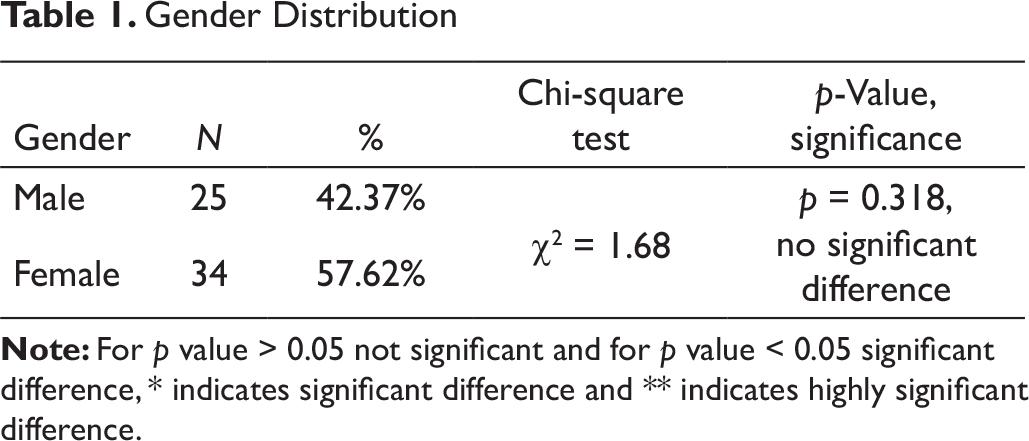
A total of 58 participants (29 from each center) were included in this study, out of which 25 were males and 33 were females. The average time elapsed since debonding at the dental hospital was 10 months: 7 months (range: 1.5–13 months), whereas it was 14 months (range: 1.5–33 months) at the private practice.
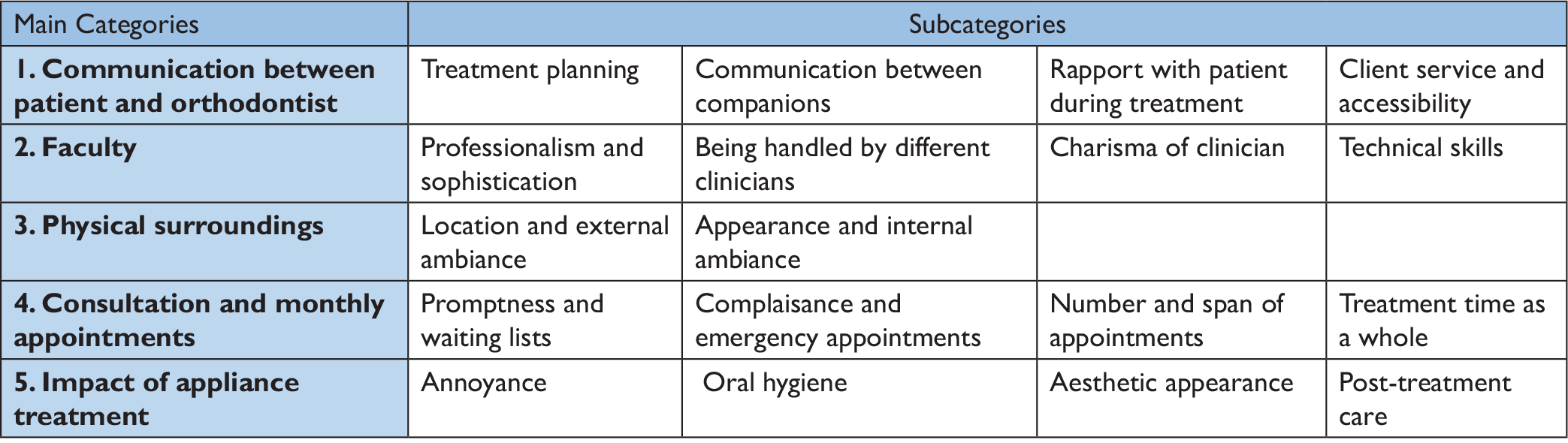
Data analysis was done by content thematic analysis using a framework approach. 17 An online survey was conducted for data collection. Five main factors related to patient satisfaction were considered: (a) Communication; (b) Faculty; (c) Physical surroundings; (d) Consultation/appointments; and (e) Impact of appliance treatment. Questionnaire was formed on the basis of these factors and copies were sent to patients via e-mail and responses were collected. The survey was conducted over a period of 2 months. From the analysis, five main categories were drawn under which several subcategories were formed (Figure 1). The main difference between the two centers lies in the impact of the internal and external ambiance on the satisfaction of patients in the private practice compared with those treated at the teaching hospital.
Five Main Themes and Subthemes
Statistical Analysis
Data was compiled on a Microsoft (MS) Excel sheet. Statistical analysis was performed using Statistical Package for the Social Sciences (SPSS) version 16 for Windows (SPSS Inc, Chicago, IL). Chi square test was used to analyze proportion/percentage data. Confidence interval was set at 95% and probability of alpha error set at 5%. Power of the study was set at 80%.
Results
A total of 58 participants (25 male, 33 female) completed the online survey (with mean age: 25.03 years; SD, 2.83 years). Age and sex were generally not associated with satisfaction with treatment results (Tables 1 and 2).
Main Categories
Category I: Communication
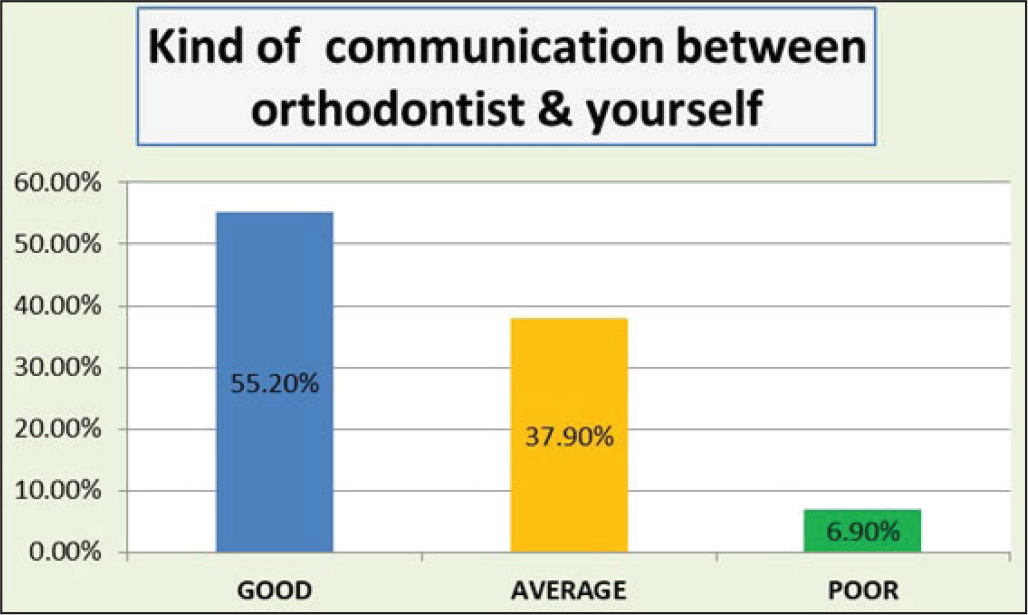
There were four subcategories identified under this category, as mentioned in Figure 1. This first category consisted of seven questions regarding the communication between the patient and the orthodontist and its impact on patient satisfaction after orthodontic treatment. A highly significant correlation was found between communication and overall satisfaction with the orthodontic treatment
Category II: Abilities of Orthodontist (Faculty)
Gender Distribution
Age Distribution

Graph 1.
Graph 2.
Graph 3.
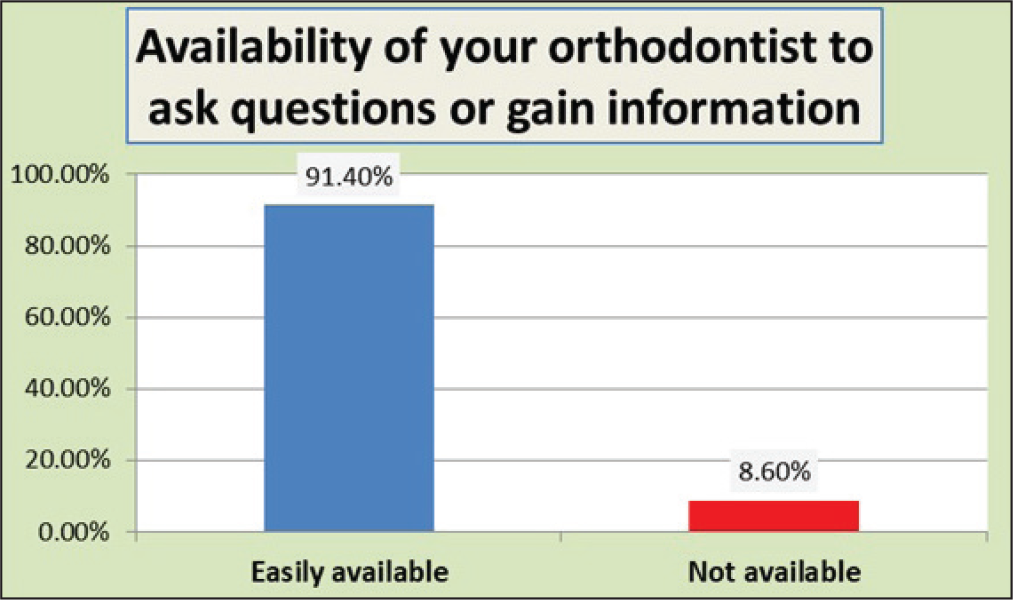
Graph 4.
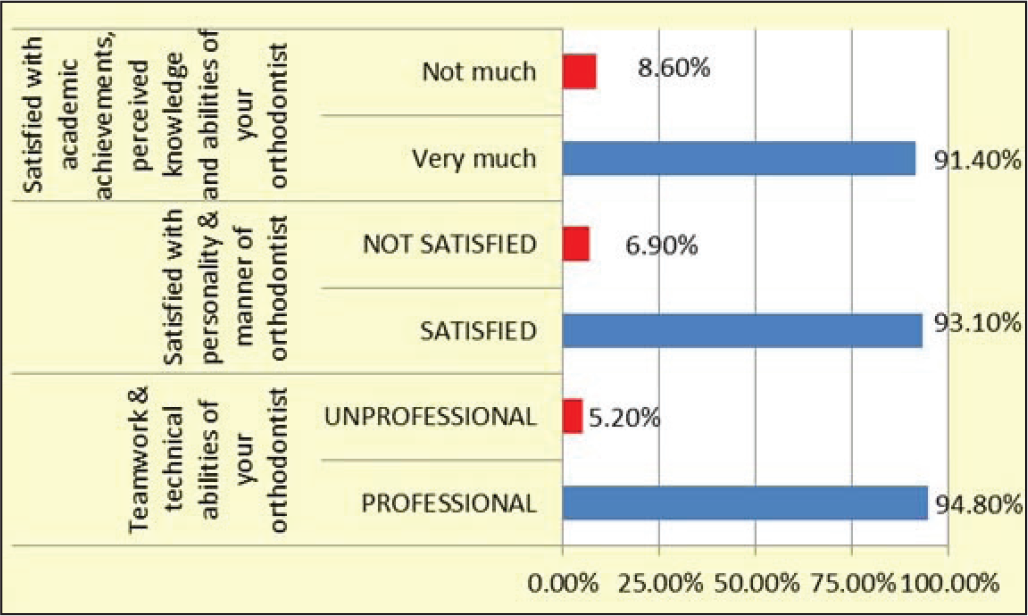
Category III: Physical Surroundings
This category also consisted of four sub-categories, and two questions were asked. There is a strong correlation between standard of services provided to patient and location, transport links, access and parking facilities near the orthodontic clinic (Graph 5).
Category IV: Consultation and Monthly Appointments
This category consisted of four subcategories, and four questions were included regarding number of appointments, duration of appointments, emergency appointments and duration of treatment as a whole. Highly significant correlation
Category V: Impact of Appliance Treatment
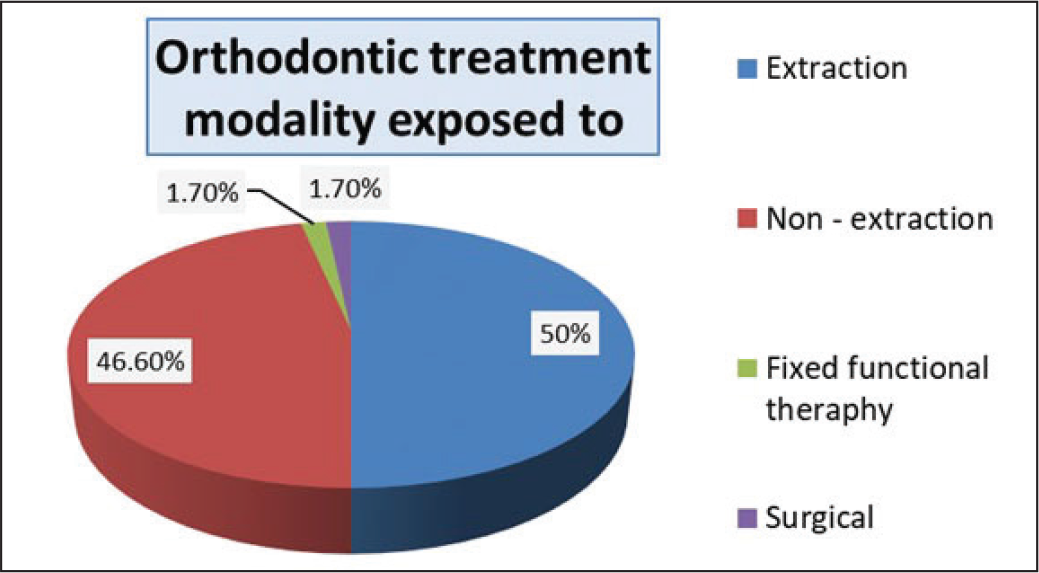
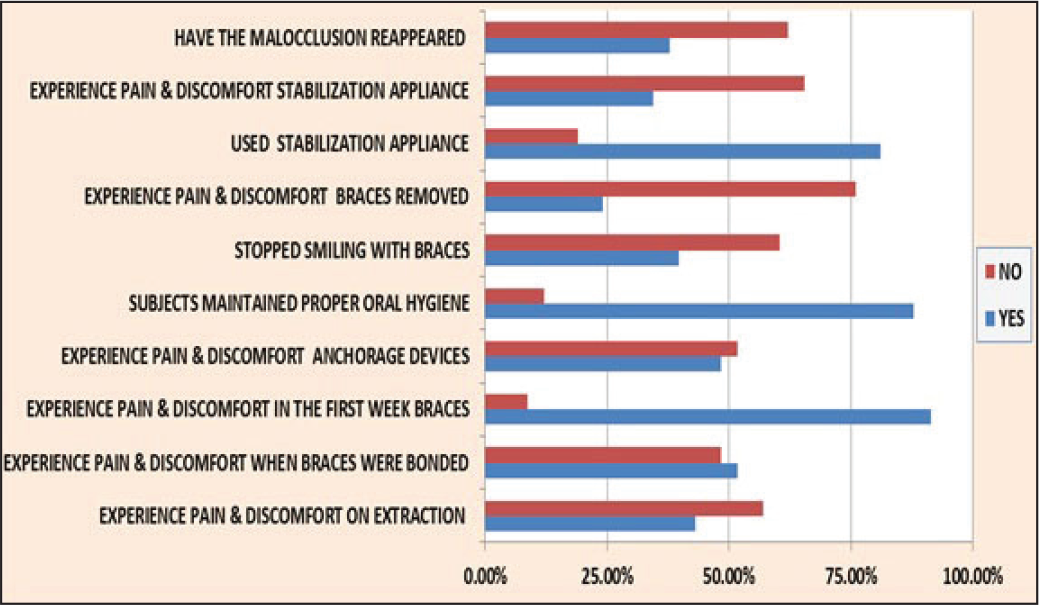
This category consisted of four subcategories and 11 questions. Out of the 58 patients, 29 were exposed to extractions (50%), 27 went through non-extraction protocol (46.6%), one underwent fixed functional therapy (1.7%) and one was exposed to surgery (1.7%) (Graph 7). Fifty-three patients (91.4%) experienced pain and discomfort in the first week with braces. Most of the patients maintained proper oral hygiene during the entire treatment (87.9%). Of the patients, 75.9% did not experience pain and discomfort when braces were removed. Stabilization appliance was used by 47 patients (81%); this indicates highly significant results. Non-significant findings were observed with respect to pain and discomfort after extraction, bonding of an anchorage device and after the use of stabilization appliance (Graphs 7 and 8).
Discussion
For more generalization of the results, patients seeking treatment in both the public and the private sector were included in the study. Most of the adults require multidisciplinary treatment; therefore, patients undergoing orthodontic treatment along with restorative or periodontal treatment were included in this survey. Sample size generalization could not be guaranteed in this study. A potential limitation of this study was full saturation of themes, which was difficult to substantiate. All patients included in the study completed orthodontic therapy and underwent debonding of the appliance at least one and a half month before the survey (range: 1.5–36 months); this allowed them to introspect and evaluate the process thoroughly. It was important to include different stages of the retention while investigating as it was a key part of the treatment process.
Graph 5.
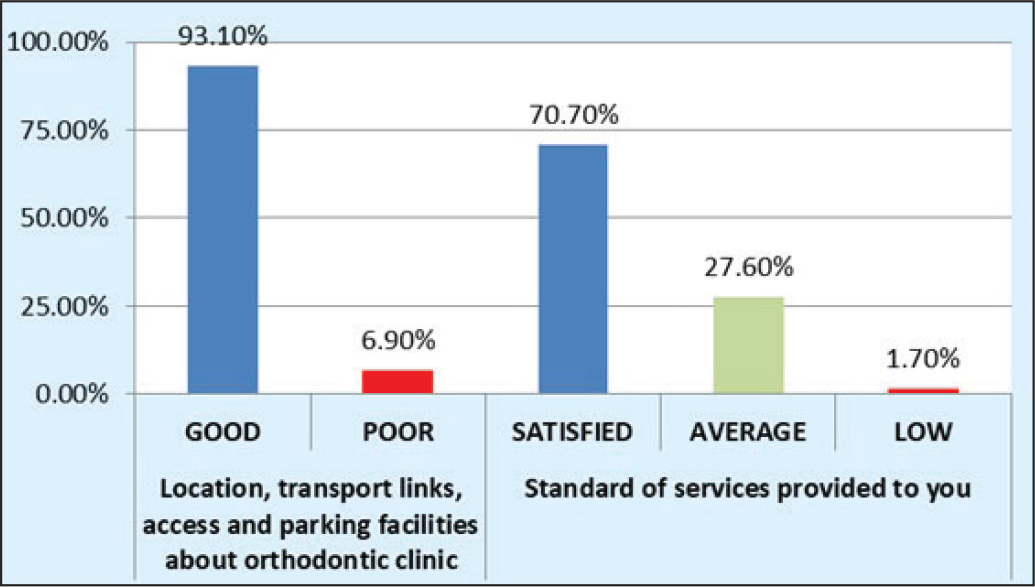
Graph 6.
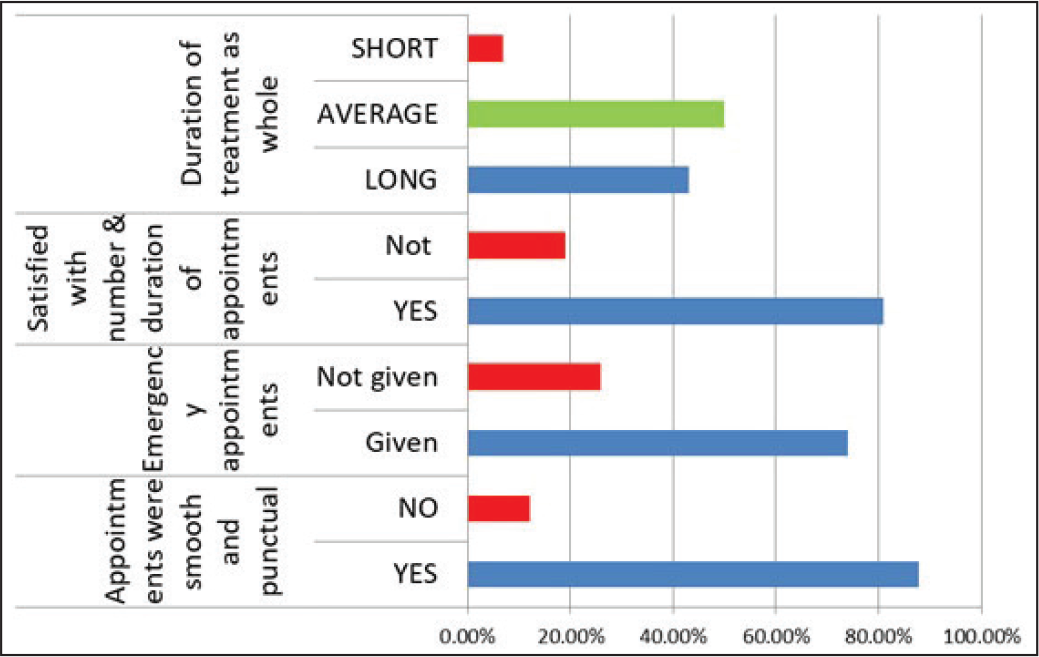
Graph 7.
Graph 8.
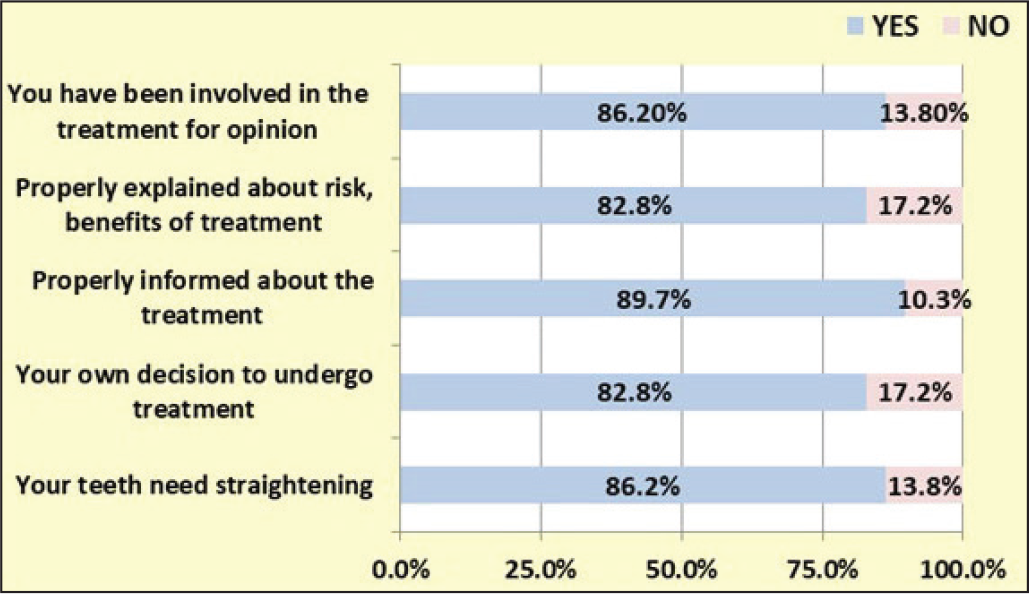
Recall has been affected by prolonged retention phase. Five main factors were considered, out of which the first one was communication. It played a major role in satisfaction with the process of orthodontic treatment. Informed consent is mandatory from a legal as well as ethical perspective in the health care sector, and an important part of it is communication of information in order to fill the knowledge gap. 18 In this study, comprehensive discussion of treatment modalities and options with the patient was seen as an important factor for patient satisfaction.
Previously, in health care, a more paternalistic decision-making model was used whereby decisions were made by the clinician on behalf of the patient. But nowadays, a collaborative approach where treatment options are being discussed with patients is recommended, and its effects are observed to be positive.19–21 On the basis of the responses received, it was clear that the patients were satisfied when they were involved in the process of treatment planning. Currently, there is limited research available on shared decision-making and its effect on patient satisfaction; however, progressively, dentistry is becoming a patient-oriented practice. 22
The clinician–patient relationship during treatment was also focused on in this survey, and it appeared to be an important factor in patient satisfaction. Clear and regular explanations satisfied the patients and enhanced their understanding of treatment progress. Patients felt motivated and in control when they were reassured regarding their treatment. This shared process stressed a sense of patient value, and patients felt that they were being treated as individuals. These findings were similar to the study by Sinha et al., 23 who stated that the behavior of the orthodontist affects patient satisfaction with the treatment process.
The second factor considered was perceptions of the patient regarding the operator. Patients appreciated positive experiences of professionalism which included a friendly attitude towards patients, an accommodating manner, good teamwork, and confidence that their clinician was the best at the job, etc.; this gives a feeling of satisfaction with the treating orthodontist. It is therefore important for all clinicians and departments to consider professionalism to maintain high levels of patient satisfaction.
The literature regarding patient satisfaction and patient perceptions in a dental school environment is limited, although a recent European study reported high levels of patient satisfaction while assessing clinical outcomes and patients’ perceptions of dental implant placement by undergraduates, and these results mimics positive perceptions of trainee care in our study. 24 Currently, multi-clinician working models in practice are increasing day by day. 25 There is a relative scarcity of literature assessing satisfaction with different working models, and we cannot underestimate the importance of future research in this field.
The manner and personality of the orthodontist appeared to be an important factor influencing patient experiences of the process of tratment. 26 In this study, satisfaction was positively correlated with interpersonal skills such as politeness, friendliness and calmness. The concepts of being treated as a “human being” and “on the same level” were the factors that were positively associated with patient satisfaction. These findings were similar to the conclusions drawn by Sinha et al., 23 who found a significant positive correlation between patient satisfaction and behavior of the orthodontist.
Perceived technical abilities also contribute to satisfaction. Newsome and Wright 2 in their review observed similar findings regarding patient satisfaction in an environment with general dentists. Good technical abilities were associated with care, accuracy, awareness of medical history of the patients, and passion of the clinician—all of which contribute to a feeling of trust.
The third factor was the ambience, and it was stressed upon by patients treated in a private practice. A clean, modern environment and details such as fresh flowers and magazines impart a feeling of relaxation and comfort. Surprisingly, in this study, satisfaction with maintaining a modern environment of the practice was also associated with professional abilities and standards. From this, it can be stated that the aesthetics of the surroundings may affect the patient judgment of quality of care. However, other studies have stated that patient satisfaction was discriminated by some patients with the environment from their experiences with the orthodontist. 27
Consultation and appointments was the fourth factor. When patient satisfaction was compared with appointments, punctuality was identified as a factor in both treatment environments. If appointments were delayed, it would negatively affect patients’ satisfaction. Those who were negatively affected felt that more information could have been provided about the delays or estimated waiting time.
The final factor was the impact of appliance treatment on satisfaction. Some patients reported with pain and discomfort from fixed appliances, but overall, patient satisfaction was not affected because discomfort was considered to be an integral part of the treatment process and patients were informed about this prior to treatment. According to Feldmann 28 who stated that a negative correlation was found between patient perceptions of pain and discomfort and patient satisfaction during active treatment process. Our study also states the importance of post-treatment care on patient satisfaction.
The data from this qualitative assessment has provided valuable information regarding the factors that affect patient satisfaction during orthodontic treatment in young adult patients. Data obtained from this study will form a basis for development of a patient-oriented questionnaire rather than clinician-centered model, to assess satisfaction with the process of orthodontic treatment.
Conclusion
Patients’ satisfaction with the process of orthodontic treatment was influenced by many factors, and five main categories were identified along with associated subcategories.
Effective communication was a dominant factor associated with the process of orthodontic treatment, pointed by patients at both centers, that is, at the public and private sector.
Negligible differences in patient satisfaction between the public and private was observed.
Footnotes
Declaration of Conflicting Interests
The authors declared no potential conflicts of interest with respect to the research, authorship, and/or publication of this article.
Funding
The authors received no financial support for the research, authorship, and/or publication of this article.
