




Abstract
In the revolutionary year 1968, the Institute of Psychology of the University of Trieste directed by Gaetano Kanizsa published a collective volume to celebrate the 70th birthday of Cesare L. Musatti. Kanizsa devoted the opening article to the empirical refutation of an argument developed by Musatti in Structure and experience in perceptual phenomenology. Musatti held that the debate between rationalist and empiricist theories of perception was not scientific, since a crucial experiment on the role of past experience is—in principle—impossible. Besides rejecting his mentor’s argument on logical grounds, Kanizsa produced a parade of visual effects to demonstrate that in several conditions (involving object formation and camouflage, Petter’s rule, phenomenal transparency, shape recognition, motion organization) actual perception violates expectations based on familiarity with specific objects. The empirical refutation of expectations based on past experience was recurrent in Kanizsa’s subsequent production and represents a lively topic of current perceptual science, though Musatti’s smile is still here.
Keywords
Introduction
Fifty years ago, the Institute of Psychology of the University of Trieste published a nice little volume entitled Ricerche sperimentali sulla percezione (Kanizsa & Vicario, 1968), edited by the Institute’s director Gaetano Kanizsa and his strongly supportive research assistant Giovanni Vicario. As announced on the dedication page, the collective volume was composed to celebrate Cesare L. Musatti, Kanizsa’s mentor, in the occasion of his 70th birthday. 1 The first of the 12 research articles, contributed by direct and indirect Trieste pupils of Musatti, was Percezione attuale, esperienza passata e l’«esperimento impossibile» by Kanizsa himself, who presented it as an empirical rebuttal of a provocative thesis propounded by Musatti (1958) in his opening address to the XII Italian Congress of Psychology.
The preface to the epistemological volume entitled Condizioni dell’esperienza e fondazione della psicologia (Musatti, 1964), where the 1958 paper was republished, includes the following synthesis of this thesis: … referring to Ames demonstrations, and to the consequent controversy between Gestalt psychologists and transactional psychologists, I have claimed here that such controversy is meaningless, because a crucial experiment—capable of supporting the choice of one position over the other—is impossible. In this way I have reproposed a thesis about Gestaltpsychologie originally propounded in my paper on Forma e assimilazione [Musatti, 1930], where I argued about the impossibility of clearly separating the action of natural factors of perceptual organization from the action of empirical/assimilative factors. (Musatti, 1964, p. 12, my translation) The demonstrations you have just seen were devised by the scientist Adelbert Ames. While they are amusing illusions, they are much more than that. For they demonstrate rather profound psychological principles, involved in all of man’s experience. They show that our experience is more than just a simple reaction to something outside, and that we have to learn—through our own past behavior—the significance of the impressions our sense organs bring to us.
However, Musatti’s argument was more general than the abovementioned logical contradiction. When applied to the simple case of a rotating trapezoidal window without attached rod, his argument pointed to the possible basis of a hypothetical rectangularity bias (assuming that the illusory oscillation depends on it). In principle, such a bias might follow from an autochthonous tendency toward maximal simplicity (favoring more regular over less regular polygons) as well as from the observer’s extended exposure to an environment where rectangular windows are much more frequent than trapezoidal windows. Musatti maintained that, in principle, the rectangularity bias is equally compatible with either one of the two causal explanations—the tendency to maximal homogeneity (to phrase it in his own language) versus past experience (or familiarity)—and argued that a crucial experiment designed to contrast the two explanations is impossible, because of a factual correlation between the two attributes: In general, highly regular forms are more familiar than less regular forms and highly familiar forms tend to be more regular than less familiar forms. Adopting one explanation instead of the other would be—according to Musatti—a matter of opinion, not science.
Kanizsa’s birthday gift to his mentor took the form of a sharp theoretical disagreement followed by the production of elaborate empirical demonstrations intended to disprove Musatti’s impossibility thesis. Compared to the empirical part, Kanizsa’s theoretical counterarguments were quite concise—consistently with his preference for facts that “speak for themselves” over verbal debates—and can be summarized as follows:
crucial experiments do not exist in any area of science, not only in this specific case;
4
dismissing the contrast between autochthonous versus empirical factors of perceptual organization as irresolvable in principle, and hence nonscientific, distracts researchers from looking for phenomena relevant for a better understanding of perceptual organization; experimental attempts to manipulate past experience are possible and have been made, making the isolation of the two types of factors a meaningful scientific endeavor.
However, Kanizsa avoided to be engaged in a battle of words. He thought that the impossibility thesis should be opposed by strong phenomena and managed to produce them in four distinct areas of perception. He admitted that some (unattractive to him) perceptual attributes are obviously affected by past experience, like affective valence and meaning, but maintained that basic processes are independent of past experience and can generate phenomena in which learning-based expectations are not fulfilled, due to the action of autochthonous factors apparent in the following four areas of perception: object formation, depth order, form, and motion. 5
With respect to the strategic role of nonveridical percepts, Kanizsa’s theoretical position can be effectively described using the words of Wagemans et al. (2012): “a Gestaltist visual system that focuses on internal efficiency seems to yield external veridicality as a side effect” (p. 1237). Therefore, effects that go against veridicality and likelihood, however rare, provide us with evidence of alternative organizing principles.
The 1968 paper was translated into English with minor changes and republished first in Acta Psychologica (Kanizsa, 1969) and then as the second chapter of Organization in Vision (Kanizsa, 1979). 6 From a logical point of view, it anticipates another paper published in Acta Psychologica (Kanizsa, 1985), focused on the different principles underlying seeing and thinking, a topic closely connected to past experience. As remarked by Firestone and Scholl (2016, p. 54), Kanizsa’s demonstrations probably provide us with the best evidence that perception differs from cognition, in the sense of being capable—at least sometimes—of baffling our expectations, typically based on past experience.
Object Formation
Following Metzger (1936/2006), Kanizsa considered animal and military camouflage as a set of relevant instances of nonveridical object formation. However, he recognized that they are inconclusive with respect to the role of past experience, given that in general both concealed and concealing objects are familiar. Kanizsa’s demonstrations of object formation/camouflage, based on the assumed contrast between the high familiarity of concealed objects opposed to the low familiarity of concealing objects, were of two types. The first based on the mirroring technique suggested by Wertheimer (1923/2012); the second on the texture-absorption technique introduced by Galli and Zama (1931).
As regards the mirroring technique, the starting effect was the concealment of the overlearned initials of Max Wertheimer (1923/2012, Figs. 47 and 48), shown in Figure 1, which reproduces the slightly modified, more regular versions published in Kanizsa (1968, Fig. 3). The effect was replicated in an elaborate example involving the concealment of three common words, MOLTOVINONUOVO (“a lot of new wine”, Figure 2(a)), adapted as WITHOUTMOTIVATION (Figure 3(a)) in English. The contrast between Figure 2(a) versus 2(b) (and Figure 3(a) versus 3(b), respectively) indicates that the initial difficulty in recognizing overlearned letters and reading well-known words in the mirrored display cannot depend on the mere presence of additional graphic material. Rather, it depends of the emergence of a competing organization in which relevant letters are included in larger units. For instance the letter V, when reflected across a horizontal plane, becomes part of a closed diamond that effectively masks it.
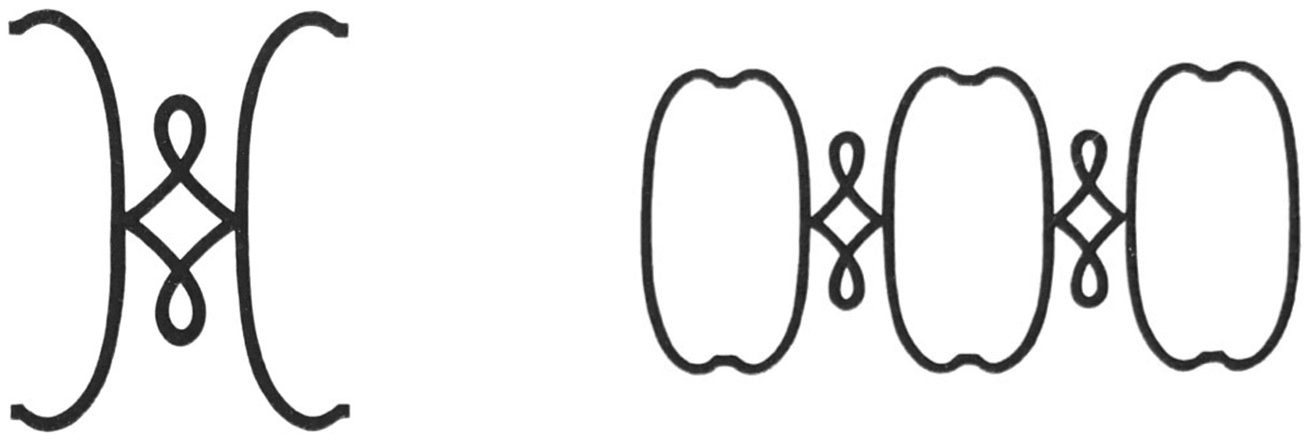
The pattern on the left is spontaneously perceived as a capital H with a central symmetric decoration. When this occurs, Max Wertheimer’s initials disappear, because of the dominance of good continuation, closure, and symmetry over past experience. Closure makes the effect even stronger in the pattern on the right. Original demonstrations in Wertheimer (1923/2012).
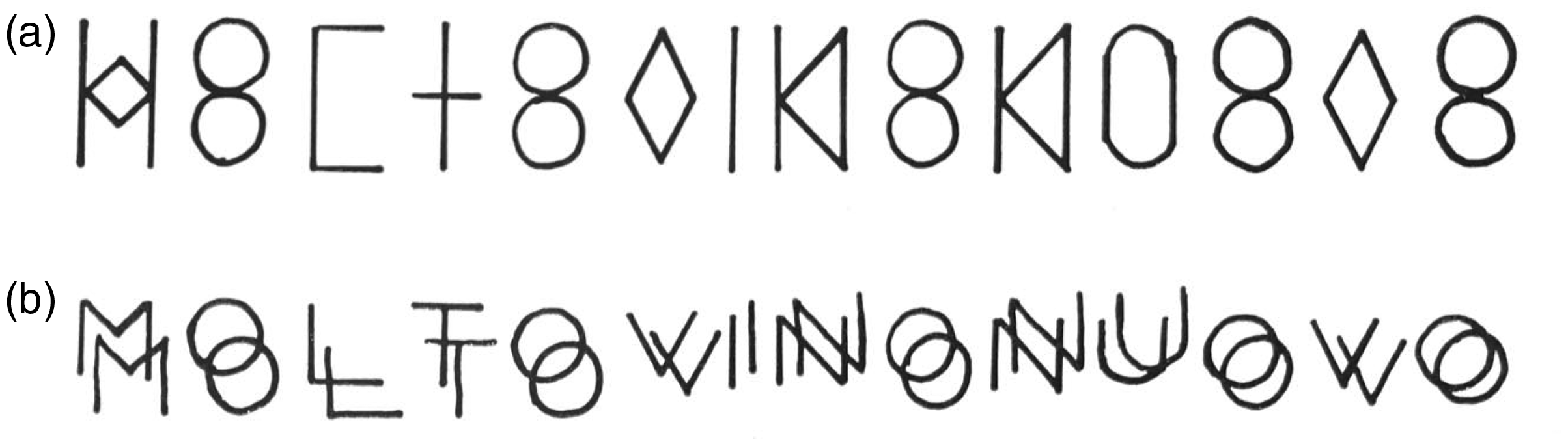
At first sight, the pattern in (a) looks like a strange unreadable sequence of symbols, while in (b), where the same elements are added, Italians read a meaningful verbal expression. Reproduced from Kanizsa (1968, Figs. 4 and 8).
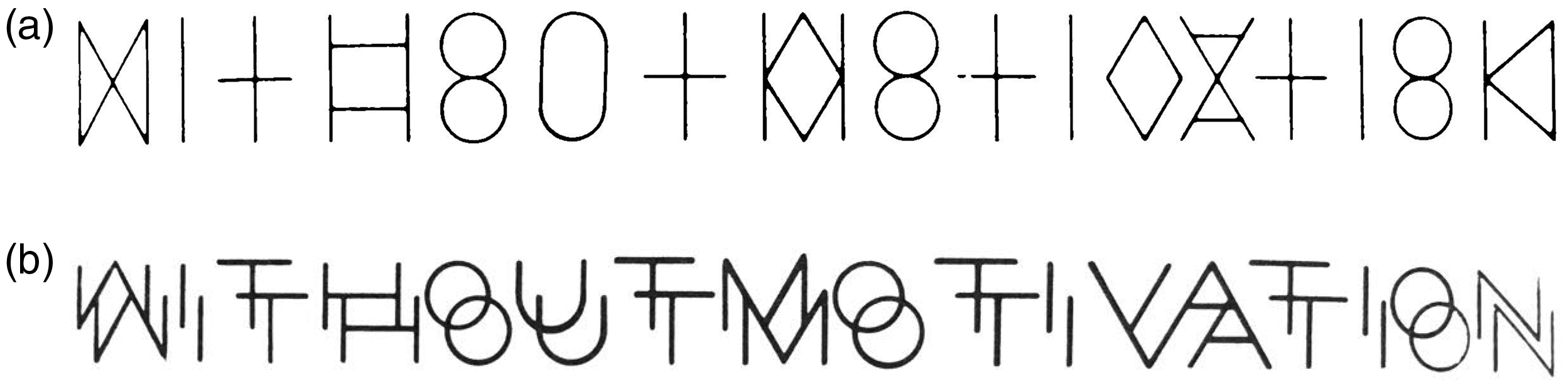
The English version of Figure 2. Reproduced from Kanizsa (1979, Figs. 2.3 and 2.5).
Unfortunately, the same criticism that Kanizsa himself considered valid for natural and military camouflage may apply to camouflages in Figures 2(a) and 3(a). As a matter of fact, at least some mirrored items are not less familiar than the original letters: For instance, both the number 8 that masks the capital letter O and the cross/plus symbol that masks the capital letter T are well known to observers. One could even attempt to predict the camouflage of the letter U by the mirrored letter O as a consequence of their relative frequency (in English, 2.9% for the U versus 7.7% for the O). 7
A similar line of reasoning applies to the last demonstration of camouflage by mirroring included in the 1968 paper, in which the Italian handwritten word nume (numen) is masked by the perception of a closed symmetric structure that resembles a fishbone silhouette (Figure 4(a)). Figure 4(b) shows an equivalent (maybe better) demonstration valid also for English readers.

For an Italian reader, the disappearance of the word nume in (a) is surprising, but could be explained by a perceptual preference for closed symmetric structures overcoming the recognition of overlearned letters. A similar demonstration directed to both Italian and English readers, in which mirroring masks a common self-referring word (me) is shown in (b). (a) reproduces Fig. 5 in Kanizsa (1968).
Camouflage by texture absorption provided Kanizsa with a better terrain for demonstrations against past experience. First, he discussed the concealed octagon by Galli and Zama (1931, Fig. 22), reproduced here in Figure 5, and noticed that structures emerging in the preferred perceptual solution (textured occluding diamonds and outlined partially occluded square) are both regular and familiar, which is the cornerstone of Musatti’s impossibility thesis. Then, he asked whether an unfamiliar “perceptually ordered” (though not symmetric) outline texture could absorb a familiar object and produced a series of patterns in which the outline contours of a church become invisible when embedded into an iterative context made of locally identical lines (Figure 6). Finally, Kanizsa succeeded in finding a valid anti-empiricist demonstration, based on the texture-absorption technique.
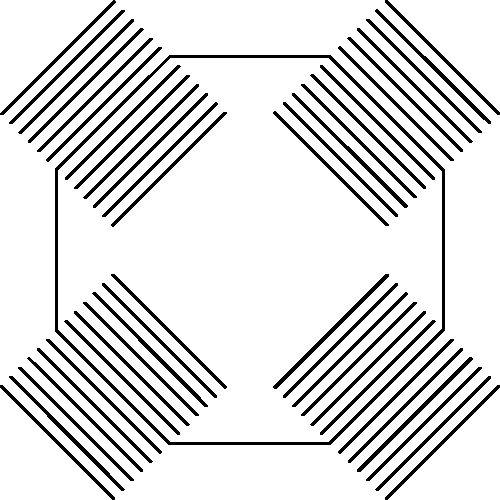
Perception of a rounded square partially occluded by textured diamonds masks the objectively present regular octagon. Reproduced from Galli and Zama (1931, Fig. 22).
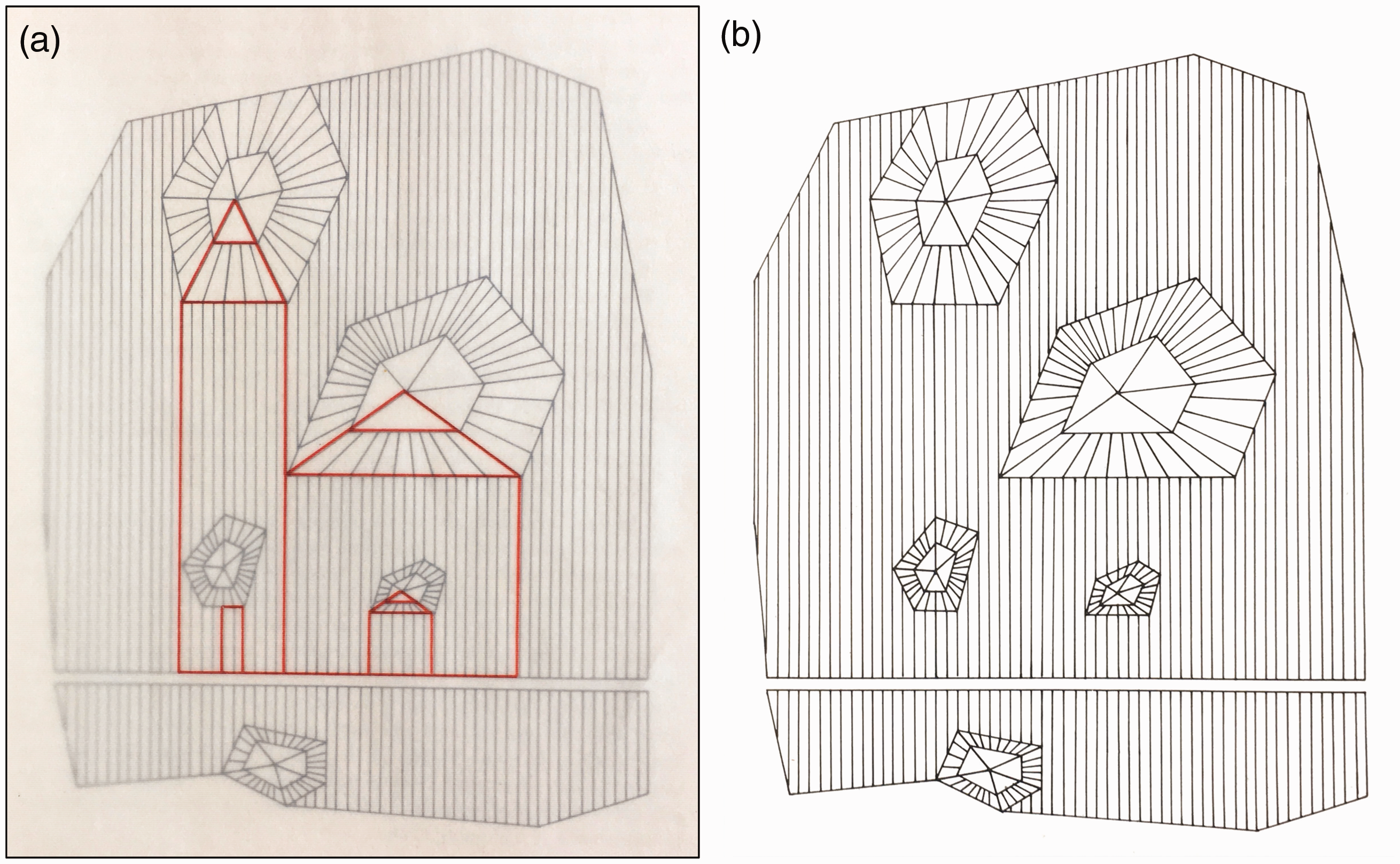
The original demonstration in Kanizsa (1968, Fig. 12) was obtained by inserting a transparent page with the red outline of a schematic church (visible in (a)) perfectly aligned with some lines of the unfamiliar textured pattern in (b). When the transparent page was turned, the church disappeared (despite its objective persistence in the stimulus).
Later, Kanizsa and Vicario published a paper each on visual masking, (collected in Kanizsa & Vicario, 1982), in which they agreed on the existence of different types of camouflage, some reversible (often interpretable as dependent on past experience) and some irreversible (in which autochthonous factors can override past experience). Texture absorption represents an extreme case of irreversible camouflage, in which not even knowledge of the presence of a familiar shape can override an alternative organization supported by the tendency of contours to belong to a uniform structure made of similar elements.
A possible low-level mechanism behind the Galli and Zama type of camouflage has been called “texture-surround suppression of contour-shape” (TSSCP; Gheorghiu & Kingdom, 2017; Kingdom & Prins, 2009), mediated by the activity of cortical neurons with extra classical receptive fields. Kingdom and Prins (2009) showed that the curvature after-effect induced by a sinusoidal line surrounded by orthogonal elements is similar to the after-effect induced by the sinusoidal line alone, while it is markedly reduced when the same contour is embedded in a surround of parallel lines.
In a nutshell, we can conclude that at least some types of camouflage are so powerful, being mediated by low-level unification mechanisms, that past experience—mediated by mere memory of a possible alternative organization of contour elements—cannot override it, even when the observer is perfectly aware of stimulus conditions.
Clearly, this conclusion is fully compatible with the persisting interest of researchers toward the role of past experience in perception in other conditions (an interest that both Musatti and Kanizsa took as an indisputable reality). An instructive recent example regards a case of self-camouflage in a reversible pattern; that is, a situation in which perception of one shape inhibits the simultaneous perception of an alternative shape. Kihlstrom et al. (2018) asked two large groups of students, 1,099 Australians and 944 Americans, to name the outline shape in Figure 7—the recently discovered AWK (Arizona whale–kangaroo)—expecting that more Australians than Americans would be able to perceive and mention also the kangaroo, besides the more obvious whale. Results confirmed authors’ expectations: Independent of orientation, 51% Australians mentioned also the kangaroo, while only 31% American did. Authors attributed this large difference to the different amounts of past experience with kangaroo silhouettes in the two groups of observers (assuming equal past experience with whale silhouettes, we should add). Unfortunately, the authors did not control for the possible different perceptual flexibility in the two groups of observers, a factor that by itself might explain the different amounts of verbally reported kangaroos in the two groups. Rather than a criticism of Kihlstrom et al. (2018), this remark should be taken as a further argument for the difficulty of providing valid scientific evidence of the role of past experience; a difficulty that pushed Musatti toward a logical shortcut and Kanizsa toward the active search for convincing, though rare, phenomena.
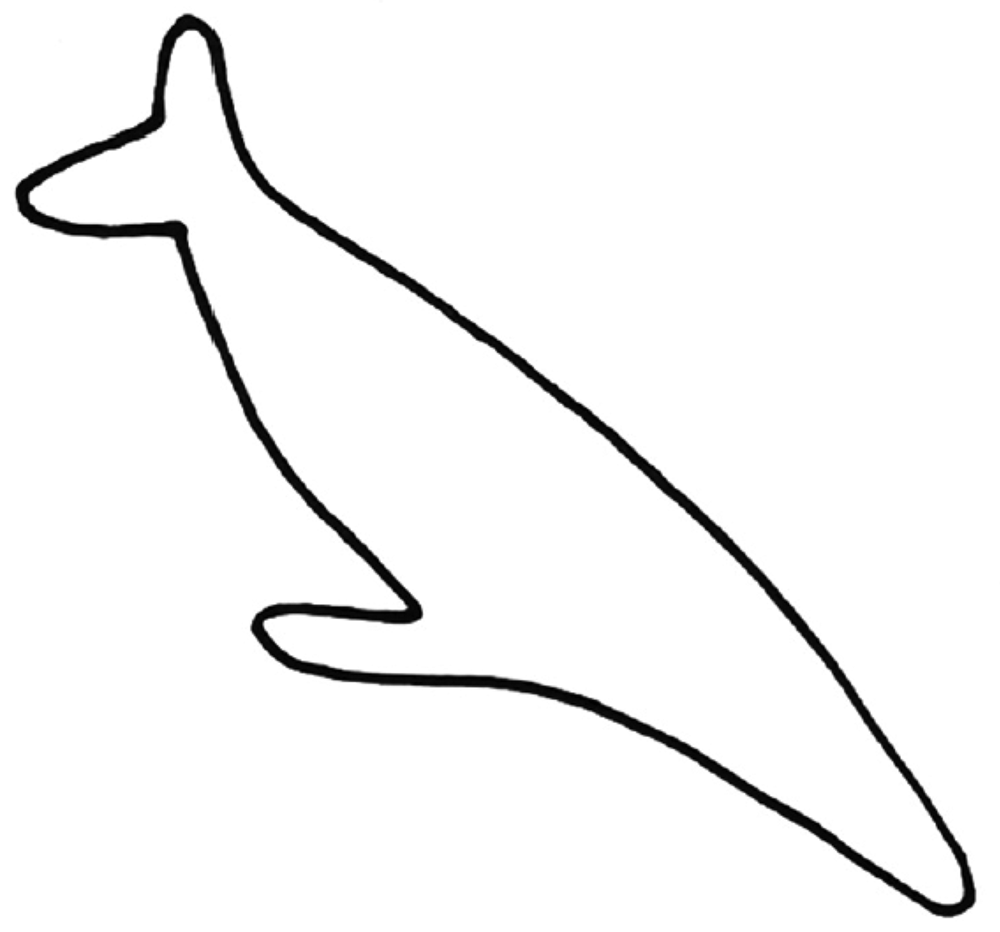
The Arizona whale–kangaroo (AWK) studied by Kihlstrom et al. (2018; reproduced from their Fig. 2). More Australians than Americans report seeing also the kangaroo (besides the whale, which is the most likely perceptual solution).
Depth Order
Depth stratification in pictorial displays offered Kanizsa the opportunity to explore the power of Petter’s rule, a factor discovered by his former research assistant Guido Petter (1956) and neatly discussed by Kanizsa in the 1968 paper using the diagram in Figure 8(b). Homogeneous regions with sharp concavities and aligned contours like the one in Figure 8(a) tend to perceptually split into two overlapping shapes, a phenomenon called duo formation by Koffka (1935). In such conditions, other things being equal, observers preferentially perceive the shape whose missing contours are shorter in front. In Figure 8(a), the shape with shorter missing contours is the large horizontally elongated rectangle. To explain this preference, Kanizsa (1968, p. 24) utilized the terminology employed in his paper on illusory contours (Kanizsa, 1955/1987), contrasting “quasi-perceptual margins” with “virtual or amodal margins.” Assuming that the completion of the foreground shape has a “quasi-perceptual” (i.e., modal) character and requires more “energy” than the amodal completion of the background shape, depth order can be predicted by the ratio between (AB + CD) and (AC + BD).
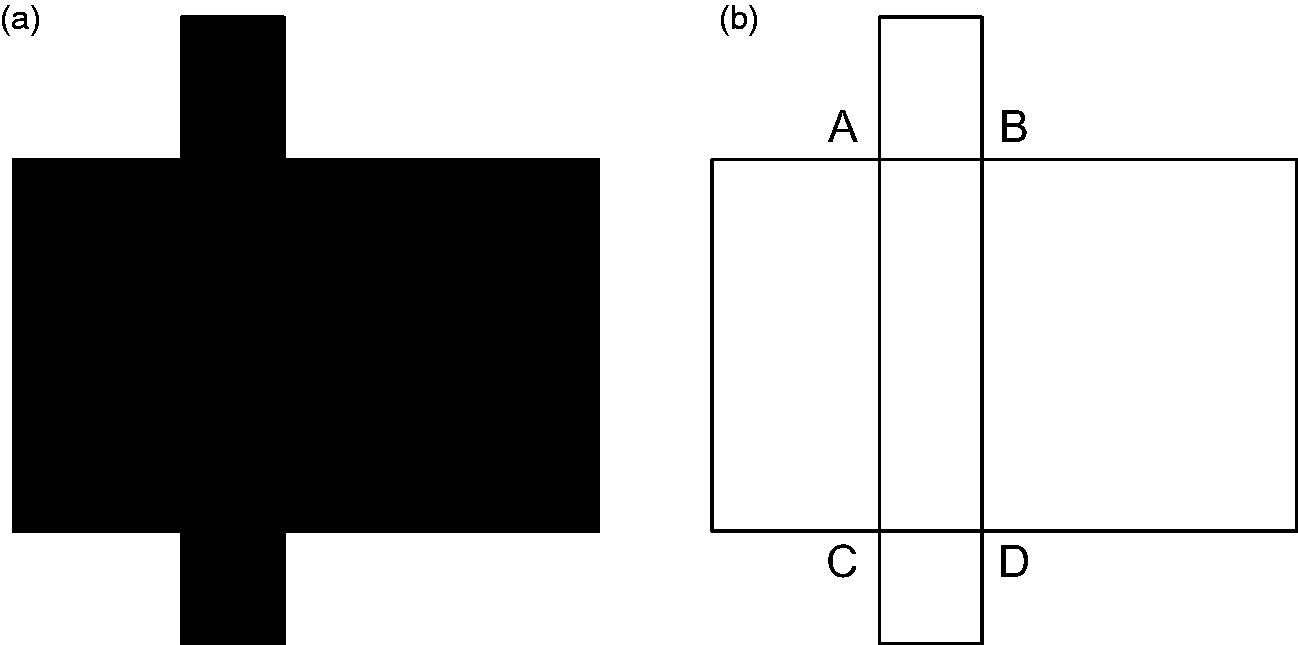
The black homogeneous region in (a) is perceptually split into two overlapping rectangles, with a preference for the large horizontal rectangle in front. This depth order can be explained by the tendency to minimize the cost of perceptually instantiating missing contours; i.e., by (AB + CD) < (AC + BD) in (b). Panel (b) redrawn from Kanizsa (1968, Fig. 17).
However, implicitly, Kanizsa took Petter’s rule as a manifestation of the minimum principle in perception (Koffka, Chapter 4; Hatfield & Epstein, 1985; van Lier & Gerbino, 2015); that is, of an autochthonous factor that, in pictorial displays, can be put in direct contrast with the empirical factor. The first of the several displays involving Petter’s rule included in the 1968 paper is reproduced in Figure 9, where the fishing pole is surprisingly perceived as passing behind the sail of the far boat. In the absence of the local specification of depth order normally conveyed by T-junctions, perception follows Petter’s rule, against expectations based on perspective cues and past experience with fishing poles. Other displays of the same kind (Kanizsa, 1968, Figs. 19–21) included: a foil passing through the body of a referee and the legs of a pair of fencers intertwined with a fence, a couple intertwined with a fence, and an umbrella shank passing through a woman’s hair. In these four displays, homogeneous regions with concavities and aligned contours (white, gray, or black) might be disambiguated according to past experience with common material objects or human bodies. Instead, Petter’s rule prevailed.
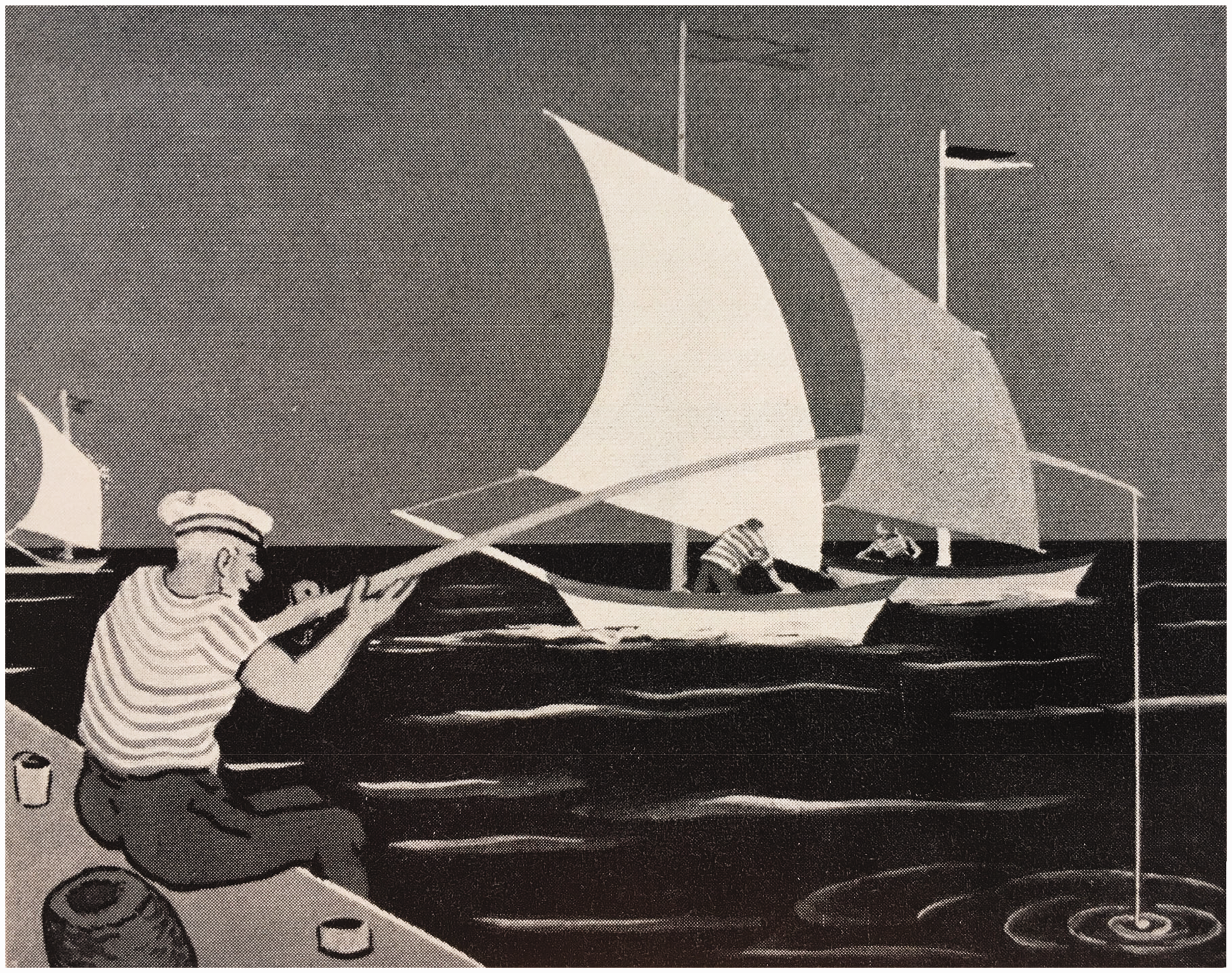
Reproduced from Kanizsa (1968, Fig. 18).
Kanizsa noticed that similar paradoxical results can be obtained in outline drawings in which the preference for minimizing the length of modally completed contours cannot be used as an explanatory factor, given that all contours are specified in the stimulus, and reformulated Petter’s rule in terms of the relative size of intersecting regions enclosed within grouped contours. Figure 10(a) reproduces the intriguing “man with a stick,” where one can observe two instances of depth stratification against past experience: First, the stick does not appear in front of outlines of the human figure, but rather behind them; and second, the arm does not appear in front of the jacket, but rather behind its outline. However, a closer look at Figure 10(a) reveals that the application of Petter’s rule to outline displays is far from obvious.
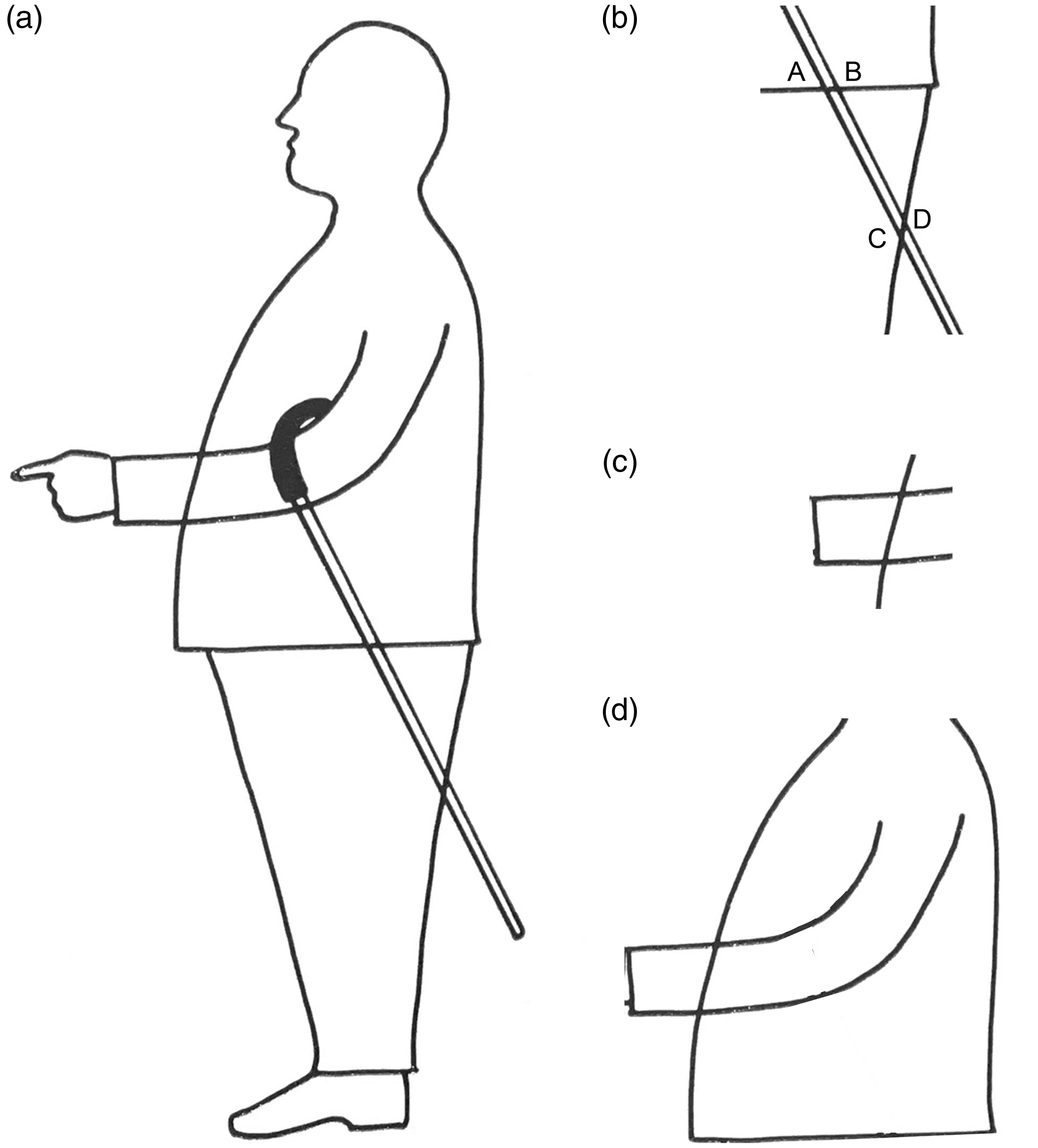
The depth order of intersecting outlines in (a) contradicts past experience: The stick appears to pass behind trousers contours and the arm appears to pass behind the belly contour. As shown in (b), both formulations of Petter’s rule (in terms of contour lengths or region areas) are consistent with the paradoxical perceived stratification of the stick. However, Petter’s rule predicts the stratification of the arm behind the belly contour only following the segmentation in (d), not the one in (c). Reproduced from Kanizsa (1968, Fig. 22).
Take the first instance of depth order disambiguation, involving the stick and the lower part of the human figure (Figure 10(b)). Here, the two formulations of Petter’s rule lead to the same prediction, consistent with the stick being perceived behind body contours. One could appeal to contour lengths [(AB + CD) < (AC + BD)] and predict that the surface in front will be the one that implies the unification of more proximal line terminators; or appeal to areas of approximately closed intersecting regions using the “thick in front, thin behind” heuristic (just the opposite of what is required when taking a group photograph). In cases like Figure 10(b), contour lengths and regions areas are correlated.
But now take the second instance of depth order disambiguation, involving the outline of the arm and the upper part of the human figure. Here, the application of Petter’s rule to the (unduly) local segmentation of outlines illustrated in Figure 10(c) would lead to a prediction opposite to the perceived outcome; that is, to the unsurprising perception of a vertical contour (the one that borders the man’s belly) behind the horizontally elongated arm region. However, if outlines are segmented and coded as illustrated in Figure 10(d), then the “thick in front, thin behind” heuristic predicts a stratification of the two intersecting regions consistent with the perceived outcome. The same line of reasoning applies to Fig. 23 in Kanizsa (1968), in which the nose of an outlined head appears to pass behind the cheek’s contour: Since the nose region is thinner than the head, it appears behind it, irrespective of past experience with frequent three-fourth views of heads in which the nose hides part of the back cheek. Depth order in outline displays remains a relatively unexplored research area, but some support for the role of the relative size of outlined regions comes from Masin (2000).
Interestingly, in their creative investigation of Petter’s rule, Tommasi, Bressan, and Vallortigara (1995) took a position different from Kanizsa’s, assuming that the contour-length formulation of the rule follows from the operation of an experience-blind low-level mechanism, whereas the region-area formulation is consistent with the empirical depth cue of relative size. As a matter of fact, the basis of Petter’s rule remains controversial. For instance, Vallortigara and Tommasi (2001; see also Vallortigara, Regolin, Chiandetti, & Rugani, 2010) discussed Petter’s rule as a good example of a geometric regularity internalized over evolution; that is, an innate tendency consistent with constraints inherent to visual ecology. In his 1968 paper, Kanizsa did not consider the basis of Petter’s rule, focusing instead on violations of the rational expectation that perception, under conditions of stimulus undeterminacy, should conform to general knowledge about world properties.
The section of the 1968 paper on depth order includes three demonstrations where paradoxical impressions of transparency are evoked by pitting photometric cues to transparency against knowledge of the material properties of common objects (Kanizsa, 1968, Figs. 24–26). In the first, reproduced in Figure 11(a), Petter’s rule cooperates with photometric cues to transparency.
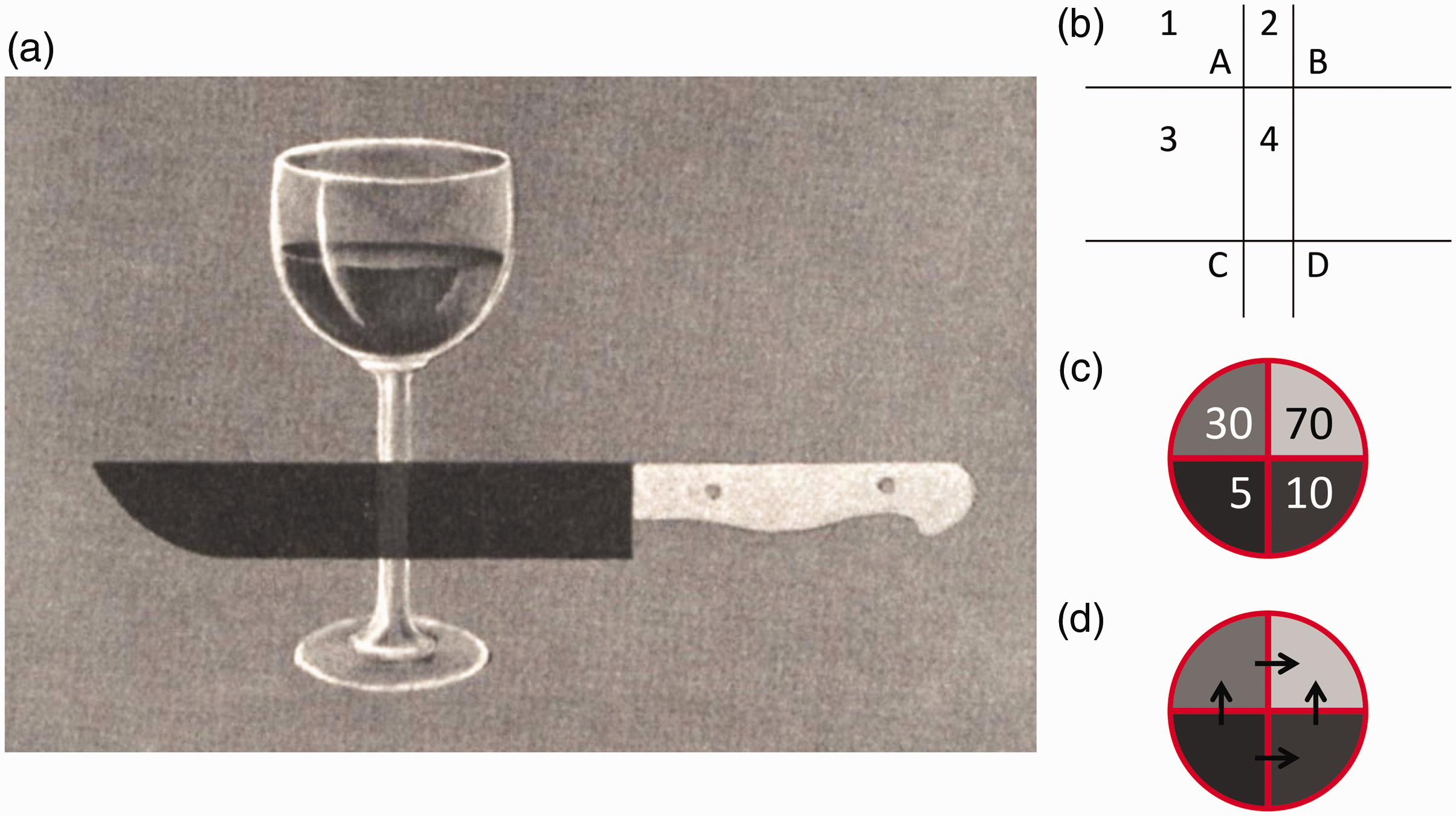
In Panel (a), the knife blade appears transparent. Reproduced from Kanizsa (1968, Fig. 24). Panel (b) illustrates the geometry of the relevant intersection between the glass stem and the knife blade. Since [(AB + CD) < (AC + BD)], the “thick in front, thin behind” heuristic predicts that the knife is perceived in front of the glass. Panel (c) shows approximate average luminance values (in arbitrary units) for intersection A, where regions [1,2,3,4] meet. As clarified by arrows in Panel (d) (with arrow direction marking the dark–light contrast) the A intersection is a double-preserving nonreversing X-junction.
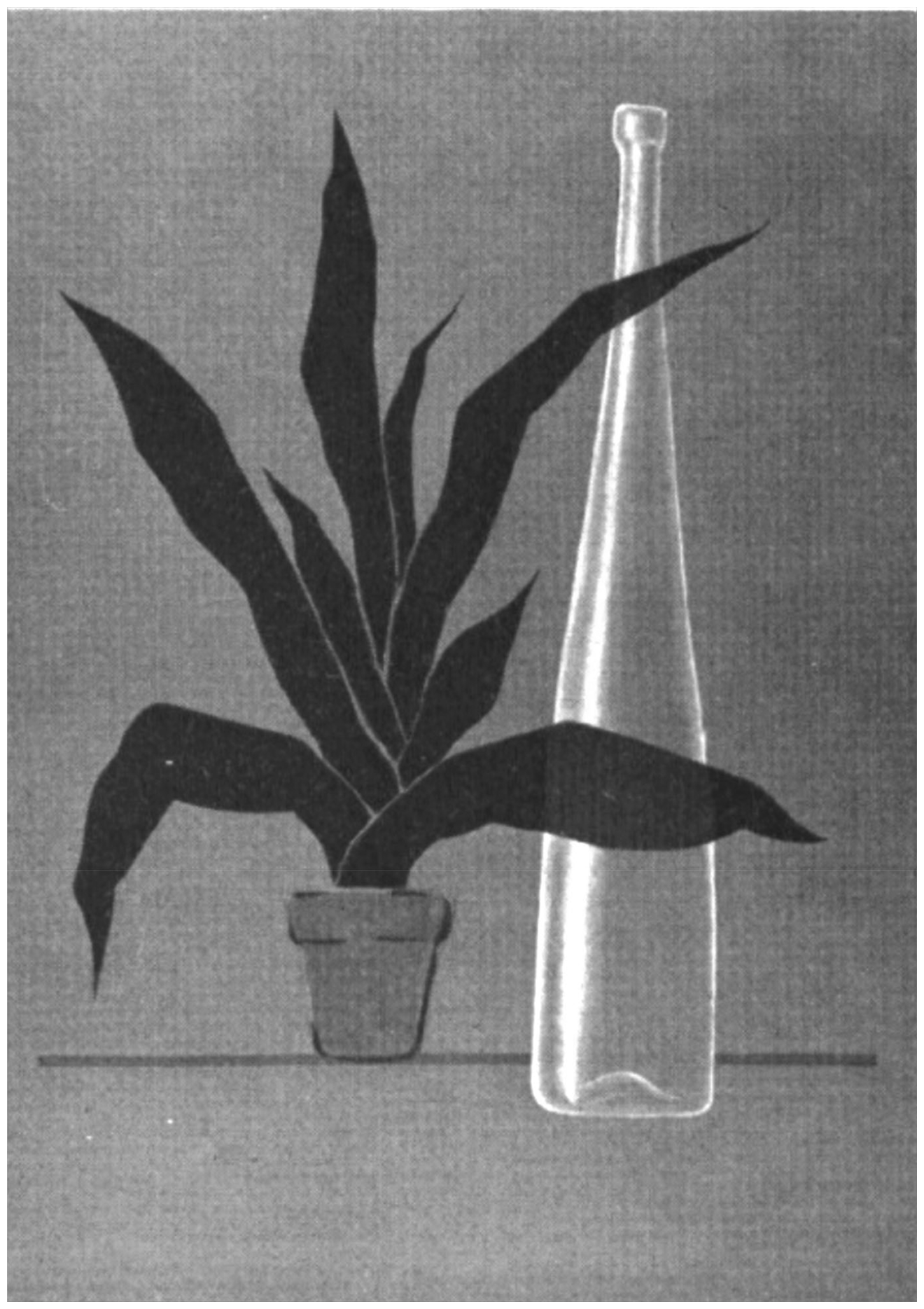
Transparent leaves in front of a bottle. Reproduced from Kanizsa (1968, Fig. 25). Here, geometric and photometric factors are in conflict. The ratio of contour lengths slightly favors the bottle-in-front solution, while luminance relations at relevant X-junctions are like in the knife/glass display (Figure 11), making perception of a transparent bottle inconsistent with physical constraints.
As remarked by Kanizsa, the surrealistic perception of a suspended knife with a transparent blade in front of a glass runs against the idea that the depth order of intersecting contours (a locally ambiguous stimulus) depends on past experience. Given that knife blades are normally made of opaque metal and chalices of transparent glass, perceiving the knife behind the glass should be more likely than perceiving the knife in front. A closer analysis of this intersection, blown up in Figure 11(b), reveals that both geometric and photometric relationships favor the knife-in-front solution. As regards the geometry of intersecting contours, the perceptual preference for the knife in front is consistent with Petter’s rule, formulated in terms of either contour lengths, given that [(AB + CD)<(AC + BD), corresponding to a knife/glass −0.48 log ratio of contour lengths], or region areas, given that the glass stem is thinner than the knife blade. 8 As regards the average gray levels of the four regions meeting at the A contour intersection (Figure 11(c)), they are compatible with two transparency solutions according to the algebraic theory by Metelli (1970, 1974), given that this intersection can be classified as a double-preserving nonreversing X-junction (Adelson & Anandan, 1990; Anderson, 1997). The two predicted solutions involve a transparent object with either a horizontal or a vertical contour. However, while the preservation of contrast polarity across the horizontal contour is consistent with a transparent object below it (i.e., an object including Regions 3 and 4, capable of reducing the 70/30 back contrast to the 10/5 front contrast, like the knife blade), the preservation of contrast polarity across the vertical contour would be consistent with transparency of an object on the left of it (i.e., an object capable of reducing the 70/10 back contrast to the 30/5 front contrast, which in Figure 11(a) would be composed by the left piece of the knife blade and a portion of the overall background). The local photometry in Figure 11(c) is incompatible with a real transparent glass, given that it would imply a higher contrast between the two regions of the object in front than between the background regions. 9
To summarize, in Figure 11(a) both geometric (“thick in front, thin behind” heuristic) and photometric (preference for minimal luminance differences at junctions, constrained by the sign of contrast change) factors support the anti-empirical solution involving the transparent knife blade in front of the glass. Instead, in another display with paradoxically transparent leaves in front of a bottle (Kanizsa, 1968, Fig. 25), geometric and photometric factors were in conflict. At the geometric level, the local “thick in front, thin behind” heuristic would predict a slight preference for perceiving the bottle in front (corresponding to a leaves/bottle 0.12 log ratio of contour lengths); furthermore, height relative to the depicted horizon would also be consistent with a bottle closer to the viewpoint than the leaves. At the photometric level, luminance relations were like in the previous knife/glass display (Figure 11(d)), making the perception of a transparent bottle in front of leaves inconsistent with optic ecology. One may conclude that, when in conflict, photometric constraints are stronger than geometric constraints; with the proviso, however, that Petter’s rule predicts the relative probability of two possible solutions, while the ordinal constraints concerning luminance relations at X-junctions exclude some solutions as impossible.
Following the logic underlying Kanizsa’s way of combining geometric and photometric constraints, one may ask whether, in displays with double-preserving nonreversing X-junctions, Petter’s rule can overcome the tendency to prefer the solution that minimizes the luminance difference between regions perceived as part of a transparent layer (Masin, 1999).
Figure 13, based on a similar pattern included in the English version of the 1968 paper (Kanizsa, 1979, Chapter 2; see also Singh, Hoffman, & Albert, 1999, Fig. 6b), shows a case of stratification according to Petter’s rule, describable as two intertwined flags. Compared to simpler patterns like the one in Figure 8(a), Figure 13 supports a more compelling Petter effect, probably thanks to the sum of two opposite local tendencies for the same object (relative to a default pictorial depth, the thin pole is pushed backwards while the large rectangular fly is pulled forwards). Figure 14 shows two elaborations of Figure 13, with single-reversing X-junctions in Figure 14(a) and nonreversing X-junctions in Figure 14(b), respectively. As expected, the intertwining effect disappears in Figure 14(a), substituted by the perception of a light flag in front, the only solution compatible with local luminance relationships. In this case, the photometric ordinal constraint at X-junctions prevails over the geometric Petter’s rule (which would support the flag intertwining). In contrast, the two flags appear intertwined in Figure 14(b), suggesting that Petter’s rule is stronger than the local preference for minimal luminance differences between regions perceived as part of the transparent layer, when X-junctions are locally ambiguous. Note that this tendency would predict the perception of a dark flag in front of a light flag, given that the two luminance levels belonging to the first are closer than those belonging to the second, without intertwining. 10

A compelling Petter effect: The homogeneous black region with critical concavities and aligned contours splits into two intertwined flags. Each of the thin poles is perceived as stratified behind the large rectangular fly of the other flag, according to Petter’s rule.
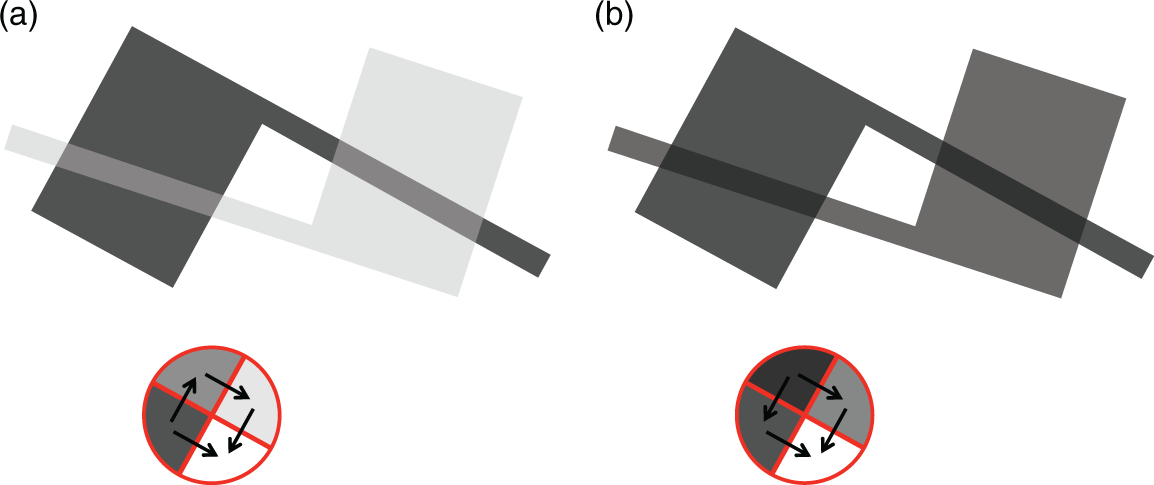
Two transparency elaborations of Figure 13. The (a) display contains eight single-reversing X-junctions, supporting the perception of a light gray flag in front of a dark gray flag, against Petter’s rule (formulated in terms of either contour lengths or local region areas). The (b) display contains eight double-preserving nonreversing X-junctions, compatible with either a light or dark flag in front; in this photometrically ambiguous case, the flags appear intertwined, according to the geometric constraint expressed by Petter’s rule and against the weaker preference for seeing in front a layer composed of regions with a minimal luminance difference.
Going back to Musatti’s impossibility thesis, one may ask if Kanizsa’s demonstrations of paradoxical transparency are conclusively anti-empirical or not. As a matter of fact, both Petter’s rule and ordinal luminance constraints at X-junctions are open to either structural or empirical interpretations. They can be viewed as manifestations of representational economy (within geometric and photometric domains, respectively) or observational history (supporting learning of the statistics of retinal spatial extents and light levels associated with surface superposition). 11 For instance, within an empiricist framework, the knife/glass effect might be interpreted as a demonstration that general perceptual heuristics (however based on image statistics) prevail over specific object recognition. Instead of representative of a conflict between autochthonous and empirical factors, the knife/glass and similar effects would be representative of the conflict between general and specific knowledge of world properties (typically solved in favor of general knowledge).
Form
Kanizsa’s (1968) allegedly anti-empirical demonstration concerning form perception is rather complex. Here, he reported data collected in the classroom, where he asked students to freely describe the pattern in Figure 15. Most observers failed to mention Europe, most likely because of the joint influence of two factors: shape misorientation, which by itself can disrupt the recognition of mono-oriented shapes when rotated upside-down, and noncanonical lighting, which makes sea regions to appear in relief (and therefore to play the figural role) when shading cues are consistent with light from above. Kanizsa stressed that the failure to recognize the overlearned shape of Europe, replaced by the report of unknown meaningless shapes by most observers, constituted strong evidence against the role of past experience in perception; but left open the question of the relative contribution of shape misorientation and noncanonical lighting.
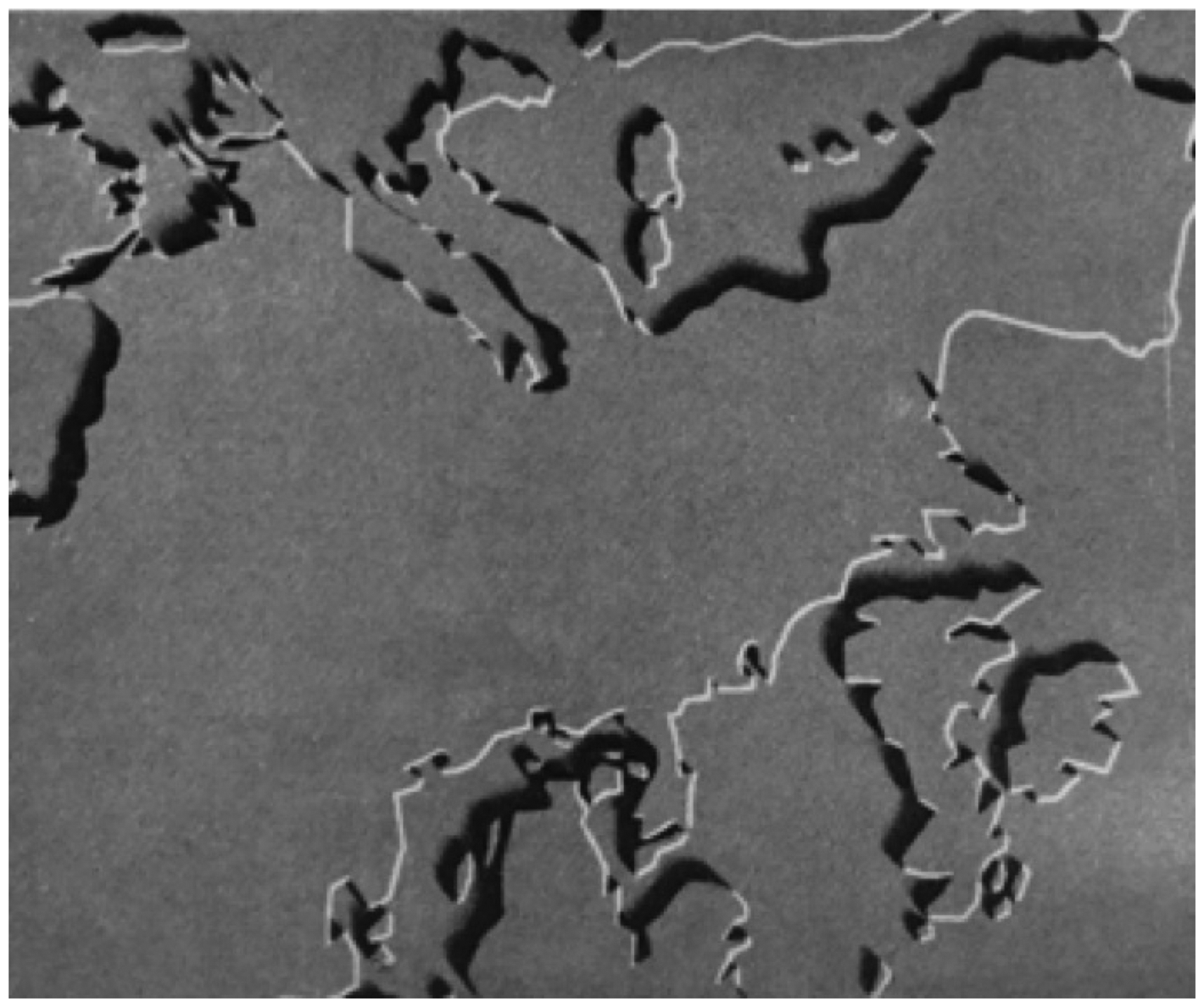
The upside-down Europe is hard to recognize. Reproduced from Kanizsa (1968, Fig. 27).
Systematic research on the particular pattern in Figure 15 is still lacking, but we know from Enns and Shore (1997) that, at least for faces, orientation and lighting direction are separate factors that may either combine additively or interact, depending on the specific task. As regards Europe specifically, the dust jacket of Irvin Rock’s The Logic of Perception (1983) reproduced in Figure 16 provides us—mostly if Europeans—with anecdotal evidence of the power of misorientation, combined with a preference for seeing smaller (and maybe black) regions as figures (Rubin, 1915), in preventing observers from recognizing a familiar continent.
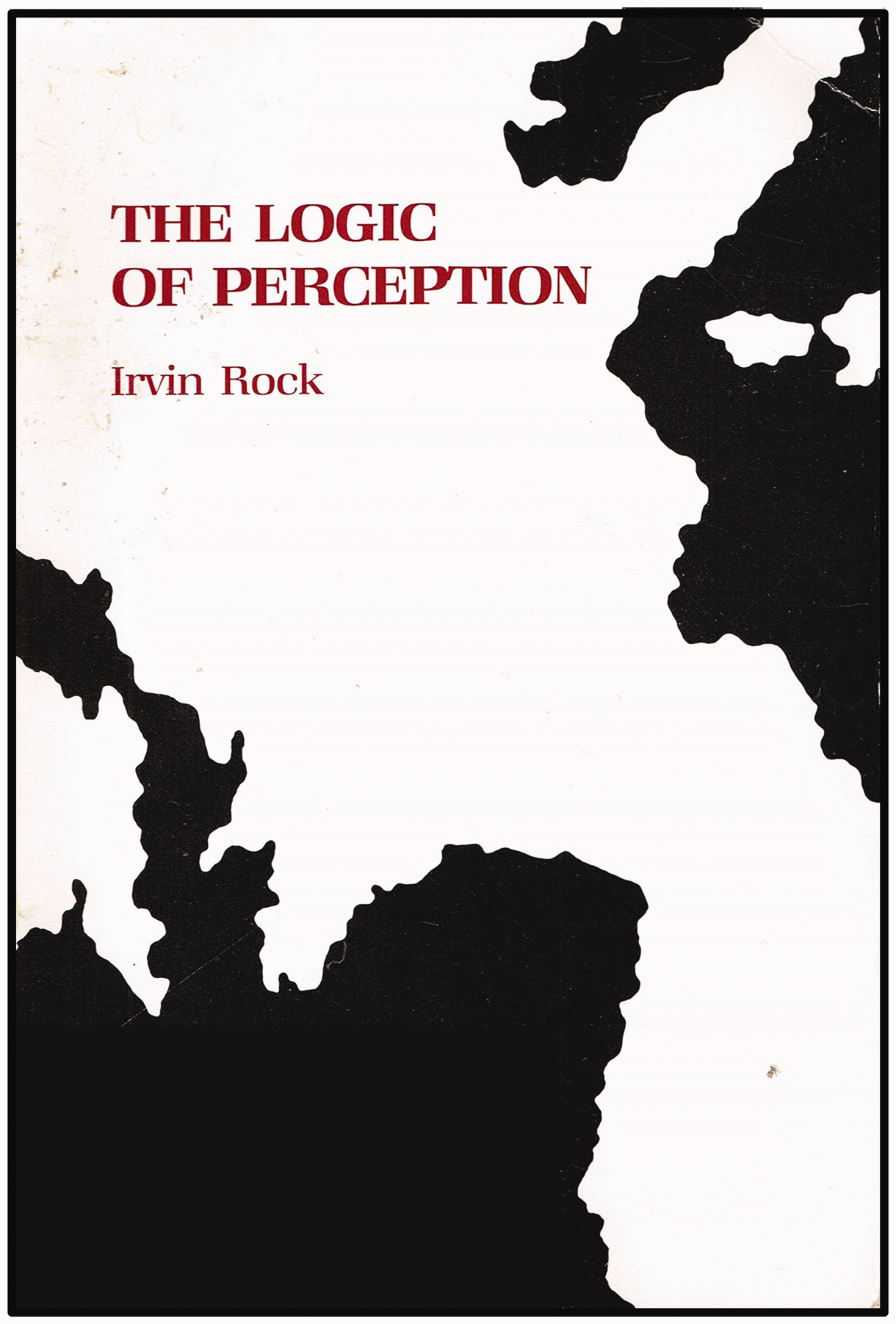
Dust jacket of The Logic of Perception (Rock, 1983). Shape misorientation by 90° counterclockwise makes Europe invisible to most observers, at first sight.
As regards shading and, consequently, three-dimensional (3D) convexity/concavity, results from Experiment 2 by Cate and Behrmann (2010) are quite informative. These authors used the so-called orthogonal insertion task with stimuli shown in Figure 17(a). Initially, the participants should discriminate [A, B, C] 3D shapes where only the thickness of the two arms differed slightly. After the insertion of a deformation of the central element (from circle to oval), they should perform the same discrimination, disregarding this irrelevant feature. The RT cost in the so-called postinsertion task, which represents a measure of part-whole integration, turned out to be larger for convex than concave shapes, as shown in Figure 17(b). Since recognition of a complex shape like Europe likely depends on holistic processing, the results obtained by Cate and Behrmann (2010) are consistent with a contribution of noncanonical lighting (and therefore, inverted relief) to the recognition loss in Kanizsa’s demonstration with the rotated Europe.
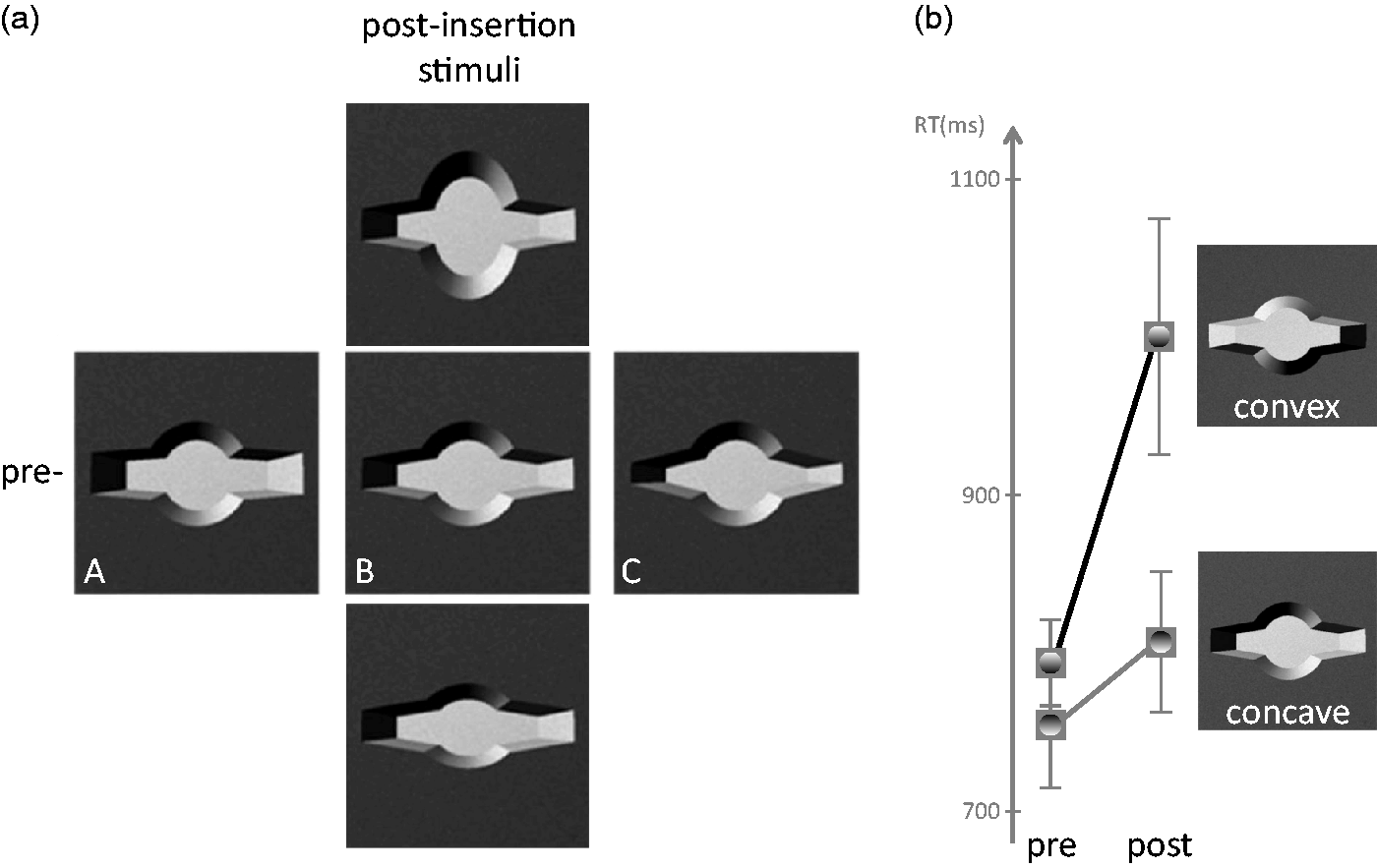
Panel (a) showing stimuli used by Cate and Behrmann (2010) in their Experiment 2. Stimuli in the horizontal row differ by arm thickness (the task-relevant feature); stimuli in the vertical column differ by oval-circle deformation of the central rounded element (the task-irrelevant feature). Average discrimination RTs are plotted in Panel (b) for pre- and postinsertion blocks. The cost of disregarding the irrelevant feature was higher for 3D convex shapes.
Notice, however, that both canonical orientation and canonical lighting are usually considered empirical factors, making also the inverted Europe demonstration a possible case of conflict between two levels of learned knowledge (general versus specific), rather than a conflict between autochthonous and empirical factors.
Motion
The fourth and last domain considered by Kanizsa (1968) for his demonstrations against past experience is the organization of motion trajectories in ambiguous stimulus conditions, like those studied by Metzger (1934) in his pioneering doctoral dissertation. The ambiguity arises when, for instance, two identical dots move one toward the other until they objectively superpose and continue to move; in such conditions, observers can either perceive the veridical crossing of trajectories or the nonveridical bouncing of one dot against the other. For his dancing little man demonstration, Kanizsa utilized a mechanical device inspired by a funny puppet casually seen in a shop window, where it advertised a shoe cream. Kanizsa noticed that—against the objective state of affairs and against past experience with the familiar crossing of legs of walking and running humans and animals—the legs of the puppet, seen laterally, bounced back after optic superposition.
The mechanical device built by Kanizsa (Figure 18(a)) allowed him to control speed, amplitude, orientation, and phase of the oscillations of the two legs (and arms, to improve realism) and to simulate walking and running of a schematic human figure seen laterally. Informal reports by observers convinced him that past experience with walking creatures was easily overcome by autochthonous factors favoring the perception of bouncing, due to a tendency to avoid crossing trajectories in impoverished stimulus conditions devoid of information about overlapping. In the case of the dancing little man, the combination of oscillations illustrated in Figure 18(b) was perceived as a funny hopping. This curious solution also resisted the addition of a small disk on one of the two shoes (Figure 19). The perceived dancing/hopping, instead of leg crossing, occurred also with an ostrich (Kanizsa, 1968, Fig. 35).
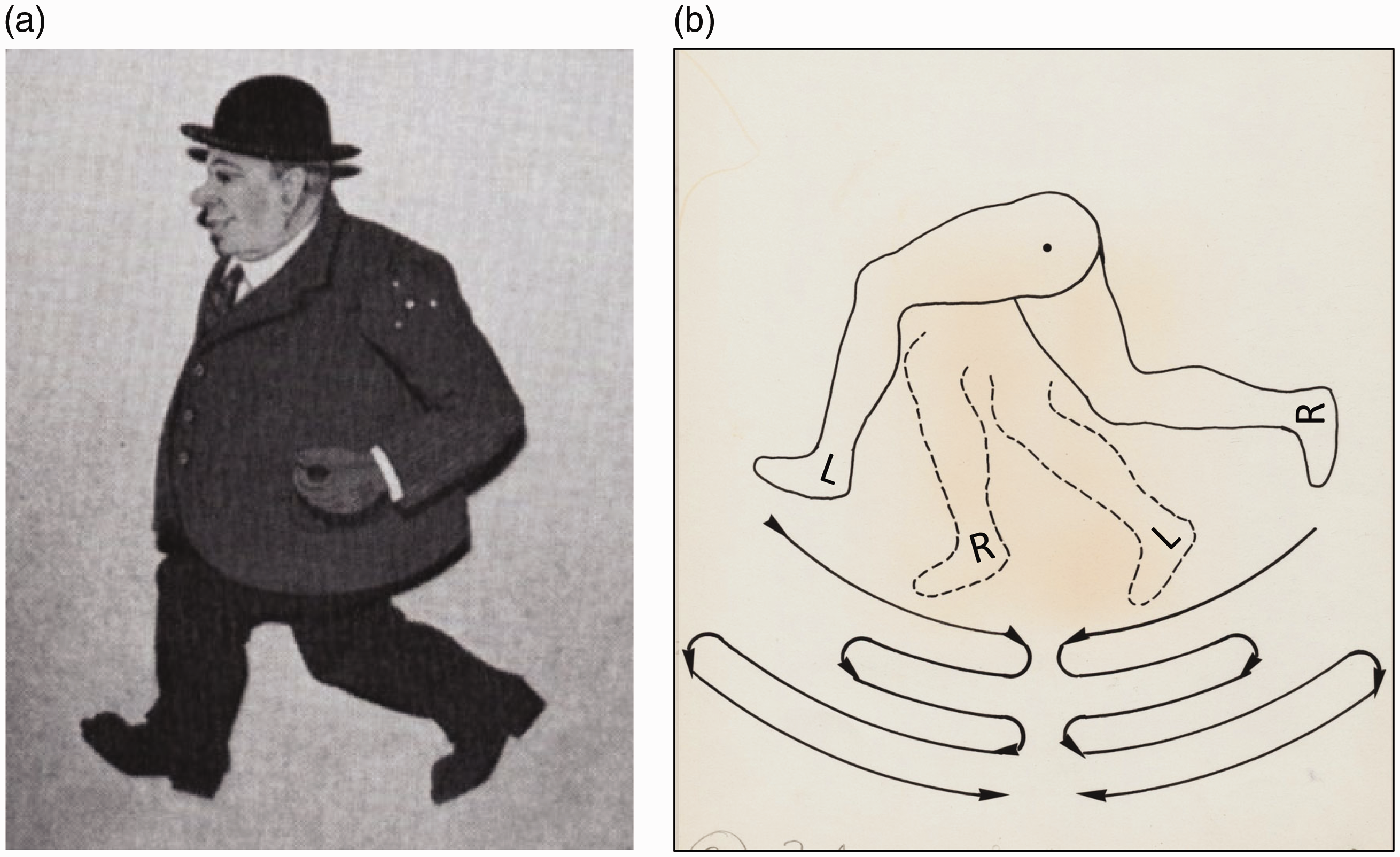
Panel (a) shows the little man animated by a hidden mechanical device that made his legs and arms to oscillate. Panel (b) illustrates the contrast between the physical oscillations of left (L) and right (R) legs and the perceived motion involving a change of identity of legs (rendered by the two lower spatiotemporal paths). Reproduced with modifications from Kanizsa (1968, Figs. 33b and 36).
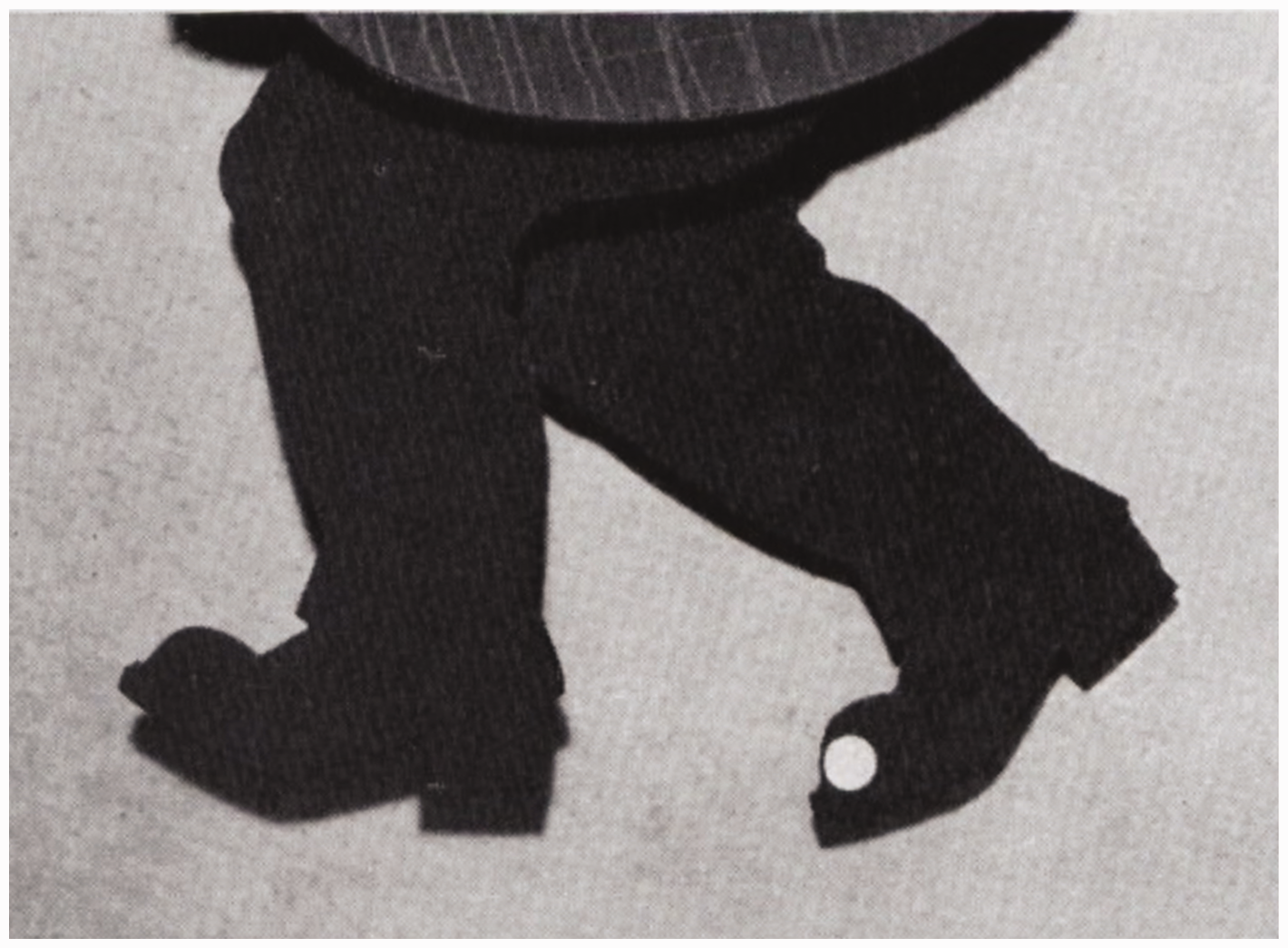
The perception of hopping was maintained also when a disk was attached to one shoe. Observers preferentially perceived the less likely exchange from one shoe to the other. Reproduced from Kanizsa (1968, Fig. 37).
The stream/bounce ambiguity (also named bounce/cross or bounce/pass) has been the object of several investigations, mainly in the context of crossmodal interactions, given the powerful effect of a sound at the time of superposition to favor the bouncing percept (for reviews, see Gobara, Yoshimura, & Yamada, 2018; Shapiro, Caplovitz, & Dixon, 2014), but also with reference to perceived causality (Scholl & Nakayama, 2002). However, it is not clear from the literature what are the factors that, in the case of the dancing little man, are responsible for the strong preference for the bouncing solution that caught Kanizsa’s attention.
One possible explanation follows from research by Sekuler and Sekuler (1999), who found that a pause at superposition favors bouncing. Kanizsa’s mechanical device did not introduce pauses in leg oscillations, but leg thickness produced a similar effect (i.e., a long period in which the two legs fused into a single optic entity).
The effect can be appreciated by comparing the relative strength of bouncing over streaming in the three conditions of object thickness illustrated in Supplemental Movies 1 to 3. Each movie displays the symmetric 90° oscillations of the two arms of an animated cross, similar to the 70° oscillations of the little man legs. One arm, made of two sectors of variable amplitude, moves counterclockwise from the 30° to the 120° orientation at the constant speed of 3° deg/s; the other arm moves clockwise from the 150° to the 60° orientation, with the same speed. 12 The sector amplitude is 6° in Supplemental Movie 1, 12° in Supplemental Movie 2, and 24° in Supplemental Movie 3. The likelihood of perceiving bouncing instead of crossing increases as arm thickness increases.
As regards the possible effect of past experience on stream/bounce ambiguity, Gobara et al. (2018) found that the presentation of an angry emoticon during dot crossing significantly increased the probability of bouncing over streaming with respect to conditions with neutral or smiling emoticons. The actual role of past experience in strengthening the hypothesized associations between angry expression, psychological conflict, and physical collision remains to be determined, but the susceptibility of the stream/bounce effect to influences by emotional cues contradicts the idea that the perception of bouncing depends only on the avoidance of crossing trajectories, as suggested by Kanizsa (1968).
Conclusion
In his 1968 paper, did Kanizsa successfully disprove Musatti’s impossibility thesis? The articulated answer might be: yes in some demonstrations; no or maybe in others. In any case, we should keep in mind an implicit presupposition of Kanizsa’s attempt. He tried to disprove Musatti using only phenomenological observations with adults, a method that typically produces reactions of irresistible surprise in observers, but can also be criticized as inconclusive, with respect to the fundamental issue of the basis of the so-called autochthonous factors. Rather, one should look at the amount of relevant research in developmental and comparative psychology as a better source of evidence disproving Musatti’s impossibility thesis.
But Kanizsa was fascinated by phenomenology, which he viewed as a kind of serious magic 13 and accepted the risk of encountering skeptic opponents. After all, in his later years—maybe impressed by the persistence of Helmholtzian thinking on perception—he reached the conclusion that Musatti was probably right (personal communication). This admission did not diminish his pleasure in looking at 1968 demonstrations as attractive and intriguing visual experiences, a pleasure that we can still share with him.
Footnotes
Acknowledgements
The author thanks Gillian Porter and Johan Wagemans for their support in the preparation of the manuscript, and Rob van Lier and an anonymous reviewer for their observations and suggestions. The author is also grateful to the organizers of the European Conference on Visual Perception 2018 for including the 26th Kanizsa Lecture in the program and for their invitation to deliver it.
Declaration of Conflicting Interests
The author(s) declared no potential conflicts of interest with respect to the research, authorship, and/or publication of this article.
Funding
The author(s) received no financial support for the research, authorship, and/or publication of this article.

Notes
References
Supplementary Material
Please find the following supplemental material available below.
For Open Access articles published under a Creative Commons License, all supplemental material carries the same license as the article it is associated with.
For non-Open Access articles published, all supplemental material carries a non-exclusive license, and permission requests for re-use of supplemental material or any part of supplemental material shall be sent directly to the copyright owner as specified in the copyright notice associated with the article.
