



Abstract

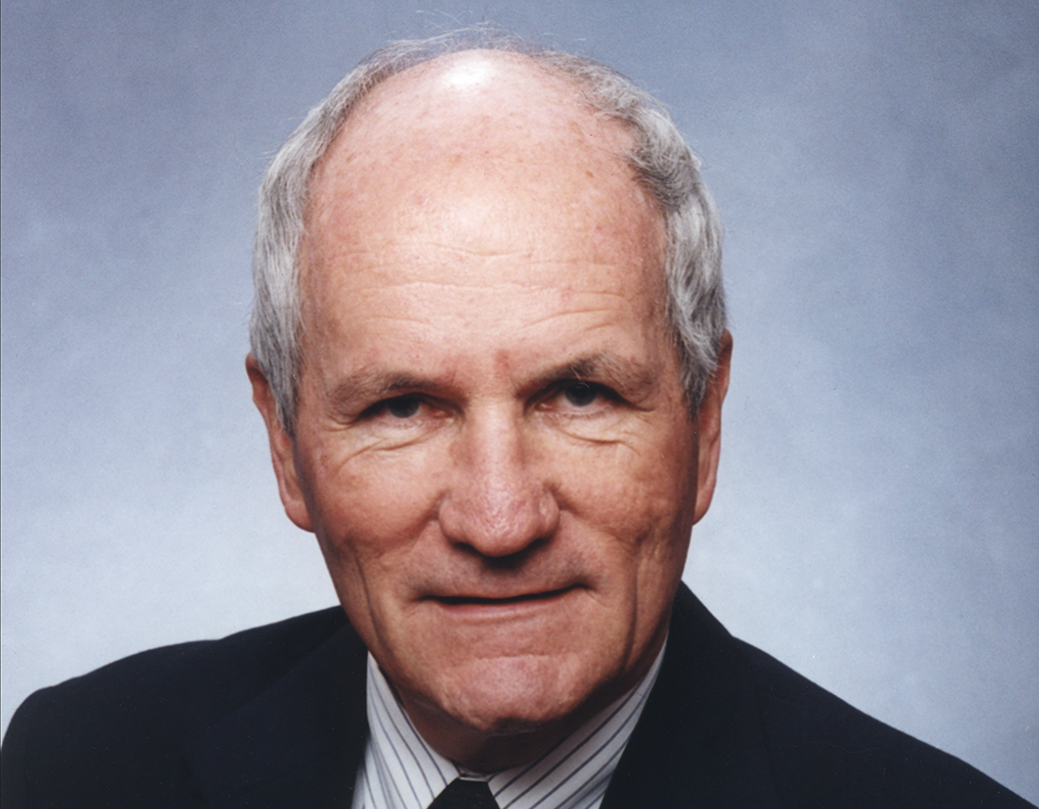
Dr John F. Ferrell (Jack), 86, of Leesburg, Virginia, passed peacefully on June 9, 2019. He was born June 24, 1934, in Newark, New York. In 1954, he attended the New York State College of Agriculture at Cornell University as a pre-veterinary student and received a doctor of veterinary medicine degree from the New York State College of Veterinary Medicine at Cornell University in 1958. Upon graduation, Dr Ferrell was a medical intern serving as clinician and instructor in medicine and surgery in the Small Animal Clinic in the New York State College of Veterinary Medicine at Cornell University.
In 1959, he began his career in the US Army Veterinary Corp as an assistant veterinary pathologist in the Pathology Division, US Army Medical Research and Nutrition Laboratory, Fitzsimons General Hospital, Denver, Colorado. He became the assistant chief of the Pathology Division in 1964. While at the US Army Medical Research and Nutrition Laboratory, he was a veterinary pathology resident, training under the mentorship of Charles Louis Davis. Dr Davis took a lively interest in the education of the residents at the laboratory and was instrumental in obtaining much of the case materials that were unrelated to research used in their training. He spent countless hours in reviewing gross and microscopic pathology with the residents. From the US Army Medical Research and Nutrition Laboratory came the following diplomates of the American College of Veterinary Pathologists (ACVP) who can claim Dr Davis as one of their preceptors: John F. Ferrell, Samuel Thompson, Ronald D. Hunt, Norval W. King, Robert W. Thomassen, and David G. Fairchild. Dr Ferrell became a diplomate of the ACVP in 1963.
In 1964, Dr Ferrell was assigned as a veterinary pathologist in the Pathology Division at the US Army Medical Unit, Fort Detrick, Maryland, where he joined a team of scientists conducting research on infectious diseases with the goal of deterring and defending against current and emerging biological threat agents. In 1966, he continued his military career as the chief of the Veterinary Pathology Branch in the Medical Research Laboratory at Edgewood Arsenal, Maryland. Dr Ferrell led a research team that designed, conducted, and coordinated research programs dealing with the mode of action, toxicity, and pharmacology of chemical compounds of military interest and the spontaneous pathology of various laboratory animal species. He also conducted a formal training program in veterinary pathology acceptable to the ACVP. In 1969, he left active duty in the US Army but remained in the US Army Reserves, where he retired as a colonel following 30 years of service.
In 1969, Dr Ferrell became the chief pathologist at TRW/Hazleton Laboratories, Inc. (HLI), Vienna, Virginia (now Covance Laboratories). He was responsible for technical and administrative supervision of the anatomic and clinical sections of the pathology laboratory to include developmental programs in both areas. Specialized capabilities included toxicologic pathology, endocrine pathology, oncology, teratology, environmental toxicology, electron microscopy, and histochemistry. Diagnostic pathology service was provided to cover all species used at HLI. He was personally involved in the evaluation of pathologic alterations in multiple species of laboratory animals from HLI basic research projects and from carcinogenic and toxicologic studies.
It was at HLI that Dr Ferrell met Dr William Busey, who would become his future business partner. In 1971, he co-founded Experimental Pathology Laboratories, Inc. (EPL, Inc.) in Herndon, Virginia, with Dr Busey. It grew from a 2-person pathology practice to one of the leading independent pathology companies in the world, celebrating its 48th year in existence this year. EPL provides pathology support services to most major international pharmaceutical, biotech, agrochemical, and consumer product companies. In addition, EPL provides pathology services to the Environmental Protection Agency, the Food and Drug Administration (FDA), the National Toxicology Program, and the National Institutes of Health. EPL has 2 main laboratories, one in Sterling, Virginia, and one in Research Triangle Park, North Carolina.
In addition to their scientific expertise, Drs Ferrell and Busey were pioneers in the research field who understood the value of properly preserving and maintaining biomaterials and related scientific data. Recognizing this need, they co-founded EPL Pathology Archives, Inc. in 1978, nearly a year before the preservation of research materials was mandated by law by the FDA. The Archives has grown exponentially and today is recognized as an industry leader in providing trusted managed biorepository services and solutions worldwide in compliance with FDA’s Good Laboratory Practice regulations.
Dr Ferrell was an active member of many professional organizations, including the American Veterinary Medical Association, American College of Veterinary Pathologists, International Academy of Pathology, Society of Toxicology, American College of Toxicology, and Society of Toxicologic Pathology. In 1983, he was elected as the president-elect of the Society of Toxicologic Pathology and served as president of the organization in 1984. In 1995, Dr Ferrell was asked to serve on the Board of Directors of the Wildlife Center of Virginia. The Wildlife Center of Virginia was formed in 1982 to provide quality health care, often on an emergency basis, to native wildlife.
Dr Ferrell was an avid outdoorsman and enjoyed worldwide travel with his wife and family. He also enjoyed farming and after retirement spent a large amount of time at his son Brian’s Ellerslie Farm in Berryville, Virginia, along with his older son, Kevin. He is survived by his wife Janis Ferrell of Leesburg, Virginia, and La Quinta, California. He is also survived by sons Brian (wife, Nikki) of Berryville, Virginia, and John Kevin of Bluemont, Virginia, and granddaughters Charlotte and Emily.
