




Abstract
Objective
This study aims to inform the prevention and treatment of Cryptococcus neoformans infections in China by analyzing the molecular epidemiology and distribution patterns of the pathogen.
Methods
A cross-sectional study was conducted involving a retrospective analysis of 64 clinical strains of Cryptococcus isolated from January 2018 to April 2023 across various domestic regions. Patient information was collected from human immunodeficiency virus-positive individuals in multiple hospitals located in 19 cities within China’s southeastern coastal and southwestern regions. A VITEK MS mass spectrometer was employed for strain identification. Variants and mating types were amplified using polymerase chain reaction (PCR), while PCR multilocus sequence typing (MLST) was utilized for molecular genetic analysis of the strains. Evolutionary trees were constructed using MEGA software.
Results
The study identified a male predominance (2.37:1) among the 64 strains, with a median patient age of 38.5 years. Most strains (79.69%) were isolated from cerebrospinal fluid. All strains belonged to the Aα, VN I type, with MLST revealing three sequence types: ST5 (89.06%), ST32 (7.81%), and ST186 (3.13%).
Conclusion
From 2018 to 2023, Cryptococcus neoformans infections in China were predominantly found in middle-aged men, and the VN I genotype was the most common among the isolated strains.
Keywords
Introduction
Cryptococcal meningitis is the most common clinical manifestation of meningitis. 1 The climatic and soil conditions in the southeastern coastal regions of China, along with various geographical factors, create favorable environments for the growth and reproduction of fungi. Although Cryptococcus neoformans is commonly found in the natural environment, it was not recognized as a significant human pathogen until the late 1960s. 2 Advances in molecular detection techniques have resulted in significant improvements in the understanding of Cryptococcus neoformans in clinical settings.
However, the late detection rate of acquired immune deficiency syndrome (AIDS) patients in China is generally high, and their compliance with treatment is often poor, resulting in a relatively large number of Cryptococcus neoformans infections in the country, which imposes a substantial burden on the public health system. A poor prognosis and high mortality rate are often observed in the absence of optimal treatment or in cases of late detection of Cryptococcus neoformans infection, particularly among immunocompromised patients. Therefore, it is essential to conduct nationwide molecular epidemiological surveys of Cryptococcus neoformans and to investigate its pathogenesis, with the objective of providing valuable references for clinical practitioners for its diagnosis and treatment, ultimately aiming to improve patient outcomes and reduce the public health burden.
Cryptococcus is a genus of opportunistic fungal pathogens, with the two main species, Cryptococcus neoformans and Cryptococcus gattii, causing human diseases. Among them, infections caused by Cryptococcus neoformans, especially in immunocompromised hosts, are more common and account for over 90% of all pathogenic strains. 3 Cryptococcus neoformans primarily affects the central nervous system, often leading to meningitis as a typical symptom. The prognosis is poor, and patients have a high mortality rate. Even in developed countries, the 1-year mortality rate for patients infected with Cryptococcus neoformans exceeds 20%. 4 Although Cryptococcus neoformans is commonly found in the natural environment, it was not recognized as a common human pathogen until the late 1960s. Advances in molecular detection techniques have resulted in technical advancements allowing further understanding of Cryptococcus neoformans in clinical settings. This report aims to fill a knowledge gap by providing insights into the molecular epidemiology of Cryptococcus neoformans in human immunodeficiency virus (HIV)-positive patients in China. By doing so, it offers valuable guidance for physicians in clinical practice, particularly for the diagnosis and management of cryptococcal infections in immunocompromised individuals.
Methods
Ethics approval
This study adheres to the relevant standards outlined in the Declaration of Helsinki. Written informed consent was obtained from all subjects involved in the study. This study was approved by the Ethics Committee of Tongji University School of Medicine (Approval number: 2022-006-005), and the subjects were informed, according to the Declaration of Helsinki, before study initiation.
Experimental methods
This study employs a cross-sectional design. DNA extraction was performed using the rapid DNA extraction method as described by Guo et al. 5 Polymerase chain reaction (PCR)-specific amplification was conducted using serotype- and mating-type-specific primers (STE20Aa, STE20Aα, STE20Da, and STE20Dα) as outlined by Yan et al. 6 (Figure 1). Following the consensus scheme proposed by the International Society for Human and Animal Mycology and the Enhancing the Reporting of Observational Studies in Epidemiology Statement: Guidelines for Reporting Observational Studies,7–8 PCR amplification was performed for seven housekeeping genes (CAP59, GDP1, LAC1, PLB1, URA5, IGS1, and SOD1) of Cryptococcus neoformans. The primer sequences and reaction conditions are detailed in Table 1. Identifying details of patients have been omitted. Clinical isolates were identified through direct microscopic examination of samples using India ink staining and culture on Sabouraud dextrose agar supplemented with dopamine and urea. Following culture, all isolates were confirmed using a VITEK MS mass spectrometer for strain identification.
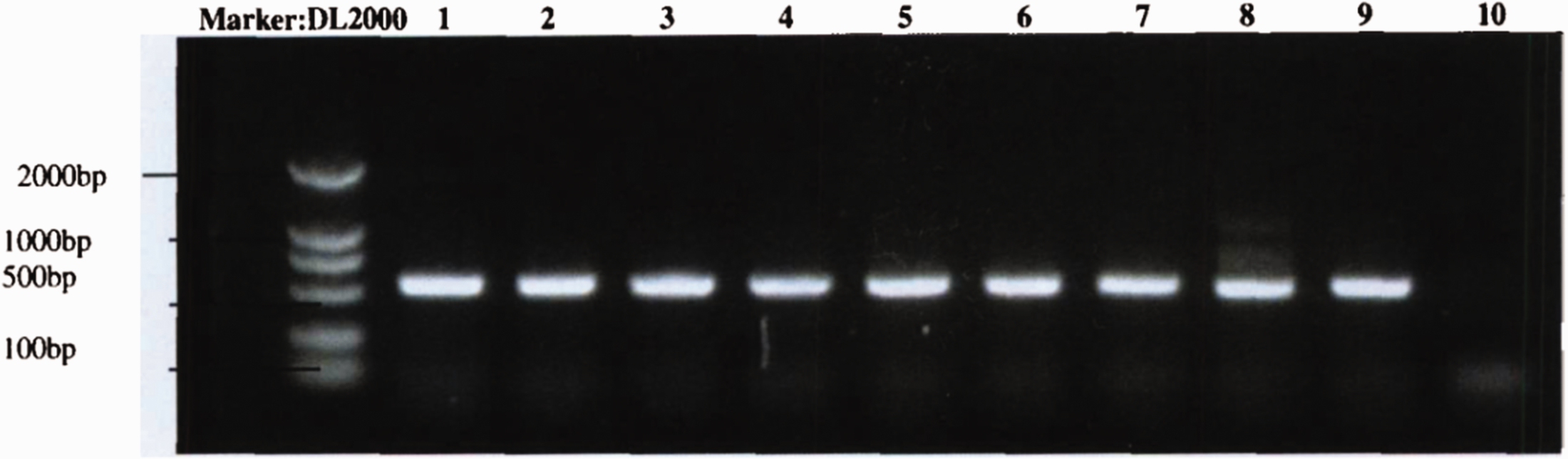
Partial electrophoresis image of Cryptococcus neoformans reference strains.
Polymerase chain reaction primer sequences and reaction conditions

F, forward; R, reverse; CN, Cryptococcus neoformans; CG, Cryptococcus gattii.
Results
A total of 64 newly isolated Cryptococcus strains were obtained from HIV patients in multiple hospitals across 19 cities, including the southeastern coastal and southwestern regions of China, from January 2018 to April 2023 (Figure 2). Among the 64 patients, there were more male patients than female patients. The age of the patients ranged from 24 to 59 years, with a median age of 38.5 years (Table 2).
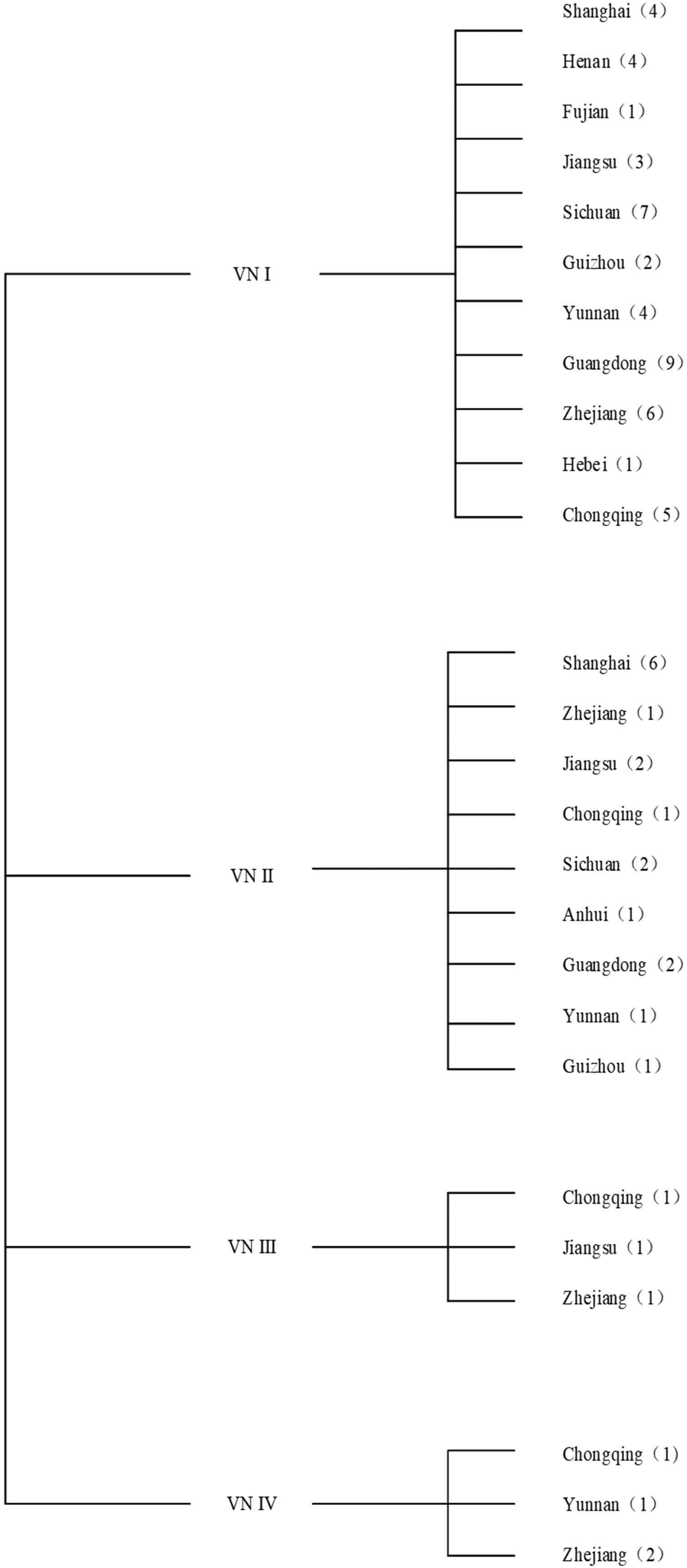
Geographic distribution dendrogram: provincial distribution of 64 cases of Cryptococcus neoformans in China.
Typing, genotyping, and clinical data of 64 clinical isolates of Cryptococcus.

M, male; F, female; HIV, human immunodeficiency virus.
The sources of the isolates were as follows: 51 isolates (79.69%) were obtained from cerebrospinal fluid, 5 isolates (7.81%) were obtained from blood, 4 isolates (6.25%) were obtained from sputum, and 4 isolates (6.25%) were obtained from other sites.
All clinical isolates were identified as Cryptococcus neoformans through direct microscopic examination using India ink staining and culture on Sabouraud dextrose agar supplemented with dopamine and urea. The isolates were classified as Aα, VN I type. Multilocus sequence typing analysis revealed three different sequence types (STs): ST5 in 57 cases (89.06%), ST32 in 5 cases (7.81%), and ST186 in 2 cases (3.13%).
Discussion
The high incidence and mortality rates of cryptococcosis have rendered it a significant global public health concern, particularly in regions with limited healthcare resources, where it imposes a substantial burden on local healthcare systems. The development and widespread use of antiretroviral therapy has contributed to a decline in the incidence of HIV-associated cryptococcal meningitis. Nevertheless, South Africa continues to report over 100,000 new cases annually, accounting for 73% of new cases globally, and cryptococcosis has become the fourth leading cause of infectious disease-related deaths in the region. 9 Cryptococcal disease primarily affects HIV-infected individuals as an opportunistic infection and is a major cause of mortality among late-stage HIV patients. Furthermore, in China, the rising prevalence of malignancies, organ transplantation, and immunomodulatory therapies in recent years has resulted in cryptococcosis emerging among a new population of immunocompromised hosts, leading to an increase in its incidence. 10
Cryptococcus neoformans, the causative agent of cryptococcosis, has numerous hosts, is commonly found in soil, trees, and bird excreta, and has a global distribution. Based on domestic data in China, the detection rate of Cryptococcus neoformans in pigeon feces in the southeastern coastal regions (such as Guangdong and Fujian provinces) is significantly higher than that in other regions.11–12 Therefore, it is speculated that Cryptococcus neoformans primarily spreads among humans and may cause various tissue infections through respiratory transmission or direct tissue inoculation, such as blood transfusion in cryptococcal sepsis patients or solid organ transplantation patients.13–14
Because of advances in detection techniques, Cryptococcus neoformans has been classified into serotypes A, D, and a mixture of A and D, referred to as AD, based on differences in capsule polysaccharide composition. Various Cryptococcus neoformans serotypes exhibit differences in virulence, environmental distribution, and susceptibility to antifungal drugs. Among these, serotype A strains are globally predominant and represent the major clinical isolates responsible for infections. 15 Moreover, the advent of molecular detection techniques has ushered in an era of molecular typing for Cryptococcus neoformans. Through PCR fingerprinting, Cryptococcus neoformans is primarily categorized into four genotypes: VN I, VN B/VN II, VN III, and VN IV. Additionally, molecular detection of Cryptococcus neoformans and Cryptococcus gattii has uncovered significant genetic heterogeneity between the two species, thereby enhancing our understanding of the characteristics of specific strains. 16 In this study, all isolated Cryptococcus neoformans strains exhibited serotype A, mating type α, and genotype VN I, consistent with previous reports indicating that Aα/VN I is the globally dominant type of Cryptococcus neoformans. 17 Three STs were identified, with ST5 being the predominant type. Given that ST5 originated in East Asia and demonstrates good adaptability to the Asian environment, several studies have shown that ST5 occupies an exceptionally dominant position in China and East Asia. 18
This study indicates that infections caused by Cryptococcus neoformans are predominantly observed in male HIV patients, which can be attributed to the compromised immune function of these individuals, rendering them more susceptible to the pathogen. Furthermore, the majority of patients originated from the southeastern coastal and southwestern regions of China, aligning with the epidemiology of AIDS in the country. 19 These regions are characterized by high population mobility, and their dense populations, along with favorable geographical and climatic conditions, facilitate the spread of cryptococcal infections. 20 The findings reveal that most cases occur in middle-aged and young adults, primarily between the ages of 24 and 59 years, with an average age of 36.31 ± 9.13 years. Most patients presented with central nervous system-related clinical symptoms, such as headache, vomiting, and signs of meningeal irritation, while a smaller number occasionally reported blurred vision or disturbances of consciousness. The primary route of transmission for Cryptococcus neoformans infection is inhalation of aerosolized spores, and the nonspecific nature of the clinical symptoms often leads to incidental discovery of the infection during tests for other diseases. This study also revealed that genotype VN I is currently the dominant strain in China, accounting for 63.33% of cases, which is comparable to the value of 76% reported by Firacative et al. 21 However, notable differences exist in the geographical distribution of various genotypes observed globally. For instance, in Slovenia, VN V is the predominant genotype, 22 while studies in Australia 23 indicate that VN I and VN II are present in roughly equal proportions. Compared with other regions worldwide, Cryptococcus neoformans demonstrates lower genetic diversity in China, with ST5 constituting an overwhelming majority at 90% of cases, highlighting the need for increased attention to this infection.
Despite the overall low incidence of cryptococcosis, because of the absence of specific clinical symptoms, limited sample sizes, and lack of in vitro drug sensitivity testing for Cryptococcus neoformans, there is a pressing need for further research and antifungal drug sensitivity studies to provide valuable references for clinical diagnosis and treatment. In summary, this study elucidated the epidemiological patterns and clinical characteristics of HIV-associated cryptococcal infection. The findings indicated that middle-aged male individuals constituted the primary affected population in the coastal southeast and southwest regions of China over the past 5 years. The VN I genotype emerged as the predominant genotype, with ST5 identified as the main ST associated with cryptococcal infection. However, the small sample size in this study may have impacted the results, potentially leading to discrepancies when compared with the multiple genotypes reported in international studies.
Footnotes
Acknowledgements
We would like to thank the patients and all of the doctors who participated in this study for their cooperation.
Author contributions
Zhongzhi Wang and Ying Wang designed the study; Zichao Li and Yaoguang Liu performed and analyzed the experiments; Yu Ding revised the manuscript, and all authors approved the final version of the manuscript.
Declaration of conflicting interests
The authors declare there is no conflict of interest.
Funding
This work was financially supported by the Scientific Research Start-up Fund from Shanghai Fourth People’s Hospital, School of Medicine, Tongji University.
