



Abstract
Objectives
This study evaluated associations between methylenetetrahydrofolate reductase (MTHFR) C677T polymorphisms and diabetic retinopathy (DR) susceptibility within the Chinese population.
Methods
Five databases (PubMed, EMBASE, Web of Science, Cochrane Library, Chinese National Knowledge Infrastructure) were used for literature searches of open access articles from inception through April 2017.
Results
Eight publications were identified involving 600 DR cases, 363 healthy controls, and 646 nondiabetic retinopathy (NDR) controls. There was a positive association between MTHFR C677T polymorphisms and DR risk within the Chinese population (DR with NDR controls: T vs. C, odds ratio (OR): 2.14, 95% confidence interval (CI): 1.55–2.97; TT vs. CC, OR: 4.19, 95% CI: 2.09–8.41; TT + CT vs. CC, OR: 2.83, 95% CI: 1.86–4.40; TT vs. CC + CT, OR: 2.48, 95% CI: 1.52–4.05. DR with healthy controls: T vs. C, OR: 2.48, 95% CI: 1.99–3.09; TT vs. CC, OR: 4.92, 95% CI: 3.18–7.62; TT + CT vs. CC, OR: 3.22, 95% CI: 2.32–4.48; TT vs. CC + CT, OR: 3.11, 95% CI: 1.83–5.28). The association was similar in South China and North China, when stratifying by geographic areas.
Conclusion
MTHFR C677T polymorphisms increase DR risk within the Chinese population.
Keywords
Introduction
Diabetic retinopathy (DR) is a major vascular complication that frequently leads to blindness. 1 Worldwide incidences of DR and vision-threatening DR have been estimated to reach 191.0 million and 56.3 million people, respectively, by 2030, due to the increasing prevalence of diabetes. 2 The prevalences of DR in the Chinese general population and in Chinese diabetic patients were recently estimated at 1.3% and 23%, respectively. 3 Previous studies have suggested that genetic factors and environmental factors contribute to the development of DR. 4 The methylenetetrahydrofolate reductase (MTHFR) gene, which catalyzes the methylation of homocysteine to methionine, 5 is widely regarded as a candidate gene for risk of diabetes mellitus. A single nucleotide polymorphism in the MTHFR gene at nucleotide C677T can destroy its enzyme activity and cause hyperhomocysteinemia. 6 Because of this critical functional influence, it is readily postulated that MTHFR C677T polymorphisms contribute to the development of DR, and a number of studies have addressed their role in DR.7–9 Data supporting a potential relationship between MTHFR C677T polymorphisms and risk of DR within the Chinese population remain controversial, likely because of the lower statistical power of individual studies, which use smaller sample sizes than meta-analyses. In addition, the lack of repeatable results may be due to inconsistent genotyping or lifestyle assessments. Therefore, we performed the present meta-analysis to determine the association between the MTHFR C677T polymorphisms and risk of DR within the Chinese population, in order to reduce the influence of distinctive genetic backgrounds or lifestyles.
Materials and methods
Identification and selection of studies
Studies that assessed the relationship between the MTHFR C677T polymorphisms and the risk of DR, published before April 2017, were considered in this study. Five databases (PubMed, EMBASE, Web of Science, Cochrane Library, and Chinese National Knowledge Infrastructure) were used for literature searches of open access studies. A combination of keywords (“MTHFR” OR “methylenetetrahydrofolate reductase” AND “DR”) was used. Additionally, we carefully reviewed the retrieved references to ensure inclusion of the most comprehensive studies.
Inclusion criteria were as follows: (1) studies using a case-control design that assessed the relationship between the MTHFR C677T polymorphisms and risk of DR; (2) studies with sufficient genotype data for DR cases and healthy controls; (3) studies in which all cases and controls were Chinese individuals; and (4) studies in which DR was assessed by fundus photography or fundus fluorescein angiography, performed in accordance with the methods designated by the 3rd National Congress of Ophthalmology in China. Exclusion criteria were as follows: (1) studies that comprised overlapping cohorts; (2) studies in which data could not be extracted; (3) studies that did not use the case-control design; and (4) studies that were abstracts or reviews.
Data extraction
Two investigators screened the potentially relevant studies and extracted the following data: first author’s name, publication year, geographic area, types of controls, sample size, and availability of genotype information regarding the MTHFR C677T polymorphisms. The types of controls were stratified as healthy controls and nondiabetic retinopathy (NDR) controls. The titles and abstracts were reviewed for each retrieved document, and the full articles were reviewed if the titles and abstracts did not clearly indicate whether the study was appropriate for this meta-analysis. Discrepancies between the two investigators were resolved by discussion.
Statistical analysis
Odds ratios (ORs) and 95% confidence intervals (CIs) were generated for the MTHFR C677T polymorphisms and risk of DR. Models of T versus C, TT versus CC, TT versus (TC+CC) and (TT+TC) versus CC were examined with respect to the risk of DR. The heterogeneity of pooled results, as well as the Hardy-Weinberg equilibrium (HWE) in controls, were assessed by the I2 statistic, based on the Q-test. 10 A random-effects model was applied to estimate the pooled ORs when Pheterogeneity < 0.1 or I2 > 50%; otherwise, a fixed-effects model was adopted. The overall statistical significances of ORs were evaluated by Z-test. Both fixed-effects and random-effects models for each pooled OR were computed for sensitivity analysis. All statistical analysis was performed with Stata version 12 (StataCorp LP, College Station, TX, USA); p-values less than 0.05 were considered significant. Additionally, we performed subgroup analysis by geographic area, to assess the relationship between MTHFR C677T and risk of DR in specific regions of China.
Results
Research characteristics
Forty-two publications were identified that assessed relationships between MTHFR polymorphisms and risk of DR. In total, eight studies11–18, which met our inclusion criteria, were used in this report. The publication years of the included studies ranged from 2001 to 2012. Figure 1 shows the detailed screening process used in our analysis. Finally, 600 DR cases, 363 healthy controls, and 646 NDR controls were included in the current study. The main characteristics of the eight articles are listed in Table 1.
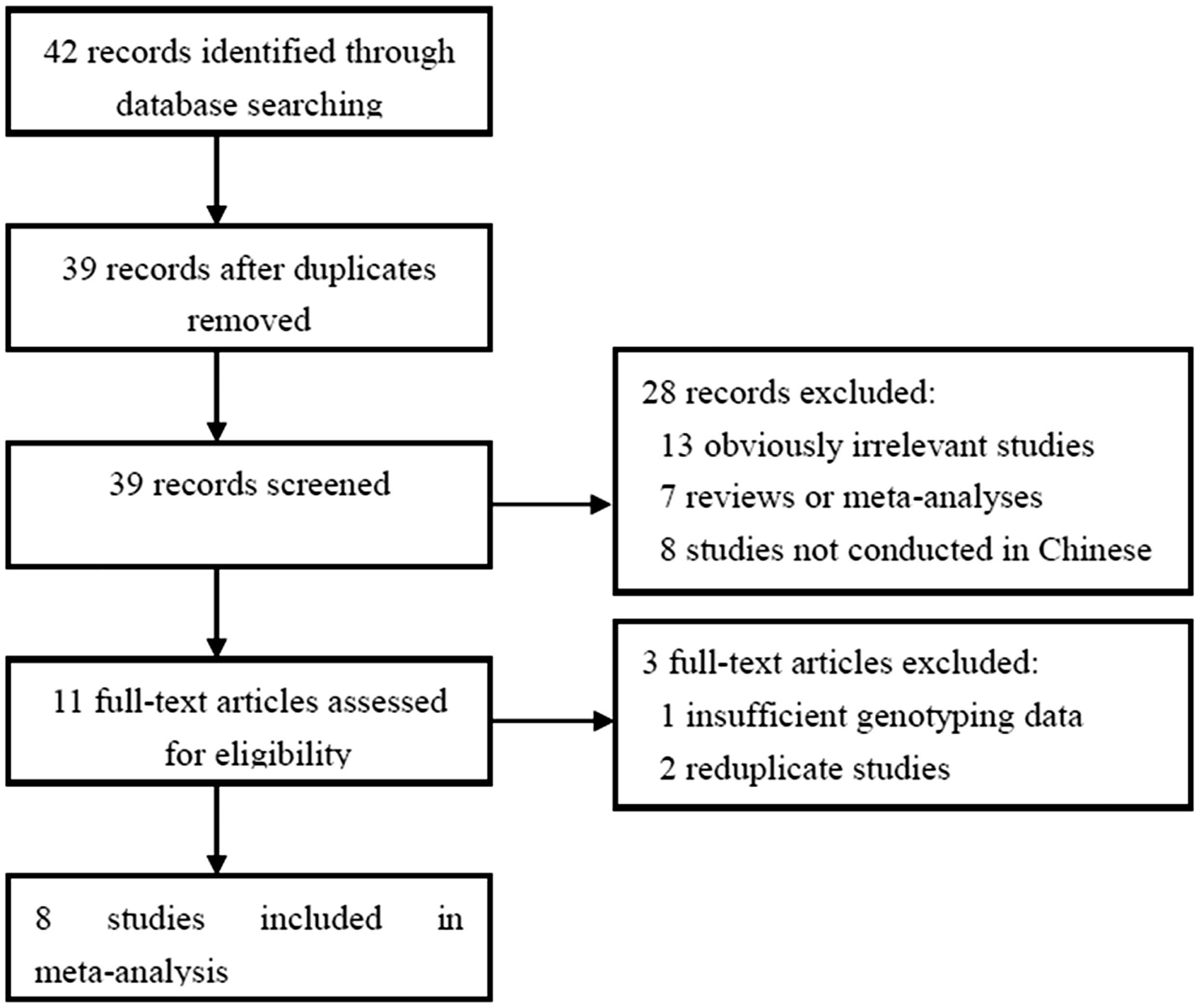
Flow diagram of the literature search.
Characteristics of studies included in the meta-analysis.

DR: diabetic retinopathy; HC: healthy controls; NDR: nondiabetic retinopathy; Sex (M/F): Sex (male/female); Age (M/S): Age (mean/standard deviation); P1: for healthy controls; P2: for NDR controls
Meta-analysis results
We compared DR cases with the NDR group. Analysis of primary pooled statistics showed that all polymorphisms of MTHFR C677T (T vs. C, OR: 2.14, 95% CI: 1.55–2.97; TT vs. CC, OR: 4.19, 95% CI: 2.09–8.41; TT + CT vs. CC, OR: 2.83, 95% CI: 1.86–4.40; TT vs. CC + CT, OR: 2.48, 95% CI: 1.52–4.05) (Table 2, Figure 2) had a significantly increased risk of DR. Moreover, subgroup analysis by geographic area showed significantly positive associations among northern Chinese in three analysis models, as well as a significantly positive association among southern Chinese in the (TT+CT vs. CC) model.

Forest plots of all selected studies regarding the association between MTHFR C677T polymorphism and diabetic retinopathy risk within the Chinese population under the allele model (comparison between diabetic retinopathy and nondiabetic retinopathy controls).
Association of the MTHFR C677T polymorphism with diabetic retinopathy susceptibility (diabetic retinopathy vs. nondiabetic retinopathy controls).
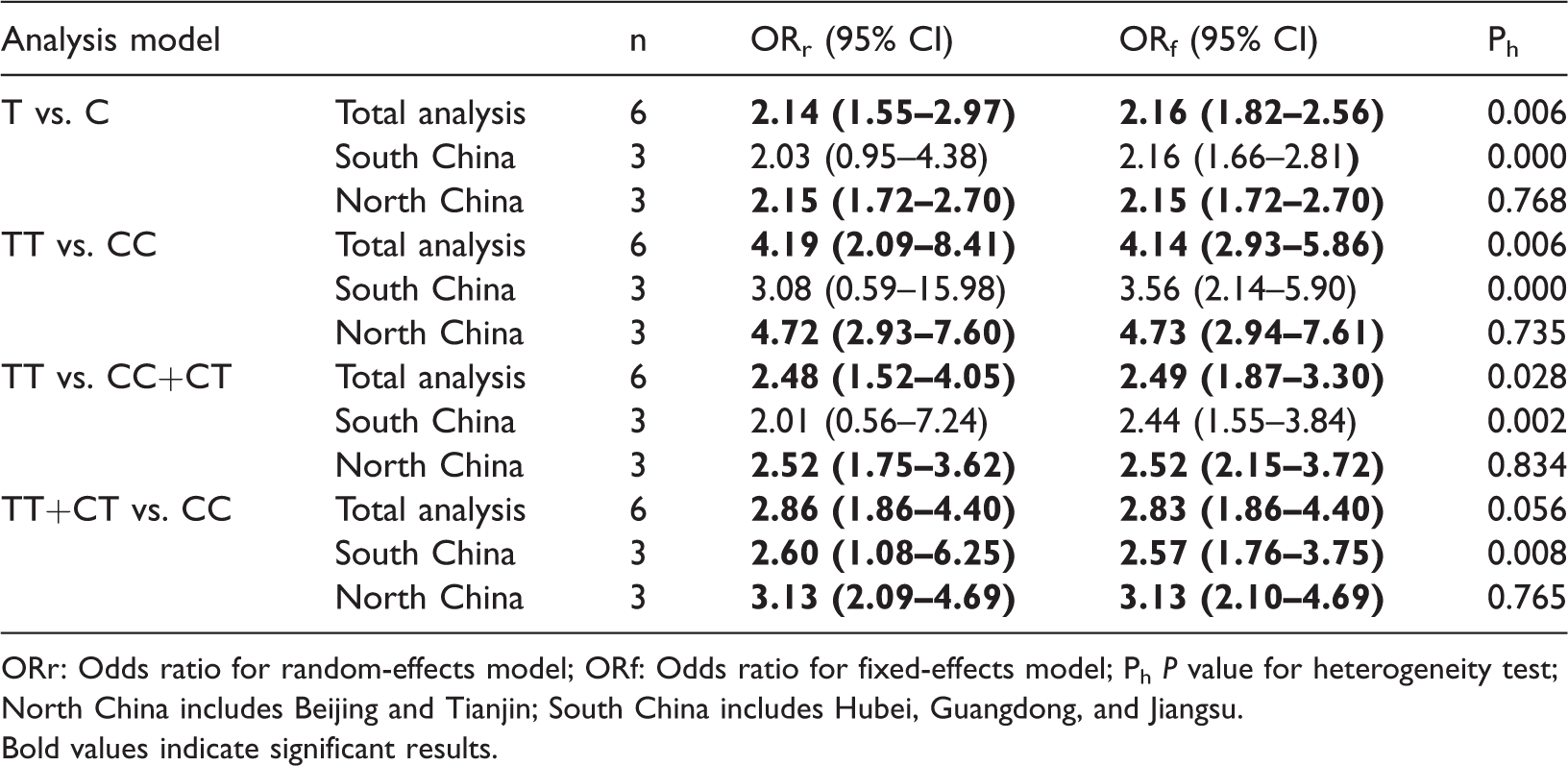
ORr: Odds ratio for random-effects model; ORf: Odds ratio for fixed-effects model; Ph P value for heterogeneity test; North China includes Beijing and Tianjin; South China includes Hubei, Guangdong, and Jiangsu. Bold values indicate significant results.
We compared DR cases with the healthy group. Analysis of primary pooled statistics showed that all polymorphisms of MTHFR C677T (T vs. C, OR: 2.48, 95% CI: 1.99–3.09; TT vs. CC, OR: 4.92, 95% CI: 3.18–7.62; TT + CT vs. CC, OR: 3.22, 95% CI: 2.32–4.48; TT vs. CC + CT, OR: 3.11, 95% CI: 1.83–5.28) could increase the risk of DR; subgroup analysis showed that this risk was also increased specifically in northern Chinese and southern Chinese (Table 3, Figure 3).

Forest plots of all selected studies regarding the association between MTHFR C677T polymorphism and diabetic retinopathy risk within the Chinese population under the allele model (comparison between diabetic retinopathy and healthy controls).
Association of the MTHFR C677T polymorphism with diabetic retinopathy susceptibility (diabetic retinopathy vs. healthy controls).
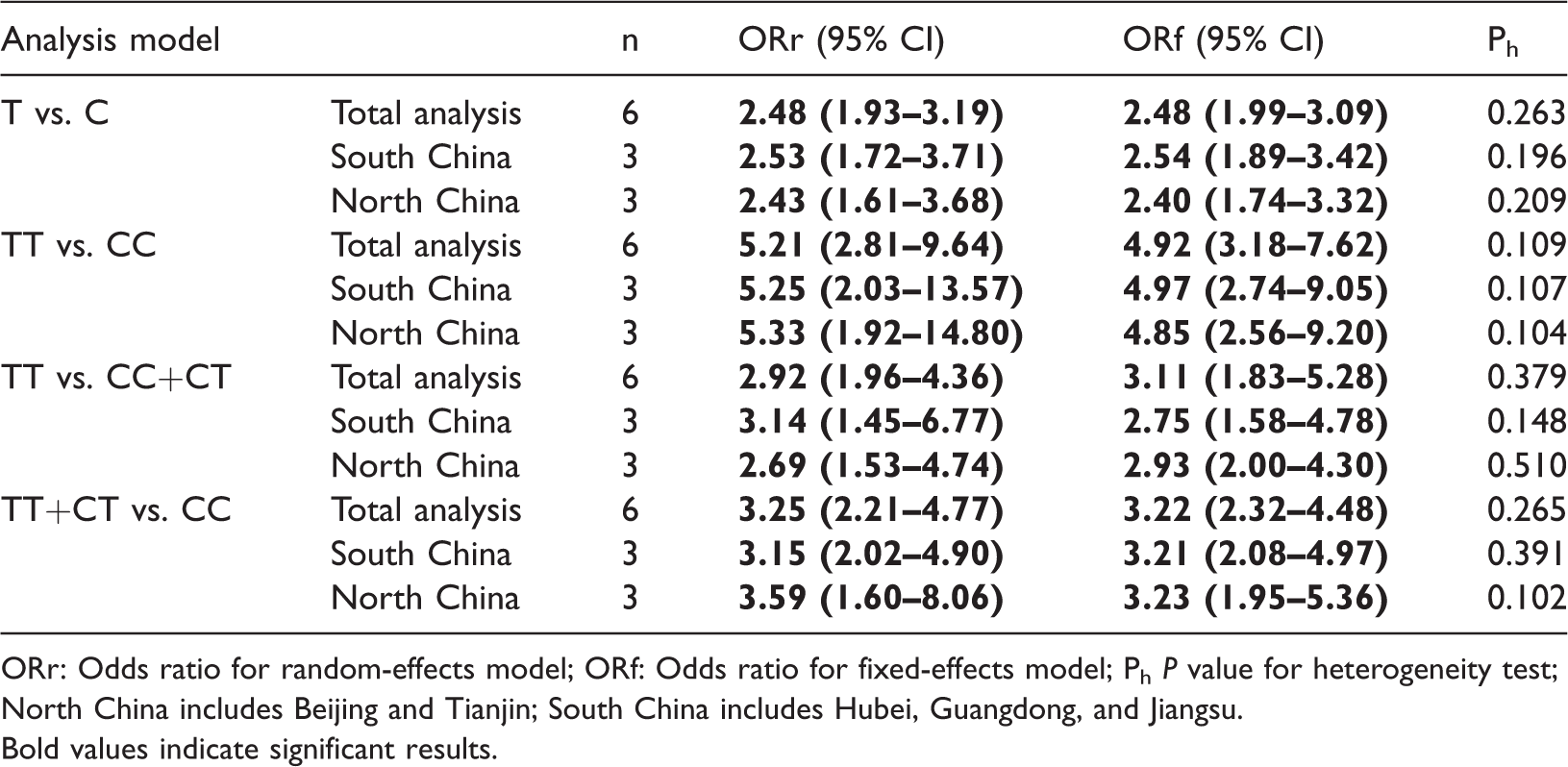
ORr: Odds ratio for random-effects model; ORf: Odds ratio for fixed-effects model; Ph P value for heterogeneity test; North China includes Beijing and Tianjin; South China includes Hubei, Guangdong, and Jiangsu. Bold values indicate significant results.
Sensitivity analysis
To determine whether the results were stable and robust, sensitivity analyses of both fixed-effects and random-effects models were performed. The results showed that these two models were consistent and stable in each analysis (Table 2, Table 3).
Discussion
Many articles have been published regarding analysis of the relationship between MTHFR C677T polymorphisms and risk of DR; however, no comprehensive conclusions have been made. Thus far, three meta-analyses have been published regarding MTHFR C677T polymorphisms and risk of DR.19–21 Nevertheless, the results were inconclusive and inconsistent. Limitations in these three meta-analyses indicated that further studies with larger populations and more rigorous designs are needed.19–21 Individual studies might yield disparate results, due to the regional and individual differences among populations, as well as the limited number of cases in each study. Unique lifestyles among diverse ethnic groups may interact differently with particular genetic traits. 22 To reduce the influence of these factors in the overall analysis, we performed this report to further explore the relationship between MTHFR C677T polymorphisms and risk of DR within the Chinese population.
The current meta-analysis involved eight studies with 600 DR cases, 363 healthy controls, and 646 NDR controls. The results of this analysis showed a positive relationship between MTHFR C677T polymorphisms and risk of DR in overall analyses of DR patients compared with healthy controls or NDR controls. To control for the effects of geographic background on these results, we also performed subgroup analysis with respect to geographic areas; these also showed positive relationships between MTHFR C677T polymorphisms and risk of DR in patients in different regions, compared with healthy controls or NDR controls.
There were several limitations in this study. First, we only searched and included openly available articles; therefore, some other unpublished articles or gray literature could have been missed, although they might meet our inclusion criteria. Second, the sample size for our meta-analysis was low, and we could not perform some other subgroup analyses, such as those involving age, exposure time, or smoking habits, owing to the limited data in the original papers. Third, DR is a complex disease involving a variety of factors, both environmental and genetic. 23 However, many of the included studies did not consider some environmental factors, which may influence the risk of DR. Moreover, we did not explore the publication bias in this study, owing to limitations of the funnel plot analysis, which requires a greater number of studies than we had available.
Conclusion
Our study found a positive relationship between MTHFR C677T polymorphisms and risk of DR within the Chinese population. However, owing to some limitations in this meta-analysis, further studies with different environmental backgrounds are required to further explore gene-gene and gene-environment influences on MTHFR C677T polymorphisms and risk of DR.
Declaration of conflicting interest
The authors declare that there is no conflict of interest.
Footnotes
Funding
This research received no specific grant from any funding agency in the public, commercial, or not-for-profit sectors.