




Abstract
Exposure to one's ancestral language fosters specific perspectives on the ecosystems that have sustained the speakers of that language. Ethnobotany highlights the ways in which groups understand their environment and their place within it. This article considers the Tunica-Biloxi Tribe of Louisiana, who have been reclaiming and revitalizing one of their community's ancestral languages for over a decade. Concurrently, a group of tribal members and collaborators has been steadily developing a bilingual Tunica 1 -English ethnobotany guidebook for the past five years. This guidebook complements ecosystem restoration efforts currently underway on the tribe's reservation, including projects promoting the management and harvest of resources according to Traditional Ecological Knowledge (TEK). This knowledge reflects familiarity with a range of habitats including river bottoms, prairies, foothills, and the Gulf Coastal Plain. Furthermore, it displays legacies of ongoing contact with other Indigenous groups along with European colonizers. Political pressure, land encroachment, and language shift have undermined a core basis for Tunica-Biloxi ethnobotanical practice. As a result, our knowledge is fragmented. In this article, we showcase the ethnobotany working group's methodology, which asserts historical uses of plant resources while encouraging the creativity necessary to fill gaps left in the documentary record. Recognizing the synergies between language revitalization and ethnobotany—and leveraging them in theory and practice—provides a powerful tool for negotiating and navigating borderlands in order to imagine more vibrant futures.
Introduction and Positionality Statement
The Tunica-Biloxi Tribe is a federally recognized Indigenous nation in present-day Louisiana. The Tunica-Biloxi people comprise an amalgamation of Tunica, Biloxi, Ofo, Avoyel, and Choctaw heritages. Nearly half of the 1,500 enrolled tribal members live on or near the reservation land located near Marksville, LA (Klopotek 2017), and other members are spread out across the United States, especially concentrated in Chicago, IL and Houston, TX (Tunica-Biloxi Tribe of Louisiana 2018).
The authors of this article represent a mix of Tunica-Biloxi members and non-members. Our objective is to introduce a teaching and learning resource that contributes to the Tunica-Biloxi Tribe's efforts toward language and culture revitalization alongside natural resource management. As a collective of diverse members, we identify variably as Native (i.e., an identity that intersects with Indigenous groups of the Americas) and non-Native. Our perspectives are inherently tied to our individual backgrounds. We are united by common goals in our work, which is supported by long-standing, dynamic relationships between collaborators. This collective was initiated with the Tunica Language Project in 2010 when the Tunica-Biloxi Tribe first approached Tulane University scholars to collaborate on revitalizing their heritage languages (Barbry 2017; Maxwell, Anderson and Heaton 2017). Soon afterward, the Tunica-Biloxi Language and Culture Revitalization Program (LCRP) was established. While actively participating in and guiding the objectives of the Tunica Language Project since its beginning, LCRP has hosted language immersion programs, summer camps, cultural events, and produced pedagogical materials including the first-ever textbook of the Tunica language (KYLY 2022). These activities and our specific collaboration as the ethnobotany working group continue to the present day, supporting important projects like the Tunica ethnobotany guidebook.
Migration, Trade, and Diplomacy in the Gulf Region
The Tunica, like the other peoples of the Lower Mississippi Valley with whom they interacted and formed alliances, have a complex history of migration. As a result of these peregrinations, they regularly encountered different ecosystems, cultural epistemologies, and languages. Tunica migration in particular is inextricably tied to the Mississippi River and the surrounding valley region, while trade practices connected the Tunica more broadly with other peoples and ecosystems in the Gulf region that includes eastern portions of the modern-day Mexico-U.S. borderlands. The Tunica were first documented in the sixteenth century by Spanish explorers at a location known as Quizquiz in modern-day Mississippi (Brain 2017; Lee 2017). This area was one of many historical “Indigenous borderlands” in a region where people from several different nations had settled among each other and made extensive use of available trails and waterways for travel and trade (Ellis 2023). The Tunica ultimately migrated down the Central Mississippi Valley from Quizquiz into the Lower Mississippi Valley where they settled in what is now modern-day Marksville in central Louisiana (Lee 2017).
In the colonial era, the Tunica formed military and trade alliances with Europeans, especially the French. The Tunica provided guides, intelligence, and trade goods, while the French offered their own goods and entry into a growing network of diplomatic relationships. At the same time, the Tunica also attempted to form seemingly conflicting alliances with the British as well as larger Indigenous nations like the Chickasaw and Choctaw with varying degrees of success, all while maintaining strong relationships with their time-honored Indigenous allies (Ellis 2017). The multi-pronged diplomatic approach of the Tunica had political, economic, and geographic advantages. By the 1700s, the Choctaw Confederacy, Creek Confederacy, and Chickasaw Nation oversaw lands in the East, while Caddo groups controlled areas to the West, and the Osage and Quapaw peoples focused their power toward the North. The Lower Mississippi Valley, vaguely demarcated by these borders, functioned as an Indigenous borderland in its own right from the late seventeenth century through most of the eighteenth century; this borderland is where the Tunica and other small Indigenous nations (“petites nations 2 ”) settled and managed networks of trade and alliance even as they continued to migrate throughout the region—southbound down the Mississippi River in the case of the Tunica—due to conflict and land disputes (Ellis 2017, 2023). As Elizabeth Ellis discusses, the conceptual frame and use of this space by Indigenous peoples, where multiple European and Native land rights and political jurisdictions overlapped, constantly shifting with regular negotiations, was based on “reciprocal relationships rather than the domination of a land and its inhabitants” (2023, 6). Diplomacy among Indigenous and European groups not only afforded the Tunica and their allies protection from clashing groups but also access to various resources via expansive trade and communication networks that spanned the Gulf's ecoregions. The French cession of Louisiana in 1763 did not immediately affect Indigenous borderland activities. The Tunica-French partnership continued to benefit the Tunica, especially after the British arrival to the Mississippi River in 1764. However, by the late eighteenth century, the exponential influx of French, British, Spanish, and American settlers was increasingly pushing the Tunica and other Indigenous nations off land and stripping their negotiating power. This induced the gradual diminution of the Lower Mississippi Valley as an Indigenous borderland where the Tunica and other small nations had enjoyed relative oversight for decades. Collective behavior toward land boundaries was shifting under the influence of European border ideologies, which stifled the formerly more porous Indigenous ones (Ellis 2023).
The Louisiana Purchase in 1803 once again shifted the political borderscape around Indigenous nations. The earlier colonial border passing through Tunica communities at the Mississippi River between Spanish and British territories then jumped to their west at the Sabine River to mark a border between New Spain and the United States that separates present-day Texas and Louisiana. This time, the Tunica were not negotiating in a flexible space that was disputed by the Spanish and British while mediated by Indigenous groups but instead were fully within the territory of the United States, who largely dismissed them. The Treaty of Limits in 1828, following independence from New Spain, reified approximately the same boundaries between what became Mexico and the United States. The accompanying U.S. annexation of Texas, violent conflicts, and further border disputes along strategic land routes and waterways shaped the Mexico-U.S. border into the meandering line that it is today. During this period, the Tunica fortified their long-standing relationship with the Biloxi and Choctaw by creating the unified Tunica-Biloxi Tribe in 1924. Economic pressures dispersed Tunica-Biloxi members seeking employment opportunities across the United States, especially to New Orleans, East Texas, and Illinois. Despite numerous attempted land grabs, the Tunica held on to most of the territory they had obtained in Central Louisiana during an earlier era of European exchange. These same lands had been passed through generations of the Tunica and their Indigenous allies when the Tunica-Biloxi finally gained federal recognition from the United States in 1981 (Klopotek 2017).
Lyz Lenz (2018) categorically describes the modern-day Mexico-U.S. border “like all borders … fiction.” Testifying to this “fictional” border are long-standing networks of trade and migration mentioned earlier that operated well before the arrival of the Europeans and throughout the colonial era. Tejas, the name given to one of these roads, is a Caddo word for “friend” or “ally” that was used to refer to non-Caddo Indigenous people and later also the Europeans (Lee 2017). This was the name of the original route that stretched from the Red River near Natchitoches, LA to the Neches River near Beaumont, TX, where the Sabine Lake and Gulf waters were accessible. Prior to European arrival, the Tejas route was part of a vast network of roads that connected Indigenous people across the Gulf region and across broader North America through trade, social activities, and formation of alliances (Lee 2017). Later, it became part of a larger trail network that the Spanish established as El Camino Real de los Tejas, tied to other Spanish royal roads connected to modern-day Mexico City (via El Camino Real de Tierra Adentro) and San Francisco (via El Camino Real de California). Together, the Caminos Reales traced the crescent of the Gulf region, weaving together a large swath of the Southeastern United States through Central Mexico and west to the Pacific Ocean (Lee 2017). These roads allowed for the diverse populations who lived near them to take advantage of specialized resources found across various ecoregions in North America to which they otherwise would not have access.
Our present notion of geopolitical borders imposed by colonial European powers (Dunbar-Ortiz 2014; Ellis 2023) has separated us into distinct “imagined communities” (Anderson 2006) belonging to Mexico and the United States, respectively. However, as demonstrated above, there are pre-existing shared social practices and behaviors in the Gulf region regardless of where lines are drawn on a map. The migratory account of the Tunica and nearby Indigenous groups is just one example of how humans have collectively interacted with their contiguous biological environment in this space since time immemorial.
Theory
The geographical, historical, and biological particularity of the Mexico-U.S. border can be understood through the frame of borderlands. This frame emphasizes the interaction between physically delimited boundaries and the ways in which these boundaries come to be ideologically produced and reproduced through discourse and practice. Importantly, the ideologies associated with borders are multiple and multifaceted; they are neither universal nor generalizable. Attending to differences in these ideologies and the ways in which they pattern is crucial to successfully navigating all borderlands.
Our use of borderlands is principally informed by the work of Tope Omoniyi (2010) and Elizabeth Ellis (2023). Omoniyi contends, “Boundaries are about asserting and protecting the integrity of nations as bounded geopolitical units” (2010, 124). As outlined in Section III, such boundary-making desires have had implications for the Tunica-Biloxi throughout their itinerant history. Omoniyi continues, “Boundaries are not always a physical or linear divide, but they also exist as abstract constructs in our minds” (2010, 124). Maybe one of the most important characteristics of the Mexico-U.S. border is its variable perception: porous-closed, dynamic-static, subjective-objective (Bissonnette and Vallet 2025; Brady 2002; Martínez 1988; Rouse 1991; Vélez-Ibañez 1996). These three dimensions also occur (albeit with respect to different kinds of borders) in the case of the Tunica-Biloxi. The Mexico-U.S. divide has shifted—physically and conceptually—over the course of history. Similarly, the borderlands have shifted because they are being defined here in reference to the boundary line. Omoniyi's work is suited to our analysis for a number of reasons. First, he foregrounds the discursive construction of borders and their implications for various forms of identity. Second, he highlights that borders are often constructed by geopolitical entities whose interests do not reflect the values or lived experiences of borderland inhabitants. Third, the efforts of border-enforcement agents (often abstracted as nation-states) co-exist with the practices of local peoples whose cultures and norms of interaction may vary from the hegemonic ideologies of the state.
While borderlands theory in the United States centers the shifting Mexico-U.S. border, we engage further with the shifting and overlapping borders of the Tunica-Biloxi, who coalesced in Marksville from petites nations around the region and collectively weathered the successive colonial regimes of France, Spain, Great Britain, and the United States. In her exceptional work on “Small Nations” (les petites nations) of the Lower Mississippi Valley, Ellis foregrounds the particularity with which Indigenous peoples conceptualize and operationalize borderlands. She writes, “I use the term borderland to describe the Lower Mississippi Valley not to suggest a European conception of a frontier or an unregulated space, but rather to mean a place with multiple and layered land rights” (2023, 6). The Tunica-Biloxi, an amalgamated nation of sovereign peoples, are a direct result of such an Indigenous conceptualization. For these people, the borderland implies a space of potential and possibility grounded in reciprocal relationships and responsibilities toward one another and toward the land itself. It is these systems of reciprocity that have historically (and still contemporarily) lent vitality to the Tunica-Biloxi's continuing and emergent linguistic and cultural practices. The contemporary boundary dividing Mexico and the United States is, even in the comparatively short history of the colonial Americas, a recent phenomenon (see Section III). As this line shifted over the decades—especially to accommodate the accession of Texas—Louisiana remained intimately linked materially and analogically to the borderlands of the U.S. and Mexico. Generalizations about contemporary communities along the Mexico-U.S. border, especially Indigenous ones, risk homogenizing the diverse experiences of these groups. What is shared by all of these groups is a necessity of negotiating the border. How this negotiation is achieved, however, differs for each group.
In her work on border crossing, Weaks-Baxter reminds us, “Borders play a dual role, both as boundaries or limits and as places to cross” (2019, 5). Epistemology relies on physical as well as ideological boundaries. Processes of boundary making and boundary navigation—in both their physical and ideological senses—contribute to the expression and elaboration of ethnobotanical knowledge and practice. The development of the Tunica-Biloxi ethnobotany guidebook relies on both primary documentation and contemporary creativity to address gaps in understanding that can, in many cases, be attributed to the difficulties of negotiating borders. These community-led efforts seek to strike a balance between the preservation of the past and a re-imagining of the future. We believe that this methodology can serve as a model for other groups faced with the challenges of an incomplete historical record with respect to either linguistic or ethnobotanical practice (especially smaller groups). Before diving into those specifics, we want to situate the development of the ethnobotany guidebook in relation to ongoing resource conservation and cultural revitalization work on the Tunica-Biloxi reservation in Central Louisiana. This will be followed by a personal account of re-establishing relationships with important plant species, then brief accounts of ongoing work by the Tunica-Biloxi Tribe more broadly, demonstrating how ethnobotanical TEK is transmitted, cultivated, and more widely disseminated in a unique revitalization context.
Growth of Tunica-Biloxi Resource Conservation and Cultural Revitalization Efforts
The Tunica-Biloxi Tribe has historically faced several major impediments to large-scale conservation and restoration efforts. First, the U.S. government effectively denied the existence of the tribe for close to two centuries (see Section III above). Second, a pattern of encroachment by White settlers often resulted in judges ruling against the tribe and effectively shaving away its landbase (Klopotek 2017). Third, agricultural subsistence meant that community members remaining on tribal land were often forced to make impossible decisions about land use and the possibility of permanent migration (Klopotek 2011).
Despite these obstacles, the Tunica-Biloxi Tribe has continuously held onto their land located in modern-day Marksville, Louisiana, passed down for generations since the colonial period. While the pressures of the American era diminished some of the tribe's traditional practices, a shared connection to the land persisted as a representation of cultural identity. Land ownership itself supported the tribe's bid for federal recognition by the U.S. government (Klopotek 2011). For decades, spurred on by the same efforts toward gaining recognition, members of the tribe worked with researchers to document songs, dances, and oral histories (Levine 1991); pockets of community members across the country were learning and teaching themselves the Tunica language based on their maintained copies of the Tunica Dictionary (Haas 1953) and Tunica Texts (Haas 1950). Toward the end of the twentieth century, the Tunica-Biloxi Tribe reclaimed the Tunica Treasure and established a cultural museum while community summer camps cropped up to involve youth in Tunica-Biloxi culture and language. In more recent years, as described earlier in Section II, the Tunica-Biloxi Tribe began their collaborative partnership with Tulane University and established LCRP to help facilitate various cultural projects and initiatives. The ethnobotany working group sprung from these efforts. Two members of the current working group are also LCRP staff members as well as Tunica-Biloxi tribal members, creating a collaborative feedback loop that benefits and advances the overlapping goals of everyone involved.
Thanks to ethnographic materials archived at the American Philosophical Society, we have learned that the Tunica-Biloxi Tribe historically practiced various conservation methods to preserve access to their traditional plants. One such example concerns hisawa (Sanguinaria canadensis; bloodroot), a plant that was especially important as a source of red dye for cane. The Tunica-Biloxi would sow seeds from this plant in the winter and harvest in the spring, but they would rotate the areas they harvested to ensure the plant had time to grow. This is just one instance of the Tunica-Biloxi using some form of conservation to ensure a traditional plant would be available for their community in the future. As of now, the Tunica-Biloxi community does not engage in as many explicit conservation efforts, but that is rapidly changing and awareness is growing. With the reawakening of language and cultural practices, tribal members are restoring relationships with the land and becoming more conscious of the other-than-human life that depends on it.
The Ethnobotany Guidebook: Raison d’être, Methodology, Structure
The Tunica are described in early travel writings from the eighteenth century onward as utilizing the plant resources in their immediate environment for food, medicine, and more (Swanton 1911). Over the years, however, much of this knowledge fell out of common use. Fortunately, tribal members generously shared what they knew with scholars who documented the knowledge that remained. Nevertheless, gaps remain. These gaps were in large part the spark for a Tunica-English bilingual guide to the tribe's ethnobotany. Equally important was the desire to rekindle an awareness and appreciation among community members for the plant species that surround them and, in doing so, inspire deeper relationships between people and plants. The ethnobotany guidebook is a work in process—as of this writing, approximately 25% of the entries have been drafted. Our workflow follows the basic steps outlined below:
Primary documentation (Gatschet 1886; Haas 1933–1937, 1953) provides a list of known Tunica names for plant species as well as historical uses of these plants. In some cases, the documentation indicates a plant used by the tribe without an explicit Tunica name The ethnobotany working group associates a Linnaean binomial name and a common name with each Tunica plant label.
When we cannot determine a particular species, we opt for an association with a specific genus instead. Neologisms are proposed, debated, and adopted by consensus for plants mentioned in documentation but lacking a Tunica label. Entries are drafted and organized by Tunica plant name; each entry contains a section describing the plant and one describing its uses.
Entries are non-exhaustive and prepared for a non-specialist audience The Tunica precedes the English, which seeks to loosely translate the ideas but not necessarily the structures of the Tunica The finalized entries are placed in a draft document to be reviewed by other members of LCRP
The Table 1 below lists the plants for which we have already drafted entries for the guidebook:
Plants Currently Represented in the Draft Tunica-English Ethnobotany Guidebook.
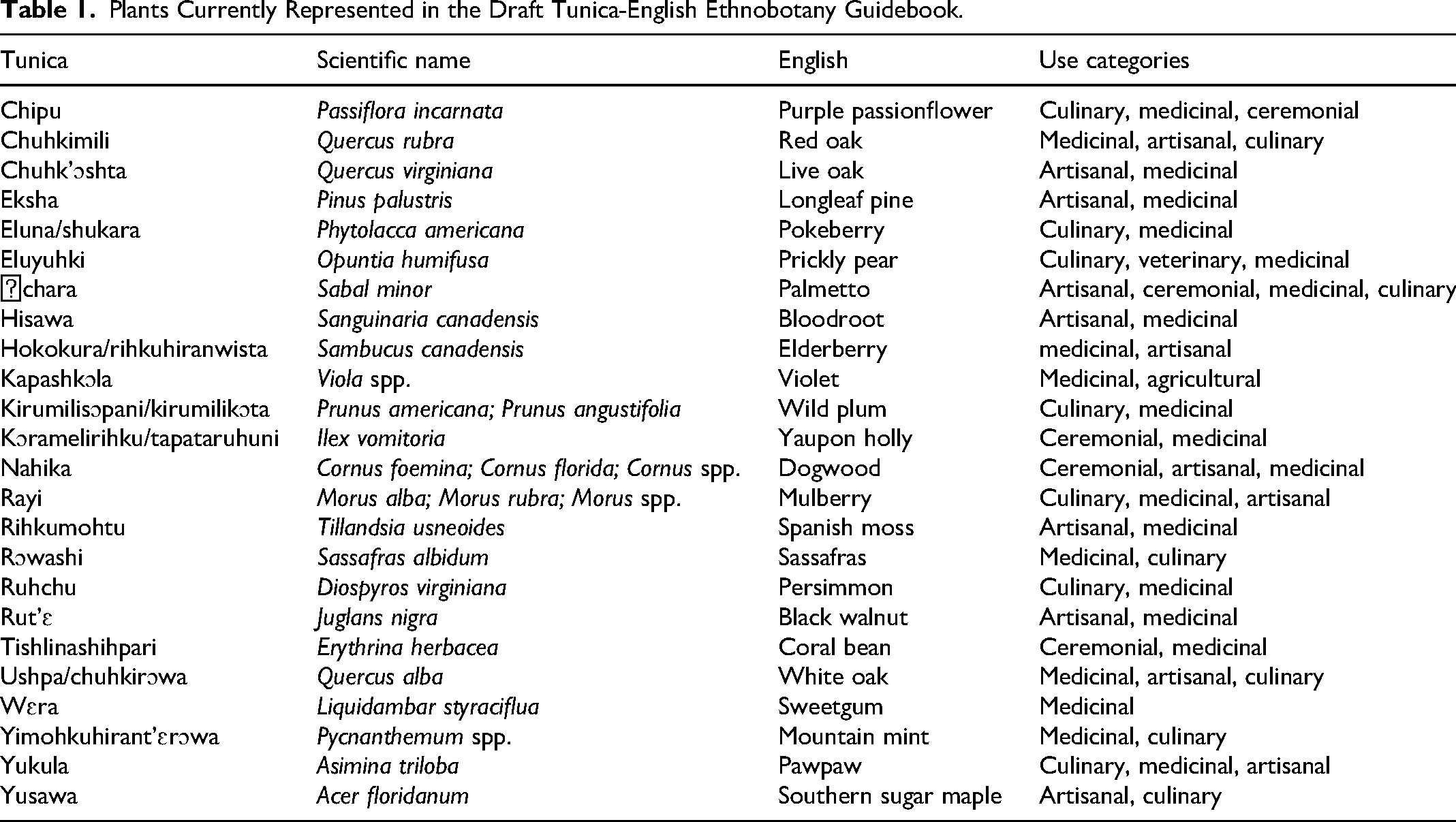
There are three major kinds of gaps that we seek to address in the guidebook: onomastic, taxonomic, and therapeutic. The first category, onomastic, refers to instances in which we know of a Tunica use for a given plant species, but we do not have any record of a Tunica name for it. In such cases, we have created a neologism. Some of these neologisms have been modeled on names in other Indigenous or colonial languages of the region, which reflects a process of exchange and borrowing with a rich historical precedent. In others, the names have been created more or less from scratch with the input of tribal members and participants in language immersion workshops, underscoring the contemporary vitality of linguistic practice. All neologisms are vetted by a committee which includes tribal members and prioritizes their evaluations specifically. A good example of this strategy is woluhirani (Taraxacum officinale; dandelion). Sesostrie Youchigant recognized woluhirani as a medicine for the kidneys, but he did not know of a Tunica name for it. Louisiana French names this plant pissenlit because of its association with promoting urination. Drawing on these two pieces of information, the Tunica neologism for this species is woluhirani (lit. “urine medicine”).
The second category, taxonomic, refers to species that cannot be positively identified via a Linnaean name. We will elide here the valid critique of a presumed necessity for such a label. Instead, we wish to highlight the real presumption of legitimacy that comes from having such a label. In order to decide how to correlate Tunica plant names with their “scientific” counterparts, we make use of plant distribution data provided by the USDA plant database (https://plants.usda.gov/). By cross-checking which species are attested within the historical range of the Tunica, we can usually arrive at a best guess for which species is indicated by a given Tunica name. In those cases where we cannot narrow it down to a single species, we can at least identify the genus. This process helps vindicate the scientific value of Tunica plant taxonomies even when they do not perfectly coincide with the boundaries of Western scientific nomenclature. An example of this strategy comes from narrowing down the referent for the Tunica plant known as hisawa. While no specific species is indicated in any primary documentation, a quick look at likely sources for red dye (which this plant is said to produce) within the historic and contemporary range of the Tunica shows that the best candidate is bloodroot (Sanguinaria canadensis). Furthermore, it is known that the Tunica took special care to cultivate this plant near their settlements rather than harvest it in the wild. This corroborates ethnographic evidence that the Tunica made special use of this plant and observed its preferred growing conditions.
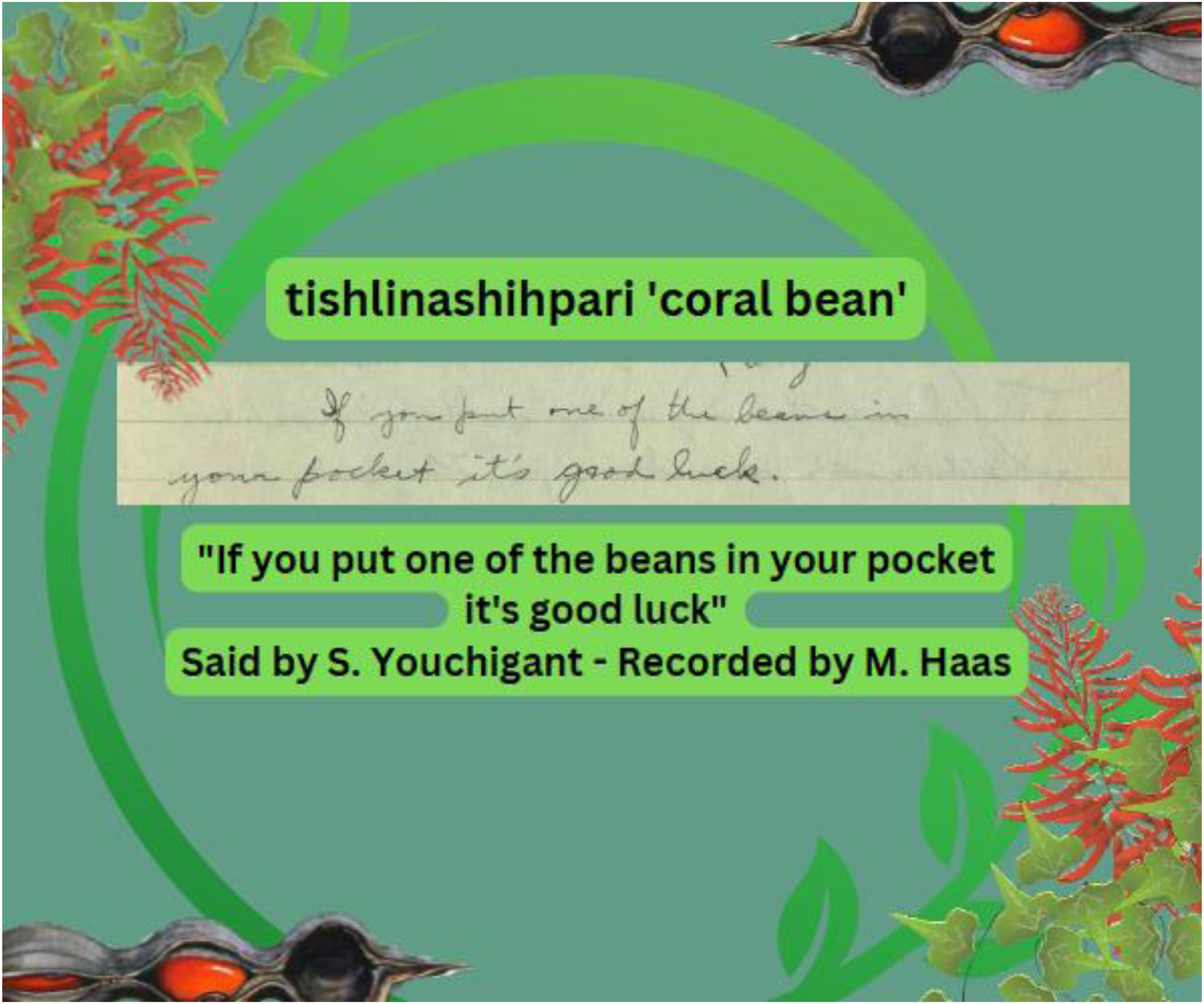
The third category, therapeutic, refers to plants that are identified as resources for the Tunica but for which no uses are known from Tunica-specific documentation. In these cases, the group makes use of the Native American Ethnobotany Database (http://naeb.brit.org/) to reference plant uses attested by neighboring tribes to the Tunica or with whom the Tunica are known to have had a relationship. In the entries for the ethnobotany guidebook, we explicitly identify the tribal groups who are named within this database as providing the uses for specific plant species. In this way, we are supplementing and expanding the documented knowledge pertaining to Tunica ethnobotany while simultaneously acknowledging other Indigenous groups and their ethnobotanical traditions. A good example of this strategy can be seen for tishlinashihpari (Erythrina herbacea; coral bean). Though a Tunica-specific use is known, this species has also come to be included in the creation of medicine bags (an LCRP-sponsored youth activity), which has become an intertribal practice. Additionally, the guidebook includes uses attested among other groups with whom the Tunica-Biloxi are known to have interacted.
In each of these instances, apparent “borders” circumscribing the possibilities of Tunica-Biloxi TEK are overcome via strategies long-associated with the successful navigation of borderlands implicated by such epistemological obstacles. These include borrowing, adapting, and creating elements to meet the specific needs and desires of the Tunica-Biloxi people. Clearly, the guidebook is as much a linguistic resource as it is an ethnobotanical one. Linguists often argue that language and culture cannot be separated. We further propose an exploration of not just an inseparability but a symbiosis between language and ethnobotany. In the next section, we examine these activities for Tunica-Biloxi members and the local landscape.
Photo caption: Image from Haas Notebook 15 (p. 98), American Philosophical Society

Photo caption: Image from Haas Notebook 14 (p. 151), American Philosophical Society
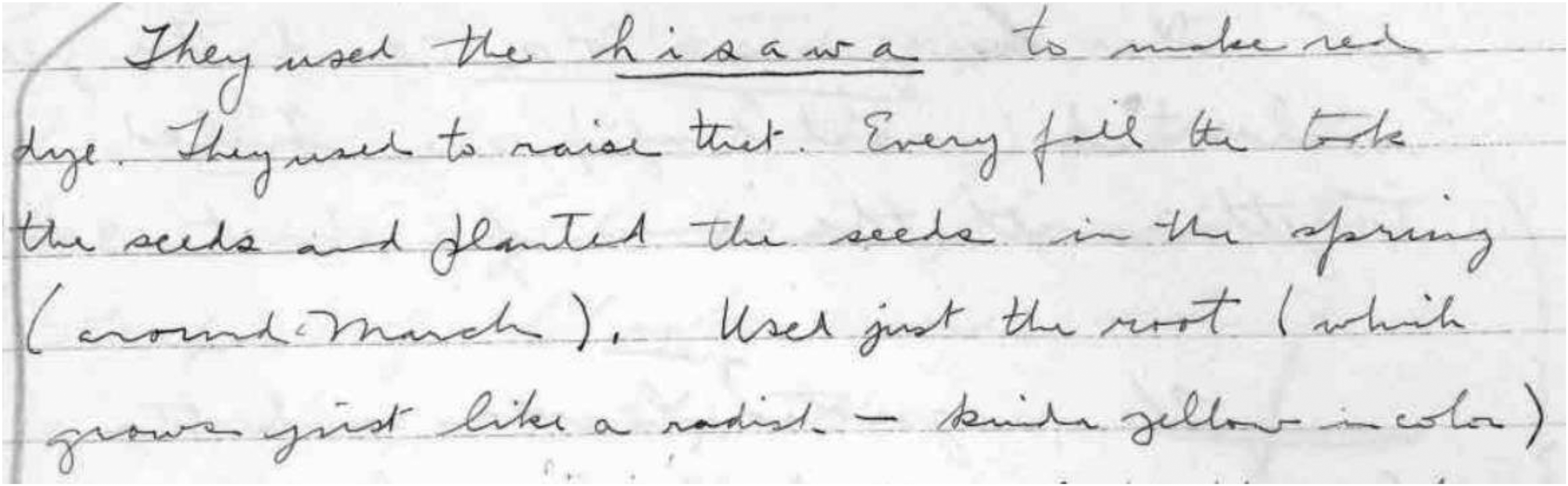
Photo caption: Image of poster created by tribal member Ryan P. Lopez
First Fruits of Our Efforts
For the Tunica-Biloxi Tribe, whose motto is “Cherishing Our Past, Building For Our Future,” the restoration of language and ethnobotanical practice go hand-in-hand, as is the case for languages across the globe (Maffi and Woodley 2010). The community's commitment to the preservation, revitalization, and reimagining of language, culture, and tradition can be seen through educational programming, publications, and agricultural practices that are founded on and enriched by both linguistic and ethnobotanical pursuits. In the following section, we illustrate the type of impacts we have seen and hope to see as a result of the efforts of the ethnobotany working group at the individual, organizational, and community levels. Co-author Elisabeth M. Pierite, daughter of Donna Pierite and current employee of LCRP, traces how her relationship with the traditional sources of Tunica-Biloxi basketry materials has evolved and matured over the years: I grew up in New Orleans away from our tribal lands located in Central Louisiana. However, we often traveled back to the reservation to attend tribal meetings and visit family. At home and at my grandmother's house, it was commonplace for me to see Tunica-Biloxi and Coushatta eksha baskets, Choctaw and Chitimacha ala baskets, and Houma ɛchara (Sabal minor; palmetto) baskets. As a part of our upbringing, my family brought me and my brother to cultural gatherings around the state where regional basketmakers displayed their work and demonstrated weaving. Learning who each weaver was, understanding the tribe they represented, and recognizing each community's basket styles and their subtle differences was a part of my early education. These experiences became the basis of my understanding of the basketry in the region and of my tribe's basketry in particular.
Part of deepening her relationship with these plant species also involved recognizing the longevity of the relationships that her ancestors had forged with the same plant allies: Through oral history, I know my great grandmother Rose (Rosa) Jackson Pierite as a basket weaver. She passed three years before I was born. Through legacy materials, I get an insight into my tribe's basketry heritage. In the 1978 WYES-TV documentary, On the Tunica Trail, Rose explains how to make an ala basket. As a young adult, she, her mother, and her sisters “put their baskets in a sheet, bundled it over a pole, and walked twelve miles from their homes near Indian Creek to Alexandria” (Kniffen, Gregory and Stokes 1987) with the intent to sell their wares. She acknowledged, in her later years, it was hard for her to get ala to make baskets (On the Tunica Trail 1978). Today, Tunica-Biloxi community members of Marksville travel thirty to eighty miles one way for ala, the same goes for ɛchara and eksha when preparing for workshops and gatherings. Changing landscapes and the availability of basketry materials have threatened the sustainability of these traditions.
It is important to recognize the convergence of energies that enabled Pierite to reclaim her relationship with these plants as the direct result of the efforts of a whole host of other community members and tribal advocates: Cultural resurgence within my tribe continued in 1995 when John D. Barbry hosted the first Tunica-Biloxi Pow Wow. At this powwow, by request, my mother Donna Pierite sang opening songs during the Grand Entry. She retold the story of Tasiwa that had been passed down through family oral tradition and retold “Origin of Corn”, a story that had been documented from Sesostrie Youchigant by linguist Mary Haas. My mother drew inspiration from my paternal great grandfather Chief Joseph Alcide Pierite Sr., who was known for his showmanship and advocacy on behalf of the tribe. He was among the elders in our tribe that knew the old songs and stories. Claude Medford recorded songs from elders of the Coushatta, Alabama-Coushatta, and Tunica-Biloxi communities between 1964 and 1972. Chief Joseph was among these singers. After receiving copies of these recordings from Dr. Hiram F. “Pete” Gregory and Dr. Dayna Bowker Lee in the 1990s, my family and I began sharing these songs with the community at language classes, camps, and public events. I grew up in this era of cultural resurgence. Pete has maintained contact with my family, as he does with so many other tribal families in the state. He invited us to Northwestern State University in Natchitoches, LA to sing at Basket Day, the Folk Festival, and other gatherings. In the way of basketry, I was inspired by the story of Rose Fisher and the Jena Choctaw. Rose had learned from Tom Colvin, and he would go on to become one of my mentors.
Renewing ties of reciprocity with plants is about more than an individual person-to-plant relationship; it implicates other, equally important human-to-human relationships, such as that which exists between student and mentor: I located patches of ala on tribal lands in late January 2015, and the following month Mr. Tom and I went out together and gathered ala for a basketry class. For this class we kept the tops of the ala intact to show learners what the plant looks like naturally. Traditionally, weavers process the ala near where they cut, preferably near a creek to clean debris from each pole.
Photo caption: Tom Colvin with freshly harvested ala in 2015.
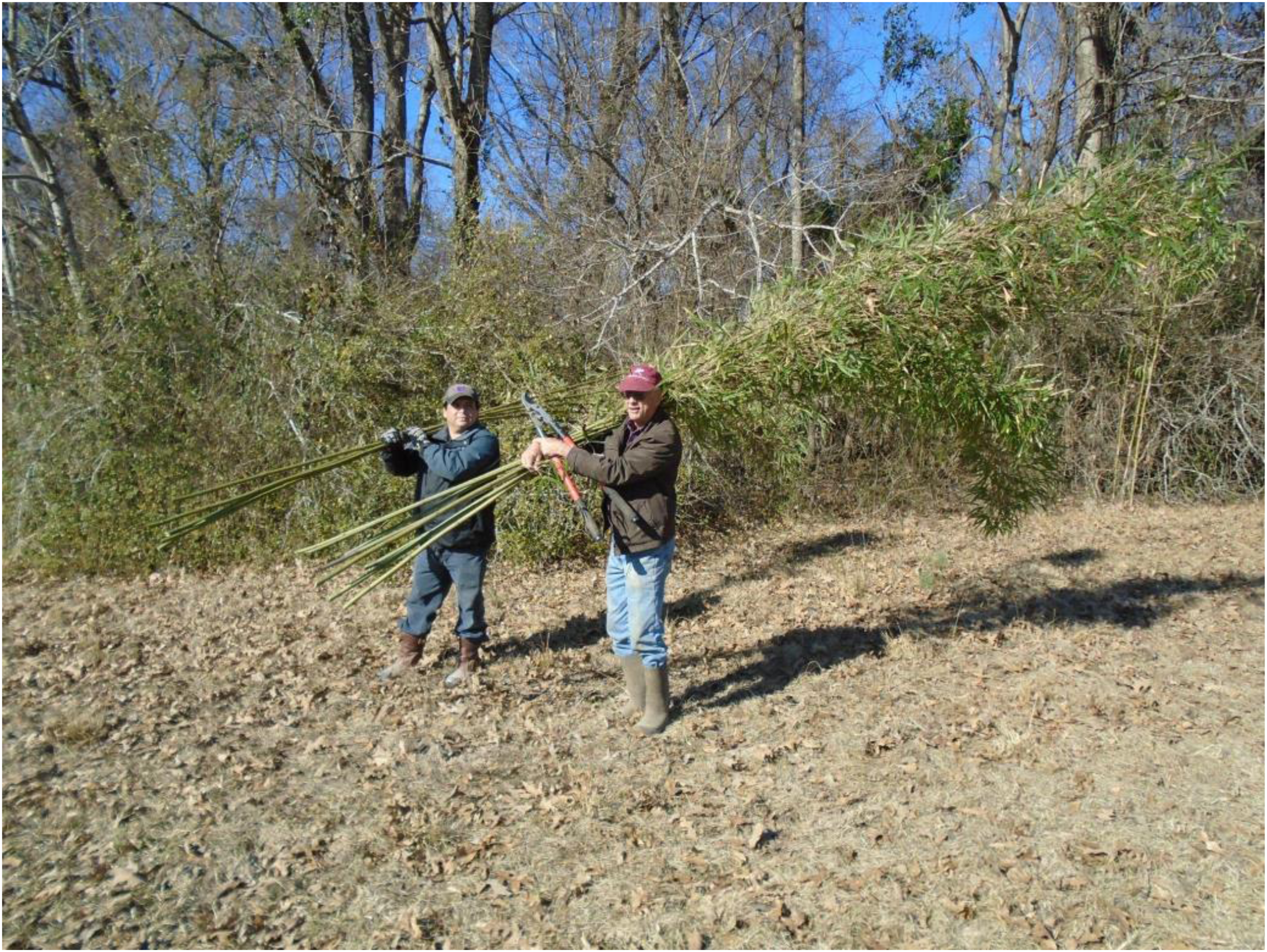
While harvesting with Mr. Tom, I learned the subtleties of selecting ala that was mature and healthy enough for weaving. Mature ala is usually a deeper green color. Ala past its prime for harvesting tends to be brown, dry, and brittle. Mature ala ready for harvest has no papering at the joints. This refers to the leaves that grow at the joints of new growth that later dry and turn yellow. When the papering leaves have fallen from the ala, the pole is usually mature enough to harvest. Mature ala also has a particular sound in comparison to young ala. We tap the pole with our knives before cutting it. It may sound hollow with a higher “ting” in comparison to younger poles. This is due to the silica that has hardened within it. Young ala, on the other hand, is usually less dense and as a result is more flimsy. Young ala will split inconsistently and often split too thin, gradually breaking away from the pole. Therefore, weavers are careful in observing the maturity of the ala they harvest.
Photo caption: Tom Colvin and Elisabeth M. Pierite with freshly harvested ɛchara fronds in 2018.
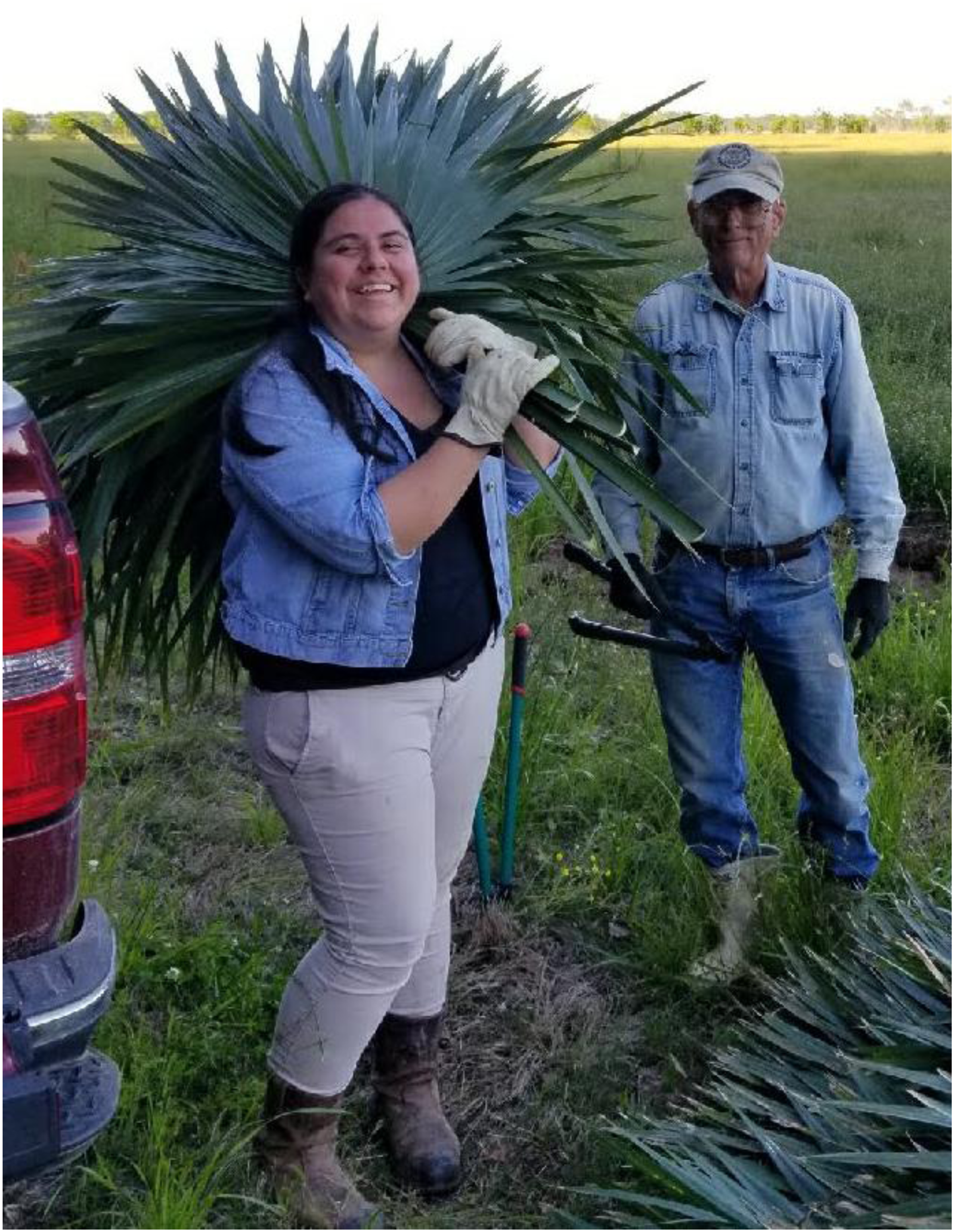
As he was taught by his mentor Mathilde Johnson, a Choctaw basket weaver that lived near Lacombe, LA, Mr. Tom taught me how to split ɛchara. ɛchara, in comparison to ala, grows plentifully in certain spots around Avoyelles Parish. Therefore, in practice, I have leaned more toward working with ɛchara, though I find satisfaction in the sounds of splitting ala and popping my knife across each joint while peeling. The absence of joints in the ɛchara stem would be the main difference between these materials when using them for basketry. Utilizing the stem, we split and weave ɛchara in the same way as ala. Mr. Tom would point out older baskets that were made with a mixture of ɛchara and ala splits. I have noticed the use of ɛchara in this way in some of the Tunica-Biloxi baskets at LSU Museum of Natural Science. Learning to split ala and ɛchara could be compared to learning to drive two very different vehicles. With either vehicle, you can arrive at the same destination; however, your driving experience could differ greatly. Being different species of plants, it takes time to learn how to work with each in order to achieve straws of the ideal thickness, width, and length for the intended basket. Ala is hollow, and the fibers tend to grow in layers, while the ɛchara stem is quite fibrous and stringy. When learning to split ala or ɛchara, one must get the feel of where to make notches to begin the splits and how to apply balanced tension on the material in order to achieve consistency. As elder basket weavers teach, this is the traditional way. Before learning to weave, you must learn to harvest and process your own materials. During this time is when one gains an intimate understanding of the plant. Mr. Tom would visit tribal communities throughout Louisiana and Oklahoma. His life seemed like an everlasting adventure, rich with friendship and connections to tribal people and their cultures. He passed away in 2024, and the loss is one I still feel deeply. Losing an elder, your mentor, is realizing you now carry the fire.
Through the joint means of powerful human-to-human connections and nuanced person-to-plant relationships, Pierite has achieved a deeper understanding and appreciation of cultural practice and its reflection of the natural world in its regional diversity: Looking back on my childhood, I understand the significance of the baskets that surrounded me. Today, when viewing a Southeastern Indigenous basket, I recognize it as I would an old friend or an elder. I associate each basket with its maker or the community from which it came. The baskets evoke familiar feelings of connection. As Native people, we display and utilize baskets from family and friends throughout our homes. They are a part of the makeup of a Native household. Often placed somewhere for safekeeping or placed high on a shelf and treated with dignity, these baskets last beyond the lifetime of their maker. In addition to their utilitarian purposes of carrying food and other household goods, baskets carry our connection to the maker, the community and the teachings that are shared through this tradition. Made of the plant materials of a specific locale, each basket is representative of the land from which the materials came and the generations of weavers that once gathered there.
Pierite's involvement with LCRP supports programming aimed at helping tribal youth attain the same level of knowledge and intimacy with plants that she has experienced. In addition to hosting cultural workshops like the annual intertribal Basketry Summit, LCRP sponsors many language programs that center and reinforce ethnobiology knowledge. One of the major events is the annual Youth Language & Culture Summer Camp, where children ages 5–17 learn language and cultural practices on the reservation. Camp sessions include language lessons on plant vocabulary, ethnobiological demonstrations accompanied by Tunica vocabulary, and activities where campers apply knowledge of plant names and uses in Tunica. Many games and activities during Summer Camp and other LCRP community programs are largely drawn from resources compiled for the guidebook. Additionally, LCRP has published a Tunica language textbook and two children's storybooks that feature plants as well as animals that are culturally significant to the tribe, inspired by the same information gathered from primary documentation and oral histories. Whether one is reading primary sources from the nineteenth and twentieth centuries (which may discuss therapeutic uses of plants or horticultural practices) or engaging with contemporary resources like classes or children's books, it is hard to read any Tunica-Biloxi materials or attend LCRP programming and not encounter some overlap of language and ethnobiology. In turn, growing community interest in Tunica-Biloxi ethnobiological practices has sparked further LCRP programming and initiatives to learn more about and share TEK with other tribes in the region. For example, LCRP has hosted workshops on traditional plant-based dyes in collaboration with a Houma tribal member.
Photo caption: Campers in 2024 participating in traditional foodways practices with hahka (Zea mays; corn) and ala, led by Ian Thompson (of the Choctaw Nation of Oklahoma) and Elisabeth M. Pierite, using plant vocabulary learned in classes.
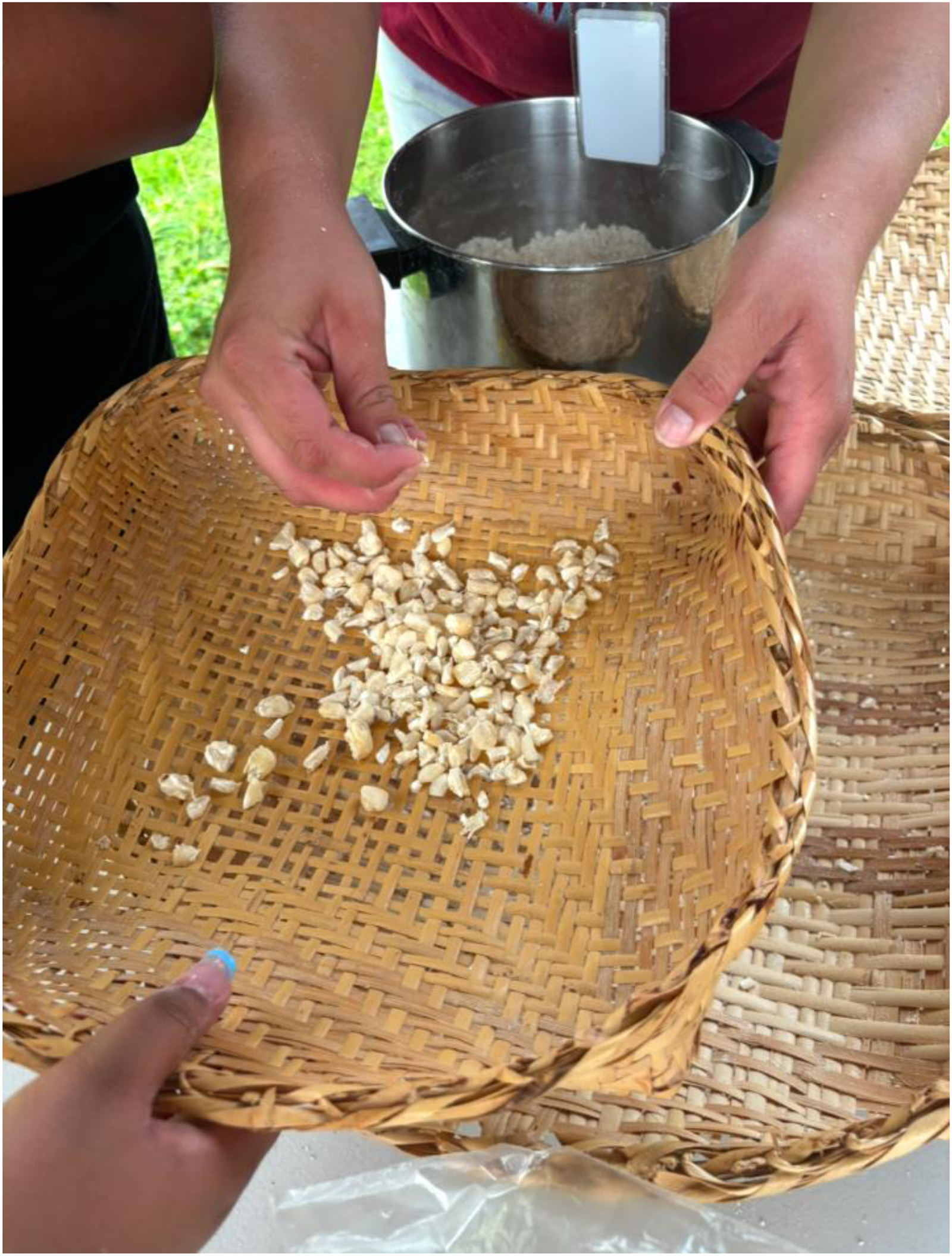
Photo caption: During the 2024 Summer Camp, campers made hahka packets for Hahka Ɔshta (Green Corn Ceremony).
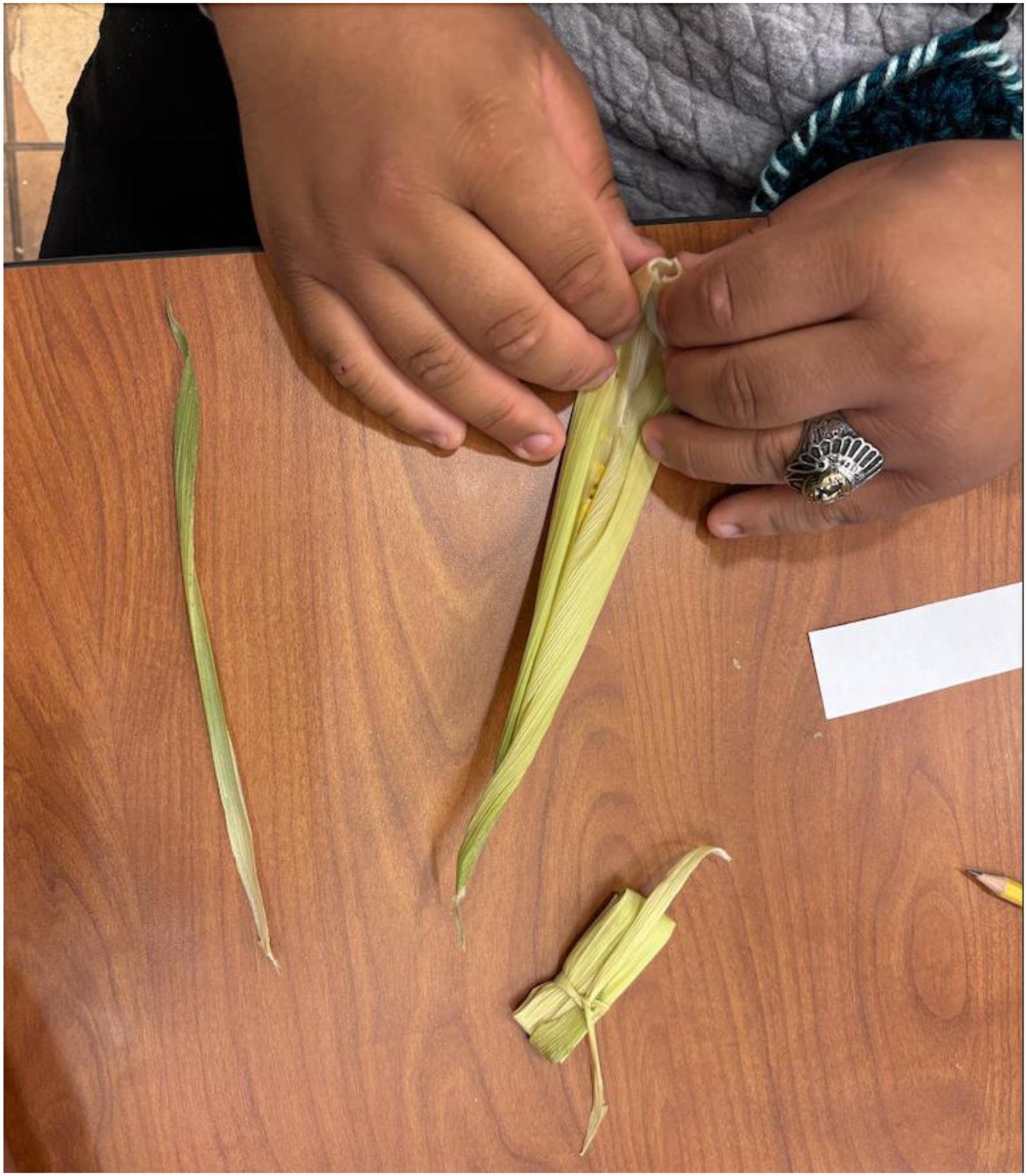
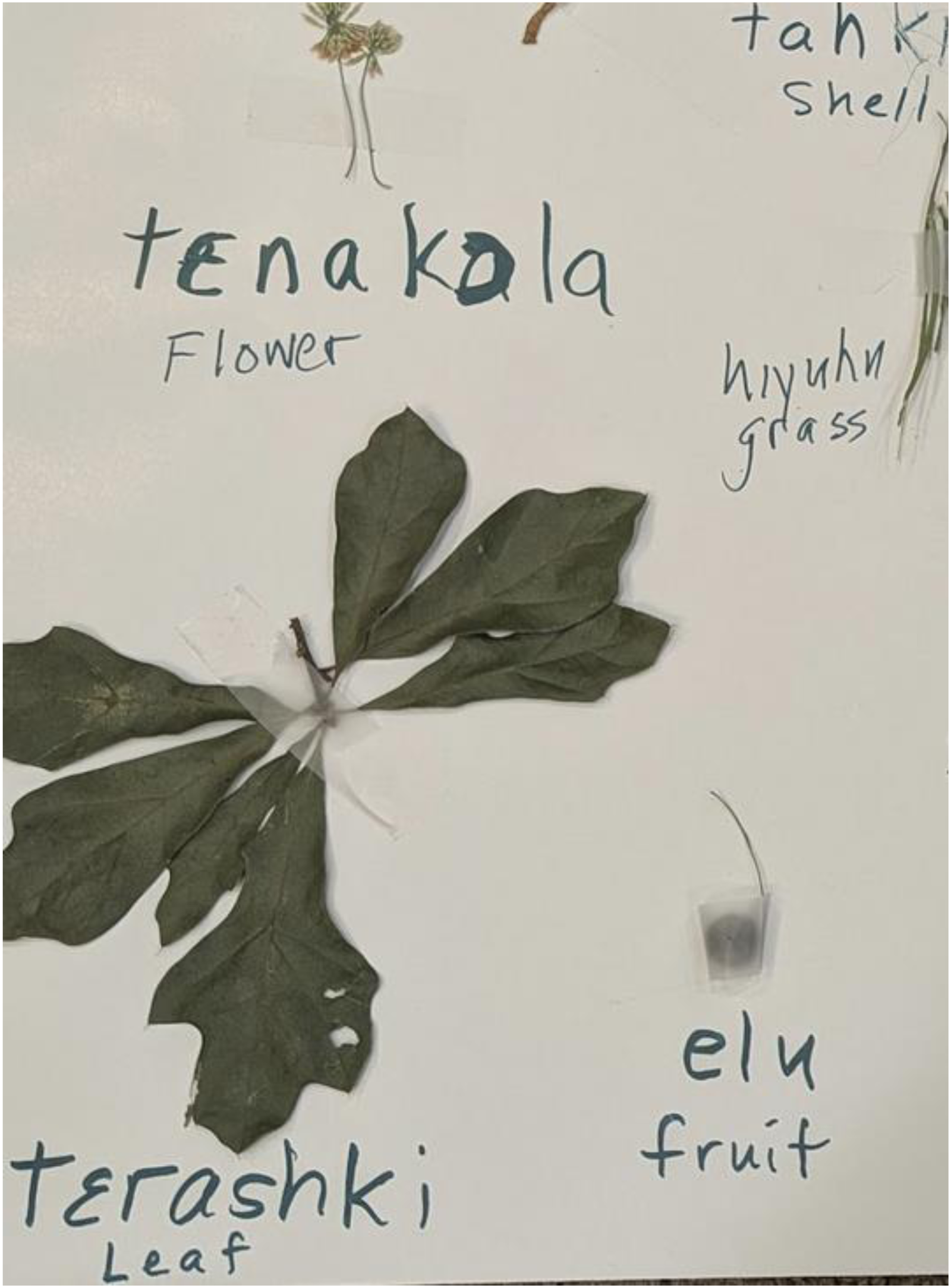
Photo caption: Campers in 2025 created bilingual posters displaying the results of their scavenger hunt on the reservation.
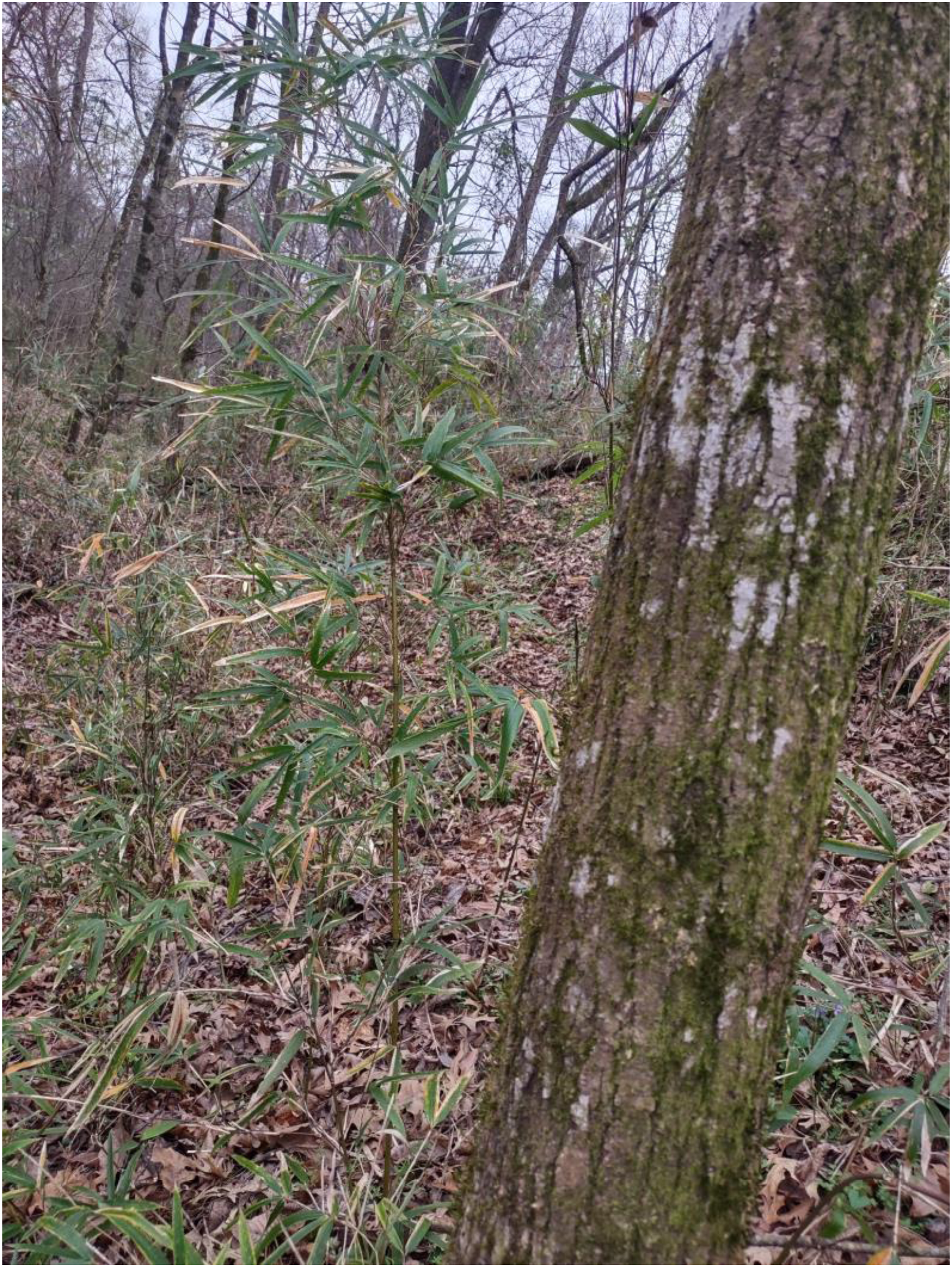
The tribal community's engagement with plants is not limited to LCRP. In 2024, the tribe was awarded a Louisiana Wildlife and Fisheries grant to improve water quality around the Tunica-Biloxi reservation. The tribe has been able to use a portion of these funds to restore the habitats of two endangered, culturally significant plants to the reservation: ala (Arundinaria gigantea; rivercane) and eksha (Pinus palustris; longleaf pine). Both of these plants are important for traditional basketry. Additionally, the tribe established Tahch’i Farms in 2023 to grow culturally significant plants and provide nutritious food to its citizens, promoting food sovereignty through cultural practices. The agriculture department, which stewards this operation, will undoubtedly contribute to and benefit from the information that will be included in our ethnobotany guidebook. Furthermore, the tribe regularly engages in discussions not only with other tribal governments but also with state and federal organizations about collaborative initiatives to enhance the knowledge of and accessibility to these culturally important plants, aiming to advance conservation through cultural education.
Looking toward the future, the tribe is considering other conservation grants including one to help remove various invasive species from the reservation. Such a grant would aim to restore native freshwater mussels to tribal waterways. And finally, another prospective grant for which the tribe has applied would help ensure that members can improve and continue education on conservation and restoration efforts that target traditional plants and animals. The Tunica-Biloxi are well on their way to reclaiming their role as champions and stewards of the land and its plant and animal inhabitants.
This section highlighted efforts at the level of the individual and at the level of the tribe to validate and reinvigorate Tunica-Biloxi ethnobotanical practices, which have both fed into and benefitted from the development of a bilingual Tunica-English ethnobotany guidebook. This tool, we believe, has the potential to start even more tribal members down similar paths of rediscovery.
Photo caption: Tribal Councilwoman Paulette Voiselle with tribal youth Ava Duhon, Ruby Pierite, Kayson Pierite, and Brent Barbry, Jr. planting eksha saplings
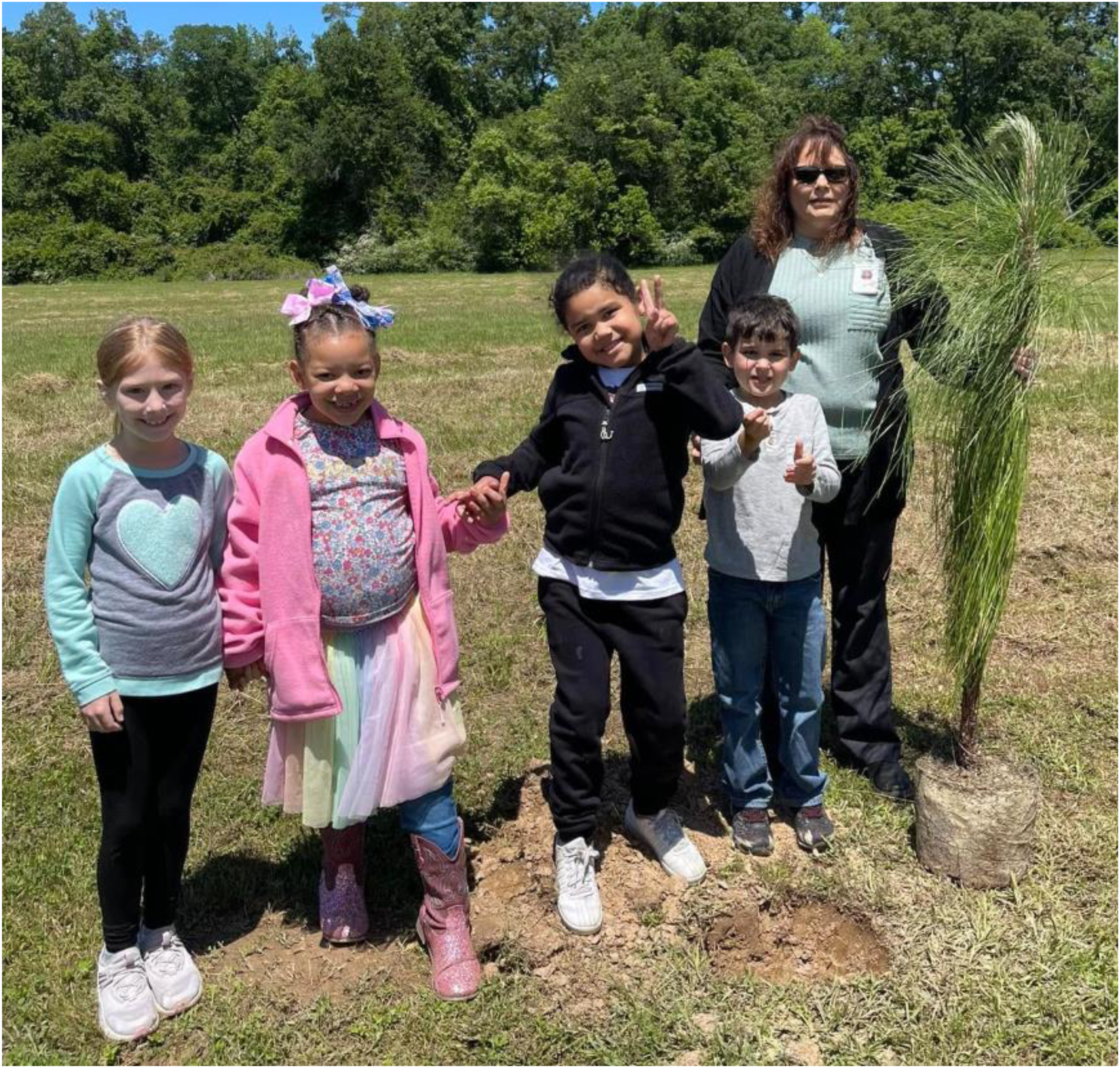
Photo caption: Tribal spouse Brad Normand with his grandchildren Carter Dupont, Christopher Dupont, and Lainie Dupont planting eksha
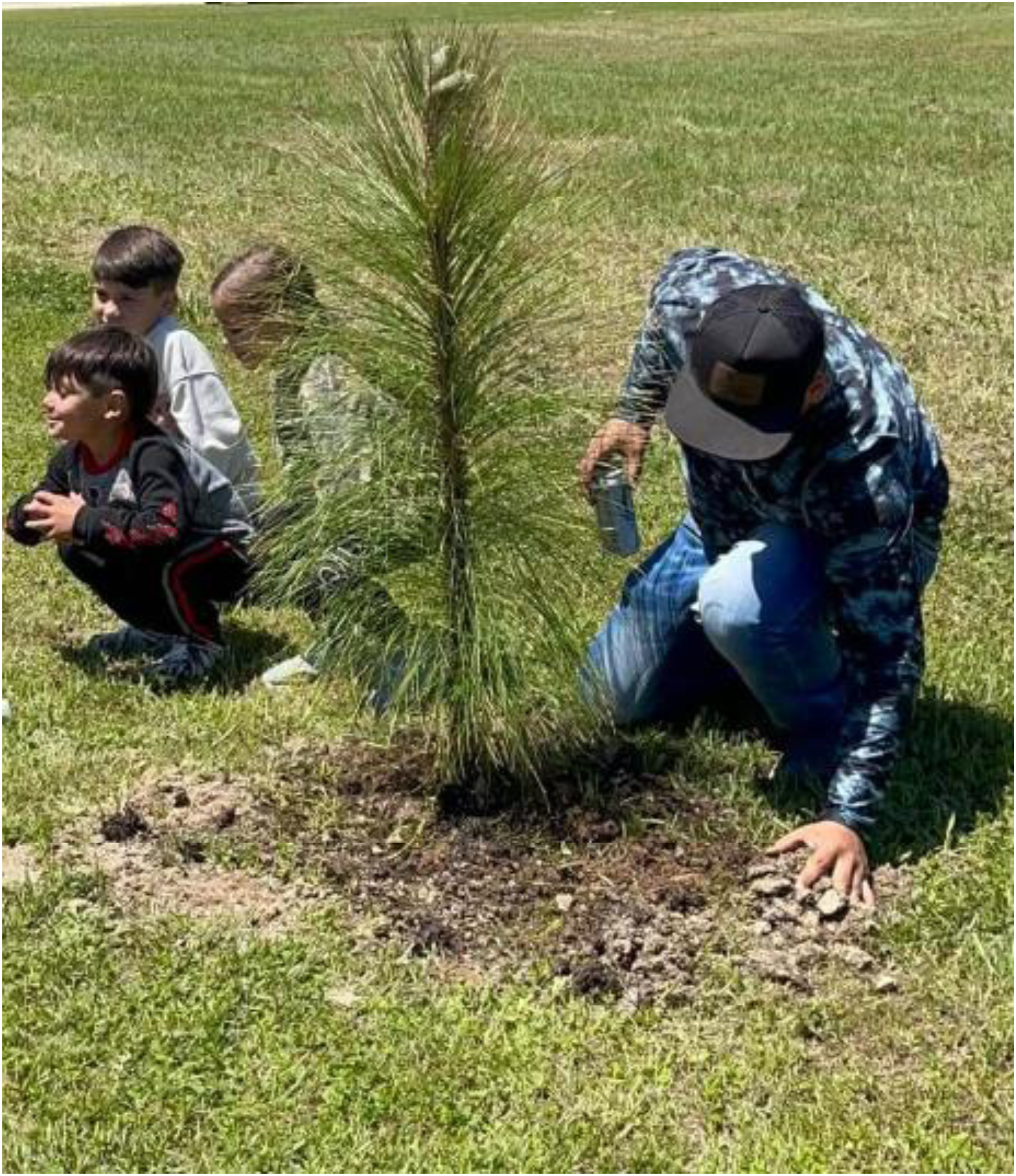
Photo caption: Patch of ala found on the Tunica-Biloxi reservation
Discussion 3
The guidebook, of course, is a prime example of the way ethnobotany and language have a symbiotic relationship wherein engagement with one domain stimulates increased engagement with the other. The relationships people have with their environments are affected by language, and people who are immersed in cultures that value plants are also organically engaged in language and practices that support individuals’ abilities to detect and recall plants (Balding and Williams 2016). Moreover, endangered languages are storehouses for “most of what humans have learned over the millennia about how to thrive on this planet” (Harrison 2007, 19). Many Tunica plant words are encoded with ethnobotanical information: rihkuhiranwista Sambucus canadensis; elderberry) is literally “sweet medicine tree,” rihkutanihirani (Zanthoxylum clava-herculis; prickly ash) is literally “tooth medicine tree,” and rihkushihtika (Gaylussacia spp.; huckleberry) is literally “witchcraft tree.” These and other lexically rich words that are presented in the guidebook are all contextualized by descriptions of flora and summaries of ethnobotanical practices, emphasizing the salient connections between language and ethnobiology.
Creating the guidebook reinforces the salience of language and ethnobotany, generates more engagement with the environment, and has been an impetus for the creation of more Tunica language. The integration of botanical knowledge (such as species distribution or attested uses) and linguistic knowledge (such as morphological processes used to create neologisms) culminates in the production of this interdisciplinary work that could be replicated in other contexts (Amith 2020). Working group members note that the project has made us more in tune with our local ecosystems. We have become more aware of plant morphology and consequently, more skilled at identifying species in our everyday lives. In a group chat, we regularly give updates about or ask each other questions about plants we come across. We share pictures, jubilantly calling them by their Tunica names. Jane Hill argues that “access to names mediates access to understanding” (Hill 2003, 163). In her case study of the O’odham, she finds that knowledge of names in a local environment can contribute to improved health of individuals, and therefore a strengthening of the whole community. The disappearance of these words results in a fading of this knowledge, even when there are no other cultural and environmental changes. We can already see within the working group that naming plants around us builds a connection to them and each other, and we are confident that the connection will grow as more people gain access to the guidebook. In fact, Mrs. Donna Pierite, a Tunica-Biloxi Legend Keeper, anticipates that when the guidebook is shared, “We’ll be able to remember more. Maybe people out there have bits and pieces and will put it all together, and we’ll know more.” Beyond the working group, Sam Velasquez, the Tribe's agricultural coordinator, is also committed to cross-disciplinary research and practices. He is eager to utilize the guidebook to revive more regional and tribal farming practices, and he believes language is a powerful tool for connecting with these practices and knowledge.
One of the most pervasive boundaries that the development of the guidebook challenges is the presumed boundary that exists between human beings and their environments. In this endeavor, we have been inspired by what Scott Atran calls “emergent knowledge structures” (2001). Crucially, these knowledge structures are more centrally about attention to specific sorts of details and relationships rather than discrete lists of transmissible facts. Conceptualizing Tunica-Biloxi TEK in this way equips tribal members with a flexible tool for navigating borderlands in diverse ways. Furthermore, it draws strength from Tunica-Biloxi historical precedents of adaptation and reimagination in the broader Gulf South (Ellis 2023). Such adaptability is utterly necessary for meeting the challenges of our present moment. The guidebook and the work of language and ethnobiological revitalization in the Tunica-Biloxi Tribe are founded on the continuity of culture and knowledge with the incorporation of creativity for reimagined possibilities. We hope that other communities will also see the benefit of reclaiming language and ethnobotany in tandem.
Conclusion
For those looking to restore domains of ethnobiology, we recommend looking to language—and vice versa; for those looking to reclaim language, we recommend an ethnobiological lens—as a culturally significant modality for activating historical knowledge as well as engaging with the practice of futurity. Robin Wall Kimmerer speaks of language as a gift and responsibility, one that can be reciprocated in how we interact with the environment (2013, 337). For us, the act of creating the guidebook is itself a practice of applying these gifts in the spirit of futurity, a narrated hope to be carried on for generations. Laura Harjo writes of futurity as the invocation of many temporalities and spaces…, a way of being in the world that recognizes the energy of all entities…, a way of knowing the world and producing knowledge…, a form of collective power…, [and] space and place produced via relationality and connections to humans and more-than-human entities. (2019, 216)
Concerning the written mode of futurity, Linda Tuhiwai Smith conceives of “rewriting and rerighting” history and the “need to give testimony to and restore a spirit to bring back into existence a world fragmented and dying” (2021, 31–32). In this spirit, the guidebook, rather than being a strictly historical document, is a reimagining of Tunica culture and lifeways that reaffirms relationships across borders both physical and ideological. Kimmerer also calls for this “restorying” as a way to heal relationships with land. Language revitalization itself is a futurity practice, and the guidebook seeks to connect material culture to the language. Through ecosystem assessment reports, Stibbe finds that when people intrinsically value the natural world, they are more likely to engage in stewardship practices (2015, 155). Therefore, the guidebook's potential to increase individual's knowledge of and relationship with plants becomes not just a passive resource but a tool for environmental activism.
The colonial conception of history “is a totalizing discourse … [that includes] all known knowledge into a coherent whole,” with “one large chronology … [that is] … constructed around binary categories” (Smith 2021, 33–34). The guidebook challenges these frameworks of chronological and cultural borders by leaning into the reimagining of Tunica history and future. A primary method for this is taking an intertribal approach to filling the gaps in Tunica plant usage and writing about the uses of tribes with which the Tunica have historically interacted. This is a reimagining where the tribe can learn and adapt practices in a way that John Barbry, Director of LCRP, believes will “broaden the community's knowledge … and help them connect with other Indigenous groups in the region.” In this way, reimagining becomes a cyclical process of stories speaking to each other, where an innovation points to a tradition in the past, which can then be carried into the future. Harjo also points out that elements of futurity inspire and activate “future temporalities, and place in motion actions that will bring these imagined possibilities to fruition” (2019, 194). The guidebook is just the beginning of reclaimed Tunica ethnobotany. Equipped with the wisdom of tradition and the tenacity of hope, the Tunica-Biloxi community's future is primed to flourish.
Footnotes
Acknowledgements
We deeply appreciate the support of the Tunica-Biloxi Tribe of Louisiana, whose persistence makes this work possible. Tikahch! Ąkyąditu phi! Thank you!

Author Contributions
The idea for this contribution came from Laura L. Morgan. She also wrote most of Sections VIII and IX. Rebecca J. Moore wrote Sections II and III and was responsible for most of the formatting. Ryan P. Lopez wrote Section V. Elisabeth M. Pierite shared her personal narrative in Section VII. Nathan A. Wendte wrote Sections I, IV, and VI. All authors contributed to preparing references in Section X and the revision and copyediting of the entire manuscript.
Funding
The authors received no financial support for the research, authorship, and/or publication of this article.
Declaration of Conflicting Interests
The authors declared no potential conflicts of interest with respect to the research, authorship, and/or publication of this article.