




Abstract
Agave is a plant through which people express care and concern for the Sonoran Desert, a biodiverse ecosystem that spans the border between Sonora, Mexico, and Arizona, United States. At the Tucson Agave Summit, a binational gathering for academic, business, and community exchange, participants discussed the growing environmental impact of human development on agave, mirroring larger concerns about research, culture, and commerce. However, obtaining travel visas proved difficult for Mexicans due to longstanding political inequalities exacerbated by post-COVID travel backlogs. In response, the 2024 AS was relocated to Álamos, Sonora. This shift invited two important questions: How is agave being used, valued, and imagined across different communities in the Sonoran Desert? And how do those conversations—about environment, culture, and knowledge—change depending on who is able to speak, and where? In exploring these questions, multiple roles for agave emerged: as a culturally significant plant in arid lands, as a marker of agricultural expertise, and as a shared point of connection across borders, disciplines, and communities.
Introduction
This article investigates the native plant Agave and its role as a medium through which people express and engage with their care and concern for the Sonoran Desert environment. A case study of the Tucson, Arizona Agave Summit (AS), a one-day academic, community, and business symposium, illustrates how Agave (a genus with diverse species) was purposed as agave, a human imaginary through which participants framed agave as helping to sustain environmental and multispecies relationships, support economic development, and create a sense of place. An imaginary is a process where an object is reconfigured to also serve the needs of those gazing at it, allowing agave to become a shared cultural framework, a political object, and an entry point for cross-sector conversations among a community of practice sharing concern about the Sonoran Desert. Through agave, this multifaceted community—defined by a shared subject yet divergent in perspective—explores “narratives and counter-narratives” concerning human-plant interactions while challenging the very boundaries of these debates (Banister 2010, 12).
Understanding agave as a plant and human imaginary is important because many environmental and development challenges in the Sonoran Desert echo global concerns: ensuring food access amid environmental change, managing water impacted by urban development, and maintaining social ties in a fragmented world. Challenges are amplified by the impact of the United States-Mexico border, which cuts across shared Sonoran Desert ecological and cultural landscapes, complicating the region's political realities (ACLU, 2022; Nevins 2010). The AS served as a critical and urgent focal point for numerous discussions about the consequences of agave's enrollment across academic, community, and business domains.
The AS shift from Tucson to Álamos, while prompted by 2023 U.S. travel restrictions, reflected the organizers’ binational focus on enabling broad participation. The AS's border crossing created an opportunity to ask: How is agave being used, valued, and imagined across Sonoran Desert borders? How do conversations about the environment, cultural heritage, and knowledge shift depending on who is present and where the dialogue takes place? These questions frame this article's comparative analysis of how people mobilize agave to think about, and act on, their relationship to place, community, and the environment—and how those meanings shift across the two gatherings in Tucson and Álamos.
Background
Agave in the Sonoran Desert
In Tucson, Agave—a genus within the Asparagaceae family, subfamily Agavoideae—is used as a cultural category encompassing many different species and carrying symbolic, economic, and ecological significance. Since 2009, agave has been the focus of the Agave Heritage Festival, a week-long food and beverage event. In 2022, Mayor Regina Romero proclaimed the festival as “both a celebration of the agave and an acknowledgment of Tucson's rich cultural history and the traditions that unite the people of the Southwest” (Contreras and Simmons 2022). The AS, an associated event sponsored by the festival in recent years, complements the festival by providing a forum for discussion that ties into long-running efforts in Tucson to think and talk about human-plant relationships.
Tucson's agave festivals and meetings are rooted in the Sonoran Desert's rich history and environment. Spanning 310,362 km2 across the United States and Mexico, the Sonoran Desert, due to its dual rainy seasons and post-glacial evolutionary history, has unique biodiversity, including over 500 edible plants (Dolby et al. 2015). Indigenous expertise in desert agriculture shaped sustainable food systems, incorporating native plants, including mesquite, prickly pear, and agave, alongside irrigated crops such as maize, beans, and squash (Felger and Moser 1985; Hodgson 2001a; Niethammer 2020). This indigenous expertise is an intangible cultural heritage of Sonoran Desert agricultural expertise, for which agave has a special place.
Agave is a generic term for a genus encompassing over 150 species—and many more subspecies and varieties—of succulent plants characterized by “spirally arranged leaves forming a rosette” (Gentry 1972, 17). Some agaves, such as the massive Agave americana, were cultivated in large areas of Mesoamerica, from which they spread (Nabhan, Colunga-GarcíaMarín and Zizumbo-Villarreal 2022). Others, such as A. deserti and A. palmeri, exhibit traits well-adapted to Sonoran Desert arid environments (Hodgson 2001a). Agave plant structure is designed for dry heat, including a distinctive crassulacean acid metabolism (CAM) photosynthesis where the plant opens its stomata to take in CO2 at night, taking advantage of cooler temperatures and making the plant adaptable across the region's varying elevations and rainfall patterns (Gentry 1972).
Indigenous people of the Sonoran Desert, including Hohokam, Comcaac, Yoeme, Teguima/Eudeve, N’dee/N’nee/Ndé, Akimel O’odham, and Tohono O’odham, had myriad ways to grow, process, construct, and consume agave (Gentry 1972; Hodgson, Salywon and Doelle 2018; Ortiz-Cano et al. 2020; Yetman and Van Devender 2002). They traded agave through Sonoran Desert networks, using it wild and domesticated within local ecosystems (Fish, Fish and Madsen 1992; Hodgson, Salywon and Doelle 2018). Agave fibers were used for “cordage, sandals, brushes, textiles” (Fish, Fish and Madsen 1992, 73); “blankets, clothing” (Gentry 1972, 11); and “human figures, fishing, hunting, or carrying bags” (Colunga-Garcíamarín and May-Pat 1993, 320).
Agave's Sonoran Desert adaptations were a valuable food resource and played a foundational role comparable to corn (Fish and Fish 2016). Along the Gulf of California coast, recent documentation of the Indigenous Comcaac details seasonal agave management (A. cerulata, A. chrysoglossa, A. colorata, and A. subsimplex simplex), which used coded linguistic knowledge and traditional roasting methods with hot rocks and open fire to produce a carbohydrate-rich food consumed fresh or stored for long-term use (Narchi, Marlett and Hernández-Santana 2020). The Comcaac also pounded roasted agave into liquid and mixed it with turtle fat to make cakes (Felger and Moser 1985).
Agave plays a significant role in Tucson's history, spanning 4,000 years of Indigenous agriculture, including the pre-Columbian southern Arizona irrigation experts, the Hohokam, and their Tucson-region descendants, the Tohono O’odham Nation (Ramon-Sauberan 2023). The Hohokam used rock structures, stone tools, and large roasting pits for carefully selected cultivation and domestication of thousands of acres of agaves, a sophisticated adaptation for climate and geology (Fish, Fish and Madsen 1992; Hodgson, Jane Rosenthal and Salywon 2023; Hodgson, Salywon and Doelle 2018; Ortiz-Cano et al. 2020). They employed a milpa (inter-fertilizing mixed crops) style of agriculture, using rare species of agave, including A. murpheyi, A. sanpedroensis, and A. phillipsiana (Hodgson 2001b; Hodgson, Jane Rosenthal and Salywon 2023). Combining wild, semi-wild, and cultivated species enabled the collection of agaves that flower and fruit at different times throughout the year, providing nutritional resources when other agricultural activities in the Sonoran Desert were seasonally limited (Adams et al. 2016; Hodgson 2001a, 2001b).
Spanish colonization disrupted Indigenous agriculture in the Sonoran Desert by the 1700s. Disease decimated populations, and new extractive economies introduced mining, crops, and livestock (Sheridan 1992a, 2012; Spicer 1962). Tucson's history changed when it was bought from Mexico in the 1850s (Sheridan 2012). New settlers exacerbated tensions between Indigenous, Mexican, and U.S. heritages (Sheridan 1992b). Large-scale urban development favored the new settlers’ power and erased parts of Tucson's past (Otero 2003).
In Sonora, post-Revolution (1920) land redistribution reflected conflicting priorities: providing benefits while consolidating class structures (Banister 2010). Development projects focused on water and agriculture, drawing on a history of extraction (Barceló-Rojas 2016). Modernization policies codified visions of progress that aligned with dominant class interests, favoring technical and market-driven approaches over ecological sustainability (Toledo and Barón 2017).
Bacanora, a Sonoran agave distillate, emerged along the Sonora–Chihuahua border, linking a “vernacular” binomial plant name found in mid-1800s records to a sense of highland community (Gentry 1982, 23; Moreno-Dena, Salazar-Solano and Casas-Medina 2015; Salazar-Solano 2007). While prohibited for decades, Bacanora helped diversify the region's economy (Mungaray-Lagarda and Salazar-Lozano 2009). In 2000, a Mexican Federal Denomination of Origin gave the name Bacanora a special protected designation, linking its flavor and production to 35 Sonoran highland municipalities (Diario Oficial de la Federación, 2000). The 2005 NOM-168 further codified production methods, requiring the use of A. angustifolia Haw (Diario Oficial de la Federación, 2005). The 2000s marked a shift in Bacanora's status, enrolling the agave distillate into a Sonoran-style approach to resource development (Salazar-Solano 2007). This approach reflected a state-led logic that turned tradition into policy while sidelining community governance (Parasecoli 2008; Sherman 2008). Bacanora thus is a focal point for understanding how history, governance, and market logic intersect across the region.
Sonoran Desert development accelerated post-WWII alongside industrial agriculture and biodiversity loss (Harlan 1975). Tucson researchers focused on native plant biodiversity as a local solution (Felger and Nabhan 1978; Nabhan 1983). Tucson conservation groups revived seasonal agricultural festivals, drawing attention from local chefs who incorporated native plant ingredients into their food businesses (Sauer 2022). This activity culminated in Tucson's 2015 successful application for the UNESCO City of Gastronomy designation, linking biodiversity, food culture, and economy on a global stage (Nabhan and Mabry 2016).
This culinary turn toward native plants, while grounded in ecological intent, was also folded into a larger repositioning of Tucson as a place where food performs heritage to attract outside attention, which some promote while others criticize (Kinkaid and Platts 2024; Nabhan and Mabry 2016). Tensions about the enrollment of traditional indigenous knowledge into a way to solve global and local problems related to overarching frictions as northerners from the United States moved into Tucson and began to redefine the city from a Mexican American community into a tourism-centered economy (Otero 2003). This complex background framed the AS's objectives to provide a forum for interdisciplinary discussions about the intersection of tensions around development, identity, and benefit-sharing, while exploring how humans and environments enlist agave for diverse purposes.
Agave Summit
The AS was a one-day event organized as a collaboration between the Next Generation Sonoran Desert Researchers, as a component of their numerous binational activities and meetings across the U.S.-Mexico border since 2012, and the Agave Heritage Festival, a series of entrepreneurial activities centered on Tucson's Hotel Congress since 2009 (Agave Heritage Festival 2025; Next Generation of Sonoran Desert Researchers 2025). The AS utilized an unconference format, a participatory approach in which the agenda is set by attendees at the event itself rather than by a pre-arranged schedule (Budd et al. 2015). According to AS organizers, the selection of this alternative conference format served as a research and methodological strategy for disrupting the hierarchies typical of more formal, academically oriented planning processes (AS organizer, personal communication, May 14, 2024). By allowing collective priorities to emerge dynamically, the format was designed to offer expansive opportunities for access and participation—especially crucial in the politically uneven context of a broad U.S.-Mexico border region.
Methodology
I attended the AS in 2023 and 2024. Each AS session time included at least three simultaneous sessions. One of each session was attended first-hand throughout the day and documented through observational field notes in which the names of participants were not recorded, only the discussion topics and themes. AS organizers provided other notes which were anonymized by the organizers before I received them and are also summarized in the publicly available 2023 and 2024 AS proceedings (Wilder and Hanley 2023; Wilder et al. 2024). I conducted interviews with two AS event organizers in person and by phone, which were anonymized.
Notes from the AS sessions were organized into themes. These thematic groupings reflect different framings of agave, including how it was understood and mobilized across ecological, economic, cultural, and political registers. The research methodology had limitations. Data were drawn from the organizers’ provided documents, which featured session documentation produced by participants (rather than transcripts), as well as my personal observation notes. The form and range of data reflect the limitations of embedded observation and collaborative documentation, including my own positionality. I brought to this research experience in downtown Tucson business development, an associate degree in business, a BA in anthropology (with professors cited in the Background and involved in the AS), an MEd in learning design and technology, and a concurrent PhD in cultural and heritage designations for food, which shaped my access to and interpretation of the field.
Research Data
The following tables present descriptive data from the 2023 and 2024 AS. Each session lists a title proposed by the session initiator during the early morning scheduling session, which happened after an introduction by the AS organizers. Using an open-format agenda process, participants nominated and facilitated their own discussions. These titles were retained as topic headers. After each session, a designated note-taker presented to organizers notes summarizing the main points and conclusions, along with details of how the discussion progressed. The notes varied in length and style depending on the note-taking approach. The summaries below, in addition to illustrative quotes I selected, explain the session discussion and provide insight into how topics were discussed.
The tables below group sessions into five thematic clusters—agricultural practices, cultural heritage, economic development, environmental restoration, and regulatory frameworks—based on recurring patterns across both years. While some topics and participants overlapped, the change in location from Tucson to Álamos brought in new participants, particularly Sonoran producers, which shaped both the topics proposed and the framing of agave itself. Participants enrolled agave into diverse roles: as a climate-resilient crop, a symbol of heritage, a rural economic asset, a regulated commodity, and a point of contention in transnational policy. The tables that follow provide a record of how those conversations were organized and presented during the AS.
Participants
AS participants included academic researchers, agave distillate producers, environmental NGO staff, small-scale food and beverage entrepreneurs, and nonprofit organizers. Moving the venue from the United States to Mexico enabled Mexican researchers, activists, and community members to participate, including Sonora's coastal Indigenous Comcaac and highland Sonora Bacanora producers. The increase in participation (2023 session conveners n = 21, 2024 n = 61) incorporated wider perspectives and grounded discussions in diverse experiences.
Agricultural Practices, Agroforestry, and Sustainability
In both years, sessions focused on agave's ecological role in arid farming systems (see Table 1). In 2023, discussions emphasized the restoration potential and climate resilience of agave, especially concerning soil health, microbial activity, and intercropping. In 2024, the presence of Mexican researchers and Sonoran producers shifted the emphasis toward field-level projects, composting, and erosion control, while noting the adaptation of traditional cropping methods to new environmental and commercial pressures.
Cultural Heritage, Indigenous Knowledge, and Social Activism
While 2023 sessions emphasized cultural continuity and community resilience, the 2024 AS included more critical conversations about exclusion from recognition and governance, particularly around the role of indigenous women, youth, and small producers in decision-making spaces (see Table 2). This theme focused on past and present ways in which agave was part of a culturally embedded agricultural practice, encompassing diverse knowledge while challenging the context within which agave culture was maintained and transmitted.
Economic Development, agave Distillate Production, and Business Interests
Discussions of economic development were present in both years but shifted in focus (see Table 3). In 2023, sessions centered on market competition and branding strategies. In 2024, producers raised concerns about time-to-profit pressures, certification costs, and regulatory barriers. The addition of Bacanora and other agave distillate producers to the conversation added detail about production logistics, aspirations for scaling distillate businesses, and the tensions between traditional practices and market viability.
Environmental Restoration, Biodiversity, and Climate Change
Environmental themes remained consistent over both years, but in 2024, sessions incorporated information about Mexican academic research projects and reports (see Table 4). In 2023, sessions explored the ecological potential of agave, including its role in desert reforestation and pollinator support. In 2024, field-based practitioners emphasized land tenure, ejido (communal land tenure) dynamics, and the political challenges of implementing restoration programs at scale—topics that became visible only with the inclusion of locally embedded participants.
Regulatory and Policy Frameworks
Regulatory sessions in 2023 focused on transparency, international standards, and the lack of U.S. frameworks for agave agriculture (see Table 5). In 2024, the conversation turned more directly to the governance of Bacanora's Denomination of Origin, focusing on how appointments to the NOM-168 Regulatory Council serve the political interests of Sonora's governing institutions rather than Bacanora producers, and the need for community participation in oversight. These shifts in conversation reflected the inclusion of producers who had been absent from the earlier AS, bringing grassroots concerns to the forefront.
Discussion
At the AS, agave took many forms. It appeared in fermentation charts tracking yeast activity, in biodiversity reports about bat pollinators, and in menus listing regional ingredients. Agave was also present in discussions of land tenure, seed access, regulatory language, and cross-border trade. These conversations did not resolve into a single narrative. Instead, agave gained new meaning as it moved across legal frameworks, economic constraints, and ecological goals. The next section traces how participants within AS discussions used agave to navigate tensions between agriculture, heritage, economy, ecology, and law.
Agricultural Practices, Agroforestry, and Sustainability
Participants described tensions between efforts to increase agave biodiversity and improve soil health, and the simultaneous drive to expand agave-based products, including foods, beverages, and materials. As with many themes, ideas and definitions of best practices at times had diverse understandings of the underlying goals and motivations. Specific regenerative approaches discussed included agroforestry systems utilizing diverse planting, such as intercropping agave with flowers and pecan trees as part of the milpa intercropping practice. Other discussions connected traditional practices, such as fermentation techniques and soil regenerative methods, with sustainability, envisioning consumer market access and institutional support as helping counter the harmful environmental impact from the increasing commercial pressures on agave production.
Highlighting the need for inclusive discussions about human agave cultures, the 2023 barriers to Mexican participation coincided with tensions between ecological and human interests that emerged through proposals such as an Arizona agave initiative to develop local standards confronting the expansion of U.S. agave plantations. Some discussions expressed concern that these sorts of efforts at controlling agave production amounted to greenwashing, defined as extractive processes hidden by a veneer of sustainability, and highlighted how a singular focus on market demand was “fueling extractive/exploitive practices that are driving both agaves and cultures to devastation” (AS notes, April 28, 2023). Restoration groups discussed the need for “distributional data and understanding of local adaptations. Need to combine local knowledge and understanding of climate adaptation for agave restoration and production” (Wilder and Hanley 2023, 19). These discussions reveal the way in which discussions about agricultural practices and sustainability could not be removed from topics of power and the discussions about environmental restoration, biodiversity, and climate change are explored below.
In 2024, the priority on local practices was accompanied by the participation of Sonoran agave distillate producers—an organizational priority. Discussions revealed tensions underlying fundamental assumptions about the way in which commonly used concepts, such as sustainability, translate into practice. On the one hand, regenerative practices like diverse agroforestry systems enhance soil life and biodiversity and contribute to ecosystem health and resilience, offering improvements that extend beyond yield increases. On the other hand, Bacanora producers expressed their need for “access to more materia prima and infrastructure (seeds, greenhouses, land, government loans)” (AS notes, April 24, 2024). This reflected a distinctive Sonoran approach to government and agricultural development, where discussants noted that “one strategy for the state is to stabilize and help producers plant agave, but they need financing (e.g., loans) in order to invest” (AS notes, April 24, 2024).
Agave distillate producers revealed a definition of sustainability particularly important to Sonoran producers. Bacanora producers emphasized a vision of socio-economic sustainability aimed at preserving a rural way of life, thereby enabling younger generations to remain in or return to their highland communities. Higher-volume production methods, such as fermentation in plastic barrels and roasting in steel ovens, were described as adaptations of tradition to fit contemporary needs rather than the loss of tradition. Producers asserted their right, as “Local Communities,” to be “expert managers of their environment” (McAlvay et al. 2021, 175). As the 2023 and 2024 sessions revealed, the interconnection of diverse topics within discussions of agricultural practices, agroforestry and sustainability underscores the significance of agave as a focal point for multiple perspectives, allowing different definitions of core concepts to emerge.
Cultural Heritage, Indigenous Knowledge, and Social Activism
2023 AS discussions emphasized continuity by highlighting rituals, stories, and the long history of agave agriculture in the Sonoran Desert. A key discussion focused on Tucson's human cultural agave history, highlighting how A. murpheyi has survived for hundreds of years with no additional water through indigenous, pre-Hispanic planting methods that capture surface runoff and direct it to stone constructions which enhance moisture. The continuity of Tucson's agave roasting pits was seen as connected to a larger agricultural heritage evidenced by archaeological stone tools for processing agave found throughout Mexico, California, and southern Arizona. However, these discussions raised questions about contemporary relationships with the indigenous communities whose ancestors developed these systems.
Conversations regarding Tucson's indigenous agave history brought up concerns about ethical obligations to recognize the expertise and role of indigenous peoples in the present. As one discussant said, to address the ethical complexities of using regional agave domesticates, there is a strong need to “bring in the Native peoples on this conversation and they are needed to be present for this” (AS notes, April 28, 2023). This became a focal point for a 2024 discussion session in Mexico.
A 2024 AS discussion addressed the lack of voice and representation for indigenous people, seen as part of current inequalities in power dynamics within governance across the US and Mexico. Led by Indigenous Comcaac environmental stewards associated with the Prescott College Kino Bay research station, participants spoke of agave species removed without consent, and of knowledge systems excluded from governance (Wilder et al. 2016). Discussants noted this can “generate patent processes that put at risk the right to use these species by the traditional mezcal communities of Mexico … therefore a problem of plundering biodiversity and biocultural heritage of Mexico” (AS notes, April 24, 2024). Comcaac highlighted biopiracy: “Almost 40 species of Agave, mostly endemic and microendemic, that are used to make agave distillates, have been removed from Mexico without there being legal documentation to support their departure. In almost the majority, the residents of these communities where these species are distributed have not been consulted about this activity, no payment has been made for seeds or plants” (AS notes, April 24, 2024).
These Sonoran Desert concerns brought up national and global responses. Mexican national strategies, while grappling with overlapping legislation, were purported to benefit from connections between the country's distinctive food culture and biodiverse agriculture (Biodiversidad Mexicana 2025). International frameworks such as the Nagoya Protocol provide a worldwide model for indigenous and local community consultation; yet indigenous people continue to miss “real and tangible benefits when their resources are used” for food drawing on their historical cultural knowledge (Adhikari et al. 2024, 802).
Discussions surrounding agave agricultural practices evoked resilience and tradition while highlighting present-day inequalities related to social justice and economic challenges faced by producers and workers. In 2024, narratives of cultural continuity were influenced by appeals for greater representation of women, young producers, and others excluded from industry structures, raising questions about who controls definitions, benefits, and narratives. AS participation from a female-led agave distillate group highlighted women's historical and present role in production and business, alongside their underrepresentation in ownership and leadership.
In 2024 Bacanora served as a lens to examine how local communities navigate interconnected challenges of defining objectives within broader agave systems. Participants described Bacanora's culture as twofold: both the biological culture for spontaneous fermentation and the living cultural heritage of Sonoran Mexican agricultural knowledge passed down through generations (Ojeda-Linares et al. 2024). As one discussion highlighted, “an important theme of the (Bacanora) Denomination of Origin is to recognize and protect the social, ecological, historical, and cultural heritage (i.e., patrimonio biocultural)—production must maintain this heritage” (AS notes, April 24, 2024). However, some participants suggested hosting gatherings with less emphasis on bars and restaurants, to shift attention from agave primarily as a distillate. This was seen as a way to help engage people who have rich connections to agave yet have complicated relationships with alcohol.
Economic Development, Agave Distillate Production, and Business Interests
Discussions of economic development, agave distillate production, and business interests continually evoked larger questions of power and control across the U.S.-Mexico border. In 2023, agave economic development was framed in terms of navigating challenging certification and permitting systems, which often conflicted with the desire to integrate local knowledge, especially given the extra time and expertise required for non-industrial (traditional) agave distillate production. One discussion highlighted that “the difference between making mezcal that qualifies for certification (or not) can lie within a few degrees of proof, or a few parts per million of methanol or acidity. Seemingly small details, but ones that would force mezcaleros to change their customs in favor of creating a more homogenized version of mezcal” (AS notes, April 28, 2023).
In Tucson, discussions turned to U.S. agave distillate production, connecting growing trends to the economic relations between Tucson and Sonora. Arizona participants expressed concern about maintaining collaborative cross-border relationships with Sonoran producers, a concern that stood in contrast to California's approach of launching agave industry initiatives without establishing such partnerships with Mexico. The development of this industry outside Mexico was framed as catering to U.S. companies while harming the profitability of existing Mexican producers from which the practices developed. Participants particularly highlighted concerns about California's rapidly expanding agave industry, including a trend among distillers of using agave syrup to produce U.S. agave-based distillates. Recently, California passed two classifications for these distillates, requiring no additives and the use of local materials and production, which many saw as a call to action for Arizona. This pattern of external expansion reinforced the larger power dynamics across the U.S.-Mexico border that have historically shaped who benefits from Sonoran Desert economies. However, this framing as an economic problem was challenged as simply a continuation of long-ongoing agave biopiracy.
In 2024, the focus turned inward, highlighting internal inequalities within Mexico's own agave governance systems. Participants began to question how agave business developments—including councils and regulatory frameworks established inside Mexico and internationally—have sidelined historical local communities as decision-makers. More pointedly, critiques emerged about how Mexican producers representing family traditions and local expertise who were seeking to expand Bacanora's industrial potential are constrained by a regulatory environment shaped by and for larger commercializers (seen as urban-focused producers who evoke authentic rural tradition). This contradiction between aspiration and exclusion revealed the uneven governance of Bacanora's NOM-168, which at times reinforces political and economic hierarchies centered on urban economies rather than the needs of rural Sonoran producers. At the same time, 2024 participants were focused on developing marketing strategies and learning how businesspeople on both sides of the border interacted with both customers and regulatory import-export organizations.
While these discussions appeared focused on Sonoran NOM-168 administration, they also reflected how regulatory categories operate within a longer, overarching history of control over land, plants, and economic value in the Sonoran Desert. Discussions regarding the fundamental material challenges of agave production were informed by broader concerns that agave, including exotic and rare agave species, are being pulled into the market, reducing wild agave populations. This included noting that the shortages of A. angustifolia within the current Bacanora designation area highlight how regulatory definitions, such as the Denomination of Origin and NOM-168, reinforce scarcity by limiting what counts as official agave.
Discussions of economic development highlighted topics many thought were overlooked in previous years. Prioritizing worker rights and community-focused solutions appeared difficult in the face of high costs and limited infrastructure. In 2024, discussions about economic development, agave distillate production, and business evolved from concerns about external market competition to critiques of internal political boundaries, illustrating how conversations circled around similar core issues even while beginning from different perspectives. Ultimately, framing agave through an economic lens revealed it as a site of contested governance—one where questions of power and control remained central regardless of whether participants focused on certification systems, cross-border competition, or internal regulatory hierarchies.
Environmental Restoration, Biodiversity, and Climate Change
In 2023, agave was framed as a means of restoring desertified landscapes, emphasizing its potential to reverse or prevent desertification and help cope with climate change. This framing drew on agave's biological adaptations, such as crassulacean acid metabolism (CAM) photosynthesis, deep-rooted water efficiency, and reproductive versatility, which were cited in AS discussions as enabling long-term soil stabilization, supporting pollinators like bats, and promoting genetic diversity through seed-based propagation, all of which make agave a keystone species for regenerative land use in arid zones. Restoration projects were seen to create ecosystems that work with social resilience. In 2023, participants emphasized that agave agroforestry could restore degraded ecosystems and economies, linking soil health to human well-being, intergenerational stewardship, and the long-term sustainability of rural life.
Environmental restoration and field-based activities gained increased prominence in 2024, alongside the participation of Sonoran agave distillate producers, which was the focus of considerable behind-the-scenes logistical activity. This emphasis meant grounded fieldwork-based projects within Sonora, highlighting restoration as both an ecological practice and cultural investment. Discussions about specific projects included a bat monitoring strategy that utilized technology, such as drones, to obtain distribution data, including the spatial distribution of honey plants (connecting back to pollinators). Participants discussed how phenological changes in plants affect interactions with pollinators and soil microbiology, inviting irreversible changes in mechanisms that maintain biodiversity. These shifts threaten to undermine key biological processes that sustain agave populations and broader ecosystem health. Other projects conducted species inventories of two caves in the Central Region of the Sonoran Desert, identifying those caves that serve as maternity roosts for bats—important agave pollinators. The use of flowers and pollinator plants within these systems helps attract predator insects and birds, offering powerful biological pest control. One Bacanora producer reported minimal agave loss, attributing this success to their agave milpa agroforestry system.
While concerns about desertification, agave biodiversity, soil health, and multispecies ecosystem resilience remained central, critiques centered on land tenure and access—revealing how ecological discussions circled back to fundamental questions of power and control. Conversations returned to older political structural questions that shaped access to land and resources in the Sonoran Desert. AS participants asked: Who owns the land where restoration happens? Who benefits from environmental restoration efforts? Much of the environmental framing relies on landowners’ participation in agroforestry, yet the 2024 sessions made visible the persistent inequities in communal land access. These tensions underscore how restoration and activism often prioritize timely community impact but also revealed divergent strategies when compared to academic research. Bacanora producers stand to benefit from restoration initiatives, while at the same time, the proposed benefits depend on their ability to participate in centralized land-based projects.
The AS pointed to solutions as well, such as the utilization of by-products from Agave distillate production to contribute to a restorative economy for rural women in Mátape–Villa Pesqueira, which was held up as an informative example. The AS highlighted how conservation goals cannot be achieved without addressing the uneven distribution of land and the political structures that shape what counts as ecological good (Silber-Coats and Lawlor 2020). These discussions reinforced a broader theme across the AS: that ecological value is never separate from questions of governance and recognition.
Regulatory and Policy Frameworks
Discussions addressed the regulatory landscape governing agave spirits across the U.S.-Mexico border. The Alcohol and Tobacco Tax and Trade Bureau (TTB) currently identifies Tequila and Mezcal as the only two categories under agave spirits (Alcohol and Tobacco Tax and Trade Bureau 2025). Participants explored creating separate divisions to regulate agave spirits more precisely, discussing lobbying strategies that emulate organizations protecting regional agricultural products, such as Vidalia Onions or Idaho Potatoes, potentially through certifications like “Made in Texas.” Conversations examined how quality standards are enforced, noting the roles of the Consejo Regulador del Tequila, the Consejo Regulador del Mezcal, and the TTB. Participants highlighted that certification processes were heavily influenced by financial considerations.
A significant regulatory issue concerned the lack of official recognition and protection for agave diversity, particularly historically important varieties. Participants raised questions about why certain agave varieties, such as A. murpheyi and A. americana, are not commonly used or recognized in modern agave spirits production. Agave domesticated species are classified as domesticated, meaning they cannot receive protection under U.S. environmental conservation laws such as the Endangered Species Act. This creates problems for conservation efforts. Conversations highlighted how new regulations make it harder to acquire permits to collect seed or bulbils of domesticated varieties for increasing their numbers, particularly on Forest Service-managed land.
A major policy concern involved maintaining Bacanora's Denomination of Origin within the 35 specified municipalities in La Sierra, Sonora, to protect artisanal production and the patrimonio biocultural (biocultural heritage). Political pressure from wealthier urban areas threatened to expand the designation. Participants noted the lack of enforcement of existing regulations, particularly regarding adding sugar to increase yield. Discussions emphasized involving regulators and policy makers in conversations surrounding agave conservation and best practices.
Conclusion
The comparative case study of the AS demonstrates that the political geography of knowledge production is not incidental but fundamental to the outcomes. The move from Tucson to Álamos reconfigured discussions, shifting from U.S. perspectives in 2023 to increased Mexican participation in 2024. This change exposed the role of access and place in determining whose knowledge is heard and what forms of sustainability are prioritized. Consequently, long-standing concerns about power, equity, and extraction came into sharper focus, revealing how a plant like agave becomes a site where tensions between ecological concern, cultural heritage, and economic development are mediated.
A critical insight from the AS, particularly evident in the 2024 gathering, was the emphasis on generating practical value for all participants. The conversations in Álamos revealed a clear priority among Bacanora producers: a desire to move beyond theoretical discussion to actionable strategies that support their communities and businesses. A central challenge they identified is the power of consumer preferences in a global market, which can dictate production practices. One suggestion is to leverage low-cost, accessible educational tools—such as QR (Quick Response) codes on bottles linking to videos of artisanal production—in order to inform consumers about the special cultural characteristics of Bacanora (Brabazon, Winter and Gandy 2014; Mayer 2001). Following Wolverton's (2013) premise that transforming the consumer's experience can reshape their underlying values, this strategy could help shift demand toward a deeper appreciation of the context in which agave distillates are produced. This suggestion is one example of the potential to translate dialogue into actionable strategies, allowing researchers and industry partners to further address specific challenges explored during AS discussions.
When the AS crossed the border, different participants were drawn into the conversation, shifting the dynamics of the discussion’s meaning and framing. Long-standing concerns came into sharper focus, and the politics of agave—its meanings, markets, and governance—were reconfigured. If the Agave Summit has a lasting contribution, it may lie not in establishing consensus, but in making visible the tensions and possibilities that emerge when agave is treated as a living connector across borders, disciplines, and communities.
Discussion Sessions Discussed Agave in Relation to Agroforestry, Agriculture, Sustainability, Regenerative Practices, Soil Health, Milpa Systems, Intercropping, and Arid-Land Farming Strategies Across Various Environmental Contexts.
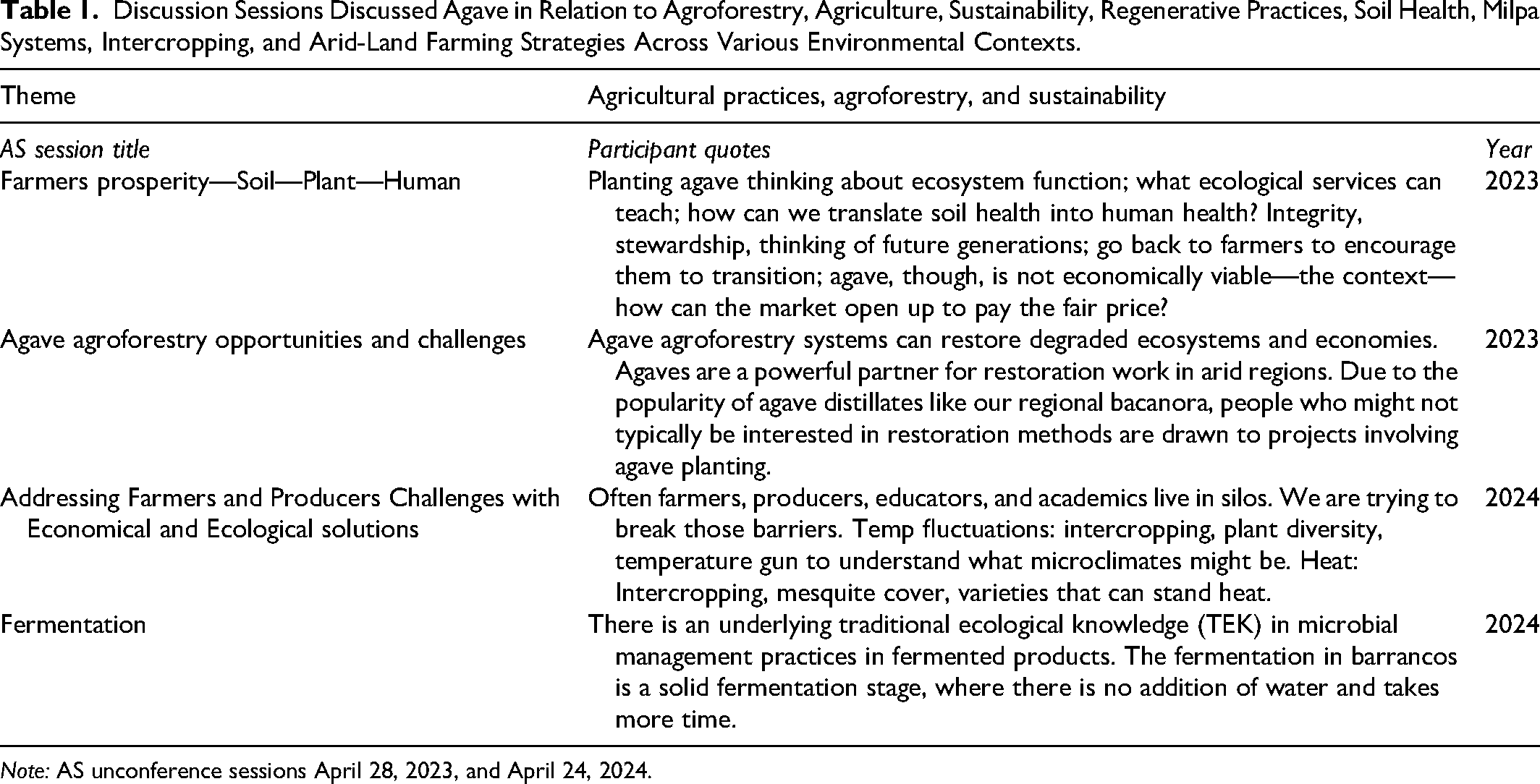
Note: AS unconference sessions April 28, 2023, and April 24, 2024.
Sessions Addressed Indigenous Knowledge, Cultural Heritage, Ancestral Practices, Folklore, Ritual, Activism, and Storytelling as Participants Explored Agave's Role in Identity, Justice, and Tradition.
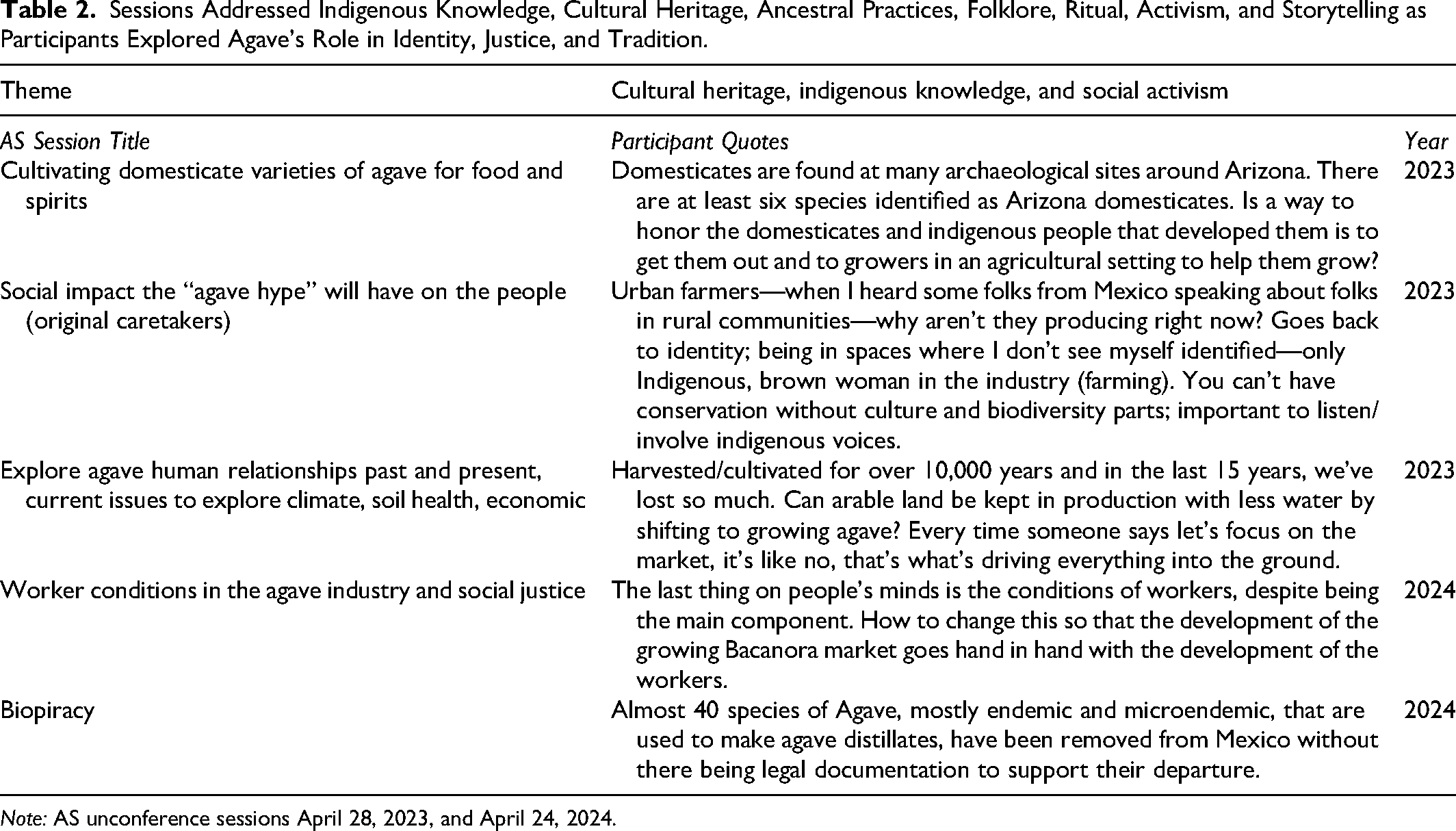
Note: AS unconference sessions April 28, 2023, and April 24, 2024.
Sessions Focused on Economic Development, Agave Distillate Markets, Business Strategies, Branding, Entrepreneurship, and Trade, as Participants Explored the Role of Agave in Investment, Profitability, and Regional Commerce.
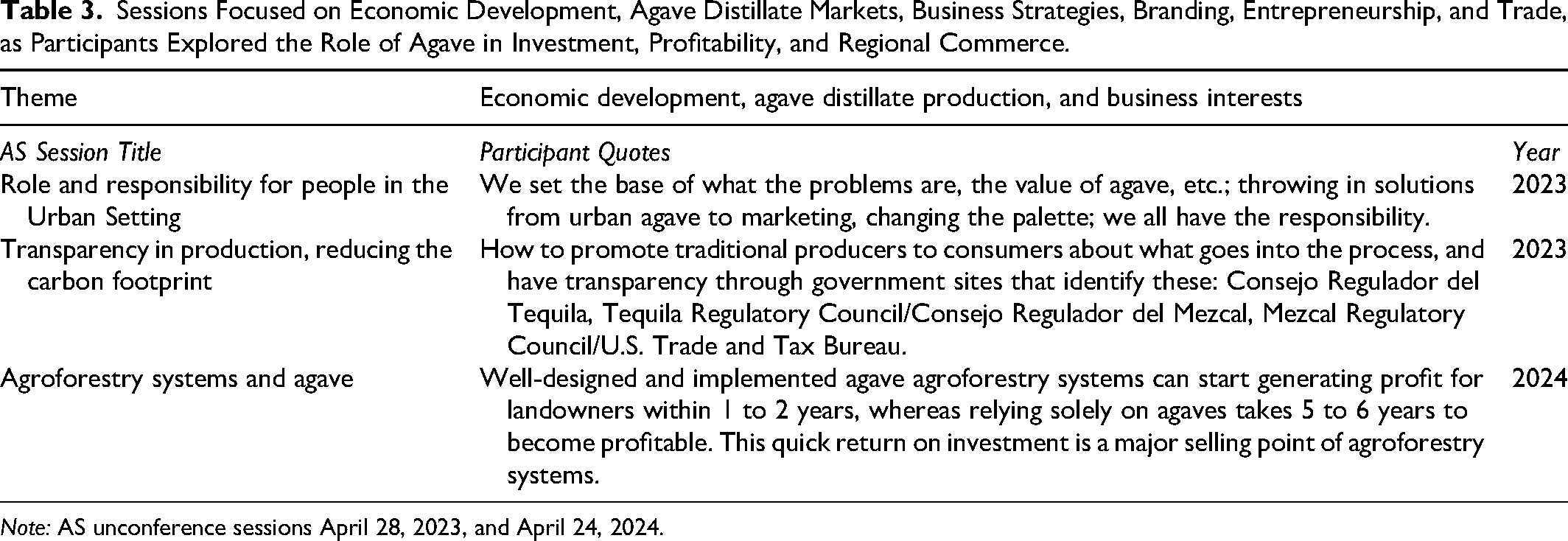
Note: AS unconference sessions April 28, 2023, and April 24, 2024.
Sessions Explored Environmental Restoration, Biodiversity, and Climate Change, as Participants Discussed Agave in Relation to Ecosystems, Pollinators, Desertification, Conservation, and Multispecies Resilience.
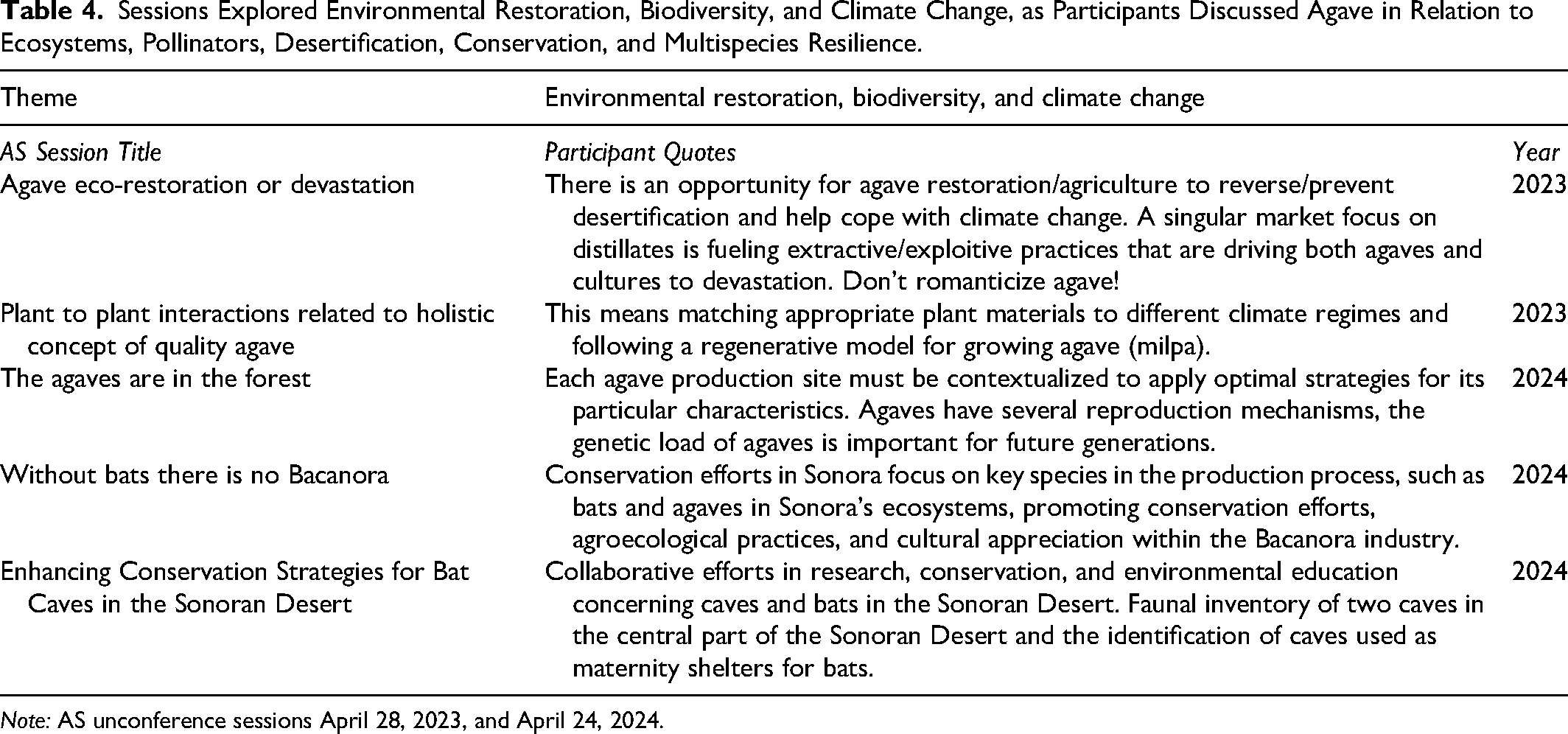
Note: AS unconference sessions April 28, 2023, and April 24, 2024.
Sessions Focused on Regulatory and Policy Frameworks, Including Certification, Standards, Denomination of Origin, NOM-168, and Cross-Border Compliance, as Participants Explored Agave's Role in Legal Definitions, Market Access, and Governance Structures
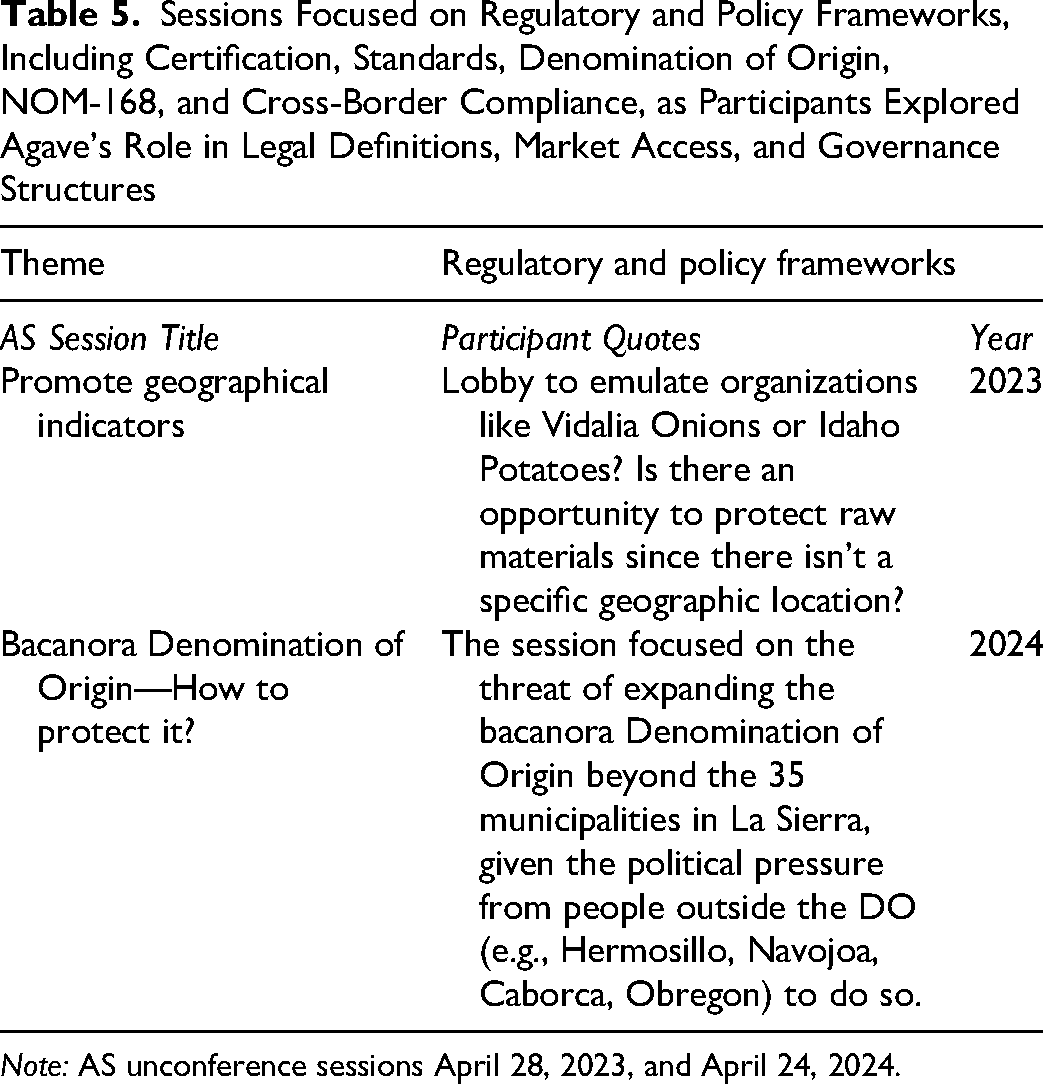
Note: AS unconference sessions April 28, 2023, and April 24, 2024.
Footnotes
Acknowledgment
Mike Hurley from Borderland Spirits provided expert and invaluable advice while navigating and traveling with me in the eastern Sonora, Mexico, highlands in the week before the 2024 Agave Summit.
Ethical Considerations
Data collection employed a procedure approved by the University of Queensland Human Research Ethics Committee in plan ID number 2022/HE000383, approved on August 29, 2022. The procedure explained in writing the research purpose, activities, and consequences of participation and obtained written informed consent for observations from event organizers of the Agave Summit and Agave Heritage Festival. Event organizers were interviewed and provided additional written consent. Anonymization used coded pseudonyms of all participants.
Consent to Participate
The Agave Summit and Agave Heritage Festival organizers gave written consent for the research activities: attending event organization meetings, reviewing event notes and transcripts, and participating as an assistant for the events. In addition, the organizer of each agave event gave written consent for the interviews.
Consent for Publication
The written informed consent procedure included consent for publication. This consent included providing individuals who signed a written consent form with manuscript drafts to evaluate their continued participation and address any concerns about identifiability. This communication occurred in the second week of January 2025. Mike Hurley gave me written permission to acknowledge him in the article.
Funding
The author disclosed receipt of the following financial support for the research, authorship, and/or publication of this article: This work was supported by the Australian Research Council Industrial Transformation Training Centre for Uniquely Australian Foods (IC180100045) and funded by the Australian Government (CRICOS code 00025B).
Declaration of Conflicting Interests
The author declared no potential conflicts of interest with respect to the research, authorship, and/or publication of this article.
Data Availability
It was not possible to share this data because, according to the ethics procedure above, personal or identifiable information from research activities will not be shared under any circumstances. While identifiability was mitigated by providing event organizers and interviewees with manuscript drafts, releasing interview transcriptions, unedited 2023 and 2024 Agave Summit session notes for a small-sized meeting would de-anonymize participants.
Artificial Intelligence (AI)-Assisted Technology
Sentences in the data analysis were selected based on keywords and assigned to a theme using Python (this process did not use AI) (Python Software 2020). However, sentences without a classification from the keywords were analyzed to infer classification using a large language model zero-shot classification pipeline (Hugging Face Transformers with facebook/bart-large-mnli model filtered by confidence score ≥ 0.70) (AI 2020; Lewis et al. 2020;  ). The purpose of this was to classify additional sentences where, despite no keyword matches, the content matched theme descriptions. This combined methodology is intended to provide an alternative to coding using NVivo or manual methods.
English Language Editing Services
Not applicable.