




Abstract
Selling pulque requires extensive knowledge of its handling, mainly learned through oral communication. Its uses and related customs have been little described outside production sites in Tlaxcala. Therefore, this work has documented the traditional knowledge of pulque handling at the points of sale (POS) in Tlaxcala, one of the main producers of this beverage in Mexico. Economic data on the sale of pulque and the descriptions of sellers and customers are also provided. Semistructured interviews were conducted in 131 POS in 93% of Tlaxcala's municipalities using snowball sampling. The results describe management activities in the POS of pulque, aguamiel, and cured pulque, such as cold or room temperature storage. Pulque is sold within most of Tlaxcala, but its production and sale are greatest in the northern part. Pulque sales constitute a job opportunity for adults, mostly men who sell in pulquerías (63%). Pulque is sold by producers (64% > 60 years old) in their homes (50%) and pulquerías (22%). Half the pulque is resold mainly in pulquerías (57%) and homes (12%). A total of 84% of the establishments are less than 20 years old, and service is provided every day, with working hours exceeding 7 h. The price of pulque varies widely, since it can be sold from $0.26 to $5.16 per liter. This variability is possibly associated with the type of POS. Customers prefer sweet pulque, and more than half the consumers are male (55%). This work is a guideline for future state censuses of pulque production and sale.
Keywords
Introduction
Fermented or distilled beverages are among the world's oldest (e.g., wine, 7,000 years) and have emerged from the management and domestication of plants, animals, and microorganisms. They have resulted from trial and error over hundreds of human generations, building local traditional knowledge and biodiversity and food diversity, both being reservoirs of genetic and biocultural resources. These beverages have social, religious and economic importance for ethnic peoples and mestizos, being part of their cultural heritage and identity (Lappe-Oliveras et al. 2025; Ojeda-Linares et al. 2021).
The production of alcoholic or nonalcoholic fermented beverages has increased by 10% over the past five years, with an additional 5% increase by 2029. There has been a recent growing interest by people in developed countries for healthy, nutritious food to reduce gastrointestinal disorders (DBMR 2025). Fermented beverages contribute live microorganisms (probiotics) that increase the gut microbiota and provide vitamins, amino acids, and minerals (Lappe-Oliveras et al. 2025; Ojeda-Linares et al. 2021). In Mexico, pulque is one of the ancient traditional beverages that is still extensively consumed.
Pulque is an alcoholic beverage produced by fermenting the sap of some species of agaves. Its consumption and ceremonial and medicinal use have been acknowledged since pre-Hispanic times and with records in eight codices (Gonςalves de Lima 1956). During the Spanish colonical era Mexico, pulque was not prohibited for competing with wine, although its production and consumption was controlled by the Spanish and Creoles (100,000 barrels per year; 200 L per barrel) (Trejo et al. 2020; Valdivieso-Solís et al. 2021). In the seventeenth century, pulque went from being sold in street stalls to being sold and consumed in fixed establishments called pulquerías, with a tax established for pulque sales (Álvarez-Ríos et al. 2022). Pulque-producing haciendas were expanding steadily. Later, the independence war affected pulque trading, but did not stop it (300,000 barrels per year) (Trejo et al. 2020; Valdivieso-Solís et al. 2021).
With the introduction of railroad in Mexico during the nineteenth century, pulque distribution expanded in central Mexico, and the “Apan Plains” region (Hidalgo, Puebla, Tlaxcala, and Estado de México) became one of the main pulque production zones supplying Mexico City. In the late nineteenth century, 365,000 L of pulque were sent daily to Mexico City; in the early twentieth century, Mexico City already had 1691 pulque establishments (Álvarez-Ríos et al. 2022; Valdivieso-Solís et al. 2021). However, most pulque haciendas closed during the Mexican revolution (1910–1917); afterward, the agrarian reform distributed former pulque-producing land to peasant families. Furthermore, the entrance of pulque to Mexico City was prohibited in 1916. At that time, a campaign to discredit pulque was launched, calling it an antihygienic, old-fashioned beverage for the poor that was contrary to moral and good manners. Agave crops were gradually replaced by barley to produce beer. Increasingly stricter administrative and tax regulations were issued regarding pulque establishments, and licenses for pulque establishments in Mexico City were prohibited in 1954 (Álvarez-Ríos et al. 2022; Valadez-Montes 2014). Pulque production, expenditure, and consumption abruptly declined, so that by 1950, pulque production dropped to only 6.8% of the volume in 1900.
The dismantling of pulque haciendas, competition with beer, the restraints imposed by taxes to pulque, the discredit campaign, and the plummeting of the social, moral, and cultural values of pulque led to its displacement as a profitable activity (Valadez-Montes 2014). In the twentieth and twenty-first centuries, pulque production has reached production peaks reaching 500 million L., and pulque production was approximately 171 million L. by 2019 (approximately 70% in the state of Hidalgo) (Álvarez-Ríos et al. 2022; Valdivieso-Solís et al. 2021). In 2022, around 186 million liters of pulque (in an area slightly over 10,000 hectares) were produced, 107 million liters in the state of Hidalgo, followed by the State of Mexico, Puebla, and Tlaxcala (Lappe-Oliveras et al. 2025; Viniegra-González et al. 2023).
At the beginning of the twenty-first century, interest in this spirit revived through its revaluation, production, promotion, organization, new scientific research, government investment, art, product diversification, and marketing alternatives (Rojas-Rojas et al. 2021; Valdivieso-Solís et al. 2021; Viniegra-González et al. 2023). Although its outlook is tough, given the competition against several other alcoholic beverages, new alternatives have been proposed for agroforestry, biotechnological, and industrial uses of pulque and aguamiel (Valdivieso-Solís et al. 2021; Viniegra-González et al. 2023). The aim is to promote the production, use, and marketing of pulque distillate, aguamiel syrups, fibers, canned pulque, inulin-type fructans, bioethanol, and bioplastics of pulque agave to allow conserving and combining traditional and innovative knowledge to benefit marginalized peasant communities of Mexico (Rojas-Rojas et al. 2021; Viniegra-González et al. 2023). Interest has also arisen in documenting and preserving the traditional knowledge around the pulque and maguey culture. As mentioned by Valadez-Montes (2014), “Science is currently the main advocate of aguamiel and pulque.”
The pulque seller must have extensive knowledge of the handling of pulque and aguamiel as well as knowledge about the raw material required for the production and maintenance of cured pulque (a drink prepared from a pulque base mixed with some type of fruit pulp or seed concentrate, among other things) and the market dynamics. This knowledge is transmitted through intergenerational oral communication, and it is sometimes recorded. Therefore, this work has documented the traditional knowledge of the handling of pulque at the points of sale (POS) in Tlaxcala, as it is the second-largest producer of this iconic drink in Mexico. Moreover, this article reports some economic data on the costs, sale prices, volume, and profits of pulque, aguamiel, and cured pulque sold at these establishments.
Materials and Methods
Study Site
Tlaxcala is located in the center-east of Mexico, on the central plateau and in the Trans-Mexican Volcanic Belt, at 19°43′44″ N, 19°06′18″ S, 97°37′32″ E, and 98°42′30″ W, with an altitude distribution of 2,189–4,405 m above sea level. The state, which is 3,996.6 km2 in area, represents 0.2% of the national territory. Hence, it is considered the smallest state in the country. The total registered population was 1,342,977 people in 2022 (48.4% male and 51.6% female), representing 1.1% of the national population (Instituto Nacional de Estadística y Geografía [INEGI] 2020).
The climate is temperate subhumid with summer rainfall, with an average annual temperature of 13.8°C–15.9°C and annual precipitation range of 506.8–885.6 mm (INEGI 2021). Phaeozem, a characteristic of subhumid and semidry climates, is the dominant soil type (covering 30.01% of the area), and 75.21% of the land use is agricultural (INEGI 2021).
Sampling
As a census of pulque POS in Tlaxcala is lacking, this work is a first approximation, with two interviews conducted in each municipality. Snowball sampling was used for this approach; first, a random POS was located, then they were asked if they know of another establishment (Sandoval 2002).
Semistructured interviews (Bernard 2000) were conducted with 66 questions. In total, 44% of the questions were closed-ended with yes/no answers, and the remaining were open-ended (Supplemental Material 1). Extra information that the interviewees or collaborators wanted to share was also obtained. The interview topics comprised general demographic information; POS-specific information; economic data; information regarding the handling of pulque, cured pulque, and aguamiel; and consumer information. All participants consented to the interview, in accordance with the rules of the Latin American Code of Ethnobiology (Cano-Contreras et al. 2016).
Analysis
Based on the interviewees’ responses, a database (https://doi.org/10.5281/zenodo.14611384) was created, and an analysis was conducted. Totals of the applicable categories were calculated. For instance, regarding the gender of the sellers, the number of men and women was determined.
For the purchase and sale prices, a Kruskal-Wallis test was performed to check for significant differences between categories. The significance level was 0.05. All analyses and graphs were performed using R (v. 4.3.0) software (R Core Team 2023).
Results
Sample
A total of 131 interviews were conducted in 56 municipalities (93%) of Tlaxcala in 2022 and 2023. Four municipalities had no POS, and only one interview was conducted in 10 municipalities because of their lack of POS. Two interviews were conducted in 50% of the municipalities, and more than two were conducted in the rest (27%; Figure 1).
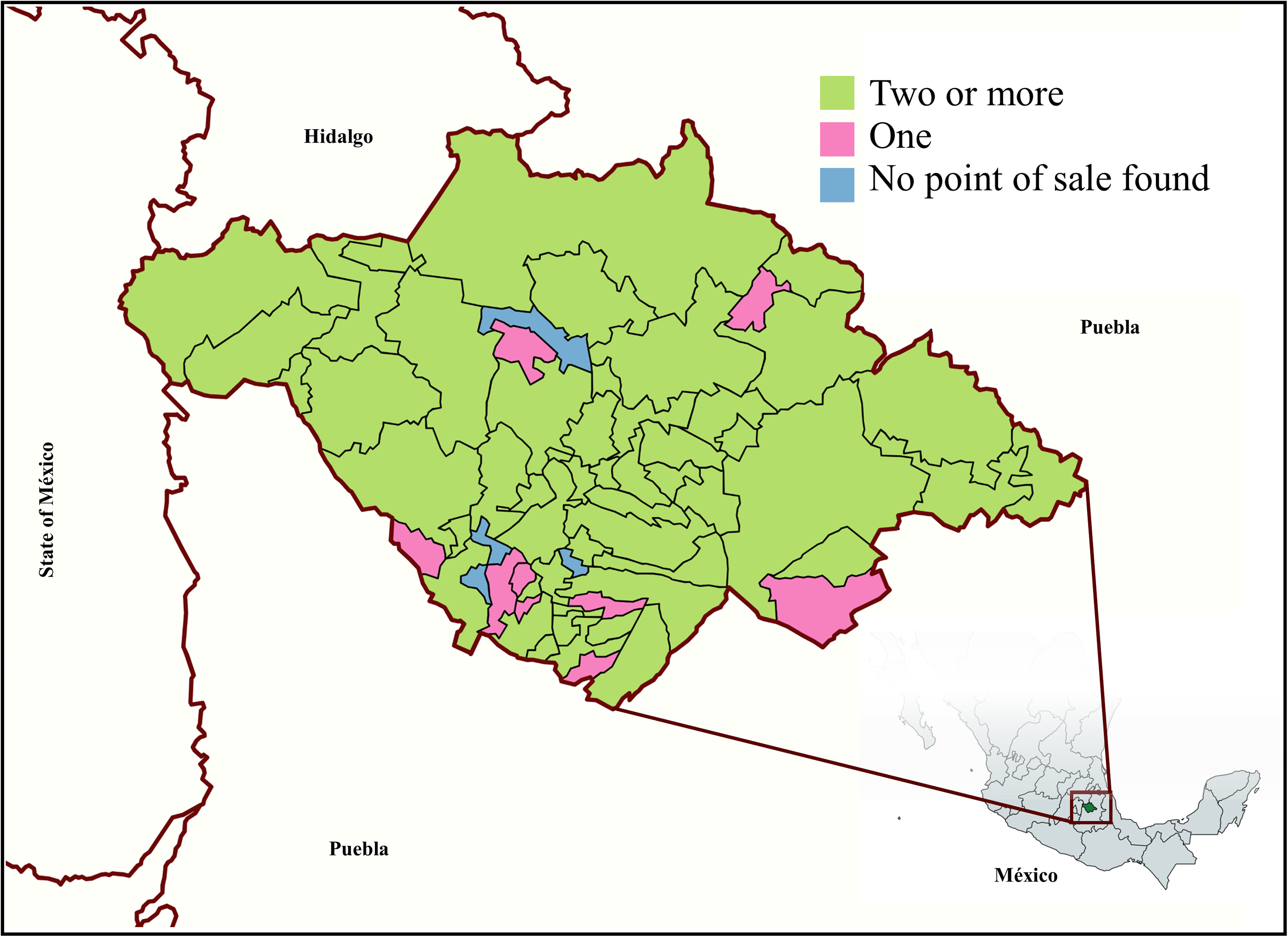
Number of Interviews Conducted at Points of Sale in the Municipalities of Tlaxcala.
A total of 86% of the interviews were conducted in different locations in each municipality. On some occasions, more than one interview was conducted in localities with several POS, such as in the municipal capitals of Tlaxcala, Nanacamilpa, and Atltzayanca.
Interviewees
Of the pulque vendors interviewed, 37% were women. The age distribution of the interviewees was as follows: 33% were 45–59 years old (mature adults), 30% were over 60 (older adults), 28% were 25–44 (young adults), and 8% were 15–24 (young people). The age classification was based on the guidelines of the National Population Council (CONAPO 2003) (Figure 2).
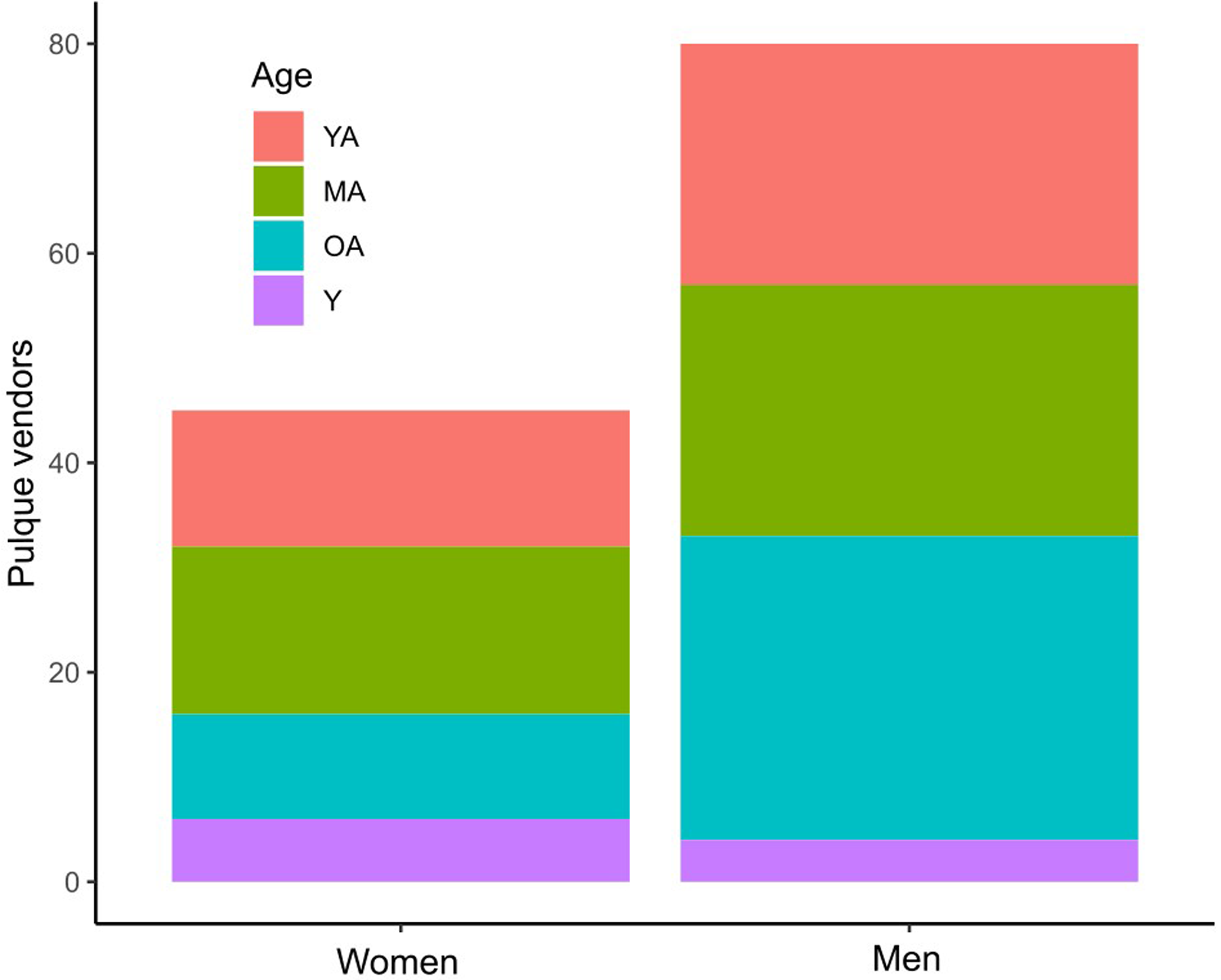
Number of Interviewees (Men and Women) Engaged in the Sale of Pulque, by Age Category. Mature Adults (MA), Older Adults (OA), Young Adults (YA), and Young People (Y).
In this article, 18 types of POS are reported (Supplemental Material 2). Young people generally worked in pulquerías, houses, fairs, and bars. Among the young adults (25–44 years old), 46% worked in pulquerías, 13% in homes, and 10% each in tinacales and snack centers, with the remaining young adults selling pulque in markets, restaurants, and street stalls. Of the mature adults (45–59 years old), 40% worked in pulquerías, 29% in houses, 9% in street stalls, and the rest, in nine different types of POS. Older adults (60 years and older) work mainly in homes (43%), with 26% working in pulquerías, 8% in tinacales, and the rest, in markets, snack centers, and warehouses.
In total, 63% of the interviewees were men, who worked in 15 different types of POS: 40% in pulquerías, 27% in houses, 6% in tinacales, 6% in street stalls, and the rest, in others. The women sold pulque in 10 different POS types: 40% in pulquerías, 33% in homes, 7% in snack centers, and the rest, in others.
Most of the interviewees were originally from Tlaxcala (92%), with 63% born in the same municipality in which the POS was located. Only 8% were from other states: more than half from Mexico City and the rest from the State of Mexico, Puebla, and Veracruz. Additionally, 31% of the interviewees were born in a municipality other than the one in which they worked. They were from 18 different municipalities in Tlaxcala, but mainly from Tlaxcala, Santa Ana Chiautempan, and Nanacamilpa.
The interviewees were from 101 localities (colonies or towns), with 77% of these localities being different. Most of those from repeated localities were from cities such as the center of Tlaxcala, Santa Ana Chiautempan, Huamantla, and Zacatelco. Some repeated localities, although a low percentage (3%), are sites of high pulque production, such as Domingo Arenas (Nanacamilpa), Villa Alta (Atlangatepec), downtown Atltzayanca, and San Isidro Buensuceso (San Pablo del Monte).
Of the producers, 45% were over 60 years old, 38% were 45–59, 12% were 25–44, and 5% were 15–24. Moreover, 36% of the interviewees were resellers, working across 14 POS types. Among them, 57% worked in pulquerías, 12% in homes, 6% in street stalls, and the rest, in restaurants, bars, snack centers, etc. Regarding the age distribution, 43% were 25–44 years old, 31% were 45–59, 15% were 60 or older, and 10% were 15–24.
Most interviewees (78%) were POS owners. Moreover, 65% of the interviewees had a family member who was a tlachiquero or produced maguey. Most of the interviewees (36%) called themselves entrepreneurs, and 14% called themselves employees. Additionally, 13% each of peasants and homemakers were tlachiqueros. Only 4% were producers of maguey and pulque. The remaining interviewees were jicarero, todólogo, carpenters, etc.
Finally, 49% of the interviewees produced their pulque, and the rest bought and resold it. Producers sold pulque in 11 types of POS; 50% sold it at home, 22% in pulquerías, 11% in tinacales, and the rest, in markets, fairs, street stalls, etc.
Points of Sale
All tinacales were named, as were 96% of the pulquerías and 31% of the POS based at home. The names of 36% of the pulquerías referred to pulque or pulquerías (“Pulques el Tlacuache,” “Octli,” and “Lady Pulques,” for example) or to famous pulquerías in Mexico City such as “La mal querida” and “La oficina.” Unnamed POS represented 27% of the total. Of these, 75% were home-based, while the rest were in markets, shops, and street stalls. Of the named POS, 17% had names not directly associated with pulque, such as “El Colibrí” and “La Nopalmera,” 8% had names associated with the locality or referring to a particular place, such as “Hacienda Xochuca” and “Las Vías,” and 7% had names related to the name or nickname of the owner or another person as a tribute (e.g., “El Tío Tom,” “La Chiva,” and “Los Pérez”). Only 5% of the POS had names associated with the plant, that is, the maguey or the Agave (“Pulquería el Maguey,” “Herencia Magueyal”).
All POS outlets sold natural pulque and had been in operation for 1–100 years. Most POS (84%) were relatively new (less than 20 years old). Only 13% were 21–50 years old and 4% were 60–100 years old. Additionally, 40% of the POS terminals were pulquerías, 31% were home-based, 5% were tinacales, and 5% were street stalls (Figure 3). The remaining POS (14 types) were called restaurants, snack centers, fairs, markets, etc. (Figure 3).
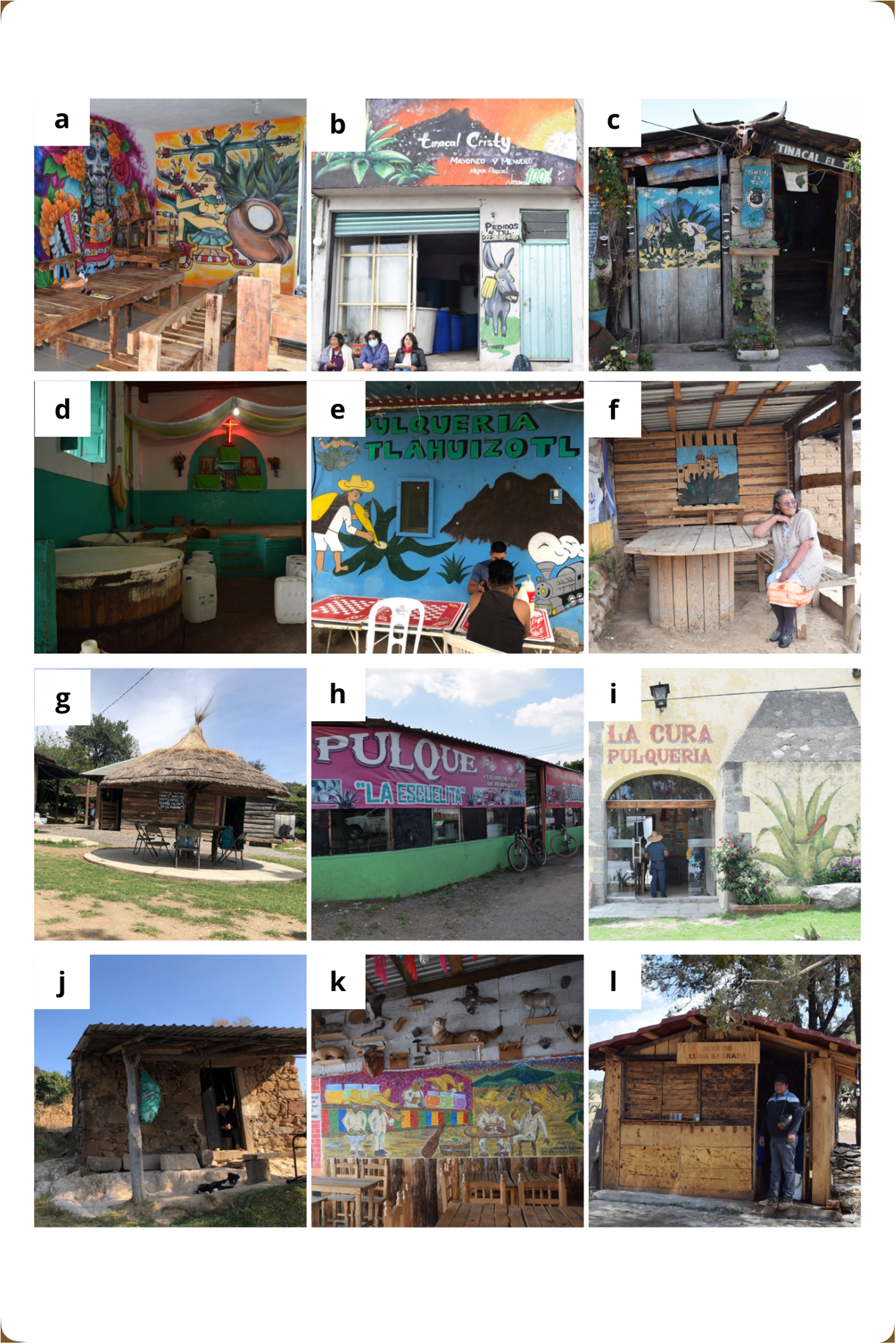
Several Points of Sale in Which Interviews Were Conducted. (a) “Los pulcazos,” Xaloztoc; (b) “Tinacal Cristy,” San Isidro Buen Suceso; (c) “Tinacal El Tío,” Contla de Juan Cuamatzi; (d) “Hacienda Xochuca,” Tlaxco; (e) “Pulquería Tlahuizotl,” Cuaxomulco; (f) Nameless, Atlangatepec; (g) Nameless, Ixtacuixtla, Mariano Matamoros; (h) “La Escuelita,” Zacatelco; (i) “Pulquería La Cura,” Hacienda Soltepec, Huamantla; (j) Nameless, Panotla; (k) “El Mareo,” Nanacamilpa, Mariano Arista; (l) “La Joya de la Luna Sagrada,” Las Mesas, Tlaxco.
A total of 98% of POS had take-away service and 81% offered on-site consumption. Most POS (87%) did not have home delivery service. Of those that offered this service, 67% did not charge for it, while the rest charged a surcharge of 2%–10%.
In 56% of the POS, fresh or cured pulque was sold in recycled PET bottles. The majority (71%) did not charge for the PET bottles they recycled themselves or bought at a rate of $0.052–$0.10 a bottle. The rest sold the bottle for $0.052–$0.16.
Additionally, 42% of POS served pulque in plastic or Styrofoam cups; 87% of these establishments did not charge for the cups, while the rest charged $0.10–$0.26. Three POS sold fresh or cured pulque in plastic bags at no additional charge. In only 2% of the POS did people have to bring their container for pulque.
A total of 45% of POS sold botanas (popcorn, fried foods, and seeds). Moreover, 72% of POS did not sell food; the rest did because they were a refreshment stand, restaurant, or a place that sold snacks. Only 30% of POS outlets sold beer and 28% sold alcoholic beverages other than pulque or beer (distilled from agave or other alcoholic beverages). A total of 83% of POS sold more pulque than all the other alcoholic beverages mentioned above.
Most POS (76%) were open or sold pulque every day, 18% sold it 3–6 days a week, 7% sold it on weekends, and 4% sold it only one day a week. POS terminals have diverse schedules, and 33% said they did not have a schedule. Of the POS that followed a schedule, 67% opened in the mornings. Specifically, 30% opened at 11 a.m., 37% opened between 9 a.m. and 10 a.m., and 33% opened between 2 p.m. and 3 p.m. Most POS (68%) closed between 6 p.m. and 8 p.m.; only one POS closed at 3 p.m., and another closed at 1 a.m. POS with a schedule worked 6–12 h: 75% worked 7–10 h, 22% worked 11–12 h, and 3% worked 6 h a day.
In 37% of POS, pulque is sold only to earn a profit. Of this percentage, 5% is sold as a gourmet product. In the remaining POS, pulque is sold as a tradition (49% producers, 9% relatives of producers), or aiming to promote pulque consumption and culture around this fermented beverage (5%).
Economic Data and Management of Pulque
Pulque is sold in 56 of the 60 municipalities of Tlaxcala and produced in 29. However, 62% (19,935 L per week) of the pulque sold in the POS comes from only five municipalities. The first is Nanacamilpa (19%), followed by Tlaxco (16%), Atltzayanca (10%), Atlangatepec (10%), and finally, Ixtacuixtla (7%) (Figure 4). The municipalities with the largest distribution area in Tlaxcala are Nanacamilpa (it distributes to 19 municipalities; 35%), Tlaxco (12 municipalities; 22%), Atlangatepec (11 municipalities; 20%), Ixtacuixtla (seven municipalities; 13%), and Atltzayanca (six municipalities; 11%).
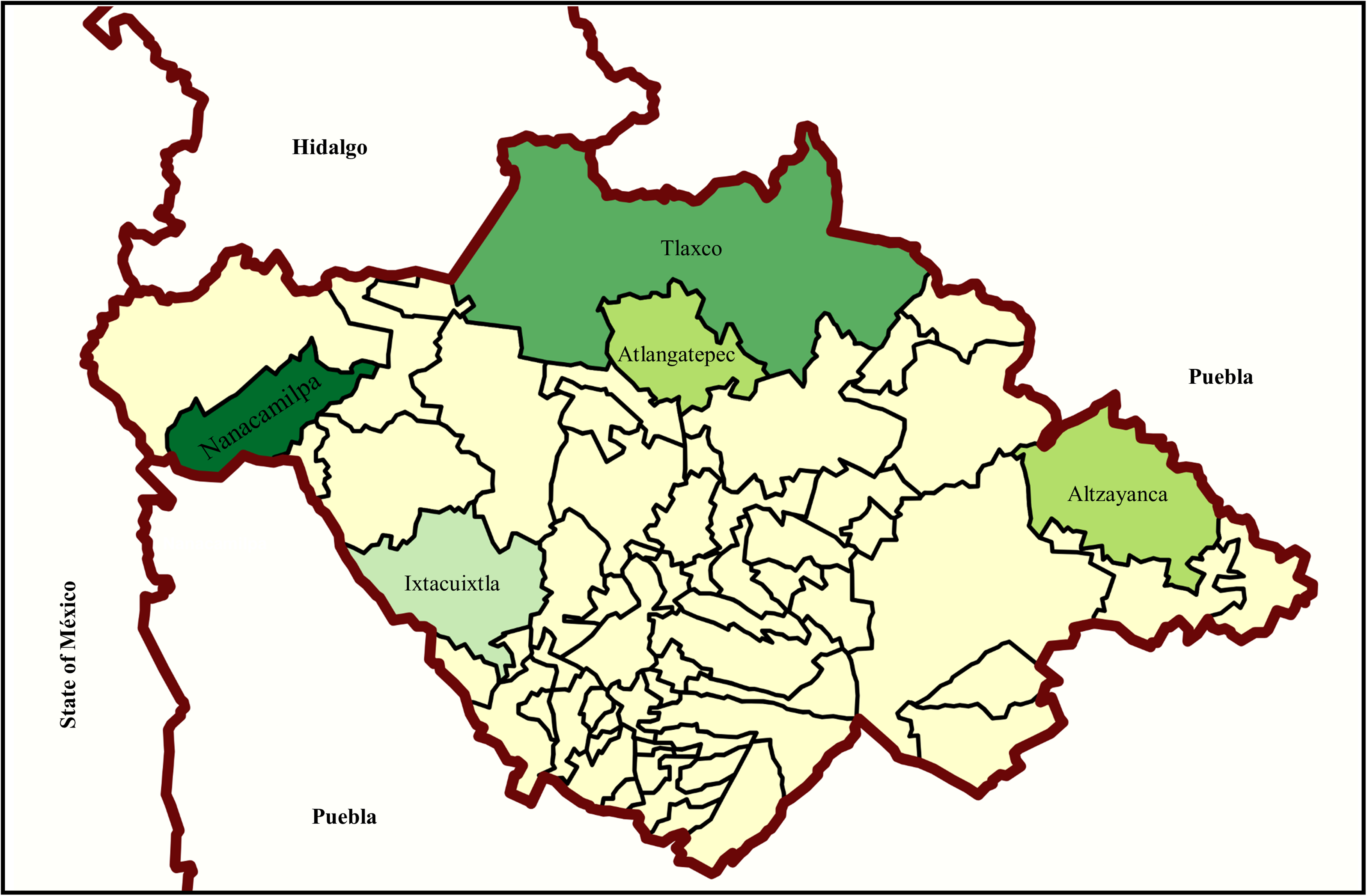
Municipalities of Tlaxcala that Supply Pulque to the Points of Sale. The Sales Volume of the Municipalities with the Highest Pulque Sales in Tlaxcala Is Represented by the Intensity of the Green in the Legend.
POS sell 3–8,000 L of pulque per week. Specifically, 49% outlets sell 3–50 L per week, 35% sell 60–200 L, 14% sell 250–1,000 L, and 2% sell 3,500–8,000 L per week (Figure 5a). The POS group we interviewed sells 29,734 L of natural pulque per week. The tinacales sell 45%, pulquerías sell 39%, home-based POS sell 9%, and the other POS types sell 7%, with bars and restaurants having the lowest sales. The weekly sale of natural pulque in tinacales ranges from 40 L to 8,000 L; in pulquerías, from 20 L to 5,000 L, and in houses, from 3 L to 300 L.
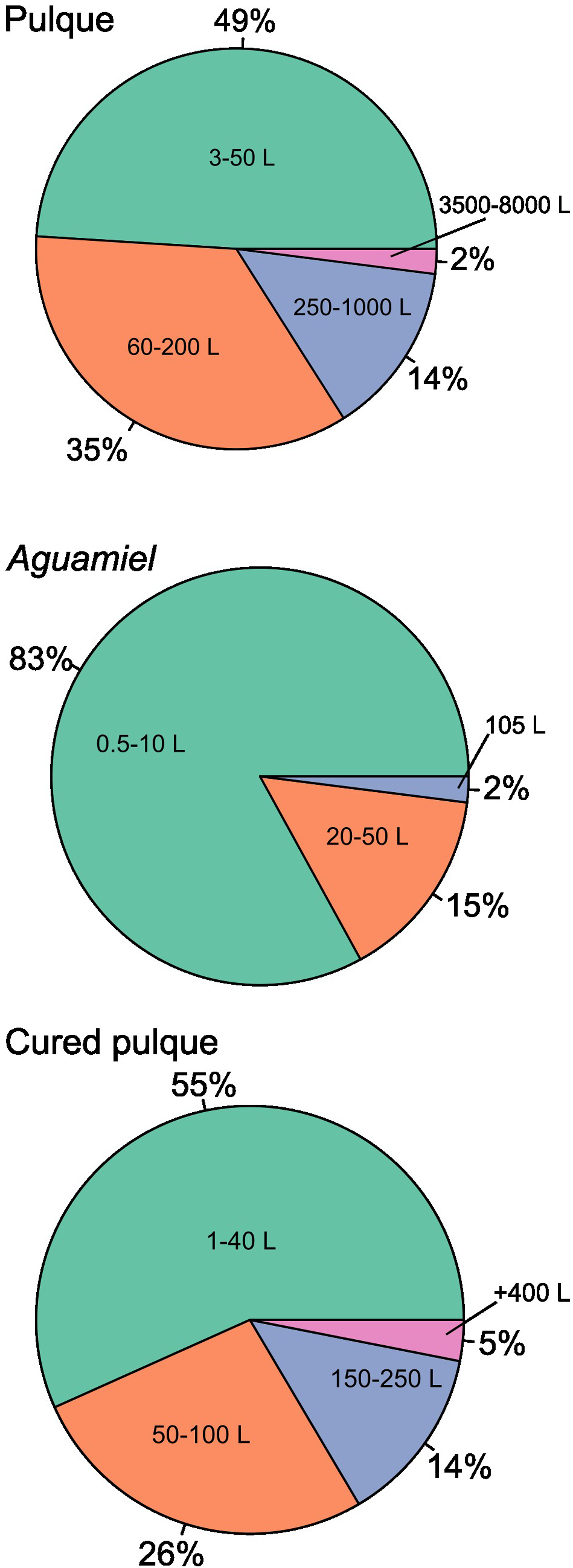
Percentage of POS That Sell Different Volumes of Pulque, Aguamiel, and Cured Pulque per Week. Only a Small Percentage of POS Sell Large Quantities of Each Beverage.
The interviewees who bought pulque (66% of them) revealed how much they paid per liter of natural pulque. The price is $0.36–$1.56 per liter (
The sale price of natural pulque (PN) varies widely by type of POS (Figure 6). The interviewees provided information on the price of a liter of pulque natura, which ranges from $0.26 to $5.20. The average price in all POS was (
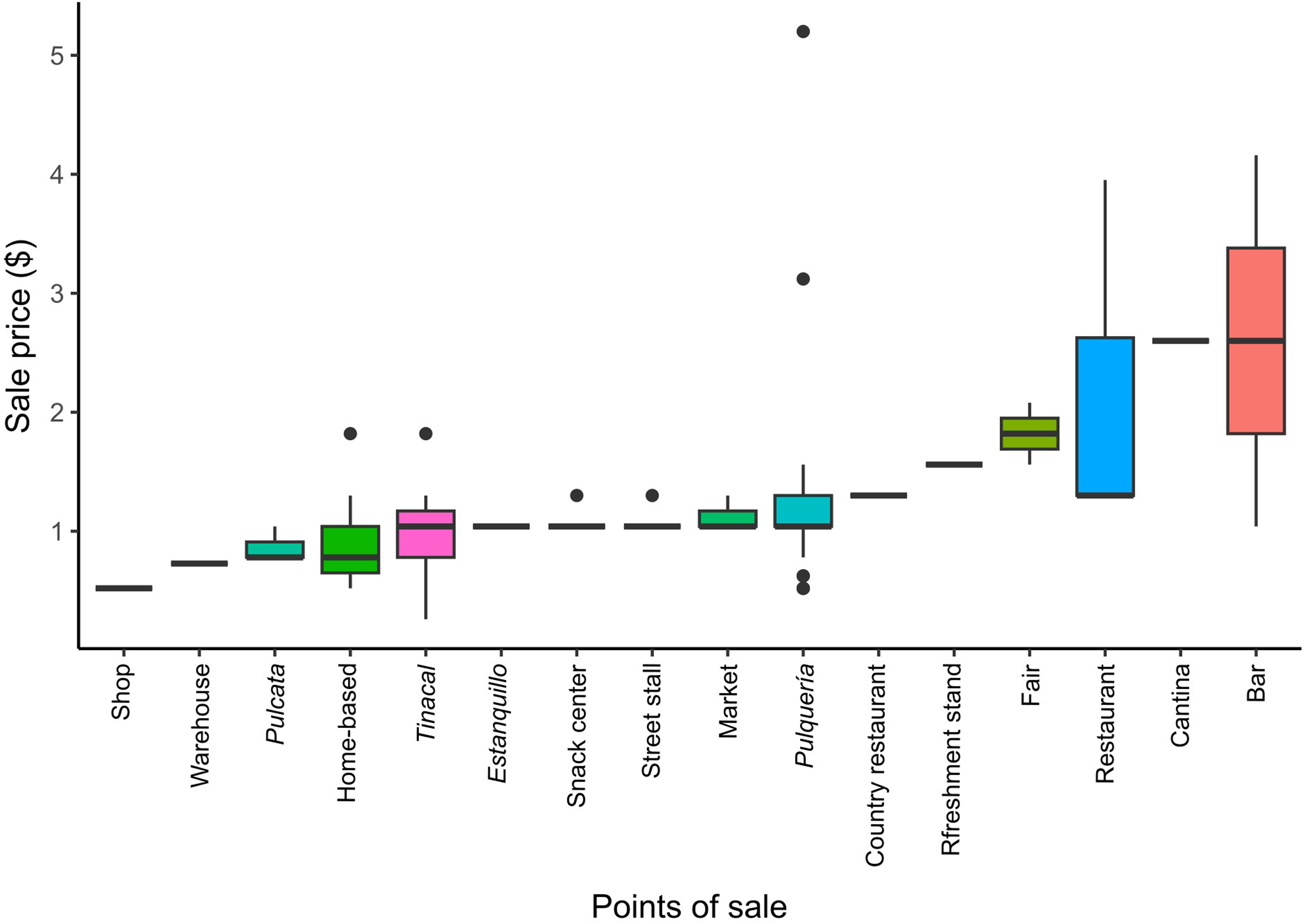
Price of Natural Pulque/L, by POS Type.
The resale of pulque generates profits of $0.10–$3.17 per liter; 78% of the resellers earned $0.10–$0.52 per liter of natural pulque, 15% earned $0.62–$1.04, and 7% earned $1.56–$3.17. Pulquerías, pulcatas, and home-based POS earn a profit of about $0.52, $0.42 pesos, and $0.31, respectively, per liter.
Men sell more pulque than women. Men buy pulque at a higher rate, with a greater price variation (
A total of 49% of POS restock their pulque every day and 48% restock it 1–4 times a week. In 57% of the POS terminals, the pulque that the distributor brings to the POS is resold; the remaining resellers buy pulque from a POS. People who have pulque delivered buy it at a higher price (
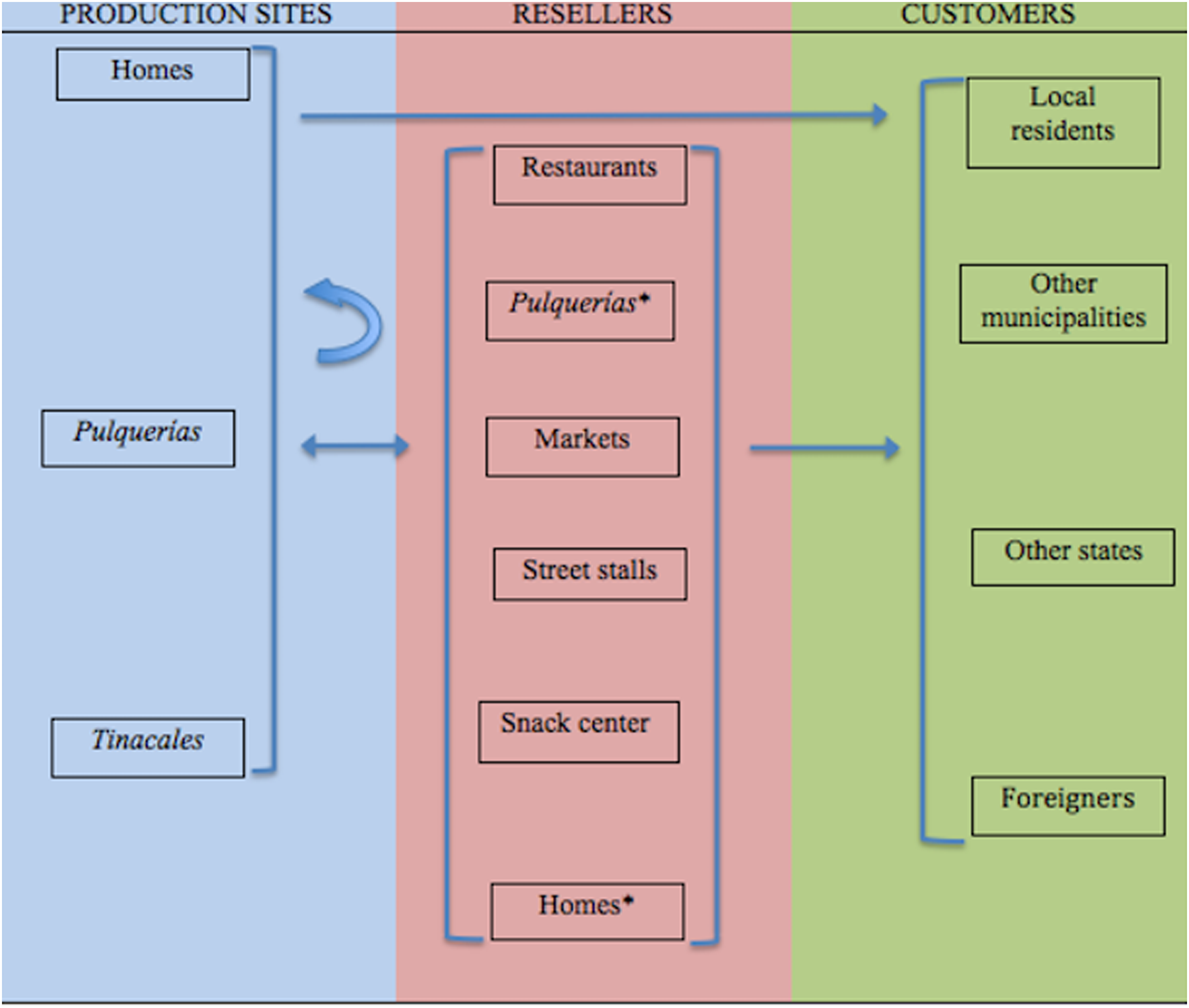
Pulque Route from the Production Sites to the Customers. *Homes and Pulquerías can be at Two Points, Either as Production Sites or as Resellers.
Just over half the POS sold sweet pulque (51%), while 22% sold cured pulque, namely, a combination of strong (acidic flavor) and sweet pulque, 10% sold only strong pulque, and 9% indicated that they did not distinguish between the types of pulque they sold. Only 8% of POS sell more than one type of pulque.
The pulque is unrefrigerated in most POS (77%), and in 80% of POS, aguamiel is added to natural pulque. Pulque can be stored for sale in tubs with ice during the day. Some added aguamiel ice to pulque, while 23% refrigerated pulque. In a couple of POS, green tomato peel was observed in the vitrolero of natural pulque.
The purpose of handling the pulque is ensuring it does not “spoil” until the full quantity is sold or the reseller exchanges the “bad” pulque for the “good” pulque. The pulque's quality depends on the seller or the buyer's taste, so pulque can be sold as is, based on the seller's taste or the buyer's request.
Economic Data and Management of Aguamiel
A total of 38 maguey products were reported to be sold in the POS; the food dishes were grouped in a single category. Aguamiel is sold in 76% of the POS. The other best-selling products are: distillate of the plant (10%), pulque distillate (8%), and agave honey or aguamiel syrup (6%). Small quantities of maguey plants, cocktails with pulque, mixiote (2%), aguamiel popsicles, books on pulque and maguey, soaps, maguey mushroom, stalks, mezontete (shaved and dried maguey stem, canned and packaged in glass), maguey chlorophyll, etc., are also sold. In half the POS, aguamiel can be purchased based on availability; the remaining POS sell it by order.
In POS that sell aguamiel, 0.5–105 L of aguamiel is sold per week. A total of 83% of POS sell 0.5–10 L of aguamiel, 15% sell 20–50 L, and only one place sells 105 L of it. In total, 659 L of aguamiel were reportedly sold per week (Figure 5b).
Although aguamiel is sold in 10 types of POS, it is sold mainly in pulquerías (59%; 1–105 L per week), home-based POS (19%; 0.5–20 L per week), and tinacales (8%; 5–25 L per week).
In total, 39% of the interviewees provided information on the purchase price of aguamiel. The purchase price is $0.36–$1.30 per liter, with one-third of the POS paying $0.78. Additionally, 29% buy it for $0.36–$0.52, and 67% pay $0.62–$0.88. A snack center paid $0.88 for a liter of aguamiel, and the lowest purchase price was 8 pesos/L in a pulcata. In pulquerías, it was bought at an average of
All the interviewees mentioned the price at which they sold aguamiel. The POS sell a liter of aguamiel for $0.52–$2.60: 41% charge $1.04, 70% charge $0.52–$1.04, and 28% charge $1.14–$1.82. The average price of a liter of aguamiel is $1.07, s = 0.37 L. Pulquerías, tinacales, and home-based POS charge the lowest price ($0.52). A pulqueria charged the highest price ($2.60). The average cost of aguamiel was highest in pulquerías (
Economic Data and Management of Cured Pulques
A total of 64% of POS terminals sell cured pulques. They sell 1–600 L of cured pulques per week: 55% sell 1–40 L, 26% sell 50–100 L, 14% sell 150–250 L, only one POS sells 400 L, and another sells 600 L (Figure 5c). A total of 4,959 L of the best-selling cured pulque is sold each week in all POS.
Most of the flavors of the cured pulques sold in POS were seasonal fruits, such as pineapple, tangerine, and mango (27 best-selling flavors were reported). However, certain flavors that are not seasonal sell the most, such as mazapan (27%), the classic pine nut (23%), tomato (5%), walnut (4%), and mango (4%). The cost of the best-selling cured pulque can range from $0.68 to $6.24 (the average is $2.65, s = 0.92) (Table 1).
Price Range of the Best-Selling Cured Pulque Flavors and POS with the Lowest and Highest Prices.
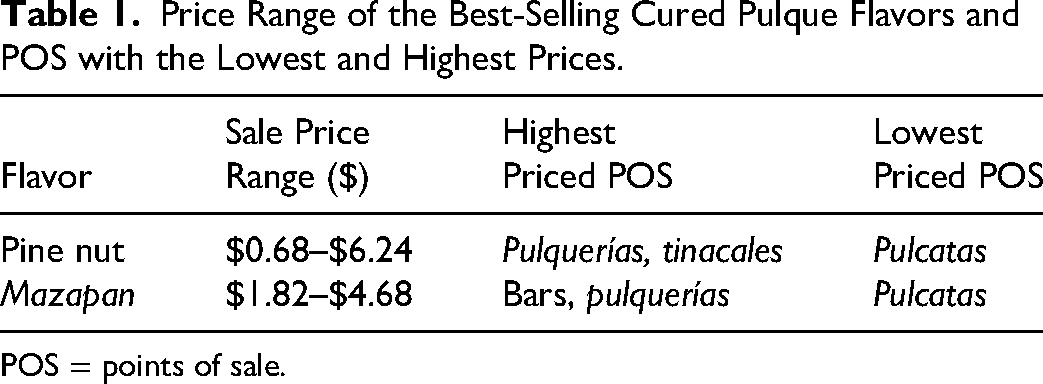
POS = points of sale.
In terms of popularity, 29 flavors were in second place, with strawberry being mentioned the most (9%), followed by mazapan, guava, and walnut (6% each) and pineapple and pine nut (5%). Most of these flavors were mentioned as best-selling flavors. Twenty-eight flavors were in third place, with marzipan being mentioned the most (11%), followed by guava, piña colada, and mango (6% each).
Of the cured pulques, 60% are prepared at the time of sale, with the rest prepared in the morning or days in advance and refrigerated (24%). Most of the sellers (96%) use a blender to prepare cured pulques. Only two POS used a blanket and a Nutribullet®.
The cured pulque can be stored for sale in tubs with ice throughout the day. Some POS prepare a fruit concentrate that they keep refrigerated, and the final drink is prepared with natural pulque at the time of sale. In other cases, cured pulque vitroleros are refrigerated until the time of sale.
Customers
In 43% of POS outlets, customers were not distinguished by age, while 26% sold more to adults, 21% sold more to young people, and 11% sold more to older adults. Moreover, 55% of POS terminals indicated their customers comprised mostly men, 43% had no such differentiation, and only 2% tended to sell more to women (Figure 8).
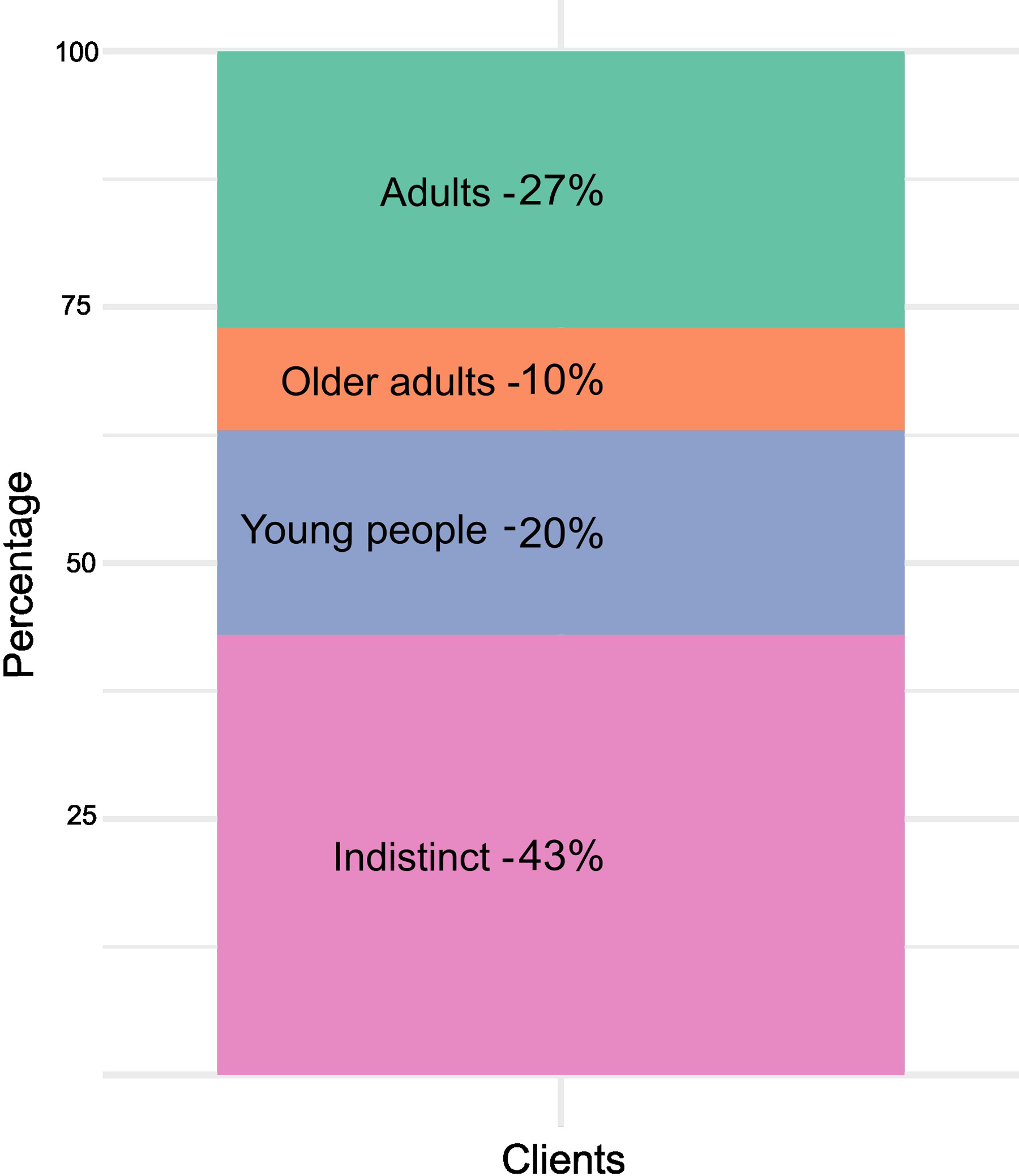
Percentage of Customers Differentiated by Age Group.
In total, 66% of POS served local residents, people from other states, and even foreigners, while 15% served only the locality (town, community) and 4% served only foreigners.
Among the POS, 57% are considered a “family business” (in other words, the entire family is involved and some family members consume pulque). In most POS, only that which is sold at the establishment can be consumed. However, the remaining 25% of POS allowed people to bring food to consume with their pulque.
Most of the interviewees (95%) considered it a profitable business, stating, “Even if it is a little, I make a profit,” “I sometimes break even,” and “If you win, it is mainly because of cured pulques.” The remaining interviewees, despite not considering it a profitable business, produce or sell pulque as a hobby, because they use it as a medicinal remedy, or because it is just another product they farm in their fields.
Discussion
Interviewees
POS are generally operated by men, but contrary to what Ordaz-Martínez reported with respect to the gender of the producers, women participate more in POS (37%) than in pulque production (5%), as reported by Linas-Montiel (2018) about the Otomí region of the State of Mexico and Álvarez-Duarte et al. (2018) in Puebla and Tlaxcala. The women reported that the men worked the fields, while they were in charge of selling pulque as part of their work as homemakers. Women have become involved in running the POS as part of their activities within the family, as a work option, or because their partners or parents need help or have died. This trend has also been reported in other areas of the Mexican highlands (Linas-Montiel 2018). In Tlaxcala, women were not observed to work in pulque establishments due to the temporary migration of their partners to work elsewhere, as in other parts of Mexico (Leyva-Trinidad et al. 2023; Viniegra-González et al. 2023) or in other activities (De León-Torres, Jasso-Martínez and Lamy 2016). Only a single female interviewee was dedicated to producing pulque at home because her husband works in the United States some months of the year. Muñoz-Camacho et al. (2023) state that men working in pulquero agave in San Pedro Tlalcualpán, a town located in the foothills of La Malinche volcano, Tlaxcala, are usually among the people migrating to other cities or countries.
Some other women commented that it was sometimes difficult to deal with drunk people, so they limited the amount of alcohol customers were permitted to consume in the POS to avoid such problems.
Management of POS is a means of employment for adults, and it is also an option for some young people. However, most young people are resellers, and adults generally own POS. As reported elswhere, the producers are mainly older adults, which does not ensure generational change at the base of the pulque production chain (Álvarez-Duarte et al. 2018). If young people focus only on resale, they may not learn everything regarding the maguey and pulque production chain.
There is a great sense of rootedness in working in the place of one's birth. People who work in municipalities other than their place of origin come mainly from large urban areas with larger populations, such as Mexico City, Tlaxcala, and Santa Ana Chiahutempan. However, some people also come from the municipality of Nanacamilpa. It is possible that people with knowledge about the production and handling of pulque are running POS in other parts of the state. This point also supports the fact that most of the interviewees are from families that are dedicated to the production of pulque, and knowledge about it could be used in POS.
Points of Sale
Ancient pulquerías referenced joy with names such as “La Risa” or “La Alegría,” love with names like “El templo del amor” and “Los amores de Cupido,” and proverbs or personal issues with names like “El sol sale para todos” and “La Judía” (Rivera 1926). The names of the POS in Tlaxcala refer both to the ancient names and allude to the current local context (for example, “Lady pulques,” “Liverpulques,” and “La Nopalmera”). The names are associated with the pulque culture and the owners of the POS. The limited reference to agave or maguey in the names is noteworthy, although maguey is represented variously in pulquerías through murals, live plants, mezontetes, maguey handicrafts, etc. (see Figure 3). This makes us question whether the owners of the POS have a close relationship with the maguey plants or if the plant is considered less important than pulque (although there is no pulque without maguey).
Regarding the age of the POS, 84% were less than 20 years old, concurring with what Álvarez-Ríos et al. (2022) mentioned about the resurgence of interest in drinking pulque in 2004. Few POS have survived more than 60 years, contemporaneous with the average age reported for some pulquerías in Mexico City. Therefore, many of these businesses could close if pulque consumption drops.
Although pulque is sold mainly in tinacales, pulquerías, and homes, it is sold in many other places as well. These places include restaurants, bars, cantinas, snack centers, markets, street stalls, fairs, shops, and other businesses, such as carpentry shops. No restriction seems to be placed on where pulque can be sold. However, the interviewees mentioned that if a business is established formally, the procedures are cumbersome, difficult, and expensive; they even need the neighbors of the establishment to agree to the establishment selling pulque.
Pulque may be purchased and consumed in most POS, and there is usually no home delivery service. The price of the pulque containers is usually included in the overall cost; the containers are rarely charged separately.
Most POS focus only on selling pulque and cured pulques and generally disregard the sale of snacks, food, and other alcoholic beverages. Hence, they are unlike the pulquerías in Mexico City, which diversify their sale of products and often offer snacks to consumers (Álvarez-Ríos et al. 2022).
In Tlaxcala, fresh pulque tends to be consumed more, as it can be found every day owing to the presence of producers throughout the state or in areas of high production, which supply areas that no longer produce pulque. Therefore, pulque is available throughout the day and week. This means a lot of time is invested in selling pulque. The tinacales are open all week and sell the most pulque. However, home-based POS are also open all week, but sell only 9% of the pulque. The sale of pulque depends on the type of POS. Pulquerías sell more pulque, and in Tlaxcala, these establishments are open for shorter hours (7–10 h) than pulquerías in Mexico City (12 h on average) (Álvarez-Ríos et al. 2022). Additionally, Álvarez-Ríos et al. (2022) indicated that pulquerias in Mexico City that sold more pulque had more pulque deliveries (3–4 times per week). This pattern was not observed in Tlaxcala, where fresh pulque is often made daily.
Economic Data and Management of Pulque
There is no official record of the production of natural pulque in the state of Tlaxcala. The Servicio de Información Agroalimentaria y Pesquera (SIAP) reports a weekly production of 898 L of pulque in 13 municipalities of Tlaxcala in 2022, while Ordaz-Martínez indicates a production of around one million liters of pulque in 70% of the municipalities of Tlaxcala. Rojas-Rojas et al. (2021), using SIAP data for 2005 to 2018, estimated the price of one liter of pulque at $0.23, five times lower than the price estimated in the present work, maybe because our sampling through Tlaxcala was broader. In the face of such discordant data, the need for a registry of producers and state and local production is clear.
Pulque was produced and sold the most in the north-east, north, north-west, and western regions of Tlaxcala. Calpulalpan, Nanacamilpa, and Tlaxco belong to the so-called Apan Plains, an old area of high pulque production in the nineteenth century. The production and sale of pulque is higher in these municipalities as well as Atlangatepec, Atltzayanca, and Ixtacuixtla, when compared with the rest of the state. The municipalities have a temperate subhumid climate with summer rainfall. Their average annual temperature is 12°C–14°C (14°C–16°C in Ixtacuixtla), and precipitation is 500–700 mm, although it reaches up to 1,000 mm in Calpulalpan, Nanacamilpa, Tlaxco, and Ixtacuixtla (INEGI 2021). Regarding altitude, these areas are 2,500–2,700 m above sea level, apart from Ixtacuixtla (2,233 m above sea level). Phaeozem and andosol are the predominant soil types. Atlangatepec also has durisol, while arenosol and durisol predominate in Atltzayanca. Durisol and leptosol are predominant in Ixtacuixtla (INEGI 2021). The geographical position and climatic conditions could be influential factors in the high production of these areas.
Pulque production in Tlaxcala is mostly small scale, but some producers generate large quantities of this drink and even meet the consumption needs of areas in Tlaxcala that no longer produce pulque; they also supply pulque to other cities, such as Mexico City, Puebla, and Veracruz (Álvarez-Duarte et al. 2018; Álvarez-Ríos et al. 2022).
Álvarez-Ríos et al. (2022) reported that, in 2015, pulquerías in Mexico City sold around 12,000 L of pulque per week, sourced from only two producers in Tlaxcala. Currently, most of the POS in Tlaxcala sell less pulque than the pulquerías in Mexico City did in 2015 (Álvarez-Ríos et al. 2022). In Tlaxcala, 84% of POS outlets sell less than 200 L per week, while 59% of pulquerías in Mexico City sold less than 1,000 L per week in 2014 (Álvarez-Ríos et al. 2022). Linas-Montiel (2018) reports that houses, shops, and pulquerías in the Otomí region of the state of Mexico produce less than 100 L of pulque per week, as is the case in several POS terminals in Tlaxcala, mainly the home-based POS. Clearly, a registry of producers, POS, and pulque sale in the state is needed to promote pulque growth by organizing the producers and undertaking government projects that promote its commercial activity. Viable technological alternatives are also needed for the promotion of the value chain. Viniegra-González et al. (2023) have proposed marketing alternatives other than metepantles. These authors the diversification of pulque and aguamiel products in metepantles to promote the development of marginalized communities. In the short term, goals can be set on the production and marketing of distilled spirits and concentrated syrups; mid-term, on the use of pulquero agave leaves as fodder and in the textile industry; and long-term, on its use in the bioplastics industry (Viniegra-González et al. 2023).
Pulque prices increased by about $0.26 per liter in a year and a half. The interviewees commented that during the pandemic and early 2023, people sought pulque as a remedy for respiratory and gastric diseases. Moreover, pulque sales increased in this period, when beer was unavailable during the pandemic. When activities subsequently normalized, pulque sales dropped. Álvarez-Ríos et al. (2022) reported that, in 2015, pulque was purchased in Mexico City's pulquerias for $0.31–$0.52 L; eight years later, the price increased between $0.05 and $1.04–$1.24. In 2015, pulquerías in Mexico City sold pulque at $0.21 on average, similar to the price in one-third of the POS in Tlaxcala. In 2018, the cost of pulque in the Otomí region in the state of Mexico varied from $0.26 to $1.30/L. In general, the cost of pulque over the past eight years has increased little in the production sites, but its cost variation in different POS can be wide.
The purchase price of pulque can vary widely. Bars and restaurants that sell less pulque but purchase it at the highest price—although they sell the least pulque—sell it at a higher price. Pulque resellers buy it for a cheaper rate and sell it at a higher rate, up to three pesos more, but they must invest time, transport effort, and sometimes gasoline. Some men, when compared with women, buy and sell natural pulque at a higher rate per liter, with greater variation in purchase and sale prices. In this study, representative data on the production and sale costs of pulque were not obtained. Therefore, subsequent research is suggested to focus on achieving this objective.
Different types of pulque are discussed in POS, such as strong and sweet pulque. In strong pulque, aguamiel is not added for one or more days, and it can have a vinegary taste and higher alcohol content. This type of pulque is preferred by older individuals, truckers, or people who do not want to experience the fermentation process of sweet pulque in their stomach. Strong pulque is usually exclusively sold in houses in rural communities and occasionally, in a pulquería or restaurant. The interviewees pointed out that strong pulque used to be consumed and is now consumed mainly by older individuals or “connoisseurs.” Strong pulque seems to have been displaced by sweet pulque, which is the most sold in POS.
Pulque is handled in POS by expert producers, connoisseurs, or apprentices. The knowledge used in such handling is reflected in the pulque's quality, in its state of conservation, and in the profits of the POS. The practice of constantly reselling pulque in small quantities to avoid loss and having to throw it away is a common way in which pulque is wasted through decomposition or reduction in quality. Other interviewees have the knowledge to store pulque for longer periods by adding aguamiel or cubes of frozen aguamiel. For small sales, pulque is stored in glass or plastic cabinets that are placed in tubs of ice. Some people also add green tomato leaves to natural pulque “so that it keeps longer.” Pulque can be stored in cowhide, wooden, clay, plastic, fiberglass, and volcanic stone containers. Almost 20% of the interviewees refrigerate pulque, which is a practice criticized by other vendors and not reported in the literature, but is a reality in POS. The idea is that refrigerating pulque stops its fermentation process, so more time is obtained to sell it. Some vendors refrigerate the pulque, then “put it to work” by adding aguamiel, sell it, make cured pulque, or refrigerate it again. This can cause the pulque to “spoil” at some point. If it does spoil, they dispose it and buy more (Figure 9).
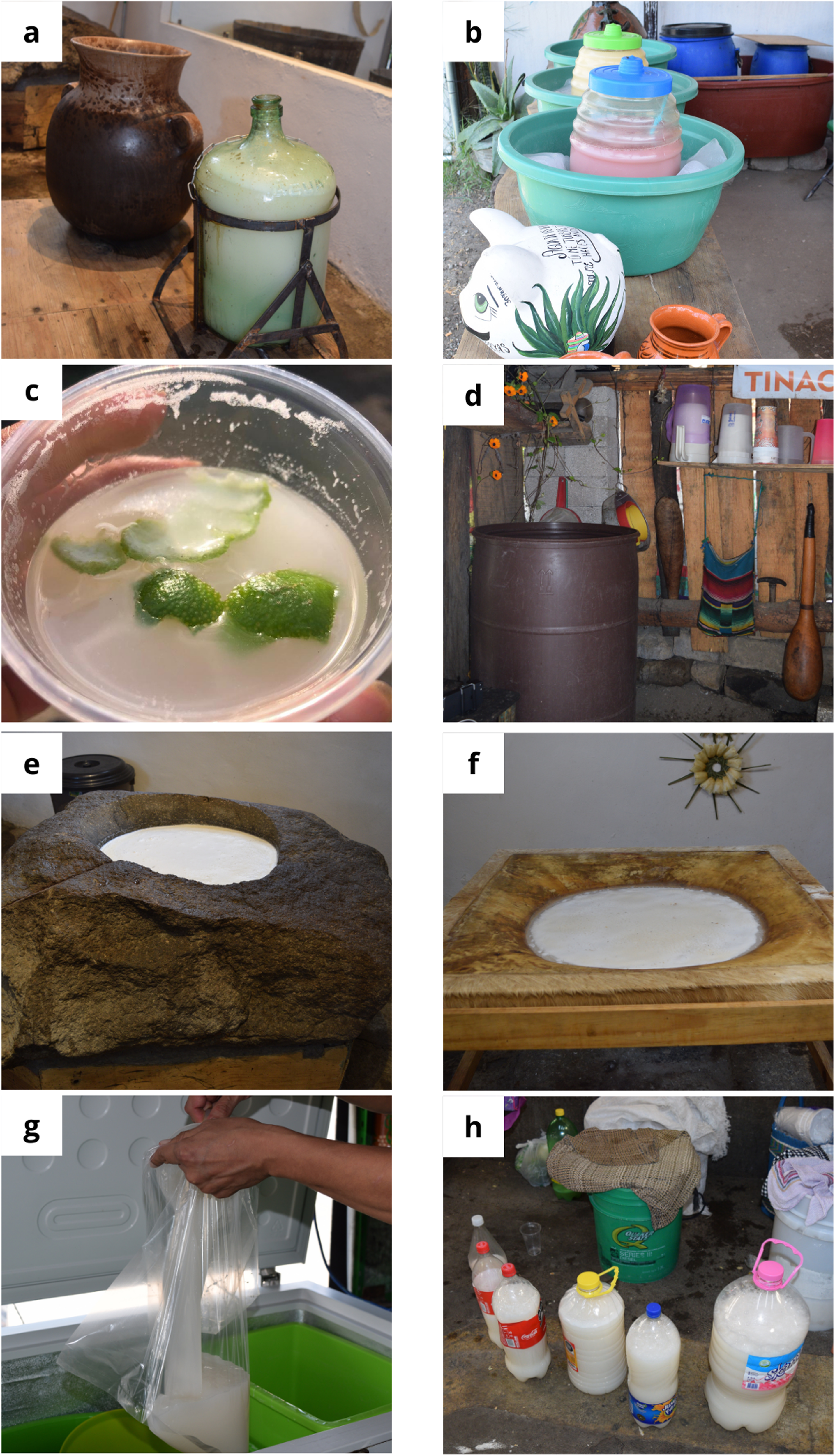
Some Examples of Pulque Handling in Points of Sale: (a) Pulque in Ceramic and Glass Containers; (b) Cured Pulque in a Glass Container with Ice; (c) Pulque with Lemon Peel; (d) Pulque in a Plastic Container; (e) Pulque in Volcanic Stone; (f) Pulque in Cowhide; (g) Refrigerated Pulque and in a Plastic Bag; (h) Pulque in Plastic Bottles.
The greatest part of pulque sales in Tlaxcala can be related to traditions and consumption habits, since it is sold primarily by producers or their relatives. However, nearly one-third of sellers are only interested in profits, perceiving pulque as an opportunity to earn additional profits regardless of the significance of pulque for the general population or with no intention to promote its consumption. Pulque is sold as a gourmet product in a few establishments, including haciendas, restaurants, and bars. Some people unrelated to pulque production or producers have learned about pulque to sell it and are interested in revaluing it and promoting the pulque and agave culture.
Economic Data and Management of Aguamiel
Most POS, but mainly pulquerías and home-based POS, sell aguamiel. A custom exists of consuming aguamiel on an empty stomach “to combat anemia,” and although aguamiel can be obtained relatively easily, some comment that it is becoming increasingly scarce. The cost of aguamiel can be similar to the average cost of pulque or even a little higher. POS that buy it at a higher price sell it at a higher price and earn more per liter. The greatest profit of the POS is in the sale of cured pulque, followed by natural pulque and finally, aguamiel. Some refrigerate aguamiel, while others freeze it to add to natural pulque to direct its fermentation and preserve its freshness. Aguamiel popsicles are made in POS to add to pulque at the “most appropriate” time for fermentation and preservation.
The process of adding aguamiel to pulque requires prior knowledge or instructions from the distributer. “It is necessary to know when to add aguamiel; if you add too much, the pulque becomes mushy and no longer ferments, and if you add too little, it can become too strong and even spoil.” Pulque management in POS is much more complex than could be covered in this study, so subsequent studies are suggested to further explore it.
Economic Data and Management of Cured Pulque
In Tlaxcala, most POS sell cured pulque, including production sites, which differ from some locations in Hidalgo where cured pulque is not sold where it is produced. Cured pulque is sold in smaller volumes (Figure 5c) than natural pulque and mainly on weekends, possibly because their production is more expensive than natural pulque. The flavors are endless, and they change depending on the fruit in season. However, the best-selling flavors are those that are available at all times, such as marzipan, pine nut, and walnut. Some flavors, such as rabbit's blood (red prickly pear), marigold, and poinsettia, are appealing depending on the season. Unusual flavors also exist, such as mussel, nanche, nopal, hibiscus with rosemary, scorpion bite, fleur de azahar, and pulqueunicorn. The cost of cured pulques can vary widely among POS.
Those who sell small quantities of cured pulques prepare the drink at the time of sale. Others who sell them throughout the week or on the weekend prepare them in the morning and let them rest “so that the pulque does not separate from the fruit.” The goal is to sell all the cured pulque prepared that day; the unsold drink is given away or discarded. If not, it is stored in the refrigerator to preserve it for the next day, but “no more than one day.” Curing is also an art; “if they are not prepared correctly, it can be decomposed and thrown into the drain.”
There is a wide range of management practices in the preparation and conservation of cured pulque products, many of which are not straightforward, as they are often considered proprietary secrets. In this study, we observed that one-fifth of those who prepared cured pulque products refrigerated them until they were sold, and some would preserve them a couple of times with aguamiel to continue selling them.
Some believe using a sky blanket rather than a blender is a better method for curing, since “the pulque separates from the pulp of the fruit” in a blender. However, only a few still use a sky blanket for this purpose. The explanation about curing pulque is a secret that is rarely shared in these interviews. Some commented that sugar, natural fruit, artificial flavors, dairy, and bananas, among other things, are used. “It is necessary to be careful in the preparation of cured pulque, since it can be decomposed.” The failure to share information could be attributed to the fact that the knowledge acquired is valuable, since it requires a lot of time, money, and effort. Moreover, synthetic ingredients may be used secretly and sold as natural products.
Customers
In about half the POS in Tlaxcala, customers do not vary by age group, although consumption among older adults has declined noticeably. Álvarez-Duarte et al. (2018) report that the main consumers of pulque in Puebla and Tlaxcala are elderly. This difference may be because the present study comprised a larger sampling, as those authors only addressed two municipalities of Tlaxcala. Unlike in the pulquerías of Mexico City, young people are the majority customers, followed by adults, and finally, older individuals (Álvarez-Ríos et al. 2022). The most traditional POS in Tlaxcala, such as houses, tend to sell mainly to older adults, while botaneras and POS near schools tend to sell more to young people.
Although pulque is still sold extensively to men, consistent with other studies (Álvarez-Duarte et al. 2018; Álvarez-Ríos et al. 2022), consumption among women is increasing mainly in family places. “Couples, families, or groups of friends come to this clean and safe place.”
Reflections on the Management and Commercialization of Alcoholic and Nonalcoholic Fermented Beverages Around the World
In general, we can define three management and commercialization classes in relation to fermented beverages: traditional, artisanal, and industrial. These categories have not been established by any regulations, but are defined here to emphasize the importance of natural resource management and the traditional knowledge associated to these resources. Also, the complexity in manufacturing processes may obscure the potential limits or differences between these categories.
A beverage can be considered traditional when it is produced at the regional scale as a result of traditional knowledge transmitted from one generation to another. The raw material and production processes have changed slightly throughout their history. The production volumes of these beverages can be low, involving just hundreds of liters, used for self-consumption. These beverages are heterogeneous and each can even be unique; they are part of a tradition, being a common good with no patents or global trademarks; profits are not high and benefits have a regional scope. Of course, regulating and setting standards for the elaboration of these beverages may promote homogeneization and the loss of biodiversity and traditional knowledge. Some of these beverages, including pulque, are regulated by standards that are frequently not applied with any legal consequences. However, in the case of traditional beverages such as whisky or beer, elaborating them at home is considered illegal in some places and this activity is sanctioned (DBMR 2025; Lappe-Oliveras et al. 2025; Ojeda-Linares et al. 2021).
The so-called artisanal beverages differ from traditional ones based on the greater sales volume of the former. These beverages usually follow traditional production processes, although involving a greater number of changes in the use of bacteria and yeasts, use technification such as pasteurization, and follow legal regulations more strictly during their production. The production of these beverages is generally not intended for ethnic or native peoples or the descendants of traditional knowledge generators; consequently, other people might be appropriating this knowledge without a fair share of benefits from the marketing of these resources (Lappe-Oliveras et al. 2025; Ojeda-Linares et al. 2021).
Industrial production involves large volumes, global brands, patents, and production standardization, which generally implies significant changes to traditional production and loss of diversity and traditional knowledge. If product generation results from innovation without the appropriation of native natural resources or traditional knowledge, including traditional production processes, industrialization creates jobs in various sectors of society and brings out regional benefits (DBMR 2025). However, significant benefits usually benefit a small group of business owners, who frequently are not even from the production country, as is the case of tequila in Mexico.
The approach of interest for scientists studying biological diversity and traditional knowledge aims to protect them, involving fair use and the equitable share of the benefits from product marketing without being opposed to innovation. The most common fermented or distilled alcoholic or nonalcoholic beverages, such as pulque, wine, cider, beer, sake, palm wine, kéfir, kombucha, and whisky are marketed from traditional to industrial approaches. Exceptions include aguamiel and pulque distillate, which have not been industrialized yet.
A few work, including the present study, have addressed the marketing of fermented beverages in detail; therefore, it is important to describe the diversity of raw materials, processes, tools and actors involved in the production of traditional beverages to preserve, revalue and market them, as highlighted by other researchers (Lappe-Oliveras et al. 2025; Ojeda-Linares et al. 2021; Valadez-Montes et al. 2014; Viniegra-González et al. 2023).
Conclusions
Adult men primarily own and operate POS, although women are involved more in the POS than in the production of pulque. Older individuals are mostly producers and sell mainly at home. The participation of young people is low and mainly restricted to the resale of pulque. This may hinder generational change among producers and lead to a loss of traditional knowledge related to the pulque production chain.
A large proportion of POS opened recently, corresponding with the increase in interest in the consumption of pulque two decades ago. The volume of pulque sales depends on the seller and is unrelated to the length of the working hours. The vendors consider selling pulque a profitable business and complementary to their work in the field.
Pulque is sold and produced nearly throughout Tlaxcala, although production is focused mostly in the north of the state, with a few producers predominating. The remaining POS terminals sell less than 50–200 L/week. The type of sampling used in this study did not yield answers regarding the volume of pulque production in the state and the literature lacks a complete report on the subject, so it is suggested that censuses of producers and volume of pulque production in the state of Tlaxcala be carried out.
Natural pulque is sold more than cured pulque or aguamiel, but cured pulque yields a higher profit per liter, even though the larger volume of pulque sales generates higher income. More pulque is sold at a low cost, and POS that sell pulque or cured pulque at high prices sell small volumes.
The handling of pulque and cured pulque involves the art of manipulating the fermentation process empirically. It is associated with temperature control and the inclusion of aguamiel and other elements that accelerate and decrease its fermentation process. This process is customized to the taste and needs of the seller and buyer.
The consumers comprise mainly adult men who may be local, from other states, or even other countries. Entire families usually operate POS, which are in accessible locations. Some interviewees indicted that increasing number of women are operating POS.
This work reveals the complexity of the handling and sale of pulque, aguamiel, and cured pulque products. Most of this knowledge may be documented, but part of it is kept secret. The valuable knowledge of sellers, gained by experience and inherited, could also be a secret owing to bad practices.
For Tlaxcala to remain among the main pulque-producing states in Mexico, es necesario impulsar la producción, distribución y venta del maguey pulquero y sus derivados que beneficie a todos los productores para (it is necessary to promote the production, distribution and sale of pulque maguey and its derivatives that benefit all producers to) create jobs, combat poverty, and improve social welfare. The pulquero agave is an ideal raw material in view of the growing demand for fermented and distilled beverages, agroecological products, and the resistance to climate change.
Supplemental Material
sj-docx-1-ebi-10.1177_02780771251349290 - Supplemental material for Economic Aspects, Social Aspects, and Management of Pulque at Points of Sale in Tlaxcala, Mexico
Supplemental material, sj-docx-1-ebi-10.1177_02780771251349290 for Economic Aspects, Social Aspects, and Management of Pulque at Points of Sale in Tlaxcala, Mexico by Laura Trejo-Hernández , Elvira Romano-Grande, Diana Soriano, AnaKaren Ordaz-Martínez, Estefania Briones-Dumas, and Eric Ortega-Sánchez in Journal of Ethnobiology
Supplemental Material
sj-docx-2-ebi-10.1177_02780771251349290 - Supplemental material for Economic Aspects, Social Aspects, and Management of Pulque at Points of Sale in Tlaxcala, Mexico
Supplemental material, sj-docx-2-ebi-10.1177_02780771251349290 for Economic Aspects, Social Aspects, and Management of Pulque at Points of Sale in Tlaxcala, Mexico by Laura Trejo-Hernández , Elvira Romano-Grande, Diana Soriano, AnaKaren Ordaz-Martínez, Estefania Briones-Dumas, and Eric Ortega-Sánchez in Journal of Ethnobiology
Footnotes
Acknowledgments
We thank Adriana Montoya Esquivel and Mariana Vallejo for the review of the brief and her contributions. Additionally, all interviewees are thanked for supporting the documentation of this part of the pulque production chain. Sage Author Services translated the manuscript into English.

Author Contributions
LT: design, planning, and execution of fieldwork and manuscript; ERG: field data collection and manuscript review; DS: statistical analysis; AKOM: obtaining field data, elaboration of a figure, and revision of the manuscript; EBD: preparation of maps and revision of the manuscript; EOS: fieldwork and manuscript review.
Funding
The authors disclosed receipt of the following financial support for the research, authorship, and/or publication of this article: Part of the fieldwork of this study was conducted with the support of project RENAJEB-2023-4, Strengthening and consolidation of the Tlaxcallan Ethnobiological Garden for the conservation of biodiversity and rescue of the biocultural wealth of the state of Tlaxcala, Consejo Nacional de Humanidades, Ciencias y Tecnologías (Grant No. RENAJEB-2023-4).
Declaration of Conflicting Interests
The authors declared no potential conflicts of interest with respect to the research, authorship, and/or publication of this article.
Supplemental Material
Supplemental material for this article is available online.
References
Supplementary Material
Please find the following supplemental material available below.
For Open Access articles published under a Creative Commons License, all supplemental material carries the same license as the article it is associated with.
For non-Open Access articles published, all supplemental material carries a non-exclusive license, and permission requests for re-use of supplemental material or any part of supplemental material shall be sent directly to the copyright owner as specified in the copyright notice associated with the article.
