




Abstract
Traditional medicine, including the use of medicinal plants, is integral to healthcare and empowerment of individuals and communities worldwide. Preserving traditional knowledge of medicinal plants requires an understanding of social dynamics and knowledge transfer mechanisms that sustain these practices. This study aimed to explore stakeholder perspectives on the use of medicinal plants in South Tyrol (Italy) through a mixed-methods approach, combining an online survey with semi-structured interviews. We found that the use of medicinal plants is deeply rooted in local communities, supported by factors such as their local accessibility, their presence in education and medical self-care, and a strong local belief in plants’ healing powers. Knowledge is primarily transferred through women underscoring the gendered nature of this cultural heritage. However, sustainable and commercial use of medicinal plants is challenged by a complex set of socio-political barriers, including limited political prioritization and perceived disengagement of local authorities. Our findings highlight the need for coordinated multi-stakeholder strategies, including the establishment of a dedicated chamber to set production standards, safeguard commercial use, advocate for medicinal plant use, mediate conflicts, and address barriers collaboratively, ensuring the integration of traditional practices into modern contexts.
Introduction
The European Alps with their unique environmental conditions, diverse habitats, and rich biocultural heritage are recognized as hotspots of biocultural and ethnobotanical diversity supported by long-lasting traditions of extensive human use as summer pastures or meadows, among others (Grabherr 2009; Mustafa et al. 2012). In South Tyrol, a region in Northern Italy, 12% of the local flora is used in traditional folk medicine, representing one of the highest concentrations of medicinal plant use in the Alps (Grabherr 2009). These practices are deeply intertwined with local cultures and traditions, making ethnobotanical knowledge invaluable not only for understanding the uses of medicinal plants but also for identifying potential medicinal compounds and promoting sustainable management of these resources (Cunningham 2001, Petelka et al. 2020).
Despite their cultural and medicinal significance, the sustainable use and conservation of medicinal plants in South Tyrol face numerous challenges. The decline in regional biodiversity threatens the availability of medicinal plant species, leading to the erosion of traditional knowledge and practices (Tattoni et al. 2017). There is also evidence that more and more species and their uses are being forgotten or overshadowed due to the increasing superficiality of knowledge combined with merging and homogenization processes from local to globalized pharmacopeia (Leonti 2011; Scherrer et al. 2023). Conflicting interests and diverse perspectives among various stakeholder groups—from herb growers to policymakers—hinder the effective management of these species (Gavin et al. 2015; Petelka et al. 2022; Scherrer et al. 2023). In the context of this research, “stakeholders” refers to all individuals, groups, or organizations that have an interest or role in the conservation, cultivation, use, and management of traditional medicinal plants in South Tyrol. Ethnobotany, which explores the complex relationship between plants and people, increasingly utilizes stakeholder analysis to address the socio-ecological, economic, and political factors influencing the management and conservation of medicinal species (Wyndham, Lepofsky and Tiffany 2011). However, there is limited understanding of how these stakeholder dynamics specifically impact the use and governance of medicinal plants in South Tyrol.
Previous studies have provided preliminary insights into stakeholder perspectives on the use of medicinal plants in South Tyrol (Petelka et al. 2022; Scherrer et al. 2023). However, a comprehensive understanding of the stakeholder landscape and its influence on plant use and conservation remains lacking. To address this gap, we examined and analyzed the stakeholder landscape in greater detail to understand their perspectives, interests, values, and practices. We seek to provide a comprehensive understanding of the factors that shape medicinal plant practices in this region and identify medicinal plants with significant cultural value. Specifically, our study focuses on three main objectives: (i) to identify key stakeholders involved in the use and management of medicinal plants in South Tyrol; (ii) to explore their perspectives including social, cultural, and economic factors that influence these practices; and (iii) to assess the barriers hindering sustainable use, thereby identifying opportunities for policy intervention. We address the following questions: Who are the key stakeholders in the use and conservation of medicinal plants in South Tyrol, what roles do they play, and what challenges do they face supporting sustainable use? Thus, we aim to uncover the main drivers behind stakeholder practices and explore strategies to address barriers, ultimately contributing to the sustainable management and preservation of traditional medicinal knowledge.
Material and Methods
Study Area
The Autonomous Province of Bozen-South Tyrol (in Italian: Alto Adige) is an entirely mountainous region in the northernmost part of Italy, bordering Austria and Switzerland (Figure 1). Covering a total area of 740,043 hectares, it stretches from an altitude of 207 m a.s.l. in Salurn to the highest mountain peak with 3,904 m a.s.l. (Ortler) and is situated in the heart of the Alps (ASTAT 2022). The valley systems in the region are deeply engraved by rivers and streams, particularly the Adige River with its catchment area. Most settlements, economic activities, and traffic routes are concentrated in the valleys and are predominantly surrounded by steep mountain flanks. South Tyrol is home to diverse ecosystems that vary with altitude. Lower elevations are covered with mixed coniferous forests, up to the tree line, transitioning to alpine meadows and pastures in the montane altitudes, and finally to rocky formations at the highest elevations. This rich altitudinal variation supports a diverse flora with over 2,579 native vascular plant species (Wilham, Kranebitter and Hilpold 2014).
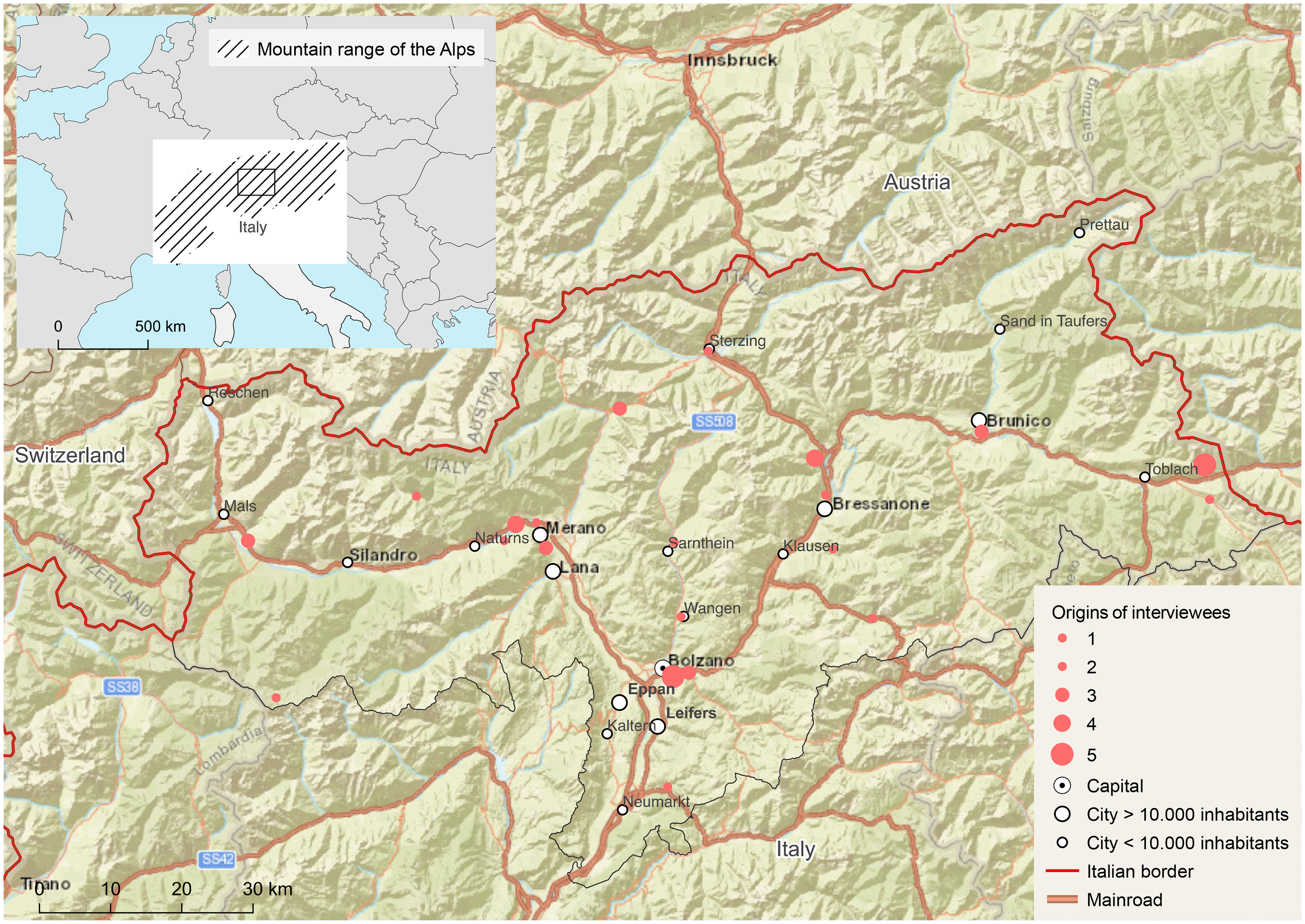
Map of South Tyrol (Northern Italy, Europe). The Red Dots Indicate the Origins of the 51 Interviewees. The Size of the Red Dots Indicate the Number of Interviewees Per Place.
The use of medicinal plants in South Tyrol has a long history, dating back to the ancient Romans, and continuing to play an important role in local healthcare and cultural practices. Today, many of these plants are still valued for their healing properties, and the region is home to numerous herbalists (Petelka et al. 2020). The region is also known for its high and intensive agricultural production, mainly apples, grapes, and dairy products. Despite the intensive agricultural activity, 96% of the farms are small-scale individual holdings, and alpine pastures are often managed communally, preserving traditional land-use practices (ASTAT 2022).
Data Collection
We are using a mixed-methods approach based on Reed et al. (2009)
The semi-structured interviews took place from October 2022 to January 2023, either face-to-face via video conferencing or via phone call and audio recorded with participants’ consent. The interviews were conducted in German since the majority of people in South Tyrol are German native speakers (ASTAT 2022). In total, the research involved 52 participants, comprising 23 one-on-one interviews and 29 survey participants. Among the 23 interviewees, three had previously completed the survey questionnaire. The duration of the interviews varied, ranging from 12 minutes to 1 hour, with an average duration of approximately 30 minutes. The interviews were guided by a combination of open-ended and closed questions, allowing participants to elaborate on their experiences and perceptions regarding traditional medicinal plants in South Tyrol. To gather comprehensive insights into the knowledge, beliefs, and practices surrounding traditional medicinal plants, a detailed interview guide was developed consisting of a set of questions addressing personal experiences, cultural importance, historical context, and stakeholder perspectives (Supplementary Appendices I and II).
In both the survey and the one-on-one interviews, the participants were asked to rate various stakeholder groups on a scale from one to five regarding their power and interest in medicinal plants. The rating and further identification of stakeholders was conducted by the research participants themselves, through a quantitative evaluation matrix. The stakeholder analysis resulted in the draft of a power-interest map, to display their interest and influence in a simplified and understandable manner.
Data Analysis
We used MAXQDA to manage, code, and analyze the collected data and followed a hybrid approach, combining deductive and inductive coding techniques (Braun and Clarke 2013; Creswell 2007). A set of deductive codes derived from the interview questions was utilized and allowed for a structured analysis of the data. Deductive coding identified stakeholder groups. An inductive approach was adopted by incorporating new codes that emerged from the data itself to capture additional themes and perspectives that were not initially anticipated. These emergent themes provided a deeper understanding of stakeholder dynamics, including cultural and socio-economic influences that shaped their practices and beliefs regarding medicinal plants.
Given the diverse social and economic background of the stakeholders, the coding framework was designed to be sensitive to these differences, ensuring that each stakeholder group's perspectives were adequately represented. Stakeholders came from various sectors, including local farmers, herbal experts, conservationists, and tourism professionals, each with unique experiences and interests in medicinal plants. To minimize bias, we layered the data according to these social categories during the coding process, comparing and contrasting responses from different groups. This approach ensured that the analysis accounted for the distinct ways in which social and economic context might influence perspectives, thus reducing bias and providing a more nuanced understanding of stakeholder diversity.
Once the coding was completed, themes were organized into broader categories that aligned with the research questions. These categories included stakeholder identification, the influence of socio-economic factors on medicinal plant use, and the perceived barriers to sustainable practices. Thematic analysis (Mayring and Fenzl 2022) was employed to identify patterns across the data, allowing for an in-depth exploration of how various factors influenced stakeholder practices and perspectives. The results were then mapped onto the power-interest matrix, providing a visual representation of the relationships between stakeholders’ influence and engagement.
Results
Characterization of Interviewees
Each category of the questionnaire gathered around 43–51 responses, while during the one-on-one interviews, depending on the semi-structured flow additional questions were added or omitted. Most of the participants identify as female, 73%, and only 27% identify as male; their age ranged from 25 to 73 years. Most belong to the age group of 40–59 (58%) and only two participants (4%) were below the age of 30 years while only one participant was above 70. Out of the 51 participants, 49 live in South Tyrol (Figure 1), from the remaining two one grew up there and is currently living abroad while the other one trains herb experts in South Tyrol. Most of the participants have a background as herb experts or in the sector of agriculture and forestry (Supplementary Appendix III). Other areas of expertise were the sector of commercial services, hotel and gastronomy, health, social services, and education. Many participants work in multiple professions simultaneously, reflecting the interwoven aspects of medicinal plant use across various fields. This diverse range of professions is crucial for understanding the multidimensional perspectives on the sustainable use and conservation of medicinal plants in South Tyrol.
Personal Bond with Medicinal Plants
In total, 91% of the interviewees expressed a personal bond with the medicinal plants found in their surroundings, while only 9% did not feel a bond (Figure 2A; Supplementary Appendix III). For some, this relationship dates back to their early years, while others developed an interest in medicinal plants as they grew older. Many continue to maintain this connection either by cultivating them in their own gardens or by gathering them from natural habitats. The utilization of medicinal plants extends beyond personal well-being, as some interviewees employ them to create herbal products for their own use or for commercial purposes. The four main themes determining the personal relation to medicinal plants are local availability, education and training, interest in “the healing power of nature” and medical self-sufficiency (Figure 2A). Each of these factors plays a significant role in shaping both, personal use and broader sustainability practices.
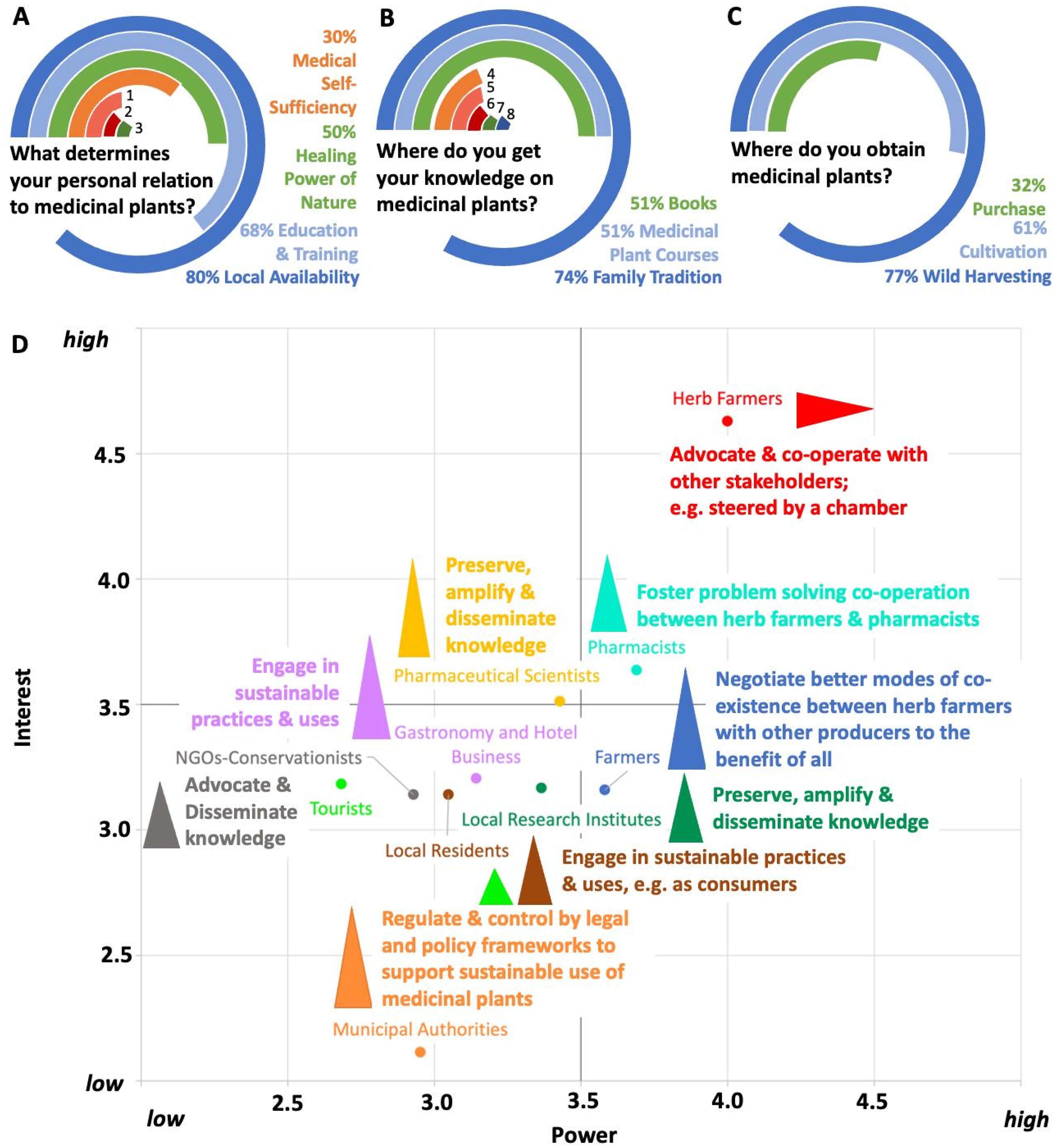
(A) Main Drivers for the Personal Relation to Medicinal Plants Mentioned by Interviewees (4: Traditional Knowledge (14%); 5: Economic Reasons (11%); 6: Emotional Well-Being (7%)). (B) Main Transfer Pathways for Knowledge on Medicinal Plants Mentioned by Interviewees (4: Friends and Acquaintances (15%); 5: Self-Studies and Observations (13%); 6: Research (11%); 7: Internet (9%), 8: Others (9%). (C) Main Ways of Acquisition of Medicinal Plants. For A–C: N = 52, Multiple Answers Possible. See Details for A–C in Supplementary Appendix III. (D) Stakeholder Power-Interest map Based on Mean Values of Ratings of the Participants (N = 52) on a Scale From One to Five Regarding their Power and Interest in Medicinal Plants Through a Quantitative Evaluation Matrix. Colored Triangles Indicate Main Action Fields Proposed by the Interviewees to Increase Interest and/or Power to Foster the Sustainable Use of Traditional Medicinal Plants in South Tyrol Mentioned by the Interviewees.
A total of 80% of the interviewees emphasize the importance of having access to local medicinal plants. They believe that these plants are uniquely suited to the local environment and can have a powerful impact on the health and well-being of the people who use them. “As I live amidst medicinal plants, the medicinal plants are collected directly on-site” (A6). Especially in local cuisine, traditional plants play an important role: “Medicinal plants are part of our food concept” (A46). The increasing demand for herbal-infused culinary products—such as teas, herbal salts, or even dishes—demands active involvement of chefs, restaurant owners, and tourism business. This market segment can influence sustainable farming practices, supporting local herb producers and integrating medicinal plant use into gastronomic experiences, which further highlights their potential as economic drivers.
Nearly 70% have made it their mission to educate others about the healing power of medicinal plants. They conduct workshops, tours, and courses for both, tourists and locals. They are passionate about passing on their knowledge and promoting the use of medicinal plants: “I have been fortunate enough to be able to turn my great passion into a profession, I train herb-experts” (A34) or “I teach the whole subject. I come from a pharmacy. I grew up with it. Through my studies and further training related to my professional activities, medicinal plants have always played a very significant role” (A41). They believe that tourism can play a significant role in promoting the use of medicinal plants and raising awareness about their importance. Sharing their knowledge and expertise with tourists has been a fulfilling experience. They offer various activities, which allow tourists to immerse themselves in the natural beauty of South Tyrol while gaining valuable knowledge about medicinal plants: “Medicinal plants are very important to me. Whether it's in my personal life, where I use them frequently, or as an herbal educator at the tourism association” (A38). “I offer herb walks, which usually last half a day or at most a full day. We venture into nature and observe what is currently growing. I provide explanations about the plants, including their botany and applications in both cooking and traditional folk medicine” (A39). Additionally, museums show interest in educating tourists about medicinal plants: “Medicinal plants are an important subtopic for us. We frequently incorporate Alpine and medicinal plants in the exhibitions” (A27). By sharing knowledge, educators fulfill a dual purpose: preserving cultural heritage and promoting the use of medicinal plants in contemporary society.
Half of the interviewees highlighted that from an early age, they have been captivated by the process of collecting, processing, and creating remedies from plants. Their passion for the efficacy of self-made herbal medicines is remarkable, and they take great pride in cultivating and caring for the plants themselves. “I find it exciting to still go out and collect them myself, to engage with them, bring them home, process them, and create something out of them” (A17). “Our plants are my passion. I am fascinated by the effectiveness of self-made herbal remedies. I have personally grown the medicinal plants I use and take great care of them” (A7). Some interviewees have taken their fascination with medicinal plants to a higher level by pursuing advanced studies in botany or pharmaceutics. They have dedicated years to expanding their knowledge and understanding of plant properties and therapeutic applications. This commitment showcases their deep-rooted passion and desire to enhance their expertise in herbal medicine: “That has actually accompanied me throughout my life. Since I was little, I have been fascinated by the powers of nature, and for the past 30 years, I have been deeply involved in this subject. I even studied botany to gain a better understanding of plants and have undergone numerous trainings in this field” (A34). “I have received numerous trainings regarding knowledge about medicinal plants: their constituents, families, genera, everything that can be learned intellectually” (A9). The interviewees’ enthusiasm for medicinal plants extends beyond personal interest. Some have pursued professional herb farming and have undergone specific courses and training to develop their skills in cultivating and utilizing herbs for various purposes, such as producing herbal salts and teas. Overall, the interviewees’ unwavering curiosity, continuous learning, and practical engagement with medicinal plants enriches their own lives but also contribute to the wider understanding and appreciation of herbal medicine. This deep-rooted passion is a key factor in the sustainable transmission of traditional medicinal plant knowledge.
Every third interviewee highlighted the importance of medical self-sufficiency and personal empowerment through the use of medicinal plants. By being able to provide for themselves and their families with herbal remedies, individuals gain a sense of autonomy and independence in managing minor ailments. They emphasized that while they can prepare teas and tinctures for their families, they acknowledge that this does not replace the need for professional medical care: “I also make teas and tinctures myself for the family. However, this does not replace a doctor, of course” (A4). Some interviewees believe that having herbs in their homes is beneficial. It provides a sense of security. This sense of preparedness and calmness positively affects their well-being and recovery: “I believe that having herbs around, in the house, is already healing. Perhaps it's just the thought that if someone in the house gets a sore throat or if a cow is unwell, I don't panic because I have the remedies right there. And this calmness also has an impact on alleviating discomfort and aiding in recovery and so on” (A9). “My personal connection to medicinal plants is that when we are familiar with the plants and their effects, we can act more autonomously and independently. It allows us to take care of ourselves, maintain our health, and even heal ourselves more self-sufficiently” (A35). In summary, the findings illustrate that medicinal plants in South Tyrol play a dual role in enhancing medical self-sufficiency and providing emotional security. Interviewees acknowledge the limits of herbal remedies while appreciating their autonomy and well-being they derive from their use.
Some interviewees highlighted the traditional knowledge and practices of medicinal plants and their use (Figure 2A) and aim to build upon it: “We herbal women from South Tyrol have naturally begun to revive these ancient traditions” (A50). “I find the topic of folk medicine fascinating and full of valuable teachings. It has unintentionally become a strong pull for me to learn and explore more about it” (A17). Moreover, the importance of traditional herb preparations in the region is evident in their inclusion in pharmacy inventories: “It has always been a tradition here in South Tyrol for herbal blends to be extensively produced in pharmacies. We have further encouraged this practice. Since then, it has been preserved without interruption” (A25). Others highlighted the need to sustain a livelihood and mentioned that they chose to focus on cultivating and utilizing medicinal herbs due to their economic viability. According to one of the participants, their involvement in this field was not coincidental but rather rooted in a family tradition spanning several generations. They expressed that it was the most meaningful and practical choice for them to pursue such activities: “Well, basically, we had to produce something that I could make a living from, and for me, that turned out to be medicinal herbs. It didn't just come out of nowhere. Naturally, I come from a family that has been deeply involved in this for several generations, so it made the most sense for me to pursue something like this” (A50). A few individuals mentioned that tending to plants and observing the herbs growing in their gardens or on their property brings them personal satisfaction and tranquility. This demonstrates that medicinal plants are not only used for physical ailments but also for emotional well-being. Herbs can provide support and care for personal mental and emotional states. As the interviewees expressed, this can involve preparing and consuming herbal teas, using aromatic incense or hydrolats, or applying herbal creams or ointments to their faces: “Medicinal plants give me a lot personally. On our farm, I have a sign with a flower that I water every day… In the process, I look at the herbs growing in the meadow every day. It always calms me down, especially when I'm in a bad mood. I always go water the flowers” (A4). “I have a holistic view of herbs” (A45), which highlights the profound impact that medicinal plants can have beyond their physical healing properties. They serve as a reminder of the interconnectedness of body, mind, and soul, and the importance of addressing all aspects of one's well-being. By embracing herbs as a means of self-expression, self-care, and self-healing, these individuals find solace, comfort, and a sense of balance in their relationship with medicinal plants.
Knowledge Transfer from Grandmothers and Mothers
To preserve the traditional knowledge of medicinal plants, it is important to understand how the traditional knowledge spreads in the population of South Tyrol. Three-fourths of the participants acquired knowledge about medicinal plants through their family, particularly through generational transmission from mothers, grandmothers, or (rather exceptionally) other family members (Figure 2B). Female relatives played a significant role in 64% of the statements regarding family transmission. Only 14% highlighted the transmission of knowledge through a male family member: “Traditional medicinal plant knowledge originated as women's knowledge, passed down from woman to woman. Of course, this doesn't mean that there weren't exceptions, that's clear. But as everyday knowledge, it has mostly been transmitted from woman to woman” (A35). As one interviewee mentioned: “Even as a small child, our mother took us along to gather wild herbs. I also use medicinal plants with my children” (A1). The use of medicinal plants has become ingrained in the family's traditions, with the knowledge being handed down through the years. The participants highlighted that familial knowledge transfer forms the foundation of their personal connection to medicinal plants: “In general, one grows up already with this knowledge that there are various plants that can be used for health purposes and as medicinal plants” (A32). Ultimately, the inheritance of this wisdom ensures the preservation and continuation of traditional herbal practices for the promotion of health and well-being. The second most common way of obtaining knowledge is through medicinal plant courses, this category includes participants who obtained knowledge through herbal offers such as courses, workshops, lectures, seminars, or cultural events related to medicinal plants (Figure 2B). Another equally popular method of gaining knowledge on medicinal plants are books on herbal medicine and medicinal plants serving as valuable resources for learning about their properties, uses, and preparations. A smaller percentage of participants mentioned gaining knowledge through friends or acquaintances. This could indicate informal discussions, sharing of personal experiences, or informal learning within social circles. Some participants reported acquiring knowledge through self-study, indicating that they independently pursued empirical knowledge about medicinal plants through experimenting and studying the natural environment (Figure 2B). Others mentioned research as a source of knowledge referring also to academic or scientific research on medicinal plants, which participants might have accessed to deepen their understanding or reported gaining knowledge about medicinal plants through the internet. Online resources, websites, forums, and blogs might have served as sources of information for them.
Acquisition of Medicinal Plants
People acquire medicinal plants through wild harvesting, cultivation and purchase (Figure 2C). The findings outlined below highlight the various factors influencing the choice of acquisition method, with a focus on sustainability, personal preferences, and practical considerations. The majority (approx. 70%) prefer collecting their medicinal plants from the wild as they believe that these plants are more potent and chemical-free. As one interviewee explained: “I collect medicinal plants from nature. We do not use fertilizers in our fields, making it an ideal place to pick the plants. The forest also provides a lot” (A1) or “I gather them from meadows. I also go longer distances if I know a specific herb grows there” (A4). The preference for wild harvesting underscores a belief in the superiority of natural, unaltered environments, which participants associate with increased potency. However, this practice also raises concerns about sustainability, particularly in light of potential overharvesting and environmental impact.
Two third of the participants have their gardens or small farms, where they cultivate medicinal plants: “I actually grow almost all here in the farm. I really have a very large repertoire of plants” (A9). Many interviewees highlighted that they cultivate medicinal herbs in larger quantities: “I have a small garden with about 200 different plants” (A34). Cultivation offers amore controlled and sustainable approach, reducing the environmental pressures associated with wild harvesting. The emphasis on maintaining diverse gardens with numerous species suggests that cultivation plays a crucial role in preserving medicinal plant diversity.
Another third of the participants reported buying plants from local farmers, health stores, or pharmacies (33%). One participant explained that they source them even from friends or local producers while others buy medicinal herbs from pharmacies or health stores (A17, A25). Many participants also use a combination of these sources (A2). This trend reflects the growing commercialization of medicinal plants and the reliance on formal supply chains. However, there is an underlying concern regarding the standardization and regulation of these purchased herbs, particularly when compared to the purity and potency of wild-harvested or home-grown plants.
Factors that Promote Sustainable Use of Medicinal Plants
Several critical factors emerged as necessary for promoting the sustainable use of medicinal plants, with a particular emphasis on education and responsible practices.
Knowledge and Education: Two third of the interviewees (67%) mentioned that knowledge and education is a crucial factor for ensuring the sustainable use of medicinal plants, which requires a good understanding of the plants, their properties, and how to harvest them sustainably. People need to learn about the right amount and type of harvest, and be aware of toxic and poisonous plants: “By learning about medicinal plants, a positive awareness of the environment, humans, and animals is created” (A6); “Respectful interaction with nature… Good basic knowledge, awareness of toxins and poisonous plants of the herbs” (A2).
Sustainable Farming Practices: Every fifth interviewee mentioned sustainable farming practices that involve a respectful and cautious approach towards plants, avoiding monocultures and the use of pesticides: “Take care of the plants as naturally as possible and learn from observing nature” (A7); “accept and promote biodiversity” (A22). The emphasis on biodiversity suggests that sustainable farming aligns with ecological principles. Practices that support diverse ecosystems are more resilient and promote long-term plant health.
Legal Support and Regulation: Providing access to resources and simplifying legal procedures can make it easier for people to engage in sustainable farming practices (A8). A better collaboration between science and practice, including farmers, pharmacists, and laboratories in this regard was often mentioned (A25). Some interviewees expressed the need for a dedicated organization such as a chamber to support local herb farmers. They face severe challenges due to their minority status, lack of necessary support and limited marketing perspectives. Finding distribution channels and establishing their businesses becomes often difficult. „The herb farmers are clearly a minority here. There is no lobby which is supporting them to move forward. There is no political backing that supports them somehow” (A41). Additionally, the absence of an official body overseeing the profession hinders quality control, standardization, and compliance. It also leads to confusion regarding certifications, naming conventions, and intellectual property rights. Such an organization can ensure that members receive appropriate training and education so that they are considered recognized professionals (A49).
The role of government intervention is seen as crucial in establishing frameworks that both protect the environment and support local herb farmers. A collaborative approach between policymakers, scientists, and farmers could help integrate traditional knowledge with modern sustainable practices, as well as ensure adherence to environmental regulations.
Public Awareness and Engagement: Further, 36% of the interviewees mentioned that to ensure the sustainable use of medicinal plants, it is important to limit the number of users and to control the amount of extraction. People must have knowledge about the plants’ usage, protect the plants and areas where they grow, and conserve them (“Everyone for personal use—controlled extraction” (A19), “responsible collection and focus on propagation” (A24), “Do not pull-out roots, respectful treatment of nature” (A2). In this regard knowledge and education for conservation practices are key (“good education about appropriate quantity and type of harvest”; A4). The public has a critical role in sustainability. By choosing locally sourced, sustainably harvested medicinal plants, consumers can support the viability of small-scale herbal farming. Public education campaigns, workshops, and community engagement initiatives could foster a sense of responsibility toward the conservation of local plant species.
Factors that Hinder Sustainable Use of Medicinal Plants
We identified key barriers to the sustainable use of medicinal plants in South Tyrol, as identified by the participants. The barriers include intensive agriculture, lack of collaboration, regulatory challenges, and limited public knowledge. These issues, individually and collectively, threaten the long-term sustainability of medicinal plant use in the region.
Every second interviewee identified profit-driven agriculture as a significant factor that can lead to the over-exploitation of natural resources. The adverse effects of pesticide use, overfertilization, monoculture farming, and intensive agriculture on the sustainable management of medicinal plants in South Tyrol have been mentioned, including the contamination of herbal fields, displacement of plant species, decline in insect populations, and the overall ecological imbalance caused by these practices. Especially pesticide use by conventional farmers, in fruit-growing areas, is a major hindrance to sustainable medicinal plant use. “Since I collect herbs, I have become more and more aware that less and less places are suitable for herb collection, because of land development, excessive manure, and pesticide use” (A45). Pesticide use in fruit and wine farming negatively also impacts insect populations (A34). Although the use of pesticides is strictly prohibited in organic farming, the pesticide drifts caused by wind pose a significant threat to organic farms. “In practical terms, it means that in areas where fruit farming or intensive agriculture is practiced, it is not possible to produce herbs. The Italian standard for organic products allows for a maximum of 0.04% residue in one kilogram of dried herbs, essentially meaning almost no residue is allowed” (A50).
Another issue is the pressing lack of engagement and cooperation between stakeholders. Many interviewees described the situation as extremely difficult, with limited active engagement and a lack of collaborative problem-solving. There is a need for a more open and cooperative approach to find solutions: “It has been discussed for several years, sometimes discussed at one level, at eye level, sometimes just at another level, which is not very pleasant” (A45). Others perceived the situation as much more severe: “It will take a long time before these stories are resolved, until people approach each other more openly and do not confront each other in a warlike manner, but rather seek solutions together. And that is precisely the problem” (A41). The lack of collaboration hinders the development of cohesive strategies to promote sustainable medicinal plant use. Stakeholders often have competing interests, with large-scale agricultural producers prioritizing profits over environmental considerations.
Quality control and strict laboratory tests were also mentioned as a challenge but at the same time, the participants also acknowledged the positive effects, such as quality assurance, consistency, reliability, and consumer safety, that these guidelines bring. However, negative aspects of quality control include limited availability, exclusion of certain medicinal plants from the market, financial burden on small-scale herb farmers (due to the expenses tied to the tests), restriction of information and marketing claims, and potential loss of traditional knowledge associated with restricted plants. “Herb farmers in the region are not allowed to sell their herbs to pharmacies. It requires laboratory testing. The costs are so high that it is not profitable for anyone in South Tyrol” (A35). Some people even refrain from selling herbs completely since they perceive the regulations as too strict: “we, who are knowledgeable in herbs, are being prohibited so many things. The regulations are too much, that's why I do not sell any herbs, I only gift them” (A4). Gifting instead of selling certified produce can pose a danger to safe consumption of medicinal herbs. Further, legal limitations on marketing claims and the sharing of information about medicinal plants may restrict the ability of herbalists and practitioners to provide detailed guidance and advice to consumers. This can hinder the dissemination of knowledge about the benefits and uses of medicinal plants.
An additional factor hindering sustainable use of medical plants is a lack of knowledge regarding the sustainable management among the local population. People often take more plants than they need, resulting in overharvesting, “I often find myself in uncomfortable situations where I witness the manner in which herbs are collected and handled” (A39), highlighting the unease caused by unsustainable harvesting practices. Another participant highlights “even when populations of certain plants are not yet endangered, no one can tell me that continuous and excessive collection from isolated populations contributes to nature conservation” (A51). The often-mentioned lack of sensitivity and measure when collecting is partly due to a loss of traditional knowledge which contributes to an understanding about the appropriate quantities required. Additionally, there is a lack of awareness regarding the legal restrictions on harvesting certain plants, such as wild garlic Allium victorialis L., which is highly sought after in local cuisine. Consequently, illegal harvesting practices have emerged. Compounding the problem is the absence of checks on the quantities being harvested, including in protected areas, leading to excessive extraction of medicinal plants from their natural habitats. This issue underscores the need for greater awareness and adherence to sustainable harvesting practices. To address these challenges, it is important to educate and raise awareness among the local community about sustainable harvesting methods. Further, promoting responsible and moderate collection practices will help preserve medicinal plants for future generations while ensuring the long-term health and vitality of ecosystems.
It was also moderately mentioned that there is a lack of qualified knowledge. Concerns were expressed that some individuals offering courses and information about medicinal plants may have insufficient qualifications or inaccurate knowledge. This can lead to the dissemination of incorrect information and potentially harmful practices, as one interviewee explained “a bigger problem is that many of the people who hold these courses have very little education themselves and probably convey very faulty knowledge, which means the qualification of individual instructors is not necessarily guaranteed” (A48). Another dangerous source of information regarding medicinal plants is the internet, which is seen as a significant source of misinformation and misuse of herbal knowledge. “There are an immense number of articles on the internet, I don't know what all is there. Today, I see the internet as the biggest threat in the misuse of medicinal plants” (A41). Another critical factor is the decreasing ability of species recognition, which can lead to misidentification and potential harm when collecting or using medicinal plants (“species recognition is certainly an increasing problem (…) many go for herbal-expert trainings but at the end of the day, especially if you don’t practice it often, I think it's just semi proficient knowledge (…) There are simply species that have countless doppelgangers or species like a lungwort which is actually insanely difficult to identify exactly” (A43). Misinformation leads to unsafe practices, highlighting the need for better regulation of educational courses and more reliable sources of information. Certification or accreditation of instructors and programs could ensure that accurate knowledge is transferred. Further, partnerships with scientific institutions could help create a standardized body of knowledge.
Finally, imposing threats to medicinal plants are the destruction of natural habitats, land-use, and climate change including water scarcity, which negatively impact the viability of certain species and reduce their abundance. “Furthermore, we also have biotopes that are no longer there, wet biotopes, because everything is built up” (A34). Conservation strategies that protect natural habitats are essential for long-term sustainability.
Reflections on Key Actors and their Roles
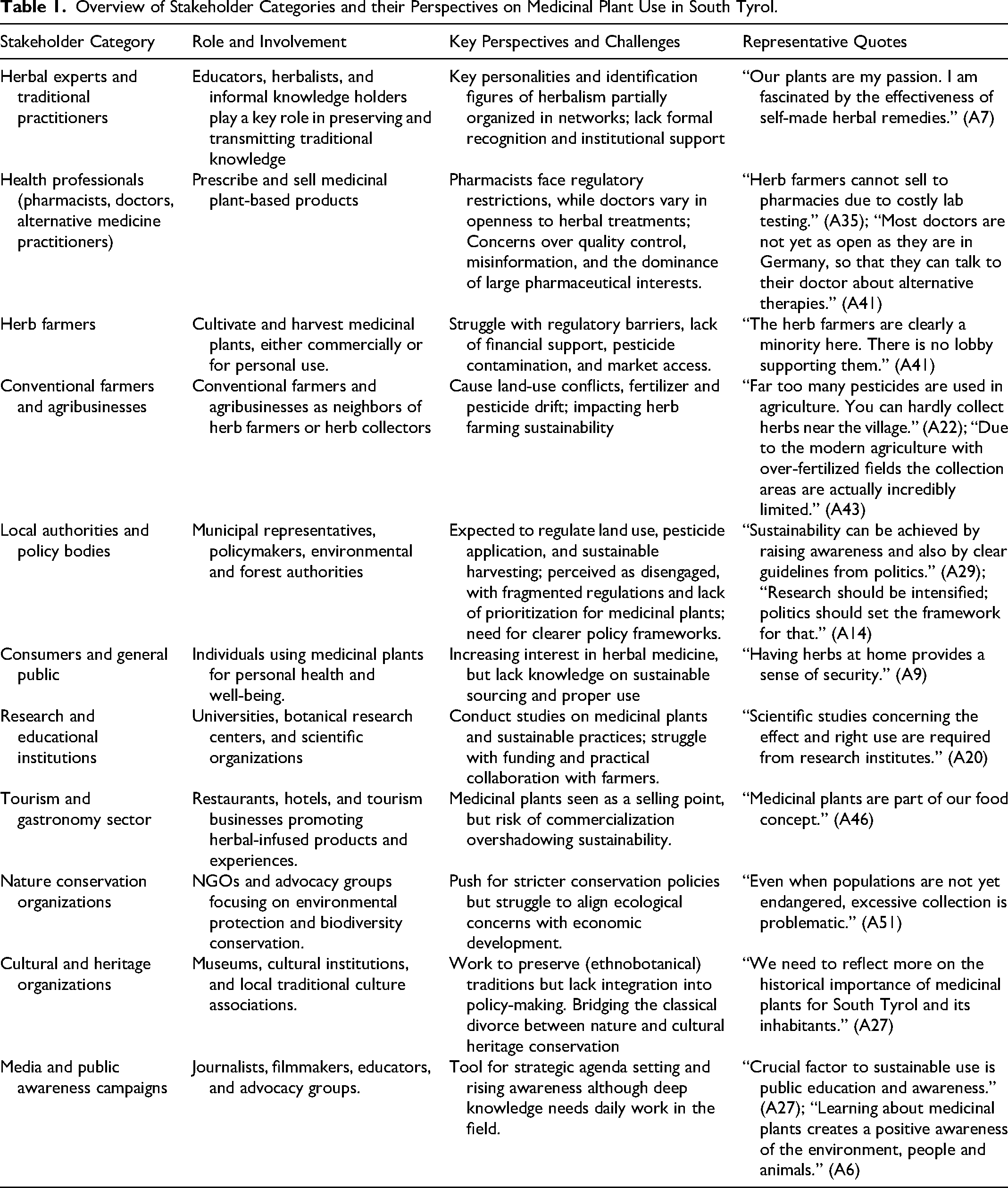
Understanding the stakeholder landscape is critical for assessing the sustainability of medicinal plant use in South Tyrol. Based on interview and survey data, we identified key stakeholder groups involved in the cultivation, management, conservation, and use of medicinal plants. These groups include herb farmers, herbal experts, local authorities, conventional farmers, health professionals, research and educational institutions, consumers, tourism and gastronomy sectors, conservation organizations, cultural and heritage groups, and media actors (Table 1). Their perspectives, interests, and influence vary, shaping the opportunities and barriers for medicinal plant practices.
Overview of Stakeholder Categories and their Perspectives on Medicinal Plant Use in South Tyrol.
Based on the ratings of all participants we developed a snapshot of the power and interest levels of different stakeholders regarding medicinal plants in South Tyrol (Figure 2D). 47% of the interviewees expressed that the local authorities should regulate and control the use of medicinal plants and also set the necessary legal and policy frameworks to enhance use sustainability (e.g., banning certain pesticides, promoting organic farming methods, ensuring strict controls to prevent overharvesting). Even consumers are crucial to supporting locally grown medicinal plants, educating themselves about the importance of sustainable practices and the impact of their choices on medicinal plant availability, and reducing reliance on imported products. Research and educational institutions are responsible for conducting studies on sustainable cultivation and harvesting methods for medicinal plants. They can also promote knowledge dissemination and training programs for herbal farmers, emphasizing sustainable practices and ecological preservation. Raising public awareness about the challenges faced by herbal farmers and the importance of sustainable use of medicinal plants is considered very important. Public dialogue and engagement on sustainable land use can foster understanding and drive positive change. This factor was mentioned by 47% of the interviewees. This viewpoint emphasizes the need to disseminate knowledge and information about the sustainable use, conservation, and cultivation of medicinal plants among the general public.
The roles of these stakeholders are interconnected, each influencing the sustainability of medicinal plant use in South Tyrol. Local authorities and research institutions, with frameworks that guide sustainable practices. Herb farmers and consumers, while possessing moderate power, are critical in implementing and supporting these frameworks. Public awareness plays an essential role in fostering a broader cultural shift toward sustainability. The alignment of stakeholders’ interests and the reinforcement of their roles are essential for achieving long-term sustainability in the use of medicinal plants in the region.
Discussion
The voices gathered here reflect the diverse perspectives and interests of local actors and stakeholders, showing that traditional medicinal plants remain central in the lives of many South Tyrolians. Despite concerns about the erosion of traditional herbal knowledge (Quave, Pardo-de-Santayana and Pieroni 2012; Vandebroek and Balick 2012), most interviewees maintain a strong connection to these plants, viewing them as an integral part of their cultural heritage and identity. Whether collected from the wild or grown in home gardens, medicinal plants are not only embedded in the landscape but also in the mindscape of the community, with traditional knowledge passed down through families. Local authorities are perceived as disengaged, yet respondents see their role as critical for promoting traditional herbalism and integrating it with broader nature conservation efforts. The challenges faced by herb farmers, such as side effects from conventional farming practices and restrictive regulations, have been reported before (Petelka et al. 2022). Interviewees suggested that a strategic chamber dedicated to medicinal herbs could advocate for the sector, mediate conflicts, and remove barriers through a collaborative, multi-stakeholder approach.
“One Grows up Already with This Knowledge”
Most interviewees have a longstanding relationship with medicinal plants, collecting, growing, and using them (Figure 2A–C), underscoring their cultural significance in South Tyrol. The related traditional knowledge and practices are deeply rooted in the local cultures and play a vital role in the regional healthcare systems (Danna et al. 2022; Monari et al. 2022). Traditional knowledge is predominantly passed down through female relatives, echoing findings in similar studies (Cunningham 2001; Petelka et al. 2020; Schunko, Grasser and Vogl 2015; Vári et al. 2020). Interviewees’ dedication to these plants not only contributes to personal well-being but also complements professional healthcare. Their enthusiasm reflects a global trend recognizing the therapeutic potential of natural remedies (Figure 2A; WHO 2023). Traditional medicine, while retaining its artisanal roots, has evolved into a global industry, where large pharmaceutical companies have capitalized on herbal resources since the 1990s (David, Wolfender and Dias 2015; Jagtenberg and Evans 2003; Li and Weng 2017), often without supporting the conservation of these valuable plants (Canning, Death and Waltham 2021). Respondents contribute to a broader understanding of the relationship between medicinal plants, cultural heritage, and nature conservation. Their efforts also promote sustainable tourism while raising awareness of medicinal plants among locals and visitors alike. Here, the dual role of plants as food and medicine is crucial (Etkin and Ross 1982). We recorded diverse methods for obtaining these plants, including wild harvesting, cultivation, and direct purchase, with many using a combination of approaches, consistent with previous studies (Cunningham 2001; Schunko, Grasser and Vogl 2015).
“Anything that Doesn't Bring Money Doesn't Have Much Place in Politics”
As observed in previous studies, several factors promote the sustainable use of medicinal plants, such as the importance of education, sustainable farming practices, and integrating plant use into nature conservation (Petelka et al. 2022; Scherrer et al. 2023). However, few interviewees worked in professions directly related to nature conservation, despite most emphasizing its importance and their engagement with it. While the need to link ethnobotany and nature conservation has long been recognized (Pardo-de-Santayana et al. 2010; Pei, Alan and Wang 2020; Zerbe 2022), these fields in South Tyrol still operate largely in separate spheres, leaving their potential untapped. Legal restrictions, risks of contamination from pesticide use, and poor communication between stakeholders were also identified as ongoing issues (Brühl et al. 2024; Kosalec, Cvek and Tomić 2009; Linhart et al. 2021; Petelka et al. 2022).
A dedicated chamber for medicinal herbs could help address these challenges by advocating for herb farmers, providing professional guidance, and giving the sector a unified voice. Such an entity could foster pride in the profession, promote sustainable practices, and strengthen the sector's economic and cultural potential.
“Not Confront Each Other in a Warlike Manner, but Rather Seek Solutions Together”
Balancing regulation with the preservation of traditional knowledge and ensuring access to medicinal plants requires coordinated action from multiple stakeholders (Figure 2D). Our results show a strong cultural and traditional connection to medicinal plants among the local population, a sentiment also appreciated by visitors to South Tyrol (Kreisel and Reeh 2011; Petelka et al. 2022; Scherrer et al. 2023). This connection can drive positive change by supporting local producers, promoting sustainable consumption, and raising awareness of the cultural and ecological value of medicinal plants. Engaging the local community in conservation efforts ensures the preservation of traditional knowledge and biodiversity (Berkes, Colding and Folke 2000, 2002; Volenzo and Odiyo 2020).
Though local authorities are perceived to have limited interest, their engagement is essential for placing medicinal plants on the political agenda. Collaboration between authorities, research institutions, environmental NGOs, and the pharmaceutical industry could help create regulations that support both conservation and sustainable use. Research institutes and environmental NGOs can provide expertise and advocacy, promoting sustainable practices and helping to minimize negative impacts on biodiversity. The gastronomy and tourism sectors, as influential market players, could also support sustainable sourcing and consumption of medicinal plants.
Economic, regulatory, and governance factors significantly shape the use of medicinal plants, with tensions observed between traditional herbalists, pharmacists, and the pharmaceutical industry, particularly regarding standardization, safety, and biopiracy (Priya and Kurian 2018; Xaba, Nkomo and Harrypersad 2022). Understanding the economic motivations behind the cultivation and use of medicinal plants can help develop strategies that support conservation, strengthen local economies, and ensure the viability of traditional knowledge systems (Schunko, Grasser and Vogl 2015, 2019; Vári et al. 2020).
Collaboration and inclusive decision-making among stakeholders is essential for the sustainable management of medicinal plants (Borrini-Feyerabend et al. 2004; Petelka et al. 2022). Respondents emphasized the need for open communication, particularly regarding pesticide use and its effects on medicinal plants. Local authorities, policymakers, and other stakeholders must engage in dialogue to develop regulations that support sustainable practices. Effective communication across sectors can foster innovative approaches, improve practices, and lead to sustainable solutions (Cunningham 2001).
Limitations and Further Research
While this study provides valuable insights into stakeholder engagement with medicinal plants in South Tyrol, it is important to acknowledge its limitations. The sample size and scope of our study may not fully represent the diversity of stakeholders and perspectives within the region, although our study expands the evidence from previous studies (Petelka et al. 2022; Scherrer et al. 2023). However, a holistic stakeholder analysis is rarely used in ethnobotany, where participatory approaches focus mainly on knowledgeable people such as different ethnic groups that use medicinal plants to safeguard knowledge (Xaba, Nkomo and Harrypersad 2022; Vári et al. 2020). Furthermore, the dynamic character of stakeholder interests and the evolving context of conservation efforts require ongoing engagement and dialogue. Further investigation is warranted to explore the potential economic opportunities associated with culturally salient plants. Understanding the market demand, value chains, and potential benefits for local communities can contribute to the development of sustainable and inclusive economic models at local scale that support the conservation and utilization of these plants.
Conclusion
Traditional knowledge and medicinal plant use in South Tyrol are deeply rooted in the local community but face conflicts due to power dynamics, economic pressures, and regulatory priorities. While herb farmers, conservationists, and herbal experts advocate sustainability, conventional agriculture, and regulators often pursue competing interests. Fragmented policies, financial disincentives, and low public awareness hinder coordination. Despite shared sustainability goals, economic and regulatory constraints create tensions. Key barriers include policy fragmentation and limited incentives, yet opportunities exist for intervention and collaboration. A proposed dedicated chamber for medicinal plants could mediate policies, enhance marketing, and support sustainable practices by fostering dialogue among stakeholders. We used an ethnobotanical approach, focusing on so-called knowledgeable people. While we expanded our scope to include various stakeholders, representation from local authorities, policy bodies, or conventional agribusiness remained limited. Despite identifying key actors, a comprehensive understanding of their vision on medicinal plant use and conservation remains limited. Expanding representation and engagement is crucial to capturing these perspectives for a fuller cross-sectoral understanding. This will help to identify strategies to overcome barriers for safeguarding medicinal plants, preserving biodiversity, and maintaining cultural heritage for generations to come.
Supplemental Material
sj-docx-1-ebi-10.1177_02780771251349282 - Supplemental material for Voices Around the South Tyrolean Herbal Pharmacy—Exploring the Stakeholder Landscape and Perspectives on Medicinal Plants as Culturally Salient Species
Supplemental material, sj-docx-1-ebi-10.1177_02780771251349282 for Voices Around the South Tyrolean Herbal Pharmacy—Exploring the Stakeholder Landscape and Perspectives on Medicinal Plants as Culturally Salient Species by Ines Rosa Gerner, Stefan Zerbe and Ina Säumel in Journal of Ethnobiology
Footnotes
Acknowledgments

Author Contributions
SZ and IS conceptualized the study. IRG performed the interviews and wrote the first draft of the manuscript. All authors contributed to the article and approved the submitted version.
Funding
This work was supported by the ecoFABULAnds project, funded under the European Partnership on Agroecology, co-funded by the European Union (https://www.agroecologypartnership.eu).
Declaration of Conflicting Interests
The authors declared no potential conflicts of interest with respect to the research, authorship, and/or publication of this article.
Data Availability Statement
All datasets for this study are documented in the main document and the Appendix.
Supplemental Material
Supplemental material for this article is available online.
References
Supplementary Material
Please find the following supplemental material available below.
For Open Access articles published under a Creative Commons License, all supplemental material carries the same license as the article it is associated with.
For non-Open Access articles published, all supplemental material carries a non-exclusive license, and permission requests for re-use of supplemental material or any part of supplemental material shall be sent directly to the copyright owner as specified in the copyright notice associated with the article.
