




Abstract
Understanding the drivers of conflict and coexistence in human–wildlife relations are critical to conservation. This study sought to understand th varying attitudes of local indigenous people towards wildlife, focusing on the Titicaca Grebe (Rollandia microptera), an endangered endemic species found in Lake Titicaca and surrounding waters in the Altiplano of Peru and Bolivia. We used an ethnobiology approach to understand which demographic, sociocultural, and economic factors influenced (a) attitudes and local ecological knowledge (LEK) towards the grebe and (2) their effects on Indigenous–wildlife conflict or coexistence. We used a qualitative, semi-structured questionnaire to interview 221 individuals over six months in villages surrounding Lake Titicaca. Participants primarily consisted of locals from the Aymara, Quechan, and Uro Indigenous groups. We found that most individuals expressed apathy towards the grebe, with a significant minority being hostile towards it. Hostility was concentrated amongst fishers and was driven by economic concerns. Knowledge of the grebe was low in the general population, but higher amongst fishers. There was, however, widespread willingness to conserve the grebe amongst the general population, particularly when informed that the grebe is endemic to the Altiplano. This small environmental education intervention suggested increased positive attitudes and a willingness to conserve the grebe. Non-homogenous perspectives towards the grebe were held within and between indigenous groups, suggesting the need for future research into intra-indigenous group dynamics in indigenous–wildlife relations. Future conservation work on the Titicaca Grebe should focus on reducing grebe-fisher conflict, both real and perceived, and on educating people on the grebe's endemic status.
Keywords
Introduction
In recent decades, there has been increasing emphasis on the importance of understanding social-ecological systems within conservation biology (Dayer et al. 2020; Psuty and Całkiewicz 2021). Core to this shift has been the integration of ethnobiology into conservation research (O’Neill et al. 2017; Turner, Cuerrier and Joseph 2022). Ethnobiology is the study of the interactions between humans and nature from an anthropological and biological perspective and can act as a bridge between social and natural scientists (Anderson et al. 2011). The practice of ethnobiology often involves working with indigenous people in the management of ecosystems and integrating indigenous ways of understanding the natural world into ecological management decisions (Turner, Cuerrier and Joseph 2022; Ulicsni et al. 2019). This is a valuable pluralistic approach to social-ecological systems research due to its inclusion of different disciplines without sacrificing the respective norms of each (Thomsen 2022).
Understanding local ecological knowledge (LEK) drivers and attitudes towards wildlife are of interest because they have conservation implications (Heberlein 2012; Hopper et al. 2019; Schultz 2011). Previous work shows that while more information about species can increase the conservation ethos locally (Ardoin, Bowers and Gaillard 2020; Kamudu, Rollnick and Nyamupangedengu 2022), this is not always the case (Ardoin, Bowers and Gaillard 2020). LEK is an important supplement to Western scientific knowledge of the behaviour and distribution of species that have not received significant scientific attention (Gilchrist, Mallory and Merkel 2005; Joa, Winkel and Primmer 2018). This natural history knowledge can, in turn, be useful to conservation (Joa, Winkel and Primmer 2018), especially when considered in conservation planning and management and in collaboration with local and indigenous peoples.
LEK is not static; instead, it changes as people's relationship with their natural environment changes. There is sometimes a tendency to essentialise LEK, especially indigenous LEK, as something intrinsic to the existence of a group, and place it out of time and context (Clarke 2023). However, we know from studies both of indigenous groups and non-indigenous groups that what LEK exists, and how it is used, tends to change, even as the people are not aware of it changing. This can be termed ‘shifting-baseline syndrome’, a phenomenon which is primarily associated with ecology, where people assume that the conditions under which they grew up are the natural condition of an ecosystem (Pauly 1995). However, shifting-baseline syndromes can also apply to the state of human societies, with people assuming the norms and knowledge of the society which they grew up in are a trans-historic norm, from which change deviates. For LEK, this can mean that changes in ecosystems (Kai et al. 2014; Turvey, Bryant and McClune 2018), economic changes in how cultures operate and interact with their natural environment (Paredes and Hopkins 2018; Villar et al. 2024), or a mixture of both can change LEK (Mitchell 2015).
Knowledge of the drivers of attitudes towards wildlife is especially important for redressing human–wildlife conflict (McMahon et al. 2023). Conflicts can emerge in various degrees of severity, but the most common are ‘disputes’, which are centred around a material issue (Cusack et al. 2021). That disputes revolve around a potentially measurable issue does not mean that perception does not matter in addressing them – often local stakeholders will have different perspectives on the degree and severity of disputes than exogenous scientists (Duriez et al. 2019; Inskip and Zimmermann 2009). These different perspectives may have underlying cultural and economic causes, which need to be understood before implementing conservation programmes (Hodgson et al. 2019; Lambertucci et al. 2021). By understanding the drivers of human–wildlife conflict, coexistence can be reframed as a pathway for people to accept or even actively support conservation measures (Carss 2022; Douglas and Veríssimo 2013). However, knowledge of such cultural drivers can only come from studying cultural and biological contexts (Torrents-Ticó et al. 2023), which the ethnobiological approach provides.
While human–wildlife conflict exists to some degree in all societies, indigenous societies often exhibit high degrees of coexistence with wildlife that many Westerners perceive as ‘problematic’ (Baynes-Rock 2013; Jolly et al. 2022). Indigenous–wildlife coexistence is thought to stem from cultural norms that have coevolved with wildlife in a specific area, and many issues of global human–wildlife conflict occur when this knowledge has been lost (Pettersson et al. 2021). The Andes especially has a widely shared cultural cosmovision, which respects the earth as a sacred mother, or Pachamama, and encourages taking care of Her (Mamani-Bernabé 2015; Sarmiento 2010). This Andean-Cosmovision appears to have environmental implications, as those who care more about it practice more traditional agricultural techniques (Rist, Burgoa and Wiesmann 2003), and are more willing to participate in habitat restoration (Hartman, Cleveland and Chadwick 2016). However, this view of indigenous–wildlife coexistence has been criticised by some for falling into the stereotype of the ‘ecologically noble savage’, pointing out that not all indigenous groups act or think as proto-environmentalists (Alvard 1993; Redford 1991). Without wishing to revive that acrimonious debate (Raymond 2007), we study how human–wildlife conflict and coexistence can occur simultaneously amongst indigenous and local peoples, between different indigenous groups in the same area (i.e., Aymara and Uro), and what drives this concurrent conflict and coexistence.
This article focuses on a subset of ethno-biology, ethno-ornithology, for its examination of the Titicaca Grebe and its relationship with local Indigenous peoples. Ethno-ornithology moves beyond simply studying birds and their presence in human cultures, but rather focuses on the deep interdependent relationships between humans and birds. These deep bird–human relations are omnipresent in all societies globally but often acutely represented in many Indigenous societies (see Barman et al. 2020; Tidemann and Gosler 2012). The Titicaca Grebe is an endangered flightless endemic found in Lake Titicaca and surrounding lakes and rivers (Fjeldså 1981, 2004; Fjeldså and Krabbe, 1990; Martinez, Aranibar and Gutierrez 2006; Villar et al. 2023). Although it was historically common within this range (Fjeldså 1981), population surveys during the late 20th and early 21st century showed that its population declined by up to 70% between 1970 and 2000 (Engblom et al. 2001). The drivers of this decline are unknown, but the main suspect is fisheries bycatch caused by increases in fishing and modernisation of fishing gear (Martinez, Aranibar and Gutierrez 2006). This could have reduced the grebe population both by increasing mortality through bycatch, and by reducing the amount of the grebe's main prey, fish (Fjeldså 1981), in the lake. Fishing has existed in Lake Titicaca for millennia but was historically uncommon (Miller et al. 2021; Young 1997). The introduction of Trout (Salmo trutta) and Pejerrey (Odontesthes bonariensis) caused an increase in the number of fishermen (hereon: fishers) in the late 20th century (Everett 1973; Laba 1979; Orlove 2002), and a transition from traditional plant fibre nets to nylon monofilament nets (Orlove 2002). Grebes often get caught as bycatch in these nets. The grebe is not eaten in the region, due to its rancid taste (Loza Del Carpio 2019), and its use by traditional crafts of the region appears to be minimal (Richard and Contreras Zapata 2018). Lake Titicaca is a significantly polluted ecosystem, due to runoff from mining (Guédron et al. 2017) and untreated human wastewater (Beltrán Farfán et al. 2015). Heavy metals from mining concentrate in fish, and regular consumption of fish from the Lake Titicaca watershed has been associated with health problems in humans (De Loma et al. 2019), but it is unclear if it causes health problems for the Titicaca Grebe.
Materials and Methods
Study Sites
Lake Titicaca is shared between Peru and Bolivia, in the Central Andes. The lake has a surface elevation of 3,812 m, and surface area of approximately 8,372 km2. It is split into two sub-lakes, Lago Menor, and Lago Mayor. The former is smaller and shallower than the latter. There are approximately 151 settlements on the shores of Lake Titicaca (Orlove, Levieil and Treviño 1992), although this can vary depending on how ‘settlement’ is defined. Surveys were carried out both in villages on the lakeshore and in the provincial capital city of Puno, Peru (Figure 1).
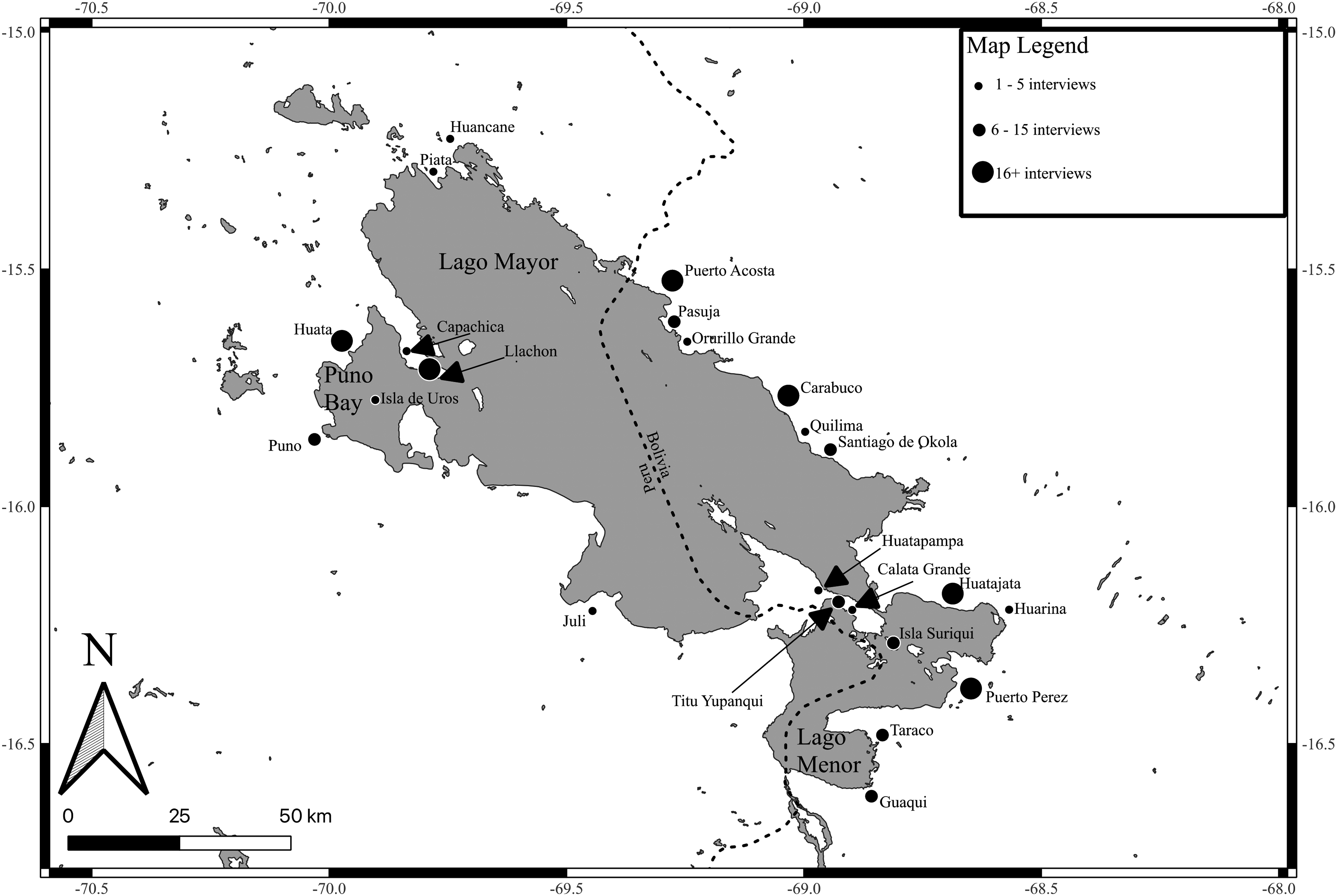
Map of Lake Titicaca with locations of interviews, including incomplete interviews, highlighted.
The Altiplano is a large plateau in the central Andes. It is a culturally constructed landscape (Ellenberg 1979; Young 1997) – that is, a landscape where an intensive human modification has been present for so long that it is difficult to discern what a pre-human environment was. Ethical approval was received from the Departamento de Ciencias Biologicas de la Universidad Nacional del Altiplano en Puno. Permission was obtained in each village from village authorities to conduct interviews.
Field Methods
Semi-structured interviews were conducted face-to-face between March and September 2022, with work done in Bolivia from March to June, and work in Peru from June to September. Six of the 10 authors live in the Altiplano or descend from the region, providing us etic and emic perspectives. Due to the dispersed nature of the population of the Altiplano, and the lack of reliable mechanisms to select interviewees randomly, we performed a convenience sample, meaning we interviewed those who were available and willing to be interviewed. While recognising that this is not the gold standard (Newing 2011), it has been used widely in ethnobiology (e.g., Gutiérrez Alonso et al. 2020), and is considered valid within ethnobiology (Newing 2011). The interviewers (Authors D. A. V. and A. C. P. C.) formulated a qualitative, semi-structured questionnaire (Supplemental Materials) to guide their interviews (Creswell and Creswell 2018; Thomsen et al. 2020). This included demographic questions, as well as a Likert scale of 0 to 10, with 0 being the worst (most disliked) and 10 being the best (most liked), to indicate their opinion of the grebe and their self-assessed knowledge of the grebe. Interlocutors were asked to justify both responses, giving a reason for their opinion of the grebe and asked what specific facts they knew about the grebe. Consent was gained verbally since a significant proportion of the population of the Altiplano is illiterate. Anonymised questionnaire responses are in the Supplemental Materials, but whole transcripts have not been provided.
Choosing Potential Explanatory Variables
We drew upon both the wider published literature on drivers of LEK, and upon our knowledge of the Altiplano to develop a list of potential explanatory variables. The variables we included are: Age, Education, Sex, Country, Ethnicity, Education, Residence Status, Profession Category, Fishing Involvement, Number of Languages Spoken, Primary Language Spoken at Home, and Religion.
Age and education are significant drivers of ethnobiological knowledge (Brandt et al. 2013; Mathez-Stiefel et al. 2012). This is especially the case in societies which are undergoing rapid economic and cultural change, such as the Altiplano, as these changes can lead to an erosion of ethnobiological knowledge (Gosler and Tilling 2022; Reyes-García et al. 2005, 2007). Historically, the Altiplano has not only been one of the poorest in South America, but also one of the few areas where indigenous culture dominates Spanish culture (Klarén 2000; La Barre 1948). However, there has been a rapid decrease in poverty over the past 15 years in the Altiplano, particularly in Bolivia (Webber 2016), leading to an economic divergence between the two regions of the Altiplano.
The division of labour between men and women in many societies can lead to differences in knowledge and attitudes towards the natural world (Brandt et al. 2013; Souto and Ticktin 2012). While advances have been made in support of women's rights in the Andes in recent decades, the larger Andean society still maintains strict gender roles (Pape 2008). This extends to fisheries where men tend to be fishers while their wives tend to sell fish (Orlove 2002).
Economic position can drive ethnobiological knowledge (Gruberg et al. 2022; Sogbohossou et al. 2015). This is both in terms of what profession an individual has, and what relationship with the natural environment is necessitated by said profession. Poorer individuals in traditional societies, who spend more time outdoors, often know more about the surrounding environment (Sogbohossou et al. 2015). However, some professions can lead to more hostility towards elements of wildlife, such as the hostility of farmers to predators (Duriez et al. 2019; Inskip and Zimmermann 2009), the hostility of fishermen to bycatch species that break nets (Blaber et al. 2009; Gandini and Frere 2012; Quispe et al. 2023), and to marine predators (Guerra 2019). Because of this, we included both profession category, and whether an individual was involved in fisheries, in our analysis. Profession was based on what interlocutors said was their primary economic activity. For fisheries, this meant that we included fishers in the profession category of fisheries, but included both fishers and those who sold fish in markets in the involvement of fisheries category. Most people make a distinction between campesino, which is an agriculturalist who primarily relies on planting, and ganadero, which is an agriculturalists who relies on livestock. Unskilled manual labour are profession which do not require specialised training to undertake, while skilled manual labour are jobs where some degree of apprenticeship or traineeship is expected. An example of the former would be being a bricklayer, of the latter, an electrician. Artisans were primarily those involved in making products, such as weavers. Homemakers are those who said that their primary economic activity was taking care of family life; this was primarily women. Professionals are those with white collar professions, such a schoolteachers and rural nurses. Mining primarily meant miners; we did not interview any mining engineers. Miscellaneous included all those whose profession did not fall into the above categories, and included shopkeepers, those involved in tourism, a musician, and the unemployed, amongst others.
The primary religion of the Altiplano is Catholicism (La Barre 1948; Stanish 2003), which combines elements of pre-Christian religion and Roman Catholicism. A key element of this is the worship of the Pachamama, or the mother earth (Mamani-Bernabé 2015; Sarmiento 2010). Recent decades have seen an increase of missionary activity, mostly by Evangelical Protestants (Salas 2018). These groups are often hostile to the Catholic Church's traditional laxity to ‘nature worship’, and Evangelicals are known to abandon local agricultural techniques that are based emically on the worship of the Pachamama (Rist, Burgoa and Wiesmann 2003).
Residents born in a community and immigrants to a community often have different levels of LEK (Souto and Ticktin 2012). Historically most people in the Altiplano would have lived near where they were born, but economic changes have caused more migration within and beyond the Altiplano.
There are often different degrees of LEK amongst different ethnic groups, even those living in the same area (O’Neill et al. 2017). The main ethnic groups of the Altiplano are the Aymara, the Quechua, and the Uro (Bouysse-Cassagne 1992; La Barre 1947; Mishkin 1947; Tschopik 1947). Of these, the Uro have historically been the most dependent on the lake (Forbes 1870; La Barre 1947, 1948; Mishkin 1947). The Uro have been historically discriminated against (La Barre 1947; Osborne 1952) due to their aquatic lifestyle (Forbes 1870; La Barre 1947). There is also a small white and mixed race, or mestizo, population, which historically occupied most positions of influence (Tschopik 1947).
The ethnobiological literature shows that there can be differences in LEK between speakers of different languages (Inglis and Pascual 2021). What languages people speak, and which they primarily speak at home, is often associated with acculturation with Western or local culture (Kik et al. 2021). Historically, most residents in the Altiplano would have spoken Quechua or Aymara, but the spread of education and mass media means more people speak Spanish.
Statistical Methods
We constructed generalised linear mixed models (GLMM) with the above-mentioned fixed effects. We included the location of the interview as a random effect to control for the non-independence of samples taken within the same village. Although results from Likert Scales are ordinal, the number of categories included is high enough that they can be treated as continuous (Sullivan and Artino 2013). We tested for collinearity of explanatory variables using variance inflation factor (VIF) of all categories and found them to have a VIF of under 5, meaning they could be included without risking multicollinearity (Akinwande, Dikko and Samson 2015).
Dependent variables in these analyses were (a) the peoples’ opinion of the Titicaca Grebe on the Likert Scale, (b) self-assessed knowledge of the Titicaca Grebe on the Likert Scale, (c) Knowledge of whether the Titicaca Grebe is endangered as a binary yes/no answer, (d) knowledge as to whether the Titicaca Grebe is endemic or not as a binary yes/no answer, and (e) willingness to conserve the grebe before being told that it was endangered or endemic as a binary yes/no answer. The GLMMs of analyses 3–5 had a binomial distribution with a logit link function, and the GLMMs of analysis 1 and 2 had a Poisson distribution with a log link function. Complex missed effects models tend to fail to converge and produce singular fits. Where this occurred, we used backwards stepwise elimination to produce a maximum feasible model using the likelihood-ratio test (Matuschek et al. 2017).
We used an information theoretic approach in deciding which models to interpret in our results (Burnham et al. 2002). We submitted each global or maximum feasible model to an automated all subsets model selection, retaining random effects, and elected the best model based on the Akaike's information criterion corrected for small sample sizes (AICc).
We omitted respondents who said they did not know of the grebe either by name or when shown a picture (N = 25). We also performed a
Qualitative Methods
Interviewees were asked to justify their opinion of the grebe and to justify their self-assessed knowledge of the grebe. A total of 221 semi-structured interviews were conducted, using a guided survey questionnaire, but also allowing for open-ended responses. Respondents’ identities were anonymised to promote open responses and their demographic information is detailed in the following section. We used an inductive, bottom-up approach to assess the qualitative results to better understand the context in which the interlocutors operate. We performed thematic analysis of interviewee responses to identify three key themes that emerged (Creswell and Creswell 2018). The three themes entailed attitudes and behaviours towards the grebe, economic indicators that differentiated knowledge about the grebe, and conservation education-based responses concerning the intrinsic value of the grebe. The thematic coding allowed us to tease out the reasons for people's opinions of the grebe (Newing 2011; Thomsen et al. 2021).
The authors include speakers of Aymara and Quechua. The degree to which various authors speak the language varies, from Author D. A. V., who learnt Quechua and Aymara as an adult, to Authors A. M. and M. A. V., who are first-language Aymara speakers and who grew up in the Altiplano region. Of the authors, only authors A. M. and M. A. V. primarily reside in the rural Altiplano region around Lake Titicaca, though Authors E. R. G. T. and E. G. M. T. live in Puno, author P. V. N. lives in La Paz. Interviews were conducted in the towns where Authors A. M. and M. A. V. reside, though they are originally from different towns in the Altiplano. The communities which were sampled were primarily rural villages, of a few hundred or at most a few thousand inhabitants. In most of them, the primary profession of most individuals is farming, though almost all of them have a nucleus of artisans and traders. They are primarily Aymara speaking rather than Quechua speaking, as reflects the demographics of the Altiplano region. Being on the lakeside, most of them have significant numbers of fishers in addition to agriculturalists, and many people partake of both activities. Almost all have weekly markets, where farmers from more remote homesteads come to sell their wares and purchase goods which cannot be made at home. Within living memory, most of these communities would have lacked electricity, running water, or paved roads connecting them to the outside world. However, all now have these amenities, and all of them also have fast cellular signal, which is regularly used by locals to conduct trade and communicate. The Altiplano region is undergoing rapid cultural and economic change, leading to significant changes in LEK (Villar et al. 2024), meaning that these surveys provide a snapshot of a society in transition from the staid routines of tradition to the more hectic patterns of a market-driven life. Socially, these communities tend to be highly distrustful of outsiders, meaning anyone not from said village. The authors had to negotiate permissions to enter and conduct research in each village, and were on multiple occasions accused of being gold prospectors. In many villages, young people are scarce, as they have moved to mining regions or cities for economic opportunities. Because of this, there are tracts of fallow land around many villages. However, these generalisations should not distract from how each village is distinct and unique. For instance, Santiago de Okola has adapted to tourism more than most other villages on the Bolivian side of the border, Guaqui has a military base that employs many residents, and Isla Suriqui is a centre of boat building in the region.
Results
Demographic Results
In total, we interviewed 221 interlocutors across 23 sites over the course of 6 months, in interviews ranging in time from 15 min to 2 hours. Of these, 196 had heard of the Titicaca Grebe either by name or photo. Forty-eight respondents recognised the official Spanish name Zambullidor del Titicaca, and 148 recognised the grebe by photo. Ten respondents who were familiar with the grebe but did not know any specific name; this number does not include those who gave it a generic name, such as pato. Of the rest, the most given names were keñola or queñola (N = 43), keñokea (N = 23), pato or patito (N = 21), keñokaya (N = 13), and choka (N = 8). All terms were used by Quechua and Aymara speakers, suggesting a shared vocabulary for waterfowl in the region.
Statistical Results
The average rating of the grebe was 6.2 on the Likert Scale, and the average self-assessed knowledge was 4.9 on the Likert Scale. Full results can be seen in Figures 2 and 3.
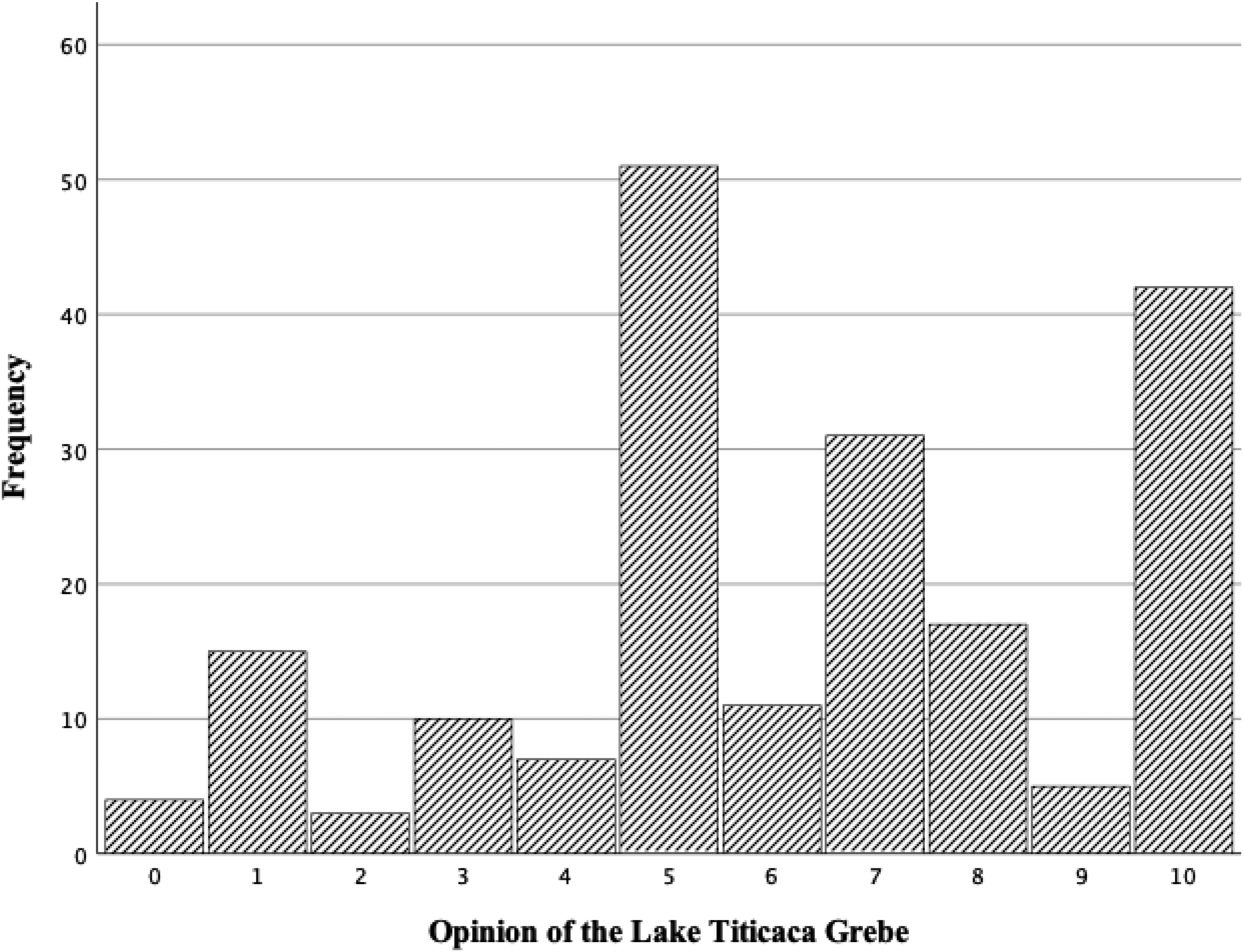
Distribution of Likert scale (0 = most dislike to 10 = greatest like) responses on opinion of the Titicaca Grebe.
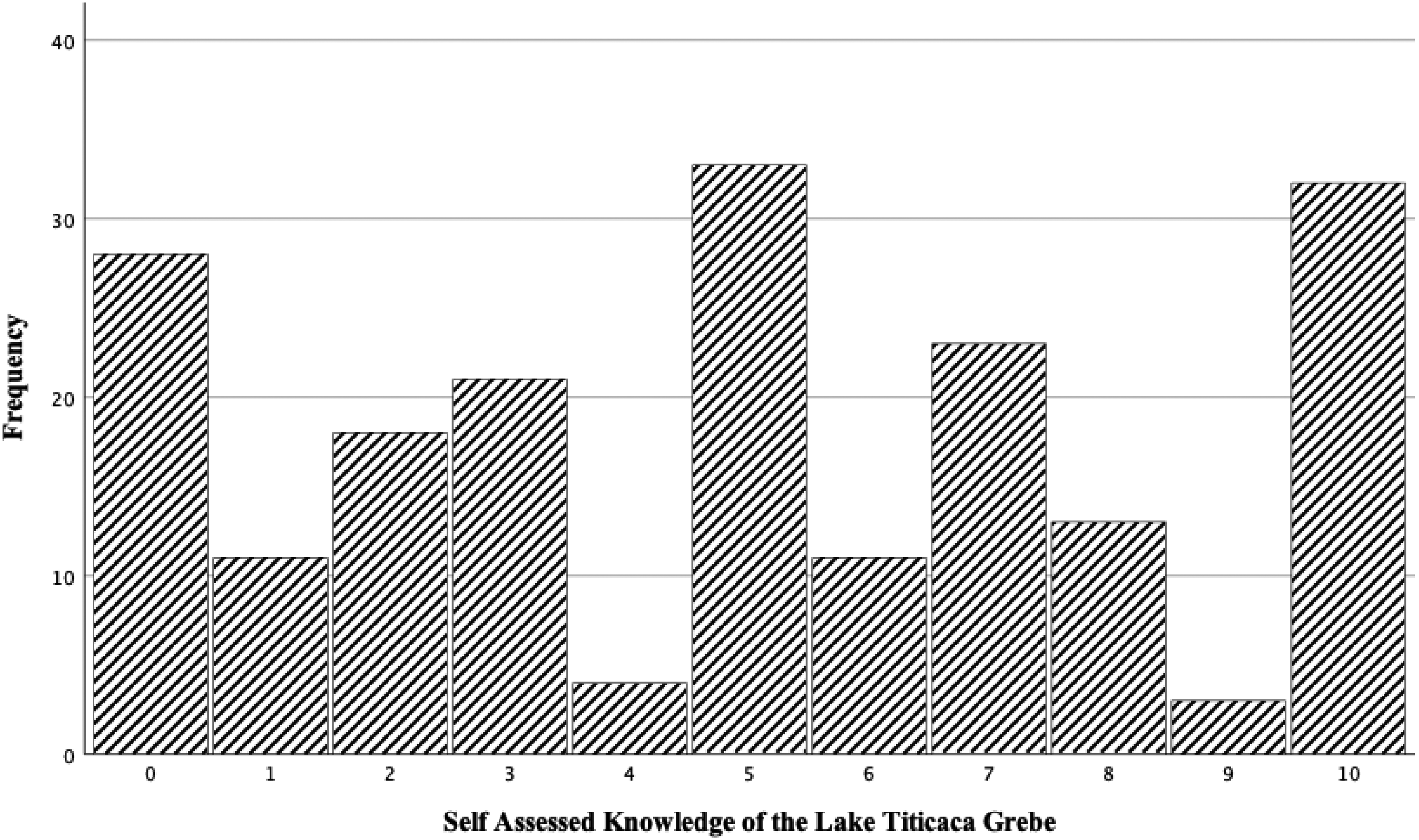
Distribution of Likert scale (0 = least knowledge to 10 = most knowledge) responses on self-assessed knowledge of the Titicaca Grebe.
The global model for opinion of the grebe failed to converge, and backwards stepwise elimination produced a maximum feasible model which included profession and religion, and the model with the lowest AICC only included profession category. AICc value tables for this, and all other GLMMs, are in the Supplemental Materials. Being involved in fisheries had a significant negative effect on opinion of the grebe (Table 1).
Results of the Optimised GLMM Looking at Factors Affecting Opinion of the Titicaca Grebe, on a Likert Scale (1–10).
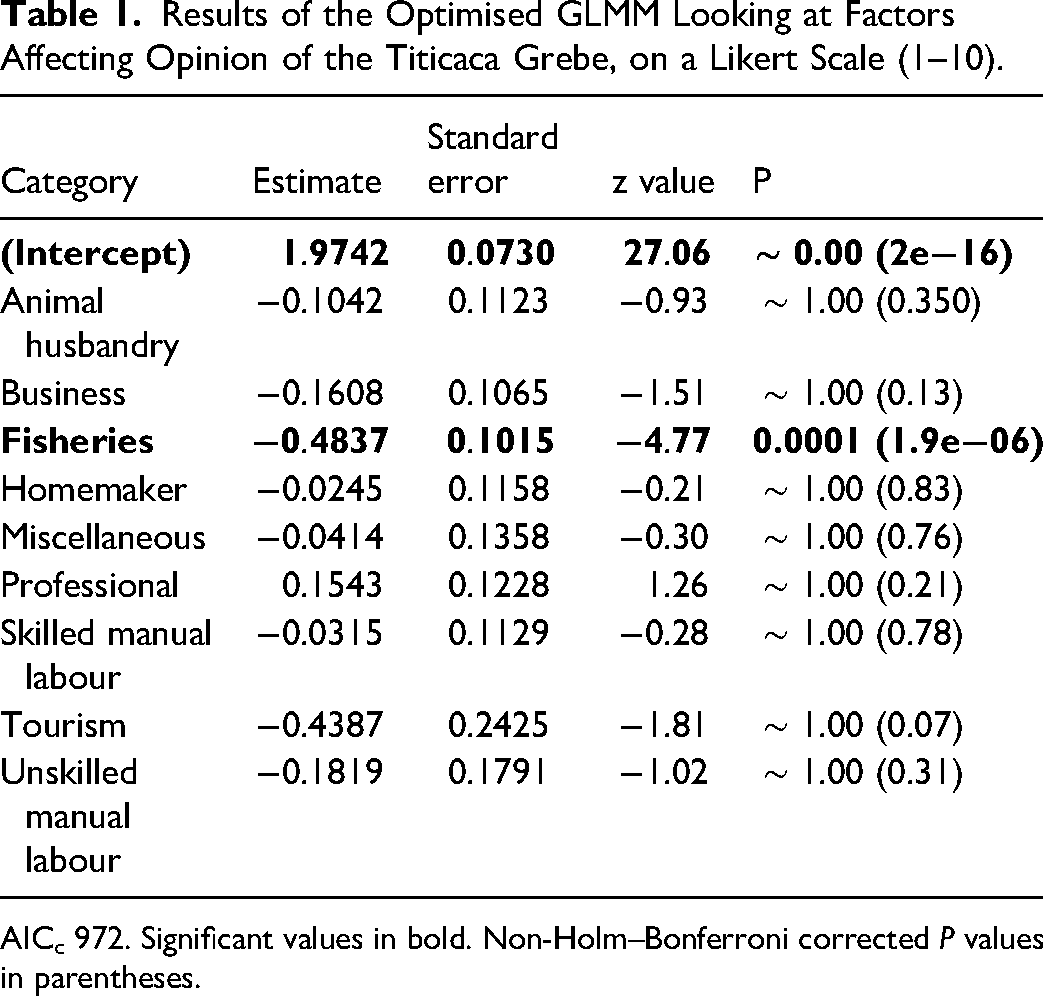
AICc 972. Significant values in bold. Non-Holm–Bonferroni corrected P values in parentheses.
The global model for self-assessed knowledge failed to converge, and backwards stepwise elimination produced a maximum feasible model which included involvement in profession country, sex, and residence status, and the model with the lowest AICC included all these variables. Being male and being resident in the same town as where one was born significantly increased self-assessed knowledge of the grebe (Table 2).
Results of the Optimised GLMM Looking at Factors Affecting Self-Assessed Knowledge of the Titicaca Grebe, on a Likert Scale (1–10).
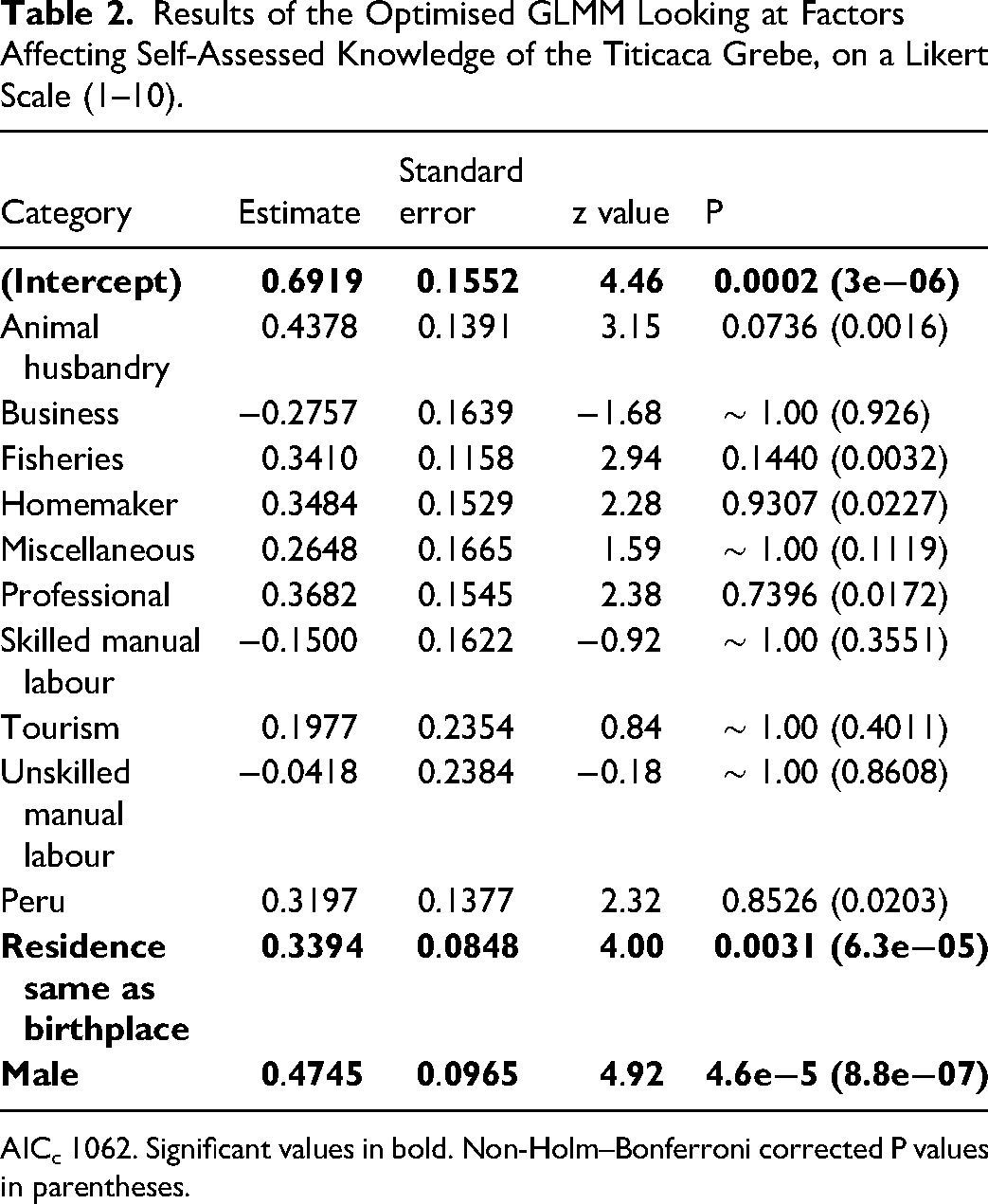
AICc 1062. Significant values in bold. Non-Holm–Bonferroni corrected P values in parentheses.
One hundred forty-nine individuals wanted to conserve the grebe before being told that it was endangered or endemic. The GLMM failed to converge, and the maximal feasible model only included profession category, though none were significant (Table 3).
Results of the Optimised GLMM Looking at Factors Affecting Willingness to Conserve the Titicaca Grebe Before Being Told it was Endemic or Endangered.
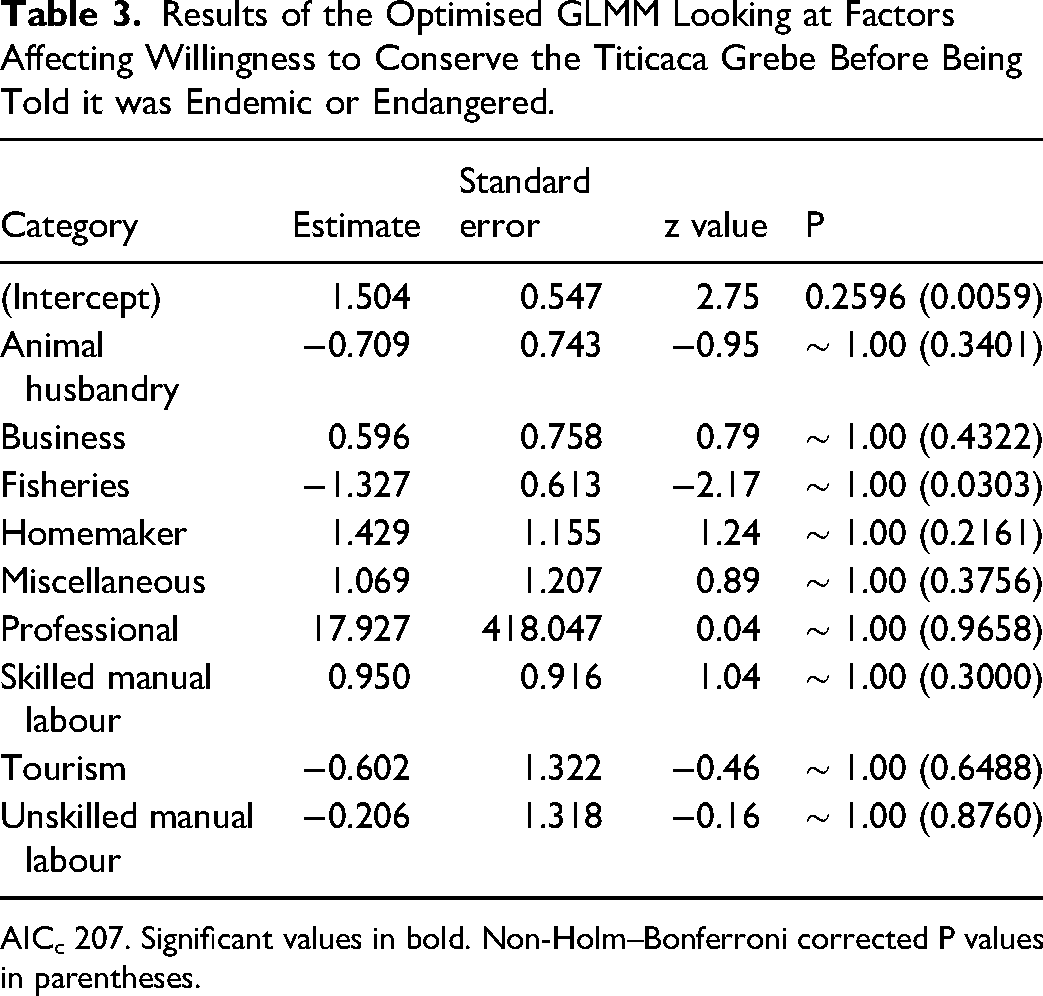
AICc 207. Significant values in bold. Non-Holm–Bonferroni corrected P values in parentheses.
Ninety-seven individuals knew that the grebe was endangered. The GLMM failed to converge, and the maximal feasible model included education, religion, and country. The model with the lowest AICC included all these variables, though none were significant (Table 4).
Results of the Optimised GLMM Looking at Factors Affecting Knowledge That the Grebe is Endangered.
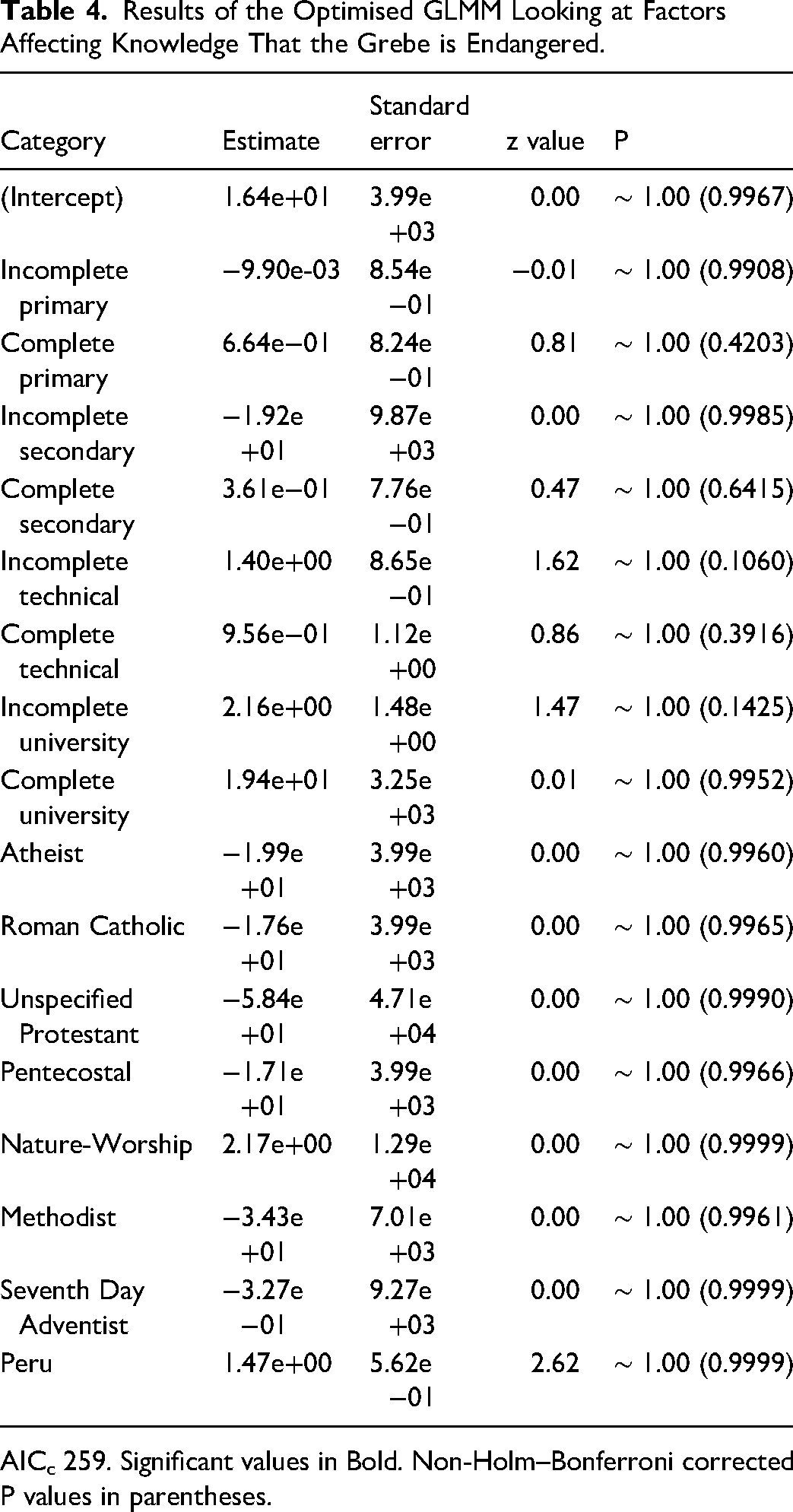
AICc 259. Significant values in Bold. Non-Holm–Bonferroni corrected P values in parentheses.
Eighty-one individuals knew that the grebe was endemic. The GLMM failed to converge, and the maximal feasible model included country, family size, profession category, religion, and sex. The model with the lowest AICC included country, family size, and sex, of which being Peruvian was significantly associated with knowing the grebe was endemic (Table 5).
Results of the Optimised GLMM Looking at Factors Affecting Knowledge That the Grebe is Endemic.
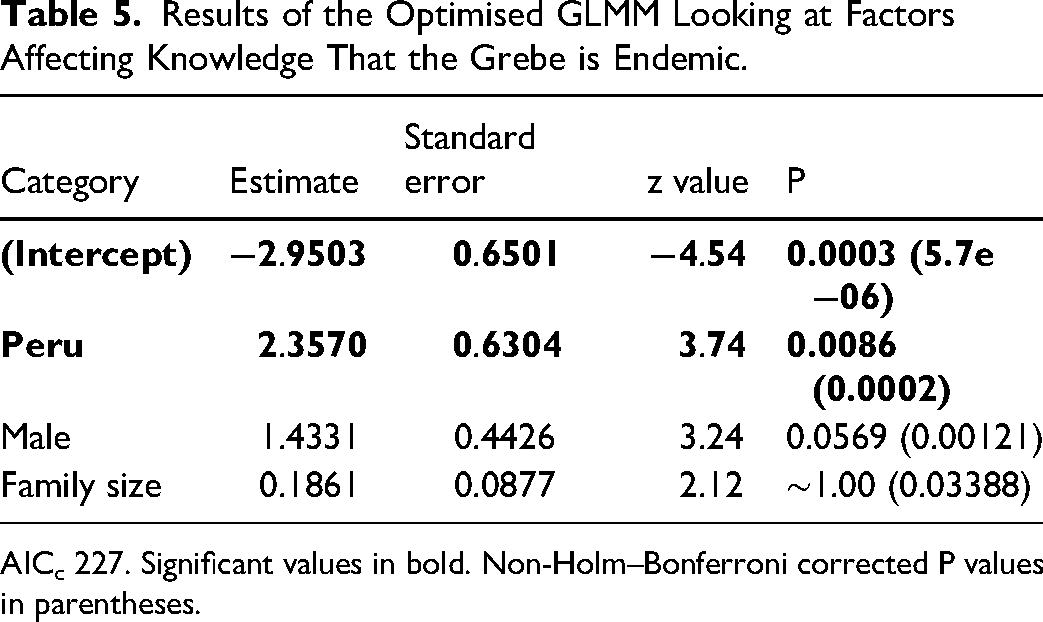
AICc 227. Significant values in bold. Non-Holm–Bonferroni corrected P values in parentheses.
After having been told that the grebe was endangered and endemic, no individual who had previously supported grebe conservation said that they were opposed to conservation. Thirteen of the 47 who had been opposed to the grebe's conservation said they were now in favour of conserving it (
Qualitative Results
Many interlocutors did not care about the Titicaca Grebe. This was not because they disliked it, but because they had little interest in nature. The comments of Interviewee #71 in Tito Yupanqui, Bolivia, are typical – ‘it does not affect my life, so I do not care about it’. 1
Amongst those who liked the grebe, most viewed it as innocuous. The view of a woman in Isla Suriqui, Bolivia, was typical when she said that the grebe ‘does not do any harm’. 2 We found three main positive traits associated with the grebe. The most common positive comment was that it was pretty, with some people saying that they enjoyed watching it as it dives. Another positive attribute of the bird was that since it was local and Andean, it must be protected by local and Andean peoples. This view was put by a 66-year-old Aymara man in Puerto Pérez, Bolivia, who said that the bird should be protected because it ‘is Andean, and it is ancestral to us’. 3 Finally, some said the bird was part of a wider ecosystem, and thus had a role which meant it should be protected. This view was expressed by a 54-year-old Quechua man in Llachon, Peru, who said ‘it is an indispensable part of the ecosystem’. 4 Three people, one in Guaqui, Bolivia, one in Carabuco, Bolivia, and one in Huatajata, Bolivia, mentioned tourism as an economic benefit of the grebe. Two people mentioned any practical uses of the grebe, one in Puerto Acosta, Bolivia and one in Taraco, Bolivia. In both cases, they said that the grebe's cry was a warning sign for bad weather on the lake.
Negative views of the grebe mainly came from fishers. Fishers viewed the grebe as competition for dwindling numbers of fish, and due to the damage they do to nets when caught as bycatch. This view of the grebe, as a nuisance animal, is summed up by a fisher in Huatajata, Bolivia, who said that the grebe ‘breaks nets, eats fish, and can’t be eaten’. 5 This hostility to the grebe was on display in the monthly meeting of the heads of fishing villages in Puno, Peru, where the lead author heard a room full of heads of fishing associations state various reasons why conservation of the grebe would be a terrible idea. Non-fishers’ hostility to the grebe tended to stem from problems which fisher relatives had with grebes falling in their nets and competing with them for fish, or from a general dislike of wildlife. All fishers who expressed extreme dislike of the grebe were Aymara and Quechua. Uros were willing to discuss the grebe, but were more reticent to engage in surveys, making the quantitative sample size of Uro responses low. Further research should inquire about the effects of intra-Indigenous group dynamics on grebe conservation, which is beyond the scope of this article.
Most people provided very limited natural history knowledge of the Titicaca Grebe, independent of self-assessed knowledge. Usually, this was that the grebe lived in water or in the aquatic vegetation, or that it ate fish. Others also commented on how long it could stay in the water for, with some claiming to have seen the grebe staying underwater for several minutes. Several observations of grebe behaviour, not in the ornithological literature, were provided. One included how the species provides parental care, such as carrying its young on its back and throwing them in the water and rushing off in the opposite direction to them as a form of distraction when attacked by Andean gulls seeking to prey upon chicks. This was attested to by multiple people and was witnessed by the authors. Locals also seemed to be aware of a breeding season for the grebe, with multiple people mentioning that eggs are laid between August and October. This is contra the ornithological literature which says the grebe breeds year-round (Fjeldså 1981, 2004; Martinez, Aranibar and Gutierrez 2006). Subsequent field observations of the grebe has verified that the grebe has a breeding season which is concurrent with the Altiplano's rainy season, which usually runs from August to October (D. A. V., pers. obvs.). Several older individuals mentioned that the grebe used to be much more common, while younger people indicated there were more now.
Discussion
While the literature often portrays human–wildlife conflict or co-existence in binary terms, here we show that both exist simultaneously within a society. Most people were apathetic about the grebe, having a passive coexistence with it. While apathy is not as severe a conservation issue as hostility, it can still be a problem (Holladay and Ormsby 2011; Kwan et al. 2017). Apathy reduces the willingness of people to change routines or assist in conservation efforts, making those efforts which do occur overly reliant on a few individuals (Holladay and Ormsby 2011). Apathy is generally seen to result from a lack of education (Kwan et al. 2017), though it can also be due to a western-style education which only finds value in profit. We found some evidence for the former. While many people rated themselves highly when asked their self-knowledge of the grebe, when asked about whether the grebe was either endangered or endemic, most (72.4%) admitted that they had not known at least one of these facts. This suggests that there is a role for environmental education in teaching that the grebe is endangered and endemic. However, there are limits to this type of environmental education – only 13 out of 47 people who opposed conservation of the grebe changed their mind after being told that it was endangered and endemic.
Fishers’ dislike of the grebe, though not representative of the wider community's views, was seemingly motivated by material forces (Harris 1980). The grebe conflicted with fishers as competition for fish, and as a damager of their nets. There is an extensive literature on terrestrial problem species (Nyhus 2016), but there is less literature on aquatic problem species (Blaber et al. 2009; Gandini and Frere 2012; Guerra 2019). A parallel to fisher–wildlife conflict is farmer–wildlife conflict; literature from those conflicts suggests that while the amount of damage is significant in influencing dislike (Inskip and Zimmermann 2009; Nyhus 2016), it does not explain all of it. The perception of damage is enough to fuel opposition to conservation, independent of levels of damage (Thomsen 2022; Treves et al. 2017). This perception is itself driven by attitudes, such as the ones which we have studied in this paper. Species which people are already predisposed to dislike are blamed for damage even when they do not do it, while those which people like are not blamed for damage they might actually do.
Those who liked the grebe often spoke of its aesthetic value, which while a common defence of conservation (Tribot, Deter and Mouquet 2018), is not easily converted to policies to change attitudes. Identification of the grebe with the Lake Titicaca region, including its people, may be more useful. Conservation has often been promoted by identifying a species with a people (Hammerschlag and Gallagher 2017), and perhaps by making the Titicaca Grebe a symbol of the Titicaca region, its conservation could be aided. This would lead to a positive cultural coexistence, as seen in other areas where wildlife that can harm people have a high degree of cultural saliency (Dhee et al. 2019).
The differences between younger and older respondents in how they viewed population trends of the grebe is evidence of shifting baseline syndrome (Pauly 1995). Shifting baseline syndrome is where people believe that their lived experiences are normal, causing the baseline for ‘natural’ ecosystems to shift over time. Older residents said the population of the Titicaca Grebe had declined, which is consistent with the decline in grebe populations between 1970 and 2000 (Engblom et al. 2001). Younger respondents said the grebe's population had increased. This suggests that there may have been a population recovery of the grebe since a low point in the early twenty-first century, but that this recovery is not to the level which the grebe had before the introduction of commercial fisheries. Shifting baselines can artificially influence degraded ecosystems as optimal conservation programme targets (Jones et al. 2020). In the case of the Titicaca Grebe, conservation targets should consider the pre-industrial population as the goal, rather than the recently recovered population.
Conclusion
Conservation is about people as much as it is about wildlife. However, the literature can at times treat many human groups, particularly indigenous ones, as monoliths in human–wildlife relations. Here, pluralistic attitudes leading to conflict and coexistence do exist within indigenous societies. Most local people expressed apathy towards the Titicaca Grebe, leading to passive coexistence, apathy defined as a score between 4 and 6. Conflict was driven by fishers’ self-perceived economic interests and is likely to be a significant barrier to conservation of the species. Environmental education that focuses on the Grebe's Andean status could help conservation efforts by fostering a more positive, active coexistence. Further research is needed to determine if intra-fisher dislike is driven by objective bycatch numbers, and on how to mitigate both bycatch and perceived competition between fishers and grebes.
This article provides insights into how future studies can approach Indigenous–wildlife conflict and coexistence not as a dichotomy that exists between cultures, but as a spectrum of opinion that exists within them – like any other human culture. Indigenous cultures and languages should be respected and given equal standing in human–wildlife relations (Thomsen et al. 2023), but we must also recognise individual agency and how this affects intra-cultural diversity of opinion and knowledge of wildlife. Only then can we better understand how cultural drivers engender human–wildlife coexistence not just in the Altiplano, but in context-specific cases globally.
Supplemental Material
sj-docx-2-ebi-10.1177_02780771241246856 - Supplemental material for Indigenous–Wildlife Conflict and Coexistence in the Altiplano
Supplemental material, sj-docx-2-ebi-10.1177_02780771241246856 for Indigenous–Wildlife Conflict and Coexistence in the Altiplano by D. A. Villar, Bastian Thomsen, Anahi Cosky Paca-Condori, Edwin R. Gutiérrez Tito, Paula Velásquez-Noriega, Edilio Mamani, Mario Arivilca Vilca, Edmundo G. Moreno Terrazas, Jorgelina Marino and Andrew G. Gosler in Journal of Ethnobiology
Supplemental Material
sj-xlsx-3-ebi-10.1177_02780771241246856 - Supplemental material for Indigenous–Wildlife Conflict and Coexistence in the Altiplano
Supplemental material, sj-xlsx-3-ebi-10.1177_02780771241246856 for Indigenous–Wildlife Conflict and Coexistence in the Altiplano by D. A. Villar, Bastian Thomsen, Anahi Cosky Paca-Condori, Edwin R. Gutiérrez Tito, Paula Velásquez-Noriega, Edilio Mamani, Mario Arivilca Vilca, Edmundo G. Moreno Terrazas, Jorgelina Marino and Andrew G. Gosler in Journal of Ethnobiology
Footnotes
Acknowledgements
We would like to thank the indigenous communities of the Altiplano which so generously permitted us to conduct research in their communities.
Declaration of Conflicting Interests
The authors declared no potential conflicts of interest with respect to the research, authorship, and/or publication of this article.
Funding
The authors received no financial support for the research, authorship, and/or publication of this article.
Supplemental Material
Supplemental material for this article is available online.
Notes
References
Supplementary Material
Please find the following supplemental material available below.
For Open Access articles published under a Creative Commons License, all supplemental material carries the same license as the article it is associated with.
For non-Open Access articles published, all supplemental material carries a non-exclusive license, and permission requests for re-use of supplemental material or any part of supplemental material shall be sent directly to the copyright owner as specified in the copyright notice associated with the article.
