




Abstract
Globally, there is increasing evidence that Indigenous peoples have manipulated plant and animal populations over millennia. The Bunya Pine (Araucaria bidwillii Hook.) is a coniferous tree native to subtropical and tropical eastern Australia, which produces 30–100 large, edible seeds within a large cone weighing 5–10 kgs. Endemic Bunya populations occur as two disjunct populations: one in south-eastern Queensland/north-east New South Wales and the other in northern Queensland. We investigated possible pre- and postcolonial Bunya seed dispersal within and between the two separate populations by utilising multidisciplinary methods to examine Aboriginal cultural connections with Bunya. Analysis of historical sources and ethnographic interviews conducted with Aboriginal knowledge holders provided strong evidence for localised deliberate dispersal within the southern population but no solid evidence for dispersal in the north, suggesting two distinct modes of Aboriginal interaction with this species. Early European colonial records documented the Indigenous cultural significance of southern Bunya, evidenced by large feast gatherings, creation Stories, Aboriginal familial tree connections, seed carrying and planting, and storage in camps. The continued cultural attachment post-colonisation was evident from ethnographic interviews with Indigenous knowledge holders that revealed plantings of this species on Aboriginal missions and modern grave sites. The development of an overarching effective biocultural management plan to conserve the biological and cultural importance of this species is therefore particularly important for the southern population, especially in the face of new threats from pathogenic dieback. The individal tree connections of certain Aboriginal families also warrant deeper ethnographic study to target planting and restoration efforts that preserve these kin-based biocultural connections.
Keywords
Introduction
Biologists have seldom regarded Aboriginal people as significant agents of plant dispersal in Australia (Ens, Rossetto and Costello 2023). However, elucidation of the influence of Aboriginal people on vegetation and dispersal patterns is of growing interest in restoration and species modelling research (Ens, Walsh and Clarke 2017; Gottesfeld 1994; Head 1989; Silcock 2018). This interest has been heightened by the intensifying debate about Indigenous peoples as hunter-gatherers versus active land managers and agriculturalists (Pascoe 2014; Sutton and Walshe 2021) and the broader use of novel genetic technologies that allow for the distinction between natural (e.g., animals, wind, water) and human dispersal events across geographic barriers (Fahey et al. 2022; Rossetto et al. 2017).
Evidence from the Holocene period shows how the ancient foragers of Australia subtly changed species patterns, ecological systems, and landscapes (Fletcher and Thomas 2010). For example, palaeoecology work found that Aboriginal burning in western Tasmania facilitated the Holocene establishment of open moorland in regions occupied by rainforest during previous interglacial periods (Fletcher and Thomas 2010). Evidence also suggests the movement of plant species to specific Aboriginal camping locations that further demonstrates that species were both unintentionally and deliberately moved through foraging activities (Ellis 2014; Hynes and Chase 1982; Kerkhove 2016). These subtle forms of sustainable land management practices were overlooked by most early non-Indigenous observers, which supported the incorrect notion that Australian Indigenous peoples were passive hunter-gatherers (Hallam 2014; Williams and Hunn 1982).
Aboriginal people seasonally moved across their ancestral estates of the diverse Australian landscape, in reference to their profound understanding of their Country. Across many of the world's Indigenous cultures, people have maintained a strong connection to their ancestral lands, aligned with their own all-encompassing worldviews. For Aboriginal people, Country holds immense significance; it is considered the essence of life, the beginning and end of existence, the source of life itself, and Aboriginal communities have served as the ancient custodians of their lands since time immemorial (Kwaymullina 2005).
The management of Country was facilitated by the intergenerational sharing of biocultural knowledge, which was acquired through foraging experiences with Elders and cultural exchanges at ceremonial gatherings. Those who attended these ceremonial gatherings often had to camp along their journeys (Kerkhove 2016), travelling vast distances guided by the stars and songlines, and by using established pathways and trade routes (Fuller et al. 2014; Steele 1984). During these events, neighbouring Aboriginal groups came together to settle disputes, share knowledge, organise marriages, and discuss their deep connection to their unique lands (Clarke 2003; Steele 1984).
Prior to colonisation, and to some extent still now, Aboriginal people nurtured and cared for their Country as they moved within their clan estates, practicing proto-agriculture instead of large-scale crop planting (Denham 2008; Hallam 2014). These activities have contributed to the patchy, linear, or disjunct populations of species, as an artefact of the movement of people. One species exemplifying a disjunct geographical pattern is the Bunya Pine (Araucaria bidwillii Hook.), a coniferous tree native to subtropical and tropical eastern Australia that yields extensive crops of large, nutritious nuts (Figure 1). Bunya occurs as two disjunct populations: one distributed widely in south-eastern Queensland and north-eastern New South Wales; and the other with a much more restricted distribution in the Wet Tropics Bioregion of north Queensland (Figure 2). Within the southern population, the most extensive stands of Bunya occur in the Bunya Mountains and along the Blackall Ranges. In this area, the historical significance of the species to Aboriginal people is well documented (Davis 2013; Jerome 2002; Petrie and Petrie 1904; Ross, Ulm and Tobane 2013; Steele 1984; Swan 2017; Webb 1964). The ongoing high cultural value of the Bunya in south-eastern Queensland and adjacent parts of north-eastern New South Wales is widely celebrated through the recent revival of the popular Bunya Nut ‘Feast’ ceremonial gatherings. However, based on the literature to date, the two small and localised occurrences at Mt Lewis (NE of Cairns) and Cannabullen Falls (SW of Cairns), that constitute the northern population, appear to have limited cultural values attached to them.
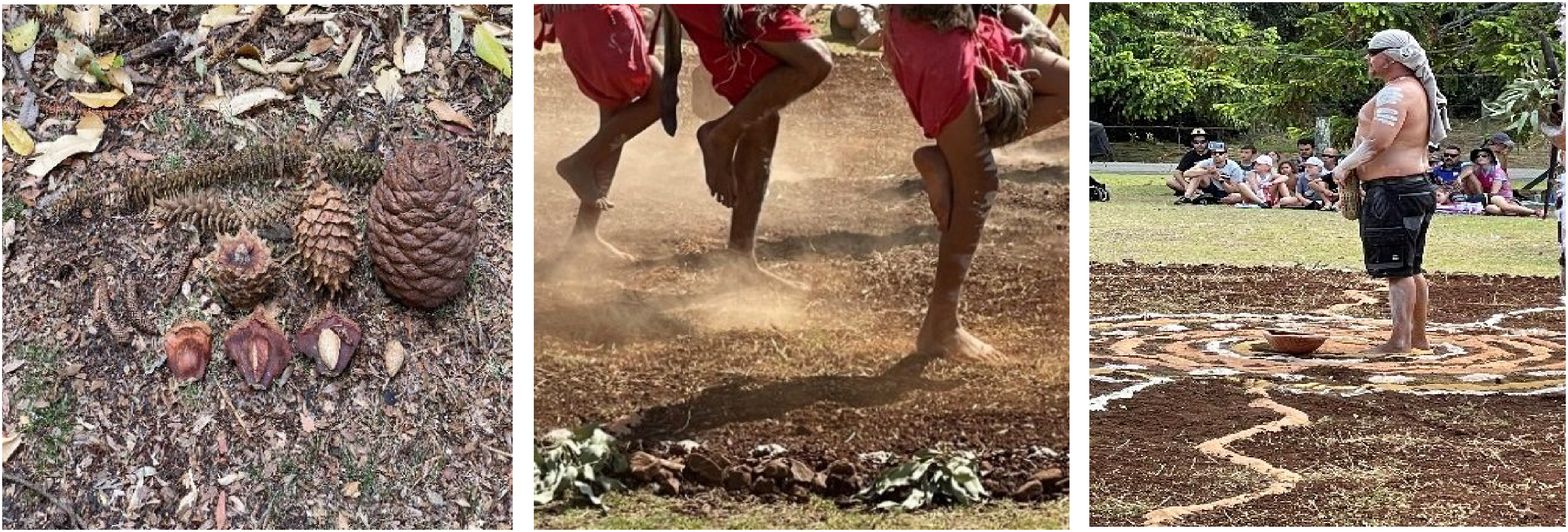
Bunya cones and nuts and Aboriginal cultural dancers at the Bunya Mountains Bunya Festival 2021. Image sources: P. Cooke.
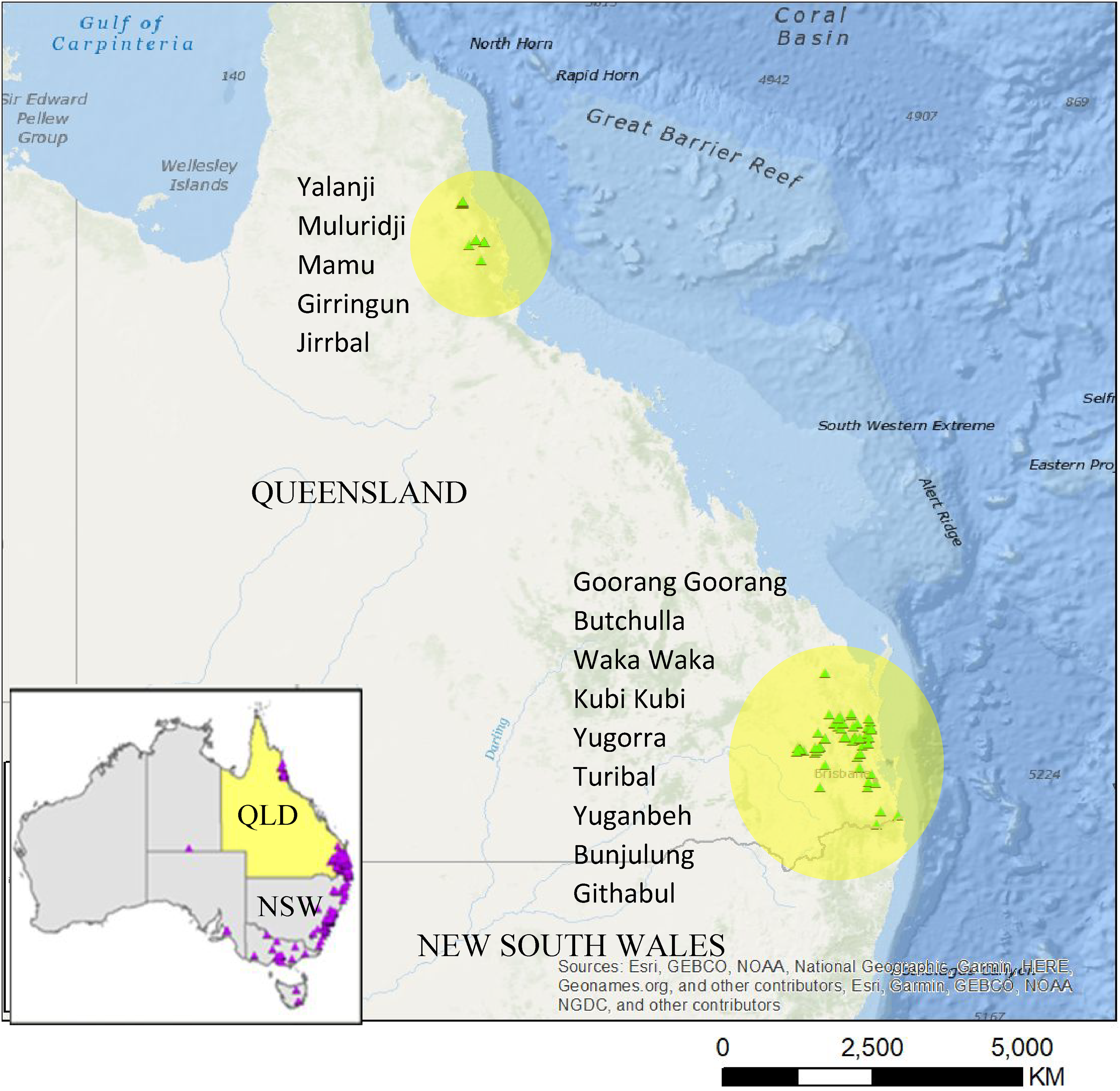
Atlas of Living Australia (ALA) Bunya records that may have existed prior to European colonisation (green triangles) in Queensland (QLD) and New South Wales (NSW) with Aboriginal language groups within the Bunya regions (yellow circled area) noted. All ALA Bunya records prior to filtering for deduced colonial plantings are shown in inset map (purple triangles).
This paper explores the intricate relationship between Aboriginal peoples and the plant dispersal patterns in Australia, with a particular focus on the Bunya Pine. Firstly, we aimed to investigate the extent of Aboriginal influence on the distribution of this species through resource acquisition practices and techniques, both intentional and unintentional. We hypothesised that Aboriginal foraging activities have left distinctive geographical patterns in the distribution of Bunya as an artefact of seasonal movements. Secondly, we delved into the cultural significance of the Bunya Pine in different regions, comparing the well-documented importance of the species to Aboriginal communities in south-eastern Queensland and adjacent parts of north-eastern New South Wales with the less recognised significance of the smaller and more isolated northern population. We hypothesised that the cultural value attached to the southern Bunya populations would be substantially higher than that of the northern population. Through this study, we aimed to contribute to a more nuanced understanding of the impact of Aboriginal land management practices on plant dispersal and determine the cultural significance of a key plant species within diverse Aboriginal communities across Australia.
Methods
We deployed a mixed methods approach that adopted: compiling data on early Bunya distributions; spatial analysis of relevant Aboriginal Traditional Owners groups using geographic information systems (GIS).
When we were confident with our assessment of these foundational parameters, we began ethnographic interviews of knowledge holders and conducted a place-based literature review research from the anthropological, linguistic, biological and Australian history disciplines. The research adopted a four-stage process:
Identify the likely pre-colonial distribution of Bunya. Identify the cultural authority groups for the Bunya locations. Ethnographic research with Aboriginal knowledge holders. Investigate the relevant historical literature for the Bunya at the study sites.
Stage 1: Identify the Likely Pre-Colonial Distribution of Bunya
Recorded locations of Bunya were gained from the Atlas of Living Australia (www.ala.org.au; data accessed 10/3/2023), which contained 694 relevant records. This data set included recent plantings well outside the range likely to have occurred at the time of colonisation, so to focus on records of individual trees that were likely present at the time of colonisation, we cleaned the data by removing all records from after 1970 and outside of Queensland and New South Wales, which reduced the dataset to 171 records. These 171 records were further reduced to 93 records by removing the records that noted that individuals were from European places, such as plantations and botanic gardens, or from unknown localities.
Stage 2: Identify the Cultural Authority Groups for the Bunya Locations
To verify the Aboriginal cultural authorities (Traditional Owners) for the Bunya records identified in Stage 1, we reviewed data from the National Native Title Tribunal (established by the Native Title Act 1993) to identify the relevant language groups (Figure 2), Prescribed Body Corporate groups and Aboriginal Corporations to approach regarding research on their ancestral Country (Cooke et al. 2022). This contact was made through an initial phone call then a face-to-face meeting or Zoom meeting if this was not possible.
The investigating team adopted a research methodology that focused on the contemporary Aboriginal community, with a consideration of the views held by the Traditional Custodians of Country where the Bunya was found. The primary author, Cooke, who is an Indigenous Gungalida man from the Gulf Country of northern Queensland, worked within the Indigenous Terms of Reference (ITR) framework (Oxenham 1999) and utilised a set of cultural protocols developed to record Aboriginal knowledge of the Bunya, which highlighted Indigenous ecological knowledge and cultural experiences and values (Cooke et al. 2022). Cooke also adhered to the Australian Institute of Aboriginal and Torres Strait Islander Studies (AIATSIS) Code for Ethical Research with Indigenous Peoples (2020) which considers the spirit, integrity, reciprocity, respect, equality, survival, protection, and responsibility of Indigenous research. Human research ethics approval was obtained from the Macquarie University Ethics Committee (HREC number 5201818384862). A key requirement of the ethical process was the preparation of an information sheet and prior informed consent form for the research project, which sought approvals for: participants to be audio recorded; interviews to be transcribed; and information (including photographs) to be published following final consent prior to publication. Interviews took place at a time and place where the interviewee was comfortable, preferably on Country.
As a researcher, Cooke endeavoured to make sure all appropriate cultural protocols were adhered to throughout the project (see Cooke et al. 2022). He worked to ensure all Aboriginal participants felt safe, secure, and relaxed within their own environments, so they felt comfortable as they shared their knowledge and experiences. Cooke asked the participants to embrace his research and understand that he wanted to gain an understanding of their worldview, and not to intrude on their knowledge, experience, and aspirations.
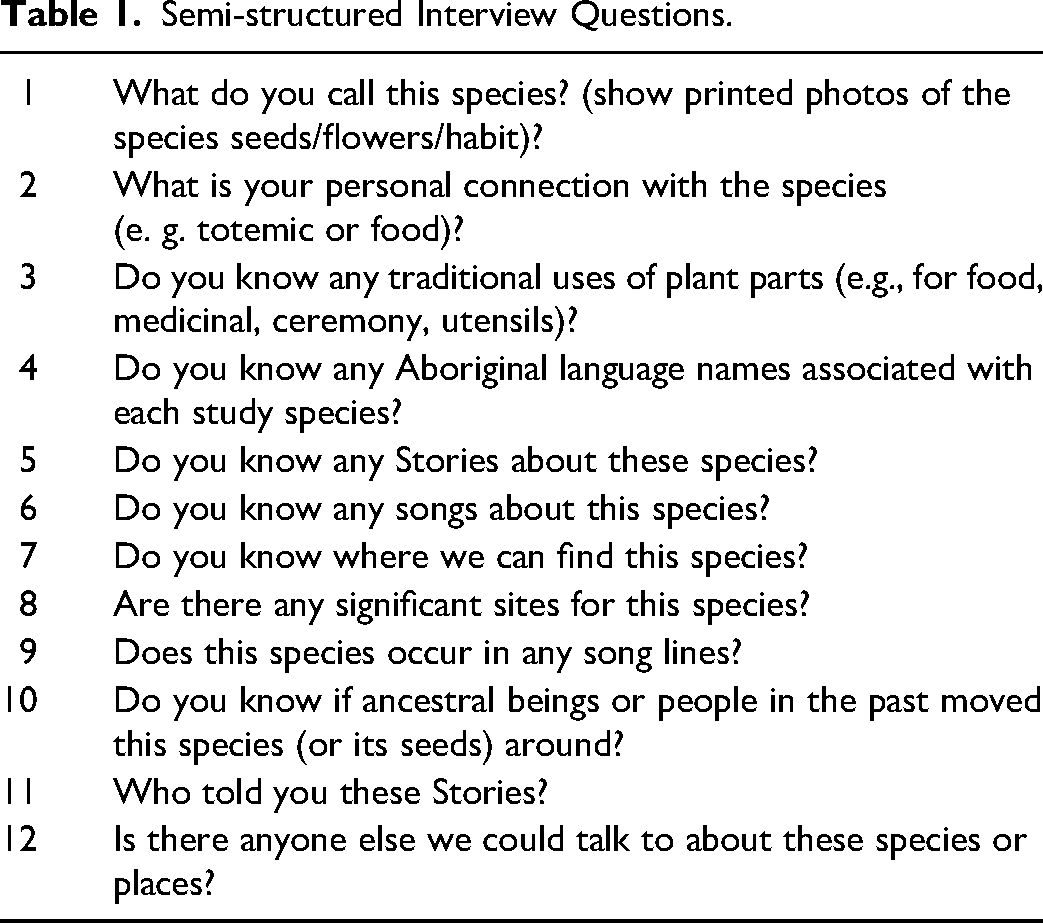
The interviews were conducted using a culturally appropriate semi-structured style of questioning. Incorporating this flexibility into the interviews gave Cooke the ability and freedom to guide the process, and allowed the participants to elaborate further on the topic in ways that were meaningful to them. This approach is centred on an Indigenous and naturalistic approach, wherein the participants were simply prompted to discuss the topic at hand (Oxenham 1999). The researcher audio-recorded the interviews and later transcribed them. Participants were asked 12 semi-structured questions (See Table 1) about their knowledge of pre-colonial and post-colonial dispersal of Bunya and their cultural knowledge and attachment to this species.
Semi-structured Interview Questions.
Stage 4: Historical Literature Analysis
To further explore evidence for pre- and postcolonial dispersals of Bunya by Aboriginal people, we examined the historical, anthropological, linguistic, and colonial literature. Of particular interest were the ethnographic notes on Bunya dispersal, trade or travel routes, songlines, storage, and the locations of these activities. A systematic review of 110 papers in the AIATSIS MURA catalogue (accessed 1st March 2023) and Google Scholar (accessed 1 March 2023) was conducted to find any written, visual, or audio records about Bunya. Search terms used included English and known Aboriginal language words: bunya, Bunya Mountains, Bunya, A. bidwillii, bonyi, banza, bunya nut, bunya mountains, bon-yi, buhnua, banza-tunza, nut song, nut dance, and boonya.
Results
Stage 1 and 2: Bunya Country and People
Processing of data obtained from the filtered Atlas of Living Australia revealed 93 locations where the Bunya may have existed prior to colonisation (Figure 2). Cross-checking these sites through Stage 2 suggested that 13 Aboriginal language groups had connections to these places (see yellow shaded areas and names of Aboriginal language groups in Figure 2). However, we acknowledge that there may be more language groups that also have an affiliation with this plant species.
Stage 3: Ethnographic Research with Aboriginal Knowledge Holders
For the northern and southern Bunya populations, 37 Aboriginal knowledge holders were interviewed. Most of the people interviewed ranged in age between 31 and 60 (n = 13), followed by 61 and 75 (n = 8), 20 and 30 (n = 6), and older than 75 (n = 1). Most participants were male (86%), and all interviews were at least 15 min long.
During the ethnographic interviews around southeast Queensland and northern New South Wales, many Aboriginal people spoke about movement of the species before and after colonisation (Table 2). They described traditional language terms related to Bunya and explained strong connections to the trees through their creation stories, which included narratives about how they became such a prominent element of the landscape.
Selected Quotes from Aboriginal Knowledge Holders Associated with the Southern Population of Bunya, Concerning Potential Pre- and Postcolonial Cultural Bunya Practices.
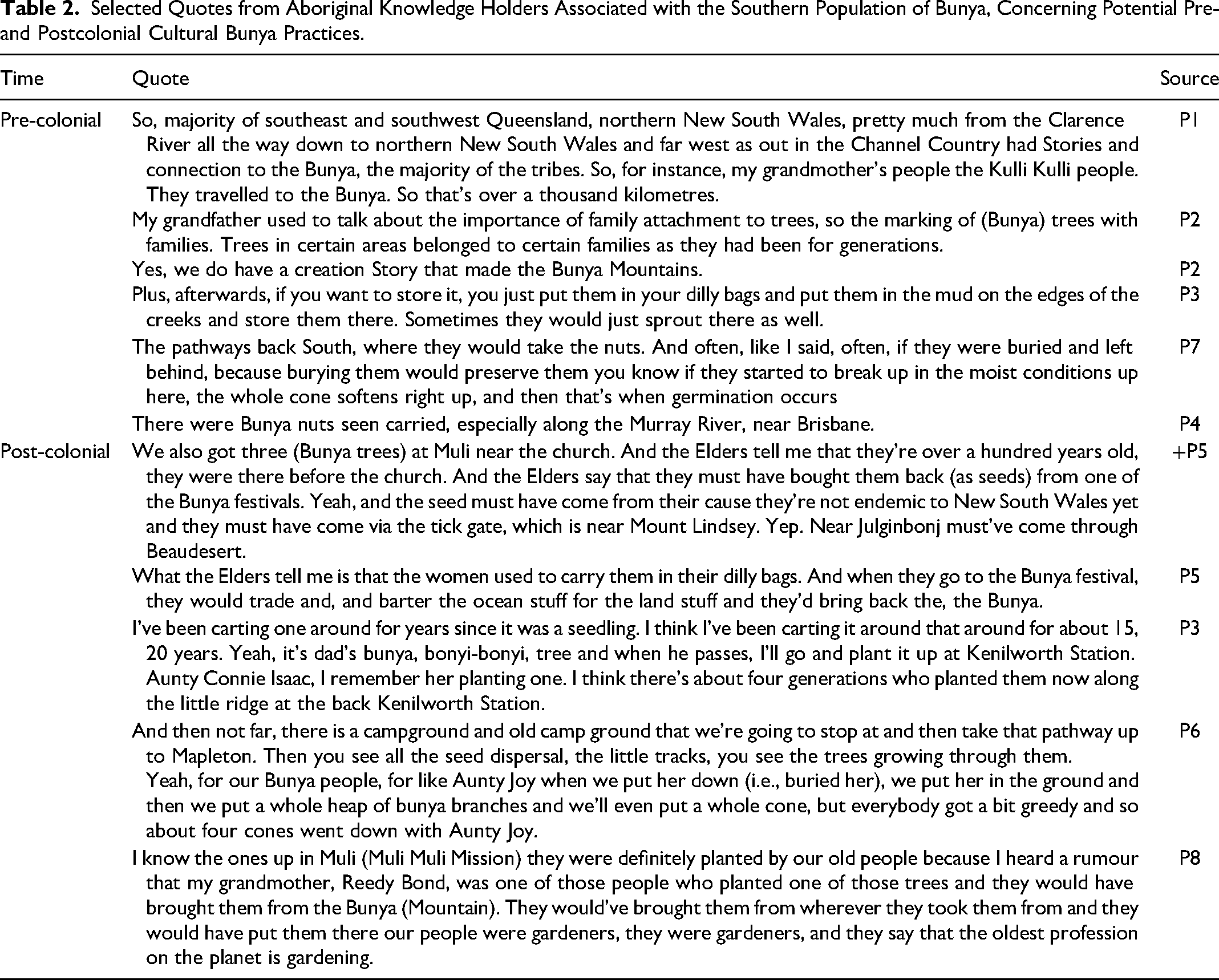
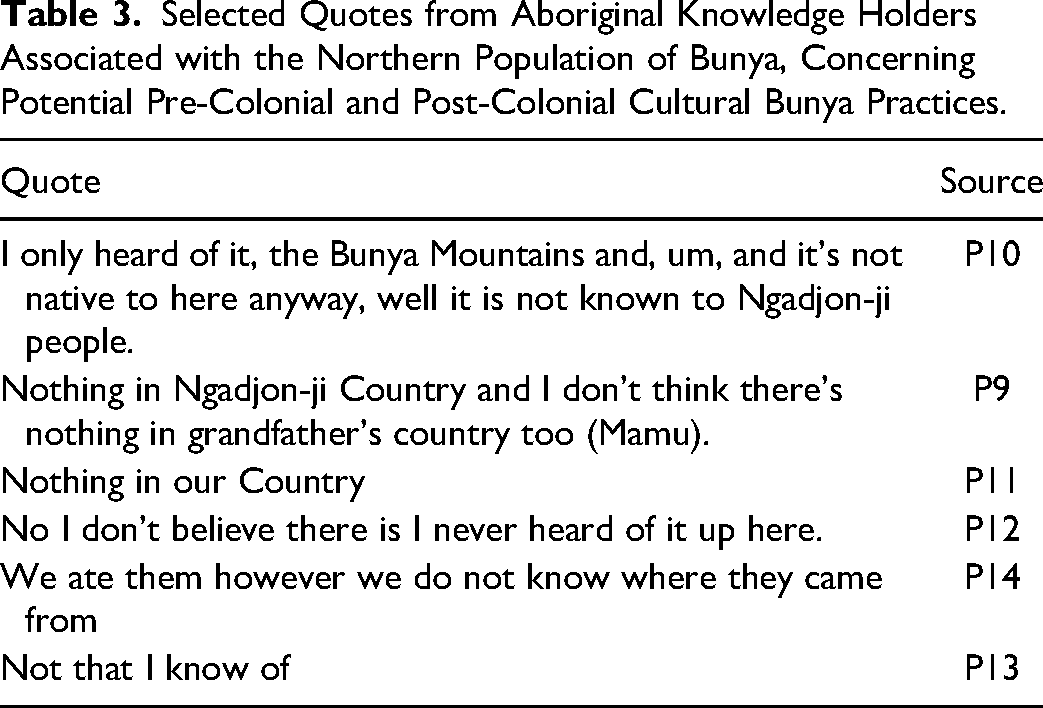
It was evident from the interviews (Table 2) that prior to and during early European colonisation in southern Queensland, many Aboriginal people moved from their ancestral Country along established pathways (using access protocols) to the ‘Great Bunya Festival’, which was a ceremonial gathering held in the Blackall Ranges or Bunya Mountains. This was held triennially, and it was arranged when the southern population of the Bunya produced abundant edible nuts (Petrie and Petrie 1904). According to interviewed Aboriginal knowledge holders, on the return to their Country, their ancestors on some occasions took with them Bunya seeds to plant either along the way or at home. Indigenous knowledge holders also revealed that this practice of Bunya seed dispersal and planting continued after colonisation when Aboriginal people were moved on to missions and rural properties and could not travel back to their Country. Analysis of the ethnographic interviews revealed that the Bunya has maintained a high cultural significance to Aboriginal communities in this region, through both its ancient connections and via continued contemporary practices. For instance, interviews revealed that Elders with strong connections to the Bunya were nowadays sometimes buried with Bunya seeds (P6, Table 2). Additionally, analysis of the interviews confirmed that the Bunya is deeply integrated into Aboriginal Customary Lore in southeast Queensland and northern New South Wales, as demonstrated by its presence in songs, dances, and creation Stories. However, there was no comparable evidence of such integration with the northern Queensland Bunya population (Table 3)
Selected Quotes from Aboriginal Knowledge Holders Associated with the Northern Population of Bunya, Concerning Potential Pre-Colonial and Post-Colonial Cultural Bunya Practices.
Stage 4: Historical Literature Analysis
Review of the literature revealed 110 documented accounts of Bunya in the southern population, but limited literature in the north. This literature was relevant to a range of topics, including Bunya ecology, forestry, traditional and contemporary uses, nutritional value, and ceremonies. This literature review revealed an upward spike in interest in the Bunya around the year 2000 (Figure 3), that loosely followed an increase in documentation of recorded locations and possibly recent plantings of this species from the 1980s, as noted in ALA (Figure 3). Figure 3 shows the recent surge of interest in Bunya that could be masking the history of this species and its ‘precolonial’ range. Recent (likely correlated) increases in the overall Australian human population, plant records, and written literature have coincided with the increased spread of this species during contemporary times. This influx of modern data highlights the importance of defining time periods for Atlas of Living Australia records and early literature of traditional Aboriginal culture to determine the likely precolonial distribution of species.
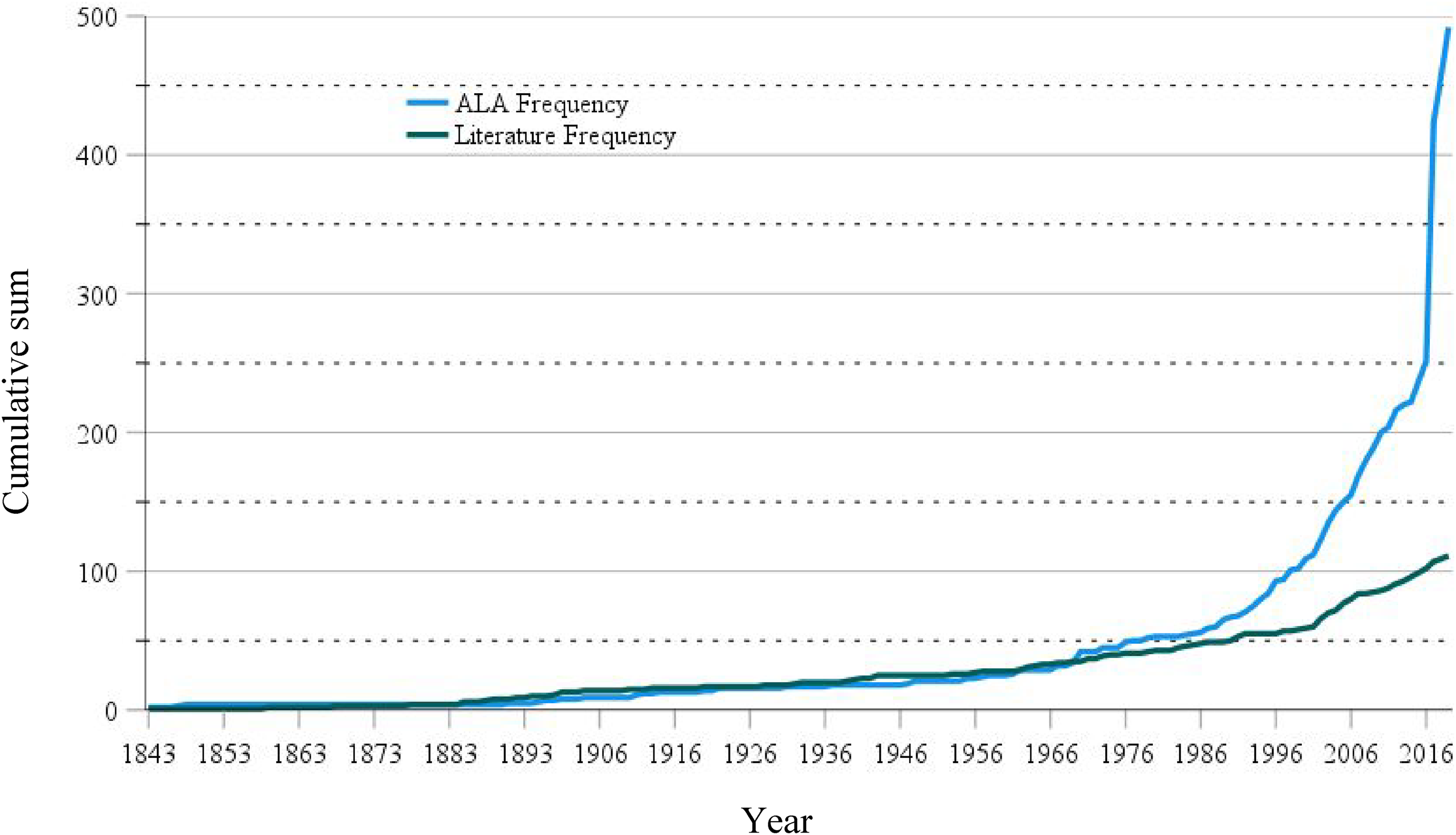
Cumulative frequencies of Bunya location records in the Atlas of Living Australia and Bunya-related literature from 1843 to 2019.
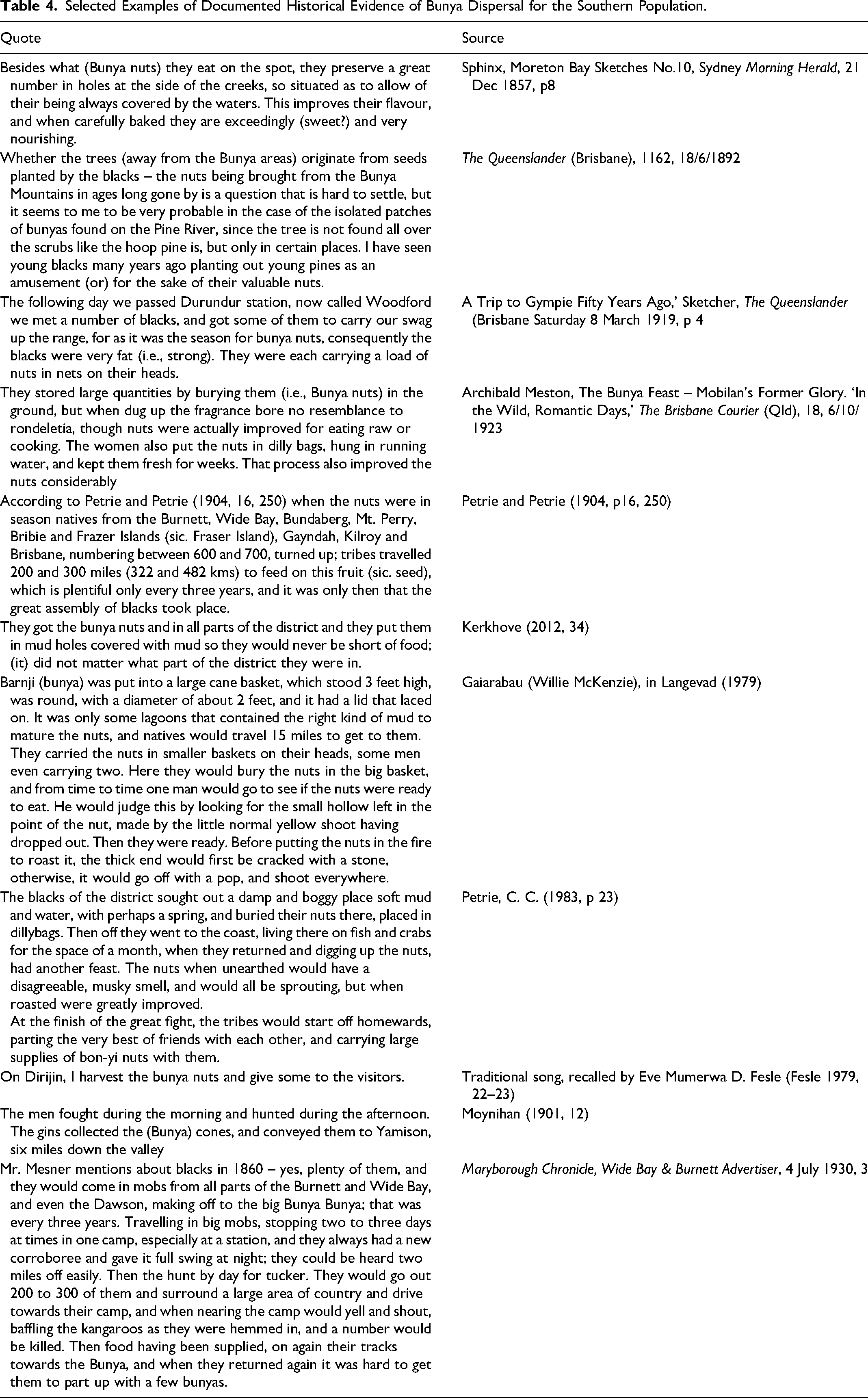
Much has been written about the ‘Great Bunya Festival’ held either on the Bunya Mountains or along the Blackall Ranges (Haebich 2003; Jerome 2002; Kerkhove 2016; McKay and Buckridge 2002; Ross, Ulm and Tobane 2013; Swan 2017; Walters 1988). According to the documentation of these gatherings by Petrie and Petrie (1904), the festivals were associated with various practices. These festivals were an opportunity for neighbouring Aboriginal communities to come together and connect with each other, share their cultures and traditions, and establish relationships. The gatherings provided opportunities for Aboriginal people to engage in ceremonial rites, arrange marriages, and resolve disputes. Additionally, these were times for exchanging knowledge and skills, as well as holding disciplinary events to maintain social order and harmony within the extended community. Through these gatherings, people were able to form alliances and build networks, as well as learn from one another. Overall, the festivals were a vital part of Aboriginal life and culture, which provided a space for the expression and celebration of traditions, as well as for maintaining social order and connections between communities (Petrie and Petrie 1904) (Table 4).
Selected Examples of Documented Historical Evidence of Bunya Dispersal for the Southern Population.
The literature also suggested that in colonial times, Aboriginal people dispersed the Bunya propagules within plain sight of European settlers as well as the chief protectors on certain missions, such as Kenilworth Station (Figure 4) and Cherbourg and Muli Muli Missions (Figure 5). Bunya was planted at Kenilworth Station as early as 1907 and remains to this day (Figure 4). Aboriginal people still visit this site to practice ceremonies and to lay Elders to rest (as stated in the ethnographic interviews).
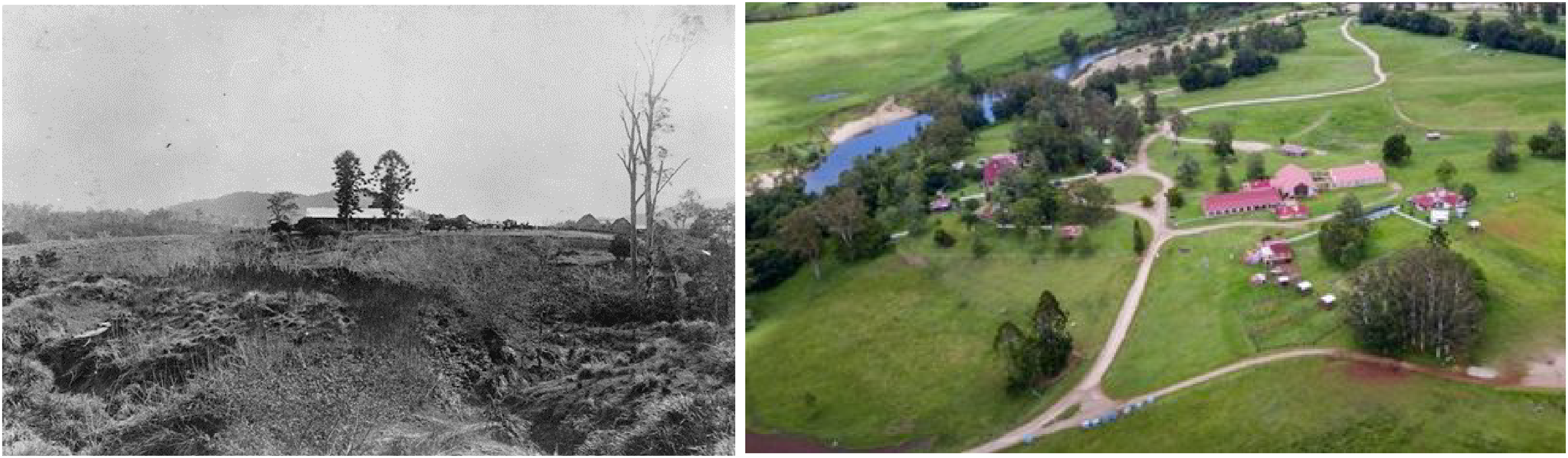
View of Kenilworth Station on the Mary River in 1907 (left) and 2020 (right). Photo source: Kenilworth station on the Mary River 1907 [web page].
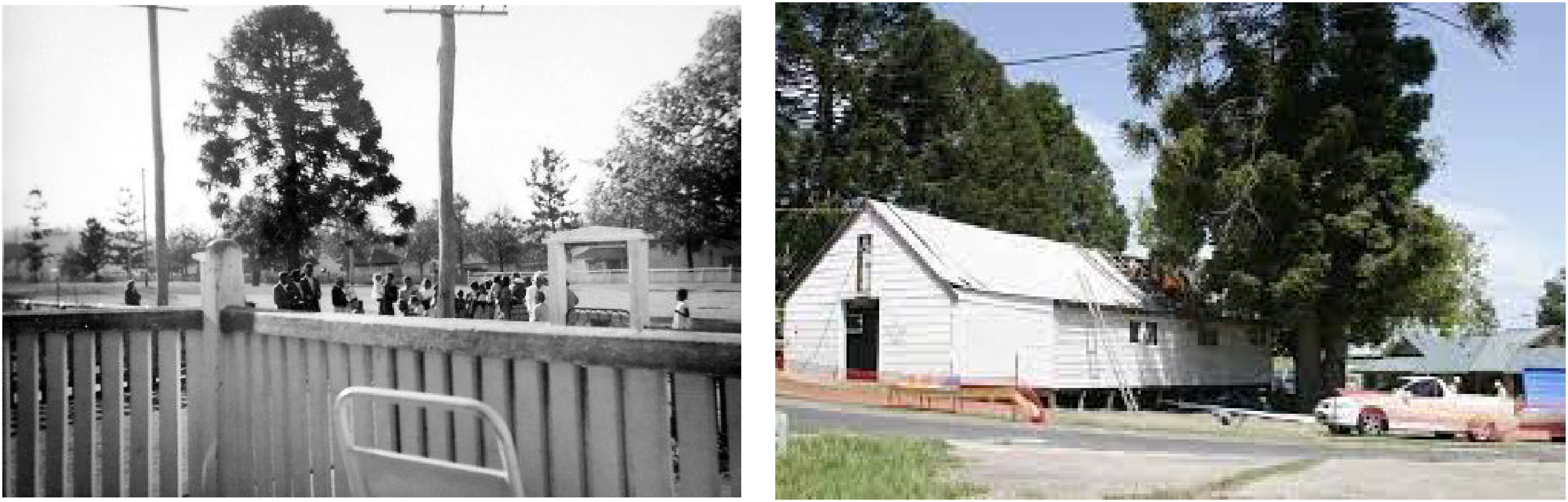
Bunya on Cherbourg Mission (photo taken 1927) (left) photo source: Cherbourg Memory [web page] and Muli Muli Redeemer Baptist School on Muli Muli Mission (photo taken 2008) (right) photo source: Muli Muli Church [web page].
Discussion
From the ethnographic and historical literature analyses, it is evident that many Aboriginal groups (Gooreng Gooreng, Butchulla, Waka Waka, Kabi Kabi, Yugorra, Turribal, Yuganbeh, Bunjalung, and Githabul) living within the range of the southern population of Bunya in the Blackall Ranges, Bunya Mountains and surrounding districts have a complex and sustained cultural connection to this important botanical resource. Prior to colonisation, there would have been creation Stories and a system whereby individual family groups ‘looked after’ individual trees, and there are many accounts of ongoing dispersal and storage throughout the early decades of colonisation. This evidence aligns with the views of past scholars that Aboriginal people intentionally moved and manipulated some plant species (Bell et al. 2017; Rossetto et al. 2017; Silcock 2018) for survival and cultural purposes, in this case, the large-seeded rainforest species, Bunya.
In comparison, we found no strong evidence of cultural connection between the northern Bunya populations and surrounding Aboriginal groups (Yalanji, Muluridji, Mamu, Girringun and Jirrbal). Following this finding, we suggest that the northern Bunya population was not an important food source for surrounding Aboriginal groups, perhaps due to the resource-rich surrounding rainforest that offered many more reliable food resources, including other large nut species (Fahey et al. 2022; Tuechler, Ferrier and Cosgrove 2014).
From the research presented here, human dispersal of Bunya seeds from the northern population was limited in comparison to the south, where there is evidence of a variety of cultural affiliations that were sustained during the sociocultural upheaval and dispossession brought about by European colonisation. Consequently, we argue that due to a lack of Aboriginal significance, the northern Bunya population has remained more restricted in its distribution compared to the southern population, which has likely experienced more widespread dispersal across southern Queensland and northern New South Wales over many centuries.
In the southern region of the current Bunya distribution, at the time of European colonisation, the Traditional Custodians of the Bunya were the only people allowed to climb the trees and distribute the edible seeds to other Aboriginal groups, including as gifts for their return journey to their homelands. There is ethnographic and historical evidence that seeds were planted along pathways or at significant campsites as an expression of cultural connection and custom. Thus, anthropogenic dispersal likely resulted in the expansion of the range of the species beyond what would be expected through non-anthropogenic means (such as rats), similar to that detected for the Black Bean (Castanospermum australe) (Rossetto et al. 2017) along the east coast of Queensland and the Cabbage Tree Palm (Livistona mariae) in Central Australia (Kondo et al. 2012)
Following European colonisation in Australia, many Aboriginal people were moved from their Country onto Missions and forced to work for European settlers, including as gardeners. Aboriginal people within the southern region were nonetheless able to maintain their connection to the Bunya through plantings in plain view. The enduring cultural attachment to the southern Bunya warrants recognition of this widespread population as an important living Aboriginal heritage. The cultural importance of these southern Bunya populations was recognised by the early European colonisers who declared the Bunya Mountains National Park worthy of protection, largely based on the cultural heritage significance (Picone 2015). The respectful incorporation of the Aboriginal dispersal history of this species into a biocultural conservation strategy, land tenure management and land rights/use negotiations will be required if the population and its cultural connections are to be maintained into the future.
Research for this article on the northern Bunya has raised more questions than answers. The two northern pockets of the endemic Bunya population are in areas that are quite inaccessible. No systematic archaeological survey or excavation has been carried out in the two areas to date, but the locations are on high ridges at the edge of rainforest and close to permanent water, suggesting they may be adjacent to old Aboriginal walking tracks. Future archaeological investigations in the vicinity of the trees may shed new light on the connections that Aboriginal rainforest peoples’ have with them. The Bunya is celebrated within at least one contemporary northern community, the Jirrbal people of the Evelyn Tableland. A cluster of Bunya trees on the Wild River is now carefully guarded by Elders during fruiting season, after they realised that many other people want to forage Bunya nuts. In the case of the northern Bunya, an absence of evidence as outlined in this paper does not exclude the possibility of any pre-European use or prevent the building of modern connections to the Bunya.
One way to establish the origin of the northern Bunya is through genetic profiling. Furthermore, archaeological investigations near these trees may reveal subsurface deposits of old campsites containing Bunya nutshells, similar to archaeological sites excavated in other parts of the Wet Tropics Bioregion that have revealed thousands of pieces of charred nutshells from the yellow walnut (Beilschmedia bancroftii) and black walnut (Endiandra palmerstonii), as well as the black pine (Sundacarpus amara) (Ferrier 2016). In addition to future genetics and archaeological studies, palynological analyses of sediment cores from key palaeoecological sites on the Atherton Tableland, such Lynch's Crater (Kershaw 1976), Lake Euramoo (Haberle 2005), and Bromfield Swamp (Kershaw 1975), may elucidate the spread and retraction of Bunya through time and across the landscape.
The Bunya is an iconic Australian rainforest species that has played an important role in the cultural and ecological landscape for thousands of years. The tree is native to the east coast of Australia, with two distinct populations found today in the north and south. For many Aboriginal groups, particularly those living within the range of the southern population, the Bunya was a key botanical resource, providing a reliable and nutritious food source as well as having deep cultural significance, which remains today.
Despite the lack of strong evidence for a cultural connection between the northern Bunya populations and surrounding Aboriginal groups, it is important to note that the Bunya has still played a significant role in the ecology and biodiversity of the region. The large, iconic trees provide a unique habitat for a range of flora including epiphytes, ferns, and animals such as possums and birds. While the nuts of the Bunya possess desirable characteristics for potential seed dispersal by animals, such as being large, non-toxic, nutritious, and having relatively soft shells, there is a notable absence of documented animal agents responsible for their dispersal. Despite macropods and various species of rats being identified as predators of both the seeds of the Bunya no animals have been reported as effective dispersal agents for these seeds (Smith and Butler 2002). Therefore, even without a strong cultural connection, the northern Bunya populations still have ecological value and should be considered worthy for conservation efforts.
It is important to note that both the southern and northern populations of the Bunya face threats from land clearing, logging, and climate change (Picone 2015). Plants grown from seeds taken from the southern population are now spreading throughout the east coast of Australia, which threatens the genetic distinctiveness of the northern population (Fahey et al. 2023). Loss of habitat and genetic diversity will have significant impacts on the species and the ecosystem. Additionally, the cultural significance of the Bunya to Aboriginal communities in the southern region highlights the need for cultural heritage preservation and management in conservation efforts.
To address these threats and promote conservation of the Bunya, it is essential to engage in collaborative, cross-cultural management strategies that involve Traditional Custodians and other stakeholders, including environmental managers and biologists. This includes respecting cultural protocols and knowledge, promoting traditional land management practices, and incorporating Indigenous perspectives and knowledge into conservation planning (Cooke et al. 2022). In addition, a better understanding of the ecology, genetics, and prehistorical and historical use of the Bunya can inform more effective biocultural conservation efforts.
Conclusion
This research highlighted the significant and enduring cultural management and manipulation of the southern population of Bunya across nine Aboriginal groups. The overwhelming evidence of Aboriginal interaction with this species to preserve it as a food source and for cultural inspiration and attachment demands development of a broad reaching and multi-tenure biocultural conservation strategy involving Traditional Owners. There likely remains more biocultural knowledge about this species that is hidden within Aboriginal narratives as well as within the physical landscape of the southern population. Based on the data presented in this article, the existence of any recent direct genetic links between the southern and northern population are unlikely, but this requires further study using new genetic techniques (Fahey et al. 2022). In line with increasing international directives to increase recognition of the knowledge and culture of Indigenous peoples in contemporary conservation, it is our finding that the Bunya is a strong candidate for a multi-tenure biocultural management strategy to preserve the significant biological and cultural heritage values of this species.
Footnotes
Declaration of Conflicting Interests
The authors declared no potential conflicts of interest with respect to the research, authorship, and/or publication of this article.
Funding
The authors received funding for this project from the Australian Research Council Discover Program, grant number 180102188.
