




Abstract
This study presents the first investigation of aesthetic evaluation in ikebana, Japanese art of flower arrangement characterised by asymmetry. While symmetry has been central in empirical aesthetics, we examined how subjective and objective symmetry relate to beauty and liking in this significant art form. A total of 245 Japanese adults evaluated 75 professional ikebana images on beauty, liking, and perceived symmetry. Objective symmetry was assessed with computer vision analysis. Contrary to expectations, objective and subjective symmetry were uncorrelated. Subjective symmetry predicted both beauty and liking, with a shallow U-shaped relation for beauty. Ikebana experience moderated this effect, as less experienced participants preferred symmetry more strongly, consistent with cognitive mastering theory. These findings suggest that perceived balance, rather than pixel-level symmetry, drives aesthetic evaluation in ikebana. More broadly, the study shows how cultural expertise shapes aesthetic judgement and highlights the value of examining culturally situated practices for cross-cultural empirical aesthetics.
Introduction
Ikebana is the traditional Japanese art of flower arrangement with a history of more than 1,000 years. Its origins can be traced back to the 7th century, when flowers were offered at Buddhist altars following the introduction of Buddhism to Japan. Over time, it merged with Japan's indigenous Shinto practices, which regarded nature as a dwelling place for the divine, and developed within a religious context that emphasised harmony between humans and nature (Moriyama & Moriyama, 1999). Along with kōdō (香道; the appreciation of incense) and chadō (茶道; tea and tea gatherings), ikebana is regarded as one of Japan's three classical refined arts (Doman, 2023). The term ikebana is derived from the Japanese words ikeru (生ける; ‘to arrange flowers’, ‘to have life’, or ‘to be living’) and hana (花; ‘flower’), carrying meanings such as ‘giving life to flowers’ or ‘arranging flowers’. It is also known as kadō (華道; ‘the way of flowers’) and is considered a meditative art form. Today, ikebana is not only a traditional Japanese art but also a practice with international recognition, attracting practitioners worldwide (Ikebana International, 2025).
Beyond its beauty and technical skills, its value has been increasingly recognised in diverse fields. With a growing body of research on mindfulness-based interventions, ikebana is noted for its potential to reduce stress and anxiety. For instance, Hitomi et al. (2025) demonstrated that, after being exposed to a stressor, viewing videos or photographs of ikebana significantly reduced stress levels and increased self-reported concentration. A preliminary study of adults aged 60 years and older (Thode et al., 2025) also found improvements in decentring (an aspect of mindfulness), although statistical analyses were not conducted. Thus, ikebana has both historical and international significance. While it has recently begun to be explored in psychology, mainly as a part of therapeutic interventions, research is in its nascent stages. Empirical investigations of its aesthetic aspects are particularly scarce. 1
A distinctive feature of ikebana is its asymmetry (Moriyama & Moriyama, 1999). Symmetry has long been discussed as one of the primary determinants of beauty in aesthetics and continues to be a central theme in empirical aesthetics (e.g., Bertamini & Rampone, 2022; Jacobsen & Höfel, 2003; McManus, 2005). A considerable body of research has found that symmetry is a positive predictor of aesthetic evaluation (e.g., Frith & Nias, 1974; Jacobsen & Höfel, 2001, 2002; Makin et al., 2012; Ramachandran & Hirstein, 1999; Wu, 2025). This is true even in cross-cultural contexts (Bode et al., 2017; Pisanski & Feinberg, 2013), including among Japanese samples (Leder et al., 2024) who have traditionally been thought to find aesthetic value in asymmetry (Zeki, 2013). However, most of these studies focused on simple, abstract shapes or facial features, with relatively little investigation of natural, complex stimuli, such as flowers. Notably, Bertamini et al. (2019) reported that the positive effect of symmetry on aesthetic evaluation, established in studies of faces and polygons, does not generalise to petals (images of individual flower petals, rather than arrangements) or natural landscapes. To date, no systematic research has examined how subjectively perceived and objectively measured asymmetry function in the aesthetic evaluation of ikebana. When considering the possible relationship between symmetry and aesthetic evaluation, Berlyne's (1971) concept of collative properties (e.g., complexity, ambiguity, and other features that require perceptual and cognitive comparison processes) and their inverted-U relationship with arousal are particularly informative. Although he did not explicitly include symmetry or asymmetry among the representative collative properties, he assumed that the existence of an optimal degree of symmetry (or complexity) is linked to visual exploration and arousal (Berlyne, 1971; Locher & Nodine, 1989).
In addition to the general preferences for symmetry, the moderating effects of expertise have been documented. Leder et al. (2019) investigated the evaluation of beauty of abstract patterns among artists, art historians, and non-experts. Non-experts rated symmetric and complex patterns as the most beautiful, consistent with previous findings, whereas experts rated asymmetric and simple patterns as the most beautiful, with the effect of symmetry being almost negligible. Extending this finding, Weichselbaum et al. (2018) used similar symmetric/asymmetric patterns and measured implicit (IAT) and explicit (beauty ratings) evaluations. While symmetry was consistently preferred in the IAT regardless of expertise, explicit evaluations showed that greater expertise was associated with higher ratings for asymmetric patterns. Furthermore, Huang et al. (2018) found that adults consistently preferred symmetry, whereas 4-year-old children rated symmetric and asymmetric patterns equally in explicit judgments. However, eye-tracking data revealed longer fixation times for symmetric patterns. These results suggest that implicit preferences are universal, rooted in evolutionary and perceptual factors, whereas explicit judgments are influenced by ‘cognitive mastering’ (Leder et al., 2004) through artistic knowledge and experience, fostering a greater appreciation for asymmetry.
This study empirically investigated the aesthetic evaluations of ikebana from the perspective of symmetry. In addition to subjective symmetry—how symmetric viewers perceive each arrangement—we measured objective symmetry through image feature analysis. The specific pre-registered hypotheses were as follows: H1: Objective and subjective symmetry are positively correlated. H2: Objective and subjective symmetry predict aesthetic evaluations (beauty and liking). These relationships are non-linear, following an inverted U-shaped pattern.
We also explored whether subjective or objective symmetry is a stronger predictor when both are entered simultaneously in the model. Thus, we propose the following hypothesis: H3: (exploratory): Ikebana experience moderated the relationship between subjective symmetry and aesthetic evaluation.
Method
Ethical Consideration and Open Science Declaration
The research was granted ethical clearance by the Ethics Committee of psychology at the Faculty of Humanities and Social Sciences Helmut Schmidt University. It was executed in strict adherence to the tenets of the Declaration of Helsinki. In line with Open Science practices, the study design, hypotheses, and data analysis plan were pre-registered on the Open Science Framework (OSF; https://osf.io/n89yb). Additionally, the raw data, analysis scripts, questionnaires used in the study, and their English translations will be made publicly available on the OSF upon completion of the study (https://osf.io/n7qv6).
Participants
Two hundred and fifty Japanese adults were recruited using CrowdWorks, a Japanese crowdsourcing platform (https://crowdworks.co.jp). Participants were required to be native Japanese speakers and at least 18 years old. Those with visual impairments were excluded. Five participants were excluded from the final analysis because of a failed attention check or extremely short response times, resulting in a final sample of 245 participants (134 men, 109 women, 1 other, and 1 non-response; Mage = 43.76, SD = 9.64) for data analysis.
Stimuli
The stimulus set comprised 75 high-resolution pictures of ikebana created by professional artist Akiko Kaneko from the Ohara School 2 (one of the three major ikebana schools in Japan, alongside Ikenobo and Sogetsu; Figure 1). These images were drawn from existing works and were shared by the artist for the purpose of this study. To cover the full range of stimuli while minimising participant burden and task duration, the 75 images were divided into three fixed sets of 25 images, and participants were randomly assigned to one of the three sets. Images were photographed against a neutral background under controlled lighting conditions. Prior to the experiment, nine objective visual features were computed using OpenCV—an open-source computer vision and image processing library for Python, widely used for extracting quantitative visual features (Version 4.11.0.86; OpenCV Team, 2025)—including symmetry, aspect ratio, brightness, saturation, sharpness, background simplicity, light direction (dx and dy components), and object bias. Objective symmetry was calculated by converting each image to greyscale, flipping it horizontally, computing the absolute pixel-wise difference between the original and flipped images, summing these differences, and normalising the value to a range of 0–1, where higher values indicate greater asymmetry.
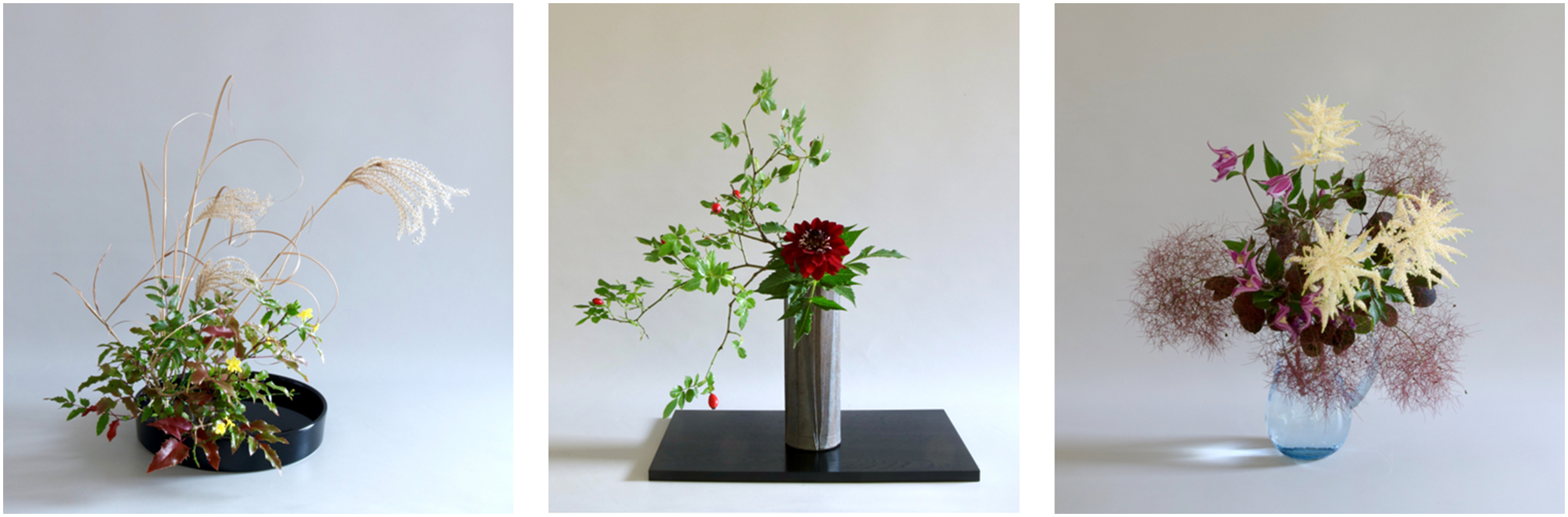
Examples of the Ikebana pictures by Akiko Kaneko.
Procedure
Participants completed the study online. After being informed about the purpose of the study, the voluntary nature of participation, their right to withdraw at any time, and the anonymity of their responses, they provided informed consent electronically. They then viewed ikebana images in randomised order, rating each on three dimensions using 5-point Likert scales: beauty (‘How beautiful do you find this ikebana arrangement?’), liking (‘How much do you like this ikebana arrangement?’), and subjective symmetry (‘How symmetrical do you perceive this arrangement to be?’). After rating the images, participants answered demographic questions and completed individual-difference measures, including Ikebana Experience, the Desire for Aesthetics Scale (DFAS; Lundy et al., 2010; Hitsuwari et al., 2025, Japanese version), and two exploratory measures: the Impermanence Awareness and Acceptance Scale (Fernández-Campos et al., 2021; Goda & Nomura, 2025, Japanese version) and the Five Facet Mindfulness Questionnaire (Takahashi et al., 2022). These two scales were included because, as the first empirical aesthetics study on ikebana, this research also sought to assess impermanence and mindfulness, constructs identified by ikebana practitioners and scholars as central to the practice (Sasaoka, 2011; Takatsu, 2025; Thode et al., 2025). Internal consistency was acceptable to good for all scales: DFAS (α = .86), IMAAS Awareness (α = .85), IMAAS Acceptance (α = .80), and the FFMQ subscales (Observing, α = .72; Describing, α = .88; Acting with Awareness, α = .82; Non-judging, α = .72; Non-reacting, α = .74). Normality diagnostics are reported in Supplementary Table S2.
The participants also answered an open-ended question: ‘What do you think is important for the beauty of ikebana?’ These open-ended responses were collected for exploratory purposes to inform future research.
Data Analysis
All analyses were conducted in R (Version 4.4.2; R Core Team, 2024). All continuous predictors, including subjective and objective symmetry, ikebana experience, age, DFAS scores, and objective image features, were mean-centred and standardised prior to analysis. For H1, data were aggregated to the item level by averaging the participants’ ratings for each ikebana image. Subjective symmetry was calculated as the mean perceived symmetry rating per image, and objective symmetry was derived from an OpenCV-based image analysis. An APA-formatted correlation table was produced using the apa.cor.table function of the apaTables package (Version 2.0.8; Stanley, 2021), which included the means, standard deviations, and zero-order correlations among all item-level variables.
For H2 and H3, two separate linear mixed-effects models were fitted, with beauty and liking ratings as dependent variables, using the lmerTest package (Version 3.1.3; Kuznetsova et al., 2017). The main predictors were subjective symmetry (linear term) and its quadratic term, both of which were fixed effects, along with their interactions with the ikebana experience. Objective symmetry (linear and quadratic terms) was included as a fixed effect. Additional covariates included sex, DFAS, and seven objective image features (aspect ratio, brightness, saturation, sharpness, background simplicity, light direction along the x- and y-axes, and object bias). Random intercepts were specified for participants and images to account for repeated-measures dependencies. Significant interactions were examined using simple slopes analyses with the emtrends function in the emmeans package (Version 1.10.6; Lenth, 2024), estimating the effect of subjective symmetry at −1 SD, the mean, and +1 SD of ikebana experience. Pairwise contrasts of the slopes were also computed using this framework. For visualisation, predicted values were generated across the observed range of subjective symmetry for each level of ikebana experience (±1 SD) using the ggpredict function in the ggeffects package (Version 2.1.0; Lüdecke, 2018), holding covariates at their means.
Results
The means, standard deviations, and correlations of the variables are presented in Tables 1 (subjective variables) and 2 (objective variables). Regarding H1, no significant correlation was found between subjective and objective symmetry (r(73) = .04, p = .75, 95% CI [–.19, .26].
Means, Standard Deviations, and Correlations of Subjective Variables.
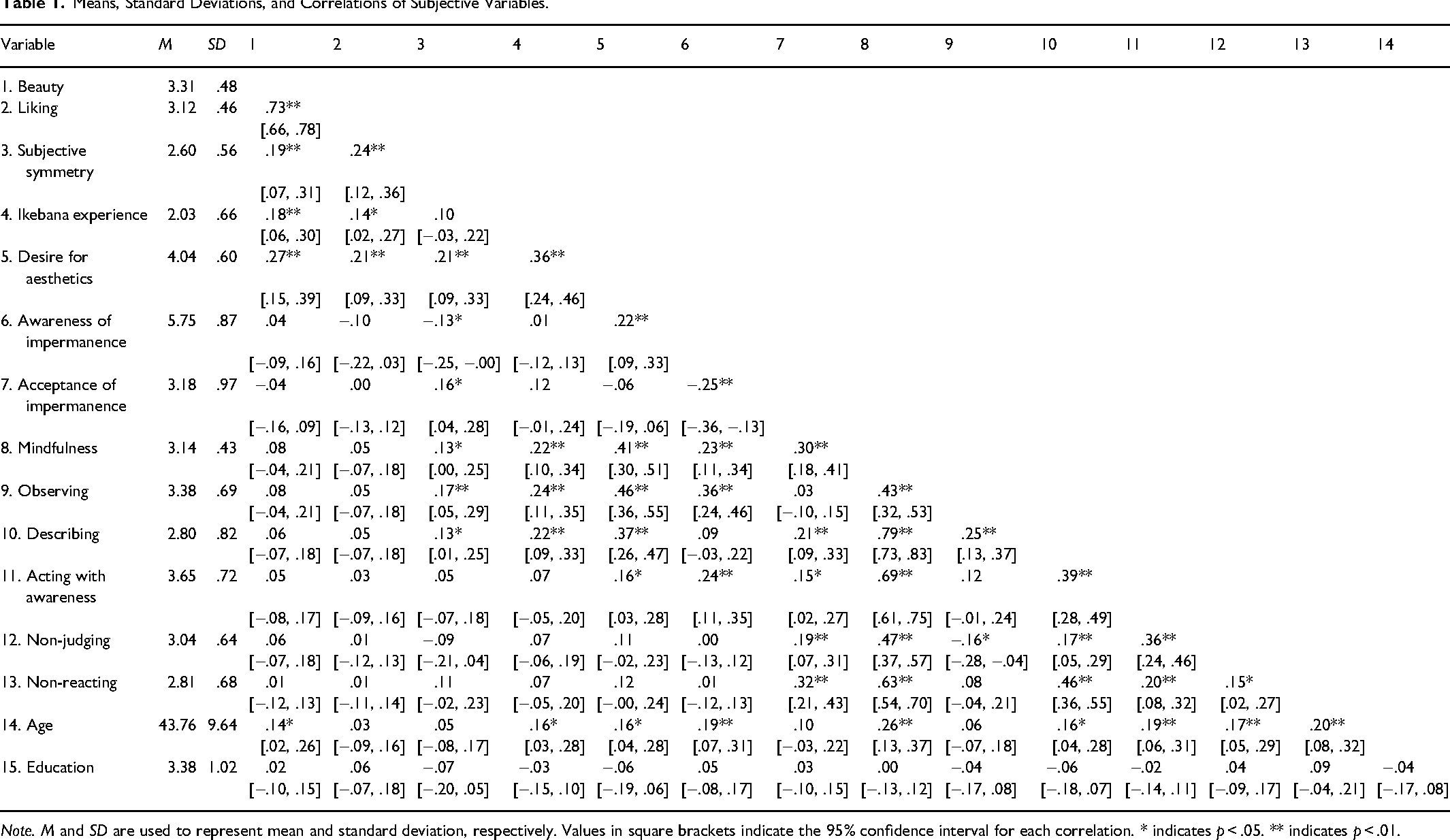
Note. M and SD are used to represent mean and standard deviation, respectively. Values in square brackets indicate the 95% confidence interval for each correlation. * indicates p < .05. ** indicates p < .01.
Means, Standard Deviations, and Correlations of Objective Image Features.
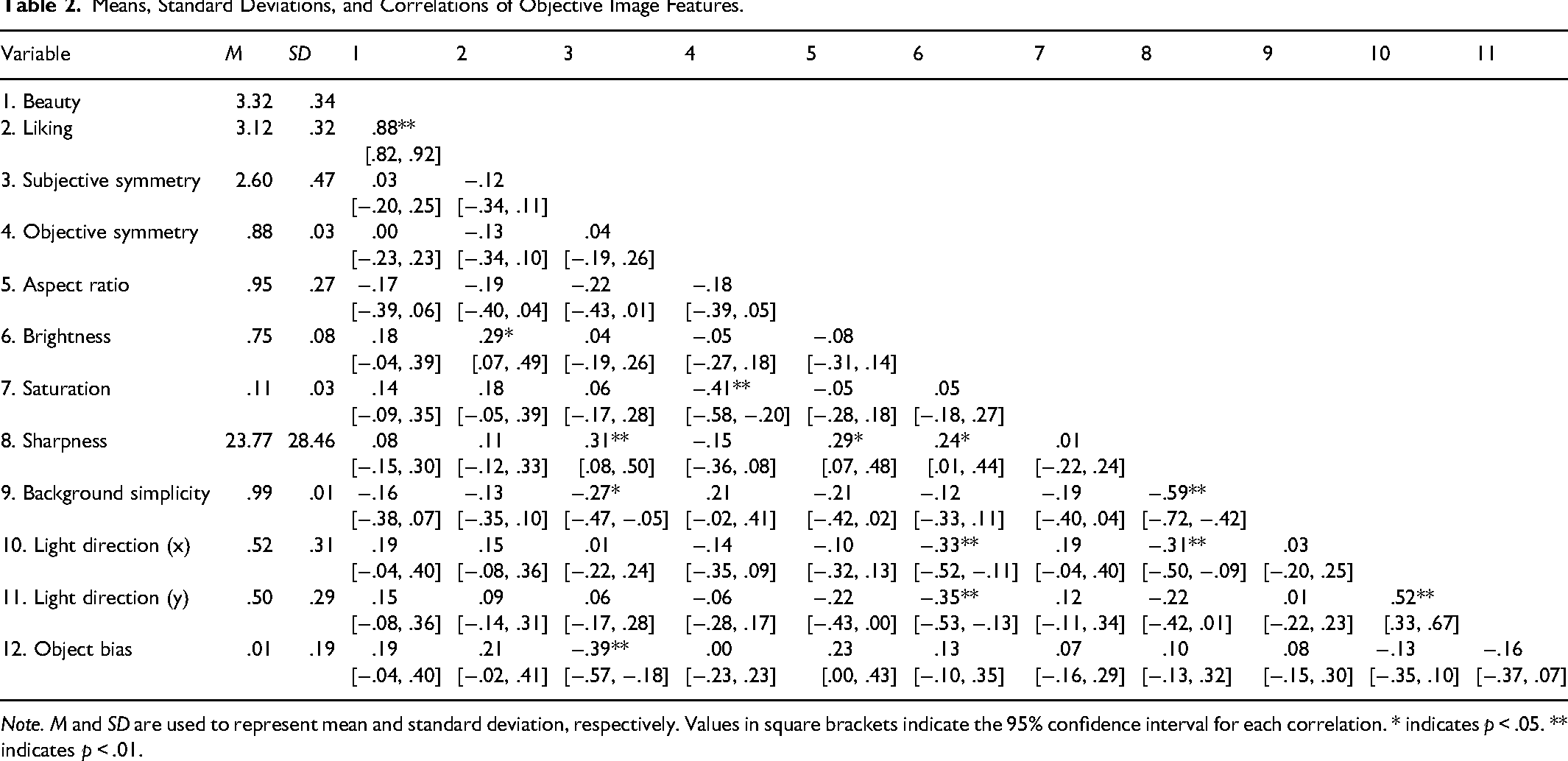
Note. M and SD are used to represent mean and standard deviation, respectively. Values in square brackets indicate the 95% confidence interval for each correlation. * indicates p < .05. ** indicates p < .01.
Subjective Symmetry had a strong positive linear effect on beauty (β = .08, p < .001) and a significant quadratic term (β = .04, p = .003), producing the gentle U-shaped curve (Figure 2). Ikebana Experience moderated this relationship (β = –.03, p = .02), such that only participants with lower experience showed a positive relationship between symmetry and beauty (Figure 3(a)). Simple slopes analyses showed that the symmetry–beauty association was significant at −1 SD (β = .11, p < .001), the mean (β = .08, p < .001), and +1 SD (β = .05, p = .02) of Ikebana Experience, with the slope at −1 SD steeper than at the mean or +1 SD (all ps = .048). Among the covariates, DFAS positively predicted beauty (β = .10, p = .001) and rightward Object Bias had a modest positive effect (β = .11, p = .01); all other image features, age, and sex were non-significant.
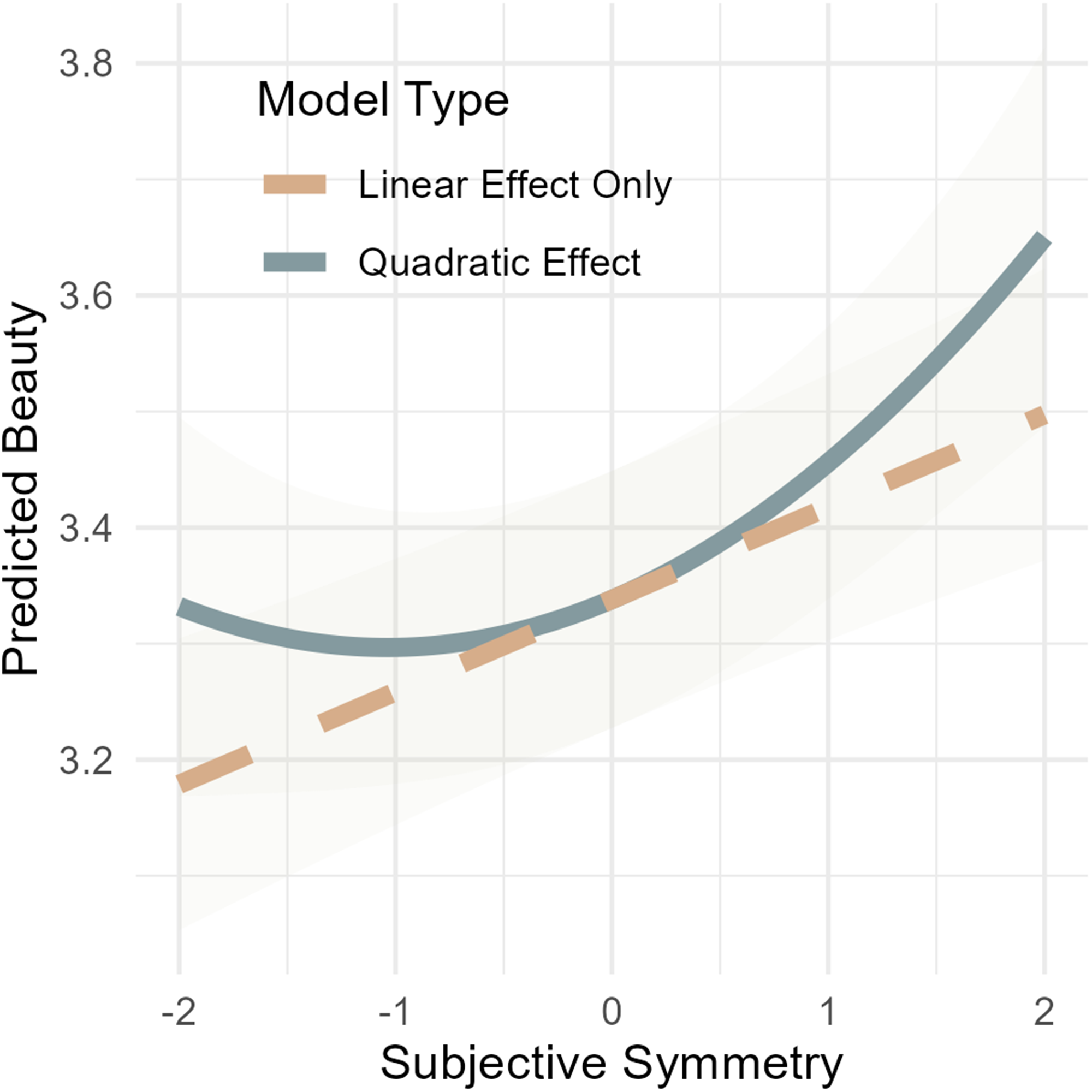
Quadratic relationship between subjective symmetry and beauty ratings.
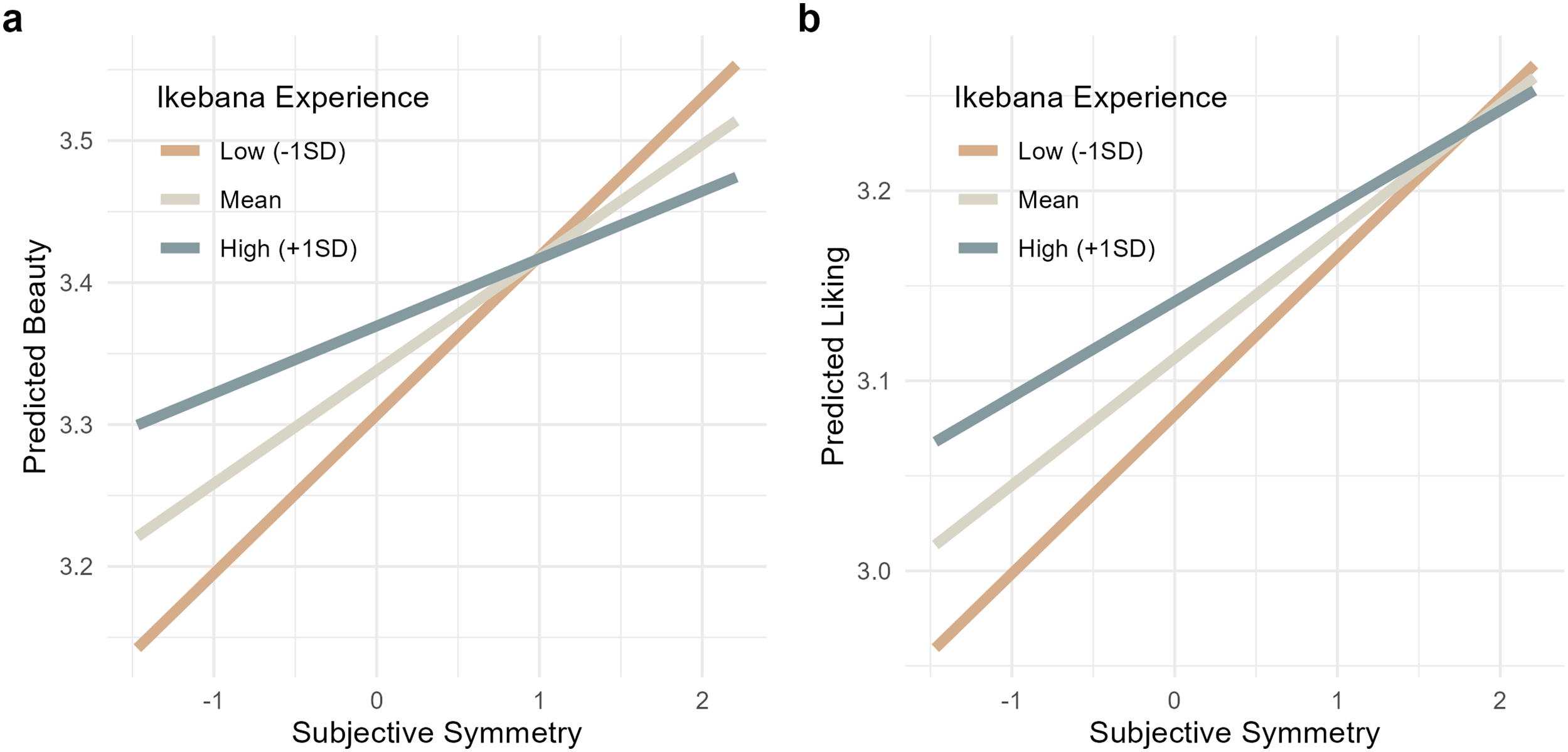
Interaction between subjective symmetry and ikebana experience on (a) beauty and (b) liking ratings.
In parallel, liking ratings showed a significant linear effect of Subjective Symmetry (β = .07, p < .001) but a non-significant quadratic term (β = .03, p = .06). The Symmetry × Experience interaction was also non-significant for liking (β = –.02, p = .26; Figure 3(b)). DFAS again emerged as a positive predictor (β = .08, p = .01), and image Brightness (β = .10, p = .02) and Object Bias (β = .10, p = .01) significantly predicted higher liking.
Discussion
This study is the first to systematically examine how subjective and objective symmetry relate to aesthetic evaluation in ikebana, a natural and compositionally complex art form. The main findings were that (a) objective symmetry did not correlate with subjective symmetry (rejecting H1); (b) subjective symmetry predicted both beauty and liking, whereas objective symmetry did not (partially supporting H2); (c) the association between subjective symmetry and beauty followed a shallow U-shaped function; and (d) this association was moderated by experience (supporting H3).
The robust positive role of subjective symmetry aligns with extensive evidence that symmetry is a powerful cue to beauty (e.g., Frith & Nias, 1974; Jacobsen & Höfel, 2001, 2002; Makin et al., 2012; Ramachandran & Hirstein, 1999; Wu, 2025). The modest effect size for symmetry (β = .07–.08) may reflect the multifactorial nature of aesthetic judgement in complex, high-quality stimuli. Unlike studies using simple geometric patterns (e.g., Jacobsen & Höfel, 2002; Jacobsen et al., 2006), where symmetry emerges as a dominant perceptual feature, our stimuli contained multiple competing aesthetic dimensions that may have attenuated symmetry's contribution to beauty judgements. Simultaneously, the lack of convergence between objective and subjective symmetry—and the inability of the former to predict aesthetic evaluations—appears to be nontrivial. Ikebana is often described as the ‘aesthetics of subtraction’ (Sasaoka, 2011): material elements (branches, flowers, vessel) occupy a relatively small portion of the frame, while extensive negative space is integral to composition. Our objective index, computed across the entire image using OpenCV operations likely allowed uniform background regions to contribute disproportionately to pixel-wise differences, diluting the contribution of the arrangement itself. More broadly, balance in ikebana is not reducible to mirror symmetry; it is perceived through line flow, colour, and luminance distribution, locus of mass relative to the vessel, and equilibria along oblique axes. Future work may benefit from coarsely isolating the arrangement from the background (e.g., via a foreground mask) and assessing symmetry relative to a plausible axis (not necessarily vertical), rather than applying whole-image differencing. Consistent with this, evidence from natural stimuli shows that imposing perfect bilateral copies on petals or landscapes does not necessarily enhance aesthetic evaluations (Bertamini et al., 2019), suggesting that ‘complete symmetry’ may undermine naturalness and stylistic authenticity in ikebana.
The moderation by experience aligns with the cognitive mastering account (Leder et al., 2004) and studies showing expertise-driven modulation of symmetry effects (Leder et al., 2019; Weichselbaum et al., 2018). Novices appear to rely more heavily on symmetry as a perceptual cue, whereas experienced viewers increasingly value asymmetry in the form of dynamic balance, negative space, and simplicity, thereby down-weighting surface-level symmetry. Our data mirrored this pattern, with the positive symmetry–beauty relation found only among less experienced participants.
Regarding non-linearity, we pre-registered an inverted U-shape (preference for moderate symmetry; Berlyne, 1971) but observed a shallow U-shape for beauty. A plausible explanation is restricted stimulus range. All stimuli were professional works from the Ohara School, which by convention, embody at least moderate asymmetry (dynamic balance). Consequently, near-perfect symmetry and extreme asymmetry were underrepresented. Future studies should systematically manipulate symmetry within the same arrangement—from near-perfect bilateral symmetry to pronounced asymmetry—using AI-generated or edited variants to ensure adequate coverage of the continuum. This suggestion resonates with findings that mirroring natural scenes into perfect bilateral symmetry do not reliably increase aesthetic evaluations (Bertamini et al., 2019). The partial dissociation between beauty and liking is also noteworthy. In our data, the quadratic component of subjective symmetry emerged for beauty but not for liking, which showed primarily a linear effect. A parsimonious interpretation is that beauty judgements are more sensitive to compositional principles such as balance and completeness, whereas liking is more responsive to hedonic and intuitive factors (e.g., processing ease or brightness). This distinction aligns with recent evidence that task instructions and personal intuitions can differentially shape beauty versus liking judgements (Che et al., 2025).
For image features, the positive effect of rightward Object Bias on beauty and liking may reflect a body-specific mapping favouring the dominant side. Right-handed individuals, who constitute the majority, tend to associate ‘good’ with the right side (Casasanto, 2009), which may account for higher evaluations when visual weight is biased rightwards. Although handedness was not recorded, this explanation remains plausible.
Though the findings contribute significantly to the literature on aesthetics, some limitations of the study should be addressed. Online ratings of static photographs was relied on, which precluded three-dimensional viewing, perspective changes, and temporal unfolding during live appreciation. In addition, because all stimuli were professional ikebana works that are inherently asymmetric, the study lacked completely symmetrical arrangements, meaning that the findings reflect preferences across varying degrees of asymmetry rather than the full symmetry–asymmetry continuum. We also did not collect measures relevant to spatial biases (e.g., handedness, reading direction) or gaze-tracking data, limiting the ability to adjudicate mechanisms behind the rightward bias. Finally, the models were correlational, meaning causality cannot be inferred. For example, while subjective symmetry was linked to beauty, it remains unclear whether symmetry enhances beauty or whether beautiful arrangements are perceived as more symmetrical. Experimental manipulations (e.g., left–right reversals, graded symmetry edits) are required to clarify these causal directions.
Thus, our findings indicate that perceived balance (subjective symmetry) is central to aesthetic evaluation in ikebana, whereas whole-image symmetry indices are inadequate in the presence of extensive negative space and domain-specific compositional principles. By showing how a widely observed symmetry preference (Jacobsen & Höfel, 2001, 2002; Ramachandran & Hirstein, 1999) intersects with expertise-driven valuation of asymmetry (Leder et al., 2019; Weichselbaum et al., 2018) in a culturally situated practice, this work underscores the importance of cross-cultural comparison in empirical aesthetics. Studying practices deeply rooted in distinct cultural–historical and religious worldviews—such as ikebana—can help delineate commonalities and divergences in aesthetic judgement, refining the boundary conditions of general theories and their contextual dependence.
Supplemental Material
sj-docx-1-art-10.1177_02762374261445299 - Supplemental material for Symmetry and Aesthetic Judgments in Ikebana: The Japanese Art of Flower Arrangement
Supplemental material, sj-docx-1-art-10.1177_02762374261445299 for Symmetry and Aesthetic Judgments in Ikebana: The Japanese Art of Flower Arrangement by Jimpei Hitsuwari and Thomas Jacobsen in Empirical Studies of the Arts
Footnotes
Acknowledgments
Ethical Considerations
The study was granted ethical clearance by the Ethics Committee of psychology at the Faculty of Humanities and Social Sciences Helmut Schmidt University. It was executed in strict adherence to the tenets of the Declaration of Helsinki. The study design, hypotheses, and analysis plan were preregistered on the OSF (see Data availability).
Consent to Participate
Informed consent was obtained from all participants.
Consent for Publication
Not applicable.
Author Contributions
Funding
This work was supported by the Japan Society for the Promotion of Science Overseas Research Fellowship, Sawakami Future Lab, and academist Prize 4th.
Declaration of Conflicting Interests
The authors declared no potential conflicts of interest with respect to the research, authorship, and publication of this article.
Data Availability Statement
The raw data, analysis scripts, questionnaires, and their English translations are available on the OSF. The preregistration can be accessed at https://osf.io/n89yb, and the dataset, code, and study materials are available at  . Upon completion of peer review and publication, these repositories will be made fully public to ensure persistent access under the stated licence terms.
Supplemental Material
Supplemental material for this article is available online.
Notes
References
Supplementary Material
Please find the following supplemental material available below.
For Open Access articles published under a Creative Commons License, all supplemental material carries the same license as the article it is associated with.
For non-Open Access articles published, all supplemental material carries a non-exclusive license, and permission requests for re-use of supplemental material or any part of supplemental material shall be sent directly to the copyright owner as specified in the copyright notice associated with the article.
