



Abstract
The present study aimed to systematically review research concerning changes in music consumption across the lifespan to better understand how adults of all ages consume music. Keyword searches of four academic databases identified 2,002 peer-reviewed articles, and of these, fifteen articles were selected for review using the PRISMA protocol. The findings indicated that very few studies have investigated how people of all ages consume music, and the limited research on this topic has been methodologically inconsistent, leading to contradictory and inconclusive findings. This review also identified a shortlist of possible factors (e.g., life goals, personality, conformity) that might account for any age-related changes in musical consumption. As life expectancy and the proportion of elderly people continue to increase in many countries, the review recommends that future research should seek to reflect how people of all ages consume music and identify factors responsible for any changes as people grow older.
Listening to live and recorded music is a billion-dollar global industry (International Federation of the Phonographic Industry, 2011) and a pastime that has been popular for centuries. Advances in digital and online technology (e.g., mp3 files, online streaming platforms) mean that music is an ubiquitous aspect of everyday life for many people, who now have access to an almost endless variety of music choices that may be accessed almost anywhere (e.g., whilst driving a car, exercising at the gym, washing dishes or shopping) and at any time of the day (Krause et al., 2021; Nowak, 2014). Though hobbies such as films, sports, magazines, computer games and books clearly play a significant part in people's daily lives, research suggests that music may assume a more important role (Lonsdale & North, 2011).
Uses and Gratifications Approach
Research on music consumption (i.e., listening to music, buying music, attending concerts, & watching music videos) has often been based on the assumptions of uses and gratifications theory. The uses and gratifications approach (Katz et al., 1974) assumes individuals are active consumers who seek out media such as music to fulfil their emotional, psychological and social needs. This approach also assumes that individuals are consciously aware of the reasons why they listen to music and are, therefore, able to articulate this using self-report methods. Research suggests that music is likely to serve various different functions (e.g., Gantz et al., 1978; Krause et al., 2021; Tarrant et al., 2000). Understanding how and why people consume music at different life stages may shed light on broader patterns in artistic consumption, including visual arts, literature, and performance.
Music Consumption in Young Adults
Young adults have been found to spend an average of four hours per day listening to music (Krause et al., 2015; Lonsdale & North, 2011), usually whilst completing other tasks (e.g., Boal-Palheiros & Hargreaves, 2001; Goltz & Sadakata, 2021). Active music engagement, including singing, playing instruments, dancing, and participating in group performances, also supports social bonding, emotional regulation, and identity formation (Miranda, 2012; Schäfer & Sedlmeier, 2010). Engagement in music can promote stress reduction and self-expression while enhancing a sense of community belonging (Krause et al., 2018; Laukka, 2007). Adolescents and young adults also rate music as an important part of everyday life and their preferred leisure activity (Fitzgerald et al., 1995; Lonsdale & North, 2011); it is possible that the particular importance young people ascribe to music may be related to the transition from adolescence to adulthood (Laiho, 2004; Miranda, 2012). According to Levinson’s (1986) theory of development, early adulthood (i.e., starting around 17) is a transitional phase where media and peer influences play a key role in identity formation. Indeed, music is widely regarded as a way for young adults to explore and convey their identity to the outside world (Leipold & Loepthien, 2015; North et al., 2000; Tarrant et al., 2000; Zillmann & Gan, 1997) as they navigate the transition from school and begin to assume the roles and responsibilities of adulthood.
The transition into adulthood can be an exciting and positive one, characterised as a period of intense personal growth (Gottlieb et al., 2007; Scales et al., 2016). In this context, music might be understood to help young people to better understand their identity and role in life and flourish socially and psychologically (Gupta & Singh, 2020; Sun & Lull, 1986; Tarrant et al., 2000). However this transition can also prove to be difficult and stressful for many young adults (Brito & Soares, 2023; Matud et al., 2023), and this perhaps explains why young adults often turn to music to regulate their moods (Schulenberg et al., 2004; Sun & Lull, 1986). In keeping with wider trends observed in music psychology (Jakubowski et al., 2025), research on music engagement has typically focused on young adult or university students and as such, it is not clear if these findings are representative of how and why adults of all ages listen to music. Though a focus on adolescents and young adults is useful, it is also important to understand the experiences of middle-aged and older adults and how they use music.
Music Consumption in Middle Adulthood
Traditionally, psychological development including identity formation was considered to end at the start of adulthood (e.g., Freud, 1925; Piaget, 1964). However, there are many who assert that development is likely to be a life-long process (e.g., Baltes et al., 1980; Cohen, 2005; Erikson, 1980; Levinson, 1986; Super, 1980). For example, Levinson (1986) claims that an individual will transition through several different stages over the course of their life, and at each stage, they will adopt new roles, and events will present new challenges that must be overcome. These transitions can also be reflected in patterns of music listening, as people use music to navigate changing identities, reinforce social roles, and process life events. Indeed, mid-life is regarded as one of the great developmental shifts, during which individuals are likely to experience significant changes in their social roles (e.g., becoming a parent or spouse) and encounter new challenges associated with career consolidation or caring for elderly relatives (Levinson, 1986). In this period, music listening may take on new functions such as providing emotional regulation, fostering nostalgia, or offering a sense of connection to others. As Cohen (2000, 2005) highlights, later life can also be a time of renewed creativity, psychological growth, and re-evaluation of personal meaning, challenging the notion that development or innovation decline with age. Such perspectives suggest that older adults may engage with music not only for continuity and comfort but also as a medium for self-expression, creativity, and cognitive vitality. Nonetheless, very little research exists on how this age group consumes music.
Music Consumption in Older Adults
Music has been found to improve the well-being of older adults (e.g., Groarke et al., 2022; Hays & Minichiello, 2005; Krause, 2020; Lukka, 2007), helping to reduce stress, promote positive emotions, combat loneliness, and reminisce about the past. Music therapy is also regularly used in nursing homes to encourage socialisation and improve the wellbeing of their elderly residents (Norman, 2012). Active participation such as group singing, community music-making, or learning an instrument has been shown to enhance cognitive functioning, social connectedness, and psychological wellbeing (Creech et al., 2013; Joseph & Southcott, 2015; Skingley et al., 2015). It is also essential to note that evidence suggests that 90% of older adults listen to music daily, most also perceive music as very important, and more so than their other hobbies (Burack et al., 2003; Cohen et al., 2002; Cohen-Mansfield et al., 2005). Research indicates that older adults tend to listen to a narrower range of music than younger adults and are less adventurous in exploring new music (LeBlanc et al., 1996), favouring music from their youth, particularly from when they were 10–30 years old (Gibbons, 1977; Harrison & Ryan, 2010; Zimprich & Wolf, 2016).
Review Aims
Over the next few decades, the proportion of older adults in many developed nations is set to increase significantly (Christensen et al., 2009; Stoodley & Conroy, 2024). Indeed, as life expectancy continues to increase, most babies born today can realistically expect to reach their 100th birthday (Christensen et al., 2009). In this context, it seems ever more important to understand how middle-aged and older adults use music. In this context, it is somewhat striking that research on this topic has tended to focus disproportionately on young adults or university students, and little research has been done to investigate musical consumption among middle-aged adults. The present research, therefore, aimed to systematically review research concerned with how and why people consume music across the lifespan. Specifically, the present review sought to (a) identify potential age-related differences in music consumption, and (b) critically evaluate the methodological approaches used in this area of research. The findings are intended to enhance our understanding of music engagement across different life stages and to inform future investigations.
Method
The systematic review implemented the reporting protocol of the PRISMA statement (Page et al., 2021) throughout the process. In December 2024, four academic databases (Web of Science, PubMed, PsychInfo & Academic Search Complete) were searched. In each case, a combination of lifespan keywords (e.g., “lifespan”, “ageing”, and “age differences”), consumption keywords (e.g., “importance”, “preference”, “engagement”, “consumption”) and the keyword “music” were employed in a series of twelve searches (see Table 1).
Keywords Used for Database Searches.
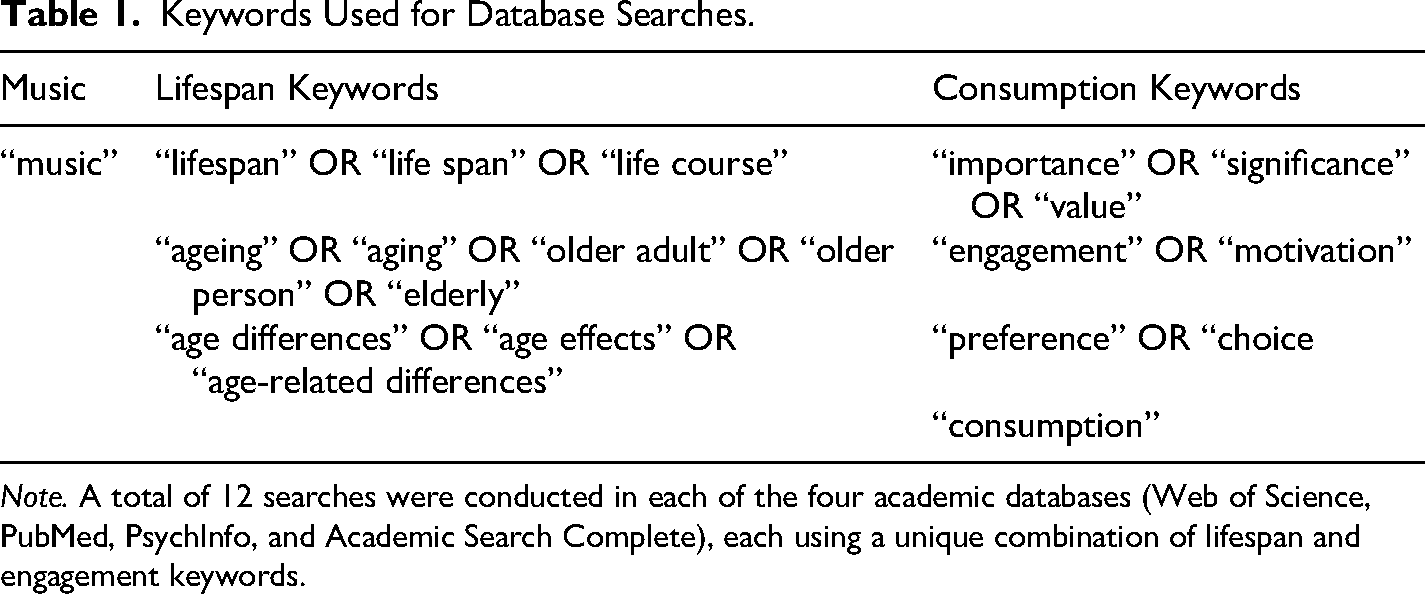
Note. A total of 12 searches were conducted in each of the four academic databases (Web of Science, PubMed, PsychInfo, and Academic Search Complete), each using a unique combination of lifespan and engagement keywords.
The criteria used for inclusion in this review were studies written in English and published in peer-reviewed journals investigating consumption in listening to music across the lifespan using a sample of participants ranging from young adulthood to late adulthood. Based on previous literature on adult development (Levinson, 1986), young adulthood is defined as between the ages of 17–22, and late adulthood is defined as from age 60 onwards. Single-age group studies were excluded to allow for a clearer and more consistent comparison of music consumption across different adult life stages within the same study. Due to only two studies specifically investigating age-related changes in music consumption, the inclusion criteria were expanded to include all studies investigating music consumption that used a sample ranging from early to late adulthood.
Research suggests that musicians and non-musicians interact with music differently (e.g., Dawson, 2011; Jovančević et al., 2019; Madsen & Geringer, 1990; Mikutta et al., 2014; Ojha & Tiwary, 2015), and as such, the present review chose to focus solely on music consumption rather than music production. Accordingly, studies investigating singing, playing instruments, musical composition, and song- writing across the lifespan were excluded from the review.
As shown in Figure 1, the review generated a total of 2,002 publications. Duplicate publications were removed (n = 381), and book chapters, conference materials, reviews and dissertations were also excluded (n = 239), leaving 1,621 peer-reviewed journal articles to be screened for eligibility. Upon reviewing their abstracts, 1,357 articles were excluded because they did not investigate music consumption across the lifespan.
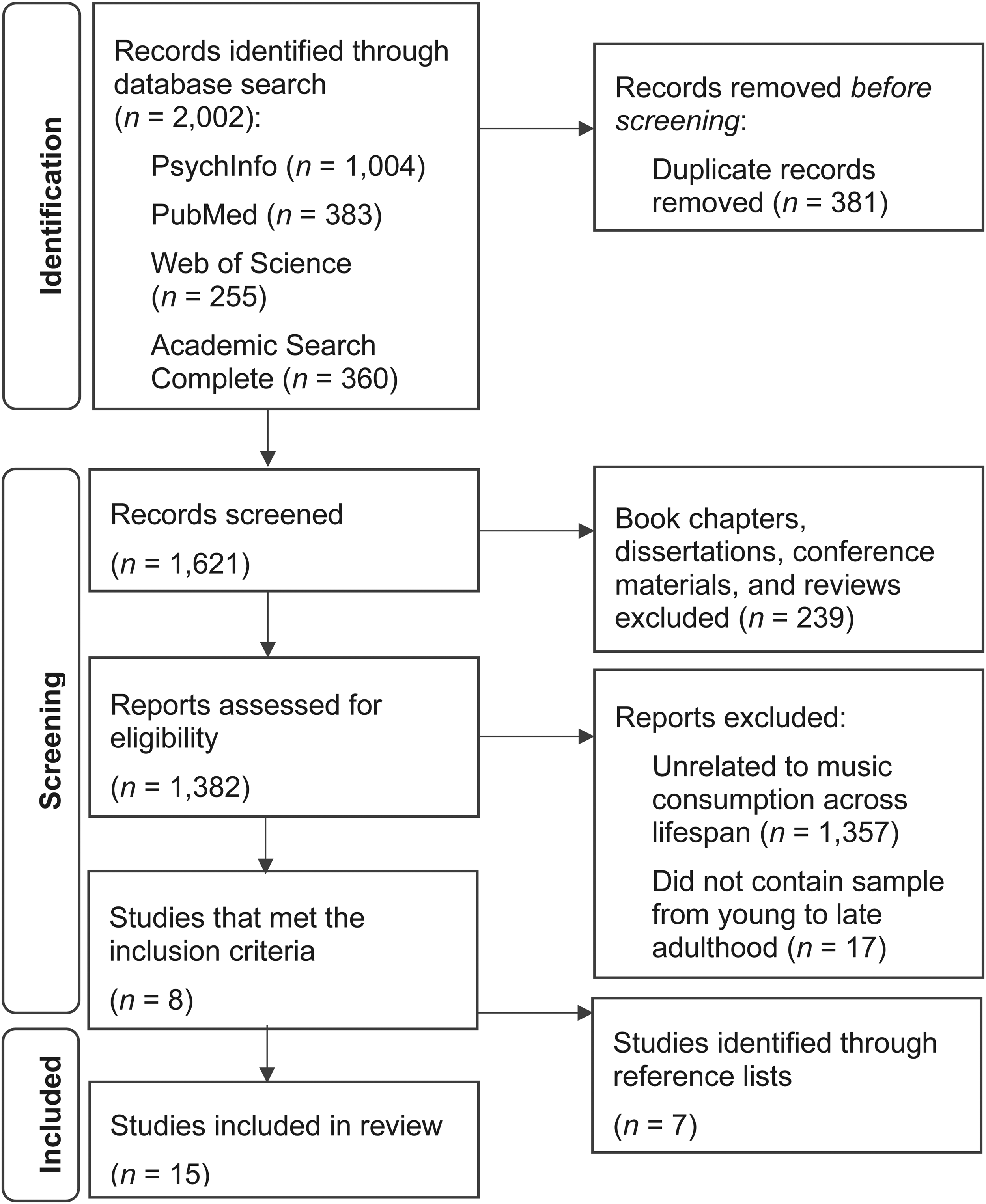
Flowchart depicting the selection process.
A full-text analysis of the remaining 25 articles revealed that only eight articles met all of the review's inclusion criteria. A further seven articles were identified by examining the reference lists of all shortlisted articles. In total, fifteen articles were selected for review. In each case, Table 2 provides a summary of the key findings, sample size, recruitment strategy, and measures used.
Characteristics of Studies Selected for Review (Listed in Alphabetical Order).
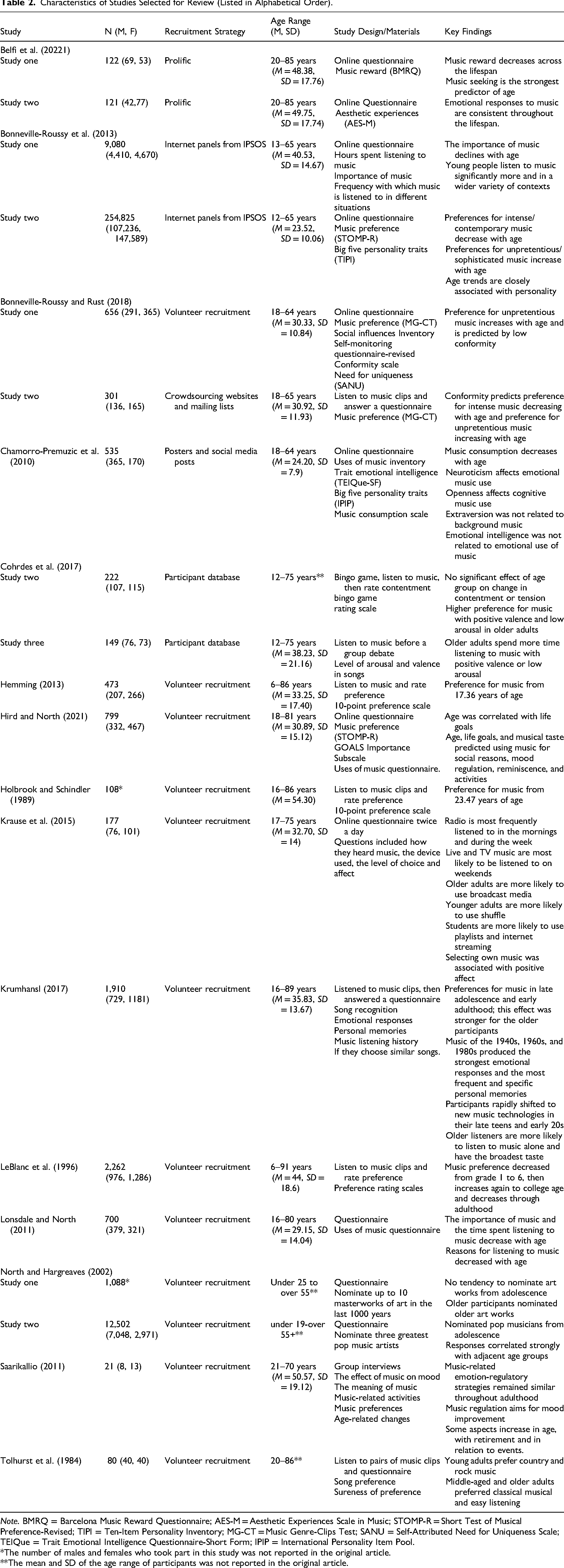
Note. BMRQ = Barcelona Music Reward Questionnaire; AES-M = Aesthetic Experiences Scale in Music; STOMP-R = Short Test of Musical Preference-Revised; TIPI = Ten-Item Personality Inventory; MG-CT = Music Genre-Clips Test; SANU = Self-Attributed Need for Uniqueness Scale; TEIQue = Trait Emotional Intelligence Questionnaire-Short Form; IPIP = International Personality Item Pool.
*The number of males and females who took part in this study was not reported in the original article. **The mean and SD of the age range of participants was not reported in the original article.
Results
Characteristics of Studies
Of the fifteen journal articles selected for review, fourteen were quantitative studies that used self-report questionnaires, and one was a qualitative interview study (Saarikallio, 2011). All of these studies were cross-sectional in design.
Nine of the fifteen articles reported the findings of a single study (Chamorro-Premuzic et al., 2010; Hemming, 2013; Hird & North, 2021; Holbrook & Schindler, 1989; Krause et al., 2015; Krumhansl, 2017; LeBlanc et al., 1996; Saarikallio, 2011; Tolhurst et al., 1984) and the other six articles reported the findings from two or more studies (Belfi et al., 2022; Bonneville-Roussy et al., 2013; Bonneville-Roussy & Rust, 2018; Cohrdes et al., 2017; Lonsdale & North, 2011; North & Hargreaves, 2002). However, it ought to be noted that only one of the four studies reported in Lonsdale and North (2011) and two of the three studies reported in Cohrdes et al. (2017) were included in the review because the other three studies did not meet the inclusion criteria (i.e., they did not investigate participant samples ranging from young to late adulthood).
Six studies investigated British samples (Bonneville-Roussy et al., 2013; Bonneville-Roussy & Rust, 2018; Chamorro-Premuzic et al., 2010; Krause et al., 2015; Lonsdale & North, 2011; North & Hargreaves, 2002), five studies investigated American samples (Belfi et al., 2022; Holbrook & Schindler, 1989; Krumhansl, 2017; LeBlanc et al., 1996; Tolhurst et al., 1984), two studies investigated German samples (Cohrdes et al., 2017; Hemming, 2013), one study investigated an Australian sample (Hird & North, 2021), and one study investigated a Finnish sample (Saarikallio, 2011).
Sample Size and Recruitment Strategy
All fourteen quantitative studies invited members of the general public to complete a self-report questionnaire or rating scale. Participant sample sizes ranged from 80 to 254,825. Ten studies used volunteer recruitment (Chamorro-Premuzic et al., 2010; Hemming, 2013; Hird & North, 2021; Holbrook & Schindler, 1989; Krause et al., 2015; Krumhansl, 2017; LeBlanc et al., 1996; Lonsdale & North, 2011; North & Hargreaves, 2002; Tolhurst et al., 1984) and four studies used paid recruitment (Belfi et al., 2022; Bonneville-Roussy et al., 2013; Bonneville-Roussy & Rust, 2018; Cohrdes et al., 2017).
Bonneville-Roussy et al. (2013) recruited a sample (N = 254,825) that was significantly larger than all of the other studies; this sample was therefore considered an outlier. If Bonneville-Roussy et al.'s (2013) study is removed from the analysis, the mean sample size for the quantitative studies was 1,738 (SD = 3401, Mdn = 473). In contrast, Saarikallio's (2011) qualitative study interviewed 21 participants, who were recruited from a variety of different musical and non-musical hobby/interest groups (i.e., a grammar group, string orchestra group, gardening group, choir groups, computer skills group & a Japanese language group).
Age Range of Samples
As specified in the inclusion criteria, all fifteen studies reviewed investigated participant samples that ranged from young to late adulthood. Ten articles studied the relationships between age and musical consumption for their sample as a whole (Bonneville-Roussy et al., 2013; Bonneville-Roussy & Rust, 2018; Chamorro-Premuzic et al., 2010; Hemming, 2013; Hird & North, 2021; Holbrook & Schindler, 1989; Krause et al., 2015; Krumhansl, 2017; LeBlanc et al., 1996; Saarikallio, 2011). However, in contrast, five articles (Belfi et al., 2022; Cohrdes et al., 2017; Lonsdale & North, 2011; North & Hargreaves, 2002; Tolhurst et al., 1984) stratified participants into distinct and consecutive age groups (e.g., 30–39, 40–49, 50–59); this decision permitted the comparison between cohorts and the possible identification of non-linear age-related trends.
The overall mean age of the participants in all fifteen studies was 37.36 (SD = 9.42). The youngest age under investigation ranged from 6–25 (M = 15.95, SD = 4.76) and the oldest age ranged from 55–91 (M = 75.10, SD = 11.11). Upon closer inspection, it was evident that the mean age of the samples in five studies was within five years of the mid-point of the range, suggesting an even spread of age groups and a good representation of middle-aged adults (Belfi et al., 2022; Bonneville-Roussy et al., 2013; Holbrook & Schindler, 1989; LeBlanc et al., 1996; Saarikallio, 2011). However, the mean age of the other ten studies was 10–20 years lower than the median, suggesting their samples were skewed toward young adults rather than older adults (Bonneville-Roussy & Rust, 2018; Chamorro-Premuzic et al., 2010; Cohrdes et al., 2017; Hemming, 2013; Hird & North, 2021; Krause et al., 2015; Krumhansl, 2017; Lonsdale & North, 2011; North & Hargreaves, 2002; Tolhurst et al., 1984).
Quantitative Measures Used
The fourteen quantitative studies reviewed employed self-report questionnaires to assess a variety of different variables, including (1) music preferences; (2) the importance of music; (3) music consumption; and (4) reasons for listening to music.
1. Music Preferences
Nine of the fifteen studies investigated participants’ music preferences. Three studies used the Short Test of Musical Preference—Revised (STOMP-R; Bonneville-Roussy et al., 2013; Hird & North, 2021; Rentfrow & Gosling, 2003) or the Music Genre-Clips Test (MG-CT; Bonneville-Roussy & Rust, 2018). Five studies assessed music preference by asking participants to rate music clips and whether they would listen to similar songs (Hemming, 2013; Holbrook & Schindler, 1989; Krumhansl, 2017; LeBlanc et al., 1996; Tolhurst et al., 1984). North and Hargreaves (2002) asked participants to nominate the three greatest pop music artists and ten masterworks of art.
2. Importance of Music
Two of the fifteen studies attempted to assess the importance of music. This was achieved by asking participants to rate the importance of music using either a set of five statements (Bonneville-Roussy et al., 2013) or a single item (0–10) rating scale (Lonsdale & North, 2011).
3. Music Consumption
Four of the fifteen studies investigated participants’ music consumption. Chamorro-Premuzic et al. (2010) assessed music consumption using a self-devised 10-item scale, whereas two studies simply asked participants to indicate how many hours they listened to music and how much money they spent on music (Bonneville-Roussy et al., 2013; Lonsdale & North, 2011). In contrast, Krause et al. (2015) used the experience sampling method (Czikszentmihalyi & Lefevre, 1989). Participants were sent two messages each day, prompting them to respond to an online questionnaire asking whether they had heard music in the two hours prior to receiving the text message. If so, participants were asked to report the device used to play the music and to rate (1–7) the level of choice they had in selecting the music played, how much attention they gave the music played, how much they liked the music and how arousing it was. It should be noted that the questions used in these four studies each relate to different aspects of music consumption (e.g., musical platforms / format used, time / money spent listening to music, frequency of listening), making direct comparisons between studies difficult.
4. Reasons for Listening to Music
Three of the fifteen studies assessed participants’ reasons for listening to music, and in each case, a different measure was used. Chamorro-Premuzic et al. (2010) devised a 15-item scale that assessed participants’ reasons for listening to music along three dimensions (i.e., cognitive, emotional, & background). Lonsdale and North (2011) also devised their own 48-item measure based on an eight-factor model; this scale was later used as the basis for Hird and North's (2021) 76-item measure.
Qualitative Measures Used
Of the fifteen studies reviewed, only one employed a qualitative design. Saarikallio (2011) conducted seven semi-structured group interviews to ask participants how music had been a part of their lives (both through listening to music and playing instruments), what types of music they enjoyed, how music affected their mood, to discuss any meaningful memories associated with music, what music meant to them, and how these all may have changed with age and different events.
Possible Explanations for Age-Related Differences
Eight of the fifteen studies (Belfi et al., 2022; Bonneville-Roussy et al., 2013; Bonneville-Roussy & Rust, 2018; Chamorro-Premuzic et al., 2010; Hemming, 2013; Hird & North, 2021; Holbrook & Schindler, 1989; Saarikallio, 2011) identified variables that might help to explain any age-related differences / trends in music preferences and reasons for listening to music: (1) reminiscence bump; (2) conformity; (3) the ‘Big Five’ personality traits; (4) life goals; and (5) trait emotional intelligence.
Discussion
The present research aimed to systematically review studies concerning changes in music consumption across the lifespan, with the aim of developing a better understanding of how adults of all ages use and consume music. After reviewing four academic databases (and examining the reference lists of shortlisted articles), fifteen studies were found to have met the study's inclusion criteria. Upon closer inspection, it was evident that people's music consumption across the lifespan has received limited attention from researchers, but what little research has been done on this topic has been methodologically inconsistent and led to findings that are both contradictory and inconclusive. The findings of these fifteen studies relate to three main topics: (1) music preference; (2) the importance of music; and (3) reasons for listening to music.
Music Preferences
The studies reviewed here would suggest that people's music preferences tend to vary with age. For example, it was evident that younger adults tended to prefer intense-contemporary music (e.g., rock or pop), whereas older adults tended to prefer unpretentious-sophisticated music (e.g., classical or jazz; Bonneville-Roussy et al., 2013; Tolhurst et al., 1984). These findings are in keeping with previous studies that young adults prefer highly arousing music; this may be because of their greater inclination toward risk taking and sensation-seeking behaviours (Ball et al., 1984; Cohrdes et al., 2017). It is also possible that young adults enjoy intense and arousing music because its cathartic properties help them to deal with the stress associated with leaving school and the increasing responsibility this entails (Papinczak et al., 2015; Rentfrow & Gosling, 2003; Thomson et al., 2014). However, regardless of genre, arousal or valence, the present review found that participants of all ages seemed to prefer music that was produced when they were adolescents or young adults (Hemming, 2013; Holbrook & Schindler, 1989; Krumhansl, 2017).
It is possible that the music we listen to in late adolescence and early adulthood becomes associated with specific memories (Hemming, 2013; Holbrook & Schindler, 1989; Krumhansl, 2017). Holbrook and Schindler (1989) found that their sample of adult participants preferred music that was produced when they were 23 years old. Similarly, Hemming's (2013) study suggested participants preferred music from when they were 17 years old. These findings seem to be in keeping with research concerning the reminiscence bump (Rubin et al., 1998), which has shown that events that occurred between 10–30 years of age are remembered more frequently than memories from other periods of life, possibly due to their association with periods of identity development (Rathbone et al., 2017). In this context, it is entirely possible that the music genre preferences of older and younger adults may have nothing to do with the characteristics of music itself but instead simply reflect their popularity at the time of their youth (Gibbons, 1977; Harrison & Ryan, 2010; North & Hargreaves, 2002; Zimprich & Wolf, 2016).
Importance of Music and Music Consumption
Several of the studies reviewed found that the consumption and importance of music both tended to decrease with age (Belfi et al., 2022; Bonneville-Roussy et al., 2013; Chamorro-Premuzic et al., 2010; LeBlanc et al., 1996; Lonsdale & North, 2011). This apparent decline in the importance of music is consistent with previous findings (Burack et al., 2003; Cohen-Mansfield et al., 2005; Harrison & Ryan, 2010) and might reflect differing priorities of younger and older adults, changes in leisure preferences, spare time or perhaps simply generational differences in competency using new online and digital platforms (Krause et al., 2015). It is also possible that the importance of music for younger people stems from developmental differences between young and older adults. For example, young adults may be more inclined to use music for identity formation (Levinson, 1986; Papinczak et al., 2015) because of the need for emotional independence or to conform to in-group expectations (Bonneville-Roussy & Rust, 2018; Lonsdale & North, 2009; North et al., 2000).
Interestingly, the findings of Saarikallio's (2011) interview study found evidence that music consumption might increase with age; this contradicts many of the quantitative studies reviewed here. There may be several explanations for this apparent inconsistency. For example, group interviews employed by Saarikallio (2011) may have inadvertently led participants to give similar answers due to any possible stigma associated with appearing socially / musically disengaged. Equally, the need to conform to the opinions of other highly engaged group members (e.g., Levitan & Verhulst, 2016) may have led participants to provide socially desirable answers.
Saarikallio's (2011) sample was also small (N = 26), but this is not uncommon for qualitative studies. Perhaps more importantly, it was made up of a disproportionate (62%) number of musicians – there is good reason to suspect that musicians engage with music differently from non-musicians (Dawson, 2011; Jovančević et al., 2019; Madsen & Geringer, 1990; Mikutta et al., 2014; Ojha & Tiwary, 2015). For this reason, there is every reason to suspect that Saarikallio's (2011) qualitative findings are unlikely to be representative of wider, non-musician populations. Finally, it is also important to recognise that Saarikallio's (2011) study was conducted with a sample of Finnish participants, and it is not inconceivable that cultural differences might also account for their inconsistent findings.
Reasons for Listening to Music
The present review also found evidence to suggest that people's reasons for listening to music are likely to change with age. Listening to music for social interaction, as a background for activities, personal identity, reminiscence, arousal, surveillance and diversion all decrease with age (Chamorro-Premuzic et al., 2010; Hird & North, 2021; Lonsdale & North, 2011). Previous research has shown that differences in music consumption with age may be predicted by personality or life goals (Bonneville-Roussy et al., 2013; Chamorro-Premuzic et al., 2010; Hird & North, 2021). Conformity has also been found to mediate the relationship between age and music consumption as young adults are more likely to conform to group expectations by engaging frequently with popular music (Bonneville-Roussy & Rust, 2018).
Personality has also been found to affect both how individuals use music and their music preferences (Vella & Mills, 2017). Neuroticism, for example, is linked with poor emotional regulation, and neurotic individuals are more likely to use music for emotional reasons than their more emotionally stable counterparts (Chamorro-Premuzic et al., 2010). Furthermore, extroversion is positively associated with intense music such as rock and punk (Bonneville-Roussy et al., 2013; North, 2010).
Critical Evaluation
In reviewing research concerning music consumption across the lifespan, it is apparent that each study had limitations in the methodology used. For example, many authors chose to create their own scales to assess similar constructs rather than using a standardised scale, and as such few (if any) of the scales used had been independently validated, and making direct comparisons between studies somewhat problematic. Direct comparison is also problematic because of the different approaches taken to participants’ recruitment. Research suggests that volunteer or paid recruitment are likely to lead to different types of people recruited (e.g., paid recruits are more committed than volunteers) and this is likely to further affect their findings (Saliba & Ostojic, 2014; Van Lange et al., 2011).
While some studies were not primarily focused on age-related differences, it is still notable that none of the fifteen studies under review were based on a theoretical framework of adult development. This lack of theoretical grounding perhaps explains the inconsistency observed and ad-hoc interpretation of any age-related findings. Drawing on an established theory of adult development (e.g., Baltes et al., 1980; Cohen, 2005; Erikson, 1980; Levinson, 1986; Super, 1980) together with a uses and gratifications approach (Katz et al., 1974) could help clarify how and why music listening may serve different functions across adulthood. Revisiting these theories of adult development is therefore likely to offer a useful lens for interpreting existing findings and guiding future research.
Ten of the fifteen studies also failed to investigate possible factors to explain any age-related differences in music consumption. They also did not investigate precisely when these changes might occur around midlife, presumably based on the assumption that linear relationships exist between age and musical consumption. However, this may not be the case. Indeed, the link between music consumption and age may be non-linear. It must also be recognised that any significant age-related differences observed in these studies may simply be the result of cohort effects rather than any true developmental trajectory in music consumption. Longitudinal studies will therefore be needed to determine if any developmental changes in music consumption exist.
Only a handful of studies reviewed here investigated discrete age groups (Belfi et al., 2022; Cohrdes et al., 2017; Lonsdale & North, 2011; North & Hargreaves, 2002; Tolhurst et al., 1984), which permitted direct comparisons between cohorts and the possible identification of non-linear age-related trends. Despite this, it also ought to be noted that many studies reviewed here exhibited an uneven spread of ages with a bias towards younger age groups, thus underrepresenting the middle-aged and older age groups. Furthermore, several studies also recruited samples with an uneven representation of male and female participants; this imbalance could influence the findings because music consumption patterns have found to differ between genders (Gupta, 2018; Habe et al., 2023). Another limitation was the disproportionate focus on samples from Western and English-speaking countries (e.g., the USA, UK, Germany, Australia, and Finland), which restricts the generalisability of the findings to non-Western cultures.
Limitations
The present review had some limitations. First, only studies reported in English were included for review, and it is entirely possible that there are other studies in other languages that relate to this subject matter (Jakubowski et al., 2025). However, by focusing on English-language studies, this review offers valuable insights into music listening patterns across adulthood within English-speaking contexts, helping to deepen our understanding of how music is experienced in these settings. Future reviews might consider synthesising studies from a range of other languages. Secondly, a number of studies (n = 7) were identified by examining the reference lists of all shortlisted articles, indicating that the search keywords did not capture all relevant studies. However, like any systematic review, the present study sought to strike a balance between completeness and specificity. Any future replication of this review should bear this balance in mind.
The decision to focus solely on music consumption rather than music production was pragmatic and reflected research evidence that suggests musicians engage with music differently from non-musicians (e.g., Dawson, 2011; Jovančević et al., 2019; Madsen & Geringer, 1990; Mikutta et al., 2014; Ojha & Tiwary, 2015). However, it is entirely possible that singing, playing instruments, musical composition and songwriting also exhibit significant changes across an individual's lifespan; these aspects of musical consumption were excluded from the review. Future systematic reviews might consider including lifespan studies concerned with both the consumption of music (e.g., listening to music, buying music, attending concerts, & watching music videos) and the production of music (e.g., singing, playing instruments, musical composition, & songwriting).
While this review has specifically focused on music consumption, its findings invite broader consideration of how lifespan development may also affect engagement with other forms of art, such as paintings and film. For instance, the reminiscence bump observed in music preferences may similarly influence an individual's attachment to films experienced during adolescence and early adulthood (Janssen et al., 2007; Rathbone et al., 2017). Furthermore, just as older adults seem to use music for reminiscence or mood regulation, it is plausible that they engage with painting for similar purposes (Bennington et al., 2016; Rose & Lonsdale, 2016). Future research could investigate whether these patterns extend to other artistic domains, thereby enhancing our understanding of art engagement more broadly in ageing societies.
Conclusions and Recommendations
The present study aimed to systematically review research concerning changes in music consumption across the lifespan to better understand how adults of all ages consume music. The studies reviewed suggest that people's music preferences tend to vary with age. However, participants of all ages seemed to prefer music that was produced when they were adolescents or young adults (Hemming, 2013; Holbrook & Schindler, 1989; Krumhansl, 2017) possibly due to their association with periods of identity development (Rathbone et al., 2017) or popularity at the time of their youth (Gibbons, 1977; Harrison & Ryan, 2010; North & Hargreaves, 2002; Zimprich & Wolf, 2016).
Several of the studies reviewed also found that the consumption and importance of music both tended to decrease with age (Belfi et al., 2022; Bonneville-Roussy et al., 2013; Chamorro-Premuzic et al., 2010; LeBlanc et al., 1996; Lonsdale & North, 2011). This apparent decline might reflect differing priorities, changes in leisure preferences, spare time, competency using digital platforms, or developmental differences (Krause et al., 2015; Levinson, 1986; Papinczak et al., 2015). The present review also found evidence to suggest that people's reasons for listening to music are likely to change with age (Chamorro-Premuzic et al., 2010; Hird & North, 2021; Lonsdale & North, 2011). Finally the present review also highlighted that these age-related differences in music consumption may be predicted by personality, life goals, or conformity (Bonneville-Roussy et al., 2013; Bonneville-Roussy & Rust, 2018; Chamorro-Premuzic et al., 2010; Hird & North, 2021).
On the basis of this systematic review, the following recommendations are made for future research:
Wherever possible try to ensure greater consistency / standardisation in the measures used to permit more meaningful comparisons between studies. Future studies should be designed with a theoretical framework of lifespan development in mind. Wherever possible seek to identify factors that may explain any age-related differences in music consumption. Investigate music consumption across the lifespan using distinct and consecutive age groups. Ensure that the sample under investigation contains discrete age groups that have the same range and are as balanced (i.e., gender) as possible. Conduct longitudinal studies to separate cohort effects from developmental effects on music consumption.
Footnotes

Ethical Considerations
There are no human participants in this article and informed consent is not required.
Consent to Participate
Not applicable
Consent for Publication
Not applicable
Funding
The authors disclosed receipt of the following financial support for the research, authorship, and/or publication of this article: The first author received funding from the Nigel Groome Studentship at Oxford Brookes University.
Declaration of Conflicting Interests
The authors declared no potential conflicts of interest with respect to the research, authorship, and/or publication of this article.
Data Availability
All data generated or analysed during this study are included in this published article.