




Abstract
Prior literature has shown that arts & humanities (A&H) engagement enhances flourishing; however, much of the existing literature has focused primarily on White American samples, creating a lack of evidence around the impacts of A&H on Black American flourishing. Furthermore, despite significant evidence demonstrating the impact of the arts on psychological, physical, and interpersonal flourishing, there is a lack of evidence focusing on the relationship between A&H and other key flourishing dimensions, such as transcendent or collective flourishing, that are salient within Black American communities. A scoping review was conducted to provide a comprehensive summary of literature connecting A&H to Black American flourishing across psychological, physical, interpersonal, collective, and transcendent dimensions of flourishing.
The Arts and Humanities as a Vehicle for Black American Flourishing: A Scoping Review
The arts and humanities (A&H) are a core part of the human experience. Engagement with A&H, through music, literature, and the visual and performing arts, has been associated with personal flourishing outcomes like improved cognitive functioning (Bone et al., 2023), higher self-esteem (Mak & Fancourt, 2019; Richards et al., 2019), life satisfaction (Krause et al., 2021; Pearce et al., 2016) and sense of purpose (Bensimon & Gilboa, 2010). A&H engagement also has several social flourishing outcomes, including bringing individuals together in ritual and celebration and improving pro-social behaviors (Beer et al., 2020; Kou et al., 2020). The emerging field of the Positive Humanities specifically focuses on the relationship between the A&H and human flourishing through integrating humanistic perspectives with empirical methods to understand this relationship (Pawelski, 2022).
Both the ‘arts and humanities’ and what is meant by A&H engagement are difficult to define due to the broad range of modes (ways in which people engage in the arts) and forms (art forms or disciplines) that individuals engage in (Sonke et al., 2023). Fancourt and Finn (2019) provide fundamental characteristics of the arts that provide guidelines for what constitutes the ‘arts’, including that they are 1) valued in their own right outside of their utility, 2) provide imaginative experiences, 3) comprise or cause an emotional response, and 4) in its production, require creativity, originality, and novelty. The ‘humanities’, on the other hand, are often defined as a branch of knowledge or group of educational disciplines (e.g., philosophy, linguistics, history, religion) concerned with the study of human beings and their culture (Britannica, n.d.). Though the arts and humanities differ in definition (i.e., the arts are typically associated with creative practice and skilled activity, while the humanities focus on scholarship and education), they share a number of key commonalities. As pointed out by Shim and colleagues (2019), evolving practices, such as the arts not being limited to practice but also being studied, and the humanities becoming more practice-oriented, blur the boundaries between the terms, making it challenging to distinctly separate them. As such, in this paper, we refer to the arts and humanities as a single domain, A&H, consistent with prior work (Crone et al., in press; Shim et al., 2019). A&H forms themselves are myriad, but in the literature often fall under five broad categories, including performing, visual, literary, cultural, and digital and electronic arts (Fancourt & Finn, 2019). Finally, A&H engagement often falls into two categories, receptive engagement (e.g., art that has been created and now is experienced by an audience) and participatory (e.g., the creation of or participation in the art) (Fancourt & Finn, 2019; Tymoszuk et al., 2021).
In light of the growing evidence of the relationship between A&H engagement and flourishing, it is important to examine how this relationship may differ across racial groups in the U.S.—here we focus on Black Americans 1 . For example, due to systemic inequities, A&H engagement may have unique benefits in the lives of Black Americans. Arts engagement during the Harlem Renaissance of the 1920s and 30s and the Black Arts Movement of the 1960s and 70s for instance, have been credited with increasing Black American flourishing on a national level by instilling a renewed sense of ethnic pride and self-determination (Baraka, 2011; Dyson et al., 2020). Similarly, artistic engagement through newer culturally relevant art forms, such as spoken word poetry and hip hop, has also been investigated for its impact on flourishing outcomes like self-esteem, identity development, and collective consciousness among Black American youth (Dyson, 2004; Henry et al., 2010; Levy, 2019). Finally, building on Africultural psychology and African folk wisdom, arts-based methods have been utilized to facilitate community healing and express collective pain and hope (Ginwright, 2010; Long 2022; Majied, 2024).
Prior research has examined the relationship between A&H and broad flourishing dimensions including psychological, physical, and interpersonal flourishing. For Black Americans, however, additional flourishing dimensions like collective and transcendent well-being may be of particular relevance when engaging with A&H. Prior reviews have not considered the diverse ways that Black Americans engage in A&H (Fancourt & Finn, 2019) or the unique variety of flourishing domains that are impacted by A&H engagement in this population (Pesata et al., 2022). Therefore, the aim of this review is to examine and synthesize evidence regarding the relationship between A&H and flourishing across five domains (psychological, physical, interpersonal, collective, and transcendent) in Black Americans.
Defining Black American Flourishing
A variety of terms have emerged to describe optimal human functioning, including ‘thriving’ and ‘health’ (Benson & Scales, 2009; Keyes, 2002). While some prior definitions have focused primarily on the absence of illness, the World Health Organization emphasizes that health and well-being are not simply the absence of disease, but also a ‘state of complete physical, mental, and social well-being’ (World Health Organization, 1948). We believe this emphasis is of great importance. Often for Black Americans, outcomes focus on the presence or absence of disease, disorders, and negative states (Black et al., 2015; Carnethon et al., 2017; Cave et al., 2020). We refer to these factors as ill-being. Although it is important to consider factors that detract from health, it is equally important to consider factors that directly contribute to overall wellness. These factors we refer to as well-being, which describes positive traits and states that are desirable to elevate or maintain, such as cognitive health, positive emotions, health behaviors, and behavioral traits (e.g., optimism, regular exercise, and positive interpersonal relationships) (Eacker 2020; Prilleltensky et al., 2015; Ryff & Singer, 2008; Seligman 2012). To encompass both the reduction of negative factors and the cultivation of positive factors of human experience, we use the term flourishing to refer to experiences of low ill-being and high well-being (Pawelski, 2016a).
Research has tended to emphasize three broad dimensions of flourishing—psychological, physical, and interpersonal. Psychological flourishing is a multifaceted construct comprising mental and emotional outcomes (Ryff, 1989). This construct encompasses a sense of personal growth, autonomy, and mental health conditions (Ryff, 1989). Physical flourishing, a construct concerned with health-related outcomes, emphasizes health status and health behaviors (e.g., physical activity, nutrition, drug use) (Harrell, 2014; Patrick et al., 1973; World Health Organization, 1948). Interpersonal flourishing describes the nature and quality of one's interpersonal relationships and engagement in prosocial behaviors (e.g., altruism, empathy, compassion) (Harrell, 2014; Seligman, 2012).
There is a large body of research linking A&H engagement to these flourishing outcomes. For example, singing, arts and crafts making, and dancing, have been shown to promote psychological flourishing via mental health-related quality of life (Coulton et al., 2015), the reduction of symptoms of anxiety and depression (Daykin et al., 2018), and increased subjective wellbeing (Mansfield et al., 2018). Similarly, A&H engagement encourages health-promoting behaviors which positively impact physical flourishing. Engaging in dance for example, has been associated with reducing body fat and increasing perceived competence to regularly exercise (Staiano et al., 2017; Wagener et al., 2012). Finally, there is a body of literature that has shown the role of A&H engagement in enhancing interpersonal flourishing by bonding through music for example (Weinstein et al., 2016; Kreutz, 2014) or fostering social inclusion through dance (Skinner et al., 2018). These 3 dimensions of flourishing are commonly studied in the literature examining the relationship between A&H and flourishing (Fancourt & Finn, 2019).
However, any discussion of A&H and flourishing specifically in Black Americans must also consider other dimensions of flourishing that account for the complex interplay between Black individuals and their cultural environment. As a result of a sociopolitical history marked by violence and oppression, Black Americans experience vastly different sociocultural environments than White Americans with disparities that lead to less favorable outcomes than those experienced by their White counterparts, even when accounting for factors such as socioeconomic status and education (Boen, 2016). These disparities have critical implications for normative development and flourishing in Black Americans (Lee et al., 2003). Due to these differences in life trajectories and environments, multicultural psychologists have identified additional dimensions of flourishing that are relevant to individuals across cultures but may be particularly relevant to examine in historically marginalized populations where a strong sense of collectivism, spirituality, and strength through adversity are central to surviving and thriving (Constantine & Sue, 2006; Harrell, 2014; Lopez et al., 2002). These additional dimensions include collective flourishing 2 , which in this review refers to a sense of positive cultural and ethnic identity, connection to community, and civic engagement; and transcendent flourishing, which refers to meaning-related and spiritual or religious well-being (Harrell, 2014).
Collective flourishing holds profound significance in the context of Black American flourishing, particularly considering the effect of systemic racism in the U.S. For Black Americans, cultivating a positive sense of identity grounded in cultural heritage can counteract the internalization of harmful stereotypes, contribute to a greater sense of pride, and aid in healing from racialized trauma (Anderson & Stevenson, 2019; Neblett, 2023; Saleem et al., 2022). This domain of flourishing is also characterized by building identity through strong community ties. These ties function as a support network that fosters resilience and offers spaces for shared experiences and radical healing, a form of active healing from identity-based traumas inflicted due to membership in an oppressed ethno-racial group by challenging and changing oppressive conditions (Comas-Diaz, 2007; Ginwright, 2010). Furthermore, a key feature of this dimension is civic engagement, which research has shown empowers Black Americans to address systemic injustices, advocate for social change, and actively shape the trajectory of their communities (Ginwright, 2010). By collectively flourishing, Black Americans not only cope with and counteract the detrimental effects of systemic oppression but also lay the foundation for a more equitable future that uplifts individuals and communities.
Transcendent flourishing is another important dimension of flourishing for Black Americans. This dimension refers to meaning-related flourishing, such as a sense of higher purpose; and spiritual and religious flourishing, such as attaining higher states of consciousness or deep connection with a Higher Power (Harrell, 2014). Black American spirituality and religion are historically significant aspects of flourishing in this community. They are often thematically concerned with liberation, hope, and justice and have served a dual purpose of deepening connections to a Higher Power and playing an active role in coping with stressful events, such as racial discrimination and regaining a sense of humanity (Bierman, 2006; Holt et al., 2014).
Both the collective and transcendent flourishing dimensions are drawn from multicultural psychology — specifically African-centered psychology — which centers the history, culture, behaviors, principles, attitudes, and traditions of members of the African diaspora (Grills, 2004; Harrell, 2014). This framework recognizes spirituality, balance, harmony, collective group orientation, and the centrality of rituals as essential cultural facets among individuals of African descent (Phillips, 1990; Utsey et al., 2000). The Black church as an institution exemplifies the heightened importance of collective and transcendent flourishing in this population. The church has played a central role in Black American flourishing in these domains by acting as a spiritual center for the community and as a site to organize around key civil rights issues impacting the Black community (Moore, 2014). For example, the Southern Christian Leadership Conference (SCLC) and the Student Non-Violent Coordinating Committee (SNCC) coordinated nonviolent direct-action activities in conjunction with the church, whose ministers conveyed a strong nonviolent action message to their congregations (Calhoun-Brown, 2000; Morris, 1981). The church in this way was integral to radical healing, which includes Black individuals taking collective action to dismantle obstacles to progress and supporting the empowerment of individuals and communities (Grayman-Simpson & Mattis, 2013).
The Black church also serves as an exemplar of the interconnectedness of A&H and collective and transcendent flourishing in Black American life. As a cornerstone institution within the Black American community, it continues to promote artistic expression, both by fostering spiritual growth, and enhancing collective empowerment among generations of Black Americans (Gates Jr, 2022; Grayman-Simpson & Mattis, 2013). This work is often accomplished by employing a variety of A&H domains, including gospel music, praise dance, and the reading of scripture, to reinforce spiritual beliefs, promote ethnic pride messages, and rally for social justice (Ghose, 2019). Gospel music, for example, was strategically employed during the Civil Rights Era of the 1950s and 1960s to unify protestors and allies around a message of hope and freedom (Rucker-Hillsman, 2014). Through Black gospel music developed in the Black church, generations of Black Americans have been empowered to “transcend the legacy of bondage and ongoing exploitation and violence… to create an immovable resolve within, based on our inherent divinity and dignity and the determination to see that dignity and divinity triumph” (Majied, 2024, p. 41). To build on existing research on the relationship between A&H and flourishing, it is necessary to examine how the convergence of Black cultural practices and A&H engagement impact Black American experiences across multiple dimensions of flourishing.
The Need for Understanding Unique Features of Black American A&H Engagement
To fully understand the relationship between A&H engagement and flourishing, we must also consider group differences in ways that traditional investigations of A&H to this point have not. For example, Black Americans spend more time with television media than many other groups in the US (Nielsen, 2017). However, in popular U.S. TV and film, Black Americans have largely been negatively depicted, caricaturized, and underrepresented (Jerald et al., 2017; Moffitt & Harris, 2014). In contrast, Black led TV shows and films predominantly feature Black characters, tell Black stories, and are under the creative control of Black writers and producers (Leonard & Robbins, 2021). This storytelling through media has in the past been a site for combatting harmful cultural narratives and stereotypes in the community (Leonard & Robbins, 2021). Culturally relevant films and television therefore may influence audiences differently than media with characters and storylines outside of one's cultural frame of reference given that this has been seen in other populations (Ellithorpe & Bleakley, 2016). For example, Ramasubramanian et al. (2017) found in a sample of Indian Americans that while mainstream media use was linked to lower self-esteem, consuming ethnic media (media that serve a specific racial/ethnic group) was associated with greater ethnic pride. Therefore, it is important to examine mainstream and culturally specific content when examining A&H engagement to understand the nuanced impacts of these experiences.
Studying the humanities at large as well as Black authored humanities can provide clearer insight into the role that the humanities have played in Black flourishing, yet this remains an understudied relationship. For example, the work by influential Black writers such as bell hooks, James Baldwin, and Maya Angelou, revolutionized literature by creating work that spoke specifically to the Black American experience. The impact of these culturally specific works on elements of Black American life needs to be considered along with the impact of the humanities at large. Similarly, spoken word, a type of performance-based poetry, calls on “oral, aural, and written traditions of people of African descent” and allows participants the opportunity to “critically engage with the world by questioning dominant systems of power” (Fisher, 2003, p. 363). Spoken word is yet another example of A&H created for and by Black Americans and may therefore engage these audiences differently (Fisher, 2003). Indeed, this cultural nuance in the modality of the presentation of poetry in Black culture may impact flourishing in ways that are often overlooked.
There is a growing body of literature examining the role of the visual arts on flourishing (Cotter et al., 2022; Ebert et al., 2015; Shim et al., 2021). However, the use of mostly White samples limits their applicability across non-White groups in the US. Additionally, while many Black visual artists like Jean-Michel Basquiat and Gordon Parks have used their creativity to demand change, how this specific type of art as activism can impact collective flourishing for Black Americans has not been deeply explored (Morris, 2018).
Finally, music, particularly genres like hip hop and jazz that were created for and by Black Americans, likely exert a profound impact on the Black community. For example, jazz from its inception was rooted in African diasporic tradition and promoted improvisation and collaboration (Hersch, 2017). Similarly, hip hop has uniquely Black American cultural roots. This genre originated in the 1970's, a time of great social change in the Black community, with lyrical narratives that protest social conditions and address social issues and personal struggles (Dyson 2004; Rabaka, 2013; Rose, 1994). Examining the full range of Black American A&H experiences alongside a broad range of culturally salient flourishing outcomes can reveal important effects that were previously masked.
Aims
Despite the growing evidence of the flourishing benefits of A&H, our understanding of the empirical literature on how A&H impacts Black American flourishing is limited. Therefore, the purpose of this mixed studies scoping review is to fill this gap in the literature by systematically mapping the observed relationship between A&H engagement and Black American flourishing. Our specific aims were to (1) provide a comprehensive summary of literature connecting A&H to Black American flourishing across psychological, physical, interpersonal, collective, and transcendent dimensions of flourishing (see Table 1), (2) summarize the impact of A&H engagement on Black American flourishing, and (3) identify areas of flourishing and A&H engagement that are understudied to guide future efforts in this domain.
Black American Flourishing Domains.
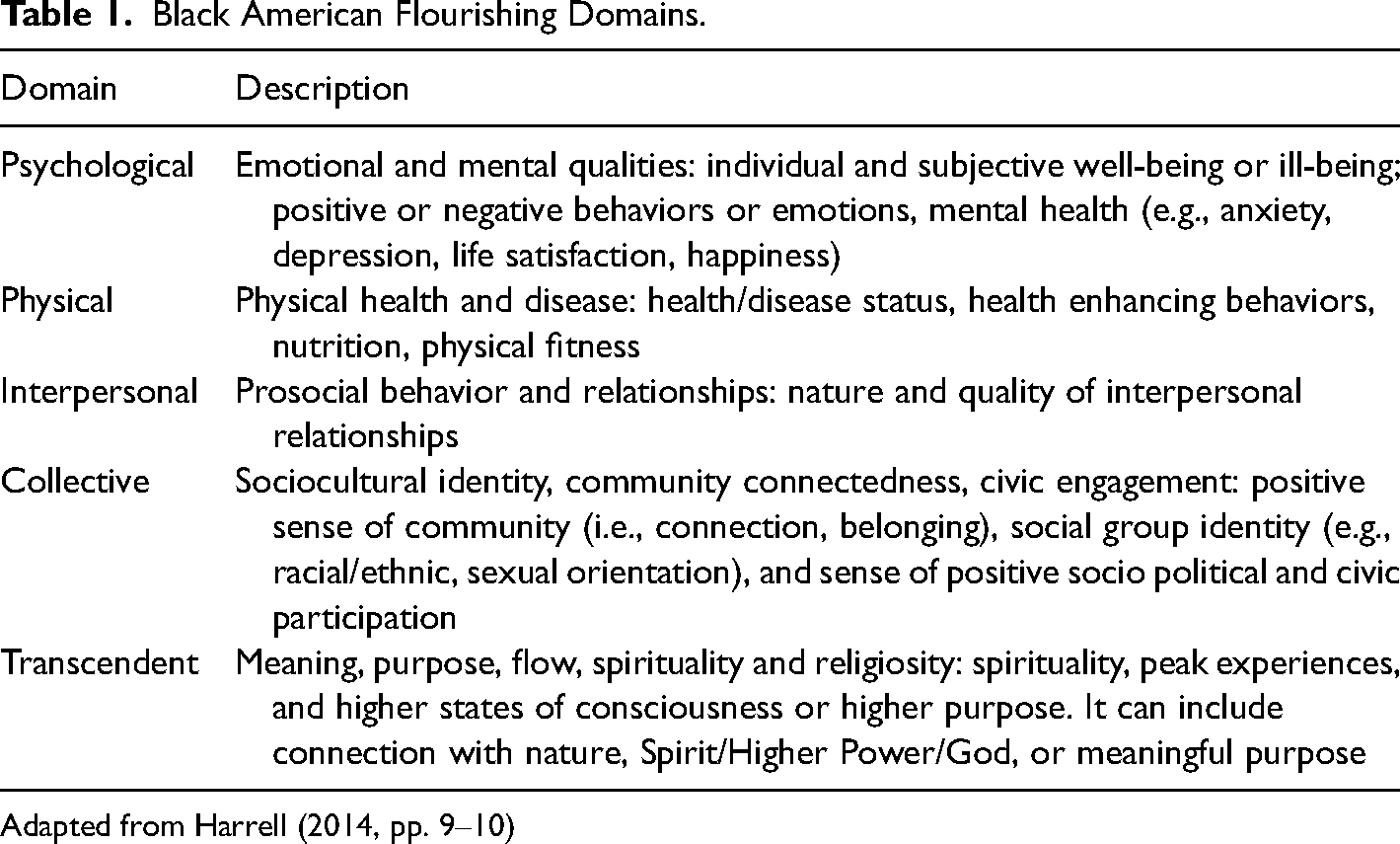
Adapted from Harrell (2014, pp. 9–10)
Method
A scoping review methodology was adopted (Arksey & O’Malley, 2005). Unlike systematic reviews, scoping reviews allow for an exploratory approach to knowledge gathering and synthesis of findings by addressing broad research questions (Grant & Booth, 2009). We followed the five stages for the scoping review outlined by Arksey and O’Malley (2005).
Step 1: Identifying the Research Question
Although the arts have impacted Black American flourishing throughout history, a comprehensive review of the literature has not been conducted. To address this gap, we developed a broad research question: “How do the arts and humanities impact Black American flourishing (including ill-being and well-being)?”
Step 2: Identifying Relevant Evidence
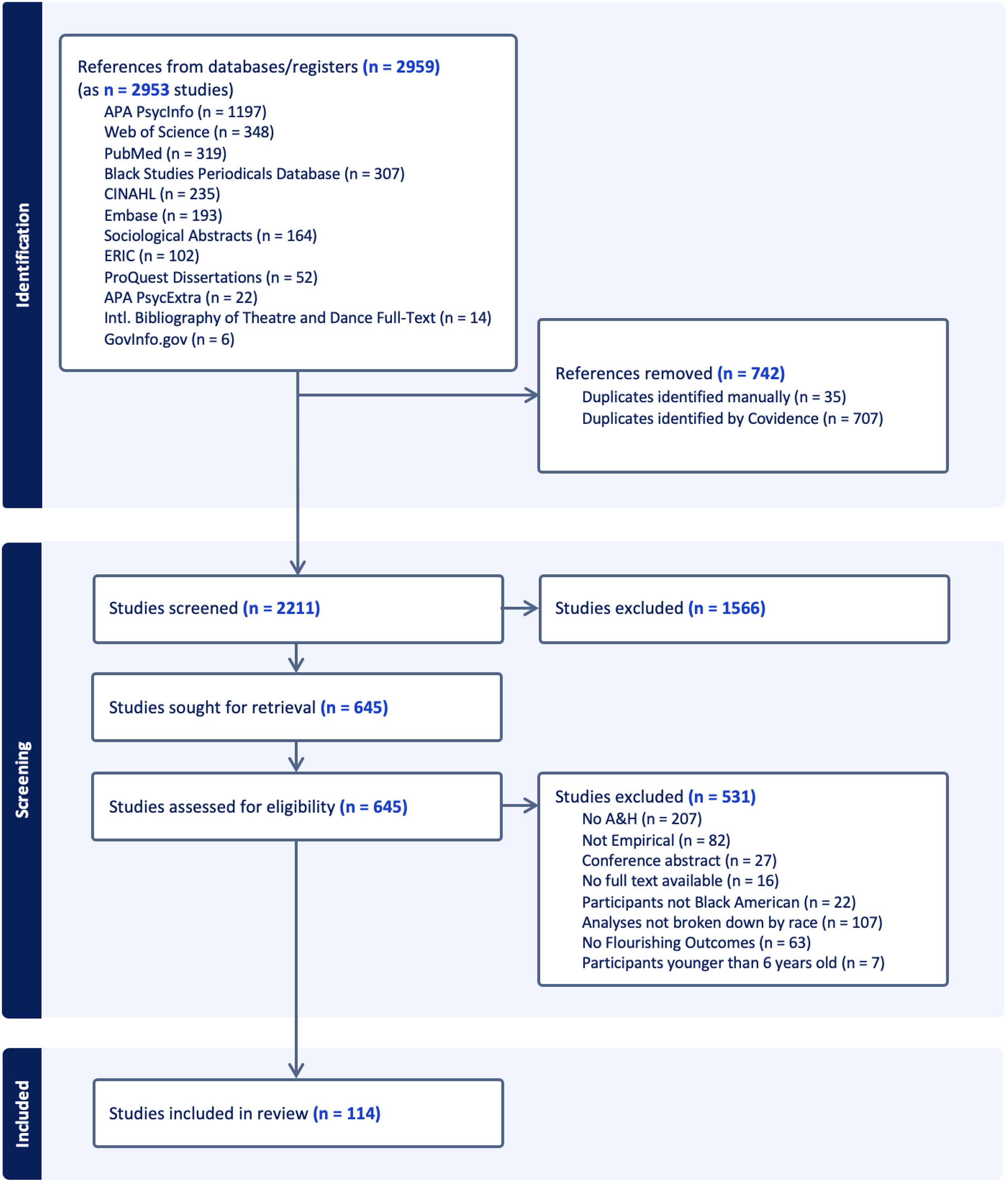
Documentation for this review followed reporting guidelines set out in the PRISMA Statement (Page et al., 2021) and the PRISMA-ScR extension (Tricco et al., 2018). The search strategy was developed with and conducted by an academic research librarian (SK). The following academic databases were included in the search: Embase (Embase.com), Web of Science Core Collection, PubMed, CINAHL (EBSCO), APA PsycInfo (ProQuest), Sociological Abstracts (ProQuest), Black Studies Periodicals (ProQuest), ERIC (ProQuest), and the International Bibliography of Theatre and Dance Full Text (EBSCO). For grey literature, we searched ProQuest Dissertations (ProQuest), APA PsycExtra (ProQuest), and GovInfo.gov. No limits or filters were used, with the exception of restricting GovInfo.gov results to materials authored by either the Health and Human Services Department or the Administration for Children and Families. Searches were conducted on February 17, 2023, for all databases except for APA PsycExtra and GovInfo.gov, which were searched on March 3, 2023. 3
Step 3: Study Selection
Titles and abstracts were screened for articles that appeared to represent the relationship between A&H and flourishing in Black Americans residing in the United States. Nine researchers (GB, JR, NA, AF, KC, MD, KL, JT, and KC) screened study titles and abstracts in Covidence – a workflow platform used to streamline conducting literature reviews (Covidence, 2023). Two researchers independently screened each abstract for inclusion and the lead researcher (CM) resolved any conflicting decisions. Articles that met inclusion criteria based on title and abstract screening were moved to full text review where two researchers independently read the full text and made the decision to advance or remove articles from the review. Any conflicts were resolved by the lead researcher (CM).
All articles were reviewed for inclusion using the following criteria: must (1) examine A&H, (2) be empirical, (3) include Black American participants, (4) break down analyses by race, (5) participants in study sample must over the age of 6 years old, (6) papers must examine relationship between A&H and psychological, physical, interpersonal, collective, or transcendent flourishing. Studies were excluded based on the following exclusion criteria: (1) did not examine A&H, (2) not empirical, (3) conference abstract, (4) no full text was available (5) did not include Black American participants, (6) analyses were not broken down by race, (7) no flourishing outcomes, (8) study sample only included participants younger than 6 years old.
Finally, a team of six researchers (GB, MD, NA, AF, KC, and CM) proceeded to extract data from the papers that met the inclusion criteria. Additionally, all articles were assessed for quality using the Mixed Methods Appraisal Tool (MMAT) (Hong et al., 2018). Two researchers independently extracted the data from each article and screened them for quality. At least one individual who completed extraction for each paper was a PhD level researcher (CM or KC). Extractor agreement was reached during consensus meetings where discrepancies in initial independent extractions were discussed and reconciled.
Step 4: Charting the Data
Data extraction was completed in Covidence. Given the mixed methods and multidisciplinary nature of many of the included articles, the following data were extracted from each article: Title, journal, and author(s), study aims and study design, participants, population type, and demography (age, gender, geographic region, and geographic entity), A&H domain(s) and flourishing dimensions(s), methodology (qualitative, quantitative, mixed methods), and results (qualitive themes / quantitative main effects found). The full data extraction template can be found at https://osf.io/h39zg/?view_only = ecdda9f4bab7448999a9c671c30f76f6.
Step 5: Collating, Summarizing, and Reporting Results
A&H domains were categorized using an inductive approach based on the information in the included articles. Data were organized into four major domains of A&H: TV and film, the humanities and multidomain arts, music, and the visual and performing arts. The data from the included articles were then synthesized by the study team to examine relationships between A&H engagement and flourishing outcomes.
Results
Selection of Sources of Evidence
A total of 2,956 studies were retrieved by the eleven databases and one government website. Covidence (Babineau, 2014) was used for deduplication and the screening and extraction process. After deduplication, 2,211 studies underwent title and abstract screening, 645 studies were assessed in the full text review stage, and 114 studies were ultimately included (see Figure 1).
Description of Included Papers
Most (79.82%) of the 114 articles included studies with exclusively Black American samples while 20.18% percent reported multiracial samples. Thirty-five studies (30.70%) were qualitative, 69 (60.53%) were quantitative, and 10 studies (8.77%) were mixed methods. Thirty-one studies (27.19%) utilized interventions (i.e., involved researchers introducing an A&H experience or stimuli to observe the effects on a group) while 83 (72.81%) were non-intervention (e.g., examining existing engagement in relation to flourishing outcomes). In terms of study design, 68 were cross sectional (59.65), 15 studies were randomized controlled trials or experimental designs (13.16%), 13 were quasi experimental (11.40%), and 18 were longitudinal studies (15.79%).
The included articles were organized into four categories for this review (see Table 2) 4 : TV and film, the humanities and multidomain arts, music (including music videos), and the visual and performing arts. TV and film represented 35.09% (n = 40) of studies, the humanities and multidomain (engagement consisting of more than one A&H form) arts represented 19.30% (n = 22), music 31.58% (n = 36), and the visual and performing arts 14.04% (n = 16).
List of Studies Included in the Review.

TV and Film
TV and film was the most common A&H category (n = 40). Of these articles, 28 (70%) studies examined ill-being outcomes, 9 (22.5%) studied well-being outcomes, and 3 (7.5%) studies focused on both ill-being and well-being outcomes. Across flourishing dimensions, 20 (50%) examined psychological flourishing, 18 (45%) physical flourishing, 5 (12.50%) interpersonal, and 11 (27.50%) collective flourishing 5 . No studies examined a relationship between TV and film and transcendent flourishing.
More than half of the studies that examined ill-being outcomes (n = 17/28) examined a negative relationship between TV viewing and physical flourishing. TV viewing was linked to unhealthy diet (Haff, 2009; Hartman et al., 2015; Robinson & Killen, 1995; Roy et al., 2019), increased risk of type 2 diabetes (Joseph et al., 2016; Krishnan et al., 2009), increased risk of obesity and being overweight (Allen et al., 2011; Bruce et al., 2021; Sidney et al., 1996; Singh et al., 2008), and increased sexual activity in adolescents (Bleakley et al., 2017).
Nine studies examined well-being outcomes related to TV and film viewing. Most of these studies (n = 8) were focused specifically on the relationship between viewing Black-oriented TV and film and collective flourishing (Abrams & Giles, 2007; Adams-Bass et al., 2014; Boutte-White, 2011; Dogan et al., 2022; McKay-Jackson et al., 2023; Parker et al., 1998; Schooler et al., 2004; Williams, 2009). For example, McKay-Jackson and colleagues (2023) found that viewers of the afro-futuristic film, Black Panther, reported that the film raised critical consciousness, fostered increased appreciation of their Black identity, and created a sense of hope. Similarly, Williams (2009) reported that, though Black girls often feel their identity is erased or stereotyped by mainstream television, TV shows featuring Black women as role models positively impacted the way they feel about their gendered racial identity.
Finally, of the 40 studies focused on TV and film, 21 delved into the relationship between these art forms and their impact on psychological flourishing. Articles in this subcategory included a large number of investigations on the relationships between TV and film and body image and self-esteem (Dotterer et al., 2007; Greadington, 1977; Hudson, 2020; James-Cue, 2011; Martins & Harrison, 2012; Schooler et al., 2004; Tan & Tan, 1979; Ward, 2004; Williams, 2009).
Humanities & Multidomain Arts Engagement
Of the 22 articles in this category, most (n = 18) (81.82%) examined well-being outcomes, 1 (4.55%) focused on illbeing outcomes, and 2 (9.09%) focused on both ill-being and well-being outcomes. Across flourishing dimensions, 18 (81.82%) examined psychological flourishing, 4 (18.18%) physical flourishing, 6 (27.27%) interpersonal flourishing, 14 (63.64%) collective flourishing, and 4 (18.18%) transcendent flourishing. Research that examined psychological flourishing indicated that this category allowed for self-exploration (Becker, 2014; Carothers, 2011; Evans, 2016; Harris, 2011; Nicol, 2022), increased social emotional skills (Lea et al., 2019), self-esteem and self-image (DeMarco & Chan, 2013; Respress & Lutfi, 2006), and sense of agency (Anderson, 2011).
Interestingly, in many instances (n = 14), studies used or observed culturally relevant arts programs. For example, some studies examined hip hop as a multidomain art form, consisting of writing lyrics, deejaying, graffiti art, and performance (Anderson, 2011; McWilson, 2020; Payne, 2024). They found that engaging in hip hop culture was positively related to participants’ ability to cope with environmental stressors, their personal identity development, and their resilience (Anderson, 2011; McWilson, 2020; Payne, 2024). Another paper described how a poetry writing class for Black Muslim girls, grounded in culturally relevant Qur’anic principles, allowed for writers to make sense of their ethnic identities and write for social change, thus positively impacting collective flourishing (Muhammad, 2015).
Music
We identified 36 articles focused on music and its relationship to flourishing. Twenty-three (63.89%) of the studies in this category examined well-being effects of music, 9 (25%) studies examined ill-being effects, and 4 (11.11%) examined both. Across flourishing dimensions, 27 (75%) examined psychological flourishing, 11 (30.56%) physical flourishing, 10 (27.78%) interpersonal flourishing, 13 (32.50%) collective flourishing, and 8 (22.22%) transcendent flourishing.
Of the studies that examined ill-being, 7 focused on the hip hop/rap genre (Harrinauth, 2022; McIntosh, 2011; Orange, 1996; Peterson et al., 2007; Rigg & Estreet, 2019; Williams, 2014; Wingood et al., 2003). Studies commonly examined negative associations between hip hop/rap and risk behaviors like engaging in unhealthy sex practices and drug and alcohol consumption (physical flourishing) (Chandler et al., 2021; McIntosh, 2011; Peterson et al., 2007; Rigg & Estreet, 2019; Wingood et al., 2003), aggression and misogyny (Orange, 1996) (interpersonal flourishing), and lower self-esteem (psychological flourishing) (Harrinauth, 2022; Peterson et al., 2007; Williams, 2014). For instance, Wingood et al. (2003) investigated the relationship between exposure to rap music videos and health risk behaviors and sexually transmitted diseases. The study found that exposure to gangsta rap music videos may influence adolescent behaviors, making young people more likely to engage in unhealthy sexual practices, have multiple sexual partners, acquire new sexually transmitted diseases, use drugs, and drink alcohol.
Although 7 studies reported ill-being effects of hip hop/rap, 8 studies reported that this same genre was positively associated with psychological well-being (n = 5) and collective well-being (n = 4). For example, Anyiwo and colleagues (2021) found that rap music videos were positively associated with antiracist activism among youth. Other studies found that hip hop/rap music served as a tool for identity development of Black Americans (Jetson, 2022), was associated with higher collective self-esteem (Dixon et al., 2009) and connected members of the Black community to Black culture (Gangloff-Bailey, 2017).
A significant number of studies that found well-being outcomes of listening to music found this relationship through gospel music (n = 7) (Bradshaw et al., 2015; Franklin, 2010; Hamilton et al., 2013, 2016, 2017; Parker, 2017; Strayhorn, 2011). Black gospel music helped participants connect to their spirituality or a Higher Power (Franklin, 2010; Hamilton et al., 2017) and was a source of emotional support and guidance during stressful life events (Bradshaw et al., 2015; Franklin, 2010; Hamilton et al., 2013, 2016, 2017; Strayhorn, 2011).
The Visual and Performing Arts
Finally, the smallest group of studies were related to the visual and performing arts. Within this category, studies included dance programs, musical theater performance, theater, and painting. All 16 studies examined associations with well-being. Ten (62.50%) studies found a relationship between this domain and psychological flourishing, 12 (75%) physical flourishing, 4 (25%) interpersonal flourishing, 2 (12.50%) collective flourishing, and 2 (12.50%) transcendent flourishing. Papers in this category often described the ethnographic observation of existing visual and performing arts programs or experimental design programs to observe the effect of these arts programs on flourishing.
Several studies focused on dance programs and flourishing (n = 13), specifically, the effect of dance on physical flourishing (n = 12/13). These studies demonstrated significant improvements in physical health metrics (Atkins et al., 2019; Brooks, 2014), such as body fat and BMI reduction (Fausto et al., 2022; Murrock & Gary, 2010), enhanced functional capacity (Murrock & Gary, 2008), and improved balance, mobility, and endurance (Hackney et al., 2012; Silverstein et al., 2020). Additionally, these dance interventions yielded positive results in managing chronic conditions like high blood pressure (Murrock et al., 2009), diabetes (Murrock et al., 2009), weight gain (Robinson et al., 2010; Stillman et al., 2018), and sedentary behaviors (Robinson et al., 2003; Robinson et al., 2010).
It is also important to note that many of these studies were culturally tailored, including the use of culturally appropriate dance forms and music (e.g., utilizing gospel, hip hop, or African dance), or by engaging community stakeholders during program design. For instance, a longitudinal study by Murrock and Gary (2010) with 97 adult African American women in a church setting utilized a culturally specific dance intervention and found it significantly decreased body fat and BMI in sedentary adult African American women from baseline to eight weeks and was maintained to post-test at 18 weeks.
Discussion
It is clear that A&H plays a key role in Black American flourishing. This scoping review sought to explore the relationship between of A&H and multiple dimensions of flourishing—psychological, physical, interpersonal, collective, and transcendent—in Black Americans. Recognizing that flourishing is not merely the absence of negative experiences, our investigation widely encompasses several aspects of well-being, including positive emotions, health outcomes, interpersonal relationships, ethnic identity, and self-growth behaviors. Additionally, we are cognizant of the fact that the outcomes of A&H engagement are not always beneficial to well-being. Therefore, we also included an examination of ill-being, exploring how engagement may contribute to negative outcomes. By examining both well-being and ill-being, we can understand the role of A&H in promoting and preserving well-being and gain some insight into how we can mitigate and prevent ill-being (Pawelski, 2016b) 6 .
Much of the current literature surrounding the topic of flourishing through A&H is focused on non-Black populations, and on psychological, physical, and interpersonal dimensions of flourishing. This review on the experience of Black Americans begins to fill this gap by exploring the mainstream and unique A&H modalities that Black Americans engage in and their impact on flourishing. Additionally, dimensions of flourishing that are particularly salient within the Black community (i.e., collective and transcendent flourishing) are investigated.
Several key features were identified in the literature that highlight the relationship between A&H and flourishing in Black Americans. For example, we identified a substantial body of work that examined the relationship between TV watching and physical flourishing (45% of the studies). Of these studies, 60.71% examined negative impacts on physical flourishing. However, the ill-being outcomes were often related to the sedentary nature of watching copious amounts of television, not the content of the programs themselves. As many of these studies used TV as a proxy for sedentary health behaviors (e.g., lack of physical exercise, unhealthy snacking), there needs to be more of a shift in methodology to understand the effect of TV and film on flourishing in response to the content of these shows. For example, a few studies revealed that TV and film featuring Black characters positively impacted collective flourishing by improving Black viewers’ racial identity, emphasizing enhanced self-understanding, empowerment, and community unity, and offering hope amidst sociopolitical challenges (e.g., Boutte-White, 2012; McKay-Jackson et al., 2023; Williams, 2009). It is clear that observing TV characters that are ethnically similar to viewer (i.e., culturally relevant programming) may have well-being impacts on Black Americans that should be further explored.
Another central feature of the findings is that many A&H programs were culturally tailored (i.e., these programs reflect the needs and preferences of a particular cultural group) to meet the needs of participants (Pasick et al., 1996). These practices align with public health recommendations that promote equity-centered approaches to health and well-being. For example, the CDC's Health Equity Guiding Principles for Inclusive Communication highlights the importance of ensuring that public health programs are culturally responsive, represent the people in the communities they are intended for, and are tailored based on the unique characteristics of different populations (e.g., beliefs, practices, cultural norms, available resources, etc.) (Calanan et al., 2023; “Health Equity”, 2023). A scoping review of culturally tailored interventions for ethnic minorities found that tailoring programs to specific populations led to an increase in culturally respectful and patient centered care, healthy lifestyle promotion, family and community support, and knowledge of the disease by participants (Joo & Liu, 2021). Modifying A&H programs to fit the cultural needs of the population, as evidenced by many of the culturally tailored programs examined in this review, can create a greater sense of belonging, which positively impacts participation and engagement.
A third feature of the identified literature was the negative lens through which hip hop/rap was examined. Music made up the second largest percentage of A&H domains in this review (31.58%), with multiple genres examined (gospel, hip hop/rap, mainstream, etc.). However, many studies that looked at hip hop/rap focused on ill-being outcomes, despite other studies identifying positive relationships between hip hop/rap and well-being (e.g., Peterson et al., 2007; Rigg & Estreet, 2019; Williams, 2014; Wingood et al., 2003). For example, though many studies found relationships between hip hop/rap and increases in misogyny, hip hop/rap as an expressive medium (i.e., lyric writing and performance) was also found in other studies to facilitate ethnic identity development by empowering expression (Evans, 2019). Furthermore, hip hop/rap can aid in the development of sociopolitical and critical consciousness by giving space—for Black youth in particular—to critically analyze inequity and injustice and take action to combat it in their lives and communities (Watts et al., 2002). There is a clear need for more evaluation of the possible well-being outcomes of hip hop/rap engagement.
Finally, the strong connection between gospel music and multiple dimensions of flourishing in Black Americans was evident in this review. Black gospel music was shown to be an important vehicle for Black Americans to find peace, hope, and meaning in suffering (psychological well-being), and to connect with others (interpersonal well-being). Historically, this genre has also provided a space for Black Americans to maintain a positive sense of ethnic identity (collective well-being) and allowed space for spiritual expression and deepening a personal connection with God (transcendent well-being) (Jones, 1993). The results of our review suggest that for some Black Americans, gospel music is a highly relevant artistic practice for the promotion of flourishing. Future studies should further identify the developmental groups for which these findings are most relevant (e.g., older versus younger Black Americans). It should also be noted that these relationships may be bi-directional (e.g., A&H engagement leads to strong ethnic identity, or strong ethnic identity leads to increased A&H engagement), so the direction of this relationship should be explored in future research.
Future Directions
The review highlighted several gaps in current knowledge of the relationship between A&H and flourishing in Black Americans. For instance, there was little evidence of the use of the visual arts to impact flourishing. This may be due to Black Americans reporting low feelings of belonging in museums and cultural centers where the visual arts are typically housed (Olivares & Piatak, 2022; Price & Applebaum, 2022). Future research is needed to better understand structural and cultural barriers to visual arts engagement among Black Americans.
Additionally, collective and transcendent flourishing are dimensions that take on a heightened importance in the Black American context but were underrepresented in this review (Harrell, 2014). As such, ways in which A&H is used to enhance this domain should be a central focus of future research. The consideration of factors like a strong ethnic identity and deep spiritual meaning in life—and how they can be gained through A&H engagement—enhances the understanding of flourishing within multicultural groups and therefore is a valuable contribution to this literature.
Key methodological gaps were also uncovered in this review. Of the studies included, most were quantitative (60.53%) with fewer qualitative or mixed methods studies accounted for in this topic. Without qualitative insights or mixed method designs in this research, we may miss the nuanced, contextual factors that shape behaviors, attitudes, and experiences of Black Americans engaging with A&H and its impacts on flourishing. In the studies included in this review, a gap was also found in the examination of interventions. Most (72.81%) studies focused on existing A&H engagement while only 27.19% of studies examined interventions (i.e., A&H experiences introduced by the researcher). Additionally, only 11.40% of studies were quasi experimental, 13.16% were randomized control trials or experiments, and 15.79% of included studies were longitudinal, while the majority of studies (59.65%) were cross sectional. Future work on this topic should aim to do more interventions to validate basic science findings and refine existing theories.
Finally, the findings suggest that A&H meaningfully impact the Black American experience. However, due to the diverse ethnic makeup of Black individuals living in America, future research must also be mindful of the heterogeneity of individual or subgroup experiences, further reinforcing that additional research is necessary. Additionally, several socio-demographic factors, like differences in SES, education, and age, impact access to the arts and who engages in different forms of them. Future work should take these factors into consideration.
Conclusion
After the national racial awakening in 2020, there has been a heighted awareness of racial disparities and greater motivation to address structural racism concerning Black Americans in the U.S. One important step in the process of healing from racial trauma is a more comprehensive understanding of Black American flourishing and the factors that can cultivate it. Through this scoping review, we have identified the need for a greater understanding of the role of A&H in the lives of Black Americans. A&H plays a key role in identity development, self-expression, and even spirituality in Black Americans through TV and film, the humanities and multidomain arts, music, and the visual and performing arts. This review's findings indicate the value of a more integrative approach to research around A&H and human flourishing that explores dimensions of flourishing critical to the lives of Black Americans. As evidenced by this review, A&H has a key role to play in the advancement of flourishing in Black Americans and should, consequently, be used to inform current A&H practices to advance flourishing more effectively.
Footnotes
Declaration of Conflicting Interests
The authors declared no potential conflicts of interest with respect to the research, authorship, and/or publication of this article.
Funding
The authors received no financial support for the research, authorship, and/or publication of this article.
