




Abstract
Performance anxiety is a major issue for performing artists. This qualitative paper extends our recent mixed-methods collective case study showing the beneficial effects of psychological interventions for managing performance anxiety, tailored in individual coaching settings. Here, we report on participants’ experiences of being coached, their understanding of how and why the interventions were effective, and the researcher-coach's experiences. Ten performing artists received five individual coaching sessions and were interviewed about their experiences pre- and post-intervention. A qualitative synthesis of transcripts of sessions and interviews, and of the coach's field notes and journal entries, was conducted. Findings suggest that change mechanisms have to be understood in the context of participants’ enhanced self-awareness during coaching, and the process of co-creating solutions and building a coaching relationship through mutual understanding and appreciation. While disentangling mechanisms and effects may not always be possible, we discuss useful strategies in coaching performing artists to manage performance anxiety.
Performance anxiety constitutes a major issue for performing artists and is thus one of the main challenges that psychologists need to address when working with musicians, dancers, and actors (Hays, 2017). Experiencing strong performance anxiety may even be seen as harmful to one's artistic career (Valentine et al., 2006). Psychological interventions to help performing artists include a variety of cognitive-behavioral treatments and somatic methods, which are often conceptualized as clinical treatments of performance anxiety as a performance impediment or mental disorder. However, evidence for their effectiveness is limited by unclear definitions and weak methodology (Fernholz et al., 2019).
Another approach to performance anxiety management is psychological skills training (PST) adapted from sport or positive psychology (e.g., Cohen & Bodner, 2019). PST interventions typically comprise systematic practice in goal setting, arousal management, concentration, and/or imagery, but have often been investigated without persuasive methodology (Ford & Arvinen-Barrow, 2019). Most intervention studies with performing artists have been undertaken in music; few studies exist in dance and acting despite recognition of the need for them (Goodman & Kaufman, 2014; Walker & Nordin-Bates, 2010).
To advance intervention research in all the performing arts, methodologically stronger studies for previously established intervention approaches are needed. In addition, future researchers might benefit from knowing about the mechanisms perceived to underlie intervention delivery and its effects. We therefore ask two novel questions: how can interventions to manage performance anxiety be implemented effectively, and how are they perceived and navigated by the artists receiving them and the person delivering them?
Most intervention studies with performing artists have been conducted in group settings. This can be challenging when the intervention is met by skepticism: for example, dancers who feel unable to manage their anxiety may believe that psychological interventions will not meet their individual needs (Walker & Nordin-Bates, 2010). In two PST studies designed to improve the practice strategies and performance of a small number of musicians, participants reportedly benefitted from a person-based approach in addition to group sessions (Hatfield, 2016; Hatfield & Lemyre, 2016).
None of the previous PST studies (see Ford & Arvinen-Barrow, 2019, for a review) involved individuals who saw themselves as particularly inhibited by their performance anxiety. Juncos and Markman (2016), however, report a case study of a highly anxious violinist, who was successfully guided toward mindfulness and acceptance of her unwanted symptoms through acceptance and commitment therapy. In contrast, the only study with actors experiencing strong performance anxiety found no effects of participating in workshops with either cognitive-behavioral or somatic elements (Valentine et al., 2006). To refine intervention research for performing artists affected by performance anxiety, we need to examine not only the strategies that can mitigate the effects of anxiety on performance, but also what is needed to tailor these strategies to individual needs, and how and why they work.
A particular phenomenon to address is choking under pressure, or simply choking, which refers to performing worse than expected because of a high level of performance anxiety and subsequent maladaptive attention, despite the skill and motivation to perform well (Baumeister, 1984). Psychological interventions to alleviate choking are therefore aimed at helping performers to adapt to pressure or promote optimal attentional focus, for example through pre-performance routines (PPR), goal setting, or acclimatization training (Gröpel & Mesagno, 2019). PPR are a systematic set of cognitive and behavioral elements prior to performance execution (Moran, 1996), goal setting refers to an action plan (Locke & Latham, 2002), and acclimatization training refers to practicing under (mild) pressure conditions (Gröpel & Mesagno, 2019).
Choking has been studied mostly in sports, but interventions to mitigate it have also been introduced to performing artists (e.g., Lubert & Gröpel, 2022). However, these choking interventions were not individually tailored and did not yield performance benefits. Therefore, we recently conducted a collective case study with musicians, dancers, and actors, who were especially susceptible to choking due to high levels of performance anxiety (Lubert et al., 2023). To facilitate adaptations for these highly anxious artists we embedded the interventions in individual coaching sessions instead of delivering them in a group setting.
Coaching supports individuals in initiating and maintaining positive change (Athanasopoulou & Dopson, 2018). It has not yet been studied as a way of supporting artists. Psychological coaching, as applied in this study, refers to coaching provided by a psychologist. The person receiving the coaching is typically referred to as the coachee (Carter et al., 2017). In previous coaching research, mostly in the context of executive coaching, positive outcomes were attributed to the coachee's self-efficacy, trust, and commitment (Erdös et al., 2021). More recent research aims to go beyond identifying the chains of causes and effects of the coaching by also considering the characteristics of both coach and coachee, their relationship, and contextual factors (Cox et al., 2014). Whereas previous research emphasized the coachee's behavior and attitude, insights into their internal experiences would deepen our understanding of coaching as a context-sensitive change process (Day, 2010; Erdös et al., 2021).
Most investigations of coaches’ and coachees’ perceptions of coaching processes and causal attributions for outcomes have been carried out by asking direct questions in interviews, rather than analyzing the coaching sessions themselves. In the present study, we provide not only insight into individual coaching with performing artists, but also extend previous case studies by including both perspectives in a unique combination of data sources in order to inspire evidence-based coaching practice.
Rationale and Aims
In our recent case study, we created a coaching setting in which the first author combined the roles of researcher and psychological coach, tailoring psychological interventions to the individual needs of choking-susceptible performing artists (Lubert et al., 2023). Qualitative and quantitative analyses revealed positive effects on performance anxiety, self-efficacy, self-confidence, and expert-rated performance. Hatfield and Lemyre (2016) suggest that more valuable results can be obtained by focusing on either the process of implementing interventions or their effectiveness than by reporting them together. We therefore reported on intervention effects in our first paper and reserved our qualitative analysis of the coaching process for this second paper.
Our aim was to advance research on psychological interventions to support musicians, dancers, and actors in managing their performance anxiety and provide insights into the process of implementing interventions in coaching settings. The first objective was to report on participants’ experiences of coaching and of the tailored interventions, as revealed in interviews and the sessions themselves, and their understanding of why they were effective. The second objective was to report on the researcher-coach's experiences of tailoring the interventions and coaching participants, and reflections on how she combined her dual roles.
Methodology and Methods
This study was part of a mixed-methods research project using a collective case study design in which both qualitative and quantitative data were gathered and analyzed (Anguera et al., 2018; Stake, 1998). To address our aims and research questions, we conducted a qualitative analysis of the participants’ experiences, which had been audio-recorded in both interviews and coaching sessions, as well as the researcher-coach's reflections recorded in reflexive journals and field notes. A complete description of the quantitative data and results as well as the previous thematic analysis regarding intervention effects can be found in Lubert et al. (2023).
We carried out the analysis within the framework of social constructionism, which situates the origin of knowledge in social processes and places a strong emphasis on language (Gergen, 2022). This type of epistemology focuses on relationships and how shared functional meanings are developed cooperatively and implemented in the course of interactions between individuals (Raskin, 2002).
Participants
Music, dance, and acting students at a renowned performing arts university in Austria were invited via a group email sent to all students in performance studies. They were asked to sign up if they generally felt strongly affected by performance anxiety. Twenty-one students accepted the invitation, gave informed consent and responded to demographic items and three digital psychological questionnaires (see Lubert et al., 2023, for details). Students in the highest-ranked percentiles for trait performance anxiety and fear of negative evaluation, and the lowest-ranked percentiles for self-efficacy, were selected to participate. The final sample (nine females, one male) included seven musicians, two dancers, and one actor. They were aged between 20 and 26 years (M = 23.4, SD = 2.1), had a mean of 15.2 years (SD = 2.7) of experience in their respective performance domains, and practiced their skills for an average of 25.5 h (SD = 13.2) per week. Table 1 shows individual demographic data. All names are pseudonyms. The study was approved by the Institutional Review Board of the first author's institution (#2021/S/004) and ran from April to July 2021. Participants received 100 EUR for their participation.
Demographic Data for Each Participant.
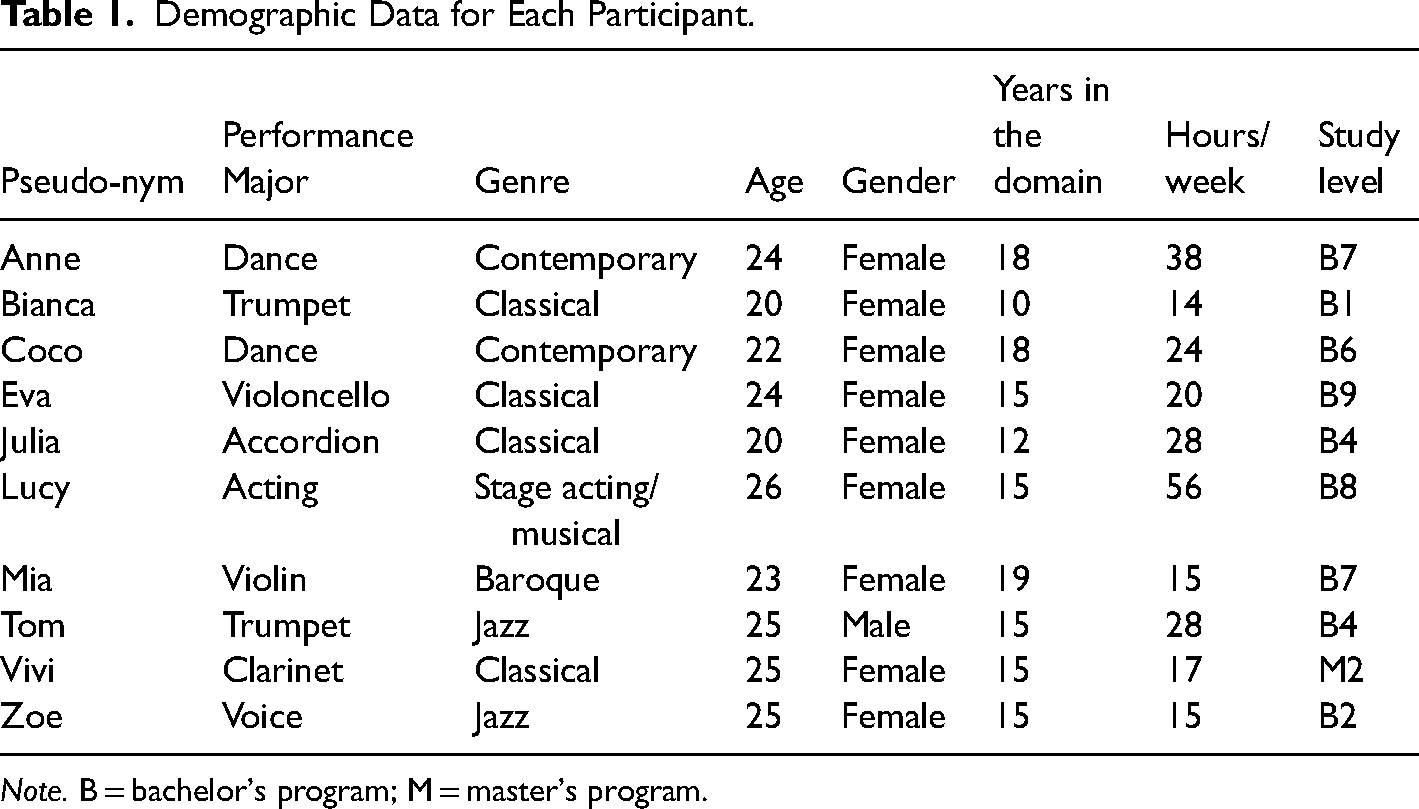
Note. B = bachelor's program; M = master's program.
Procedure and Methods
The study included (1) pre-test, (2) intervention, and (3) post-test phases in which a variety of qualitative methods were applied. In the pre-test phase, participants were asked to perform in front of a jury and were then interviewed for 22 to 44 min (M = 29.4, SD = 6.6) about their performance experience. During the subsequent 10-week intervention phase, participants received five individual coaching sessions every 2 weeks, with an average duration of 54.0 min (SD = 4.9), from the first author: a psychologist and certified psychological coach trained in solution-focused practice (e.g., McKergow, 2021). Interviews and coaching sessions were in German or English, and were audio-recorded. The post-test phase mirrored the pre-test phase, with the addition of extended interviews that lasted 29 to 63 min (M = 44.8, SD = 11.3). After the interview, participants were paid and thanked.
The semistructured interviews in both the pre- and post-test phases explored participants’ experiences of performing, their focus, emotions, and mental strategies, and their own evaluation of how they performed. The interview guide was based on the one by Mesagno et al. (2008) and consisted of pilot-tested, open-ended questions. Posttest interviews included additional questions referring to each participant's individual interventions, and closed with questions about other potential influences during the intervention time, what participants had learned during the study, and what they took away from the coaching. Interviews and coaching sessions were transcribed verbatim using the transcription software f4transkript (audiotranskription, Germany).
The first author wrote field notes and reflexive journal entries during both the intervention and analysis phases, encompassing 52 typed and 76 handwritten pages. These include reflections about conducting interviews and coaching sessions, receiving regular supervision from two experienced psychological coaches, and the decisions and interpretations she made while analyzing the data.
Intervention
Interventions were tailored to each coachee's specific needs and included PPR, goal setting, acclimatization training, imagery, self-talk, centering (Greene, 2002), left-hand contractions (Beckmann et al., 2013), deep breathing, progressive muscle relaxation (PMR), and autogenic training (see Table 2). Participants were encouraged to practice their chosen techniques regularly between sessions and to apply these in weekly, video-recorded performances.
Tailored Interventions for Each Participant.
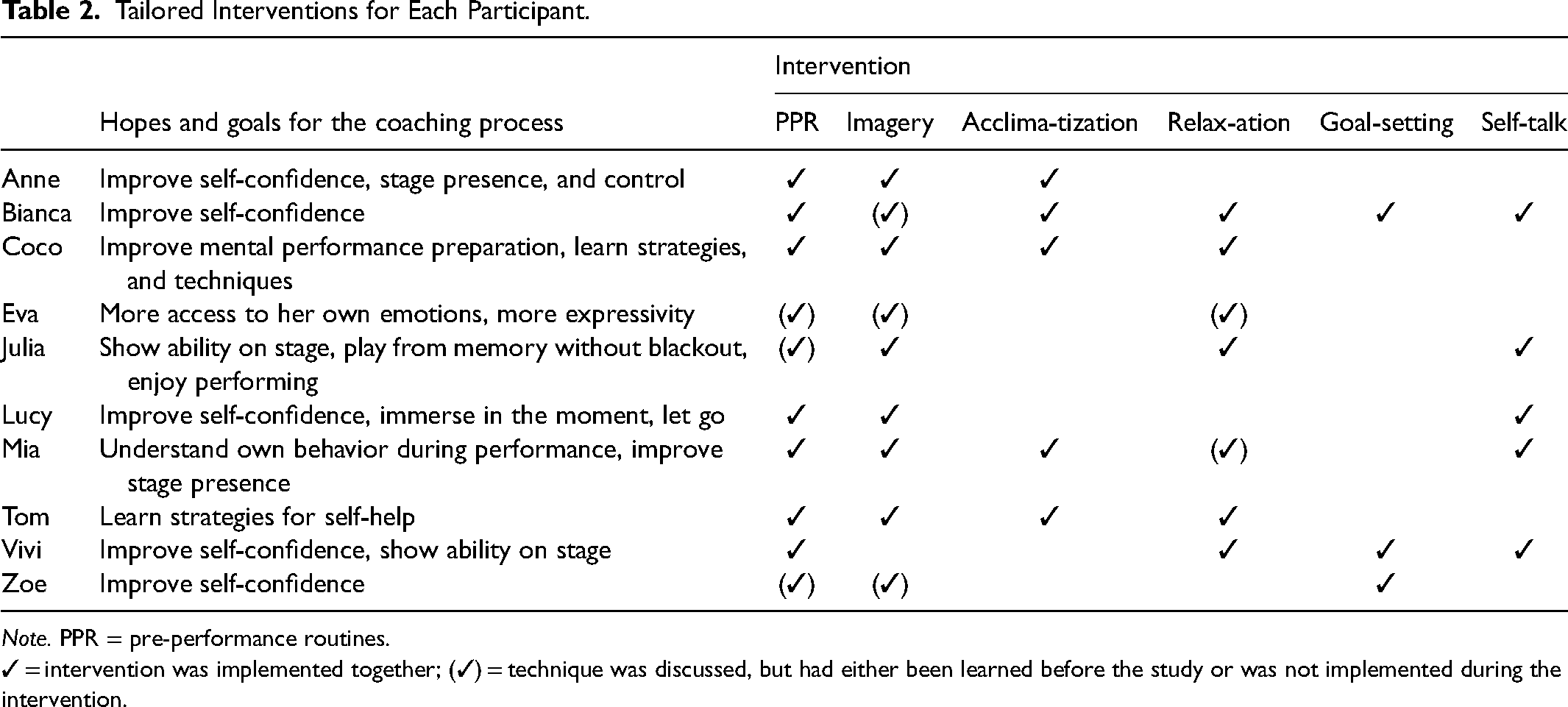
Note. PPR = pre-performance routines.
✓ = intervention was implemented together; (✓) = technique was discussed, but had either been learned before the study or was not implemented during the intervention.
Analysis
We used qualitative synthesis to analyze our different sources of data to develop a holistic account of coach and coachee experiences (Williamon et al., 2021). This method is particularly appropriate for generating a comprehensive understanding of case studies as it is underpinned by the creation of a narrative about the dataset in its entirety (Shaughnessy et al., 2023). Our analysis had three phases (Williamon et al., 2021). The initial phase involved extensive, in-depth reading and re-reading of transcripts, field notes and diaries, and listening to audio-recordings to enhance our familiarity with the data and define key elements relevant to the research questions. During the second phase, we discussed these key elements continuously and critically before developing a synthesis. In the final phase, we constructed a narrative rooted in the synthesized data, structured according to the key elements identified in the first two phases (Hodkinson et al., 2005; Williamon et al., 2021).
Results and Discussion
We defined the key elements and structured the narrative as follows: (a) building the relationship through mutual understanding and appreciation, (b) steering the coaching toward co-created solutions, (c) identifying change mechanisms, and (d) enhancing self-awareness. These intertwined key elements are illustrated in Figure 1 (overview) and Figure 2 (more detailed conceptual framework). They were conceptualized as overlapping, with building the relationship as the base for the other three elements. The process of co-creating solutions influenced the way coachees increased their self-awareness and described the perceived change mechanisms underlying their individual strategies for managing performance anxiety. The coach's active listening and thought-provoking questions were thus not just part of steering the coaching but also helped to enhance coachees’ self-awareness and understanding of the interventions. Similarly, coachees’ verbalizations of their thoughts not only enhanced self-awareness, but also goals and belief systems. The presentation and discussion of the key elements is followed by a paragraph of the first author's reflections on her dual roles.
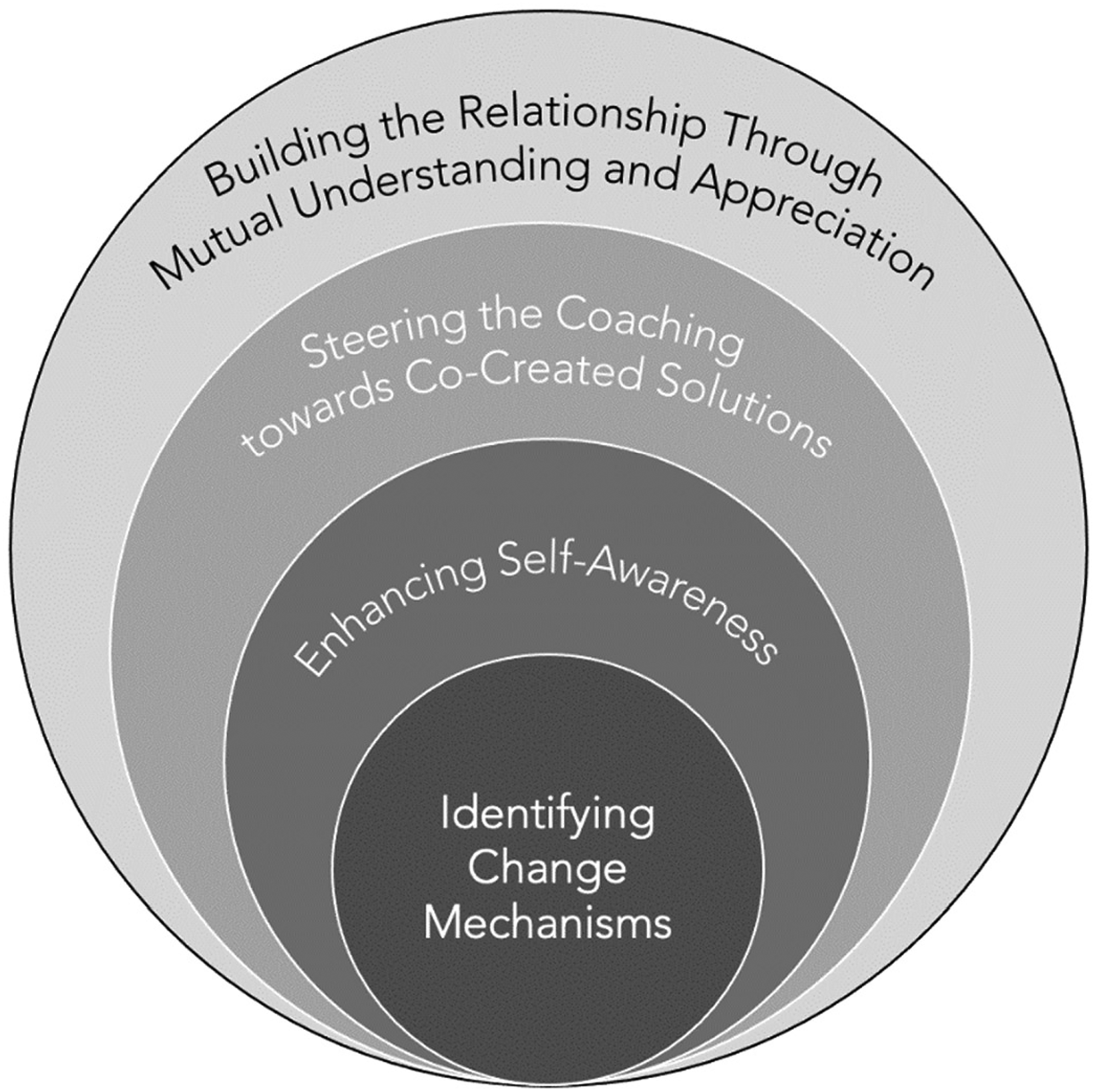
Four key elements of the coaching.
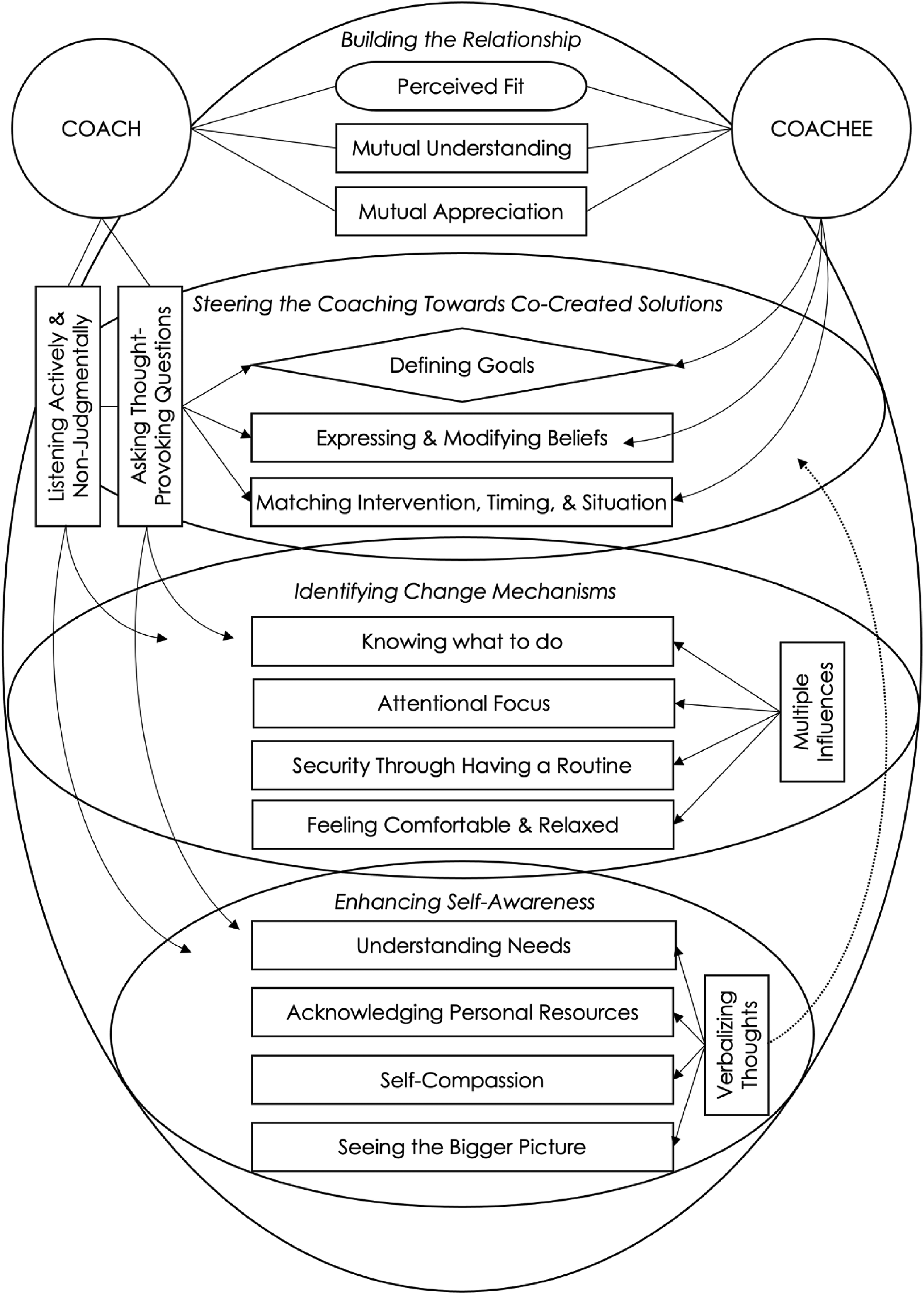
Conceptual framework of psychological coaching to manage performance anxiety.
“You Are My Counterpart”: Building the Relationship Through Mutual Understanding and Appreciation
Over the course of the study, coaches and coachees developed relationships with unique dynamics, but certain features were common to all of them. While perceiving “a good fit” (Julia) and being similar to some extent were described as meaningful, striving for mutual understanding and showing appreciation were the major driving forces for building the coaching relationship and overcoming potential difficulties.
Perceived Fit and Similarity
Both the coach and coachees considered it important to perceive that they were a good match and got along well. It was considered beneficial that the coach was also a musician and thus seen as an insider: “in me, your person played a major role in changing that. That I’m actually not afraid of other musicians anymore” (Mia).
The coach was sometimes confronted with her own self-consciousness when wondering about fit in terms of lacking similarity to the coachee, especially when encountering difficulties. For example, realizing that she had never experienced herself what the coachee described led her to reflect: “the topic … makes me feel uncomfortable. Am I the right person to work with her on this? … I do feel compassion, but I also feel insecurity.” So far, there is little research on, and mixed evidence for, whether coach and coachee having similar demographics and/or a similar personality influences coaching effectiveness (Boyce et al., 2010; de Haan et al., 2016). Instead, other aspects of the relationship, such as mutual trust, respect, and transparency about the coaching process have been highlighted as more important (O’Broin & Palmer, 2018).
Mutual Understanding and Resonance
Striving for mutual understanding was one aspect of building the relationship that served to create trust, respect, and transparency. It involved both parties having to clarify misunderstandings. Sometimes coachees had to seek explanations: “it's just super complicated to express this simply or to phrase it so that it is somehow comprehensible” (Eva). The coach tried to facilitate her own understanding, but also the coachees’ understanding of themselves, by encouraging them to speak freely.
Mutual understanding created resonance, often demonstrated in coachees’ enthusiastic reactions. Resonance was also a recurring element of the coach's reflections, for example: A five-hour slow run-through—she just keeps impressing me immensely! And I found it very inspiring that she also practices the transitions between pieces. A complete arc of suspense. Her observations were all spot-on and fully resonated with me. The images that arose in me I have somehow been able to take from you. Because you are my counterpart, you know? It's not like, I don’t come here and say, ‘these are the images that I have in me’, but you have sparked them somewhere in me. (Lucy)
Mutual understanding, liking, and agreement between coach and coachee have previously been identified as important characteristics of their rapport (Boyce et al., 2010). In case of difficulties, particularly at the start, these characteristics can help coach and coachees to reduce their differences and develop appreciation and respect—especially if the coach shows awareness, authenticity, and credibility (Boyce et al., 2010; Ianiro et al., 2013).
Mutual Appreciation
Relationships were further deepened by mutual appreciation. The coach's reflections, on the one hand, contained descriptions of her admiration for the coachees’ artistry, openness, and strengths, and she expressed appreciation whenever she could. The coachees, on the other hand, showed their appreciation and gratitude particularly toward the end of the coaching process. For example, “I hope that you also got something out of it. In any case, I myself got a lot out of it and I thank you for taking so much time as well and sharing your knowledge with me” (Anne). The appreciative attitude of both the coach and coachees provided a beneficial base for co-creating solutions.
“And You Simply Listen to Me”: Steering the Coaching Toward Co-Created Solutions
Coach and coachees navigated the process by defining goals, taking beliefs into account or modifying them, and finding ways to test interventions co-creatively. Coaching is characterized by its co-created nature, meaning that the coach and coachee explicitly process and address “new information in the present moment” (de Haan & Nilsson, 2023, p. 2) and thus react flexibly and constructively to shape desired outcomes. Co-creation made it possible not only for the coach to offer tailored interventions, but also for coachees to develop or find their own strategies for managing performance anxiety.
Defining Hopes and Goals
At the beginning of each session, coachees were encouraged to define their hopes and goals and expand their imagination of what they could wish for (McKergow, 2021). In solution-focused coaching, it is ultimately the coachee's decision what to work on and how to engage with it (McKergow, 2021). Articulating hopes can sometimes be tricky but both coach and coachee found it helpful to define hopes and goals at the outset, especially when coachees wrote them down. For example, the part when we set the goals first. …. I was very sure about the points that I gave you, so I was already like ‘Then why don’t I do it?’ Like ‘I can do it. I can achieve it.’ And I did actually, and having a plan (for the) last 3 weeks—oh my God! It helped a lot. (Zoe)
Challenges for the coach arose when coachees kept changing their intentions during the session, wanted to divert from focusing on solutions to talk about problems, or expressed hopes that could not be (immediately) addressed using a choking intervention. It has previously been argued that improvisation is a vital part of coaching (Read, 2013). The coach was indeed required to be flexible when responding to the coachees’ hopes and goals, sometimes going beyond the intervention strategies she had conceived before the study. Importantly, goals and tasks are more effective if initiated by the coachee than the coach (Gessnitzer & Kauffeld, 2015). Therefore, the coach let coachees initiate the direction of the process in pursuit of their hopes and then tailored the interventions accordingly; only in the last session with each coachee did she set the goal of reflecting on the process thus far and closing by looking at the coachee's desired future.
Asking Thought-Provoking Questions and Listening Actively
In addition to regularly checking with coachees that the process was going well or in the right direction, the coach tried to shape it by asking thought-provoking questions, which often yielded important new insights. Furthermore, a crucial part of navigating the process was the coach's active and non-judgmental listening, as observed by one coachee: Yes, but it somehow really helps with it, just to have such an appointment about every 2 weeks, where someone simply takes it completely seriously what one is dealing with. So because this has indeed helped me just immensely, because I somehow wonder very often whether something is good or so and then I just come here and you simply listen to me and are just interested in what I do … that has really helped me so much. (Eva)
Expressing and Modifying Beliefs
Through active listening, the coach noticed how the coachees’ belief systems influenced the way she tailored the choking interventions. Coachees who saw themselves as similar to athletes were more open to learning about such interventions, whereas those who did not want to accept this comparison also questioned the comparability and thus the transferability of the interventions. They also articulated beliefs about the extent to which they thought it was possible to practice different aspects of performance and manage performance anxiety, which corresponded with their efforts to integrate the interventions into their daily practice. Some preferred PMR or left-hand contractions, techniques for executing an action, to centering or autogenic training: “so I believe I simply find it easier with such tangible things than with such thoughts and the like—I find it difficult” (Vivi).
Furthermore, coachees’ beliefs influenced the way they perceived their own capacity or willingness to change: Certain things of which I had thought for a long time that I will somehow never be able to change them or that they just belong to me … can indeed be changed with the right approaches. And at the same time (I) noticed that I’m facing the idea of self-optimization, which somehow underlies this, also a bit skeptically. (Tom)
Like Tom, some coachees adapted their beliefs over the course of the coaching, but others maintained them. Palmer and Gyllensten (2008) argue that coaching can modify even deeply held, rigid core beliefs. Coaches aiming to build positive relationships must thus find an appropriate balance between being dominant and friendly toward coachees (Ianiro et al., 2013).
Putting Interventions into Practice: The Role of Timing, and Matching Situations
It was not only important to tailor interventions to coachees’ individual needs and preferences, but also to ensure that there was a match between the technique and the situation(s) in which they could apply it. On the one hand, coachees could not always try out the techniques they had learned in pressure situations, as—particularly in the post-COVID-19 lockdown period—such opportunities did not occur every week: Before doing the video, I kind of forced myself (to do PPR), but otherwise I didn’t have so many like performing opportunities. It was mostly just training in class, and it didn’t feel so necessary in class to do it before. (Coco)
On the other hand, coachees were creative in finding opportunities even in everyday life: “I’ll also be nervous … like when I have to conduct an ensemble in front of an audience, or something like that, and there one can just test this right away” (Julia). The timing of coaching sessions also mattered; sometimes coachees arrived stressed or very tired, for example as a result of new performance engagements: The impression that the coaching was exactly at the time when I felt I had the most to do. And I sometimes thought … ‘how shall I fit this in?’ But it was very, it has helped me a lot, especially with the audition. That was really cool. (Vivi)
“Like Pieces of a Puzzle”: Identifying Change Mechanisms
Revealing the mechanisms perceived to underlie the effects of tailored interventions, and understanding cause and effect within the coaching setting, was no easy task. For example, during the study period, coachees not only saw the coach but also received advice from teachers (“professors”) and in some cases a psychotherapist or physiotherapist: I’ve practiced the things that we did. And then I had things in my pedagogy class with my professor about receptive listening. And it yeah actually went in exactly the same direction. And then those were somehow like pieces of a puzzle. (Julia)
Regardless of the coachees’ ability to articulate the mechanisms they perceived to underlie the intervention effects, they highlighted the value of having learned specific techniques for performing under pressure: “now suddenly I somehow knew what I can do and just this knowledge has already … helped extremely well for dealing with these situations” (Tom).
Perceived Improvements in Attentional Focus and Sense of Security
In line with choking theories, the interventions seemed to help coachees improve their attentional focus before and during performance (Gröpel & Mesagno, 2019), for example: “Yes, I mean exactly through these things that we discussed, these techniques, I’ve now had much more such head space and capacities” (Tom). Imagery appeared to facilitate improvisation in a similar way: “then [I] have more brain capacity for, yeah, influences from the outside … or I can surprise myself or insert a break somewhere” (Anne). Techniques were seen as a way of thinking about something else than worries, absorbing attention, and therefore preventing anxiety. In this process, PPRs were particularly useful: Yes, this has also given me a lot of security in the moment. Because I just knew exactly what I’m doing … that one has a point there, where one just says ‘now one is ready. And now I’ve taken care of everything, and now I can play.’ (Bianca) It was actually nice to have such a fixed routine, to say ‘I have to record this once’ … that was very helpful to continuously work on it. … actually it's not only helped me in terms of the videos, but generally. (Anne)
Feeling Comfortable and Relaxed
Coachees noted that they felt more comfortable and/or relaxed after applying techniques such as PMR, breathing, centering, AT, and imagery. They found it difficult, however, to determine whether their playing was affected by a technique designed to make them feel more relaxed or comfortable: “Well I don’t know whether I played better or not so well” (Julia). Feeling comfortable was sometimes perceived as a mechanism underlying the coaching, in that it provided a safe space for exploring, experimenting, and talking about emotion-laden topics: “Feeling very comfortable, so that, otherwise, I probably would not have said that (laughing). … so [these] are indeed very intimate things somehow” (Lucy).
As coachees began to find it easier to share their innermost thoughts, both coach and coachees were able to co-create a space for self-reflection and exploring aspects of life as a performing artist both related to and going beyond performance anxiety management and choking prevention.
“It's All a Really Long Development”: Enhancing Self-Awareness
Self-reflection was integral to the coachees’ development throughout the coaching and facilitated by verbalizing their thoughts. The resulting enhancement of their self-awareness was shown by a better understanding of their needs, acknowledging personal resources and improved self-regulation, exhibiting acceptance toward themselves and their personal development, and searching for the bigger picture of being a performing artist.
Self-Reflection and Verbalization
In the fifth and last session the coach set the goal of reflecting on the coaching process (i.e., purposefully exploring one's experiences to learn and grow; Hullinger et al., 2019). Verbalizing thoughts lead to outward expressions of enhanced self-awareness (i.e., an appraisal process for gaining self-insight; Hullinger et al., 2019); for example: It was also nice to kind of share these things, and to vocalize it, and I think I really believe in vocalizing, whether it's goals or problems, or then to talk about it, then you also realize yourself how you feel about it. (Coco)
The coach, too, experienced increased self-awareness through taking field notes and writing her reflexive journal, although this was not always comfortable. After one final session, for example, she wrote: It is unclear to me which aspects of her deepened self-reflection can be attributed to the space that I gave her, and what has already happened in that regard before our encounter. Could one say that our vocalizing, verbalizing, and my listening have played a particular role here? … In hindsight, my agreement with her seems a bit exaggerated. Oh, so many contradictions within me and within her!
Improving Self-Regulation and Understanding One's Needs and Personal Resources
In the performing arts, self-reflection is considered a crucial component in the cyclical process of self-regulated learning (e.g., Hatfield et al., 2017; Hsia et al., 2022). When coachees reflected on their goals, hopes, and anxieties, it raised their self-awareness and helped them see their self-regulation skills in a new way. This helped them understand how to prepare more effectively for performance, for example by using a PPR flexibly: But then if you can also be, like, honest with yourself, ‘what do I need today?’ … and then ‘what do I do when I need this?’, … also ‘what am I preparing for?’, because it will change depending on the performance itself, the time of the day, how I’m feeling. So there's a lot to consider. It's not just ‘do this, every time.’ (Coco)
Self-Compassion and Personal Development
A third aspect of raised self-awareness was self-compassion. Coachees talked about understanding that their performances did not always have to be flawless, some acknowledging that they wanted to put their performance anxiety in perspective. Self-talk was one technique considered helpful for achieving greater self-compassion and confidence: So when I had anything where I just (was) not content with myself, I’ve just told myself that again and … that just makes such a difference, I think … when one simply is not so strict. … for example, ‘even though I’m insecure right now, I love and accept myself the way I am.’ (Bianca)
Seeing the Bigger Picture
Finally, coachees were enabled to search for the bigger picture of being a performing artist. Managing performance anxiety can be strenuous and energy-consuming. Coachees therefore wondered why they had chosen to become performing artists: I’m actually doing this because I enjoy it and (because) I have chosen it, even if at the moment, I might have the feeling that everything is just stressful. … It can simply be a very beautiful profession. (Julia)
Balancing the Dual Roles of Researcher and Coach
Coaching ten performing artists, and documenting and analyzing the process for research purposes, was a unique and instructive experience. It also presented challenges such as making moment-to-moment decisions. Above all, it meant trying to be as authentic as possible, and not inhibited by preconceptions of what a session “should” be like or “the right way to do it.” This was not easy and thus a topic of the first author's own supervision. Four weeks into the project, she wrote in her reflexive journal: “A very intense (supervision) session that left me deeply moved and also a bit shocked. I felt rather overstrained with the responsibility I had to carry for this project. My strong desire to ‘do it right’ was almost overpowering.” Perhaps the greatest challenge was responding to coachees’ changing goals and their desire to explore new facets of their experiences of performance anxiety and everyday lives, when the plan had been to spend more time on particular topics and techniques and specifically focus on choking during the research.
Responding to coachees’ individual needs and requests required a flexible, creative, and courageous coach, even when she noticed discrepancies to her perspective as a researcher. The literature suggests that flexibility and courage are important attributes for coaches (Read, 2013; Wood & Lomas, 2021). While she had planned to only use choking interventions, the coachees’ individual needs sometimes made it necessary to use other techniques such as PMR or autogenic training as well. Accordingly, co-creative processes involved coachees developing their own ways for managing performance anxiety.
Whereas the coach felt that she generally had a good relationship with all coachees, her dual role may have added to the power imbalance inherent in coaching. They may have felt that they should say positive things and avoid negativity. It was, however, her sincere intention not to conceal any limitations of the coaching process or the study, even when this meant writing about her own insecurities.
Implications for Practice
Based on our findings, we offer some recommendations for applied coaching practice with performing artists, especially those prone to performance anxiety and choking. First, if the coaching process is to be fruitful, it is vital for the coach and coachee to develop a working relationship based on mutual understanding and appreciation; yet they do not have to have similar personalities for there to be a good fit between them (Boyce et al. 2010; de Haan et al., 2016). The relationship may be stronger if the coach has knowledge and understanding of the coachee's field and its contextual factors; all parties in the present study found it helpful, and it is considered essential in performing arts coaching (Moyle, 2019).
Second, it is important to set the direction for the coaching by discussing goals and hopes and to monitor its promise. Notably, it is not only the coach who has to understand the coachee's needs, but the coachee must also understand their own needs to identify and make use of appropriate strategies. Active listening by the coach and verbalizing by the coachee can be particularly useful here.
Third, for highly anxious performing artists, the use of video recording as part of the coaching process can be an effective tool. Even if the artist does not (immediately) accept the challenge of recording a simulated performance in one take, video recording may help them understand themselves and their abilities better, and cope with mistakes, regardless of their level of perceived pressure. Finally, even if they choose not to apply tools for self-regulation when they perform, the mere knowledge of them can be helpful.
Strengths, Limitations, and Future Research
To our knowledge, this is the first study of coaching processes and the mechanisms underlying tailored interventions for performing artists to mitigate choking under pressure. It is novel in that the qualitative analysis of transcripts of both interviews and coaching sessions provides both coach and coachee perspectives. Member reflections, that is holding a dialog with participants about findings (Tracy, 2010), have gained increasing recognition as a way of strengthening rigor in qualitative research (Cavallerio et al., 2020). After the study was completed, we contacted the participants but they did not all respond. As a result, our study lacks this rigor-enhancing tool. While we did not include member reflections or carry out a longer-term follow-up, the data do contain retrospective reflections from the post-test interviews. In the future, longitudinal studies of performing arts coaching with one or more follow-up interviews could be designed.
Another strength of the present study lies in the variety and scope of the data but we did not carry out observations or make video-recordings that would have enabled us to analyze nonverbal interactions (Erdös & Ramseyer, 2021; Fouracres & van Nieuwerburgh, 2020). It could be useful to examine such interactions in future studies of performing arts coaching using video recordings (e.g., Ianiro & Kauffeld, 2014) and conversation analysis (Graf et al., 2020).
Almost all the coaching research cited in this article refers to executive coaching. The extent to which it is comparable with and relevant to psychological coaching, and coaching of performing artists, remains to be established. Performing arts coaching, although underresearched to date, has become increasingly valued in recent years, especially when linked with approaches derived from sport psychology (Moyle, 2019). Our findings show that choking under pressure is an important topic for performing artists, but not the only one. Further studies of coaching with musicians, dancers, and actors may thus explore other aspects of performance anxiety, and use different methodologies as well.
Conclusion
In this study, we provided insights into how ten performing artists and their researcher-coach co-created tailored interventions for managing performance anxiety. We captured the commonalities of the ten cases in four key elements of the coaching. First, how the development of the coaching relationship was shaped by mutual understanding and appreciation. Second, how the process of cocreating solutions was steered by stating hopes and goals, active listening and verbalizing, and addressing belief systems. The timing of the sessions, and the match between interventions and situations during which they could be applied, also played important roles in this process. Third, attempts at identifying mechanisms underlying the interventions revealed enhanced attentional focus and a greater feeling of security, but also showed that perceived mechanisms and effects can be so intertwined that they are almost impossible to separate. Finally, the coaching enabled coachees to increase their self-awareness, acknowledge personal resources, be more accepting of and kinder to themselves, and look at the bigger picture of being a performing artist. Self-awareness may also be seen as a prerequisite for understanding how interventions work because a higher level of self-awareness is needed for identifying the mechanisms underlying one's own behavior.
Coachees often found it hard to articulate the mechanisms they perceived to underlie the effects of the tools they had learned, and whether using them had affected performance quality. As they had learned multiple techniques, they sometimes could not say which had been effective. Nonetheless, the mere knowledge of tools was highlighted as helpful. Distinguishing between perceived mechanisms underlying, and outcomes of, specific interventions was also not easy for the coach. In addition, the main challenges for her were defining and adhering to session goals and dealing with her own preconceptions as well as the coachees’ belief systems. With these findings, we hope to have contributed insights that will inspire both research and practice in the emerging field of performing arts coaching.
Footnotes
Data Availability Statement
The datasets analyzed during the current study are available from the corresponding author upon reasonable request.
Ethics Statement
The Institutional Review Board of the first author's institution approved this study (#2021/S/004).
Declaration of Conflicting Interests
The authors declared no potential conflicts of interest with respect to the research, authorship, and/or publication of this article.
Funding
This research was in part funded by a Marietta Blau-Grant from the OeAD-GmbH, which is financed by the Austrian Federal Ministry of Education, Science and Research (BMBWF).
