



Abstract
This study delves into the transferability of aesthetic judgment influences from analog art viewing to a Virtual Reality (VR) setting, recognizing that art expertise typically enhances aesthetic judgement through increased positive affect. Additionally, it was anticipated that the relationship between art expertise and positive affect would be moderated by the type of textual information provided, positing that different types of texts (affective vs. stylistic) would activate different processing routes in novices versus art experts. Our findings reveal that while expertise continues to play a crucial role in shaping aesthetic judgment through positive affect, the anticipated moderation by textual information type did not materialize. The VR context might amplify the impact of affective texts on positive affect, or likewise decrease the impact of stylistic information, irrespective of expertise levels. These results underline how virtual art could leverage human emotions to enhance the viewer's experience.
Keywords
Introduction
Since the emergence of digital artworks, a debate has ensued as to whether they can compete with “analog” artworks (e.g., Trinks, 2020).This has only been exacerbated by the COVID-19 pandemic, as many traditional cultural venues have been forced to close and as a result, many art forms have moved into the digital space (Creative Industries Policy & Evidence Centre, 2020; International Council of Museums, 2020, 2023). A promising way to view art in digital space is virtual reality (VR). Since it allows art to be viewed from all angles similar to the “real” world, it can be assumed that VR can reproduce artworks more realistically than, for example, in 2D on a computer screen. In fact, studies suggest that artworks are more appreciated in VR than on a computer screen (Usui et al., 2018). When engaging with paintings in desktop-virtual reality, the viewer adopts a meta-perspective, characterized by a more abstract thought process and a heightened imagination during elaborations on the artworks (Antonietti & Cantoia, 2000). This finding can be assumed to be even more pronounced in the more immersive head-mounted VR. Although some studies suggest that there are few differences between VR and analog artwork-viewing (Lin et al., 2020), the adoption of a meta-perspective might imply that the distinct modes of engagement offered by virtual reality can foster cognitive activities that differ from those typically experienced in the “analog” world (Antonietti & Cantoia, 2000). Moreover, immersion in VR plays an important role. Cotter et al. (2022) found that greater immersion in virtual galleries was associated with certain aspects of flourishing, which is linked to well-being. Generally perceived as pleasant, immersion and presence in VR can enhance positive emotions (Pavic et al., 2023; Weibel et al., 2010). However, VR usage may also lead to some unwanted effects. For example, it can cause side effects such as nausea (Regan & Price, 1994), which is why teleportation is often recommended (Buttussi & Chittaro, 2021). Additionally, technical factors such as heavy hardware and low graphics fidelity can detract from the overall experience (e.g., Hou et al., 2017; Rizzo et al., 2021).
These differences in experience make it necessary to reassess models previously accepted in the context of cognitive processes during analog artwork viewing within the realm of virtual reality.
One of the most studied cognitive outcomes while viewing artworks in the analog world is the aesthetic evaluation of these artworks. Aesthetic judgement almost never refers to evaluating an aesthetic stimulus simply as “beautiful”, but rather to “judgments like figural goodness, pleasantness, liking, and preference” (Reber et al., 2004, p. 365). This article focuses on aesthetic judgement as one of the final outcomes of the cognitive processes during artwork viewing (Leder et al., 2004; Leder & Nadal, 2014) in a virtual gallery. Several factors relevant to the process of aesthetic appreciation have been shown to influence aesthetic judgement, and here we explore if these relationships hold true in a virtual reality setting.
Impact of Positive Affect on Aesthetic Judgement
Multiple theories suggest that higher positive affect might lead to higher aesthetic judgment. In the model of aesthetic appreciation (Leder et al., 2004; Leder & Nadal, 2014), several stages are involved in the processing of a work of art. One of these stages is the cognitive mastering stage, in which works are interpreted, in relation to the viewers themselves and in relation to art-specific interpretations. Success in the cognitive mastering stage results in higher cognitive and affective states, which then result in more positive aesthetic judgement. With regard to their model, Leder et al. (2004) added that “an artwork is judged as positive if the process it elicited is experienced as emotionally positive” (Leder et al., 2004, p. 502). This assumption is also consistent with the feeling-as-information model, which states that in some cases emotions serve as information (Schwarz & Clore, 1996). The positive emotions elicited during the process of viewing art give the viewer the information that the image was received positively, thereby attributing the positive affect to the artwork (Reber et al., 2004). Consequently, Reber et al. (2004) conclude that affect mediates the relationship between fluency and aesthetic judgment.
Art Expertise Influences Affect
Given that positive affect is an important predictor of aesthetic judgment, analyzing potential influences on positive affect seems promising to understand how aesthetic judgment might develop in the VR setting. Several models and theories seeking to clarify reception of artworks indicated that heightened expertise in the arts 1 may lead to intensified emotional experiences during artwork viewing. The concept of processing fluency (Reber et al., 2004) suggests that the ease and fluency with which a painting is processed influences the affect experienced by the viewer. This concept is supported by a facial electromyography (EMG) study, where results showed that high fluency during stimuli processing activated the areas of the zygomaticus major, the “smiling muscle”, which is tied to positive affect (Winkielman & Cacioppo, 2001). Since heightened expertise is associated with higher fluency (Reber et al., 2004) and fluency is related to more positive affect, art expertise should also be related to positive affect.
Similarly, the effort after meaning theory proposes that accomplished interpretation of an artwork partially explains the satisfaction gained from art-viewing (Russell, 2003). In addition, the model of aesthetic appreciation (Leder et al., 2004; Leder & Nadal, 2014) proposes that several stages are involved in the processing of artworks. The level of expertise influences several of these stages, predominantly explicit classification as well as cognitive mastering of an artwork. The last stage of the model is the evaluation stage, which includes affective state. Successful completion of the previous stages, which is enhanced by expertise, may thus lead to an increased affective state. Therefore, in this model, higher expertise is also associated with increased affect (Leder et al., 2004; Leder & Nadal, 2014). This relationship might be further deepened by forming a self-reinforcing cycle: The positive affective responses associated with the exposure to art due to expertise might enhance intrinsic motivation for repeated exposure to art (Deci & Ryan, 2012), and explain “why perceivers continue to perceive art” (Leder et al., 2004, p. 500).
In a previous study, we (Gotthardt et al., 2025) compared the link between heart rate during isolated instances of eye contact with artworks in VR and participants’ levels of expertise. It was found (based on the same data set as the present study) that participants’ expertise is linked to an increase in their heart rate (HR) during the time periods when they viewed artworks in a VR-gallery, and this increase was related to higher positive self-reported affect for women. As heightened HR is often associated with arousal (Tschacher et al., 2012), this outcome might suggest that the heightened HR observed in experts could have arisen from, or reflected, arousal caused by the fluency with which the artworks were processed. According to the notion of processing fluency and the effort-after-meaning theory (Reber et al., 2004; Russell, 2003), this, in turn, might have led to higher affect in women. Moreover, expertise did not lead to an increase in heart rate variability, which is often associated with a more relaxed state (Stürmer & Schmidt, 2014), again indicating that the experts may have been aroused due to their processing fluency. A direct influence of expertise on positive affect after the exposure to artworks was also found.
Impact of Textual Information on Processing of Artworks (in Interaction with Expertise)
Building upon established links between expertise, positive affect, and aesthetic judgement, previous studies have explored the potential effect of textual information on the perception of artworks. Cupchik et al. (1994) differentiated between stylistic information, which underlines the stylistic qualities of artworks, and mood information, highlighting the emotional content. They suggest that these different types of information provide different frames of reference which might enhance cognitive vs. emotional judgments respectively. Providing additional textual information about a painting, such as a metaphorical title, can enhance the artwork's aesthetic appreciation (Millis, 2001). This is due to the “elaboration effect”, where novel textual information adds to individual interpretation of artworks (Millis, 2001).
Reviewing the theories presented so far, one might expect a positive influence from stylistic information on affect and, in turn, indirectly on aesthetic judgement, since the additional information given should facilitate processing. However, research found quite the opposite: Leder et al. (2006) found that descriptive titles, such as “Fine curved lines in colour” (p.195) did not influence the judgement of paintings. It was also found that descriptive information about works of art reduced cognitive and affective judgement, and formalist (stylistic) information reduced affective judgements (Cupchik et al., 1994). In light of these findings, Belke et al. (2006) proposed that expertise might influence how textual information is perceived and processed. Since experts show more style-related processing (Cupchik & László, 1992), they should be able to independently retrieve the knowledge conveyed by descriptive and/or stylistic information; stylistic information adds nothing new to their experience (elaboration effect, Millis (2001)). In contrast, novices are more likely to show content and emotional processing (Cupchik & László, 1992). Therefore they might benefit from the stylistic information during their art-processing (Belke et al., 2006). This finding aligns with Leder et al.'s (2004) model of aesthetic appreciation. In this model, during the “explicit classification” and “cognitive mastering” stages, there is a clear distinction. Novices tend to focus on content classification in the explicit classification stage and on self-related interpretation in the cognitive mastering stage. In contrast, experts often engage in style classification and art-specific interpretation during these stages. Differences in gaze patterns when viewing artworks (Pihko et al., 2011; Tallon et al., 2021) also suggest that experts and lay persons have different modes of processing. Belke et al. (2006) investigated whether stylistic information has an effect on aesthetic appreciation, considering level of expertise. As expected, stylistic information increased appreciation in novices, but not in experienced viewers. The authors concluded that the information might oversimplify the artworks, or conflict with pre-existing knowledge for experts.
But how do we enhance processing in experts, leading to a more positive experience (higher positive affect) and consequently more favorable judgement? Experts might have a better experience with the addition of new information that complements rather than conflicts with pre-existing knowledge, and that trigger new processing paths (Belke et al., 2006). Therefore, introducing experts to affective textual information could encourage them to engage in unfamiliar processing routes, such as content classification or self-related interpretation, which they typically do not use.
Impact of Expertise on Aesthetic Judgement
All theories considered, expertise should have a positive effect on aesthetic judgments, but only if positive affect acts as a mediator (Figure 1). It would be an oversimplification to assume that people with high expertise always evaluate all paintings positively. There are many additional variables that can influence the evaluation of a painting, such as personal taste (Leder et al., 2004). When experts encounter an artwork they personally dislike, they are likely to give it a low rating, regardless of their expertise level. This suggests that expertise alone does not necessarily result in higher judgement; rather, it is the presence of positive affect that mediates the relationship between expertise and evaluation.
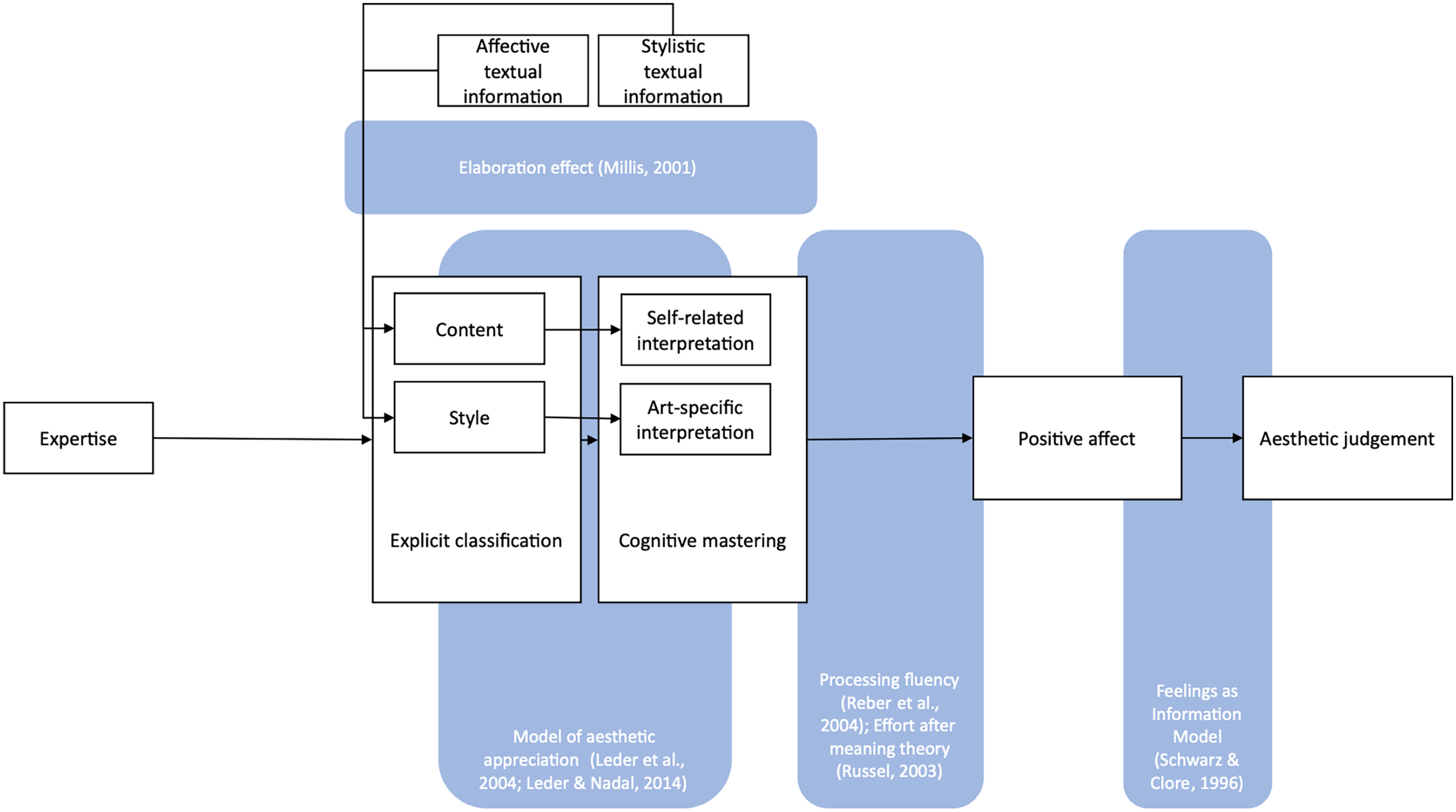
Interplay of several theories of aesthetic appreciation.
The proposed mediation of positive affect between expertise and judgement might explain why Cupchik et al. (1994) found that stylistic and affective texts had no impact on their rating scales. An influence might have been observed if the role of heightened affect would have been considered as a mediating factor, in line with the aforementioned theories. Similarly, regarding Belke et al.'s (2006) study, one could assume that different results would have emerged if affect had been considered as an additional mediating factor that was influenced by expertise - which in turn influences liking/ judgement - instead of treating affect change and liking as dependent variables that do not influence each other.
However, in studies with analog aesthetic stimuli, experts were shown to react less intense to aesthetic stimuli with strong emotional content, and experts also gave less extreme valence ratings for both positive and negative paintings (Leder et al., 2014). This does not mean that experts’ aesthetic judgments are not informed by their affect. Rather, the authors of the study assume that experts are more distanced from strongly emotional images, as „[d]etaching oneself from the emotional impact of the artwork allows to draw attention to aesthetic qualities by appraising stylistic, formal and contextual (e.g., art historical context) aspects“ (p.9). This “emotionally distanced” processing also allows experts to judge works with negative valence as positive if they offer an intellectual challenge. This (distanced) processing is therefore in no way contradictory to our assumption that experts’ affective states have an influence on their judgments – the positive affect, however, is not derived from the “positive” or “negative” content of the aesthetic stimuli, but from the intellectual challenge, aka. successful processing.
The Present Study: The Influence of Expertise and Textual Information on Aesthetic Judgement via Affect
This study examines the relevance and interplay of factors previously identified as predictors of aesthetic judgement in analog artwork processing, within a virtual reality gallery setting. We analyze the influence of expertise on aesthetic judgement via positive affect and investigate how textual information moderates the path between expertise and positive affect. For this purpose, several models and theories evolving around aesthetic processing have been integrated (see Figure 1).
The model of aesthetic appreciation and the concept of processing fluency and effort after meaning (Leder et al., 2004; Leder & Nadal, 2014; Reber et al., 2004; Russell, 2003) propose that successful processing of an artwork, more likely seen in art-experts (Reber et al., 2004), results in heightened affect. Therefore, we propose that:
Expertise leads to higher positive affect (a-path).
However, the relationship between expertise and affect could be influenced by textual information, since additional textual information can add to individual interpretation of artworks if the information is new (elaboration effect, Millis, 2001). The textual information was inspired by Cupchik et al. (1994), assuming that stylistic information provides a stylistic frame of reference, potentially enhancing cognitive judgements. Conversely, mood-based details might provide an emotional frame of reference, therefore highlighting emotional judgements. In this regard, we expected to prompt different routes of processing by letting participants read either affective or stylistic texts. For novices who typically employ self-related interpretations and content classifications (Leder et al., 2004; Leder & Nadal, 2014), stylistic textual information could prompt them to also employ art-specific interpretations and style classifications. For experts who typically employ art-specific interpretations and style classifications (Leder et al., 2004; Leder & Nadal, 2014), affective textual information might lead them to additionally employ self-related interpretations and content classifications, resulting in an even greater positive affect. We hypnotized that:
2. The relationship between expertise and affect is moderated by the type of textual information that is given (moderation of a-path). Participants low in expertise are expected to show higher positive affect when exposed to stylistic textual information. Contrary, participants with high art-expertise are expected to show heightened affect when exposed to affective textual information.
This heightened affect is then attributed to the artwork, resulting in better aesthetic judgement of the artwork (feelings as information model, (Reber et al., 2004; Schwarz & Clore, 1996). Likewise, in the model of aesthetic appreciation (Leder et al., 2004; Leder & Nadal, 2014), an aesthetic judgement is influenced by the evaluation stage which includes the affective state. This means that “an artwork is judged as positive if the process it elicited is experienced as emotionally positive” (Leder et al., 2004, p. 502). Therefore, we propose that:
3. Higher positive affect leads to more positive judgement. (b-path).
It is assumed that higher expertise only leads to more positive aesthetic judgement when positive affect is increased. Due to these arguments for mediation, we do not expect expertise to influence judgement directly.
4. Expertise does not directly lead to more positive judgement (direct effect, c-path), but rather to more positive judgement via heightened positive affect (indirect effect), considering the differential effects of the moderation.
The conceptual moderated mediation model to analyze these hypotheses is depicted in Figure 2.
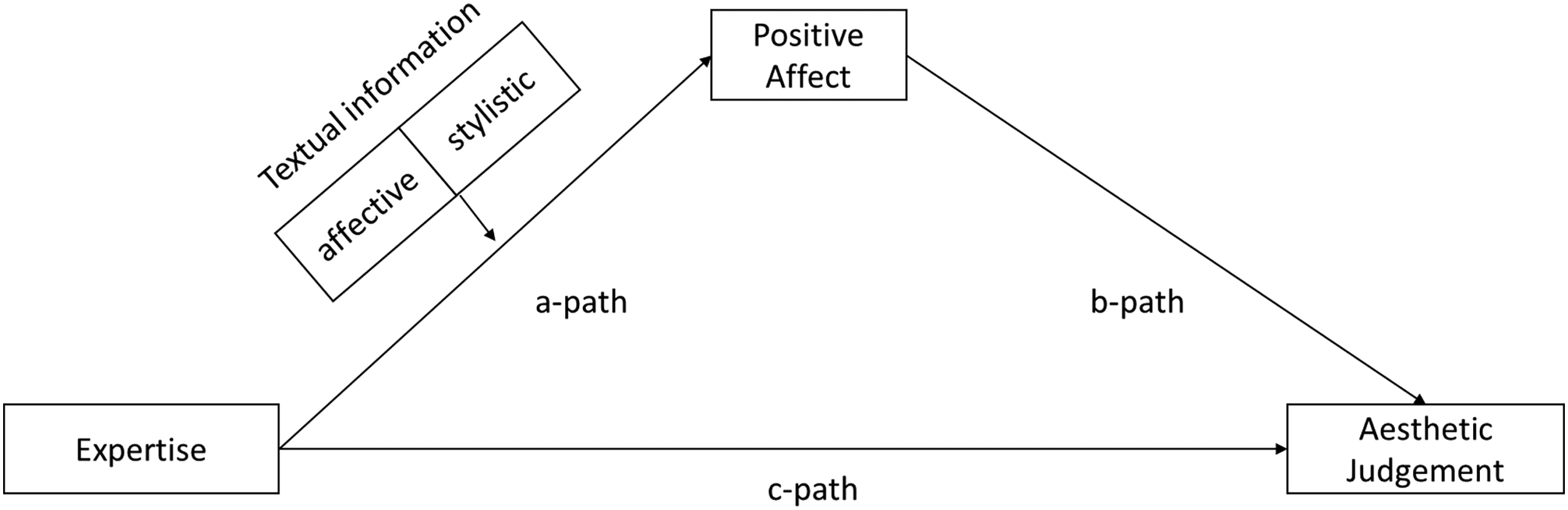
Conceptual path model of moderated mediation analysis.
Methods
The present study is part of a project funded by the Federal Ministry of Education and Research 2 and was approved by the responsible Ethics Committee on 29th of November 2021. It is registered at the Open Science Framework (OSF). 3 The study is part of a controlled experiment that sought to highlight the influence of context and individual characteristics on how digital art is received in the form of a VR-gallery. Utilizing a 2 × 2 × 2 factorial design, the research manipulated three distinct factors. First, the artist's background, with participants either viewing a video showcasing an urban or a rural background of the artist. Second, the degree of social interaction within the virtual reality setting, where participants either could interact with others through a guestbook or had no communication options. Finally, the nature of textual information paired with the paintings, divided between formal-stylistic and affective descriptions. Only the latter manipulation is the subject of this article. The factorial design resulted in eight participant groups, as illustrated in Figure 3. Psychophysiological measures, such as HR and heart rate variability (HRV) were recorded; however, these measurements are only briefly mentioned in this article, as they were extensively covered in a previous article by Gotthardt et al. (2025).
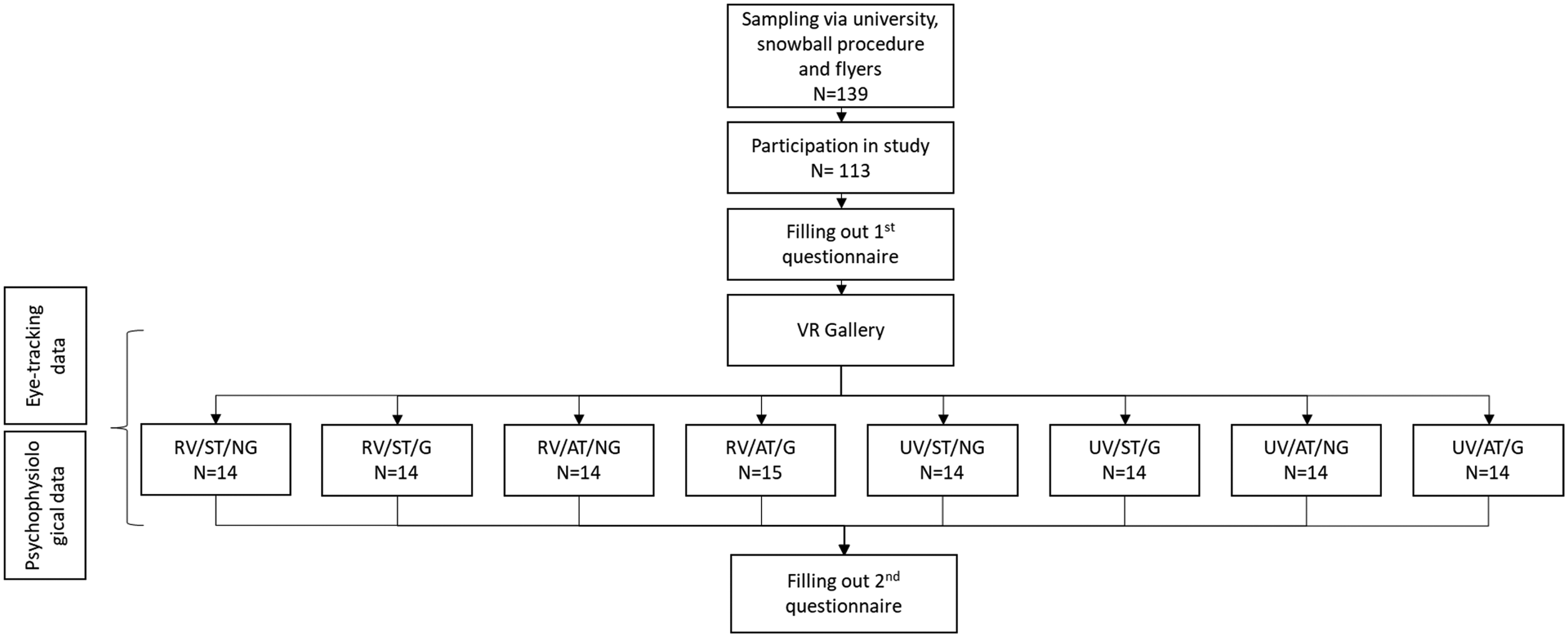
Allocation across the eight groups of the 2*2*2 design. Note: UV: Urban Video; RV: Rural Video; ST: Stylistic Text; AT: Affective Text; G: Guest Book; NG: No Guest Book.
Sampling
Sampling was done by contacting probands from the researchers host institution via the university mailing list. Moreover, flyers were distributed to attract art-interested volunteers. Lastly, a snowball sampling procedure was used, reaching out to people within the researchers’ personal social circles. The varied sampling strategies means there is potential for ecological validity. University students received test-subject hours, which they had to accumulate during their studies. Test subjects from outside the university were paid €15 for their participation.
Sample Size
Figure 3 depicts the allocation across the eight groups of the 2 × 2 × 2 design. To achieve 80% power for testing effects in a 2*2*2 design, with an error probability of α = 0.05 and a medium effect size of f = 0.3 (Cohen, 1988), a sample size of N = 90 was derived using G*Power (Faul et al., 2009). N was increased to 113 participants, since a missing-at-random 25% dropout rate concerning the psychophysiological measurements was anticipated (Koskinen et al., 2009; Lenski & Großschedl, 2022; Schmidt & Martin, 2020).
Procedure
For a short overview of the procedure, refer to Figure 3. Sessions were conducted individually, with only one participant in the VR gallery at a time. Upon arrival, participants were given a quick overview of the procedure. Once the VR-glasses were positioned on the participants’ heads, they were then fine-tuned for visual clarity and height-adjustment using Steam VR (Valve Corporation, 2022). To ensure ease of use of the VR application, the participants sat during the experience and practiced navigating in a VR training environment. The participants were allowed to practice until they indicated that they felt confident navigating within the environment. Moreover, in order to reduce nausea (Buttussi & Chittaro, 2021), participants moved using the point-and-teleport method, where they would point to a position and then teleport to it. Nevertheless, for more precise positioning adjustments, participants had the option to use the joystick for backward movements. After practice, participants were connected to the psychophysiological measuring devices. They then entered the virtual gallery, where they initially watched a video about the life of the artist in the entrance area. Afterwards they were allowed to move around freely. To conclude the VR experience, participants informed the researcher, who then helped them remove the glasses and detach from the device. The session ended with the completion of a second questionnaire.
VR Set-Up
The gallery was created with Unity (Unity Technologies, 2022) and launched via SteamVR (Valve Corporation, 2022).
Curatorial Arrangement in the VR-Gallery
The paintings displayed were painted by the artist Pritte Laschat (1904–2002), who explored different artistic styles throughout his career. The display of various styles in the gallery was vital to generalize the findings to a broad population of paintings instead of investigating a fixed effect associated with a particular art genre. An art historian selected the paintings and a curator 4 was asked to hang the paintings in the gallery. To acquire detailed information about the hanging and the structure of the gallery, please refer to Gotthardt et al. (2025). A depiction of the ten paintings along with their accompanying texts can be found in the Appendix. The textual information was displayed next to the painting, and participants could teleport in front of the information to read it. However, it was also possible to click on the textual information at any time, upon which it was enlarged in the field of view to make it easier to read (Figure 4).
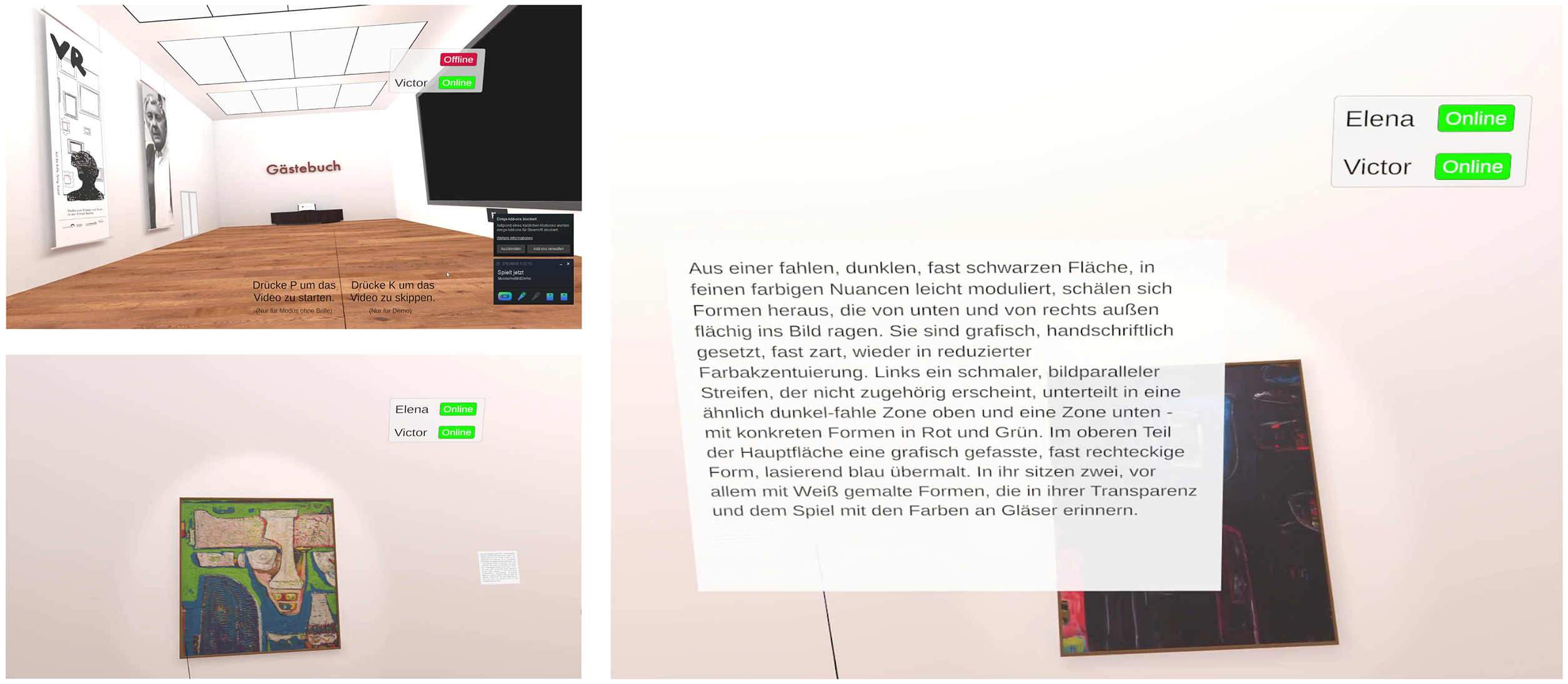
Excerpts from the VR gallery. Top left: Entrance area including guest book (straight ahead, “Gästebuch”) and video (right wall). Bottom left: Exhibition room with textual information displayed on the wall. Right: Painting in the exhibition room, with textual information enlarged.
Textual Information
As in Cupchik et al.'s study (1994), either affective (“mood”) or stylistic information were provided. In the current study, the affective texts were created based on a preliminary study, while the stylistic texts were written by an art historian (for examples see Table 1).
Exemplary Stylistic and Affective Information for One of the Paintings.
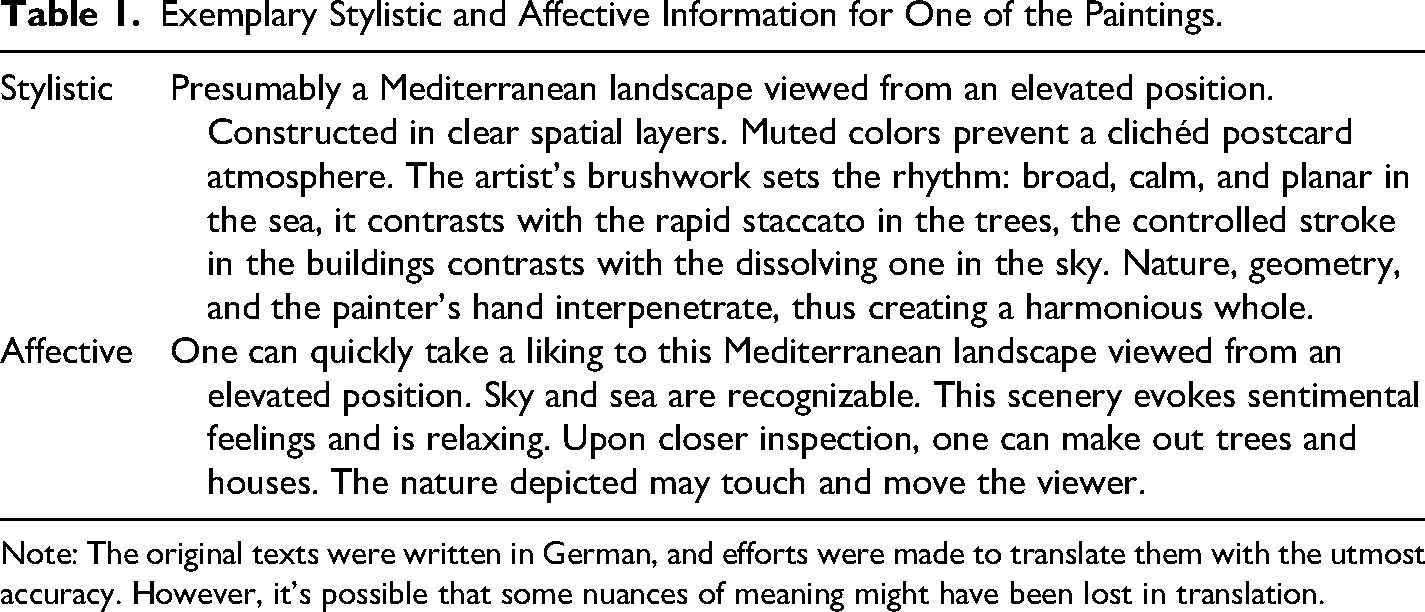
Note: The original texts were written in German, and efforts were made to translate them with the utmost accuracy. However, it's possible that some nuances of meaning might have been lost in translation.
To ensure that the affective information's emotional words accurately reflect the emotions individuals experience when viewing the painting, a preliminary study was conducted. The participants in the pre-study were presented with the ten paintings in an online-survey and had to choose from a list of affective terms that best represented the paintings. The terms were chosen based on the German version of the AESTHEMOS (Schindler et al., 2017), which includes 42 emotion items. To maintain a concise questionnaire and encourage high participation rates, 23 items were chosen. We ensured that at least one word from each of the 21 categories was included. In accordance with Cupchik et al. (1994), we also included words with negative connotations. This is based on the understanding that negative emotional words can also simplify the processing and comprehension of an artwork, and, in the realm of art, it is generally assumed that negative emotions do not necessarily result in diminished positive affect or lower evaluations (Menninghaus et al., 2019). After data collection, the five most frequently selected emotional terms were then selected for each artwork and incorporated into a short text.
For the stylistic information, an art historian was commissioned with writing sentences about the formal and stylistic features of each picture. 5 In terms of length and content, he based his sentences on Cupchik et al. (1994), in particular the stylistic formulations from Experiment 2 and on a transcribed interview with the painter discussing his art. After the texts were written, they were reviewed and, where necessary, shortened to adapt them to the length of the affective texts as closely as possible without losing too much meaning.
In their paper, Cupchik et al. (1994) describe two distinct experiments. The stylistic texts are similar in length and type of description to the formalistic texts from Study Two, while the affective texts go beyond the mood information from Study One, which only consisted of one or two words (Cupchik et al., 1994). As with the stylistic texts, the affective texts were presented for reading as a coherent text.
Measurements
Variables were assessed with two questionnaires (one before and one following the VR-experience).
Affect
Affect was measured using the German version of the PANAS (Breyer & Bluemke, 2016), which contains 20 items assessing positive and negative affect. Words such as “active,” “concerned, “interested,” “excited,” “annoyed”… are included in the scale. Responses were recorded on a 5-point Likert scale ranging from ‘not at all’ to ‘extremely’. Affect was measured before and after the VR gallery visit, resulting in four scales: positive affect before the experience (α = .76), positive affect after the VR experience (α = .88), negative affect before the experience (α = .77), and negative affect after the VR experience (α = .69). The current article views positive affect after the VR experience as a snapshot of the individual's emotional state that may serve as an indicator of the experience and could influence aesthetic judgement (feelings as information model, Schwarz & Clore, 1996). Therefore, in the analysis, the positive- affect- after- the- VR-experience-scale was used.
Art Expertise
Expertise was measured after the VR experience using the 10-item scale by Smith and Smith (2006), which consists of artistic terms and artists. Participants assess their knowledge about these terms and artists on a 5-point Likert scale, ranging from “I've never heard of this artist or term” to, “I can speak intelligently about this artist or idea in art”. Cronbach's alpha indicated satisfying internal consistency (α = .79).
Aesthetic Judgement
Aesthetic Judgement was measured on an 8-item scale developed by Cupchik et al. (1994). Four of the items were rated on a 7-point Likert scale, ranging from “not at all” to “extremely”. The other four items were rated on a 7-point Likert scale, with the opposite adjectives on each side (e.g., interesting – uninteresting). Participants were asked to evaluate each of the ten paintings individually; therefore, every painting was displayed at the top of the questionnaire page, with the eight items listed below it. Cupchik et al. (1994) examined each item independently, conducting separate ANOVAs with each as a dependent variable. In contrast, we built a scale for aesthetic judgement by averaging the eight items. This methodological decision was driven by our objective to assess the impact of our independent variables on the whole construct of aesthetic judgement rather than effects on individual items. This approach is supported by the high reliability coefficient found by Cupchik et al. (1994) for the items, indicating consistency across different artworks on the scales (Cronbach's alpha was 0.92 for figurative artworks and 0.96 for rhetorical artworks). The high reliability coefficients suggest that it is methodologically sound to aggregate these items into a single scale. Cronbach's alpha, computed across all 80 items in the current sample (derived from 8 items across 10 images), demonstrated high reliability, α = .93. Similarly, Cronbach's alpha calculated as the average of the Cronbach's alphas for each of the 10 images, also indicated high reliability (α = 0.81).
Apart from the empirical support (Figure 1), and to ensure the temporal sequencing of the study's model, especially of the b-path (higher positive affect leads to more positive judgement), positive affect was measured before judgment. Thus, participants first indicated their affective state after the VR experience, and afterwards rated the paintings.
Statistical Analysis
A mediation analysis with moderation of the a-path was conducted using the Lavaan package (Rosseel, 2012), with 5000 bootstrap samples and 95% confidence intervals (CIs). The analyses were performed using R (R Core Team, 2016). To reduce multicollinearity, mean centering was performed on the continuous variable that is part of the product term of the interaction (Hayes, 2018), namely expertise. The estimates reported here are non-standardized values (B) because the moderator is binary and interpreting standardized estimates is only meaningful for continuous predictors.
Results
The model fit was good (χ2 = 0.62, df = 2, p = .74; RMSEA = 0.00, 90% CI [.00,.13], p = .79; CFI = 1; SRMR = .015). The estimates, standard errors, p-values, as well as upper and lower CIs for all paths can be found in Table 2. Figure 5 shows the statistical model with the (standardized) estimates.
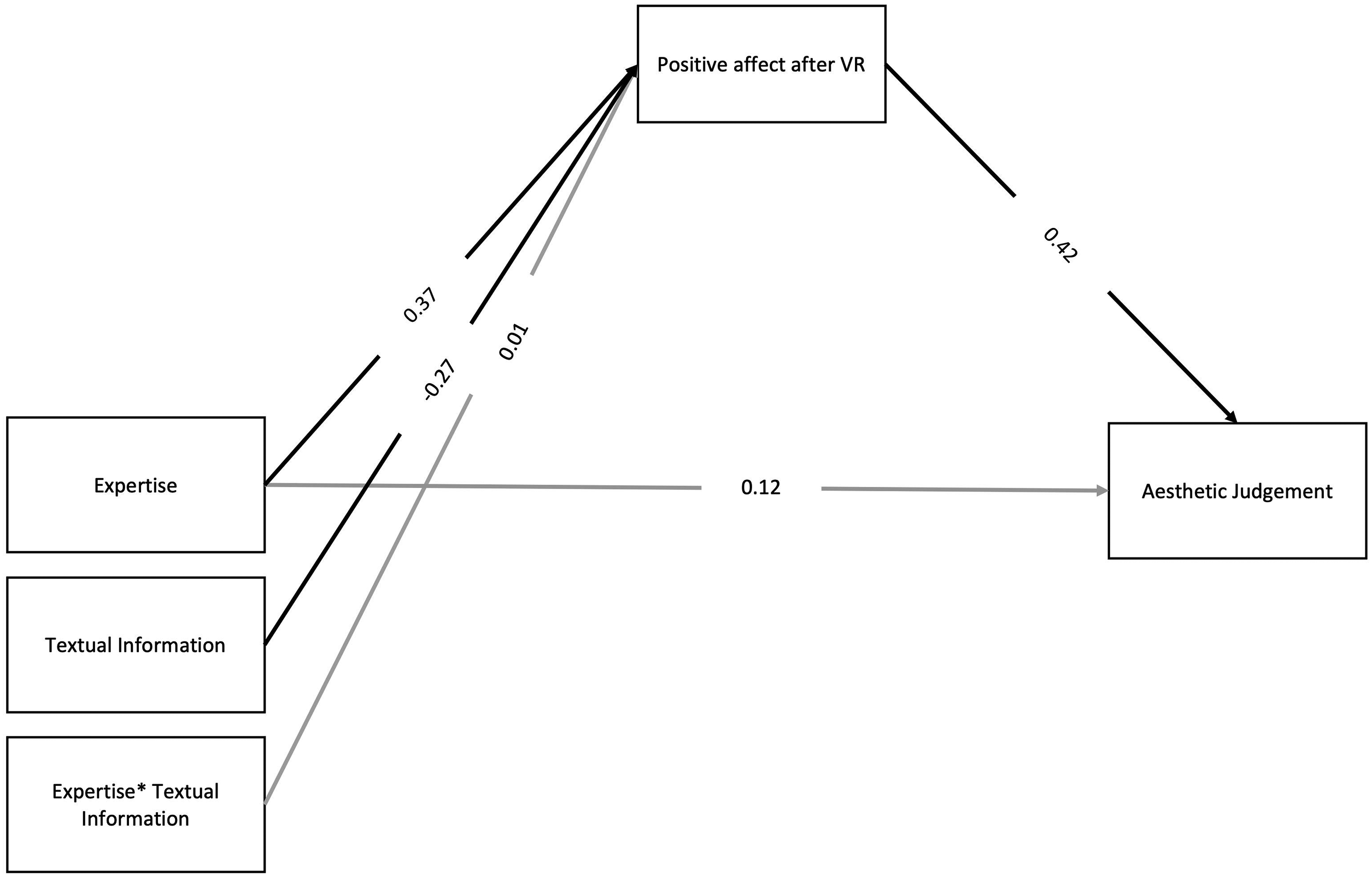
Statistical Models with standardized estimates (for dichotomous variable textual information, unstandardized estimate is displayed). Note: Grey: Not significant; Black: significant.
Estimates, Standard Errors, P-Values, Upper and Lower CIs of the Moderated Mediation Model.
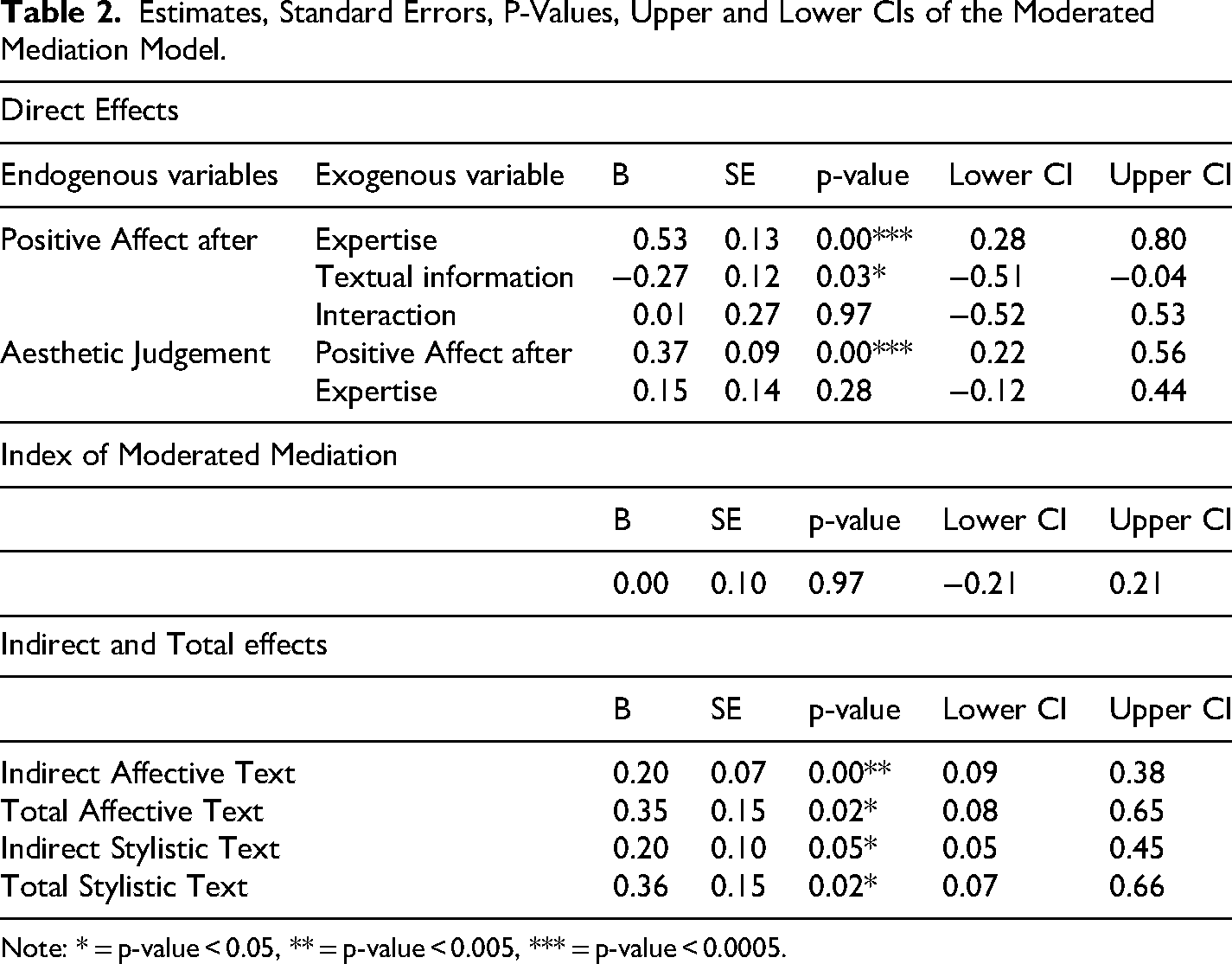
Note: * = p-value < 0.05, ** = p-value < 0.005, *** = p-value < 0.0005.
As hypothesized (hypothesis 1, a-path), expertise has an impact on positive affect (B = 0.53, 95% CI [0.28, 0.80]), indicating that participants high in expertise reported higher positive affect after the VR.
Moreover, textual information has a negative impact on affect (B = −0.27, 95% CI [−0.51, −0.04]), suggesting that participants that read the affective textual information showed higher positive affect opposed to participants that read the stylistic information. Given that this path from the moderator to the mediator is included in the statistical model to test the moderator effect rather than in our conceptual framework/ model, we did not initially propose a hypothesis about this relationship. Nonetheless it is an interesting secondary finding.
However, contrary to our expectations (hypothesis 2, moderation of a-path), there was no interaction between type of text and expertise (B = 0.01, 95% CI [−0.52, 0.53]), indicating that textual information does not moderate the path between expertise and positive affect. The index of moderated mediation is also not significant (B = 0.00, 95% CI [−0.21, 0.21]), indicating that the conditional indirect effects are not statistically different for affective and stylistic textual information.
As expected, (hypothesis 3, b-path), the b-path from affect to aesthetic judgement was significant (B = 0.37, 95% CI [0.22, 0.56]). Also, in line with our expectations (hypothesis 4, c-path), the direct effect from expertise to aesthetic judgement was not significant (B = 0.15, 95% CI [−0.12, 0.44]). Concerning the conditional indirect effect (hypothesis 4, indirect effect), for both types of text expertise, as predicted, a significant indirect effect on aesthetic judgement was found (affective text: B = 0.20, 95% CI [0.09, 0.38]; stylistic text: B = 0.20, 95% CI [0.05, 0.45]). Moreover, for both types of text, there is a significant total effect of expertise on aesthetic judgement (affective text: B = 0.35, 95% CI [0.08, 0.65]; stylistic text: B = 0.36, 95% CI [0.07, 0.66]).
Discussion
This study examined influences on aesthetic judgment in a virtual reality setting. It proposed that expertise should have a positive effect on aesthetic judgments, but only if positive affect acts as a mediator. In addition, it was hypothesized that the type of textual information should influence the relationship between expertise and positive affect. Specifically, we anticipated that individuals with high expertise would exhibit higher positive affect after reading affective texts, and individuals with low expertise would show higher positive affect after reading stylistic texts.
As hypothesized (hypothesis 1), participants high in expertise report higher positive affect after the VR-gallery. As described above, this is in line with the notion of processing fluency (Reber et al., 2004; Winkielman & Cacioppo, 2001), the effort after meaning theory (Russell, 2003), and the model of aesthetic experience (Leder et al., 2004) (Figure 1). Notably, the influence of expertise on positive affect seems to persist in VR, which argues against a possible convergence of cognitive processes of experts and novices when engaging with works of art in VR (Antonietti & Cantoia, 2000). This is also consistent with the heightened HR observed in experts while viewing artworks in VR (Gotthardt et al., 2025), which could indicate their enjoyment through fluency of processing. In the same study, this physiological response was also linked to heightened affect among (female) experts. One possible other explanation for the relationship between expertise and affect observed in both the present and aforementioned study is the established link between art expertise and openness to experience (e.g., Chamorro-Premuzic et al., 2009). Since openness to experience increases the likelihood to experience a sense of presence (i.e., immersion) in VR (Rodriguez-Boerwinkle & Silvia, 2024; Weibel et al., 2010), and presence can in turn enhance positive affect (Pavic et al., 2023), it is possible that experts’ higher openness might contribute to a stronger sense of presence and thus increase positive affect. However, as openness to experience was statistically controlled for in the analysis of the aforementioned study (Gotthardt et al., 2025), this explanation seems unlikely. Instead, the findings point towards other mechanisms—such as processing fluency—as more likely explanations of the observed relationship between expertise and affect in VR in both studies.
Moreover, as a secondary result, the study shows that participants report higher positive affect after reading affective textual information than after reading stylistic texts. However, it is not known whether this effect is due to the affective texts increasing positive affect or the stylistic texts decreasing it, as the present study did not include a neutral baseline condition. This finding is nevertheless intriguing because such affective texts are rare in the analog artworld, whereas stylistic text descriptions are more common. Indeed, the context of virtual reality could account for this result. For many, the virtual world represents a rather new and unfamiliar environment that only partially mirrors real-world experiences. By its very nature, such an “artificial” environment lacks some of the (sensory) richness of human experience, potentially making individuals more inclined towards human emotions. As a result, they could prefer engaging with content that discusses emotions and prompts them to reflect on their own feelings. Likewise, a more sterile stylistic analysis, lacking in emotional depth, might decrease positive affect in this environment. Therefore, the emotional frame of reference (Cupchik et al., 1994) that is provided by affective texts, possibly encouraging reflection on one's own emotions, might be preferred over more stylistic contents. However, further research into the impact of affective texts within an analog setting is essential to support this notion.
Similarly, the idea that individuals may be more inclined towards human emotions in VR might relate to emotional contagion, where individuals’ emotions are influenced by the emotions of others (Hatfield et al., 1993). Studies show that contagion can also occur through nonverbal cues and does not necessitate direct interaction, with research demonstrating its occurrence even through digital platforms such as Facebook (Kramer et al., 2014). In the context of VR, users may seek connections to anything that feels authentically human, allowing the emotional contagion of affective texts to become even stronger. The effect might be even stronger because the emotional words used in the affective texts were chosen by participants in a pre-study, who were given a list of affective terms to select from which best represented the paintings. This ensured that the emotions mentioned in the texts reflected those actually felt by “real” people when viewing the artworks, potentially making the texts appear more authentically human. However, these explanations concerning the context of VR and emotions remain speculative and require further investigation.
On a different note, it is also interesting to keep in mind that the affective texts also contained emotional words with “negative” connotations. This builds on the work of Cupchik et al. (1994), who utilized mood information accompanying the artworks, some of which contained negatively connoted words such as “threatening” (p.65). The fact that texts that also contain negative emotional words are still associated with higher positive affect than stylistic texts is consistent with the idea that aesthetic emotions have a positivity bias. This bias means that even when negative aesthetic emotions are evoked by an artwork, they can still be interpreted as positive (Menninghaus et al., 2019). This phenomenon can be explained by theories such as processing fluency (Reber et al., 2004). Reading about negative emotions that might be associated with the artwork could result in a feeling of successful processing of the artwork (e.g., “I also thought that this aspect of the painting is rather boring!”), and therefore amplifying the overall affect. The findings hint at the possibility that this positivity bias carries over into virtual spaces.
These results could serve as a catalyst for future virtual art projects, and perhaps also inspire analog art exhibitions, to include more “atypical” affective texts rather than the more commonly used descriptive text conditions.
However, contrary to our expectations (hypothesis 2), textual information does not moderate the path between expertise and positive affect. Furthermore, the insignificant index of moderated mediation also indicates that the indirect effects for affective and stylistic textual information on aesthetic judgement do not differ. There are a number of possibilities as to why this interaction effect did not show up in the current sample. Firstly, it may take many years of experience to become an expert in a field, which may have resulted in the experts in the sample being older. Older age, in turn, is associated with lower digital competence (Heponiemi et al., 2023). It could therefore be that the experts in the sample were less digitally competent and therefore more overwhelmed by the virtual space. As a result, they may not have been able to make use of art-specific interpretations and style classifications. The attempt to enhance the experiences of novices and experts by promoting different processing routes through different textual information would thus be ineffective. However, the finding that expertise generally led to higher positive affect suggests that there was not complete convergence between novices and experts.
In addition, VR environments can be cognitively demanding. The additional stress (e.g., simulation sickness (Geyer & Biggs, 2018)) may impair participants’ ability to process textual cues thoroughly and derive benefit from them. This could be particularly the case for novices, for whom stylistic texts may already be challenging in the analog world and therefore become even more challenging in VR. This could mean that stylistic texts do not provide helpful additional information for novices, as assumed, but rather make the overall experience more difficult.
Nonetheless, the findings may again reflect the potential power of affective text in VR. In this ‘artificial’ environment, people regardless of expertise may prefer to engage with content that discusses emotions and encourages them to reflect on their own feelings or are repelled by the more ‘sterile’ stylistic texts in VR.
As expected (hypothesis 3), positive affect seemed to increase aesthetic judgement. This evidence again supports the idea that processes identified in analog art viewing, such as the feelings as information model proposed by Schwarz and Clore in 1996, are applicable to virtual art. The fact that positive affect could enhance appreciation of the artwork suggests that emotional responses to art in VR are not exclusively tied to the VR technology but are also a reflection of the artwork itself. This insight is valuable for artists exploring VR as a medium, indicating that art in VR transcends being a mere entertainment experience; it retains the capacity for genuine artistic appreciation. However, even if it were the case that aesthetic judgement is high due to the general newness and appreciation of the VR-experience (aka. VR inherently makes all experiences more impressive), it does not diminish the value of this appreciation. Even if the heightened affect and consequently judgement is influenced by the context of VR, it still fosters a positive art experience. Ultimately, whether due to the VR environment or the artworks themselves, the increased appreciation for art in VR can serve as a bridge, drawing more individuals to engage with and value art.
In line with our hypothesis (hypothesis 4), expertise increased positive affect, which then increased aesthetic judgement. The significance of this indirect effect is further underscored by the lack of a direct effect from expertise to aesthetic judgment, in line with our expectations. Furthermore, there is a total effect of expertise on aesthetic judgment across both types of text. These findings are in line with Reber et al. (2004) who found that affect mediates the relationship between fluency (more likely in experts) and judgement. Furthermore, the lack of a direct effect reflects that participants with a high level of expertise have different tastes and preferences (Leder et al., 2004) so that expertise does not directly lead to a positive evaluation, but only through increased positive affect.
Limitations
While this study provides valuable insights into aesthetic judgement in VR, it also has certain limitations that warrant consideration. One limitation is that the texts in both conditions were not the same length. This discrepancy raises the possibility that the affective texts exerted a stronger influence on participants’ emotions due to their greater readability. An attempt was made to shorten the stylistic texts as much as possible, without losing too much information, however, researchers wishing to build on this study should ensure that the length of the two texts is aligned. On a similar note, as the present study did not include a neutral baseline condition, it is unclear whether the affective texts increased positive affect, or the stylistic texts decreased it. This is not troubling per se, as it is also interesting to note that stylistic texts may reduce positive affect, as they are often used in the real world and should perhaps be replaced by affective texts in the virtual world. Future studies should nonetheless include a neutral condition to explicitly test whether the affective texts increase positive affect or the stylistic texts decrease it.
As described above, user experience with VR can play a significant role. Thus, age and digital literacy may have played a role in the experts’ ability to use art-specific interpretations and style classifications. The lack of control for these factors in the mediation analysis should be considered when interpreting the results. Therefore, future studies should include digital literacy or age as an important factor regarding art processing style in a virtual space.
On a similar note, virtual reality is a relatively new medium, and factors such as nausea (Regan & Price, 1994) or the level of immersion (Cotter et al., 2022) might have influenced the cognitive processes in VR. Future studies may want to control for these factors when researching aesthetic processing in VR.
Regarding emotional contagion in VR, future studies might also investigate whether emotional contagion in VR makes users more susceptible to others’ emotions, particularly when comparing individual versus shared social VR art experiences.
In this study, the aim was not to compare VR and analogue viewing, but rather to test whether models and theories that had already been tested in an analogue context (Figure 1) could also be applied to a VR setting. Therefore, a non-VR condition was not included. However, the proposed interplay of the different theories is rather complex. Therefore, it might have been useful to test the proposed interplay, as well as the statistical model (Figure 2), including the activation of processing routes via textual information, in the analog world. This could be an intriguing research question for future studies.
Another limitation relates to how positive affect and aesthetic judgment were measured following the VR experience. Both variables were assessed in close succession using a questionnaire after the VR gallery. While it was ensured that affect was measured before judgment, the temporal sequencing of the study's model could have been further ensured, for example by measuring positive affect in real-time during the gallery visit. Moreover, between-participant designs show limited sensitivity to varying evaluative conditions (Russell, 2003). Therefore, a within-participant design could have detected an interaction effect between expertise and textual information. Nonetheless, recognizing that a laboratory context can influence aesthetic appreciation (Brieber et al., 2014), our goal was to simulate as closely as possible an actual gallery visit. Therefore, we avoided measuring positive affect during the gallery visit and using a within-subjects design that would have required participants to view the same artworks multiple times and thus interfered with free movement in VR.
Conclusion
As in the analog world, expertise appears to influence aesthetic judgment, but only via increased positive affect. This effect is observed with exposure to both affective and stylistic texts, suggesting that text type does not interact with expertise. However, positive affect was higher after reading affective texts compared to stylistic texts. This could be due to the “artificial” context of VR, where participants may be more receptive to human emotions than to more neutral, emotionless stylistic texts.
Supplemental Material
sj-docx-1-ica-10.1177_02762366261430665 - Supplemental material for Reading Between the Pixels - Expertise, Textual Information, and Affect in Aesthetic Judgement of VR-art
Supplemental material, sj-docx-1-ica-10.1177_02762366261430665 for Reading Between the Pixels - Expertise, Textual Information, and Affect in Aesthetic Judgement of VR-art by Karina Aylin Gotthardt, Katrin Rakoczy, Miles Tallon, Matthias Seitz and Ulrich Frick in Imagination, Cognition and Personality
Footnotes
Acknowledgements
We would like to thank Prof. Dr. Ernst Wagner for his assistance in selecting the ten paintings for the virtual reality gallery and crafting the stylistic descriptions that accompany them.
We would like to thank Christiane von Nordenskjöld for her work and expertise on the curatorial arrangement of the virtual reality gallery.

Funding
The authors disclosed receipt of the following financial support for the research, authorship, and/or publication of this article: This work was supported by the Bundesministerium für Bildung und Forschung, (grant number 01JKL1908).
Declaration of Conflicting Interests
The authors declared no potential conflicts of interest with respect to the research, authorship, and/or publication of this article.
Supplemental Material
Supplemental material for this article is available online.
Notes
References
Supplementary Material
Please find the following supplemental material available below.
For Open Access articles published under a Creative Commons License, all supplemental material carries the same license as the article it is associated with.
For non-Open Access articles published, all supplemental material carries a non-exclusive license, and permission requests for re-use of supplemental material or any part of supplemental material shall be sent directly to the copyright owner as specified in the copyright notice associated with the article.
