




Abstract
Research on the relationship between the Big Five personality traits and empathy lacks consensus, with no prior studies examining how these traits relate to empathy discrepancies, such as imbalances between cognitive and affective empathy. This study investigated associations between Big Five traits, cognitive empathy, affective empathy, and empathic disequilibrium. A total of 507 participants (mean age 42 years), recruited via social media and public flyers, completed the BFI-44 personality inventory, the Empathy Quotient (EQ), and the Interpersonal Reactivity Index (IRI). Neuroticism was associated with greater affective than cognitive empathy, Openness with greater cognitive than affective empathy, and Agreeableness with equilibrium, high cognitive and affective empathy. Results were mixed for Extraversion and Conscientiousness. Findings suggest that individuals high in Neuroticism may struggle with cognitive empathy, potentially due to difficulties in emotion recognition and perspective-taking, exacerbating their social worries and self- consciousness. Meanwhile, individuals high in Openness may prioritize understanding others’ emotions through perspective-taking, with relatively less emotional involvement. These results highlight nuanced links between personality and empathy.
Introduction
Empathy can be defined as “reactions to the observed experience of another” (Davis, 1983, p. 113), or more specifically as “the ability to understand another person's thoughts and emotions and be affected by them appropriately” (Shalev & Uzefovsky, 2020, p. 2). Recent studies commonly apply and corroborate the two-dimensional conceptualization (Song & Shi, 2017), distinguishing cognitive empathy from affective empathy (Davis, 1994; Mooradian et al., 2011). This contrasts with the unidimensional approach, understanding empathy as an overarching whole (Davis, 1994). Affective empathy is defined as the affective response to the affective state of another (Baron-Cohen & Wheelwright, 2004; Walter, 2012), and the ability to respond with an appropriate emotion, manifesting as either parallel or reactive (Lawrence et al., 2004). The affective state of another can be perceived, imagined, or inferred (Walter, 2012). Cognitive empathy is defined as the intellectual or imaginative understanding of another person's state of mind (Lawrence et al., 2004, p. 911). This relies on abilities such as emotion recognition, perspective taking, and imagination, which allow for mentally simulating experiences and their emotional impact (Baron-Cohen & Wheelwright, 2004). Normative social functioning depends on intact cognitive and affective empathic abilities, and these two dimensions reciprocally influence each other (Walter, 2012). Thus, when one dimension is functioning disproportionately to the other, this can have devastating effects on social functioning, and is associated with severe psychopathologies such as autism spectrum disorder and psychopathy (Shalev et al., 2023). Therefore, there is a need to know whether particular personality traits disposition individuals towards an imbalance between the two dimensions of empathic abilities.
A recent line of research has termed the imbalance between cognitive and affective empathy “empathic disequilibrium” (Shalev & Uzefovsky, 2020). Empathic disequilibrium can manifest as higher cognitive than affective empathy, such as in the case of psychopathy, or vice versa, as higher affective than cognitive empathy, such as in the case of autism spectrum disorder (Shalev et al., 2023). The two dimensions of empathic abilities are assumed to reflect different systems of neurocognitive processing. A review by Walter (2012) states that one system is bottom-up processing of salient visual and auditive cues that automatically induces affective empathy, labeled the “low road to empathy”. The other system, termed the “high road to empathy” induces empathy through cognitive processes in a top-down manner, sometimes leading to affective responses (Walter, 2012). The “low road” and the “high road” pathways reciprocally communicate. Activation of the “low road to empathy” induces an emotional state in the observer which subsequently prompts the observer to reflect on the cause of one's own emotional state and the corresponding state in the other. The “high road to empathy” involves perspective-taking and reflecting on the others emotional state which subsequently could prompt an emotional state in the self. Thus, good empathic abilities and balance between affective and cognitive empathy is considered crucial for appropriate and adaptive social responding, irrespective of one's overall empathy (Shalev & Uzefovsky, 2020).
Through personality, one can conceptualize individual differences in tendencies like cognitive thinking style, emotional experiences, and behavior (Melchers et al., 2016). Empathy is inherently related to personality as a stable trait with great individual differences (Davis, 1983) and is thought to be implied in a given personality structure. However, this relationship is far from understood. Seemingly, nine studies have explored the association between personality traits and empathy using the Big Five model and a two-dimensional empathy approach. There is notable consensus on the finding of Agreeableness as positively correlated with empathy both as a unidimensional (Melchers et al., 2016; Song & Shi, 2017; Wakabayashi & Kawashima, 2015) and two-dimensional construct (Furnham et al., 2003; Lermen et al., 2022; Liaqat et al., 2022; Melchers et al., 2016; Mooradian et al., 2011; Yasien & Almuzaini, 2022). Agreeableness and empathy show considerable overlap in conceptualization; Agreeable individuals are characterized as caring, kind, and sensitive to others, all of which resemble empathy. However, Agreeableness is a broader construct that encompasses altruism, prosocial behavior, modesty, and trust in others (McCrae & John, 1992), neither of which are necessary in empathy (Walter, 2012).
Also, several studies report a positive correlation between Openness and cognitive empathy (e.g., Guilera et al., 2019; Liaqat et al., 2022; Yasien & Almuzaini, 2022). Cognitive empathy entails inclination to imaginatively transpose oneself into contexts and experience corresponding affects (Davis, 1983). Applying Walter's (2012) framework of the «high road to empathy», cognitive understanding may induce affective empathy, perhaps especially in open individuals as their boundaries between cognition and affect are more permeable (McCrae, 1993).
Another prominent positive association is that of Neuroticism and affective empathy (Guilera et al., 2019; Lermen et al., 2022; Mooradian et al., 2011; Yasien & Almuzaini, 2022). Two studies found Neuroticism to be positively correlated with affective empathy and negatively correlated with cognitive empathy, indicating possible empathic disequilibrium (Bętkowska-Korpała et al., 2022; Song & Shi, 2017). Neuroticism represents the tendency to experience emotional instability with more frequent experiences of negative affect such as sadness, anxiousness, and anger (Guilera et al., 2019). The association with affective empathy seems plausible, as one would more readily be emotionally activated by different experiences – maybe in particular experiences of negative emotions. In addition, Conscientiousness was found to be positively correlated with cognitive empathy and negatively correlated with affective empathy in two studies, indicating possible empathic disequilibrium in the opposite direction of Neuroticism (Bętkowska-Korpała et al., 2022; Lermen et al., 2022).
Both empathy (Davis, 1994) and personality (Mooradian et al., 2011) have been subject to research for several decades, yet consensus on their relationship is scarce, with considerable disparities in definition, conceptualization, and subcomponents, as well as hypothesized causes for individual differences for empathy. Although it has been disputed whether personality and empathy have a relation at all, recent literature supports this claim (e.g., Guilera et al., 2019). Therefore, examining the specific associations appears especially relevant, potentially providing insights into interindividual differences in empathic abilities.
A vast majority of previous studies on empathy and personality solely include students, furthermore, mainly medical students (e.g., Guilera et al., 2019 Liaqat et al., 2022; Song & Shi, 2017;). Consequently, the results may neither be generalizable nor representative of the general population. Additionally, none of the prior studies have included empathic disequilibrium, a concept that may be essential for gaining a more nuanced understanding of the relation between personality and empathy, and how personality traits possibly affect an individual's functioning.
This study aimed to disentangle the relationship between personality traits and empathy by exploring the associations between the Big Five personality traits, cognitive and affective empathy, and empathic disequilibrium. To move beyond previous research, we focus on the empathic disequilibrium score, as empathic disequilibrium, irrespective of one's overall level of empathy, can affect individuals social functioning. Increased understanding of how personality traits influence social functioning may have applications for practice. For example, understanding how a person's personality profile may influence their empathy and interpersonal relationships can help clinicians to target therapeutic approaches to avail an individual's interpersonal functioning (Frank & Spanier, 1995). Furthermore, knowledge about the relationship between personality traits and empathy may be used by leaders and others working with recruitment and personnel selection, as one's empathic abilities may be predictive of work performances but at the same time, one's occupation may affect one's empathic abilities (Chong et al., 2019; Wieck et al., 2021). Based on the findings explicated, we have four hypotheses; 1) we expected Agreeableness to be associated with high levels of affective empathy and cognitive empathy, namely empathic equilibrium, 2) we expected Neuroticism to be associated with empathic disequilibrium; higher affective than cognitive empathy, 3) we expected Conscientiousness to be associated with empathic disequilibrium; higher cognitive than affective empathy, and finally, 4) we expected Openness to be associated with empathic equilibrium; high cognitive and affective empathy, due to its interrelation to imagination. The hypotheses are depicted in Figure 1. Previous research shows ambiguous results regarding Extraversion and empathy; therefore, no hypothesis was developed for Extraversion. We used two different empathy measures to examine the robustness of findings across measures. While both measures assess cognitive and affective empathy, their distinct operationalizations and item structures allow us to examine the convergence and divergence of findings across measures, thereby reducing the influence of possible mono-operational bias (Shadish et al., 2002), avoiding measurement-specific findings, and increasing the robustness and generalizability of our results.
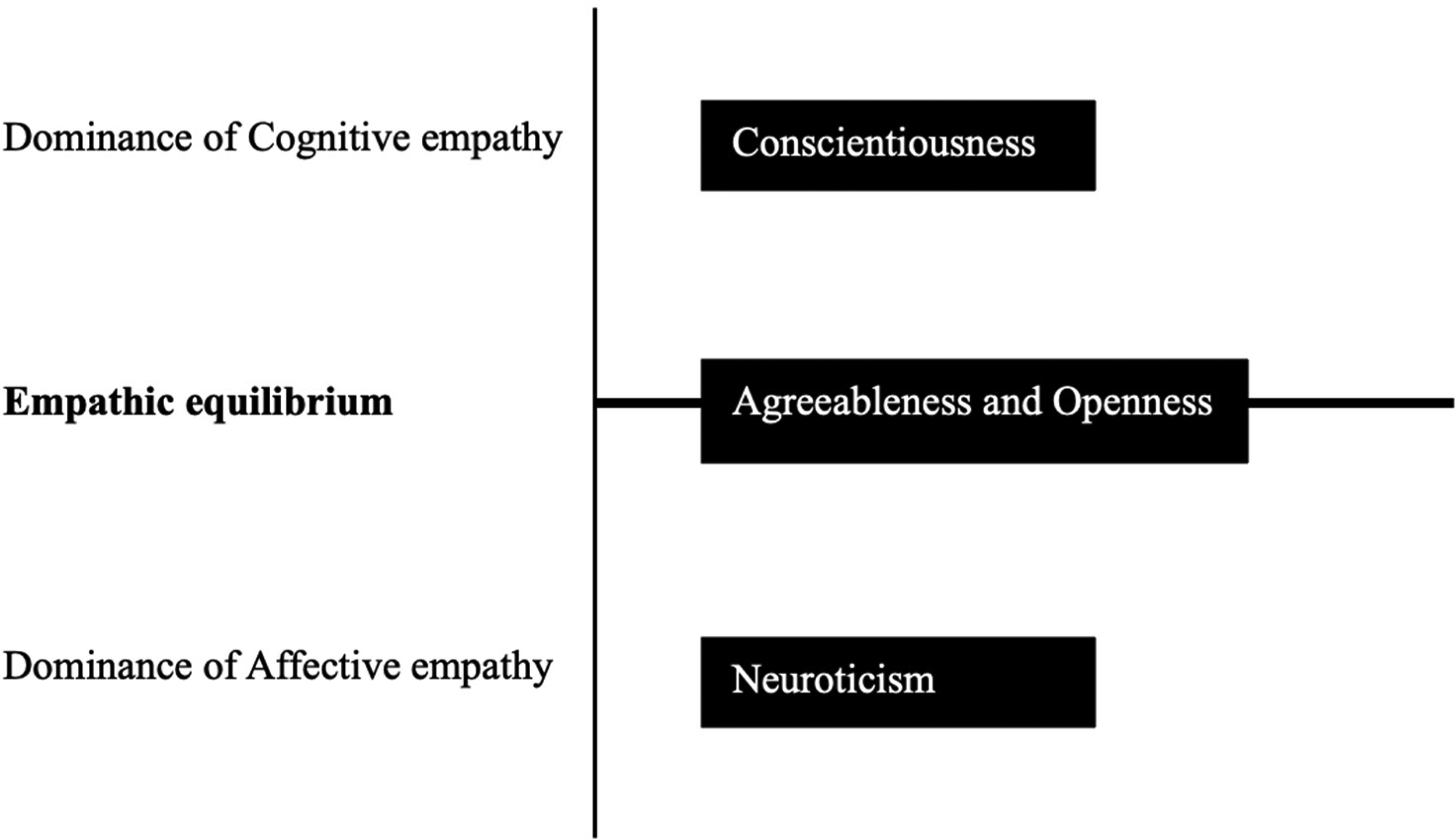
Figure Depicting the Hypotheses.
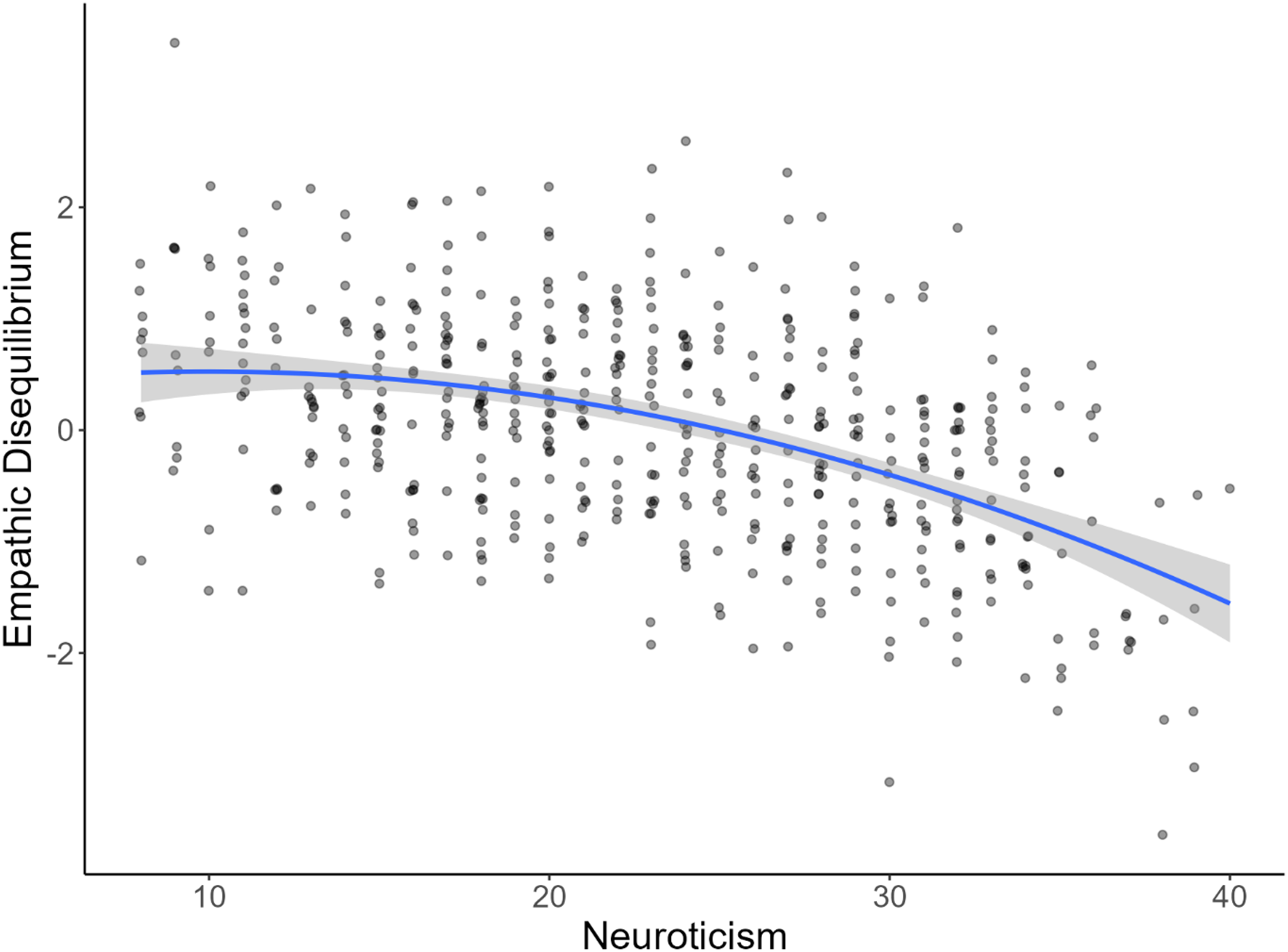
Figure Depicting the Curvilinear Relationship Between Neuroticism and Empathic Disequilibrium.
Method
Procedure
The participants were recruited through social media and by research assistants handing out flyers with a QR-code to scan for participation. Flyers were handed out in public spaces, such as train stations, airports, city centers and university campuses in several Norwegian cities. The opening section of the questionnaire provided information about participation, estimated time-use, withdrawal-rights, and assurance of anonymity. Participation was voluntary, and providing informed consent was necessary to proceed. Initially, the participants answered background questions regarding their sociodemographic characteristics; they were asked to state their gender (woman, man, other), age, academic background (primary school, high school, bachelor's degree, or master's degree/higher), and nationality (Norwegian, Danish, Swedish, other). No sensitive information was gathered, the questionnaire was anonymous, and only people over 18 years old were invited to participate. The study was ethically approved by the committee for ethical research conduction at the University of Inland Norway (ref. no. 23/05377).
Measures
The IRI comprises 28 items, which make up four subscales: Perspective Taking, Fantasy, Personal Distress and Empathic Concern (Davis, 1983). Each subscale is composed of seven items answered on a 5-point Likert scale ranging from “Does not describe me well” to “Describes me very well”. The Personal Distress and Empathic Concern scales measure affective empathy, while Fantasy and Perspective Taking scales measure cognitive empathy (Davis, 1983). The subscales each yield a theoretical score range of 0–28, where a higher score indicates higher levels of empathic ability.
The Empathy Quotient (EQ) comprises 40 items making up three subscales: Cognitive Empathy, Emotional Reactivity and Social Skills (Lawrence et al., 2004), consisting of 11, 11 and 6 items, respectively (Muncer & Ling, 2006). Cognitive Empathy and Emotional Reactivity scales are considered synonymous with the Cognitive Empathy (Perspective Taking and Fantasy) and Affective Empathy (Empathic Concern and Personal Distress) in the IRI, in line with numerous previous studies (Shalev & Uzefovsky, 2020). Henceforth, Emotional Reactivity will be referred to as affective empathy. The cognitive and affective subscales yield a theoretical score range of 0–22, while the Social Skills subscale yields a range of 0–12.
Statistical Analyses
Version 28 of IBM SPSS Statistics was used for analysis.
Initially, correlation analyses were conducted using an alpha level set at 0.05. Subsequently, Bonferroni corrected alpha levels at 0.008 were used for the six separate regression analyses (0.005/6 ≈ 0.008). A Bonferroni correction was conducted to control for family-wise error rate, treating the models as a family of tests. This is due to all models examining the relations between personality on empathy, with variables derived from these two theoretical constructs.
Results
The sample comprised 512 participants. Those responding “other” as gender were excluded due to their small sample size (n = 5). Sample characteristics are depicted in Table 1. The final analytical sample included 507 participants, comprising 391 women and 116 men. The mean age for both women and men was 42 years. The age range was 18 to 80 for women and 18 to 78 for men. The majority of participants were Norwegian.
Descriptive Statistics Sociodemographic Variables.
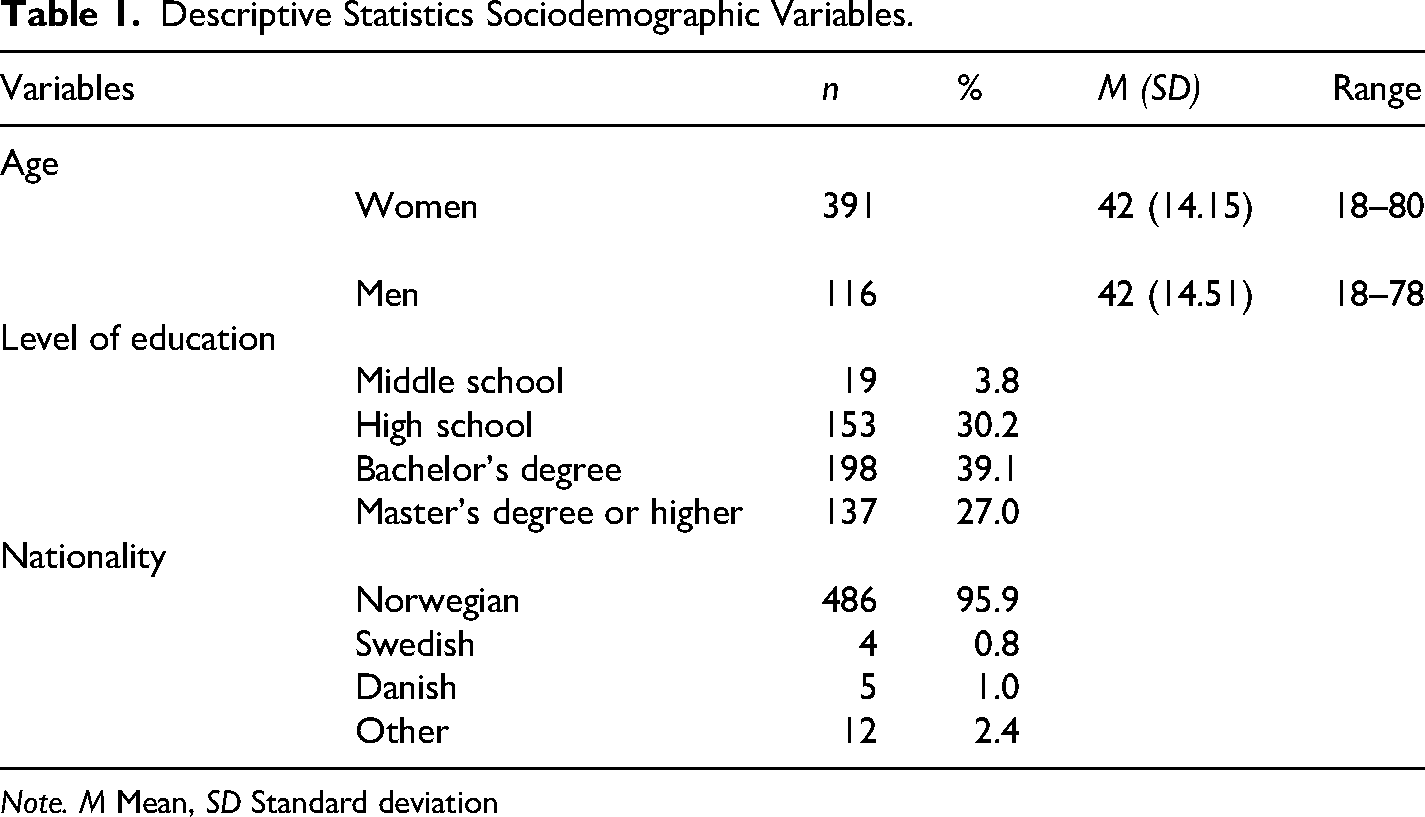
Note. M Mean, SD Standard deviation
Tables 2 and 3 display the bivariate correlations between the different empathy domains and the big five traits. Extraversion, Agreeableness, Conscientiousness, and Openness correlates significantly positively with both total, cognitive, and affective empathy, whereas Neuroticism correlates negatively with all aspects of empathy. With the exception of Agreeableness, all correlations were in the small to medium range (i.e., r = .09 to 0.35). Agreeableness, however, displayed strong positive correlations with total empathy and affective empathy, and a medium to strong correlation with cognitive empathy. This is in line with the conceptual overlap between Agreeableness and empathy.
Correlation Matrix with Empathy from the EQ and Personality.
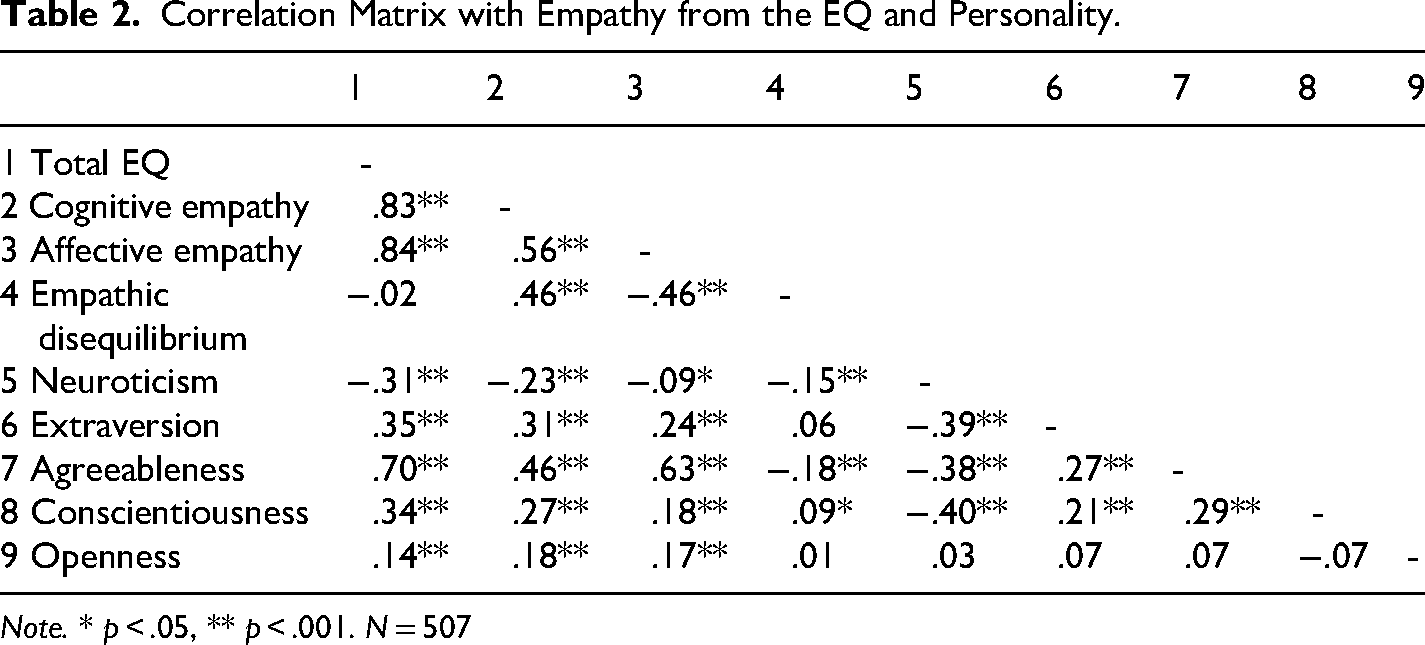
Note. * p < .05, ** p < .001. N = 507
Correlation Matrix with Empathy from the IRI and Personality.
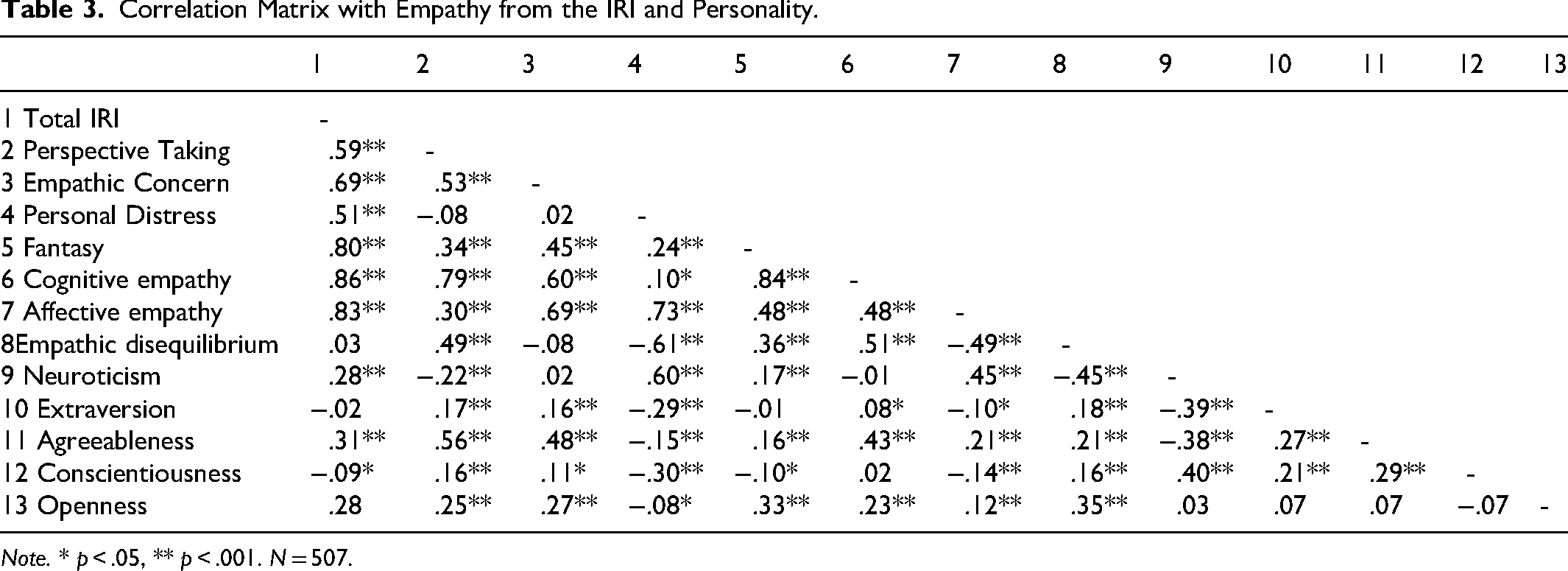
Note. * p < .05, ** p < .001. N = 507.
Neuroticism and Agreeableness correlates significantly positively with total empathy score, as well as affective empathy. Neuroticism, however, correlates negatively with empathic disequilibrium, while Agreeableness, like Openness, correlate significantly positively to all three aspects of empathy. Extraversion and Conscientiousness correlate significantly negatively with affective empathy and positively with empathic disequilibrium. Conscientiousness, in addition, correlates significantly negatively to total empathy score. A key difference worth noting when comparing the IRI with the EQ is the correlation between Conscientiousness and the total empathy score: while the IRI shows a negative correlation, the EQ reveals a positive one.
Table 4 shows descriptive statistics for the personality and empathy variables used in forthcoming analyses.
Descriptive Statistics for Personality and Empathy.
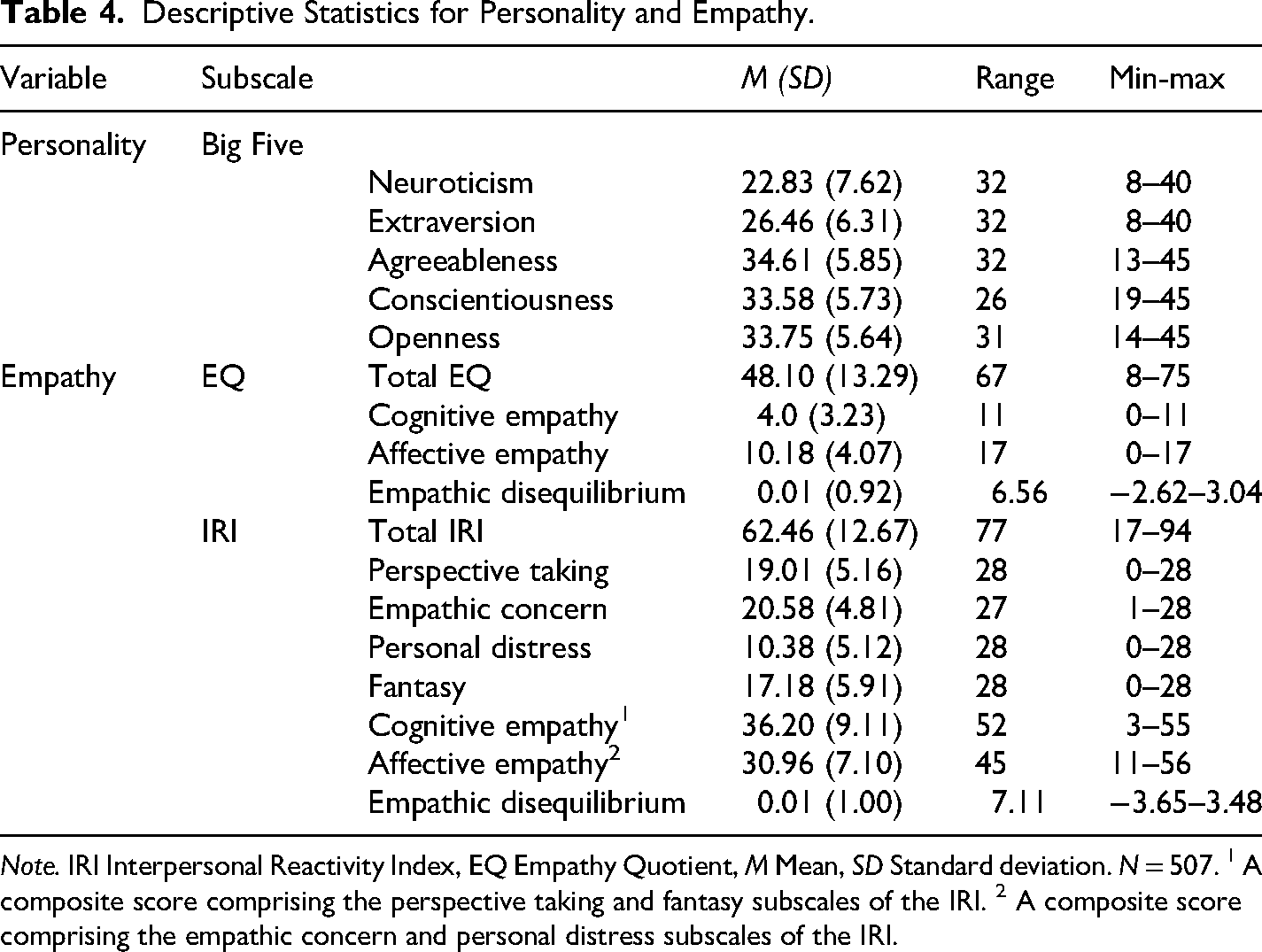
Note. IRI Interpersonal Reactivity Index, EQ Empathy Quotient, M Mean, SD Standard deviation. N = 507. 1 A composite score comprising the perspective taking and fantasy subscales of the IRI. 2 A composite score comprising the empathic concern and personal distress subscales of the IRI.
Regression Analyses with Empathy from the EQ and Personality.
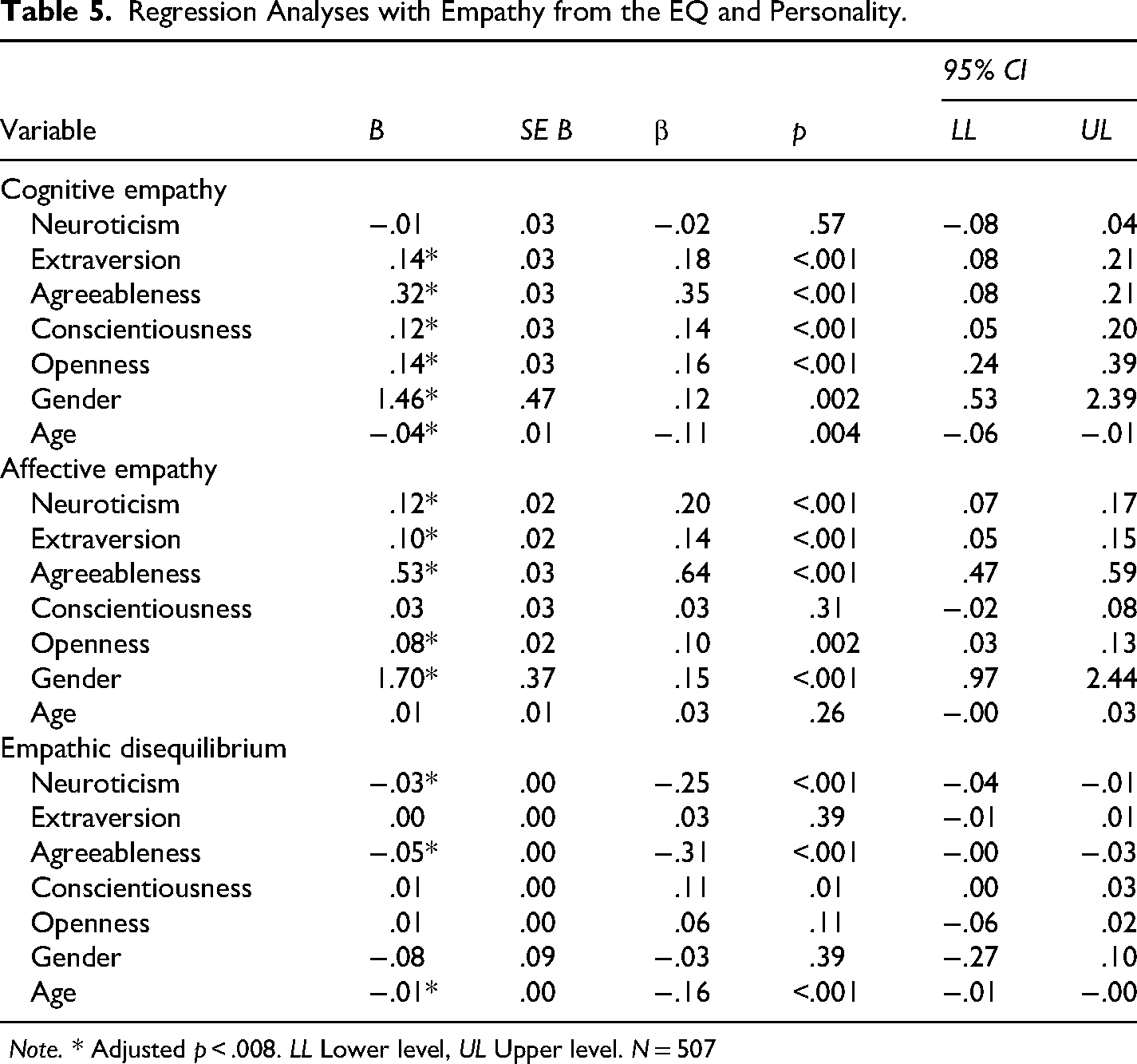
Note. * Adjusted p < .008. LL Lower level, UL Upper level. N = 507
Linear and Polynomial Regression Analyses with Empathy from the IRI and Personality.
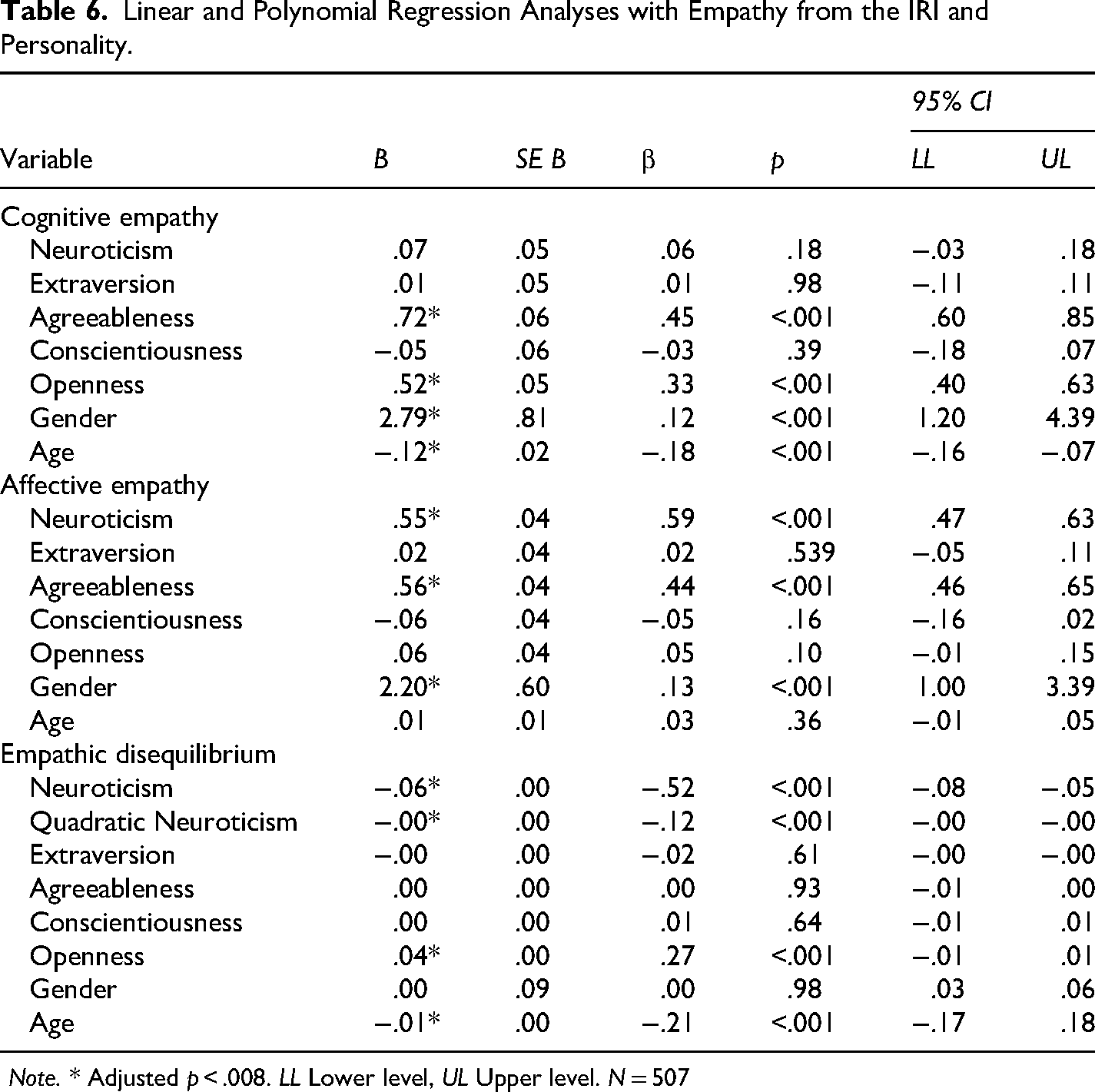
Note. * Adjusted p < .008. LL Lower level, UL Upper level. N = 507
Multivariate Associations Between Personality and Empathy
In the analyses with the EQ (Table 5), the predictive variables combined accounted for 24% of the variance in cognitive empathy (F(7, 499) = 23.55, p < .001, R2 = .24), 46% in affective empathy (F(7, 499) = 61.25, p < .001, R2 = .46), and 19% in empathic disequilibrium (F(7, 499) = 16.75, p < .001, R2 = .19).
Neuroticism was a positive predictor for affective empathy and negative predictor for empathic disequilibrium, while cognitive empathy was not significantly predicted by Neuroticism.
Openness, Extraversion, and Agreeableness were consistently related to both cognitive and affective empathy; the variables were found to be positive predictors of both. In addition, Conscientiousness was a positive predictor of cognitive empathy, and Agreeableness a negative predictor for empathic disequilibrium.
Concerning the demographic variables, gender was found to be a positive predictor of both cognitive empathy and affective empathy. These findings indicate women scoring higher on both cognitive and affective empathy using EQ. Age was found to be negative predictor for cognitive empathy and empathic disequilibrium.
For the analyses with the IRI, the predictive variables combined explained a significant proportion of variance in the outcome variables; 35% for cognitive empathy (F(7, 499) = 39.67, p < .001, R2 = .35) and 40% for affective empathy (F(7, 499) = 49.43, p < .001, R2 = .40). Table 6 reveals similar results for Neuroticism, age, and gender. However, when using the IRI compared to EQ, Extraversion no longer predicts cognitive nor affective empathy, and Conscientiousness no longer predicts cognitive empathy. Furthermore, Openness did not predict affective empathy. Agreeableness was found to show similar results as when using the EQ. In addition, Neuroticism was found to have curvilinear relationship with empathic disequilibrium (Figure 2), but in the same direction as with the EQ, namely higher affective than cognitive empathy.
To account for the curvature, a polynomial variable was made using the Neuroticism variable. Specifically, a quadratic variable was deemed appropriate as this demonstrated the best goodness of fit for the model, explaining 33% of variance in the outcome variable (F(8, 498) = 30.68, p < .001, R2 = .33). Incorporating this variable increased the goodness of fit from the previously found 31% (R2 = .31).
Discussion
The findings from the current study provide novel knowledge about the relations between personality traits and empathy. First, we found some evidence that Agreeableness may be associated with negative empathic disequilibrium characterized by higher affective than cognitive empathy. Secondly, we found that Neuroticism was associated with negative empathic disequilibrium characterized by higher affective than cognitive empathy, and this association was particularly strong at high levels of Neuroticism. Thirdly, we found some evidence that Openness was associated with positive empathic disequilibrium, namely higher cognitive than affective empathy. Results varied across empathy measures, especially regarding Conscientiousness and Extraversion where the results were rather ambiguous. The most consistent results across empathy measures were for observed for Neuroticism, which appears to make a noteworthy contribution to understanding the etiology of empathic disequilibrium. Both EQ and IRI show empathic equilibrium in the sample, which appears comparable with characteristics found in other samples (e.g., Shalev & Uzefovsky, 2020).
The present findings have important implications for both clinicians and researchers. Empathic disequilibrium appears especially relevant in relation to conditions such as autism spectrum disorder (Dziobek et al., 2008; Shalev et al., 2023; Smith, 2009). For clinicians, understanding how personality traits may contribute to imbalances between cognitive and affective empathy, and thus to empathic disequilibrium, can provide valuable insights for tailoring interventions. For researchers, these results contribute to the growing body of literature linking personality and empathy, and they encourage further investigation using the novel and informative concept of empathic disequilibrium.
Hypothesis 1: Agreeableness and Empathic Equilibrium
Agreeableness was hypothesized to be associated with empathic equilibrium. While Agreeableness was found to positively predict affective and cognitive empathy in both empathy measures, in the EQ Agreeableness was also negatively associated with empathic disequilibrium, suggesting significantly higher levels of affective than cognitive empathy. This would imply that agreeable people would be more easily emotionally affected, whilst not necessarily having an equally elevated ability to notice and understand someone else's state of mind. This is partially in line with findings from earlier experimental studies. Across two experiments, Agreeableness predicted higher arousal (suggestive of affective empathy) and emotional concern when viewing aversive images (Finley et al., 2017). Thus, Agreeableness may be more closely related to heightened affective than cognitive empathy. However, Agreeableness was not a significant predictor of empathic disequilibrium in IRI. This indicates that the differences in cognitive and affective empathic abilities is smaller, which is in line with other earlier studies (e.g., Melchers et al., 2016; Yasien & Almuzaini, 2022).
The significant association between Agreeableness and empathy could be rooted in the overlap in characteristics between the Agreeableness trait and empathy. Perhaps the natural inclination towards prioritizing the well-being of others, caring, and showing compassion would facilitate and enhance empathic capacities. In addition, regarding the Empathic Concern subscale, underlying neurophysiological mechanisms such as mirror neurons have been suggested to be important (Mooradian et al., 2011), which appear to be relevant in Agreeableness as well (Song & Shi, 2017), further suggesting overlap in the constructs.
Hypothesis 2: Neuroticism and Negative Disequilibrium
Neuroticism was hypothesized to be associated with higher affective than cognitive empathy. The results support this, as Neuroticism negatively correlates with and predicts negative empathic disequilibrium, consistent with the idea that individuals high in Neuroticism experience heightened affective empathy relative to cognitive empathy.
The curvilinear association suggests that highly neurotic individuals are easily and intensely emotionally affected but may struggle with emotional regulation and perspective-taking. Their heightened emotional sensitivity amplifies affective empathy yet interferes with the cognitive processes required for understanding others’ mental states, potentially leaving them with only the affective components of empathy and feelings of personal distress (Davis, 1983; Kanacri et al., 2013). This imbalance creates empathic disequilibrium, where individuals might “feel with” others without fully understanding or contextualizing their experiences.
Contributing factors include the well-established link between Neuroticism and the Personal Distress subfacet of the IRI, as observed in this study and prior research (e.g., Guilera et al., 2019; Lermen et al., 2022; Song & Shi, 2017). Neurotic individuals’ preoccupation with their own affective state, combined with reduced Perspective Taking, reflects overlapping tendencies toward negative emotionality and difficulty regulating emotions (Davis, 1983; Mooradian et al., 2016; Song & Shi, 2017).
Hypothesis 3: Conscientiousness and Positive Disequilibrium
Conscientiousness was hypothesized to be associated with higher cognitive than affective empathy. Using the IRI, Conscientiousness was not a significant predictor for any of the subscales, and regarding EQ solely for cognitive empathy. These findings appear ambiguous and inconclusive in regards to the hypothesis. Melchers et al. (2016) found a similar pattern, where Conscientiousness was found to be more closely associated with the EQ. The discrepancy in findings when using the IRI compared to the EQ could suggest that EQ captures aspects more closely aligned with Conscientiousness. An item in the EQ is for instance “It doesn’t bother me too much if I am late meeting a friend” which conspicuously relates to the dutifulness of Conscientiousness.
There is notable inconsistency in previous findings, as several different associations have been reported, especially in the subscales of IRI. For instance, Song and Shi (2017) found Conscientiousness positively related to Empathic Concern, whilst Lermen et al. (2022) reported the inverse relationship. Taking this into account, the unclear findings of this study are not surprising. Mooradian et al. (2011) suggest that Conscientiousness is unrelated to empathy, especially as measured by the IRI. It is plausible that Conscientiousness has a more nuanced relation to empathy perhaps influenced by levels of other traits.
Hypothesis 4: Openness and Empathic Equilibrium
An association between Openness and empathic equilibrium was proposed, for which the study found ambiguous results. Using EQ, Openness was positively correlated with affective empathy and cognitive empathy, supporting the hypothesis. However, using IRI, the results seem to indicate positive disequilibrium, as Openness was a predictor for cognitive empathy and empathic disequilibrium, but not affective empathy.
The hypothesis of Openness and equilibrium was partially grounded in Walter's (2012) “high road to empathy”. Possibly, the intertwining between the “high” and “low” road to empathy relies on sub-facets of Openness, for instance “openness to feelings”. Another explanation could be that the intertwining is more prominent in naturalistic real-life situations, as the affective response would occur automatically subsequent of cognitive understanding. Empathy in this study appear more isolated, as being measured through a questionnaire with items deliberately divided to measure purely cognitive or affective empathy. Consequently, the understanding of the reciprocal relation of cognitive and affective empathy in naturalistic settings is somewhat restricted.
In addition, the Fantasy subscale of IRI has been subject to criticism. Some argue the subscale does not accurately tap into the empathy construct (Lawrence et al., 2004), relying too heavily on imagination rather than empathy and lacking the social aspect of empathy (Melchers et al., 2016). Imagination is closely related to cognitive empathy, but the concepts are distinct (Baron-Cohen & Wheelwright, 2004). Furthermore, some studies have excluded this subfacet from empathy (e.g., Bętkowska-Korpała et al., 2022; Song & Shi, 2017). This omission results in less precise comparisons, as there are fewer studies available for reference (Mooradian et al., 2011). The subscale was included here because, despite some criticism, the IRI in full is widely regarded as a reliable measure of empathy (e.g., Davis, 1983). However, the inclusion of the Fantasy subscale in the cognitive empathy scores from IRI may explain why an association between Openness and positive disequilibrium was found for the IRI only. Nevertheless, it is important to note that Openness was also positively associated with Perspective Taking, supporting previous studies (e.g., Guilera et al., 2019; Lermen et al., 2022) and underscoring the association to overall cognitive empathy.
Extraversion and Empathy
Due to sparse consensus in previous research, no hypothesis was developed regarding Extraversion and empathy. Results in this study showed varying results dependent on the empathy measure. When using EQ, Extraversion was positively associated with both cognitive and affective empathy. For IRI however, Extraversion was not significantly associated with any of the empathy measures. This is notably different from the EQ measures where extraverted individuals would be considered highly competent in both empathy components. Melchers et al. (2016) proposed the argument that Extraversion may be culture-sensitive, and this can partly explain why the previous findings on associations between Extraversion and empathy are so fluctuating, as the studies have been conducted using samples from different cultures. Mooradian et al. (2011) point to Extraversion and empathy being unrelated. Conversely, extraverted individuals are characterized in the Big Five as being warm, outspoken, positive, and assertive. These characteristics appear important for empathy as well. However, perhaps these characteristics could inadvertently lead to inattentiveness towards other individual's affective states.
Differences in Empathy When Using IRI vs EQ
Empathy measures like IRI and EQ have been criticized for being too broad, thus capturing more than just empathy (Muncer & Ling, 2006). The IRI includes the subscale Personal Distress, which is excluded from EQ. Baron-Cohen and Wheelwright (2004) argues that the subscale is too self-oriented to be classified as empathy. However, it is widely acknowledged that personal distress constitutes a state where emotional contagion – often described as the first step towards empathy – has occurred, but emotion regulated has failed (Eisenberg et al., 2024). Thus, heightened personal distress could capture the tendency to be easily evoked by other's emotions, which is an important aspect of affective empathy. The IRI fantasy-subscale has also been criticized for capturing processes not inherently related to empathy (Lawrence et al., 2004). It is important to note that both the IRI and the EQ are measures of trait empathy, not situational empathy. When comparing total empathy scores from the IRI and EQ, it is important to note that for the EQ, while the «social skills» subscale was omitted, it was included in the calculation of the total empathy score. This approach may yield misleading total EQ scores that do not accurately represent empathy. However, the relevance of this subscale is debated, as some deem it irrelevant and exclude it from analysis (Shalev & Uzefovsky, 2020), while others include it (e.g., Melchers et al., 2016).
The Role of Sociodemographic Factors
Strengths and Limitations
Firstly, an observational design was used, where empathy and personality were assessed exclusively through self-report measures, making all results based on people's self-perception. These reports are not necessarily accurate, as for instance social desirability bias can occur. Participants memory, honesty, and motivation affects the quality of responses (Larsen et al., 2008). Response bias could also occur as the 20 filler-items supposed to counteract response bias in the EQ was not included in this study. However, 19 out of the 40 items in the EQ were reversed, which could help mitigate the potential response bias. Furthermore, fatigue and reluctance in responding authentically can influence the responses especially in enduring ones (Larsen et al., 2008). In addition, the sample was clearly female-dominant, potentially due to a highly self-selected sample. Lastly, the modeling strategy conducted was somewhat inconsistent, as for instance the curvilinear term was added post hoc upon visual inspection of the data.
The study also has some notable strengths. Mainly, the large sample size strengthens the findings. Moreover, inclusion of a broad population enhances the generalizability of the findings, compared to previous research which solely included students. A more representative sample used in the present study contributes to a more realistic understanding of the associations.
Future Research
Future research would benefit from incorporating measures of empathy beyond self-reports, such as informant-reports. For instance, Cliffordson (2001) adapted the self-report version of the IRI into an informant-report version, which could be used alongside self-reports. Combining self-reports with informant-reports may provide a more reliable and accurate assessment of empathy. In addition, multimodal approaches to empathy would be beneficial in this regard. Utilizing multimodal measurements, such as emotion recognition tasks or neuroimaging techniques, could reduce common-method bias and capture situational empathy more accurately and effectively. It is also worth noting that a qualitative method may be beneficial, using for instance interviews to gain a deeper and more nuanced understanding.
Secondly, to investigate the developmental trajectory and reciprocity between personality and empathy, longitudinal research could be conducted. Longitudinal designs are better suited for detecting changes over time, in addition to controlling for potential cohort effects. Additionally, observations over time can identify potential causal relationships between empathy and personality traits.
Thirdly, while the current study was conducted with a general population sample, the findings may suggest avenues for future research on clinical, or subclinical, populations like individuals with autism or individuals with psychopathic tendencies. For example, an interesting question for future research could be to investigate whether higher levels of Neuroticism can explain the link between autism and empathic disequilibrium.
Previous research has found that psychopathic tendencies were associated with an empathic disequilibrium with higher cognitive than affective empathy (Shalev et al., 2023) and lower levels of Agreeableness but no association with other Big Five traits (e.g., Lee & Ashton, 2005). Taken together with the findings from present study, this suggests a potential impact of psychopathic tendencies on affective empathy, beyond low levels of Agreeableness. This assumption is in line with recent evidence from social neuroscience (see Penagos-Corzo et al., 2022 for a systematic review). Future research could examine how Neuroticism, Conscientiousness and Openness may interact with psychopathic tendencies in predicting empathic disequilibrium.
Conclusion
This study sought to enhance our understanding of the relationship between personality traits and empathy, highlighting cognitive empathy, affective empathy, and empathic disequilibrium. The findings provide results mainly in line with previous research. Specifically, Neuroticism was found to be related with negative empathic disequilibrium, while Agreeableness was associated to elevated empathy levels, and Openness was associated with positive empathic disequilibrium. The results regarding Extraversion and Conscientiousness were unclear, reflecting the ambiguity in previous research. These findings highlight the need for further exploration and refinement of the associations between, and conceptualizations of, personality and empathy.
Footnotes
Acknowledgements
We would like to extend our gratitude to Tuva Othilie Odegaard, Thea Martine Buvik, Sander Olafsrud, and Ingrid Ovnerud for their invaluable assistance and collaboration in data collection.

Ethical Approval
The research project that underpins this publication was provided by the Ethical committee at the University of Inland Norway, registration number 23/05377.
Consent to Participate
All participants provided written informed consent prior to enrollment in the study.
Consent for Publication
Not applicable.
Author Contributions
Tiril Slåen Svendsen: Conceptualization, Methodology, Investigation, Data curation, Formal analysis, Writing - original draft.
Karin Boson: Writing – Conceptualization, Methodology, Supervision, Project administration, Writing - review and editing.
Stian Orm: Writing – Conceptualization, Methodology, Formal analysis, Supervision, Project administration, Writing - review and editing.
Funding
The authors received no financial support for the research, authorship, and/or publication of this article.
Declaration of Conflicting Interests
The authors declared no potential conflicts of interest with respect to the research, authorship, and/or publication of this article.
Data Availability
The data are not publicly available, but available from the authors upon reasonable request.