



Abstract
Exploring cultural components of self-defining memories (SDM) is crucial in autobiographical memory research. Although SDMs are highly individualized expressions of individuals’ narrative identity, we attempted to examine in the present study if there is an emphasis on academic stress in the SDMs recalled by Indian college students, when compared with American college students. We indeed observed that Indian students were more likely than their American peers to recall SDMs reflecting academic stress, particularly achievement-related, despite reporting comparable levels of academic stress when assessed using a self-report questionnaire. Our study was also the first to examine how cultural differences in the self-awareness of one's narrative identity in Indian vs. American students map into their SDMs. Specifically, we found that positive affect predicted narrative awareness and coherence most consistently across four facets of narrative identity, again exclusively in the American sample. Our findings shed light on the differences in cultural nuances that shape the self-understanding of Indian and American students.
For more than the last two decades, memory research has yielded conceptual frameworks and empirical evidence of “self-defining memories” (SDMs) as a distinct form of autobiographical memories (e.g., Blagov et al., 2022; Blagov & Singer, 2004; Holm et al., 2017; Singer et al., 2013; Singer & Salovey, 1993; Sutin & Robins, 2005). Precisely, SDMs can be conceptualized as enduring personal memories that are touchstones for self-understanding and help to explain oneself to another person (Singer, 2019). They are vivid, affectively intense and repetitively recalled, and they are often linked to other similar memories and focused on an enduring concern or unresolved conflict (Moffitt & Singer, 1994).
Despite the mounting number of SDM studies across the globe (at least 175 studies across 19 different nations), the cultural components of such memories have remained relatively less explored. To the best of our knowledge, less than a handful of studies have been conducted so far that examine cross-cultural or cross-national differences in SDM. Only three of them have made direct comparisons of Western and Eastern cultures in the context of SDMs (Jiang et al., 2023; Jobson & O'Kearney, 2008; Wang & Singer, 2021). For example, a previous study by Jobson and O’Kearney (2008) on Australian and Asian undergraduate students attending the Australian National University at Canberra demonstrated differences in contents of the retrieved SDMs between the two groups: memories from Australian participants revealing more individualistic themes, whereas memories from the Asian undergraduates (primarily Chinese with a smaller representation distributed across 5 other Asian and South Asian countries) were characterized by more relationship-focused themes. The Australian undergraduate students had lived in Australia on average for 2.6 years vs. 2.2 years for the Asian students.
More recently, two studies comparing cross-national differences in the SDMs of Chinese and American college students revealed that Chinese participants recalled more memories focused on the stressful experience of high school academics than their American peers (Jiang et al., 2023; Wang & Singer, 2021). Further, the Chinese students consistently tended to focus their repeated recollections on less negative memories, suggesting a potential coping or emotion regulation strategy for handling these more stressful memories.
Role of Culture in Autobiographical Memories
Studying cultural differences in the contents and processes of autobiographical memories have garnered the interest of memory researchers in recent years. Evidence suggests that culture plays a critical role in how individuals make use of their past to guide them through the present and future (for a review, see Wang & Ross, 2007). Previous research has demonstrated cross-cultural differences in autobiographical memories in the context of affective valence of events, as well as how centrally embedded these events are in the life scripts of individuals (Conway et al., 2005; Scherman et al., 2017; Wang, 2004). To illustrate, Scherman et al. (2015) revealed that although adults had a tendency to perceive positive events as more central to their identity irrespective of their cultures, Chinese individuals have been found to rate negative events significantly higher on centrality, when compared to their Western peers. Further, across multiple studies, Chinese and Indian participants have been found to provide more general accounts of autobiographical memories (i.e., similar events distributed over multiple periods vs. one unique event in time), when compared with European Americans (e.g., Fivush & Wang, 2005; Sankaranarayanan & Leichtman, 2000; Schröder et al., 2015; Wang, 2001).
The Interplay of Autobiographical Memory and Narrative Identity
One of the most significant aspects of autobiographical memories lies in the fact that individuals can internalize ever-evolving and coherent life stories out of the episodic details of the recalled memories, resulting in the formation of a narrative identity (Singer, 2004). As proposed in narrative identity theory (McAdams, 2018), the life-story narrative constructed by an individual is also actively recalled, revised and shared with others, thereby becoming essential to one's identity. In related lines of research, Conway and Singer put forward a dual memory system with particular focus on SDM, having greatest relevance to narrative identity in this regard (Conway et al., 2004; Singer & Conway, 2011).
McAdams and Pals (2006) originally proposed the relative prominence of cultural influences in the narrative level of identity, particularly with respect to the content of life stories. Recent studies further reveal empirical evidence of cultural differences observed even at the trait level (e.g., Reese et al., 2014; Wang, 2004). Along similar lines, Hammack (2008) and McAdams (2013) rightly pointed out the role of cultural narratives about national history, ethnicity, religion, and politics in shaping the life stories of individuals, thereby sustaining or transforming a culture, in turn. Given these theoretical underpinnings, it would be valuable to examine how cultural differences in the self-awareness of one's narrative identity might relate to individuals’ ratings of the importance and affective responses associated with their SDM.
To examine these questions, we chose one important area of narrative identity that is critical for a sample of undergraduate students— academic stress.
Prevalence of Academic Stress and its Relation to SDMs in Indian Students
Academic stress refers to the mental distress students experience due to anticipated academic challenges or the possibility of failure (Verma & Gupta, 1990). Although an issue of great significance among high school students globally, academic stress is especially challenging for students in densely populated countries with limited higher education opportunities (Sun et al., 2012). Several pathways underlying this phenomenon have been suggested. For example, the great amount of emphasis on the need for academic achievement through family socialization in most Asian cultures has long been recognized in the literature (Sue & Okazaki, 1990). Moreover, in most Asian countries, education is often seen as a crucial path to personal and familial success. These countries adhere to learning systems that evaluate children against fixed standards and use ranking lists that encourage comparison and competition among peers (Anderson & Kohler, 2013; Dandy & Nettelbeck, 2002).
Cross-cultural studies in the U.S. and the United Kingdom indeed provided empirical evidence of higher academic stress levels in Asian societies compared to Western societies (Archer & Francis, 2006; Schneider & Lee, 1990). This research identified the most important factors responsible for this enormous stress to be pressures and expectations from Asian families to “be the best” and Asian cultural norms that value education, hard work, persistence, and constant self-improvement. In a cross-national study examining coping with stress in adolescents from three regions of the world, Persike and Seiffge-Krenke (2012) also found out that adolescents in Asia rated their academic life to be more stressful than other aspects of life, when compared to their peers from other parts of the world.
Similar to students of other Asian countries, high school students in India face state examinations that determine university admissions and future career paths. Consequently, these exams are highly competitive (Verma et al., 2002), and act as a source of academic stress and anxiety for students (Kiefer, 1970; Shirom, 1986; Sun et al., 2012; Verma et al., 2002). In India, the rates of stress, anxiety, depression, and suicidal ideation among students are significantly higher compared to other developed and developing nations (Arun & Chavan, 2009; Pillai et al., 2009), with more than 20% of students reportedly having one or more mental health issues (Sahoo & Khess, 2010). Research further indicates that many high school and university students in India experience moderate levels of stress, depression, and anxiety at some point during their academic journey due to fear of failure, and a lack of self-direction and esteem (Verma et al., 2002; Waghachavare et al., 2013). More recently, Trevethan et al. (2022) presented longitudinal evidence highlighting the adverse mental health effects of academic stress.
Given its high prevalence in Indian students, academic stress is also likely to form an integral part of their self and identity (Branje et al., 2021). Consequently, as the Self-Memory System suggests, a “working self” related to academic stress could form the base of autobiographical memories in these students, who, in turn, might perceive such memories as integral to their sense of self and recall them as “self-defining” (Conway et al., 2004). Empirically, previous studies comparing cross-national differences in the SDMs of Chinese and American college students demonstrated the particular focus of high school academic stress for the Chinese college students to be the Gaokao exam (Jiang et al., 2023; Wang & Singer, 2021).
Specifically, Wang and Singer's (2021) cross-cultural study revealed that Chinese students recalled significantly more guilt or shame-related events, particularly focusing on academic performance and parental expectations, compared to American students. Replicating and extending on this study, Jiang et al. (2023) also obtained evidence for Chinese college students to be more likely than American students to recall SDMs related to academic stress. Further, the Chinese college student sample were more inclined to give redemptive endings or “positive spins” to these highly stressful memories, emphasizing the lessons learned from setbacks in their academic pursuits. The overwhelming number of “Gaokao"-related recollections in the Chinese sample highlights the strong value inculcated by the Chinese culture on education as the primary means for achieving an improved economic and social state of living (Chen & Uttal, 1988).
While competitive entrance examinations are arguably the most crucial factors determining college admission for Indian students, American students approach the college application process more broadly. This approach often includes emphasizing extracurricular activities, athletics, and community service in addition to academics. In the U.S., athletic participation has been significantly associated with academic achievement, positive body image perceptions, and positive self-esteem (Wretman, 2017). This more flexible approach to college admissions suggests that academic success on a single entrance exam is less likely to play a critical role in most American students’ self-definition, as evidenced in the important autobiographical memories they tend to report (Jiang et al., 2023; Wang & Singer, 2021). Corresponding to these earlier studies, we expected that the SDMs recalled by the American college students in our current sample would reflect fewer themes of academic stress, but rather those of recreation and exploration, in comparison to their Indian peers.
The Present Study
Building on previous research, we attempted to examine if there is an over-emphasis of academic stress evident in the recollection of SDMs of Indian students, in comparison to their American peers. Thus, in the present study, we conducted comparative analyses of SDMs and their connections with perceptions of academic stress in Indian and American college students. Consistent with our previous findings, we expected Indian students, similar to their Chinese peers, to report considerably higher levels of academic stress in their SDMs. However, based on the Jiang et al. (2023) results, we did not necessarily expect the Indian students to provide higher self-reported stress than the U.S. students on a measure of Perceived Academic Stress (Bedewy & Gabriel, 2015). Our prior research suggests these differences in narrative identity emerge in the memories selected for self-definition rather than in more direct measures of academic stress.
Finally, to explore potential cultural differences in the narrative identity of American and Indian students in more depth, we employed a relatively new measure, Awareness of Narrative Identity Questionnaire (ANIQ, Hallford & Mellor, 2017). The ANIQ provides subscales that look at overall awareness of narrative identity along with temporal, causal, and thematic coherence (see Habermas & Bluck, 2000). Hallford and Mellor (2017) found that in general greater awareness and coherence in narrative identity correlated with higher levels of well-being and meaning-making. Given the exploratory nature of this study, we had no specific predictions about cultural differences on this measure for the two samples.
Methods
Participants
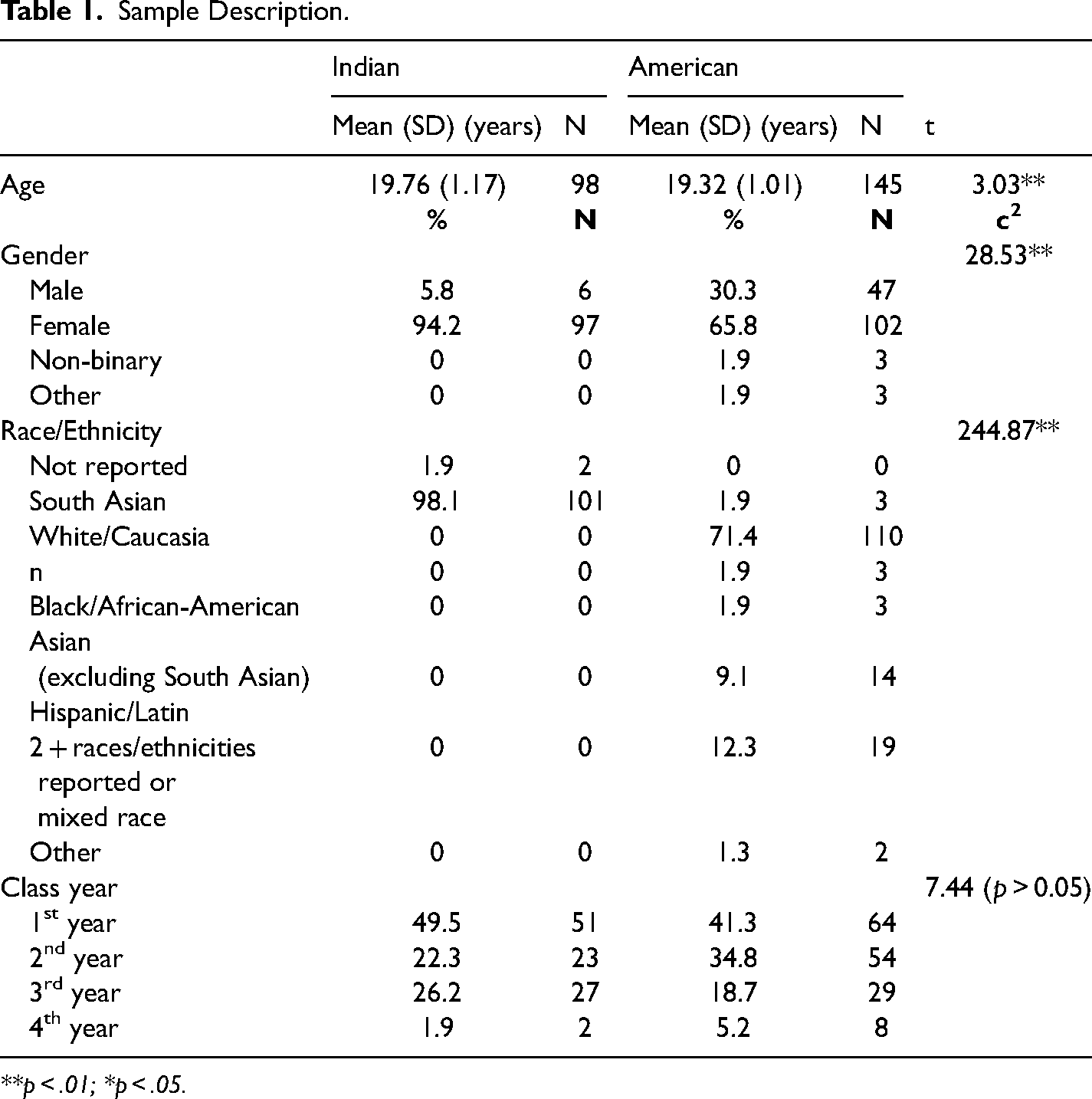
There were 155 Connecticut College students from New London, Connecticut (M = 19.32 years, SD = 1.01, 102 women) and 103 Indian students (M = 19.76 years, SD = 1.17, 97 women) from 3 different universities in Kolkata with the majority of students coming from the University of Calcutta. American students received course credit or the payment of $10 for their participation in the study, while the Indian students did not. All measures were distributed online through the Qualtrics program. Americans reported ethnicity as South Asian (1.9%), African American (3%); European American or White (71.4%); Hispanic, Latino, or Latina (14%); Asian (excluding South Asian) (9.1%); mixed race (12.3%); and other (1.3%). All Indian participants belonged to the South-Asian race. More socio-demographic details of the two samples are provided in Table 1.
Sample Description.
**p < .01; *p < .05.
Measures
Self-Defining Memory Request and Rating Scales
To collect the two SDM, participants answered the self-defining memory request (Singer & Blagov, 2000) and used the same (1–5) scales for rating importance, current affect, and frequency as were employed in Wang and Singer (2021) and Jiang et al. (2023). All instructions and scales were back translated.
The Perceptions of Academic Stress (PAS)
The Perceptions of Academic Stress Scale was used to measure the perceived sources of academic stress in the participants’ high school experience (Bedewy & Gabriel, 2015). The scale consists of 18 items with three main components: the Academic Expectations subscale, the Workload and Examinations subscale, and the Academic Self-Perceptions subscale. The Academic Expectations subscale examined perceived stress related to students’ perceptions of their parents’ and teachers’ demands for their performance (four items; e.g., “The unrealistic expectations of my parents stressed me out”). The Workload and Examinations subscale captured students’ perceptions of how much effort in studying, completing assignments, and taking tests was required of them (eight items; e.g., “The size of the curriculum (workload) was excessive”). The Academic Self-Perceptions subscale reflected the students’ perceived sense of confidence and competence in completing their studies (six items; e.g., “Even when I passed my exams, I was worried about getting accepted to a college/ university”). Participants responded using Likert scales (1 = strongly disagree, 5 = strongly agree). Subscale 1, Academic Expectations had an internal consistency of .55 for the Indian sample and .47 for the American sample; Subscale 2, Workload and Examinations had an internal consistency of .61 for the Indian sample and .81 for the American sample; Subscale 3, Academic Self-Perceptions had an internal consistency of .69 for the Indian sample and .76 for the American sample.
Awareness of Narrative Identity Questionnaire
The Awareness of Narrative Identity Questionnaire (ANIQ, Hallford & Mellor, 2017) is a 20-item self-report scale consisting of 4 subscales that measure participants’ tendency to see their autobiographical memories as cohering into a unifying narrative, linked by temporal sequence, causal connections, and thematic similarities. It consists of five-item subscales for Awareness (e.g., “When I think over my life, I can observe how there is a story that tells me who I am.”), Temporal (e.g., “I have a good awareness of the sequence in which events and experiences in my life happened.”), Causal (e.g., “I can understand how experiences in my life have occurred, with one thing leading to another.”), and Thematic (e.g., “I can perceive common themes about who I am across memories of my life.”). Hallford and Mellor reported internal consistencies for the four scales ranging from .86 to .96. In the current study, Cronbach Alphas ranged from .76 to .95 across the two samples.
Demographics
Participants reported their age, gender, race, class year, and the type of high school they had attended. Gender and race/ethnicity were presented as open-ended prompts; they were then coded into discrete categories to generate percentages (see Table 1). The Indian sample was on average a little more than 4 months older than the American sample and almost exclusively female (94.2%, compared to a slightly more balanced, but also skewed female American sample (65.8%).
Procedure
Sample Recruitment and Mode of Data Collection
Given that this was the first systematic study of SDM in a sample of Indian college students that directly compared them to a group of American college students, we faced and overcame a certain number of initial challenges. A memorandum of understanding (MOU) was required from the two academic institutions (University of Calcutta and Connecticut College), measures were back translated from English to Bengali and back again, and administration of the study protocol took place during the Covid-19 pandemic, necessitating all online participation.
These challenges meant that the means of administration were not precisely similar in the two countries. The Indian university students were recruited via the Heads of the Department of Psychology at the respective colleges and universities, after an official letter of request for participation of the students in the research was sent to the principals of the colleges, from the Department of Psychology, University of Calcutta. Most of the Indian participants were enrolled in the undergraduate courses in colleges affiliated to the University of Calcutta, a public state university, while a smaller proportion of them were enrolled in private universities in Kolkata. Following the COVID-19 regulations by the Government of West Bengal, India, as classes in most of the Indian educational institutions were still conducted virtually during the period of data collection (February 2022 - April 2022), the Indian participants took the survey online. One of the co-authors, Ghose U., hosted virtual meetings with small groups of participants (10–12), whereby she shared the survey link with them. The participants anonymized themselves by changing their visible names in the meeting to initials, had no display pictures, and kept their video off throughout the meeting. This procedure was undertaken to make the data collection process as close to a face-to-face process as possible.
Students in the United States were initially recruited through notices posted on an electronic site for students seeking academic credit for research participation in Introductory Psychology courses. Although some initial efforts were made to match this process in the United States, ultimately data collection was achieved through sending the study link to individual participants. Students filled out the study online in Zoom sessions similar to the Indian sessions or online individually on their own time after receiving an email with instructions and link. Another contrast was that Indian participants took the survey as part of their course as psychology students, while American participants received either academic credit for Introductory Psychology courses or payment. Due to this difference, not all of the American participants were necessarily majoring or intending to major in psychology. Those students receiving payment were recruited by posts on social media and physical posters placed in the campus post office and student center.
Order of Questionnaires
After signing the informed consent form at the beginning, participants in both countries filled out the same battery of questionnaires in the online survey format using Qualtrics mini program questionnaires in the following order: SDM Request, Memory Rating Scales
Manual for Coding Events in Self-Defining Memories (McLean & Thorne, 2001)
According to McLean and Thorne (2001), SDMs were coded for six types of events: Life threatening events (LTE, e.g., “My mother went through cancer when I was just 11”), recreation /exploration (e.g., “I took a high-speed train trip with my parents during the summer vacation”), relationship (e.g., “I remember the very first time my dad cried”), achievement (e.g., “I won the state championship in soccer my junior year of high school”), guilt/shame (e.g., “The transcript sent by the teacher in the evening proved that it was the worst ranking since I started high school and I did not want to show my parents”), and drug, alcohol, or tobacco use (e.g., “I went out drinking with my friends”). In addition to these categories, we employed an Academic Stress category (a memory that placed events as primarily taking place in or concerning a school setting or theme, highlighing academic concerns with a particular focus on examinations, teacher evaluations, and grades). This latter category was drawn from the previous research of Wang and Singer (2021) and Jiang et al. (2023).
Each Indian memory was scored by the second author, Conner, J., and then by an independent Indian rater. Each American memory was also scored by the second author and then by three independent American raters. In the beginning, all four American raters scored 240 practice memories for training and achieved a 78% inter-rater agreement. Based on these ratings, the most consistent rater (the second author, matching the research supervisor, co-author, Singer, J. at a rate of 95%) was paired with an Indian graduate student rater to code the Indian memories. After training on 100 memories, the second author and the Indian rater then coded all of the Indian memories and achieved an inter-rater agreement of 97.05%, kappa = .96. All discrepancies were discussed and resolved.
Statistical Analyses
We conducted the statistical analyses to answer our research questions in several steps.
First of all, to test compare the frequency of themes reflected in the SDM recollections of the Indian and American students, we conducted a Chi-Square Test. We also computed Cramer's v to determine the corresponding effect size.
In a second step, we conducted t-tests to compare the different aspects of the recalled SDMs, including frequency of recall, importance of memory, memory affect, and age of memory, in the two samples. We further computed the correlation coefficients (Pearson's r) between each of these different aspects, separately for Indian and American students, and tested for statistical significance in the difference in correlation coefficients between the two samples using Fisher's z test.
Similarly, in a third step, we conducted t-tests to compare the different subdomains of perceived academic stress and narrative identity in the two samples. We further computed the correlation coefficients (Pearson's r) between the different aspects of SDMs and the subdomains of narrative identity, separately for Indian and American students, and tested for statistical significance in the difference in correlation coefficients between the two samples using Fisher's z test.
Finally, we regressed the aspects of SDMs on the subdomains of narrative identity using multiple linear regression models.
Results
Comparison of Memory Contents in the Two Samples
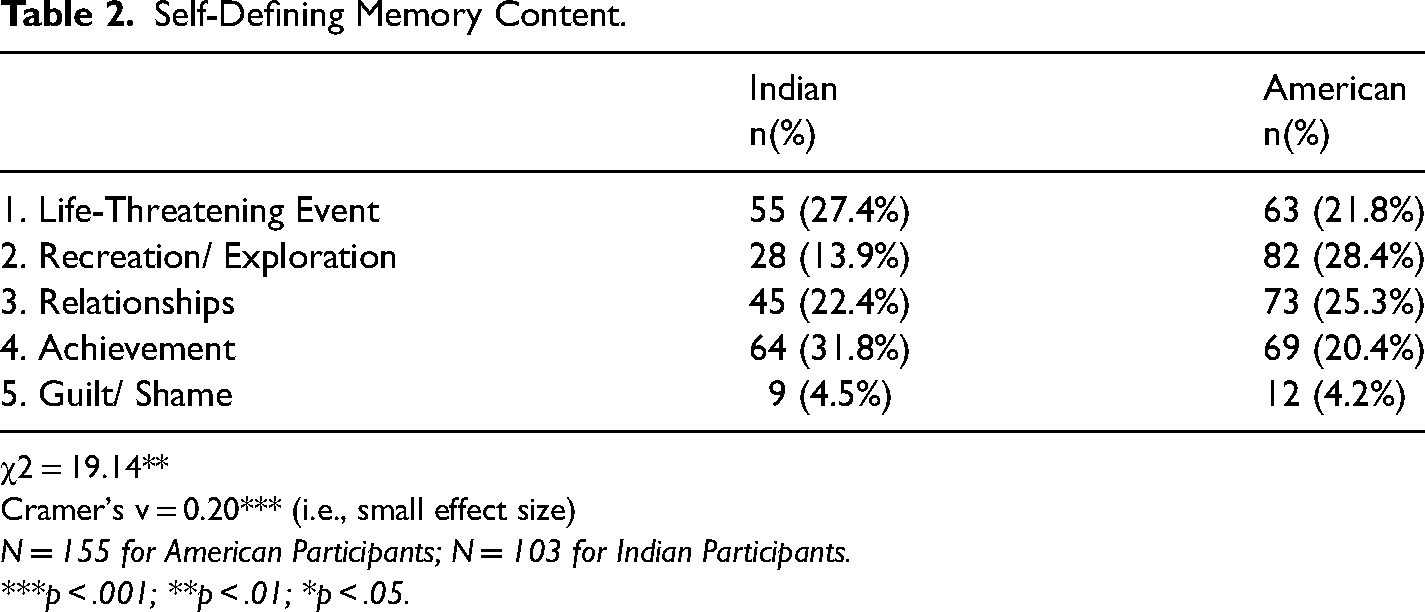
The themes reflected in the SDM recollections of the students varied significantly between the two samples, χ2 (1) = 19.14, p < 0.01, with a small effect size (Cramer's v = .20) (see Table 2). Indian college students reported 39/210 (18.57%) SDMs related to academic stress compared to only 10/292 (3.42%) from the American students, χ2 (1) = 31.82, p < 0.001, with a small effect size (Cramer's v = .25). This finding was highly similar to our previous comparisons of Chinese college students to American college students (23.44% vs. 3.16% in Jiang et al., 2023, and 23.3% vs. 3.3% in Wang & Singer, 2021). When we broadened our lens to look at achievement in general, the two samples looked more similar (31.8% for the Indian, 20.4% for the American), but when we broke this category into academic vs. non-academic achievement, we saw again the difference in the two samples (60.94% for the Indian sample vs. 20.83% for the American, χ2 (1) = 24.17, p < 0.001, with a medium effect size (Cramer's v = .45). Given the Jiang et al. (2023) finding that Chinese students were more prone to provide redemptive endings to their academic achievement memories, we looked at this possible difference in the Indian vs. American samples. For the Indian students 26/42 (61.9%) of their academic achievement memories were redemption-themed, while for American students, only 5/14 (35.71%) ended in a redemptive framing, (χ2 = 1.95, p = 0.16, Cramer's v = 0.23).
Self-Defining Memory Content.
χ2 = 19.14**
Cramer's v = 0.20*** (i.e., small effect size)
N = 155 for American Participants; N = 103 for Indian Participants.
***p < .001; **p < .01; *p < .05.
Replicating a previous finding from Jiang et al. (2023) regarding the preponderance of athletic memories in the U.S. sample, we found that American students reported 30 (10.3%) related to sports compared to only 5 (2.4%) in the Indian sample, χ2 (1) = 10.55, p < 0.01 (Cramer's v = .15). In general, American college students recalled a higher percentage of SDMs related to Recreation/Identity Exploration than their Indian counterparts (28.4% vs. 13.9%, χ2 (1) = 14.68, p < 0.001 (Cramer's v = .18)). The percentage of guilt/shame memories was similar for the Indian (4.5%) and the American (4.2%) samples.
Comparison of Memory Affect, Importance, Frequency and Age of Memory in the Two Samples
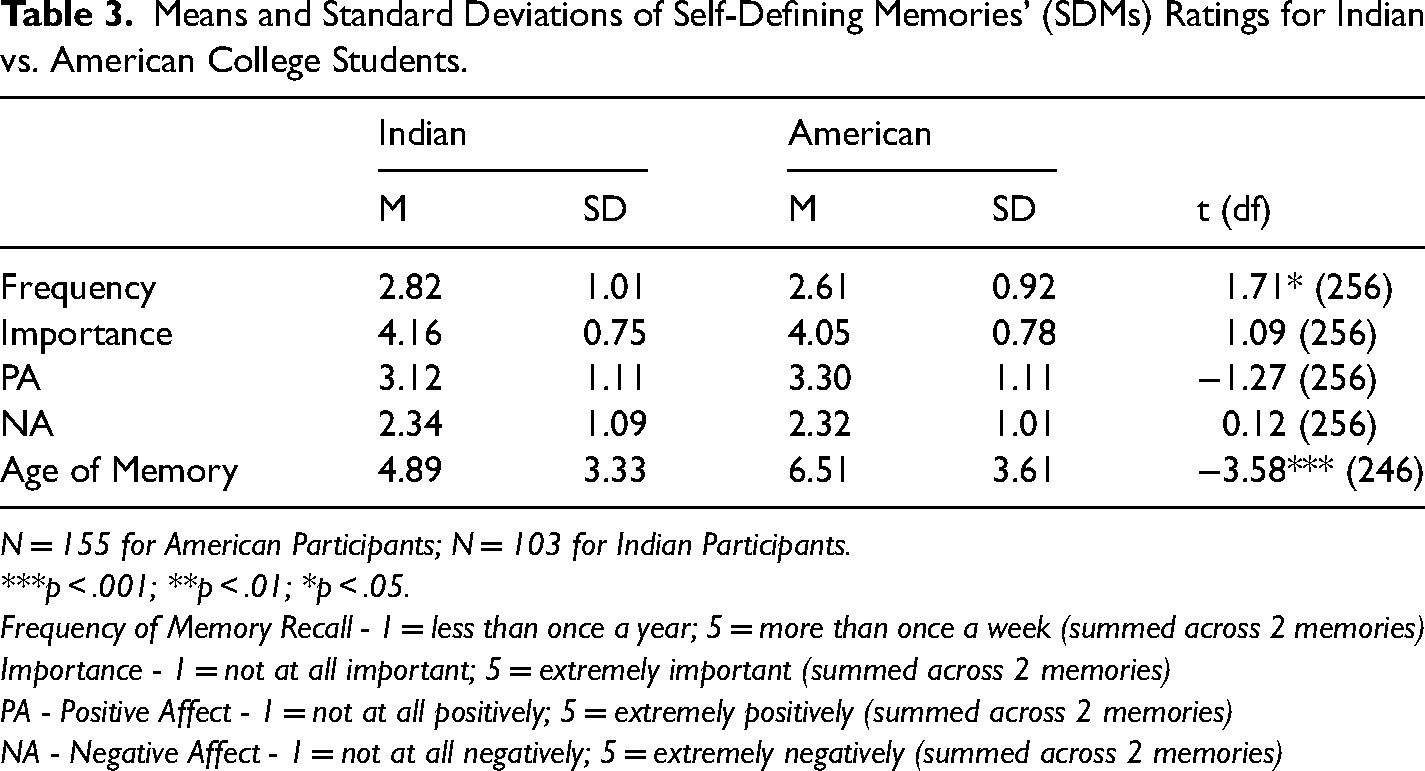
There were no significant differences in memory importance and negative affect for the Indian vs. the American sample (see Table 3). Both samples reported SDMs of overall high importance and emotional intensity. There was no significant difference in positive memory affect between the two samples. Indian college students did show a small significant difference in how frequently they thought about their SDM (2.82 - indicating close to once a month vs. 2.61 for the American sample). There was also a significant difference in the age of the memory with American participants recalling slightly older memories (6.51 years ago) vs. the Indian sample (4.89).
Means and Standard Deviations of Self-Defining Memories’ (SDMs) Ratings for Indian vs. American College Students.
N = 155 for American Participants; N = 103 for Indian Participants.
***p < .001; **p < .01; *p < .05.
Frequency of Memory Recall - 1 = less than once a year; 5 = more than once a week (summed across 2 memories)
Importance - 1 = not at all important; 5 = extremely important (summed across 2 memories)
PA - Positive Affect - 1 = not at all positively; 5 = extremely positively (summed across 2 memories)
NA - Negative Affect - 1 = not at all negatively; 5 = extremely negatively (summed across 2 memories)
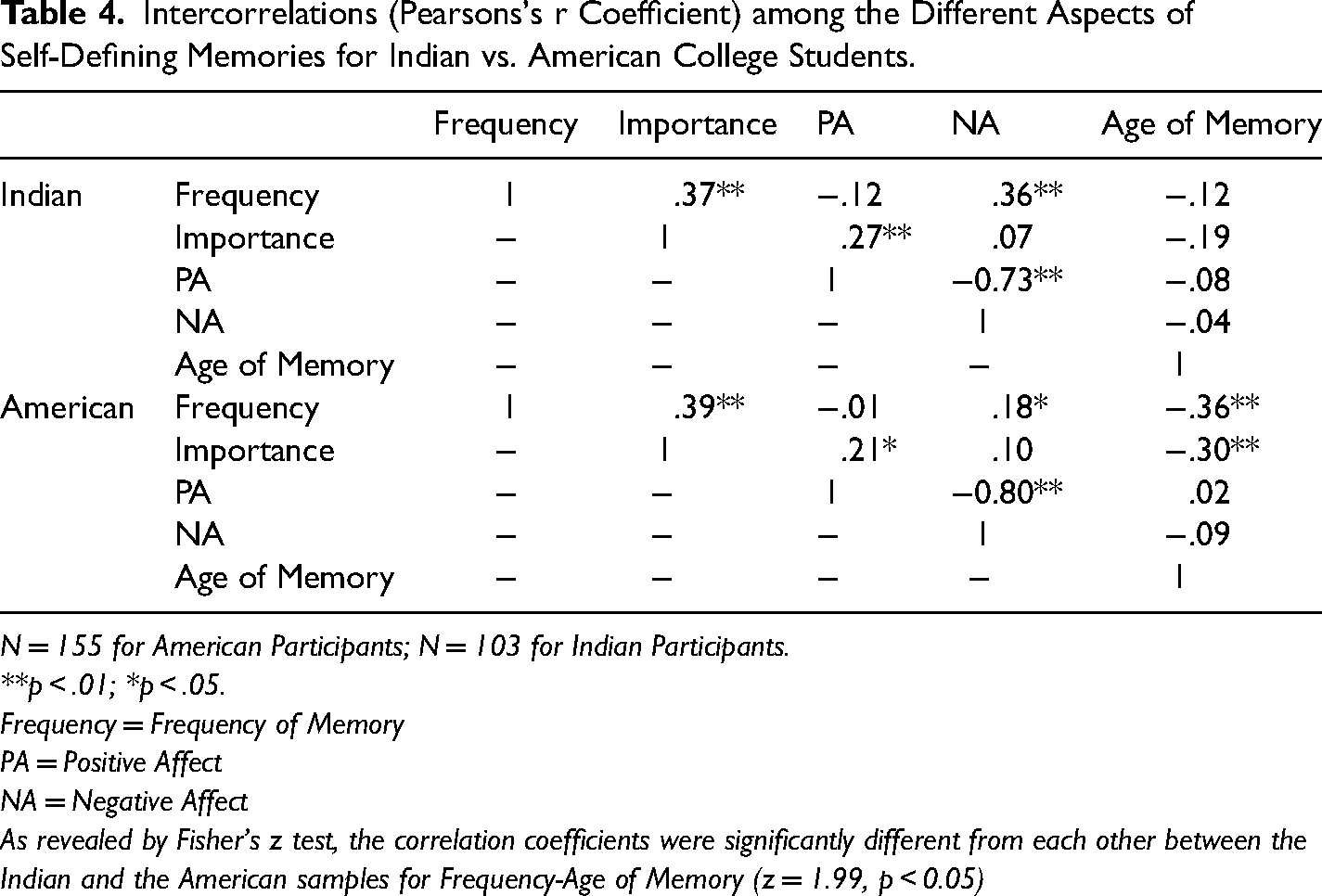
Turning to the intercorrelations of the SDM ratings for the two samples (see Table 4), both samples significantly recalled more important memories and more negative memories more frequently; however, they attached greater importance to more positive memories. The American students also thought less frequently about and attached less importance to their older memories (−.36 and −.30, respectively), while such trends of associations were not observed in their Indian counterparts. However, testing for significant differences in the correlation coefficients between the two samples revealed that the Indian and the American students significantly differed from each other only with respect to the association between frequency of recall and age of the memories. This finding indicates that the American students were significantly likely to frequently recall more recent memories, while there was no clear trend for their Indian counterparts.
Intercorrelations (Pearsons's r Coefficient) among the Different Aspects of Self-Defining Memories for Indian vs. American College Students.
N = 155 for American Participants; N = 103 for Indian Participants.
**p < .01; *p < .05.
Frequency = Frequency of Memory
PA = Positive Affect
NA = Negative Affect
As revealed by Fisher's z test, the correlation coefficients were significantly different from each other between the Indian and the American samples for Frequency-Age of Memory (z = 1.99, p < 0.05)
Comparison of Perceived Academic Stress in the Two Samples
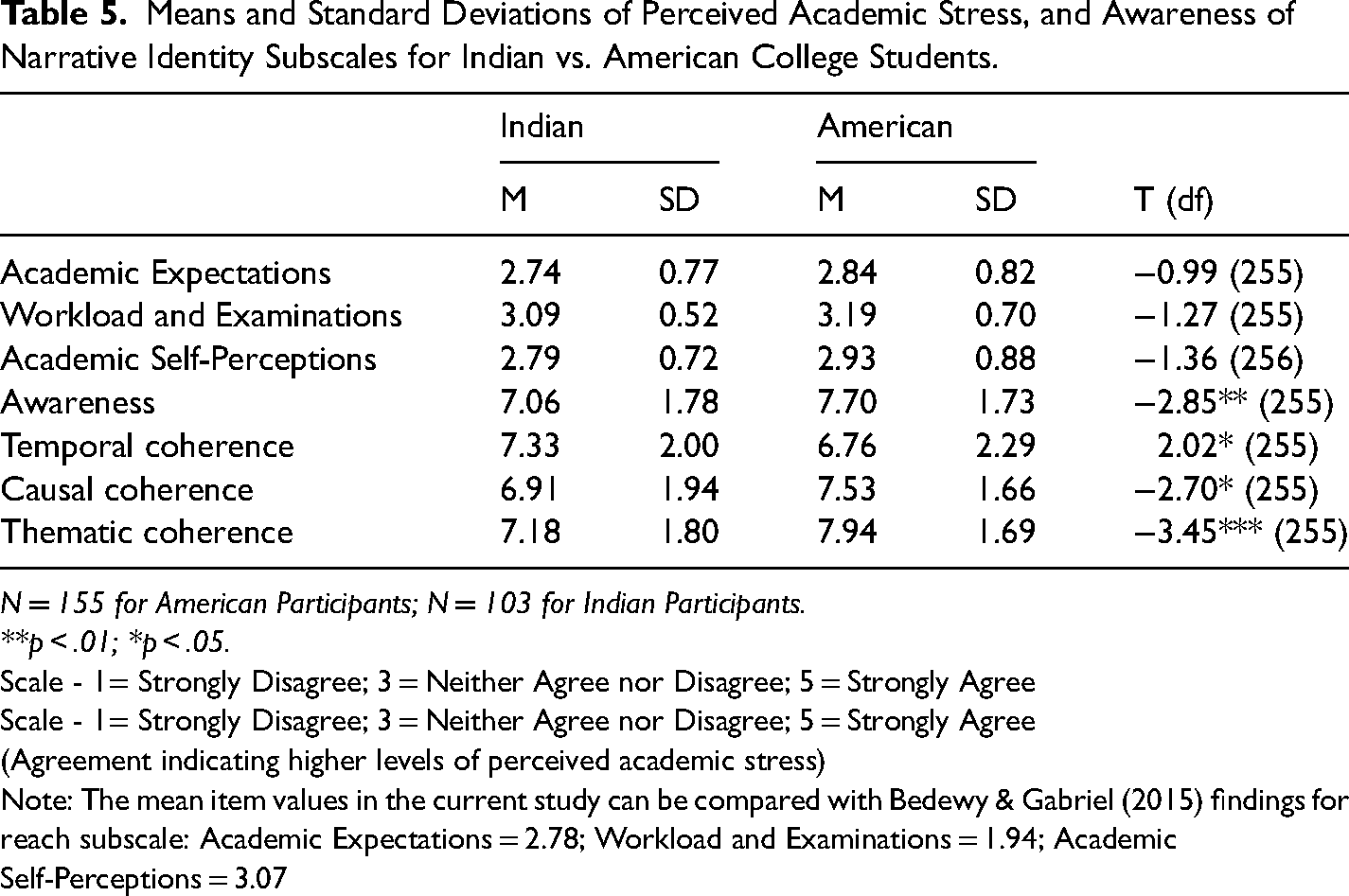
Table 5 displays the subscale means for the two samples on Perceived Academic Stress as reflected in their high school experience. The subscale scores for both samples do not indicate particularly high levels of reported stress, and fall within similar levels to those reported by Bedewy and Gabriel (2015, see Table 5).
Means and Standard Deviations of Perceived Academic Stress, and Awareness of Narrative Identity Subscales for Indian vs. American College Students.
N = 155 for American Participants; N = 103 for Indian Participants.
**p < .01; *p < .05.
Scale - 1= Strongly Disagree; 3 = Neither Agree nor Disagree; 5 = Strongly Agree
Scale - 1= Strongly Disagree; 3 = Neither Agree nor Disagree; 5 = Strongly Agree
(Agreement indicating higher levels of perceived academic stress)
Note: The mean item values in the current study can be compared with Bedewy & Gabriel (2015) findings for reach subscale: Academic Expectations = 2.78; Workload and Examinations = 1.94; Academic Self-Perceptions = 3.07
Comparison of Awareness of Narrative Identity in the Two Samples
The American college students displayed a significantly higher awareness of narrative identity, both in the overall measure, and in both causal and thematic coherence (see Table 5). These findings indicate that they were more likely to organize the events in their lives into an internal ongoing story that both linked the events in a meaningful way and highlighted overall life themes. On the other hand, the Indian sample was more likely to see the temporal connections that locate their life events along a coherent timeline.
Correlations among SDM Ratings and Narrative Identity
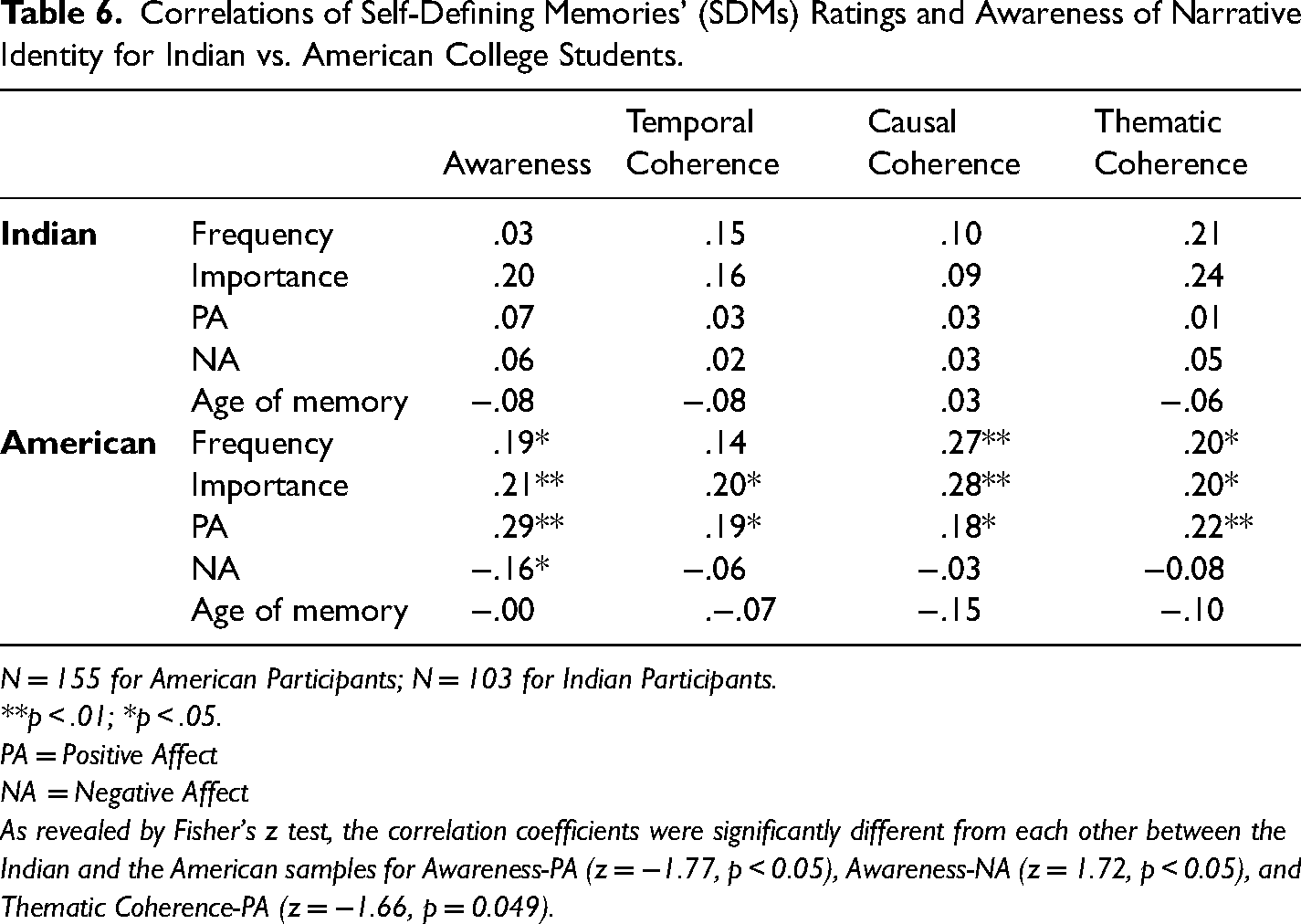
Table 6 displays the two samples’ correlations of the SDM ratings with the ANIQ subscales. There were no significant correlations in the Indian sample, but several positive correlations between the SDM ratings and the ANIQ subscales emerged in the American sample (see Table 6). Testing for significant differences in the correlation coefficients between the two samples, however, revealed that the Indian and the American students significantly differed from each other with respect to the association of narrative awareness with positive and negative affect, and that of thematic coherence with positive affect. This difference between the two samples suggests a positivity bias in the way that the American students think about and interpret their life story narratives.
Correlations of Self-Defining Memories’ (SDMs) Ratings and Awareness of Narrative Identity for Indian vs. American College Students.
N = 155 for American Participants; N = 103 for Indian Participants.
**p < .01; *p < .05.
PA = Positive Affect
NA = Negative Affect
As revealed by Fisher's z test, the correlation coefficients were significantly different from each other between the Indian and the American samples for Awareness-PA (z = −1.77, p < 0.05), Awareness-NA (z = 1.72, p < 0.05), and Thematic Coherence-PA (z = −1.66, p = 0.049).
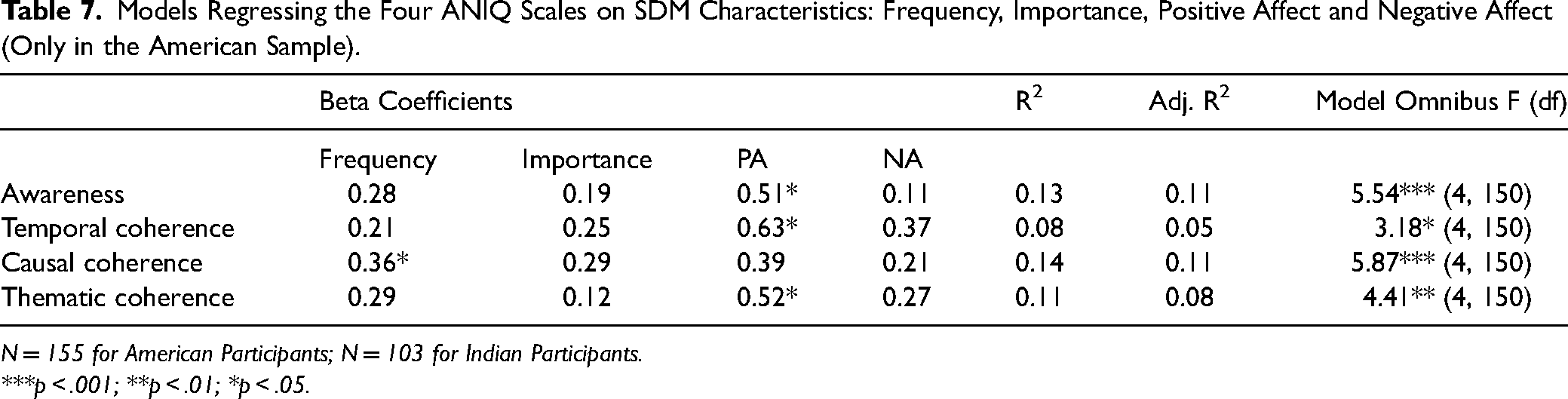
Given these significant correlations in the American sample, we regressed Frequency, Importance, Positive Affect and Negative Affect on each of the four ANIQ subscales, only using the American data. As Table 7 reflects, positive affect was the most consistent predictor of narrative awareness and coherence across the four subscales, replicating previous findings in the literature of the relationship between a strong coherent narrative identity and well-being (Hallford & Mellor, 2017).
Models Regressing the Four ANIQ Scales on SDM Characteristics: Frequency, Importance, Positive Affect and Negative Affect (Only in the American Sample).
N = 155 for American Participants; N = 103 for Indian Participants.
***p < .001; **p < .01; *p < .05.
Discussion
The present study builds on previous research by demonstrating that Indian college students are more likely than their American counterparts to emphasize high school academic achievement and its associated stress in their SDM. With regard to our efforts to extend our previous findings with Chinese undergraduates to a sample of Indian undergraduate students, we were particularly interested in examining how the pressure of a single examination (which is common to both cultures) might play a role in these Indian young adults’ SDM of their developmental experiences prior to college.
Despite the open-ended nature of the self-defining memory request, a notable proportion of Indian students recalled experiences centered around academic stress, suggesting that such experiences play a significant role in their identity formation. Interestingly, although the Indian participants did not report higher academic stress vs. the American sample on the Perceived Academic Stress subscales in relation to their high school experience, they were more likely to consider these experiences as integral to their sense of self. This trend aligns with previous research on Chinese students, where academic stress is also a prominent theme despite being not reported in self-report surveys (Jiang et al., 2023; Wang & Singer, 2021). Such patterns suggest that academic stress may be internalized in ways that are not fully captured by self-report surveys, reinforcing the idea that autobiographical memory measures provide valuable insights into identity formation.
While both Indian and Chinese students frequently emphasized academic stress in their SDM, there were notable differences in how these memories were framed. Unlike the Chinese students in earlier studies, Indian participants were less likely to associate their SDMs with feelings of guilt or shame in relation to authority figures such as parents or teachers. While themes related to guilt or shame were comparable in the Indian and American samples of the current study, these themes were more common in the SDMs of the Chinese students in comparison to their American peers (Jiang et al., 2023; Wang & Singer, 2021). This suggests that the social and cultural dynamics surrounding academic pressure may differ between these groups, influencing how stress is internalized and narrated.
However, similar to the Chinese students in earlier studies, the Indian students often structured their academic stress memories with a redemptive ending, framing their struggles as ultimately leading to growth or success. This pattern was significantly more common than in the American sample, further highlighting cultural differences in how academic challenges are integrated into personal narratives. Here is a particularly illustrative example of their redemptive approach, In my 9th grade, my mom was having some mental health problems, so my grades in school, specifically in maths, got really low, so my teachers started harassing me cause I was a straight A student and they thought that maybe I was getting into a bad influence, but they didn't try to understand that it was because of my problems at home, so I started feeling really miserable. So I changed schools, and then over 2 years, I really improved my grades and did a lot of extracurricular activities, and in 11th standard, I went back to my previous school, and everyone, including my peers, were really surprised to see my improvement. So I understood that I should do my best every time and surprise everyone with my success.
Although both the Indian and American samples did attach greater importance to more positive affect memories, the Indian sample did not recall significantly more positive affect memories, which differed from the previous findings obtained from the Chinese samples (Jiang et al., 2023; Wang & Singer, 2021). Also, in contrast to the previous studies, the Indian sample, similar to the American samples in the present study and Jiang et al. (2023), indicated a positive association between frequency of memory recall and memories of greater negative affect.
In general, these results regarding academic stress memories do suggest that the Indian sample showed a wider range of affective response and expression. They were less inclined to frame them in a teacher/parent expectation framework and appeared more open to recalling and thinking about their more negative memories in comparison to their Chinese counterparts. Additionally, the American sample showed an inclination to positivity in their reflection about their life story narratives, as indicated by Awareness of Narrative Identity Questionnaire, which was not evidenced in the Indian sample.
Once again, as in the previous studies, we should clarify that the American sample did not show a dearth of achievement-oriented themes in their memories (20.4%). However, they were much more likely to focus on athletic accomplishments and activities, providing 3 times as many sports-oriented memories than the Indian sample. However, the biggest difference in the McLean and Thorne SDM content categories between the American and Indian sample was in the number of Recreation/Identity Exploration memories, with the percentage in the American sample more than double that of the Indian participants.
In examining these memories, it suggests a greater focus on leisure activities, unstructured time, and opportunities for self-exploration and travel in the American sample. One plausible explanation for this difference may be potential differences in the economic status of the two samples. Connecticut College, as a highly expensive private liberal arts college, on average, draws a more affluent student body than the University of Calcutta, and it is possible that the American participants have more discretionary time at their disposal, as well as more freedom to explore personal passions. Similarly, the greater emphasis on athletic themes in the American memories may reflect that in a typical private liberal arts college approximately 30% of the students are engaged in intercollegiate athletics, and this number becomes a much higher percentage when one includes intramural and club sports. This trend further corroborates previous research demonstrating the high importance placed on American institutionalized sports nationalism (Knoester & Davis, 2022).
On the other hand, research on Indian and Canadian students has shown disparities in access to sports and physical activities based on students’ socio-economic backgrounds (Rajaraman et al., 2015). Furthermore, in India, students from lower-income families often have limited leisure time to engage in such activities, further widening the gap between them and their more advantaged peers (Brandolini, 2016). Moreover, self-worth in Indian students is mostly determined by academic performance (Varma, 1998). Our observation in the current sample that SDMs were more representative of academic stress in the Indian students than in the American students further testifies to this growing concern about academic stress in the Indian context.
Further, notably, Indian students recalled more recent memories than the American students. This finding suggests that the events most relevant to the current identities of Indian students occurred during the final years of high school, a phase in life characterized by larger academic workload as well as important exams, whereas those of their American peers were spread out for a much larger span of time.
Overall, the current findings highlight cross-cultural differences in how academic experiences shape self-concept. While American students were significantly less likely to define themselves through academic stress, both Indian and Chinese students showed a stronger tendency to do so, though with some variation in how they articulated and internalized these experiences. These results underscore the importance of considering cultural contexts when examining identity development and suggest that autobiographical memory methods can reveal nuanced aspects of self-construction that may not be evident through traditional survey approaches.
The present study included an exploratory inquiry into potential differences in awareness and coherence of narrative identity between the two samples. According to Hallford and Mellor (2017), higher scores on the subscales of the ANIQ are linked to greater levels of well-being and meaning-making. The American sample rated themselves significantly higher on awareness, causal coherence, and thematic coherence, while the Indian sample showed a greater tendency to organize life experiences according to temporal sequence. It is not clear why the Americans reported higher ratings on the three out of four subscales. It is possible that the liberal arts curriculum at Connecticut College, which is called Connections, places a particular emphasis on self-generated questions that are meant to lead to sustained inquiry over the course of their undergraduate education. Students are encouraged to reflect on their long-standing organic interests and how they may lead to integrative projects over their college careers. Further support for this possibility is that the strongest predictor across the 4 ANIQ subscales was positive memory affect, suggesting that individuals with more positive responses to their SDM were more likely to see the unifying connections in their life stories and narrative identity. Turner et al. (2024) has demonstrated that the act of generating one's life story leads to an overall feeling of more positive affect and meaning. The ability to uncover different cohering factors in one's sense of self is meant to be one of the rewarding and positive outcomes of a liberal arts education at a small American college. Certainly, much additional sampling of participants varying in economic level, age, and field of study is needed to determine what might be driving differences between Indian and U.S. college students on the ANIQ subscales.
Study Limitations and Future Directions
As already mentioned in the Methods section, our study sample suffers from certain major limitations, including most of the participants representing undergraduate students majoring in Psychology and the differences in data collection procedures across the two samples. In future studies on college students, it would be valuable to draw samples across a wide variety of academic disciplines as well as from public universities. In the Indian scenario, the different facets of academic stress vary across different disciplines, such as humanities, STEM, and management, both in high school and college levels (Banu et al., 2015; Duhan, 2020; Reddy et al., 2018). Therefore, future research should also look into how the varied academic experiences are embedded in the SDMs across students of different disciplines.
Another major difference in the sample characteristics of the countries was in the self-assigned gender ratios. Indian participants were 94.2% female-identified, while 65.8% of the American sample designated themselves as female. Over the many years of SDM studies in American college students, there are typically no significant differences in male vs. female participants. However, previous studies have reported higher levels of both general as well as examination-related anxiety in female Indian high school students in comparison to their male peers (Deb et al., 2010, 2015). Given these previously reported gender differences and the current study being the first of its kind that includes Indian participants, we should be particularly cautious about generalizing too quickly from this skewed sample. Specifically, our current results would best be extrapolated to young adult Indian females, while caution should be exercised in extending them to young adult Indian males. We suggest that future research should use a more gender-balanced and gender-inclusive sample, as well expand the diversity of ethnic and racial backgrounds, to ensure greater generalizability of the findings.
Another significant concern is that we did not make any explicit attempt to determine the income levels of the students engaged in the study. Although Connecticut College draws on a large number of upper middle-class students, it also has more than 60% of its students on some form of need-based financial aid. Nevertheless, it is reasonable to assume that on average the Connecticut College participants were from higher income households with a higher standard of living than the students attending an Indian public institution like the University of Calcutta, who constituted a major proportion of the Indian participants. These economic disparities likely contribute to cross-cultural differences in attitudes toward academics. In India, for instance, students navigate a highly competitive and stressful education system, where high-stakes examinations are pivotal in determining social and economic mobility (Baily & Sodhi, 2019). In contrast, the American education system, which does not place such focused emphasis on a single examination outcome, may foster a very different exploratory and more liberal perspective on education among its students.
Regarding the reception by the Indian college students of the self-defining memory task, we were pleased to see that the vast majority of memories provided by this sample were detailed, meaningful, and emotionally powerful. Similarly, their ratings of the SDMs’ importance, emotional valence and intensity, and their frequency of thought about the memories were all in line with previous research and reinforced the validity of the memory portion of the study.
Having now used the Perceived Academic Stress measure in the Jiang et al. (2023) and the current study, we think it might be valuable to explore other measures of self-reported academic stress along with or in place of this measure. The internal reliability of the subscales, particularly for the Indian sample, was not very strong. Further, given what other studies have found regarding the academic stress that accumulates for Chinese and Indian high school students, we continue to wonder why we do not see more elevated scores on this measure. One possibility is that we are asking the students to make retrospective judgments of their high school experiences rather than reflect on current academic stress. Another possibility is that we are sampling students who, despite the pressures of their high school experiences, were successful in securing positions at strong universities in their countries. In classic social psychological terms, there may be a “justification of effort” effect that causes them to downplay some of the negative experiences they endured (yet clearly for some, these experiences are stored in their autobiographical memories that they consider central to their identity). In any event, our failure to attain higher reliabilities (across two separate studies) for our use of the measure to gauge retrospective judgments of perceived academic stress in high school clouds any definitive conclusions about its findings and does indeed indicate a need to employ a different self-report measure going forward.
Finally, the Awareness of Narrative Inquiry is an extremely new measure and we consider our findings on differences between the American and Indian samples as preliminary, requiring much more sampling across diverse populations and larger numbers before we can draw any definitive conclusions about differences in college students’ inclinations to organize their memories into life story narratives. However, its strong relationship to positive affect in the American sample supported the previous findings of Hallford and Mellor (2017), suggesting that further study of this measure would be a fruitful line of inquiry.
In conclusion, this first study of SDMs in Indian and American college students focused on extending earlier findings of differences in Chinese and American college students’ experiences of academic stress in high school. The preliminary findings in the present study suggest that a pattern of connecting high school academic stress to self-definition was also more prominent in Indian participants than American students, similar to the pattern observed for Chinese students previously. Future research might expand these investigations to larger samples, more balanced in gender identification and more varied in collegiate academic pursuits. Additionally, measures that directly look at the relationship of these academic stress memories to possible sources of ongoing anxiety, depression, and physical complaints would help to clarify the impact of these memories in these young adults.
Footnotes
Acknowledgements
We would like to acknowledge Souparni Dutta, Katie Madow, Kevin O’Neal, Sebastian Parilov, and Alek Sinon for their contributions as raters of memory content; and Joshua Moylan for his contribution to data collection.
Data Availability Statement
SPSS files with the data are available upon request from the first author.
Declaration of Conflicting Interests
The authors declared no potential conflicts of interest with respect to the research, authorship, and/or publication of this article.
Funding
The authors received no financial support for the research, authorship, and/or publication of this article.
Ethical Approval and Informed Consent Statements
The research was approved by the Ethical Clearance Committee of the University of Calcutta and the Connecticut College IRB review. Participants in both countries digitally signed the informed consent form at the beginning taking the survey.
