




Abstract
Previous research has focused on how the personality of miniature wargame players differ compared to players of other games and how personality is linked to motivations for engaging with the hobby, however, there is no research exploring how personality can be expressed within the game itself. This study explores connections between player personality traits and faction choice to better understand how different aspects of personality are linked to individuals’ gaming preferences and practices. The Ten Item Personality Inventory (TIPI) was administered to 706 self-selected respondents (97.3% male) who also disclosed their first and most beloved faction in the game Warhammer Fantasy Battle. Results suggest that the personality trait conscientiousness is associated with the choice of first faction, showing significant differences between players, with small to medium effect sizes observed between players of different factions. Results are discussed in light of previous research, along with practical implications and possible future research directions.
Keywords
Introduction
Miniature wargames (also ‘wargames’ later in the article) are a subset of tabletop games that are played between two or more players using miniature models, terrain, and dice. They have their roots in strategic historical wargames such as Little Wars (Wells, 1913) and in fantasy role-playing games like Dungeons and Dragons (Gygax & Arneson, 1974). Despite being an established part of the gaming landscape, miniature gaming has received limited academic interest (see Meriläinen et al., 2020).
Individuals play wargames and collect and craft models for them for a variety of reasons. Wargames offer a broad range of different ways of engaging with the hobby, such as gaming, crafting, and socialising (Meriläinen et al., 2020). Overall, there has been limited study on personality factors pertaining to wargame play, however, personality appears to be a relevant factor for playing these games. A study by Körner et al. (2021) showed that wargame players tend to be more open, non-authoritarian, and extroverted when compared to non-gamers, similar to the findings by Lorenz et al. (2022) regarding tabletop role-playing game players. Personality traits have also been shown to be associated with people's motivations for playing wargames, with extroverted individuals playing wargames in order to socialise with others, while individuals with high neuroticism seem to play in order to escape reality. Story-driven individuals, on the other hand, have been shown to be more open and agreeable (Körner & Schütz, 2021).
The wargame Warhammer Fantasy Battle (WHFB) is the chosen setting for this study. The first edition of WHFB was released by British gaming company Games Workshop in 1983 (Ansell et al., 1983). The game enjoyed eight editions before it was discontinued in 2015. A major game cultural influence, WHFB inspired multiple other games, such as the popular real-time strategy and online role-playing video game franchise Warcraft (Blizzard Entertainment, 1994–) as well as Games Workshop's most popular game Warhammer 40,000 (first edition 1987), a science fiction version of Warhammer which has since eclipsed it in popularity. Even during the game's discontinuation, the fanbase for the game remained strong, prompting the release of a new edition in 2024 as Warhammer: The Old World.
Faction selection, i.e., what army or team a player elects to collect and play, is a crucial part of the wargame hobby. It directly influences which models the player purchases and paints, the strategies they use, and the game fiction they consume. A faction can also serve as a player label in game-related social situations: in addition to their factual value, a statement like “I play High Elves” may carry implications of the player's preferences in terms of playstyle, fiction, and aesthetics. Despite this importance there has been no research done on the differences in personality within wargame players with regards to which faction or factions they choose when playing the game.
Faction choice is an important and previously unexplored area for research as it goes beyond motivations for playing the game, instead exploring how personality is expressed in and through the game itself. In addition to its aesthetic and rule-based components, wargame faction selection is also a choice of nationality, culture, and species. This is what makes WHFB such an interesting context for study. As the miniature wargaming hobby is an assemblage of gaming and material crafting practices closely intertwined with the fiction of the gameworld, the study of faction choices expands our understanding of this form of gaming as a vehicle of self-expression and identity work.
In this exploratory study drawing from data collected from a self-selected sample of miniature wargame players (N = 706), we examine personality traits that are connected to the choice of first faction in WHFB, whether there are differences in personality based on faction choice, and what implications this has for future research. As the topic had not been studied previously, we elected not to define specific research questions or hypotheses, in order to openly explore any significant observable differences in personality traits between players.
Background
Studies on personality traits and character choices have been done in other game settings, most notably in digital massive-multiplayer online role-playing games, where results show that personality traits seems to influence the choice of characters played in the game (Bean et al., 2016; Hodges & Buckley, 2018; Park & Henley, 2007; Yee, 2001; Yee et al., 2011). While some correlations were found between choices of class, race, and gender with player personality traits in (Park & Henley, 2007; Yee, 2001; Yee et al., 2011), there were also cases where the playstyle was inferred by personality traits, but other statistically significant correlations were not found (Bean & Groth-Marnat, 2016). Many of the aforementioned studies (e.g., Bean & Groth-Marnat, 2016; Bean et al., 2016; Lorenz et al., 2022; Park & Henley, 2007; Yee et al., 2011) based their analysis on the Big Five Model (McCrae & Costa, 1987), measuring openness to experience, emotional stability/neuroticism, extraversion, conscientiousness, and agreeableness.
Popular contexts for previous research have been in the context of massively multiplayer online role-playing games such as World of Warcraft (Bean & Groth-Marnat, 2016; Bean et al., 2016; Yee et al., 2011), and Everquest (Park & Henley, 2007; Yee, 2001), where the choices of the players regarding class, gender, race, and playstyle were in focus. High extraversion in World of Warcraft (WoW) players was found to correlate with a preference towards group activities in-game (Yee et al., 2011) and profiles of playing style (Extraversive, Introversive, Ambiversive) (Bean et al., 2016) and character type (Bean & Groth-Marnat, 2016), while conscientiousness was found to be connected to disciplinary activities in non-combat settings, such as collecting vanity items and sets (Yee et al., 2011). Previous studies on players of Everquest found significant correlations between player extraversion and character's charisma value in-game (Park & Henley, 2007). In the context of non-digital gaming, Lorenz et al. (2022) found that players of the Dungeons & Dragons tabletop role-playing game showed higher extraversion and openness to experience when compared to non-players. They also found significant correlations between player extraversion and character's charisma score, and noticed that agreeableness was correlated with a tendency to avoid deviant and morally questionable behaviors in the game.
Warhammer Fantasy Battle and its Setting and Factions
WHFB is set in a world called “The Old World” (or sometimes just the Warhammer World) where multiple different forces fight for power, survival and ideological and religious supremacy. Humans, elves, dwarfs, orcs and goblins, undead and daemons and stranger beings populate the Old World, and the games of WHFB played always echo these larger conflicts of the storyworld in some regard, either being recreations of fictional historical battles or original campaigns drafted by players (Timonen, 2021).
The Warhammer world bears a vague resemblance to our late medieval times that mankind shares with a variety of mythical and fantastic creatures, such as elves, orcs, and vampires. This creates a world with familiar elements to players and provides a narrative which plays an important role in the player choosing both their army and the models they will use (see Carter et al., 2014).
WHFB factions are detailed in game supplements, “army books”, written in a style which in addition to teaching the rules also teaches how the faction behaves and functions in terms of both strategy and fiction. These structures are there to inform players about each faction in the game, which then bleeds into the gameplay itself (Timonen, 2021). For each individual game session, a player builds a force using the rules in the army book, and taking into account various limitations, such as available miniatures, tactical issues, and elements in an opposing player's army and playstyle. These books are essentially just for the army rules, but as game texts are not opposites to media texts (see Booth, 2015), they can inform about the army's nature and playstyle from multiple points of view.
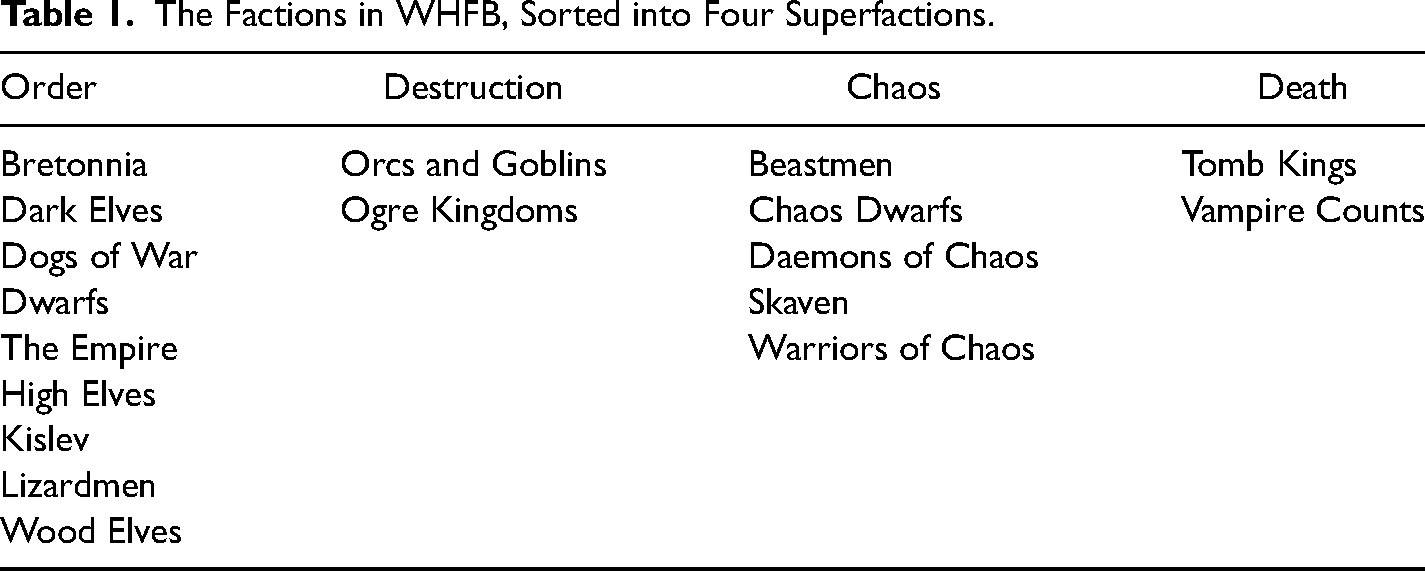
The factions in WHFB can be divided into four main superfactions. Order, Chaos, Death, and Destruction are currently used by Games Workshop for the game Warhammer: Age of Sigmar (first edition 2015), the narrative successor to WHFB. The fiction, aesthetic, and playstyle of each faction are intertwined. As it would be impractical to provide descriptions of each of the 18 individual armies (see Table 1), we present an overview of the four main superfactions used in our analysis, providing context for the reader when interpreting the results.
The Factions in WHFB, Sorted into Four Superfactions.
The armies of Order all resemble humanity aesthetically and culturally to some degree, with the different armies consisting of mostly humans, elves and dwarves. The armies of Order are overall considered the protagonists of the setting, living in cultured societies that are governed by some forms of rules and law. In general, armies of Order typically have a regimented and systematic playing style, with the different armies’ aesthetic being more clean and uniform.
Destruction armies, on the other hand, embody the primal instinct of anger and battle. The forces of Destruction, have a more brutal and animalistic aesthetic and feel, with a playing style that is subject to some degree of randomisation, high risk and high reward, and favours an aggressive playstyle. Despite these brutal associations, the overall feel of these armies leans towards dark comedy.
The armies of Chaos are twisted creatures of evil and domination, who represent an existential threat to the world itself. The majority of the armies in this faction are often formed from highly elite warriors, which can leave the army quite small. The armies of Chaos are also highly religious, with the armies worshipping dark deities set upon destroying the world and its inhabitants.
Armies of the Death faction represent undeath and life after death. These armies are typically controlled by a strong character, with the rest of the army mostly consisting of weak, mindless and expendable troops that are nevertheless immune to detrimental psychological effects set out in the game rules (e.g., “Panic” or “Fear”) and thus offer a fairly predictable playstyle. Consisting of units such as skeletons and zombies, Death faction armies heavily lean into the morbid and gothic in their aesthetic.
Material and Methods
This exploratory study investigates connections between the personality traits of the player and their choice of first army or faction in the game Warhammer Fantasy Battle, to provide an empirical basis for research questions to guide future, more in-depth research into the subject.
Participants and Data Collection
The data gathering was conducted over a period of two weeks in August 2021 via an anonymous online survey created in Google Forms. Four closed groups on the social media platform Facebook were used to recruit respondents. The majority of the responses were collected from the closed group ‘Warhammer The Old World’, created in 2019 and with over 40,000 members at the time of writing. Unfortunately the number of members was not recorded at the time of data collection. According to the group administrator, it is estimated that there were around 15,000 members at the time.
The initial sample size was 706. The data was quality checked and respondents who had answered only partially were excluded, resulting in a final sample size of 677 used for analysis. 97.3% (N = 659) of the respondents in the sample were male, 1.5% (N = 10) female and 1.2% (N = 8) chose to not disclose gender. No additional options beyond these three were given in relation to gender. Because of the high proportion of male players in other robust wargame player samples (e.g., >93% in Körner et al., 2021), responses from female participants were left in the sample as it was deemed to reflect the wargame community, which is heavily male dominated.
Measures
The questionnaire consisted of the TIPI (Ten-Item-Personality-Inventory) scale, as well as demographic questions on gender, age, and region. A shorter scale was chosen over a longer and more robust scale, in order to obtain a large, representative sample size. In addition to this, the respondents were asked to state their primary Warhammer faction out of 18 options. The formulation of the question (“Please select your first Warhammer Fantasy Battles army from below, the one that is closest to your heart”) acknowledges that most hobbyists have multiple armies from different factions: “first” did not mean the army first acquired, but instead the goal was to gain information on the army the respondent was the most emotionally invested in (“closest to the heart”). The setup was based on the assumption that the first army choice is most linked and influenced by personality. Elements from the game setting were introduced in the questionnaire to further increase respondent motivation in completing the survey. The questionnaire can be found in the Appendix.
Personality Traits
Personality traits were assessed using a measure based on the five-factor model of personality (Costa & McCrae, 2012; Digman, 1990) measuring the big 5 personality traits: neuroticism, extraversion, openness to experience, agreeableness, and conscientiousness. These five dimensions of personality are the fundamental building blocks of human personality (Costa & McCrae, 1992). We used the TIPI, as it has been shown to be an appropriate measure for determining personality traits according to the Big Five model and it has been validated in other studies showing strong correlation with longer personality trait measures (Hofmans et al., 2008; Romero et al., 2012), and more importantly, it has been previously used when studying the personality traits of MWG players (Körner & Schütz, 2021). Shorter scales are designed to measure very broad domains with very few items and therefore alphas can be misleading when assessing reliability and are often quite low (Kline, 2000; Woods & Hampson, 2005).
In order to test for the reliability of the TIPI scale, a unidimensional reliability test was performed. The TIPI scale contains 10 items, showing a Cronbach's alpha of 0.27–0.74 (E = 0.74, A = 0.27, C = 0.60, O = 0.38, ES = 0.68) with an overall level of internal consistency of 0.53. According to Taber (2018) this would suggest an acceptable level of reliability and the level of reliability coefficients are similar to previous studies using the TIPI scale, with reported levels of 0.50–0.55 (Gosling et al., 2003; Manoochehr et al., 2019; Romero et al., 2012). We examine the strengths and limitations of this approach at the end of our Discussion section.
While the Cronbach's alpha for extraversion, conscientiousness and emotional stability can be considered satisfactory (Taber, 2018), alphas for openness to experience and agreeableness are relatively low. The Cronbach's alpha for agreeableness (0.265) and openness to experience (0.38) are problematic for the purposes of this study. In previous studies, agreeableness has also proven to be the hardest one to capture with few items (Romero et al., 2012). Dropping the two items related to agreeableness would not improve the overall reliability coefficient of the TIPI-scale, therefore agreeableness will instead be excluded from specific personality trait analysis. Similarly, openness to experience will be excluded from the specific personality trait analysis, as it falls short of being considered having an acceptable Cronbach's alpha (Taber, 2018).
Statistical Analyses
Because of some armies having a small sample size (<20), armies were grouped into their respective superfactions; Order, Destruction, Chaos, and Death (see Table 1 above).
In order to test whether personality traits are linked to the choice of Warhammer superfaction (Order, Destruction, Chaos, and Death) a series of one-way ANOVA tests were administered. Levene's test for equality of variances was used to identify any possible violations of homogeneity. If Levene's test for equality of variances yielded a significant result (p < .001) the Welch homogeneity correction was used, as a robust method for testing the differences between groups. Partial eta squared (η²) was used to estimate the effect sizes (Cohen, 1988).
In cases where ANOVA returned statistically significant results, ANCOVA analyses were performed to control for age, gender and region. Levene's test for equality of variances was again used to identify any possible violations of homogeneity. In the case of significant covariates, any interaction effects were examined in order to investigate possible violations of the ANCOVA assumptions. The analysis then proceeded to post-hoc testing. Tukey's HSD Test for multiple comparisons was used to highlight any significant differences between group means and Cohen's d was used to measure whether the effect sizes increased in post-hoc testing.
For the statistical analysis, JASP open-source statistical software version 0.14.1 was used.
Results
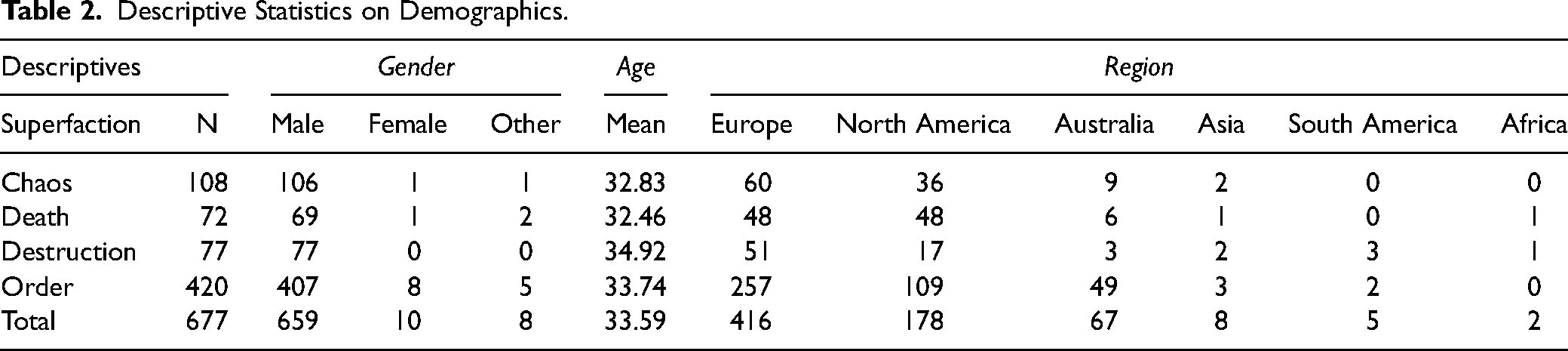
Descriptive statistics are shown in Table 2. The range of respondent age was 12–72 years of age, with most of the respondents between 20 and 40 (M = 33.76; SD = 8.21). 61% (N = 414) of the respondents were from Europe, 26% (N = 176) from Northern America, 10% (N = 68) from Australia while the rest (3%) were from Africa, Asia and South America (N = 20).
Descriptive Statistics on Demographics.
The association between personality traits and choice of faction in the game are shown in ANOVA Tables 3–5, revealing a statistically significant link between the personality trait conscientiousness and choice of faction. There were no observable violations of homogeneity. The results also show an almost statistically significant link between player extraversion and faction choice. No significant differences between player groups were found on the personality trait emotional stability.
ANOVA – Conscientiousness.

ANOVA – Extraversion.

ANOVA – Emotional Stability.

The differences between player groups in conscientiousness, when controlling for gender, age and region, is showcased in Table 6. Gender was included as a covariate even though the sample is highly homogenous on the variable, with 97.3% of respondents being male. The analysis reveals that the differences in conscientiousness remain relevant when covariates are included. Player age was found to be a significant covariate, which is in line with previous research showing that conscientiousness increases with age (Roberts et al., 2005). The correlation between the variables is r = 0.178 with p > 0.001. The interaction between conscientiousness and age is illustrated in Figure 1. No significant interaction effect was found in the ANCOVA for superfaction x age, thus the relationship between faction choice and age can be assumed to be the same across different ages.
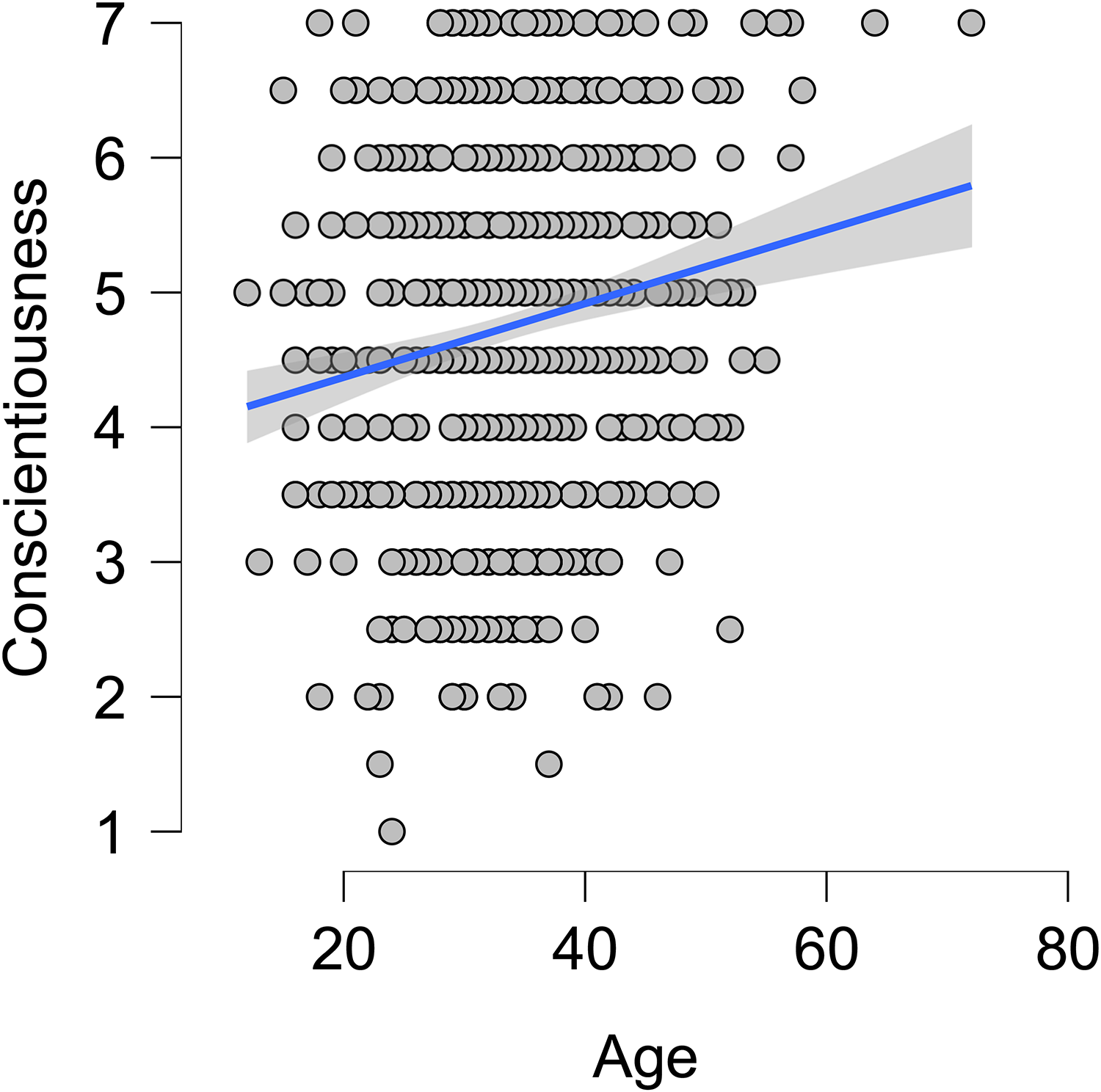
Descriptive plot illustrating the link between age and conscientiousness.
ANCOVA – Conscientiousness.
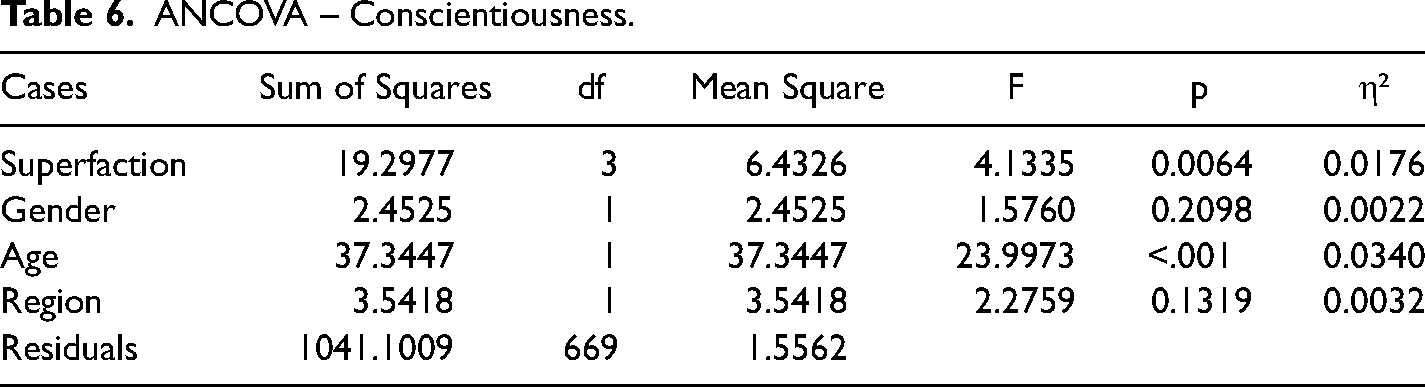
For the personality trait conscientiousness, the ANCOVA revealed differences between at least two groups (F(3, 6.43) = 4.13, p < .01). The effect size observed (η² = 0.018) can be considered small. In post-hoc testing, differences were found between Death and Destruction (p < .01, 95% CI [0.70, 3.39]), with an effect size of 0.56, and Destruction and Order (p < .05, 95% CI [−0.43, −2.75]) with an effect size of 0.34. The effect sizes increased in post-hoc testing, showing small to medium effect sizes (Cohen, 1988) The results are illustrated in Figure 2.
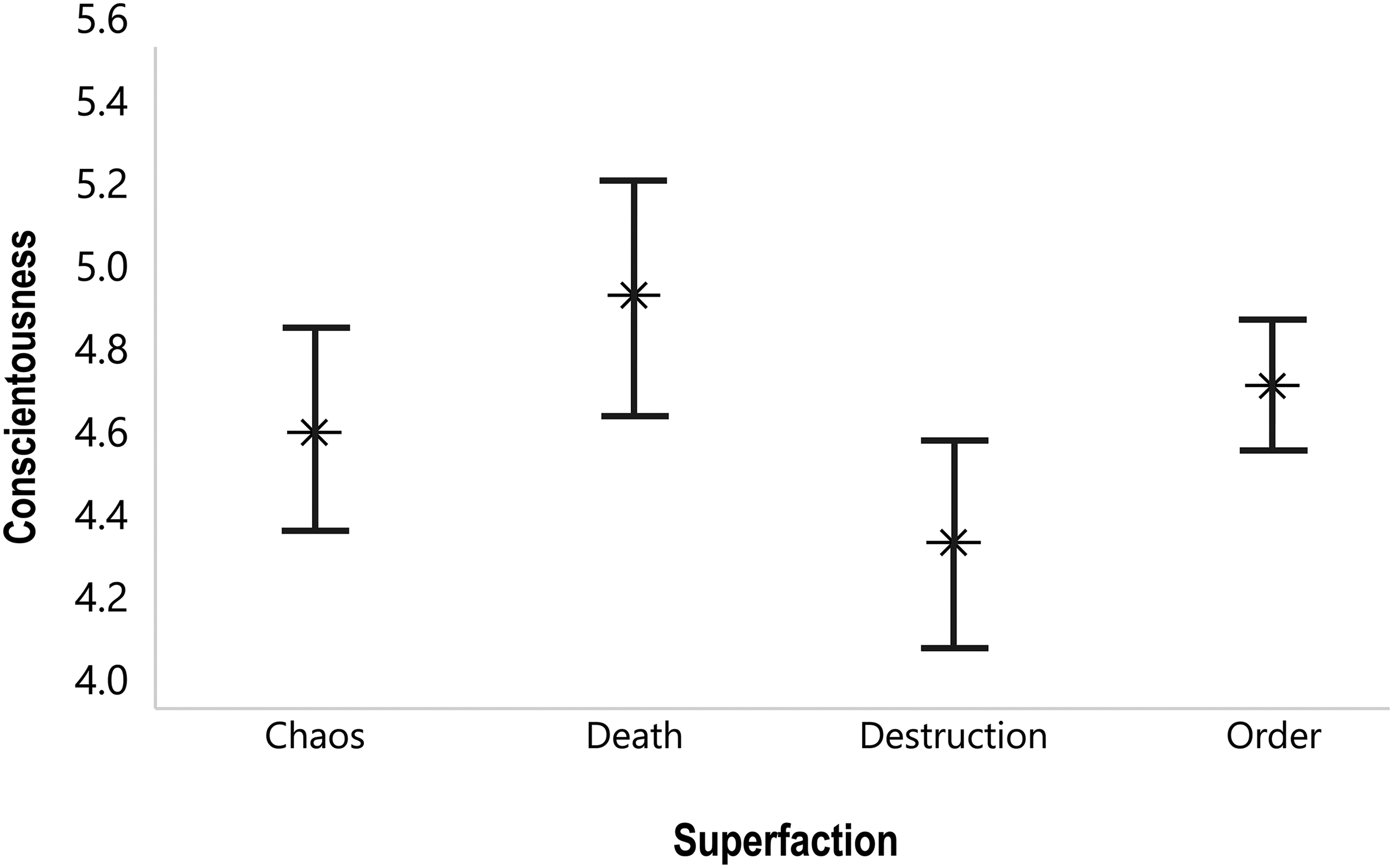
Descriptive plot with bars for margin of error (95% confidence), differences in means observed for conscientiousness in different player groups.
Discussion
In WHFB the player chooses an army or faction with a specific species and culture, as well as a distinct aesthetic, playstyle, and special rules. This study adds to the current literature by going past motivations for playing the game and suggesting that personality is related to faction choice, specifically in the realm of conscientiousness. The findings indicate that the personality trait conscientiousness is expressed quite strongly through the choice of faction within the game. Next, we suggest some factors that may explain the link between conscientiousness and faction choice: play style, game narrative, and aesthetics.
According to our results, highly conscientious players seemed to favour the factions of Order and Death, which offer a more structured and methodical play style, over the more unpredictable factions of Destruction. Order and Death factions tend to be more reliable and predictable during play, with fewer rules that introduce randomness, which may appeal to players approaching the game as a mental, strategy-driven exercise. Issues of balance within the game can favour certain factions and army compositions, so it is possible that highly conscientious players favour the factions of Order and Death, which offer strong possibilities for competitive play, compared to other players lower on this trait. Players with high conscientiousness are more likely to engage in the hobby to develop their cognitive abilities and to enjoy all aspects of the game (Körner & Schütz, 2021). This includes seeking loopholes or ambiguity in the rules that allow for unusually powerful characters or actions that upset game balance (see Carter et al., 2014).
Many miniature wargame players are invested in their faction's “fluff” (Meriläinen et al., 2020); fiction that does not influence the game mechanics (Baumgartner, 2015), although the game play for each faction is often designed to match its fiction. This suggests that game narrative may also play a part in faction selection; high conscientiousness has been linked to cultural collectivism (Burton et al., 2021) and certain forces of Order in the game narrative, like the Dwarfs and the Lizardmen, can be described as having collectivistic cultures.
Players of fantasy games tend to be more open than non-players (Körner et al., 2021; Lorenz et al., 2022) and story-driven wargame players have described themselves as being open in a previous study (Körner & Schütz, 2021). Unfortunately, due to low reliability of the instrument used, the interplay between openness to experience and superfaction choice could not be investigated. Previous research into fantasy games have shown that players tend to be more extraverted than non-players (Körner et al., 2021; Lorenz et al., 2022) which might be the reason no significant differences between players of different factions were observed on extraversion in this study.
The armies and factions also vary in terms of aesthetics, encouraging different painting styles, with factions like the High Elves (Order) or Tomb Kings (Death) typically portrayed as having a coherent, regimented look on the battlefield, with bright and clear colours and neat heraldic designs, while for example Orcs & Goblins (Destruction), a faction of green monstrous humanoids, are more ragged and dirty, lending themselves to painting styles that require less precision. This is potentially a factor, as high conscientiousness is also related to a high attention to detail (Witt, 2002) and conscientiousness has been connected previously to disciplinary activities in a game (Yee et al., 2011). Aesthetics is likely a major driver of first faction choice as the miniaturing hobby is a very visual and material one, with painting and displaying miniatures a key facet (Meriläinen et al., 2020).
People who play wargames to escape the stresses of everyday life tend to have slightly higher neuroticism (Körner & Schütz, 2021). Players with high neuroticism thus also avoid competition with other players (see Körner & Schütz, 2021). No significant results were observed in this study on emotional stability and superfaction choice, indicating that people high on neuroticism do not have a significant preference in the choice of a certain superfaction. Results might suggest players who want to escape everyday life make their choices of superfaction based on other factors than personality.
It is important to note that we do not suggest that player conscientiousness is the only, or even the most relevant factor influencing faction choice. Wargame hobby participation consists of a variety of interwoven facets, such as personal and friends’ gaming preferences and the availability of both miniatures and money (Carter et al., 2014; Meriläinen et al., 2020, 2022). As players often spend years or even decades collecting, crafting, and playing with their factions, it is difficult to infer causality; player conscientiousness changes over time and if the hobby is important to the player, participation in it might also influence conscientiousness. However, based on both our results and previous research the assumption that personality influences the choice of faction in the game remains plausible.
It is somewhat surprising that age or region did not seem to affect the choice of first faction. The sample contained respondents of many different ages, the oldest having seen all versions since the launch of the game, while the youngest had only seen the last version before the game was discontinued. As the game was created in the UK, different regions have different access to elements of the game, and it is interesting that region did not have a significant effect on choice of first faction. This would also suggest that it is possible that the player's own culture does not directly influence choice of faction, but perhaps personality could play a mediating role in this relationship. The factions available in the game have also fluctuated throughout the different editions.
Our results add to our current understanding of the influence of player personality traits on gaming choices, and contribute to the limited literature currently available on wargame players and how personality is expressed in and influences this pastime. While shedding light on the connections between personality features and faction choices, the findings also serve as a reminder of the complexities of human behaviour and players’ engagement with wargames. It is relevant to note that our study focused on WHFB, set in a fictional high-fantasy world. Surveying the players of wargames set in real-life historical and contemporary conflicts would add entirely new perspectives and introduce the elements of real-world history and politics. For example, the armies of totalitarian states such as Nazi Germany or the Soviet Union are popular playable factions in wargames depicting World War 2. Studying the players of these wargames would afford interesting avenues for exploring the interplay of personality and political views (see Gerber et al., 2011) in connection to faction choice.
The results also hold implications for game design. Player personalities and preferences can vary greatly, so it is important to have enough variation in the choices given to players to provide them with opportunities to express themselves through the game and participation in the hobby. This is exceedingly important as the hobby is time-consuming, and many hobbyists spend multiple years playing with and painting their army, as well as considerable sums of money (e.g., Meriläinen et al., 2020, 2022). From a commercial point of view, being able to provide players with factions that match their personal preferences holds obvious benefits. For competitive players (see Carter et al., 2014), better understanding of the connections between faction choice and personality may provide additional insight into their opponents.
Strengths and Limitations
The key strength of this study is its sample. The respondents were recruited from closed groups on social media, that consist of active hobbyists and players of Warhammer Fantasy Battle. As the groups were closed, the participants had needed to complete a screening to be eligible to join. The screening questions require detailed knowledge of the game and its accompanying lore, likely ensuring that the respondents of our study are actual players and fans of the game. In addition, the moderators of the closed groups ensure that only relevant posts are allowed, members adhere to the rules of conduct and inactive members or members who share unrelated content are removed. Due to the above factors, it can be assumed that the sample quality is on a good level and fairly representative of the population of English speaking WHFB enthusiasts. However, as the sample is self-selected, it might show an overrepresentation of players with high conscientiousness and agreeableness due to self-selection bias, as these types of individuals have been shown to participate in surveys more actively (Rogelberg et al., 2003). The vast majority of the respondents are male, while being a reflection of the wargame community, conclusions can not be drawn regarding other gender representatives. Furthermore, more casual hobbyists and those who are not participating in online communities, might differ in personality from the ones represented in this study.
Our grouping of armies into higher-order superfactions (Order, Chaos, Death and Destruction) has its limitations, as some factions could plausibly belong to multiple superfactions. As the grouping is primarily based on themes in the fiction of the game, the larger superfactions (Order and Chaos) include factions that are quite diverse in terms of playstyle and aesthetics. A more balanced sample with different factions more equally represented would overcome this issue, as it would allow exploration on the level of individual factions.
This study is exploratory by nature and no hypotheses were defined. The aim of the research was to obtain a large representative sample size, where any possible large effect sizes could be observed, providing empirical evidence for a link between personality traits and faction choice, in order to guide future research. Because of this, a shorter personality scale was used, as data was collected via social media and obtaining a larger representative sample size was prioritized over using a more robust scale. Even though shorter personality scales are often inferior to multiple item scales (Credé et al., 2012; Kruyen et al., 2013), there are certain advantages. Shorter scales have been shown to be a good way to gather responses online, where people have a short attention span, easily experience cognitive strain and have a low level of patience (Robins et al., 2002). Social media use has repeatedly been connected to increased stress levels (Wolfers & Utz, 2022) and previous research has shown that respondent affective states can significantly influence self-report scores (Harrell et al., 1981; Razavi, 2001). Shorter scales also eliminate the possibility of boredom and fatigue in the respondents (Robins et al., 2001) which becomes advantageous when respondents are already in an environment that makes them prone to low levels of patience, increased stress and cognitive strain.
Shorter scales are often appropriate when sub-facets are not important (Romero et al., 2012). The TIPI scale developed by Gosling et al. (2003) has shown a Cronbach's alpha of 0.40–0.68 which would suggest an acceptable level of reliability. Similar levels of alpha coefficients have been found when analysing the validity of other shorter scales (Ziegler et al., 2014). Shorter scales always provide relatively low levels of reliability coefficients such as Cronbach's alpha, as they do not benefit from a high mean inter-item correlation and multiple items, as do longer scales (Gosling et al., 2003), thus reliability should also be assessed through correlation with longer personality scales (Kline, 2000; Woods & Hampson, 2005).
A meta-analysis conducted by Thørrisen & Sadeghi (2023) concluded that the TIPI is a suitable instrument for measuring personality when personality is not the sole focus, but the research contains other variables of interest. This meta-analysis had yet not been published at the time data was collected for the present study and in hindsight, the authors would have used a more robust measure of personality. In the present study, a major reason for choosing the TIPI, was the utilization of the instrument in a previous study on players of miniature war games (see Körner & Schütz, 2021), showing similar levels of reliability, as well as the benefits of using a short questionnaire in an online environment. Future, more focused studies should utilize a more robust scale for measuring player personality, due to low and problematic reliability coefficients of the TIPI. The addition of other scales in the same sample is recommended, for example the Schwartz Value Inventory (Schwartz, 1992) and the Trojan Player Typology scale (Kahn et al., 2015), even though personality might explain a large portion of the variance in choice of army. Qualitative methods such as interviews and qualitative questionnaires could be utilised to better understand the connections between players’ personalities and the choices they make regarding the hobby. Studies on new and potential players in the process of selecting their first army could be especially beneficial.
Conclusions
The personality trait conscientiousness is associated with the choice of the first WHFB faction and there are significant differences between player groups. Miniature wargame players have previously been seen as a homogenous group, particularly when compared to non-wargame players, but this study provides empirical evidence for significant differences in the personality trait conscientiousness between players of the miniature wargame WHFB when grouped by choice of faction. This grouping provides interesting avenues for future research, as the choice of faction in the game weaves together different elements of the hobby, such as gameplay, fiction, and aesthetic preferences.
The results raise interesting questions for further, more focused research. Do players choose the faction to complement their own personality, or do players make choices to compensate for something perceived to be missing from their own personality or to explore different facets of themselves, reflecting the idea of games as “private laboratories” for identity exploration (see Jansz, 2015)? Are choices made based on what is intuitively felt as a match between the background of the game and the player's personality, or grounded in careful deliberation and consideration of rules, fiction, and compatibility with friends’ armies? While our study focused on wargame players, the questions are relevant to all games in which character or faction selection plays a part and even to identifying with fictional characters outside gaming. With the 2024 arrival of Warhammer: The Old World, the re-imagined version of WHFB, the game itself is in an interesting position. With potential new players arriving to the scene and inevitable changes to both the factions and their backstories, The Old World provides a venue for further studies into this phenomenon.
Supplemental Material
sj-jasp-1-ica-10.1177_02762366241309540 - Supplemental material for Why Did You Pick that Army? Player Personality Traits and Faction Choice in the Miniature Wargame Warhammer Fantasy Battle
Supplemental material, sj-jasp-1-ica-10.1177_02762366241309540 for Why Did You Pick that Army? Player Personality Traits and Faction Choice in the Miniature Wargame Warhammer Fantasy Battle by Oliver Karl Valter Lindahl, Aasa Timonen and Mikko Meriläinen in Imagination, Cognition and Personality
Footnotes
Acknowledgements
This research was supported by the Academy of Finland Project Center of Excellence in Game Culture Studies (CoE-GameCult, Grant 353265). We also wish to thank Lauri Hietajärvi, Jaakko Stenros, Konrad Klockars, and Christian Hakulinen for their comments, and the online WHFB fan community whose participation made this research possible.
Credit Authorship Contribution Statement
Oliver Lindahl: Conceptualization, Methodology, Formal analysis, Investigation, Writing – Original Draft, Writing – Review and Editing. Aasa Timonen: Writing – Review and Editing. Mikko Meriläinen: Writing – Review and Editing, Project Administration.
Declaration of Conflicting Interests
The authors declared no potential conflicts of interest with respect to the research, authorship, and/or publication of this article.
Funding
The authors received no financial support for the research, authorship, and/or publication of this article.

Supplemental Material
Supplemental material for this article is available online.
Appendix
References
Supplementary Material
Please find the following supplemental material available below.
For Open Access articles published under a Creative Commons License, all supplemental material carries the same license as the article it is associated with.
For non-Open Access articles published, all supplemental material carries a non-exclusive license, and permission requests for re-use of supplemental material or any part of supplemental material shall be sent directly to the copyright owner as specified in the copyright notice associated with the article.
