



Abstract
Given the associations between mastery imagery ability, challenge and threat appraisal tendencies, perceived stress and proactive coping, and the implications for health, this research utilised a two-study approach to assess these associations and was the first study to examine whether appraisal states had a mediating role on the relationships of mastery imagery ability with perceived stress and proactive coping. Study 1 used a sample of 148 participants (M age = 22.52, SD = 4.36 years) and Study 2 used a sample of 338 participants (M age = 19.26, SD = 1.58 years). Participants completed online questionnaires measuring mastery imagery ability, challenge and threat appraisal tendencies, perceived stress, and proactive coping. In Study 1, only threat appraisal mediated the relationship between mastery imagery ability and perceived stress. However, both challenge and threat appraisal mediated the relationship between mastery imagery ability and proactive coping. Study 2 results showed challenge appraisal also mediated these relationships, but threat appraisal played no mediating role. Both studies demonstrate the important mediatory role of stress appraisal states, and the role they can have in regulating stress, but further research is warranted to establish when one stress appraisal may mediate the relationship over the other.
Introduction
Psychological stress is highly prevalent and can have detrimental effects on health and wellbeing (Moore et al., 2012). However, not all individuals who experience stress have poor health. It is therefore crucial to identify traits and dispositions which are associated with more proactive ways of coping in response to stress or associated with reducing perceptions of stress. One technique used to regulate stress is imagery, which is the internal creation of thoughts and feelings (Cumming & Williams, 2012). Imagery use is an established technique to regulate stress by reducing the levels of stress and anxiety experienced or reducing the debilitative interpretation of these responses (Cumming et al., 2007; Williams et al., 2017). Beyond using imagery, research has demonstrated that imagery ability (i.e., “an individual's capability to form vivid, controllable images and retain them for sufficient time to effect the desired imagery rehearsal”, Morris, 1997, p. 37) may be important in stress regulation, even in the absence of imagery use.
Specifically, mastery imagery ability, described as the ease at which one can image mastering challenging or difficult situations (e.g., imaging remaining confident during a sporting situation; Quinton et al., 2019), has been shown to protect against the negative effects of stress, and has been associated with individuals perceiving greater control over stress (Quinton et al., 2019). Higher mastery imagery ability has been associated with: greater challenge appraisal tendency (Quinton et al., 2018; Williams & Cumming, 2012b), lower threat appraisal tendency (Williams & Cumming, 2012b), and greater performance in stressful situations (Williams et al., 2021) in athletes. More recent research has looked at mastery imagery ability in non-athlete populations’ stress in a non-sport setting. Two studies conducted in young adult populations, one in the United States and one in the United Kingdom, demonstrated that higher levels of mastery imagery ability were associated with lower levels of perceived stress (Beevor et al., 2023; Möller, 2019). However, research has yet to examine the potential mechanisms underlying the relationship between higher levels of mastery imagery ability and lower levels of perceived stress.
One such factor which could explain the relationship between mastery imagery ability and perceived stress is how the stressor is appraised. Two common types of appraisal tendencies are challenge and threat appraisals (Jones et al., 2009). Challenge and threat are “emotional, cognitive and physiological states…that involve positive and negative feelings and emotions” (Blascovich & Mendes, 2000, p. 60). Challenge appraisals are experienced when individuals facing a stressful situation perceive they have the resources to meet the demands of the situation, and in turn they are thought to use adaptive coping (Jones et al., 2009). By contrast, threat appraisals are experienced when individuals perceive they do not have the resources to meet the demands of the stressful situation, and in turn they are thought to use maladaptive coping (Jones et al., 2009).
Given that those with a higher mastery imagery ability are more easily able to image content such as remaining confident when faced with difficult situations, it can be argued that these individuals in turn are more likely to feel that they possess the resources to meet the demands of stress-evoking situations and therefore appraise stressful situations more often as a challenge rather than as a threat. In support, research has shown that those with a higher mastery imagery ability are more likely to appraise stressful situations as a challenge and less likely to appraise them as a threat (Quinton et al., 2018; Williams & Cumming, 2011, 2012b).
Greater challenge appraisals of stress have been linked to interpreting stress as more facilitative (Jones et al., 2009), which is associated with lower perceived stress levels (Crum et al., 2013), while more debilitative perceptions of stress are associated with greater threat appraisal tendencies (Jones et al., 2009). However, the associations between challenge and threat appraisal tendencies and perceived stress levels have not been fully investigated. Should challenge and threat appraisals be related to perceived stress as the literature suggests, it can be theorised that challenge and threat appraisal tendencies may mediate the relationship between mastery imagery ability and perceived stress.
While research has examined how mastery imagery ability relates to appraising stress, research has yet to examine how mastery imagery ability relates to coping with stress. One method for coping with stress is proactive coping, which involves efforts carried out ahead of a potentially stress-evoking event either to prevent it occurring or to modify its form before it occurs (Aspinwall & Taylor, 1997). As both mastery imagery and proactive coping are typified by feeling in control and confident of possible stress-evoking situations (Greenglass & Fiksenbaum, 2009; Quinton et al., 2019), it could be suggested that being able to image oneself coping with difficult and challenging situations could lead to more adaptive behaviours, such as proactive coping, when confronted with difficult situations in reality.
Individuals with a greater ability to proactively cope perceive demanding situations as challenging rather than as threatening, with individuals being able to use proactive coping techniques prior to the stress occurring (Greenglass & Fiksenbaum, 2009). As proactive coping takes place following the appraisal of stress, challenge and threat appraisal tendencies could play a key role in an individual's tendency to use proactive coping techniques. As increased mastery imagery ability has been linked with more challenge appraisal states and lower threat appraisal states (Quinton et al., 2018; Williams & Cumming, 2011, 2012b), challenge and threat appraisal tendencies may also mediate the relationship between mastery imagery ability and proactive coping.
We aimed to examine the associations between mastery imagery ability, challenge and threat appraisal states, and perceived stress and proactive coping, and to investigate whether challenge and threat appraisal tendencies mediated the relationships between mastery imagery ability and perceived stress or proactive coping in two independent samples. This study is a first step in understanding if and how mastery imagery may relate to lower levels of perceived stress and more proactive coping. Elucidating these relationships is an essential first step before developing interventions aimed at improving mastery imagery to help individuals effectively cope with stress.
Study 1
Aims and Hypotheses
Study 1 aimed to extend previous research that has identified a relationship between mastery imagery ability and perceived stress, by examining whether this relationship was mediated by challenge and threat appraisal tendencies. The second aim of Study 1 investigated whether mastery imagery ability was associated with more proactive coping, and whether this relationship was also mediated through challenge and threat appraisal tendencies. While stress and coping have been well researched in the literature, there appears to be a bidirectional relationship between the two. Specifically, type of coping has been shown to predict perceived stress (e.g., Enns et al., 2018), but perceived stress is also known to predict the type of coping engaged in (Giancola et al., 2009). Consequently, a firm hypothesised model of which variable predicts which would be challenging. Additionally, the main purpose of the study was to examine how mastery imagery ability related to perceived stress via challenge and threat appraisal tendencies and to separately look at how mastery imagery ability related to proactive coping via these same stress appraisal tendencies. Consequently, two separate models were examined, one with perceived stress as the outcome and one with proactive coping as the outcome to look at these indirect effects in isolation and thus examine any subtle differences between the two.
Based on the aforementioned literature, it was hypothesised that higher mastery imagery ability would be associated with lower levels of perceived stress and greater levels of proactive coping (Beevor et al., 2023; Möller, 2019). It was also hypothesised that the relationship between mastery imagery ability and both perceived stress and proactive coping would be mediated by challenge and threat appraisal tendencies. Specifically, it was predicted that greater mastery imagery ability would be associated with greater challenge appraisal and lower threat appraisal tendencies (Williams & Cumming, 2012b). Challenge appraisal tendencies were predicted to be negatively associated with perceived stress and positively associated with proactive coping while the opposite was predicted for threat appraisal tendencies. These hypotheses are displayed in Figure 1.
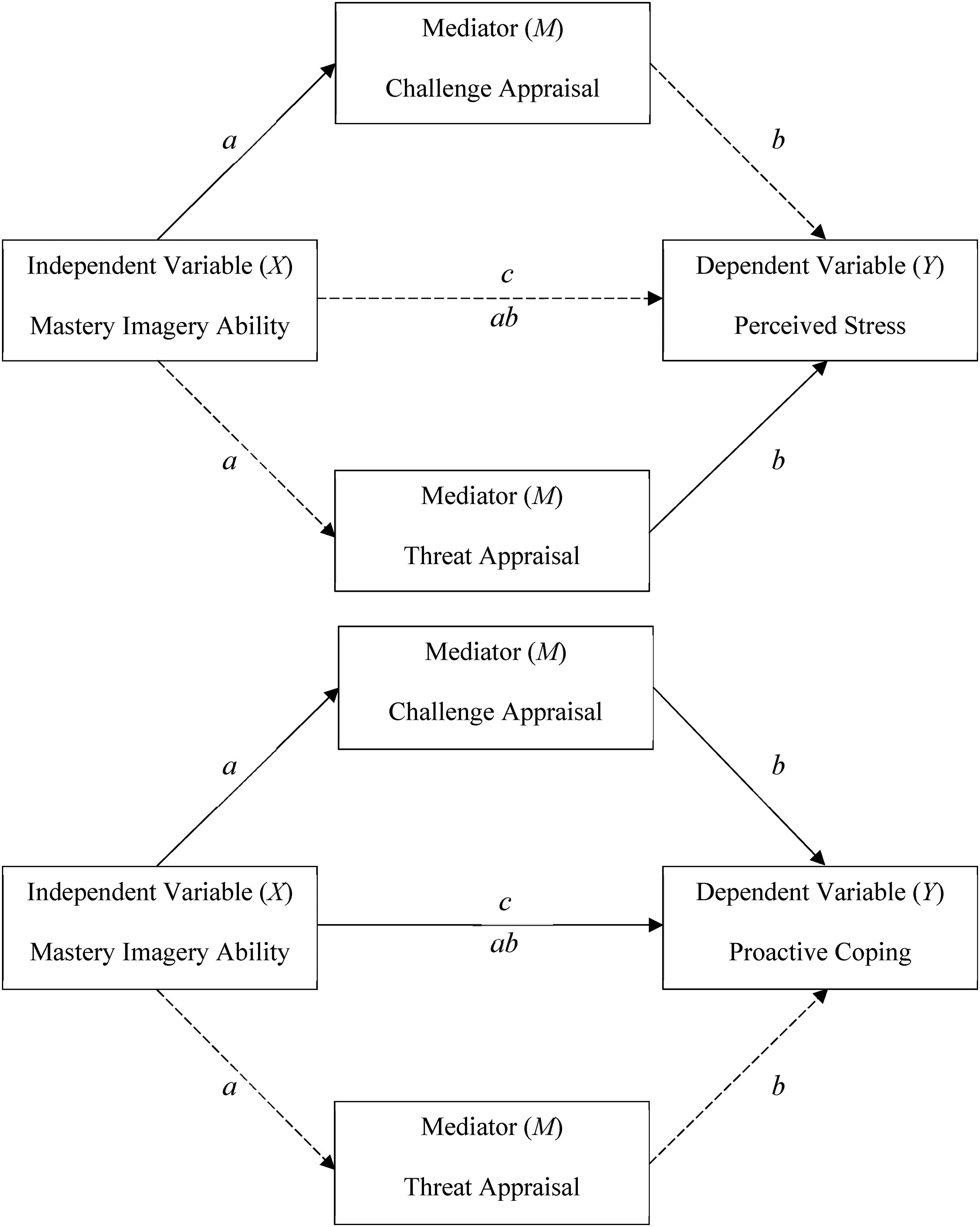
Simple mediation models examining whether challenge and threat appraisals mediated the relationship between mastery imagery ability and perceived stress (top) and proactive coping (bottom). Note. Solid line between variables indicates hypothesised positive prediction. Dashed line between variables indicates hypothesised negative prediction.
Methods
Participants
One hundred and forty-eight participants were recruited (male = 45, female = 103; M = 22.52, SD = 4.36 years). Recruitment emails targeted the general population from across a range of clubs and societies around the UK (e.g., sports clubs, church groups). Inclusion criteria were being 18–35 years old, able to read and speak English proficiently, and have no diagnosed mental health condition at the time of data collection. This study was approved by the university ethics committee of the lead author and all participants provided informed consent before partaking in the study.
Measures
Mastery Imagery Ability
The mastery subscale of the Sport Imagery Ability Questionnaire (SIAQ; Williams & Cumming, 2011) was used to assess mastery imagery ability. Participants are asked to image each of the following three items in relation to the sport they play: “Giving 100% effort even when things are not going well”, “Staying positive after a setback” and “Remaining confident in a difficult situation”. Similarly to previous work that has used the SIAQ with non-athletes, those participants who did not play a sport were asked to image the items in relation to a sport they most recently played (Beevor et al., 2023). Ratings are made using a 7-point Likert-type scale ranging from 1 (very hard to image) to 7 (very easy to image) and scores are averaged so a higher score reflects greater mastery imagery ability. Despite being an athlete specific measure, the SIAQ is a valid and reliable measure of mastery imagery ability (Williams & Cumming, 2011) and has demonstrated good validity and reliability in non-athlete specific populations (Beevor et al., 2023). In the present study a confirmatory factor analysis revealed a good factor structure, χ² (80) = 157.70, p < .001, CFI = .91, TLI = .90, SRMR = .06, RMSEA = .08 (90% CI = .06 – .10) and the Cronbach's alpha coefficient was .71 collectively demonstrating valid and reliable mastery imagery ability scores.
Challenge and Threat Appraisal Tendencies
An individual's tendency to appraise situations as a challenge or as a threat was assessed using the Cognitive Appraisal Scale (CAS; Skinner & Brewer, 2002). Individuals were asked to indicate their level of agreement with a number of statements in relation to a meaningful situation. Threat appraisal was measured using 10 items (e.g., “I worry that I will say or do the wrong things”), with eight items measuring challenge appraisal (e.g., “A challenging situation motivates me to increase my efforts”). Responses for each statement were made on a 6-point Likert-type scale ranging from 1 (strongly disagree) to 6 (strongly agree). An average score was calculated for each subscale, with a higher score indicating either a greater challenge or threat appraisal. The CAS is a valid and reliable measure of challenge and threat appraisal tendencies (Skinner & Brewer, 2002), with both the threat and challenge subscales demonstrating a good level of internal reliability in the present study (Cronbach's α = .93 and .76, respectively).
Perceived Stress
The Perceived Stress Scale (PSS; Cohen, Kamarck & Mermelstein, 1983) was used to assess an individual's perceived stress levels, asking participants about their thoughts and feelings related to stress experienced over the past month (e.g., “How often have you been able to control irritations in your life?”). Responses to each item are made on a 5-point Likert-type scale from 0 (never) to 4 (very often). First, the positively worded items are reversed scored before all responses are added together to provide a total perceived stress score whereby a higher score indicates a greater amount of perceived stress. The Perceived Stress Scale has been shown to be a valid measure of stress and has adequate reliability (Cohen, Kamarck & Mermelstein, 1983). The Cronbach's alpha in the present study was .89.
Proactive Coping
To measure participant's proactive coping, the proactive coping subscale of the Proactive Coping Inventory (PCI; Greenglass et al., 1999) was used. Participants are presented with 14 statements (e.g., “I am a take charge person”) and asked to indicate how true each of these statements are by responding to each on a 4-point Likert-type scale ranging from 1 (not at all true) to 4 (completely true). Three of the 14 statements are reversed scored, before scores are totalled so that a higher total score reflects a greater tendency to proactively cope. The ‘Proactive Coping Scale’ of the Proactive Coping Inventory has been shown to have good validity and acceptable reliability as a measure of proactive coping (Greenglass et al., 1999). The Cronbach alpha of the present study was .67.
Procedure
After being contacted via email, interested participants read the information sheet detailing the study and were given the opportunity to ask any questions. Those willing to take part clicked the link to an online consent form and questionnaire pack provided via SmartSurvey. The questionnaire pack included items to obtain demographic information and as well as the SIAQ mastery subscale, CAS, PSS, and PCI, and took 20 to 30 min to complete. Data collection started in November 2020 and stopped at the end of January 2021.
Data Analysis
Data were analysed in SPSS (IBM SPSS Version 24.0). There were no missing data cases in the data set. Eight moderate (1.5 standard deviations removed from the mean) univariate outliers were identified within the data set. As removal of these outliers did not impact the significance of the results, these were retained for the analysis. First, correlation analyses were conducted between mastery imagery ability, challenge appraisal, threat appraisal, perceived stress, and proactive coping. This was followed by a one-way ANOVA, which assessed any differences in variables due to gender. Partial eta squared was the effect size reported for all ANOVAs.
To test the hypothesised models, two independent models were tested using the PROCESS SPSS add-on (Hayes, 2017) with a bootstrap of 95% bias-corrected confidence intervals (CIs) of 5000 samples. Both analyses were conducted in line with the simple mediation model proposed by Hayes (2009) with mastery imagery ability as the independent variable (X), challenge and threat appraisal tendencies as the two mediators (M), and the dependent variable (Y) being either perceived stress or proactive coping. The analysis examined the extent to which the relationship between mastery imagery ability and perceived stress or proactive coping was mediated by challenge and threat appraisal tendencies, and whether any indirect effects occurred via the mediators. The critical alpha level for was set at .05 and standardised beta coefficients reported for all regressions.
Results
Correlation Analyses
Table 1 displays the results of the correlation analyses with all correlations being significant except between threat appraisal tendency and proactive coping. Mastery imagery ability positively correlated with challenge and proactive coping, and negatively correlated with threat and perceived stress. Challenge and threat appraisal tendencies were negatively correlated. Challenge appraisal tendency was positively correlated with proactive coping and negatively correlated with perceived stress, while the opposite was true for threat appraisal tendency. Proactive coping negatively correlated with perceived stress.
Pearson's Bivariate Correlations Between Mastery Imagery Ability, Challenge and Threat Appraisal, Perceived Stress, and Proactive Coping for Study 1 and Study 2.
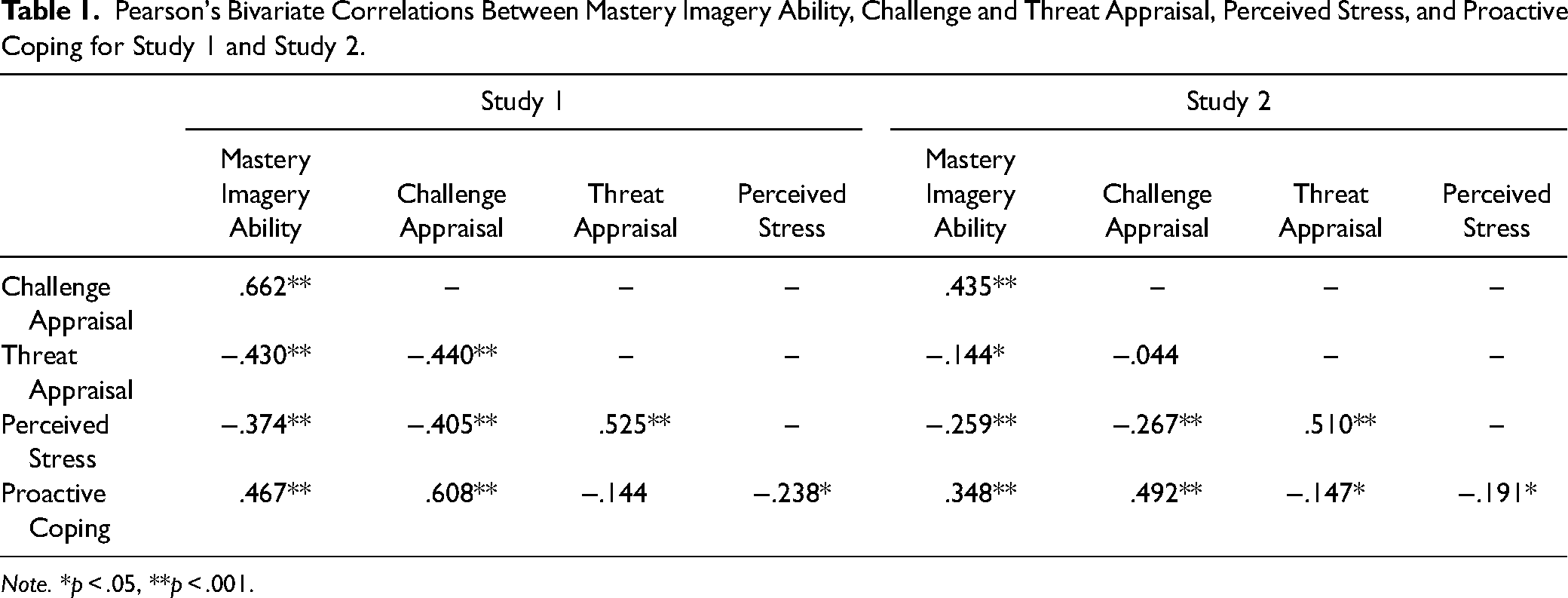
Note. *p < .05, **p < .001.
Participant Characteristics and Gender and Sport Type Differences
Table 2 displays means and standard deviations of mastery imagery ability, challenge and threat appraisal tendencies, perceived stress, and proactive coping for males and females. One-way ANOVAs showed that compared to females, males reported significantly higher mastery imagery ability (F[1, 147] = 12.853, p < .001, ηp2 = .081) and challenge appraisal (F[1, 144] = 8.587, p = .004, ηp2 = .057), and lower threat appraisal (F[1, 144] = 14.418, p < .001, ηp2 = .092) and perceived stress (F[1, 145] = 4.313, p = .040, ηp2 = .029). There was no gender difference for proactive coping (F(1, 147) = 0.074, p = .786, ηp2 < .001).
Means and Standard Deviations of Males and Females for Mastery Imagery Ability, Challenge and Threat Appraisal Tendencies, Perceived Stress, and Proactive Coping for Study 1 and Study 2.
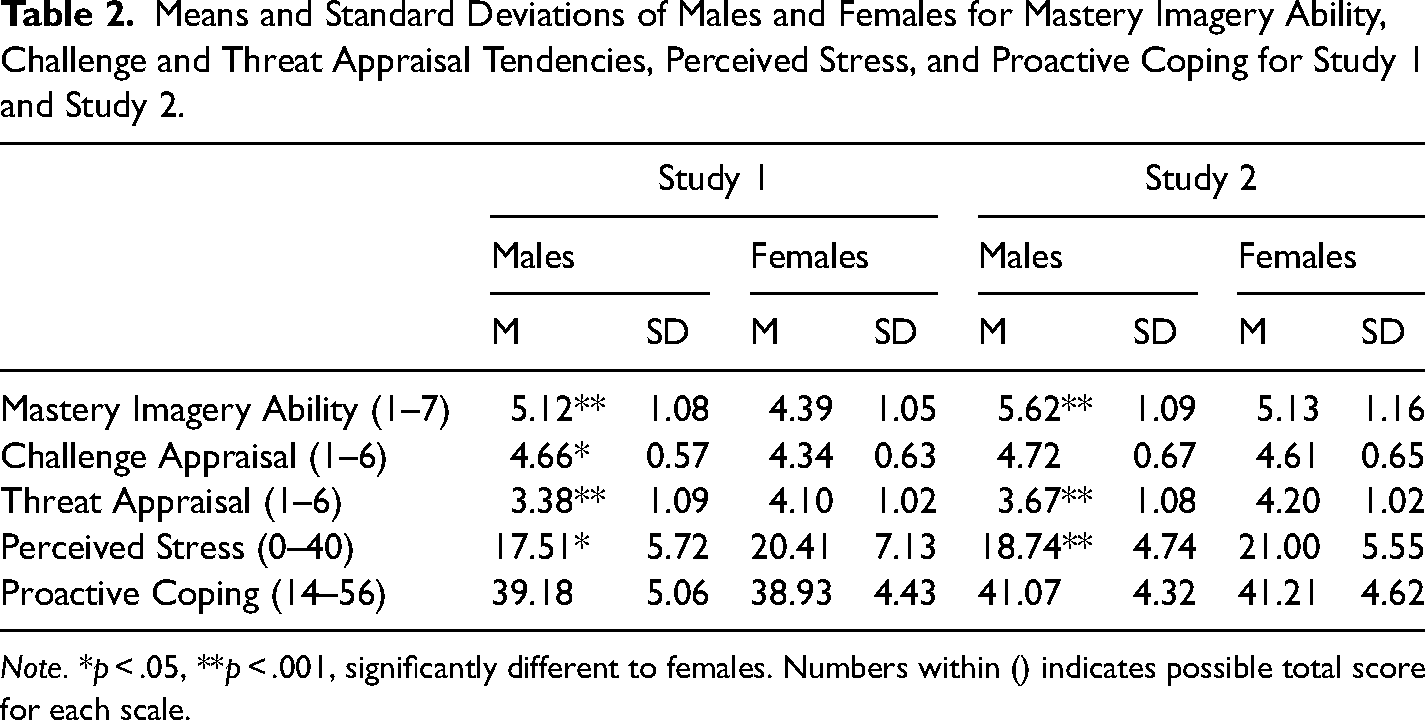
Note. *p < .05, **p < .001, significantly different to females. Numbers within () indicates possible total score for each scale.
Mediation Analyses
Perceived Stress
Figure 2 displays the results of the extent to which challenge and threat appraisal tendencies mediate the relationship between mastery imagery ability and perceived stress (controlling for gender). Mastery imagery ability negatively, directly predicted perceived stress. Once challenge and threat appraisal tendencies were added as mediators, the direct relationship between mastery imagery ability and perceived stress became non-significant and mastery imagery ability positively predicted a challenge appraisal and negatively predicted a threat appraisal. Challenge appraisal did not significantly predict perceived stress, but threat appraisal significantly and positively predicted perceived stress suggesting that the relationship between mastery imagery ability and perceived stress was mediated by threat appraisal. This is confirmed by the total indirect effects of X (mastery imagery ability) on Y (perceived stress) via threat appraisal (β = −1.143, LLCI = −1.769, ULCI = −.606). Thus, individuals with higher mastery imagery ability reported lower threat appraisal tendencies and this in turn was associated with lower perceived stress.
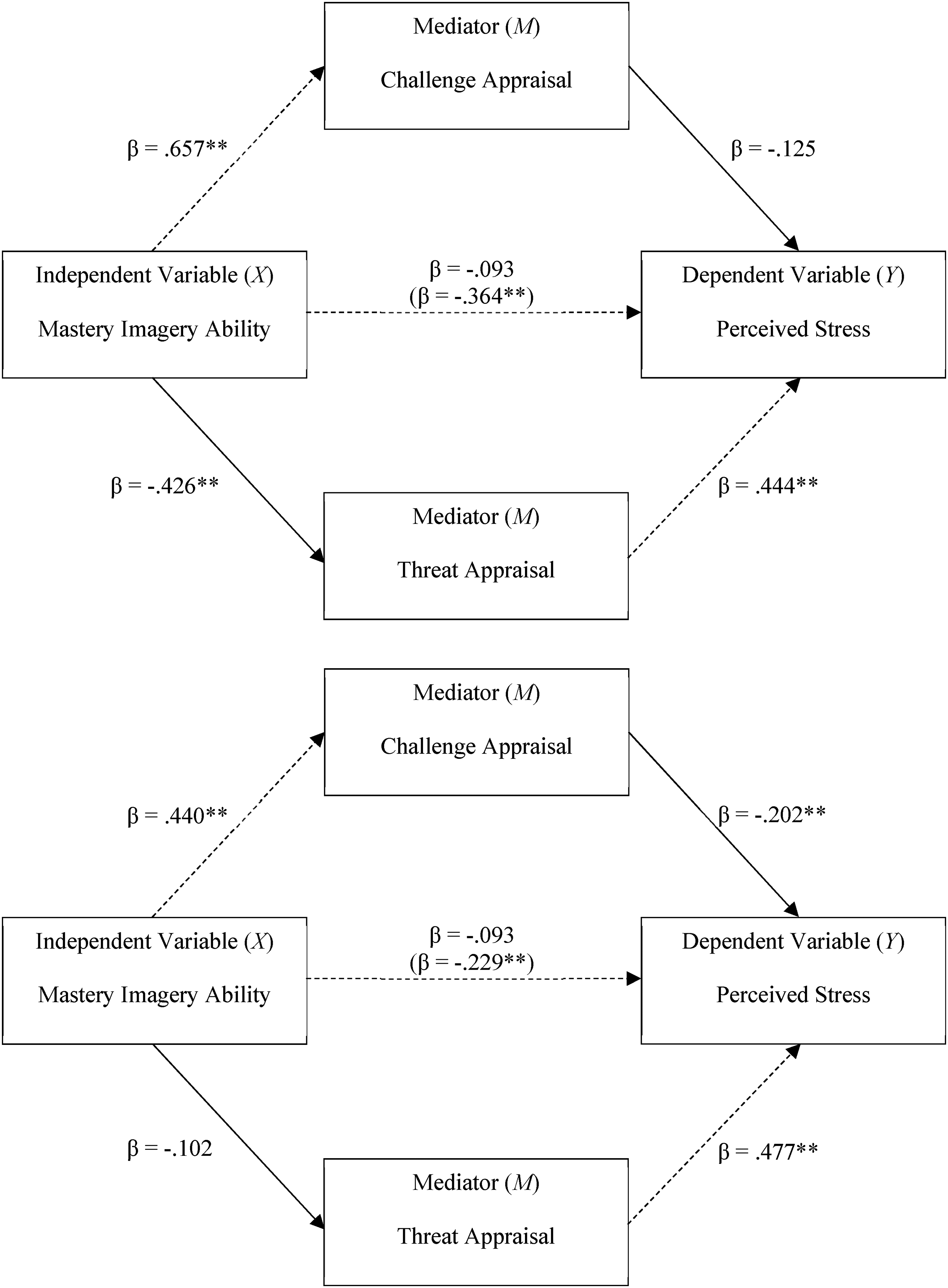
Mediation analysis depicting the extent to which challenge and threat appraisals mediate the relationship between mastery imagery ability and perceived stress for study 1 (top) and study 2 (bottom). Note. *p < .05, **p < .001. Standardised beta coefficients reported.
Proactive Coping
Controlling for gender, results of the analyses for proactive coping can be seen in Figure 3. The results show that mastery imagery ability positively, directly predicted proactive coping. Upon adding challenge and threat appraisal tendencies, mastery imagery ability significantly positively predicted challenge appraisal and significantly negatively predicted threat appraisal. Both challenge and threat appraisal significantly positively predicting proactive coping. The indirect effects of mastery imagery ability on proactive coping shows that challenge appraisal (β = 1.420, LLCI = .945, ULCI = 1.865), and threat appraisal (β = −.288, LLCI = −.607, ULCI = −.038) both mediated the relationship between mastery imagery ability and proactive coping. Collectively, these results demonstrate that those with a higher mastery imagery ability are able to better proactively cope with stress, in part due to their ability to appraise stress as less of a threat and more of a challenge. However, it can be suggested that due to a much larger beta value, an individual's challenge appraisal plays a bigger role in mediating this relationship.
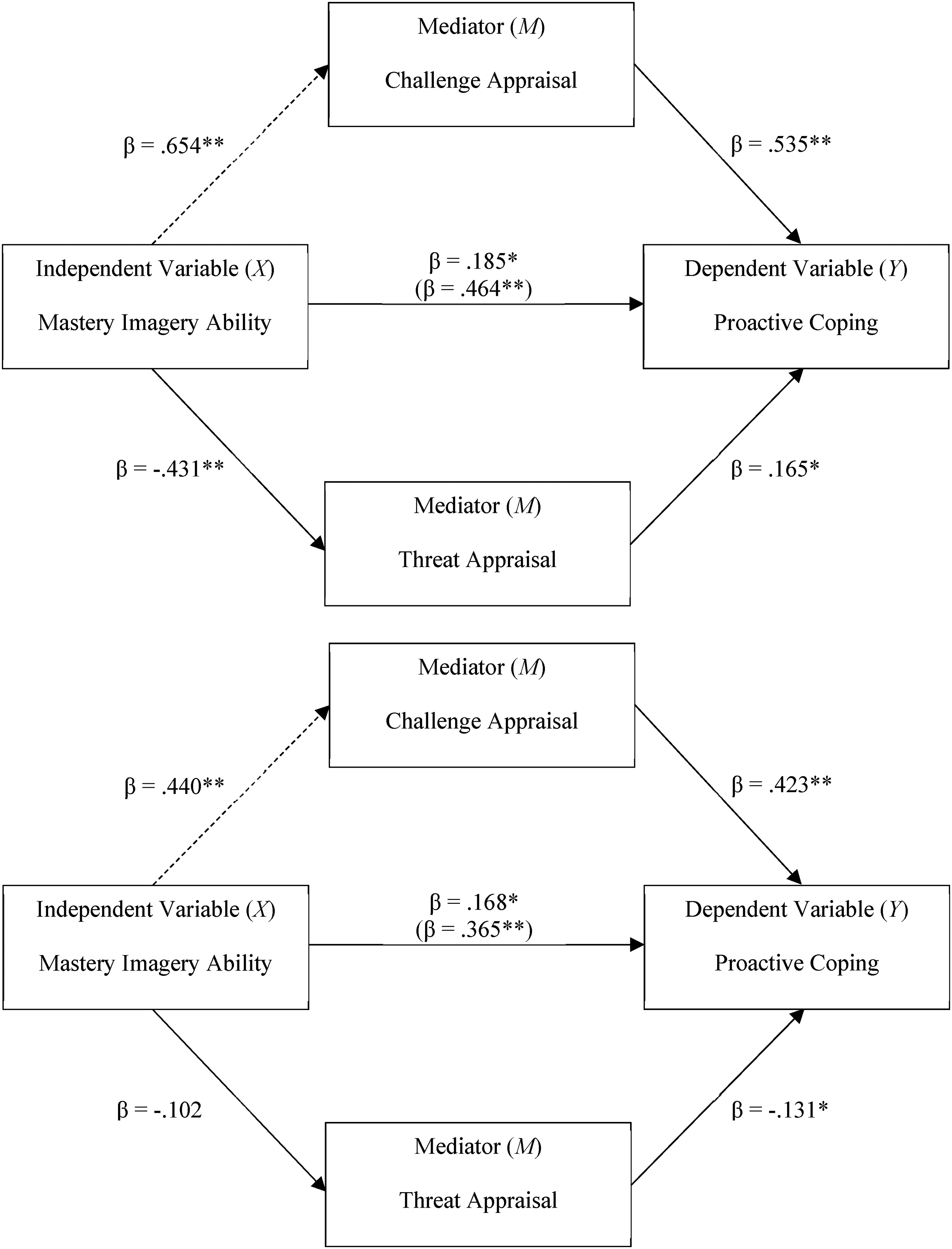
Mediation analysis depicting the extent to which challenge and threat appraisals mediate the relationship between mastery imagery ability and proactive coping for study 1 (top) and study 2 (bottom). Note. *p < .05, **p < .001. Standardised beta coefficients reported.
Study 2
Aims and Hypotheses
Study 2 examined the replicability of Study 1 by re-examining the mediating role of challenge and threat appraisal on the relationships between mastery imagery ability and perceived stress and proactive coping. By utilising a second sample, a secondary aim was to examine the robustness of the findings of Study 1.
Based upon the findings of Study 1, it was hypothesised that greater mastery imagery ability would be associated with lower perceived stress and more proactive coping. It was also hypothesised that these relationships would be mediated by challenge and threat appraisal tendencies such that mastery imagery ability would be positively associated with challenge and negatively associated with threat, and greater challenge and lower threat appraisals would be associated with lower perceived stress and more proactive coping.
Methods
Participants
Three hundred and thirty-eight participants (males = 109, females = 229) were recruited for this study aged between 18 and 33 years old (M = 19.26, SD = 1.58 years). Participants were recruited using the university's online psychology subject pool (SONA systems). Participants received 1 h of SONA research credits for participating in the study. The inclusion criteria used in this study was the same as those employed in Study 1, with participants likely consisting of a mix of athletes and non-athletes, as in Study 1. This study gained approval from the second author's University's institutional review board.
Measures
The measures used were identical to those used in Study 1. For the Sport Imagery Ability Questionnaire (SIAQ), a confirmatory factor analysis was performed which showed a good factor structure, χ² (80) = 299.96, p < .001, CFI = .93, TLI = .90, SRMR = .05, RMSEA = .09 (90% CI = .08 – .10).
Procedure
The procedures used were identical to those used in Study 1. Study 2 data collection took place between February 2021 and April 2021.
Data Analysis
Data analysis procedures were identical to those employed in Study 1. Little's MCAR test revealed that missing data was not missing completely at random χ (48) = 66.61, p = .039. This is likely due to the missing data being a result of participants electing not to complete certain questionnaires rather than the odd questionnaire item missing at random. As such the data provided from these participants (n = 18) was removed. Outliers (n = 21) were identified as data more than 1.5 standard deviations removed the mean. As data analysis revealed that leaving the outliers in the data set did impact the results, identified outliers were removed, leaving a total sample size of 338.
Results
Correlation Analyses
Table 1 displays the results of the correlation analyses with all correlations being significant except between challenge and threat appraisal tendencies. Mastery imagery ability positively correlated with challenge appraisal tendency and proactive coping but negatively correlated with threat appraisal tendency and perceived stress. Challenge appraisal tendency correlated positively with proactive coping and negatively with perceived stress. Also, threat appraisal tendency correlated positively with perceived stress and negatively with proactive coping, and proactive coping negatively correlated with perceived stress.
Participant Characteristics and Gender and Sport Type Differences
The means and standard deviations of mastery imagery ability, challenge appraisal, threat appraisal, perceived stress, and proactive coping according to gender are displayed in Table 2. One-way ANOVAs revealed that compared to females, males displayed significantly higher mastery imagery ability (F[1, 337] = 13.046, p < .001, ηp2 = .037), and significantly lower threat appraisal tendencies, (F[1, 337] = 18.670, p < .001, ηp2 = .053) and perceived stress (F[1, 337] = 13.127, p < .001, ηp2 = .038). There were no significant gender differences for challenge appraisal (F[1, 337] = 2.670, p = .103, ηp2 = .008) or proactive coping (F[1, 337] = .153, p = .696, ηp2 < .001).
Mediation Analyses
Perceived Stress
Depicted in Figure 2 is the analysis examining the mediating role of challenge and threat appraisal on the relationship between mastery imagery ability and perceived stress (controlling for gender). Mastery imagery ability negatively, directly predicted perceived stress. However, once challenge and threat appraisal were added as mediators, this relationship between mastery imagery ability and perceived stress became non-significant, suggesting the relationship between mastery imagery ability and perceived stress operated through stress appraisals. While challenge and threat appraisal both significantly predicted perceived stress, mastery imagery ability only significantly positively predicted challenge appraisal. Therefore, the relationship between mastery imagery ability and perceived stress was mediated by challenge appraisal and not threat appraisal. This was reinforced when examining the total indirect effects through challenge appraisal (β = −.408, LLCI = −.635, ULCI = −.202), and threat appraisal (β = −.226, LLCI = −.506, ULCI = .027). In sum, these results show that higher mastery imagery ability was associated with greater challenge appraisal which in turn was associated with lower perceived stress.
Proactive Coping
As can be seen in Figure 3, mastery imagery ability significantly positively predicted proactive coping, but once challenge and threat were added to the mediation model, the aforementioned relationship became less significant, suggesting an indirect relationship via stress appraisal tendencies. Challenge appraisal significantly positively predicted proactive coping and threat appraisal significantly negatively predicted proactive coping. However, because mastery imagery ability only significantly predicted challenge appraisal (and did not predict threat appraisal), the relationship between mastery imagery ability and proactive coping was only mediated by challenge appraisal tendency (indirect effect: β = .717, LLCI = −.479, ULCI = .974) and not via threat appraisal (indirect effect: β = .052, LLCI = −.007, ULCI = .138). Thus, higher mastery imagery ability was associated with greater challenge appraisal, which was associated with greater proactive coping.
Discussion
The primary aim of the present two study programme of research was to assess if the associations between mastery imagery ability with perceived stress and proactive coping are mediated by challenge and threat appraisals. For both studies it was hypothesised that those with a higher mastery imagery ability would display greater challenge appraisal tendencies and lower threat appraisal tendencies, these appraisal tendencies would relate to lower levels of perceived stress and higher levels of proactive coping. Consequently, it was hypothesised that challenge and threat appraisal would mediate the relationship between mastery imagery ability and perceived stress, and between mastery imagery ability and proactive coping.
Both Study 1 and Study 2 showed mastery imagery ability significantly negatively correlated with perceived stress, replicating previous research (Beevor et al., 2023; Möller, 2019) and suggesting that possessing a greater mastery imagery ability is important in maintaining low perceived stress levels. While studies have previously shown challenge imagery to result in more adaptive coping responses when confronted by a stressful situation (Williams et al., 2010), the present two studies are the first to show that mastery imagery ability is also associated with more proactive coping.
Those with a higher mastery imagery ability were more likely to appraise stressful situations as a challenge, supporting literature that has shown associations between mastery imagery ability and a challenge appraisal state (Möller, 2019; Quinton et al., 2018; Williams & Cumming, 2011, 2012b). As an increased challenge appraisal tendency has been related to improved performance, and more adaptive coping (Skinner & Brewer, 2004; Trotman et al., 2019; Williams & Cumming, 2011), perceiving stressful situations as a challenge is crucial in aiding the regulation of stress. Given the vast amount of supporting research, this emphasises the importance of supporting the development of high mastery imagery ability to facilitate perceiving stressful situations as a challenge rather than as a threat. Specifically, it can be suggested that those with higher mastery imagery ability are likely to appraise stressful events or situations they experience to be more of a challenge and less or a threat. The present study suggests that these more adaptive stress appraisals are likely to be associated with experiencing lower levels of perceived stress.
Results between mastery imagery ability and threat appraisal were inconsistent between studies. Study 1 showed a negative association (i.e., higher mastery imagery was associated with lower threat appraisal), but Study 2 found no statistically significant relationship once gender was controlled for. However, a more recent study in this area has reported that mastery imagery ability was not a predictor of threat appraisals (Quinton et al., 2018). Study 1 found challenge appraisal to significantly negatively correlate with threat appraisal, supporting research that shows challenge and threat appraisal to share an inversely proportional relationship (Williams & Cumming, 2012a). On the contrary, in Study 2 the relationship between challenge appraisal and threat appraisal was non-significant, supporting previous research showing an increased likelihood to perceive stressful situations as a challenge does not necessarily mean an individual is less likely to perceive stressful situations as a threat (Williams and Cumming, 2012b; Quinton et al., 2018). While it is evident that stress appraisals do relate to mastery imagery ability, and outcomes such as perceived stress and more proactive coping, given the differences in results between Study 1 and Study 2, as well as the inconsistencies in the literature, further research is warranted to establish a more consistent relationship between mastery imagery ability and challenge and threat appraisal tendencies by re-examining these proposed relationships in other samples. Research could also follow-up on the present findings by trying to understand why these relationships exist through qualitative methods.
Both studies demonstrated the relationship between mastery imagery ability and perceived stress through stress appraisals. However, in Study 1, an indirect relationship was through threat appraisal, while in Study 2 it was through challenge appraisal. As discussed, there are inconsistencies in the literature as to whether a dichotomous relationship exists between challenge and threat appraisal tendencies (e.g., Blascovich & Mendes, 2000; Jones et al., 2009; Meijen et al., 2020), and which is more strongly related to mastery imagery ability. Although this research offers an interesting first insight into the role of challenge and threat appraisals explaining the relationship between mastery imagery ability and perceived stress, more research is needed to examine the role of appraisal states to identify factors likely to influence when one of the two appraisal tendencies is likely to be the significant predictor (and thus account for the indirect effect) over the other.
The model results for proactive coping demonstrated that mastery imagery ability and proactive coping are related to each other somewhat via stress appraisals. More specifically, both studies showed that this indirect association was through challenge appraisal in both Study 1 and Study 2, with an indirect association through threat appraisal only in Study 1. This difference could have been because of the stronger correlation between challenge and threat appraisal in Study 1 than in Study 2. However, the beta values show that the indirect associations were stronger through challenge appraisal when explaining the relationship between mastery imagery ability and proactive coping. Given that research conceptualises proactive coping as something that occurs following the appraisal of situations as challenges (Greenglass & Fiksenbaum, 2009), it is not surprising that the present two studies collectively highlight the importance of challenge appraisals in explaining the relationship between mastery imagery ability and proactive coping. Therefore, these findings demonstrate how practitioners should target mastery imagery ability and challenge appraisals in order to improve one's ability to proactivity cope.
The present research has a number of key strengths and implications that make it a valuable contributor to the literature. The two-study approach using similar measures and analysis approaches makes the consistent findings more robust. The present research extends the previous research conducted in this area by furthering our understanding of dispositions and constructs that mastery imagery ability is associated with as well as demonstrating proposed mechanisms to explain these relationships (Beevor et al., 2023; Möller, 2019; Quinton et al., 2018; Williams & Cumming, 2011, 2012b). The implication of the findings suggests that individuals who find it easier to image mastery content are likely to perceive stressful situations they encounter as less stressful and cope more proactively than those who display lower mastery imagery ability and that this appears to be due to them appraising the stressful events more adaptively (either as more of a challenge and/or less of a threat). As the findings suggest that a higher mastery imagery ability is associated with more adaptive stress appraisal, lower perceived stress, and more proactive coping it could be that increasing mastery imagery ability has the potential to alter stress appraisal and increase one's ability to proactively cope and lower stress.
However, despite these established associations, the present research was correlational, meaning causality cannot be established. As research has shown that imagery ability can be improved (Cumming & Williams, 2012; Möller, 2019; Williams et al., 2013), future research should examine whether improving mastery imagery ability results in tendencies to appraise stressful situations as more of a challenge and less of a threat, and whether this is accompanied by a reduction in perceived stress levels and an increase in proactive coping. Furthermore, whilst all the measures in this study have been shown to have good validity, the Sport Imagery Ability Questionnaire (SIAQ: Williams & Cumming, 2011) was originally designed for an athlete populations. However, the SIAQ is currently the only validated questionnaire that is able to measure mastery imagery ability and it has previously been shown to produce reliable and valid results in non-athlete populations (Beevor et al., 2023; Möller, 2019). Adding to this, confirmatory factor analysis revealed a good factor structure in both of the present studies. Despite this, future research should aim to develop a questionnaire that specifically assesses mastery imagery ability related to non-sport contexts.
This research is the first to show that mastery imagery ability relates to perceived stress and proactive coping via challenge and threat appraisal tendencies. It therefore provides a proposed mechanism for how mastery imagery ability relates to perceived stress and proactive coping (i.e., via predicting more/less adaptive stress appraisals) and highlights which appraisal tendency (challenge or threat) seems to be the stronger mediator explaining the relationships. While the present study examined separate models for stress and proactive coping to examine how mastery imagery ability related to each variable through stress appraisal tendencies, literature shows that perceived stress and coping style are related (e.g., Enns et al., 2018; Giancola et al., 2009). Future research could examine the relationships between the variables in the present study on one all-encompassing model through the use of structural equation modelling. Despite this, the findings of the present study can be used to inform future research and interventions of the importance of targeting mastery imagery ability and challenge appraisal tendencies as potential constructs to elicit lower perceived stress and better proactive coping.
In conclusion, the present multi-study research revealed that greater mastery imagery ability was significantly related to lower levels of perceived stress and greater proactive coping, due to the mediating role of appraisal states. While this research emphasises the important mediating role of challenge and threat appraisal on these relationships, future research should aim to establish more consistent results as to the role of different appraisal tendencies on these relationships. Future research should also seek to increase mastery imagery ability to examine whether this leads to more adaptive stress appraisals, lower perceived stress, and more proactive coping.
Footnotes
Data Availability Statement
The data that support the findings of this study are available on request from the corresponding author. The data are not publicly available due to privacy or ethical restrictions.
Declaration of Conflicting Interests
The authors declared no potential conflicts of interest with respect to the research, authorship, and/or publication of this article.
Funding
The authors received no financial support for the research, authorship, and/or publication of this article.
