




Abstract
Mental imagery and possible-selves interventions can help to improve physical activity (PA) in a variety of populations. Currently, no study has combined these two interventions to test the efficacy or possible synergistic effect. This study investigated the efficacy of a one-time exposure to one of three parallel interventions: imagery, possible selves, and combined, on exercise and self-efficacy, compared to a control group who were given nutritional information as an intervention. One hundred and twelve participants were randomized and provided data at three time points – eligibility screening, post-intervention, and 4-week follow-up. There were no significant group by time interactions or group differences. Main effects for time and exercise showed all participants increased in exercise suggesting that there are no advantages of the interventions. We discuss reasons why this may have occurred and suggest several areas for future researchers to expand upon, including replication with more exposure to interventions.
How Best to Imagine: Comparing the Effectiveness of Physical Activity Imagery, Possible Self and Combined Interventions on Physical Activity and Related Outcomes
Despite the well-known benefits of exercise and physical activity (PA), such as a lower risk of cardiovascular disease (Alpert, 2014; Tremblay et al., 2011), approximately 82% of Canadians (Statistics Canada, 2020), and 84% of people in developed nations do not meet the recommended guidelines of 150 min per week of moderate to vigorous PA (Statistics Canada, 2019). To combat this low adherence to exercise and PA, researchers have focused on ways to positively influence individuals’ engagement. Two interventions that have shown some success at increasing exercise and PA are possible selves interventions and imagery interventions (Gammage et al., 2000; Murru & Ginis, 2010; Perras et al., 2016).
Possible Selves
Possible selves interventions use the generation of a possible self-image in the future. A possible self goes beyond forming goals for oneself; it entails rich and elaborate representations of the self in the future embodying a possible version of the self (Markus & Nurius, 1986). This image includes one's hopes and aspirations for who they would like to become (Aloise-Young et al., 2001). By imaging one's future self, possible selves can influence self-regulation, motivation, and behavior by functioning as self-relevant goals or aspirations that motivate and provide incentive for desired behaviors (Hoyle & Sherrill, 2006; Markus & Nurius, 1986; Strachan et al., 2017). Researchers have had people generate possible selves in a variety of domains including academic (De Place & Brunot, 2019), occupational (Perry & Raeburn, 2016), and personality domains (Carver et al., 1994; Markus & Nurius, 1986). When these possible selves are generated, people may have improved feelings about themselves and hope for the future (Osyerman et al., 2004; Strachan et al., 2017).
In the heath context, Hooker and Kaus (1992) first established that health-related possible selves and the associated regulatory variables are more influential on health-related concerns and behaviors than global health values. Since then, a small number of interventions have shown how possible selves can influence exercise behavior in individuals. These interventions typically consist of having participants read a short script where participants are invited to imagine themselves five to 10 years in the future as an exerciser. Afterwards, participants are then asked to provide a detailed written description of their exerciser possible self (Murru et al., 2010; Ouellette et al., 2005; Strachan et al., 2017). For instance, asking individuals who exercise fewer than 3 times per week to imagine themselves in the future as healthier, regularly-active individuals has increased exercise behavior compared to control groups and this effect was mediated through self-efficacy (i.e., one's confidence around the engagement in exercise; Murru & Ginis, 2010). Moreover, an online possible-selves intervention has also been shown to increase PA behavior after one exposure, with individuals’ self-efficacy for PA playing a moderating role (Strachan et al., 2017). In this same study, higher self-efficacy for PA also yielded higher PA behavior (Strachan et al., 2017). An online PA possible-selves intervention among recent retirees led to increases in PA across 12 weeks post intervention. It is important to note that the increase in PA did not differ depending on whether participants received one versus three possible-self exposures nor did PA in either group increase more so than those in a control condition (Perras et al., 2016). Therefore, more randomized, controlled interventions are needed to examine the ability of possible-selves interventions to increase PA and exercise behavior.
Imagery
Imagery interventions also use the production of mental images and have been successful in bringing about behavior change. Imagery uses all the senses to recreate or create an experience in a person's mind (Smith, 1990; Vealey & Walter, 1993, p. 201). There are various types of imagery used by exercisers, three of the main ones being 1) appearance imagery, imaging improving one's physical appearance, 2) energy imagery, imaging oneself as being ready to exercise and full of energy, and 3) technique imagery, imaging the execution of form or technique of an exercise (Hausenblas et al., 1999). Most imagery interventions consist of an imagery session once per week or once per day, and last 3 to 16 weeks (Cooley et al., 2013). Past research has found that exercise imagery can increase exercise engagement and is associated with increases in self-efficacy (Duncan et al., 2011; Giacobbi et al., 2003; Rodgers et al., 2001).
The difference between possible-selves and imagery interventions is the time-reference of the images executed. Exercise imagery asks participants to imagine themselves ‘right now’, in the present tense or to re-create an experience in the mind (past tense; Vealey & Greenleaf, 2001). By doing so, people may experience some of the same sensations (e.g., muscular contractions or arm swinging motion) as exercising, increasing the possibility of performing the exercise in the future (Duncan et al., 2012). Possible selves are future tense (typically 5–10 years in the future; Murru & Ginis, 2010), generating an image of oneself in the future performing the intended behavior. Both types of interventions have been successful at increasing exercise cognitions and behaviors (Stanley et al., 2012; Strachan et al., 2017). Yet, there are no studies that have compared the effectiveness of these two interventions to each other regarding increasing PA behavior.
Self-Efficacy
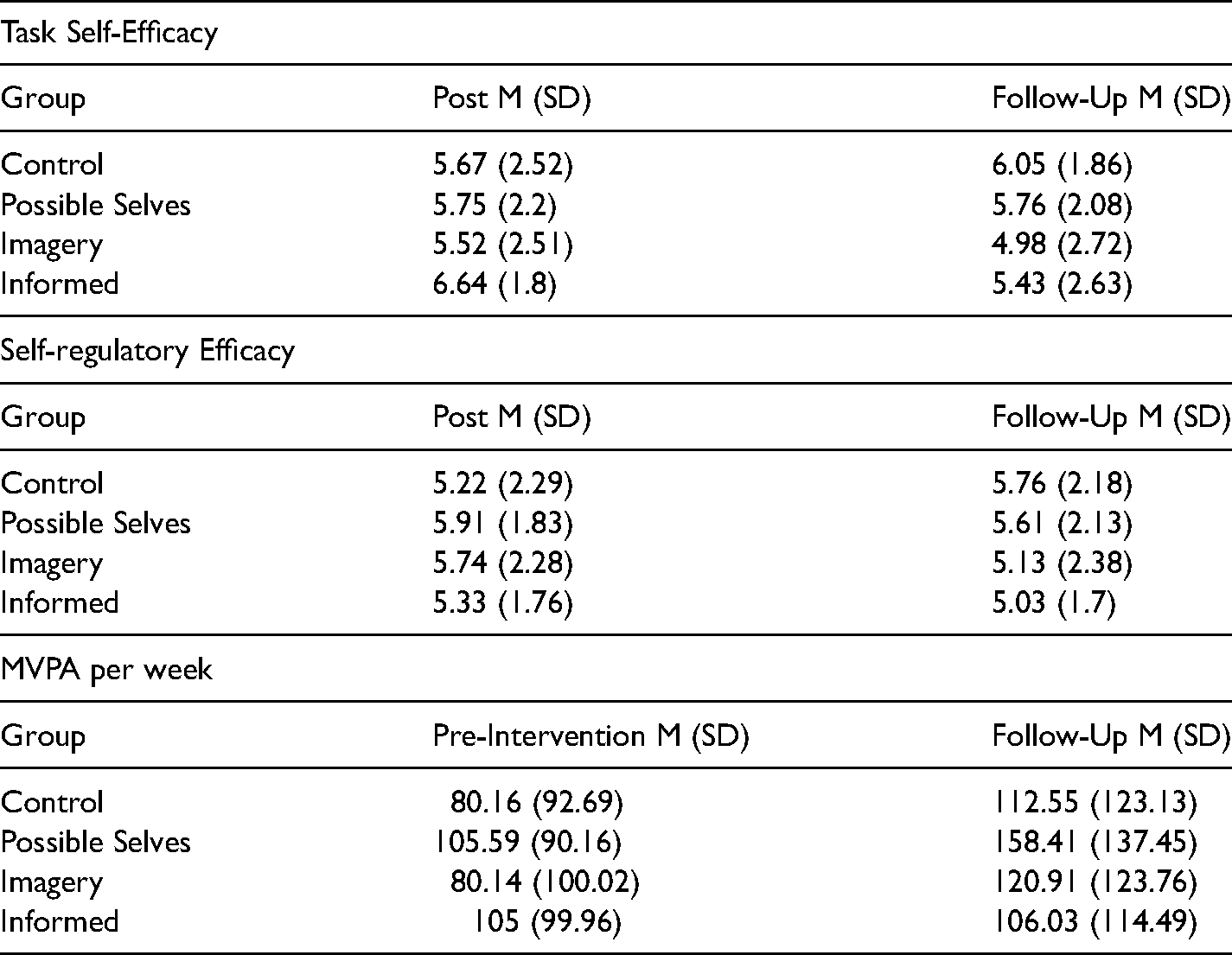
A particular benefit of both these interventions are their effects on self-efficacy. In accordance with Bandura (1977), an individual's motivation and persistence to pursue a behavior or activity is directly related and influenced by their belief in their capabilities to do so. Meaning, a person may be more likely to engage in exercise if they feel confident in their ability to perform the type of exercise. Two commonly assessed forms of self-efficacy are task self-efficacy and self-regulatory self-efficacy. Task self-efficacy is focused on an individual's confidence in their ability to complete a task, whereas self-regulatory self-efficacy is an individual's confidence to perform the task under different or challenging conditions (Bandura, 1990). Both are important for the prediction and initiation of behaviors. Within the exercise context, it is thought that task self-efficacy is required for initiation of the exercise behavior, and self-regulatory self-efficacy is required for maintenance of this behavior (Rodgers et al., 2002). Although there is literature showing the positive effect of imagery on self-efficacy (Cumming, 2008; Duncan et al., 2011) and self-efficacy's moderating role in possible-selves interventions (Murru & Ginis, 2010; Strachan et al., 2017), a gap exists as to what intervention, including a combined imagery and possible- selves intervention, may be more beneficial to increase self-efficacy in exercise settings (Table 1).
Means for Participants who Completed Both Time Points.
Study Purpose
The extensive imagery research on how to create rich and effective images (Cumming et al., 2017; Cumming & Williams, 2013; Williams et al., 2013) may help improve possible selves image generation, and the future-oriented aspects of possible selves (Osyerman et al., 2004; Strachan et al., 2017) may be important for imagery. The use of imagery (past and present) and imaging one's possible self, may foster motivation through a journey metaphor by increasing goal engagement and identity connection (Landau et al., 2014). Thus, combining these interventions may have an additive effect on increasing exercise behavior and PA compared to these interventions on their own. Given the differences between imagery and possible selves interventions, and the benefits of understanding the most effective exercise interventions to empower people to increase their exercise behavior and PA, more research is needed to compare these different methods (including the combination of the two) and their effects on exercise and self-efficacy.
The aim of this study was to compare three exercise and PA promotion interventions to a control group on their ability to increase exercise behavior and self-efficacy. Specifically, we employed a randomized design with four groups: (1) control, (2) standard possible selves, (3) standard imagery and (4) a combined group of imagery and possible selves. We hypothesized that both the imagery intervention, possible-selves intervention, and the combined imagery possible-selves intervention would increase exercise behavior and self-efficacy compared to the control condition. Based on the extensive imagery research on how to create rich and effective images (Cumming et al., 2017; Cumming & Williams, 2013; Williams et al., 2013) we believe this may help improve possible selves image generation, and the future-oriented aspects of possible selves may improve standard imagery tasks (Osyerman et al., 2004; Strachan et al., 2017). Therefore, we hypothesized there would be a synergistic effect, and the combined intervention of both imagery and possible selves would yield the best effects on our outcomes.
Methods
Participants
Following university ethics approval at two Canadian universities, adults (18 years and older) who self-reported engaging in <90 min of moderate to vigorous exercise per week were recruited. In addition to engaging in <90 min of moderate to vigorous exercise per week, participants also had to be: comfortable reading and writing English, free of any health problem which would prevent them from engaging in exercise, the only one from their household participating in the study, and a Canadian citizen. Eligible participants also engaged in walking for exercise or indicated they would consider walking to increase exercise. This latter criterion was used in order to ensure intervention material, which referred to walking, was relevant to all participants. Research assistants utilized in-person and online recruitment strategies. The majority of participants were recruited from an introductory class’ psychology pool at one of the Canadian universities. The participants from the psychology pool received course credit for completing the study. A power analysis using the G*power computer program (Faul et al., 2007) indicated that a total sample of 104 would be needed to detect a medium effect with 80% power and a significance level of .05 for 4 groups with 8 measurements (in order to be powered to examine the interaction effect).
Design and Procedure
A randomized experimental design was used (Trochim, 2006) with four groups and three time points (eligibility assessment for time 1 (T1), intervention material and immediate outcome measures for time 2 (T2) and a four-week follow-up for time 3 (T3)). Interested participants were first directed to an online survey where they were provided with information about the study and then asked to complete the eligibility questionnaire (T1).
Those that were deemed eligible were randomized to either a control group (nutrition information; n = 122), a PA imagery group (walking imagery; n = 117), a PA possible selves (possible-selves imagery as a regular walker; n = 105) or an imagery/possible selves combined intervention condition (walking imagery and possible selves as a walker imagery; n = 99). Participants were randomized using a random numbers table through an online generator. Participants were then sent a link where they could provide informed consent. Consenting participants completed demographic measures, the intervention or control activities (audio recorded clip; see intervention description), a manipulation check, and then immediately answered questions related to their task self-efficacy and self-regulatory efficacy for engaging in PA. Four weeks later, participants completed self-report measures of exercise, task self-efficacy and self-regulatory efficacy.
Intervention Description
For all intervention and control conditions, participants were asked to watch a video, which was comprised of a series of slides with text and an audio-recording of a narrator reading the text. By using slides and a narrator we hoped to capture the participants’ attention, prevent them from skimming through the text, and allow them to immerse themselves in the image generation tasks. All audio-recordings were approximately four minutes in order to ensure equal engagement among conditions. Participants were unaware of the content of the other intervention conditions.
Measures
Data Analyses
Data were cleaned and analyzed using SPSS version 27© statistical software. Data screening and cleaning procedures were performed following the guidelines set by Pallant (2010) and Field (2005). Outliers in each study condition were identified using the z-score cut-off points of +/− 3.29 and were replaced with the nearest score within normal distribution. Assumptions of linearity, normality, and multicollinearity were met before conducting analyses. Outcome variables had 3% to 6% missing data and Little's MCAR and MNAR tests were used to ensure these data were missing at random. Missing values were then estimated using the multiple imputations method.
Pearson's chi-square tests and multivariate analysis of variances (MANOVA) were conducted to determine whether demographic variables were different between groups. In order to examine whether there were significant differences between groups on our outcomes variables immediately post intervention (i.e., self-regulatory efficacy and task self-efficacy), two one-way ANOVA were conducted. In order to examine whether there were significant differences between groups on our outcome variables at four weeks post intervention (i.e., minutes of moderate to vigorous exercise, self-regulatory efficacy and task self-efficacy), a series of 2 (time) X 4 (condition) mixed-model ANOVA's were conducted.
Results
Participants
Initially, 796 people expressed interest; of those 571 were deemed eligible to participate and all completed the intervention and immediate outcome measures (combined condition n = 141; imagery n = 156; possible selves n = 120; control n = 154). One-hundred twenty-eight participants were excluded from analyses due to being a duplicate response (n = 16) or failing the manipulation check (n = 112). Only 112 (control n = 20; possible selves n = 27; imagery n = 35; combined n = 30) of these participants completed the four-week follow-up time point, (T3) leaving 331 that were lost to follow-up. See Figure 1 for the flow chart of participants from eligibility to analysis. The age of the participants ranged from 18–55 (M = 21.13, SD = 5.75). The majority of the participants were Asian (57.14%), had completed up to high school (66.20%), were single (84.40%), and were currently employed full time (60.40%).
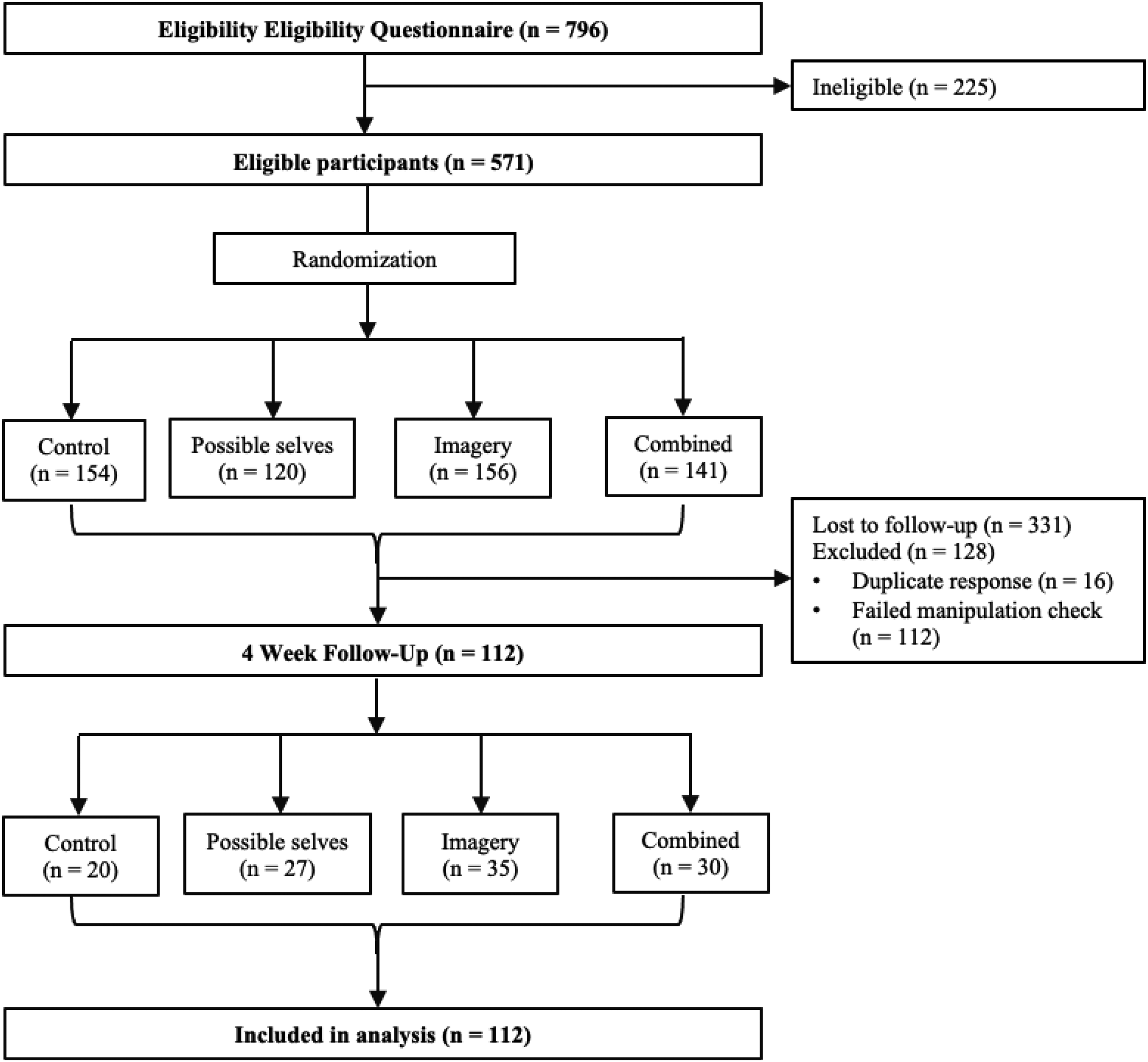
Flow Chart of Participants.
Main Analysis
Results from both the Pearson chi-square and the MANOVA analyses indicated that no demographic variables differed between conditions. Results from the one-way ANOVAs indicated that for both self-regulatory efficacy and task self-efficacy there were no significant differences between groups immediately post-intervention. With regard to differences in weekly minutes of moderate to vigorous exercise between groups at the four-week follow-up, the 2 × 4 mixed-model ANOVA indicated no significant time X group interactions nor a significant main effect for condition. The main effect for time was significant, F (1,108) = 8.45, p = .006, eta-squared = .07. Across all groups, moderate to vigorous minutes of exercise increased from baseline to four weeks post intervention (T1 = 92.72, T2 = 124.48).
Results also indicated that for group differences in task self-efficacy at four weeks post intervention there were no significant time X group interactions nor a significant main effect for time or condition. Lastly, results indicated that there were no significant effects (i.e., interaction, main, time effect) for self-regulatory efficacy at four weeks post intervention.
Discussion
Both the use of imagery and possible selves have been effective in increasing exercise and PA (Duncan et al., 2011; Murru & Ginis, 2010). The aim of this study was to compare three exercise and PA promotion interventions (i.e., imagery, possible-selves and a combined intervention) to a control group on their ability to increase exercise behavior and self-efficacy. We sought to understand if these interventions that share a common feature of image generation differ with regard to their effects on exercise and self-efficacy compared a control group, and if there are additive effects, perhaps through goal engagement and identity connection (Landau et al., 2014), by combining these two interventions. Our findings suggest that there was no advantage of each of these different interventions, including combining imagery and possible selves, compared to the control group on exercise and self-efficacy.
Research on the efficacy of imagery and possible selves on increasing PA and exercise behavior has been promising (e.g., Andersson & Moss, 2011; Duncan et al., 2011; Strachan et al., 2017). In contrast, we found that there were no significant group differences in exercise behavior at the 4-week follow-up. It is also important to note, we had a number of participants that did not take part in the post-intervention. There are many reasons that we may not have found an effect and why we had such a large dropout, and these are offered below.
It is possible that our participants would have benefited from greater exposure to an imagery, possible-self or combined intervention. Indeed, some previous studies looking at these different interventions have provided participants with multiple exposures to each condition (or script); whereas our participants had only one exposure. For instance, Andersson and Moss (2011), found participants increased their exercise behavior by having participants listen to guided imagery, every day, for 2 weeks. However, some studies have found positive results using one-time exposure to imagery scripts or possible self-images, similar to that employed in the current study (Markland et al., 2015; Ouellette et al., 2005). Furthermore, Perras et al. (2016a) tested whether multiple exposure was better than a single possible-selves exposure and found that it was not. The use of multiple time-points in future studies may help elicit when the effects take place, and how long they last after one (or multiple) exposures. Future interventions should also investigate these lasting effects of comparing individuals who only get one exposure versus multiple exposures.
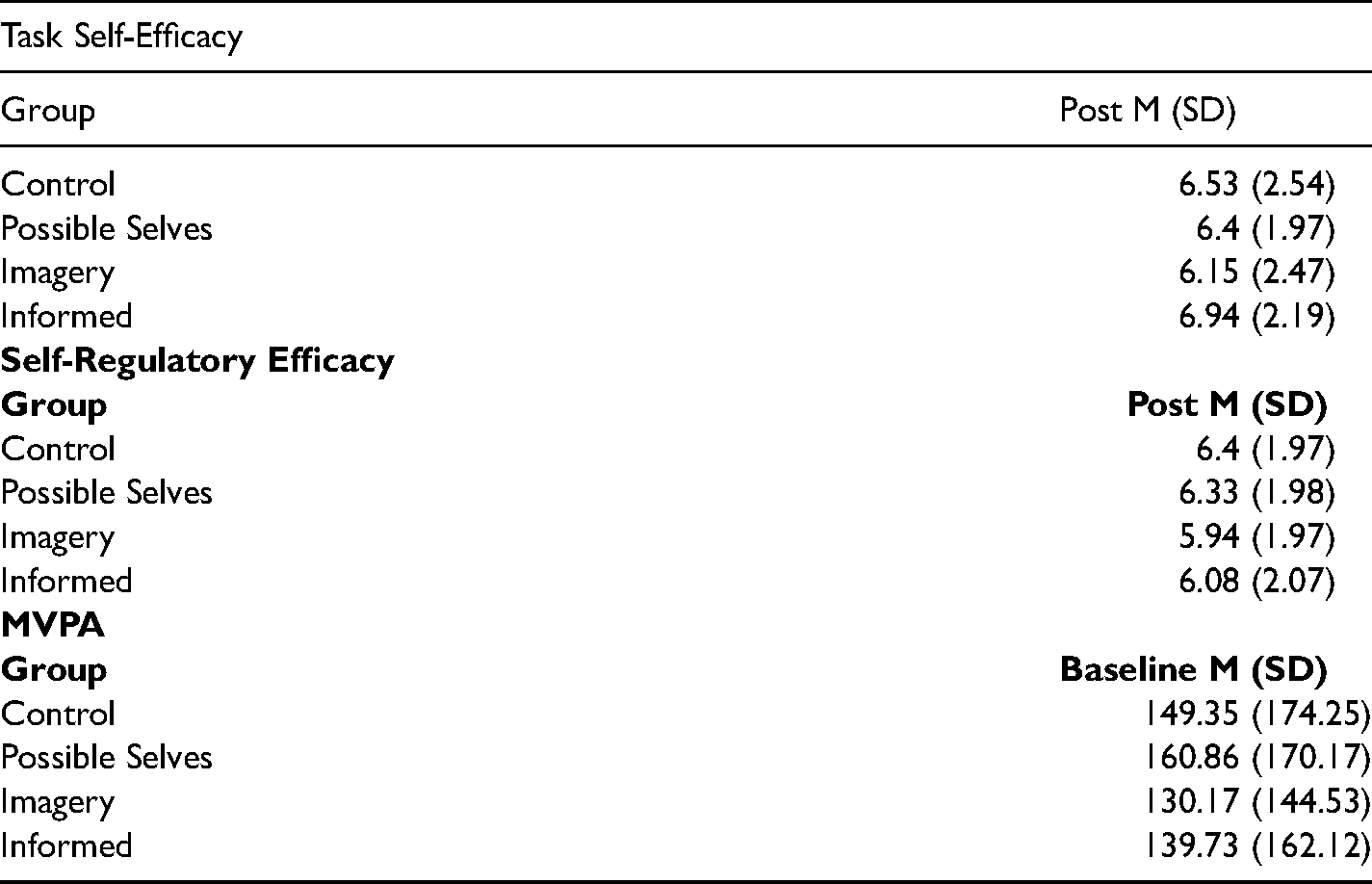
Means for all Participants Who Completed Post-intervention.
Further, the use of nutritional information provided to the control group may have primed people to think about their health and subsequently engage in more exercise over the following four weeks. Providing ‘health’ information or having individuals fill out exercise measures has shown to influence exercise and PA behaviors previously (Perras et al., 2016a), more specifically through measurement reactivity (French & Sutton, 2010; Perras et al., 2016b). When answering the questionnaire about PA behavior, this may increase an awareness that brings about changes (or increases) in an individual's PA (Perras et al., 2016b; Sprott et al., 2016). Therefore, future research could explore different topics that are not associated with improving health.
In a recent review, Corte et al. (2020) looked at possible selves and health behaviors among adolescents. Overall, it was found that perceiving a high likelihood of achieving a desired possible self-goal is associated with lower levels of health-risk behaviors and higher levels of health-promoting behaviors. Similarly, Strachan et al. (2017) found that self-efficacy moderated the effects of their possible-selves intervention. In the present study, it is possible the participants did not believe the possible selves or imagery audio script or did not believe that they had the skills to engage in more exercise (low self-efficacy for the desired self-goal), and hence did not increase their exercise behavior over and above the control group. It is also possible that the current intervention may have only been successful for those individuals that presented with high levels of self-efficacy at the beginning of the intervention. Due to the current sample size, we were unable to test if self-efficacy moderated this relationship, as has been shown previously (Strachan et al., 2017). Finally, given that previous research has shown differences in image generation between males, who report images focused on technique, and females who report images around appearance and health (Cumming, 2008), future research should consider this and determine if there are differences in effects of a combined intervention by sex.
Strengths and Limitations
This was the first study that aimed to understand the differences between imagery interventions and possible-selves interventions, as well as the first to combine these two interventions. It remains unclear whether these interventions combined can improve exercise behavior above and beyond benefits received from these interventions individually, and the current results may be attributed to some of the limitations of the study. Our sample of students may have influenced the lack of success for the interventions. In previous imagery and possible-selves interventions, although some have involved students, more successful interventions included a broader range of participants (e.g., community members). Cooke et al. (2019) found success in increasing both exercise behavior and exercise identity through an imagery intervention for females aged 22–55 years, and Strachan et al. (2017) used insufficiently active community-dwelling adults from ages 18–64 years in their successful online possible-selves intervention. It may be that the convenience sample of students, who were motivated to received course credit, from the participant pool at one of the data collection sites was especially lacking diversity. Students also received credit for each time point; our reduced number of participants for the post-intervention may reflect this; students who did not need further credit did not feel compelled to complete the intervention. Participants were also only exposed to the online intervention audio scripts once. This may not be enough to affect change in attitude or behavior compared to a control condition. Previous work has shown that increased exposure to the intervention (number of times listening to the audio script), as well as longer duration is effective in behavior change (Munroe-Chandler & Gammage, 2005). Finally, exercise was also measured via self-report. Future research could use more objective measures of activity to avoid recall bias (Table 2).
Given these limitations, we encourage future research to further explore the differences between imagery interventions and possible-selves interventions, as well as their combined effects. Despite the lack of differences between groups, the current study was the first to compare and combine imagery and possible-selves interventions. We provide groundwork for future research to compare these interventions in different populations, in order to understand the difference of effects on exercise and PA. Replication of the present work is important; in order to label interventions as effective or not, they need to be thoroughly tested (Valentine et al., 2011).
Footnotes
Declaration of Conflicting Interests
The author(s) declared no potential conflicts of interest with respect to the research, authorship, and/or publication of this article.
Funding
The author(s) received no financial support for the research, authorship, and/or publication of this article.
