



Abstract
This study explored the episodic memories and therapeutic benefits associated with adult doll play. Forty adult collectors described a significant interaction they had with their dolls and interpreted the meaning of the episode. They rated both their narratives and interpretations on 7-point scales. Then they completed four questionnaires reflecting on their motivations for joining the doll hobby, the aesthetic and therapeutic aspects of doll play, as well as play and fantasy and self-perception questionnaires developed in an earlier study. Principal components factor analyses were performed on all scales and questionnaires, and the factors were correlated. In addition, the narratives and interpretations were coded and thematically analyzed. Results show that attachment forms with imagined and situated characters during the customization and story making process. This bonding process was critical in creating meaning and rituals within the ball-jointed doll hobby. Implications for the clinical field and AI mediated devices were discussed.
Keywords
Doll therapy (DT) for adults is predominantly employed in geropsychiatric facilities, for example, targeting the behavioral and psychological symptoms of dementia (Bisiani & Angus, 2013; Braden & Gaspar, 2015; Cantarella et al., 2018; Ehrenfeld & Bergman, 1995). The Newcastle Challenging Behaviour Service in the United Kingdom conducted three studies looking at the ways in which dolls could be therapeutic for people with dementia (Ellingford et al., 2007; James et al., 2008; Mackenzie et al., 2006). Collectively, they found that doll therapy reduced agitation and aggression, wandering, and the use of psychotropic drugs, in addition to an increase in wellbeing and interaction with staff and family members (Mitchell, 2014).
Parallel to this, similarities can be found in a niche community of adult doll collectors, especially in areas related to negative emotions (e.g., isolation and anxiety) and social interactions. Discussions regarding the therapeutic benefits of dolls and doll play for adult collectors are present on social media platforms (e.g., BJD Addicts group on Facebook and the online ball-jointed doll (BJD) forum Den of Angels) and doll-related hashtags on Instagram and Tumblr, along with supplemental informal interviews from active members of the doll community. Doll collectors stated that mere physical interaction with their dolls (e.g., brushing the hair or changing the clothes of their dolls) has a soothing or healing effect.
Ignacio and Cupchik (2020) looked at the relationship between symbolic play in childhood, fantasy and world-building, and adult doll play. They found that a close relationship with toys during childhood was associated with clarity of story characters and coherent story development during a task involving images of dolls and toys in urban and landscape settings. Episodic memories were also helpful in the story creation task. This is related to the research finding that familiar attachments, related to long term memories (e.g., play during childhood), could have a positive impact on individuals suffering from dementia (Kitwood, 1995). Thus, in both cases (i.e., doll play and doll therapy), episodic memories and the act of reminiscing could help in the discovery of past attachments and bonding, which may be used in the present (Angus & Bowen, 2014; Doyle, 1992; Price et al., 1995). Angus and Bowen (2014) stated that people living with dementia attempt to search for meaning by reminiscing about significant events and time periods within the tapestry of their lives. The same could be said for adults who engage in doll play.
The “BJD” Hobby and Its Thriving Communities
Ball-jointed dolls (BJDs) are coveted by doll collectors and artists because of their customizability and flexibility of use. Individuals can personalize the style and appearance of their dolls by selecting the combination of eyes, hair, face and body paint, and clothes their dolls wear, in addition to their preferred body type, height, and size of the dolls. Furthermore, the dolls are poseable and flexible; they are used in various activities such as photography (e.g., “photostories”), story making, role play, sculpting and modification, sewing, and making of props and dioramas (Den of Angels, 2011). The ball-jointed doll hobby is widespread; communities exist online and in different parts of the world. Collectors are active on social media platforms like Facebook, Instagram, Tumblr, and Reddit. Outside of the online platforms, local and region-based groups are also thriving. For example, in the city of Toronto, Canada, “doll meet-ups” are social events often organized by members of the Toronto BJD group.
Often, the purpose of such a meeting is to congregate with other doll collectors, talk about their dolls, and share doll-related projects. It is also an opportunity to meet new people, make friends, sell and buy dolls and/or accessories, and discuss current events and dramas happening in the doll world; local doll meet-ups exist in other countries and cities, not only in North America (Ignacio & Cupchik, 2020). Doll conventions are large-scale doll “meet-ups” attended by hundreds and sometimes thousands of collectors that run for a couple of days and include workshops (e.g., on doll painting and wig- making), in addition to games and recreation (e.g., BJD bingo and doll tea parties), and finally, invited artists, sculptors, and doll companies to showcase their new dolls and sell some of their goods. The ball-jointed doll hobby, with its numerous individual activities and flourishing communities, is an ideal domain to study the therapeutic benefits of dolls and creative doll play for adults. We believe that by investigating the relationship between collectors and their dolls, in conjunction with their individual and collaborative play behavior, it may provide insights into what makes dolls and doll play therapeutic for adult collectors.
Transitional Phenomena, Regression in Service of the Self, and Bonding
Adult doll play is an excellent example of a transitional phenomenon which refers to “an intermediate area of experiencing, to which inner reality and external life both contribute” (Winnicott, 1971, p. 2). The customization process that is a hallmark of the BJD hobby is driven by both fantasy and world-building directed towards the doll (the transitional object). Resources fueling fantasies are often derived from personal information and popular culture. Fantasies involving dolls (i.e., the inner reality) are also informed by a collector’s external reality, and this feedback loop completes the customization process underlying adult doll play (Ignacio & Cupchik, 2020). Moreover, according to Winnicott, the intermediate state is an illusion and individuals may form a group or community based on shared illusory experiences (Winnicott, 1971). Adult doll play is not experienced in isolation but in a community with its own rules and rituals. While adult collectors experience the hobby in a highly personal and subjective way, the value of the community is that members understand and relate to each other. This is supported by specialized language used to refer to certain activities and experiences. For example, the term “faceup” refers to painting a doll’s face; “body blushing” refers to painting a doll’s body; “mods” refer to any kind of modification done to the doll; “SD” refers to the “super dollfie” doll size, which is around 60-65cm; and “bonding,” refers to the intimate physical and emotional relationship between doll collectors and their dolls.
The transitional object becomes important for the infant during sleep and is a defense against anxiety of a depressive type (Winnicott, 1971). A transitional object may persist into childhood (in this case, adulthood), such that it continues to be present at bedtime or during times of loneliness or depressive mood (Winnicott, 1971). However, in times of health and stability, the transitional object is generalized to other areas of interest even if the depressive anxiety is present (Winnicott, 1971). Thus, for the transitional object not to be discarded, it must be flexible such that, during periods of anxiety and distress, it could comfort the individual, and in healthy times, become a source of entertainment and enjoyment. During periods of distress, BJDs provide comfort and a feeling of safety associated with relational bonding between collectors and their dolls. In times of health, the doll becomes an aesthetic object, such that collectors engage in creative and artistic activities that are both pleasurable and enjoyable, promoting connections with other community members.
The idea of “regression in service of the self,” derived from Ernst Kris’ (1952) “regression in service of the ego,” was initially applied to fantasy and world-building in the customization process underlying adult doll play (Ignacio & Cupchik, 2020). Regression in service of the self “involves engaging in childlike behavior and flexible primary-process thinking for the purpose of exploring unresolved life themes …” (Ignacio & Cupchik, 2020, p. 8). Unlike Kris’ concept, which emphasized intrapersonal transformation achieved through controlled regression, regression in service of the self includes both intrapersonal and interpersonal dynamics, as it applies to adult doll play. The intrapersonal aspect follows Kris’ idea of intrapersonal transformation in which gaining a fresh perspective on the self was the goal. In contrast, the interpersonal aspect takes into account the role of the BJD community, including social interactions that occur within the community and outside of it, as well as the relational bonding between collectors and their dolls, which may underlie therapeutic benefits derived from the hobby.
From Dolls to Avatars and AI Mediated Devices
There are implications of this work that go well beyond doll play activity in adults to encompass engagement with non-living characters ranging from avatars to services and devices such as Siri or Alexa. Doll play has a dramaturgic quality that simulates human interaction as meaning is embodied in imagined situated interactions that unfold in time or place (Sarbin, 2003) If every “action begins with a definition of the situation” (Adams, 2009, p. 683), the participants then form new representations and meanings regarding the interaction. In doll play, there is an emergent, dynamic, and organic symbolic representation of the interaction and the potential for projecting self-related information and experiences onto the doll. The plasticity of the representation is such that it might incorporate symbolic qualities based on emotionally tinged episodic memories and unresolved conflicts reaching back in time.
Interactions with avatars and devices are fundamentally instrumental and not meant to be simulations of social interactions. At minimum, doll play activity and interactions with functional devices and characters share mental representations that are personalized and potentially anthropomorphized. However, interactions with virtual assistants are task specific and may pass through two stages of affective development (Cupchik, 2017). The first stage reflects the skill level needed to engage with the device and realize goals. If the person is unable to master engagement with the device, feelings of frustration might set in and the potential “relationship” would be fractured. However, skillful engagement provides good feelings and a foundation for dependence on a device that solves practical problems. This kind of problem solving is not central to adult doll play because of a continuity with childhood schemas, though one might rehearse potential outcomes in specific situations.
Once devices are mastered, the person passes onto a transitional space within which dependence may turn into emotional attachment. Specific features, such as voice qualities (which may be selected from a sample space of options), can become the foundation for personalization. The visual qualities of devices can awaken episodic memories tied to physiognomic or expressive experiences in contrast to mere information conveyed by the geometric-technical qualities of devices as machines (Werner, 1978). Indeed, the sound qualities of handheld devices, such as hair dryers or electric toothbrushes, have been shown to evoke episodic memories in contrast to the mere visual qualities of the devices (Özcan et al., 2017). One might suggest that curved (i.e., organic) shapes, acoustic, and tactile qualities can foster the development of affectively loaded representations and provide a basis for the personalization and anthropomorphizing of design objects (e.g., Steve Jobs and the Apple computer). An ongoing engagement with the device can deepen the roots of attachment and related syncretic imagery which might be embedded in the limbic system (Tucker, 2007). However, once the device ceases to function or is replaced by a newer model, the attachment process must start over from the beginning. In the case of attachment to dolls, even a minor remnant of an old doll may be sufficient to re-instantiate the representation.
Online Study
The current study explored both the intrapersonal and interpersonal dynamics of adult doll play activity, along with an in-depth analysis of collector-doll interactions and the potential therapeutic results that comes from it. Whereas an earlier study (Ignacio & Cupchik, 2020) focused on the aesthetic dimension of adult doll play and the role of fantasy and world-building in the customization of dolls, this one emphasized the potential therapeutic dimension. A mixed-methods approach was used to understand the interaction and relationship dynamics between collectors and their dolls. Collectors in the BJD community were invited to share a significant interaction they had with their dolls and a self-selected sample participated in the study. In addition to writing about the interaction, the collectors were also instructed to interpret the meaning of the episode. They rated both episode and related interpretation on a series of scales. They also completed two new questionnaires, reflecting on motivations for joining the hobby as well as self-awareness regarding relationships with their dolls. Finally, participants completed two questionnaires from the earlier doll study related to Play and Fantasy and sense of Self.
Method
Participants
Forty adult doll collectors (3 males and 37 females; age ranges from 18 to 38 years old) participated in an online study titled “Dolls: Interactions and Reflections.” The study was shared with popular doll groups on social media websites such as Facebook, Instagram, Tumblr, and Den of Angels (an online forum for BJD collectors). Data collection was terminated after the second week because people stopped signing up for the study.
Episode Recollection
Respondents were asked to recall a specific episode in which they had a significant and memorable interaction with their dolls. They placed the dolls on a table in front of them and typed their recollection of what happened during the episode on their computer keyboards. Then, they rated the writing task on six questions using 7-point scales. The questions addressed: the difficulty or ease of retrieving the memory of the interaction; the vividness or clarity of the memory; the extent of absorption in the memory experienced during the writing task; the extent to which the physical presence of the doll during the writing task was helpful in recalling details of the episode; the extent to which the memory or the writing task produced positive or negative emotions; and how stimulating or exciting the memory was for the individual (see Online Appendix A).
Episode Interpretation
After the recall and writing task, respondents interpreted the meaning of the episode and described the context in which it occurred. The interpretation task was rated on four questions using 7-point scales. These questions measured how deeply the individual understood the meaning of the interaction; the difficulty or ease associated with interpreting its meaning; the extent to which individuals believed their interpretations was accurate; and whether they believed the interaction was a result of something that occurred before the interaction (see Online Appendix B).
Questionnaires
Reflections on the BJD Hobby
The individuals’ general awareness of the reasons and motivations behind their doll collecting hobby was measured on a series of 9 questions, using 7-point scales. Insights as to the meaning of the hobby and the purpose of specific activities were also included. These questions assessed the difficulty or ease of identifying the meaning or purpose of the hobby; asked whether or not a deeper meaning exists behind their doll collecting; whether the hobby satisfies a need or emptiness inside of them; whether the dolls represent something beyond pieces of art; and the extent to which the participant contemplated leaving the doll hobby in the future. Questions 6 to 9 touched upon self-awareness and the ability of the individual to reflect upon themselves and their own behavior (see Online Appendix C).
Aesthetic and Therapy Questionnaire
The Aesthetic and Therapy Questionnaire, comprised 10 questions, rated on 7-point scales, and measured the most common dimensions that defined the ball-jointed doll hobby: aesthetics and self-therapy. Question 1 asked whether playing with their doll/s was therapeutic; Questions 2 to 5, and 7 were about doll play and the presence of negative emotions; question 6 measured the relationship between doll play and a lack of stimulation (e.g., boredom); question 8 touched upon the importance of establishing a bond with the doll during play; and questions 9 and 10 pertained to creative and aesthetic experiences (see Online Appendix D).
Play and Fantasy Questionnaire
The purpose of this 25-item questionnaire was to gather information regarding patterns of play during childhood and its relationship to fantasy-laden activities during adulthood.
Self Questionnaire
This 10-item questionnaire, rated on 7-point scales, measured participants’ self-perceptions. The purpose of this questionnaire was to gather information regarding participants’ current beliefs about their identity, personality, and online-offline behavior.
Both the Play and Fantasy, as well as the Self questionnaires were used in an earlier study on the relationship between fantasy and adult doll play (see Ignacio & Cupchik, 2020).
Procedure
Participants who chose to participate clicked on a link provided on the recruitment post that directed them to Google forms. They were presented with the Consent Form to read and initial if they choose to participate.
The first task was to describe a specific episode in which the collector had a meaningful interaction with one of their dolls. Participants were also encouraged to have their doll/s in front of them during the writing task “Please try and recollect a special interaction you have had with your doll/s. It would be best if you could place your doll/s in front of you while doing this exercise. Please provide some context [surrounding the interaction] by describing, in detail, the event/s, thoughts, or feelings that led up to the episode. What prompted you to interact with your doll/s? Where did the episode occur? What did you do with your doll/s? What were you thinking and feeling when interacting with your doll/s and what was the result of that interaction?”
In the second part of the study, participants were asked to reflect upon the episode they had just described. They were asked, “Looking back, what did the interaction mean to you?” Participants were given a limit of 5-8 sentences to write their interpretation of the meaning of the interaction episode. After the interpretation task, they rated their experience on 4 questions using the Episode Interpretation scale.
The third part of the study moved away from the lived-experience with their doll and toward participant reflections about the ball-jointed doll hobby, more precisely, participant insights regarding the motivations and purpose behind adult doll collecting and play. “Please reflect on your experiences as a doll collector and provide us with insights as to the general purpose and motivation behind it.”
The last part of the study was devoted to answering three separate questionnaires including; the Aesthetic and Therapy Questionnaire, the Play and Fantasy Questionnaire, and finally, the Self Questionnaire. After completing questionnaires, participants were given debriefing information and the study terminated.
Results
Quantitative Analyses
All measures were factor analyzed using Principal Components Analysis (PCA) to reduce measurement data by grouping questionnaire items. Subsequently, Pearson correlations were conducted to determine whether factors from different measures correlate (positively or negatively) with each other. Regression scores saved from PCA were used when correlating factors across measures. The purpose of correlating data was to determine whether relationships exist between factors derived from scales associated with the doll interactions with more general factors associated with interests in play activities, fantasy, and a sense of self.
Principal Components Factor Analyses
Episode Recollection
The Doll Episode (6 items) and the Episode Interpretation (4 items) scales were combined to allow for a principal components analysis with varimax rotation (N = 40). Four factors were derived with Eigenvalues of 1.00 or greater and factor labels were based on items with factor loadings of .50 or greater (+ or −). The factors, which accounted for 76.08% of the total variance, included: (1) Depth of interpretation, (2) Memory clarity, (3) Absorption in unresolved memory, and (4) Positive emotions (see Table 1).
Episode Recollections and Interpretations.
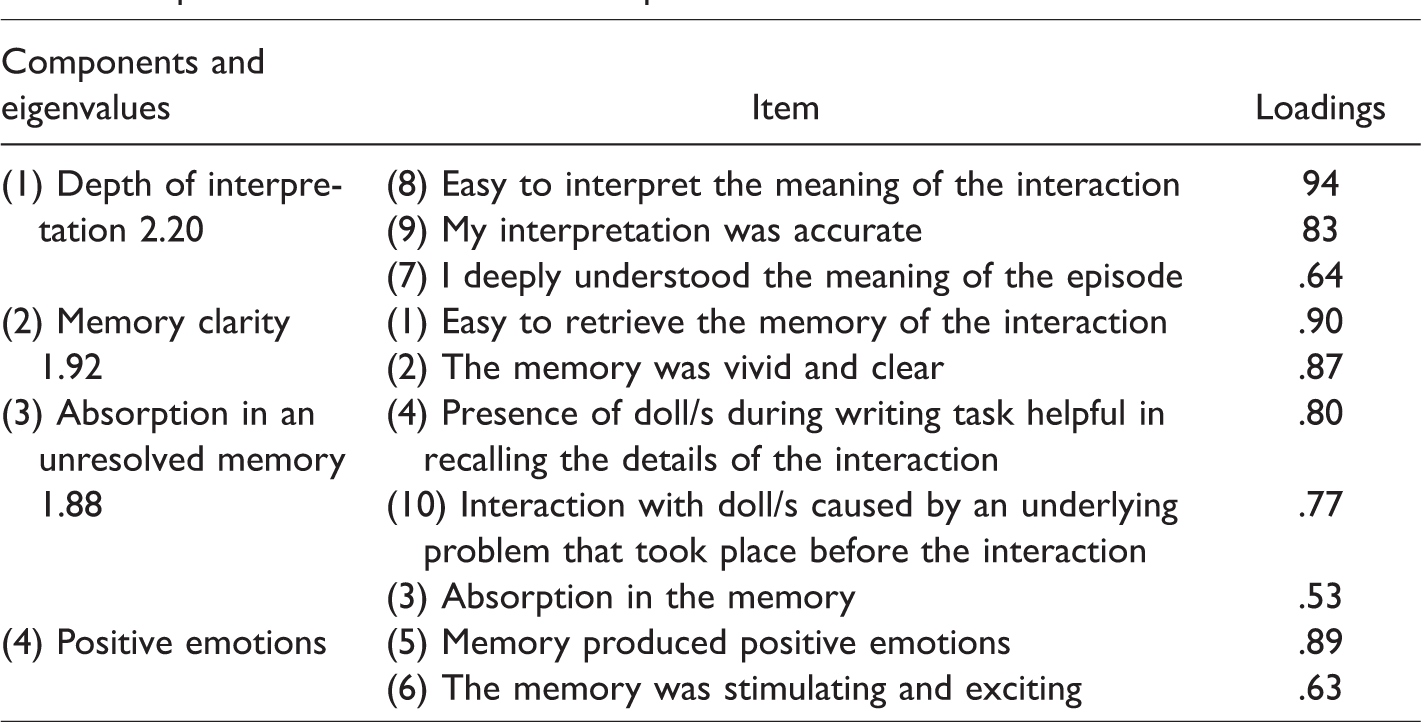
Factor 1, Depth of interpretation, accounted for 22.01% of the variance. This factor was about participants’ easy and accurate understanding of the meaning of the episode recalled during the writing task.
Factor 2, Memory clarity, accounted for 19.18% of the variance. This factor reflected the ease, clarity, and vividness with which the interaction episode was recalled.
Factor 3, Absorption in unresolved memory, accounted for 18.81% of the variance. This factor addressed the extent to which the presence of the doll triggered a memory of an unresolved event such that the person became absorbed in the cascade of memories.
Factor 4, Positive Emotions, accounted for 16.06% of the variance. This factor pertained to positive and exciting feelings that were stimulated by recollecting the episode.
Doll Play Attitudes
A principal components analysis with varimax rotation was performed on the Reflection questionnaire on doll play attitudes (N = 40). In the first analysis, three factors with Eigenvalues greater than 1.00 were extracted accounting for 65.04% of the variance; item 5, I could see myself leaving the hobby in the future, was removed due to cross-loading. In the subsequent analysis, two factors with Eigenvalues of 1.00 or greater were derived and factor labels were based on items with loadings of .50 or greater (+ or −). The factors accounted for 61.14% of the variance and included: (1) Symbolic meaning and (2) Reflective behavior (see Table 2).
Doll Play Attitudes.
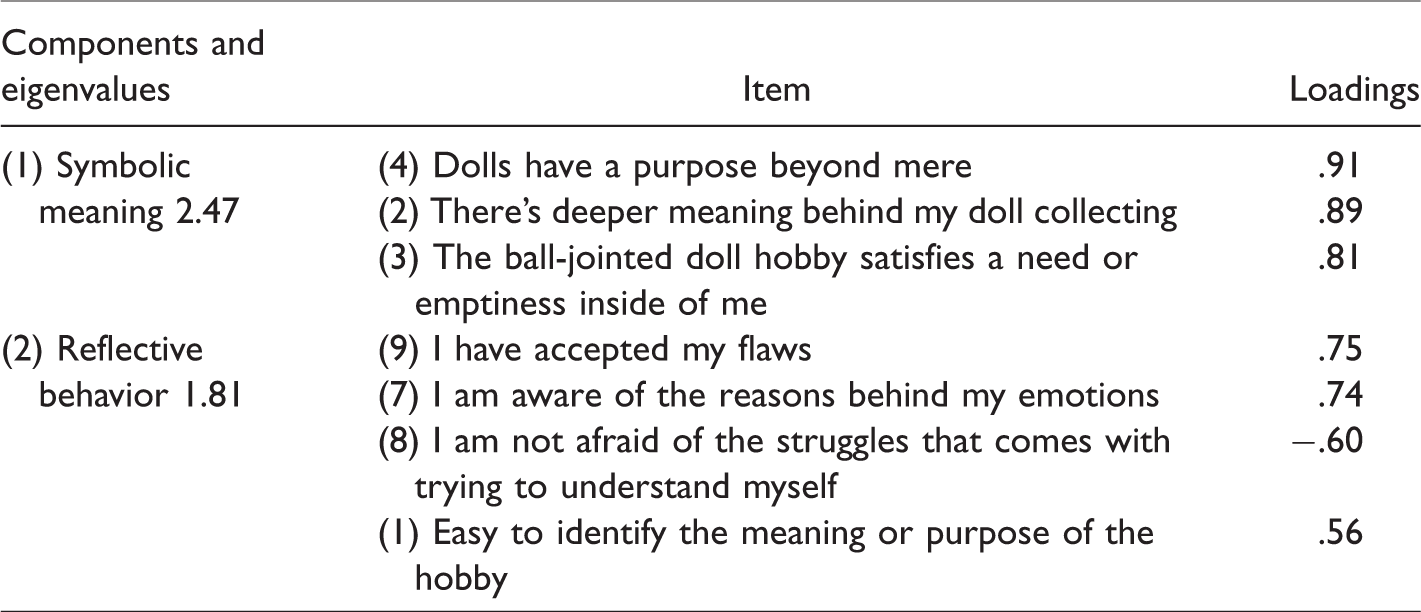
Factor 1, Symbolic meaning, accounted for 35.32% of the variance. Factor 1 reflected the symbolic nature of the dolls and how the doll hobby was both meaningful and related to personal needs. It included items such as dolls have a purpose beyond art, a deeper meaning exists behind doll collecting, and the hobby satisfies a need or feelings of emptiness.
Factor 2, Reflective behavior, accounted for 25.82% of the variance. Factor 2 touched upon the collectors’ ability to reflect upon their own behavior and emotions in general, in addition to being able to accept the difficulties and the struggles associated with understanding the reasons and motivations behind their doll collecting activity.
Doll Play Behavior
A principal components factor analysis, with varimax rotation, was performed on the Aesthetic and Therapy Questionnaire data (N = 40). In the first analysis, there were four factors with Eigenvalues 1.00 or greater and had a cumulative variance of 73.41%. Items 10 and 6 were removed because they were the only items loading on to factors 3 and 4. In the second analysis, two factors were derived with Eigenvalues of 1.00 or greater and accounted for 63.61% of the variance; factor labels were based on items with factor loadings of .50 or greater (+ or −). The factors contrasted escapist-withdrawal with creative-therapeutic engagement (see Table 3).
Doll Play Behavior.
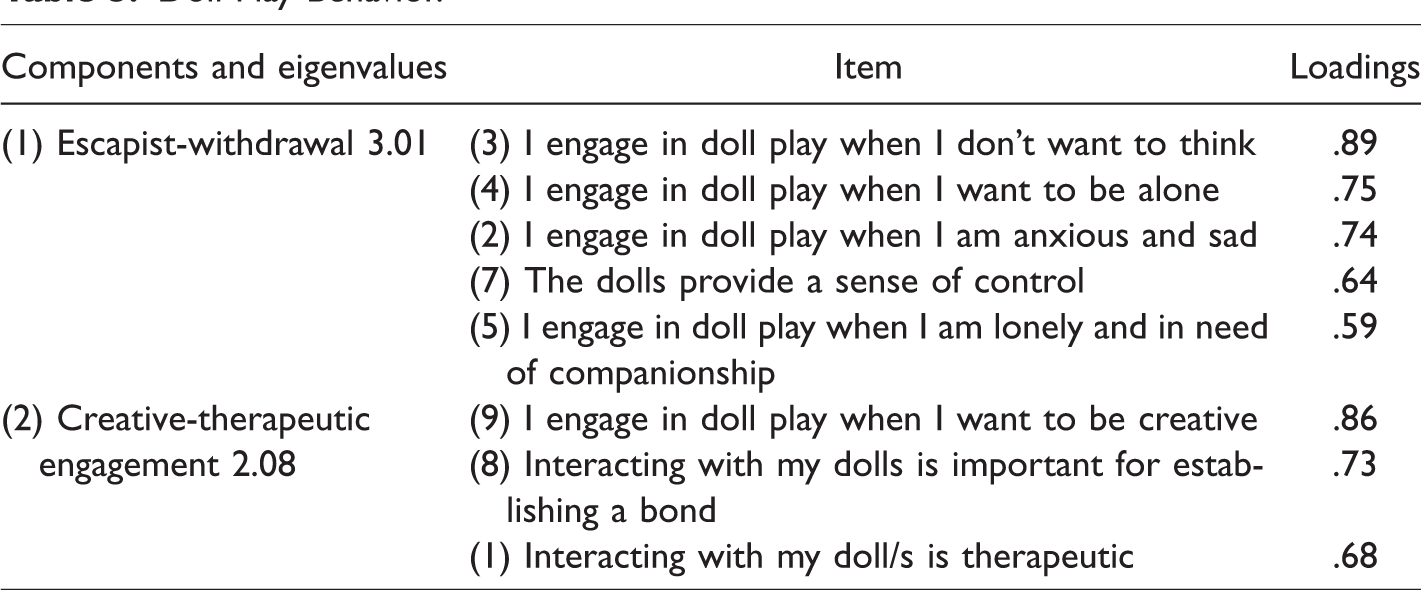
Factor 1, escapist-withdrawal, accounted for 37.63% of the variance and concerned passive aspects of the doll hobby. The items described the companionship offered by dolls during times of self-imposed isolation when the individual did not want to think and was overwhelmed with feelings of anxiety or sadness; instead, a need for control (even illusion of control) was felt during the interaction.
Factor 2, creative-therapeutic engagement, accounted for 25.98% of the variance and reflected the active part of the doll hobby. Factor 2 was not about what the doll and doll play provide for the person, but rather, what the person can do to and/or with the doll (e.g., creative projects); doll play as a medium for creativity and its associated therapeutic properties.
Play and Fantasy Questionnaire
Data for both the Play and Fantasy and Self questionnaires were reported in a previous study (Ignacio & Cupchik, 2020). Data from the earlier and current studies were combined to stabilize the factor structures of both questionnaires and provide more reliable subject weights. Regression scores from the earlier study (i.e., Fantasy and Self measures) were used for correlating with measures in the current study.
A principal components factor analysis, with varimax rotation, on the Play and Fantasy questionnaire data (N = 179) yielded three factors; (1) Fantasy proneness, (2) Anthropomorphism of toys during childhood, and (3) Symbolic play (see Table 2, Ignacio & Cupchik, 2020). Fantasy proneness was concerned with fantasy specific activities and behavior more broadly in everyday life. In addition, anthropomorphism of toys was about the attribution of human characteristics to inanimate objects, specifically toys, during childhood. Finally, symbolic play touched upon a specific fantasy activity performed during childhood, precisely the use of objects in pretend play.
Self Questionnaire
A principal components factor analysis, with varimax rotation, was performed on the combined students’ and experts’ Self questionnaire data from the original publication (see Table 1, Ignacio & Cupchik, 2020) with the 40 new respondents (N = 179). Three factors were derived: (1) Secure sense of self, (2) Insecure sense of self, and (3) Detached but emotional sense of self. A secure sense of self reflects agency and confident self-perception. An insecure sense of self refers to an uncertain and indecisive type of individual. Finally, a detached but emotional sense of self included items such as keeping people at a distance, unsociable and reserved self, and carrying background emotions like sadness, anger, and fear.
Correlations
Nine significant correlations were found relating all factors across various measures, including description and interpretation of the Episodes that respondents shared (4 factors), General Attitudes related to the BJD hobby (2 factors), motivation for doll play Behavior (2 factors), Play and Fantasy disposition (3 factors), and Self-perception (3 factors).
Three correlations were found between factors from the Self and Fantasy questionnaires and the new Attitudes measure. The self-selected sample of doll collectors, who were prepared to share their lived-experiences, accounts for the strength of the findings. A distinction can be drawn here between “childlike” and “childish” dynamics. A childlike disposition can be related to “regression in service of the ego” (Kris, 1952) and, more broadly, to “regression in service of the self” (Ignacio & Cupchik 2020). It involves the use of “playful” primary-process thinking to address unresolved inner tensions and conflicts, as well as achieve aesthetic expression (Kris, 1952; Kroeber, 1963). A childish disposition can be associated with classic “regression” so that the person “resorts to evasive … age-inappropriate behavior to avoid responsibility … and generally unpleasant demands from others and self” (Kroeber, 1963, pp. 187).
Childlike Dynamics
Self Factor 1, secure sense of self, had a positive correlation with Attitudes Factor 2, reflective behavior, r = .58, p < .001, n = 40. Collectors with a secure sense of self were more detached, in the sense that they could take a step back and appreciate the meaning behind their emotions and the motivations behind their actions, without being overwhelmed. This echoes childlike regression in service of the self because it involves an awareness of the intrapersonal dynamics happening within (e.g., emotions and thoughts) and an ability to situate those emotions and thoughts in a wider interpersonal context (i.e., the doll hobby).
Childish Dynamics
Self Factor 2, insecure sense of self, was positively correlated with Attitudes Factor 1, symbolic meaning, r = .36, p = .02, n = 40. This suggests that insecure individuals experience the hobby in personal ways which address deep needs and internal feelings of emptiness. It also reflects the compensatory aspect of the doll hobby which goes beyond the aesthetic dimension. In addition, Self Factor 2, insecure sense of self, was also positively correlated with Fantasy Factor 2, anthropomorphism of toys during childhood, r = .32, p = .04, n = 40. This implies a regressive process reaching back to childhood wherein toys were treated as if they were alive to reduce feelings of isolation during childhood.
Doll Play Episode, Attitudes, and Behavior
The extremely strong correlations demonstrate the value of self-selected participants who were motivated to share their stories and experiences of the doll hobby. The next set of correlations focused on a specific instance of interaction between collectors and their dolls, and thus, provide behavioral data. The behavior associated with the interaction episode, in addition to the attitudes and motivations behind the doll hobby, illustrate the lived-experiences and therapeutic benefits of adult doll play. Relevant measures were the Doll Episode and Interpretation scales, the Reflection scale, and the Aesthetic and Therapy Questionnaire.
Childlike Dynamics
Attitudes toward doll play Factor 1, symbolic meaning, was positively correlated with Episodes Factor 3, absorption in an unresolved memory, r = .49, p = .001, n = 40. When the doll and the hobby were perceived to be deeply personal and significant, the presence of the doll during recollection evoked vivid and clear episodic memories related to residual emotion (positive and negative) in the collectors’ life. Furthermore, symbolic meaning, was also positively correlated with Episodes Factor 1, depth of interpretation, r = .40, p = .01, n = 40. This correlation links behavior and attitudes; when the episode served an emotional purpose, collectors believed that they deeply understood the meaning behind their play behavior, and that their interpretations of the doll interactions were accurate. This also reflects a clear awareness of the reasons why they currently participate in the doll collecting hobby.
In addition, symbolic meaning, was also positively correlated with Doll Play Behavior Factor 2, creative-therapeutic engagement, r = .54, p < .001, n = 40. This demonstrates that collectors who established a bond with their dolls through creative doll play saw deeper meaning in the hobby and their play behavior. Finally, Doll Play Behavior Factor 2, creative-therapeutic engagement, was positively correlated with Episodes Factor 2, memory clarity, r = .48, p = .002, n = 40. Accordingly, collectors who saw doll play activity as both creative and therapeutic found it easier to retrieve clear memories of their chosen episodes.
In summary, the symbolic nature of the relationship between collectors and their dolls, in the sense that the doll hobby transcends aesthetic appreciation and in fact satisfies needs and emptiness felt by the collectors, is the root of the therapeutic benefits of adult doll play. This is evidenced by the positive associations between symbolic meaning and (1) absorption in an unresolved memory, (2) depth of interpretation, and (3) creative-therapeutic engagement. This cluster of correlations shows that, if the doll hobby is both meaningful and personally significant, collectors were absorbed in the memory of the interactions, they deeply understood and easily identified the reasons behind the interactions, and they were able to derive comfort from the interactions. In other words, doll play is therapeutic because it allows collectors to define the parameters of their play in accordance with their immediate needs and desires without being overwhelmed; control over the duration and direction of the interaction episodes was pivotal in fostering comfort and feelings of safety.
Childish dynamics
Episodes Factor 3, absorption in an unresolved memory, was also positively correlated with Fantasy Factor 1, fantasy proneness, r = .44, p = .005, n = 40. As expected, individuals high on fantasy proneness were actively involved in the narratives and world-building created for their dolls. Moreover, Episodes Factor 3, absorption in an unresolved memory, r = .32, p = .04, n = 40, was positively correlated with Doll Play Behavior Factor 1, escapist-withdrawal. Immersion in a memory involving the doll was associated with important emotional episodes and the illusion of having control over an event. This is critical because it suggests that an emotional or negative event prior to the doll interaction could have prompted the interaction to occur.
In summary, with regards to the difference between (childish) escapist-withdrawal and (childlike) creative-therapeutic engagement with dolls, the latter deals with the unresolved tensions and emotions within the doll play, while escapist-withdrawal used doll play as a means to forget (or escape) the unresolved tensions and emotions. Collectors who used doll play to escape were instead overwhelmed with unresolved tensions and emotions. Whereas the earlier cluster of correlations indicate a positive coping style, this latter cluster indicate a negative and defensive motivation for doll play.,
Qualitative Analysis of the Interaction Episodes and Interpretations
Emotions
Negative and positive affects were extracted from the doll interaction narratives using the automatic coding feature of NVivo 12. The auto code technique generated a frequency count of negative and positive emotions for each participant (N = 40). In total, negative emotions were referenced 28 times while positive emotions were referenced 64 times in the doll interaction narratives. A chi-square analysis of the positive and negative affect did not yield significant results.
Thematic Analysis
A comparison of the negative and positive emotions in the doll interaction narratives suggests that doll collectors, by and large, described their interaction with their dolls in a positive manner. Thus, it is crucial to examine these interactions closely. A thematic analysis of the narratives was conducted to determine the event/s surrounding the interaction, the result of the interaction (i.e., the impact), and the patterns that emerged from these interactions. Thematic analysis was conducted by the primary investigator.
Thematic analysis was chosen because the goal was to provide a rich description of the phenomenon of adult doll play as described by those who engage in it. The exploratory nature of thematic analysis suits the goal of the project because the lack of research prevents prediction and theory-driven analysis. It is important to note, however, that since this is a follow-up study (see Ignacio & Cupchik, 2020), certain ideas discussed in the first study (e.g., concerning aesthetic and therapy properties of adult doll play) were important when designing the study and generating the scales and questionnaires.
In general, thematic analysis was data-driven (an inductive approach), which means the themes identified were strongly linked to the data (Patton, 1990). Furthermore, the analysis was grounded on an essentialist/realist approach, in which the motivations, experience, and meaning behind adult doll play were the focus of the analysis (Braun & Clarke, 2008). Finally, we paid attention to the latent themes of the narratives (as opposed to just the semantic themes) because we were particularly interested in identifying the features that gave adult doll play its form and meaning.
Codes were generated in accordance with the Coding Manual for Qualitative Researchers by Saldaña (2009). Ideas regarding thematic analyses were derived from Using Thematic Analysis in Psychology by Braun and Clarke (2008).
A. Negative Event Preceding the Interaction
Eleven participants (28%) mentioned a negative event or memory (e.g., surgery, death etc.) that took place before the interaction; the negative event or memory often prompted the doll play and interaction to occur. I was experiencing an anxiety attack due to it being the anniversary of my mom's suicide … So Ibrought out my big doll Hijikata and laid down on my bed and turned on movie while I justfiddled with his hair and played with his jointed hands. – Participant 1, female, 31 years old Last year, my job was so bad that every day, I was crying when I came home … the best way tocalm myself down was to hold one of my SD BJDs in my arms (always the same one) and hug it. – Participant 38, female, 24 years old
B. Bonding With the Doll
Participants were asked to describe how they interacted with their doll and what the interaction was like. Almost all of the participants (with the exception of Respondent 40) referred to their dolls by their names or used a personal pronoun (e.g., he/she and him/her). The doll interactions were described by respondents as comforting and satisfying, with moments of physical and emotional intimacy, which the doll collectors referred to as bonding with their dolls. Furthermore, dolls were treated as friends or companions. Lastly, outside of the doll interaction, which was personal and private in nature, doll collectors engaged with each other and formed active communities online and in the real world. Thus, interaction occurred both intrapersonally, in a world shared with their dolls, and interpersonally, in a world shared with other doll collectors. Analysis of the interpretation of the interactions were also conducted.
Physical and Emotional Intimacy
Feelings of intimacy and satisfaction associated with the doll and the interaction were accompanied by touching the doll and/or play with doll, sleeping beside the doll, and a deep and personal connection with the doll. In addition, the play interactions and the doll were used to regulate emotions and provide comfort to the collector. The first passage spoke about emotional connection with their dolls, while the second passage touched upon physical interaction between the collector and their dolls and the intimacy associated with it. I'm overwhelmed with joy, I feel like I share a genuine connection with all of them, aheartwarming feeling like being in love, feeling responsible for them and at the same timeknowing that they are merely dolls, but I still love them like they were my children, and I handlethem with the same care and kindness. – Participant 27, male, 30 years old I like to keep them on my lap and they are heavy. Sometimes I hug them and kiss them on thehead. They are just too perfect for me and dreams that came true! Sometimes I feel so happywith them that I feel the need to “take care” of them and I also stare at them for a while. Happywith what I accomplished. These moments are only mine. All happens in my room and when I'malone. Even when I'm opening the box of a new doll I rather be alone so I can enjoy it in my owntime without having to pay attention to someone/something else. – Participant 11, female, 34 years old
Companionship
Dolls were also referred to as ‘friends’ by the doll collectors and as companions when they are lonely.
I had conflict with my employer that made me feel very stressed and kind of worthless, and Ididn't feel like I could really tell anyone how negatively it affected me. But I came home andwatched TV with my doll beside me, and felt less alone. Waking up in the morning and havingthe doll there to greet me felt like an encouragement from a friend.
– Participant 21, female, 27 years old
C. Community
The doll interactions described by the collectors were experienced privately, often in isolation and away from other people; it is a deeply personal aspect of the hobby. Consequently, the doll hobby also provides a means to interact and connect with other collectors. Social gatherings and conventions are commonplace. A significant online presence exists in popular social media websites such as Facebook (e.g., BJD Addicts), YouTube, Instagram, Tumblr, and an online forum dedicated to the ball-jointed doll hobby (e.g., Den of Angels website). I haven't ever had friends as a kid, which is why I always kept my Barbies and Monster HighDolls closer to me. After watching a video on YouTube, I found out about other dolls (DollfieDream, Pullip, Blythe and BJD). Since discovering them, I've had a couple Dals, a Taeyang, a Tangko Doll, and now I'm onto (sic) BJDs … It made me really happy, just to see that others wereinto dolls … just seeing other's use dolls the same way made me feel like I belong. Which was allI wanted. – Participant 9, female, 18 years old My cousin had a few friends come over who I didn't know very well. At first I was veryembarrassed to be seen with these dolls laid out all over my table, in different states ofdisarray/disassembly. I thought the guests would think I was weird and creepy for playing withthese realistic dolls as an adult. I wanted to cover them up and hide them until our guests left, butthen one of the women took an instant interest in what I was doing. She told me my dolls werebeautiful and I swelled with pride and we got to talking about dolls for hours. Not only did I getthat woman also involved in the hobby, with her buying her own doll a few short months later,but she also quickly became one of my closest friends and later my roommate. Whenever I lookat those two dolls I think about how they're also linked to my personal relationships. – Participant 13, female, 24 years old
D. Interpretation of the Doll Episode Interactions
The goal of the interpretation section was to gauge participants’ understanding and awareness of their interaction with their dolls. In the quantitative analysis of the Episode Recollection and Interpretation scales, depth of interpretation, accounted for the highest variance in the analysis (37.80%). It demonstrated that doll collectors could easily and accurately identify the meaning of the interactions, in addition, to deeply understanding their experiences. The interpretation narratives echo this sentiment. Doll collectors expressed not only the importance of the doll but also the interactions with their dolls. The interpretation section is important in elucidating the personal motivations, meaning, and latent themes of the doll interactions. It meant I got to bond and connect with my dolls that represent characters from my own stories. It felt like interacting with them, but at the same time I was aware of the fact thatthey were just dolls and not real, living beings. – Participant 27, male, 30 years old I'm not entirely sure I can fully describe the happiness and fond memories I have when I'm withmy dolls. It's like an escape for me. From my reality and my problems. For a while I can just bea girl with her dolls and stories. It's incredibly important to have an outlet or escape for me as Ido suffer with depression and anxiety. The first interaction with my first doll is something I will never forget. She brought me so much happiness as soon as I held her in my hands. – Participant 36, female, 56 years old
E. Aesthetic Appreciation
The ball-jointed doll (BJD) hobby is unique because the dolls closely resemble human anatomy and proportions. In fact, ball-jointed dolls have joints that allow movement of the fingers, ankles, arms, legs, chest, and head. The dolls wear clothes, wigs, and glass or resin eyes that are as detailed as human eyes. Some dolls are sculpted beautifully and ideally, with attractive faces and bodies, while others are sculpted or painted with human flaws in mind (e.g., acne, scars, large nose etc.). In essence, the BJD’s are like humans albeit in a much smaller and portable size. I was looking for realistic dolls to use as models for fashion designs that I want to make. Searching online reached to Ball jointed dolls and the realistic kind. Felt mesmerized by the beauty, I even remember the first doll I’ve seen it was Iplehouse Bibiane. Ordered her and threemonths later she arrived, I was blown away with the details and beauty. – Participant 29, male, 37 years old I like to cut and style all my dolls hair when they get any new wig. Upon receiving a new wig fora doll that has been bald, I will set them up on a plastic sheet while also covering them in plastic; preparing them for the cut like a hair cutter would. I’ll be at my living room table carefullysnipping away at the ends, checking the length with their features and styling it with my fingers. – Participant 22, female, 27 years old
F. Fantasy and World-Building
As mentioned previously, almost all of the participants referred to their dolls by name or using personal pronouns. Naming the doll is not only important in bonding with the doll, it also reveals the world-building aspect of the doll hobby marked by character and story creation involving dolls. I very clearly remember as soon as I unboxed my first doll I interacted with her immediately. She had a name and a story already pre-built in my mind before she arrived and everything just clicked into place … To me they feel like real people. They have a personality and a story, a history, likes and dislikes. So I often end up finding myself daydreaming and thinking up more about them when I sit and play with them. – Participant 36, female, 25 years old
Relationship Between the Quantitative and Qualitative Data Analysis
Principal Components Analysis revealed that the depth of interpretation factor (Recollection and Reflection Scales), symbolic meaning (Attitudes), and escapist-withdrawal factor (Behavior) accounted for the highest variances (22.01%, 35.32%, 37.63% respectively) for each of the specific questionnaires and scales used. Thus, factors (and by extension, the quantitative analysis) guided the thematic qualitative analysis by informing our approach. We focused on the motivations, experiences (essentialist/realist), and latent themes of the narratives and interpretations because the quantitative data showed that the purpose, meaning, and need-based satisfaction (from the symbolic meaning factor), as well as affect themes (from the escapist-withdrawal factor), accounted for the highest variances. We
employed a data-driven approach due to lack of research and theoretical foundations on the adult doll play phenomenon. A clear relationship between the quantitative and qualitative analysis methodology was important in establishing validity of the thematic qualitative analysis.
Discussion
A mixed-methods approach to research was critical in connecting the collector-doll relationship with the therapeutic benefits derived from adult doll play. The concepts presented in the qualitative results section define the nature of the relationship between collectors and their dolls, and how that relationship was formed. On the other hand, results from the quantitative data define the nature of the therapeutic benefits of adult doll play. The current study focused on a specific interaction that collectors had with their dolls, which included the context surrounding that interaction, the implications of that interaction, and the collectors’ understanding of the interaction. The goals of the study were (1) to provide insights into the process of individual adult doll play, as described by those who engage in it, and (2) to elaborate on the therapeutic benefits of adult doll play.
The Doll Studies
The Nature of the Relationship
The qualitative data illustrate the relationship between collectors and their dolls. Central to the relationship is the bonding process defined by (1) physical and emotional intimacy and (2) companionship. Thus, the crucial question is what fosters the bonding process? Part of the answer is that the bonding process is achieved through the customization of dolls (see Figure 1). At the onset, the doll is considered a neutral object (i.e., a blank slate). Overtime, the doll takes on projected qualities from the collector. The first doll study showed that fantasy and world-building drive the customization and personalization of dolls. Fantasy and world-building are shaped by self-related information, memories, salient experiences, and personal preferences. The customized doll must be consistent with the idealized and imagined character (i.e., fantasy) and related to the collector’s sense of self.
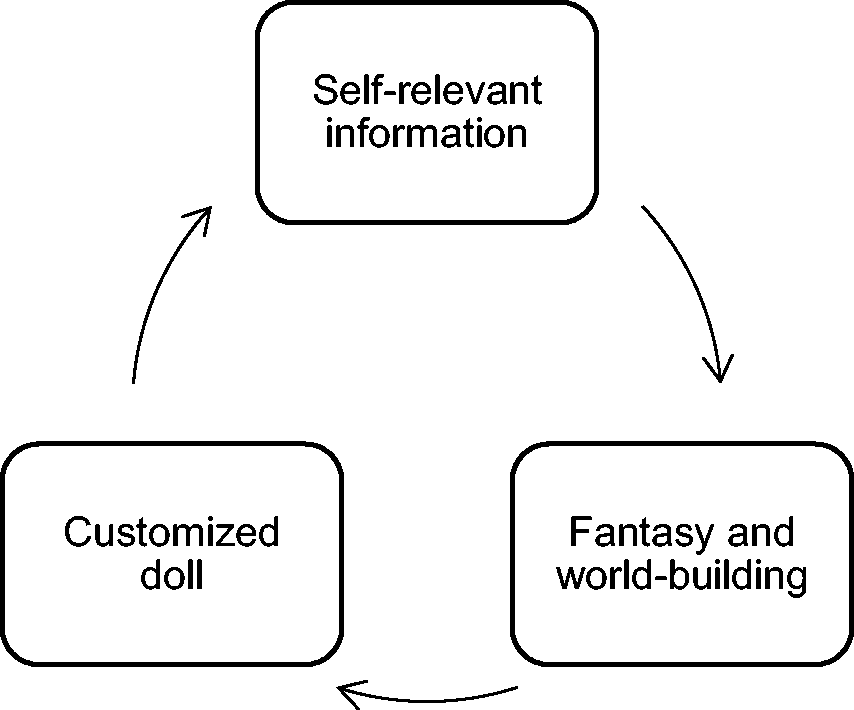
Illustrates the Customization Process in Adult Doll Play.
The customization process and planning involved is pivotal to the bonding process that defines the nature of the collector-doll relationship. When customizing the doll, the collector spends considerable money, time, and energy. The constant interaction and physical touching involved during customization help form the basis of a meaningful relationship between the collectors and their dolls set within the transitional space. In other words, the dolls take on projected qualities during customization and bonding occurred when the imagined doll characters become associated with physical and emotional intimacy, as well as companionship. To further illustrate this point, in Japan, doll funeral ceremonies are held for dolls (and stuffed toys) outgrown or unwanted by their owners (Kamiya, 2006; Mealey, 2016). The point of the celebration is for the owner to say ‘thank you’ and ‘farewell’ to their dolls, release them from their hands and lives, and free the spirit/s that inhabit the dolls (Kamiya, 2006). The ceremony is described as a solemn and quiet affair, as if attending the funeral of a relative or a loved one, which is not far from the truth as stated in this article: “Both Okamoto and Yamada believed it just wasn’t right to simply toss their dolls into a rubbish bin, not least because of the memories that they embody.” (Kamiya, 2006). The relationship the Japanese have with their dolls is similar to that of the doll collectors: both view their dolls as meaningful objects and both formed significant relationships with their dolls. This was possible because attachment forms not with the object (“the doll”) but with the representation projected on to the doll (i.e., imagined character).
The Nature of the Therapeutic Benefits
In the quantitative data, the correlations clustered in two contrasting groups: ‘childlike’ regression in service of the self and ‘childish’ regression. For the childlike cluster, collectors derived therapeutic comfort from the doll interactions when the doll and the hobby were perceived as personally meaningful and when they engaged with their dolls creatively. Engaging with dolls in a creative manner allowed the collectors to process their emotions and thoughts without pressure within the parameters of a safe environment. In contrast, collectors displayed childish regression when doll play was used to escape their emotions and inner turmoil (i.e., become numb). Thus, childlike regression in service of the self indicates a positive coping style, whereas standard childish regression indicates a negative coping style.
The nature of the collector-doll relationship, in which attachment forms with the representation (i.e., imagined character) projected onto the doll, has implications for the nature of the therapeutic benefits derived from adult doll play. The collectors’ interactions with their dolls represent the human tendency to seek comfort through touch during periods of distress (e.g., seeking a family member for a hug). Hence, the touching of their dolls and the fondness with which the collectors interact with their dolls creates a certain intimacy and fosters bonding. It thus mirrors forming connections in everyday social relationships.
The role of dolls, as mediators of fantasy (i.e., means of externalizing the fantasy or making the representation concrete) within the transitional space, is the crux of the therapeutic interaction. In other words, the situated interactions between collectors and their dolls’ imagined characters underlie the therapeutic benefits of adult doll play. The interactions are illusions because they occur between the collector and an emergent, organic, and dynamic representation projected onto the doll. Meaning and comfort can then be derived from these simulated interactions as evidenced by the quantitative data. To conclude, doll play is representative of four things: (1) seeking comfort through touch, (2) collector-doll bonding as akin to human relational intimacy, (3) therapeutic value through projection of fantasies onto the situated interaction, and (4) attachment to the symbolic representation mediated by situated doll play. Thus, the customization and bonding processes form the major dimensions of adult doll play: (1) Aesthetic and (2) Therapeutic. Aesthetic properties are concerned with the fantasy, world-building, and artistic expression involving dolls. Therapeutic properties are concerned with meaning, purpose, and the relationship between collector and their doll. Regression in service of the self serves as the bridge that connects both aesthetic and therapy episodes by elucidating the intrapersonal and interpersonal motivations of adult doll play.
Beyond the Doll Studies
In the context of doll therapy and dementia, it is important to consider whether a relationship with the object (“the doll”) truly exists, since attachment is formed not with the object but with its representation (e.g., the doll’s imagined character). Nonetheless, the collectors in this study maintained a pseudo-relationship with their dolls defined by a sense of “as if” the interaction occurred and “as if” they received feedback from their dolls. This thinking could be applied to individuals with dementia because the therapeutic framework rely on the powerful role of representations fed by self-related information and long-term episodic memories. Furthermore, both doll play and doll therapy rely on the fundamental and primitive notion of touch. In doll play, collectors seek physical intimacy with their dolls through touch during periods of distress. This simulated interaction is a low-risk comfort-seeking behavior that is unlike real human interactions because the collectors have total control over the direction and duration of the social episode. As for doll therapy, fostering physical intimacy (or at the least physical sensation) through touch could be a low-risk intervention for managing difficult behaviors. The act of reminiscing (Angus & Bowen, 2014; Doyle, 1992; Price et al., 1995), combined with touch or physical sensation, could help in the discovery of past attachments and bonding. The bonding between collectors and their dolls could be compared to bonding that occurs between mother and child. The collector-doll bonding involves physical and emotional intimacy, as well as companionship. In fact, the physicality of some of the interactions was crucial in regulating emotions and providing calming effects to the collectors. However, unlike mother and child bonding which is a two-way interaction (i.e., the mother does something to the child and the child responds), the collector-doll bonding one-sided. No matter what the collector does to their doll, it will never respond.
As a consequence of the rapidly changing technological landscape and breakthroughs in artificial intelligence, virtual assistants like Alexa and Siri and digital persons like Amelia from IPSoft, have the potential to augment human interaction with non-living entities by responding to human needs. To further illustrate this point, Patrick Nelson from Network World shared a report conducted by J. Walter Thompson and Mindshare regarding user interaction with their virtual assistants (Nelson, 2017). In that report, 37% of those surveyed wished for their virtual assistants (e.g., Alexa and Siri) to be real people, and some individuals had actual fantasies about their virtual assistants (Nelson, 2017). Moreover, according to Mindshare, there may be an emerging emotional attachment to virtual assistants (Nelson, 2017). Devices like Alexa are different from ball-jointed dolls in their ability to respond (albeit in a limited manner) to human needs. This has implications for attachment. With the dolls, the bonding process will always be incomplete, but with machines, there is potential for the bonding to feel complete since machines can interact with individuals. This will be more apparent once we move from virtual and digital “assistants” toward virtual and digital “companions.”
The doll studies tell us that attachment does not form with the doll but with the symbolic character the doll represents. We speculate that attachment with virtual assistants operate in the same manner since virtual and digital assistants are a natural extension of the dolls used in this study. If the collector imposes self-related fantasies and episodic memories on their doll, it is possible that a user has the potential to go through the same process and impose fantasies toward their virtual assistants. But before a meaningful relationship with machines could form, one must get past the learning curve associated with interacting with a new object or device.
Conclusion
A self-selected sample of participants accounts for the inordinately strong correlations (i.e., .54, .49, .48, .44) which are a rarity in personality-oriented research. The qualitative data served as participant impact statements that complement the quantitative data and help explicate the foundations of attachment between collectors and their dolls. Processes associated with customization and bonding are highlights of the study. The symbolic representation of dolls in situated play provides an opportunity for either defensive “childish” regression or coping-oriented “childlike” regression in service of the self. The intensity of engagement in doll play leads to a temporary abandonment of the distinction between subject and object (Barron, 1963). This relates to Winnicott’s (1971) “transitional space” and the holistic quality of the situated play experience. The customization and subsequent play activity complete the attachment to an idealized and symbolic representation of the doll. This attachment is based on affectively loaded representations projected onto the object. The doll play findings, in particular regarding collector-and-doll bonding, could be taken as an example of what a relationship between a living and a non-living entity might look like. These studies provide insights and information about what to consider (e.g., regarding design) once social robots and digital companions become prevalent in society. It is beneficial to study human-machine relationships since it may augment our understanding of real and imagined distal interactions.
Supplemental Material
sj-pdf-1-ica-10.1177_0276236621989227 - Supplemental material for Therapeutic Benefits of Adult Doll Play
Supplemental material, sj-pdf-1-ica-10.1177_0276236621989227 for Therapeutic Benefits of Adult Doll Play by Angelie Ignacio and Gerald C. Cupchik in Imagination, Cognition and Personality
Footnotes
Declaration of Conflicting Interests
The authors declared no potential conflicts of interest with respect to the research, authorship, and/or publication of this article.
Funding
The authors received no financial support for the research, authorship, and/or publication of this article.

Supplemental material
Supplemental material for this article is available online.
Author Biographies
References
Supplementary Material
Please find the following supplemental material available below.
For Open Access articles published under a Creative Commons License, all supplemental material carries the same license as the article it is associated with.
For non-Open Access articles published, all supplemental material carries a non-exclusive license, and permission requests for re-use of supplemental material or any part of supplemental material shall be sent directly to the copyright owner as specified in the copyright notice associated with the article.
