



Abstract
Hybrid work has turned employee experience into a phygital phenomenon, in which physical and digital experiences jointly shape well-being and organizational performance. Yet existing employee experience models often treat physical and digital domains as isolated, parallel, or only partially connected, offering limited insight into how their interaction produces coherence or tension in employees lived work experiences. This conceptual article develops the Phygital Work Experience (PH-WX) framework to theorize work experience within an integrated physical and digital environment. We introduce a dual-realm conceptualization of work experience as 4Ps (Person, People, Purpose, Place) and 4Ds (Design, Data, Device, Decision) and define phygital work congruence as the degree to which the 4Ps and 4Ds align to support coherent, meaningful, and psychologically supportive work. Drawing on employee well-being research, internal market orientation, sociotechnical systems, and paradox theory, we theorize how phygital congruence and misalignment in work experience emerge across three levels: micro (broader employee experience), meso (leadership, culture, HRM, infrastructure, ethical governance), and macro (economic, technological, socio-cultural, institutional forces). The paper contributes to macromarketing by offering a human-centric lens for analyzing and designing hybrid work experiences.
Keywords
Introduction
Over recent decades, globalization, rapid digital technological advancement, and major global disruptions such as the COVID-19 pandemic have markedly accelerated the phygital transformation of organizations and everyday work practices. What initially emerged as an emergency response to digital disruption has since evolved into hybrid phygital work as a dominant mode of organizing work. Companies such as Salesforce (n.d.) have institutionalized the shift toward phygitality through policies like Success from Anywhere, which grant employees the flexibility to combine home, office, and third spaces according to task requirements and personal preferences. Meanwhile, most organizations continue to view and design employee experience as if remote and in-office work were separate and disconnected realities. Batat (2023) characterizes this tendency as a mono-approach to value creation, in which technology, physical space, and human experience are treated as parallel domains rather than as interdependent experiences of everyday work. This comes typically with isolated employee well-being initiatives and gives rise to reactive, piecemeal interventions, such as standalone wellness apps, or inappropriate office redesigns, that fail to cohere into an integrated value-creating employee experience (Pandey et al., 2025). For instance, organizations may grant employees the freedom to work from home, thereby signaling greater physical autonomy, while simultaneously deploying digital monitoring systems such as keystroke tracking software to closely supervise employee activity and productivity. We conceive that such incoherence or incongruity between physical and digital work experiences generates feelings of discomfort that undermine employee well-being. Specifically, the autonomy promised by remote work at the physical level may be perceived as eroded by a digitally mediated logic of control, giving rise to a paradoxical condition that generates internal tensions for employees.
Physical-digital fragmentation in organizational practice is mirrored in the academic literature. Most extant research on employee experience adopts a similarly monolithic perspective on digital and physical work (Guest, 2017; Plaskoff, 2017), with dominant employee experience models privileging domain-specific productivity outcomes over a holistic understanding of the sources of employee well-being. As a result, the existing literature does not sufficiently account for how the integration of physical, tangible, and spatial elements of employee experience with digital technological elements jointly shapes work performance (Tucker et al., 2019). Although a small number of studies engage with the phygitality of employee experience, they focus on isolated micro-level interactions, such as employee chatbot interactions, extended-reality applications used in the office, or connected devices. Digital technologies function as system actors that shape work experience by configuring roles and setting constraints, rather than merely providing support for work activities (Anderson et al., 2024). Moreover, what remains absent from the literature is a macromarketing perspective on phygitality in employee experience that treats phygital employee experience as a systemic phenomenon shaped not only by immediate work experience but also by higher-order dynamics, including corporate leadership, organizational structures, and broader environmental forces. Scholars have frequently emphasized that marketing phenomena unfold within broader marketing systems rather than isolated dyadic encounters (Layton, 2008; Vargo et al., 2020; Vargo & Lusch, 2014). Foundational work conceptualizes marketing systems as socio-technical configurations in which micro-, meso-, and macro-level structures are deeply intertwined (Akaka et al., 2023; Anderson et al., 2024; Layton, 2008). From this perspective, how work is organized and experienced cannot be understood without attention to the systemic contexts in which it is carried out. Consequently, research has yet to theorize phygital employee experience as an integrated system embedded across micro, meso, and macro contexts.
To address these gaps, this article develops the Phygital Work Experience (PH-WX) framework as a multilevel (micro, meso, macro) conceptual model. PH-WX integrates four core facets of physical work experience (the 4Ps: Person, People, Purpose, and Place) with four core facets of digital work experience (the 4Ds: Design, Data, Device, and Decision), thereby offering a unique structured perspective on how physical and digital experiences jointly shape employees’ everyday work realities and well-being.
This article provides new insights into the multilevel dynamics of phygital employee experience by addressing the following research questions: (1) How do micro-, meso-, and macro-level forces jointly shape phygital employee experience? and (2) How do these multilevel interactions affect employee well-being? It offers several contributions to the macromarketing and employee experience literatures. First, it develops the PH-WX framework as a comprehensive multilevel model of phygital employee experience considering physical and digital work experiences as inherently interconnected. Second, it develops new theorical insights about how core components of human well-being, namely agency, joy, stability and meaning (Batat, 2022), emerge through the alignment, or congruency, between the 4P and 4D dimensions of phygital work experience. Third, integrating paradox theory (Smith & Lewis, 2011), this article provides systemic insights into how micro-, meso-, and macro-level factors jointly generate incongruencies in phygital work experiences, producing tensions that may culminate in paradoxical work situations with implications for overall employee experience and well-being. Fourth, the PH-WX framework advances macromarketing scholarship by reframing work experience as a socio-technical value system in which employee well-being emerges from the combination of physical and digital arrangements across micro, meso, and macro layers. This systems perspective clarifies why and how misaligned phygital arrangements give rise to persistent negative outcomes analogous to marketing system failures, in which structural configurations systematically disadvantage employees and organizations over time (Layton & Duffy, 2018; Williams et al., 2021). For scholars, this article therefore offers a systemic theoretical foundation for examining phygital employee experience as an interconnected ecosystem. For managers and policymakers, it offers a diagnostic lens to understand how macro-, meso-, and micro-level factors give rise to misalignments in phygital work experience, thereby undermining employee well-being, work performance, and ultimately organizational success.
Literature Review: Employee Experience and Well-Being
Employee Experience and Work Experience
The concept of employee experience is well established in the literature yet varied in scope, often described as a holistic human resource paradigm that integrates culture, leadership, processes, and physical space into a coherent system (Plaskoff, 2017). An employee experience perspective differs from adjacent lines of thinking such as Internal Market Orientation (IMO) and Socio-Technical Systems (STS) theory. IMO is grounded in the logic of viewing employees as internal customers whose needs should be identified, communicated, and satisfied to enhance organizational performance (Gounaris, 2006; Lings & Greenley, 2005). While this perspective usefully foregrounds employee needs, satisfaction and internal value creation, it primarily conceptualizes employees as recipients of managerial offerings. However, IMO pays limited attention to how employees experience the integrated physical-digital interplay in their everyday work. Moreover, STS provides an important foundation by emphasizing the joint optimization of social and technical subsystems in organizational design (Emery & Trist, 1973). While STS adopts a system-centered perspective, employee experience remains implicit and secondary to system effectiveness and stability. While STS explains how social and technical elements should be aligned, it offers limited guidance for diagnosing how such alignments are actually experienced phygital work contexts. By contrast, an employee experience perspective as conceptualized in this research places the lived work experience (4Ps, 4Ds) at the center of analysis.
Viewed as the core of the modern employee value proposition, valuable employee experience represents an orchestrated blend of meaningful work, technology, and inclusive leadership (Panneerselvam & Balaraman, 2022), capturing the cumulative experiences formed across various touchpoints from recruitment to exit (Morgan, 2017). Scholars approach employee experience through complementary lenses: as an evolution of engagement emphasizing emotional connection and motivation (Harter et al., 2002; Saks, 2006); as an experiential design challenge shaped by the environment (Klaus et al., 2024); or as a managerial orchestration where supportive leadership and psychological safety drive commitment and performance (Jebsen & Lueg, 2024). A strong empirical base ties positive employee experience to outcomes such higher commitment, stronger job performance, lower turnover intentions, and improved employer branding (Lievens & Slaughter, 2016). Organizations that deliver an enhanced employee experience tend to retain talent more effectively, innovate more readily, and cultivate stronger reputations as desirable employers (Dery & Sebastian, 2017; Morgan, 2017).
Within this expanding body of work, Batat (2022) proposed the Employee Experience (EMX) framework, which positions employee well-being as both a strategic design imperative and an organizational outcome. The EMX model marks a shift away from previous literature viewing employee well-being as a reactive policy outcome (Guest, 2017), toward understanding it as a continuous organizational responsibility embedded in how work is designed (Alnizari, 2024). Batat (2023) suggest that well-being is not only a performance driver but also a moral purpose of “future-fit” organizations, requiring that employee experience becomes a vehicle for belonging and social cohesion, especially in hybrid and digitally mediated contexts.
In this article, employee experience denotes the broader relationship between individuals and organizations across the entire employment lifecycle, encompassing stages from attraction and hiring to exit and alumni engagement, as well as the expectations, interactions, and touchpoints that extend beyond daily work activities (Batat, 2023; Hom et al., 2017; Kahn, 1990). We treat employee experience as a micro-level construct and differentiate it from the adjacent, even more narrowly defined concept of work experience. Phygital work experience refers to employees lived experience of everyday interactions and workflows as they unfold within and across physical and digital environments, structured by the 4P and 4D dimensions of phygital work experience, as detailed below.
Employee Well-Being
Employee well-being is a multidimensional concept that captures how individuals experience and evaluate the quality of their working lives (Dong & Yan, 2022). It encompasses affective, cognitive, and social dimensions that shape how people feel, function, and flourish in their work environments (Danna & Griffin, 1999; Guest, 2017). Empirical research links high employee well-being to greater engagement, creativity, and organizational citizenship, as well as to lower turnover and absenteeism (Guest, 2017; Harter et al., 2002). In contrast, low well-being undermines motivation, collaboration, and innovation, outcomes that are central to the success of hybrid and phygital organizations.
Two broad research traditions anchor employee well-being conceptually (Ryan & Deci, 2001). The hedonic perspective focuses on happiness, positive affect, and satisfaction, often measured through indicators such as job satisfaction or affective commitment (Ryan & Deci, 2001). The eudaimonic perspective, in contrast, emphasizes meaning, purpose, growth, and the realization of one’s potential (Ryff & Keyes, 1995). Sirgy's (2012) Psychology of Quality-of-Life framework brought hedonic and eudaimonic elements together, showing how satisfaction in specific life domains, including work, contributes to overall life satisfaction and personal fulfillment. The model stresses that well-being arises from alignment between individual values, supportive social relationships, and environmental conditions, rather than from psychological states alone. Batat's (2022) EMX model distinguishes four dimensions of well-being, hedonic, eudaimonic, functional, and emotional, to capture how both performance-related experiences (such as competence, effectiveness, and progression) and relational experiences (such as belonging, recognition, and identity) shape how employees feel and function. This broadens well-being from a psychological condition to an experiential outcome created through everyday work experiences. Taken together, the literature suggests that employee well-being is not an isolated human resource metric but an outcome of continuous interactions between individuals and their immediate and broader environments. This view lies at the core of PH-WX, which we introduce in the next section.
Conceptualizing Phygital Work Experience
We conceptualize phygital work experience as emerging from the interplay between physical and digital aspects of work. To structure this interplay, we distinguish four dimensions of physical work experience, the 4Ps (Person, People, Purpose, and Place), and four dimensions of digital work experience, the 4Ds (Design, Data, Device, and Decision). Together, these dimensions shape how work is organized, enacted, and experienced in phygital settings, and provide the foundation for understanding subsequent effects on employee well-being. Existing employee experience models offer valuable insights but rarely provide a unified architecture that reflects hybrid settings. Most frameworks emphasize HR processes, managerial practices, or touchpoints (Plaskoff, 2017), but they do not map the deeper experiential foundations that arise from being a person situated simultaneously in physical space and digital systems. As such, the PH-WX framework connects human sensibilities with technological capabilities and emphasizes that employee well-being in hybrid work contexts arises from their alignment rather than from their isolated effects.
To theorize how this alignment process takes place, we introduce the concept of phygital congruity, defined as the extent to which physical and digital work experiences cohere in ways that support employees’ needs, values, and expectations. This perspective builds on quality-of-working-life research showing that well-being depends on the perceived fit between individual needs and values and the affordances provided by work environments (Efraty & Sirgy, 1990; Sirgy, 2012; Sirgy, 2021). When digital work experiences reinforce rather than contradict physical work experiences, or vice versa, employees experience coherence and clarity in how work is organized and enacted. Under such conditions of high phygital congruity, physical and digital work experiences align systemically, fostering employees’ senses of agency, joy, stability, and meaning and, in turn, supporting sustained well-being and high-quality work experiences.
Physical Work Experiences (4Ps)
The 4Ps (Person, People, Purpose, Place) synthesize core aspects of extant employee well-being research by mapping the physical (embodied, relational, symbolic, and spatial bases) elements of work experience. Person centers on the individual as an active agent, as suggested by person-environment fit theory, which emphasizes the alignment between individual needs and contextual affordances (Caplan, 1987). Physical work environments that support a person's privacy, offer personalization, and personal control enhance intrinsic motivation, emotional regulation, and sustained concentration (Batat, 2022; Deci & Ryan, 2014; Kim & de Dear, 2013; Oldham & Fried, 2016). People refer to the social actors in the work environment, including colleagues, supervisors, and broader workplace communities, who structure the relational dimension of work experience (Edmondson, 2018; Kahn, 1990; May et al., 2004). Through everyday interactions, social support, and informal coordination, people provide emotional security and foster a sense of belonging that is central to psychological safety and engagement (May et al., 2004). Physical arrangements such as shared spaces and opportunities for spontaneous interaction shape how social connections among people are formed, maintained, and experienced at work. Purpose encompasses the meaning attached to work and links individual motivation to collective identity and shared goals (Rosso et al., 2010). Physical artifacts, symbolic office design, and everyday rituals function as tangible cues that communicate organizational values and priorities. These elements anchor meaning in the material environment, enabling employees to connect their daily activities to a broader organizational purpose and to experience their work as significant and worthwhile (Pratt & Ashforth, 2003; Rafaeli & Pratt, 2013). Place denotes the physical surroundings in which work takes place, including factors such as light, air quality, acoustics, and biophilic cues that shape sensory and cognitive experience (Al Horr et al., 2016; Ashkanasy et al., 2014; Gonçalves et al., 2023; Kaplan, 1995). Well-designed workplaces support comfort, attention, and cognitive restoration, while poorly designed environments can generate fatigue, distraction, and stress (Al Horr et al., 2016; Vischer, 2007). In this way, place acts as a spatial condition that enables or constrains how employees engage with tasks, colleagues, and their work more broadly.
Digital Work Experiences (4Ds)
In the digital realm, the 4Ds (Design, Data, Device, Decision) constitute the core dimensions of digital work experience. Mirroring the logic of the 4Ps, these digital elements must align with human needs to support agency, joy, stability and meaning.
Design covers the functional, emotional, and aesthetic qualities of digital interfaces that shape cognitive load and affective experience (Hassenzahl & Tractinsky, 2006). Intuitive navigation and thoughtful interaction patterns reduce cognitive strain and support psychological safety by making systems predictable and legible to users (Shneiderman, 2020; Udsen & Jørgensen, 2005). Digital interface design involves both standardized and personalized elements. Standardized interaction patterns support reliability and ease of learning, whereas personalization options enable users to exercise control, express identity, and experience moments of enjoyment (Hassenzahl & Tractinsky, 2006; Lambillotte & Poncin, 2023).
Data captures the informational layer of digital work experience that personalizes workflows, coordinates activities, and guides decision making (Logg et al., 2019). When used transparently and responsibly, data can enhance relevance, efficiency, and learning by tailoring information to individual roles and contexts. At the same time, data practices can raise concerns about surveillance, privacy, and autonomy, particularly when data collection and use are perceived as opaque or misaligned with tasks and employee expectations (Andrejevic & Gates, 2014; Kayas, 2023; Zuboff, 2019).
Device refers to the digital access points, including laptops, wearables, and sensors, that define communication, mobility, and patterns of mental and embodied interaction at work. Research suggests that responsive and adaptive devices reduce physical strain and help maintain a sense of presence and continuity across locations and tasks (Chughtai, 2020; Karapanos et al., 2016; Peters, 2023). Devices therefore mediate not only access to digital systems but also how employees physically and cognitively inhabit hybrid work environments, shaping comfort, attention, and inclusion.
Decision encompasses digital system structures, such as algorithmic decision rules and AI-based decision-support systems, that guide or constrain action by embedding organizational priorities, rules, and thresholds into digital infrastructures (Parasuraman & Riley, 1997). These system structures can support employees by reducing uncertainty, coordinating complex tasks, and enhancing consistency across decisions. However, when automated decision processes become opaque or override human expertise, they may restrict discretion and professional judgment, raising concerns about accountability and perceived fairness despite gains in efficiency (Lee, 2018; Parasuraman & Riley, 1997; Shin, 2020).
The PH-WX Framework
Our conceptual model (Figure 1) suggests that employee well-being depends on the congruence (Efraty & Sirgy, 1990; Sirgy, 2012; Sirgy, 2021) between the 4Ps of physical and the 4Ds of digital work experiences. As theorized before, we conceive that when the 4Ps and 4Ds work in concert, employees perceive their work environment as stable, supportive, and intuitive; however, when they contradict one another, the result is friction, cognitive overload, and diminished well-being. By conceptualizing phygital work experience as a dynamic system (Layton, 2008), we posit that well-being emerges from ongoing socio-technical interactions between the digital and physical subsystems rather than resulting from isolated or static experiences. Moreover, we conceive that phygital work experiences are shaped by interrelated micro-, meso-, and macro-level factors (Akaka et al., 2023; Anderson et al., 2024; Layton, 2008). At the micro-level, work experience is shaped by the broader employee experience. The meso level represents the organizational context within which work is embedded, and the macro-level consists of broader environmental forces. We next elaborate on how these micro-, meso- and macro forces shape phygital work experience and, ultimately, employee well-being through phygital work congruence.
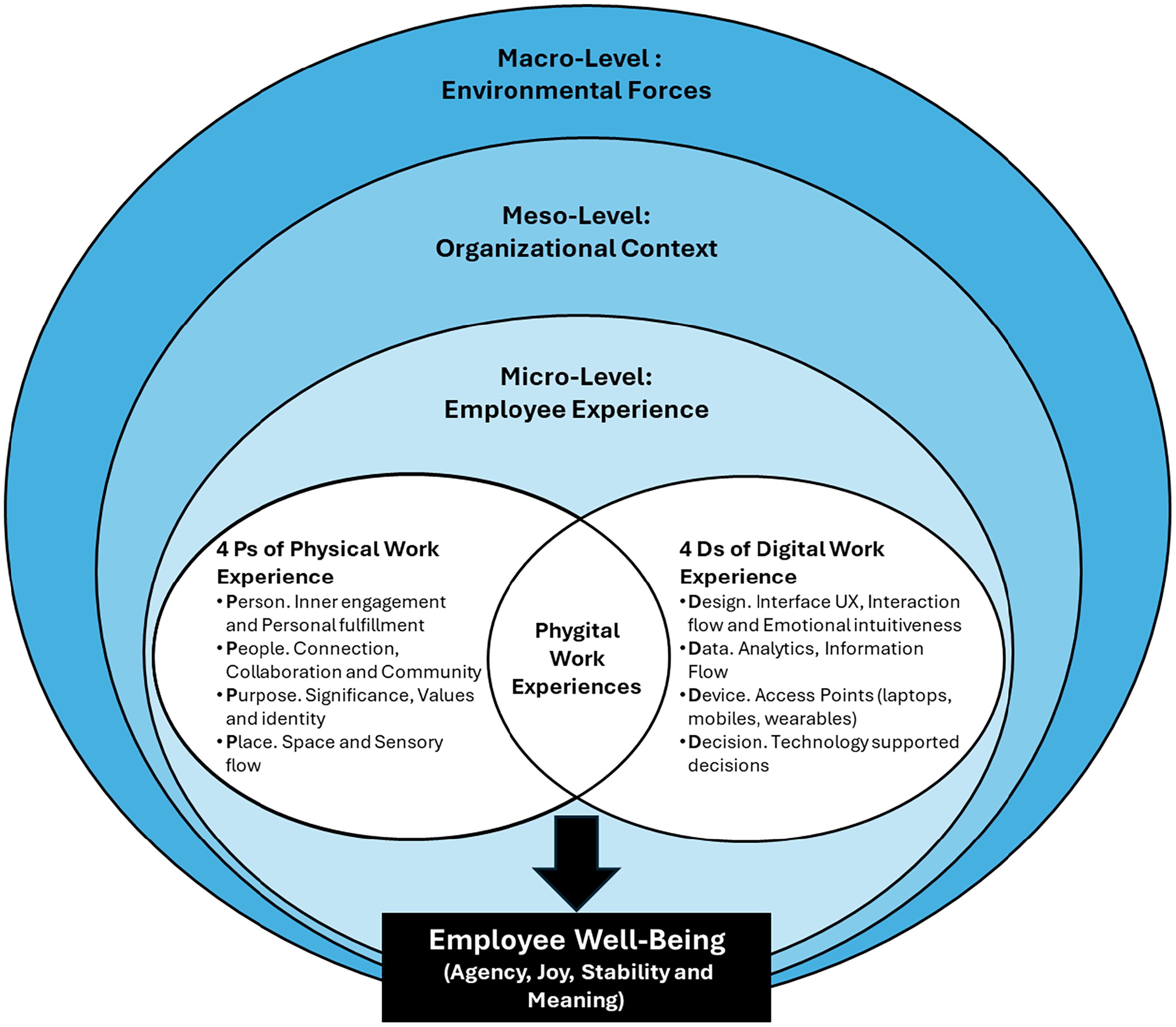
Conceptual model.
Micro-Level: Employee Experience
At the micro-level, which we conceptualize as the broader employee experience, specific phygital work experiences unfold in the flow of daily 4P-4D interactions. From a systems perspective, employee experience operates as a higher-order contextual layer than work experience. Employee experience captures the broader, cumulative relationship between individuals and organizations across the employment lifecycle, including prior experiences, expectations, and perceptions of organizational intent. These experiences form a cognitive and emotional backdrop that shapes how employees’ approach and interpret everyday work experiences (the 4Ps and 4Ds). Employee experience therefore conditions how physical and digital work configurations impact well-being. Identical work arrangements may be experienced as enabling or constraining depending on micro factors such as employees accumulated experiences with leadership, fairness, and organizational support. For example, practices such as digital monitoring or standardized workflows may be interpreted as supportive in micro contexts characterized by trust, yet as intrusive control where prior experiences have eroded confidence.
Meso-Level: Organizational Context
Systemic enablers at the meso-level reflect the organizational subsystems that coordinate how work is structured, interpreted, and supported. Drawing on sociotechnical systems theory (Emery & Trist, 1973), work system theory (Alter, 2013), and organizational climate and human resource management research (Jiang et al., 2013; Schneider et al., 2013). The literature identifies five core domains through which organizations actively shape the phygital work experience: leadership behavior, workplace culture, technological infrastructure, human resource management systems, and ethical governance. These domains function as organizational antecedents of work experience by structuring the physical and digital processes, practices, and controls through which employees experience work. Collectively, they reflect areas of organizational design and oversight through which firms can influence how physical and digital work environments are experienced.
Leadership is the meso-level mechanism that most directly shapes how the 4P and 4Ds come together in daily work. The way leaders communicate, set expectations, and introduce tools determines whether employees experience digital systems as supportive or intrusive (Cardon et al., 2025). In practical terms, leaders translate strategy into everyday habits, for example, by shaping how performance dashboards are used, how hybrid meetings are conducted, and how flexible work norms are modeled. A core responsibility of phygital leadership is to identify and close phygital gaps so as to minimize tensions and strengthen the overall employee experience. These routine leadership actions incorporate assessments of how technology supports employees’ agency, joy, stability, and sense of meaning, ultimately contributing to employee well-being. Phygital leadership also bridges inclusion and collaboration by fostering safe digital norms that promote physical cohesion and belonging. Similarly, leaders who champion flexible spatial and technological arrangements, encouraging hybrid meeting formats or adaptive workspaces help employees move fluidly between physical and virtual environments (Sott & Bender, 2025).
Technological infrastructure constitutes the tangible and operational backbone of the phygital work experience. When information systems, physical spaces, and human resource processes are coherently aligned, technology supports continuity, coordination, and psychological safety (Dery, 2005). Well-integrated phygital infrastructures enable employees to transition smoothly between physical and digital modes of work while maintaining a sense of connection and flow (Sargent & Mitchell, 2023). For example, unified communication tools, synchronized calendars, and responsive workspace systems help ensure that collaboration feels consistent across locations and contexts. By contrast, fragmented infrastructures, disconnected platforms, rigid policies, or inconsistent data flows can generate incongruence with the physical aspects of work experience, undermining coherence and increasing friction in everyday work practices.
Workplace culture acts as the connective tissue that carries norms of trust, inclusion, and shared purpose across both physical and digital environments. When workplace culture encourages openness and psychological safety, employees feel able to speak up, ask for help, and share ideas whether they are in a meeting room or on a digital platform (Edmondson, 2018). This consistency matters: studies show that cultures characterized by transparency and supportive interpersonal norms promote higher-quality collaboration and engagement in both face-to-face and virtual settings (Gibson et al., 2014; Khan et al., 2022). In these contexts, communication tools and collaboration platforms function as natural extensions of the team culture rather than parallel worlds with separate rules. By contrast, more hierarchical, punitive, or exclusionary cultures often create a mismatch between what employees experience physically and what they encounter digitally (Meske et al., 2020). Research on employee voice and silence demonstrates that when people fear repercussions, they withhold ideas or concerns, especially in digital systems where interactions feel more permanent or monitored (Detert & Burris, 2007; Morrison, 2014). In such environments, digital tools tend to amplify control rather than connection: feedback channels become one-directional, dashboards emphasize compliance, and communication feels top-down. The result is a digital environment that contradicts whatever positive cues might exist in the physical space, producing fragmentation rather than coherence (Kepplinger et al., 2024).
Human Resource Management (HRM) acts as a structural integrator, required to align people systems, technologies, and spatial design to sustain coherence across physical and digital realms. In shaping how work is organized, supported, and evaluated, HRM must ensure that phygital work experiences remain consistent, legible, and meaningful to employees. For example, flexible performance frameworks and learning platforms that use analytics to personalize development pathways should reinforce autonomy and competence while preserving transparency and fairness in evaluation processes (Doan & Tran, 2025; Huang et al., 2023). HRM practices that synchronize recruitment, onboarding, and hybrid scheduling with workplace design and communication tools help create continuity across environments, enabling employees to move fluidly between physical and digital spaces (Mazzei et al., 2023). By contrast, compliance-driven or siloed HRM initiatives can generate incongruence in work experience, producing tensions that undermine trust, autonomy, and well-being. Prior research shows that inflexible attendance or evaluation policies applied to remote contexts erode employees’ sense of fairness and control (Mdhluli, 2025). HRM's role therefore extends beyond traditional administrative functions to embedding human values into physical and digital infrastructures so that both realms jointly support a coherent employee experience.
Ethical governance refers to the organizational principles and rules that regulate how phygital work experiences are designed and perceived by employees. For example, when governance emphasizes transparency, proportionality, and employee participation, digital data practices align with physical human expectations of trust and autonomy, thereby supporting phygital congruence (Groen et al., 2017). By contrast, opaque or coercive governance can cause digital systems to undermine employee empowerment, generating perceptions of surveillance and unfairness that weaken well-being (HRD Connect, 2024; Robert & You, 2018).
Macro-Level: Environmental Forces
Macro-level environmental forces refer to the broad economic, technological, socio-cultural, and institutional conditions that shape how organizations operate and how employees experience work. These forces sit outside managerial control but define the boundaries within which the phygital workplace evolves (Boxall & Purcell, 2016). To anchor these forces conceptually, we draw on widely used macro-environment classifications such as PEST/PESTEL framework (Aguilar, 1967), sociotechnical systems theory (Emery & Trist, 1973), and macro-HRM and macromarketing perspectives that link societal context to organizational design and employee well-being (Van de Voorde & Boxall, 2014). These streams consistently identify four domains, economic, technological, socio-cultural, and institutional, as the primary external environmental drivers that shape work systems. Other influences like ecological factors typically fall within or operate indirectly through economic, socio-cultural or institutional mechanisms. As such, these four domains provide a parsimonious set of macro-level enablers and constraints for the phygital work experience (PH-WX).
Economic forces shape the resources, stability, and strategic priorities that underpin phygital work experiences. Labor market dynamics, global competition, and organizational investment capacity determine which phygital configurations are deployable and sustainable over time. These forces influence job security, compensation structures, and the extent to which organizations can invest in digital infrastructure, devices, system design, and physical workplace environments (Wren, 2013). Economic conditions also condition how organizational purpose is translated into strategic decisions, thereby shaping whether employees experience phygital work as empowering and developmental or as uncertain and precarious.
Technological forces refer to macro-level advances in areas such as artificial intelligence, automation, biometric sensing, and immersive technologies that reshape the conditions under which work is organized and experienced. As largely exogenous forces beyond direct managerial control, these developments establish the boundary conditions within which organizations can design and govern the 4Ds and 4Ps of work experience. While technological progress expands the possibilities for personalized, adaptive, and data-driven work arrangements, it simultaneously intensifies concerns related to fairness, privacy, and autonomy by altering power relations, information asymmetries, and expectations of control in the workplace (Goodday et al., 2024). Technological developments may also recalibrate employees’ normative expectations regarding transparency, accountability, and consent, thereby shaping how deployments of digital technologies are interpreted and legitimized within everyday work experience (Leonardi, 2020).
Socio-cultural forces shape expectations about work, identity, and belonging by redefining what employees value and what a meaningful work life means to them. Trends such as increasing generational diversity, shifting norms around flexibility and work-life integration, and the expansion of remote and contingent work alter how employees relate to organizations and to one another (Meurs et al., 2008). Younger cohorts, in particular, place greater emphasis on alignment with personal values, fairness, inclusion, and opportunities for growth and development (Chillakuri, 2020; Magni & Manzoni, 2020). At the same time, broader societal debates around equity, diversity, and sustainability increasingly inform expectations of organizational conduct and shape work experiences across physical and digital contexts (Bansal & Song, 2017; Kellogg et al., 2020).
Institutional forces establish the formal rules and constraints within which organizations operate. Labor law, occupational health and safety regulation, data protection regimes, and emerging forms of digital governance define what organizations are permitted, required, or prohibited from doing when configuring hybrid work arrangements (Wren, 2013). For example, regulatory frameworks such as the General Data Protection Regulation (GDPR) in the European Union set clear standards for the collection, processing, and use of employee data, thereby shaping acceptable practices related to data usage. More broadly, evolving regulatory initiatives around artificial intelligence and algorithmic decision making increasingly delineate boundaries for automation, accountability, and human oversight in workplace systems (Kellogg et al., 2020; Rahwan et al., 2019). These institutional pressures extend beyond digital systems to influence how organizations design workplaces and govern processes, for example by mandating accessibility standards, health protections, and non-discriminatory practices. As such, institutional forces play a central role in shaping the conditions under which phygital work experiences can support fairness, legitimacy, and employee well-being.
Tensions and Paradoxes in Phygital Employee Experience
Incongruity between the four Ps of physical work experience and the four Ds of digital work experience can place employees in situations in which tightly interdependent demands pull in opposing directions. For instance, organizations may deliberately design offices as physical places that support concentration and deep work, while opposing digital collaboration devices such as messengers or shared calendars that generate constant notifications and norms of immediate availability and responsiveness. In this example, digital demands fragment attention and undermine the very focus that physical environments seek to enable. Such situations may reflect poor implementation or insufficient operational coordination across physical and digital domains. In other cases, however, the tensions that emerge from phygital incongruity are inherent to the broader phygital work system and therefore requires conceptual systemic understanding rather than purely operational fixes.
Paradox theory provides a useful lens for interpreting these dynamics. It conceptualizes paradoxes as tensions between interdependent demands that are simultaneously contradictory and necessary for effective functioning (Smith & Lewis, 2011). Unlike dilemmas or trade-offs, paradoxes cannot be resolved through “either-or choices,” because prioritizing one demand typically intensifies the opposing one. Accordingly, theorizing phygital work experience requires a more precise and systemic understanding of how paradoxes emerge and persist.
By integrating paradox theory into the PH-WX model, we argue that paradoxes arise because the four Ps and four Ds encode different assumptions about autonomy, joy, stability, and meaning (Figure 1). For example, while spatial flexibility promises autonomy, digitally mediated systems often intensify expectations of constant availability and performance visibility. Employees therefore experience autonomy and constraint simultaneously, which generates psychological tensions that directly affect well-being. When physical and digital logics pull in opposing directions, routine work demands may thus escalate into paradoxical situations that employees cannot resolve through simple prioritization. What initially appears as manageable duality may transform into systematic strain: autonomy becomes isolation, visibility becomes surveillance, and flexibility becomes fragmentation. For instance, the connection–isolation paradox reveals that while digital connectivity enables frequent interaction, it can simultaneously deepen feelings of psychological detachment and social isolation (Wang et al., 2021). Similarly, the standardization–agency paradox highlights how digital interfaces designed for consistent user experience often constrain the individual discretion that employees value in their physical work. It is important to note that the tensions discussed here and in the subsequent managerial section are illustrative rather than exhaustive; they represent common friction points in phygital systems rather than a comprehensive inventory. From a macromarketing perspective, such paradoxical situations resemble marketing system failures, in which socio-technical configurations undermine the value they are intended to deliver to system participants (Williams et al., 2021).
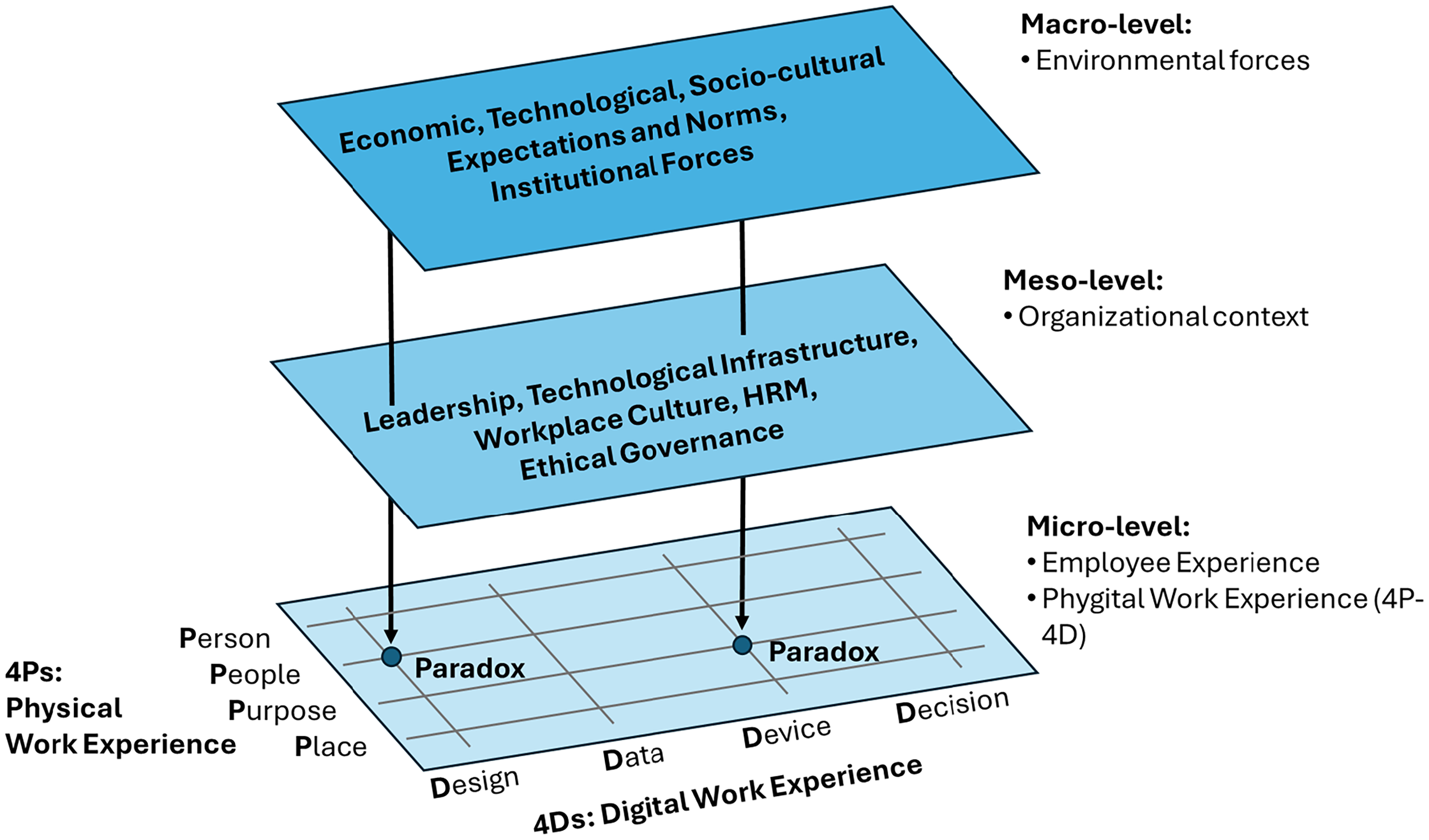
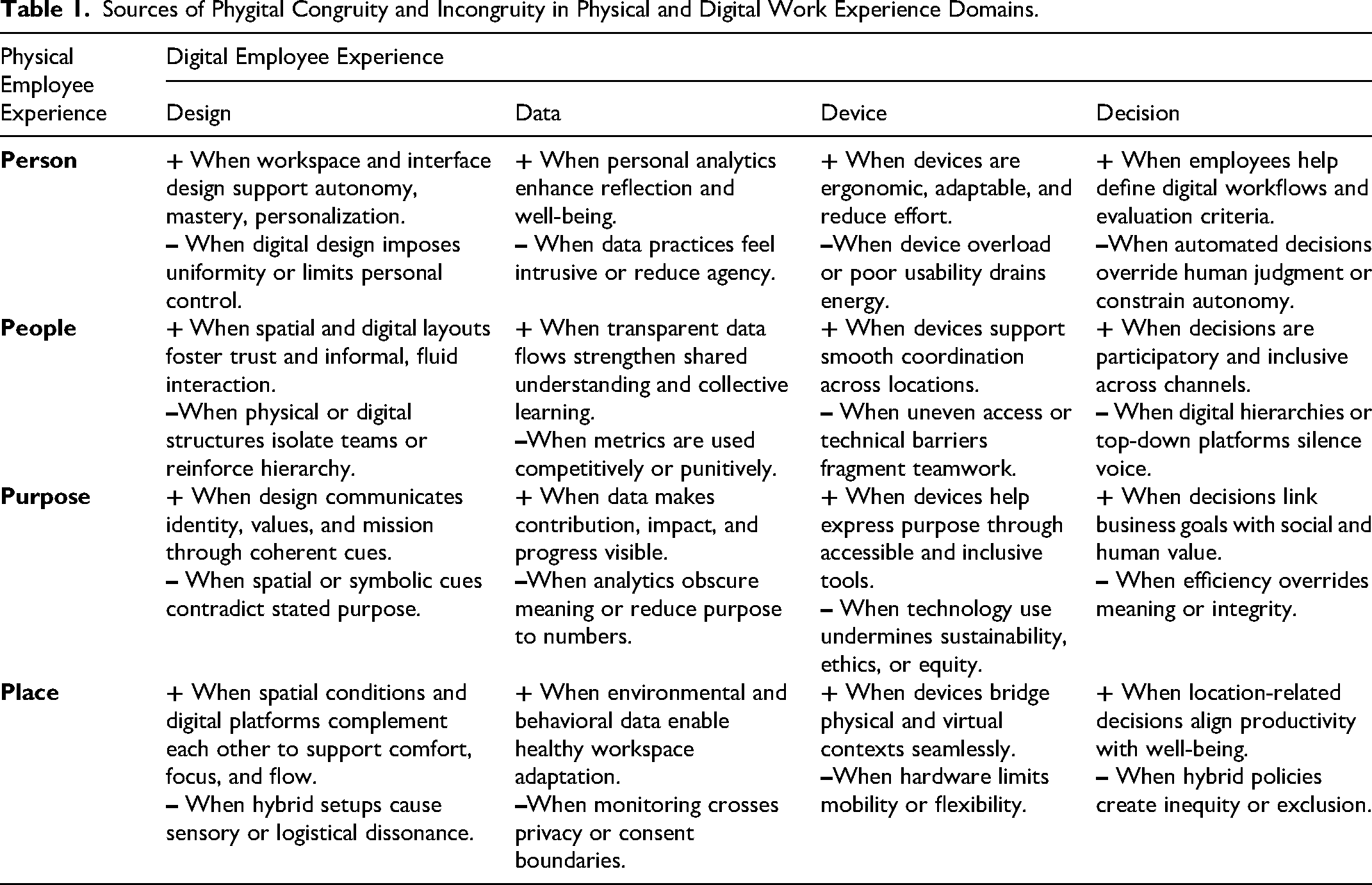
At the micro level, paradoxes surface in the immediate intersections between the four Ps and the four Ds of work experience, as illustrated in Figure 2. Table 1 further captures these intersections by mapping how physical and digital elements either reinforce one another or pull apart in everyday work situations. The table can be read as a map of why tensions surface and under which conditions they escalate into paradoxical situations. Positive patterns (+) indicate configurations in which physical and digital experiences help employees hold competing demands in balance, such as maintaining autonomy while remaining coordinated or staying visible without feeling surveilled. Negative patterns (–) capture situations in which these same tensions become difficult to navigate because physical and digital affordances contradict one another.
Multi-Level model of phygital work experience (PH-WX).
Sources of Phygital Congruity and Incongruity in Physical and Digital Work Experience Domains.
Phygital paradoxes are not merely temporary side effects of transition or transformation but constitute structural features of phygital work environments. Some tensions emerge during periods of change, such as the introduction of new digital technologies, and may attenuate over time. Others arise from the systematic organization and design of phygital work experiences within the specific meso- and macro context and persist as enduring characteristics of how work is structured and governed. Such structural phygital tensions cannot be resolved or eliminated because they are inherent to the system. They require less operational management, but more continuous balancing. Phygital leaders therefore play a critical role in recognizing, interpreting, and deliberately balancing these tensions to protect and enhance employee well-being. Illustrative examples include spatial flexibility coupled with digital tracking, or the communication of symbolic purpose alongside metric-driven decision rules.
Figure 2 situates phygital paradoxes within the multilevel PH-WX framework. Tensions in phygital work experience originate in everyday interactions at the micro level, are shaped at the meso level through leadership, culture, HRM, infrastructure, and ethical governance, and are further conditioned at the macro level by economic, technological, socio-cultural, and institutional forces. From a macromarketing perspective, this framing of phygital work experience highlights that paradoxes in employee experience are not merely organizational challenges but systemic outcomes of phygital work arrangements.
At the meso level, leadership, culture, HRM, infrastructure, and ethical governance determine whether congruent configurations become routine or whether incongruent patterns dominate. Leadership shapes how digital tools are framed and enacted. Infrastructure determines whether alignment across Place, Device, and Design is feasible. Culture influences whether data and decision practices support learning or enable control. HRM integrates or fragments physical and digital touchpoints across the employee journey. Ethical governance establishes whether digital systems reinforce trust or foster suspicion. At the macro level, economic, technological, socio-cultural, and institutional forces define the boundaries within which phygital congruency can be achieved. For example, economic development determines investments in healthy physical spaces and ethical digital technologies. Technological acceleration expands personalization potential while intensifying surveillance risks. Moreover, socio-cultural expectations shape norms around flexibility, fairness, and belonging. Institutional regimes determine which data and decision practices organizations consider legitimate. Taken together, this multilevel analysis clarifies why tensions and paradoxes are not aberrations but predictable outcomes of phygital work systems. In this sense, the PH-WX framework helps explain whether paradoxes remain manageable features of meaningful work or evolve into persistent sources of strain that erode well-being and require sustained leadership balancing. How organizations respond to these tensions ultimately determines whether phygital work experience becomes a source of agency, joy, stability, and meaning for employees, or a source of confusion and strain with implications for employee well-being, organizational performance, and social cohesion.
Designing Phygital Work Experience: Implications and Future Directions
Contributions to Theory
This paper advances research on employee experience by conceptualizing phygital work experience as an integrated phenomenon rather than as a set of disconnected physical or digital encounters. Prior research has largely examined physical and digital work in parallel or has only loosely connected them, which obscures the systemic complexity through which employees experience work in contemporary phygital settings. We address this limitation by introducing the PH-WX model, which theorizes phygital work experience as a dynamic configuration of interdependent physical and digital dimensions. Central to this contribution is the 4P-4D framework, which provides a structured representation of the core dimensions of phygital work experience. The four Ps capture the embodied, social, spatial, and meaning-related foundations of physical work experience identified in prior research, while the four Ds draw on insights from human-computer interaction and digital ergonomics to explain how digital infrastructures shape cognition, autonomy, coordination, and emotional engagement at work. Together, the 4Ps and 4Ds delineate the experiential conditions that are distinctive to phygital work and make visible how physical and digital elements jointly shape everyday work experience. Beyond integration, the 4P-4D framework contributes by theorizing paradox as a defining feature of phygital work experience rather than a contingent dysfunction. Misalignment between the 4Ps and 4Ds can generate recurring paradoxes that impact well-being. These paradoxes do not reflect poor implementation alone but arise from the inherent interdependence of physical and digital work systems. By embedding paradoxes within the PH-WX framework, we extend paradox theory into the domain of employee experience and demonstrate how tensions emerge at specific intersections of physical and digital dimensions.
We further advance theory by conceptualizing phygital congruence, defined as the degree of alignment between the four Ps and the four Ds, as a central mechanism through which organizations mitigate paradoxical tensions and shape employee well-being. Rather than assuming that paradoxes can be resolved, the PH-WX framework explains how congruent phygital configurations soften tensions and enable employees and leaders to navigate competing demands over time. This perspective shifts attention from eliminating contradictions to designing work systems that allow paradoxes to be productively balanced.
Finally, we contribute to macromarketing and marketing systems scholarship (Akaka et al., 2023; Layton, 2008) by developing PH-WX as a human-centric extension of systems thinking. By conceptualizing employee well-being as an emergent outcome of aligned physical and digital work experiences across multiple system levels, the framework advances of how value is created for employees and, in turn, for organizations and society. In doing so, PH-WX redirects analytical focus toward the broader sociotechnical conditions under which work is organized, highlighting how organizational and environmental forces jointly shape the lived experience of phygital work.
Managerial Implications
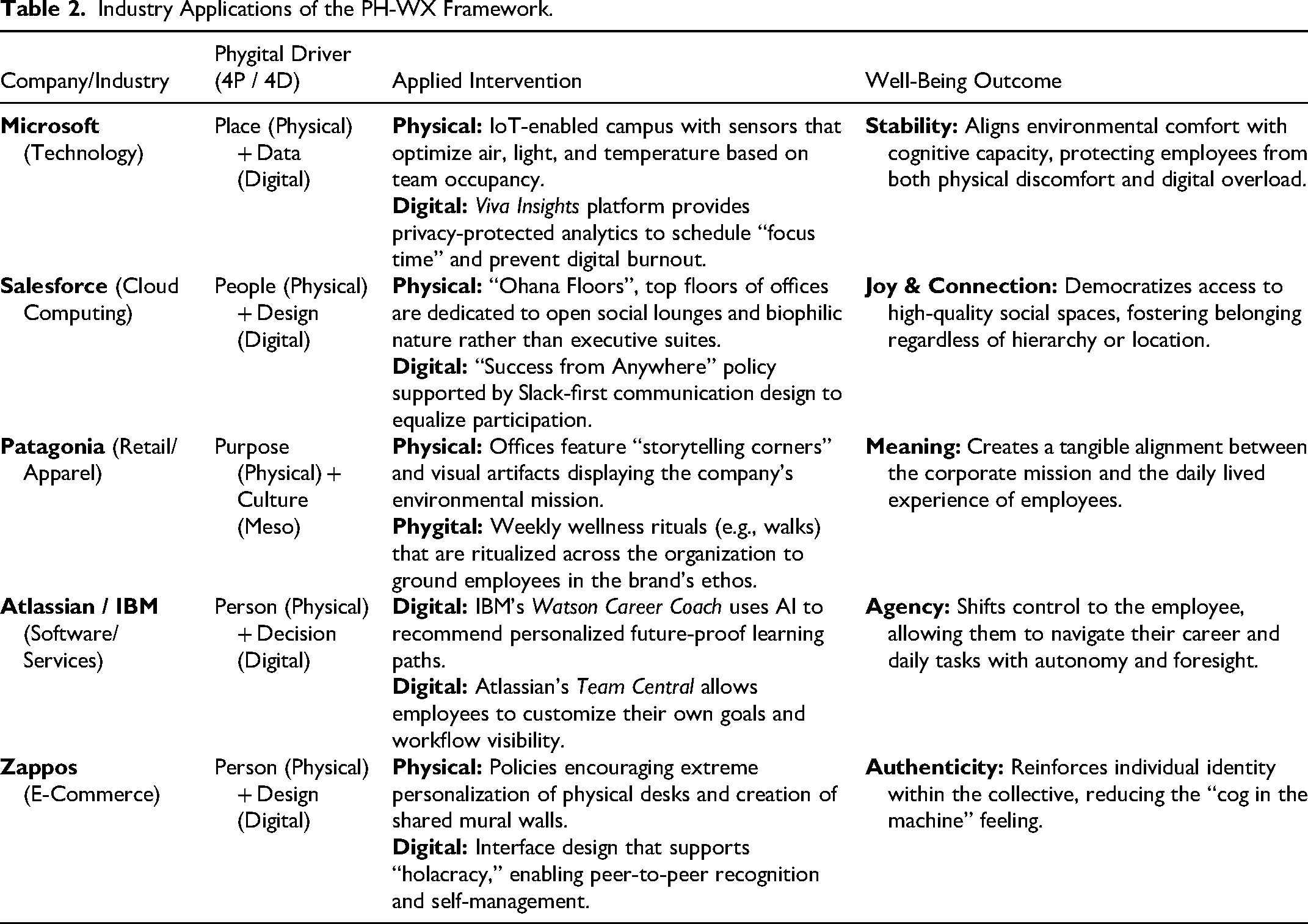
For practitioners, the PH-WX model and the embedded 4P-4D framework offer practical tools to diagnose and design phygital workplaces. As a first step, organizations can construct an internal congruence table that systematically maps each of the four physical dimensions against the four digital dimensions. Such a table can be developed through a combination of managerial workshops, employee surveys, and observational audits of physical spaces and digital systems. By making patterns of alignment and misalignment explicit, the table helps surface tensions, such as situations in which autonomy is encouraged through physical work arrangements but constrained by digital controls, where cultural signals of trust conflict with data practices, or where purpose is communicated through physical artifacts yet undermined by algorithmic decision rules. Moreover, managers can use the PH-WX model and 4P4D framework to guide four types of actions to enhance well-being: First, support agency by giving employees influence over their physical settings and digital interfaces. Managers can offer varied working arrangements across both realms and involve employees in design and decision processes to increase ownership and reduce friction. Second, create joy in phygital environments by designing workspaces and digital systems that foster positive affect, flow, and meaningful social interaction. Third, promote stability by ensuring alignment across organizational (meso) and environmental (macro) levels to deliver a consistent phygital work experience. This involves implementing clear policies and guidelines to reduce variability, confusion, mistrust and inconsistencies that help employees to feel secure and supported regardless of work location. Fourth, reinforce meaning by ensuring that organizational purpose is expressed consistently across physical artifacts, digital dashboards, and evaluation systems to facilitate equal access, promote contribution, and strengthen competences and a sense of belonging. To illustrate how these principles may translate into managerial practice, Table 2 revives concrete examples leading companies. These cases demonstrate how organizations successfully leverage the 4Ps and 4D as drivers of employee experience.
Industry Applications of the PH-WX Framework.
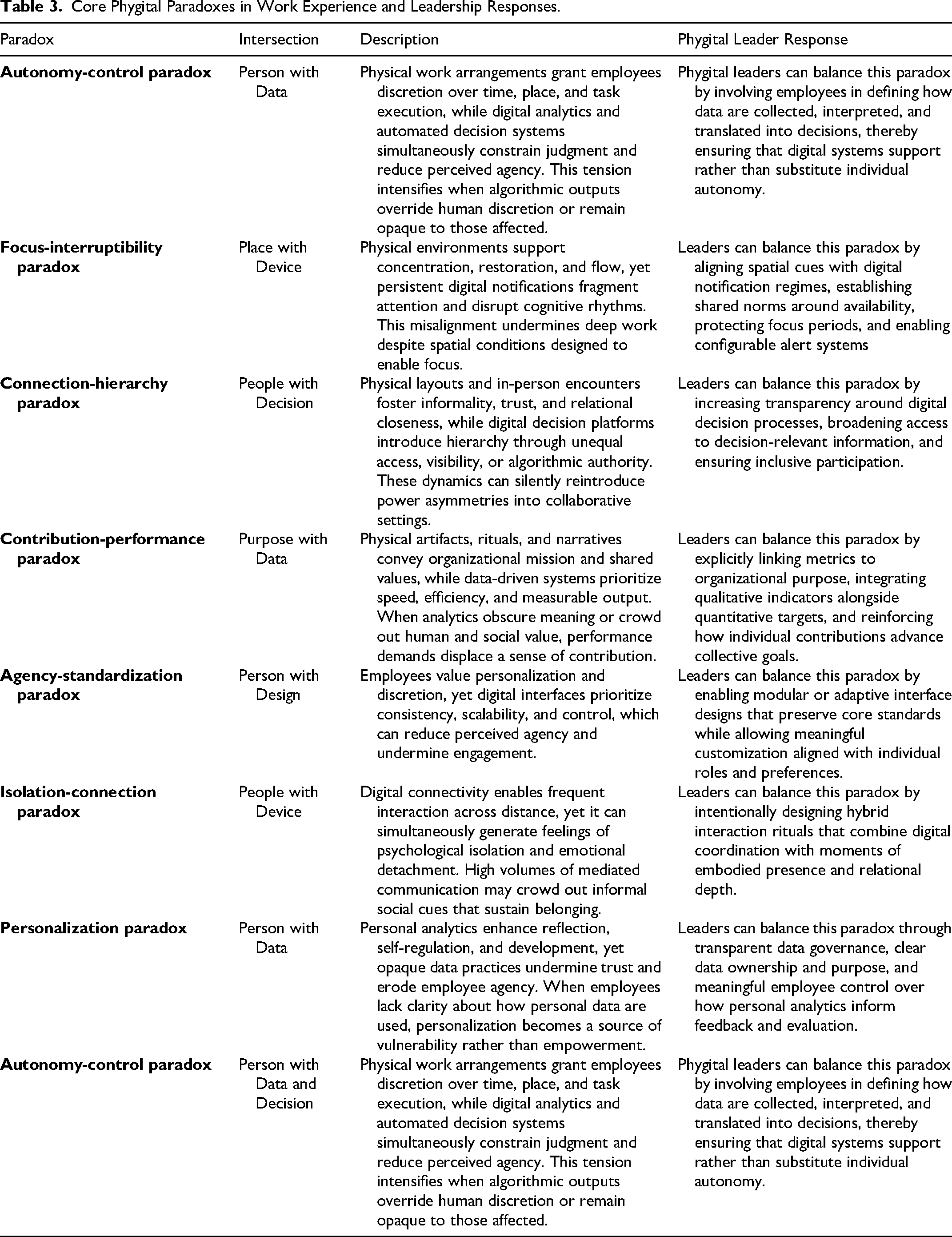
Moreover, phygital leaders can draw on the ideas developed in this article to cultivate a paradox mindset that enables them to manage tensions and balance paradoxes in phygital work experience. Such a mindset requires helping managers recognize and engage with contradictory physical-digital demands, fostering an organizational culture that treats paradoxes as sources of learning and innovation rather than problems to be resolved, and strengthening the capacity to act under conditions of uncertainty (Khan et al., 2025; Zhang et al., 2015). To support this capability, organizations can implement leadership development programs that cultivate paradoxical thinking, enable paradox identification, and foster long-term, trust-based relationships with employees. To illustrate how paradoxes emerge within phygital work systems and how phygital leaders may react to them, Table 3 displays and discusses a set of recurring phygital paradoxes grounded in the PH-WX framework. These paradoxes arise at specific intersections of the 4Ps and 4Ds of phygital work experience and reflect systemic tensions that managers must continually navigate rather than definitively resolve. The set presented below is illustrative rather than exhaustive. Its purpose is to demonstrate how the PH-WX framework can be used by researchers, managers, and policymakers to diagnose paradoxical work situations, derive actionable leadership responses, and deepen understanding of how phygital work experience design shapes employee well-being.
Core Phygital Paradoxes in Work Experience and Leadership Responses.
Future Research Direction on Phygital Work Experience
Several avenues warrant deeper scholarly attention. A first concerns the measurement and causal nature of phygital congruence. While our framework conceptualizes congruence as a direct antecedent of employee well-being, future empirical work should examine more complex causal pathways, including mediation and moderation effects. Furthermore, while we implicitly position congruence as desirable, future research should explicitly examine instances where phygital congruence itself generates productive tensions or necessary constraints. For example, in compliance-heavy environments, a highly congruent system of physical security and digital monitoring might generate stability but limit autonomy. We encourage scholars to investigate whether such ‘congruent constraints’ function as paradoxes in their own right. Although the PH-WX framework clarifies the underlying architecture of phygital work experience, empirical instruments are needed to assess how the four physical and four digital dimensions of work experience align in practice. Future studies could develop and validate survey scales, observational protocols, or multimodal analytic approaches to capture alignment patterns and examine how different 4P-4D configurations predict well-being, performance, and inclusion.
A second direction concerns the dynamics of phygital paradoxes. More research is needed to understand how employees and phygital leaders interpret, experience, and navigate phygital tensions and paradoxes, as well as how organizations learn to manage or balance them over time. Longitudinal and qualitative studies appear particularly well suited to capturing how such paradoxes unfold in everyday work practices and evolve across organizational trajectories, including the consumer domain (Gamage et al., 2025).
A third avenue involves inequality and access. Digital devices, data practices, and algorithmic decision systems do not affect all employees uniformly. Workers in roles characterized by lower autonomy, limited technical literacy, or constrained spatial resources may experience more pronounced forms of phygital incongruence. Understanding how specific phygital configurations stabilize or exacerbate existing inequalities is therefore essential for macromarketing scholarship, as it highlights potential risks of marketing system failure (Williams et al., 2021). Future inquiry should examine how digital technologies function as actors with structural agency (Anderson et al., 2024) that can either bridge or widen these divides.
Fourth, future research should focus on the meso- and macro-level conditions that enable or constrain phygital congruence. Institutional rules, labor regulations, cultural expectations surrounding flexibility and care, and evolving forms of digital governance set the outer boundaries within which organizations design hybrid work systems. Comparative studies across industries, countries, or institutional regimes would help reveal how PH-WX patterns emerge under different societal conditions and political influences, and how public policy can foster more equitable phygital work environments. In parallel, future work should explore how organizational interventions shape congruence at the meso level. Research is urgently needed to clarify how leadership behavior, HRM systems, hybrid workflow design, and data governance practices influence alignment across the 4Ps and 4Ds. Moreover, while we conceptualize ethical governance as a meso-level factor shaping work experience, future studies may consider that governance itself becomes subject to meso-level paradoxes, such as tensions between the commercial value of behavioral data and the ethical imperative to protect employee privacy. Relatedly, future research could develop a more explicit taxonomy of phygital paradoxes and empirically test how organizational characteristics or leader attributes influence the capacity to balance these tensions over time.
Finally, there is an urgent need for applied research that translates PH-WX into practical tools. Promising directions include the development of diagnostic audits to assess phygital congruence, guidelines for hybrid workplace and interface design, leadership development programs that cultivate empathy and hybrid capability, and policy frameworks that translate PH-WX principles into labor protection and digital governance initiatives. Such efforts would help operationalize the framework and render it actionable for managers, educators, and policymakers.
Footnotes
Acknowledgments
This research was conducted as part of the American Phygital Association Summit 2025, sponsored by the American Institute of Business Experience Design (AIBXD) – New York. The submitted research was or was not funded, and there are no conflicts of interest to declare. We sincerely appreciate the valuable feedback provided by anonymous reviewers, editors, colleagues, and Dr. Wided Batat on an earlier version of this work.

Funding
The authors received no financial support for the research, authorship, and/or publication of this article.
Declaration of Conflicting Interests
The authors declared no potential conflicts of interest with respect to the research, authorship, and/or publication of this article.
Disclosure of AI Tool use
AI tools have been used strictly as a copy-editing tool.
Associate Editor
Wided Batat