




Abstract
This paper advances the concept of “observed vulnerability”, which is based on the inherent power dynamics within observer-observed relationships. We investigate the observed vulnerability of domestic migrant workers in India in the context of COVID-19 lockdowns, characterized by severe health, food, income, and shelter insecurity. Using a process approach, we conducted a critical discourse analysis on migrant workers’ media representations during the lockdowns. Drawing on Stuart Hall's theory of representation and situating the plight of migrant workers within the dominant neoliberal governance regime, our findings reveal how discourse surrounding migrant workers’ vulnerability generated regimes of representation that either ignored the vulnerable, excluded them from the marketplace, criminalized and subjected them to state violence, or reinforced existing hierarchies by distancing the vulnerable from the observer through the politics of pity. We conceptualize observed vulnerability as a discursive practice that connects the macro-level processes to the micro-level experiences and practices through reiterative processes of normalizing and homogenizing representations.
Keywords
Introduction
Hill and Sharma (2020) introduced a theoretical distinction between observed and experienced vulnerability, defining observed vulnerability as “instances of consumer vulnerability that third parties, such as policymakers, detect and identify, regardless of whether the observed individuals do” (p. 555). This contrasts with experienced vulnerability, which has been the primary focus of consumer vulnerability research, emphasizing phenomenological accounts of vulnerable consumers’ experiences. Over the past two decades, a significant body of literature has emerged exploring experienced vulnerability in various contexts and in relation to factors such as race and ethnicity (Crockett, 2017; Sandikci & Ger, 2010; Visconti et al., 2014), gender and sexuality (Eichert & Luedicke, 2022; McKeage et al., 2018; Ong et al., 2020), economic disadvantage (Blocker et al., 2013; Saatcioglu & Corus, 2014; Varman et al., 2022), age (Castelo Branco & Alfinito, 2024; Lučić et al., 2022), and disability (Husemann et al., 2023; Salomonson & Echeverri, 2024).
However, previous research has largely overlooked the phenomenon of observed vulnerability, the manner in which consumers’ experiences of vulnerability are observed, reported, and the subsequent consequences for vulnerable consumers. Even Hill and Sharma (2020) did not provide a detailed elaboration on the concept of observed vulnerability, how it should be studied and what are its theoretical and practical implications. The examination of observed vulnerability is crucial, particularly considering the inherent power dynamics within observer-observed relationships (Bratich, 2018; Hamilton et al., 2014). This is especially pertinent given that those who observe, categorize, and represent vulnerability (e.g., governments, media, and researchers) often occupy positions of power and can exert influence, in various forms and degrees, on consumers confronting adverse circumstances (Commuri & Ekici, 2008). Influential observers of vulnerability, who may control resources and/or shape public discourse, can impact vulnerability experiences from the outset by determining which groups of consumers are included or excluded as vulnerable. Moreover, this influence persists in how vulnerability and vulnerable consumers are framed and represented. For instance, the discriminatory treatment of war refugees based on their country of origin in recent years (De Coninck, 2023; Moghimi, 2024) exemplifies the significant influence that observers can exert on the experiences of vulnerability.
This paper addresses this conceptual gap in consumer vulnerability theory through extending the concept of observed vulnerability as a potential determinant of consumer vulnerability. To this end, we observe the observed vulnerability of domestic migrant workers in India in the context of COVID-19 pandemic lockdowns. Situated at the nexus of the caste system and neoliberal-driven class relations (Lerche & Shah, 2018; Vakulabharanam & Motiram, 2016; Varman et al., 2011), migrant workers’ story during the COVID-19 lockdowns is an example of how systemic and transient vulnerability (Commuri & Ekici, 2008) interplay, resulting in severe health, food, income, housing, and shelter insecurity, and reinforcing structural poverty, deprivation and vulnerability (Patnaik & Jha, 2020). We particularly examine media representations of migrant workers’ vulnerability during the COVID-19 lockdowns and how these representations influenced their lived experiences. This analysis is grounded in the idea that the knowledge constructed and circulated in macro-level public discourse shapes how vulnerability is perceived, experienced, managed, and regulated in specific circumstances. Therefore, to theoretically extend the notion of observed consumer vulnerability, this study asks: How were migrant workers’ vulnerabilities observed and represented during the COVID-19 lockdowns, and what were the consumer vulnerability-related ramifications of these observations and representations?
To answer these research questions, we conducted a critical discourse analysis (CDA) of 291 articles published between March 26 and May 18, 2020, in the Times of India (TOI), a major and the most trusted news outlet in India according to the Reuters Institute Digital News Report (Newman et al., 2021). We used Fairclough's (1992, 2013) approach to CDA as it enabled us to connect the text(s) to macro-level processes and representations through analyses of linguistic (textual), discursive (intertextual) and sociocultural practices.
We draw upon Stuart Hall's (1994, 2013a, 2013b) theory of representation, which is grounded in a poststructuralist approach to language, knowledge, power and representation. Our intertextual analysis situates migrant workers’ plight during the lockdowns within the broader, macro-level processes in the current socioeconomic landscape of India, particularly regarding migrant workers’ representation as economic resources in the context of the neoliberal economic reforms since the 1990s (Lerche & Shah, 2018). Adopting a process approach (Cloutier & Langley, 2020; Giesler & Thompson, 2016), our findings indicate how migrant workers’ observation and representation in the public discourse shift as the situation unfolds and how the observed vulnerability comes into effect in the forms of market exclusion (Saren et al., 2019), violence (Butler, 2009) and othering mechanism resulted from politics of pity (Arendt, 2006). Drawing from our findings, we conceptualize observed vulnerability as a discursive practice through which influential observers shape and reinforce experiences of vulnerability by identifying, labeling, and representing individuals or groups in ways that normalize and essentialize their perceived marginality within broader sociopolitical and historical contexts.
This paper makes four key contributions to the consumer vulnerability theory, especially from a macromarketing perspective. Firstly, our findings advance the field through conceptualizing observed vulnerability (Hill & Sharma, 2020) as a discursive practice that connects the macro-level sociopolitical, economic and historical processes to the micro-level experiences and practices through reiterative processes of normalizing and homogenizing representations of consumers who experience vulnerability. The findings demonstrate how the framing and representation of vulnerability by influential observers, such as the government and media, can significantly shape the experiences of vulnerable consumers. Secondly, by highlighting the intricate interplay between discursive formations, regimes of representations and vulnerability, this study critically contributes to the growing body of research examining the role of language in shaping the experiences of vulnerable consumers (Raciti et al., 2022; Russell-Bennett et al., 2023). Thirdly, this research contributes to the existing body of literature on “justified violence” against vulnerable consumers (Gurrieri et al., 2016; Varman & Vijay, 2018) by demonstrating how it is a product of interconnected observational and representational practices. Fourthly, this study contributes to the existing scholarship on subsistence markets (Mason et al., 2013; Viswanathan & Rosa, 2010) by demonstrating how the dominance of neoliberal ideology in India has eroded traditional support mechanisms, thereby marginalizing migrant workers from both formal and subsistence markets.
Theoretical Background
Consumer Vulnerability
Consumer vulnerability encompasses a nuanced concept focusing on how consumers face varying forms and degrees of susceptibility to harm, disadvantage, and exploitation within the marketplace and beyond (Hill & Sharma, 2020; Khare & Jain, 2022). This concept deals with understanding of how market-related power dynamics create barriers for certain group of consumers to access physical, technological, or financial resources, turning the marketplace to an uneven playing field (Pavia & Mason, 2014).
As a broader field of research, the study of consumer vulnerability has evolved toward different directions in recent years, which highlights the multifaceted nature of this concept (Khare & Jain, 2022; Mende et al., 2024). This evolution includes how the field has transcended from a simplistic understanding of economic disadvantage, for example, as the source of consumer vulnerability toward encompassing a comprehensive theorization of this concept in relation to different groups of consumers, situations and sources of vulnerability – e.g., racial groups and ethnic minorities (Crockett, 2017; Sandikci & Ger, 2010; Visconti et al., 2014), LGBTIQ + communities and consumers (Eichert & Luedicke, 2022; McKeage et al., 2018; Ong et al., 2020) and economically deprived consumers (Blocker et al., 2013; Saatcioglu & Corus, 2014; Varman et al., 2022). In the case of the latter, Saatcioglu and Corus (2014) showed how disadvantage experiences are interconnected and co-constitutive by a variety of categories such as socio-economic status, health, education level, employment, and type of housing. This trend in the literature has resulted in a more intersectional understanding of consumer vulnerability that includes how factors such as race, ethnicity, class, gender, and sexual orientation intersect in constituting the experiences of vulnerability (Khare & Jain, 2022; Mende et al., 2024).
When investigating and theorizing, however, the focus of these studies has been primarily on a phenomenological account of consumer vulnerability (Riedel et al., 2022) – i.e., how vulnerability is experienced by a specific group of consumers (e.g., Azzari et al., 2021; Bruce & Banister, 2019; Elms & Tinson, 2012; McKeage et al., 2018). The overemphasis on consumer experiences in consumer vulnerability studies can be viewed within the bigger picture of the domination of an existential phenomenological approach in consumer research (Askegaard & Linnet, 2011; Giesler & Fischer, 2017; Moisander et al., 2009). While these phenomenological studies have led to the creation of a rich understanding of vulnerable consumers’ experiences and subjectivities, they failed to provide a thorough understanding of the processes and conditions that lead to the construction of consumer vulnerability. This includes a scarcity of knowledge about the relationship between the third-party observers (e.g., the government, media and researchers) and the observed vulnerable consumer, and how this relationship can affect the experiences of vulnerability.
Observed Consumer Vulnerability
Hill and Sharma (2020) posited a theoretical distinction between the observed and experienced vulnerability and discussed it as a direction for future research. They defined observed vulnerability as “instances of consumer vulnerability that third parties, such as policymakers, detect and identify, regardless of whether the observed individuals do” (p. 555). However, Hill and Sharma (2020) did not delve deeply into the concept of observed vulnerability, its significance, or its interplay with experiences of vulnerability.
This study aims to theoretically extend the concept of observed vulnerability as a potential determinant of consumer vulnerability. Specifically, we seek to elucidate how the act of observation can influence the experiences of vulnerability. This inquiry is particularly pertinent considering the power dynamics inherent in the observer-observed relationship (Bratich, 2018; Hamilton et al., 2014). This power dynamic exists between those who identify, label, frame, and represent the vulnerable and vulnerability, and those consumers who are experiencing some form of a harmful and undermining situation, temporarily and/or systematically (Commuri & Ekici, 2008).
The power dynamic between the observer and the observed is established from the outset (Bratich, 2018). This dynamic begins with the observer's application of the vulnerability label, whether explicit or implicit, literal or figurative, to a specific consumer group based on predetermined inclusion and exclusion criteria. This labeling process constitutes the initial act of identification. The power dynamic persists as the observer frames and represents the vulnerable and their experiences within various contexts, including policymaking, media reporting, and academic research. This process is particularly important given the typically powerful positions held by observers, such as government officials, media professionals, and researchers, who possess the authority to control resources or influence their distribution and accessibility.
Previous consumer vulnerability scholarships have addressed the issue of identifying and labeling vulnerable populations, i.e., determining who is considered vulnerable as a foundational step in research design and data collection, by developing and adopting bottom-up approaches. These methodologies emphasize context-specific understandings of vulnerability, prioritizing stakeholder dialogue and active community engagement. Such strategies often incorporate approaches such as relational engagement (Ozanne et al., 2022), deliberative democracy (Ozanne et al., 2009), participatory action research (Ozanne & Saatcioglu, 2008), and strengths-based perspectives on vulnerability (Raciti et al., 2022; Russell-Bennett et al., 2023).
The strength-based perspective, as an emerging approach to consumer vulnerability, particularly advocates for a bottom-up understanding of consumer vulnerability, emphasizing the lived experiences of individuals. The strength-based approach stresses on using empowering language by researchers, seeking to avoid deficit-language, which can have disempowering implications by focusing on what consumers lack (Russell-Bennett et al., 2023). However, constrained by its largely normative framework (Hill, 2024), this approach does not critically address the intrinsic power dynamics of the observer-observed relationship and their potential effects on the observed. The current study aims to address this under-theorized power dynamic within consumer vulnerability research. To investigate these power relations, we draw on Stuart Hall's theory of representation, which provides a suitable lens to examine how the experiences of migrant workers during lockdowns were observed, framed, and represented.
Stuart Hall's Theory of Representation
Widely influential in critical media and cultural studies (Rojek, 2009; Sender & Decherney, 2016), Stuart Hall's theory of representation remains underutilized in marketing and consumer research. Hall's (1994, 2013a, 2013b) framework illuminates the production and circulation of meaning associated with specific social groups. From this perspective, representation is understood as a meaning-making, signifying practice; “a practice that produces meaning, that makes things mean” (Hall, 2013b, p. 10). According to Hall, meanings and representations emerge from the interplay of three interconnected spheres. The first sphere encompasses the experiences of the “real” world, encompassing both material and social realities. The second sphere pertains to the conceptual world, comprising the systems of concepts or conceptual maps that individuals employ to interpret their experiences of the world. The third sphere involves signs, which are organized into languages and serve as representations of concepts.
Hall's theoretical framework is grounded in a constructionist approach to meaning, language, and representation. This approach diverges from two alternative perspectives: the reflective and intentional approaches. The reflective approach, rooted in a realist epistemology, posits that meanings and representations are linguistic reflections of the “real” world. In this view, language functions as a mirror, mirroring the external reality. The intentional approach places human agency at the center of the meaning-making and representational process. This perspective emphasizes the role of individuals in communicating their intended meanings through language, in its broadest sense, including spoken, written, and visual forms. Therefore, the intentional approach posits that individuals impose their interpretations upon the world through linguistic practices (Hall, 2013b).
The constructionist approach emphasizes the sociocultural production of meanings and representations. Michel Foucault's conception of knowledge, power, and discourse has significantly influenced this approach, both as a broader epistemological framework and specifically within Hall's representation theory (Hall, 2013b; Keller, 2024). Central to this conception is the inextricable link between power and knowledge (Foucault, 1980; Hall, 1994).
Knowledge, in this context, refers to the dominant common-sense understanding of the world prevalent within a particular society at a given time, which has been sanctioned as “truth” (Burr, 2015). Foucault (1980) termed this the “regime of truth,” encompassing the discursive mechanisms that construct what is considered true and false within a society, thereby shaping the relationships and statuses of individuals, objects, and events. This discursive construction and circulation of knowledge and power permeates every aspect of our lives and forms how we make sense of it. Therefore, Foucault's conception of power diverges from the traditional notion of power as repressive force. Instead, it is a subtle, taken-for-granted, pervasive, and substantially masked form of power that underpins our actions and thoughts (Foucault, 1980). As Foucault (1982) stated, “what makes power hold good, what makes it accepted, is simply the fact that it doesn't only weigh on us as a force that says no, but that it traverses and produces things, it induces pleasure, forms knowledge, produces discourse” (p. 119).
Building upon this epistemological foundation and theoretical framework, within the context of cultural and media studies, Hall's representation theory examines how representational practices, particularly through media, construct differences and signify otherness within a society. However, these representational practices are not considered intentional, as discussed earlier. Instead, they are rooted in the prevailing discursive formations of a specific time, which shape representations of differences based on factors such as gender, sexuality, race, ethnicity, religion, and class. These are often referred to as ‘representational paradigms’ (Hamilton, 1997) or ‘regimes of representation’ (Hall, 1994, 2013b).
Rather than focusing on the intended meaning of the content producer (Campbell, 2016), Hall's theory emphasizes the more crucial question of how meanings are produced by the discursive formations that generate regimes of representation in a society within a specific historical context. This can be illustrated by examples such as the representation of whiteness at English seaside resorts, which results in a racialized production of space embodied through leisure practices (Burdsey, 2011), or the sexualized representation of cheerleaders as objects of heterosexual male desire (Jane, 2017).
A central concept within Hall's theory is stereotyping as a representational practice. Hall (2013a) defines stereotyping as the process of reducing, essentializing, naturalizing, and fixing differences among individuals based on factors such as religion, ethnicity, race, sexuality, gender, and class. As Hall (2013a) explains, “Stereotypes get hold of the few ‘simple, vivid, memorable, easily grasped and widely recognized’ characteristics about a person, reduce everything about the person to those traits, exaggerate and simplify them, and fix them without change or development to eternity” (p. 258). The stereotyping process contributes to the construction and functioning of othering mechanisms, which divides the “normal” from “abnormal,” the “acceptable” from “unacceptable,” marginalizing those who do not conform to the dominant representation of the normal and acceptable. Previous research has demonstrated how such stereotypical representations and othering mechanisms shape the experiences of historically marginalized social groups (Crockett, 2017; Eichert & Luedicke, 2022), exclude them from the marketplace (Beudaert et al., 2017; Bruce & Banister, 2019), and provide justifications for systemic violence (Varman et al., 2022; Varman & Vijay, 2018). However, relatively little scholarly attention has been paid to the role of observers, such as government officials, media professionals, and researchers, in the production of these othering mechanisms, particularly through representational practices.
The theoretical framework developed in this section provides a relevant lens through which to investigate the power dynamics between observers and observed in the context of migrant workers’ experiences during COVID-19 lockdowns. The following section provides contextual background for this study.
Contextual Background
India's economic landscape has been significantly shaped by the adoption of neoliberal policies since the early 1990s. This shift, influenced by international financial institutions like the World Bank and IMF, led to the privatization of state-owned enterprises, deregulation of markets, and a reduction in government spending on social welfare programs. While proponents of neoliberalism argue that these policies have stimulated economic growth and created wealth, critics contend that they have exacerbated inequality, marginalized vulnerable populations, and led to environmental degradation (Patnaik, 2007; Varman et al., 2011).
One manifestation of the unequal and marginalized economic growth resulting from neoliberal policies is the plight of domestic migrant workers (Mishra, 2020). Hailing predominantly from rural areas and marginalized caste backgrounds, these workers have historically relied on subsistence agriculture. However, factors such as poverty, land scarcity, and climate change-induced agricultural distress have compelled many to migrate to urban centers in search of improved economic opportunities. Upon migration, they often find themselves engaged in low-skilled, informal sector jobs such as domestic work, construction, and manufacturing (Jagannathan & Rai, 2022). As part of India's informal economy, they lack formal documentation, social security benefits, and access to state-provided services. Often residing in urban slums and impoverished neighborhoods, these workers frequently live in close proximity to individuals from their home states, while facing limited access to healthcare and education. This vulnerability of migrant workers was further exacerbated by the sudden imposition of a nationwide lockdown in India in 2020.
On March 24, 2020, the Indian government imposed a nationwide lockdown with a mere four hours’ notice, affecting a population of 1.3 billion. This lockdown necessitated the closure of all non-essential services, including transportation, with exceptions made for essential retailers like grocery stores and pharmacies. Over the subsequent nine weeks, the lockdown was extended three times, until it ended on May 31, 2020. While the lockdown posed significant challenges for various segments of Indian society, it had a particularly devastating impact on the over 139 million domestic migrant workers.
The nine-week lockdown imposed significant hardship on migrant workers, exposing deep-seated inequalities within India's emerging economy. During the initial stages of the lockdown, government-led food distribution efforts often excluded migrant workers, as many were not officially registered or had left their ration cards with their families in their home villages. Moreover, the majority of these workers, being daily wage earners, were deprived of income during the lockdown period. This lack of access to essential resources and economic opportunities compelled many migrant workers to attempt to return to their home villages, often resorting to unconventional modes of transportation such as walking, cycling, or hitching rides on trucks. However, such attempts were hindered by lockdown restrictions, leading to instances of police violence against these vulnerable individuals.
Methodology
Data Collection
This study investigates the discursive representation of migrant workers during the COVID-19 lockdown in India, utilizing a CDA framework. Our data set includes 291 relevant articles in the TOI published between 26 March to 18 May 2020. The corpus comprises a diverse range of media outputs, including news articles, interviews, and commentary pieces. Articles were included in the sample if they explicitly addressed the conditions, experiences and challenges of migrant workers during the lockdowns.
The TOI was selected as the primary data source due to its prominent position within the Indian media landscape and its significant influence on public discourse. The TOI is one of the oldest and most influential newspapers in India, recognized for its extensive reach and trustworthiness, as highlighted by the Reuters Institute Digital News Report (Newman et al., 2021), which ranked it as the most trusted news brand in the country. The selection of the TOI is particularly pertinent given its generally center-right political orientation, perceived to be to some extent aligned with the government of Prime Minister Modi. This positioning enables a nuanced investigation of how dominant discourses are constructed and contested within the media sphere, as the newspaper often reflects a dynamic interplay between governmental perspectives and public sentiment. As Burr (2015) emphasizes, prevailing discourses are subject to ongoing contestation, highlighting the crucial role of media representations in shaping societal perceptions and influencing public actions.
Data Analysis
This study adopts Fairclough's (1992, 2013) framework of CDA as it allows for an in-depth analysis of how texts are embedded within broader, macro-level social and political contexts. By examining the interplay of linguistic (textual analysis), discursive (intertextual analysis), and sociocultural practices that shape and are shaped by these texts, we aim to develop a macro-level understanding of observed vulnerability and its functioning. This approach is particularly well-suited to this study because Fairclough conceptualizes discourses as “ways of representing aspects of the world” (Fairclough, 2013, p. 124), which aligns with the aim and theoretical lens of this study.
Our analysis employed a thematic coding approach, focusing on the content, form, and presentation of the texts. Similar to Beverland et al. (2022), we prioritized understanding the meanings and representations within the articles and in relation to each other (i.e., intertextuality) rather than focusing on a micro-linguistic analysis. Intertextuality, defined as the accumulation of meanings across different texts (Hall, 2013a), enabled us to connect the TOI articles with relevant discursive and macro-level practices and processes within the study's context. This analysis revealed how migrant workers’ representations were constructed within the framework of dominant societal discursive formations. This approach is grounded on the theoretical premise that discourse is not merely a reflection of reality, but actively constitutes it, shaping subject positions, power relations, and regimes of representation (Fairclough, 1992; Hall, 2013a).
In our analysis, we systematically investigated and mapped the three-dimensional conception of discourse (Fairclough, 2013) as shown in Figure 1. This framework facilitated a comprehensive examination of how the TOI articles not only represent migrant workers but also engage with and reflect the sociopolitical context of India during the pandemic and beyond. In doing so, we focused on a reciprocal relationship between text and context, where our CDA was informed by intertextual analysis. This method allowed us to examine how the TOI articles interact with broader sociocultural processes, thereby illuminating the macro-level social structures that contextualize the narratives presented in the media. As Fairclough (1992) emphasizes, understanding the dialectical relationship between macro-level practices and micro-level texts is crucial for a comprehensive CDA.
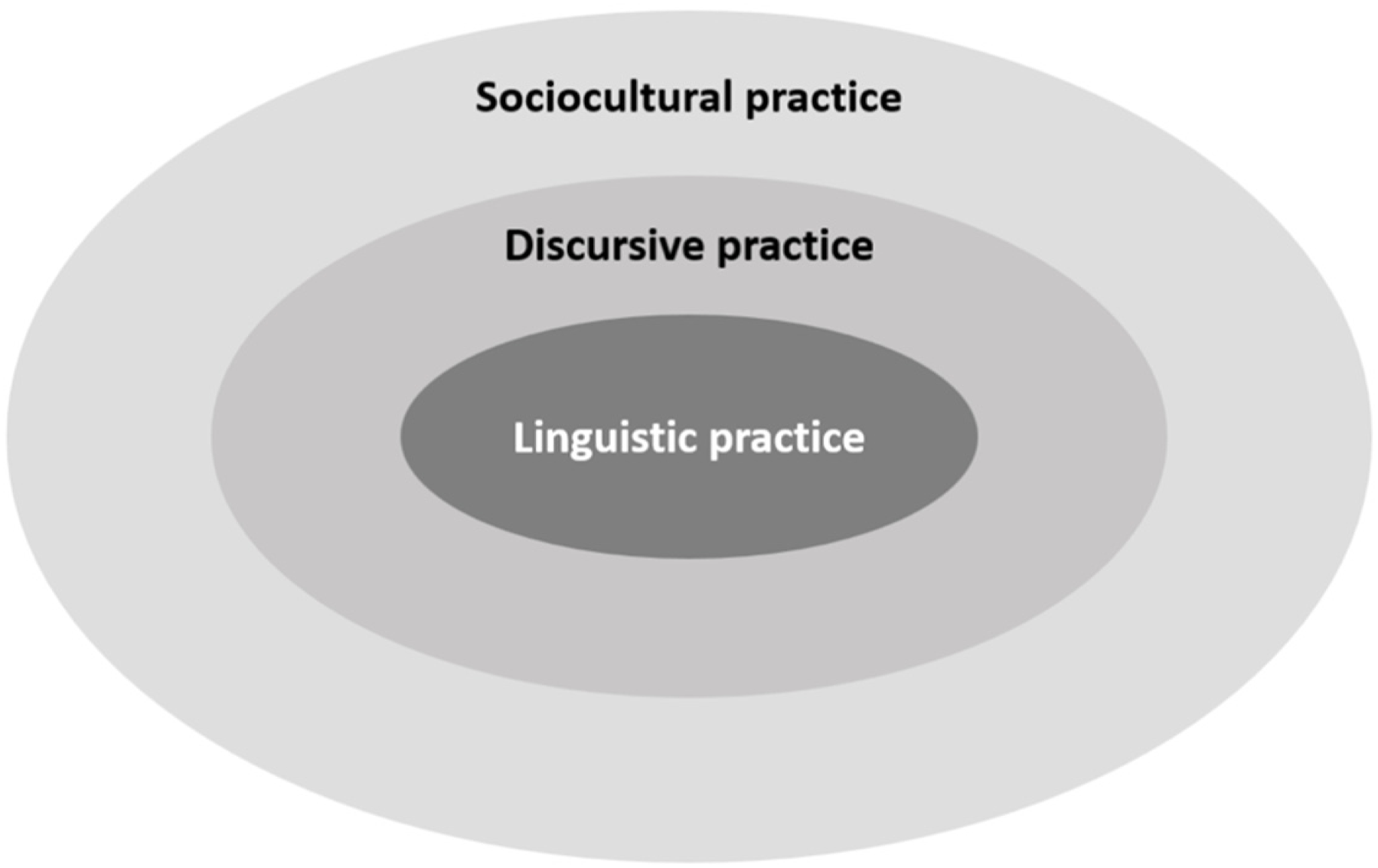
Dimensions of Discourse. Adopted from Fairclough (2013, p. 133).
This study employed a process approach (Cloutier & Langley, 2020; Giesler & Thompson, 2016) to analyze the evolving representation of migrant workers during the COVID-19 lockdowns. By adopting a process approach, we contrast our theory building from a variance approach where the focus is on the relationship between concepts/constructs/variables (Mohr, 1982). Instead, our theorization is guided by the sequence of the events during the COVID-19 lockdowns in relation to migrant workers’ situation and how dynamically it unfolded (Cloutier & Langley, 2020; Giesler & Thompson, 2016; Jarzabkowski et al., 2017). More specifically, based on Cloutier and Langley's (2020) classification, our analysis and presentation of the findings follows a conjunctive process approach, which is characterized by connecting diverse elements to explore and describe the dynamic interpenetration of the phenomena under study (i.e., migrant workers’ representations).
Accordingly, rather than centering our analysis on fixed concepts, we adopted a processual approach that emphasized the unfolding of discursive events and the temporal embeddedness of emerging themes (Cloutier & Langley, 2020). We treated our data as a longitudinal corpus, enabling us to trace how migrant workers were represented during the COVID-19 lockdowns, and how these representations changed over time. Our analysis focused on identifying discursive and representational shifts, attending to how representations were constructed, stabilized, and transformed across different temporal junctures. While we situated these discourses within the broader ideological context of neoliberal dominance in the country, our primary analytical lens was the variable temporal embeddedness of these discursive constructions. This allowed us to theorize how media narratives contributed to the framing and reframing of migrant worker subjectivities in relation to broader socio-political structures.
Findings
We present our findings in two parts. The first part establishes the broader, macro-level context of migrant workers’ representation, extending beyond the specific events of the COVID-19 lockdowns. This contextual understanding enables us to better comprehend how migrant workers were represented during the pandemic. The pandemic and subsequent lockdowns represent a significant disruption to societal order and stability, which necessitates an examination of migrant workers’ subject position within the broader social context. Building upon these findings, the second part adopts a process approach (Giesler & Thompson, 2016) to analyze how migrant workers’ representation evolved during the lockdowns and the resulting consumer vulnerability implications. By considering the context of contexts (Askegaard & Linnet, 2011) established in the first part, we can gain a nuanced understanding of migrant workers’ representation during the COVID-19 pandemic. Figure 2 visualizes the findings of the study.
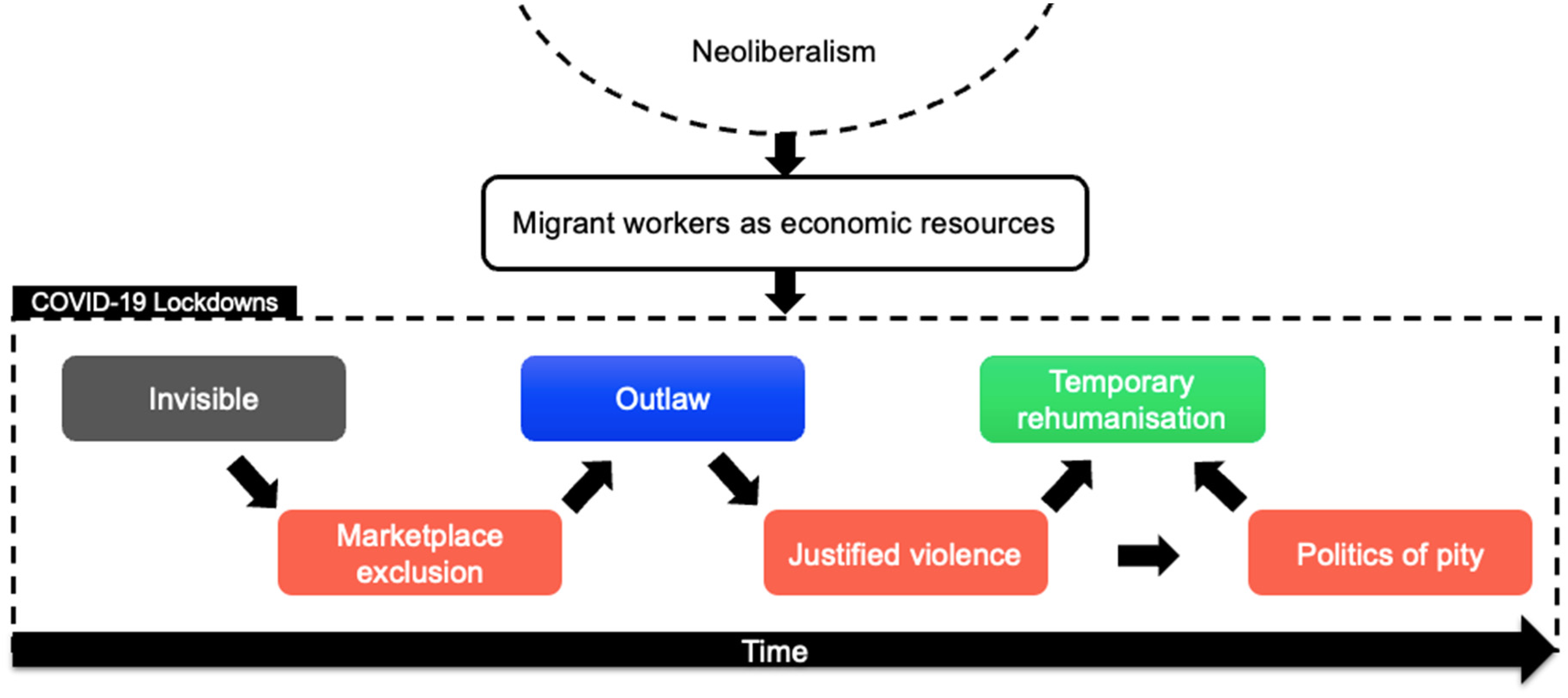
Visualization of the Findings.
Migrant Workers as Economic Resources in the Dominant Regime of Representation
Historically, the caste system in India has been intricately intertwined with class relations, accounting for the formation of power dynamics that perpetuate inequality, marginalization, and deprivation, particularly in terms of access to market resources (Patnaik & Jha, 2020). However, the nature of these power relations has undergone significant transformation in recent decades, driven by the neoliberal economic reforms implemented since the 1990s (Lerche & Shah, 2018; Vakulabharanam & Motiram, 2016; Varman et al., 2011). While the Indian middle class remains predominantly composed of individuals from upper-caste backgrounds, there has been a notable increase in social mobility, with individuals from other castes ascending to this social position (Hatekar & Krishnan, 2017). These structural shifts have led to a reconfiguration of class relations in India, transitioning from a system primarily defined by religious and sociocultural factors to one increasingly shaped by economic mechanisms.
Our intertextual analysis reveals that a significant outcome of these mechanisms is the reproduction of a binary opposition between the middle class and the working class, which marks distinct subject positions within the societal production and consumption processes. In other words, subject positions are defined in relation to roles within the production and consumption spheres of a neoliberal capitalist system. This middle-class-working-class dichotomy is explicitly signified in the following excerpt from a May 17th article in the TOI: We, the so-called urban middle class, the prosperous, the educated, have collectively failed you. We are the beneficiaries of the new economy, we are the aspirational Indians, we love our malls, our penthouses, our swimming pools. You built all of these, yet we could not see you. You were invisible to us, hidden away behind the metallic jungle of scaffolding. Today you walk on the six-lane highways you built for our SUVs. (TOI, 17 May)
The aforementioned excerpt, taken from a commentary article, offers a collective apology from the middle class to migrant workers for their treatment during the lockdowns. One interesting aspect of this text is how the dichotomy of the middle class and working class is manifested and the differences are signified in many ways—e.g., consumers versus producers, urban versus rural, educated vs uneducated. But more importantly, this text underscores a recurring theme in the migrant workers’ representation and subject position: their reduction to mere economic resources. This regime of representation prioritizes migrant workers’ value as producers of commodities for consumption by the affluent, educated, urban middle class, rather than recognizing their inherent human dignity and value, particularly as one of the most vulnerable group of people during a global pandemic. The apology itself is framed in terms of economic utility, emphasizing the migrant workers’ role as “skilled breadwinners” and their contribution to the construction of middle-class homes. This perspective reinforces the notion that migrant workers’ worth is derived from their capacity to serve the needs and aspirations of the middle class.
Entangled within the complex interplay of the caste system and the more recent, neoliberal-driven capitalist class relations in India (Jagannathan & Rai, 2022; Patnaik & Jha, 2020), migrant workers have been reduced to an unprotected, commodified economic resource, instrumental to the acceleration of the country's economic development. This is evident in the following excerpt from a commentary article that offers recommendations to the government for mitigating the economic consequences of the pandemic and lockdowns: Government must look at opening most industrial establishments where 50% staff could be called for work on a daily basis in rotation in the first two weeks. Work areas must be sanitised on a daily basis and workers given minimum essential safety kits where necessary. Each worker must undergo scanning at factory entry as done at airports on a daily basis. Meanwhile arrangements for bringing in migrant workers in a planned manner in batches could be put in place. (TOI, April 5)
As evident in the above excerpt, migrant workers are often portrayed as objects, devoid of agency and entirely subject to the control of the state and private sector. They are seen as expendable resources who can be deployed in “patches” from here to there for the sake of saving the economy for the beneficiaries of the current economic system.
The common use of divisive language to signify the otherness of migrant workers, portraying them either as mere economic objects or as helpless victims (as discussed in the second part of the findings), reflects the reciprocal interaction between the text and these representations with the broader structural power relations within the country, which contribute to the marginalization and disempowerment of one of society's most vulnerable groups. As detailed in the second part of our findings, the dehumanizing representation of migrant workers as economic resources within a neoliberal system becomes particularly evident during the COVID-19 pandemic, as they experience invisibility, exclusion from the market and government support systems, and exposure to various forms of violence.
Accordingly, the dehumanizing representation of migrant workers as economic resources should be considered within the broader context of neoliberal dominance in the country's socioeconomic and political spheres. While neoliberalism, as a modality of governance, manifests differently across various contexts, shaped by specific historical, socioeconomic, and political factors (Brown, 2015), it consistently reshapes societal understanding and individual identities (Harvey, 2005). Neoliberal governance fosters a culture of individualism and entrepreneurship, producing subjects who are oriented toward economic self-interest, the so-called Homo Oeconomicus (Brown, 2015). The findings presented in this section highlight how these macro-level socioeconomic processes in India have contributed to the dehumanization of migrant workers, reducing them to mere economic objects to facilitate the rise of the ‘economic man.’ In other words, the dehumanization of migrant workers is a necessary condition for the construction of other individuals as economic subjects within a neoliberal framework (Varman & Vijay, 2018).
Migrant Workers During the Lockdowns: Invisible, Outlaw, Rehumanized
Building upon the broader context established in the first part of our findings, we adopt a process approach (Cloutier & Langley, 2020; Giesler & Thompson, 2016) in the second part to examine migrant workers’ representation during the COVID-19 lockdowns and how it shifts across three distinct phases of ‘invisibles’, ‘outlaws’, and ‘rehumanization’.
Invisible
Our analysis reveals the exclusion of migrant workers from public discourse and government crisis management strategies during the initial stages of the COVID-19 lockdowns in India. While the first case was reported in Kerala in January 2020, stricter measures were implemented in March 2020 as case numbers increased. The government's response, mirroring global trends, adopted a rationalized approach of authoritarian interventions, primarily relying on lockdowns to curb viral transmission. Prime Minister Modi's sudden announcement of a 14-h curfew on March 19th, 2020, followed by a 3-week nationwide lockdown with a mere four-hour notice period, significantly impacted the nation of 1.4 billion population.
Not a desirable situation for any social group, the abrupt and extensive nature of the lockdowns disproportionately impacted the most vulnerable populations, including migrant workers. Already marginalized and deprived, these workers found themselves in a precarious situation, with limited access to basic resources.
As unregistered daily wage earners, they faced immediate economic hardship, losing their income and struggling to afford food and shelter. Moreover, the uncertainty and fear associated with the pandemic were exacerbated by their geographical displacement, far from family and community support networks. The rationalized, masculine crisis management approach, characterized by utilitarian logic (Branicki, 2020), prioritized the well-being of the majority population but failed to adequately address the structural vulnerabilities of marginalized groups like migrant workers (McKeage et al., 2018). This oversight resulted in a significant gap in care and support for these individuals during the lockdowns.
The invisibility of migrant workers before and during the early stages of the COVID-19 lockdowns highlights their representational exclusion from public discourse. This exclusion, exacerbated by government crisis management interventions, resulted in severe marketplace exclusion, limiting their access to essential goods and services. Drawing on Saren et al.'s (2019) definition of marketplace exclusion as “the mechanisms through which certain individuals and communities are barred from the resources and opportunities provided by the market to other citizens” (p. 476), we can see how migrant workers were disproportionately affected. While the pandemic restricted market access for many, for migrant workers, it became a matter of survival. Their representational and participatory exclusion from the marketplace (Burgess et al., 2017) placed their lives in danger.
Consequently, the government's crisis management, intended to save lives, paradoxically exacerbated the vulnerability of this marginalized group. By excluding migrant workers from the marketplace, the government's actions put their lives at serious risk. Faced with this dire situation, many migrant workers were compelled to undertake perilous journeys, walking hundreds of kilometers toward their homes.
Outlaws
Marketplace exclusion, however, was not the only challenge faced by migrant workers. As they embarked on their arduous journeys home, they paradoxically gained visibility within the public discourse, but only as “troublemakers” and “outlaws.” This negative representation justified the use of excessive force against them. Authorities from various ministries and states actively made public statements and media appearances to condemn the migrant workers’ actions, labeling them as violations of lockdown regulations, disruptions to the system, potential virus spreaders, and threats to the government's crisis management efforts: “… their movement will jeopardize the nationwide lockdown, and also affect the early normalisation in the post-COVID period” (TOI, March 28).
Therefore, not only were migrant workers positioned outside the government's realm of care when designing the crisis management plan, but also, later they were subjected to the exercise of the legal power in the name of “violating the law”. In other words, as marginalized outlaws, they were held accountable for violating laws that had failed to provide them with adequate care and protection. Prioritizing the enforcement of lockdowns, the government effectively turned the experience into a form of exile for migrant workers, who yearned for nothing more than “reunification with their families” and “the opportunity to die among loved ones”.
Media statements and interviews, such as the excerpt below, were instrumental in the government's crisis management strategy. However, these statements contributed to the violent treatment of migrant workers. Translated into various forms of physical and symbolic violence, these media narratives further marginalized and oppressed this vulnerable population. Union home secretary Ajay Bhalla has urged all states and Union territories to take immediate steps to provide adequate support, including food and shelter, to migrant agricultural labourers, industrial workers and other unorganized sector workers during the 21-day national lockdown for containment of Covid-19 … While ensuring supply of essential goods and services, states/UTs are being repeatedly directed to enforce the lockdown strictly and take action against violators under various provisions of law. This is imperative to contain the spread of COVID-19, the home ministry has underlined (TOI, 27 March 2020).
Based on a utilitarian moral framework, the government's crisis management aimed to efficiently save and manage lives during the pandemic (Branicki, 2020). However, migrant workers were not only excluded from this plan but were also demonized as “outlaws” and “disturbers of the system.” This negative representation justified various forms of “legal” violence against them (Butler, 2009), including police brutality and forced disinfection with sodium hypochlorite. In essence, the preservation of lockdown measures, intended to safeguard lives, ultimately prioritized the system over the lives of marginalized individuals. Additionally, the portrayal of migrant workers as outlaws served as an othering mechanism, stigmatizing them as carriers of an unknown virus and a threat to society. This further marginalized migrant workers, even within their own communities, limiting their access to community resources, while they were already excluded from the marketplace. Numerous reports documented instances of mistreatment upon their return to their villages. Such othering practices can lead to the dehumanization of already marginalized groups, transforming temporary vulnerabilities into more systemic and structural issues, including stereotypes, severe prejudice, and discrimination (Hall, 2013a; Saatcioglu & Corus, 2016).
Rehumanization
As the incident unfolded, and as migrant workers’ suffering became increasingly visible through news media coverage, particularly by political opposition-aligned outlets and social media, their representation shifted toward a more humanized portrayal. We label this phenomenon as “migrant workers’ rehumanization,” referring to their movement toward the humanized end of the humanization-dehumanization continuum within a capitalist system (Ritzer, 2016). This shift was a direct consequence of their extreme suffering during the COVID-19 lockdowns. However, as our analysis suggests, this humanization was temporary and did not lead to sustained systemic change.
The temporary nature of migrant workers’ rehumanization is evident in an out of context depiction of their situation. Many of the articles do not pronounce the reasons and the broader context of the vulnerable and vulnerability, such as the fact that the idea of migration for work exists at such extend and with such characteristics. Rather, they are focused primarily on migrant workers’ sufferings during the lockdowns, especially what happened to them on the way back home. Although this is the common genre in reporting a crisis by the media, which mostly results in a downward-looking gaze to the sufferers (Balaji, 2011; Chmutina et al., 2023) rather than structural changes. For example, consider the following extract from a commentary article published on 29th of March 2020: The really destitute are not in a position to undertake this long march. They are too malnourished, poor in health, lacking hope and prospects. They will remain and migrate toward shelter homes and hope to get two meals a day. Some could die and we would not know what the cause was, but a constant state of hunger and homelessness would not have helped.
From an intertextual point of view, this pitiful use of language signifies a clear distinction between migrant workers’ situation and the rest of the society as the observers of migrant workers’ sufferings. Our analysis shows how migrant workers’ rehumanized discursive shift takes on the form of pity, rather than a compassionate approach to observing, reporting and representing their sufferings. Drawing on Hannah Arendt's (2006) concept of the “politics of pity,” we distinguish between pity and compassion. While compassion involves a shared suffering (i.e., co-suffering), pity remains a distant sentiment that allows the observer to maintain a sense of separation from the suffering people (von Tevenar, 2014).
In the case of migrant workers, the discourse of pity was instrumental in mobilizing short-term resources and actions. For instance, the government established “relief camps” providing shelter, food, and counseling services to migrant workers (TOI, 2 April 2020). However, this humanitarian response occurred only a week after the state subjected these same individuals to various forms of violence, highlighting the reactionary, short-term, and inauthentic nature of these interventions. More significantly, the pity, as a representational practice, reinforces hierarchical distinctions between the suffering and the non-suffering (Boltanski, 1999), thereby portraying migrant workers’ suffering as distant and other. In other words, the discourse of pity inherently differentiates migrant workers from the rest of society, functioning as an othering mechanism (Hall, 2013a).
Additionally, our analysis highlighted a decontextualized focus that tends to romanticize migrant workers’ suffering, transforming their experiences into a spectacle and their vulnerabilities into a fantasy-like commodity for societal consumption (Hall, 2013a). This spectacle of suffering (Arendt, 2006) not only reinforces societal distinctions and hierarchical relations but also normalizes both the suffering itself and the power dynamics that led to such circumstances (Boltanski, 1999). For example, consider the following extract from a piece published in TOI on March 29th, which recounts the stories and sufferings of migrant workers during the lockdowns: The stories the migrants tell have a common theme. They were employed in a small unit that shut down. Some got their wage, others did not and some were just given enough money to reach their villages. The contractors and owners told them to go home. Four to five rented a room near their place of work and they could not have made rent and brought food without their earning. They had no choice but to depart, their lives packed into a backpack, some food in a plastic bag. Many managed a smile and said they were looking forward to reaching their loved ones in the villages after the hell that the city had become (TOI, 29 March 2020).
Therefore, while the rehumanized representation of migrant workers resulted in some humanitarian actions, the creation of a duality between the observer and the distant sufferer through a discourse of pity reinforces existing power hierarchies. Rather than empowering migrant workers and promoting their inclusion in the marketplace, the discourse of pity is used as a political tool that serves the interests of the state and those in power by maintaining the status quo (Chmutina et al., 2023).
The temporary nature of migrant workers’ dehumanization is also evident in the process of de-responsibilization. Here, by de-responsibilization we refer to the progressive erosion, evasion or denial of social responsibilities, a process that culminates in social irresponsibility and harm to stakeholders (Hamann, 2019). In the context of our study, de-responsibilization refers to a state in which the government and the private sector attempted to evade responsibility for caring for migrant workers during the lockdowns. This systemic confusion regarding responsibility for caring for migrant workers during the crisis is evident in the government's attempts to shift the burden onto the private sector. For example, the government urged businesses to “retaining the workers and laborers on the payroll and at the same place” to keep migrant workers in the city (TOI, March 28). As another example, consider: The Union and state governments have made appeals to the private sector to not layoff or cut the salaries for the workers during this time of crisis. Financial relief packages have also been announced by the states and central government. (TOI, 31 March 2020)
However, the government's rhetoric regarding providing care for migrant workers by shifting responsibility to the private sector is primarily a political maneuver with little practical impact. This is largely due to the absence of legal mechanisms to hold businesses accountable, especially considering many migrant workers are unregistered daily laborers.
The process of de-responsibilization must be contextualized within the broader neoliberal framework that has dominated India, characterized by a reduced role of the public sector, the dominance of the private sector, and the extension of market ideology to all aspects of life (Harvey, 2005). This neoliberal shift has resulted in the transfer of responsibility from the public and private sectors to consumers (Giesler & Veresiu, 2014), particularly the most vulnerable and marginalized groups, such as migrant workers, who were completely excluded from the marketplace during the crisis.
Discussion
This study aims to advance the concept of observed consumer vulnerability. We do this in the context of domestic migrant workers’ situation during the COVID-19 pandemic lockdowns in India. Adopting a process approach (Cloutier & Langley, 2020; Giesler & Thompson, 2016) and situating migrant workers’ plight within the existing neoliberal system as the dominant regime of the governance (Harvey, 2005), our findings illuminate how migrant workers’ representation shifted over time as the situation unfolds, and its consequences for migrant workers (See Figure 2). The findings show how the discourse surrounding migrant workers’ vulnerability generates regimes of representation that either ignore the vulnerable, exclude them from the marketplace, criminalize and subject them to state violence, or reproduced the existing hierarchies through distancing the vulnerable from the observer as the result of functioning of the politics of pity. In essence, these prevailing public discourses frame and essentialize vulnerability as a problem, positioning vulnerable consumers as them versus us – sometimes a trouble, sometimes a burden and sometimes a pitiful figure.
Theoretical Contributions
Our findings make four contributions to consumer vulnerability theory, especially from a macromarketing perspective. First and foremost, this study theoretically extends the concept of observed vulnerability, which was first introduced by Hill and Sharma (2020), who distinguished it from experienced vulnerability. We extend Hill and Sharma's (2020) framework by foregrounding the power dynamics inherent in the observer-observed relationship (Bratich, 2018), which, in the case of vulnerable consumers, is markedly asymmetrical. Hill and Sharma's (2020) framework acknowledges a degree of independence between observed and experienced vulnerability. However, it does not explore how observational practices actively shape or influence the experience of vulnerability. By adopting a constructionist approach to representation ( Hall, 2013b), our study delineates the mechanisms through which the representational practices of observers shape the subjectivities of vulnerable individuals and influence their lived experiences of precarity.
Drawing from our findings, we conceptualize observed vulnerability as a discursive practice (Fairclough, 2013) that intricately connects macro-level sociopolitical, economic, and historical processes to micro-level practices and experiences through reiterative processes of normalizing and homogenizing representations. This concept describes how observation, particularly by influential actors who control resources or influence their distribution and accessibility, can shape experiences of vulnerability. This occurs through observers’ representational practices, specifically how they identify, label, frame, and portray vulnerability and vulnerables. Representational practices, particularly those disseminated through media, contribute to the prevailing discursive formations within a specific era, establishing what Hall (2013b) terms a “regime of representation” that essentializes and naturalizes vulnerability and those perceived as vulnerable.
Our findings underscore the inherent power dynamics within observer-observed relationships (Bratich, 2018), demonstrating how the framing and representation of vulnerability by influential observers (e.g., the government, media, and researchers) can exacerbate existing homogenized, stereotypical representations and the stigmatization of already marginalized groups of consumers. Previous research has shown how stereotypical representation can stigmatize groups of consumers and place them in vulnerable situations in their marketplace- and consumption-related activities (Crockett, 2017; Liu & Kozinets, 2022; Mirabito et al., 2016; Sandikci & Ger, 2010), and how this can lead to consumers’ isolation and exclusion from marketplace (Beudaert et al., 2017; Bruce & Banister, 2019; Gurrieri et al., 2013).
Additionally, this theoretical advancement broadens the boundaries of consumer vulnerability research, which is primarily engaged with a phenomenological approach to investigate experiences of vulnerability (Raciti et al., 2022). By incorporating macro-level processes into the analytical framework, researchers are better positioned to engage with the structural conditions that shape consumer vulnerability. This broader lens enables a more nuanced understanding of how macro-level processes and discursive representations intersect with the micropolitics of everyday life – i.e., how macro-level dynamics inform and construct the lived realities of vulnerable consumers (Saatcioglu & Ozanne, 2013).
Second, the findings of this study contribute to the scholarly understanding of language use in relation to vulnerable consumers. In recent years, particularly through the emerging ‘strength-based approach’ to vulnerability, social marketing researchers have critiqued the use of ‘deficit-language’ that focuses on vulnerable consumers’ deficiencies. Instead, the strength-based approach advocates for the use of ‘strength’ language to empower consumers (see, e.g., Raciti et al., 2022; Russell-Bennett et al., 2023). However, the strength-based approach primarily focuses on normative ideologies, delineating what is considered appropriate or inappropriate to say about “marginalized customers who may potentially experience vulnerability” (Russell-Bennett et al., 2023, p. 167). This normative orientation limits the approach's capacity to engage with the underlying processes and mechanisms of representation. Consequently, it fails to critically examine how language use can be performative and influence the lived experiences of those who encounter vulnerability.
Additionally, our findings indicate that the employment of positive language in framing and reporting vulnerability can yield paradoxical outcomes. In the context of migrant workers’ experiences during COVID-19 lockdowns, while the utilization of positive language facilitated the mobilization of essential resources like food and shelter in the short term, it also inadvertently contributed to othering mechanisms, which may potentially have disempowering effects and serve to reinforce pre-existing social boundaries and hierarchies. The discourse of pity, as theorized by Arendt (2006), surrounding migrant workers’ plight has functioned as a boundary-making practice, separating the sufferer from the observer. Consequently, instead of fostering compassionate and shared suffering, the pitiful representation of the vulnerable can create a spectacle of suffering for those who do not directly experience it (Boltanski, 1999), further distancing the observer (e.g., the broader society) from the vulnerable. This spectacle, as described by Hall (2013a), transforms real-world experiences (e.g., migrant workers’ vulnerability) into a form of fantastical consumption for the rest of society. These findings underscore the need for a more nuanced comprehension of the intricate relationship between language, power, and vulnerability to effectively address the challenges faced by marginalized populations.
Third, this study contributes to the existing theorization of justified violence against vulnerable consumers (Gurrieri et al., 2016; Varman & Vijay, 2018) by elucidating the underlying mechanisms of observation and representation. The findings reveal how market exclusion exposes migrant workers to life-threatening conditions and State-sanctioned violence. The systemic application of violence in this context normalizes the vulnerability and injury of marginalized groups (e.g., migrant workers) within society, justified by a selective and accepted form of State violence for the perceived greater good. As Butler (2009) argues, this stems from an epistemological problem that “fails to apprehend the lives of others as lost or injured” (p. 1). Drawing on Hall's (1994, 2013b) representation theory, this epistemological problem is exacerbated within a neoliberal context that dehumanizes migrant workers as mere economic resources, excluding them from the State's purview of care and rendering them vulnerable to “justified” State violence.
Fourth, this study contributes to the existing literature on subsistence markets by illuminating how the dominance of neoliberal ideology within India's socioeconomic landscape has eroded traditional and communal support mechanisms that are more readily available through subsistence markets. While subsistence markets inherently offer limited resources to consumers, they are often embedded within broader social networks of family and community (Mason et al., 2013; Viswanathan & Rosa, 2010). Our findings demonstrate how migrant workers were marginalized from both formal markets and subsistence markets, along with the associated support systems of traditional institutions. This exclusion resulted in severe vulnerability characterized by health, income, housing, shelter, and food insecurity. In essence, the dehumanizing representation of migrant workers as mere economic resources, and their displacement, not only limited their access to formal and informal markets but also severed their connection to the resources they would have had access to in their rural communities. This highlights the failure of the liberalist market's “invisible hand” to provide adequate support and the simultaneous erosion of traditional support networks.
Implications for Macromarketers
This paper offers macromarketers a novel theoretical lens—observed vulnerability—and a pertinent methodological approach—CDA—for the nuanced study of consumer vulnerability, a concept of significant and ongoing interest within the field (e.g., Castelo Branco & Alfinito, 2024; Enriques & Peterson, 2025; McKeage et al., 2018; Pavia & Mason, 2014). While the phenomenological approach has provided valuable insights into the lived experiences of consumer vulnerability, this paper argues for the complementary utility of CDA for macromarketing. This enables macromarketers to have a broader, systemic perspective on the conditions of vulnerability, which is more in line with foundations and principles of the field.
In the case of this study, CDA provided a framework for contextualizing the precarious situation of migrant workers during the COVID-19 lockdowns within the broader systemic influence of neoliberal hegemony in India's sociopolitical and economic landscape. This analytical approach facilitated the identification of migrant workers’ subject position as cheap and readily accessible economic resources, integral to the accelerated pace of the country's economic development. As a hegemonic ideology, neoliberalism actively constructs subjectivities and normalizes modalities of thought and action, thereby shaping individual and collective behavior in accordance with its core tenets (Harvey, 2005). Key institutions, such as international financial organizations (e.g., the International Monetary Fund, World Bank), economic think tanks, business schools, and a significant portion of mainstream media, play a pivotal role in validating, disseminating, and normalizing neoliberal ideas at both micro and macro levels. At the micro-level, manifestations of neoliberal governmentality (Foucault, 2008, 2009) are predominantly observed in the shaping of individual subjectivity, evident in the construction of the “economic man,” the “entrepreneurial self,” and the intensification of individuation (Brown, 2015). At the macro-level, as the findings of our study suggest, this is reflected in representational practices and the construction and reconstruction of subject positions that facilitate the system's more effective and efficient pursuit of its capitalist objectives, such as maximizing profit and accumulating capital.
Within this context, “influential observers” (e.g., the government, media, and researchers) may engage in discursive and representational practices that construct, reconstruct and perpetuate “vulnerables” and vulnerability. As the findings of our study shows, such practices can occur even when ostensibly driven by perceived benevolent intentions, such as safeguarding the country from an unknown virus like COVID-19, or more broadly, advancing national progress and development aligned with neoliberal ideology.
In other words, from this perspective, actors and their intentions are embedded within and shaped by the dominant ideological system and the interactions therein. In the context of this study, observed shifts in discourses and representations regarding migrant workers do not necessarily arise from direct alterations in the conscious intentions of individual actors or observers, but rather from the dynamic interplay among various actors within the system. For example, the evolving representation of migrant workers toward being rehumanized is not solely attributable to shifts in benevolent intentions. Instead, it emerges from complex sociopolitical forces, including media narratives, political dynamics, and even international discourses concerning COVID-19 and lockdowns. However, as highlighted in the findings section, this apparent shift is characterized as “temporary” rehumanization. This temporality is contingent upon the continued portrayal and treatment of migrant workers as cheap, accessible, yet essential economic resources for rapid “national development”. This dependency underscores how the conditions for their systemic vulnerability (arising from, for example, their unregistered status, displacement, and estrangement from family and community) are perpetuated for the benefit of the prevailing economic system.
Additionally, for populations confronting systemic conditions of vulnerability (e.g., migrant workers in this study), even temporary positive representations often manifest as pitiful portrayals. While these portrayals may garner transient attention for their suffering, they simultaneously maintain a critical distance between observer and sufferer (Arendt, 2006). This ultimately reinforces their othered status and, crucially, obfuscates the underlying structural conditions that result in their systemic vulnerability. This theorization, however, does not dismiss the presence or significance of competing discourses—such as those that humanize migrant workers by highlighting their agency, familial responsibilities, and contributions. Rather, our focus in this paper is on critically examining how dominant neoliberal discursive practices often co-opt empathy in ways that depoliticize suffering and deflect attention from the root causes of inequality.
Considering this, observed vulnerability, as conceptualized in this study, extends beyond mere strategic maneuvering by individual observers. Drawing upon Hall's (2013b) theory of representation, our analysis emphasizes the social construction of discourses and representations within a broader sociohistorical, economic, and political macro-level context. This systemic perspective, however, does not negate the existence of actors who benefit from the prevailing system, nor does it preclude their strategic actions in perpetuating specific representations. Consistent with Harvey's (2005) conceptualization of neoliberalism as a political project, it is evident that the dominant system, operating within the international capitalist framework, strategically promotes neoliberalism as the pathway to economic development. While governments and businesses undoubtedly operate within and derive benefits from this system, their roles and advantages are also profoundly shaped by overarching macro-level forces, including historical legacies, global financial structures, and dominant discourses of economic development. For example, within the globalized production and supply chain system, India's expanding economy relies, in part, on maintaining low production costs as a crucial competitive advantage. Consequently, the prevailing representation of migrant workers primarily as “economic resources” directly serves this systemic imperative (Jha & Pankaj, 2021). This perpetuates their subject position as cheap and accessible labor, even when temporary positive representations emerge.
The othering of vulnerable populations must also be understood through the lens of capitalism's inherently antagonistic nature, characterized by inherent conflicts, especially class conflicts (Fuchs, 2022). This means that the othering of vulnerable populations through representational practices, whether intentional or not, can significantly benefit specific segments of society. More precisely, the persistent othering and dehumanization of vulnerable populations within dominant societal discourses serve to facilitate capital accumulation and profit generation. While neoliberalism, as the prevailing form of capitalism, often presents itself as an emancipatory ideology through its emphasis on individuation and agency—purportedly transcending traditional hierarchies (e.g., the caste system in India)—it concurrently generates new forms of class relations and perpetuates systemic inequalities.
The concept of observed vulnerability, as we developed in this paper based on a constructionist approach to representation (Hall, 2013b), offers macromarketers a critical lens through which to examine a wide array of societal issues shaped by macro-level forces. This concept extends beyond the specific context of migrant workers to encompass vulnerability as it manifests in contexts such as displacement and international migration, age, disability, and homelessness, among others. It provides a means to analyze how macro-level dynamics contribute to the precarity experienced by various populations.
As an example of how this could be done in a different area, the neoliberal framing of age and ageing, which inherently ties individual worth to economic productivity, often results in the portrayal of older adults as societal burdens. This reinforcement of ageist ideologies is deeply embedded within policy and market structures and discourses (Skoss et al., 2024; Ylänne, 2015). Such representations are evident across various policy domains. A specific example of this is the recent reduction of the age limit for Australia's Temporary Graduate Visa (subclass 485), a post-graduation work visa for international students, from 50 to 35 years—a policy enacted despite its divergence from the Labour Party's stated social commitments—further illustrates how institutional mechanisms selectively privilege economically “salient” migrants (Cranston & Duplan, 2023; Szigeti, 2023). Hence, observed vulnerability offers a direct analytical tool to understand how influential observers, through representational practices, actively construct and reinforce age-related vulnerability within immigration and labor market frameworks. By foregrounding the observer's role in the construction and perpetuation of vulnerability and vulnerable populations, this framework enables a more nuanced investigation into the power dynamics inherent in the observer-observed relationship, particularly as they pertain to experiences of both temporary and, crucially, systemic vulnerability.
Conclusion
The conceptual development of observed vulnerability in this study enhances the multifaceted, intersectional consumer vulnerability theory by introducing a macro-level perspective. This addition advances the understanding of consumers experiencing systemic and/or transient vulnerability (Commuri & Ekici, 2008). By acknowledging the multifaceted nature of consumer vulnerability and actively working toward addressing and theorizing it, we can contribute to the development of a more equitable and inclusive marketplace.
Limitations and Directions for Future Research
While this study engaged with the observed vulnerability and representation of migrant workers in the broader socioeconomic and political spheres of India, its primary focus was on their plight during the COVID-19 pandemic—a temporally bounded and exceptional context of precarity. Future research could extend this inquiry by examining observed vulnerability across broader temporal and structural contexts. For instance, studies might explore how discursive practices of influential observers shape representations of other marginalized populations, such as individuals experiencing homelessness. In the context of the United States, where homelessness has persisted as a structural societal issue over recent decades, future research could investigate how media and public policy discourses construct and reinforce othering mechanisms. Such mechanisms may manifest through marketplace exclusion, symbolic and physical violence, and the legitimization of social hierarchies. This line of inquiry would contribute to a deeper understanding of how discursive constructions influence the lived realities of vulnerable populations over time.
In this study, we primarily focused on media representation. A significant avenue for future research involves analyzing data from other influential observers. For example, a CDA of consumer vulnerability literature could reveal how vulnerability and the vulnerable are conceptualized and represented by academic researchers. Similarly, examining policymakers’ statements and public policy documents may offer valuable insights into institutional framings of vulnerability. Marketing communication practices, particularly brand activism, also present a fertile ground for exploring how commercial actors observe, interpret, and potentially commodify vulnerability. Advancing this research agenda calls for an interdisciplinary approach that integrates perspectives from media studies, marketing and consumer research, policy analysis, and CDA to more comprehensively theorize and contextualize observed vulnerability.
Footnotes
Acknowledgments
We gratefully acknowledge Chidananda Puri, MBA cohort of 2019–21, Xavier Institute of Management Bhubaneswar (XIMB), for his valuable research assistance.
Associate Editor
Terrence Witkowski

Ethical Considerations
There are no human participants in this article and informed consent is not required.
Funding
The authors received no financial support for the research, authorship, and/or publication of this article.
Declaration of Conflicting Interests
The authors declared no potential conflicts of interest with respect to the research, authorship, and/or publication of this article.
Data Availability
The data that support the findings of this study are available from the Times of India.