



Abstract
Luxury cosmetics consumption has grown significantly, alongside an increasing older population, highlighting the need to explore well-being in older age. This study investigates the impact of luxury cosmetics use on self-esteem, subjective well-being and quality of life among older people and identifies distinct usage profiles. A total of 312 older people (M = 67.9 ± 6.5 years) participated in this study. Linear regression analysis revealed a low but statistically significant influence of luxury cosmetics use on the three variables. Cluster analysis identified: (1) Lifelong Luxury Enthusiasts, with high levels of luxury cosmetics usage, self-esteem, subjective well-being, and quality of life; (2) Aging Pragmatists, with low levels in all variables; and (3) Older Balanced Indulgers, with low luxury cosmetics engagement but moderate levels of self-esteem, subjective well-being, and quality of life. Future research should explore longitudinal changes in luxury consumption and assess the effects of different engagement levels with luxury products on aging.
Introduction
Luxury Cosmetics in the Market
The global expansion of the luxury market has sparked significant interest within the research community, leading to a surge in studies on luxury goods and services (Ko et al., 2019). Luxury cosmetics are high-end beauty products characterized by premium ingredients, and exclusive brand positioning. The global luxury cosmetics industry is segmented into skincare, haircare, and make-up, including products such as moisturizers, anti-aging items, foundation, eye shadow, lipstick, and others (Dhillon et al., 2022). In 2022, this market generated approximately $62.3 billion in revenue and is projected to grow to around $87 billion by 2028, with a notable contribution from premium skincare items (Statista Research Department, 2023).
The attributes of luxury products and services are defined by factors such as high price, exceptional quality, superior craftsmanship, innovative design, and artistic creativity (Ko et al., 2016; Wang, 2022). These attributes not only satisfy consumers’ desire for expensive possessions but also offer psychological benefits, such as elevating their self-esteem—an individual's overall evaluation of their self-worth (Hepper, 2023)—as well as enhancing prestige, and elevating social status (Rajan et al., 2019). Controlled availability, exclusivity, and scarcity are key components of luxury strategy (Kapferer & Valette-Florence, 2018). This strategy involves precise control over accessibility, often through meticulous supply chain management and selective distribution (Liu et al., 2019). Additionally, growth is attained by raising prices, deliberately restricting product availability, and employing tactics such as timing considerations and limited editions, all of which collectively bolster the aura of exclusivity (Kapferer, 2014). The value proposition of distinction and heritage is also a unique element of luxury offerings. Research shows that luxury consumption is driven by the desire to display social status, as luxury goods convey power, wealth, and influence (Gummerus et al., 2024). However, the assessment of a brand's luxury status ultimately hinges on consumer perceptions (Ko et al., 2019).
Consumer preferences are shaped by a multitude of factors, such as age, gender, socio-economic status, life stage, personality, and lifestyle (Cao et al., 2018). Luxury brands that offer diverse sensory and emotional experiences can create unique and personal connections with consumers (Gupta et al., 2023). Individuals are motivated to participate in conspicuous consumption for a twofold reason. First, they turn to conspicuous consumption as a method to alleviate their negative self-concept, seeking to boost their self-esteem and self-worth by acquiring and prominently showcasing high-end possessions (Fastoso et al., 2018). Consuming luxury brands associated with exclusivity and high social status can further enhance self-esteem and reinforce one's perceived position within elite circles (Elgebali & Zaazou, 2023). Secondly, the quest for social approval is a central driver of their conspicuous consumption behaviors, as they strive to elevate their social status and secure validation and recognition from their social circle through the exhibition of luxury items (Neave et al., 2020).
Beauty Branding in Older Age
Today, beauty and cosmetic marketing play a pivotal role in shaping self-perception and self-esteem, particularly among women (Craddock et al., 2019). Historically, these industries have promoted narrow beauty ideals, often reinforcing the notion that youth is synonymous with attractiveness (Campbell et al., 2023). The rise of social media has amplified these unrealistic standards, contributing to body dissatisfaction and self-esteem issues (Henriques & Patnaik, 2021). However, in response to shifting consumer attitudes, brands are increasingly embracing diverse representations and challenging traditional norms (Craddock et al., 2019).
One of the most significant shifts in beauty branding is the growing recognition of older consumers as a valuable target audience. Traditionally, marketing campaigns prioritized younger demographics, overlooking the purchasing power and engagement of older adults (Guido et al., 2022; Halwani, 2021). As the global population of older individuals expands, luxury brands are adapting their strategies to be more inclusive, acknowledging that beauty is relevant at every stage of life (Campbell et al., 2023).
This broader approach to inclusivity extends beyond age representation to encompass diverse beauty standards in general. Advertising has long reinforced specific physical ideals, often enhanced through digital retouching (Schirmer et al., 2018). Today, however, there is a shift toward more authentic portrayals, as brands seek to resonate with a wider audience. By incorporating age diversity into their campaigns, companies not only challenge societal beauty norms but also foster stronger emotional connections with consumers (Liljedal et al., 2020). Nevertheless, consumer responses to these efforts remain complex, shaped by personal experiences and existing cultural beliefs (Shavitt, 2019).
Aging and Beauty Perception
As the global population ages at an unprecedented rate, perceptions of beauty are evolving alongside demographic shifts (Research and Markets, 2025). According to the United Nations, an older adult is defined as an individual aged at least 60 years old (United Nations, 2019). By 2030, it is estimated that 1 in 6 people worldwide will be aged 60 or older, with the number of older adults expected to rise from 1 billion in 2020 to 1.4 billion by 2030, and to 2.1 billion by 2050 (World Health Organization (WHO), 2022b).
In the realm of healthy aging, mental health takes center stage, emphasizing its pivotal role in shaping the quality of extended years (von Humboldt et al., 2022; WHO, 2023). Self-esteem, which involves self-acceptance and respect, is deeply connected to mental health. It is shaped by beliefs about one's skills, abilities, and social relationships (Shah et al., 2023). A positive self-perception is essential for mental well-being, as it enhances an individual's capacity to manage stress and participate meaningfully in their community (WHO, 2022a). However, the natural aging process, marked by the gradual decline in the biological functions of the skin and other organs, can challenge this self-perception (Evangelista et al., 2022).
For older women, the use of beauty products is often motivated by a lifelong commitment to maintain their appearance, the desire to remain attractive, and the need to counteract invisibility and ageism in society (Clarke & Griffin, 2008). Moreover, employing makeup to alter their appearance, women aim to project a more youthful and attractive image (Mafra et al., 2020). The decision to use luxury cosmetics is also influenced by external factors such as the social influence of peers, family, and media, with many seeking to achieve a youthful and attractive look (Shroff et al., 2018). Additionally, research by Tiago et al. (2016) highlights how improved health and increased income contribute to greater participation in activities like grey tourism, driven by motivations such as wellness and self-care, which parallels the increasing engagement with luxury beauty products among older adults. In this context, luxury cosmetics do more than offer aesthetic enhancement; they serve as tools for older adults to navigate societal expectations and maintain their self-worth in the face of aging.
Self-Esteem, Subjective Well-Being and Quality of Life in Old Age
Self-esteem reflects an individual's comprehensive assessment of their self-value, encompassing their beliefs about their competencies, accomplishments, worth, and significance (Rosenberg, 1965). Literature has established that self-esteem is influenced by various factors, including physical appearance, social comparisons, and self-perception mechanisms (Hepper, 2023). Rutkofsky et al. (2021) further emphasize that self-esteem is shaped by one's ability to overcome internal criticism and mental barriers, highlighting the importance of strategies that foster a positive self-image and confidence.
Subjective well-being (SWB) is a highly active field of study, with a focus on assessing an individual's perception of the overall quality of life, as indicated by the term itself (Diener et al., 2018). The concept of SWB encompasses a cognitive component, represented by life satisfaction, and an affective component, which includes both positive and negative emotional experiences (Tay & Diener, 2011). The term “subjective” is crucial in shaping the construct, emphasizing that SWB researchers specifically explore evaluations of life quality from the individual's standpoint. Moreover, higher SWB has been associated with good health and overall happiness (Diener et al., 2018).
Although the concept of quality of life (QoL) continues to evolve, it is commonly understood as embracing a wide spectrum of human experiences associated with well-being at a certain point in life (Revicki et al., 2000). Key dimensions of QoL encompass personal well-being in terms of physical, mental, and spiritual health, as well as factors like social connectedness, work environment, relationships, financial prosperity, decision-making autonomy, freedom, social status, and quality of one's physical surroundings (Teoli & Bhardwaj, 2023). Moreover, the aging journey entails a spectrum of physical, physiological, and psychological changes that may impede an individual's daily functioning, leading to a potential decline in their overall QoL and SWB. As life expectancy continues to rise, prioritizing the maintenance of a satisfactory QoL emerges as a central objective in providing care for older adults, particularly those facing frailty (Netuveli & Blane, 2008).
SWB and QoL are fundamental terms that describe experience, abilities, moods, behaviors, assessments, and emotional reactions to situations (Skevington & Böhnke, 2018). While they are conceptually related, they capture distinct aspects of well-being. SWB primarily reflects individuals’ emotional evaluations of their lives, including life satisfaction and affective balance (Tov et al., 2022), whereas QoL encompasses broader dimensions such as physical health, social relationships, and functional abilities (Suasnabar et al., 2024). It was also found that self-esteem is positively associated with SWB and is inversely related to anxiety and depression, underscoring the role of self-esteem in individuals’ overall psychological health (Ingrand et al., 2018). While self-esteem has been traditionally believed to influence various life aspects, the evidence is mixed, affecting factors like overall well-being, interpersonal relationships, and certain psychological issues (Hepper, 2023). Self-esteem and QoL are closely interconnected, reflecting individuals’ subjective perceptions of themselves and their lives. Consequently, low self-esteem tends to correlate with lower QoL scores (Ingrand et al., 2018; Machado et al., 2023). Additionally, consumption choices affect how people perceive their life satisfaction and general happiness (Sirgy, 2021), which in turn influences their QoL (Gupta et al., 2024).
Studies have demonstrated a positive correlation between perceived attractiveness and self-esteem (Mafra et al., 2022), reinforcing the notion that beauty-related consumption practices, including cosmetics use, can significantly impact self-esteem. Self-esteem is particularly relevant in later life (Alaphilippe, 2008), serving as a predictor of mental health, adaptability, and psychological resilience (Šare et al., 2021). As indicated by Wagner et al. (2014), a substantial decline in self-esteem occurs when individuals become acutely aware of their aging. This negative correlation between self-esteem and aging perceptions, especially chronic perceptions involving a constant awareness of age and negative emotional responses to aging, as highlighted by Evangelista et al. (2022), suggests that such prolonged awareness contributes to adverse experiences of aging, ultimately leading to diminished self-esteem and well-being.
The interplay of various dimensions, including self-esteem, perceived health status, and negative perceptions of aging, emerges as intricately linked to psychological distress. Notably, self-esteem manifests as a robust and positive predictor of SWB (Carver & Buchanan, 2016). Additionally, it exhibits a negative correlation with other indicators of mental health and well-being, including states of depression and anxiety, underscoring its role in mitigating feelings of poor personal worth (Carver & Buchanan, 2016). This intricate relationship suggests that psychological distress may serve as a mediator for the impact of these dimensions on overall well-being (Ingrand et al., 2018).
Luxury transcends its material aspects, offering various forms of value, including prudential value, encompassing the sense of well-being, happiness, or personal satisfaction that individuals derive from luxury experiences (Kauppinen-Räisänen et al., 2019). Additionally, consumers’ interactions with luxury encompass a spectrum of positive aspects, such as personal growth, happiness, a sense of connection with others, and moments of self-transcendence (von Wallpach et al., 2020). Although research on luxury cosmetics and self-esteem is still emerging, it is well-documented that cosmetics can boost self-esteem and satisfaction, positively influencing mental health. By enhancing self-esteem, luxury products may indirectly encourage individuals to become more socially active (e.g., going out more) and physically engaged (e.g., exercising), which are important contributors to QoL (Henriksen et al., 2017; Tran et al., 2020). Moreover, unfavorable body image has been connected to a range of adverse mental health outcomes, including low self-esteem, depression, and eating disorders (Choukas-Bradley et al., 2022; Kapoor et al., 2022).
The impact of makeup on self-esteem can vary based on internal or external motivations (Truong & McColl, 2011). When makeup is seen as a means of self-expression, mastery, empowerment, or connecting with others, it can more directly affect self-esteem. On the other hand, when people use makeup to avoid guilt, boost their ego, or gain confidence in social situations, it may indirectly help maintain or elevate their self-esteem. Some individuals use makeup as a means of enhancing their self-esteem, often by seeking compliments or increasing self-assurance through this form of ego involvement (Tran et al., 2020).
While self-esteem is often regarded as an internal evaluation of self-worth (Rosenberg, 1965), luxury consumption has traditionally been linked to external motivations, such as status, distinction, and group belonging — as seen in classic theories like the Veblen, snob, and bandwagon effects (Dubois & Paternault, 1995; Leibenstein, 1950; Vigneron & Johnson, 1999). However, empirical studies have shown that consumers may also turn to luxury goods as a coping mechanism for negative self-views, low self-esteem, or feelings of powerlessness (Sivanathan & Pettit, 2010; Wang, 2022). More recently, scholars have noted a shift toward more intrinsic motivations. Today's consumers increasingly seek luxury experiences that foster self-fulfillment, personal growth, and emotional well-being (Shahid & Paul, 2021). This shift is also echoed in Liu et al.'s (2024) concept of the minimalist luxury strategy, where high-status consumers intentionally avoid conspicuous consumption, valuing instead the symbolic and emotional significance of luxury goods. This perspective is especially relevant to luxury cosmetics, which are often inconspicuous and valued less for public recognition than for how they make the user feel, such as confident, nurtured, and aligned with their self-image. In this view, luxury becomes less about external validation and more about meeting internal psychological and emotional needs, resonating with contemporary values like self-love, authenticity, and well-being (Shahid & Paul, 2021; Wang, 2022).
Furthermore, the dynamics of self-esteem, social exclusion, and consumer behavior are also intricately connected, as social exclusion can pose a threat to an individual's self-esteem. When people experience rejection or exclusion, they often experience a heightened desire to belong to a social group (Chen et al., 2017). To preserve their self-esteem and sense of belonging, individuals are motivated to engage in behaviors that align with the expectations of their reference group (Lee et al., 2017).
While research on luxury cosmetics has been growing, most studies have focused on non-luxury cosmetics and younger demographics. Literature suggests that motivations for purchasing luxury goods vary with age (Schade et al., 2016), yet there is limited exploration of these motivations among older adults. This gap is particularly evident in the context of luxury cosmetics, where their influence on self-esteem and aging remains largely underexplored. Existing studies have explored the relationship between cosmetics and self-esteem (e.g., Evangelista et al., 2022; Mafra et al., 2022) and in old age (Nagae et al., 2023; Wu & Chao, 2023). However, these studies primarily focus on the general relationship between cosmetics use and self-esteem without considering the specific influence of luxury cosmetics—a distinct and growing market segment—on self-esteem, SWB and QoL of older adults.
Additionally, most studies investigating the psychological well-being effects of luxury consumption among older individuals (Bargaoui, 2025; Eastman & Case, 2024; Halwani, 2021) have relied on qualitative interviews or self-reported surveys. While these methods offer valuable insights, they are often subject to social desirability bias and recall inaccuracies. Furthermore, these studies employed small, non-representative samples that limit the generalizability of their findings. Without addressing these limitations, it is difficult to establish a causal link between luxury cosmetic use and long-term well-being outcomes, leading to potentially misleading conclusions.
To address these limitations, the two primary objectives of this study were to: (1) Investigate the influence of luxury cosmetics usage on the self-esteem, SWB, and QoL of older adults; and (2) Identify groups of older individuals with similar usage behavior of luxury cosmetics and examine whether these groups differ in terms of self-esteem, SWB, QoL, or their sociodemographic characteristics.
While regression analysis provided insight into the general influence of luxury cosmetics, cluster analysis offered a deeper understanding of consumption patterns, making it possible to explore subgroups with distinct characteristics and well-being outcomes (Marôco, 2021). This study employs cluster analysis, a technique used to identify distinct consumer profiles based on behavioral patterns, allowing for a data-driven classification of older consumers based on their level of engagement with luxury cosmetics (Cadar et al., 2021; Marôco, 2021). This approach provides a more nuanced understanding of how different user groups experience the psychological effects of luxury cosmetics, offering insights into self-esteem, SWB, and QoL (Lahoti & Jain, 2021; Sharma & Narang, 2024). Additionally, it moves beyond the assumptions of homogeneity often present in prior studies (Nagae et al., 2023; Wu & Chao, 2023), recognizing the diversity in older adults’ beauty-related behaviors.
Without addressing these methodological shortcomings, research risks drawing overgeneralized or misleading conclusions about the impact of luxury cosmetics on well-being. By integrating cluster analysis, this study enhances the validity and applicability of findings, ultimately contributing to a more sophisticated understanding of how luxury cosmetics shape the psychological and emotional experiences of older adults. Moreover, by identifying distinct consumer profiles based on luxury cosmetics engagement, this research provides insights into how beauty-related behaviors reflect and shape aging experiences (Marôco, 2021). These findings contribute to the broader discourse on beauty branding, aging, and well-being, offering valuable implications for both theoretical development and industry practices. The results can inform cosmetics companies’ marketing strategies, enabling them to create more inclusive and empowering campaigns that resonate with older consumers.
Methodology
Study Design
This quantitative study used a correlational design to examine the relationship between older adults’ use of luxury cosmetics and psychological well-being variables. Regression analysis assessed the impact of luxury cosmetics on self-esteem, SWB, and QoL. An exploratory cluster analysis identified groups with similar consumption patterns, allowing for comparisons in self-esteem, SWB, QoL, and sociodemographic characteristics.
Participants
The study focused on luxury consumption and older persons, hence purposeful (Sarker & AL-Muaalemi, 2022) was used to target those who use luxury cosmetics and were 60 years of age or older. Using this strategy allowed for the selection of individuals who fit the necessary criteria to investigate the effects of luxury cosmetic use on older people's SWB, QoL, and self-esteem. The online questionnaire link was shared on social platforms and distributed in premium retail settings to reach individuals not accessible online. The study adhered to the ethical principles outlined in the Declaration of Helsinki (2013), ensuring that the data's anonymity and confidentiality were strictly maintained. Participants were informed of the study's aims. All participants were informed that they might withdraw from the survey at any moment and that it was completely voluntary. The period of data collection was between February 22 and May 3, 2024.
Participants aged 60 years and older and varying frequency of usage of luxury cosmetics were included in the inclusion criteria. Luxury cosmetics were defined according to Gummerus et al. (2024) as goods with premium characteristics such as higher price, high-quality components, exclusivity, and a value proposition focused on social status. This criteria adoption was done to improve the study's validity and relevance to the research's goals by ensuring uniformity in the identification of participants who interact with luxury cosmetic companies.
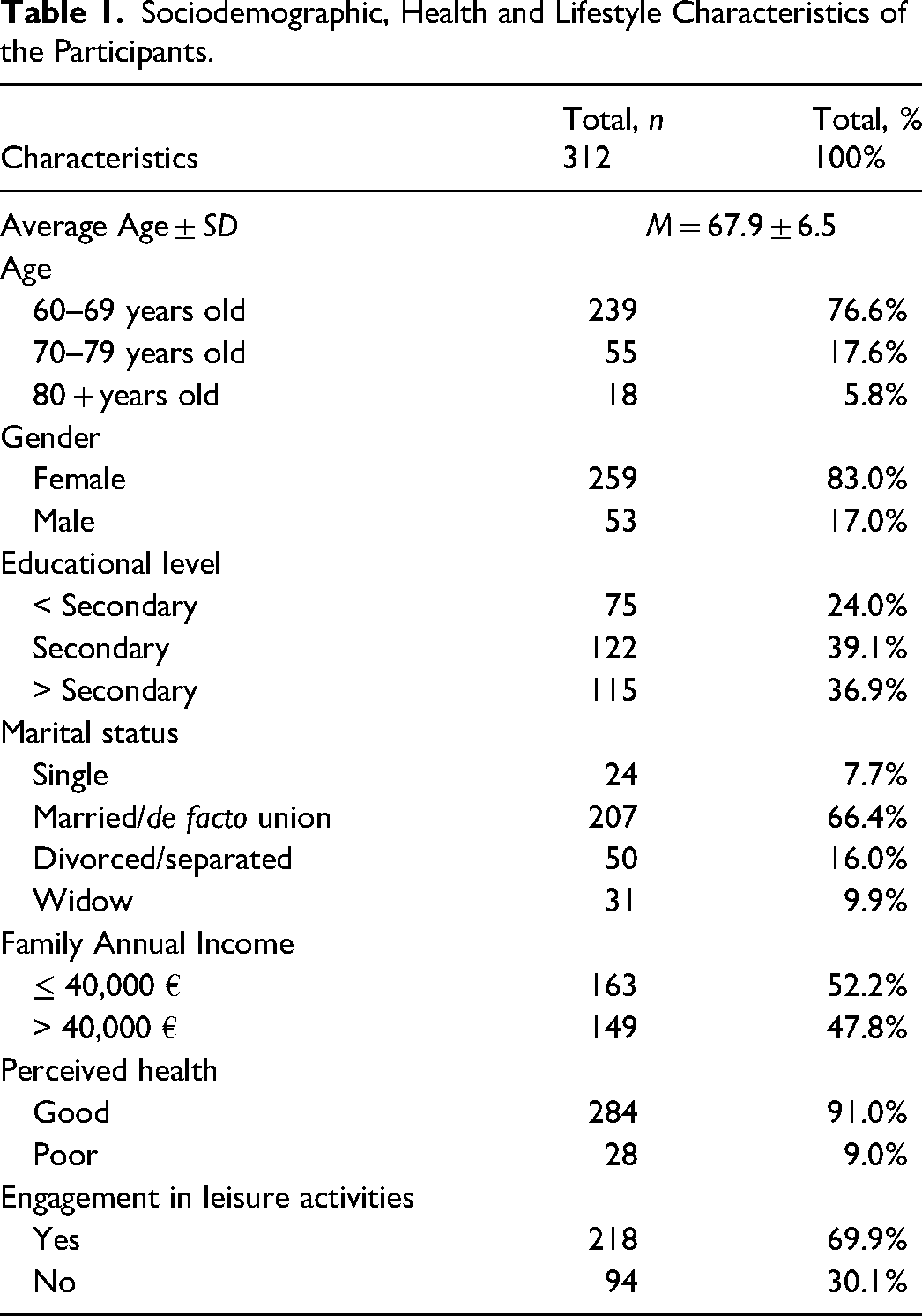
The final sample included 312 individuals (M = 67.9; SD = 6.5), ranging in age from 60 years to 97, with women constituting 83% of the total sample. The sample reflected a well-educated demographic, with only 24% having educational attainment below secondary level, and a significant portion were married or in de facto unions (66.3%). Additionally, 47.8% reported a family income of more than 40,000€ annually, 91.0% describing their health as good, and 69.9% participating in leisure activities. Table 1 presents the sociodemographic, health and lifestyle characteristics of the participants.
Sociodemographic, Health and Lifestyle Characteristics of the Participants.
Material
Rosenberg Self-Esteem Scale (RSES)
The Rosenberg Self-Esteem Scale (RSES), created by Rosenberg (1965) is a tool designed to assess overall self-esteem. It comprises 10 items, including five positive statements and five negative ones. Respondents expressed their agreement on a 7-point Likert scale, from 1 (strongly disagree) to 7 (strongly agree). The Portuguese version of the Pechorro et al. (2011) was utilized in this study. Our analysis revealed a Cronbach's alpha of 0.94, indicating high internal consistency.
Positive and Negative Affect Schedule (PANAS)
The Positive and Negative Affect Schedule (PANAS) was used to assess the affective component of SWB, which consists of 20 items distributed across two subscales: one assessing positive affect and the other evaluating negative affect. Participants rated their responses on a scale ranging from 1 (not at all) to 7 (extremely) (Watson et al., 1988). The Portuguese version of the scale utilized in this study was adapted from Galinha and Ribeiro (2005). The scale has demonstrated validity and exhibits very good internal consistency reliability (Heubeck & Wilkinson, 2019), with Cronbach's alpha at 0.89 for the positive subscale and 0.86 for the negative subscale in this analysis.
Satisfaction with Life Scale (SWLS)
The Satisfaction with Life Scale (SWLS) was used to assess the cognitive component of SWB. This scale is a 5-item Likert-type scale, rated on a scale from 1 (strongly disagree) to 7 (strongly agree). The Portuguese scale used in this study was sourced from Figueiras et al. (2010). The scale has been demonstrated to be valid with a very good internal consistency (Diener et al., 1985), demonstrating a Cronbach's alpha of 0.86 in this analysis.
Quality of Life Scale (QOLS)
Developed by Flanagan (1978), the Quality of Life Scale (QOLS) is a 16-item tool designed to assess distinct conceptual domains of QoL. Extensive testing has been conducted to establish the reliability, content, and construct validity of the QOLS, and the translated version from dos Santos et al. (2002) was used. Respondents use a 7-point scale, with corresponding responses ranging from (1) “terrible” to (7) “delighted” (Burckhardt & Anderson, 2003). Cronbach's alpha for the scale in this study demonstrated good reliability (0.90).
Sociodemographic, Health, Lifestyle, and Engagement with Luxury Cosmetics Questionnaire
Key sociodemographic details of the participants were analyzed, including age, biological sex, education level, marital status, and family annual income. Additionally, participants were also asked about their perceived health and engagement in leisure activities during their free time. Moreover, participants were queried about their engagement with luxury cosmetics, including frequency of purchase, the number of luxury cosmetics products owned, duration of usage, and average monthly expenditure on luxury cosmetics. These questions were later combined to one factor representing overall luxury cosmetic usage.
Statistical Analysis
Data analysis was conducted using IBM SPSS Statistics (version 29). The study examined the relationships between luxury cosmetics usage as the independent variable and the three dependent variables, self-esteem, SWB, and QoL.
For the first objective of this study, three separate simple regression analyses were employed to examine if luxury cosmetics usage influenced self-esteem, SWB, and QoL of older adults. Regarding the second objective, K-means cluster analysis was carried out to identify patterns and relationships among participants based on their responses. The respondents were divided into different groups using cluster analysis based on their scores in luxury cosmetics usage and self-esteem, SWB, and QoL. This method allowed to create clear clusters that reflect similarities in how they use luxury cosmetics, helping to explore differences in their self-esteem, SWB, QoL, and sociodemographic characteristics. The F statistics of the clusters ANOVA were used to determine the significance of each variable in each of the clusters, by the methods described in Marôco (2021). The study employed Chi-square analysis (Marôco, 2021) to examine the differences between group individuals concerning sociodemographic, health, and lifestyle characteristics. In every analysis, p < .05 was the requirement for statistical significance. Descriptive statistics were performed to provide an overview of the sample for each cluster.
Results
Impact of Luxury Cosmetics on Self-Esteem, SWB, and QoL
Regarding the first objective, the regression analyses revealed that luxury cosmetics usage significantly predicts self-esteem, SWB, and QoL in older individuals. Specifically, luxury cosmetics usage explained 32.0% of the variation in self-esteem (R2 = .320), 35.8% in SWB (R2 = .358), and 31.5% in QoL (R2 = .315). The standardized coefficients (β) showed moderate positive correlations across all three variables, with β values of .566 for self-esteem, .599 for SWB, and .562 for QoL. In each case, the p-values were less than .001, and the t-values were 12.081, 13.160, and 11.952, respectively, confirming that luxury cosmetics usage was a statistically significant predictor for all three dependent variables.
Cluster Analysis of Luxury Cosmetics Usage and Self-Esteem, SWB and QoL
Concerning the second objective, by focusing on participants’ scores of luxury cosmetics usage, self-esteem, SWB, and QoL, three distinct clusters were created, accounting for 72.5% of the total variance (R2 = 0.725; see Figure 1).
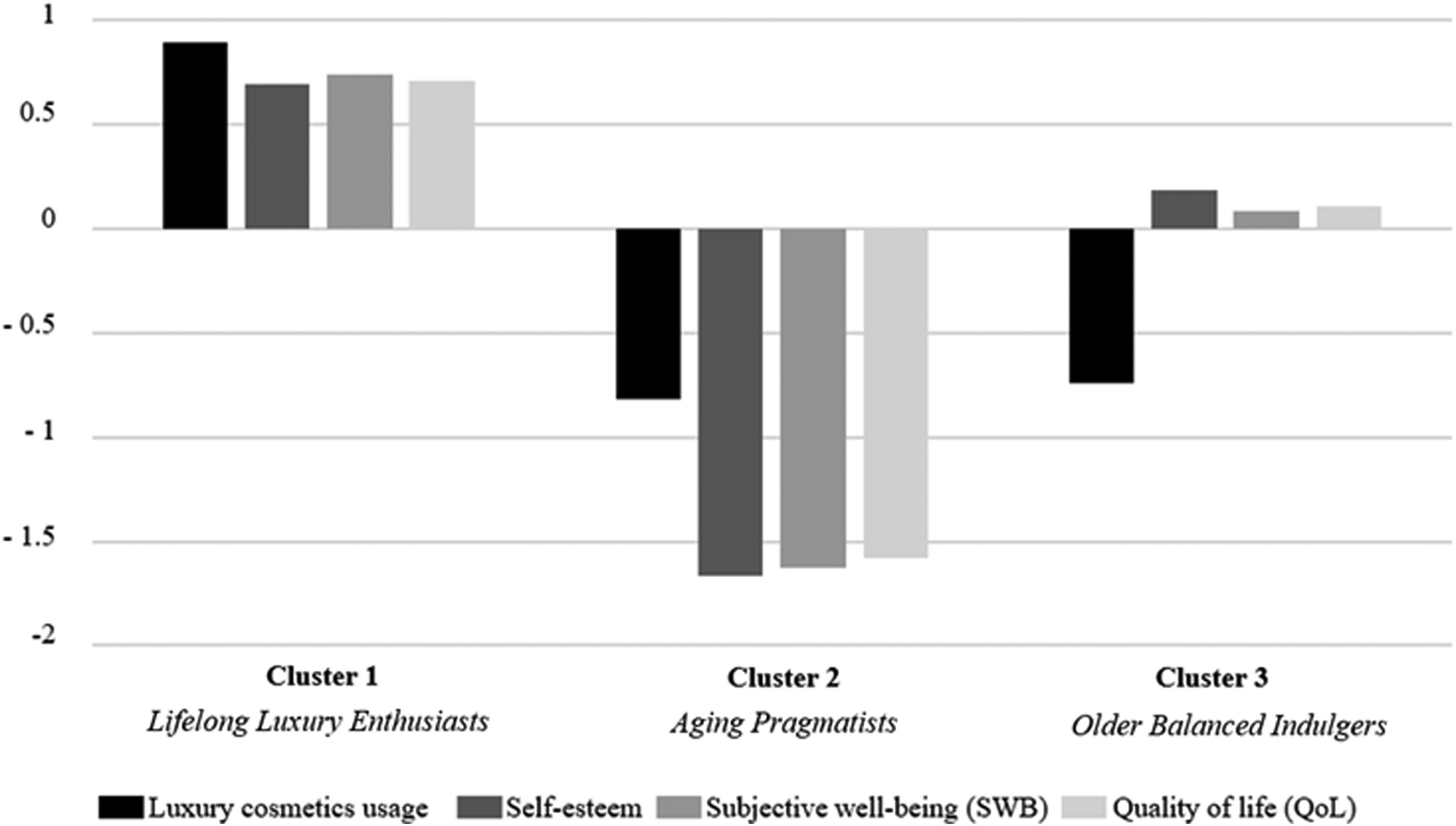
Final Clusters Centers.
Cluster 1, known as the Lifelong Luxury Enthusiasts, comprised 145 participants, corresponded to 46.4% of the sample. This group stood out for their high levels of luxury cosmetics usage, self-esteem, SWB, and QoL. They actively engaged in luxury cosmetics routines, which correlated with positive psychological and quality of life outcomes. Cluster 2, identified as the Aging Pragmatists, included 71 participants and represented 22.8% of the sample. This group exhibited lower levels of luxury cosmetics usage along with lower scores in self-esteem, SWB, and QoL. They were characterized by infrequent use of luxury cosmetics and reported poorer levels across all measured variables. Lastly, Cluster 3, termed the Older Balanced Indulgers, consisted of 96 participants (30.8%). Despite their lower levels of luxury cosmetics engagement, this group demonstrated moderate levels of self-esteem, SWB, and QoL. They represented individuals who did not frequently use luxury cosmetics but still reported moderate psychological and quality of life outcomes.
The cluster analysis revealed significant differences in luxury cosmetics usage (F = 420.156), self-esteem (F = 992.071), SWB (F = 969.544), and QoL (F = 654.728) among older adults. Among these variables, self-esteem showed the greatest differences among clusters, followed closely by SWB (see Table 2).
Clusters Centers and Sizes, and F Statistics for Each variable.
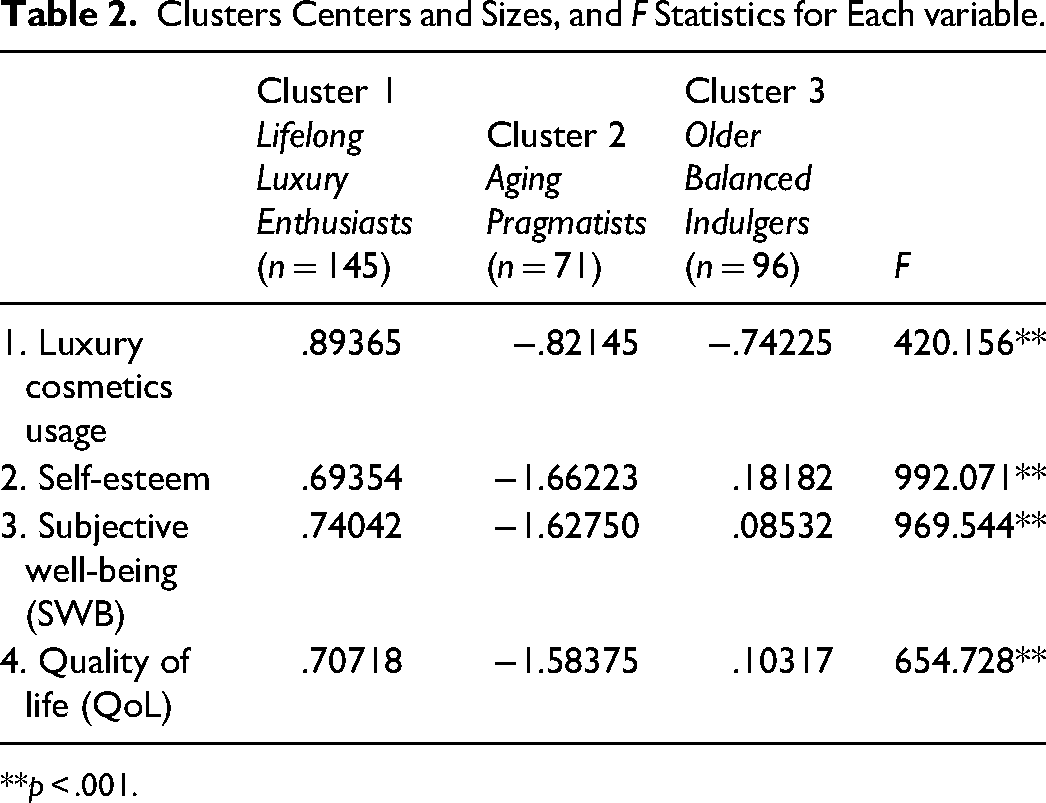
p < .001.
Sociodemographic, Health, and Lifestyle Characteristics Across Clusters
Chi-square analysis revealed statistically significant differences in sociodemographic, health, and lifestyle characteristics across the three clusters (see Table 3). “Engagement in leisure activities”, and “Family annual income” had the highest values, significantly differentiating the clusters. In contrast, “Age group” and “Marital status” variables had the lowest values, indicating that these factors were less influential in distinguishing between the clusters.
Clusters According to Sociodemographic, Health and Lifestyle Characteristics.
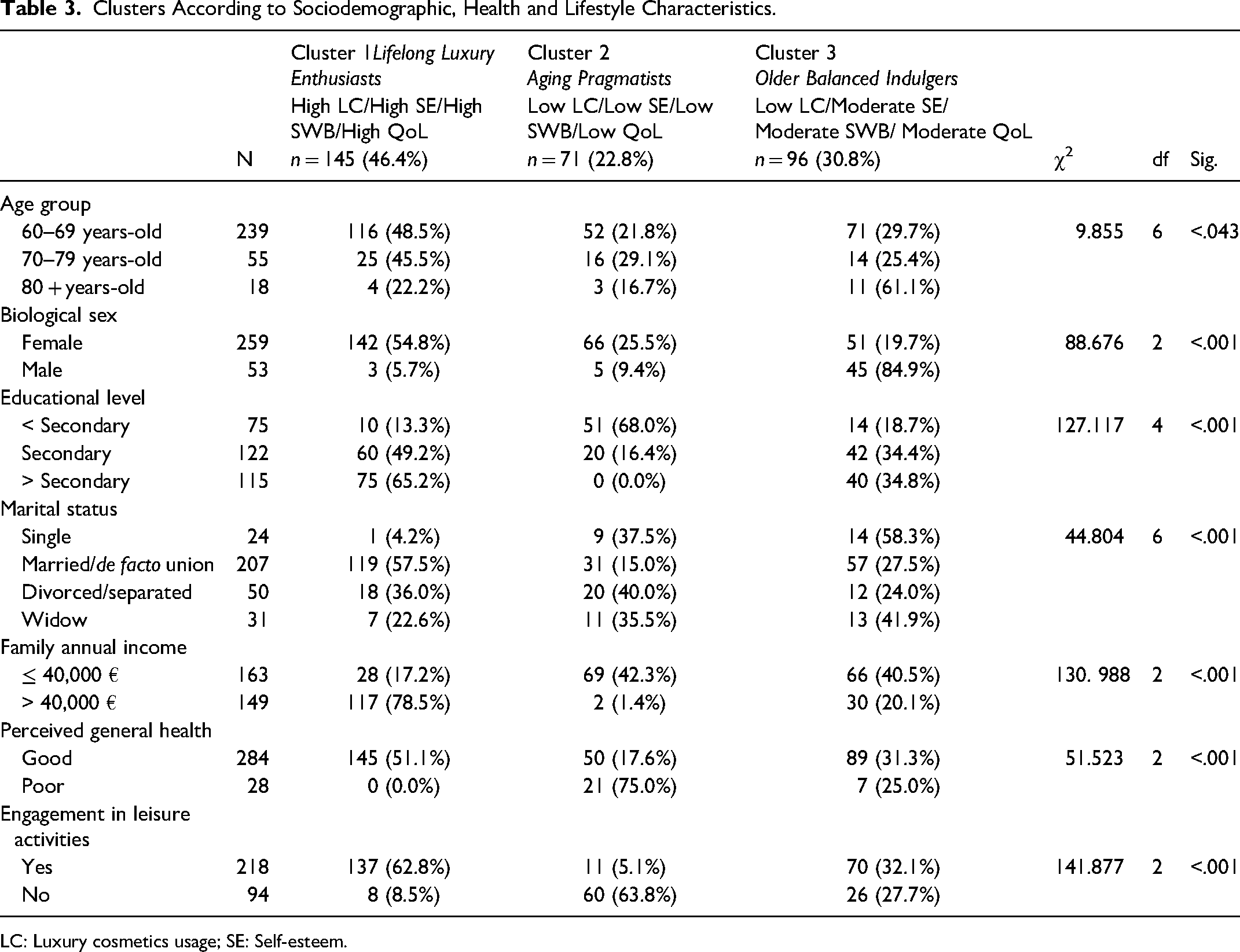
LC: Luxury cosmetics usage; SE: Self-esteem.
These findings indicated significant differences for the three clusters, concerning age group [χ2 (6) = 9.855, p < .043]. Cluster 1 predominantly consisted of individuals in their 60s and 70s years old. Cluster 2 included individuals in their 70s, while Cluster 3 was primarily composed of individuals aged 80 and above.
Regarding biological sex [χ2 (2) = 88.676, p < .001], Cluster 1 had a significantly higher proportion of females, whereas Cluster 3 was predominantly male. Cluster 2 also had more females than males, but to a lesser extent compared to Cluster 1.
Educational level varied significantly across clusters [χ2 (4) = 127.117, p < .001]. Cluster 1 contained the highest proportion of individuals with higher education level, while Cluster 2 mainly consisted of individuals with lower education background.
Marital status also showed significantly distinct patterns [χ2 (6) = 44.804, p < .001]. Cluster 1 had a higher proportion of individuals who were married or in de facto unions. In contrast, Cluster 2 had a higher percentage of divorced or separated individuals, while Cluster 3 had the highest proportion of single individuals.
Income levels also showed significant differences [χ2 (2) = 130.988, p < .001]. Cluster 1 had the highest proportion of individuals with a higher income, while Cluster 2 and 3 predominantly consisted of individuals with lower income, although Cluster 3 had a notable proportion with higher incomes as well.
Regarding the perceived general health [χ2 (2) = 51.523, p < .001], Cluster 1 and 3 had the highest proportion of individuals perceiving their health as good, although Cluster 1 had a greater share. In contrast, Cluster 2 had individuals with poorer perceptions about their health.
Lastly, engagement in leisure activities [χ2 (2) = 141.877, p < .001] was higher in Cluster 1 and 3, while Cluster 2 predominantly consisted of participants who did not engage.
Overall, the analysis revealed distinct clusters of older adults based on their sociodemographic, health, and lifestyle characteristics. Lifestyle factors, particularly engagement in leisure activities and family income, emerged as key differentiators between clusters, while perceived health status played a moderate role, not as prominent as some lifestyle factors, but still significant and more influential than certain demographic variables. All factors analyzed were statistically significant, highlighting the varied profiles within the study population.
Discussion
Influence of Luxury Cosmetics Usage on Self-Esteem, SWB and QoL
Guided by the importance of aging, and older adults’ well-being, this study's first goal investigates the influence of luxury cosmetics usage on the self-esteem, SWB, and QoL of older adults. The results from the simple linear regression analyses revealed significant positive relationships between luxury cosmetics usage and all three dependent variables. Specifically, luxury cosmetics usage explained 32.0% of the variance in self-esteem (R2 = .320), 35.8% of the variance in SWB (R2 = .358), and 31.5% of the variance in QoL (R2 = .315). These R2 values are considered low (Moore et al., 2013), indicating that while luxury cosmetics usage has a meaningful influence, there are other critical factors contributing to self-esteem, SWB, and QoL in old age, such as social relationships, physical health, and overall lifestyle choices.
Research indicates that older adults’ SWB is strongly influenced by factors such as health status, social relationships, and personal control (von Humboldt & Leal, 2014). In fact, older adults often report higher levels of SWB despite physical declines, suggesting a greater focus on emotional regulation, life satisfaction, and a sense of purpose rather than external circumstances (Bussière et al., 2021). This aligns with findings in our study, where engagement with luxury cosmetics was shown to enhance self-esteem and life satisfaction, possibly serving as a means of coping with aging and maintaining a positive self-image. In terms of QoL, while physical health is often prioritized in aging, emotional well-being and self-esteem also play a significant role in shaping overall QoL (Ingrand et al., 2018). In this study, luxury cosmetics appear to serve not only as an aesthetic enhancement but also as a tool to reinforce positive self-perceptions, a key aspect of SWB and QoL for older adults.
Luxury cosmetics usage may fulfill the esteem needs by providing individuals with a sense of accomplishment, self-respect, and recognition, thereby further enhancing their overall well-being (Loureiro et al., 2020). Although luxury cosmetics usage has a statistically significant impact on self-esteem, this effect is relatively low. According to Sirgy and Wu (2009), a balanced life, where multiple needs are addressed, is more beneficial than focusing solely on one aspect. Desmet and Fokkinga (2020) also supports this view by noting that fulfilling a variety of needs through a mix of daily activities, such as social relationships and physical needs, is essential for optimal SWB. For instance, strong interpersonal connections have been consistently linked to higher self-esteem and psychological resilience in older adults (Šare et al., 2021). Likewise, maintaining an active lifestyle and engaging in meaningful activities contribute significantly to well-being, reinforcing the idea that psychological outcomes in aging are shaped by a range of interacting factors (Guido et al., 2020). Although luxury products may offer temporary satisfaction, a holistic approach that incorporates emotional, social, and physical well-being is necessary for a more substantial and lasting improvement in self-esteem. Therefore, while luxury cosmetics can positively influence self-esteem, they cannot replace the fundamental role of social bonds, physical health, and personal fulfillment in promoting well-being among older adults.
The results imply that greater levels of self-esteem, SWB, and QoL are linked to older adults who use luxury cosmetics more often. Individuals’ interest in appearance and presenting oneself positively is influenced by efforts to reflect their perceived age (Guido et al., 2014). Therefore, the desire to increase self-esteem and one's self-image—both of which are essential for older adults’ physical and mental well-being (Chen et al., 2018)—drives the usage of anti-aging items (Assawavichairoj & Taghian, 2017). Another study, exploring the use of cosmetics in a self-care routine, showed that it can improve mental and physical relaxation (Bouhout et al., 2023). This practice serves as a means of self-affirmation and self-respect by placing a value on one's own well-being and recognizing one's own worth. These motivations highlight the psychological benefits associated with using luxury cosmetics, contributing to improved self-esteem, SWB, and QoL among older adults.
These findings also align with the large body of research on luxury consumption. For instance, according to Hennigs et al. (2015), luxury value is multifaceted and involves individual, social, functional, and financial aspects. Specifically, enhancing self-esteem, SWB, and QoL are examples of individual components, while the social dimension is connected to the status and prestige that comes with using luxury brands. The participants’ inclination to purchase high-priced cosmetics is indicative of the financial aspect, and the believed efficacy and quality of these cosmetics are indicative of their functional element. Luxury cosmetics meet deeper psychological and social requirements in addition to being beauty items, which is in accordance with the intricate and interconnected elements that Hennigs et al. (2015) identified as driving luxury purchasing patterns.
Using luxury can improve people's views of their social standing and interactions, which can improve their general feeling of well-being (Winegard et al., 2013). The hedonistic and status-driven nature of luxury cosmetic companies influences consumer attitudes and behaviors, demonstrating how psychological and symbolic factors influence decisions (Ajitha & Sivakumar, 2017). This study emphasizes the notion that the symbolic value of luxury cosmetics improves personal pleasure, supporting the premise that using them is associated with increased self-esteem and well-being.
Furthermore, Atkinson and Kang (2022) delved into the idea of “new luxury,” emphasizing the importance of sensory enjoyment and personal satisfaction. While the focus of their research was on younger consumers, older participants from our study appear to derive similar intrinsic and psychological advantages from luxury, which may be seen as a means of enhancing one's own life. The way that luxury is consumed is changing; these days, people appreciate luxury more for the inner happiness and contentment it brings than for how it looks on the outside. However, it is important to recognize that true well-being in older adulthood extends beyond material possessions. Strengthening personal relationships, maintaining good health, and engaging in fulfilling activities remain essential pillars for achieving long-term psychological well-being and life satisfaction (Desmet & Fokkinga, 2020).
Cluster Profiles
The second goal of this study allows us to identify groups of older individuals with similar usage behavior of luxury cosmetics and examine whether these groups differ in terms of self-esteem, SWB, QoL, or their sociodemographic characteristics. Based on the results of the K-means cluster analysis, three clusters with unique characteristics are identified.
Lifelong Luxury Enthusiasts (Cluster 1), comprising 46.4% of the participants, demonstrate a robust association between higher engagement with luxury cosmetics and positive outcomes in self-esteem, SWB, and QoL. According to a recent study by Wu and Chao (2023), older individuals’ self-perceptions of aging may be markedly improved, and their symptoms of depression can be greatly reduced when they actively participate in self-care activities. This improvement is especially notable through cosmetic treatments, such as makeup use and facial skin care. This underscores the potential psychological benefits of such interventions, aligning with the notion that luxury cosmetics, for Lifelong Luxury Enthusiasts, function not merely as products but as integral components of a broader self-care strategy that enhances psychological well-being. Additionally, for many older adults, owning luxury products reaffirms their life's success, instilling a sense of achievement and personal validation. These purchases bring enjoyment while bolstering self-esteem and symbolizing recognition for their experiences and accomplishments (Bargaoui, 2025).
The Aging Pragmatists (Cluster 2), comprising 22.8% of the participants, are characterized by lower engagement with luxury cosmetics, which correlates with significantly lower scores in self-esteem, SWB, and QoL. This cluster's profile suggests that their limited involvement in luxury cosmetics may be influenced by shifting priorities toward functional aspects of aging rather than purely cosmetic enhancements. Kilpela et al. (2015) highlighted the importance that body image plays in forming self-esteem and claimed that it is a significant predictor of health and well-being in aging women. This decreased interest in cosmetics, however, can be connected to the idea that as individuals become older, functional components of their bodies—like health and mobility—may take precedence over cosmetic or appearance-related qualities when it comes to body image (Hurd, 2000). This shift in values may contribute to lower engagement with luxury cosmetics among Aging Pragmatists, who may prioritize other aspects of aging well. Additionally, literature has indicated that among older adults, maintaining good skin and a positive body image are key parts of mental and emotional well-being (Blume-Peytavi et al., 2016). However, our study presents similar results in a different perspective, finding that lower engagement with luxury cosmetics is associated with reduced self-esteem and lower levels of SWB and QoL, suggesting that the use of these cosmetics can impact mental health in older age.
Older Balanced Indulgers (Cluster 3), making up 30.8% of the participants, show a different pattern, with lower use of luxury cosmetics but moderate levels of self-esteem, SWB, and QoL. This cluster's profile suggests that while they do not prioritize luxury cosmetics, they maintain satisfactory psychological and quality of life outcomes. This highlights that there may be other pathways to enhance self-esteem in older age. Igbokwe et al. (2024) showed that social support from family and close friends encouraged a healthy lifestyle and helped people age well, which greatly increased self-esteem. Furthermore, perceived social support indirectly improves overall health by enhancing SWB (Farriol-Baroni et al., 2021). According to Wagner et al. (2013), aging-related health issues do not have to be a barrier to retaining a positive sense of self-esteem. Beyond cosmetic usage, social engagement and adaptive strategies for coping may contribute to this resilience in self-esteem. This shows that luxury cosmetics are not prerequisites for older people's well-being; rather, other elements like social support, resilience, and taking part in worthwhile activities can be of greater significance.
Sociodemographic Characteristics of the Identified Clusters
Cluster 1: Lifelong Luxury Enthusiasts
The findings reveal that Lifelong Luxury Enthusiasts, participants in Cluster 1, are predominantly a younger generation of older adults. As noted by Ogihara and Kusumi (2020), the developmental trajectory of self-esteem may differ as people age, influencing how older adults engage with self-care activities. In the context of aging, individuals in this cluster are likely more attuned to contemporary beauty standards and perceptions of aging, which shape their engagement with luxury cosmetics. The unique psychological, social, and identity-related changes associated with aging influence how these individuals view self-care and how luxury cosmetics contribute to their well-being.
Cluster 1 also has the largest percentage of women. According to research, women have a larger hedonic drive for shopping than men do, and they utilize their purchases to control their mood, create pleasant emotions, and relieve stress in their everyday life (Davis et al., 2014). However, luxury cosmetics usage may differ in both motivations and psychological effects by gender. While women may engage with luxury cosmetics as a way to express identity, boost self-esteem, or adhere to beauty standards, men's motivations may be more functional, focusing on product efficacy, grooming, and social or professional presentation (Altintas & Heischmidt, 2018). Moreover, societal expectations around aging and appearance differ for men and women, influencing how they engage with luxury cosmetics. Women often face greater pressure to maintain a youthful appearance, which may explain their stronger emotional connection to beauty-related consumption (Clarke & Griffin, 2008). In contrast, older men may experience fewer societal expectations related to their appearance but could still derive confidence and self-assurance from well-groomed personal presentation (Bennett et al., 2020).
Moreover, higher levels of education among Lifelong Luxury Enthusiasts can be a factor in people's growing understanding of the advantages of luxury cosmetics, including skincare and mental health. People with higher education are typically more exposed to knowledge on the health benefits of cosmetics, which may increase their usage rates. Education promotes the adoption of healthy behaviors in addition to providing understanding of the advantages to health (Raghupathi & Raghupathi, 2020). This is consistent with research showing a positive correlation between education and understanding of cosmetic functions and health-conscious habits. For instance, Vasques and Leonardi (2023) indicated a correlation between greater levels of education and the use of makeup, sunscreen, and functional cosmetics.
Moreover, married people, who make up the largest portion in Cluster 1, frequently prioritize keeping up their good looks for their partners, which can lead to a larger use of luxury cosmetics. This demonstrates how marriage connections have great effects on self-care practices and self-esteem. Studies have shown that although faces may be viewed as less appealing as people age, facial beauty still has an enormous impact on social interactions (He et al., 2021). Men and women, for example, can buy these goods to improve their partners’ or their own looks, subtly communicating to others their social standing (Winegard et al., 2013). This conduct implies that luxury products can have the potential to function as both direct and indirect tools for social signaling and relationship management.
Furthermore, Lifelong Luxury Enthusiasts are the ones who hold more financial resources, which makes it easier for them to purchase luxury cosmetics. Guido et al. (2020) noted that these people have a significant amount of purchasing power and information access, which allows them to make informed decisions. Additionally, higher income has been positively related to improved health (Tiago et al., 2016), suggesting that these individuals tend to focus on goods or activities related to their health, which can include luxury cosmetics. Furthermore, older consumers, such as Lifelong Luxury Enthusiasts, are becoming more educated, physically active, and engaged in socio-cultural activities, making them ideal candidates for personalized financial products, and marketers should reconsider their strategies to better serve this underserved consumer segment (Guido et al., 2020).
Higher engagement in leisure activities, as seen among participants in Cluster 1, can foster socialization and exposure to trends or norms, including beauty and self-care practices. Leisure activities frequently include social contacts and involvement in group events where appearance may be important. Consumers may associate with people who are viewed as intelligent or sophisticated, as suggested by Eckhardt et al. (2015) and Maciel and Wallendorf (2017), conveying to others that they are a member of a community of influential people associated with luxury brands. Those who regularly engage in leisure activities may use luxury cosmetics more frequently as a result of this social exposure, either on advice from others or as a way to keep up with current beauty trends and preserve a desired social image.
In later life, as physical and social changes influence self-perception, luxury can serve as a means of personal affirmation, reinforcing both self-confidence and self-esteem (Bargaoui, 2025). The role of luxury cosmetics in older adulthood differs significantly from other generations, given the unique social and psychological challenges of aging, such as changes in appearance and social roles (Zihl & Reppermund, 2023). Unlike younger consumers, who often seek luxury products to align with fashion trends or status-driven motivations, older adults tend to prioritize well-established brands known for quality, comfort, and longevity. Their purchasing behavior reflects a preference for reliability over novelty, with a stronger emphasis on personal satisfaction rather than external validation (Bargaoui, 2025).
Cluster 2: Aging Pragmatists
Conversely, Aging Pragmatists represent the highest percentage of divorced or separated, suggesting that they would not have the same access to social support and influence at their home compared to Cluster 1. Studies have shown that well-being activities, such as self-care, are significantly influenced by shared living arrangements and supportive family situations, which are particularly important in older age when social connections may diminish (Torres-Soto et al., 2022).
This cluster has the highest proportion of individuals with poor perceived health, while the rest are included in Cluster 3. Aging Pragmatists’ emphasis on functional well-being over luxury cosmetics likely reflects their primary concern with maintaining basic functionality and managing age-related health issues. This is consistent with findings by Wulfman et al. (2010), who observed that, as individuals age, their health concerns often take precedence over aesthetic considerations. While Baby Boomers may have been more focused on beauty earlier in life, as they grow older, the focus tends to shift toward managing health and functionality (Wulfman et al., 2010).
Moreover, individuals in this cluster who perceive their health negatively may be less inclined to invest in cosmetic products, as these do not address deeper health concerns. This aligns with a broader trend in medical tourism, where health and confidence in treatments are prioritized over superficial enhancements and highlights the importance of satisfaction with cosmetic results (Rodrigues & Brochado, 2021). For Aging Pragmatists, effective health management and confidence in treatment outcomes may overshadow the appeal of cosmetic products. Therefore, addressing health issues, improving treatment outcomes, and ensuring genuine satisfaction with results may be more effective for enhancing their self-esteem and well-being.
Aging Pragmatists are also characterized by their lower incomes, who can experience financial difficulties, especially because of large medical costs such health insurance, medications, and medical services (Blakely et al., 2014). This financial strain limits their ability to invest in luxury cosmetics, as their resources are more likely to be directed toward healthcare needs (Chen et al., 2023). Even though Aging Pragmatists are unable to afford such indulgent spending, Hudders (2012) noted that even low-income consumers often purchase premium products for their psychological benefits. For older adults, luxury cosmetics may offer a rare opportunity for personal indulgence and a sense of control over their appearance, especially as physical changes due to aging can lead to feelings of loss of autonomy or diminished self-worth (von Humboldt et al., 2024). In later life, where many may experience fewer opportunities for social engagement, luxury cosmetics can also foster a sense of belonging by connecting individuals to the community of a luxury brand, reinforcing social identity and confidence in interactions with others (Peng & Chen, 2020).
Cluster 2 highlights a lifestyle where limited financial resources and poor perceived health are significant factors. As many older individuals may already experience limitations in mobility or access to healthcare, the added financial strain can make it harder for them to afford necessary treatments or engage in activities that promote well-being. With reduced income after retirement and fewer financial safety nets, balancing essential expenses with personal well-being becomes even more challenging (Chen et al., 2023).
Cluster 3: Older Balanced Indulgers
Older Balanced Indulgers, participants in Cluster 3, are predominantly composed of an older generation of older individuals, which might have different priorities than younger generation of older adults (Khoshtaria, 2018). For older adults in this cluster, the low engagement with luxury cosmetics may reflect a shift in focus from aesthetics to more practical, health-related concerns that come with aging, such as managing chronic conditions and maintaining independence. Rather than prioritizing beauty or luxury, these individuals may view aging as a natural process and find contentment in focusing on functional well-being rather than appearance. This shift is a characteristic of older adulthood, as individuals in later life often prioritize maintaining autonomy and managing health concerns more than younger adults or those in midlife (Wulfman et al., 2010).
Men are also well represented in Cluster 3. In older adulthood, men may engage with products or behaviors that enhance their sense of self and well-being through channels that do not necessarily involve luxury cosmetics, such as purchasing electronics, gadgets, or spending time on activities that provide a sense of accomplishment or connection (Biolcati, 2017). Additionally, men might purchase luxury cosmetics for their spouses as a way of showing care and maintaining important relationships (Ding et al., 2020). This is a particularly significant aspect of older adulthood, where the role of family and close relationships takes on greater importance as individuals age, and maintaining those bonds can have more psychological significance than focusing on self-presentation through cosmetics (Dunn et al., 2014).
Considering the study on successful aging, which describes four domains—having high cognitive, mental, and physical function, avoiding disease and disability, being psychologically well-adapted in later life, and being actively engaged in life (Kim & Park, 2017), the focus of Older Balanced Indulgers may be on broader aspects of health. Rather than resisting aging through appearance, they embrace it as a natural part of life. This shift reflects the broader trend in older adulthood, where acceptance of aging and adapting to physical changes are central to well-being. In contrast, younger generations of older adults may focus more on fighting age through external appearance, as seen in Cluster 1. The resilience of Cluster 3 participants highlights their wisdom and acceptance of aging, which are more common in later adulthood (Dionigi et al., 2013).
Moreover, Older Balanced Indulgers may also attribute their well-being to their leisure activities. Engaging in social interactions, physical exercise, or hobbies helps maintain cognitive function, social connections, and a sense of purpose (Kim & Park, 2017). In older adulthood, social engagement is crucial to combat loneliness and isolation, which can lead to depression and other psychological issues. Leisure activities also improve mood and self-esteem, promote emotional well-being through interactions with friends and family, and reduce anxiety and stress (Lindsay Smith et al., 2017). These are essential for mental and physical health, especially as they navigate transitions like retirement, loss of peers, or health changes (Chiu et al., 2013).
Cluster 3 suggests a balanced and practical approach to life. This lifestyle reflects the unique needs of older adults, who often find fulfillment not in material indulgence but in practical engagement with life, maintaining relationships, and focusing on overall well-being. For older individuals, these activities help mitigate the risks of social isolation, depression, and declining cognitive health, which are key concerns in later life.
Implications
The findings of this study provide a substantial contribution to the body of literature on luxury consumption and its psychological effects, especially on older individuals. The positive correlations between the use of luxury cosmetics and self-esteem, SWB, and QoL support the multifaceted nature of luxury value as proposed by Hennigs et al. (2015). This also contributes to understanding how luxury consumption goes beyond material possessions, showing how it can enhance psychological well-being, particularly in older adults, a population often underexplored in luxury consumption research, reinforcing the theoretical position that luxury consumption is linked to psychological benefits, as supported by Choi et al. (2020) and Kwon et al. (2017).
The added value of this study is the expansion of theories, particularly self-concept theory (Showers et al., 2015) and the theory of symbolic consumption (Prónay & Hetesi, 2016), in understanding luxury goods such as cosmetics influence older adults’ well-being. While prior research has focused primarily on younger generations (e.g., Mobil et al., 2019) or general consumer goods (e.g., Nagae et al., 2023; Wu & Chao, 2023), this study sheds light on how older adults engage with luxury products and how these products can enhance self-esteem and well-being in later life. By identifying distinct clusters of older adults with varying levels of engagement in luxury cosmetics, this research extends the application of consumer behavior theories to an aging population. Specifically, this study advances the understanding of the psychological role of luxury products in aging, providing empirical evidence that luxury consumption among older adults can serve as a form of self-enhancement, identity maintenance, and emotional well-being.
These results are also consistent with the research conducted by Desmet and Fokkinga (2020) and Sirgy and Wu (2009), who highlighted the need to maintain a balance between multiple needs to achieve optimal well-being. This research demonstrates that the impact of luxury cosmetics on self-esteem is not uniform but varies significantly across different socio-demographic profiles, building on the work of Cao et al. (2018), who posited that consumer preferences are influenced by a range of factors including age, gender, socio-economic status, health and lifestyle. Thus, this study provides a multidimensional perspective on luxury consumption, enriching existing theories and showing how various factors interrelate in older adults’ well-being.
Moreover, building on Cristini et al. (2024)’s argument for a shift from individualistic luxury to a more holistic well-being perspective, this study suggests that luxury cosmetics consumption among older adults might be evolving toward an integrated approach to well-being. Although the focus remains largely on self-enhancement and personal care, consumption patterns among older adults may also reflect a broader sense of well-being beyond the individual. By highlighting this shift, the study provides new theoretical insights into how older adults’ luxury consumption patterns may evolve over time, reflecting both personal care and a broader social or collective approach to well-being.
The identification of distinct clusters of older adults based on luxury cosmetics usage extends consumer behavior theories to aging populations and contributes to understanding how luxury consumption affects older adults’ well-being in ways that differ from younger demographics. Specifically, it builds on theories of self-esteem and self-worth, showing that luxury consumption in later life is not only a form of self-enhancement but also a means of maintaining identity and well-being in the face of aging. This aligns with Kotler’s (2011) encouragement for companies to become customer-driven and foster customer-centricity. Consequently, by identifying these clusters—Lifelong Luxury Enthusiasts, Aging Pragmatists, and Older Balanced Indulgers—marketers can develop tailored strategies that better address the needs and preferences of older consumers.
From a consumer behavior perspective, this study provides insights into how older adults interact with luxury cosmetics, revealing opportunities for brands to adapt their strategies to better meet the needs of this demographic. Understanding that luxury cosmetics consumption among older adults can influence their self-esteem, SWB, and QoL, brands can develop more nuanced marketing messages that resonate with the psychological and emotional needs of this audience. By emphasizing how luxury cosmetics contribute not just to external beauty but also to a deeper sense of self-worth and well-being, marketers can create campaigns that align with the values and desires of older consumers.
Therefore, marketers and brand managers in the luxurious cosmetics sector can also benefit from the findings of this study. Lifelong Luxury Enthusiasts marketing strategies should focus on reinforcing the emotional and aspirational value of luxury cosmetics. Highlighting the connection between beauty, self-esteem, and anti-aging benefits could resonate with this group. Exclusive offers, such as loyalty programs or personalized skincare routines, could enhance their engagement. Strategies for Aging Pragmatists marketers could emphasize the transformative potential of luxury cosmetics, positioning them as tools for improving overall well-being. Offering smaller sample sizes or starter kits could lower the financial commitment and help this group ease into the experience. Additionally, focusing on the long-term benefits for mental wellness and self-care, such as stress relief or improved confidence, can encourage these individuals to invest in their well-being. For Older Balanced Indulgers, the focus should be on practicality and the integration of luxury cosmetics into their already balanced lifestyle. Marketing should emphasize how these products support not only skin health but also align with their values of maintaining well-being and a healthy, active lifestyle. Highlighting how luxury cosmetics fit into daily routines—without disrupting their already balanced lifestyle—can resonate. This group values efficiency, so promoting the multifunctionality and ease of use of these products could drive engagement.
Furthermore, this research offers practical guidance for policymakers, health professionals, and organizations aiming to promote healthy aging and well-being among older demographics. The findings highlight the need of taking into account a range of sociodemographic factors, such as income, marital status, and social participation, when creating programs targeted at enhancing the SWB and QoL for older people. For instance, initiatives that encourage community participation and social inclusion can help older people lead more balanced and satisfying lives. Additionally, given that luxury cosmetics have a limited yet meaningful impact on self-esteem, it is essential to integrate broader well-being strategies that encompass mental health support, physical health programs, and social belonging initiatives. Programs that combine self-care practices, beauty routines, and wellness activities may help older adults maintain a sense of identity and confidence while fostering holistic well-being. These understandings can guide the development of programs and policies that promote older people's general well-being, producing more significant and successful results in aging populations.
Conclusions and Future Recommendations
This study explores the influence of luxury cosmetics usage on older adults’ self-esteem, SWB, and QoL, and identifies distinct groups based on their luxury consumption patterns.
Firstly, the findings confirm that luxury cosmetics usage does have a significant influence on older adults’ self-esteem, SWB, and QoL, although the impact is low. While luxury products contribute positively to these aspects, other factors also play significant roles in influencing well-being among older adults. The connection between luxury consumption and enhanced self-esteem and well-being indicates that material indulgence can have some beneficial effects, but it is likely that psychological, social, and economic factors also significantly shape overall well-being in old age.
Secondly, the study identifies three distinct groups based on their luxury cosmetics usage patterns. These groups differ significantly in their self-esteem, SWB, QoL, and sociodemographic characteristics. Lifelong Luxury Enthusiasts in Cluster 1, who engage with luxury cosmetics, report higher levels of self-esteem, SWB and QoL. They are distinguished by their younger age, being married and well-educated, alongside enjoying higher incomes, positive health perceptions, and active participation in leisure activities. In contrast, both Aging Pragmatists in Cluster 2 and Older Balanced Indulgers in Cluster 3 have a lower engagement with luxury cosmetics. Aging Pragmatists show lower self-esteem, SWB, and QoL, and these are influenced by economic constraints, lower education, poor perceived health and limited involvement in leisure activities. Meanwhile, Older Balanced Indulgers maintain moderate levels of self-esteem, SWB and QoL and is marked by the high proportions of men, older generations and actively engaged in leisure activities, reflecting a stable and satisfied lifestyle. These findings illustrate the complexity of factors affecting older adults’ well-being and highlight the interplay between luxury consumption and broader sociodemographic influences.
The specific sample size limits the generalizability of the results, and the higher proportion of female participants compared to male participants can bias the findings, given potential gender differences in attitudes toward luxury cosmetics and self-care. Future studies should aim for a more diverse sample to mitigate any potential gender biases and provide a clearer understanding of how attitudes toward luxury cosmetics and self-care may differ between genders.
Moreover, self-esteem as the dependent variable has inherent measurement limitations. While widely used, self-report measures of self-esteem may not fully capture the complexities of identity, self-perception, and emotional responses to aging, potentially leading to response biases. Future research could focus on longitudinal studies to investigate how changes in luxury cosmetics usage influence self-esteem and overall well-being over time. Additionally, it would be valuable to investigate the effects of different levels of luxury cosmetics engagement within the group of individuals who use these products. Comparing those with high, moderate, and low frequencies of luxury cosmetics usage could reveal nuanced differences in self-esteem and well-being, helping to understand whether variations in engagement levels have distinct psychological outcomes. Further, exploring potential mediation effects—such as whether self-esteem mediates the relationship between luxury cosmetics usage and broader well-being outcomes—could contribute to a more sophisticated conceptual framework. Qualitative research could also enrich the findings by gaining deeper insights into the personal experiences and motivations of individuals in each cluster.
This study underscores the nuanced role that luxury cosmetics play in shaping older adults’ self-esteem, well-being, and quality of life, revealing profound connections that extend beyond mere material indulgence.
Footnotes
Associate Editor
Yousra Asaad
Declaration of Conflicting Interests
The authors declared no potential conflicts of interest with respect to the research, authorship, and/or publication of this article.
Funding
The authors disclosed receipt of the following financial support for the research, authorship, and/or publication of this article: This work was supported by the Fundação para a Ciência e a Tecnologia, (grant number UIDB/00315/2020).
