



Abstract
This study investigates the factors influencing older consumers’ word of mouth and intention to use meal planner applications, given that 57% of Malaysians aged 60 and above are active Internet users. The current study utilized an extended technology acceptance model and the stimulus organism response framework to examine the cognitive-affective dichotomy of usage influence. The respondents were initially selected through purposive sampling and further screened using filter questions to ensure alignment with the study objectives, resulting in data collected from 392 elderly individuals across various demographic regions of Malaysia. The analysis was conducted using the Statistical Package for Social Sciences (SPSS) and SmartPLS. The results indicated that cognitive factors (subjective norm, facilitating conditions, and app characteristics) positively impacted the affective components (perceived usefulness and perceived ease of use), which, in turn, enhanced consumers’ attitudes toward using these applications. Furthermore, openness to change and gender were observed to moderate the relationship between affective and conative responses (word of mouth and behavioral intention). The study provides new insights into the aging population on food-related mobile applications to governments, food service-based organizations, restaurants, and app designers. Thus, focus can be on improving app characteristics and facilitating conditions to enhance perceived usefulness and ease of use while also considering how gender and openness to change may influence consumers’ attitudes and behaviors.
Keywords
Introduction
Effective food waste management is a challenging agenda that concerns countries worldwide. The impact is two-pronged, as it has caused malnutrition for specific populations while leading to obesity and health issues for others (Khan et al. 2023). The World Health Organization has identified this issue with profound implications for more than two billion people from health-related issues such as obesity and hypertension (Haththotuwa et al., 2020). A sizable chunk of this population is the aging consumer group, which is vulnerable due to their reduced abilities of judgment and cognition (Castelo Branco & Alfinito, 2024; Ranjan et al., 2023; Vrontis et al., 2022b). Hence, they require more attention to their food intake and healthy eating habits.
The ubiquity of packaged foods and the proliferation of brands (Castelo Branco & Alfinito, 2024; Chaudhuri et al., 2022; Sheshadri, 2020) have furthered older persons’ vulnerability to procuring healthy food. Food apps are a type of assistive technology (MacNeil et al., 2024), which could address this issue, but most older adults are either unfamiliar with them or do not have proper access to them (Orellano-Colón et al., 2024). It is also important for family members and caregivers to learn such technologies (Galanza et al., 2025) to take better care of their older relatives.
Technological advancements have impacted the ability to address food matters by developing mobile-based applications that recommend meals and track food intake patterns (Samad et al., 2022). It is a thriving market with high competitiveness among developers who want to get consumers to engage with and use their brand. A general opinion states that modern technologies such as virtual reality and augmented mobile applications are beneficial for the health and well-being of older adults (Mahmoud, 2024; Ramdowar et al., 2023; Sheshadri, 2021a, 2021b; Vrontis et al., 2022a). However, limited introspection has occurred on consumer impressions of these meal planner apps (Lupton, 2021), and studies that precisely mapped the aging consumer's engagement with such mobile-based meal planners were lacking.
In tandem with rising industrialization and commoditization, Malaysia's population has undergone a rapid transition in its eating habits over the last decade whereby fast and processed food has gradually gained more place in their dietary intake, replacing traditional home-cooked meals, leading to a negative nutrition transition (Goh et al., 2020; Ng et al., 2014). The government has taken a strong initiative by designing effective policy frameworks such as the National Plan of Action for Nutrition of Malaysia (NPANM) (II and III) to propagate healthy eating via social media-based messages (Cheah et al., 2023; Cheah et al., 2024). However, meal planning has not received much attention among the Malaysian population. A pertinent reason for rising food wastage in Malaysia is a lack of attitudinal inclination toward adequate food preparation and planning at both the household and collective levels (Chun T’ing et al., 2021).
While many believe household cooking contributes less to food waste than more significant events like weddings, studies indicate that nearly 50% comes from home-cooked meals (Phooi et al., 2022). This lackadaisical attitude is also reflected in poor nutrition practices, leading to health issues such as anaemia among certain population strata (Wong et al., 2024). By observing the dietary habits of elderly persons in urban and rural settings in Malaysia, it is evident that they have nutritional deficiencies leading to physical frailty and health impairment (Mustafa Khalid et al., 2024; Mustaffa et al., 2024). Moreover, the older Malaysian population regarding their technology awareness and intention to use meal planning-based mobile applications has not been studied. Importantly, their lack of adoption has been attributed to perceptual factors of utility and usability of such technologies and their underlying cost (Chan et al., 2024). However, previous research on the psychology pathway leading to an individual's decision or rejction of applied technology has been more a qualitative rather than quantitative inquiry (Ab Hamid et al., 2024).
Furthermore, recent studies highlight that the older Malaysian population has a clamant need for technological know-how to reduce the digital disparity, primarily attributed to their lack of openness to new technological advancements due to typical generationally rooted thought processes (Chee, 2024). This unusual attitude toward technological rigidity and transitional anxiety extends to several health and well-being innovations, including household automation systems (Teh et al., 2024). Gender-based disparity has also been observed in older women, who are more affected by technology fear and their ability to access and use technological gadgets (Ewe et al., 2024).
The utility of smartphone meal planner applications has been well-documented in the literature. Studies have emphasized several benefits of such applications, such as improved dietary habits and lifestyle, personalized weight management, and continued diet and nutrition management (Paramastri et al., 2020; Ranjan et al., 2021). The experimental approaches used on food nutrition-based apps have shown a strong impetus among the participants toward adopting a healthier diet through improved app cognition and perception (Samoggia & Riedel, 2020). Specific attributes of these apps, such as nutritional information and navigation ease, have contributed to their popularity and wider adoption within communities (Chatterjee, 2020; Samad et al., 2022; Sefa-Yeboah et al., 2021). Therefore, the pertinent question that arises from this discussion is why older Malaysians are not adopting and using such applications. No prior studies have approached this issue from the change mindset perspective. This reveals specific vital dimensions related to adopting food planner applications, addressed in this research, which generates the following research questions:
RQ1—How does the cognitive-affective dichotomy manifest among aging cohorts in attitude formation toward adopting food-related applications? This has been identified as a salient gap in the academic literature, as most digital food-oriented studies have explored the marketing antecedents among other population groups (Granheim et al., 2022). Furthermore, cognitive antecedents to food choices among aging cohorts depend on related affective factors such as liking and food appeal, and this difference is more substantial according to gender (Baranda et al., 2024).
RQ2—To what extent does the change orientation among the aged population impact the affective and perceptual factors of attitude? Significantly, few studies have reflected on the correlation of change with psychological factors among the older population. It is generally agreed that perceived risk to privacy and security negates change orientation (Schomakers and Ziefle, 2023). However, the impact of this trade-off in food-based technology has been contradictory. Recent observations on the aging population in China reflected an insignificant impact of AI perceptiveness on food security (Lee et al., 2024). Ironically, older respondents participating in an environmentally sustainable food system research on circular food consumption had very low intrinsic motivation to make dynamic changes in their food system (Raimondo et al., 2024). Hence, the change orientation and its attitudinal influence require further exploration.
Lastly, RQ3—Do the genders differ in their perceptions of the utility of technology applications for meal planning? Gender inequalities in technology adoption and use are evident. However, the focus of the studies is limited to specific sectoral indicants such as sustainable agri-based food systems, food cooperatives (Bacon et al., 2023; Bryan et al., 2024; Chaudhuri et al., 2023), and household food nutrition behavior in urban and rural settings (Ananda et al., 2023; Sheshadri, 2021a, 2021b; Soh Wenda et al., 2024). The moderating effect of gender is also evident in influencer marketing of healthy food products (Chetioui et al., 2023). However, gender inequality in technological food applications has not been explored.
The focus of this study is to facilitate a comprehensive understanding of the issues investigated by the research questions. To aid the process, the primary theory adopted for this study is the technology acceptance model (TAM), given that meal planner apps are perceived as new technology products integral to food ordering and nutrition management. The suitability of this model is further justified as technology intervention in meal choice is a palpable inquiry of cognitive and emotive influence on technology adoption, whereby the final adoption attitude toward this new technological innovation is being examined, similar to other novel service advancements such as innovative technologies and robotics (Huang et al., 2022; Osakwe et al., 2024). The diaspora of technology inhibition is primarily rooted in the lack of attitudinal inclination among the aging population. Several studies in different fields have utilized an extended model of TAM to explore this issue, such as Ma (2024) on smart home applications, Zeng et al. (2023) on smart cars, and Teh et al. (2024) on medical applications such as gerontechnology.
The conceptual model is also designed following the stimulus–organism–response (SOR) framework. In the true essence of the SOR model, cognitive factors are considered the antecedent stimuli (S) that allow the development of inherently felt emotive arousal (O) (Bagozzi et al., 2003), resulting in an action that can be bidirectional (R—acceptance or rejection) toward the object (Li et al., 2023). In mobile applications, the perceived environmental factors act as a stimulus, which can be a software attribute (Tak & Gupta, 2021) or a derived value proposition (Albayrak et al., 2023) that results in affective arousal leading to a purchase or use intention of the target application.
The current study makes several contributions from the theoretical point of view and simultaneously provides novel practical information for the relevant industry players. The combined TAM-SOR framework contributes to the theoretical extension of AI-based application adoption. The underlying factor for this combination is derived partly from the study objective and the extensive academic literature that has applied this framework. In technology parlance, the TAM/SOR combined approach has helped to gauge the varied psychological determinants of attitude ranging from new technology-related emotion among aging cohorts (Huang, 2023; Sun et al., 2023) to user churn rates in Chinese hereditary games (Ting & Min, 2024). Furthermore, the current study explores the mediating and moderating effects of change orientation, which is a pioneering attempt to extrapolate the OC influence as an affective component. It also provides key theoretical input on the extensive applicability of gender orientation to the SOR framework attributed to mobile applications.
In the practical sense, the study offers indispensable knowledge on the aging consumer cohort's preferential orientation and perceptual processes regarding meal planning applications. It also equips app developers with real-time data to counter their general attitude of dispensing with the aging cohort as the last adaptive group.
Finally, this study significantly contributes to adapting assistive applications from the viewpoint of an aging population. This outcome enables multiple ramifications to be addressed that stem from the rapid advancements in such technologies that are striving to make inroads into the lives of the aging population. Food and nutrition apps have been acknowledged as a significant development toward curbing food waste and improving nutritional choices across different age groups (Verrain et al., 2024). However, its perceptual antecedents leading to use among the aging population lack empirical support.
Literature Review
Theoretical Background
The development of the technology acceptance model and its subsequent extensions are considered the pillars of observing perceptual cognition and the resulting intention pertaining to technology-oriented products and services at the individual level (FakhrHosseini et al., 2024; Marangunić & Granić, 2015). The two original constructs of the primary TAM model—namely, perceived usefulness and perceived ease of use—are considered the most influential in examining the perceptual impact that has extended to newer technologies such as virtual reality and metaverse platforms (Fussell & Truong, 2022; Xi et al., 2024). Additionally, the role of TAM in the perceptual impact of AI-induced augmented reality has also been determined, whereby the strength of perceived augmentation is instrumental in perceiving the positive utility of the product (Oyman et al., 2022; Vrontis et al., 2023; Papakostas et al., 2023).
The stimulus–organism–response model has been instrumental in segregating and assimilating the intrinsic impact of cognitive antecedents on the espoused emotive responses leading to an extrinsic action (Bigne et al., 2020; Kim et al., 2020; Ranjan et al., 2022). Though considered a simplistic overarching articulation of input to response mechanism, SOR has been extensively used in measuring cognitive and affective-based emotional responses to exogenous factors impacting technology usage behavior (Di Dalmazi et al., 2024; Jiang & Lyu, 2024). Furthermore, several studies have established the use of SOR to gauge the psychological reactance to the cognitive antecedent (Palamidovska-Sterjadovska et al., 2024; Tang et al., 2024), which TPB or TAM has limited ability to process (Cuong, 2024). Embedding the TAM constructs and the extended variables into the SOR framework provides a novel understanding of the cognitive-affective pathway within the perceptual process. In the current study, this conjoint approach leads to an improved progression of information on food planner applications, as past studies have iterated that arousal and response are subjective to cognitive-perceptual factors, which differ depending on the perceived product or service type (Frank et al., 2023; Huang et al., 2024a, Huang et al., 2024b).
In connection to the aging population and technology adoption, several researches have justified the applicability of TAM and its extended versions. However, studies have also observed that the model's attenuation is oversimplified, which does not allow it to capture the psychological ambivalence associated with technology transition-related decisions (Huang, 2023; Huang et al., 2024a, Huang et al., 2024b). As a result, several studies have utilized a combined TAM-SOR approach to measure varied smartphone technology applications, such as online travel booking applications (Albayrak et al., 2023; Gao et al., 2024) and health and fitness apps (Elsotouhy et al., 2022), and to explore the adoption of mobile public libraries (Liu et al., 2024). Hence, the combined model structure in this study is deemed suitable for examining how rational and emotional decisions form the constituent parts of the aging cohort's decision process to use food applications.
Hypotheses Development
Subjective Norms (SN)
The extant role of the subjective norm as part of the normative belief relating to specific actions has been well explored in the context of technology adoption (Al Kurdi et al., 2021). Although SN has not been initially included as a TAM construct (Yadegari et al., 2024), studies have proven that SN evaluation is an inherent part of new technology-related decision-making processes that involve personal and social deliberations (Tuu et al., 2021; van Twillert et al., 2020). The relatedness of this conduct to PU and PEOU can be ascertained because most studies involving these constructs have found a significant impact of SN on PU and PEOU (Aji et al., 2021). In fact, it is hypothesized that as technology behavior among older cohorts involves an interpretive evaluation of the collective acceptance of new technology use (Joa & Magsamen-Conrad, 2022; Nie et al., 2023), the role of SN cannot be ignored. Furthermore, a recent study comparing intergenerational travel behavior between Y and Z generations observed key differential attribution of SN on their behavioral outcome (Liu-Lastres et al., 2025). Hence, the following hypotheses are proposed:
Facilitating Conditions (FC)
Facilitating conditions is one of the key constructs that postulates the believability of the individuals in the organizational and environmental resources in fortifying their choice of using a technological product (Gupta & Arora, 2020; Hoi, 2020; Strzelecki & ElArabawy, 2024). Again, FC was not a part of the original TAM model; however, a decomposed theory of planned behavior, which included FC along with other constructs to eliminate the tangentiality of TAM toward behavioral values while undermining the environmental and actual physical facilities supporting the use of the technology (Camilleri et al., 2023; Koutromanos et al., 2024). In mobile banking-related applications, FC directly impacts the individual's usage intention. In certain situations, it augments the felt positivity and comfort toward using the app through perceived socio-physical (country, location of use, etc.) and technological (app support, app knowledge, etc.) factors (Ho et al., 2020; Jadil et al., 2021).
Additionally, the PU of technology has been observed to induce FC proportionally (Tam et al., 2020). A meta-analysis of technology adoption in auditing firms pointed out suitable FC as the key influencer on individuals working in those organizations, whereby the perceptual knowledge transition on the utility of any new technology was crucial (Afsay et al., 2023). The viability of this construct as an antecedent influencer of PU is further established as FC augments perceived technology use and makes the learning environment more conducive. The availability of suitable learning conditions has impacted students’ acceptance of new online learning management systems (Bansah & Darko Agyei, 2022; Humida et al., 2022). Similarly, suitable learning conditions have been observed to influence the perceived adaptability of the new interactive technology implementations, such as videoconferencing during the pandemic (Camilleri & Camilleri, 2022). Hence, the influence of FC is hypothesized as follows:
App Characteristics (AP)
The proliferation of mobile applications includes food planning applications, which better equip individuals to identify and improve their food choices (Samad et al., 2022). The relative usability features of any meal-based application, such as a meal recommender system, enhance people's willingness to use it frequently. However, further research in systematically mapping dietary preferences and facilitating app characteristics is required as the current literature does not report behavioral information (König et al., 2022). The relative importance of AP on the perceived utility of the application has received much attention in recent years. Studies on a comprehensive review of various smartphone-based food planning apps have emphasized that AI-supported app features (e.g., ease of use, information sharing), functions (e.g., navigation, nutritional assessment), and even sensory aspects (e.g., visual clarity, image resolution) can impact the user's attitude (Chenchouni & Laallam, 2024; de Oliveira et al., 2024; Samad et al., 2022). It is also evident that the characteristics that might be unique to the type of service application (phone/desktop/laptop) pave the way to varied expectations that must be met to support the PEOU and PU of the application (Elnadi et al., 2024). Again, contradictory outcomes relating to app features and their relative impact on PU and PEOU are visible. For example, PEOU and app satisfaction were absent in sports tourism event-based applications, though the impact of PU was visible (Habachi et al., 2024). However, similar apps that consumers are less involved with, such as retirement planners, require strong feature feasibility and PEOU factor, among others, to be considered for adoption and use (Hentzen et al., 2022). Hence, the following hypotheses are taken:
Perceived Usefulness (PU) and Perceived Ease of use (PEOU)
As the two most discussed antecedents of new technology intention and use, PU is the determinant of the utility and performance of the technology, while PEOU ascertains the felt degree of effort to use a given technology (Chua & Yu, 2024). The combined use of these two constructs is seen across technological adaptation research that transcends disciplines (Filieri et al., 2021). Both PEOU and PU are observed to play direct roles in technology-related attitudes and intentions such as educational technology (Huang et al., 2022; Humida et al., 2022), certain mobile-based technologies such as payment and transactions (Al-Qudah et al., 2024) and even new tech platforms such as Metaverse, which is gaining prominence as a new all-inclusive platform (Al-Adwan et al., 2023; Wu & Yu, 2023).
Additionally, the intervening impact of PEOU and PU on technology attitude and factors such as online trust and retention is visible, whereby positive perceptual cognizance strengthens the link between these factors and adoption attitude (Muflih, 2023; Saoula et al., 2023). Similar results have been observed in studies involving older people's digital technology usage in a university setting where PEOU and PU had direct attitude influence (Liesa-Orús et al., 2023). However, outcomes have been contradictory regarding the impact of both of these constructs as direct and intervening factors. The impact of PEOU on PU was not observed in advergame attitudes through an extended version of TAM (Jami Pour et al., 2023). Similarly, the attitude toward adopting an AI-integrated robo-advisory service failed to mediate the PEOU impact on users’ intention (Singh & Kumar, 2024). Such an outcome could be attributed to the varied demographics or characteristics of the user that might influence the perceived usability aspect of that technological application. Therefore, the following hypotheses are posited:
Openness to Change (OC)
Openness to change is a well-documented construct envisaged as an inherent attitude-oriented dimension that invigorates the change motivation of an individual through cognitive and affective perceptivity (Kastenmüller et al., 2012; Schwaba & Bleidorn, 2018). Past research has depicted a substantive influence of OC on transformational leadership behavior whereby numerous academic scholars have referred to OC as an “existing psychological trait” that allows individuals to be less resistant in their approach toward accepting and even facilitating innovation and change (Jeong et al., 2016; Peng et al., 2021). Although mainly observed in an organizational context, the degree of individual OC in accepting technological advancement is also evident.
However, the observations have examined varying perspectives relating to OC, such as “openness to experience” of technologically advanced products such as automated cars (Zhang et al., 2020) and “openness to accept” genetically modified food products (Siegrist & Hartmann, 2020). Additionally, the ascription of OC as an antecedent intention factor can be positive or negative. To exemplify, OC has been perceived as a negative value proposition in connection with pro-environmental actions associated with self-conscious or mindful restraint behavior (Ahmad et al., 2020). Therefore, the impact of individual OC on pro-environmental technology services such as meal planner apps cannot be ignored.
Attitude, Word of Mouth, and Behavioral Intention
Attitudes reflect the thought process of an individual inclined explicitly toward executing a specific action concerning an object and in favor of an expected outcome (Ajzen, 2020; Arachchi & Samarasinghe, 2024). In mobile technology applications, attitude (ATD) facilitates the behavioral intention (BI) when the suitability and usability of the app are positively perceived (Song et al., 2021; Vahdat et al., 2021). The scope of ATD also encompasses the affective dimension of AI-based interaction. As Kasilingam (2020) noted, ATD can also be explained as a positive or negative feeling that results in a behavioral manifestation of AI interactivity. Similarly, the TAM constructs—namely, PU in tandem with attitude—are observed to effectively impact the word of mouth of prospective e-recruitment sites (Kaur & Kaur, 2023).
The role of WOM concerning consumer green orientation is also noticeable. Consumer attitudes toward green products that are subjective to their health and well-being are imbued into their value system and directly propagated through WOM (Lee et al., 2023). This positivity toward information diffusion is also evident in preferred green brands, whereby the brand attitude mediates the perceived value and WOM relationship (Mehdikhani & Valmohammadi, 2022). Hence, the following are hypothesized:
Moderating Effect of Openness to Change
This strength of OC is reflected in a study that found a moderating impact of OC between the students’ choice to adopt online learning and their perception of the functionality and safety of such a learning environment (Tewari et al., 2023). In moderating terms, the incremental salience of OC among individuals is observed to impact the resulting knowledge-sharing culture in that organization (Koo et al., 2022). Similarly, in the context of technology, the readiness for technology change reflected by individuals working in an organization correlates with the degree of their technology-related anxiety and its influence over adopting AI-based systems (Suseno et al., 2023).
The transient role of OC in the context of meal planner apps is also apparent from the service innovation perspective. New technology applications are intrinsic to sociotechnical innovation. Hence, the degree of change acceptability impacts one's attitude toward navigating a new technological innovation. At the individual level, this perceptibility of technology allows a clear understanding of the scope, utility, and adaptation of unknown technological innovations (Granić, 2024). It includes the perceived benefits of such adaptation, such as financial technology development or improving public sector service efficiency through AI implementation (Bouteraa et al., 2024; Neumann et al., 2024). However, although OC is a pertinent factor, it might not be a significant influence. Regarding the universal values-based dimension, individuals who perceive switching technologies as either a problematic or easy proposition might not value this change (Kaya et al., 2024). A negative OC impact was observed in a similar propositional situation of the Covid-19 pandemic among highly anxious individuals (Daniel et al., 2022). Hence, based on the above discussion on the salient aspects of openness to change, the following hypotheses are posed:
The pervasiveness of OC within society will act as leverage for adopting such innovative services and facilities (Hsu et al., 2019). The technology aversiveness among the aging population and their propensity for high social interaction are related functions. This establishes the role of word of mouth among this age cohort. For example, word of mouth among older people played a significant role in propagating the safety and security of a housing complex (Pimchan & Darawong, 2024). Similar examples are visible in the case of electronic word of mouth (E-WoM), whereby the perceived social standing was intrinsically linked to the E-WoM engagement attitude among the older generation. Furthermore, the role of OC in moderating attitudes and behavior toward technology has been observed in several instances of the latest technological undertakings, such as virtual reality (VR) implementation in complex operational and industrial learning models (Wong et al., 2023) and AI-based human resource applications (Suseno et al., 2023). However, as an inherent personality and values-based aspect, the degree of openness might differ based on the perceived orientation of the change, and hence it might not be evidenced at all. Moreover, in entrepreneurial behavior, experiential openness lacked a strong direct influence on intention and only partially mediated it (Ahmed et al., 2022). However, at the same time, the degree of openness may also override intellectual rationality when considering technology adoption (Hopwood et al., 2024). Therefore, the relative moderating influence of OC on the aging consumers’ meal planner behavioral intention is hypothesized.
Moderating Effect of Gender
A study on the nutritional benefits of food apps emphasized that one of the most appropriate ways to improve the acceptance of a mobile food application is to position the app in the right target market or group. Additionally, demographic factors such as age and gender have always played intervening roles in the dietary preferences of individuals and how the nutritional aspect of food is perceived, highlighting the need to cater to personalized food choices (Briazu et al., 2024). There is a plethora of studies on new technology usage and its related perceptions, such as electronic banking and mobile payment systems that are observed to have a gender moderation effect (Alshurideh et al., 2021; Kalinić et al., 2020; Liébana-Cabanillas et al., 2021; Merhi et al., 2021), as reported in Figure 1.
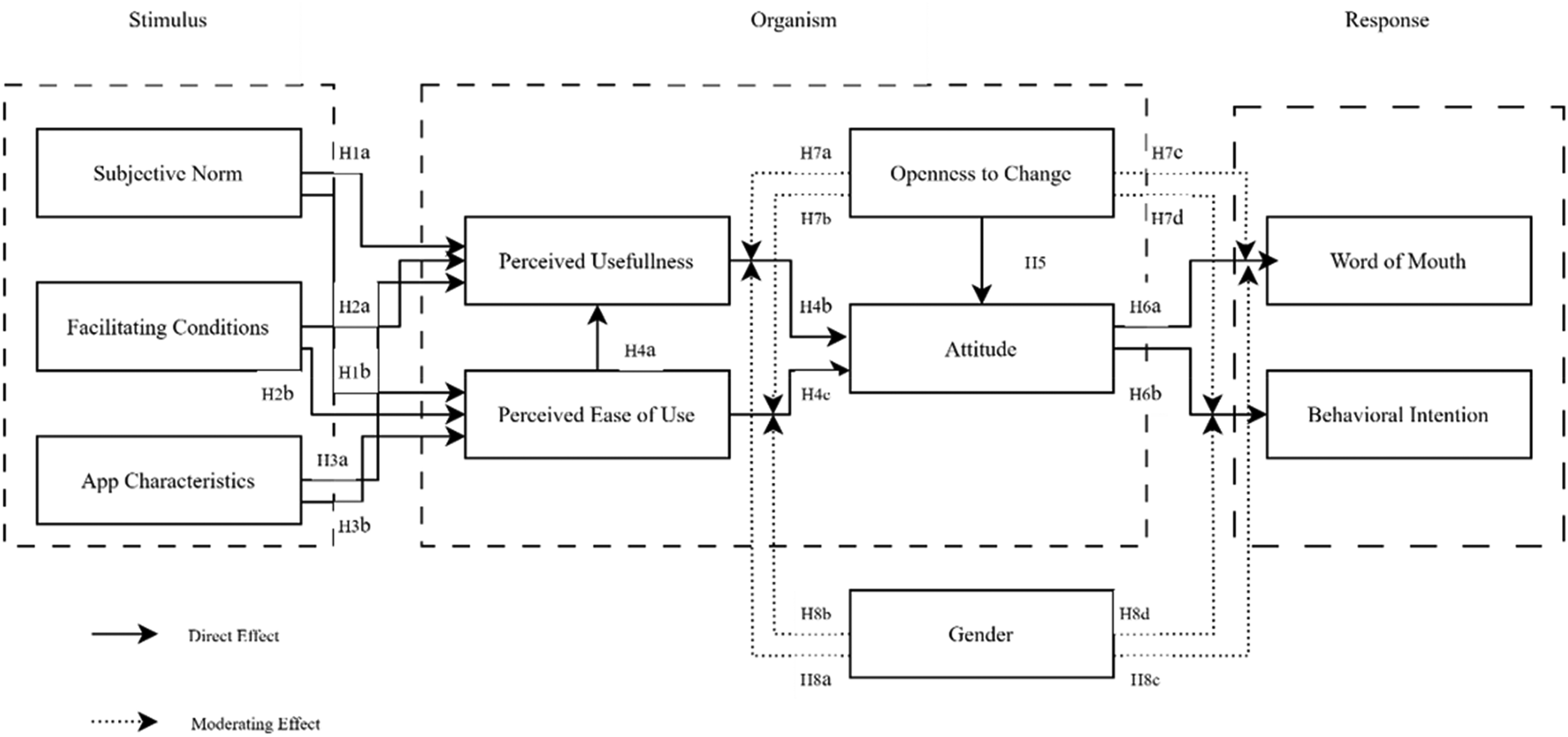
Conceptual framework.
Research Methodology
Sample
Data were collected by email (Google Forms) and from hotels and restaurants at popular tourist destinations using the purposive sampling method. This sampling method is justifiable for several reasons. First, the sample representation was an aging population, which required a nonrandom selection of respondents in the sampling location. Purposive sampling improves the sampling adequacy, and when a larger sample is required, this method maintains sampling quality (Hameed et al., 2024; Poan & Verin, 2024). Secondly, as sample respondents were examined for their technology knowledge, they were selected through a screening question: “Are you knowledgeable about mobile-based technology applications?” (YES/NO). This called for a more comprehensive sampling method to effectively screen sample respondents and ensure the sample was sufficient (Campbell et al., 2020).
Past quantitative studies conducted on aging populations in similar domain, such as innovative technology learning and adaptation (Dermody et al., 2021) and mobile payment adoption (Hameed et al., 2024), utilized this sampling method, as it reduces randomization bias and improves sampling accuracy. Furthermore, as the current study implications are only applicable to an aging population with technology know-how and do not generalize the outcome for all population ages, this sampling method is considered suitable as it provides justifiable responses that have better predictive accuracy and reduced sample bias (Chatterjee et al., 2024). The questionnaire was self-administered to the respondents who were willing to participate in the survey. The target respondents were older adults with an age range of 50 and above.
To eliminate response bias, both working and non-working (retired/dependent/homemaker) older adults were included in the survey. Furthermore, as the respondents were screened to assess their knowledge about mobile-based technology applications, this also helped reduce the response bias by eliminating the gap between technology-savvy people and other aging populations. This approach is justifiable for several reasons. Firstly, the homogeneity of sampling in technology adoption limits the error in high response variation, which occurs in the case of moderate to high sampling heterogeneity (Giua et al., 2022; Li et al., 2024). Secondly, this method aligns with this study's objective to assess the impact of the knowledge gap and to examine the lack of new technology behavior intention among the chosen sample, despite having knowledge and being aware of the technology. Though they might marginalize the outcome of the data analysis, the proximal issues about differentiating the knowledge or intention gap are eliminated.
Furthermore, to ensure no response bias between in-person and online respondents, a detailed description of the project and the screening question were included in the online version. The merits of physical, or face-to-face, data collection cannot be overlooked. This method may have a significant impact on data quality in certain specific inquiries, such as medical and surgical research (Sperber et al., 2023). However, a mediated approach to data collection, such as through Google Forms or social media platforms, is equally admissible if the requisite parameters of data collection are met, and it is also considered a practical approach to survey design (Willis et al., 2023). Finally, the sample was composed of the aging cohort, who were given the freedom to quit the survey at any time without prejudice.
The participants (in person and online) were informed that their responses would be confidential and solely used for research purposes. The sample size estimation was determined using power analysis with the help of the G* Power analytical tool. The minimum sample size for a medium effect size (0.15) was set with a margin of error of 0.01 and an approximate power of 0.99, which indicated a minimum sample size of 262 respondents required for this study. A total of 403 responses were collected utilizing both physical and online sources. However, seven physical responses had incomplete items or multiple choices for the same item, and four online responses could not be retrieved. Hence, a total of 392 completed survey responses were available for analysis.
All respondents were above 50, verified through a filter question. The demographic analysis shows that the majority of the respondents are male. Most respondents have an intermediate degree or diploma. The income levels vary widely, with the highest number of respondents earning between Malaysian ringgit (RM) 6000 and 8000 (approximately USD 1346–USD 1914). Professionally, most respondents are full-time workers, followed by part-time workers.
Instrument
The questionnaire was designed in English, and a 5-point Likert scale was used to measure the sample responses, ranging from strongly disagree (1) to strongly agree (5). The items for each construct were adopted from prior studies relevant to the current research domain. Subjective norms and facilitating conditions had four items, each taken from Wang et al.’s (2022) and Terblanche and Kidd's (2022) study, respectively. Perceived usefulness and perceived ease of use also had four items, each adopted from the study of Filieri et al. (2021). Openness to change had four items taken from Yue et al.’s (2019) study. App characteristics comprised four items taken from the survey of Camilleri et al. (2023). Attitude had three items taken from Ahn's (2022). The four items measuring behavioral intention were adopted from Erul et al. (2020) and Wang et al. (2022). Finally, word of mouth comprised four items from the study of Meilatinova (2021) (Appendix 1).
Results
Descriptive Statistics
The study utilized SPSS 26 and SmartPLS 4.0 data analysis tools to assess the model and test the hypotheses effectively. SPSS was utilized to measure the descriptive statistics and common method bias attributed to this study. The mean score ranges between 4.357 (highest) and 3.783 (lowest). The result also indicates that the average mean value of items for PU is the highest, and AP is the lowest. The items’ normality was evaluated using skewness and kurtosis values. It was found that the skewness of all items ranges between the acceptable range (−1 to +1) except four items of PU (−1.366 to −1.101), one item of SN (−1.035), and one item of ATD (−1.115). The standard deviation values indicate that FC have a relatively higher spread (FC4 = 0.926; FC2 = 0.778) compared to other constructs (refer to Table 1).
Descriptive Statistics.
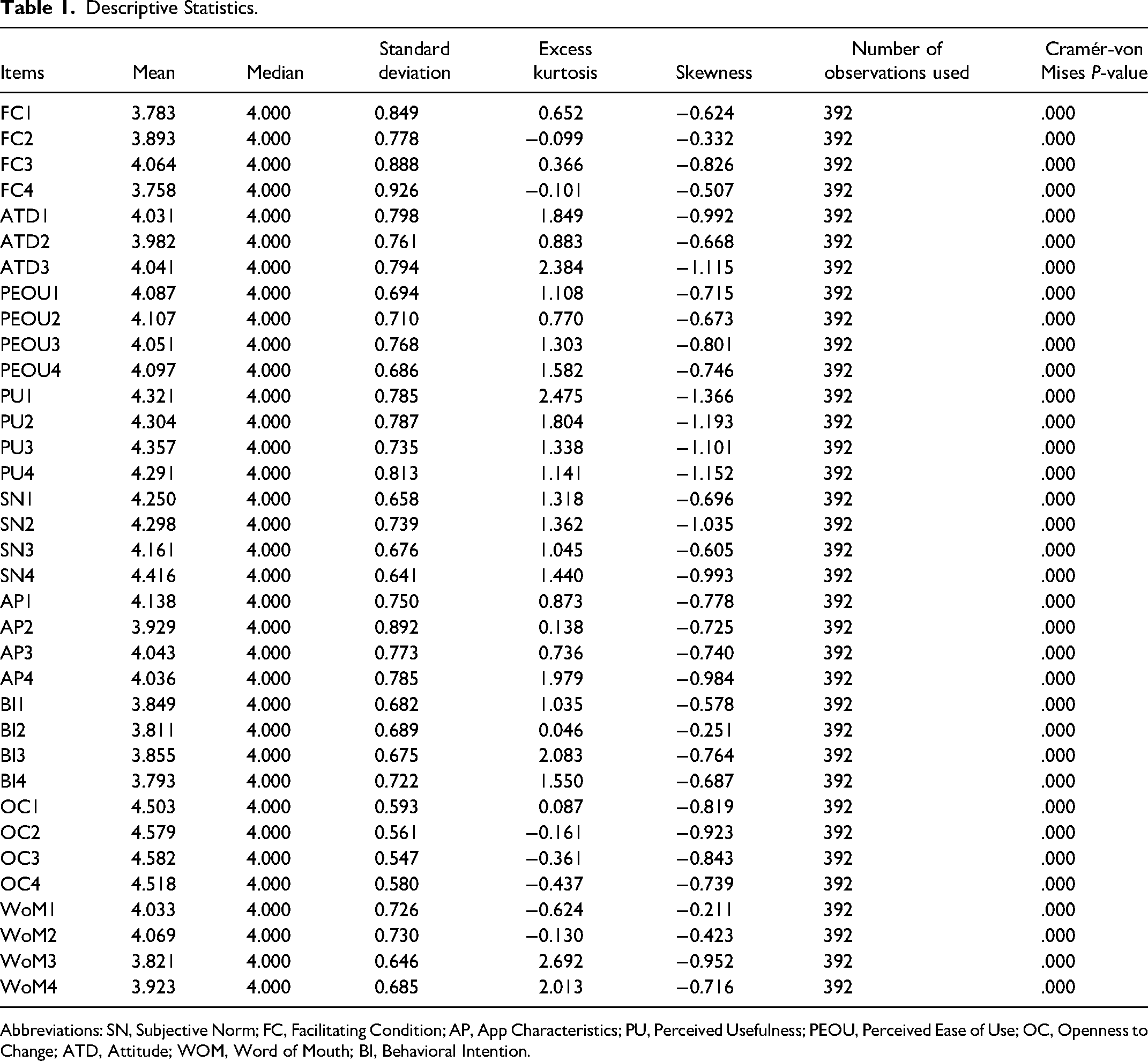
Abbreviations: SN, Subjective Norm; FC, Facilitating Condition; AP, App Characteristics; PU, Perceived Usefulness; PEOU, Perceived Ease of Use; OC, Openness to Change; ATD, Attitude; WOM, Word of Mouth; BI, Behavioral Intention.
SmartPLS 4 was explicitly used for structural equation modeling (SEM) (Sarstedt et al., 2023). The study employed PLS-SEM for the analysis as it has several advantages over covariance-based structural equation modeling (CB–SEM) analysis in terms of its ability to predict the target variables specifically in non-normally distributed data samples (Becker et al., 2023; Cheah et al., 2024). Furthermore, as the study involved undertaking predictive analysis with moderators, SEM-PLS was considered a better explanatory assessment tool than other forms of analysis (Cheah et al., 2024). Recent studies have iterated that, in gauging attitudinal or behavioral manifestation involving the mediation or moderation impact on new technology such as blockchain (Khan et al., 2024) or ChatGPT (Solomovich & Abraham, 2024), the PLS-SEM method is best suited. The evaluation process followed a two-step analytical approach, as suggested by Anderson and Gerbing (1988), including the assessment of measurement and structural models.
Common Method Bias (CMB)
It is generally accepted that, in studies that involve collecting survey data and primarily rely on feedback from respondents, common method bias (CMB) can be a potential issue. Several methods have been cited to test the presence of CMB in a data set. As this study employed the PLS-SEM method, two different methods were utilized based on this analysis method. The first method involved measuring the inner model's collinearity value, which provides collinearity values for all inter-construct hypothesized relationships (refer to Table 2). The results show that all the values are lower than the threshold value of 3.3 (Kock, 2015). The second method utilized was the marker correlation test, which is considered another measure to test the CMB (Ketokivi & Schroeder, 2004), and the results indicated no CMB impact.
Common Method Bias.
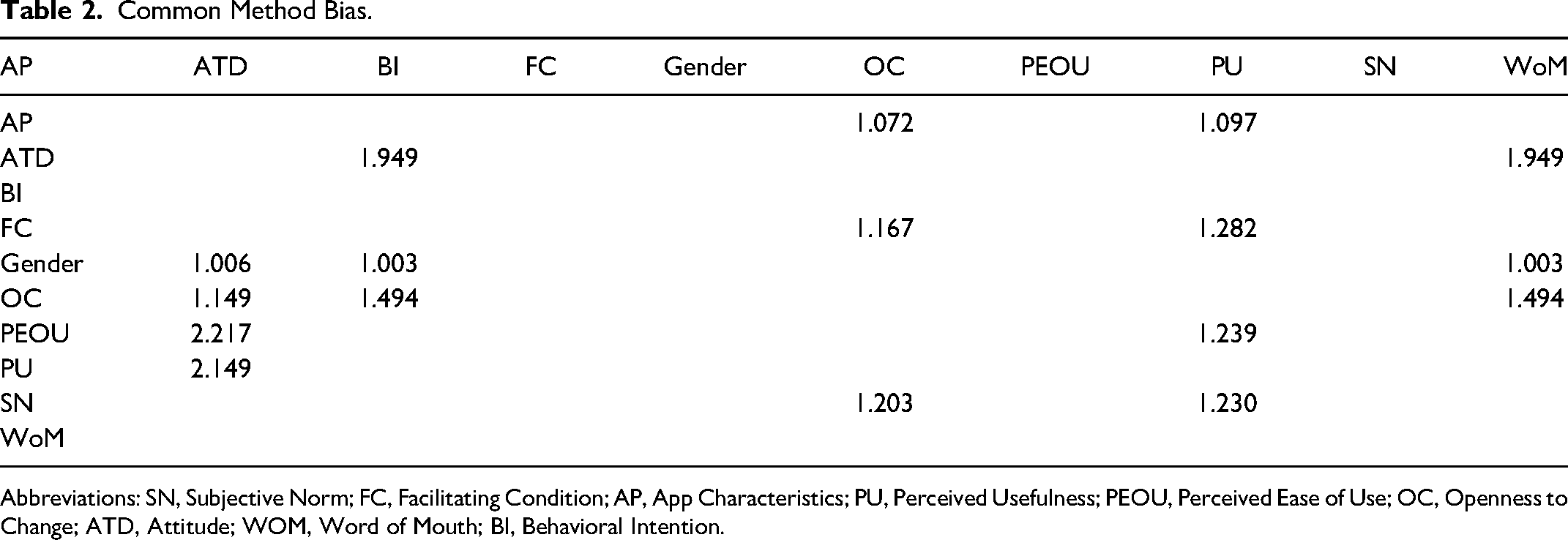
Abbreviations: SN, Subjective Norm; FC, Facilitating Condition; AP, App Characteristics; PU, Perceived Usefulness; PEOU, Perceived Ease of Use; OC, Openness to Change; ATD, Attitude; WOM, Word of Mouth; BI, Behavioral Intention.
Measurement Model
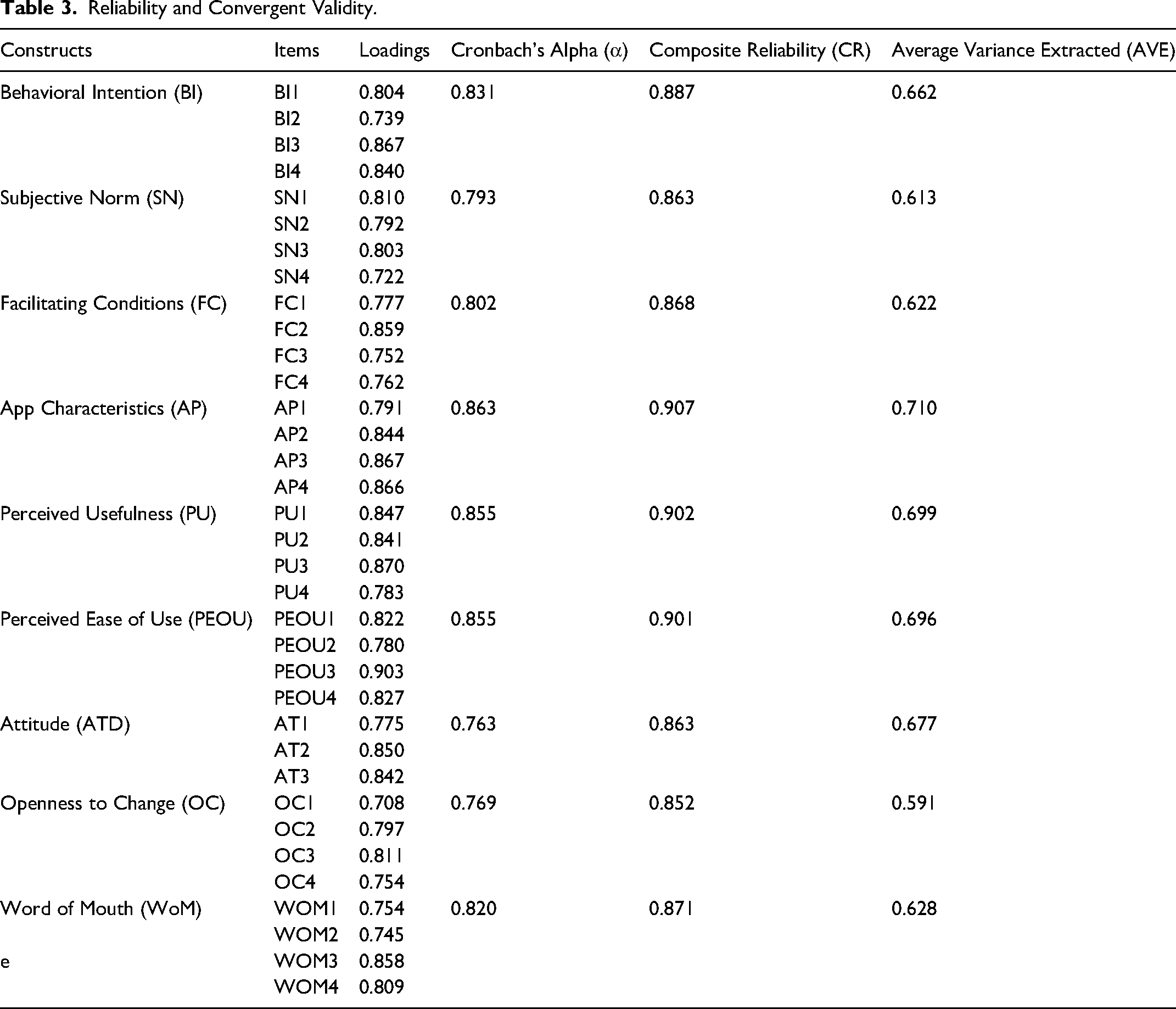
The study employed reflective measures of the variable items for validity and reliability as they originate from the construct, and all indicators measure an underlying causal phenomenon. The convergent validity was measured through factor loadings (SFL), Cronbach's alpha (α), and composite reliability (CR), the values of each of which exceeded 0.7, and the average variance extracted (AVE), surpassed the value of 0.50 (Hair et al., 2019) (Table 3). Thus, the results establish the reliability and validity of the data (Waris et al., 2022).
Reliability and Convergent Validity.
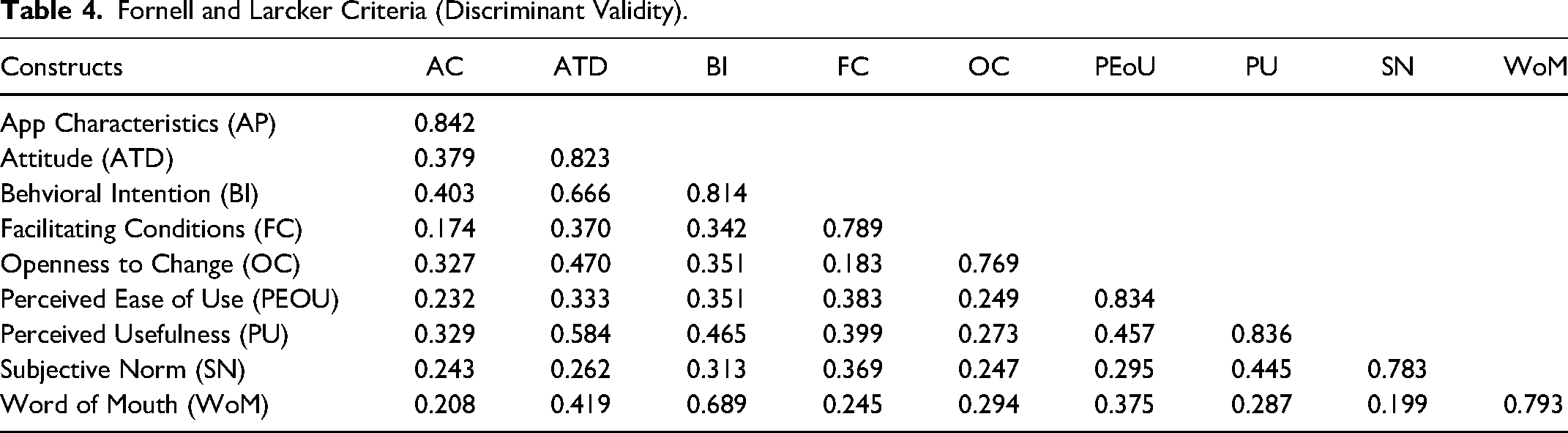
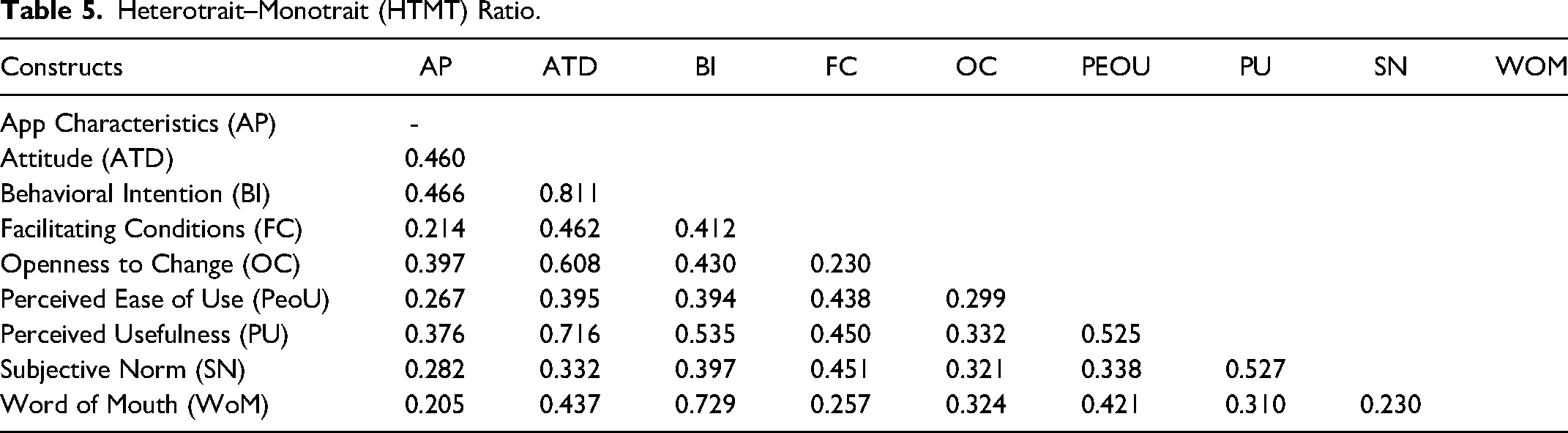
The discriminant validity was assessed by following two well-known criteria. The bootstrapping method with 10,000 subsamples set the PLS to slow (complete) analysis mode, and “percentile bootstrapping” was the confidence interval method. The first is the Fornell and Larcker (1981) established criteria, wherein the square root of average variance extracted (AVE) exceeds the inter-construct correlation values (Table 4). The second method is the correlations’ heterotrait–monotrait (HTMT) ratio (Henseler et al., 2015). The suggested threshold for this criterion is set at 0.85, with values below indicating the existence of discriminant validity (Hameed et al., 2022). The current study met this criterion, showing that it has discriminant validity, as shown in Table 5.
Fornell and Larcker Criteria (Discriminant Validity).
Heterotrait–Monotrait (HTMT) Ratio.
Structural Model
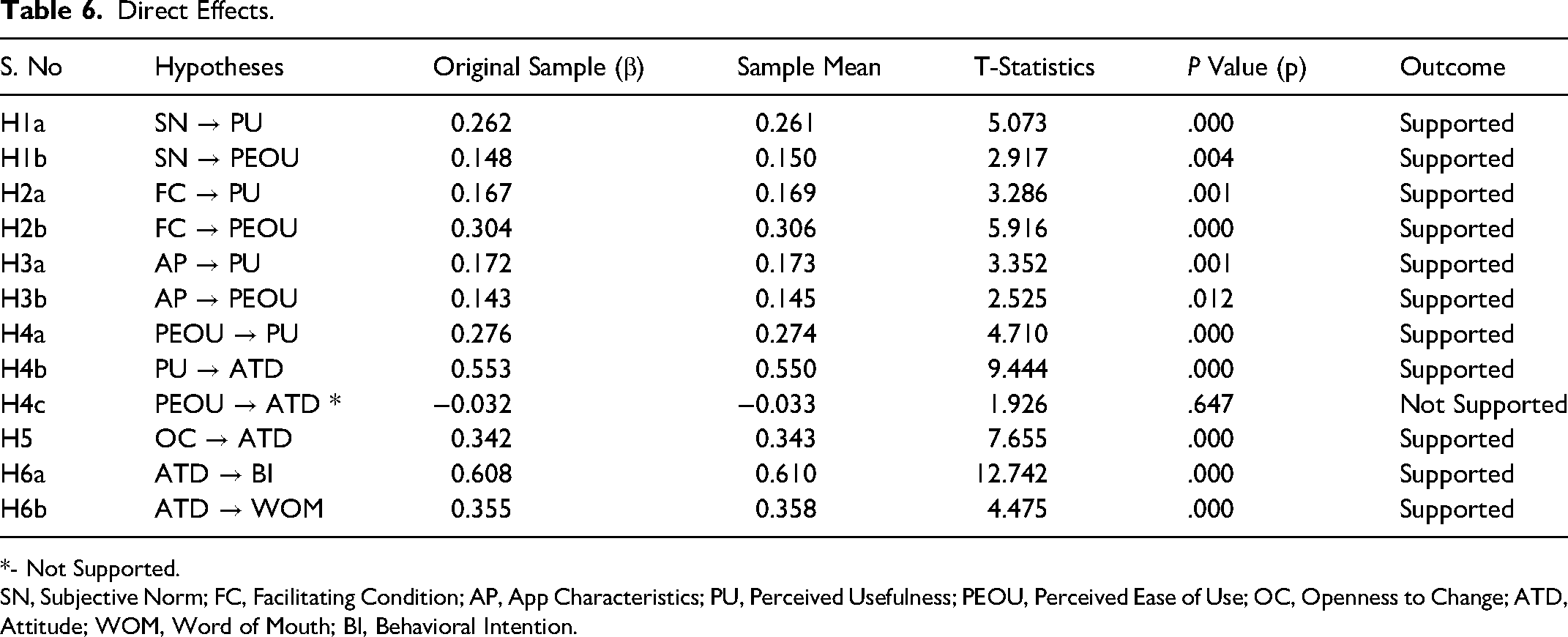
To assess the proposed hypothesized relationships in this study, the significance of the path coefficients was examined using Smart PLS 4.0. The bootstrapping method was utilized, analyzing 10,000 subsamples. The path coefficient result shows that each of the hypotheses in the model is significant based on the P-values, except PEOU to ATD (β = −0.032; P > .01). SN has a positive impact on PU, and PEOU has been accepted in H1a and H1b (β = 0.262; P = .000 and β = 0.148; P = .004). Similarly, the direct impacts of FC on PU and PEOU have also been supported by the data (H2a: β = 0.167; P = .001 and H2b: β = 0.304; P = .000). Hypotheses H3a and H3b posited the positive relationships of AP with PU and PEOU, and they have also been accepted (β = 0.172; P = .001 and β = 0.143; P = .012).
Hypothesis H4a suggests a positive relationship of PEOU with PU, and PU has a positive relationship with ATD in H4b. The findings reveal that both proposed relationships have been accepted (β = 0.276; P = .000 and β = 0.553; P = .000). The direct impact of OC on ATD, proposed in H5, has also been accepted (β = 0.342; P = .000). Finally, hypotheses H6a and H6b conceptualize the positive impact of ATD on BI and WOM. The results favor the propositions, and thus these two hypotheses have also been accepted (β = 0.608; P = .000 and β = 0.355; P = .000). The findings reveal that the effect of ATD on BI is the strongest, followed by PU on ATD and ATD on WoM, as presented in Table 6.
Direct Effects.
- Not Supported.
SN, Subjective Norm; FC, Facilitating Condition; AP, App Characteristics; PU, Perceived Usefulness; PEOU, Perceived Ease of Use; OC, Openness to Change; ATD, Attitude; WOM, Word of Mouth; BI, Behavioral Intention.
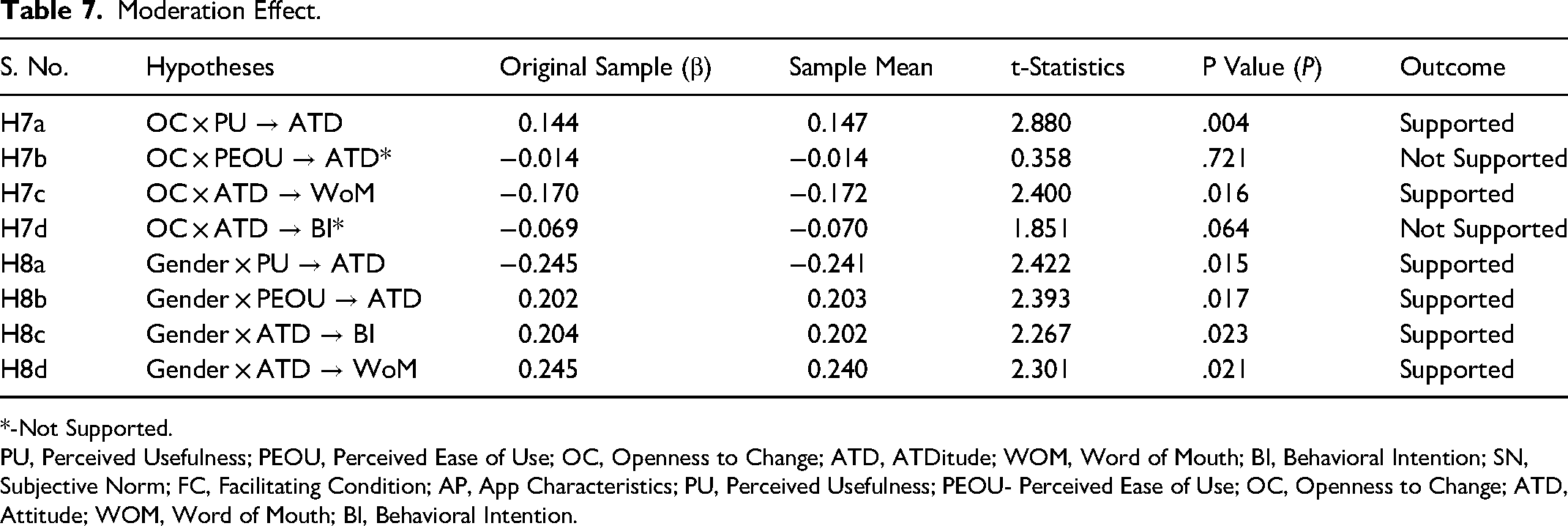
Figure 2 further suggests the context of the moderation effect; the result of the path coefficient indicates the significant impact of OC on the relationship between PU and ATD (β = 0.144; P = .004). However, no moderation effect of OC is observed in the relative influence of PEOU (β = −0.014; P = .721) on ATD. OC negatively moderates the relationship between ATD and WoM, diminishing the likelihood of app advocacy among aging consumers with adaptable mindsets (β = −0.170; P = .016). Furthermore, OC does not moderate the relationship between ATD and BI (β = −0.069; P = .064).
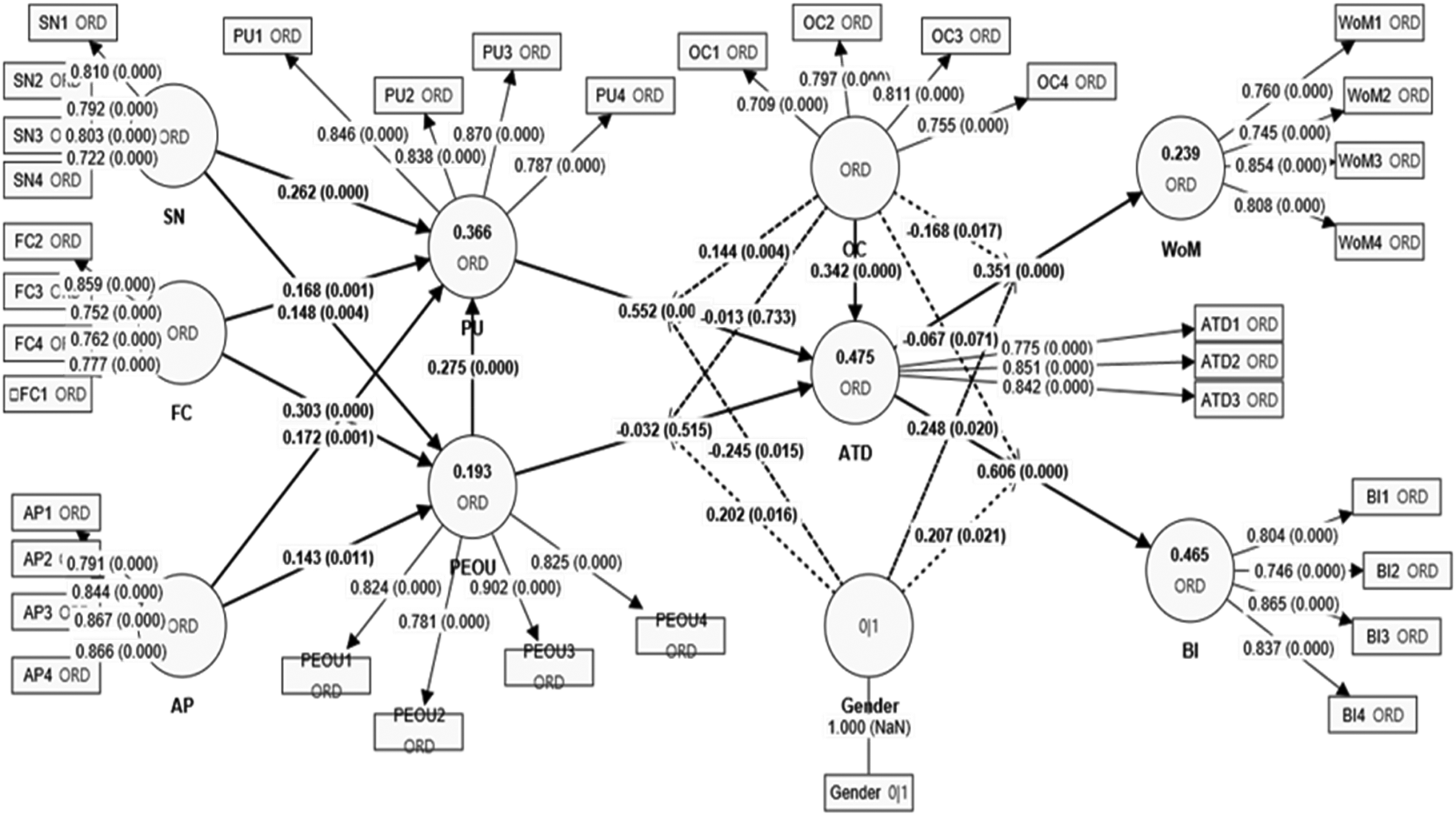
Structural model.
However, gender has a significant moderation effect on the impact of PU on ATD (β = −0.245; P = .015). The direction of the effect implies that gender may reduce the strength of the positive relationship between PU and ATB. The effect of gender is positive for hypotheses from H8b to H8d, suggesting that one gender may be more responsive. Specifically, gender moderates the relationship between PEOU and ATD (β = 0.202; P = .017). Moreover, gender significantly moderates the influence of ATD on both BI (β = 0.204; P = .023) and WOM (β = 0.245; P = .021) (see Table 7).
Moderation Effect.
-Not Supported.
PU, Perceived Usefulness; PEOU, Perceived Ease of Use; OC, Openness to Change; ATD, ATDitude; WOM, Word of Mouth; BI, Behavioral Intention; SN, Subjective Norm; FC, Facilitating Condition; AP, App Characteristics; PU, Perceived Usefulness; PEOU- Perceived Ease of Use; OC, Openness to Change; ATD, Attitude; WOM, Word of Mouth; BI, Behavioral Intention.
Discussions and Conclusion
The study investigated several hypotheses related to the relationships among subjective norms, facilitating conditions, app characteristics, perceived usefulness, perceived ease of use, attitude, word of mouth, behavioral intention, openness to change, and gender. First, the direct effect of three antecedent factors, namely SN, FC, and AP, on PU and PEOU were observed. The impact of subjective norms (H1a and H1b) on PU and PEOU was significant, which indicates the role of social pressure and, in certain situations, a more closely related peer group pressure or approval of others on the perceived utility and efficiency of new technology applications. In the aging cohort, heightened SN allows for significant perceptual disagreement concerning technology, which is evident among similar studies (Oktavianus & Bautista, 2023; Yang et al., 2023).
The effect of facilitating conditions (H2a and H2b) is also significant on both PU and PEOU. This corroborates prior findings that the role of FC is crucial in enhancing technology perceptivity among older people, especially in situations where cognitive technology know-how is present or provided (Yang et al., 2023). This study supplanted the current literature by testing this hypothesis on meal planner applications. Next, the hypotheses for app characteristics (H3a and H3b) were tested. The results also indicate a positive impact on mobile meal planner applications’ usefulness and ease of use. Though earlier studies had pointed out the significance of app features in enhancing adaptability among older adults (Shi et al. 2023; Tandon et al., 2024), this finding provides a new dimension to this construct by proving it as a primary stimulus aspect with no emotional orientation. However, its presence positively affects the perceptivity (emotion) toward using the meal planner application.
At the second level, the impact of PEOU on PU (H4a) was observed, and the effect of both these perceptual contrasts (H4b and H4c) on respondents’ attitudes toward using meal planner apps was measured. The results demonstrate that PEOU boosts PU, which, in turn, enhances ATD toward the app. This highlights the interconnectedness of these constructs, where ease of use leads to a perception of usefulness, positively influencing users’ attitudes. Similarly, the impact of PU of the mobile app was significant on attitude, which relates to prior findings such as quantitative measurements of learning app usage behavior among older university adults (Liesa-Orus et al., 2023). However, hypothesis H4c, which proposed that PEOU enhances AT, was rejected. This suggests that while ease of use is important for PU, it may not directly influence the overall attitude toward the app. Also, this outcome allows a deeper introspection into attitudinal variability for mobile applications.
It is inferred that when the perceived utility of the app is strongly coupled with suitable app characteristics, the role of perceived usability is diminished in altering one's attitude. Similar results have been observed in other technology-related constructs, such as learners’ adaptability to the ChatGPT application (Liu & Ma, 2024), where PEOU failed to impact learners’ attitudes. This further reflects that a general tendency among the aging cohort to adopt or resist might strongly resemble their perceived usefulness of the product. This argument can be further supplanted from the counter attitude or behavior of aging people toward technology, such as technology resistance, whereby studies have found the stronger reason to be a lack of perceived usefulness rather than perceived ease of use (Alam & Khanam, 2023; Yeh et al., 2024).
Next, the direct impact of openness to change (OC) on AT (H5) was tested, and the results were significant. This finding implies that individuals who are more open to new experiences and changes tend to have a more positive attitude toward the app. The impact of ATD on WoM and BI was examined (H6a and H6b). The results show a positive significant impact, which aligns with previous technology attitude outcomes. However, very few observations have focused on the word-of-mouth impact on food-related applications such as food delivery apps (Ramalingam & Das, 2023), and none were found to measure the aging population cohort. This outcome also implies that for this population group, a positive attitude influences users’ attitude toward recommending the app to others and continuing to use it.
Subsequent to direct effects, the moderation effects of openness to change (OC) were examined utilizing several hypotheses. First, its impact on the relationships between PU (H7a) and ATD and between ATD and WoM (H7c) was observed to be significant. This implies that the degree of perceived acceptability to change is proportional to the aged population's perceived utility of the mobile application and the resulting attitude toward such apps. The findings also supplant the scant research literature on word-of-mouth propagation among the aging population, whereby OC was also found to influence the attitude to WoM pathway. This is a novel finding, considering that the role of OC in adopting mobile-based applications has been sparse in the current literature, focusing on new technology adoption.
However, the moderating impact of OC on the PEOU–attitude relationship (H7b) and attitude to behavioral intention (H7d) were observed to be insignificant. There are no parallel findings, as recent studies on mobile applications have not observed the openness to change impact. The outcome can be justified from two different perspectives. Firstly, the influence of PEOU is observed in this study to be negligent, which can be attributed to the shift in heightened importance toward perceived usefulness and app features. Secondly, past studies have shown that a strong attitude toward new technology adoption usually leads to a strong behavioral intention toward that technology, even among the aging population, whereby the strength and magnitude of the attitude play a significant role (Lenz et al., 2023; Yang et al., 2023). Hence, the insignificant impact of OC on PEOU and BI shows similar attitude-based attribution in the case of meal planner applications.
Finally, the moderating impact of gender was explored by utilizing four different relationships. The results indicated that gender moderated the influence of both PU (H8a) and PEOU (H8b) on attitude. The results also show a significant impact of gender difference on the attitude to WoM (H8c) and attitude to behavioral intention (H8d) pathways. These are considered significant findings, as past studies have observed contrasting outcomes. Studies relating general technology adoption attitudes to the aging cohort (Mannheim et al., 2023) and specific technology-related behavior, such as mobile payments acceptance and use in Brazil (Abegao Neto & Figueiredo, 2023), have found that gender has no impact. However, younger populations have shown significant gender differences in adopting and using smart technology products such as IoT-based smart devices (Lenz et al., 2023) and software applications such as ChatGPT (Ma et al., 2024).
Furthermore, the findings underscore the importance of considering gender differences in understanding user behavior and attitudes toward the app. In general, this corroborates other nontechnology-based aging studies where the differential impact of male and female perceptual understanding on attitude is significant, such as in the case of organic food choices (Fatha and Ayoubi, 2023) and recycling behavior among the aging Portuguese population (Miguel et al., 2024).
The primary objective of this study was to observe the aging population's perceptual and attitudinal influence on using mobile meal planner apps. The study observed the moderating impact of openness to change and gender differences on the hypothesized relationships. The findings have shown a clear cognitive-affective-conative pathway influence whereby the transition initiates from social and technical characteristics impacting perceived consequences and resulting in attitude influence that propels word of mouth and behavioral manifestation toward this mobile application. It also provides certain novel input that implies both theoretical and practical undertakings. The emergent importance of addressing aging cohorts’ use of this technology is their perceived utility of the product, which stems from congenial environmental factors and intrinsic app characteristics.
This provides a strong impetus for app developers to focus on the suitability of the app features rather than the simplicity of the app features. Furthermore, the gender difference in mobile app perceptivity and associated behavior clearly shows that similar cognitive or affective input will not be impactful in generating equally strong responses from both male and female older adults. Finally, examining the impact of openness to change on attitude and word-of-mouth provides a new direction for further research on aging cohorts’ technological adoption and how physical attributes, not electronic attributes, can have positive or negative affects.
Theoretical Implications
The results of the current study have various theoretical contributions. The findings that SN positively impacts PU and PEOU reinforce the technology acceptance model. They highlight the importance of social influence in technology adoption. Findings suggest that users are more likely to find a system useful and easy to use if endorsed by peers and influencers, expanding our understanding of social factors in technology acceptance. Similarly, the positive relationship between FC, PU, and PEOU contributes to the unified theory of acceptance and use of technology. This demonstrates that the availability of resources and support significantly enhances users’ perceptions of a system's usefulness and relative ease of use, emphasizing the role of social and environmental factors in technology adoption.
The results indicate that app characteristics positively influence PU and PEOU and suggest that the inherent features of technology can enhance users’ evaluations and acceptance. Additionally, the finding that PEOU positively impacts PU further supports TAM, underscoring the interdependence of these constructs and their combined effect on user acceptance. The positive impact of PU on ATD confirms the assertion of TAM that users’ beliefs about a system's benefits directly shape their attitudes toward using it, reinforcing the model's validity. The findings also challenge key assumptions of theoretical models like TAM and UTAUT2, highlighting that perceived ease of use may not directly influence ATD among aging consumers, as PEOU could be seen as a baseline expectation rather than a driver of engagement.
Moreover, the discovery that OC positively affects ATD highlights the role of individual differences in technology acceptance, suggesting that users who are more open to new experiences are likely to develop more favorable attitudes toward new technologies. This adds a new dimension of personality traits to TAM. The positive impact of ATD on WoM and BI aligns with the theory of planned behavior, indicating that favorable attitudes toward a technology enhances their likelihood of recommending it to others. This emphasizes the broader social implications of individual attitudes in technology diffusion. The absence of moderation by OC in shaping ATD and BI further suggests that personality traits may play a less significant role in this demographic than contextual or situational factors. These insights refine models by emphasizing the importance of external motivators over general individual differences. The results also call for incorporating aging-specific factors, like cognitive load and familial influences, into frameworks like SOR to better predict engagement in this population.
The moderating role of OC in the relationship between PU and AT, as well as between ATD and WoM, suggests that individual traits can influence how beliefs and attitudes translate into behavioural outcomes. This integration of personality traits into traditional technology acceptance frameworks offers a more sophisticated understanding of user behavior. Finally, the moderating effect of gender on the relationships between PU, PEOU, AT, WoM, and BI highlights the importance of demographic factors in technology acceptance. These findings suggest that gender differences can affect how users perceive, evaluate, and respond to new technologies, which can inform targeted technology implementation and marketing strategies.
Practical Implications
The findings offer critical managerial implications for boosting technology adoption and user satisfaction. Given that social norms positively influence perceived usefulness and ease of use, managers should strategically harness social influence by fostering endorsements from key opinion leaders, influencers, and brand advocates within the target market. Additionally, the strong role of facilitating conditions in enhancing PU and PEOU emphasizes the need for comprehensive support systems. Managers should invest in tailored training programs, user-friendly documentation, and 24/7 technical assistance to ensure seamless user experiences. Moreover, the significant impact of AP on PU and PEOU underscores the importance of prioritizing design excellence. For app developers, emphasizing user-friendly features such as intuitive interfaces, personalized recommendations, and compatibility with various devices can enhance perceived usefulness and ease of use, particularly for aging consumers.
It is worth noting that PU directly impacts AT, suggesting that managers should clearly communicate the technology's benefits and practical advantages to foster positive user attitudes. Additionally, OC positively affects AT, indicating that marketing efforts should target early adopters and those more receptive to new technologies, as they are likely to develop more favorable attitudes and influence others through WoM. Developers should also focus on social integration features and accessible tutorials to leverage the influence of subjective norms and facilitating conditions. Policymakers can support these efforts by encouraging the development of inclusive design standards and providing subsidies or incentives for apps that cater to aging populations.
The moderating role of OC between PU and AT, and between ATD and WoM, highlights important managerial implications for enhancing customer engagement. To optimize these relationships, personalized marketing and support strategies should be tailored to distinct user segments. For example, more innovative users who are open to exploring new technologies are likely to respond positively to advanced features and cutting-edge innovations. In contrast, more traditional or change-averse users may benefit from streamlined, easy-to-use functionalities that simplify their experience. Managers should develop segmented marketing campaigns and product offerings that cater to the varying openness levels of their user base, ensuring that both tech-savvy and less tech-oriented users are satisfied. This tailored approach can enhance customer satisfaction, drive positive word-of-mouth, and foster greater long-term loyalty.
The moderating effect of gender on the relationships between PU, PEOU, AT, WoM, and BI highlights the necessity for gender-sensitive approaches in technology marketing and user experience design. Furthermore, recognizing the role of openness to change and gender differences in shaping attitudes and behavior can guide tailored strategies to enhance engagement and drive positive word of mouth among diverse user groups. Managers should consider gender-specific preferences and barriers when designing and promoting their technologies, ensuring inclusivity and accessibility for all user groups. Stakeholders such as healthcare providers and community organizations can promote these apps as tools for fostering healthier and more efficient meal planning. These results indicate that a multifaceted approach addressing the aforementioned factors can significantly enhance user adoption, satisfaction, and advocacy, leading to better technology integration and success in the aging consumer market.
Limitations and Future Research
The research was conducted using a cross-sectional research design, collecting data from respondents from a single point in time. However, the level of technological adoption and awareness continues to vary. The study's cross-sectional nature limits the ability to draw causal inferences from the observed relationships. Future research could address this limitation by incorporating longitudinal designs to examine changes in attitudes and behaviors over time. Additionally, the study focuses on respondents with prior exposure to FPAs, which may not fully capture the perspectives of those who are entirely new to such technologies. Expanding the sample to include a more diverse group of elderly consumers, including those without prior FPA exposure, could enhance the generalizability of the findings.
Self-reported data were collected using a purposive sampling technique; however, a more detailed analysis could focus on the same age group while considering various age brackets and associated health conditions. Stratified sampling may provide a more effective approach to identifying elderly individuals based on these specific factors. Further research could also explore additional moderating variables, such as cultural differences and socioeconomic status, to provide a more comprehensive understanding of the factors influencing FPA adoption among older adults. Moreover, cross-cultural comparisons or mixed-method approaches could provide more actionable insights. The integration of qualitative studies such as interviews and focus groups could offer deeper insights into the subjective experiences and specific needs of elderly users, guiding more tailored and effective app design and marketing strategies. Finally, since the majority of the respondents were male, the current research requires careful consideration when generalizing the findings.
Footnotes
Associate Editor
Yousra Asaad
Declaration of Conflicting Interests
The authors declared no potential conflicts of interest with respect to the research, authorship, and/or publication of this article.
Funding
The authors received no financial support for the research, authorship, and/or publication of this article.
