




Abstract
This research addresses the role of different phases of consumption—anticipation, acquisition, and usage—in the relationship between clothing consumption curtailment (CCC) and increased consumer subjective well-being (CSWB). Building on past research, we theorize and empirically explore whether increased CSWB is explained by a change in focus from acquisition to usage. Through a content analysis of 140 blog posts from clothes shopping detoxers, we unearth how reduced acquisition and intensive and extended usage manifest in CCC practices. Furthermore, we apply structural equation modeling (SEM) to representative survey data (N = 661) to show that focusing on acquisition reduction is not associated with CSWB, while intensive and extended usage are positively associated with CSWB. In addition, we establish that this relationship is partially mediated by improved body image. Our results open a path for further research, and can be utilized in social marketing to promote the intensive usage rather than acquisition of clothing.
Keywords
Introduction
With an estimated 2–8% share of global CO2 emissions, the clothing system entails one of the most carbon-heavy and polluting industries (Howell 2024; Quantis 2018; Statista 2023). Furthermore, the overconsumption of clothes causes a severe disposability problem (Dissanayake and Pal 2023; Ozdamar Ertekin and Atik 2015), as some 93 billion cubic meters of textile waste is produced globally each year (Ellen MacArthur Foundation 2017a in Ellen MacArthur Foundation 2017b). Despite the effort put into greener products (Bastos Rudolph, Bassi Suter, and Barakat 2023; Chhabra, Sindhi, and Nandy 2022), circular economy (Hellström and Olsson 2024; Papamichael et al. 2023), sharing, and collaborative business models such as second-hand, renting, and borrowing platforms (Albinsson and Perera 2018; Amasawa et al. 2023; Grappi et al. 2024), those carbon emissions have not reduced. Instead, a decrease in average garment-use time has led to an increase in total fiber production, leading in turn to an increase in emissions of 30% from 2000 to 2015 (Ellen MacArthur Foundation 2017a in Ellen MacArthur Foundation 2017b; Peters, Li, and Lenzen 2021). The higher emissions reveal the core issue driving clothing overconsumption the current approaches do not question, that is, the craving for newness and variation promoted by fashion marketing (Atik and Ozdamar Ertekin 2023). In order to break away from these recurring and fast-changing fashion loops, we need more radical approaches such as clothing consumption curtailment (CCC) (Millward-Hopkins, Purnell, and Baurley 2023; Mukendi et al. 2020).
In addition to potentially reducing the environmental impact of the clothing industry, CCC has been associated with increased consumer subjective well-being (CSWB) (Gwozdz et al. 2017; Malik and Ishaq 2023; Shafqat, Ishaq, and Ahmed 2023). This connection between CCC and CSWB could offer further support for the need for consumption curtailment, and be utilized in the promotion of CCC. However, more research is first needed to understand the mechanisms of the relationship, and what exactly drives the positive well-being effects of CCC. Vesterinen and Syrjälä (2022) reviewed the previous research on “sustainable anti-consumption of clothing”, concluding that the key components in slowing the clothing consumption cycle are reduced acquisition, and intensive and extended usage, which eventually diminish disposal. Other studies have hinted that this shift from acquisition to usage might explain the association between CCC and CSWB (Gwozdz et al. 2017; Malik and Ishaq 2023). It is thought that trying to follow the accelerating fashion cycle causes a perceived discrepancy between the consumer's current and ideal self, leading to dissatisfaction and anxiety (Dittmar and Halliwell 2008; Johnson and Attmann 2009). By moving the focus from new acquisitions to using and enjoying what we already have, CCC could free consumers from this cycle and thereby reduce the negative well-being effects. Building on these prior findings, this paper theorizes whether the relationship between CCC and CSWB can be explained by a change in focus from acquisition to usage.
Moreover, we delve deeper into the CCC-CSWB connection by suggesting a mediating factor. Clothes represent a particular object of consumption, in that the comparison between our current and ideal self concerns not only self-image in general but our body in particular (Manchiraju and Damhorst 2020). Consumers who reduced their clothing consumption have described feelings of improved self-confidence and body image (Armstrong et al. 2016; Bly, Gwozdz, and Reisch 2015). Positive body image, in turn, has been connected to enhanced consumer subjective well-being (CSWB) (Lee et al. 2014; Nayir et al. 2016; Swami et al. 2015). However, the mediating role of body image between CCC and CSWB has yet to be investigated. This study aims to fill that research gap.
To that end, the present mixed method research proceeds in two phases. Study 1 qualitatively explores how the postulated components of reduced acquisition and intensive and extended usage manifest in CCC practices. We analyzed 140 posts from bloggers who had voluntarily refrained from buying clothes for at least three months. Subsequently, study 2 quantitatively examines the relationships between these components, consumer subjective well-being, and body image. Our analysis is based on representative survey data (N = 661) and covariance-based structural equation modeling (CB-SEM).
We seek to contribute to the sustainable consumption literature in two principal ways. First, instead of focusing solely on acquisition, a limitation highlighted by Fischer et al. (2021) and Vesterinen and Syrjälä (2022), we expand the discussion to other phases of consumption, such as usage. Second, we enrich the current conceptual understanding by revealing the role of perceived body image as a mediator between CCC and CSWB. Our research has both societal and managerial relevance. We produce new knowledge and insights to help tackle climate change and overconsumption issues (Helm and Little 2022, Wooliscroft and Ganglmair-Wooliscroft 2018). By studying the connection between consumption curtailment and well-being, we offer actionable ideas not only for social marketing of sustainable clothing consumption, but also for fashion demarketing, empowering marketing to drive positive social change and consumer well-being (Batat 2023). Finally, from a macromarketing perspective, we not only collect individual level data in our survey, but also consider clothing curtailment from a more macro systems perspective, through our analysis of 140 blogs, which form a type of social commentary.
Our article begins by elaborating the relationship between CCC and CSWB, culminating in the development of research hypotheses and a research model. Second, we report the findings of Study 1. Third, we present the methodology and results of Study 2. Finally, we discuss the academic significance of our research, offer theoretical and societal implications to be used in the promotion of consumption curtailment, identify study limitations, and outline future research suggestions.
Theoretical Background and Hypothesis Building
Clothing Consumption Curtailment and Sustainability
To tackle the sustainability problems of the clothing industry, much effort is invested in the efficiency-based approach of boosting the acquisition of greener products (Bastos Rudolph, Bassi Suter, and Barakat 2023; Chhabra, Sindhi, and Nandy 2022; Rūtelionė and Bhutto 2024). Yet, the industry's carbon emissions continue to rise due to decreasing garment-use time and increasing total fiber production (Ellen MacArthur Foundation 2017a in Ellen MacArthur Foundation 2017b; Peters, Li, and Lenzen 2021). We assert that this ‘greener products’ approach is failing, because it operates within the current system that encourages constant acquisition and disposal, even if the products are more eco-efficient (Pedersen and Andersen 2015, Vesterinen and Syrjälä 2022).
Other approaches have focused on facilitating the shift from linear to circular economy (Hellström and Olsson 2024; Jimenez-Fernandez, Aramendia-Muneta, and Alzate 2023), and from private ownership to sharing and collaborating (Albinsson and Perera 2018; Amasawa et al. 2023, Ki et al. 2024); that is, from solid (ownership-based) to liquid (access-based) consumption (Rosenberg, Weijo, and Kerkelä 2023; Saravade, Felix, and Firat 2021). However, although extending clothing use time should be at the core of the circular textile economy (Green strategy 2016), the associated initiatives and research mostly concentrate on sustainable acquisition and recycling, without addressing the core issue driving clothing overconsumption, namely the craving for newness and variation (Atik and Ozdamar Ertekin 2023). For instance, the second-hand market offers consumers the illusion of guilt-free sustainable shopping, and a channel for disposing of unwanted clothes to make room for new items (Netter 2016; Vehmas et al. 2018). This can even lead to compulsive buying (Seegebarth et al. 2016), and potentially justify the generation of more waste (van Doorn and Kurz 2021).
In fact, according to lifecycle assessments, instead of collaborative consumption or recycling, the most efficient way to reduce the carbon emissions of the clothing industry is by extending the usage of already owned garments, and curtailing the acquisition of new products (Levänen et al. 2021). Therefore, in order to break the norm of constant acquisition and disposal, radical approaches such as consumption curtailment are needed (Millward-Hopkins, Purnell, and Baurley 2023; Mukendi et al. 2020).
Consumption Curtailment and Subjective Well-Being
The rejection of specific products, services, companies, or curtailing consumption in general, is often referred to with an umbrella term, anti-consumption (Lee 2022). Many studies indicate that anti-consumption enhances subjective well-being (Balderjahn et al. 2020; Oral and Thurner 2019; Vollebregt et al. 2024). Subjective well-being refers to individuals’ subjective evaluation of their well-being as opposed to objective measures such as health, wealth, or education (Forgeard et al. 2011). It is often divided into two components, affective and cognitive well-being. Affective well-being refers to feelings of happiness, that is, how you are feeling, and cognitive well-being addresses satisfaction with life, that is, how you think you are doing (see Diener et al. 2010; Iyer and Muncy 2016). They can move in different directions (Diener, Lucas, and Scollon 2009), but anti-consumption can positively influence both (Iyer and Muncy 2016).
Anti-consumption does not always contribute to sustainability. For example, consumers could reject one brand in favor of competing brands, or even resist sustainable brands that are inconsistent with their image (Witkowski 2021). However, recently, four types of anti-consumption with sustainability roots have been studied: voluntary simplicity, referring to buying only what is necessary; collaborative consumption, referring to borrowing, sharing, and renting; debt-free living, referring to buying only when it does not risk financial insecurity; and boycotting unsustainable companies (Balderjahn, Hoffmann, and Hüttel 2023; Hüttel, Balderjahn, and Hoffmann 2020). According to these studies, voluntary simplicity in acquisitions leads not only to fewer product possessions and less impulsive buying but also to increased psychosocial and subjective well-being, as well as improved life satisfaction both directly and indirectly through reduced indebtedness (Balderjahn et al. 2020; Nepomuceno and Laroche 2015; Seegebarth et al. 2016). Collaborative consumption, while contributing to a decrease in product possessions and indebtedness and an increase in subjective well-being, also encourages impulse buying (Seegebarth et al. 2016), implying that it is less sustainable than previously thought.
Although anti-consumption may have positive consequences in terms of sustainability, its drivers may be more self-oriented than those of green consumption (Martin-Woodhead 2022; Zavestoski 2002); for example, financial well-being and long-term emotional well-being (Wu et al. 2013; Zabkar and Hosta 2013; Ziesemer, Hüttel, and Balderjahn 2021). Examples of this kind of anti-consumption in the clothing context are style (oriented) consumption and minimalism. Style consumption refers to buying styles instead of fashion, to extend usage and reduce frequency of clothing purchase (Nielsen et al. 2023; Cho, Gupta, and Kim 2015). Minimalism refers to limiting the number of clothing possessions through decluttering, extending the usage of apparel already owned, and cautious or strategic shopping aimed at long-term wardrobe functionality and style (Chamberlin and Callmer 2021; Martin-Woodhead 2022; Shafqat, Ishaq, and Ahmed 2023). Rather than environmentalism, these anti-consumption of clothing behaviors are motivated by individual creativity, freedom, uniqueness, and long-term well-being (Armstrong and Lang 2018; Bly, Gwozdz, and Reisch 2015; Vladimirova 2021). Accordingly, style consumption increases cognitive well-being and positive general affect, and reduces negative affect (Gwozdz et al. 2017). Minimalism has been connected to increased financial well-being, happiness, life satisfaction, and flourishing, and decreased depression (Malik and Ishaq 2023; Shafqat, Ishaq, and Ahmed 2023).
The Roles of Acquisition and Usage in the Clothing Consumption Curtailment-Consumer Subjective Well-Being Connection
The connection between consumption curtailment and subjective well-being has been explained, for example, through psychological need satisfaction (Rich, Hanna, and Wright 2017). According to Deci and Ryan's (2000) self-determination theory, three basic psychological needs—autonomy, competence, and relatedness—need to be met in order to experience psychological well-being. Furthermore, the theory suggests that the satisfaction of these needs is supported by intrinsic motivation, that is, the acts are voluntary and performed with no extrinsic reward (Deci and Ryan 1985, p. 34; Niemiec, Ryan, and Deci 2009). Indeed, while the fulfillment of basic needs for food and shelter predicts subjective well-being across the world (Tay and Diener 2011), the correlation is stronger for psychological needs than for material needs, such as wealth (Kasser 2002). Accordingly, shifting the focus from material consumption enables the fulfillment of needs for competence, autonomy, and relatedness, and thereby leads to increased life satisfaction (Rich, Hanna, and Wright 2017).
Yet, material possessions, especially clothing, do not fulfill only material needs; they are used to express and build your identity to fulfill psychological needs such as competence and belongingness (Aydin 2010; Michaelidou and Dibb 2006). This pursuit of goals through possessions is affected by the current social and moral values of society (Aydin 2010), resulting in social comparison to cultural ideals (Dittmar 2008). These fast-changing rules of beauty and material standards are often unachievable, resulting in perceived discrepancy between current and ideal self, leading to dissatisfaction and anxiety (Dittmar and Halliwell 2008; Shehzala et al. 2024; Johnson and Attmann 2009).
Indeed, fashion orientation, where the focus of clothing consumption is on keeping up with the latest fashions, is associated with materialism, higher shopping frequency, and lower subjective well-being (Gupta, Gwozdz, and Gentry 2019; Gwozdz et al. 2017). By comparison, style consumption focuses on long-term individual styles instead of fast-changing fashion (Gupta, Gwozdz, and Gentry 2019; Gwozdz et al. 2017). Thus, it seems style consumption reduces social comparison and perceived self-image discrepancy, enabling the fulfillment of the need for authenticity and contributing to CSWB. But is this due to reduced acquisition or does extended usage also matter?
Materialism, a tendency to measure success and happiness in terms of material assets and to assign them a central position in your life (Richins and Dawson 1992), is often considered a value structure that lies at the other end of the value spectrum from anti-consumption (Lee and Ahn 2016). According to Richins (2013), materialists appear to concentrate more on the acquisition, resulting in hedonic elevation, i.e., momentary pleasure, even before purchase, as they load expectations on a possession's ability to also fulfill psychological needs. However, due to hedonic adaptation, this pre-acquisition pleasure fades quickly after purchase, leading to a hedonic treadmill where the person needs to constantly acquire new possessions to gain the next dose of momentary pleasure (Burroughs et al. 2013). This kind of pre-purchase elevation is less pronounced in less materialistic consumers, as they use material possessions mainly to fulfill functional needs and, thus, concentrate more on the usage phase, deriving a positive curve of pleasure during post-acquisition need fulfillment (Inglehart 1990, p. 66; Richins 2013).
Furthermore, according to Hsee et al. (2009), acquisition experiences are relative, while usage experiences can create absolute value, rendering them less sensitive to hedonic adaptation. Focusing on favorite possessions can even mitigate the effect of income inequality on CSWB, as it reduces social comparisons (Liu, Dalton, and Mukhopadhyay 2022). According to clothing anti-consumers, focusing on what you already have enables a particular attachment to and relationship with clothing that is based on care and joy rather than social comparisons and craving newness (Mellander and Petersson McIntyre 2021). In contrast, the acquisition of new clothing drives boredom, which makes consumers more likely to discard items (Kwon, Choo, and Kim 2019).
Consequently, we propose that CCC, which comprises reduction of acquisition and intensification and extension of usage, is positively associated with CSWB:
In addition, the theory of the hedonic treadmill suggests that the anticipation phase could also play a role in the CCC-CSWB connection (Burroughs et al. 2013). When anti-consumers anticipate less unnecessary acquisition, and expose themselves to fewer social comparisons and potential perceived self-image discrepancies, they save time and energy (Dittmar and Halliwell 2008), which could then be allocated to fulfilling psychological needs and building self-esteem in ways that contribute more efficiently to long-term subjective well-being. For example, spending time with friends and family, or self-actualization through hobbies (Rich, Hanna, and Wright 2017). We thus propose:
The Role of Body Image in the Clothing Consumption Curtailment-Consumer Subjective Well-Being Connection
In addition to acting as a symbolic tool for identity building (O’Cass 2004), clothes are particular in that their consumption experience depends on the fit of a garment to the wearer's body (Rieke et al. 2016). Thus, social comparisons between current and desired ideals concern not only your self-image in general, but more concretely your body (Manchiraju and Damhorst 2020). Indeed, consumers who have reduced their clothing consumption have described feelings of improved confidence and body image (Armstrong et al. 2016; Bly, Gwozdz, and Reisch 2015). Body image is a multifaceted concept that refers to the individual's perceptions of and attitudes toward the size, shape, and form of their body and appearance (Greene 2011). It is considered a fairly stable trait, but such experiences may vary temporally and situationally (Cash et al. 2002). Most importantly, negative body image is shown to reduce consumer subjective well-being (Lee et al. 2014; Nayir et al. 2016; Swami et al. 2015).
Could body image be a mediator explaining the connection between CCC and CSWB? Fashion advertising typically uses models whose body represents an unrealistic or unattainable standard of ideal beauty (Argo and Dahl 2018). This encourages appearance comparison, leading to feelings of inadequacy and a decline in body image (Argo and Dahl 2018; Manchiraju and Damhorst 2020). Following fashion and beauty influencers, who represent the modern day online social standards, has had similar effects on self-discrepancy and body image (Shehzala et al. 2024). Thus, anticipating clothing acquisitions, in the form of browsing in magazines and stores, and following celebrities and blogs, could (negatively) affect perceived body image. Conversely, reduced anticipation could improve body image, and thereby lead to an increase in CSWB. We thus propose:
Another factor that may encourage appearance comparison is the standardized sizes and designs of ready-to-wear clothing, which rarely result in perfect matches owing to great diversity in human body shapes (Brownbridge et al. 2018). The fact that the average person struggles to find a perfect fit that looks the same on her/him as in the advertisements causes frustration and body dissatisfaction (Apeagyei 2008). In other words, curtailing clothes shopping simultaneously diminishes the chances of encountering this source of dissatisfaction. We thus propose:
Finally, if clothing anti-consumers concentrate on wearing clothes they already have, and on choosing new clothes very carefully to avoid regret and maximize usage, they will ultimately own and use clothes that fit well, and consequently feel good about their body. By concentrating on usage rather than acquisition, they also focus more on their own body than the bodies in the advertisements, which contributes to self-knowledge and body satisfaction. Indeed, Ruppert-Stroescu et al. (2015) found that when clothing anti-consumers focused more on their existing clothes, they experienced positive development in body image. We thus propose:
Figure 1 displays our research model and associated hypotheses. Next, we present the methods and results of our two studies, starting with Study 1.
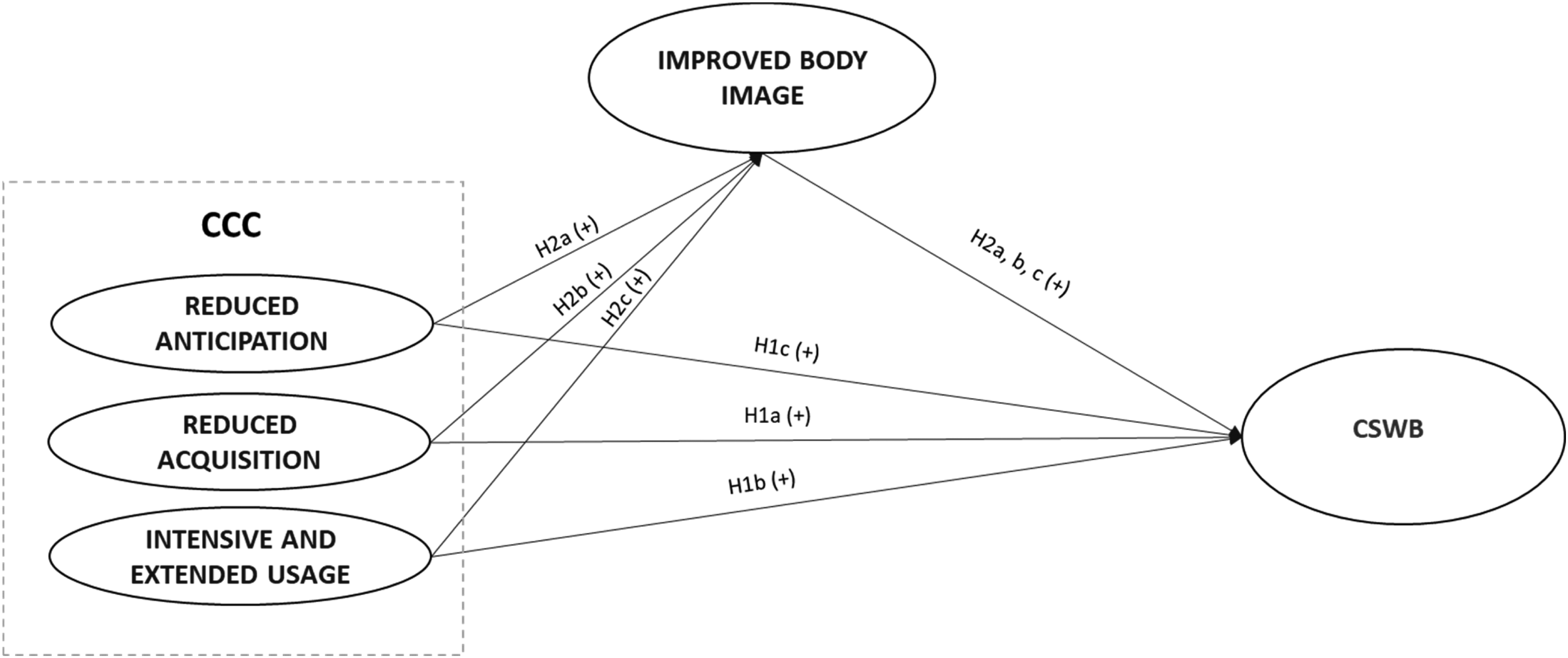
The research model.
Study 1: A Qualitative Exploration into the CCC Components, Body Image and Consumer Well-Being
In our first study, we explore whether and how the different components—reduced anticipation, reduced acquisition, and intensive and extended usage—are realized in the practices of CCC, and how they may relate to CSWB. Thus, the study serves as an initial exploration of our model, but also as a tool to refine the measurement items for the three components of CCC we conceptualized based on the previous literature.
Method
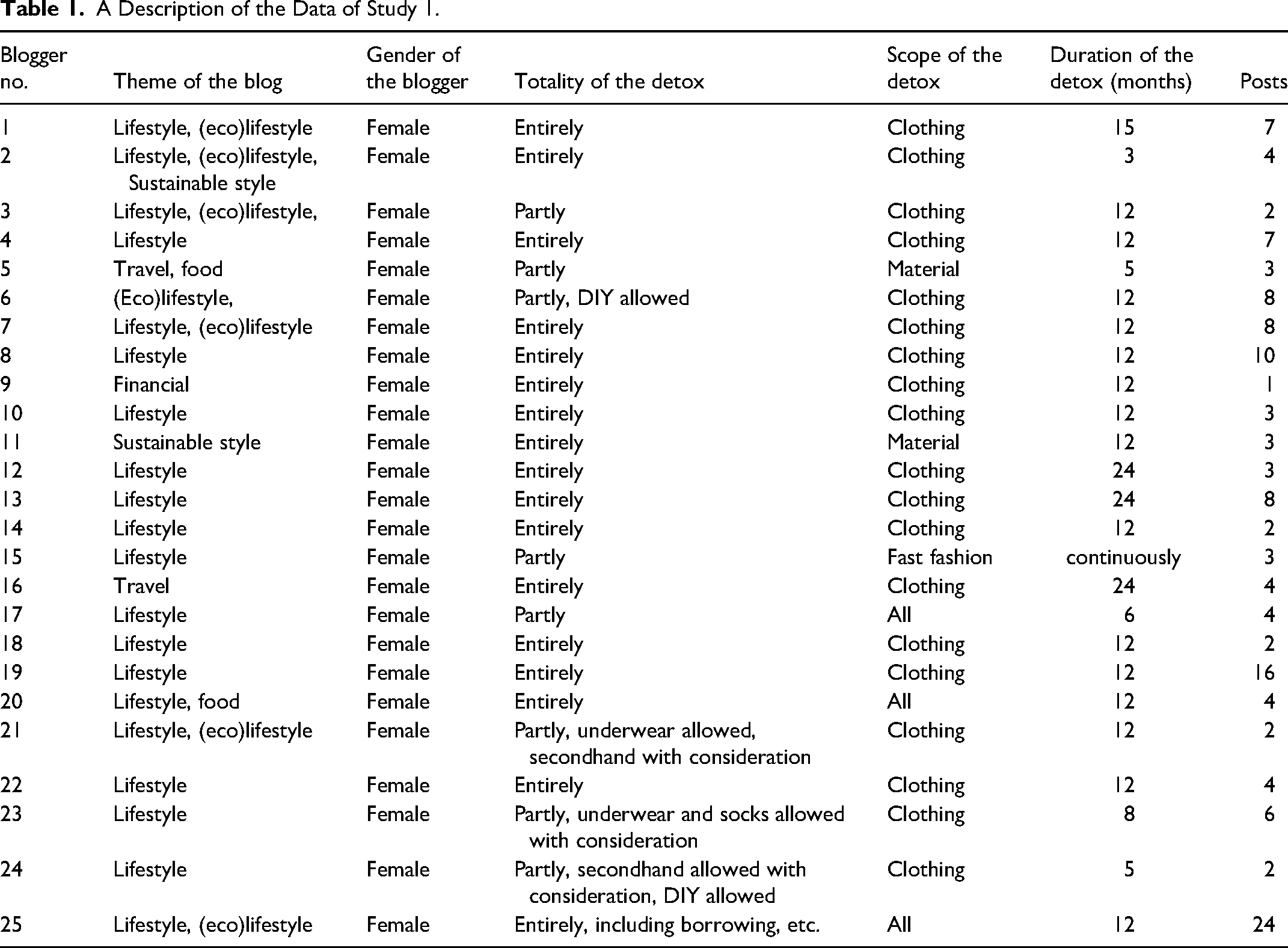
Study 1 was conducted by analyzing the posts of Finnish bloggers who had voluntarily refrained from buying clothes for at least three months. Our approach resembles that of Ruppert-Stroescu et al. (2015) and Armstrong et al. (2016), differing in that our data are not prompted but comprise real blog posts. The blogs were identified through an online search using Google and blogit.fi (an open Finnish blog directory), with search words such as (translated word-for-word from Finnish to English) “shopping OR clothes shopping OR fashion shopping OR fashion OR clothing AND detox OR boycott OR strike OR fast.” Some blogs were found through mentions in other blogs. Each blogger was contacted to obtain consent to use their content. The inclusion criteria were: 1) Finnish language, 2) the blog reports a clothing detox experience, 3) the detox duration was at least three months according to the blog posts, 4) the blog contains at least one initial and one follow-up post or otherwise describes the detox experience in sufficient detail, and 5) the blogger gives consent to use their content for research purposes. No timeframe was needed, since all the posts, written between 2014 and 2020, were considered timely enough. In total, 140 posts from 25 blogs comprising around 73,200 words met our criteria. The Study 1 data are described in Table 1.
A Description of the Data of Study 1.
Analysis
The first author commenced the analysis by extracting relevant quotes from the posts with respect to the nature and rules of the detox, and its consequences. This information was synthesized and analyzed at the content level, seeking to clarify our understanding of the nature of clothing consumption curtailment, particularly in relation to CSWB and the three identified components of consumption curtailment. To enable reproducibility, the analysis was conducted systematically through qualitative content analysis (Mayring 2004). The data were manually coded using a coding framework based on both
Results of Study 1
We now examine the results of Study 1, focusing on the aspects that either echoed or added to our prior understanding of the nature of CCC and its consequences for CSWB. Our analytical lenses were the components of CCC: reduced anticipation, reduced acquisition, and intensive and extended usage. Selected quotes supporting the findings can be found in Appendix 1.
While the reduced acquisition component was obvious in the blog texts dealing with shopping detoxes, the findings on second-hand shopping were somewhat contradictory. Most of the detoxers extended the challenge to include second-hand clothing, explaining that second-hand purchases simply represented another form of acquisition; the texts implied that the cheap prices and the illusion of it being a sustainable form of shopping may even mislead people into buying more and unnecessary clothing. Yet, some detoxers did allow themselves to buy second-hand and only avoided acquiring new clothes. Based on this finding, we decided to add separate items for avoiding buying new clothing and avoiding buying both new and second-hand clothing (see next section).
The bloggers described the intensive and extended usage component as shifting the focus from buying new clothes to their own closet. They began not only to mix and match their old clothes in more versatile and creative ways, but also to repair, alter, and use repair services. The detox also made bloggers more aware of their style and likings, turning them into more strategic purchasers who carefully weighed whether they would actively use and love a piece for a long time. Concentrating more on their own closet instead of buying new clothes also enhanced their self-knowledge and self-esteem, and made their daily dressing easier and more joyful. “The clothes don’t hang on the rack reminding me of someone I might want to be, but they’re all the kind I use,” said one of the bloggers. This echoes our hypotheses on the role of intensive and extended usage in the CCC-CSWB connection, and the mediating role of body image therein.
Finally, regarding the reduced anticipation component, the bloggers reported no longer having wants. Their urge to go to stores and browse web stores had weakened. As a result, they reported a feeling of freedom in their home and soul. This suggests that in addition to reduced acquisition, reduced anticipation may play a role in the CCC-CSWB connection. Reducing the time and capacity they directed at their dressing wants and shopping left the fashion detoxers with more time to use on other meaningful activities. Also, many detoxers soon noticed that the easiest way to avoid making more acquisitions was to stay away from stores, both online and bricks-and-mortar. Many reported unsubscribing from mailing lists and no longer following social media accounts that were perceived to feed the need to acquire. One blogger even explained that not clicking on ads in social media reduced the number of ads they were seeing. Based on these findings, we formulated the anticipation items (see next section).
Study 2: A Quantitative Examination of the Research Model
Study 2 examined the relationships proposed by the research model, which we derived conceptually from the previous literature. Study 1 provided initial affirmation of the model's feasibility.
Method
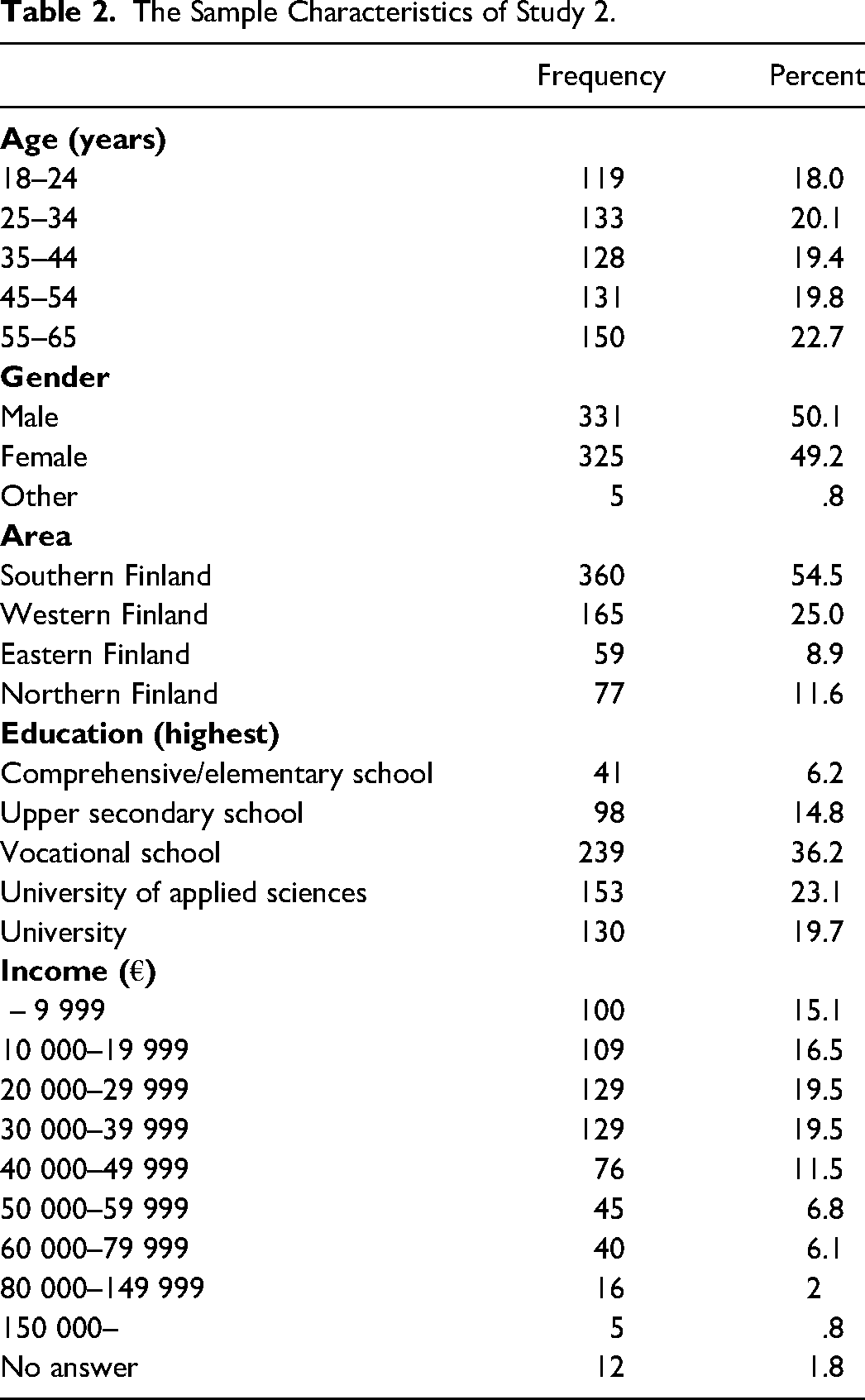
To examine the relationships proposed by our model, an online survey was conducted in Finland in June 2021 on a sample of 661 Finns aged 18–65, representative of the Finnish population in relation to age, sex, and region. The data were collected by an external service provider using quota sampling. By answering the survey, the study participants received points they could use to redeem vouchers. The characteristics of the sample are illustrated in Table 2. The measurement constructs were validated, and the hypotheses tested using covariance-based structural equation modeling (CB-SEM) with maximum likelihood estimation. To check the significance of our mediation, we used bias-corrected bootstrapping with 5000 samples (Cheung and Lau 2008). We employed SPSS 28 and SPSS Amos 28 to perform the analyses.
The Sample Characteristics of Study 2.
Measures
Consumer subjective well-being (CSWB) was measured using two different scales, one for affective well-being (CAWB) and one for cognitive well-being (CCWB). CAWB was studied with a Finnish translation of the widely applied WHO-5 scale (Psychiatric Research Unit, WHO Collaborating Centre in Mental Health a and b), and CCWB with the Satisfaction With Life Scale (SWLS) by Diener et al. (1985). To reach maximal construct breadth and achieve minimal potential for bias, we used the extended version of SWLS by Margolis et al. (2019). Positive (negative) body image was measured through the six-item Body Image States Scale (BISS) by Cash et al. (2002), translated into Finnish by Finne et al. (2012).
For CCC, we developed a new measure based on Vesterinen and Syrjälä's (2022) review, and Study 1. For reduced anticipation, our operationalization comprised three items: 1) I often plan and/or daydream about my next clothing purchases (-), 2) I go around clothing stores or browse online stores often (-), and 3) I read newsletters from online clothing stores and/or follow clothing influencers or clothing brands/stores on social media (-). Regarding reduced acquisition, although Vesterinen and Syrjälä (2022) theorized that second-hand acquisition should not be considered as CCC, in Study 1 some of our informants included it in their CCC practices. Thus, we crafted separate items for avoiding buying new clothing as well as for avoiding buying both new and second-hand clothing. In addition, as pointed out by Vesterinen and Syrjälä (2022), and supported by Study 1, CCC also manifests as strategic acquisition – resulting in the item “I avoid clothing purchases that I would regret later.” Finally, we operationalized intensive and extended usage with two items according to Vesterinen and Syrjälä's (2022) theorization: 1) I wear the clothes I own as often as possible, and 2) I use the clothes I buy for as long as possible.
The survey commenced by asking the study participants to think about their personal well-being relating to the last two weeks (according to the WHO-5 measure), and then their life satisfaction as a whole (SWLS). Next, they answered questions on perceived body image, and finally on clothing consumption. The control questions (gender, age, income, education, area of residence) were located at the end of the questionnaire. The WHO-5 scale (CAWB) was gauged on a 6-point bipolar scale with the endpoints at no time/all of the time. All other items were scored on 7-point Likert scales, the body image measure with endpoints extremely satisfied/extremely dissatisfied, and others with the endpoints totally disagree/totally agree.
Validity and Reliability of the Measurements
For the final scale of CCC, an explorative factor analysis (EFA) was conducted using SPSS 28. Three factors that correlated with each other were identified: 1) Reduced anticipation (RAN), 2) Reduced acquisition (RAC), and 3) Intensive and extended usage (IEU). Next, to assess the reliability and validity of our constructs, we conducted a confirmatory factor analysis (CFA) using SPSS Amos 28. The CFA model indicated an acceptable fit with the data (Minimum Discrepancy Function by Degrees of Freedom divided [CMIN/DF] = 3.765, p = 0.000, comparative fit index [CFI] = 0.941, Tucker-Lewis index [TLI] = 0.931, root mean square error of approximation [RMSEA] = 0.065). The factor loadings, construct reliabilities (CR), and average variances extracted (AVE) demonstrated acceptable convergent validity (Bagozzi and Yi 1988; Hair et al. 2010, p. 709–710). The factor loadings were all significant and over 0.50 and CRs greater than 0.70. The AVEs were all higher than 0.50, except that of the IEU (0.489). However, as this scale was developed for this particular study, this AVE that was below 0.50 can be considered acceptable as the CR was above 0.70 (Fornell and Larcker 1981). The final measurement scales and the CFA estimates are illustrated in Appendix 2.
To minimize the risk of common method bias (CMB) that can hamper cross-sectional studies, we followed Podsakoff et al.'s (2003) guidelines. First, anonymous responding was applied, the presentation order of the questions counterbalanced, and to ensure clarity of the questionnaire, it was pre-tested with individuals representing different genders, ages, and social groups (N = 20). Second, to control for the social desirability and demand characteristics, the aim of the study was communicated only on a general level (“a study on well-being, values, and consumer habits”) and the control question “What kind of things do you think this study is intended to analyze in more detail?” was posed. None of the respondents figured out the real aim of the study. CMB was also statistically controlled for using the single factor test, both on the item and on the construct level (Podsakoff et al. 2003), with no signs of the existence of a single or general factor that would explain the majority of the variance (only 15.871% for the items and 15.669% for the constructs was explained by one factor).
To assess the discriminant validity, an AVE-SV test was conducted (Voorhees et al. 2016). No discriminant validity violation was detected, as both the maximum squared variance (MSV = 0.448) and average squared variance (ASV = 0.037) were below all the AVEs (Fornell and Larcker 1981). The interconstruct correlations and descriptive statistics are illustrated in Table 3.
Interconstruct Correlations and Descriptive Statistics.
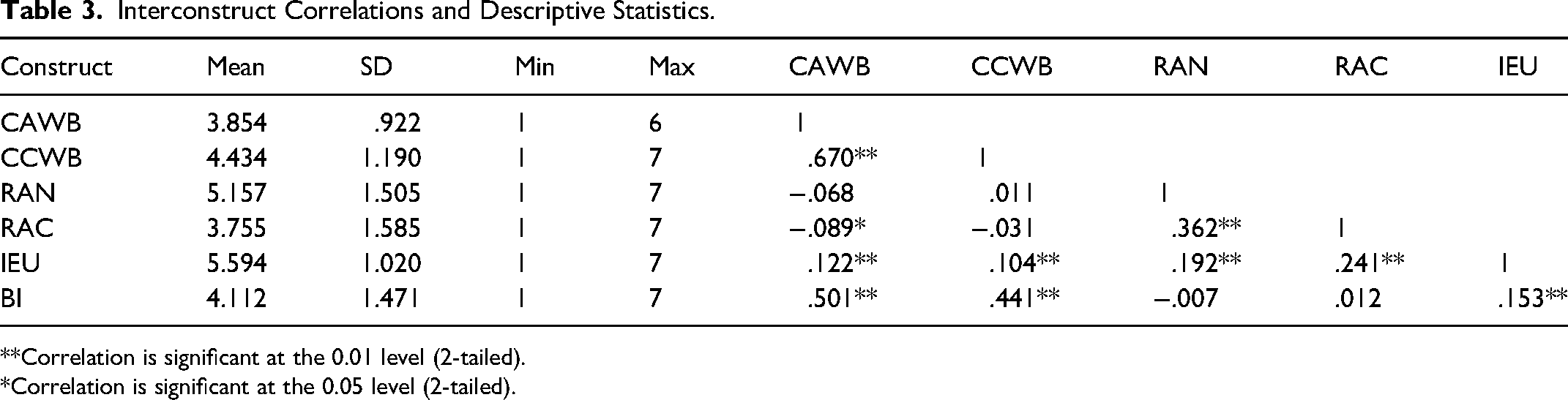
**Correlation is significant at the 0.01 level (2-tailed).
*Correlation is significant at the 0.05 level (2-tailed).
Results of Study 2
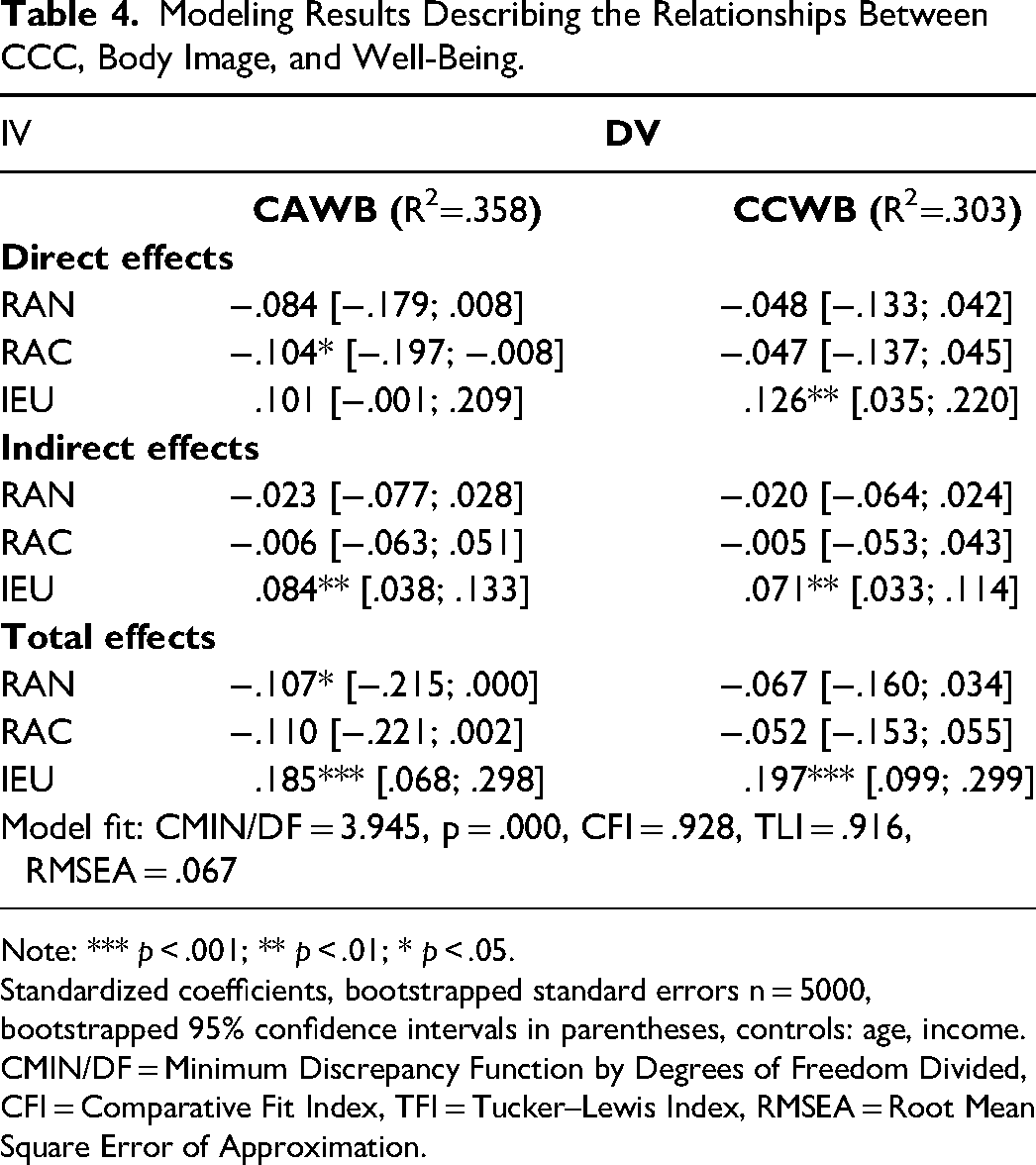
To examine the relationship between CCC and CSWB and the indirect effect through body image, we ran a model with RAN, RAC, and IEU as independent latent variables, CAWB and CCWB as dependent latent variables, and body image as a latent mediator variable. Of the five control variables, income (CAWB: β = .103 [.018;.180], p < .01; CCWB: β = .225 [.150;.293], p < .001; RAN: β = .119 [.049;.190], p < .01; IEU: β = −.083 [−.166;.000], p < .05) and age (CAWB: β = .166 [.095;.238 ], p < .001; CCWB: β = .097 [.023;.167], p < .01; RAN: β = .249 [.180;.317], p < .001) had statistically significant relationships with the components of CCC and CSWB, and were thus included in our model as confounding variables. The fit indices for the model and the standardized coefficients for the relationships as well as the bias-corrected bootstrapped 95% confidence intervals for each of the paths are presented in Table 4.
Modeling Results Describing the Relationships Between CCC, Body Image, and Well-Being.
Note: *** p < .001; ** p < .01; * p < .05.
Standardized coefficients, bootstrapped standard errors n = 5000, bootstrapped 95% confidence intervals in parentheses, controls: age, income.
CMIN/DF = Minimum Discrepancy Function by Degrees of Freedom Divided, CFI = Comparative Fit Index, TFI = Tucker–Lewis Index, RMSEA = Root Mean Square Error of Approximation.
The model fit the data well (CMIN/DF = 3.945, p = .000, CFI = .928, TLI = .916, RMSEA = .067). In relation to our hypotheses, surprisingly, neither reduced anticipation (RAN) nor reduced acquisition (RAC) had a positive total effect on consumer affective well-being (CAWB) (RAN: β = −.107* [−.215;.000], p < .05; RAC: β = −.110 [−.221;.002], p > .05) or consumer cognitive well-being (CCWB) (RAN: β = −.067 [−.160;.034], p > .05; RAC: β = −.052 [−.153;.055], p > .05). Instead, RAN had a significant negative total effect on CAWB. Thus, H1a and H1c were rejected. However, intensive and extended usage (IEU) had a statistically significant positive total effect on both CAWB (β = .185[.068;.298], p < .001) and CCWB (β = .197[.099;.299], p < .001). Thus, H1b was supported.
In addition, there was a significant indirect effect from IEU through body image to both CAWB (β = .084[.038;.133], p < .01) and CCWB (β = .071[.033;.114], p < .01), supporting H2c. No indirect effect was found for RAN (CAWB: β = −.023[−.077;.028], p > .05; CCWB: β = −.020[−.064;.024], p > .05) and RAC (CAWB: β = −.006[−.063;.051], p > .05; CCWB: β = −.005[−.053;.043], p > .05), and, consequently, H2a and H2c were rejected. In addition, we found a significant negative direct effect between RAC and CAWB (β = −.104[−.197;−.008], p < .05) and a significant positive direct effect between IEU and CCWB (β = .126[.035;.220], p < .01). The R2 for CAWB was .358 and for CCWB .303.
Discussion
The aim of this study was to investigate the connection between clothing consumption curtailment (CCC) and consumer subjective well-being (CSWB) by analyzing the roles of anticipation, acquisition, and usage in the connection.
Based on a qualitative study and quantitative survey data, we found three separate but interrelated constructs—reduced anticipation, reduced acquisition, and intensive and extended usage—that had different relationships with CSWB. Most importantly, we found a positive total effect between intensive and extended usage and both affective and cognitive well-being. This finding links previous results on minimalism and style consumption, both of which aim to extend usage and have been associated with positive CSWB effects (Malik and Ishaq 2023; Nielsen et al. 2023; Shafqat, Ishaq, and Ahmed 2023), by underlining the role of usage in the well-being connection. Also, our qualitative data reflected the previous studies, in that concentrating on what you already have makes you appreciate and enjoy your clothes more, and also makes you more conscious and confident about your own style (Bly, Gwozdz, and Reisch 2015), which then contributes to CSWB. In addition, our data lend support to the idea that the relationship between intensive and extended usage and CSWB is mediated by improvement in perceived body image, as was hinted at in previous studies (Armstrong et al. 2016; Bly, Gwozdz, and Reisch 2015). In particular, our results indicate that by wearing clothes you already have and choosing new clothes very carefully to avoid regrets and maximize usage, consumers end up owning and using clothes that fit well, making them feel good in their body and contributing to CSWB.
Our results somewhat contradict the sustainable consumption literature that focuses on sustainable acquisition and adopting novel circular business models to supply consumers’ increasing need for novelty, without sacrificing our planet (Amasawa et al. 2023; Daukantienė 2023; Laudien, Martinez, and Martin 2023). These studies seem to assume that the consumers’ desire for variety is a fundamental need that needs to be fed. However, if the current fast fashion cycle and variation were to meet consumers’ fundamental needs, prolonging the clothing usage phase should reduce consumer well-being compared with those consumers who acquire and dispose of their clothes regularly. Instead, whilst our correlational study cannot definitively prove that extended usage has a positive causal effect on CSWB, it does suggest that it is even more unlikely that extended usage would have a negative impact.
With regard to other CCC components, no favorable associations can be reported. Instead, we found a negative total effect between reduced anticipation and consumer affective well-being. Also, a direct negative effect was found between reduced acquisition and affective well-being, although no significant total effect was found. Our results showed that reducing anticipation had a total negative effect on well-being, while reducing acquisition did not, indicating that anticipating future acquisitions might be more strongly associated with well-being than are actual acquisitions, and that compared with frequent acquisition, postponing acquisition could have positive well-being effects. Comparing these results with previous studies on anticipation and well-being, postponing acquisition would be beneficial, especially when the focus of anticipation is on the utilitarian value of the garments and the experience of usage, rather than materialistic expectations related to, for example, status and happiness (Kumar and Gilovich 2016; Luo et al. 2018).
In addition, our study provides novel knowledge on the nature and structure of clothing consumption curtailment (CCC). Our qualitative study supported the idea that successful CCC does indeed necessitate a broader and more cyclical consideration of its market system components: reduced anticipation, reduced acquisition, and intensive and extended usage. We now discuss the theoretical, societal, practical, and macromarketing implications of our results, as well as limitations and future research suggestions, finally presenting our concluding remarks.
Theoretical Implications
Theoretically, we contribute to both the anti-consumption and sustainable clothing marketing literatures. Regarding the anti-consumption literature, most prior research on the anti-consumption of clothing has separately focused on various phenomena under the umbrella of clothing anti-consumption, such as style consumption and minimalism (Armstrong and Lang 2018; Gupta, Gwozdz, and Gentry 2019; Martin-Woodhead 2022; Shafqat, Ishaq, and Ahmed 2023; Vladimirova 2021). This study extends the scope of knowledge by adopting a novel cross-cutting perspective on the consumption cycle, and linking the separate phenomena together with three interrelated constructs: reduced anticipation, reduced acquisition, and intensive and extended usage. Furthermore, our research establishes that of the three constructs, intensive and extended usage is the most relevant for positive well-being effects.
As to the mechanisms explaining the connection between anti-consumption and well-being, previous studies have discussed the role of, for instance, fulfillment of intrinsic motivation and psychological needs, arousal of feelings of control, and self-esteem restoration (Balderjahn, Hoffmann, and Hüttel 2023; Iyer and Muncy 2016; Kasser and Ryan 1996; Lee and Ahn 2016; Oral and Thurner 2019; Rich, Hanna, and Wright 2017; Zavestoski 2002). Our research contributes to the discussion by quantitatively testing and lending support to the idea that in the context of clothing, the relationship between intensive and extended usage and CSWB is mediated by improvement in perceived body image, as was hinted at in previous qualitative studies (Bly, Gwozdz, and Reisch 2015).
With regard to the current sustainable clothing marketing literature, our results on the importance of intensive and extended usage of already owned garments for well-being offer an interesting point of discussion. The previous studies seem to have taken as given that the accelerating fashion cycle increases consumption, and that to be able to maintain this level of consumption sustainably, new business models need to be created (de Ponte, Ciro Liscio, and Sospiro 2023; Hellström and Olsson 2024). Thus, to the best of our knowledge, in addition to not questioning the accelerating cycle of fashion, these studies have focused strongly on production, acquisition, disposal, and waste management to shift consumer behavior toward circularity, with circular fashion, second-hand, rental, and sharing platforms (Amasawa et al. 2023; Daukantienė 2023; Laudien, Martinez, and Martin 2023). Although extending the usage phase should be an essential component of the circular business models (Geissdoerfer et al. 2020), and lifecycle assessments indicate that reducing consumption by extending the usage of already owned garments would be the best way to reduce the environmental burden of the clothing system (Levänen et al. 2021; Munasinghe, Druckman, and Dissanayake 2021), the usage phase has garnered much less attention. The present research contributes to filling this gap by taking a consumer perspective on the critical consumption phase of usage, and showing that focusing on usage instead of acquisition could be beneficial not only for the environment but also to the consumer.
Furthermore, our results contribute to the discussion on psychological obsolescence (Guillard, Le Nagard, and Ribeiro 2023). Extending the lifecycle of garments seems to be a shared goal in the sustainability literature. To this end, many studies have strived to bring to the fore the importance of clothing care and particularly wash frequency, alongside producing physically durable products (Maguire and Fahy 2023; Sahimaa et al. 2024). Despite physical durability being a prerequisite for extended longevity in the fashion industry, even the most well-made and well cared-for clothes can still go out of style, that is, become psychologically obsolescent (Sahimaa et al. 2024). Therefore, in order to move toward a more sustainable clothing system, fighting psychological obsolescence is at least as important as focusing on physical durability. Maguire and Fahy (2023) identified that possible enablers for extended garment longevity could include heightened knowledge and awareness of clothing care, and of the connection between prolonging garment wear and sustainability. Our study adds awareness of the connection between prolonging garment wear and CSWB and body image to Maguire and Fahy's (2023) list of enablers.
Finally, our findings also speak to the literature on psychological ownership. Psychological ownership refers to “the state in which individuals feel as though the target of ownership or a piece of that target is ‘theirs’” (Pierce, Kostova, and Dirks 2003, 86). The more people experience psychological ownership, the more they are able to define and present themselves through their possessions, and see them as a part of their identity (Belk 1988; Pierce et al. 2003; Weiss and Johar 2016). It has been argued that a key barrier to accepting circular business models is that in shifting focus from ownership toward access, they fail to provide the consumer with psychological ownership (Claudy and Peterson 2022, Singh and Giacosa 2019). Furthermore, Zhao et al. (2023) found that by triggering lower psychological ownership, the use of shared products impairs consumer happiness. Our findings provide further evidence on the importance of ownership to consumers, as intensive and extensive usage of their own items seems to increase subjective well-being. However, our results also suggest that rather than fighting against it, the yearning for psychological ownership could be harnessed as a driver for prolonging use time.
Social and Practical Implications
The social and practical implications of our study stem from the importance of usage in solving the overconsumption problem, as well as the possibilities of utilizing its relationship with CSWB and positive body image in these aspirations.
For companies, our results open avenues to use the novel knowledge in social and green marketing, and in marketing so-called slow fashion brands. Companies could promote timeless styles and repair services with slogans appealing to consumers’ self-oriented motivations through well-being, such as “Wear your pants out and be happy”, “Find your style and stick to it”, or simply “Be you and be happy”. An example of a company that embraces the longevity of its products is Nudie Jeans, a Swedish denim producer that promises to repair any broken area of its jeans as many times as needed in their own repair shops, mobile repair stations, and through repair partners; and if none of these are close by, through sending free Repair Kits. Intensive and extended usage could also be supported by style consultancy services that advise consumers on how to choose well-fitting and multifunctional clothing that is durable, both physically and psychologically, and how to create new and different looks with the clothes (Armstrong et al. 2015). Our results could also be utilized in marketing therapeutic services to help consumers build better self-knowledge and self-esteem, and find their own style. Yet another business opportunity is related to the craft of mending: in addition to professional dressmakers and re-makers, our results could be utilized in marketing courses and workshops to teach consumers mending skills (e.g., Durrani 2018). Furthermore, if postponing acquisition has positive well-being effects compared with frequent acquisition, marketers and businesses could support both consumers and the environment by prolonging the gap between product launches, and instead building up excitement, hype, and anticipation of new fashions. This would have the dual effect of reducing production while increasing CSWB.
Our results send a clear message to consumers: intensifying and extending usage is not only beneficial for the environment but also in terms of consumer well-being. Also, usage can be increased in many different ways. For those who take an active interest in clothing, usage can be extended, for example, through mending, upcycling, and mixing and matching, in addition to choosing both psychologically and physically durable pieces. Building a so-called capsule wardrobe, consisting of only a few pieces that can be worn in different combinations, can also be an inspiration to some (Martin-Woodhead 2023). To step out of the fashion cycle, it could also be advisable to stay away from stores, both online and bricks-and-mortar, unsubscribe from mailing lists, and stop following social media accounts that stir up the need to acquire. On the other hand, if a consumer is not interested in fashion, style, or crafting, extending clothing usage is probably the easiest way to be a sustainable clothing consumer, while it can simultaneously contribute to both financial and subjective well-being, as well as save time. At its simplest, intensifying and extending usage starts from listening to personal needs and preferences, and acquiring only clothing you like and need in the long run. This should be a natural path for many as, according to Rausch, Baier, and Wening (2021), the average consumer already prioritizes conventional apparel characteristics such as fit, comfort, price-performance ratio, and quality over, for example, sustainable attributes. In fact, according to Harris, Roby, and Dibb (2016), clothing sustainability is too complex for consumers to comprehend, let alone apply to everyday practices.
Coscieme et al. (2022) recently estimated the sustainable numbers of items that could be purchased per year in OECD countries. For countries with four distinct seasons, such as Finland, that number was five, which inspired a five-item-challenge that spread across social media. The novel result that anticipation contributes more strongly to well-being than does acquisition could be applied in the promotion of this kind of challenge. The longer anticipation of acquisitions would also give consumers time to consider them more closely, and perhaps arrive at better decisions that contribute to their well-being also in the future, in the form of well-fitting, well-functioning, and well-loved clothing.
However, the systemic change away from overconsumption cannot rest solely on the shoulders of the consumers and the market; rather, we need policies to support it. For example, to increase the well-being of both the environment and people, we suggest policies such as a compulsory guarantee for clothing items, for example, two years combined with a repair service, assuming that care instructions have been followed. These instructions could also be regulated to conform to certain categories, such as Normal (water wash 40–60°C with similar colors) and Special (wool wash, airing, dry cleaning) to ease the post purchase cloth care, which Maguire and Fahy (2023) also identified as one of the factors affecting garment longevity. The guarantee policy could be combined with binding the level of value added tax (VAT) inversely to the use-time guaranteed by the garment producer, the care category and materials used in relation to their environmental burden, and later recyclability. In order for the regulation not to produce rebound effects, such as membership-like continuous exchange of damaged products for new, the guarantee should also be regulated so that it could not be implemented by replacing the broken garment with a new product; only, for example, by repair, or returning the cost of acquisition to the customer, and the imposition of consequences for companies in case of constant occurrences of wear and tear before the guaranteed use-time expired. These policies could be enabled through the planned digital product passport (DPP) (Ospital et al. 2023), guiding production away from single-use products, and, eventually, through higher prices and changes in supply and selection that affect consumers’ perceptions on product use times and, hopefully, their consumption behavior.
In order to slow the accelerating fashion cycle that is shortening clothes’ use-times, a limit to the number of collection launches could be set to, for example, two per year. Also, limiting fashion advertising could be advisable, starting from banning campaigns targeting the most sensitive groups, youths and children, who are still establishing their consumer behavior patterns and seeking to discover their self-identity through clothing (Joy et al. 2012). Finally, we suggest a VAT reduction for repair services, following Sweden's example (Dalhammar et al. 2020).
Macromarketing Implications
As noted, the lifespan of clothes is far more dependent on trends and styles than the physical durability of the garments (Netter 2016). Moreover, research shows that access-based consumption and the consumption of experiences can equally well be used to signal status, happiness, and self-worth (Atanasova and Eckhardt 2021), that is, as tools of materialism associated with decreased subjective well-being (Richins 2017). Therefore, we argue that the keys to extending clothing lifecycles are not only the physical durability of garments, but also dismantling the systems and circumstances that feed craving for newness. A key factor in this process might be repeat garment use and the negative socio-cultural beliefs linked thereto (Maguire and Fahy 2023). Maguire and Fahy (2023) found that repeat garment use is often seen negatively at this time. This belief is supported, for example, by Outfit Of The Day (OOTD) hashtags, and other social media phenomena linked to change and variation.
Changing the clothing marketing system from one that is built on the need for newness and variation to one that embraces extended usage and ownership, requires normative, regulatory, and systemic change. As long as the current norm benefits the industry, the so-called climate change social trap of favoring short-term positive consequences over long-term negative consequences cannot be resolved (Gossen, Ziesemer, and Schrader 2019; Rashidi-Sabet and Madhavaram 2021). Similarly, we cannot just ask consumers to change their values and lifestyle rooted in societal institutions (Brown and Cameron 2000; Scott, Martin, and Scouten 2014). Instead, our study suggested that while the craving for variation might be an innate need on the part of consumers, when incited by fashion marketing, it can be harmful to CSWB. Thus, to break the unhealthy status quo, regulation is needed to curb the marketing system that promotes the inadequate mentality of constant variation (Garcia-Ortega et al. 2023).
A recent study revealed that the majority of consumers remains unaware of the beneficial effects on sustainability of prolonging wear, and called for action to increase awareness (Maguire and Fahy 2023). We support this call, though add that prolonging wear does not necessarily have to be motivated by sustainability. In fact, while sustainable clothing consumption as it is currently understood is usually associated with altruism and ecological and environmental concerns (Hur 2020, Kopplin and Rösch 2021, Tewari et al. 2022), humans in general are inclined toward self-interest (Griskevicius, Cantú, and Van Vugt 2012). Therefore, many studies show that other-oriented content such as biospheric appeals have little or no effect on consumption levels (Herziger, Berkessel, and Knutsen Steinnes 2020). Hence, in addition to appealing to altruistic motivations by raising awareness of the sustainability effects of prolonging wear, it would be valuable to appeal to self-oriented drivers (ElHaffar et al. 2020) by raising awareness of the possible well-being effects of extended usage. Previously, self-oriented motivators such as status or reducing stress have proven effective in nudging consumers toward reducing consumption (Armstrong Soule and Sekhon 2022; Herziger, Berkessel, and Knutsen Steinnes 2020). We now propose well-being and body image as other self-oriented levers for use in social marketing initiatives. Moreover, we assert that the increase and extension of usage is a key factor in the consumption curtailment-well-being connection, and that this link could be utilized on a large scale in conservation education and marketing of sustainable products and services.
Limitations and Future Research
As with all academic research, our paper has limitations which at the same time invite further research. First, even though our qualitative data and the previous research point toward the possible causalities between consumption reduction, perceived body image, and well-being, the cross-sectional nature of our data limited us to an exploration of their relationships. Thus, longitudinal and experimental research is needed to determine the (long-term) consequences of clothing consumption curtailment on CSWB, and to establish the causal explanations.
In particular, our study could not rule out the role of reverse causality. It is possible that consumers with higher CSWB are already self-confident and like the way their clothes look on them. Thus, they would not feel the need to improve their look or life satisfaction through acquiring new clothes. Conversely, consumers with lower CSWB who are uncomfortable in their body may seek to improve their CSWB through acquiring clothes. However, if the issue is originally psychological and not physical, the increased acquisition does not increase (but decreases) CSWB, creating a vicious circle. Furthermore, both perceived body image and CSWB are complex constructs affected by a multitude of other factors beyond clothing consumption, such as temperament, supportive social relationships, good physical health, and creativity (Acar et al. 2021; Diener, Oishi, and Tay 2018; Halliwell 2015; Tan et al. 2021). Thus, we cannot definitively rule out the possibility that the relationships between increased and extended usage, body image, and CSWB are influenced by a third variable. Therefore, our study offers an avenue for future research, proposing and testing other possible influential factors.
For instance, although we suggested that the positive relationship between intensive and extended usage and subjective well-being could be explained by a reduction in social comparisons and craving for newness, we did not test for that. Future research should thus investigate the robustness of this mediation effect. Another possible mediator to study in the usage-CSWB relationship is creativity. Our qualitative study echoed the previous research in that reducing the acquisition of clothing as well as participating in upcycling activities would increase creativity (Ruppert-Stroescu et al. 2015), which has been shown to enhance subjective well-being (Acar et al. 2021; Tan et al. 2021). Other potential targets for future research are the impacts of anticipation and second-hand acquisition on consumer subjective well-being.
Third, even though we drew on a representative sample of the Finnish population, our results may not be generalizable to other countries. The previous research has found that drivers for sustainable fashion purchasing differ in different cultures (Khan, Varaksina, and Hinterhuber 2024). Future research should test our results in a cross-cultural setting. Similarly, as our research concentrated on clothing, we invite researchers to explore how the consumption curtailment-subjective well-being connection plays out in other product contexts, such as electronics, where the issue of psychological obsolescence is particularly prominent (Islam et al. 2021).
Finally, our policy suggestions related to guarantees and taxes call for policy analyses on their potential effects on consumption behavior and the economy.
Conclusions
The aim of this study was to investigate the role of different consumption phases in the relationship between clothing consumption curtailment (CCC) and consumer subjective well-being (CSWB). To this end, we analyzed two datasets: one qualitative, comprising clothes shopping detoxers’ blog entries, and one quantitative representative survey data. We found three separate but interrelated constructs—reduced anticipation, reduced acquisition, and intensive and extended usage—of which the most relevant for positive well-being effects is intensive and extended usage. It was found to have a positive total effect on both affective and cognitive well-being, as well as an indirect effect through improved body image. As for anticipation and acquisition, we found that anticipation had a stronger positive relationship with CSWB than had acquisition. Our findings support the idea that instead of fueling consumers’ yearning for variation with a continuous flow of new market offerings, the opposite route of cherishing the clothes you already own could be just as promising a way out of overconsumption. This, of course, requires normative and systemic change, which, we argued, could be triggered with the help of curbing supply and marketing through regulation, and of shifting the focus of education and social and commercial marketing from the environmentally motivated “sustainable” acquisition of clothing toward the well-being driven promotion of intensive and extended usage.
Supplemental Material
sj-docx-1-jmk-10.1177_02761467241269822 - Supplemental material for Wear Your Pants out and Be Happy! Clothing Consumption Curtailment and Consumer Subjective Well-Being
Supplemental material, sj-docx-1-jmk-10.1177_02761467241269822 for Wear Your Pants out and Be Happy! Clothing Consumption Curtailment and Consumer Subjective Well-Being by Essi Vesterinen, Michael S.W. Lee and Harri T. Luomala in Journal of Macromarketing
Supplemental Material
sj-docx-2-jmk-10.1177_02761467241269822 - Supplemental material for Wear Your Pants out and Be Happy! Clothing Consumption Curtailment and Consumer Subjective Well-Being
Supplemental material, sj-docx-2-jmk-10.1177_02761467241269822 for Wear Your Pants out and Be Happy! Clothing Consumption Curtailment and Consumer Subjective Well-Being by Essi Vesterinen, Michael S.W. Lee and Harri T. Luomala in Journal of Macromarketing
Footnotes
Associate Editor
Marius Claudy
Declaration of Conflicting Interests
The authors declared no potential conflicts of interest with respect to the research, authorship, and/or publication of this article.
Funding
The authors disclosed receipt of the following financial support for the research, authorship, and/or publication of this article: This work was supported by the Maj ja Tor Nesslingin Säätiö, (grant number 202000426).

Supplemental Material
Supplemental material for this article is available online.
Author Biographies
References
Supplementary Material
Please find the following supplemental material available below.
For Open Access articles published under a Creative Commons License, all supplemental material carries the same license as the article it is associated with.
For non-Open Access articles published, all supplemental material carries a non-exclusive license, and permission requests for re-use of supplemental material or any part of supplemental material shall be sent directly to the copyright owner as specified in the copyright notice associated with the article.
