




Abstract
Multicultural interactions bring individuals from varied cultural backgrounds together, leading to situations that either foster or impede social cohesion. This issue is critical as social cohesion significantly influences quality-of-life (QOL), which, together with marketing systems, forms the core of macromarketing. Our research contributes by introducing “boundary interweaving” – a novel concept in boundary-making strategy that aims to improve QOL and cultural well-being within marketing systems. Boundary interweaving is a process wherein two or more cultural boundaries interweave together to create a new, unique cultural boundary. Integrating marketing systems and boundary-making theories, this study on ethnic minority marketing shifts from the traditional single-level focus to explore multi-level interactions among market actors. Employing discourse analysis of a documentary and news articles, particularly focusing on food narratives from wet markets and adjacent hawker stalls, we examine interactions between market actors consisting of government, politicians, mass media, sellers, and consumers. Our findings reveal that interactions among market actors exemplify boundary interweaving within the realms of space, language, and foodways. Rather than delineating us and them among different ethnic groups, this paper demonstrates that joint efforts by market actors across macro-, meso-, and microlevels can facilitate the integration, social inclusion and coexistence of diverse ethnic cultures within the marketing system. Boundary interweaving fosters cultural well-being, promotes a sense of belonging and facilitates social cohesion among different ethnic groups. This study highlights the influence of culture on the functioning, growth, and evolution of a marketing system.
Keywords
Introduction
Globalisation and worldwide migration trends have increased the prevalence of multicultural experiences, underscoring the importance of societal interconnectivity. As individuals from diverse cultural backgrounds come together, they experience social inclusion or exclusion within multicultural societies through boundary-making strategies, which refer to how boundaries between us and them are established or dismantled, thus promoting or hindering social cohesion among various ethnic and cultural groups (Wimmer 2008).
Social cohesion is a measure of quality-of-life (QOL) (Krasnikov et al. 2024), while QOL encompasses various forms of well-being (Sirgy 2001). QOL and marketing systems form the basis of the macromarketing discipline (Krasnikov et al. 2024). A marketing system is a network of connected parties that collaboratively provide economic exchanges of products and services in response to customer demand (Layton 2007). Macro-scholars comprehensively researched the process (Sarker et al. 2022), assortment (Layton and Duan 2015), and outcome (Baktir and Watson 2021) of marketing systems. Despite increasing cultural diversity and the importance of social cohesion, multicultural marketing systems and social cohesion have received insufficient focus. This paper enhances the macromarketing literature by exploring how marketing systems can bridge cultures and facilitate coexistence among diverse ethnic groups.
Changes to the marketing system have a direct impact on societal well-being (Layton 2009), which is traditionally linked to economic well-being, particularly in addressing poverty (Cornwell and Drennan 2004) or the cost of living (Burkink and Marquardt 2009). Although Sirgy (2001) suggests that QOL can be construed from a cultural perspective, he did not formally theorise cultural well-being. As such, there is limited scholarly focus on cultural well-being, which can drive social cohesion (Price 2021). This study seeks to establish the importance of cultural well-being, which we define as the cultural expressions that shape individual and collective identities, foster social cohesion, and improve overall QOL. This paper contributes to the macromarketing literature by theorising “boundary interweaving,” i.e., a new boundary-making social process aimed at enhancing QOL and cultural well-being within the marketing system.
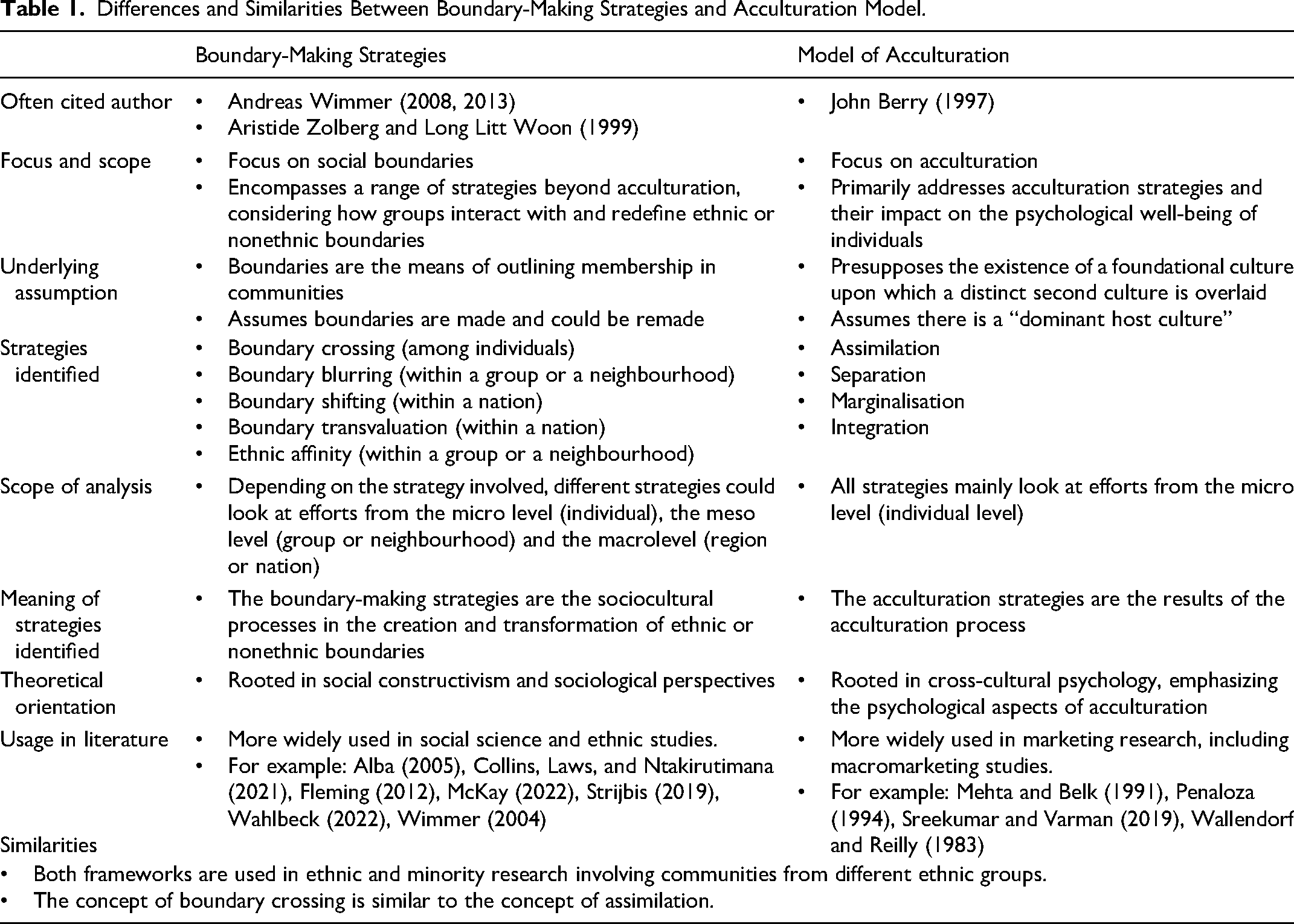
Boundary-making theory differs from acculturation theory (Table 1). Acculturation focuses on the personal, microlevel individual processes of adapting to a new culture, where migrants use marketplace resources to (re)construct their ethnic identities (Berry 1997; Penaloza 1994). In contrast, boundary-making strategies involve a broader spectrum of actions that extends beyond individual acculturation, aiming to create and transform ethnic or nonethnic boundaries across micro-, meso-, and macrolevels (Wimmer 2008; Zolberg and Long 1999). While existing research on ethnic marketing mainly uses the microlevel, individual-focused concept of acculturation (Askegaard, Arnould, and Kjeldgaard 2005; Cruz and Buchanan-Oliver 2020), this paper aims to broaden the scope by integrating boundary-making strategies into the macromarketing literature, and to examine these strategies at the three levels of a marketing system.
Differences and Similarities Between Boundary-Making Strategies and Acculturation Model.
Most studies on acculturation and boundary-making suggest that ethnic boundaries separate insiders (majority locals) from outsiders (minority migrants and diasporas) (Table 2). Previous research cannot fully depict boundary-making scenarios, where majority and minority groups are considered insiders (locals) in a multicultural society. Responding to the growing focus on non-Western, educated, industrialised, rich and developed (WEIRD) countries and Wooliscroft and Ko's (2023) appeal for more non-WEIRD perspectives, this paper examines multicultural Malaysia, with a specific focus on the locally integrated minority group, the Malaysian Chinese.
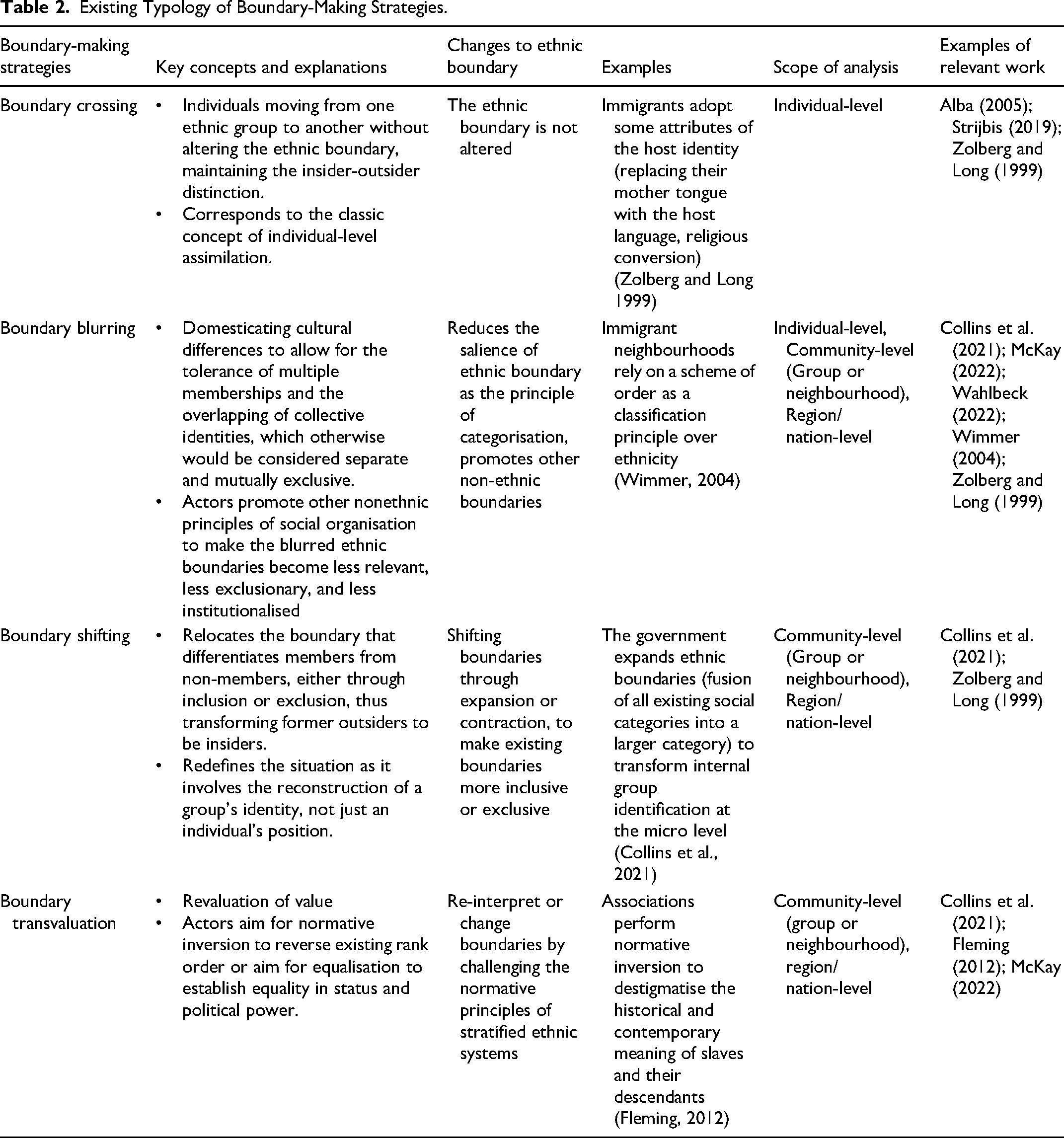
Existing Typology of Boundary-Making Strategies.
Answering Layton's (2019) call to “move away from the comparative studies, single level focus of much managerial marketing thought to a perspective that begins with multi-level dynamic systemic structures and behaviours” (p. 222), we question: “How do market actors engage in boundary-making strategies that promote or challenge social cohesion within the multicultural context of Malaysia?” Using discourse analysis of a documentary and news articles, particularly on food narratives from wet markets and adjacent hawker stalls, this study aims to understand how macromarketing influences boundary-making practices in the market space that fosters or hinders social cohesion. The research objective is to examine interactions among market actors in the wet market and food marketing system. From the findings, we propose a new boundary-making strategy, i.e., “boundary interweaving,” a process that assumes two or more cultural boundaries interwoven to create a new unique cultural boundary. Findings reveal that the interactions among market actors exemplify boundary interweaving within space, language, and foodways. This study extends the macromarketing conversation by showing how interactions among market actors can foster social cohesion in multicultural environments while emphasising the importance of culture on marketing systems.
Conceptual Framework
Our work is grounded in conceptual insights derived from marketing system and boundary-making theories. Marketing system theory provides insights into marketing systems, together with the actors within the systems, that produce outcomes, including QOL (Layton 2019). Boundary-making theory shifts our understanding of ethnicity from the traditional notion of fixed relationships between separate ethnic groups to a more dynamic perspective. It sees ethnicity as an ongoing social process of forming and reconfiguring groups by defining the boundaries that delineate them (Wimmer 2008). Both theories are linked to social cohesion. In marketing system theory, social cohesion serves as a measure of the QOL, which is influenced by the functioning of marketing systems. In boundary-making theory, establishing or removing boundaries between different ethnic groups can challenge or promote social cohesion. By integrating both theories, we aim to understand how market actors navigate and negotiate the cultural boundaries between different ethnic groups in the marketing system and how their actions influence and improve social cohesion.
Marketing System Theory
Marketing system and quality-of-life (QOL) are two concepts integral to macromarketing. A marketing system is often multileveled, with market actors functioning as separate systems within it (Layton 2009). Layton (2019) defines actors as, “The individuals and entities… (that) each bring differing sets of capabilities, such as capital – economic, social and political – to an exchange” (p. 215). Studies on marketing systems may examine the entire system as a whole (Cerovečki and Grünhagen 2016), narrowed down to the components within a marketing system (Sarker et al. 2022) or emphasise the outcome of marketing systems (Baktir and Watson 2021). Assortments created and QOL-generated are two examples of the outcome of marketing systems. The assortments of goods, services, information, and value, which are created and delivered by marketing systems to serve consumer demands, will enhance and improve consumer well-being (Layton 2007, 2009). The various dimensions of well-being and overall life satisfaction are then captured by QOL (Sirgy 2021).
Krasnikov et al. (2024) demonstrate that marketing systems play a crucial role in enhancing QOL, with their meta-analysis revealing positive effects across different context and metrics. Among the various QOL metrics evaluated, the authors code “perceptions of social cohesion” as an indicator of QOL. In other words, social cohesion is one of the factors of QOL, which can enable harmony among different members of a society (Jagadale and Kemper 2022) and generate sustainable livelihoods (Little, Ho, and Eti-Tofinga 2023). Krasnikov et al. (2024) also finds that various components of provisioning systems, such as product, promotion, price, distribution, and market selection, can enhance consumer well-being through positive change in behaviours and social processes. Building upon Krasnikov et al. (2024) findings, we seek to theorise the market dynamics and social process that can enhance consumer well-being and QOL.
In the broad scope of macromarketing, which addresses phenomena across multiple levels (micro, meso, macro), QOL serves as a measure of well-being for consumers on three distinct scales: individual, community, and national level (Sirgy 2021; Sirgy et al. 2008). QOL is observed in various forms of well-being, including economic (Paswan and Tran 2012), social-environmental (Pai, Laverie, and Hass 2022), and emotional and physical (Wünderlich et al. 2021). Sirgy (2001) suggests that QOL can also be interpreted from a cultural perspective, recognising the importance of the cultural aspect of QOL but did not formally theorise cultural well-being as a form of QOL.
In Layton's (2019) framework on marketing system, the cultural aspect was addressed but not adequately emphasised. This research aims to highlight how culture can enable the functioning and growth of a marketing system, and how cultural well-being catalyses social cohesion. We also question the place of government in the functioning of marketing systems (Wooliscroft and Ganglmair-Wooliscroft 2018), by exploring how the government interacts with other market actors.
Boundary-Making Strategies
Two theories are commonly used to understand social processes related to ethnic and minority identity, culture and interaction: (1) boundary-making theory (Wimmer 2008, 2013; Zolberg and Long 1999); and (2) acculturation theory (Berry 1997). While these two theories share some similarities, they have different theoretical foundations, as detailed in Table 1. The most significant distinction between boundary-making theory and acculturation theory lies in their respective scopes of analysis: while boundary-making theory encompasses micro-, meso-, and macrolevels (Wimmer 2008), acculturation theory predominantly focuses on microlevel social processes (Berry 1997). Past acculturation studies mainly focus on the microlevel consumer acculturation. For example, examining how migrants’ cultural food consumption reinforce (Askegaard, Arnould, and Kjeldgaard 2005; Penaloza 1994) or de-stabilise (Cruz and Buchanan-Oliver 2020) their cultural identities, exploring the dynamic nature of identity formation as diaspora change their food habits (Dey et al. 2017), examining why subaltern migrant consumers separate from the dominant culture (Sreekumar and Varman 2019) and questioning how immigrants are precluded from assimilating (Mehta and Belk 1991).
Theoretically, assimilation is expected to enhance social cohesion by aligning the ethnic minority more closely with the majority culture. In practice, however, absolute assimilation is less possible (Dey et al. 2017) and forcing assimilation may exacerbate ethnic tensions and breed resentment between locals and migrants (Krisjanous and Kadirov 2018). In contrast with acculturation theory, which is widely cited in marketing journals, boundary-making theory is less frequently applied in marketing research and is primarily found in ethnic studies literature (Alba 2005; Fleming 2012; Wahlbeck 2022). Although some macromarketing studies attempt to conceptualise “boundary,” the theoretical foundation is different from the ethnic boundary concept, as advanced by Zolberg and Long (1999) and Wimmer (2008, 2013). For example, market boundary from an institutional perspective (Wiebe and Mitchell 2023), entrepreneurship as a boundary object (Fajardo, Shultz, and Joya 2019) and family boundary definitions (Westberg, Beverland, and Thomas 2017). Given that the acculturation model focuses mainly on the individual level and because the assimilation strategy has limitations in fostering social cohesion, this study seeks to extend the concept of boundary-making strategies from ethnic studies literature into macromarketing literature. The theory of boundary-making strategies fits well for macromarketing due to its multilevel approach, which encompasses analysis at the micro-, meso-, and macrolevels.
Boundary-making strategies refer to the diverse approaches that actors employ in their interaction with boundaries. These boundaries delineate distinctions between us and them or between insiders and outsiders, thus creating groupness (Lamont 2014), and contributing toward reinforcing or challenging social cohesion and unity (Collins, Laws, and Ntakirutimana 2021). Barth (1969) introduces the concept of boundaries to research on ethnicity and asserts that, “If a group maintains its identity when members interact with others, this entails criteria for determining membership and ways of signalling membership and exclusion” (p. 15), which underscores the importance of creating and upholding ethnic boundaries as a key to understanding the formation and preservation of ethnic groups. Instead of viewing boundaries as being created, Wimmer (2013) suggests that actors operate within social fields where boundaries already pre-exist.
The strategies employed by actors to negotiate with their boundaries are influenced by the power dynamics within these fields (Wimmer 2013). Past research on boundary-making illustrates that actors who react to the existing boundaries may pursue different boundary-making strategies contingent on differing agenda. For example, actors may overcome existing boundaries (boundary crossing) (Alba 2005; Strijbis 2019), dismiss ethnic boundaries and promote nonethnic classification (boundary blurring) (Collins, Laws, and Ntakirutimana 2021; McKay 2022; Wahlbeck 2022; Wimmer 2004), expand or contract boundaries to include or exclude people (boundary shifting) (Collins, Laws, and Ntakirutimana 2021), or challenge the normative principles within boundaries (boundary transvaluation) (Fleming 2012; McKay 2022). Table 2 details the existing different typology of boundary-making strategies, illustrating how these approaches can vary from the microlevel (individual) through the mesolevel (group or neighbourhood) to the macrolevel (region or nation). Figure 1 shows the conceptual visualisation of different boundary-making strategies.
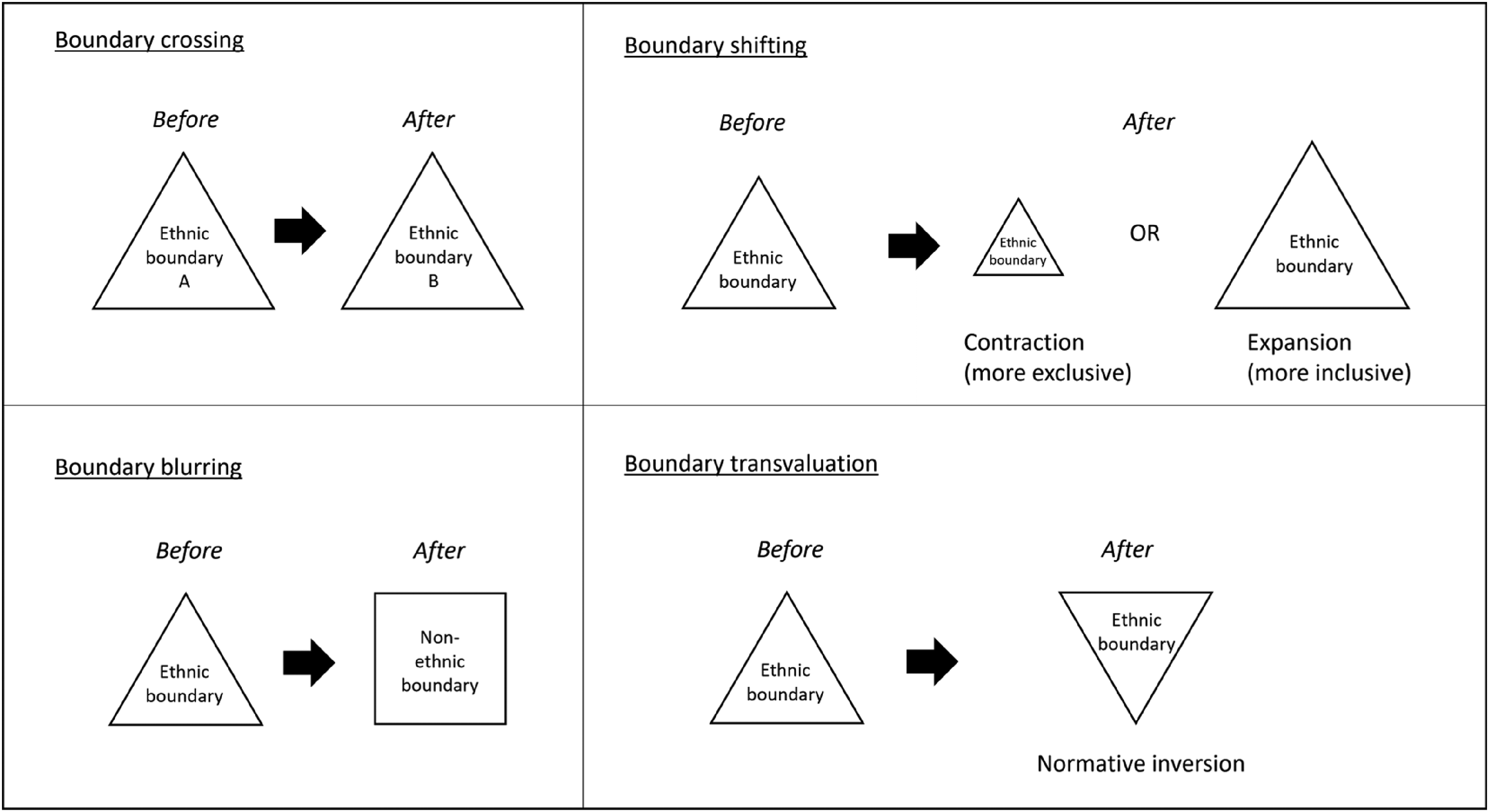
Conceptual visualisation to illustrate the different boundary-making strategies.
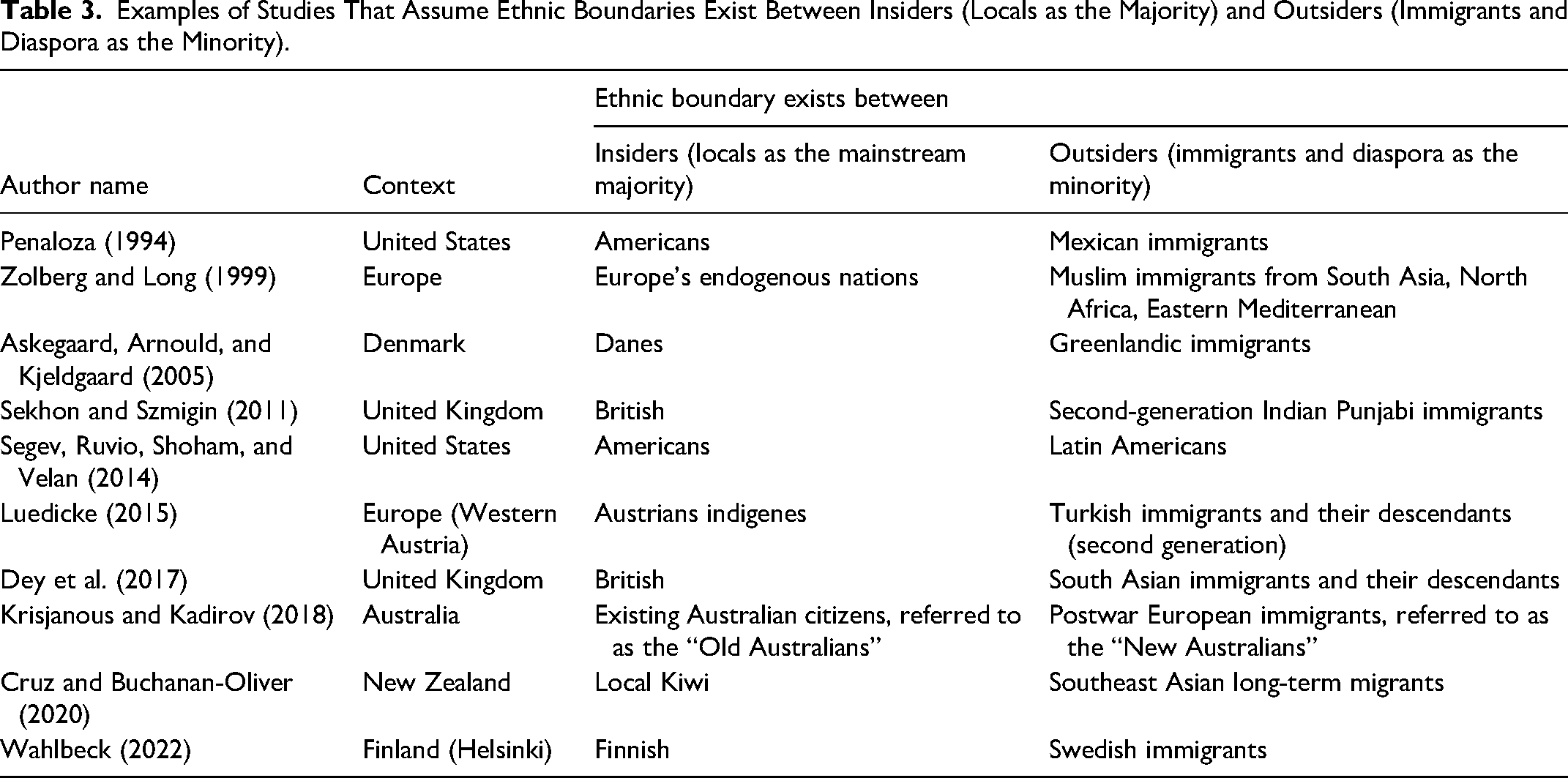
Whether employing boundary-making theory or acculturation theory, studies on ethnicity and minorities, either explicitly or implicitly, recognise the presence of ethnic or cultural boundaries. They might not use the term “boundary,” but their theoretical frameworks suggest the existence of such divides. Ethnic and cultural boundaries exist in the form of languages, customs, religions, values, and traditions. These boundaries are mostly assumed to exist between insiders (locals as the majority) and outsiders (immigrants and diaspora as the minority) in the WEIRD multicultural societies (Askegaard, Arnould, and Kjeldgaard 2005; Cruz and Buchanan-Oliver 2020; Dey et al. 2017; Krisjanous and Kadirov 2018; Luedicke 2015; Penaloza 1994; Segev et al. 2014; Sekhon and Szmigin 2011; Wahlbeck 2022; Zolberg and Long 1999). Table 3 outlines the examples of literature sourced from ethnic studies and marketing literature.
Examples of Studies That Assume Ethnic Boundaries Exist Between Insiders (Locals as the Majority) and Outsiders (Immigrants and Diaspora as the Minority).
Moreover, research indicates that ethnic boundaries can also arise between nonlocals in a foreign context, where insiders are one ethnic migrant group and outsiders are another (Charsley and Bolognani 2017; Li 2016; Voytiv 2024; Wimmer 2004) (Table 4).
Examples of Studies That Suggest Ethnic Boundary Exists Between non-Locals in a Foreign Context.
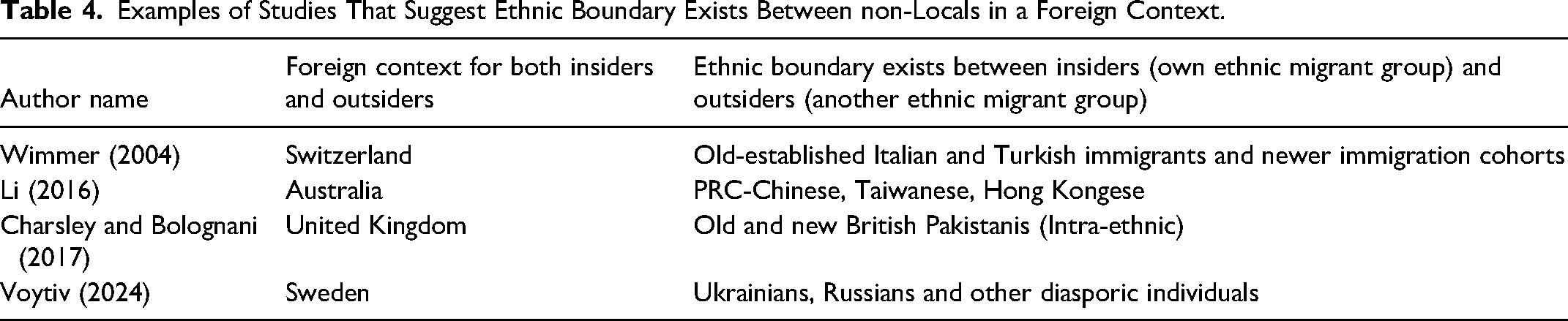
As illustrated in Tables 3 and 4, the existing literature on ethnic boundary mainly focuses on the context of minority migrants or minority diaspora. Such a focus assumes that boundaries exist mainly between the local majority insiders and the migrant or diaspora minority outsiders, where there are cultural differences between the host and home countries. Prior work cannot fully depict boundary-making situations when both majority and minority groups are the insiders (locals) in a multicultural society. Although there are various boundary-making strategies (Table 2), the existing typology needs to be more exhaustive and account for boundaries surrounding individuals who are not migrant and not diaspora. This study aims to extend the focus of boundary-making to include boundaries between majority local insiders and minority local insiders in a multicultural society.
Contextual Background: the Chinese Conundrum
Malaysia, a multicultural nation with Malay, Chinese, Indian and other ethnic groups, gained independence from British rule in 1957. The colonial legacy, segregating ethnic groups into distinct economic roles (i.e., Malays in agriculture, Chinese and Indian in urban labour sectors) has entrenched socio-economic disparities, evidenced by the rising Gini coefficient from 1957 to 1970 (Hashim 1998; Jomo and Ishak 1986). This led to racial riots in 1969, upon which the New Economic Policy (NEP) was introduced, favouring the political dominant Malay majority with affirmative action, thereby intertwining ethnic hierarchy with governance. Constitutionally (Article 3), Malaysia is a secular government with Islam as the national religion (MyGOV n.d.), but debates persist on Malaysia's secular versus Islamic identity. The issue is further complicated by a dual judiciary system and the ascribed religion for Malays. This provides a backdrop to the ongoing ethnic and religious tensions, challenging notions of equality and secularism within Malaysia's multicultural society.
All Malaysians carry a National Registration Identity Card (NRIC) as a compulsory identity document, previously introduced by the British in East Africa in 1920 (Majid et al. 2015). While non-Muslims only have their religious affiliations recorded on the chip, Malays have Islam printed prominently on their NRIC card (Lim 2020). In Malaysia, ethnic classification and religion are accentuated in all official documents, and, although there is no hierarchical order, there are distinct and established legal, social, and symbolic boundaries between the different ethnic groups in Malaysia (Willford 2006). While the present government is working hard to remove identity politics, historically Malaysians have always held first to their ethnic affiliation before their nationality, a result of years of institutionalisation.
Malaysia presents a unique contradiction. The traditional and officially proclaimed philosophy of equal respect among the different ethnicities has gradually weakened over time, due to the rise of Malay ethnonationalism (Andaya and Andaya 2017). Today, “ethnicity, religion and language are not just salient personal identities, but definitive categories that structure Malaysian politics, rights and broader society” (Albury 2021, p. 2). It is against this backdrop that we explore the Malaysian Chinese boundary interweaving strategies using the centrality of food in Chinese culture (Simoons 1991). Within the context of Malaysia, food bridges cultural differences and creates a world where ethnic differences are celebrated and shared, and it is also a statement of identity.
Malaysia's diverse food culture stems from its historical strategic location, migration, and colonisation. Malacca, a strategic trading hub in the fifteenth century, was introduced to various spices, that influenced local culinary practices, and to Islam, that lay foundation for Halal food culture (Raji et al. 2017). From the 14th to 19th centuries, the interracial marriages between Chinese immigrants and local Malay women formed the Baba Nyonya community, leading to the creation of Nyonya cuisine, a fusion of Chinese cooking techniques with Malay spices and flavours (Ng and Karim 2016). During British colonial rule from the 19th to mid-20th centuries, Chinese labourers from Southern China and Indian labourers from India migrated to British Malaya, each bringing their own culinary traditions that further enriched Malaysia's culinary landscape (Raji et al. 2017). Moreover, the British introduction of tea culture led to the creation of kopitiams (coffee shops) by Chinese Hainanese post-1957 independence (Duruz and Khoo 2015). These local coffee shops, often near wet markets, became venues for Chinese hawkers to sell food. Today, Malaysia's food culture represents a tapestry of diverse culinary legacies, reflecting its multicultural population with Malay, Chinese, Indian, and other ethnic influences. Specifically, Malaysian Chinese cuisine has evolved into a unique identity, deeply influenced by these diverse traditions, and resonating strongly within the Malaysian Chinese community. Tan (2001) aptly states, “Chinese food in Malaysia is as complex as Chinese identities” (p. 127).
The identification and categorisation of the Malaysian Chinese minority identity are problematic. First, the Malaysian Chinese are not migrants, i.e., migrants normally do not have citizenship (Krisjanous and Kadirov 2018), and the Malaysian Chinese possess Malaysian citizenship (Yow 2017). Second, Malaysian Chinese are not diaspora. Although many researchers refer to Malaysian Chinese as a Chinese diaspora (Tan 2013), strictly speaking, they no longer have a social or political diasporic relationship with respect to China. They do not see China as their homeland but instead perceive Malaysia as their nation-state (Nonini 2015). Finally, Malaysian Chinese are insiders in Malaysia, as this community participated when Malaysia (back then as Malaya) was fighting for independence (Malaysia Department of Information 2016), and they were involved in the nation's constitution drafting (New Straits Times 2014). As such, the term “Chinese” used in this paper is exclusive to Malaysia.
Method
Philosophical Foundation
Drawing upon Barth's (1969) social constructivist approach that ethnic groups are “categories of ascription and identification by the actors themselves” (p.10) and ethnic groups are “culture-bearing units” (p. 11), this paper sees ethnic identity as a product of the market actors, where ethnic identity and the market are co-constructed. Boundary-making theory defines membership in an ethnic community through various perspectives, with two prominent viewpoints being “essentialist” and “constructivist” (Wimmer 2013). Essentialists contend that ethnic identities stem from unchanging, intrinsic attributes, e.g., shared ancestry, cultural heritage, language, and belief systems. In contrast, constructivists argue that identities are dynamic, fluid, and manifold. From the constructivist standpoint, ethnic groups are socially shaped, and ethnic boundaries can be tactically manipulated to include or exclude members.
This study does not adhere to a strict “either essentialist or constructivist” approach; instead, it is guided by an “intertwined essentialist–constructivist” perspective. The essentialist viewpoint is exemplified by the Chinese who acknowledge and continue their cultural tradition. The constructivist perspective is evident in how the Chinese adapt their cultural practices based on the local context, thus demonstrating the fluid and multifaceted nature of their identities, i.e., they carry multiple identities, encompassing their ethnic Chinese heritage and their national identity.
Methodology
This study employs discourse analysis, viewing language as a tool shaping social realities and not just reflecting them (Cosgrove and McHugh 2008; Jørgensen and Phillips 2002). Discourse analysis encompasses a set of approaches rather than a single, prescriptive technique (Cosgrove and McHugh 2008). It aligns with social constructionism, which views discourses as a form of social interaction that is socially constructed, contextualised, and embedded.
Data Collection
We adopted a multimethod approach and collected data from two sources. The primary data source was one season (13 episodes) of a local Chinese television food documentary series. While the documentary provided rich data, we included newspaper articles covering food stalls and wet markets food from a leading local Chinese vernacular newspaper as a secondary data source to increase dependability and offer a more credible picture of the context (Tracy 2020).
Documentary Television Series
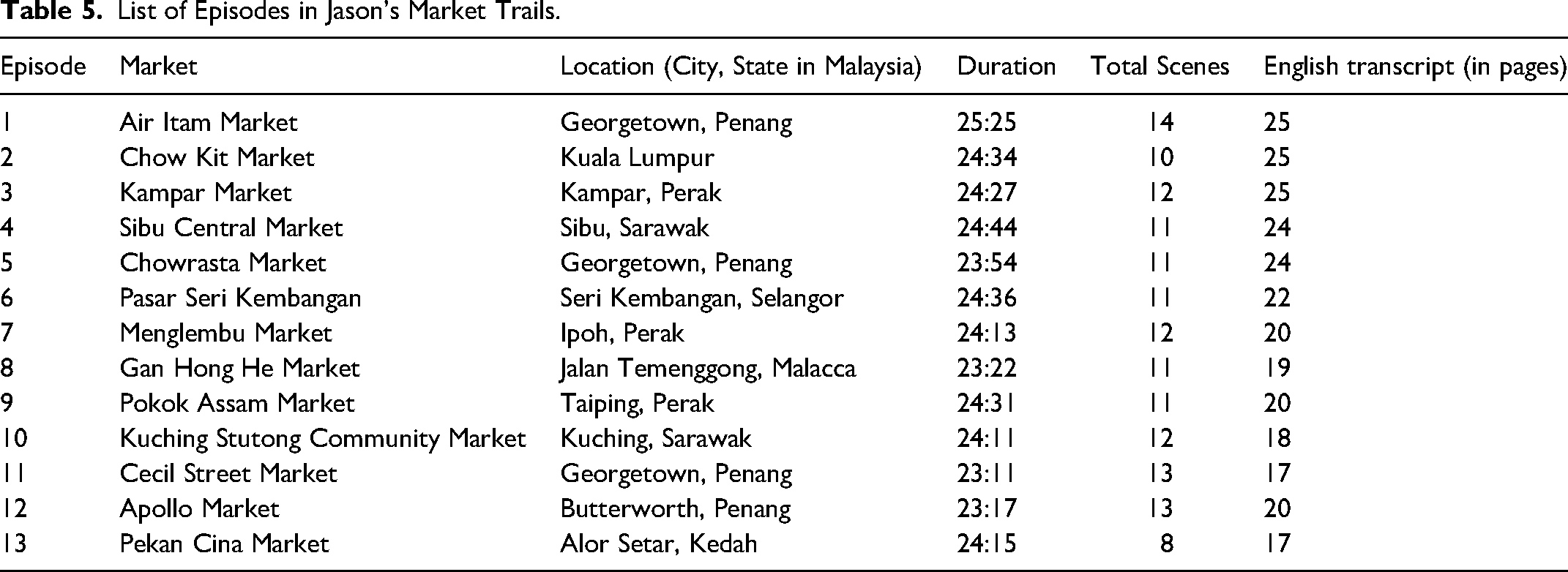
Jason's Market Trails (JMT) is a local Chinese television documentary show on food and wet markets, hosted by local celebrity Jason Yeoh. The research material covers one season of the series, consisting of 13 half-hour episodes (Netflix n.d.) (Table 5). The show comprehensively captures multiple aspects of food and wet markets with discourses from multiple perspectives, allowing different voices to be heard compared with other culinary and food review programs. Food vendors and customers representing the lay public communicate with the host in an informal dialogue uncovering the origins, stories and production processes of local foods and the relationships among food, local customs, and environments. This allows for the expression of cultural meanings associated from multiple perspectives. As explained in JMT Episode 1, Yeoh grew up going to the wet market with his mother who was a vendor there, which makes the dialogue an informative source of data.
List of Episodes in Jason's Market Trails.
Newspaper Articles
Sin Chew Daily (SCD) is the leading local Chinese newspaper with high circulation and readership in the Chinese community. According to the Audit Bureau of Circulation 2015 Report, the average daily circulation of SCD was 340,584 copies, resulting in it not only being the highest circulating Chinese newspaper but also the highest circulating newspaper across all languages (Audit Bureau of Circulations Malaysia 2015). SCD plays the role of preserving Chinese culture and promoting ethnic relations. As a vernacular newspaper, the role of SCD includes not only disseminating information, guiding public discourses, linking society, and upholding culture, it also acts as a social institution that bridges the government and society (Ng and Lee 2018).
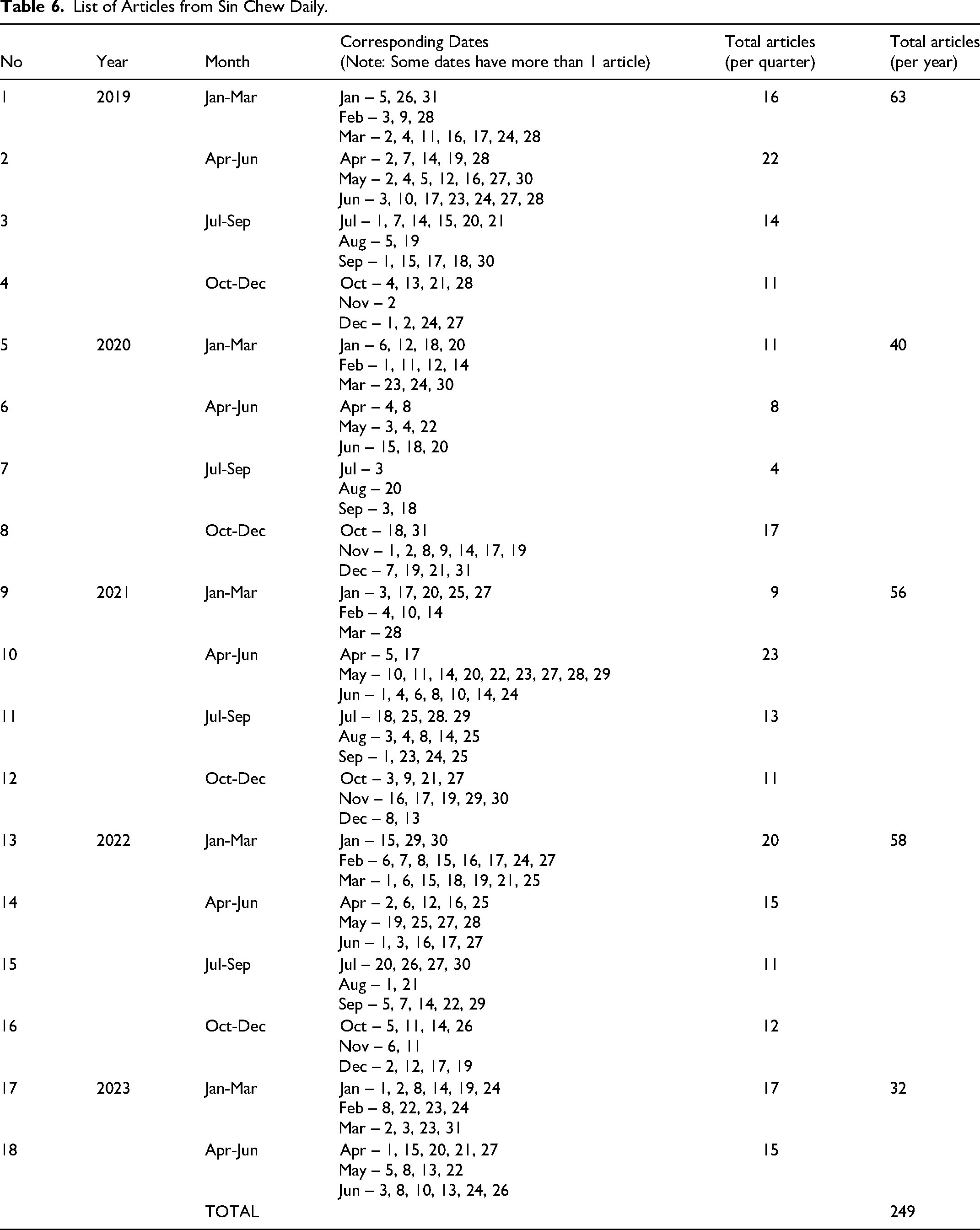
Data collection encompasses the newspaper dating from January 2019 to June 2023. Each copy of SCD was skimmed through for articles that can inform the research question. Based on the researcher's subjective judgment (Wimmer and Dominick 2014), selected articles discussing wet markets and food sold within or nearby a wet market were set aside; articles reflecting local ethnic food culture were included; and articles on foreign culture food such as Korean food were excluded. Table 6 summarises the selected 249 articles.
List of Articles from Sin Chew Daily.
Data Analysis
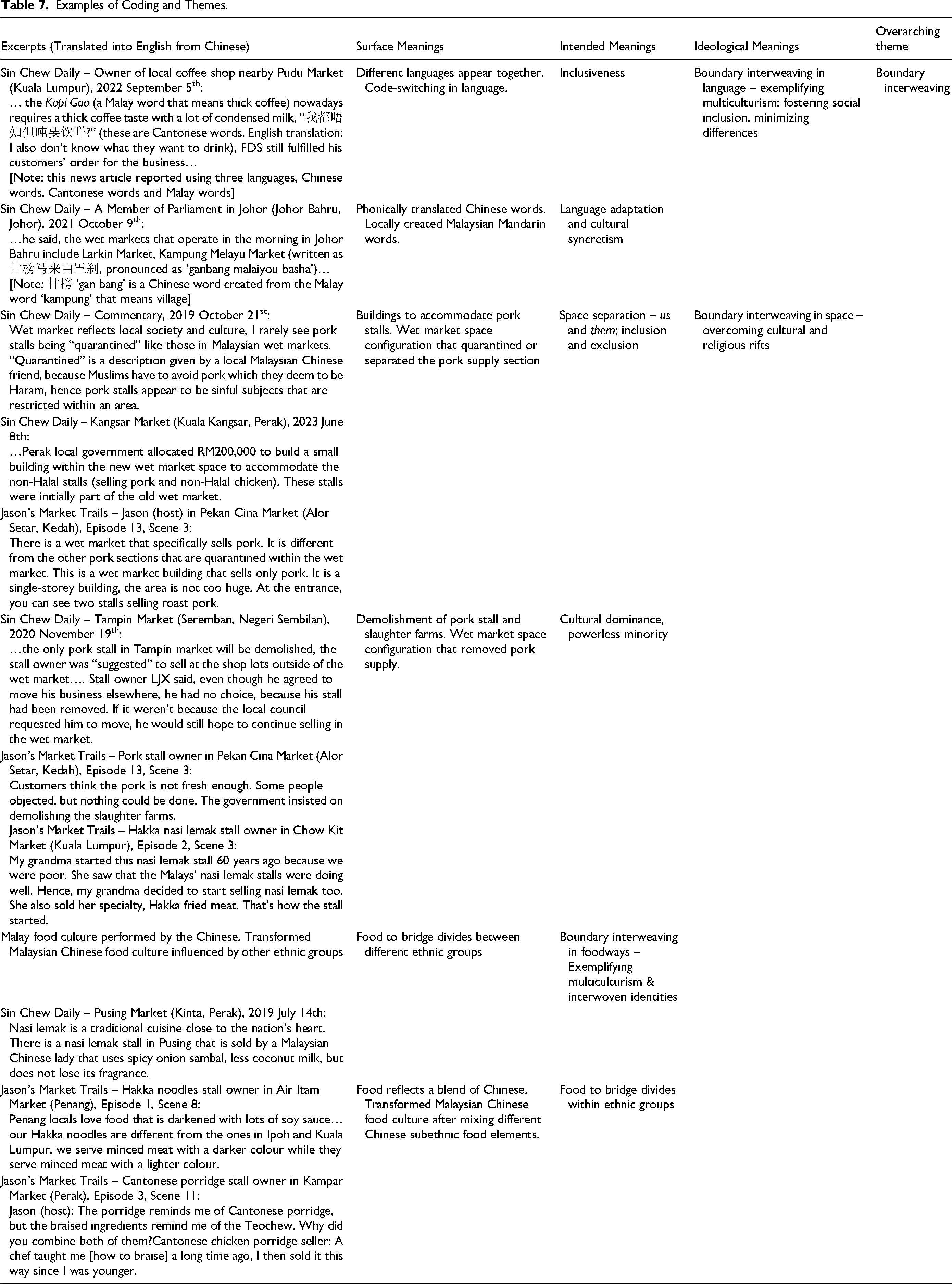
We referred to French, Lee, and Brace-Govan (2020) in our initial stages of data analysis. First, textual analysis was conducted at three levels, following Frith (1997): (1) analysing surface meanings; (2) identifying the intended meaning; and (3) uncovering the cultural or ideological meaning. In the first step, we selected, separated, and sorted out transcripts of JMT and SCD to draw out surface meanings. Each episode and each newspaper article were considered a case, and we conducted a within case-coding followed by an across-case coding, moving iteratively between data and codes. We cross-referenced information from two different sources to minimise limitations that may arise when relying on one data source.
Next, we probed for the intended meaning conveyed to the audience, focusing on the tone or the use of a public figure to endorse a point of view (Hellgren et al. 2002). At the third level, we uncovered cultural meanings specific to the local context, drawing from the historical underpinnings and policies in the nation. The lead author used her insider knowledge of Chinese culture while also viewing the wet market data from an outsider's perspective. The second author separately coded and guided the lead researcher between intimacy and distance from the context (Arnould, Price, and Moisio 2006) to help reduce author bias.
We further employed a hermeneutical analysis (Arnold and Fischer 1994) and iterative analysis (Spiggle 1994) throughout the research. We moved between the individual and joint analysis, using triangulation between the authors to strengthen our interpretations. The authors took a recursive process, going back-and-forth between data and codes when analysing data. To increase creditability, the themes and codes were reviewed and vetted independently by colleagues who share the same experiences to ensure dependability. This allowed the authors to continually reflect on their own assumptions, preconceptions, and personal biases throughout the research process. Table 7 exemplifies part of the coding table.
Examples of Coding and Themes.
Findings
This research proposes “boundary interweaving” as a new strategy of boundary-making. We define boundary interweaving as weaving together two or more partial cultural boundaries to create a new unique cultural boundary. Boundary interweaving assumes that (1) the actors do not combine two or more complete cultural boundaries to become a new cultural boundary (amalgamation) but instead weave in only a partial of each boundary; (2) a cultural boundary is porous and permeable; and (3) actors have the choice to weave in partial parts of other cultural boundaries. They engage in boundary interweaving by selectively weaving in a partial of other ethnic group cultural boundaries into their Chinese cultural boundary.
The newly created interwoven cultural boundary is thus unique in that, while trying to partially maintain their Chinese culture, they also try to accept and incorporate other national cultural elements. The interwoven boundary can be imagined as a tapestry with a uniquely Chinese design that reflects the multicultural society in which the actors live. The idea of weaving with its warps and wefts suggests integration and complementarity rather than assimilation and homogenisation. Boundary interweaving can be observed in the market space, language, and food produced and consumed. (Excerpts from Jason's Market Trails documentary are labelled “JMT”; excerpts from Sin Chew Daily news article are labelled “SCD.”)
Boundary Interweaving in Space
In the context of the wet market, a critical incident arises from boundary interweaving, specifically concerning the provision and spatial arrangement related to pork. This issue serves as a pronounced demarcation between the Malay and Chinese communities. Pork is deemed haram (prohibited) under Islamic law, starkly contrasting to its significance in Chinese dietary practice. With the Muslim majority and Islam's official status as a national religion, stringent regulations are enforced on halal versus non-halal food, highlighting a significant cultural and religious rift within the market's operational dynamic.
Pork stalls in wet markets occasionally encounter difficulties. Nevertheless, there are initiatives aimed at addressing these challenges, which illustrates efforts of boundary interweaving. For instance, Pudu Market in Kuala Lumpur experienced significant hurdles in setting up pork stalls, despite its longstanding tradition of being managed by Chinese vendors since its inception in 1956, predating the nation's independence. The struggle to maintain pork stall operations highlights the market's ongoing efforts to navigate the cultural and regulatory landscape as narrated by a pork stall vendor: “…initially the open-air wet market does not have any pork stalls. It was because the late Lee Yu Lung from the Malaysian People's Movement Party (local political party) fought for us, only we can have pork stalls at the open-air wet market.” (Pork stall owner, Pudu Market in KL, SCD, 2019)
Similarly, pork stalls at Kangsar Market in Perak faced obstacles amid the market's relocation efforts. Typically, old wet markets undergo renovations or relocations overseen by the government. During the relocation, Kangsar Market pork stalls were initially omitted. Intervention came from political representatives who lobbied for inclusion, leading to a resolution where the Perak state government dedicated funds to construct a separate facility within the new market specifically for non-halal stalls that were part of the original setup. Sandrea Ng Shy Ching, a member of the Perak State Executive Council, commented on the matter: “The new wet market is not suitable to add in non-Halal stalls. Kangsar City Council initially planned to move the non-Halal stalls to operate in another place. After several discussions, we believe it is best to keep the stalls within the new wet market space for the convenience of the customers to buy groceries from the wet market.” (Member of Perak State Executive Council, Kangsar Market in Perak, SCD, 2023)
These examples indicate the role of public advocacy by politicians at the mesolevel. They act as the intermediaries, negotiating between the government at the macrolevel and the sellers at the microlevel, to assist in pork supply arrangement at the wet market, thus facilitating boundary interweaving. In many wet markets housed within concrete structures, pork stalls are typically segregated into areas designated as “non-halal,” clearly separating them from the halal sections. This division is notably evident at Kampar Market in the state of Perak, where pork stalls are positioned at a considerable distance from the main market area (Figure 2), a setup highlighted by Yeoh in an episode of JMT: “Besides the main building, the Kampar Market also has a pork supply section that is located on the opposite side. It is the pork market that is placed the furthest from the main building that I have seen so far.” (Yeoh, Kampar Market in Perak, Episode 3 of JMT, 2018)
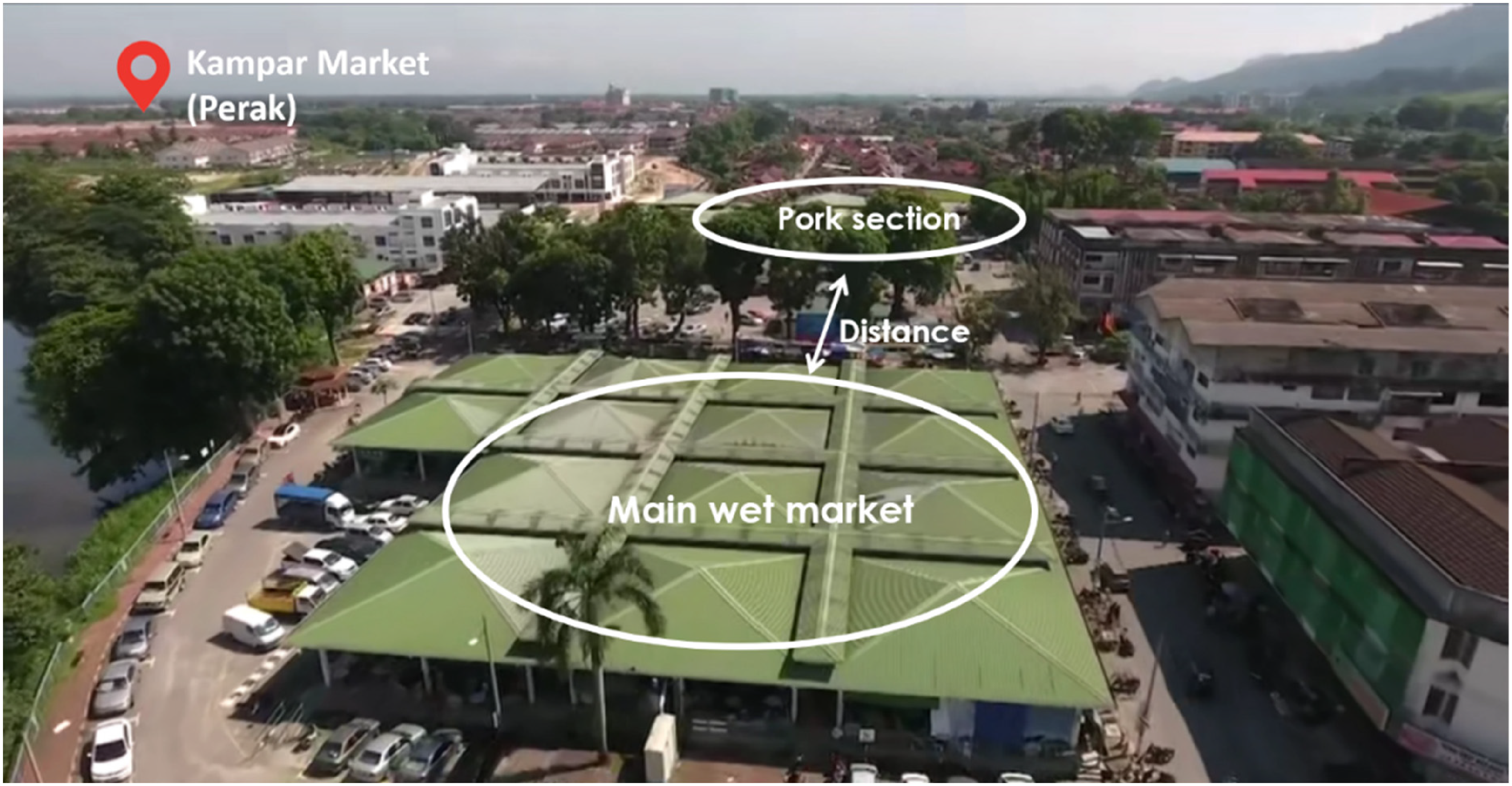
Quarantined pork section at a distance away from the main wet market.
The situation for pork vendors in Kedah, a northern state, worsened significantly after the Malaysian Islamic Party (PAS) assumed control of the state in 2008. PAS is a conservative political party in Malaysia advocating for the implementation of Islamic principles in governance (Case and Liew 2006). The control of PAS led to the closure of local pig slaughterhouses and pork had to be sourced from neighbouring states such as Penang, impacting the local Chinese community, as depicted in Episode 13 of JMT. This shift highlights not only prevailing institutional and cultural dominance of Islam but also underscores the diminished agency of the Chinese minority in Kedah. Despite initial resistance, the Chinese community eventually adapted to these changes, sourcing pork externally while maintaining their culinary traditions, navigating between their own cultural identity and the dominant local Malay culture.
The examples highlighted demonstrate efforts by market actors in interweaving boundaries in the wet market space. Political advocacy for pork stall establishment reflects an attempt to safeguard Chinese cultural practices within a predominantly Muslim society. These attempts exemplify interweaving Chinese cultural boundary (pork supply) into the local cultural boundary (wet market in a multicultural but Muslim dominant country), aiming for coexistence within multicultural market environments. Given the constitutional recognition of Islam as the national religion, the restrictions on non-halal food cannot be overlooked. Acknowledging the cultural significance of pork within the Chinese community, measures have been implemented to reconcile these differences. The state has designated specific areas within wet market spaces for pork supply, isolating these from the broader halal sections.
Moreover, the segregated pork section caters exclusively to non-Muslim patrons while the main halal section of the wet market, offering a variety of other foods like vegetables, chicken, and fish, remains accessible to all customers, regardless of their religious affiliations. The segregation and spatial distancing of pork sections from the main areas of the wet market serve as a tangible symbol of the divide between halal and non-halal products. This distinction extends beyond mere physical separation, representing a deeper, more symbolic boundary between Muslims and non-Muslim communities. Ehlert (2021) describes such delineation in food practices as emblematic of broader social distinctions. Yet, this physical division within the wet market serves to facilitate the integration of Chines cultural practices. The Chinese community can access pork, and the Malay community can avoid it, thus enabling both groups to coexists within the same multicultural space. Without boundary interweaving, there would be a uniformity of halal-only offerings, leading to a scenario where minority cultural practices are overshadowed by those in the majority. These boundaries ensure there is room to balance the different needs and cultural practices of the various ethnic groups in a diverse environment. Vendors also contribute to boundary interweaving by ensuring the availability of pork, thereby enabling the continuity of Chinese food traditions.
Boundary Interweaving in Language
While spatial boundary interweaving is a critical incident, language plays a more complementary role in the boundary interweaving process. Each ethnic group has its own mother tongue, e.g., Malays speak Malay, Chinese speak Mandarin. Malay is also the official and national language in Malaysia. The ethnic Chinese community uniquely develop Malaysian Mandarin, a local variation of Mandarin language that incorporates linguistic elements from Malay and other ethnic language, reflecting a fusion of cultural influences. The localised Mandarin is characterised by code-switching and the integration of unique, locally derived terms, establishing itself as the primary spoken language among the local Chinese population. While Mandarin and other Chinese dialects such as Cantonese, Hokkien, and Hakka are prevalent, this paper will use Mandarin to denote the spoken form and Chinese for the written form of the language, highlighting the linguistics dimensions of boundary interweaving.
Although Mandarin and various Chinese dialects are commonly spoken among the Chinese literate, they often blend different linguistic varieties within a single conversation, a practice referred to as “code-switching” (Lee 2019). This phenomenon is documented in examples from JMT and SCD. “这个巴刹算是北海Raja Uda最大的巴刹 [This is the biggest wet market in Raja Uda, Butterworth]” (Yeoh, Apollo Market in Butterworth, Penang, Episode 12 of JMT, 2018)
In the excerpt above, Yeoh skilfully blends Malay and Mandarin terminology. The name of the street where the market is situated, Raja Uda, remains in Malay, while the name of the town, Butterworth, is mentioned in Mandarin “北海 (beihai).”
From March 2019 to October 2019, SCD published a series of articles featuring the different wet markets, with the title: “走,去巴刹 (zou, qu basha) [Let's go to the wet market].” (SCD, March to October 2019)
According to the Dictionary of Malaysian Chinese (Huayu) by Wang, Chong, and Tang (2022), the term “巴刹” (basha), represents a Mandarin adaptation of the Malay word “pasar,” meaning wet market. While the formal Mandarin term is “菜市场” (caishichang), basha has become the colloquial Mandarin term embraced by the Chinese community, illustrating the linguistic blend of Malay and Chinese. This blending is further evidenced by Yeoh's use of basha to refer to wet markets, showcasing the integration of Malay and Chinese languages across different media.
In Hokkien-speaking Chinese communities, the term for wet markets is “万山” (pronounced as banshan in Hokkien, wanshan in Mandarin). Yeoh discusses the origins of banshan during his introduction to the Chowrasta market: “The [Chowrasta] Market is known as jining-wanshan (吉宁万山) in Chinese language, which also means the Indian market… The word wanshan originated from the Malay word bangsal, which carries the meaning of a large barn or a place with huge sheds. So those places that store stocks and those buildings with big sheds can be known as bangsal.” (Yeoh, Chowrasta Market, Georgetown, Penang, Episode 5 of JMT, 2018)
The various versions of Chowrasta Market's name reflect the blending of various languages: Malay, Tamil, Urdu, Mandarin, and Hokkien. Within the Chinese community, it is referred to as jining-wanshan in Mandarin, derived from the Hokkien kehlingah-banshan. As the Hokkien-speaking Chinese community predominantly resides in Penang, the Hokkien dialect is commonly used among the locals. As detailed by an Indian vendor and Yeoh in Episode 5, the term kehlingah in Hokkien stems from the Malay word keling, associated with the ancient Kalinga Kingdom in India. In the mid-nineteenth century, many South Indians migrated to Malaya, establishing businesses, particularly in fish and vegetables. The Chinese began referring to the area as kehlingah-banshan, signifying the Indian market.
In English, the market is recognised as the Chowrasta market, a name derived from the Urdu term for “crossroads,” indicative of the market's location at a junction (Penang Global Tourism n.d.). The locally coined Mandarin terms basha and banshan, referring to wet markets, extend beyond casual dialogue among the Chinese community to feature on official signage outside the government-developed and renovated wet market building (Figure 3). The presence of basha and banshan on these modern structures indicates a macrolevel governmental endorsement of these Mandarin neologisms. The official recognition suggests that authorities validate and embrace the locally evolved Chinese linguistic culture.
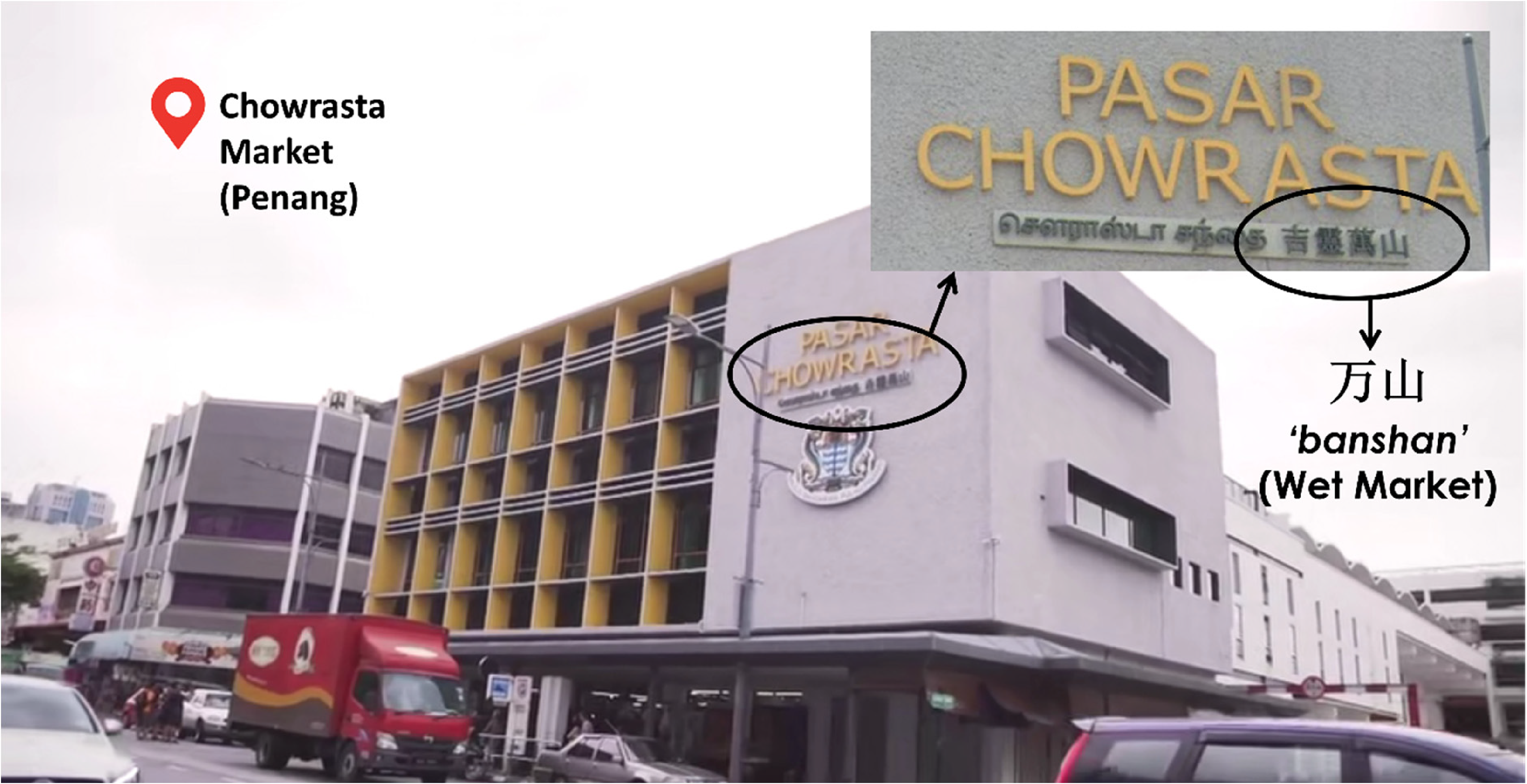
Malaysian Mandarin word “万山” (banshan) displayed on the exterior of wet market building.
In addition to naming places, the Chinese community also adopts Mandarin terms derived from Malay words for local ingredients. While spices are traditionally referred to as “香料” (xiangliao) in Mandarin, some Chines use the term “弄巴” (nongba), which stems from the Malay word rempah for spices. This linguistic adaptation is highlighted in Episode 1 of JMT, where a vendor's stall, offering Nyonya curry paste and spices, is named “辣椒弄巴咖喱料” (chili nongba curry ingredients). The stall's signage proudly displays a Chinese description, indicating “自制上等咖喱、弄巴料、辣椒” (self-made premium curry, nongba paste, chili). The vendor legitimises the use of informal Mandarin term nongba by incorporating it into the business name and promotional materials, such as the stall's banner. When Jason inquired about the term nongba, a customer promptly responded with rempah, indicating that the Mandarin adaptation nongba is recognised not only among Chinese vendors but by individual consumers, demonstrating its broad acceptance and usage within the community at grassroots at the microlevel.
Although code-switching may seem inconsequential, research has shown that code-switching is used to emphasise or minimise social differences (Giles 2016) and it increases solidarity and group identity (Turjoman 2016). Auer (1984) suggests that code-switching does not simply reflect social situations but is also a means to create social situations. In reflecting the historical roots of the Chinese and the current ethnic ongoing tensions, code-switching symbolically represents the larger scale power dynamics and serves as a means of nurturing social inclusion.
We observe that local Mandarin incorporates code-switching and the adoption of uniquely crafted Chinese terms, predominantly influenced by Malay. The linguistic evolution and diversity highlight the blending of cultural elements from different ethnicities into the Chines linguistic framework (Mandarin and other Chinese dialects). This modified Mandarin serves as a tool to transcend the different cultural boundaries, enabling the Chinese community to bridge the otherwise distinct cultural divides. In essence, Mandarin serves not just as a reflection of social dynamics but also as a tool for fostering symbolic social inclusion within a multi-ethnic environment, particularly through the incorporation of elements from the national language, Malay. Following Cruz and Buchanan-Oliver (2020), while speaking in one's mother tongue highlights the role of language in defining ethnic identity, the adaptation of the mother tongue to include dominant cultural influences showcases the critical role of language in mediating the identity of minority ethnic groups.
Boundary Interweaving in Foodways
Transitioning from the linguistic aspects, we now explore boundary interweaving within the local Chinese foodways, focusing on the production and consumption of food by the Chinese community. Foodways traditionally serve to maintain identities, with cultural food practices being resilient and often the last to change (Kittler and Sucher 2008). Yet, the foodways of the ethnic Chinese have experienced significant shifts and innovations. This evolution in cultural food practices illustrates efforts to navigate identities, transitioning from a distinct ethnic Chinese identity toward a more inclusive national identity. The Chinese have integrated food elements from other ethnic cultures into their own and vice versa, leading to the creation of a cuisine that is distinctively local Chinese.
This merging of diverse cultural elements into the culinary realm is a clear example of boundary interweaving, where the traditional boundaries of Chinese culinary practices are now blended with elements from other ethnic groups. Chinese culinary elements have been incorporated into traditional Malay dishes like nasi lemak, which typically consists of coconut milk rice accompanied by spicy chili paste (sambal) and served on a banana leaf. In Perak (Episode 9 of JMT), a Chinese vendor offering nasi lemak departs from the classic Malay components like sambal and anchovies, instead integrating Nyonya influences such as Assam prawn, Acar (spicy pickled vegetables), and Nyonya curry chicken. The Nyonya culture itself represents a blend of Malay and Chinese heritages. While maintaining the characteristic spiciness, this adaptation shifts away from traditional Malay flavours, resulting in a distinctively Chinese interpretation of nasi lemak.
Conversely, in KL (Episode 2 of JMT) a vendor of Hakka descent offers nasi lemak paired with Hakka pork meat. Given that Malays abstain from pork, this variation of nasi lemak caters primarily to the non-Malay communities, such as the Chinese, who consider pork a crucial part of their diet. The stall, initially established by the current owner's late grandmother, first opened near the Buddhist Sin Sze Si Ya Temple's entrance before relocating inside the Chow Kit wet market building. Yeoh comments on the unique incorporation of Hakka fried meat into the traditional nasi lemak. “Upon hearing that his grandma sold nasi lemak near Sin Sze Si Ya Temple, it made sense that he would sell Hakka fried meat too. This is because the Hakkas of Huizhou live near the temple, and the Hakka fried meat is the specialty of the Hakkas of Huizhou.” (Yeoh, Chow Kit Market in KL, Episode 2 of JMT, 2018)
The exchange of Malay-influenced Chinese cuisine in wet markets mirrors the incorporation of Malay-derived terms into Chinese conversations, as discussed, i.e., these interactions predominantly occur within the Chinese community and not with Malays, despite the significant Malay influence in both contexts. The vendors selling Nyonya and Hakka versions of nasi lemak demonstrate boundary interweaving through the integration of Chinese elements into the culinary traditions of another ethnic group, thereby crafting a distinct Chinese food culture.
Boundary interweaving extends beyond the interactions between Chinese and other ethnicities to include variations among different Chinese subethnic groups, particularly in culinary methods and presentations. For instance, traditional white Hakka noodles adopt a darker hue influenced by the Hokkien preference for darker-coloured foods. Similarly, Cantonese porridge is often paired with Teochew-style braised meat. In Johor, a vendor of Hokkien descent offers dried oyster yam rice and mixed pork soup, both rooted in Hokkien tradition. These Hokkien dishes are distinctively prepared using Cantonese techniques, particularly in the method of soup preparation. “Dried oyster yam rice is a popular local dish in the Fujian district (a district in China where the Hokkien communities originated from) because of easy access to dried oyster as Fujian is located beside the sea. The recipe has been passed down within our family starting since my great grandfather came to Malaysia from Fujian. As for the mix pork soup, I learned the Cantonese way of boiling soup to make it taste better.” (Hokkien dishes vendor, Johor hawker stall, SCD, 2022)
Regardless of whether the alterations in the cuisine are due to Malay influence or various Chinese subethnic groups, these adapted Chinese dishes have become hallmark offerings within their respective wet markets, as the local Chinese community incorporates these modified foods into their daily diets. These blended flavours contribute to an interwoven boundary that not only highlights a distinctive Chinese identity but also illustrates the formation of symbolic social inclusion among diverse ethnic and Chinese subethnic groups through culinary culture. Similar to language, foodways play a more complementary role in the boundary interweaving process but it demonstrates the influence of the dominant ethnic group over the minority in the transformation and adaptation of food practices.
The concept of boundary interweaving in space, language, and foodways collectively demonstrate how the local Chinese community navigates and merges cultural elements, fostering a unique identity that promotes inclusion within the multifaceted tapestry of Malaysian society.
Discussion and Conclusion
Boundary Interweaving in the Marketing System
The existing boundary-making strategies fail to fully depict the interethnic relations between the local majority Malay and minority Chinese.
Boundary crossing would assume Chinese cross the boundary and become Malay as they forego their ethnic Chinese identity through assimilation. The findings reveal that Chinese do not cross and enter the fixed categories of ethnic Malay boundary. In other words, the Chinese do not assimilate with the Malays and do not forgo their ethnic Chinese identity. Instead, they recreate a unique Chinese identity that takes in the cultural influences from the majority ethnic Malay as well as other ethnic groups.
Boundary blurring expects the ethnic groups to adopt a “de-ethnicised” approach and rely on other boundaries, such as economic power or age, instead of ethnic boundaries to be the more important principle of classification. Although the government has developed initiatives based on income level or age group, ethnic boundaries still do not lose their salience in classification.
Boundary shifting considers the expansion of ethnic boundaries so that the outsiders would be included within the same boundary as the insiders. Both Chinese and Malay are included within the same boundary of Malaysian citizens. It would be problematic to consider Chinese to be the outsiders, i.e., they deserve a more adequate classification.
Chinese do not perform boundary transvaluation, as they do not radically fight for a change in normative inversion to change their ethnic minority status. Instead, Chinese adapt to the cultural differences and attempt to position themselves in this multicultural context.
Boundary interweaving as a social process overcomes the limitations of the existing boundary-making strategies in literature. Based on our findings and inspired by Layton and Duffy's (2018) marketing system model, we generated Figure 4, illustrating the marketing system model that operates under boundary interweaving.
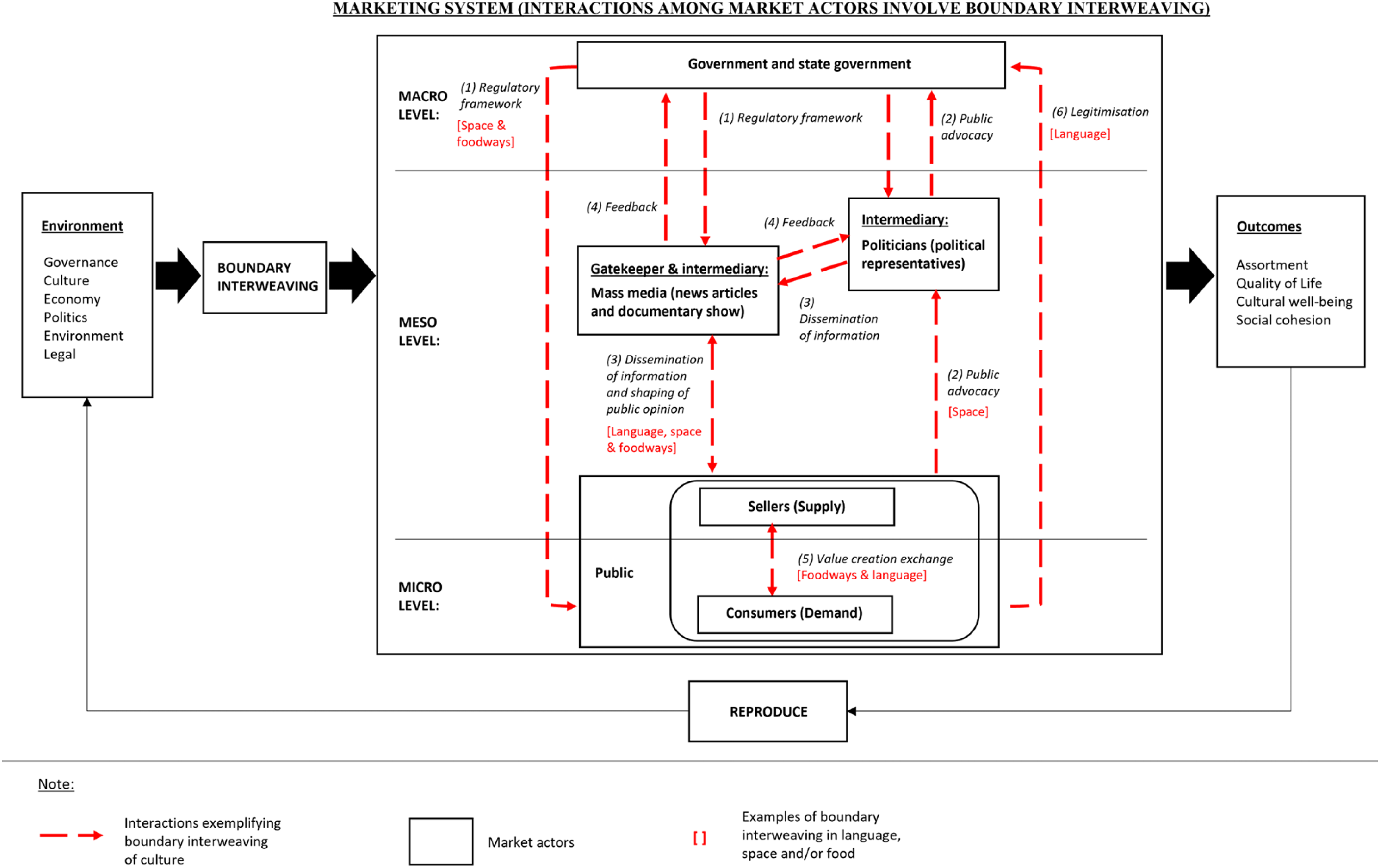
Marketing system conceptualisation under the condition of boundary interweaving.
Figure 4 shows that the formation, function, and growth of a marketing system depend on the environment. Layton and Duffy (2018) identify several elements within the environment, including governance, culture, economy, politics, environment, and legal. These larger forces play an important role in pushing for the social process of boundary interweaving, promoting coexistence of different ethnic cultures. Boundary-making strategies often incorporate a strategic logic (Wimmer 2013). For the Chinese, boundary interweaving is a strategic adaptation to facilitate the harmonious coexistence of diverse cultural backgrounds between the ethnic groups.
Boundary interweaving is exemplified by the interactions among market actors within the marketing system, as illustrated by the dashed arrows in Figure 4. The market actors include government, politicians, mass media, sellers, and consumers. The square brackets in Figure 4 indicate that the interactions involving boundary interweaving are evident in the wet market space, language, and foodways, showing the chain of evidence leading back to our findings.
Space allows for delivery, enabling exchange; language allows for communication, facilitating exchange; and food is the product assortment that creates economic value in an exchange. For Chinese wet market spaces that constitute pork supply by default, the cultural beliefs from other ethnic groups later weaved in, which creates the need to consider Halal and non-Halal sections. From the initial language boundary constituting only Chinese dialect, other language elements are later woven in, resulting in the unique Malaysian Mandarin language. From the initial food boundary that constitutes only Chinese food culture, other ethnic food elements are later woven in, creating the unique Malaysian Chinese food. The changes and negotiations in space, language, and food show the localisation of Chinese culture and, thus, their identity.
We observe that all the interactions included in Figure 4 exemplify boundary interweaving. Even though the actors may not be aware of performing boundary interweaving, the strategy is at play. In other words, the actors do not consciously choose to perform boundary interweaving; instead, they engage in an exemplification of the boundary interweaving strategy we propose in this paper. Figure 4 shows all actors committed efforts together, which ensure the functioning and growth of the marketing system in Malaysia's diverse and multicultural landscape. Referring to our model:
The top-down power of the government regulates the space and product assortment (food) in a marketing system. The regulatory framework set by the state influences the exchange among the public. Examples of boundary interweaving include how the government regulates (a) what exchanges can be done, by enforcing Halal certifications for food sold to the Malay Muslim communities, and (b) where the exchanges can be executed, by establishing Halal and non-Halal wet market spaces. We argue that these examples of boundary interweaving accommodate the different needs of the Muslims and non-Muslims communities, allowing for multicultural societies to coexist. Politicians operate within the framework set by the government but also play a role in shaping policies and advocating for the interests of their constituents. Political representatives work to integrate Chinese cultural practices into the country's diverse society by advocating for non-halal sections in public markets. This advocacy is a form of boundary interweaving, aiming to protect the rights and social well-being of Chinese communities within the multicultural context. Thus, these political representatives serve as intermediaries between the government and the public, promoting social harmony by ensuring the needs of various ethnic groups are equally addressed. The mass media, including news articles and documentary shows, act as the gatekeepers in choosing the information to be disseminated to the public and thus shape public opinion. The mass media propagate and disseminate the language culture, space, and the foodways, while political representatives use the mass media to reach their constituents. The mass media is an intermediary between political representatives and the public. As the mass media report on the issues experienced by the public in everyday life, it becomes a good channel through which to provide feedback to the state and those in power, allowing them to better understand better the consequences at the ground-level due to the policies enacted. Exchange happens in between the sellers and the buyers at the ground-level public; the sellers supply what the buyers demand. Boundary interweaving happens when the Chinese foodways, which are the production and consumption of food, changes after receiving cultural influences from other ethnic groups. For example, Chinese consumers eat Malay or Indian cuisine, while Chinese food vendors produce fusion food that infuse a Malay or Indian twist into Chinese cuisine. The cultural adjustment and localisation of Chinese food culture demonstrates that they have “become local.” The public also influences the government in legitimising informal language culture, demonstrating a bottom-up force. When Chinese sellers and consumers participate in an exchange at the market, they communicate. At the wet market, communication is normally conducted in local Mandarin language, which often interweaves the language spoken by the Malays and the Indians. The widespread usage of the local Mandarin in informal conversations among the public influenced the state government to adopt the language culture, as seen by the formal usage of the locally created Mandarin word in wet market building naming. This shows the higher authority legitimising the locally created language culture, thus formalising an informal language.
Overall, we observed two-way interactions between the market actors, showing that market actors are interrelated, i.e., each actor can influence, and be influenced by, another actor.
With boundary interweaving, marketing systems produce outcomes, including assortments and cultural well-being, which is implied through the cultural expressions of market actors who are given access to cultural resources and respect for cultural rights (Price 2021), thus enabling them to preserve and promote cultural heritage, diversity, and identity. Cultural well-being reflects QOL and facilitates social cohesion. This feeds back into the environment and is again reproduced in the marketing system via boundary interweaving, creating a “feedback loop” (Wooliscroft 2021). In short, these outcomes then become part of the collective experiences and insights of all market actors, shaping their future actions and the world in which they live (Layton and Duffy 2018). Boundary interweaving thus shapes an environment and a marketing system where different cultural elements are respected, valued, and celebrated, contributing to a sense of belonging and harmony among individuals of different cultural backgrounds.
Boundary-Making Creates Sense of Belonging
Boundary interweaving addresses how people create a sense of belonging in multicultural contexts. Alternatively, creating a sense of belonging is the why for the need for boundary interweaving. Belonging is the science of creating connections and bridging divides (Cohen 2022). Chinese, consciously or unconsciously, engage in boundary interweaving and establish a distinct cultural boundary specific to their identity. Boundary-making delineates the distinction between us and them. The new interwoven boundary includes Chinese as part of the us Malaysians and excludes Chinese from being them, i.e., the other Chinese communities who are non-Malaysians, such as Mainland Chinese, Hong Kong Chinese, and Taiwanese Chinese.
The interwoven boundary creates a sense of belonging for the Chinese by aligning with the local culture while preserving Chinese heritage. A sense of belonging, and thus social inclusion, is the condition for social cohesion and a key to the QOL (Sirgy 2001). Conversely, social exclusion often leads individuals to exhibit increased aggression toward, or endorse violence against, those from whom they sense exclusion (Twenge et al. 2001). Recognising the importance of belonging for social cohesion, this paper emphasises that achieving unity is not through assimilation or exclusion but through the practice of boundary interweaving, which also shapes and reflects identity.
Authority-Defined Ethnic Identity Versus Everyday-Defined Cultural Identity
Shamsul and Athi (2015) suggest that ethnic identity develops within two social realities: the authority-defined and the everyday-defined. The former is shaped by dominant power structure, whereas the latter is grounded in daily experiences, with both social realities existing side by side at any given time (Shamsul and Athi 2015).
The concept of authority-defined social reality resonates with the context section of this paper, which outlines the local ethnicity-based policies and identity documents. We observe that the authority-defined social reality focuses on the ethnic concept, creating interethnic spaces and contributing to ethnic separation. Comparing with culture from the perspective of boundary (Wimmer 2008), ethnicity is more concrete and has clear-cut ethnic boundary categorisation; Malaysians are labelled as a Malay, Chinese, Indian based on the authority-imposed boundaries.
The concept of everyday-defined social reality is exemplified in the findings of this paper, particularly in the space, language, and food culture of Chinese. We observe that the everyday-defined social reality revolves around the cultural concept, creating intercultural spaces and exemplifying boundary interweaving. Comparing with ethnicity from the perspective of boundary (Wimmer 2008), culture is more situational and has a more flexible cultural boundary that allows for boundary interweaving, as seen from the fusion of different cultures in recreating the unique Malaysian wet market space, language, and foodways.
To promote coexistence in multicultural contexts, we should not focus on the ethnic identities in interethnic spaces that draw definite boundaries to clearly distinguish between us and them. Instead, we should focus more on cultural identity in intercultural spaces that are more engaging, evolving, and dynamic and, hence, more possible to bring different ethnic groups together, especially through boundary interweaving.
We agree with Shamsul and Athi (2015) that identity formation is closely tied to the material basis of social collectives. An example of the material basis is the food that, while maintaining Chinese cultural elements, also infuses food culture from other ethnic groups, thus changing the sight, taste, and smell of food. In addition, this paper argues that identity formation includes the nonmaterial foundation of culture, in which this paper shows that the foundation is built upon the transformed space, language, and foodways. The identity of the Chinese is a product of boundary interweaving, as they weave in other ethnic group boundaries while maintaining their ethnic Chinese boundary. The interwoven boundary reflects the unique Chinese culture, distinct from other Chinese communities globally, resonating with local culture and identity.
Macromarketing and Practical Implications
Introducing boundary-making theory from ethnic studies literature to macromarketing and marketing system, this study moves away from the single-level focus of ethnic marketing studies to examine multilevel market actor dynamics, or the interactions among market actors, within a marketing system. By theorising a new boundary-making social process that is relevant to improving QOL in the marketing system, we contribute toward better understanding of bridging cultures or coexistence among different ethnic groups. As the world becomes more globalised and people remain transient, there will be a decrease of fixed culture or boundaries. Rather than distinguishing us and them among different ethnic groups, this paper shows that, if enough effort is put in by all actors from macro-, meso-, and microlevels, different ethnic cultures can blend into the new marketing system, creating a sense of belonging, where different ethnic groups can coexist in harmony. We suggest that boundary interweaving can improve QOL and cultural well-being in marketing systems, thus reinforcing social cohesion. By identifying cultural well-being as an outcome of marketing systems and suggesting the relevance of cultural well-being to QOL and social cohesion, this study expands Sirgy (2001) theorisation of well-being and QOL.
This study further highlights the influence of cultural aspects on the functioning, growth, and evolution of a marketing system. Marketing systems function to produce assortments in response to consumer demand, in which consumer behaviour and preferences are shaped by culture. The evolution of marketing systems is driven by cultural adaptation and innovation, e.g., adapting the product assortments, language communication, and market space to align with cultural norms and societal values. As marketing systems function and evolve, they will grow and expand.
We propose refraining from categorising the Chinese as diaspora or immigrants, as such labels fail to recognise their identity as citizens and rightful stakeholders of the nation. This approach helps avoid fostering social stratification, emphasising instead that the Chinese should be viewed as integral members and local insiders.
Other potential practical implications include using an interwoven boundary as a unique selling point for tourism and cultural promotion. By showcasing the distinct Chinese culture that embraces both Chinese and local elements, Malaysia can attract tourists seeking unique cultural experiences. The food industry can create more fusion menus blending Chinese and other ethnic elements, promoting cultural diversity, and fostering greater social cohesion while offering unique dining experiences. Government entities can use the concept of boundary interweaving to design policies supporting cultural diversity, integration, and heritage preservation while encouraging cross-cultural exchanges. For example, community events that celebrate and showcase the interwoven cultures can be organised to bring different communities together.
Limitations and Future Research
Conclusions from this study are contextualised within Malaysia, considering its unique constitution and policies. While we propose that the concept of boundary interweaving could be applicable to other multicultural societies, the extent of implementation may vary across different countries. For instance, the strategy of boundary interweaving in Indonesia or the Philippines might exhibit slight variations based on the distinct constitutional and policy frameworks of each respective nation. Although this paper provided insights into how market actors manage the boundaries in the market, many questions remain for future research. Could migrants (outsiders of a society) benefit from a boundary interweaving strategy? Is it applicable in nonethnic contexts, such as in education or sustainable consumption? Ethnographic research using observations and interviews could be a potential good approach to gain in-depth understanding of these issues.
Footnotes
Acknowledgements
The authors would like to thank the journal editor Professor Joseph Sirgy, the special issue editor Professor Ben Wooliscroft, and the three anonymous reviewers for their very insightful comments and guidance.
Associate Editor
Ben Wooliscroft
Declaration of Conflicting Interests
The author(s) declared no potential conflicts of interest with respect to the research, authorship, and/or publication of this article.
Funding
The author(s) received no financial support for the research, authorship, and/or publication of this article.
