




Abstract
Despite the aging population, studies on the subject are scarce, notably focusing on the impotence experienced by older adults when purchasing food products. This research aims to analyze the vulnerability of older people during their food purchases. Amid the COVID-19 pandemic, we conducted 17 telephone semi-structured interviews with people aged 60 or over, food buyers in person, identified as independent. The content analysis using the software IRAMUTEQ showed problematic packaging and labels; predisposition to repeat previous choices due to the wide variety of foods; excessive portions incompatible with the social changes experienced by older adults; reduction of commensality; physical elements of the supermarket excluding older adults; and the COVID-19 pandemic as an impediment to maximizing well-being due to changes in habits and alternative shopping modalities needs. As a contribution, we propose an empirical vulnerability model that considers the particularities of older people for the food market and other markets.
Introduction
The issue of consumer vulnerability has been gaining relevance while revealing the need for marketing to care about consumer protection and benefits (Silva et al. 2021a). According to Smith and Cooper-Martin (1997), vulnerable consumers are those most susceptible to economic, physical, or psychological damage due to characteristics that limit their ability to maximize utility and well-being. However, the concept of consumer vulnerability is diverse. Given the complexity of the construct, aiming for a consensus on its definition is a difficult task (Mansfield and Pinto 2008). Therefore, it is up to the researcher to promote a discussion of the findings in the literature.
The review conducted by Rötzmeier-Keuper (2020) reveals another lack in the field: the shortage of studies focused on deeply understanding the experience of vulnerability from the consumer’s perspective. It was also possible to perceive a particular need to consider the individuality of consumers at the time to find specific definitions of vulnerability contexts.
We considered these gaps in the literature for the present research design. The incipient Brazilian publications focused on vulnerability chose to dedicate themselves to the disabled consumer most of the time (Pinto et al. 2016). Research opportunities arise about another potentially vulnerable group: the older adults. According to Berg and Liljedal’s (2022) review, the vulnerabilities of this consumer group need further examination. Abreu and Casotti (2019) have already recognized that research focused on this audience as consumers are scarce, and marketing does not seem to recognize its potential for the field.
After all, the aging of societies has marked population projections. According to the United Nations (ONU 2019a), the number of people aged 60 and over could reach 1.4 billion by 2030, representing an increase of 46% of this group. The world is aging rapidly. The combination of factors, such as lower mortality rates, higher life expectancy, and lower fertility rates, makes human society welcome the age of longevity (Chen 2023). Specifically, Latin America is one of the regions where the aging population will probably double between 2019 and 2050 (ONU 2019b). In the Brazilian scenario, people aged 65 and over will represent approximately 30% in 2100 (IPEA 2021).
Despite the representativeness of these numbers, some surveys label all older people as vulnerable consumers based on their age. This categorization proved problematic, as it is often situational conditions that create experiences of vulnerability (Griffiths and Harmon 2011). Therefore, depending on the situation, the consumer vulnerability experience may or may not happen. Characteristics that could put individuals at a disadvantage do not mean they will be vulnerable in all consumer contexts. According to Hill and Sharma (2020), disadvantaged consumers are in a worse situation than others but may not necessarily face vulnerability in the consumption context. To be a vulnerable consumer, one must be exposed to harm in that context. The opposite also occurs. The consumer may not be disadvantaged but may be predisposed to suffer harm. It all depends on the context. In short, we should focus on understanding when, how, and why individuals encounter vulnerability. Thus, the present research emphasizes the definition by Baker, Gentry, and Rittenburg (2005), who assume vulnerability is transitory and not a terminal condition. When individuals cannot achieve their goals in a consumption situation, they suffer impotence. The authors also proposed a theoretical model of consumer vulnerability. In it, internal conditions, subdivided between individual characteristics (biophysical and psychosocial) and individual states (suffering, life transition, mood), added to external conditions (for example, physical and logistical elements) can contribute to the experience of vulnerability in a context of consumption (Baker, Gentry, and Rittenburg 2005).
That said, the present research decided to adapt this model specifically for the older adults’ sphere and suggests that the aging process can function as an internal condition responsible for increasing the susceptibility of older adults to experience vulnerability. This aging process comprises three perspectives: biological, social, and psychological aging. The first type of aging is related to the weakening and death of body cells that alter the functional capacity of hearing, vision, and locomotion. The second foresees changes in individuals’ relationships and the appropriation of roles related to old age. The third involves cognitive, memory, and information processing declines by older adults (Ahmad 2002; Moschis 1994, 2012).
We believe this psychological aging can be mitigated depending on the index of a construct called Cognitive Reserve. Farina et al. (2018) conceptualize Cognitive Reserve as the brain’s ability to slow down the neurodegenerative aging process. Thus, those individuals with an active lifestyle have higher reserve scores and, consequently, can face brain impairment more successfully (León, García, and Roldán-Tapia 2011; Stern 2009).
However, it is worth noting that vulnerability is not an automatic by-product of internal conditions. It also depends on the experience in the context of consumption that can prevent the individual from achieving their interest (Pavia and Mason 2014). When surveying the explored contexts in the academy, it is clear that the few publications on the vulnerability of older adults tend to focus on the study of financial abuse among this group (Deliema 2018; Segal, Doron, and Mor 2021; Shao et al. 2019). On the other hand, some research has already begun to focus on the experiences of impotence suffered by older adults during purchasing and interacting with food products (Ford, Trott, and Simms 2016, 2019). The importance of this consumption for the individual’s well-being and the incipience of the theme are factors that motivate the present research to fill this gap.
Once the context is defined, it is necessary to consider external conditions that can contribute to the experience of vulnerability despite being out of the consumer’s control. Among them, physical and logistical elements of the supermarket stand out, such as the inadequate height of shelves, absence of seating for rest, irregular aisles, and shortage of employees positioned between sectors for eventual needs (Celeski et al. 2017; Yin, Pei, and Ranchhod 2013). Each of these elements can be recognized during the face-to-face purchase of food. This modality is the focus of the present research because it is dominant even during the recent crisis generated by COVID-19 (Shen, Namdarpour, and Lin 2022), another external condition raised by the present study. It made social isolation necessary, which could further aggravate the vulnerability experiences of older people, who are those indicated as a risk group (Ayalon et al. 2021; Ozili and Arun 2023). It is an attempt to follow the recommendations pointed out by the bibliography of Dantas and Abreu (2020) that reveal the need for future research to investigate how vulnerable consumers were affected by the pandemic regarding access to goods and services.
Taking as a starting point the scenario shown and considering that the field suffers from a lack of structure for researchers and professionals to identify the antecedents and consequences of vulnerability (Hill and Sharma 2020), the objective of the present research is to analyze the experience of vulnerability of older adults in the context of food purchase. Such an understanding offers opportunities both for consumers to improve their adaptation and resistance strategies and for those companies that want to guarantee their customers more positive consumption experiences in the future. Paying attention to the internal diversity of older adults and adapting food products and services to their expectations can be considered an excellent organizational posture due to its degree of differentiation. After all, managers and public policymakers can mitigate specific consumer vulnerability experiences, including in the context of food purchases.
Vulnerability of Older Adults in the Context of Food
Baker, Gentry, and Rittenburg (2005) created a conceptual model to define consumer vulnerability, as shown in Figure 1. In it, internal and external conditions contribute to the consumer experience of vulnerability in a consumption context. As a more general model, the present research adapted it only to older consumers in food purchases, building its theoretical research scheme (see Figure 2). Next, we describe the academic support used in constructing this adaptation.
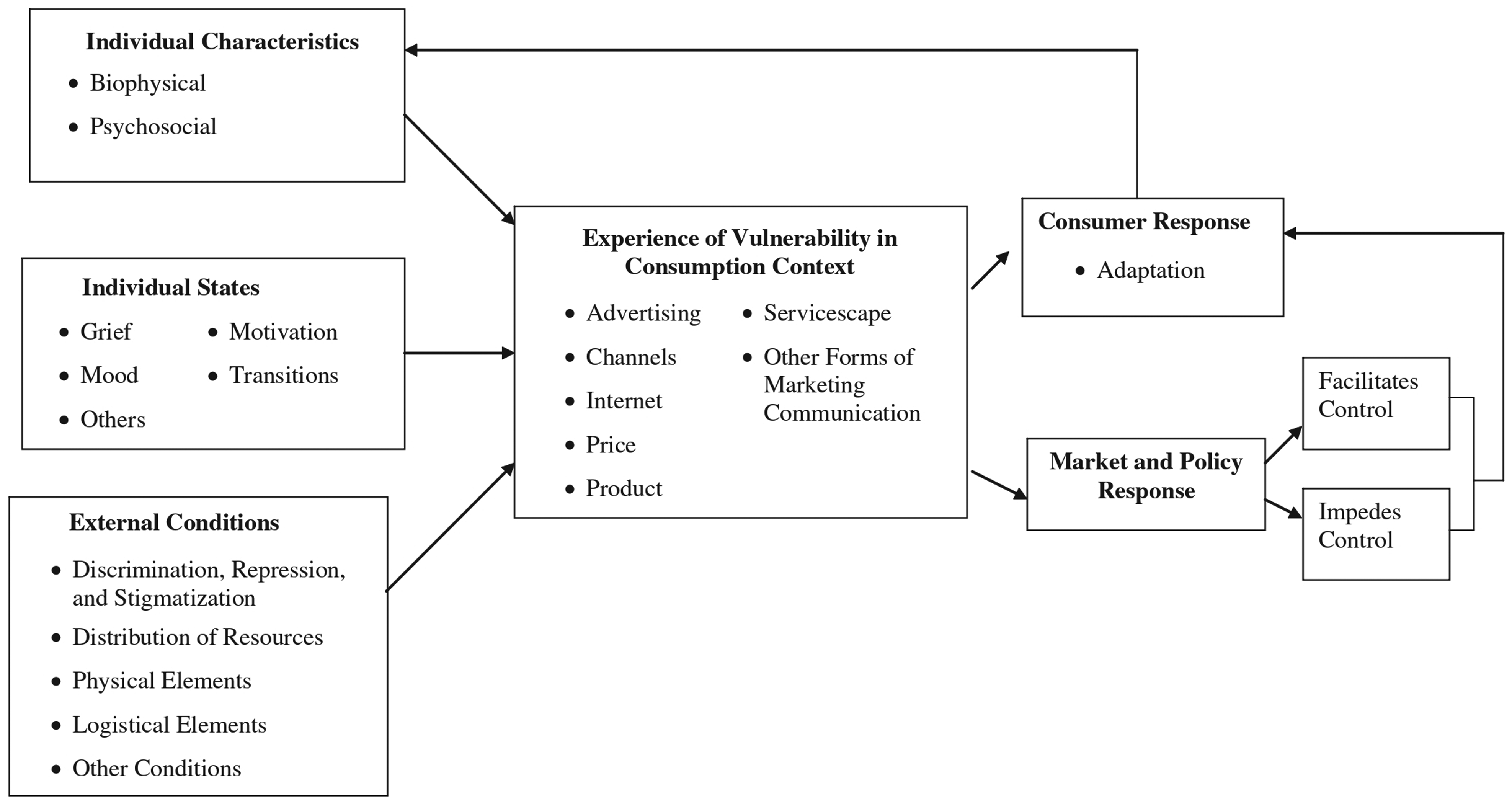
Conceptual model by Baker, Gentry, and Rittenburg (2005).
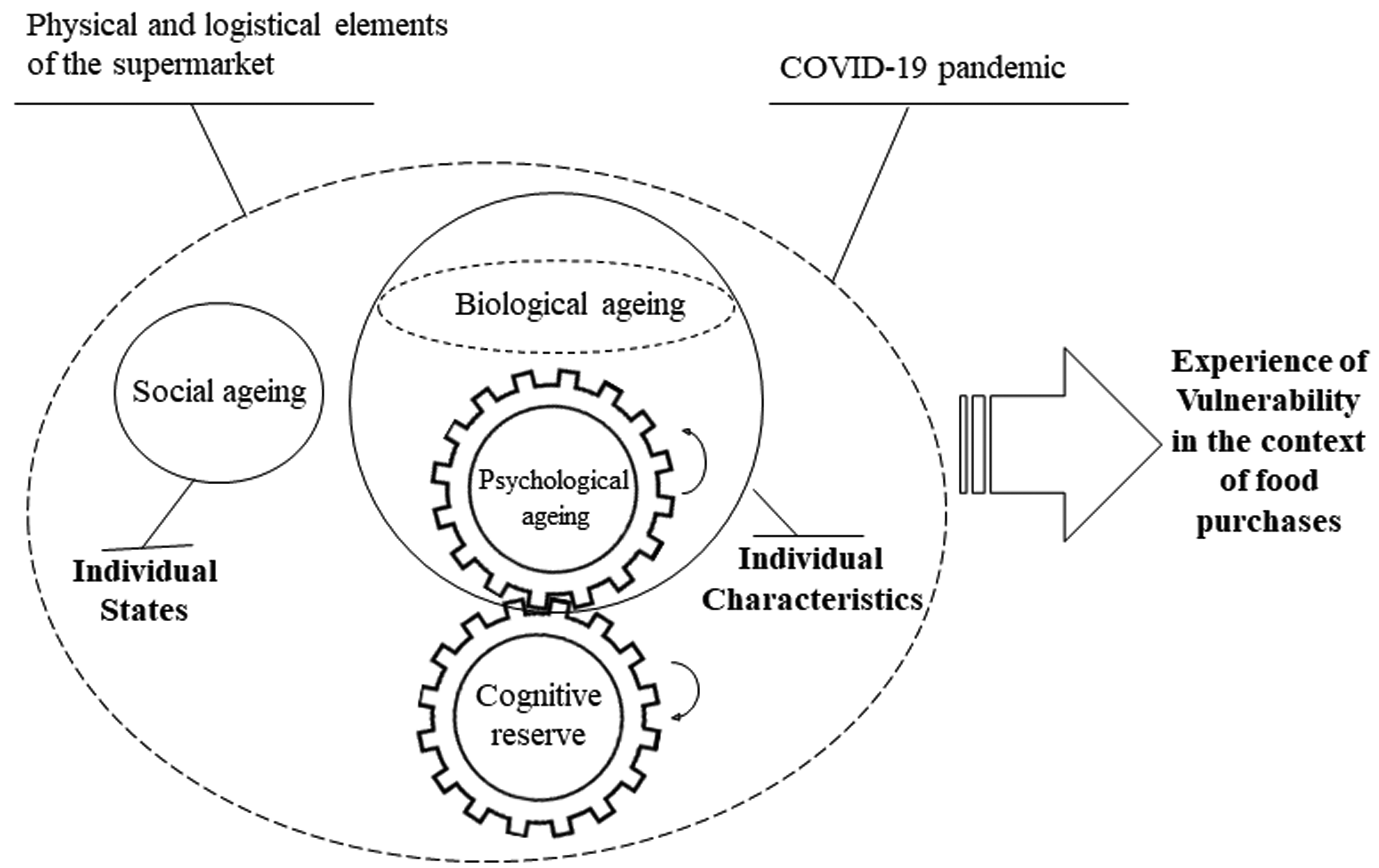
Theoretical research scheme.
Baker, Gentry, and Rittenburg (2005) initially split internal conditions between individual characteristics and states. Within the individual characteristics, the biophysical ones incorporate biological and physiological aspects of the individual, and the so-called psychosocial ones contemplate the psychological and sociological reasons for the behavior. Individual states also influence behavior within a consumption context. During grief, sadness, and transitions in life, consumers are more likely to face vulnerabilities (Baker, Gentry, and Rittenburg 2005).
In the present research, the aging process dimensions will represent the internal conditions predicted in the original model (i.e., biological, psychological, and social aging). In order to function as individual characteristics, the biological and psychological aging constructs were adopted due to their proximity. The biological perspective involves the weakening and death of body cells that alter the individual’s functional ability to hear, see, and walk. It is an irreversible process of age-related decline (Ahmad 2002). In the context of food, the literature states that the decrease in vision with advancing age can contribute to vulnerability. Reduced font packaging makes information such as storage instructions, cooking instructions, expiration date, ingredients, and nutritional content illegible. When this happens, the preparation method can be impaired, potentially increasing the risk of older adults getting food poisoning (Ford, Trott, and Simms 2016; Omar, Tjandra, and Ensor 2014). Another crucial biological change is decreasing muscle strength (Sudbury-Riley 2014). Older people who show this decline may experience difficulties opening some packaged foods, favoring the incidence of vulnerability. In the study by Świda et al. (2019), 35.83% of older adults expressed problems unlocking food packages with tight lids, rings, or seals.
Psychological aging measures the change in cognition and personality of individuals. It involves age-related declines in memory, problem-solving, and reasoning (Alhammadi, Santos-Roldán, and Cabeza-Ramírez 2021; Moschis 2012). It can affect the ability of older adults to process the information on the packaging, increasing the propensity to be vulnerable when consuming food products (Ford, Trott, and Simms 2016). To avoid difficulties like these, some continue to consume products similar to those chosen in previous years, subtly adjusting to changing nutritional requirements (Pettigrew et al. 2017).
On the other hand, the changes in old age are not uniform. Aging trajectories vary depending on the individual’s lifestyle and genetic makeup. Olivieri et al. (2017) believe that the interaction between these two factors influences the possibility of reaching the limit of human life expectancy. It expects that certain cognitive functions reduce differently from person to person (Gonzalez-Aguilar and Grasso 2018). In this sense, we consider the cognitive reserve construct since its measurement is directly linked to the differentiation of older adults in the frequency of stimulating activities throughout life. The less active the person is, the lower the cognitive reserve, so the lower the ability to deal with the neurodegenerative aging process (León, García-García, and Roldán-Tapia 2014). Therefore, this issue must be considered when describing the research participants.
This study adopts social aging as an individual state because of its relationship with the transitions in older adults’ lives. It predicts changes in the relationships of individuals within their social groups (Ahmad 2002). They assume roles associated with old age as retirees, parents, widows, and carriers of the empty nest syndrome (Moschis 2012). Therefore, meals can be less pleasant experiences than other life phases. The mere presence of the children at home placed food consumption in a position of great significance, functioning as an opportunity to relate to the family (Ford, Trott, and Simms 2019). In short, growing food apathy can be worrisome, given the increased susceptibility to malnutrition (Pettigrew et al. 2017).
In addition to the internal conditions, the original model by Baker, Gentry, and Rittenburg (2005) also predicts several external conditions that can contribute to consumer vulnerability despite being out of their control. They are (1) discrimination, repression, and stigma concerning age, religion, race, and others. In our study, we specifically considered ageism. For Butler (1980), ageism means stereotyping and discriminating against individuals only because of their advanced age; (2) physical and logistical elements of the market, such as places that are not adequately designed to accommodate people with disabilities or infirmities; (3) resource distribution; and (4) other environmental conditions such as social, economic, and political unrest. Finally, many contextual factors may or may not make a consumer experience vulnerability: price, lighting, variety, and interaction with the service provider (Baker, Gentry, and Rittenburg 2005).
We conduct a new adaptation of the external conditions capable of ravaging older adults in the food context. We start with the physical and logistical elements of the supermarket that may not be adequately designed to receive older adults. Among the complaints, it is possible to mention irregular corridors (wide or narrow) with pillars containing hanging promotional items that can cause collision incidents (Celeski et al. 2017). Another issue of discontent is inadequate shelf height, where products are positioned too high or too low for their height, preventing compliance with their consumption goals (Alhammadi, Santos-Roldán, and Cabeza-Ramírez 2021; Lesakova 2016; Yalcin Usal and Evcil 2022).
In addition to these elements, the COVID-19 pandemic promoted socioeconomic turmoil, creating new consumer vulnerabilities and exacerbating the existing ones (Scott et al. 2020). The eminent recommendations of social distance to avoid contamination by the virus exposed people to other modalities of purchases than in person. However, once the older group recognizes difficulties in these alternative modalities and feels unable to achieve their purchase goals, vulnerability comes to the fore, and they may choose to continue shopping in person. That occurs because they recognize opportunities to exercise individualized choices in this modality and maintain cognitive skills (Bjørner et al. 2018).
In short, the aging process in its entirety acts as an internal condition that, combined with external conditions, can contribute to the consumer’s experience of vulnerability in the context of food purchase. The intention here is to explore the particularities of older adults to capture their level of transitory vulnerability, varying among consumers and situations.
Method
This qualitative approach research is exploratory and divided into two stages. The first stage focused on identifying potential research participants, measuring their cognitive reserves, and inviting them to participate voluntarily in stage 2 with the interviews. Through the first stage, it was possible to protect the quality of the research and avoid: 1) framing the person as an older adult without recognizing themselves as such; 2) the statement that they are not shopping in person during the COVID-19 pandemic when in fact they were, as a matter of social desirability; 3) include individuals who did not fit into the independence assumption provided for the research.
The collection instrument chosen for step 1 was an online structured questionnaire. It contained filter questions that allowed only people aged 60 years or older who purchased food in supermarkets in person to proceed to the other questions. Thus, only 59 valid responses remained from people who fulfilled these two requirements. The other questions of the instrument sought to measure the Cognitive Reserve. The Cognitive Reserve Scale (CRS) by León, García-García, and Roldán-Tapia (2014) enabled raising the frequency of cognitively stimulating activities recorded throughout a person’s life. Its 24 items distributed among four categories – activities of daily living, training information, hobbies, and social life – were subjected to back-translation (Brislin 1970). Each item should be answered three times, considering that the CRS is segmented into three different stages of life: young adulthood (18–35 years), adulthood (36–59 years), and late adulthood (≥60 years). The questionnaire invited the older adults to mark how often they perform these activities in the current stage of life and the previous ones. The original scale by León, García-García, and Roldán-Tapia (2014) is a Likert-type ranging from 0 = never to 4 = three or more times a week, whenever I have the opportunity.
The instrument also included socioeconomic status data, such as participants’ age, gender, marital status, and federative unit (Brazilian state). At the end of the questionnaire, we provided a space to invite them to collaborate voluntarily in stage 2 of the research. If the participant was interested in joining, they should only inform their first name, telephone number, and preferred time to be contacted and receive further explanations about the research’s next steps. Participants were recruited by convenience, using the snowball method, following the hard-to-reach sample instructions by Sadler et al. (2010).
After stage 1 data collection, obtaining the respondents’ Cognitive Reserve scores was possible. According to León, García-García, and Roldán-Tapia (2016), the total CRS score and the partial scores for each age stage result from the sum of the raw scores, which can vary between 0 and 288 points. Furthermore, the median of the CRS total score should classify participants into high or low cognitive reserve. The median found in Spain by León, García-García, and Roldán-Tapia (2016) equals 154.5 points. In other words, the reserve was considered high when the individual’s score exceeded this value. The present research adopted this cutting score as a selection criterion to be invited to step 2 of the study.
In the second stage, the semi-structured interview via telephone was considered the most coherent, given the pandemic scenario at the time of data collection and the sample profile (older people). We organized the questions using imaginative techniques from psychology to help respondents remember their experiences while shopping for food. According to Stevens (1977), such tools invite participants to focus their attention in specific directions to become aware of their own experiences. During pre-tests of the script with older adults, we considered that this approach produced more complete answers than other tools.
With the script in hand, we contacted those interested in participating in stage 2 through the information voluntarily provided in the stage 1 questionnaire. However, we did not contact all interested parties. We outlined the following inclusion criteria: 1) age equal to or higher than 60 years (Brasil 1994), who consider themselves older adults; 2) purchaser of food in person; 3) identified as an independent person; 4) expressed interest in participating in step 2, leaving a valid contact number. For this research, the older person is independent when having a cognitive reserve score close to or higher than the median found by León, García-García, and Roldán-Tapia (2016). Those who did not meet this criterion were more likely to face brain impairment deficiently, presenting more severe clinical manifestations; therefore, they were excluded from the stage 2 sample.
It is worth mentioning that this research had its ethical procedures analyzed and approved by an independent ethical review committee, the Brazilian CEP/CONEP platform. The Free and Informed Consent Term was available online to avoid contagion risks during the COVID-19 pandemic. The participants were free to choose the date and time for the interview according to their availability. Finally, we ensure the confidentiality, privacy, and protection of the authorized audio recorded so that no information would be used to prejudice participants.
We interviewed seventeen older adults who fit the pre-established criteria by telephone: ten men and seven women. Notably, the number of respondents followed the theoretical saturation criterion (Falqueto, Hoffmann, and Farias 2018; Guest, Bunce, and Johnson 2006) and is within the expected range according to the review by Hennink and Kaiser (2022). Specifically, we reached saturation in the fourteenth interview but carried out three more interviews to confirm saturation. Among the participants, ten were residents of the Federal District. The other seven reported living in different federative units: Bahia, Ceará, Paraná, Rio de Janeiro, São Paulo, and Tocantins. Ages ranged from 60 to 91 years old.
After recording and transcribing the interviews, we applied content analysis with the help of the IRAMUTEQ software. Among the quality manuals available about content analysis (Elo and Kyngäs 2008; Krippendorff 2018), we chose Bardin’s manual (2015) for its suitability to the research objective. Furthermore, Bardin’s manual and the IRAMUTEQ software have already been used together by other studies previously (Costa, Luz, and Wegner 2022; Silva et al. 2021b), leading our choice. In interface with the R software, IRAMUTEQ program enables a statistical analysis of the textual corpus, using the word as a recording unit. In turn, the relevance of a word will increase with the frequency of its appearance (Sousa et al. 2020).
The first content analysis stage involves the material’s organization (Bardin 2015). The corpus of the present research was constituted by pertinent testimonies of the interviewees, disregarding what extrapolated the objective that motivated the analysis.
Afterward, we began the material exploration stage, where Bardin (2015) foresees data coding and categorization. The Descending Hierarchical Classification (DHC) was operationalized through the IRAMUTEQ software to form classes arising from the union of two types of words: similar and distinct from the text segments of the other classes. Verbs, nouns, adjectives, and compound words were chosen as active forms. The remaining words were considered supplementary. The value of χ2 represents how much the terms are associated with each class. Then, verifying the Correspondence Factor Analysis (CFA), a graphical representation in the Cartesian plane of the words associated with each class became possible. We opt to keep the Portuguese terms for the IRAMUTEQ analysis due to the richness inherent to the context of each language.
Findings and Discussion
IRAMUTEQ presents the percentage of the material retained in DHC. Camargo and Justo (2018) recommend a value above 75% to indicate the homogeneity of the corpus. Of a total of 935 text segments, 897 were classified, representing the use of 95.94%. Figure 3 shows that the main words were divided into seven classes named as 1) supermarket environment elements (14.7%), 2) change of habits during the COVID-19 pandemic (10.7%), 3) reduction of commensality (15.2%), 4) excessive portions problem (11.2%), 5) predisposition to repeat a behavior (16.2%), 6) alternative purchase methods during the COVID-19 pandemic (15.4%), and 7) labeling and packaging problems (16.7%).
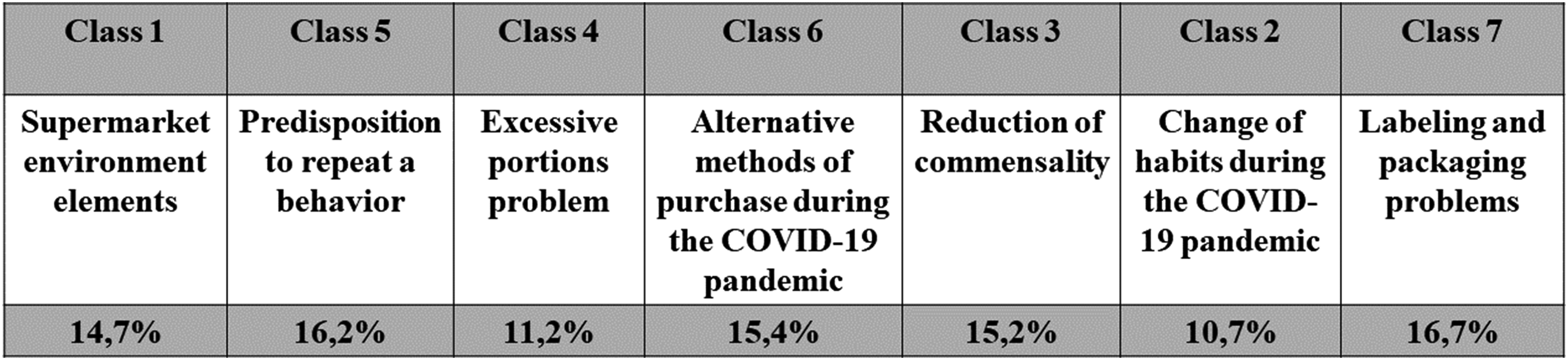
Descending Hierarchical Classification (DHC).
Class 1 - supermarket environment elements - represents the physical elements of the supermarket recognized by the participants as antecedents of vulnerability experiences. The words employee (χ² = 134.04), corridor (χ² = 116.09), shelf (χ² = 102.48), and aisle signs (χ² = 98.34) stand out. Lack of employees or their negligence, disorganized shelves, and inadequate signage can further impair the older individual’s spatial orientation in the environment, generating frustration in locating/accessing products. In other words, the inadequacy of the physical elements of the supermarket environment seems to reinforce the impact of psychological aging on the vulnerability of older adults. “As soon as I changed supermarkets, I noticed that they had different layouts. The form of organization is different. So I was kind of lost. I couldn't find some food products and had to ask someone. The employees provided me with standard service. Every customer likes to be distinguished. This is unconscious. So, when you receive a regular service, that service is not good. When I asked where certain food products were, the employee just indicated the corridor. The employee could add information and be more careful with the person in doubt. If he took me out into the corridor, it would be an excellent service. The supermarket could improve the aisle signs a little.” (interviewee 15, male, 61). “My problem is picking up food products from the bottom shelf because I have a herniated disc. Staying in a squatting position is difficult for me. Sometimes, the brand I want is not only on the lower shelf but also at the back. In that case, it becomes even more challenging. Typically, I get a little angry because it could be more accessible. Accessibility could be improved if it were closer and higher.” (interviewee 15, male, 61). “They have placed the shelves so close together that it is impossible to pass through. The supermarket corridor is narrow, and we might collide with someone else. It has happened to me before. When the person is going to enter that space, I must leave.” (interviewee 3, female, 62). “The most interesting food products are at the end, forcing you to browse all the shelves. We cannot enter the supermarket to buy just one item because, by the time we reach the end, we have already picked up 3, 4, or 5 food products.” (interviewee 10, male, 62). “I am practicing social isolation. At first, it was hard to get used to, but now we are already adapting. I only go out for what is necessary. Our freedom changed. I'm not someone who goes out often, but the impossibility of going out complicates things a bit. We get a little depressed because of that. I used to go to the supermarket between 6 and 7am. That was the designated time for seniors, and I felt more comfortable.” (interviewee 9, male, 67) “I live alone. What has changed substantially is that my children live elsewhere. I found myself unable to see anyone from one moment to the next. The issue of physical contact has been challenging. It doesn't necessarily make me depressed, but I'm weary of not having that option or others, such as going out and sharing meals with my friends.” (interviewee 5, female, 66). “I usually eat alone at my meals. In the past, meals were shared with the family until my children moved away. I became a widow when they were still young. Each of my children was looking for his life. There was no way. I ended up on my own. I always say that I taught my children to flap their wings, but I didn't teach them that they could flap their wings closer. My children must seek happiness and personal fulfillment, but I think they've gone too far.” (interviewee 5, female, 66) “There are food products we want to buy a small portion, and there is no way to do so. I feel completely neglected, and I find myself complaining about it too often. I need wheat flour to make pancakes in the morning, but I'm forced to purchase a large pack, which I don’t want to. This flour will spoil because it’s only available in a large portion. I have a lot of discomfort and grievances about this. This issue affects me and everyone living alone or with a partner. It is disrespectful to those who live alone.” (interviewee 4, male, 71). “Buying a family-size product for a tiny family of two isn't worth it” (interviewee 6, female, 66)
Those older people who live alone or with few people have difficulty finding small portions (Rahman and Yu 2019). When it is possible to find small amounts, they appear budgeted at a higher price per unit of volume than family-size foods. It is a way of taking economic advantage of those seeking alternatives suited to their needs. These findings corroborate the study by Omar, Tjandra, and Ensor (2014) applied to older adults living in Scotland. The prices of individual portions in this country are also higher, giving the impression that supermarkets prioritize families over those who live alone. “I'd prefer to pay a little more and enjoy everything rather than buying it cheaper and throwing almost everything away because it’s spoiled. I feel disrespected when I see family-size products.” (interviewee 5, female, 66). “What can make it difficult is that the market has several food products from the same brand. If we're going to conduct a chemical evaluation or analysis, they are the same food products. I need to determine which of these two food products I will purchase. Sometimes, the variety can be confusing. Take olive oil, for example. There are several oils from the same brand, each with a different color label. I'm going to read the label letter by letter. All of them are the same. It makes us wonder why they have different colors.” (interviewee 4, male, 71). “I believe purchasing the same well-known brand provides security because we've been consuming it for so long without any issues. You feel more relaxed consuming a brand we're already familiar with.” (interviewee 15, male, 61). “I usually try to buy the same brand all the time, but when the supermarket notices that certain food products are selling well, they raise the prices. It makes me feel frustrated and powerless as it becomes apparent that I cannot change this supermarket practice.” (interviewee 2, male, 63). “I'm a bit of a traditionalist. I really enjoy cream crackers. I always buy the same brand, only switching to a different one if there is a significant change in the composition. I usually buy these crackers from a particular brand. From one time to another, the taste was not good. Something was wrong. They had changed the recipe.” (interviewee 10, male, 62).
We observed that experimenting with alternative buying ways revealed vulnerability situations related to frustration with the order received (i.e., delivery errors, delays, food products missing or looking different than expected), economic damages in a highly unfavorable time, and limited choices. Some respondents did not even have the opportunity to protect themselves from this highly transmissible disease. The lack of internet connection or digital illiteracy prevented access to the online modality. Ayalon et al. (2021) reinforce that these limitations can cause depression since they impede access to goods and services.
Digital exclusion seems frequent among older adults due to the lack of knowledge about handling technological services (Holgersson, Kävrestad, and Nohlberg 2021). Amaral and Daniel (2016) mention that increasing age may be associated with decreased access to the internet and limited use. Nevertheless, it is essential to recognize that not all older adults experience such digital exclusion, as the behavior of older adults regarding the internet depends on numerous other factors, such as socioeconomic status, education, and geographic location (Amaral and Daniel 2016). “I feel constrained with these phone purchases. It seems to limit your freedom of choice. I don't buy online because I don't have so much time and I don't know how to use a computer.” (interviewee 6, female, 66). “I have been buying food products in person because I dońt have confidence in choosing some products. I have yogurt daily in the morning. Yogurt has a short shelf life. If I ask the supermarket to deliver, they will give me a product within the expiration date, but I need it to have a longer expiration date. If I want to buy for a month, I can't do it online. When they deliver it, they won't have that concern. So, I prefer to go there in person. I already bought frozen food products that arrived here defrosted. I felt bad because I didn't know if I could freeze again. When you buy frozen food products and thaw them, you must not freeze them again. We learn this. So, when I must buy frozen foods, I go to the supermarket and buy them.” (interviewee 4, male, 71). “Going to the supermarket is very important. It improves the head. Those 20 min in the supermarket buying groceries are like therapy. It’s a way to have fun. The market is how I spend my time. So, I need it.” (interviewee 1, male, 60). “In the case of natural products, I always like to choose. When you ask for delivery, you are outsourcing the choice. Food products don't always come the way you like them. I like to shop in person” (interviewee 15, male, 61). “Online shopping is not an option because of the cases I see on television. I've seen several cases. A citizen made an order over the Internet, and they sent a brick. Well, that’s what I saw on television. In other cases, they send packages with nothing [inside]. So, I get terrified and don't like shopping online. I don't know how to use the Internet either.” (interviewee 11, female, 91)
The hand strength decline makes older adults more susceptible to frustration when opening foods preserved in glass, bagged, or canned, with screw caps, sealing clasps, and rings. Świda et al. (2019) emphasized that these materials are often tight to open. To avoid this frustration, the interviewees started to employ attempts that could cause accidents and waste and reinforce the stereotype of the dependent older adult. Ultimately, older adults perceive their current physical condition as excluding them from handling products. According to Sudbury-Riley (2014), the difficulties arising from interactions with packaging can lead older people to change brands. Our participants demonstrated this intention, but the lack of alternatives compatible with their expectations and needs in the Brazilian market prevented it. This situation implies a state of impotence, as Baker, Gentry, and Rittenburg (2005) stipulate, to define vulnerability. “I have a problem in my hand called carpal tunnel syndrome. It’s the beginning of arthrosis. A kind of inflammation that is chronic. So, I have difficulty opening a jar, for example. I like palm hearts. The pot of palm heart is usually difficult to open. Bottles of grape juice I consume are also difficult to open. Sometimes they're so tight that I can't open them. I must ask for help or get a tool to get it open. If one of my sons is around, I ask him. Otherwise, I pick up a tool to get it open. It is frustrating to ask for help in this task. I think the industry could be more careful because, just like I have this problem, many people must have it too. Mainly, older people have these diseases. They make it quite difficult.” (interviewee 15, male, 61). “I need the help of a knife to open it. For example, canning with a vacuum lid. You can't unscrew the lid if you don't stick a knife in to open it. Sometimes, it’s even dangerous. I keep buying because that’s the only way it sells” (interviewee 9, male, 67). “I can't read the information even with glasses. Sometimes it takes much effort. For example, I'm going to buy a cappuccino. It’s impossible to read the words on that package. They put color in between. They mix letters with colors. They put a mixture of colors, for example, orange and blue, in the middle of the letters. You can't read at all. It doesn't have a nice contrast to read. It’s impossible. Sometimes, I give up buying certain food products. I get upset. It looks like it’s a way to hide information from the consumer. If they wanted people to read it, it was much more visible. It seems that they do not think about the older adults or people who have difficulty seeing well.”(interviewee 6, female, 66) “What motivates me to look for this information is health. I can't read easily. The letters are too small. This isn't good because reading and understanding what is written takes a long time. There are many abbreviations that we don't understand. Sometimes it has many technical terms we don't know either. We have difficulty. Then we get a little upset. I get upset and think: Why don't I understand?” (interviewee 2, male, 63)
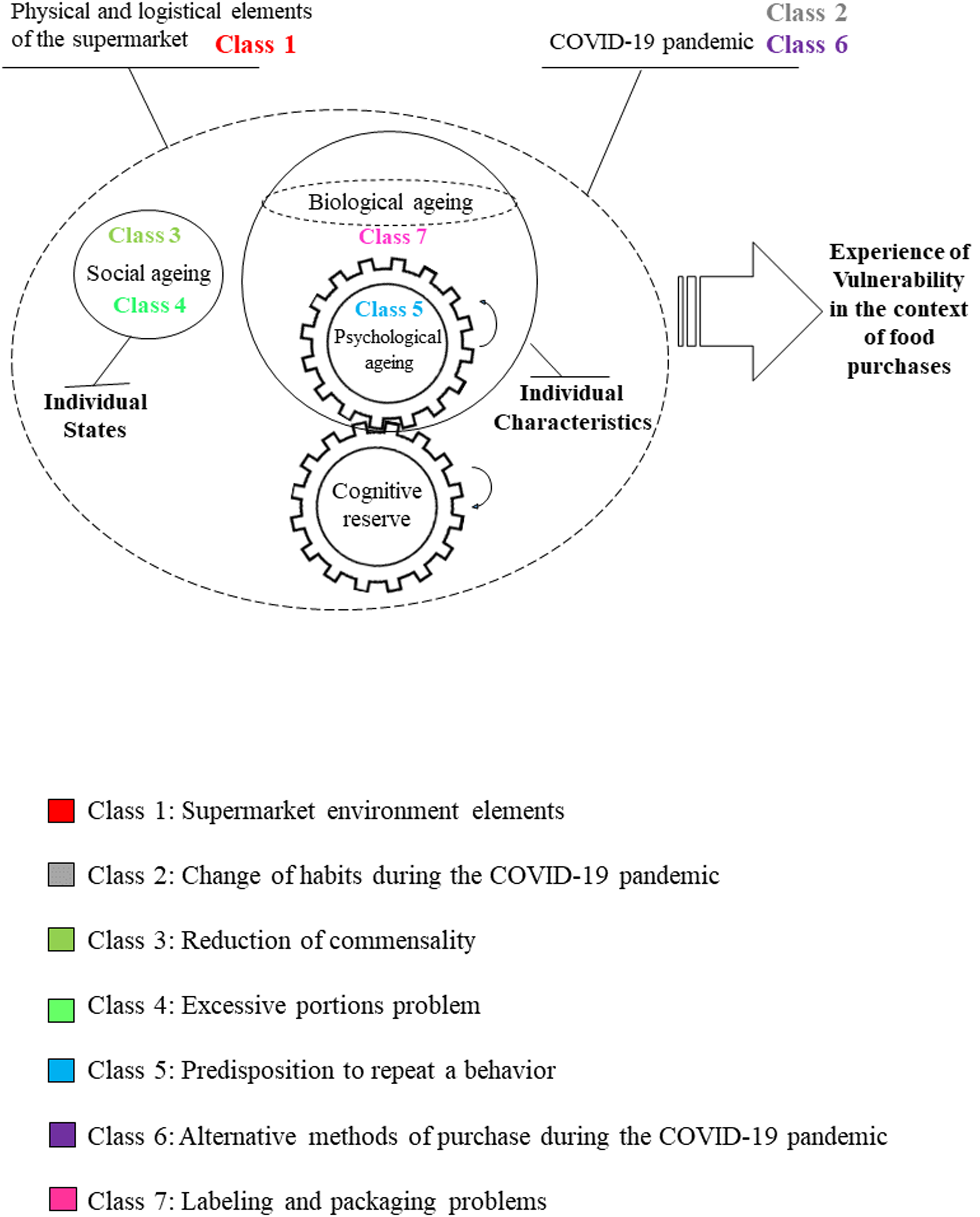
Theoretical scheme adapted according to the results.
Regarding individual characteristics, we position class 7 between biological and psychological aging quadrants because the current condition of labels and packaging excludes older adults from fully handling and understanding information. This condition subsidizes unfavorable choices. On the other hand, class 5 appears entirely associated with psychological aging because the older group is exposed to a wide variety of food products, has difficulty processing them, and chooses to repeat previous choices, generating vulnerability.
In addition, two classes associated with the narratives of social aging concern living alone, suffering from empty nest syndrome, living with fewer people at home, or suffering from widowhood/grief. Class 3 emphasizes how much these social transitions can reduce the pleasure arising from mealtimes and prevent the maximization of well-being. Then, class 4 shows that food portions also expose older individuals to vulnerability because they are incompatible with the social changes experienced by them.
The CFA generated by the software subsidizes these choices, as shown in Figure 5. Words are distributed in three distinct regions. In pink, class 7 – Labeling and packaging problem– is isolated from classes 3 – Reduction of commensality – and 2 – Change of habits during the COVID-19 pandemic. Naturally, these last two classes are together in the same quadrant because the COVID-19 pandemic produced consequences on commensality, and the emotional overload of isolation caused the change in older adults’ habits. Then, classes 4, 5, and 6 appear in the same quadrant. The last one is closer to class 2 because both have the same pandemic theme. Finally, class 1 – Supermarket environment elements –appears more isolated since it is the only class dealing with the physical components within the supermarket environment.
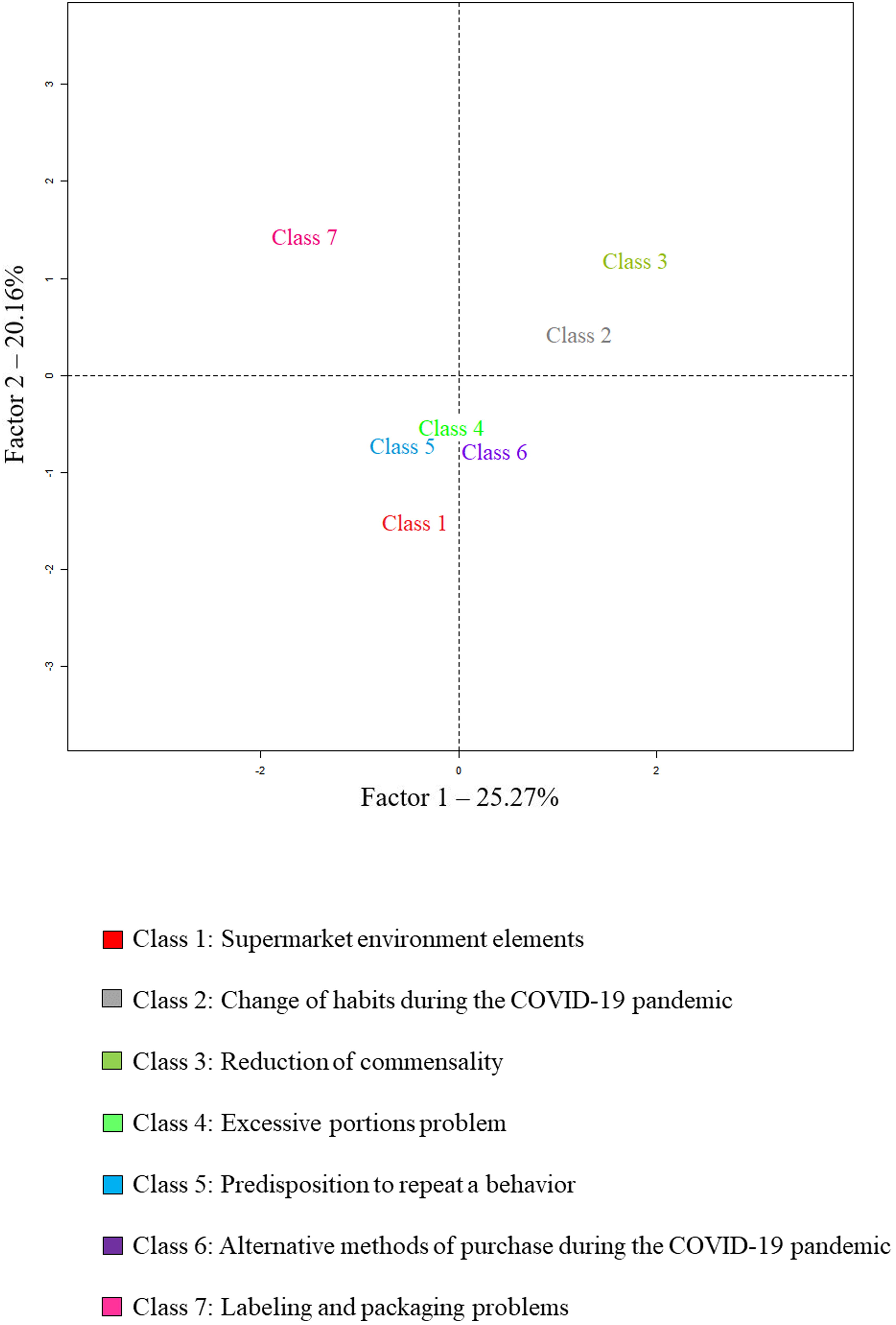
Representation of Correspondence Factor Analysis (CFA).
Conclusions
This research has several contributions, among those of a theoretical nature, expanding the study of vulnerable populations. This theme is still flourishing, especially if the focus is on the older consumer. Hence, just a few publications referenced here treat older adults in the context of food from the theoretical perspective of vulnerability. Another theoretical contribution was the adaptation of the conceptual model by Baker, Gentry, and Rittenburg (2005) and the proposition of an empirical model (Figure 4) to be tested in further studies.
Regarding managerial contributions, it is possible to outline some opportunities for companies willing to mitigate experiences of vulnerability. Thus, we suggest investing in the packaging of food products, including prioritizing contrasting colors, letters with larger fonts, accessible opening alternatives, different portion volumes for the same type of food, and more democratic language that favors honest communication about the accurate nutritional content of the food and its differential. The company that pays attention to these issues will have a differential with the potential to develop the loyalty of the increasingly older adults and other groups with similar frustrations. However, this differential may not last long given the existence of brand confusion where the leader brand is imitated by its competitors (Foxman, Berger, and Cote 1992). Despite being a topic to be considered by companies, brand confusion can be advantageous for consumers, in this case, because all companies will start to pay attention to contemplating older adults’ needs in their packaging. After all, everyone benefits from improved packaging for seniors.
As a social contribution, the present research gives visibility and inclusion to older adults. This group is often neglected or treated as if chronological age were a determinant of behavior. However, each one has self-individuality and a life trajectory. Recognizing that business models may not provide the proper space to accommodate their needs is an initial step toward promoting well-being and transformative market actions.
It is possible to draw further contributions from our research considering the macromarketing principle that the actions of market participants have consequences that go beyond the company’s boundaries. These consequences can be positive or negative (Mittelstaedt, Kilbourne, and Mittelstaedt 2006). The present research revealed negative effects experienced by older consumers whose interests were not considered by companies. Such effects can be measured by their impact on consumers’ well-being (Mittelstaedt, Kilbourne, and Mittelstaedt 2006). For example, the practice of eating together, despite being an effective indicator of the quality of life for this population, is increasingly less present in the daily lives of older people, according to our findings.
Furthermore, the results revealed accessibility problems in the supermarket environment, the configuration of packaging, and alternative purchasing methods during the pandemic. According to Ishikawa et al. (2018), shopping is an active behavior among older adults, and the pleasure derived from food selection helps to improve the quality of life. Maintaining independence in their daily activities is fundamental for older adults and is associated with fewer health problems (Ishikawa et al. 2017). Therefore, the findings of this research are significant because they reveal the aspects that require changes to properly improve the quality of life of older adults and guarantee their safe access to quality food. Finally, macromarketing emphasizes cultural, social, and political aspects as antecedents of heterogeneity of needs (Mittelstaedt, Kilbourne, and Mittelstaedt 2006). This research considered the heterogeneity of individuals through questions related to cognitive reserve and captured the eccentricity of the pandemic period that generated countless behavioral, social, and political changes. In the future, other pandemic periods may be capable of generating such instability, and this research can contribute to their analysis.
Considering the limitations of the present study, it is notable that the online application of the questionnaire may have imposed difficulties for those older adults unfamiliar with the technology. However, this type of application was essential during the pandemic. In addition, how the scale points were written and the requirement to answer the same item for each stage of life are factors that together may have made the questionnaire more extensive and demanding too much from the participant’s memory. Another possibility is that some participants may have withheld important information during the interview precisely because it involved verbalizing experiences of vulnerability. Although we take all safety procedures to make the participant comfortable, exposing weaknesses and insecurities is not always easy due to the protective attempt to maintain appearances. They are even more dealing with a stigmatized group such as the older adults.
Concerning the research agenda, we recommend investigating the responses of older consumers to face and protect against harmful market relations, as predicted by Baker, Gentry, and Rittenburg (2005) and not covered by this research. The next suggestion foresees that this same theoretical framework should be explored and adapted to other shopping contexts that may promote vulnerability among older people, such as restaurants and different retail environments. It is also possible to extend this model to other pandemic contexts or climate events with the potential to emerge in the future and negatively impact the shopping experiences of seniors, similar to COVID-19. Furthermore, we encourage future research to explore companies that exclusively believe in the potential of younger consumers to enhance their brand. As a result, this companies deliberately make it difficult for older adults to access their store environment and handle their products, aiming to exclude them. Finally, future research would benefit from the results collected in the present study, testing the relationships of the empirical model proposed through correlational or experimental studies.
Footnotes
Acknowledgments
The authors thank the Brazilian Foundation CAPES (Coordenação de Aperfeiçoamento de Pessoal de Nível Superior) for its granting support. Special thanks to professors Eluiza Alberto de Morais Watanabe, Karim Marini Thomé, and Leides Barroso de Azevedo Moura for their contributions during the work development.
Associate Editor
Michael Lee
Declaration of Conflicting Interests
The author(s) declared no potential conflicts of interest with respect to the research, authorship, and/or publication of this article.
Funding
The author(s) received no financial support for the research, authorship, and/or publication of this article
