




Abstract
Toxic practices are anti-social interactions that result in a breakdown of communication between consumers. We draw on in-depth interviews, netnography, and insider experience in the context of online gaming to describe the technological configurations that embed the neoliberal logics of competitiveness, individual responsibilization, and entrepreneurialism. Taken together, these embedded logics craft the toxic consumer subject as the dominant way of inhabiting online spaces. Overall, this study illustrates how technocultures align consumer subjectivity to market logics that erode consumer wellbeing.
Introduction
Toxic practices are emerging as a systemic issue within technocultures. An umbrella term within the esports and online gaming literature, toxic practices are defined as anti-social interactions such as flaming, trolling, and griefing that result in a breakdown of communication between consumers (Adinolf and Türkay 2018; Kordyaka, Jahn, and Niehaves 2020; Neto, Yokoyama, and Becker 2017). Asking another player to commit suicide, making racist or sexist remarks, sabotaging teammates, and using profane language are all examples of toxic practices within online gaming. Toxic practices can have negative impacts on consumer wellbeing, including emotional and psychological harm, distress, and anxiety (Areni 2021; Barasch, Zauberman, and Diehl 2018; Ewing, Wagstaff, and Powell 2013; Grandprey-Shores et al. 2014; Rosario, Russell, and Shanahan 2022). These practices emerge in light of “the various identities, practices, values, rituals, hierarchies, and other sources and structures of meanings that are influenced, created by, or expressed through technology consumption” (Kozinets 2019, p. 621)—termed as technocultures. Considering 68% of online gamers have experienced toxic practices themselves (Unity 2021), macromarketers need to be aware of how these practices that harm consumer wellbeing are ingrained and sustained. As Kravets notes, core macromarketing concerns such as injustice are “bound up with technology” (Kravets 2017, p. 331). The urgency of this issue is heightened when we consider that the purveyors and victims of toxic practices are vulnerable consumers such as teenagers whose day-to-day lives are dominated by technocultures. Thus, this study seeks to understand how toxic practices become endemic and normalized within technology-mediated interactions through the context of online gaming.
While the extant literature on toxic practices provides insight into individual perspectives (Adinolf and Türkay 2018; Neto, Yokoyama, and Becker 2017; Türkay et al. 2020), our paper shifts to understand how the neoliberal logics immanent in technocultural configurations scaffold the toxic consumer subject. Our analysis interrogates the broader societal logics that have shaped the toxic consumer subject, defined in this paper as an individual predisposed to harmful interactions with other users in technocultural spaces. Specifically, we describe three technological configurations that exacerbate neoliberal logics and normalize toxic practices as a part of online human interaction. Because of the neoliberal logics of competition, individual responsibilization, and entrepreneurialism, the practices that we define as toxicity become intelligible, excusable, and amplified within online spaces. Firstly, as competition becomes the hegemonic mindset in the field, alternative mindsets that may privilege enjoyment and social connection are disavowed in favor of competition and the instrumentalization of play. Under this dominant logic, toxicity becomes an intelligible response toward others who jeopardize the individual's goals. Secondly, when individuals are framed as supremely agentic and held responsible for their own experiences, it follows that any individual having a negative experience is at fault. The logic of individual responsibilization excuses toxicity as an acceptable response toward those that fail to protect themselves from toxic practices or conform with the requirements of the field. Individual responsibilization encourages victim blaming—a commonly deployed excuse for toxicity. Finally, toxicity becomes a spectacle under neoliberal logics and the economy of attention (Franck 2019), where drama and conflict provide sharable content for entrepreneurial individuals to monetize. Against this backdrop, toxic interactions are readily amplified through algorithms promoting content that monetizes conflict (Ulver 2022). In short, neoliberal ideology scaffolds toxic practices.
Our emphasis on consumer subjectivity draws on an established stream of literature which illustrates how societal structures shape beliefs, values, and practices resulting in consumers that adhere to dominant marketplace logics (Kravets, Preece, and Maclaran 2020; Meek et al. 2019; Sredl 2018; Yngfalk and Yngfalk 2015). These logics are defined within consumer research as the “socially constructed, historical pattern of material practices, assumptions, values, beliefs and rules” (Thornton and Ocasio 1999, p. 804) that organize and structure the way consumers think and behave (Ertimur and Coskuner-Balli 2015). Dominant marketplace logics can shape consumer subjectivity in undesirable ways, for example, by encouraging anti-social consumption practices (Fullerton and Punj 1998; Martin, Lindberg, and Fitchett 2019) or exacerbating feelings of anxiety and stress within consumers (Yngfalk and Yngfalk 2015). These marketplace logics can become embedded into technology and shape the consumer subject (Kozinets, Patteron, and Ashman 2017).
Our exploration of the configurations that sustain and normalize the toxic consumer subject emerged through a qualitative approach comprised of insider experience (Blythe et al. 2013; Gowricharn 2019; Riemer 1977), in-depth interviews, and netnography (Kozinets, Dolbec, and Earley 2014). The research context is online gaming, where studies have examined the individual antecedents and consequences of toxic practices on gamers (Adinolf and Türkay 2018; Beres et al. 2021; Grandprey-Shores et al. 2014), though few have considered the societal structures that normalize and sustain toxic practices. Through a hermeneutic approach (Thompson, Pollio, and Locander 1994), we explored the toxic practices within online gaming and unearthed neoliberal logics as a distinct undercurrent within the data. Reflecting the “fusion of horizons” (Thompson, Pollio, and Locander 1994, p. 434) characteristic of the hermeneutic approach, the meanings expressed by consumers both in the interviews and the netnographic data were gradually understood in relation to a salient theoretical conversation on neoliberalism. The findings are presented in three parts, with each part addressing a technological configuration, the neoliberal logic it embeds, and the resulting toxicity. Within consumer research, a number of studies illustrate how consumers conform to dominant neoliberal logics (Kravets, Preece, and Maclaran 2020; Meek et al. 2019; Sredl 2018; Yngfalk and Yngfalk 2015) and how these neoliberal logics shape consumer subjectivity in undesirable ways, such as through encouraging anti-social consumption practices (Fullerton and Punj 1998; Martin, Lindberg, and Fitchett 2019). Thus, this study extends this stream of literature by illustrating how the toxic consumer subject is normalized and sustained through neoliberal logics embedded within technological configurations.
We contribute to the literature in two ways. Firstly, we conceptualize the toxic consumer subject as an individual predisposed to harmful interactions with other users in technocultural spaces, extending the extant literature that predominantly views toxic practices as stemming from individual level characteristics (Adinolf and Türkay 2018; Grandprey-Shores et al. 2014; Neto, Yokoyama, and Becker 2017; Türkay et al. 2020). Secondly, we illustrate how technological configurations embed and amplify neoliberal logics, contributing to the ongoing conversation on the role of technology in performing market logics and shaping consumer subjectivity (Airoldi and Rokka 2022; Kozinets 2021; Kozinets, Ferreira, and Chimenti 2021; Kozinets, Patterson, and Ashman 2017). Overall, this study provides insight into the toxic consumer subject and how toxic practices are normalized and sustained as a justifiable practice within online gaming.
Literature Review
The literature review is structured in two parts. Firstly, we review prior explanations of toxic practices within the online gaming and esports literatures. Through a hermeneutic reading of the data, neoliberal logics emerged as a suitable enabling lens to explain how toxic practices are normalized and sustained within online gaming. Thus, the second section of this literature review provides insight into the neoliberal lens and explores how this lens is useful in understanding the formation of certain types of consumer subjects.
Toxic Practices
Toxic practices in online gaming refer to negative practices such as flaming, harassment, and trolling that generate anger or frustration and result in harmful communication between players (Neto, Yokoyama, and Becker 2017). Explicit language directed at another player over both text and voice communication channels, including racist, sexist, and homophobic remarks, are common examples of toxic practices within online gaming. The esports and online gaming literatures illustrate the individual antecedents and consequences of toxic practices, with various studies examining personality and environmental factors that increase an individual's propensity to engage in toxic practices themselves or perceive toxic practices as acceptable. Beres et al. (2021) illustrate individual practices and interpretations that allow players to rationalize toxic practices. These individual level characteristics include the distortion of consequences and dehumanization of their opponents. Players with high scores on these characteristics were less likely to report toxic practices than those with low scores. Individuals are also more likely to engage in toxic practices in specific situations such as stress release after work or as a reaction to another player's mistakes within the game (Adinolf and Türkay 2018).
Environmental factors such as a lack of eye contact and online anonymity contribute to toxic practices (Lapidot-Lefler and Barak 2012), where players feel less accountable for the negative impact their actions may have on another person. Furthermore, players view harassment as more tolerable and acceptable in an online context when compared to an offline context (Hilvert-Bruce and Neill 2020). These studies identify the antecedents of toxic practices, with both individual and environmental characteristics shaping the enactment and acceptability of toxic practices.
Studies also show the negative impacts of toxic practices, with Grandprey-Shores et al. (2014) linking toxic practices to negative psychological and emotional effects and arguing that it may also drive away new players. Marginalized consumers are also more likely to experience these negative effects, with women, persons of color, and LGBTQ players experiencing a disproportionate amount of toxic practices when gaming (Dobscha and Foxman 2012; Gray 2012; Harrison, Drenten, and Pendarvis 2016; Kuznekoff and Rose 2013). Toxic practices such as trolling may also have negative impacts on the community (Cruz, Seo, and Rex 2018; Golf-Papez and Veer 2017). Beyond online gaming, studies also illustrate the negative effects of toxic practices such as harassment (Seregina and Weijo 2016) and verbal conflict (Dineva, Breitsohl, and Garrod 2017), with consumers participating in communities experiencing emotional distress when observing or participating in anti-social conflict (Ewing, Wagstaff, and Powell 2013). These studies provide insight into the individual perspectives of toxic practices, illustrating why individuals take part in the practice and the consequences it may have on others.
However, though the esports and online gaming literatures provide insight into individual antecedents and outcomes of toxic practices, less is known about the broader social influences that shape toxic practices and its normalization within consumption communities. Several studies have made links between gaming and neoliberal logics (Falcão et al. 2020; Johnson and Mejia 2018; Mejia and Bulut 2019; Paul 2018), illustrating how games are situated within and influenced by the broader cultural context. Paul (2018) provides insightful analysis of how meritocratic game design and narratives contribute to gaming's toxic culture, though focuses on game design and game elements rather than consumer practices. As many studies within the context of online gaming explore toxic practices (Adinolf and Türkay 2018; Neto, Yokoyama, and Becker 2017; Türkay et al. 2020), this study seeks to build on this repository of knowledge and extend our understanding of the ‘context of context’ (Askegaard and Linnet 2011) that enables toxic practices to become normalized and sustained within technocultures.
Neoliberalism
Neoliberalism is an ideology that promotes free-market competition as the dominant logic that shapes society (Bourdieu 1998a; Ganti 2014; Hall and Lamont 2013). Under neoliberalist logics, a self-regulating market with minimal government intervention provides maximum efficiency, and individual freedom to prosper within society is heightened (Dholakia, Ozgun, and Atik 2020). Social relations are embedded within the rationality of markets, with traditionally public interests such as politics and morality subsumed by business actors (Shamir 2008). The neoliberal logic encompasses all aspects of life, creating consumer subjects that define themselves through consumption (Schor 1999). Several neoliberal logics are evident within our society, though we review three in particular as they emerged as key themes in the data: competitiveness, individual responsibilization, and the valorization of entrepreneurialism.
Competition is heightened in a neoliberal society, resulting in competitiveness encompassing day-to-day activities (Hall and Lamont 2013). Policies are thus designed to promote competitive advantage. Individual consumption has also become competitive, where consumers compete with their social reference groups to continually increase their perceived standards of living (Schor 1999). This competitiveness has shaped consumer subjectivity, with Meek et al. (2019) illustrating the neoliberal consumer subject as one experiencing precariousness in their daily lives and an increased emphasis on commodities as markers of identity. The consumer subject becomes engulfed by competitiveness and distrust, seeing others as being driven by self-interest. This competitiveness sees all levels of social hierarchy competing against one another (Bourdieu 1998b).
The individual becomes more responsible for risk and reward, described as the logic of individual responsibilization (Hall and Lamont 2013). This stems from the privatization of morals, where the government increasingly allows the market to self-regulate and adopt private forms of governance (Shamir 2008). The individual becomes responsible for both their success and misfortune in a society that prioritizes the reduction of company costs over welfare services that may aid individuals in need (Bourdieu 1998a). Consumer culture theorists have explored the individualization of responsibility, with Giesler and Veresiu (2014) illustrating how consumers become responsible for the impact of their consumption decisions on the environment through neoliberal logics. These neoliberal logics reconstruct the consumer as responsible, individualist, rational, and entrepreneurial subjects, decreasing the scrutiny of institutional actors for their contributions to societal problems.
As it is the individual's responsibility within a competitive society to succeed, entrepreneurialism is valorized (Ganti 2014). Entrepreneurialism is a hallmark of success and denotes an individual's creativity, employability, and dedication to self-improvement (Boltanski and Chiapello 2005). The valorization of entrepreneurialism is expressed even in the context of helping the less fortunate, where consumers draw upon their passionate entrepreneurialism to justify and understand political consumerism within a neoliberal society (Thompson and Kumar 2021). Consumer entrepreneurialism is framed as empowerment, where in reality the firm remains in control and the consumer's freedom to create is an illusion (Bonsu and Darmody 2008). Johnson and Mejia 2018 illustrate how entrepreneurial individuals utilize their skill sets to become successful in virtual worlds, promoting neoliberalism both within and outside video games.
Studies within the consumer culture theory literature provide insight into how neoliberal logics shape consumer subjectivity. For example, Martin, Lindberg, and Fitchett (2019) explore consumer misbehavior—acts that violate generally accepted social norms—and argue that neoliberal governance structures promote practices that are unacceptable outside of a neoliberal logic. The pervasiveness of neoliberal logics shape consumer subjectivity, creating tensions when consumers visit spaces with alternative marketplace logics. Similarly, Sredl (2018) provides insight into gendered consumer experiences and social relations and how these are shaped by the changing market logics within which they are situated. The shift from a socialist to a neoliberal market logic sees the meanings and practices of family mealtime change to emphasize individualism and personal responsibility, rather than social cohesion. Kravets, Preece, and Maclaran (2020) explore how gender and neoliberal logics intersect, framing women entrepreneurs within a patriarchal system that hinder innovation. Furthermore, Yngfalk and Yngfalk (2015) illustrate how neoliberal logics construct discourses on healthy consumption, creating cautious consumers whose bodies become objects of consumer culture. Together, these studies illustrate the influence market logics have on consumer subjectivity and how neoliberalism shapes consumption practices.
As Fullerton and Punj (1998) and Martin, Lindberg, and Fitchett (2019) argue, neoliberal logics can normalize anti-social practices, enabling us to understand the broader sociocultural context and how toxic practices becomes an endemic, normalized, and justifiable practice within online gaming. The neoliberal logics of competitiveness, individual responsibilization, and entrepreneurialism emerged through our data analysis.
Methodology
Research Context
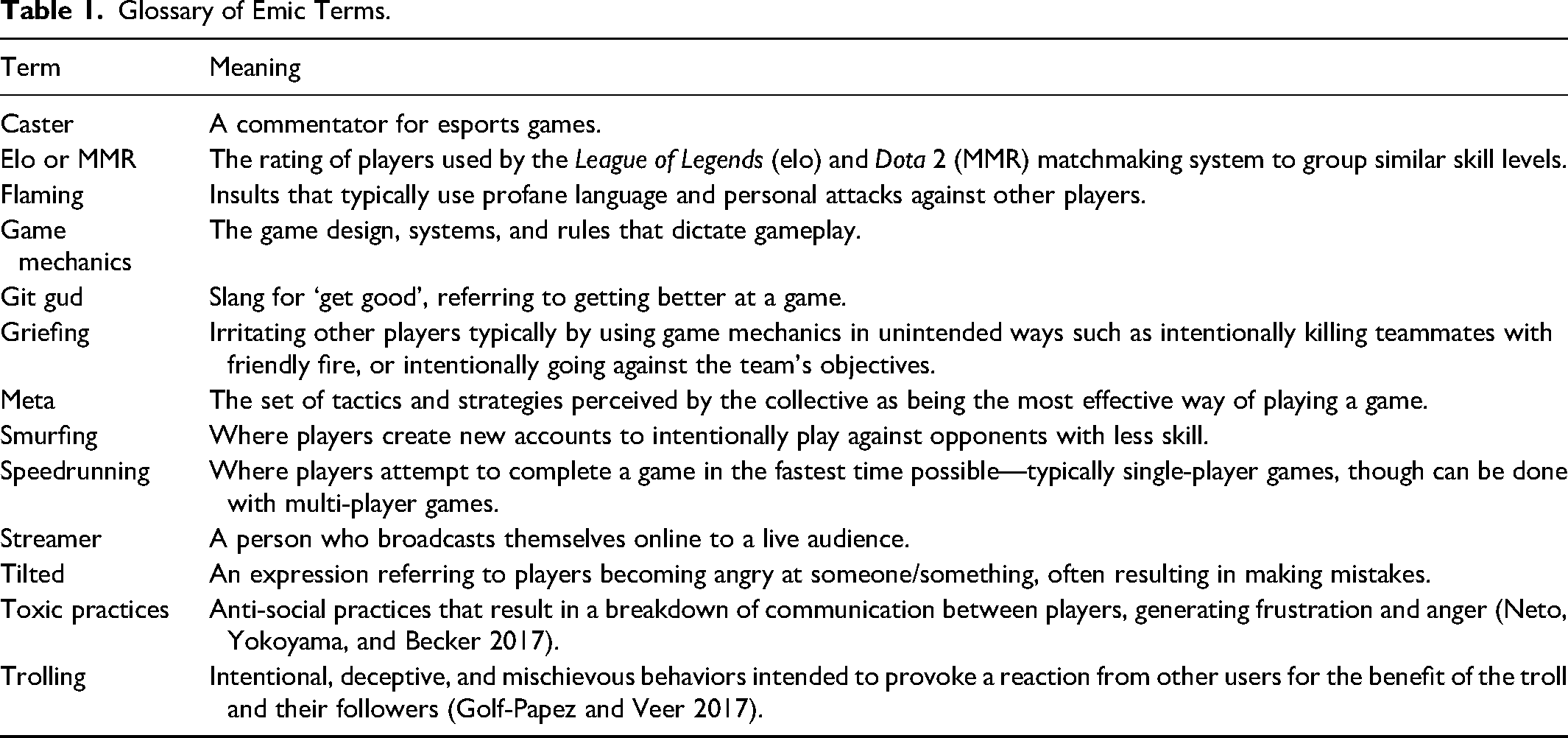
Our understanding of how toxic practices are normalized was developed through a broader study of online gaming and esports. Toxic practices are a common occurrence, with 72% of players having witnessed toxic practices toward others and 68% of players experiencing it themselves (Unity 2021). Gaming is a large and growing industry, valued at USD 198.4 billion in 2021 and expected to increase to USD 339.95 billion by 2027 (Morder Intelligence 2022). Consumers adopt multiple roles within online gaming such as playing, spectating, and governing (Huston, Cruz, and Zoppos 2021; Seo and Jung 2016). Practices such as streaming provide alternative ways of engaging with online games outside of playing. Video games provide consumers with an escape from reality (Molesworth 2009), where consumers may possess objects that lack materiality and live an alternate life unbound by the physical world (Denegri-Knott and Molesworth 2010). Digital virtual consumption—consumption that occurs within the parameters of the digital space—is prevalent (Denegri-Knott and Molesworth 2010) within online gaming, in addition to prosumption (Ritzer and Jurgenson 2010), with many early competitive gaming tournaments organized and financed by consumers (Taylor 2012). Seo (2016) provides insight into how consumers professionalize their consumption within esports—a competitive and organized approach to video games—and the identity transformations that occur throughout professional gaming careers. Table 1 contains definitions for emic terms used throughout this paper.
Glossary of Emic Terms.
Research Approach
A qualitative approach was taken, combining insider experience, in-depth interviews, and netnographic data. The first author's insider experience allowed for a deep understanding of the nuances, language, and practices of the context (Blythe et al. 2013; Gowricharn 2019; Riemer 1977). As Riemer (1977) argues, researchers possess unique experiences that should be utilized to conduct opportunistic research and better understand the social context within which we live. For eight years prior to the commencement of data collection, the first author participated as a consumer in online gaming across various game titles and communities.
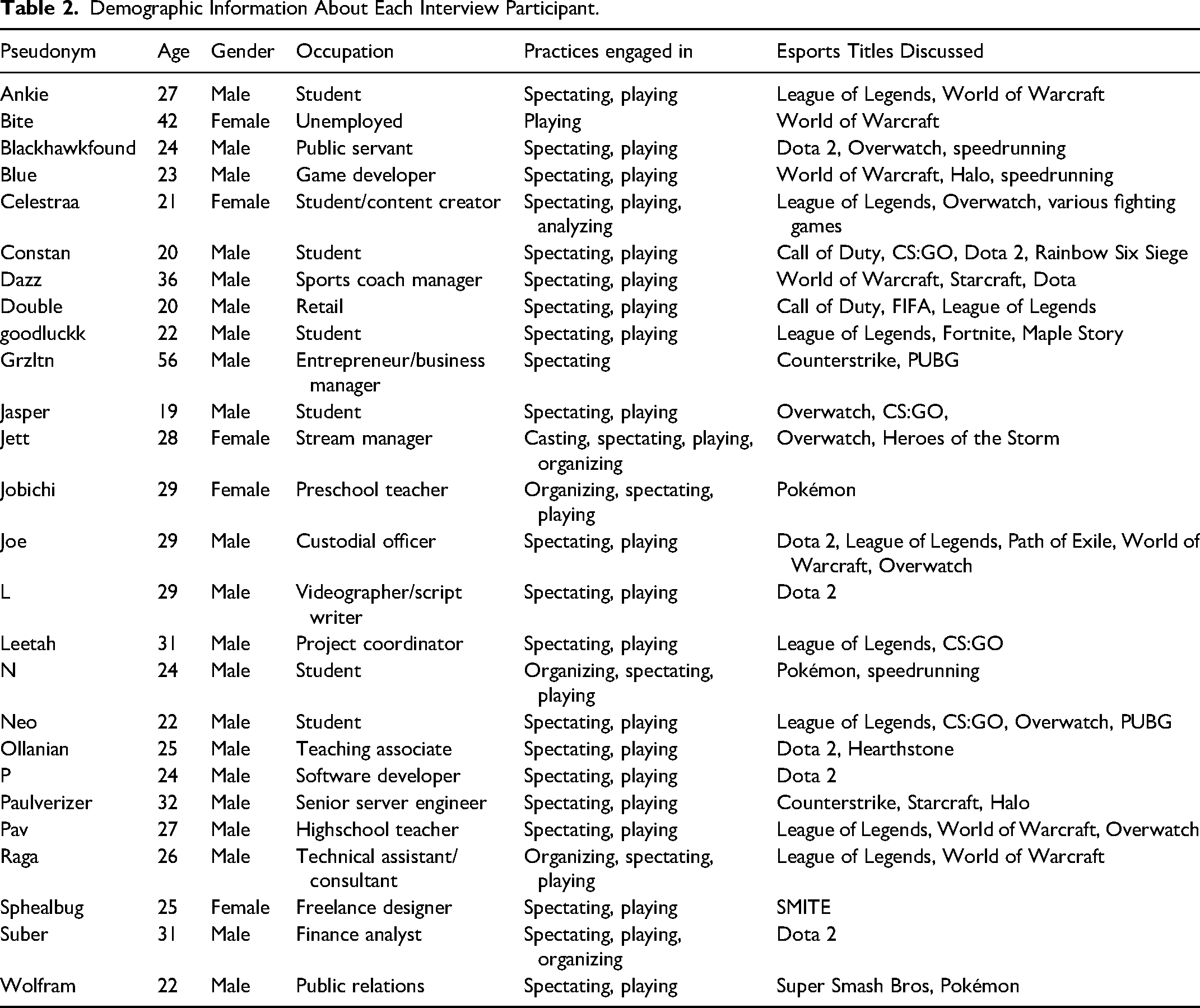
Through their experiences as a player, the first author utilized their social network to collect initial in-depth interviews regarding consumer experiences within online gaming. Interviews were transcribed verbatim and coded in multiple stages using a hermeneutics approach, where the researcher moves iteratively between the data, literature, and context to understand the meanings of consumption stories (Thompson, Pollio, and Locander 1994). Initially, interviews were designed to discuss participants’ experiences with esports and online gaming. While analyzing the first round of interviews, the researchers were perplexed by the nonchalant way in which participants mentioned their experiences with toxic practices, prompting further investigation to uncover why toxic practices seemed to be accepted. Subsequent interviewees were recruited through snowball sampling and purposive sampling, ensuring that potential participants self-identified as online gamers. These subsequent interviews focused on toxic practices and how this was experienced by participants, providing further insight into why toxic practices are normalized within online gaming. A total of 26 in-depth interviews provided emic accounts of online gaming experiences. Participants selected their own pseudonyms to ensure anonymity, though these were typically their gaming names. Table 2 lists the interview participants.
Demographic Information About Each Interview Participant.
As reddit was mentioned as a key source of discussion and news for the online gaming community by multiple participants, netnographic data was collected to provide further understanding of the broader themes that arose from the in-depth interviews (Kozinets, Dolbec, and Earley 2014). The League of Legends and Dota 2 subreddits were the focus of data collection due to their large and active userbase, resulting in a total of 42 threads discussing toxic practices within online gaming. Threads and their comments were scraped from reddit and imported into NVivo to assist with data analysis before being incorporated into the interview data. The netnographic data added further detail on practices such as smurfing and boosting, expanding our understanding of what constitutes toxic practices. The research team met on a regular basis to discuss findings and suggest potential theories that might explain the normalization of toxic practices within online gaming, with neoliberalism coming into focus as we iterated through multiple rounds of data analysis. Themes were revised based on the combination of interview data, netnographic data, insider experience, and the literature, resulting in the three key themes discussed below.
Findings
The findings illustrate how technological configurations embed and exacerbate neoliberal logics within online gaming, normalizing toxic practices and shaping the toxic consumer subject. Ranking systems within games, the lack of moderation systems for poor player behavior, and the economy of attention embed the neoliberal logics of competitiveness, individual responsibility, and entrepreneurialism within online gaming. The following three themes explore how these neoliberal logics embedded within technological configurations shape the toxic consumer subject as an individual predisposed to harmful interactions with other users in technocultural spaces.
Rankings, Competitiveness, and the Toxic Consumer Subject
The technological configuration of ranking systems embeds the neoliberal logic of competitiveness into online gaming, where the clash of competitive and non-competitive mindsets creates a space for toxic practices to fester. The ranking systems within online games encourage consumers to adopt a competitive mindset that prioritizes their rankings no matter the cost, a mindset which bleeds into more casual game modes. The outcome of this bleed is that the competitive mindset becoming the dominant way of inhabiting the online space, crowding out alternative logics. Games like Dota 2 and League of Legends typically have both ranked and unranked versions of gameplay. In ranked games, losses have a tangible impact on a player's ranking; conversely, losing unranked games does not impact a player's public ranking. Players seek to improve their rankings as they can gain tangible rewards such as skins, cultural capital—the knowledge and familiarity one has with cultural institutions (Bourdieu 1986)—within the gaming community by attaining a high ranking, or even securing the opportunity to become a professional player themselves if noticed by an esports organization. The ranking of players is often visible on their profile, acting as a form of status within the community and proof of the individual's skill at the game. Players have benefited from watching streamers, following professional players, and consuming tutorials, resulting in a more skilled player-base and increased competition between players. “The level of gaming now is very - it's almost all competitive. Content creators and streamers especially, they always want to be the best. And I feel like because of how popular esports are getting now, lots of people want to be streamers and stuff like that. So yeah, I feel like the general level of gaming has just gone from majority casual and minority competitive, to maybe 40-60.” Double (interview, male, 20)
As high rankings provide cultural capital within the community, competitive players begin to treat their leisure time as a form of work to strive for their maximum potential, while blaming less competitive players for ‘mistakes’ such as being unaware of a particular build used in competitive play. Considering that a game of Dota 2 or League of Legends often lasts for upwards of thirty minutes, losses are drawn out and players feel as if their time is wasted. If a less skilled player is on their team, players feel as if ‘held hostage’ (reddit user) for the duration of the game and may respond with griefing—irritating other players by using game mechanics in unintended ways such as intentionally killing teammates with friendly fire. Consumption has become competitive, where individuals attempt to keep up with or even exceed their social reference group (Schor 1999) in a world where the media is an important cue of what is considered success and social membership is determined through consumption (Lamont and Molnár 2001). As players attempt to aspire to be like streamers and professional players, this competitive logic creates a toxic environment where competitive players disregard fun in favor of winning. “[Toxic players] are impatient, they don’t respect anyone else's choices, they always think their choice is the right choice. Most of the time, they disregard fun in my opinion. Fun is no longer a factor for the game. So when you have the option between fun and winning, they would rather go to the winning over you having fun. I think to them, it's no longer fun, it's just an activity they want to do to fill something up. I don’t know. Just being toxic – I don’t know how to describe it. It just feels they’re no longer playing a game. They do take it a bit too serious which is fine, but at the expense of other people. It goes back to those people who are playing with newer players but at the same time they want the new players to build the [most common and best build] and everything.” Joe (interview, male, 29)
As Huston, Cruz, and Zoppos (2021) argue, esports consumers may engage in a variety of consumption styles, not all of which require a competitive mindset. While ranked and unranked versions of games are separated from one another, toxic practices arise when the competitive mindset associated with ranked games bleed into unranked games (Kristiansen, Lindberg, and Tempelhaug 2022). Competitive players practice new strategies learned from professional players through streams or esports tournaments, using unranked games as a space to perfect these strategies without losing ranking. Unranked players often remind competitive players that their primary reason to play is for fun rather than increasing their rankings, though find they are flamed—an emic term referring to insults that typically use profane language and personal attacks—for playing in a way that does not align with the meta (the generally accepted best way of playing). “Game is game. Too many players play this GAME like it's a TRAINING session. Celebrate the game's possibilities, don’t cry when someone isn't playing like how the pros play. We are NOT pros. We are casuals in [unranked] games. I won't ever be a pro. I enjoy watching them play, don't get me wrong. But I don't want to turn my casual gaming after work into highly tactical strategy training for some abstract glory (idk, maybe just to tell some strangers their [ranking] is high or something).” reddit user (Dota 2)
Thus we see the rankings system amplify competition within online gaming, embedding the neoliberal logic of competitiveness and giving rise to toxic practices, where the competitive mindset bleeds into even unranked and more casual game modes of play. As Meek et al. (2019) argue, neoliberal logics increase the emphasis on commodities as markers of identity. Competitiveness encourages consumers to instrumentalize their time and to view any activities and actors that do not align with their orientation toward achievement and progress as obstacles to be eliminated. This logic becomes hegemonic, disallowing alternative logics that frame play as a source of enjoyment and social connection. The toxic consumer subject frames others as resources to be used or obstacles to overcome in their quest for ‘abstract glory’. When competition is the dominant logic within the field, toxicity becomes an intelligible, habitual, and excusable response to obstacles that jeopardize the consumer's next achievement.
Receding Systems, Individual Responsibilization, and Deserved Toxic Practices
The receding moderation and educational systems within online games promotes the neoliberal logic of individual responsibilization, where consumers become responsible for coping with toxic practices and utilizing third party resources to improve their gameplay to an acceptable standard. Those who have failed to improve their gaming—or ‘git gud’—are framed as deserving targets of the toxic consumer subject. Gaming has been established as part of the neoliberal landscape, with Mejia and Bulut (2019) arguing that games transform what was a ludic experience into a form of work where organizations use games to train and educate consumers. However, the receding systems characteristic of neoliberalism requires consumers to provide important services such as educational resources and become a working part of the value provided by the product (Cova and Dalli 2009). In the case of online gaming, the poor behavior moderation system and the lack of in-game information require consumers to cope with toxic practices. For example, the quote below illustrates player criticism of game developers in enabling toxic practices. “No ban for this, and players wonder why the game is toxic. This is the main issue. It is very likely other players in their games became tilted/angry with them feeding, and it is very possible it continued into their next games, and just adds to the toxic behavior. The punishment system that Riot talked about all last Season in multiple blogs is a mess, and actually breeds more toxic gameplay and chat, because the punishment system is so poor. Riot has done almost nothing to change it that has had any meaningful impact.” reddit user (League of Legends)
The game developers are seen to push the responsibility of creating resources and handling toxic practices to players, rather than creating systems able to moderate toxic players. One of the most common pieces of advice given to players experiencing toxic practices is to avoid exposure to toxic practices in the first place—‘mute all players’, including teammates, is recommended at the start of the game so other players do not have the opportunity to be toxic. Players often noted that muting all helped with their enjoyment of the game, transforming multi-player games into single-player games, with teammates acting as NPCs (non-player characters). While games often have a bot mode available (where other players in the game are replaced by artificial intelligence), the player versus player game mode is generally preferred as bot games are typically for practice or learning how to play the game and mostly do not provide rewards for winning. The quote below illustrates how players are aware that toxic practices are a problem and that it becomes the individual's responsibility to handle toxic practices, rather than the core issue of toxic practices going unpunished being addressed. “’Just grow a thicker skin, bro’ or ‘just /mute all, bro’ are not solutions to League's rampant toxicity problem, and I think the attitude that they are (or should be) is harmful in and of itself. And to use an extreme example, saying that people should be expected to /mute all at the start of every ranked match is like saying that the way to stop yourself from being stabbed in a mugging is to wear a Kevlar vest every day. It's a very victim-blamey attitude, and it distracts from addressing the actual root of the problem (people feeling like it's cool to treat strangers horribly in a video game).” reddit user (League of Legends)
In addition to the poor moderation system failing to provide consumers with a safe space for play, the lack of in-game resources requires consumers to adopt a ‘git gud’ mindset where players to utilize all resources available to them to achieve success and attain higher rankings within the game. Higher ranked players are afforded more cultural capital within the community as these players have proven their level of skill. While those at a higher ranking can criticize lower ranked players, the reverse does not hold true. Rather than complain about other players being toxic, players aspiring to improve their rankings must focus on how they can ‘git gud’. However, this requires the player to prioritize their performance over anything else, including enjoyment. The reddit user below describes how ‘gitting gud’ transformed them into a toxic player. What was once an enjoyable activity is engulfed by the neoliberal logic of individual responsibilization. “But eventually, the desire grows to GET GOOD and I started watching more and more. Trying to learn, trying to get better, and setting out goals. Goals are good and healthy, so the journey to IMMORTAL [highest ranking available] began. However, I would never guess the person it would slowly turn me into: a f*cking crazy person so hell bent on improvement that all aspects of happiness slipped away. Suddenly the person that would have fun in every game became a f*cking warlock spammer who would flame their teammates for mistakes to try and stop their behavior and be utterly invested in dota, assuming all others were as well. It happened, I got that Immortal rank, but at what cost?” reddit user (Dota 2)
The community also creates tutorials, addons, and modifications to games that can improve or extend gameplay, helping players ‘git gud’ and filling the void of information left by the receding systems. For example, warcraftlogs.com—a player-created website for World of Warcraft that collects data through an addon—allows players to rank themselves against other players when raiding and provides a substantial amount of data on an individual's gameplay, even though there is not an official way of doing this within the game itself. While Paul (2018) notes that game design and narrative promote a supposedly equal playing field where the most skilled player wins, the example of addons from World of Warcraft illustrates how the receding systems being substituted with player-created systems results in an uneven playing field, where those unaware of how to use addons are at a substantial disadvantage to those who are competent with their use. It is expected when participating in competitive content that each player understands how to use these addons to improve their gameplay. As online games often rely on teamwork, a player without the necessary addons or knowledge from third party websites may be seen as a weight on the team's performance—those who do not follow the neoliberal logic of individual responsibilization may be flamed or blamed for failures. Consumers who understand and have access to knowledge from third party websites are capable of self-improvement, whereas those unaware of these resources or unwilling to ‘git gud’ are constructed as individuals deserving of toxic practices. These asymmetries between legitimate and illegitimate members of society are veiled behind the responsibilization of the individual (Bourdieu 1998a), where they become responsible for their success through hard work. “There is enough educational content on the internet, but people who are new (and those who are experienced too) don’t care about improvement. If you are hardstuck below Diamond 4 while actively trying to climb and improve you either have a learning disability (which is sad, but it's not your fault) or you do not put effort into actively getting better. As Ryze says: ‘Those who seek improvement, improve’.” reddit user (League of Legends)
Within neoliberal logics, responsibility is pushed from the institution to the consumer, where the individual is responsible for their own success (Hall and Lamont 2013). The ‘git gud’ mindset illustrates how the neoliberal logic of individual responsibilization shapes the toxic consumer subject, encouraging toxic practices toward those that hinder one's improvement or who are ‘unwilling’ to improve themselves. The systems and resources that players create to further their own consumption due to the lack of information available in the game itself lead to toxic interactions when it becomes the player's responsibility to be aware of these community-created resources. Improving one's gameplay becomes all encompassing, with players descending into toxic practices and prioritizing self-improvement at the expense of enjoyment—both their own enjoyment and their teammates’. Despite the community acknowledging and criticizing game developers for their lack of action to deter toxic practices, the individual player is ultimately responsibilized for coping with toxic practices.
The Economy of Attention, Entrepreneurialism, and the Spectacle of Toxic Practices
Content platforms such as Twitch epitomize the neoliberal logic of entrepreneurialism. The algorithms of these platforms promote engaging content, with content of individuals exhibiting exaggerated reactions often being highly engaging. Against this backdrop, toxic practices are amplified because they offer shareable spectacles that feed the economy of attention. The economy of attention (Franck 2019) describes the way media use celebrities to draw the attention of the masses, providing the opportunity to transform attention into money through advertising revenue. Consumers professionalize their gameplay through esports or streaming (Seo 2016; Taylor 2012), with streamers and professional players attaining their celebrity status through an entrepreneurial approach to online gaming. Online gamers monetize their gameplay through streaming on platforms such as Twitch and YouTube Gaming, relying on advertising revenue and donations from viewers for income (Taylor 2018), with growing popularity often leading to more opportunities. Streamers can become popular for their skilled gameplay, though may also achieve fame through hyperbolic reactions and drama. While there are a wide range of streamer personalities, sometimes the entertainment provided through streaming can be at the expense of other non-streaming players. Some popular streamers build their fame through exaggerated reactions and personalities, creating dramatic pieces of content displaying toxic practices that becomes a form of entertainment. Because conflict can be monetized (Ulver 2022), toxic practices become normalized as a spectacle. For example, Wolfram (interview, male, 24) discusses one of his favorite players as being abusive and a “bad boy”, with the drama surrounding this player a key part of his esports consumption. “Leffen was really one of my favorite players – he still is – he's the sort of person that talks a lot of sh*t but he is good enough to back it up and when I got into the scene, he was on his rise up as the God Slayer. He was taking games, taking games off these really skilled players. So you see this really good guy coming through. And equally his roots were sort of in drama. He's sort of known as being a bit of a heel, a bit of a bad guy. He got banned – cause he's Swedish – he got banned from the European scene for I think a year or 6 months basically for abuse – abusive language, abusive behavior. So he's improved a lot since then in terms of how he conducts himself, but he still has that sort of edginess. A bit of a bad boyness I guess. He's sort of like the anti-hero in that sort of way.” Wolfram (interview, male, 24)
Algorithms promote popular videos that depict toxic practices, illustrating how the performativity of in-built design exacerbates the neoliberal logic of entrepreneurism and encourages the consumer subject to broadcast their toxic practices for monetary gain. Advertising revenue gained per view provides consumers with incentives to publish content tailored to the algorithms promoting views. Thus, algorithmic culture facilitates the totalizing effect of neoliberal market logics within leisure activities (Airoldi and Rokka 2022; Kozinets 2021; Kozinets, Ferreira, and Chimenti 2021), shaping the toxic consumer subject. In addition to professional player and streamer personalities acting in a toxic manner for entertainment, practices such as tipping fuel toxic practices within online gaming. Tipping in Dota 2 started as a way to celebrate impressive plays in a game, where teammates could tip one another using in-game currency that can be redeemed for cosmetic skins. However, this practice became subverted when professional players began tipping opponents for mistakes—while the crowd found this entertaining, the practice of tipping mistakes made its way to non-professional games as a way to mock other players. As the quote below illustrates, these practices became normalized when non-professional players began to replicate the playstyles of professional players in regular games. “Well I’m pretty sure we didn't ‘tip’ enemy until pro gamers started doing so. Same goes for voice lines. Every week or so we have a vid of some players dropping items in a pro game and fake denying it or things like that. Some might call it friendly, but people follow this in [unranked games] and I believe that things like this add enough spice to turn someone from mad/annoyed to tilted and toxic.” reddit user (Dota 2)
Another form of toxic entertainment enabled by the economy of attention (Franck 2019) and the ability of players to livestream their gameplay on platforms such as Twitch is smurfing. Smurfing is a common practice where a person creates a new account to play against less skilled opponents. Streamers may create smurf accounts using their Twitch URL as their public name, acting as advertisements for streams. Genuine new accounts suffer due to this practice as they are matched against smurfs who are more experienced, creating an unfair advantage to the team that has the smurf and can result in toxic practices. The quote below suggests that streamers engage in smurfing to monetize toxic practices toward other players. “Why else: BULLYING!! As can be seen by all the major streamers [smurfing] (even so-called coaches and the coaching sites/apps they represent) - THEY ALL TAKE GREAT JOY IN BULLYING!! And even encourage it: ‘Crushing, Humiliating, tilting, and depressing low ranked players’ is their main motto. These are people who struggle with very low self-esteem and use platforms like YouTube to feed it through Likes for bullying. Some of these accounts are intentionally kept in low skill brackets for maximum bullying potential.” reddit user (League of Legends)
Entrepreneuralism emerges as a dominant neoliberal logic within gaming enabled by the economy of attention (Franck 2019) and various livestreaming platforms, negatively impacting communities and contributing to the toxic consumer subject. The toxic consumer subject transforms toxic practices into a form of entertainment through the economy of attention (Franck 2019), where popular streamers exaggerate their emotions and monetize conflict for their audiences (Ulver 2022). Additionally, while esports and the internet more broadly have been likened to a fair playing field (Williams 2003), practices such as smurfing erode this fairness and allow money to influence what is framed to be purely skills-based. As McLeod, Xue, and Newman (2022) argue, esports labor is riddled with inequalities due to income disparities between high and low earnings between successful and less successful players, though the prevalence of smurfing suggests that even the amateur playing field is not as equal as portrayed.
Discussion
Previous research has explored the antecedents and consequences of toxic practices. Studies within the esports and online gaming literatures illustrate the environmental and personality factors that increase an individual's likelihood to engage in toxic practices (Adinolf and Türkay 2018; Neto, Yokoyama, and Becker 2017; Grandprey-Shores et al. 2014; Türkay et al. 2020). In addition to explaining the reasons for why toxic practices occur at the individual level, studies explore the impact of toxic practices such as negative psychological and emotional effects and negative impacts on the community (Cruz, Seo, and Rex 2018; Golf-Papez and Veer 2017; Grandprey-Shores et al. 2014). We adopt a broader sociocultural perspective to provide insight into the sociocultural forces that scaffold toxic practices (Askegaard and Linnet 2011). Through a hermeneutic reading of the data, neoliberal logics emerged as a distinct undercurrent that explained how toxicity becomes normalized and endemic within online gaming. The present research argues that technological configurations embed and exacerbate neoliberal market logics within online gaming, creating a consumer subject who is predisposed to engaging in toxic practices. We contribute to the literature in two ways.
Theoretical Contributions
Firstly, we conceptualize the toxic consumer subject as an individual predisposed to harmful interactions with other users in technocultural spaces. Imbibing the neoliberal market logics of competitiveness, individual responsibilization, and entrepreneurialism via their immersion within technocultural spaces, our study describes how the toxic consumer subject is systematically inducted into ways of interacting with others that harm consumer wellbeing. Competition within online gaming is heightened, leading to competitiveness (Hall and Lamont 2013) that permeates even leisure time and encourages competitive consumption (Schor 1999), creating a toxic environment for those with different playstyles. Within this competitive environment, the individual becomes responsible for risk and reward (Bourdieu 1998a; Hall and Lamont 2013). Entrepreneurialism is valorized (Ganti 2014), where some forms of entrepreneurialism allow toxic practices to become a consumption spectacle (Franck 2019; Ulver 2022). Within a neoliberal society, video games are no longer an escape from reality (Molesworth 2009) as consumers must be better than their peers to obtain cultural capital within the community.
This work extends the extant literature on toxic practices within online gaming and esports which predominantly views toxic practices as stemming from individual level characteristics (Adinolf and Türkay 2018; Neto, Yokoyama, and Becker 2017; Grandprey-Shores et al. 2014; Türkay et al. 2020). The extant literature on toxic practices illustrates the individual and environmental factors that indicate a player's likelihood to engage in toxic practices (Adinolf and Türkay 2018; Grandprey-Shores et al. 2014; Neto, Yokoyama, and Becker 2017; Türkay et al. 2020), the negative psychological and emotional consequences of toxic practices (Grandprey-Shores et al. 2014), and the negative impact on the community (Cruz, Seo, and Rex 2018; Golf-Papez and Veer 2017). In doing so, this paper extends the literature on toxic practices by offering a broader sociocultural perspective of how toxic practices are normalized within online gaming.
Furthermore, the present work extends these insights by showing how logics of neoliberalism help sustain the normalization of toxic practices as an endemic and justifiable practice within online gaming, shaping the individuals in these spaces as the toxic consumer subject. The toxic consumer subject is a distinct extension of the neoliberal system for two main reasons. Firstly, the toxic consumer subject is overtly violent. Scholars have identified that the inherently violent nature of neoliberalism is veiled behind the “allure of promised freedoms” (Varman 2018, p. 903). While the individual is encouraged to prosper by pursuing the ‘virtues’ of entrepreneurialism, individual responsibilization, and competitiveness, the harmful effects of these logics often remain invisible. With the toxic consumer subject, the harmful effects of neoliberalism become overt. Secondly, rather than being on the receiving end of marketplace violence, the toxic consumer subject actively inflicts violence toward other consumers. Prior studies indicate that violence is inflicted upon consumers by the systems of neoliberalism and neoliberal actors such as large corporations. Seen in this light, the consumer is framed as an innocent victim of marketplace violence (Giesler and Veresiu 2014; Kravets, Preece, and Maclaran 2020; Martin et al. 2021). In contrast, our paper frames the toxic consumer subject as an active perpetrator in the neoliberal system.
Secondly, we illustrate how technological configurations embed and amplify neoliberal logics, contributing to the ongoing conversation on the role of technology in performing market logics and shaping consumer subjectivity (Airoldi and Rokka 2022; Kozinets 2021; Kozinets, Ferreira, and Chimenti 2021; Kozinets, Patterson, and Ashman 2017). In light of the intensity of technologically-mediated interaction, several studies have recently brought attention to a pertinent question: what cultural ‘work’ does an algorithm perform? Our research extends this conversation by advancing how neoliberal logics are embedded within in-built configurations of online gaming. Neoliberalism is not merely an ideology within the minds of the actors that inhabit technocultures, but also entrenched into these technological configurations themselves. Within these communities, the in-built design (or lack thereof) seems to hail a narrow vision of how consumers should behave and interact. For example, consumers are encouraged by the economy of attention (Franck 2019) to engage in toxic practices as a form of entertainment, with entrepreneurial consumers potentially earning money through advertising revenue associated with popular video uploads. Algorithms proliferate videos of toxic practices, allowing conflict to become a consumption spectacle (Airoldi and Rokka 2022; Kozinets 2021; Kozinets, Ferreira, and Chimenti 2021; Ulver 2022). Through this lens, online gaming communities can be understood as a self-sustaining broken system in which toxic practices become a normalized part of consumption.
Limitations and Directions for Future Research
Toxic practices are well established in the online gaming and esports literatures, though elements of these practices may be found outside of this context. Studies such as Cruz, Seo, and Rex (2018), Golf-Papez and Veer (2017), and Dineva, Breitsohl, and Garrod (2017) illustrate alternative contexts within which hostility between consumers occurs, though this hostility is not conceptualized within these papers as a toxic practice. Future studies could consider the expression of toxic practices in alternative contexts such as extremist political movements. The toxic consumer subject may also have application to other streams of literature such as feminist studies and management. Future studies should consider the gendered dynamics of neoliberal logics and the toxic consumer subject.
Footnotes
Associate Editor
Wencke Gwozdz
Declaration of Conflicting Interests
The author(s) declared no potential conflicts of interest with respect to the research, authorship, and/or publication of this article.
Funding
The author(s)received no financial support for the research, authorship, and/or publication of this article.
