




Abstract
This paper extends the macromarketing debates on gender by considering how gender ideology acts as a macro-level constraint to developing sustainable initiatives. While the macromarketing literature has long considered the significance of social enterprise and nonprofits, gender has not been theorized within these studies. In redressing this gap we examine the case of the Uniform Project, spearheaded by disaffected advertising executive and enthusiastic social entrepreneur, Sheena Matheiken. Our critical interrogation of the project shows that Matheiken’s path to becoming entrepreneurial “woman of the year” reinforces a gendered model of social entrepreneurship. We also expose the role of media and the forums designed to encourage social innovations in gendering, thus stifling, a social enterprise. We reaffirm the importance of theorizing gender ideology in macromarketing and submit that any such theorization must recognize and account for the ways that gender intersects with neoliberal ideology to permeate markets, marketing and social enterprise.
Introduction
In 2009, in the wake of financial crisis and on the wave of growing concerns over sustainability, New York-based Sheena Matheiken launched The Uniform Project (http://www.theuniformproject.com), embracing “socially conscious consumption.” She conceived of a personal challenge where she would wear the same little black dress (LBD hereafter) every day for a year to raise money for a charity that provides education to children living in the slums of India. Reminiscent of a uniform, the dress was designed to be worn in a variety of ways, allowing for maximum versatility. The dress was then to be transformed daily into a unique ensemble with the help of accessories crowd-sourced through friends and the project’s online audience. For Matheiken, it was a “stylistic adventure in un-making of the uniform” and a way to raise awareness about wastefulness and over-consumption. The project involved daily photo-shoots, producing 365 images of the uniquely styled dress and raising over a hundred thousand dollars. The innovative idea and eye-catching images first attracted the attention of fashion bloggers and Pinterest fashionistas, followed by more mainstream media from ELLE and Glamour to The New York Times and The Guardian. The Uniform Project became a touchstone for discussing various issues from fast fashion, waste, and sustainability to austerity and the possibility of “taking back the economy” through immaterial value-making (Gibson-Graham, Cameron, and Healy 2013, p. 104). Matheiken became a fashion celebrity (ELLE magazine named her “Woman of the Year”), scoring multiple TV appearances, invitations to the New York Fashion Week, and TED talks (2010; 2011). Despite the range of media reporting on the project and the diversity of issues it raised, our paper focuses on how this coverage eventually coalesced into a gendered discourse that reaffirmed neoliberal ideology and patriarchal structures by positioning Matheiken as a heroic social entrepreneur.
In examining the case of Matheiken we therefore bridge two bodies of writing within the macromarketing literature. Firstly, while much of the macromarketing literature on gender has focused on clear examples of gender inequality (see for example, Hill and Dhanda 1999), we broaden our focus to unpick the otherwise invisible, constraining dynamics of gender ideology 1 , namely the normative beliefs and expectations that a society holds about female and male roles and behaviors. We show how this ideology operates as a constraining factor even for seemingly successful female entrepreneurs because it underpins the ways in which they and their actions are judged and represented by wider publics (e.g. business, media, society). In so doing, we use feminist critical discourse analysis to question taken-for-granted processes and practices – discourse being a key social practice which sustains and proliferates ideology - thereby exposing the gendered nature of mechanisms and structures that facilitate these processes and practices (Hearn and Hine 2015). Secondly, there has been considerable research on the role of non-profits and social enterprise, particularly in relation to sustainable development (see, for example, Hunt 2012) but this has yet to be considered from a gendered perspective. In furthering the critical macromarketing literature (Mittelstaedt et al. 2014) we highlight the gendered aspect of neoliberal frameworks 2 which underpin – and limit – social initiatives at the macro-level, frameworks that testify to how capitalism adapts to new forms of gender power (Campbell 2014).
We characterize The Uniform Project as an example of a gendered neoliberal social responsibilization, where the tasks of care and social contract, previously the domain of government and public institutions, are taken up by individuals and private entities and fulfilled according to the market logic which is saturated with patriarchal values (Grosser and Moon 2019; Shamir 2008). In line with the neoliberal imperative to reduce the scope of government and public realm, autonomous actors are rendered responsible for social, economic, and environmental risks and problems, which in the past were presumed to be a matter for a collective public concern and addressed through communal and institutional arrangements. That is, under neoliberalism, responsibility is understood predominantly in individualistic terms, whereby other understandings and enactments of responsibility, particularly forms of relational responsibility commonly observed in a society, are supplanted (Trnka and Trundle 2014). Referring to the new individualistic rhetoric of social-moral responsibility, Littler (2015, p. 473) puts it pointedly: “social change [is] a job for heroic individuals,” who are accountable according to the evaluative logic of market. This puts the spotlight on certain individuals (as beacons of social progress), while rendering the social plight of so many invisible, and importantly obscuring the structures that rearticulate male social power and privilege (Campbell 2014).
Under neoliberalism, all actions concerned with social betterment are to be market-mediated, a tendency that Shamir (2008, p. 2) describes in terms of dual processes of “the moralization of markets” and the marketization of the social. While the proliferation of CSR initiatives is an example of the former, the emergence of social enterprise exemplifies the latter, for this form of organization is ostensibly conceived “to catalyze social change and/or address social needs” (Mair and Martí 2006, p. 37). Often these are the needs left unattended in the wake of the retreating (welfare) state and the dissolving public realm (Clarke 2004; Shamir 2008). Concerned with social needs and defined by reliance on macro, communal resources and social networks for its operation, social entrepreneurship, as we will show, is nonetheless couched in the neoliberal rhetoric of individualism, personal choice, and autonomy. That rhetoric is rooted in a uniquely Western liberal notion of the individual (atomistic rational agent), which always excluded women and non-European others (Campbell 2014; Cornwall, Gideon and Wilson 2008). Furthermore, while neoliberal responsibilization emerged from the United States and is most evident in the Global North within the nation state, it is increasingly being evidenced in the policies of non-governmental actors operating across the globe (see Ilcan and Rygiel 2015; Kamat 2004; Lacey and Ilcan 2006; Wallace 2009). This literature acknowledges the way in which neoliberal values, steeped in patriarchy and ethnocentrism, have become embedded into the development sector and are carried out across transnational borders (Hearn 2015).
By focusing on gender ideology to foreground the limitations in understanding social enterprise, this article reaffirms the importance of theorizing gender in macromarketing (Gurrieri, Previte and Brace-Govan 2013; Hill and Dhanda 1999; McKeage, Crosby and Rittenburg 2017; Ourahmoune, Binninger, and Robert 2014). Specifically, our empirical case aptly illustrates how gender ideology, embedded in business models as well as media and public discourses about entrepreneurship, impedes innovative forms of business and social organizing which aim to address social needs and rely on social investments for success and sustainability (Engelke et al. 2016; Mair and Martí 2006). Our contribution, therefore, is to offer an analytic perspective that shows how gender ideology operates at the macro-level, permeating enterprise, both inside and outside. That is, while much of the empirical research on gender in marketing focuses on the effects of gender and gender biases in specific aspects of markets, marketing and consumption (see Arsel, Eraranta and Moisander 2015), our work adopts a broader research focus and draws attention to the systemic workings of gender as an ideology and its alignment with the neoliberal models of governance and social contract (see Grosser and Moon 2019). We thus reveal how gender often remains invisible, embedded in the taken-for-granted patriarchal power relations that such models imply (Hearn and Hine 2015). In advancing this perspective, we extend the macromarketing debates on gender to include social enterprise, revealing how gender ideology is a macro-level constraint to developing sustainable initiatives that address issues of inequality and environment (McDonagh and Prothero 2015; Peterson 2012).
To provide the context for our analysis, we start with a brief overview of the relevant literature. We then elaborate more fully on The Uniform Project (UP hereafter) and how its entrepreneurial spirit captured the public imagination. Next, employing a critical feminist approach (see also Gurrieri, Previte and Brace-Govan 2013), we explore the development of this social enterprise, examining the mediated narratives produced both in the course of the project and its immediate aftermath. We conclude by reflecting on persistent gendering and individual responsibilization in entrepreneurial-practices, and how these processes work to constrain innovative approaches to social responsibility.
Unpicking the Gendered Nature of Entrepreneurship
Sheena Matheiken’s success, grounded in the notion of sharing, collaboration, and fun, stands in contrast to the standard image of the entrepreneur traditionally gendered as masculine, and dominated by a discourse that emphasizes a combative conquering model of the entrepreneur (Ogbor 2000). The status-driven, individualistic symbol of heroic masculinity is foundational to entrepreneurship theory (see Collins and Moore 1964; Schumpeter 1934), and also pervades popular culture and brand mythology. We need look no further than the origin myth for Apple that depicts its entrepreneurial creators, Steve Jobs and Steve Wozniak, as visionary rebels, challenging the mainstream and battling corporate giants such as IBM and Microsoft. Creating a “fictive entrepreneur” (Jones 2014, p. 40) that legitimizes white male interests, this discourse provides a normalizing standard against which female and ethnic minority would-be entrepreneurs are measured and found lacking. Indeed, it has been noted that there are fewer women entrepreneurs and their businesses tend to underperform in comparison to men’s (Aragon-Mendoza, Raposo and Roig-Dobón 2016). A pervasive (Western) cultural theme is the notion of the “self-made man” (Hanson 2003, p. 6) which reinforces the entrepreneurial stereotype as one who takes risks, is independent and in control (Hovorka and Dietrich 2011; Ogbor 2000). Not surprisingly, then, Ahl’s (2003) study revealed that measurement scales used words associated with maleness to correspond with entrepreneurship and those associated with femaleness to indicate shortcomings. In these ways, patriarchal relations are perpetuated through the privileging of values associated with hegemonic masculinity (Hearn 2015). Gendered social norms – that women do not have ‘natural’ entrepreneurial abilities – translate into gender-segregation in entrepreneurship (Jennings and Brush 2013) through practices such as bank loans, and government and business schemes that often tie their support of women entrepreneurs to female domains such as retail, catering, and fashion (Fay and Williams 1993; Hollowell, Mellors, and Silver 2006).
Studies on social entrepreneurship, however, suggest that this business practice might be one area that affords more opportunities for women. Defined as “the recognition, evaluation, and exploitation of opportunities stemming from the basic and long-standing needs of society, which subsequently result in the creation and establishment of social values” (Pathak and Muralidharan 2017, p. 3), social entrepreneurship is said to focus on social objectives, rather than solely on economic profit like most commercial entrepreneurship (Hamby, Pierce and Brinberg 2017). Indeed, market-based approaches to issues such as poverty reduction or sustainable consumption have become common in recent decades, endowing business with both the moral authority and the obligation to tackle global development challenges. Such focus is considered to be aligned with the interests and role of women that “have been attributed to them culturally, closely linked to altruism, care and protection of disadvantaged groups” (Nicolás and Rubio 2016, p. 56; also, Mckay, Phillimore and Teasdale 2010; Ourahmoune, Binninger, and Robert 2014). Gender stereotyping aside, the latest British Council Report “Activist to Entrepreneur: the Role of Social Enterprise in Supporting Women’s Empowerment” (2017) indicates that the gender gap in social enterprise start-ups is much lower than in the for-profit sector, and social enterprises offer more employment and leadership opportunities to women across the countries surveyed. Despite this visible achievement, the fact that the report states that a gender pay gap remains substantial, indicates that structural changes have not taken place (Campbell 2014).
Matheiken and her project certainly fulfil the main criteria for definition as social entrepreneur and social enterprise promulgated by the institutions like The British Council and The World Economic Forum. To review briefly, the term ‘social entrepreneurship’ first appeared around the turn of this century and referred to initiatives that aim to address the needs that remain unmet by existing markets and institutions (Dees 1998; Leadbeater 1997). Spurred on by welfare reforms and the UN Millennial Goals, international agencies and governments adopted policies to encourage citizens and corporations to apply their business savvy to solve the pressing problems of poverty, health, education, and environment (Drayton 2002; Margolis and Walsh 2003). The proponents of an entrepreneurship approach to world problems argued that social enterprise represents a viable alternative to governmental and philanthropic efforts because inspired citizens can devise unique solutions and paths, grounding their designs in local needs and intimate understandings of a situation, rather than centralized assumptions (Reis 1999; also Hall, Daneke, and Lenox 2010). Matheiken, as discussed in more detail below, clearly designed her project along these lines as “an exercise in sustainability and a fundraiser” using “fashion as her medium” (http://www.theuniformproject.com).
Social enterprise thus takes many forms and spans diverse sectors as the format is determined by social objectives, socio-cultural circumstances, institutional factors, and resources needed to tackle a problem at hand (Bacq and Janssen 2011; Thompson 2002). The emphasis on social value creation, rather than maximization of profits and shareholder value is what sets a social enterprise apart from a for-profit one (Rey-Martí, Ribeiro-Soriano, and Palacios-Marqués 2016). The primacy of social mission, however, does not exclude a pursuit of economic benefits, and social enterprises are still subjects to “market discipline” in matters of operation (Austin, Stevenson, and Wei-Skillern 2006, p. 10). What defines a social enterprise, therefore, is an explicit focus on devising and delivering sustainable solutions to societal problems through economic activity (Mair and Martí 2006). While Matheiken did not initially define herself as an entrepreneur or the project as an enterprise, as our analysis will show, the media were quick to label Matheiken and the UP as such and indeed, as Matheiken was raising money through the UP, it fits those criteria. It is worth noting, however, that the economic activity which occurs in a social enterprise is primarily driven by collaboration, rather than competition (Mair and Martí 2006). Yet, as Matheiken’s case will make clear, social entrepreneurship, in line with the neoliberal agenda pushes this socio-moral obligation one-step further, to the individual (Shamir 2008) so as the project progressed Matheiken was increasingly heroified at the expense of her collaborators. According to this neoliberal capitalist discourse, ethical practice and the pursuit of profit can be easily achieved and the individual (generally, as we have shown, female), rather than the state or the market is ultimately responsible for generating development (Dolan and Johnstone-Louis 2011).
Despite the apparent feminized nature both in terms of women’s participation and its prevalent focus on gender issues (see British Council 2017), social entrepreneurship is nonetheless rooted in the assumptions of conventional entrepreneurship that posits the male gender as the standard when it comes to starting up and running a business (Godwin, Stevens, and Brenner 2006; Ziegler 2009). While the key drivers to become social entrepreneurs – concern over social or environmental issues and desire to contribute to community – are arguably non-gender specific (see e.g. British Council 2017, p. 39), the figure of a social entrepreneur which emerges from the literature bears the normative characteristics of a masculine Schumpeterian heroic genius: proactiveness, innovativeness, resourcefulness, risk-tolerance, balanced judgement (Dees 1998; Mort, Weerawardena and Carnegie 2003). What sets a social entrepreneur apart is a strong ethical fiber, expressed in a heightened sense of empathy and “entrepreneurially virtuous behavior” (ibid., p. 23). This heroic image persists, despite wide recognition that social entrepreneurship is social in every aspect: it relies on social capital in resource mobilization, requires participation and collaboration in value creation, and aims to produce social benefits, including communal development and empowerment (Mair and Martí 2006; Thompson 2002). This is due to the neoliberal logic whereby conceptions of the public as a collective identity are routinely substituted by individualized and marketized identities (Clarke 2004); moreover, as we will show, these identities are also gendered.
Unpicking the Neoliberal Logics Within Entrepreneurship
As collaboration and sharing of resources is at the heart of social enterprise as a business model (Hamby, Pierce and Brinberg 2017), the rise of internet-based communities and digital networking platforms represented perhaps the biggest opportunity for social entrepreneurship (Tapscott and Williams 2006). By coming together online and combining resources, people can generate transformative ideas, develop new products and services to advance social causes, tackle welfare and sustainability issues, as well as challenge conventional ways of business (ibid.; Ritzer 2014). Rooted in personal passions and desire for a meaningful life, many social entrepreneurship projects originate in efforts towards sustainable ethical consumption and provisioning (see e.g. World Economic Forum 2017). By coming up with alternative ways to consume or not-consume, people collectively contribute to research and development (that would otherwise be performed by business) and often take the role of opinion leaders or trendsetters to promote entrepreneurial solutions for the needs that business was unwilling or unable to address thus becoming entrepreneur-consumers (e.g. Scaraboto and Fischer 2013). This phenomenon has grown in importance and reach with proliferation of digital tools for networking, co-creation, and sharing. Indeed, collaborative, community-driven ventures have mushroomed and even developed into innovative marketplaces, such as Etsy (Arvidsson 2011; Denegri-Knott and Zwick 2012).
Despite not necessarily receiving any of the economic rewards, participants in such online endeavors derive intrinsic enjoyment and often feel empowered when ‘working’ together to develop innovations (Cova and Dalli 2009) and at times gain social recognition, which through self-branding practices and influencing others can lead to a future career in the current ‘attention economy’ (Davenport and Beck 2001). Notably, in the latter situation, primary value (fame) goes to individuals, rather than collaborating communities, and the kind of wealth accrued puts an individual “in a preferred position to get anything this new economy offers” and to generate ‘real’ capital (Goldhaber 1997). Indeed, the marketing literature has noted how the rise of the entrepreneur-consumer in a neoliberal context (Zwick and Schroeder 2013) has created a strong narrative of individual agency through self-production. This raises a paradox as Hamby, Pierce and Brinberg (2017) show that for social change to occur, it must occur at the systems-level. Their approach to macro-social marketing recognizes the complexity of the problems social entrepreneurship seeks to solve and the need for stakeholder buy-in through complex interactions and interventions, both at the individual and institutional level, if deeply entrenched social problems are to be successfully challenged. As such, they note the limits of social entrepreneurship in terms of it often being an individualized, outsider intervention thus not getting the community buy-in needed for it to be sustained. Our study follows on from this work by demonstrating how, even when there are collaborative partnerships and community action, due to the way these projects are reported on, a singular entrepreneur emerges as the individual change agent, constraining any real social change. This article therefore seeks to extend these lines of inquiry by showing how gender ideology operates as a macro-level social-structuring factor and the role of the media in articulating and propagating this ideology, thereby entrenching social entrepreneurial endeavors into the dominant economic paradigm by marketizing socio-moral obligations and curtailing their potential to “create systems change” ( World Economic Forum 2017).
Research Design
The empirical study adopts a case study approach to provide an in-depth understanding of the phenomenon of social entrepreneurship (Vallaster and von Wallpach 2013). A case study allows for real-life context of a complex contemporary social phenomenon and the way in which this phenomenon evolved over time by focusing on a clearly delineated unit of analysis (Yin 2003). We use a feminist critical discourse analysis (CDA) (Lazar 2007) to understand how this case has been reported on by the media, revealing how gender is embedded within a broader ideological context. CDA does not limit its analysis to specific structures of text but, rather, systematically relates these to structures of the socio-political context, appropriate for a macromarketing study. By linking the linguistic and the social, feminist CDA adds an awareness of gender as “an omni-relevant category in most social practices” (Lazar 2005, p. 3), seeking to examine how gendered assumptions and power relations are reflected within text broadly conceived i.e. language and the concomitant practices which surround a particular discourse, such as social entrepreneurship (ibid.; van Dijk 1993). Following other practitioners of feminist CDA, we attempt to “examine how power and dominance are discursively produced and/or resisted in a variety of ways through textual representations of gendered social practices” (Lazar 2005, p. 10). Feminism is seen here as intersecting with many other ideological axes such as neoliberalism.
In undertaking a feminist CDA, the present article links a linguistic analysis of a textual corpus and a social analysis of large-scale ideological processes, arguing that the linkage between the discursive and the social helps us understand the formation and function of a gendered and responsibilized entrepreneur. As such, it offers a critical perspective on discursive representations of the UP vis-à-vis the prevailing structural relations of power. The analysis focused on a corpus of 32 media texts, dating from June 2009 to December 2011. During the UP, the project website collected all the press mentions, providing easy access to these sources. Texts included a broad array of material, including the project’s website, commentary of the online audiences, media coverage, and videos of Matheiken’s personal appearances, allowing us to tease out the discourses implicated in and/or incited by the project and relate them to the practices constitutive of it (See Supplemental Table 1 for an overview of these texts). In so doing, we highlight the tensions that plague this entrepreneurial venture and trace the re-embedding of conventional assumptions of a gendered Schumpeterian entrepreneur onto the UP as it accrued media fame. These texts provide an understanding of social meaning through the way they are positioned, the interests served by these positionings (as well as whose interests are negated), and the consequences thereof (Fairclough 1995). The paper proceeds from a definition of discourse as a social practice that creates certain subject positions, and, as a result, helps to call them into being in a social reality. As such, “discourses not only represent the world as it is (…), they are projective imaginaries” (Fairclough 2003, p. 124).
We examine the texts through the characteristics of discourse used to describe its operation within social life: genre (ways of acting), discourses (ways of representing), and styles (ways of being) (ibid.). Genres are the way in which the discourse is framed, in our case we see the UP presented as a model to follow for successful social entrepreneurship in line with a heroic narrative. Discourses allow us to understand how these genres can be understood from different perspectives (for example, from a feminist standpoint) and finally, styles are the ways in which discourse is used to build identity (as we see for example in Matheiken’s TED talks). Despite the importance of personal agency, CDA is useful in showing that we cannot escape the normative frames of a social structure, our emphasis is therefore on how Matheiken and her UP have been reported on in the norm-maintaining mainstream media discourse.
The analysis followed three stages moving from micro- to macro-analysis. The first stage traced the evolution of how the UP was characterized as the project developed, entailing an analysis of the language texts. The thematic breakdown reflected a traditional, gendered heroic narrative which valorizes entrepreneurship and consumption despite being couched within a sustainability rhetoric. As part of this, the UP was routinely characterized as a ‘business’ rather than a project in the media, whereby an anti-consumption idea became just another set of alternatives for consumption choices, including the possibility of a direct purchase of the LBD in question. The second stage tackled the textual frames and discourses into which the UP was placed, including most notably gendered feminity and individual responsibilization. This involved also considering the institutions which produced the texts as well as their target audience. The third stage linked the textual analysis with the broader socio-political context, demonstrating the ideological underpinnings at work in the mediated dominant discourse and how these limit any individual attempt at social change.
In terms of the actual hands-on details of the textual analysis needed for feminist CDA, the methodological guidelines vary. We followed Lazar (2005), who lists choices in lexis, clauses/sentences/utterances, conversational turns, metaphor, rhetoric, structure or argument, genre and interactions between discourses as possible foci of analysis. Furthermore, the analysis considers not only about what is said but also how it is said, paying attention to lexical choices and syntactic structures as well as intertextuality i.e. frames or tropes that may be gendered to begin with (e.g. the hero’s narrative is characteristically built around a male-career pattern). The textual analysis is also based on both top-down and bottom-up processes of interpretation (Stephens 2006). Top-down process are informed by the researcher’s understanding of the discursive and social contexts, bottom-up processes involve paying attention to the text’s structural features as discussed above. Not all of the above mentioned elements are necessarily relevant in regard to gender ideology in specific texts under examination, but they work as a framework which enables the analysis of gender in texts from both the narrative and discursive points of view. Moreover, not everything in the texts is necessarily relevant. Thus, the researchers, as interpreters, decided which features of the text might index gendered discourses and what the relevant linguistic features to analyze were in each specific text. Finally, we engaged in what Kellner (2003, p. 33) called “diagnostic critique,” as we tacked back and forth between the texts (the story of the UP and commentary around it) and the context (broad political, economic and ideological imperatives). To reduce research subjectivity, all three authors independently analyzed, then compared and discussed their analysis. We use excerpts of original data to support the analysis going forward.
The Uniform Project: A Polyvocal Social Enterprise
The original social mission of the UP derived from Matheiken’s need to consider “how she could impact beyond her 9 to 5” and “give back” ( Good Housekeeping 2009). Having a keen interest in fashion and an “eBay addiction,” she put together the ideas of “conscious consumption” and dressing up to fundraise and turned it into something more “consequential” (TEDxSJU 2011). As is typical for a social entrepreneur, she drew on limited resources, seeking help from friends, notably the designer of the dress, Eliza Starbuck, and her professional network for web design and photography. Her design and social media skills, gained through her work at a web-design company, served as a foundation for the project, whereas the idea sprang from passion for “shopping vintage.” The creative side involved using a black dress as a blank canvas that would be transformed daily with the help of vintage accessories, thrift store or eBay finds. In her words, the idea was to “[wear] a daily uniform with enough creative license to make it look like I just crawled out of the Marquis de Sade’s boudoir” (cited in The Guardian 2009). The arresting uniform-based outfits were designed to attract online attention and as her quote suggests, to receive this attention the project had to be firmly positioned with a sexualized discourse appropriate for women’s fashion, one reflecting prevailing (gendered) social norms.
The philanthropic side of the UP involved raising money for the Akanksha Foundation, which educates children living in Indian slums, with Matheiken herself donating a dollar day so that by the end of the year she had paid for one child’s schooling (with a cost of roughly $360). It is worth noting that while this Indian context is the project beneficiary, our focus is firmly situated on Matheiken (based in the United States) and the coverage of the project in the global English-speaking media both of which operate within a neoliberal ideological frame. Beyond raising the money, the goal was also to “become an international forum for people to discuss sustainable fashion trends and not-for-profit work in developing countries” ( The Sydney Morning Herald 2009), thus implicitly replaying the age-old notion that developing economies are fundamentally different from developed ones and ignoring causality (Blowfield and Frynas 2005). In this discourse, by focusing on the example of the UP, poverty and marginalization are merely regrettable, undesirable facts which are due to geography, identity or difference; as such, they are easily solvable rather than due to complex, structural macro-phenomena. Moreover, this illustrates Banbury, Stinerock, and Subrahmanyan’s (2012, p. 53) argument that the sustainability discourse often comes from a “position of privilege” which places the responsibility on individual choices rather than wider political processes.
Conceived as a “creative experiment,” the UP was a heterogeneous and evolving venture, organized along a number of emergent trends, including online crowdfunding platforms, style blogging, and peer-to-peer commerce. As it developed, the UP also tapped into the buzz around the sharing economy; Matheiken appealed to her online audience to donate accessories as well as suggest stylistic ideas/themes for the dress. The plurality of goals (sustainability, creative expression, and charity) drew a mixed group of collaborators – fashionistas, fashion bloggers, eBay and Etsy sellers, and independent ethical designers, who could contribute in various ways and at different stages (send in accessories, name outfits, or donate money). Thus, the project generated a strong community with over 2 million hits on the website and 10,000 social media followers from across the world ( Teen Vogue 2010).
Such popularity led to opportunities for Matheiken to further publicize her ideas, which in turn allowed for further collaborations. For example, an article in The New York Times (2009) led to a partnership with eBay, whereby they doubled holiday donations. Although Matheiken did not want to “turn commercial,” eBay was seen as “the perfect partner as I was sort of a walking commercial for them, half my wardrobe is bought on eBay” (TEDxSJU 2011). At the project’s end, Matheiken suggested she wanted the UP to “turn into something bigger conceptually with a charitable focus” ( Flavorwire 2009). She therefore auctioned off the 200 plus accessory donations on eBay, produced and sold (out) a limited edition of the dress described as “a powerful tool for social change” ( PFSK 2010) and did a spin-off monthly pilot project, where new fashionistas could choose their own cause and wear their own LBD for a month, posting their daily photographs on the website. Again, this led the focus of the project to be primarily limited to the image through an emphasis on the dress as a symbol of femininity while simultaneously facilitating a neoliberal market logic which absorbs ‘creative’ ideas to reinvigorate production cycles and generate market value (Denegri-Knott and Zwick 2012). This very much reinforces Oksala’s (2011) point that the female neoliberal subject increasingly views her feminine appearance (and body) as a resource for self-optimization to earn herself a good return on investment.
The UP’s heterogeneous nature also manifested itself in tensions that became obvious as the project attracted public and media attention. The dual purpose of the project – “blend” self-expression and sustainability – worked to the extent that it started a conversation about fast fashion and waste, drivers of (over)consumption, and a need for alternative models in the fashion industry ( The Guardian 2009; The Sydney Morning Herald 2009). Practically, however, this “blend” was problematic, as more and more hats, tights, shoes, cuffs, scarves, jackets, and jewelry were needed to sustain the project. Some commentators noted the irony of an overflowing wardrobe in a project set to challenge today’s fashion culture and consumerism with “one simple dress.” For example, The New York Times (2009) observed: “what sounds at first like an exercise in neo-Puritan making-do in time of austerity is in reality a celebration of the very thirst for inventive novelty that has defined consumer culture for years.” That is, the UP demonstrated the limits of sustainability when the logics of fashion consumption - self-expression and identity work (Peattie and Peattie 2009; Thompson and Haytko 1997) - remain intact, inadvertently reaffirming the very wastefulness of the fashion it was supposed to condemn.
What is more, the project’s structure (a-new-photo-a-day) led to visual representation that contradicted its core message. The circulated image (see e.g. Image 1) was that of a series of daily outfits lined up in a row to illustrate “how aesthetically creative [one] could be despite the limitation”; this image then produced the opposite effect, illustrating instead a consumer cornucopia of accessories, stockings, and shoes. Couched in terms of sustainability and heralded “as an example of post-recession era on stylish frugality,” the project ended up celebrating a consumerist abundance ( PFSK 2009). Arguably, one reason for the UP’s popularity was that it did not call for deprivation but rather encouraged a creative engagement with the market and resources therein. It showed “a way to feel less guilty about shopping” by engaging with alternative market avenues, such as thrift and vintage shopping, and peer-to-peer commerce (eBay and Etsy) ( Flavorwire 2009). Indeed, when at the end of the project Matheiken sold the dresses, the LA Times (2010) suggested (entirely without irony) that the project raised “a pretty compelling reason to invest in a cute new LBD” demonstrating the futility of resistance through consumption (Denegri-Knott and Zwick 2012).
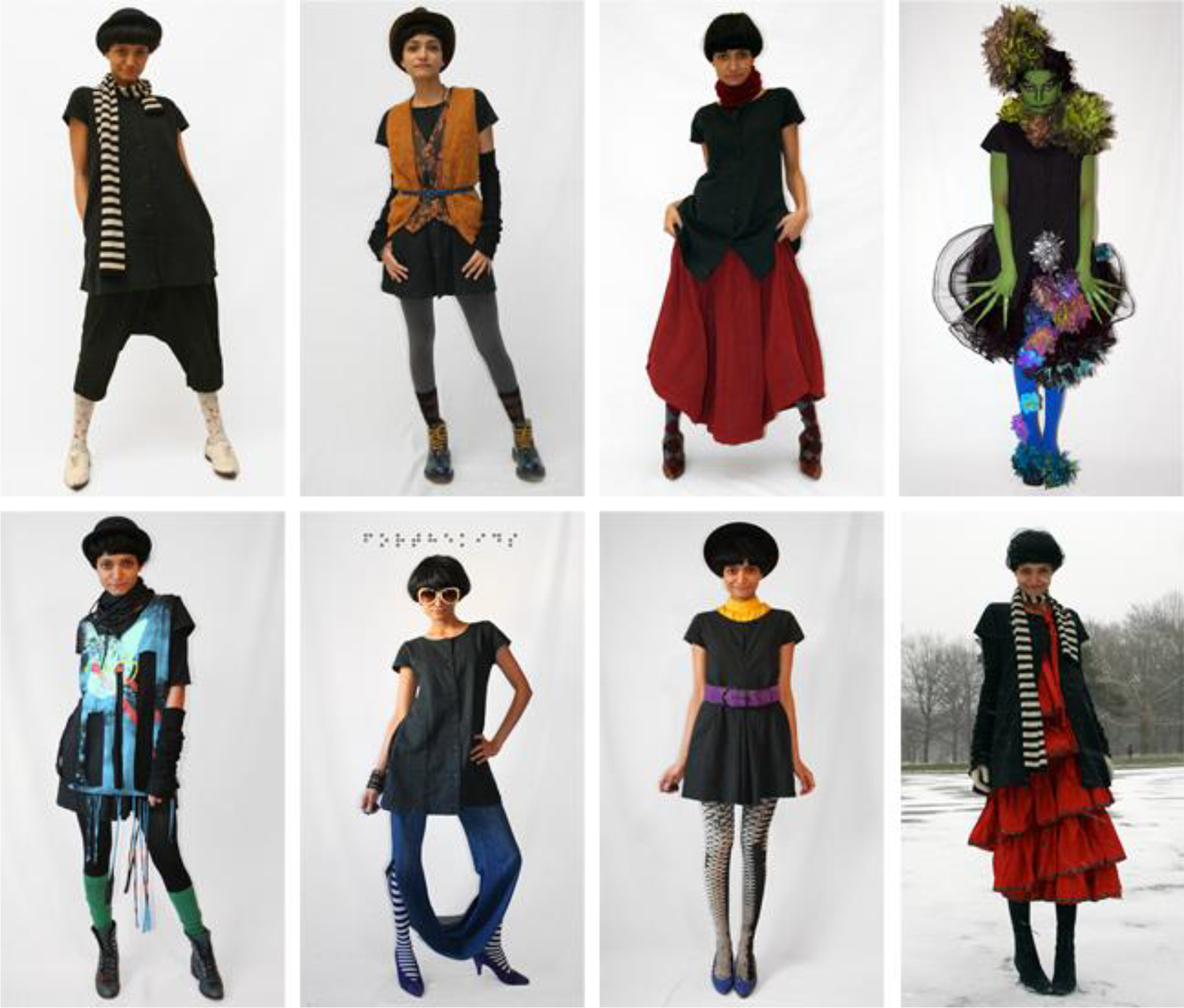
Source: http://theuniformproject.com/upweb/#!about Accessed 09/12/16.
To be sure, framing the project in terms of social enterprise, austerity, non-consumption, and sustainability was mostly media driven. The UP was first and foremost “a creative challenge” and an exercise in “a joyful activism,” the idea being that one can raise awareness for causes and even change behavior through positive emotions ( Elle Canada 2009). In Matheiken’s words, “there is this misguided notion that charity work has to be depressing. I wanted to show that it can be fun and inspiring and make the model of giving back less daunting” (cited in The Times 2009). However, much of the media coverage focused on the “sustainable dimension;” an illustrative example is the Cleo article (Dec 2009), where Matheiken was asked to advise readers on sustainable fashion. While Matheiken did not specifically define herself as an entrepreneur until later on in the project, the media quickly appropriated the lens of social entrepreneurship in referring to the project as “a brilliant demonstration in social entrepreneurship” ( Good Housekeeping 2009). This frame is further evidenced by her TEDxSJU talk being filmed as part of an event on “entrepreneurs who have turned their passion for social change into successful nonprofits” and that she was invited to talk at the Social Entrepreneurship Summit at Harvard University in 2012.
Overall, at the onset, the UP was “a hybrid of cultural commentary, artistic experiment and socially astute charity” ( Elle Canada 2009). This was reflected in the structure of the venture, its online representation, and the media coverage it received. One might say it was a polyvocal social enterprise. The UP evoked earlier artistic performances, such as Andrea Zittel’s Six Month Uniforms (http://www.zittel.org/work/six-month-uniforms), that took aim at the “tyranny of constant variety” while demonstrating how one can create a sumptuous variety with just one dress and a closet overflowing with accessories ( The New York Times 2009). The project aimed to challenge the social conformity imposed by school uniforms, while also appealing to solidarity and a sense of social unity to help those in need. It was a personal, “creative challenge” that depended on enthusiastic responses and generous participation of a diverse group of collaborators. The UP encouraged creative consumption, yet often was also described within the imperative of austerity, entrepreneurship and in terms of anti-consumption. This multiplicity of voices, however, ceased towards the end of the project when the figure of a singular ‘social entrepreneur’ emerged in the media, particularly in TED talks. In the next section, we show this narrative consolidation and the concomitant molding of this venture along the gendered parameters of the dominant model of entrepreneurship, thereby revealing the gendered ideology inherent in such narrative constructions.
The Uniform Entrepreneur: A (Masculine) Heroic Narrative
Matheiken’s TEDxDubai talk (2010) is the apotheosis of the singular narrative – Woman of The Year. It has all the hallmarks of a classic ‘entrepreneur as hero’ story, that of an individual’s quest to change both self and the world (Ogbor 2000). In this talk, Matheiken assumes a role of a ‘battle protagonist,’ set to disrupt the worlds of fashion and philanthropy, both entrenched and stale in their ways. She weaves biographical facts into the UP story and embraces the entrepreneurial ethic – determined to challenge herself, taking risks, accepting setbacks, and generally adopting a can-do attitude (Collins and Moore 1964; Schumpeter 1934). She draws on a range of familiar tropes, firstly on the path to “reboot [her]self.” A graduate of a design school with limited options for stable employment but a thirst for self-realization and a desire to give to others, she finds herself unfulfilled. As the classic entrepreneurial story goes, she gives up a steady job to create a more meaningful life (Schumpeter 1934). This self-reinvention rests on a passion for self-expression and vintage shopping, and her cosmopolitan experiences. Rather than dwelling on discouraging structural barriers (including employment in post-crisis 2009), Matheiken’s approach is to focus on self – to change her own life and in the process, help others change their world. This requires an ability to reach into the unknowable future, thereby assuming another common entrepreneurial trope – entrepreneur as visionary (Collins and Moore 1964). What had earlier been presented as fortuitous stumbling upon various trends is recast as foresight and as part of a master plan to “create a unique convergence of very important and emergent social trends.” Consistent with Schumpeter’s (1934) definition of the entrepreneur, this innovation is premised on the fact that Matheiken is an outsider to fashion and philanthropy, not bound by conventions and/or brave enough to disrupt them. Herein lies still another trope – entrepreneur as a revolutionary, a risk-taker who bends or even breaks rules while creating a new order (Ogbor 2000) in the UP’s case through her “sharing model of giving.” Overall, the UP in TEDxDubai (2010) is an action- rather than a community-driven project that valorizes the agency of an individual with the right idea, willingness to act, and a little luck. Once again, we see an inability or unwillingness to consider any causality in terms of the structural problems Matheiken wishes to address. In line with neoliberal ideology, poverty is presented as easily solvable by responsible individuals and there is no examination of the complexity of multi-layered, structurally rooted problems which lead to it (Blowfield and Frynas 2005).
Studies on media representation suggest that such entrepreneurial story-making is a joint effort by entrepreneurs and the media (e.g., Anderson and Warren 2011; Nicholson and Anderson 2005). Entrepreneurs are compelled to frame their idiosyncratic ventures with/in the common tropes to make their actions intelligible to various stakeholders, while media rely on these tropes as “understanding shorthand” and rehash Schumpeterian iconography of hero-entrepreneur to communicate succinctly with their audiences (Nicholson and Anderson 2005, p. 166). In the UP’s case, this narrative reification occurs most obviously in her TEDxDubai (2010) talk. As several commentators noted, a “TED style” prefigures TED talks (Bratton 2013; also Harouni 2013; Jurgenson 2012). TED’s trademark spotlight device is a design element that materially privileges an individual actor regardless of the story content or the nature of the narrated endeavor; it elevates a speaker into a position of either a guru (i.e. Matheiken in TEDxSJU, 2011) or a hero (Matheiken in TEDxDubai, 2010). Given the imperative to appeal to a wide international audience, TED talks are often little more than a variation on Campbell’s universal hero myth: “A hero ventures forth from the world of common day into a region of supernatural wonder: fabulous forces are there encountered and a decisive victory is won: the hero comes back from this mysterious adventure with the power to bestow boons on his fellow man” (Campbell 2008, p. 23). These classic lines neatly sum up the eighteen minutes of Matheiken’s TEDxDubai talk, Matheiken is foregrounded at the expense of her many collaborators with the emphasis placed on gendered resources, namely the LBD and its cornucopia of accessories, rather than dwelling on any of the structural problems she is attempting to address. Importantly, such (re)structuring of entrepreneurial stories is not representational, but ideological in nature (Anderson and Warren 2011). Our analysis of the TEDxDubai talk concurs that TED’s emphasis on authenticity and inspiration is ideologically consequential and serves to entrench the classic patriarchal discourses of entrepreneurship (Ogbor 2000).
TED’s ideal of authenticity encourages a type of self-presentation that foregrounds the innate or experience-based expertise of a speaker (Jurgenson 2012). For Matheiken, such expertise is rooted in her passion for fashion and vintage shopping, which in turn positions her innovative idea firmly within a gendered sector of entrepreneurship (Jennings and Brush 2013). The UP aims to challenge the gendered idea of fashion as inherently frivolous (Wilson 1990) and initiate a serious conversation about over-consumption, unethical production, and global inequality by showing that “a sense of style” can be an instrument for social change (TEDxDubai 2010). However, since the project design is built on the prevalent “look at me” (in Matheiken’s words) trend, it reinforces the notion that women enterprise themselves primarily through self-objectification. While Matheiken intends to act (“give back,” challenge consumerism, and foster global connectivity through sharing), she does so by appearing: first, in hundreds of stylized looks courtesy of the LBD, an iconic symbol of femininity, and then as a fashion celebrity, “a person who is also a thing” onto which onlookers can “hang” their urges, desires, and identifications (Thrift 2008, p. 19). Thus, in widely disseminating these colorful “look at me” images, she and the media reassert a hegemonic route to female self-realization — “men act and women appear” (Berger 1990, p. 47), echoing the dominant gender ideology, albeit here pursued through active working on one’s appearance.
The markers of femininity – fashion, the LBD, her girlish image (Matheiken refers to herself as a girl on the website) – stand in sharp contrast to the male-normative image of the entrepreneur (Schumpeter 1934; see Dixon 2000). Yet, we can trace the subsumption of the difference within a singular (masculinized) rhetoric of a hero on a quest to change “the business of philanthropy” and act as a quasi-savior for children in the developing world. As Matheiken weaves her own hero(ine) myth of breaking away from the “corporate world,” where she is “ethically drained” and “drowning,” the word “challenge” becomes a refrain of the talk and turns the confines of a feminized consumer subjectivity (the need to look unique every day) into a heroic narrative that leaves unquestioned the reason underpinning this gendered imperative. In this TED version of the UP story, the voices of beneficiaries in rural India and the UP community who have contributed to the success of her mission are silenced. The stakeholders who were so crucial to the project are ignored and sidelined. Indeed, Blowfield and Frynas (2005) show that this is often the case in social initiatives, despite stakeholder dialogue and engagement being central to discussions of best practice. The discourse of individual mastery and a journey of (self)discovery, that Talk like TED (Gallo 2014) requires – echoing a classic discourse of The Enterprising Man (Collins and Moore 1964) – renders mute the ethics of care and the collective effort that might have driven the project in the first instance. Overall, the UP’s authenticity is compromised: the tensions and inconsistencies of its unconventional nature are eliminated to reproduce a reified figure of the male-normative entrepreneur, thus reinforcing the dominant model.
One key promise of TED is to inspire global audiences, chiefly by offering a personal testimony and sharing an epiphany (Bratton 2013). Matheiken delivers on this promise by concluding her story with “renewed sense of hope” and “a very encouraging thought” that “with the groundswell of the social web, we do not need to feel insignificant anymore…we are all one click away from people who share the same concerns, who want to do something the same way you do and that means our individual actions can solve mammoth problems, have macro impact.” That is, in place of the “uninspired…patronizing, paternalistic, and just impersonal” model of dealing with world problems (in this case poverty and access to education), she proposes one where “everyday people like you and me can have a real impact” with one click. This well-meaning proposition reflects the much-criticized TED impetus to present complex, structural problems as easily solvable with an innovative app or a feel-good behavioral change (Harouni 2013; Jurgenson 2012), negating the realities of the neoliberal system.
The issue is not only over-simplification of both problems and solutions or the Apple-esque branding of self and philanthropic projects to gain publicity, rather the endorsement of the idea that an individual carries responsibility for the solution of both personal and societal problems (Shamir 2008; also Giesler and Veresiu 2014). A shift in responsibility from the public sphere to the private, including in the form of social entrepreneurship, is well-documented (e.g., Littler 2015). What Matheiken’s story illuminates is how this shift remains gender-bound. As Matheiken presents her audience with a blueprint to get ahead in both the private and the public spheres, both the scope and the way of acting in the world asserts the age-old patriarchal ideals about agency and ambition (Campbell 2014).
The UP story of “a personal challenge” obscures the fact that her social enterprise initiative builds on access to and ability to mobilize gendered and classed forms of cultural, social, and economic capital. Presenting her entrepreneurial path as available to anyone with “fun idea” and ability, Matheiken leaves unacknowledged the distinct classed sensibilities of the project – pursuit of adventurous self-expression and focus on aesthetics (Thompson and Haytko 1997) and the level of privilege it involves (at the very least continuous access to the internet and free time). As evident in Matheiken’s TEDxDubai talk, the focus on self-making and self-presentation (charisma, optimism, and can-do attitude) results in minimization of the role of a social network, wealth, and education in entrepreneurial success. Thus, while “the power of web” is credited, the individual, her effort and achievements are emphasized as pillars of inspiration, thereby reaffirming the conventional, gendered view of an entrepreneur as a ‘self-made man’ and a lone hero.
Concluding Comments
The marketing and consumer research literature on gender has previously exposed the gendered ideology in marketing discourse (Bristor and Fischer 1993; Fischer and Bristor 1994). Our study extends such work by exposing the gender ideology inherent in neoliberal frameworks that underpin social enterprise initiatives. Importantly, we show how this reveals many hidden gendered assumptions that work towards reinforcing dominant narratives that have kept women silent. Although the invisibility of women in marketing has been highlighted (Tadajewski and Maclaran 2013), here we see how even when a woman is made visible, as in a case of Matheiken, paradoxically, this visibility may not be actually effecting any change or challenge to the patriarchal value system that is so deeply entrenched at a structural level (Campbell 2014; Hearn 2015; Hearn and Hein 2015).
Accordingly, we trace how a fragmented, polyvocal social enterprise is molded into a singular heroic quest. Thus, the innovative social endeavor is enfolded into the hegemonic economic paradigm and its societal objective to “create systems change” is curtailed ( World Economic Forum 2017), illustrating how “the production of resistant meanings by individuals will always be assimilated by capitalism for the production of fresh commodities” (Willis 1991, p. 175). We do not question Matheiken’s motives in this social enterprise, rather, we expose how media, including social media and forums for sharing of innovative ideas, such as TED, articulate, normalize, and propagate a form of (self)presentation, which reinforces the gendered model of entrepreneurship. We find that in a media-connected world, the originally polyvocal social nature of the UP is refracted through the traditional, ideologically loaded tropes and turned into a normative blueprint for a neoliberal social enterprise. We see how every idea and interaction in all spheres of social life can and should be appropriated for entrepreneurial i.e. marketized ends. As Shamir (2008, p.14) puts it, “moral considerations thus ‘lose,’ so to speak, their transcendental attributes…and re-emerge as business opportunities.” Social business initiatives have previously been critiqued as a stopgap measure to fill gaps in governance which have arisen with the acceleration of neoliberal economic globalization (Blowfield and Frynas 2005). Here this social responsibility is further individualized, presented as one of an autonomous, active and gendered socio-morally conscientious actor, thus constraining any attempt at change.
The UP therefore ultimately proposes a gendered model of the relationship to oneself and community and outlines steps to self-realization for middle-class women who are conscious of a “hugely problematic” (TEDxDubai 2010) world and have an ambition for self-realization in the public sphere. By examining the way entrepreneurship connects self-making with market practices (Cova, Dalli and Zwick 2011; Scaraboto and Fischer 2013; Zwick and Schroeder 2013), we show how gender ideology operates as a macro-level constraint which prevents social change by limiting the arenas within which women can create change as well as how they can act in order to enact this change.
Our case study thus reveals how gender ideology structures opportunities and operates as a constraining factor at three levels (Risman 2004). At the individual level, we clearly see gender foregrounded in the way that Matheiken draws on her body and personal passion in fashion. In turn, her social enterprise is granted legitimacy because these personal assets are deemed socially appropriate for her gender. At the communal level, while gender facilitates a wide participation, it also delimits the scope of the mission. The UP operation relies on easy access to resources, namely fashion accessories that are presumably in everyone’s wardrobe, and crowdsourced charitable giving i.e. a few coins from each contributor. As such, the value the UP is able to produce is limited in its regenerative capacity, thus in time. Such short-term orientation tends to attract less social investment and jeopardizes the longevity of social enterprise ( British Council 2017). Finally, at the institutional level, gender as a social structure works in more insidious ways, as its working is largely invisible. Previous research on entrepreneurship suggests that institutional support is distributed unequally and regulations are skewed along gender lines (ibid.; Fay and Williams 1993; Hollowell, Mellors, and Silver 2006). Our research furthers these insights by showing how media frames the successful social enterprise in gendered tropes, thereby not only reproducing existing gendered hierarchies but diminishing the innovative potential of social enterprise and capacity to advance systems change. In celebrating the achievements of social enterprise in terms that make them intelligible to a wide public, the media along with the forums designed to popularize entrepreneurial ideas, silence or even erase the elements that propel the social innovation in the first place, namely the polyvocality and the collaborative nature of social enterprise. In doing so, these forums promulgate a narrow neoliberal understanding of responsibility as that of an autonomous, self-determined, and self-sustaining gendered, heroic actor (Shamir 2008; Trnka and Trundle 2014).
Despite an emancipatory rhetoric, therefore, social entrepreneurship is shown to be an ideological movement which is intended to legitimize and consolidate neoliberal responsibilization and patriarchal values. In spite of the UP’s innovative format, rather than a reshaping of the market to fit the logic of relational responsibility and mutuality within the UP, we see a reshaping of the UP into a gendered and individualized narrative. The unit of analysis is firmly centered on the micro-level i.e. Matheiken, thus preventing any possible radical revision of the neoliberal parameters of social responsibility. Complex structural issues such as poverty in the developing world are shown to be solved by discrete, identifiable and autonomous actors. By upholding the idea of neoliberal responsibilization, such socio-moral initiatives foreclose the possibilities for developing alternative ways of addressing social issues and remedying economic ills.
In conclusion, in critically unpacking the UP, we argue for the need to disentangle the dynamics of gender ideology behind well-meaning personal-responsibility-based solutions for poverty alleviation, environmental sustainability, and development. We show that gender as an ideology permeates social entrepreneurship and is threaded through all levels in complex multi-dimensional, iterative ways which resist any simple ‘solutions.’ Our research highlights the importance of more nuanced attention to gender in macromarketing, particularly in understanding the complex workings of power in discourse, which serve to sustain (hierarchically) gendered social structures i.e. a patriarchal social order. It contributes to calls for an examination of the apparatus of hegemonic models and discourses, particularly in the ways these silence multiple voices and side-line alternative forms of organizing that aim to address sustainability issues (Tregidga, Milne, and Kearins 2018). As such, by adopting a feminist perspective and methodology, the paper builds upon and extends the work of the Critical School of macromarketing (as identified by Mittelstaedt et al. 2014) by highlighting the gendered implications of neoliberalism and responsibilization. In so doing, we echo Kilbourne, McDonagh and Prothero’s (1997)‘s call for the need to examine and problematize the Dominant Social Paradigm by showing how patriarchal power relations operating at a macro-scale remain unchallenged and constrain social change.
We suggest that much of the silencing is due to the powerful alignment of gendered business tropes and a particular neoliberal understanding of social responsibility. By interrogating the processes and practices of gender ideology, we are able to expose the mechanisms and structures that normally remain invisible in contemporary discourse on female empowerment (Catterall, Maclaran and Stevens, 2005; Hearn and Hein 2015). Our exposition of the UP trajectory stresses the need for future research to theorize market-embedded social projects at the intersection of various categories of difference, that include not only gender but class, race, sexuality, and ability. Otherwise, the prevalent reductionist media representations of entrepreneurial social initiatives gloss over and even erase the differences, tensions, and interdependencies which underpin the nature of all market-mediated endeavors to tackle social and environmental problems.
Supplemental Material
Supplementary_Table_1 - The Uniform Entrepreneur: Making Gender Visible in Social Enterprise
Supplementary_Table_1 for The Uniform Entrepreneur: Making Gender Visible in Social Enterprise by Olga Kravets, Chloe Preece and Pauline Maclaran in Journal of Macromarketing
Footnotes
Declaration of Conflicting Interests
The author(s) declared no potential conflicts of interest with respect to the research, authorship, and/or publication of this article.
Funding
The author(s) received no financial support for the research, authorship, and/or publication of this article.

Supplemental Material
Supplemental material for this article is available online.
Notes
References
Supplementary Material
Please find the following supplemental material available below.
For Open Access articles published under a Creative Commons License, all supplemental material carries the same license as the article it is associated with.
For non-Open Access articles published, all supplemental material carries a non-exclusive license, and permission requests for re-use of supplemental material or any part of supplemental material shall be sent directly to the copyright owner as specified in the copyright notice associated with the article.
