




Abstract
Drawing on theoretical perspectives from the literature on childhood socialization and cultural capital, we investigate how the socioeconomic status (SES) background of public administrators shapes their relationships with elected political officials and their staff. Analyses of over 30 years of survey data indicate that American state agency directors from higher SES backgrounds report more frequent interaction with political principals, suggesting that early-life exposure to elite norms and the accumulation of cultural capital facilitate access and ease in elite political spaces. In addition, these administrators report lower levels of perceived gubernatorial influence on major policy changes and agency rules and regulations, indicating the potential for high SES socialization to buttress bureaucratic autonomy and administrative discretion. These findings underscore the importance of class background as a formative social identity, and suggest that scholars should take it seriously in public administration research, particularly as a dimension of social equity and elite political navigation.
Keywords
Introduction
Government bureaucrats often face competing demands. They are simultaneously expected to be responsive to popular mandates, as expressed through the preferences of elected political officials, and to make informed professional judgments regarding the best way to exercise their discretionary duties in ways that serve the public interest (Aberbach & Rockman, 1988; Bertelli & Lynn, 2006). The inherent tension between these goals has led to enduring questions about the appropriate levels of accountability and discretion, which has been a longstanding topic of considerable interest among public administration scholars, stretching back at least to Friedrich (1940) and Finer (1941).
Empirical studies examining bureaucratic accountability and discretion in the American states have often relied on survey-based measures of the influence of political actors, as perceived by state administrators, on agency activities. Studies in this tradition have tended to focus on the institutional powers of governors and state legislators, such as budgetary, appointment, and rule review powers (Brudney & Hebert, 1987; Gerber et al., 2005; Woods, 2004; Woods & Baranowski, 2006, 2007; Yackee, 2025) and agency structure and process (Miller & Wright 2009; Potoski & Woods, 2001; Waterman & Rouse, 1999; Woods, 2009, 2018). In addition to these institutional differences, some studies suggest that political influence dynamics may be shaped by the sociodemographic characteristics of administrators themselves. In particular, the race and gender of state agency directors have been shown to affect their perceptions of the amount of contact between themselves and elected political officials, and of the amount of influence that these officials have on agency actions (Uttermark et al., 2024; Waterman & Rouse, 1999).
In this study, we expand the investigation of the effect of sociodemographic characteristics on political-bureaucratic interaction to include another potentially salient factor: socioeconomic status (SES) background. SES is widely recognized as a key determinant of human behavior (Berzofsky et al., 2014), and it offers a valuable framework for understanding an individual's financial, social, cultural, and human capital resources (American Psychological Association [APA], 2007; National Center for Health Statistics [NCHS], 2012; Shavers, 2007). Our theoretical perspective draws on concepts from the literature on socialization theory and cultural capital to suggest that SES background may affect the frequency of contact with political actors and perceptions of their influence on agency operations.
Using survey data of state agency directors over more than 30 years, our analyses suggest that the educational background of an administrator's father, a proxy for SES background, has significant effects on both the level of contact agency directors report having with legislators, governors, and their staff, and the perceived influence that governors exert on agencies’ major policy changes and rules and regulations. Thus, this study expands our understanding of political-bureaucratic interactions by showing that bureaucratic power is not only structurally conferred but also socially conditioned through administrators’ backgrounds. By highlighting the role of SES background in these interactions, we open new avenues for research on the complex interplay between administrators’ personal backgrounds, their professional roles within the broader political system, and the potential implications for representative bureaucracy and democratic governance.
SES Background as a Latent Adult Identity
Socioeconomic status (SES) is generally described as the social standing or social class of an individual or a group. It is a pervasive social identity across diverse cultural and political contexts and plays a crucial role in shaping individuals’ lives, opportunities, and access to resources (Berzofsky et al., 2014). Measures of SES serve as proxies for access to financial, social, cultural, and human capital resources, typically incorporating factors such as education, income, and occupational status (APA, 2007; NCHS, 2012; Shavers, 2007). These traditional indicators of SES, sometimes referred to as the “big three,” may be measured at the individual, family, or household level.
Within the field of public administration, researchers have used SES to examine a range of topics, including government performance evaluation (Bertram et al., 2022; Nguyen & Le, 2022), citizen satisfaction (Song et al., 2025), local governance and network effectiveness (Uster et al., 2022), motivational and representational dynamics among public servants (Yang, 2025), and the life satisfaction of public employees (Lee, 2021). Yet in most cases, SES is treated as a contextual control rather than a central explanatory factor (but see Song et al., 2025; Yang, 2025).
While prior research typically uses SES to describe an individual's current social standing, we focus specifically on SES background, or the social class context in which individuals were raised. Classic theories of socialization describe a learning process by which individuals acquire the knowledge, skills, values, and norms necessary to function within society (Parsons, 1951). From this perspective, attitudes and behaviors are deeply shaped by exposure to one's social environment during formative years. A key body of work in this tradition demonstrates that social class systematically shapes the values parents seek to instill in their children. For instance, Kohn (1959) and Kohn and Schooler (1982) found that parents in occupations characterized by autonomy and cognitive complexity tend to emphasize self-direction, while those in more routinized and supervised roles prioritize conformity. Kohn (1989) later argued that these class-based parenting strategies produce enduring psychological traits, such as creativity, autonomy, or deference to authority.
SES background affects the types of educational and occupational environments individuals select into. While parents from higher SES backgrounds cultivate occupational skills aligned with their own labor market experiences—such as individualism, autonomy, and choice—children raised in lower SES contexts may perceive the labor market through a lens of constraint. Manstead (2018), for instance, finds that working-class individuals tend to be uncomfortable in high-status contexts due to the prevalence of middle-class values and practices in these settings. As a result, they are less likely to seek out, be selected for, and remain in positions at prestigious universities and workplaces.
Parents also transmit political orientations and participatory behaviors that shape adult engagement. Children from higher SES households are exposed to more political talk, develop higher levels of political efficacy, and receive more encouragement to engage in political activities than their lower SES counterparts (Schlozman et al., 2012; Verba & Nie, 1987; Verba et al., 2003). Because higher SES parents themselves participate more actively, they model the efficacy, knowledge, and social skills that can ultimately lower the costs of elite interaction for their children (Campbell et al., 1960; Dalton, 2017; Jennings et al., 2009).
These differences, among others, lead people with higher SES backgrounds to have accumulated greater cultural (or social) capital (Bourdieu, 1986). This capital encompasses a variety of internalized knowledge and skills, including familiarity with cultural norms and values and social etiquette. It also embodies access to elite networks and the acquisition of professional skills, which, in turn, may shape a person's approach and style in performing occupational duties. These differences in childhood socialization and cultural capital formation, we propose, are likely to impact the functioning of state administrators.
The Importance of SES Background for Public Administration
Public agencies operate in a resource-dependent environment: governors control budgets, legislators write statutes, and both grant or withhold political legitimacy (Pfeffer, 1987; Williams, 2002). A crucial aspect of an agency director's duties, therefore, involves managing boundary-spanning relationships with external actors, including elected political officials, interest groups, and the public. These relationships have been the subject of a wide body of literature in public administration, but very little of it has focused on administrators’ individual backgrounds. These backgrounds, however, may provide meaningful information regarding their (1) communication and engagement with political officials and (2) perceived level of autonomy from political influence.
Administrator SES Background and Communication with Elected Officials
Communication between agency personnel and elected political officials is important. Agencies play a critical role in translating legislative action into public policy (Wilson, 1989), giving agency directors “considerable power over policy administration” (Krause & O’Connell, 2016, p. 915). Communication, which often takes the form of routine interactions such as phone calls, emails, and direct meetings, is often critical to effective implementation (Kelleher & Yackee, 2006). The level of communication between agency leaders, political officials, and their staff is an important aspect of ongoing bureaucratic oversight (Furlong, 1998; MacDonald & McGrath, 2016) and has significant impact on the substance of public policy (Lowande et al., 2019). Moreover, effective communication is a two-way street, as it also allows agency heads to advocate for agency priorities within the legislature and the governor's office and shape the content of legislation (Nicholson-Crotty, 2009).
The literature on childhood socialization and cultural capital suggests that SES background may shape administrators’ embodied dispositions toward elite political interaction. 1 Individuals from higher SES backgrounds are more likely to internalize values, communication styles, and behaviors that align with elite norms, facilitating smoother contact with political principals (Lareau, 2011; Manstead, 2018). This latent cultural capital does not merely reflect professional skill but conveys social ease and legitimacy within elite networks, thereby conditioning how bureaucrats navigate power and perceive executive influence.
In addition, administrators raised in politically engaged, high-SES households may enter public service with greater familiarity with elite discourse and more comfort navigating political networks, or what Bourdieu (1986) describes as an “embodied” form of cultural capital. As Bourdieu (1986) points out, cultural capital extends beyond education to a natural ease in navigating elite spaces. Administrators from these backgrounds may find it easier to integrate into elite circles due to shared values and experiences that reduce the social costs of engaging with political elites. This cultural familiarity, often developed through exposure to prestigious educational institutions and professional environments, enables higher SES administrators to communicate effectively with elites, leveraging shared social norms and values to form advantageous connections.
Finally, administrators from higher SES backgrounds often have access to elite educational institutions, early professional development opportunities, and prestigious internships or fellowships, providing them with early exposure to elite networks. These opportunities often translate into long-term professional advantages, reinforcing the ability of such administrators to navigate complex political environments. For example, educational pedigree plays a critical role in shaping early relationships with influential actors, including elected officials and policy elites. Administrators from higher SES backgrounds may benefit from a sense of ease in these settings, enabling smoother interactions with external actors like governors and legislators.
The advantages of higher SES administrators stand in contrast to the experiences of their lower SES counterparts. Administrators from lower SES backgrounds may find it more challenging to engage with political elites due to their limited access to elite networks and social capital. Lin (1999) highlights how those from lower social strata typically lack the extensive social resources that their higher SES counterparts can draw upon, making interactions with political elites more intimidating and burdensome. Furthermore, lower SES individuals may not have benefited from the same cultural capital, such as prestigious educational backgrounds or early exposure to professional networks, placing them at a disadvantage when navigating elite political spaces. This suggests: H1: Administrators from higher SES backgrounds will report more frequent contact with governors, legislators, and their staff.
Administrator SES Background and Autonomy
Agencies often go to significant lengths to cultivate and protect their autonomy (Carpenter & Krause, 2012; Wilson, 1989). Autonomy, in this context, may be defined as the “ability of executive agencies to use their own discretionary authority to implement policies made by political principals, as well as to make policy according to their own wishes when mandates are ambiguous, incomplete, corrupt, or contrary to their perception of national interest” (Bersch & Fukuyama, 2023). The converse of autonomy, thus conceived, is political control over agency policy decisions. Political officials often seek to circumscribe agency autonomy in order to exert greater influence on policy implementation (Heclo, 1977), and a rich literature has emerged that details the various mechanism they have employed to do so (for overviews, see Bersch & Fukuyama, 2023; Workman et al., 2010).
The literature on childhood socialization and cultural capital suggests that, in addition to increasing interaction with political officials, higher SES status background can serve to enhance agency directors’ perceived autonomy. Bourdieu's (1986) concept of cultural capital helps explain how SES background, even when not immediately visible, can condition the ease with which administrators navigate elite political environments. This perspective posits that children raised in lower-SES households, having learned to cope with scarcity, develop an outward-facing habitus that makes them highly attuned to others’ preferences (Piff & Robinson, 2017). By contrast, children from higher-SES families are typically socialized to see themselves as agents of influence, fostering greater independence and a stronger expectation of personal control in adulthood.
Indeed, a growing literature suggests that the “behavioral imprint” of class upbringing shapes both the kinds of jobs people hold and how they enact authority once in them (Fang & Tilcsik, 2022; Laurison & Friedman, 2024). Building on Bourdieu's concept of habitus, Fang and Tilcsik (2022) find that upper-class socialization cultivates an “independent” self, one comfortable exercising discretion, taking control, and communicating assertively. This orientation, in turn, steers those from high-SES backgrounds toward professional and managerial roles with greater structural autonomy. Extending this logic, we contend that the same class-based cultural capital shapes not only where administrators land but how they wield authority once there. That is, administrators raised in higher SES households may possess an embodied cultural competence that not only facilitates interactions with governors and legislators but also buffers them against perceived external influence (Dalton, 2017; Lareau, 2011; Manstead, 2018). Importantly, this influence operates subtly—not through formal institutional channels, but through ingrained behaviors and social intuitions forged through early-life experiences (Bourdieu, 1986; Kohn, 1989).
In a related vein, Uttermark et al. (2024) found evidence of stark racial and gender effects on interactions between agency directors and political elites. Their findings indicate that women of color report lower levels of contact with political officials than White men, as well as lower levels of control over their agency's major policy decisions, rules, and regulations. Thus, rather than increased contact being indicative of greater political control, their results suggest that “increasing communication with political oversight agents is correlated to agency heads feeling that they have more personal power (p. 320).” As they note, theories of intersectionality suggest that women of color may have lower levels of cultural capital with which to navigate elite policy spaces, which helps explain their lower levels of perceived autonomy over agency actions. SES background may function similarly, with administrators from higher SES backgrounds perceiving greater autonomy than those from lower backgrounds. Thus: H2: Administrators from higher SES backgrounds will report less perceived influence by governors and legislators on agency activities.
The SES Background of American State Agency Directors
The data for this study come from the American State Administrators Project (ASAP), which surveyed state agency directors across all 50 American states and all agency types in ten waves from 1964 to 2008 (Yackee & Yackee, 2021), though for reasons of variable availability our analysis utilizes only the 1974–2008 waves. The ASAP data include a broad array of information, including demographic characteristics, career and professional experience, and perceptions of programs, political relationships, federal aid, contracting, and more. These features make it a valuable source of information on state agency leaders’ perceptions, informed opinions, and experiences (Yackee & Yackee, 2021).
The ASAP surveys did not contain questions about parental salaries or occupations, but they did ask about parental education. Thus, we use utilize an education-based measure of the SES background of state administrators, which simply represents the educational attainment of the respondents’ father. 2 Educational attainment was measured using a scale ranging from 1 to 5, with the following categories: (1) High school or less, (2) Some college, (3) Bachelor's degree, (4) Graduate study, (5) Graduate degree.
Our measure is limited by its reliance on only one of the “big three” indicators typically utilized to measure SES. Despite this limitation, however, there is reason to believe that it can be an effective measure of an administrator's SES background. The three indicators (education, occupation, and income) tend to be reasonably well correlated. Moreover, researchers have argued that education is the most critical indicator of SES (Berzofsky et al., 2014), as it conveys lifetime earning potential, while income and occupation may only capture an individual's situation at a particular point in time (Shavers, 2007). This is particularly relevant for our purposes, as we are interested in childhood SES background as it pertains to socialization experiences that shape attitudes across a career.
Figure 1 displays the SES background of state agency heads over the more than 30 years covered by the survey data utilized for our analyses, along with the respondents’ gender (0 = male, 1 = female) and race (0 = White, 1 = nonwhite) for comparison purposes. As the graph illustrates, the trend of SES background among agency heads are inconsistent with the other two sociodemographic characteristics. That is, for gender composition, the proportion of female agency heads has improved over the course of four decades and for racial composition, the proportion between Whites and nonwhites has plateaued, yet, as measured by father's education, the proportion of low SES background representation has declined. Female representation in the sample has increased from less than 10 percent to nearly 30 percent, over this time period, while nonwhite representation has seen only a slight increase from 5 to around 10 percent of the total sample. At the same time, the data indicate a 34 percent increase in father's education over this period (from a mean of 1.72 to a mean of 2.31 on a 1–5 scale).
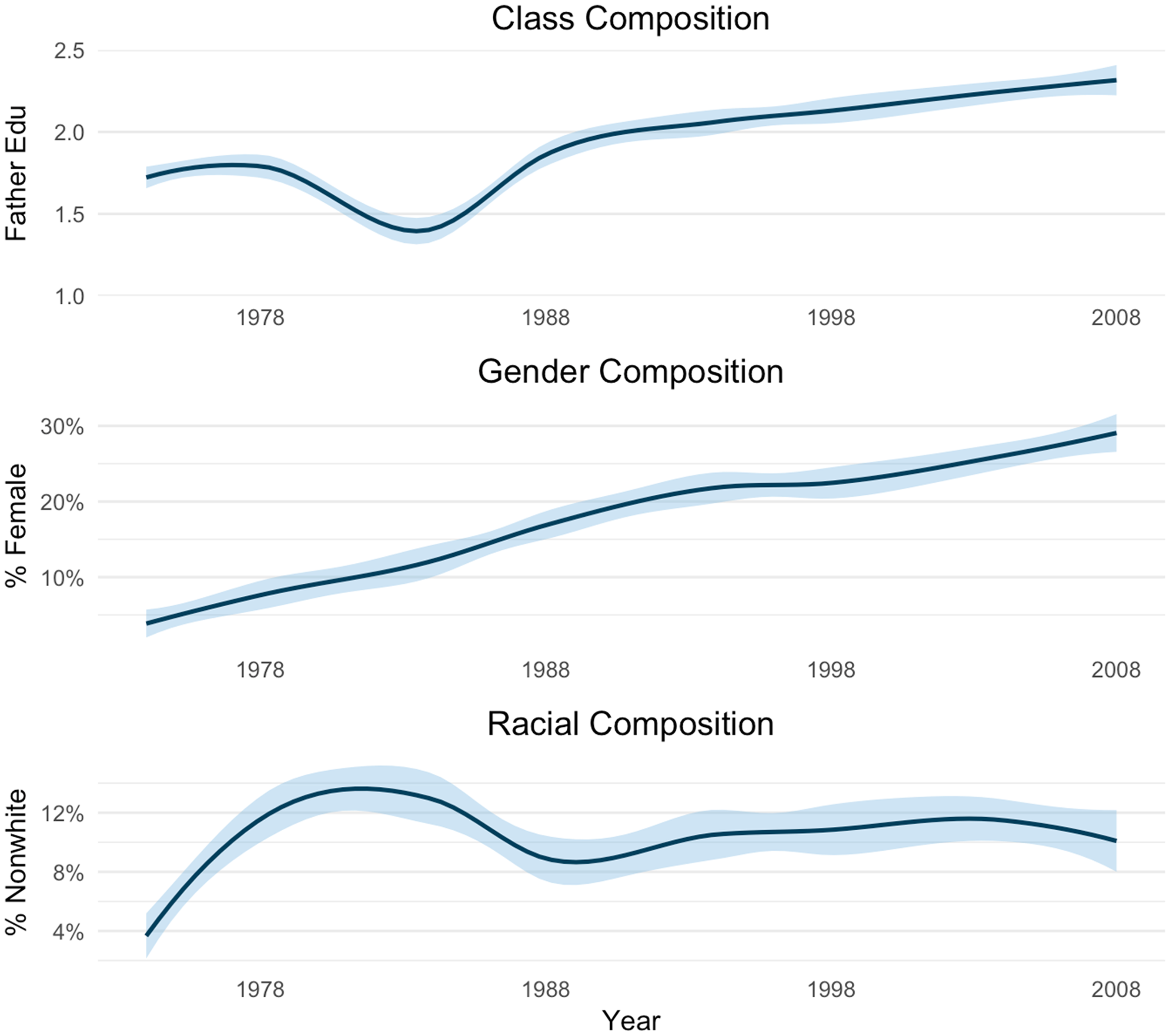
Class, Gender, and Racial Composition of Agency Directors Over Time.
While the observed trends in SES background among state agency heads may undoubtedly be, in part, attributed to the increasing educational attainment of the general population during this time period, the descriptive patterns that we identify for gender, race, and class closely mirror the compositional shifts within electoral institutions. For instance, Carnes (2016) highlights that although women and racial minorities made modest gains in Congress during the postwar era, the underrepresentation of the working class remained unchanged. Similar trends can be observed across state legislatures from 1976 to 2006, where the representation of both women and minorities increased while the proportion of working-class legislators declined from 5% to 3% (Carnes, 2016, p. 100).
As the figure indicates, there is a notable exception to the general trend of increasing father's education that occurs in the data in 1984. Indeed, for that year there are no respondents coded as having fathers with graduate degrees in the dataset, which stands in marked contrast to the surrounding years, in which around nine percent of respondents reported having fathers with graduate degrees. We do not know the reason for this discrepancy in the ASAP source data, but, as discussed below, in our statistical analysis we account for it by running models on both the full dataset and a dataset with 1984 omitted, which provide very similar results.
Figure 2 shows the SES background of agency heads across states in 2008. The higher the index, or darker the shade, the greater proportion of the state agency heads from low SES backgrounds in the state. Illinois, Wisconsin, Maine, Connecticut and New Jersey represent the darkest shade, indicating a relatively higher proportion of agency heads with low SES backgrounds are working in these states. Idaho and North Dakota, in contrast, have the highest proportion of agency heads from high SES backgrounds.
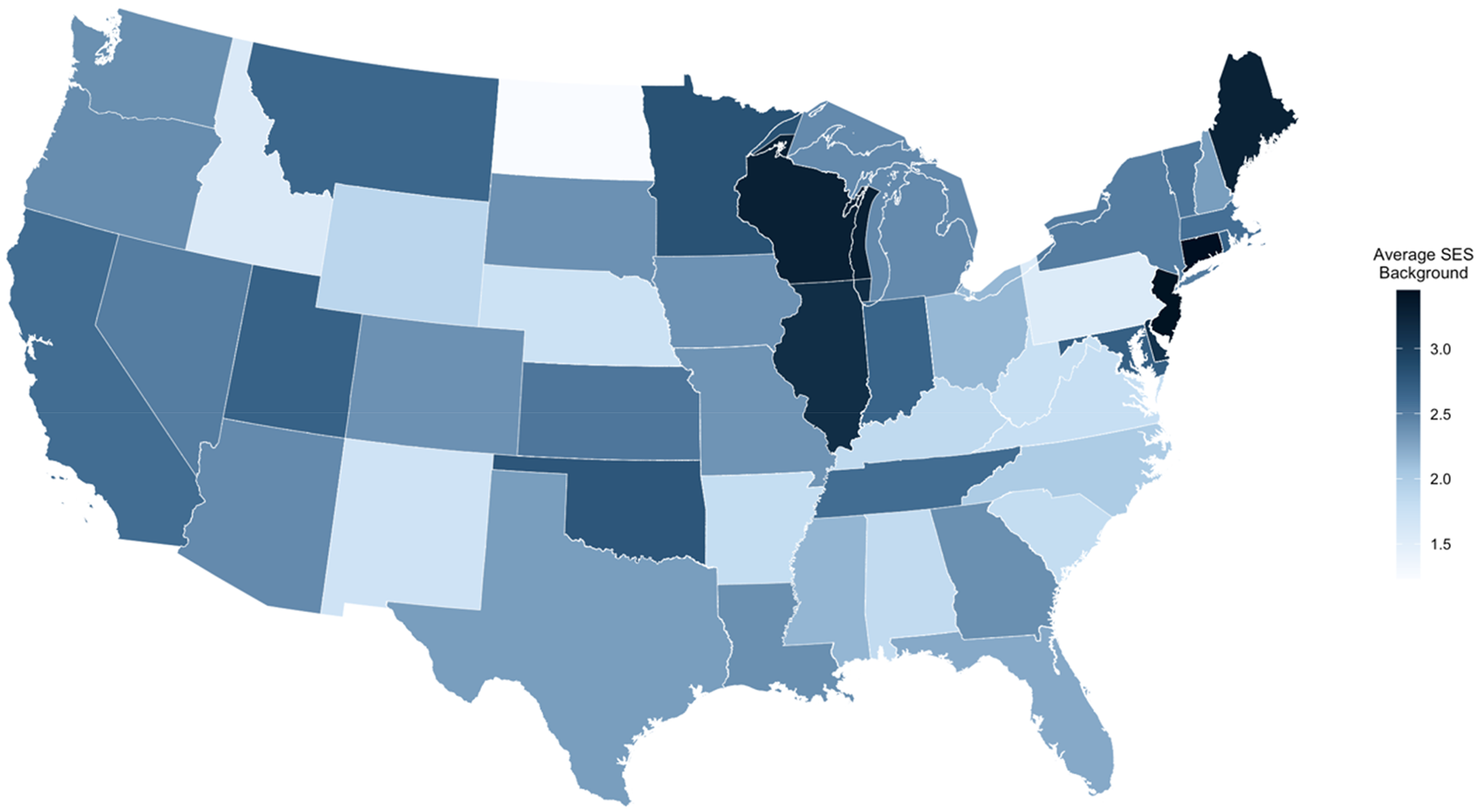
Average Agency Director SES Background by State in 2008.
Figure 3 presents the proportion of agency heads’ SES backgrounds during 2008 across agency types. It shows that environment and energy, natural resources, and education agencies have higher proportions of low SES background agency heads, while health, staff-fiscal, and regulatory agencies are less proportionate.
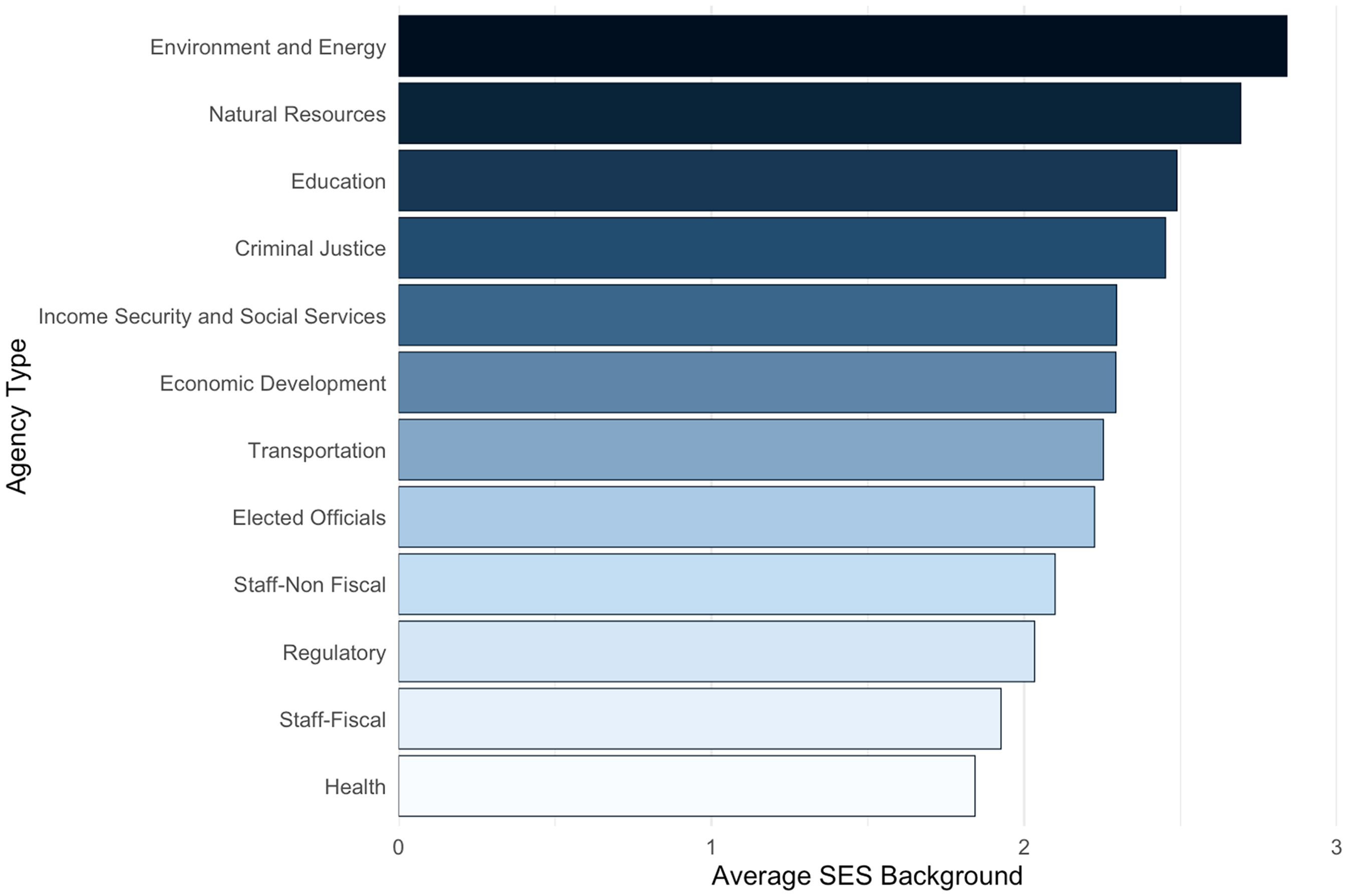
Average Agency Director SES Background by Agency Type in 2008.
Overall, these figures illustrate that, as indicated by father's education, the SES background of US state administrators remains dominated by the high SES group. This finding stands out compared to the modest increases in gender and racial composition. Yet, it is worth emphasizing that the underrepresentation of each of these historically excluded groups is consistent across the data.
Data and Methods
In this section we examine the relationship between our education-based measure of state agency directors’ SES background, as discussed above, and indicators of agency directors’ perceptions of contact with external political actors and the influence that these actors are reported as having on agency operations, as reported in the ASAP surveys. The survey data appear in eight waves of the ASAP survey, running from 1974 to 2008.
Dependent Variables
To evaluate our first hypothesis, we utilize a set of questions in which respondents were asked how often they have phone or in-person contact with a variety of individuals when carrying out their official duties. The external stakeholders we consider include: legislators, the governor, legislative staff, and gubernatorial staff. Original response options included: “Daily,” “Weekly,” “Monthly,” “Less than Monthly.” or “Never.” For our analyses, we invert the scale, producing a five-point ordinal scale in which higher values represent more frequent contact.
To evaluate hypothesis two, we utilize two questions in which respondents rated how much influence they believe external political actors have on (1) “Major Policy Changes,” and (2) “Agency Rules/Regulations.” Responses were on a four-point ordinal scale, coded from 0 (representing “None”) to 3 (representing “High”). The intermediate categories are “Slight” and “Moderate”.
While necessarily subjective, these measures have the advantage of providing a common metric with which to assess external interaction and influence, concepts that are very difficult to measure across agencies with very different functions. Moreover, as Brudney and Hebert (1987) argue, the literature on organizations suggests that perceptual data are appropriate in this case, as it is the perceptions of administrators who create the “enacted environment” within which administrators function. These measures are very similar to those used in a wide variety of literature on these concepts (e.g., Furlong, 1998; Kelleher & Yackee, 2006; Potoski & Woods, 2001; Uttermark et al., 2024; Waterman & Rouse, 1999; Woods, 2009; Yackee, 2025). The complete text of the questions is presented in the supplemental appendices.
Independent Variables
The primary variable of interest is our education-based measure of socioeconomic status background, as discussed above. In addition, we include a variety of control variables, which largely mirror those employed in other work using similar data (e.g., Jacobson et al., 2010; Kelleher & Yackee, 2006; Palus & Yackee, 2016; Uttermark et al., 2024; Woods, 2009). These include other sociodemographic characteristics, such as the administrators’ gender (female; male), age (in years) as well as age squared to account for the potential nonlinear effects of age (Uttermark et al., 2024), race (nonwhite; White), and party identification (Democrat; Republican; Independent). 3 Our models also include a number of variables related to the employee's professional position and background, including a dummy variable indicating whether they are a civil servant, a variable representing the number of hours the employee works per week (because greater hours provide more opportunity for contact with external actors), and a variable indicating the amount of time the respondent has been employed in their position (in years). We also include a number of time, agency, and state controls: a time counter variable, a variable indicating the total number of employees in a respondent's agency, and fixed effects for state, year, and agency functional category. Descriptive statistics are presented in the supplemental appendices.
Results
As noted above, there is a nontrivial dip in the average SES background of the respondents that occurs in the dataset in 1984. To account for this, we ran two sets of multivariate analyses. In the main text we present the results of models using the full 1974 to 2008 dataset. We also ran all models on a dataset that excludes 1984 survey wave, the results of which are reported in the supplemental appendices. These results are very comparable to those using the full dataset.
Table 1 reports the results of multivariate analyses of the effect of the independent variables on reported contact with external actors. The effects of the independent variables are estimated using ordered logit, a statistical technique that is applied in cases in which the dependent variable is categorical, with more than two categories (for a fuller discussion of this technique, see Long (1997)). In order to adjust for heteroscedasticity, significance levels are calculated using robust standard errors, clustered by state.
The Effect of SES Background on Perceived Contact with Political Officials.
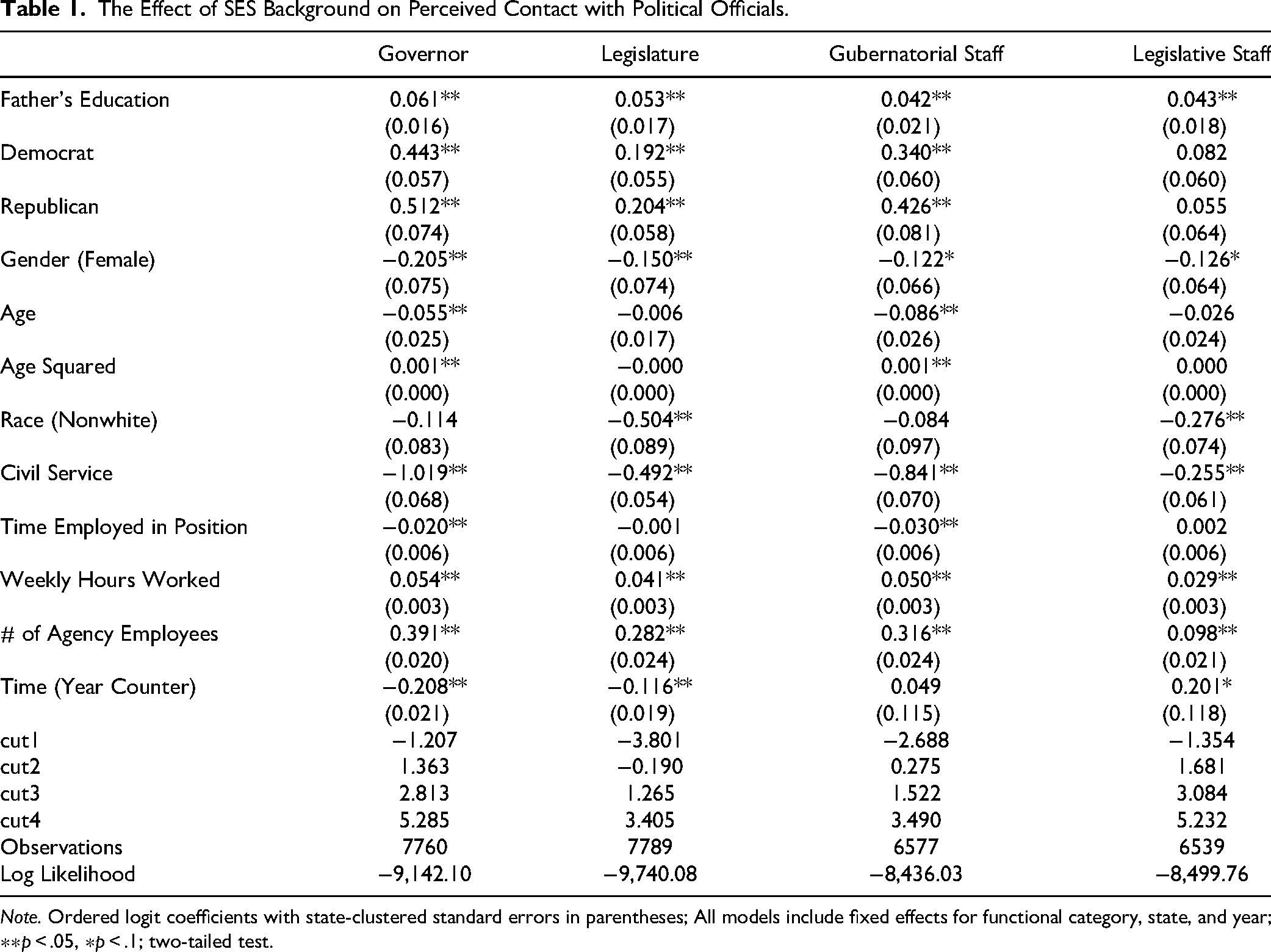
Note. Ordered logit coefficients with state-clustered standard errors in parentheses; All models include fixed effects for functional category, state, and year; ∗∗p < .05, ∗p < .1; two-tailed test.
As indicated in the table, we find that higher SES background, as measured by father's education, is positively associated with contact for all four external political stakeholders. Ceteris paribus, administrators from higher SES backgrounds make more frequent contact with governors, legislators, and their staff. The overall positive effects comport with the expected role of SES upbringing in fostering cultural capital and the capacity for elite networking, providing robust support for hypothesis one.
The other variables largely behave as expected. All else constant, agency directors who report having a major party affiliation (as either Republicans or Democrats) have higher levels of perceived contact with governors, gubernatorial staff, and legislatures. Civil service employees generally report fewer meetings with political officials than those who received their office through some form of political appointment. Employees who work more hours generally perceive higher levels of political contact as well. Women and nonwhite respondents report lower levels of communication than their male and White counterparts.
In Table 2 we present the results of the perceived political influence models. Our findings here are more mixed. While SES background does not have a statistically significant effect on the reported influence of the legislature, it is significant and negative for gubernatorial influence on both major policy changes and rules and regulations. These results suggest that higher SES background does serve to insulate agency heads from perceived executive influence, providing partial support for hypothesis two.
The Effect of SES Background on Perceived Influence of Political Officials.
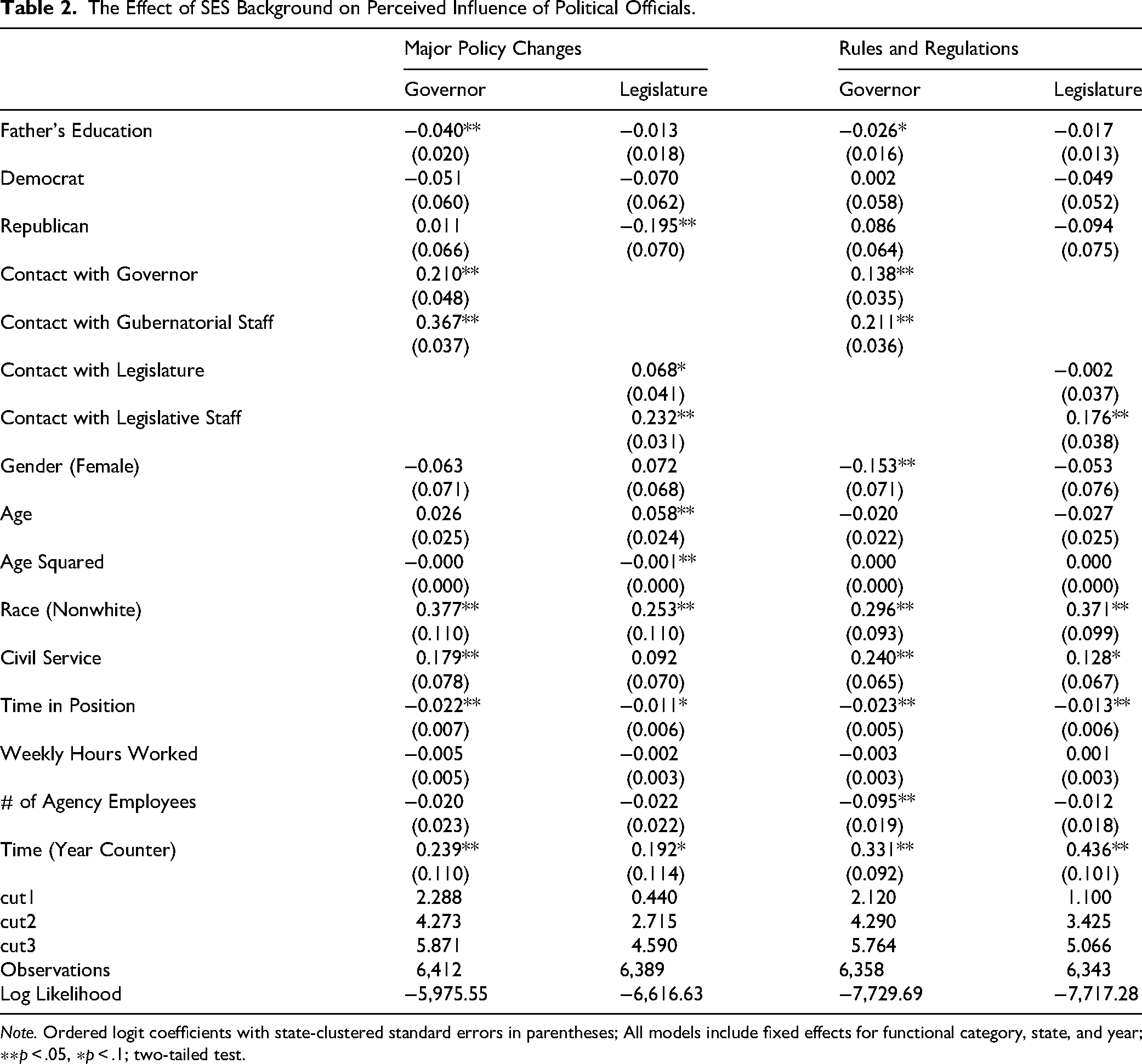
Note. Ordered logit coefficients with state-clustered standard errors in parentheses; All models include fixed effects for functional category, state, and year; ∗∗p < .05, ∗p < .1; two-tailed test.
Interpreting the substantive effects of these models is complicated a bit by their nonlinear functional form. To aid in interpretation, we calculate the effects of the coefficient estimates for father's education in terms of odds ratios, which represent the change in the odds of a respondent rating the relevant political actor as having a higher level of contact or influence (versus all lower categories) associated with a one-unit change in the independent variable, holding all other independent variables at their mean. Odds ratios greater than one indicate that the variables have a positive effect, while those less than one indicates that the variable has a negative effect. These odds ratios and their associated standard errors are presented in Figure 4.
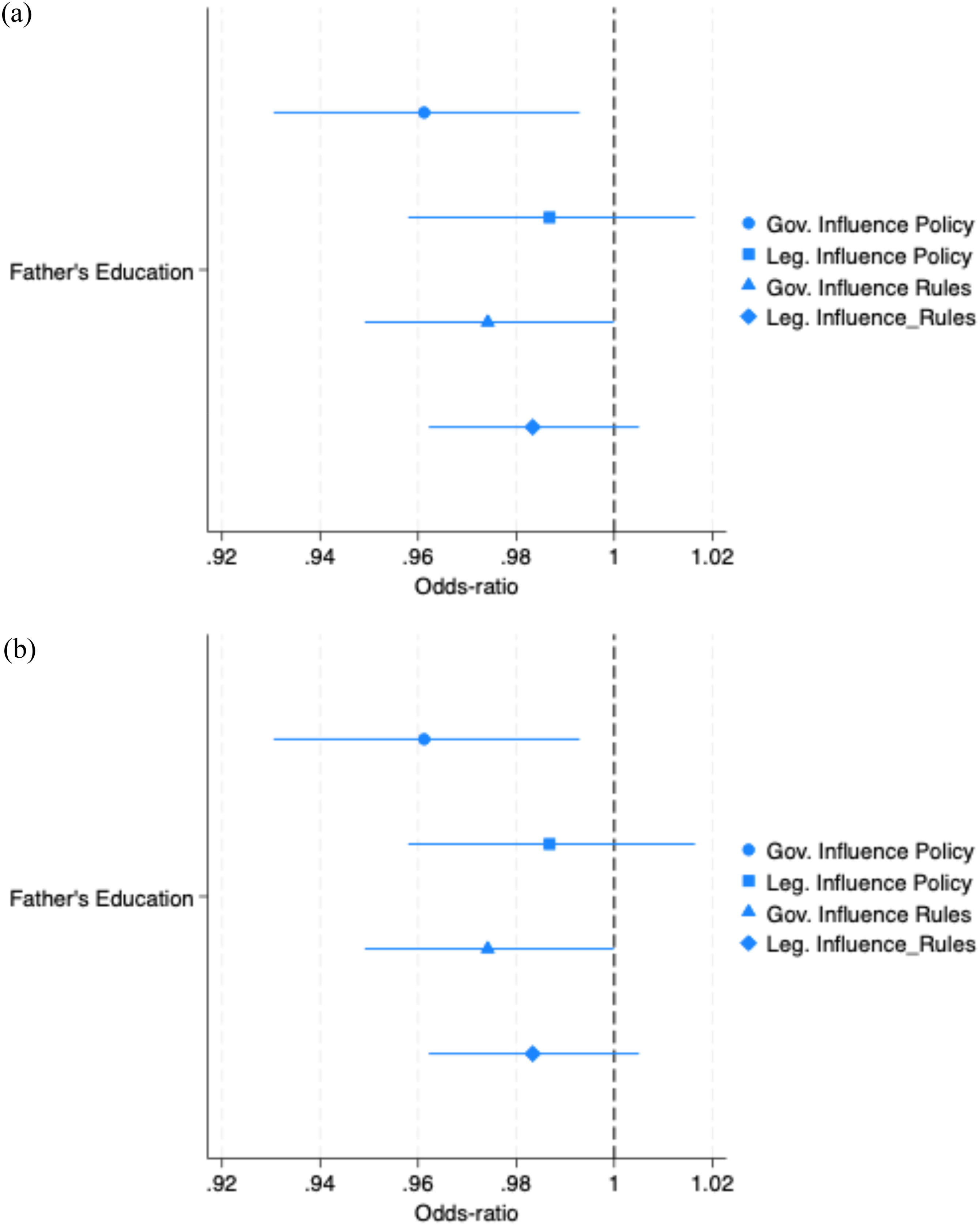
Odds Ratios for the Effect of Father’s Education. (a) Perceived Contact, (b) Perceived Influence.
The top panel of the figure indicates that across the range of dependent variables relating to contact with external political officials the effect of father's education is significant and positive, with odds ratios ranging from .04 to .06, indicating that a one category increase in father's education is associated with a 4–6% increase in the odds of the respondent perceiving greater contact with the relevant political actor. The bottom panel indicates that for the two significant variables a one category increase in father's education is associated with a 2–4% decrease in the odds of a respondent perceiving the governor as being more influential. These odds ratios may not seem large, but cumulatively they make a substantively meaningful impact over the range of father's education, which has five categories. Moving from the lowest category (high school or less) to the highest (graduate degree) leads to a cumulative 25% increase in the odds of more frequent telephone conversations or meetings with the governor, for instance, and a 16% decrease in the odds that the governor is viewed as influential on major policy decisions.
Conclusion
Theoretical perspectives drawn from socialization theory and the literature on cultural capital suggest that SES background may shape administrators’ interactions with external political actors. Our analyses generally support these expectations. Specifically, we find that administrators from higher SES backgrounds are more likely to engage with governors, legislators, and their staff, and report lower levels of perceived external executive branch (gubernatorial and gubernatorial staff) influence over agency operations.
These findings are not without limitations. Due to data availability constraints, for instance, our analyses rely on a measure of SES background that is based solely on parental education, and thus captures only one dimension of a broader class background that may also include parental occupation, income, and access to elite networks (Guo & Harris, 2000; Shavers, 2007). Our findings with regard to parental education suggest—but do not establish—that other socioeconomic variables such as these may evidence similar relationships. Future research could use richer SES measures and more targeted survey instruments to assess how early-life class experiences shape public administrators’ interactions with political officials, as well as their worldviews, motivations, and policy orientations more broadly.
Additionally, because our key dependent variables are subjective and self-reported, it is important to recognize that class background may systematically shape not only administrators’ actual experiences, but also their self-concept, perceived legitimacy, and patterns of reporting on surveys. Theoretical and empirical research indicates that individuals from higher SES backgrounds tend to view themselves as more influential, independent, and socially confident, a pattern that stems from class-based socialization and the accumulation of cultural capital (Bourdieu, 1986; Manstead, 2018). This raises the possibility that effects attributed to class may be amplified by response styles or social desirability biases, such that higher SES individuals present themselves in a more favorable light or rate their own autonomy and influence more highly. Future research should consider integrating behavioral or objective measures, or controls for social desirability, to better disentangle the psychological and identity-driven mechanisms from structural or experiential differences.
To date, SES background has not been a central focus within public administration research. Yet further investigation promises several important benefits. First, exploring “non-visible” characteristics such as class background can extend theories of representative bureaucracy into national and institutional contexts where race or gender may be less salient or politically relevant (Tsui & Gutek, 1999; Vinopal, 2020). For example, in more racially homogeneous nations like South Korea, socioeconomic representation may serve as a more meaningful axis of diversity. Second, SES is closely tied to longstanding issues of social equity and policy responsiveness—core concerns for democratic governance (Bright, 2005; Meier, 2019). Understanding how administrators’ class origins shape their engagement with both elites and marginalized populations may shed light on the equity and inclusiveness of bureaucratic decision-making. Third, SES background intersects with broader streams of public administration scholarship, including public service motivation (Perry, 1997; Vandenabeele, 2007) and political-bureaucratic relations (Bertelli & Grose, 2009; Meier & O’Toole, 2006). Our findings suggest that class-based dispositions may influence not only who enters public service, but how they perform their roles once inside government.
In short, our findings suggest that SES background—long treated as a background variable or control—deserves a more central place in public administration theory and research. By attending to the class-based socialization processes that shape administrators’ professional orientations and elite relationships, scholars can gain a richer understanding of how bureaucratic behavior is conditioned not only by institutional rules, but by deeply embedded social identities and cultural resources.
Supplemental Material
sj-docx-1-arp-10.1177_02750740251404431 - Supplemental material for Socioeconomic Shadows: Agency Directors’ Class Background and Their Relationships with Political Officials
Supplemental material, sj-docx-1-arp-10.1177_02750740251404431 for Socioeconomic Shadows: Agency Directors’ Class Background and Their Relationships with Political Officials by Christopher Eddy, Sun Gue (Susan) Yang and Neal D. Woods in The American Review of Public Administration
Footnotes

Funding
The authors received no financial support for the research, authorship, and/or publication of this article.
Declaration of Conflicting Interests
The authors declared no potential conflicts of interest with respect to the research, authorship, and/or publication of this article.
Supplemental Material
Supplemental material for this article is available online.
Notes
Author biographies
References
Supplementary Material
Please find the following supplemental material available below.
For Open Access articles published under a Creative Commons License, all supplemental material carries the same license as the article it is associated with.
For non-Open Access articles published, all supplemental material carries a non-exclusive license, and permission requests for re-use of supplemental material or any part of supplemental material shall be sent directly to the copyright owner as specified in the copyright notice associated with the article.
