




Abstract
This study used the model of emotional labor as emotion regulation to examine the indirect effect of transformational leadership behaviors on leaders’ emotional exhaustion through leaders’ deep acting. Further, it is hypothesized that this indirect effect varies depending on the level of leaders’ emotional intelligence. The sample included 230 leader-follower dyads working in public sector organizations in Pakistan. The results of the regression analysis showed that deep acting behaviors mediated the relationship between transformational leadership and emotional exhaustion, but only for leaders with low levels of emotional intelligence. These findings highlight the importance and relevance of emotional intelligence in managing emotions and maintaining emotional well-being among transformational leaders in the public sector. We discuss the theoretical and practical implications of our study in the manuscript.
Keywords
Introduction
Transformational leaders play a vital role in public organizations, as they exert positive influence at multiple levels. By leading with vision, promoting collective action, inspiring others, and showing consideration, they can stimulate employees to enhance their public service motivation (Jensen & Bro, 2018), improve performance (Raveendran & Gamage, 2019), foster whistle-blowing attitudes (Caillier, 2015), encourage participation in change implementation (Van der Voet, 2016), and promote innovative work behaviors (Bak et al., 2022). Moreover, they can contribute to the development of a results-oriented culture and performance in public organizations (Chau et al., 2022), as well as facilitate inter-organizational labor mobility (Massae et al., 2023) and enhance public project success (Fareed & Su, 2022). However, some studies have also suggested that transformational leaders may experience emotional exhaustion at work due to their elevated levels of emotional involvement, and the investment of time and effort (Arnold & Connelly, 2013; Lin et al., 2019; Zwingmann et al., 2016).
Emotional exhaustion is a core and widely studied component of burnout referring to a state of fatigue and depletion (Maslach & Jackson, 1981; Wright & Cropanzano, 1998). It is characterized as a chronic and intensely affective nature (Gaines & Jermier, 1983) and is often regarded as a significant indicator of ill-health and ill-being (Nunes et al., 2024; Wirtz et al., 2017). Previous research has shown that emotionally exhausted transformational leaders tend to have higher turnover intentions (Lin et al., 2019) and impaired transformational leadership behaviors (Qian et al., 2020; Xu & Jin, 2022). Although the mentioned studies do not necessarily represent public sector, public administration research has also reported that emotional exhaustion is a prevalent and serious problem among public-sector employees and is associated with many negative work outcomes (Bao & Zhong, 2019; Borst & Blom, 2022; Brijová et al., 2022; Guy et al., 2008; Perski et al., 2002; Sarisik et al., 2019).
One of the main reasons why public service employees experience emotional exhaustion is that they are increasingly required to perform emotional labor at work (Hsieh, 2014; Hsieh et al., 2012a; Levitats & Vigoda-Gadot, 2017; Ljungholm, 2014; Resh, 2010; Sloan, 2014). Examples include receptionists who maintain a friendly demeanor with irritable citizens, 911 call operators and dispatchers who soothe panic-stricken callers, and public information officers who must project confidence and compassion (Choi & Guy, 2021). Working in the public sector often involves dealing with complex issues, diverse stakeholders, and demanding situations (Eldor, 2018). This emotional exertion can take a significant toll on public servants and leave them drained if not properly addressed.
Therefore, effective emotion management is crucial for employees working at any level of public administration, as it affects their levels of motivation and engagement (Levitats & Vigoda-Gadot, 2020), job satisfaction (Humphrey, 2023), leadership effectiveness (Kotze & Venter, 2011), well-being (Brunetto et al., 2012; Lee, 2018), service quality (Levitats & Vigoda-Gadot, 2017), and presenteeism (Song et al., 2021). However, most of this research focuses on public servants who deal directly with citizens, such as public information officers, street level bureaucrats, or healthcare workers (Potipiroon & Faerman, 2020; Varela Castro et al., 2023). Therefore, there is a lack of knowledge about the emotional health of employees working in supervisory or leadership roles (e.g., Brijová et al., 2022; Potipiroon, 2023). In particular, the state and condition of emotional health of transformational leaders in the public-sector remain unknown.
To address these gaps, the present study aims to investigate the underlying mechanism and condition that explain the effects of transformational leadership behaviors on leaders’ emotional exhaustion. We base our investigation on the model of emotional labor as emotion regulation (Grandey & Melloy, 2017) and propose that expressions of transformational leadership behaviors involve engagement in deep acting (an emotion regulation strategy), which affects the emotional exhaustion of transformational leaders. Moreover, we suggest that the level of emotional intelligence (an emotional regulation ability) of the transformational leaders moderates the effects of transformational leadership behaviors on deep acting, and consequently on emotional exhaustion. Specifically, transformational leaders who lack emotional intelligence exert excessive demands on themselves in the emotion regulation process and thus experience emotional exhaustion.
This study aims to make two main contributions. First, it reports on the emotional well-being of transformational leaders in the public sector. Although transformational leadership is considered a vital process in the public sector (Campbell, 2018; Jensen et al., 2019a; Maqdliyan & Setiawan, 2023), there is a gap on how transformational leadership behaviors affect leaders’ own emotional well-being (e.g., Abrell et al., 2011; Lin et al., 2019; Zwingmann et al., 2016), and how transformational leadership behaviors influence leaders’ own emotion regulation process in public administration (e.g., Ganapati et al., 2022). Therefore, we fill a gap in this line of inquiry by examining the effects of transformational leadership behaviors on leaders’ emotional exhaustion through deep acting behaviors. Second, this study enhances the understanding of the critical role of emotional intelligence for transformational leaders’ emotion regulation and emotional exhaustion. We show that emotional intelligence is a crucial resource for leaders to manage their own and their followers’ emotions in a way that does not exhaust them, given that transformational leadership behaviors are inherently emotionally demanding (Arnold et al., 2015). We also contribute to the literature on emotion regulation by applying the model of emotional labor as emotion regulation (Grandey & Melloy, 2017) to the domain of transformational leadership and public administration. This model is a seminal and recent work that has promising potential for research in emotion management domain.
Transformational Leadership and Leaders’ Emotional Exhaustion
Transformational leaders go beyond the call of core requirements of effective leadership behavior, which are normally displayed by transactional leaders (Bass et al., 2003). For example, transformational leaders make the organization's mission seem more appealing to subordinates, by inspiring them and reinforcing the value of the mission (Caillier, 2016). On the other hand, while transactional leaders rely on resources available in their environment (such as rewards or punishments) to lead their followers, transformational leaders heavily rely on harnessing the intrinsic resources to transform their followers and mobilize them to achieve individual and collective goals (Bass, 1999).
According to transformational leadership theory (Bass, 1985; 1999; Bass & Avolio, 1997), transformational leaders engage in four types of leadership behaviors. First, transformational leaders exert idealized influence, which means that they role-model desired attitudes and behaviors for their followers that evoke inspiration, trust, admiration, principles, and respect. Such integrity, therefore, inspires followers and motivates individuals toward positive organizational outcomes (Bass & Riggio, 2006). Second, transformational leaders provide individual consideration, which means that they are attentive to their followers’ individual needs for achievement and growth. Transformational leaders use this information to provide an environment in which they can mentor or coach their followers to develop, progress, and achieve their highest potential (Judge & Piccolo, 2004). Third, in their mentoring and coaching efforts, transformational leaders use inspirational motivation to direct their followers’ needs and strengths toward higher purpose. Fourth, transformational leaders intellectually stimulate their followers, fostering an appreciation for the meaning and value in their work. Transformational leaders achieve this by encouraging their followers (individually and in teams) to creatively solve problems, to design, develop, and implement innovative ideas, to take risks, and to experiment (Bass et al., 2003). In sum, all four of these dimensions of transformational leadership are directed toward driving and managing organizational change (Van Wart, 2013).
However, engagement in these transformational leadership behaviors puts excessive demands on leaders’ psychological, emotional, and physical resources. Van Wart (2013) asserted that “leadership is a complex set of processes that is difficult to perform successfully” (p.554). Accordingly, a managerial role is regarded as “demanding” and a “primary source of stress” (Campbell et al., 2007; Sparks et al., 2001). Limited research investigates the effects of transformational leadership behaviors for leaders; this research does acknowledge transformational leadership as a demanding style. For example, Arnold and Connelly (2013) stated that “although transformational leaders may benefit from the productivity and attitudinal improvements of their followers, transformational leadership may also be conceptualized as a demand insofar as it requires leaders’ emotional labor and time to enact it” (p.118).
Literature provides abundant examples of positive effects of transformational leadership, such as how it positively affects the intrinsic motivation of workers by giving them a sense of autonomy and competence, making them feel efficacious (Jensen & Bro, 2018). However, the literature also extensively reports that transformational leaders need to be mindful of several factors that can hinder their effective influence, such as employee-organization value incongruence (Jensen et al., 2019b), perceived societal impact (Jensen, 2018), or the use of indirect communication (Diebig et al., 2017). Indeed, “transformational leadership requires a great deal from leaders in terms of passion, commitment, energy, and insight” (Van Wart, 2013, p. 558). These are a few examples that support the notion that engaging in transformational leadership is challenging and demanding in process, and importantly, that it can take a toll on leaders’ health and well-being.
However, as we noted earlier in the introduction, research on the effects of transformational leadership behaviors on leaders’ emotional wellbeing is very limited. For example, Zwingmann et al. (2016) conducted a longitudinal study to investigate the health-hampering effects of transformational leadership behaviors for the leaders. Their study revealed that transformational leadership behavior resulted in an increased level of emotional exhaustion among leaders over time. Likewise, another study on the emotional well-being of transformational leaders also reports alarming results. Lin et al. (2019) found that transformational leadership behavior was associated with increased levels of emotional exhaustion among transformational leaders. They contended that emotional exhaustion is a significant depleted psychological resource for transformational leaders as it is associated with higher levels of turnover intentions among these leaders. Based on conservation of resources theory (Hobfoll, 1989), Lin and colleagues also determined that the level of transformational leaders’ emotional exhaustion (resource loss) surpassed the level of their resource gains, such as, increased work engagement, need fulfillment, and positive affect. Furthermore, their study reported that transformational leaders experienced the highest levels of emotional exhaustion, specifically, when they were dealing with less competent or conscientious followers.
In conclusion, transformational leaders experiencing emotional exhaustion means that their energy and emotional resources are fully consumed at work (Maslach et al., 1986), which can negatively affect their responsiveness and effectiveness in influencing their followers and their performance. Therefore, it is important to understand the mechanisms that explain the effects of transformational leadership behaviors on leaders’ emotional exhaustion.
Mediating Role of Deep Acting
To explain how transformational leadership behavior can cause high exhaustion for leaders, we use the model of emotional labor as emotion regulation (Grandey, 2000; Grandey & Melloy, 2017). This model is a comprehensive and complex framework that describes the emotion regulation process, its contingencies, and outcomes at work. It proposes that emotional work events—such as interpersonal behaviors—trigger emotion regulation with others, which affects well-being and performance (Grandey & Melloy, 2017).
Hochschild (1983) defined emotional labor as “the management of feeling to create a publicly observable facial and bodily display” (p. 7), which could be achieved through the strategies of deep acting and surface acting. Deep acting focuses on “modifying inner feelings to match expressions,” whereas surface acting is about suppressing negative emotions and/or exaggerating positive emotions (Grandey, 2003, p. 86). According to Hochschild (1983) “emotional labor is sold for a wage and therefore has exchange value” (p. 7), which limits emotional labor to boundary spanning work roles. However, researchers also recognize that emotion labor is typical in interpersonal interactions both with internal and external work targets.
In this context, Gross (1998) focused on emotion regulation and defined it as “the processes by which individuals influence which emotions they have, when they have them, and how they experience and express these emotions” (p. 275). Further, he suggested that individuals respond to stimuli in either antecedent-focused emotion regulation (i.e., modifying or changing felt emotions) or response-focused emotion regulation (i.e., modifying or suppressing expressions).
Based on the emotion regulation theory, Grandey (2000) integrated these two perspectives in the form of a model, which further was refined as a broader model of emotional labor as emotion regulation by Grandey and Melloy in 2017. In their seminal work, emotional labor is explained as an emotion regulation effort performed by the employee toward internal and external work targets in response to emotional work events (such as interpersonal behaviors or goal attainment involving leaders, subordinates, coworkers, or customers). They also classified deep and surface acting within the latent taxonomies of antecedent-focused and response-focused ER (emotion regulation) strategies, with dynamic connections between them suggesting that antecedent-focused emotion regulation affects felt emotions and felt emotions trigger response-focused emotion regulation. (Grandey & Melloy, 2017). Recognizing the preeminence of antecedent-focused emotion regulation strategies, this study focuses on investigating the role of transformational leaders’ deep acting—a core strategy in this taxonomy—toward their subordinates in effecting their own emotional well-being.
In leader-subordinate interactions, extensive research explains the effects of transformational leaders’ ability to significantly influence the emotional expressions of their subordinates, which helps them achieve desired outcomes (Kuonath et al., 2017; Madrid et al., 2019; Niven et al., 2019; Park & Faerman, 2019; Vasquez et al., 2020; Yao et al., 2022; Zhao et al., 2020). For example, Luo et al. (2019) showed that front-line hospitality employees with transformational leaders were more likely to engage in deep acting, which improved their service recovery performance. Research indicates that these positive influences on subordinates are, to a degree, attributable to efforts exerted by leaders in sharing positive emotions (Ayoko et al., 2022; Chuang et al., 2012; Fisk & Friesen, 2012; Glaso et al., 2006; Tang et al., 2017).
Moreover, as asserted by Guy, Newman, and Mastracci (2008), the primary challenge for public administrators does not solely lie in streamlining processes for efficiency; more crucially, it involves cultivating a work environment characterized by empathy and compassion. This leadership approach places emotional labor at its heart, recognizing that leaders who inspire and motivate their teams to achieve higher levels of performance do so by effectively managing the emotional aspects of work. By championing emotional labor, these leaders foster a more humane and caring work environment, ultimately driving positive change in their agencies.
However, it's important to note the lack of research that identifies the specific emotion regulation strategies used by transformational leaders in their efforts to influence their followers. Transformational leaders are believed to be involved in active emotional labor to influence their subordinates (Ashkanasy & Humphrey, 2011; Ashkanasy & Tse, 2000). This may be more pronounced because research suggests that transformational leaders are most effective when engaging in face-to-face dialogue to communicate with others (Jensen et al., 2018). They show charisma, emotional appeal, and conviction in their communication and interactions at work (Connelly & Ruark, 2010). For example, according to Zineldin (2017), intellectual stimulation and idealized influence were associated with the daily display of positive emotions, including happiness, hopefulness, enthusiasm, pride, attentiveness, and inspiration. Research also indicates that transformational leaders are as likely to use negative emotions at work, for example when challenging their subordinates, changing the status quo, communicating new direction and/or shared goals (Connelly & Ruark, 2010). In their review, Chauhan et al. (2021) found that transformational leaders use a range of emotions (of both positive and negative valence) effectively at work. Effectively displaying emotions at work, however, requires emotional labor and the application of emotion regulation strategies (Grandey & Melloy, 2017). Glasø and Einarsen (2008) found that leaders engage in more emotion regulation relative to their subordinates in leader-follower relationships and interactions.
We agree with Arnold et al. (2015) that transformational leaders use deep acting as an antecedent-focus emotion regulation strategy with their followers. We focus only on deep acting, which involves reappraising feelings and events to appear authentic in emotional displays (Grandey, 2000; John & Gross, 2007). Deep acting can have a positive emotional and functional impact on subordinates (e.g., Luo et al., 2019).
We also argue that transformational leaders’ deep acting behavior is associated with their experiences of emotional exhaustion, a component of burnout in the workplace. We base our argument on the model of emotional labor as emotion regulation, which suggests that emotion regulation experiences have consequences for the actors’ well-being and performance (Grandey & Melloy, 2017). Deep acting can have positive effects on employees’ work outcomes and well-being (Guy et al., 2019; Hülsheger & Schewe, 2011; Zvobgo et al., 2022). Nevertheless, the relationship between deep acting and emotional exhaustion, characterized by emotional depletion and fatigue, is not straightforward. Some studies have found a negative relationship between deep acting and emotional exhaustion, suggesting that deep acting can reduce the emotional strain and stress of work (e.g., Amissah et al., 2022; Liu et al., 2020; Nisar et al., 2017), while other studies have found a positive relationship between deep acting and emotional exhaustion, indicating that deep acting can still consume emotional resources and lead to burnout (e.g., Nam & Kabutey, 2021; Pervaiz et al., 2019; Yang & Jang, 2022).
Overall, researchers agree that deep acting requires a lot of personal resources, such as consciousness, energy, and effort, especially in emotionally demanding situations (Grandey, 2000; Haver et al., 2013). And employees are not rewarded for their emotional labor in their performance evaluations (Mastracci et al., 2006). According to the conservation of resources perspective (Hobfoll, 1989), deep acting can deplete the individual's personal resources, which may not be offset by the interpersonal benefits and resources that it generates (Grandey, 2003; Haver et al., 2013).
Furthermore, emotional exhaustion is a key determinant of an individual's well-being and is a common consequence of engaging in emotion regulation (Grandey, 2003; Zhao et al., 2020). Surface acting can cause emotional exhaustion due to the emotional dissonance that the individual feels when hiding their true emotions (Alam, 2020; Pugh et al., 2011). Deep acting can also cause emotional exhaustion due to the cognitive and psychological resources that are needed to change or reframe the underlying emotions (Grandey, 2000; Hülsheger & Schewe, 2011). We argue that transformational leaders are more likely to experience emotional exhaustion because they exert more emotional effort in deep acting to maintain their authenticity in their workplace interactions. This is consistent with Lin et al. (2019), who found that transformational leaders had high levels of emotional exhaustion, even after controlling for other resources (such as need fulfillment, work engagement, and positive affect) that they created in the process. We argue that transformational leaders’ deep acting is a major source of their emotional exhaustion at work. Accordingly, we hypothesize, Hypothesis 1: Deep acting mediates the effects of transformational leadership behavior on leaders’ emotional exhaustion.
Moderating Role of Emotional Intelligence
In this section, we continue to rely on the framework of emotional labor as emotion regulation (Grandey & Melloy, 2017) to investigate the boundary condition of the relation between transformational leadership and deep acting. Specifically, we examine transformational leaders’ emotional intelligence as a resource that facilitates deep acting. Emotional intelligence is integral in the study of human emotions as it captures one's ability to understand, regulate, express, and monitor the personal and interpersonal effects of emotions (Law et al., 2004; Mayer et al., 2000; Salovey & Mayer, 1990).
In essence, emotional intelligence is “the ability to monitor one's own and others’ feelings and emotions, to discriminate among them and to use this information to guide one's thinking and actions” (Salovey & Mayer, 1990, p. 189). Technically, however, emotional intelligence consists of four components (Davies et al., 1998; Wong & Law, 2002). First, it consists of an ability to appraise and express one's own deep emotions in a way that they can sense and acknowledge one's own emotions better than others. Second, it includes one's ability to appraise and recognize others’ emotions in a way that makes them sensitive to their emotions and emotional responses. Third, it involves the ability to regulate one's own emotions, which assists individuals keeping emotion and emotional expressions in control and to recover quickly. Lastly, emotional intelligence suggests the ability to use emotion to facilitate performance; therefore, it enables an individual to direct emotions toward constructive tasks, behaviors, and activities (Law et al., 2004). This model conceptualizes emotional intelligence as an ability, distinguishing it from other models that treat emotional intelligence as a trait (Bar-On, 1997; Goleman, 1995; Petrides & Furnham, 2000). Levitats and Vigoda-Gadot (2020) contend that the ability-based emotional intelligence model is “more rigorous and more dominant among scholars” (p. 7), which also informs the focus of this study.
The model of emotional labor as emotion regulation (Grandey & Melloy, 2017) asserts that the level of one's emotional intelligence (an emotion regulation ability) also affects the types of emotion regulation strategies one engages in. Studies have reported that emotionally intelligent individuals find both surface and deep acting effective depending on the situation (Choi et al., 2019; Grant, 2013). However, many other studies have established a strong positive association between emotional intelligence and deep acting (Kim et al., 2012; Lee & Ok, 2014; Mesmer-Magnus et al., 2012; Yin et al., 2013). Based on these associations, one might assume that transformational leaders who are emotionally intelligent are more likely to engage in deep acting.
However, the relationship between transformational leadership and leaders’ emotional intelligence is more complex than that, which can be observed in the form of three research streams. First, a large body of research suggests that emotionally intelligent leaders use transformational influence to improve their own effectiveness, subordinates’ motivation, commitment and job satisfaction, and their team's cohesiveness and service climate (Barling et al., 2000; Hur et al., 2011; Melita Prati et al., 2003; Rinfret et al., 2020; Wang & Huang, 2009). Specifically, studies in this direction establish emotional intelligence as an important predictor of transformational leadership behavior (Doan et al., 2020; Mandell & Pherwani, 2003; Schreyer et al., 2021). Second, some of the research argues the mediating effects of leaders’ emotional intelligence between transformational leadership and work outcomes, such as organizational citizenship behavior (Irshad & Hashmi, 2014), employee engagement (Milhem et al., 2019), and contextual performance (Gharehbaghi & Rahimnia, 2013). However, this research stream is mainly based on the empirically established bivariate relationship between transformational leadership and emotional intelligence (e.g., Corona, 2010; Kumar, 2014; Spano-Szekely et al., 2016).
The third research stream determines the boundary conditions that emotional intelligence impose on the effects of transformational leadership behavior on personal, interpersonal, and organizational level outcomes. For example, transformational leadership and emotional intelligence affected leaders’ decision-making styles during interactions (Rehman & Waheed, 2012). Subordinates indicated higher levels of person-organization fit (Liu et al., 2023) and organizational commitment (Jain & Duggal, 2016) when their leaders were transformational and emotionally intelligent. Similarly, transformational leadership and leaders’ emotional intelligence moderated the effects on employees’ organizational citizenship behavior in educational institutions (D'Souza et al., 2023) but not in SMEs (Abdullahi et al., 2020).
All these research streams, however, are based on the premise that leadership is an emotional and interactional process (Dasborough & Ashkanasy, 2002; Mandell & Pherwani, 2003; Megerian & Sosik, 1996), and have focused on two main aspects: how emotional intelligence enables leaders’ transformational behaviors by managing their own emotions, and how emotional intelligence helps leaders to influence their followers’ emotions through transformational behaviors. However, these studies tend to overlook the role of emotional intelligence in the emotion regulation processes and outcomes experienced by the leaders themselves. Most of the existing literature examines how transformational leadership and leaders’ emotional intelligence affects the followers or the team level outcomes, but little is known about how emotional intelligence affects the leaders’ own well-being, performance, and satisfaction. The current study aims to address this gap by investigating how emotional intelligence impacts leaders who engage in transformational leadership behaviors.
Overall, research on the emotional processes of leadership maintains that having emotional intelligence is an essential and effective resource for transformational leaders (Ashkanasy & Humphrey, 2011; Kim & Kim, 2017). Karasneh and Al-Momani (2020) reported that emotionally intelligent managers who exhibit transformational leadership are more likely to manage their own emotions and think before acting, and consequently are proficient in managing relationships and building and leading teams. Emotional intelligence is an emotion regulation ability that enables leaders to be more self-aware (Melita Prati et al., 2003; Sosik & Megerian, 1999). They are aware of the labels placed on them by others, the social expectations regarding their emotional displays, and their own behavior (Melita Prati et al., 2003). Such an awareness also gives them a higher sense of purpose and meaning (Harms & Credé, 2010).
Emotionally intelligent leaders have the ability to appraise their own emotions and recognize the emotional state of others involved. They are extremely comfortable and adept at generating and using appropriate emotions to communicate their vision, motivate their followers, or cope with environmental demands and pressures (Van Rooy & Viswesvaran, 2004). In other words, emotional intelligence gives leaders control over the management of their emotions (Melita Prati et al., 2003). Therefore, we argue that expressions of deep acting that involve modification of feelings are more natural and fitting for emotionally intelligent transformational leaders.
On the contrary, it is at low levels of emotional intelligence that transformational leaders experience a misfit, which demands their deliberate effort and energy into aligning their inner feelings with the expressions of situationally appropriate emotions. Their inability to effectively understand and evaluate their own and other's emotions increases their reliance on consciously and effortfully applying emotion regulation strategies and techniques to manage the integrity of their emotional displays toward others. For example, a transformational leader may try to challenge his or her subordinate by giving them an opportunity to lead a project, especially if it is their first time. However, if the leader has low emotional intelligence, he or she may show too much enthusiasm and excitement for the project, which may not match the subordinate's feelings. The leader may fail to anticipate and recognize the subordinate's negative emotions (fear, anxiety, etc.) and adjust their own emotions accordingly. This may reduce the leader's influence and require him or her to make more effort to change his or her emotional tone. In a public service organization, Zhen et al. (2015) also found that transformational leaders with low emotional intelligence displayed higher levels of positive affect. Accordingly, we argue that at low levels of emotional intelligence, the relationship between transformational leadership behaviors and deep acting will become stronger. Hypothesis 2: Emotional intelligence moderates the relationship between transformational leadership and deep acting, such that the relationship is stronger for leaders with low emotional intelligence than those with high emotional intelligence.
Moreover, building on hypotheses 1 and 2, we argue that the indirect effect of transformational leadership behaviors on emotional exhaustion depends on leaders’ emotional intelligence. This is because deep acting requires cognitive and emotional resources and consumes energy, time, and effort (Grandey & Melloy, 2017; Webb et al., 2012). Transformational leaders with low emotional intelligence have less of these resources and spend more of them when they perform deep acting. Although deep acting is generally considered less harmful for individuals’ health than surface acting, which involves faking one's emotions without changing one's feelings (Arnold et al., 2015; Hsieh et al., 2012b; Huang et al., 2015; Philipp & Schüpbach, 2010; Song & Liu, 2010), we argue that for leaders with low emotional intelligence (an emotion regulation ability), the effect of deep acting on emotional exhaustion will be stronger. On the other hand, transformational leaders with high emotional intelligence are better equipped to perform deep acting, and therefore, such a fit between their ability (emotional intelligence) and behavior (deep acting) will protect them from emotional exhaustion. Therefore, our hypothesis states that (Figure 1): Hypothesis 3: Emotional intelligence moderates the indirect effects of transformational leadership on emotional exhaustion via deep acting, such that, the relationship is stronger for leaders with low emotional intelligence than those with high emotional intelligence.
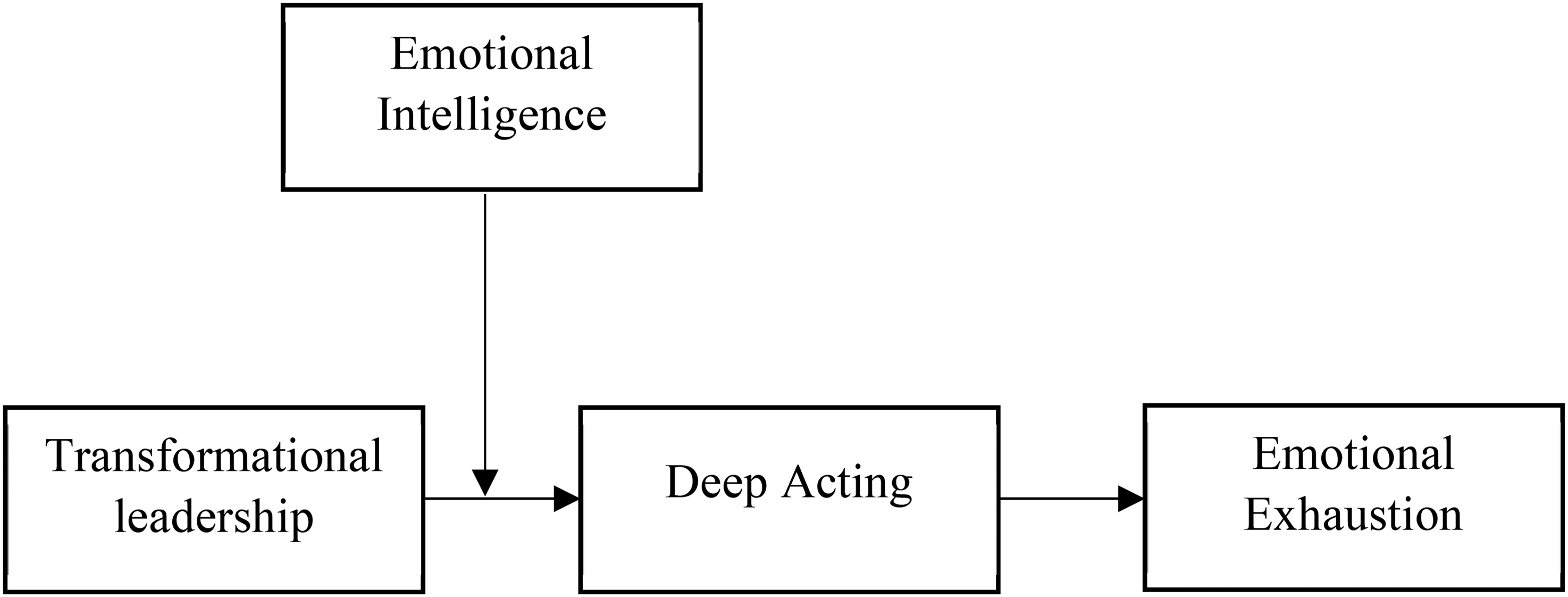
Conceptual model.
Method
Data were collected from middle-level leaders (grade-18 officers) and immediate subordinates (grade-17 officers) working in different offices of the Punjab Government of Pakistan—a provincial level government. These offices include various direct and attached departments and affiliated autonomous bodies, which enhance the diversity and representativeness of our sample. However, to protect the anonymity and confidentiality of our respondents, we have not disclosed the names of these offices. Relying on personal and professional contacts, one of our team members directly invited a total of 300 participants in dyads (i.e., grade-18 and grade-17 officers). These officers hold management level roles and mainly interact with employees who fall in their immediate chain of command; however, they are also known to occasionally interact with citizens for grievance redressal. We explained the purpose of this study to our participants in a cover letter, along with the assurance of confidentiality and anonymity of survey responses.
Data were collected using paper and pencil surveys in a cross-sectional manner. Surveys were conducted in the English language, which was suitable since it is an official language in Pakistan. Middle level leaders (grade-18 officers) self-reported the level of their emotional intelligence and emotional labor that they exercise and the level of emotional exhaustion that they experience at work. Further, we contacted the immediate subordinates (grade-17 officers) of each grade-18 officer. These subordinates provided assessment of the transformational leadership style of their immediate supervisors (i.e., the grade-18 officer).
All surveys were coded to match dyadic responses. Surveys in sealed envelopes were delivered to each participant in person by our team member, who followed up with telephonic reminders and personal visits. In some cases, more than three follow ups were conducted. Among grade-18 officers, 252 returned the completed surveys in sealed envelopes to our team member. By comparison, 271 of the grade-17 officers returned the completed survey. After matching responses and discarding incomplete surveys, we obtained a final sample of 230 dyadic responses that yielded a response rate of 77%. Among our participants, 87% of the grade-18 officers were male, whereas 82% of the grade-17 officers were male. The mean age of grade-18 officers was 45.83 years (SD 7.59), and the mean age of grade-17 officers was 40.53 years (SD 8.45). The average work experience was 18.76 years (SD 8.21) for grade-18 officers and 14.2 years (SD 9.43) for grade-17 officers. Moreover, on average the dyads had been working together for about 3.40 years (SD 4.81).
Measurements
Ratings on the study variables were obtained using a 7-point Likert scale ranging from 1 = strongly disagree to 7 = strongly agree. Detailed survey items of all the variables’ scales are provided in the appendix, except for the transformational leadership component of the Multifactor Leadership Questionnaire (MLQ)—which could not be disclosed due to its copyright protection.
Transformational Leadership
To measure the transformational leadership behavior, we used the MLQ-Short form 5X (Avolio et al., 1999). This scale assesses transformational leadership style based on five dimensions including idealized influence (attributed), idealized influence (behavior), inspirational motivation, intellectual stimulation, and individual consideration. Overall, these factors are assessed through 20 items. Sample items include “My direct supervisor re-examines critical assumptions to question whether they are appropriate”, “My direct supervisor talks about his/her most important values and beliefs”, “My direct supervisor talks optimistically about the future”, “My direct supervisor instills pride in me for being associated with him/her” and “My direct supervisor spends time teaching and coaching”. Cronbach's alpha of this scale in our study is .94.
Deep Acting
We measured deep acting using the four-item scale developed by Diefendorff et al. (2005). An example item from the deep acting scale is “I work hard to feel the emotions that I need to show to my subordinates.” Cronbach's alpha of the deep acting scale in this study is .91.
Emotional Exhaustion
Emotional exhaustion is measured using a 9-items scale developed by Maslach and Jackson (1981). It includes items such as, “I feel frustrated by my job,” and “I feel like I’m at the end of my rope.” Cronbach's alpha is .96.
Emotional Intelligence
The level of each leader's emotional intelligence was measured through a 16-item Wong and Law Emotional Intelligence Scale (WLEIS) developed by Wong and Law (2002; also reprinted by Law et al., 2004) and validated in many cultural contexts (e.g., Di et al., 2021; LaPalme et al., 2016). WLEIS is based on four dimensions that include Self-Emotions Appraisal (SEA) (α = .84), Others-Emotions Appraisal (OEA) (α = .87), use of emotion (α = .88), and regulation of emotions (α = .88); with each dimension comprised of 4 items. Sample items include, “I have a good sense of why I have certain feelings most of the time,” “I am a good observer of others’ emotions,” and “I am able to control my temper so that I can handle difficulties rationally.” Cronbach's alpha of aggregated EI scale in this study is .94.
Control Variables
Following previous studies (Green et al., 2013; Lin et al., 2019; Qian et al., 2020; Zwingmann et al., 2016), we controlled for leaders’ age (years), gender (1 = male, 2 = female), tenure (years), follower's meeting frequency with the leader (measured on a 7-point Likert scale), and leader-follower work relationship duration (measured in years). Following Lin et al. (2019), we also controlled for the leaders’ positive and (low) negative affect because it has been shown as a benefit for the transformational leaders themselves (Clarkson et al., 2020; Lanaj et al., 2016). To measure positive and negative affect, we used the short-form of the positive and negative affect schedule (PANAS-SF) developed by Thompson (2007). Sample positive affect items included “Alert,” “Inspired,” and “Active,” whereas sample negative affect items were “Afraid”, “Nervous”, and “Hostile”. Cronbach alpha of positive affect scale is .89 and for negative affect is .88. Lastly, we also controlled the subordinate's competency level as the findings of Lin et al. (2019) report that it exacerbates the effects of transformational leadership on leaders’ emotional exhaustion. We measured subordinate's competency level using the International Personality Item Pool (IPIP; Gough, 1996), with items such as “my subordinate knows how to apply his/her knowledge” and “my subordinate gets confused easily”. The Cronbach's alpha for this scale is 0.86 in this study. It is important to note that the results of this study remained significant even when we excluded these control variables in the analysis.
Results
To assess the distinctiveness of the study constructs we analyzed the measurement model using confirmatory factor analysis (CFA). The results of CFA revealed that four-factor model (transformational leadership, deep acting, emotional exhaustion, and emotional intelligence) provided a good fit with the data (χ2/df = 1.58, RMSEA = 0.051, CFI = .92, SRMR = .059). We also ran the Harman's test (1967) for common method bias (on all self-reported items), the results revealed a three-factor structure, in which the first factor accounted for 37.5% of variance. According to Harman's single factor test, if a factor accounts for a variance of 50% or more, it is an indicative of the presence of common method bias (Kock, 2020). Thus, we do not find any issue with common method bias in our study.
We then used PROCESS Macro (Hayes, 2017) to test Hypotheses 1–3 that included simple mediation, moderation, and moderated mediation models, set at 10,000 number of bootstrap samples. Table 1 presents the means and standard deviations of the study variables, as well as the correlations among them. Notably, transformational leadership is positively correlated with deep acting (r = .212, p < .01), as expected. However, our data did not indicate a significant correlation between transformational leadership and emotional exhaustion (r = −.068, p > .05). Leaders’ deep acting is positively correlated with leaders’ emotional exhaustion (r = .218, p < .01). Moreover, emotional intelligence is positively correlated with transformational leadership (r = .464, p < .01) and deep acting (r = .171, p < .01), whereas it is negatively related to emotional exhaustion (r = −.369, p < .01).
Descriptive Statistics and Correlations.
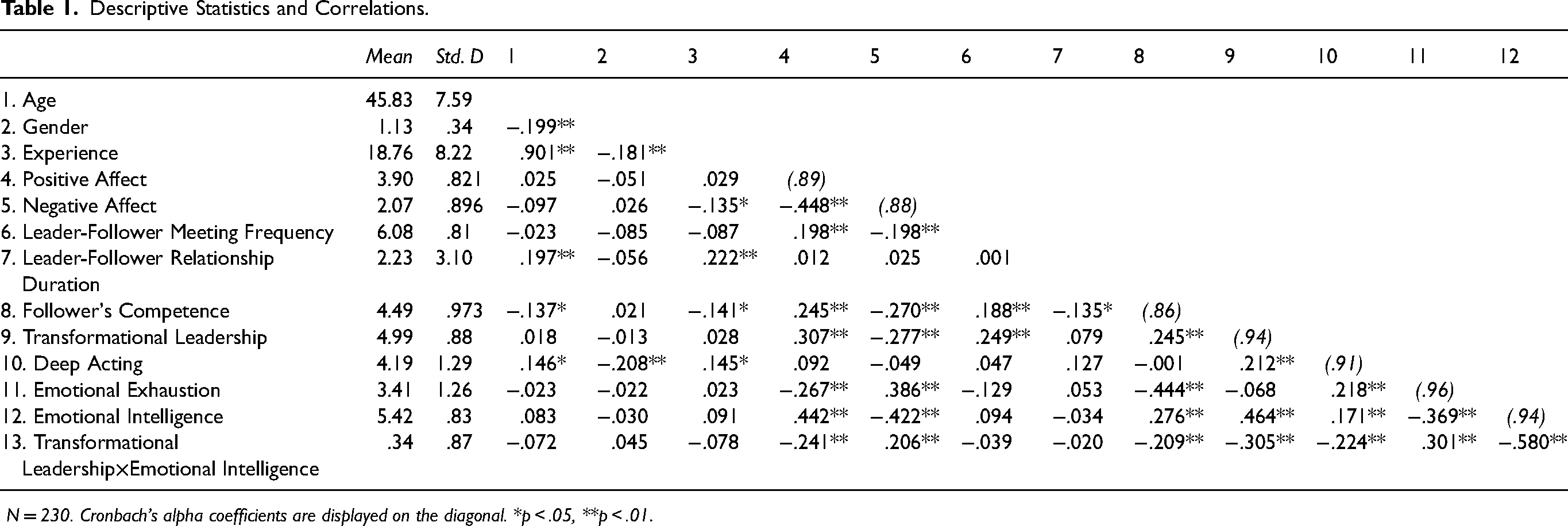
N = 230. Cronbach's alpha coefficients are displayed on the diagonal. *p < .05, **p < .01.
Table 2 presents the results of simple mediation model using model 4 in PROCESS Macro. Hypothesis 1 proposed that deep acting mediates the effects of transformational leadership on leaders’ emotional exhaustion, and results supported this hypothesis. The indirect effect of transformational leadership on emotional exhaustion via deep acting is .069 (se = .029, CI = [.020, .132]).
Regression Results for Simple Mediation.
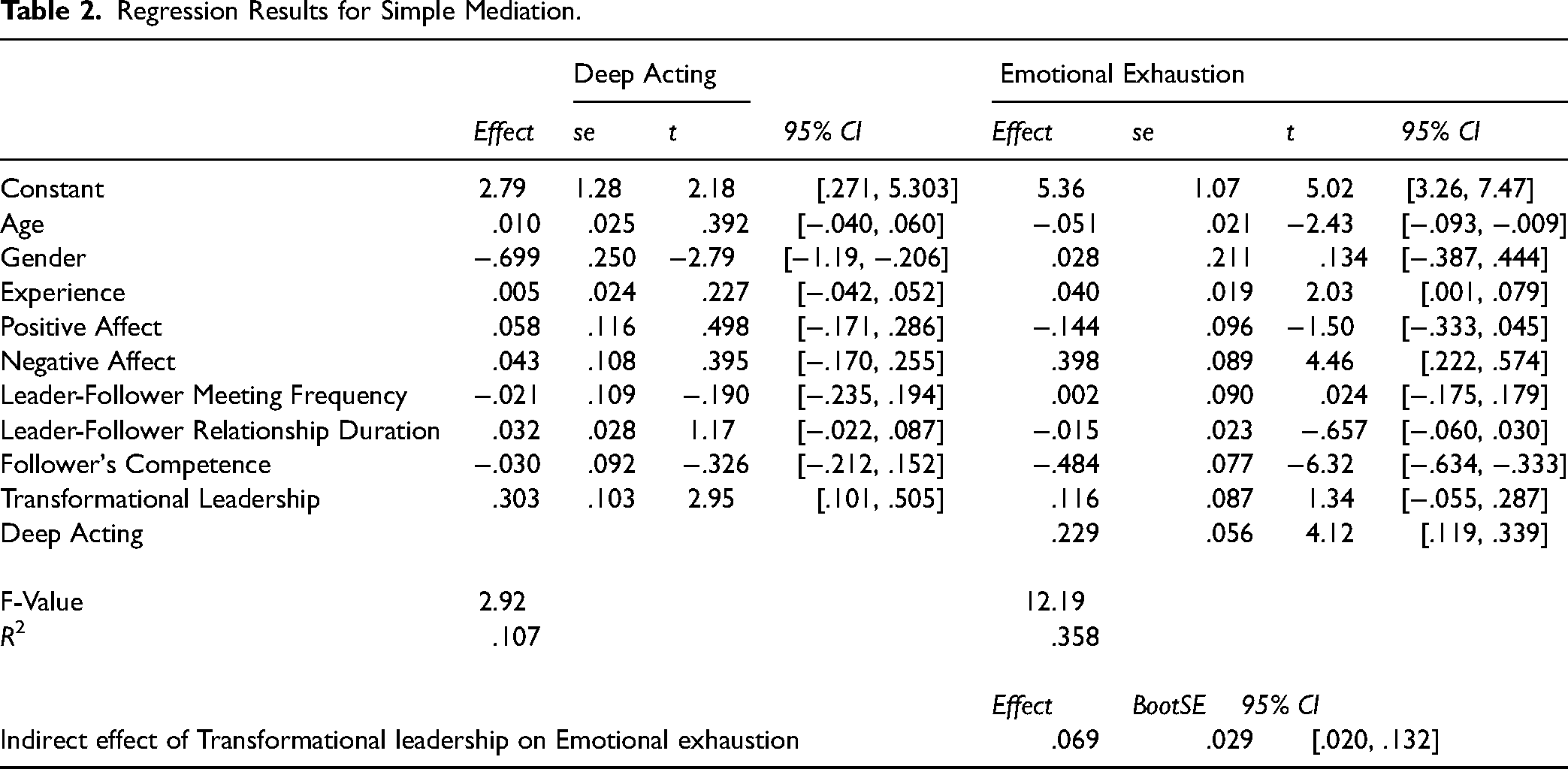
Table 3 presents the results of the simple moderation and the moderated mediation models using models 1 & 7 in PROCESS Macro. Hypothesis 2 predicted that the effects of transformational leadership on deep acting depends on the level of leaders’ emotional intelligence, such that, transformational leaders with low emotional intelligence will engage in high levels of deep acting. Result of the inferential test provides support for this hypothesis (b = −.246, p < .05). Moreover, the Johnson and Neyman (1936) regions of significance indicated that the interaction is significant for leaders in the bottom 45.22% of the emotional intelligence level. Figure 2 provides plot of this interaction effect with values plotted at the ±1 SD from the mean.
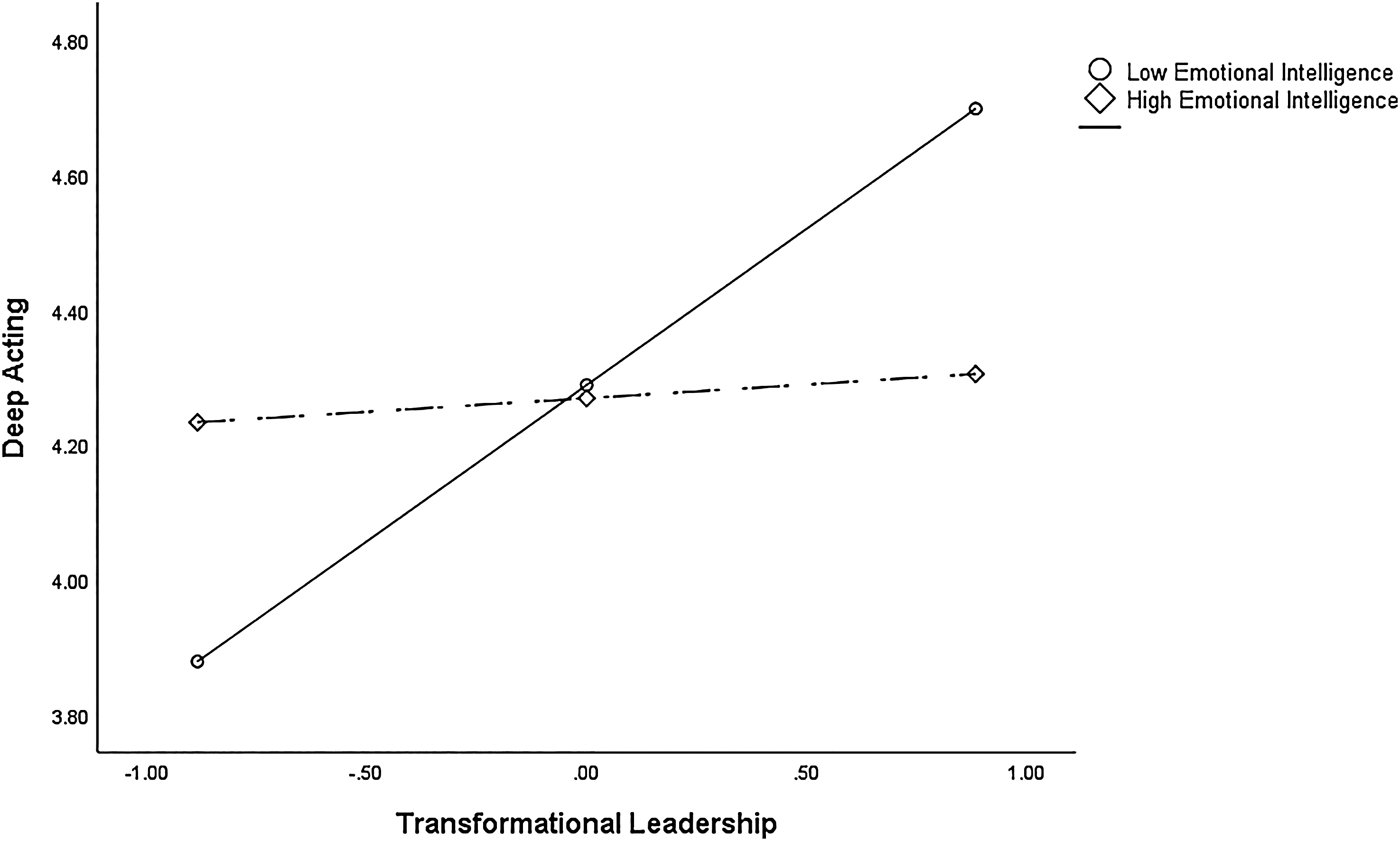
Interaction effect of transformational leadership and leaders’ emotional intelligence on leaders’ deep acting.
Moderated Mediation Results.
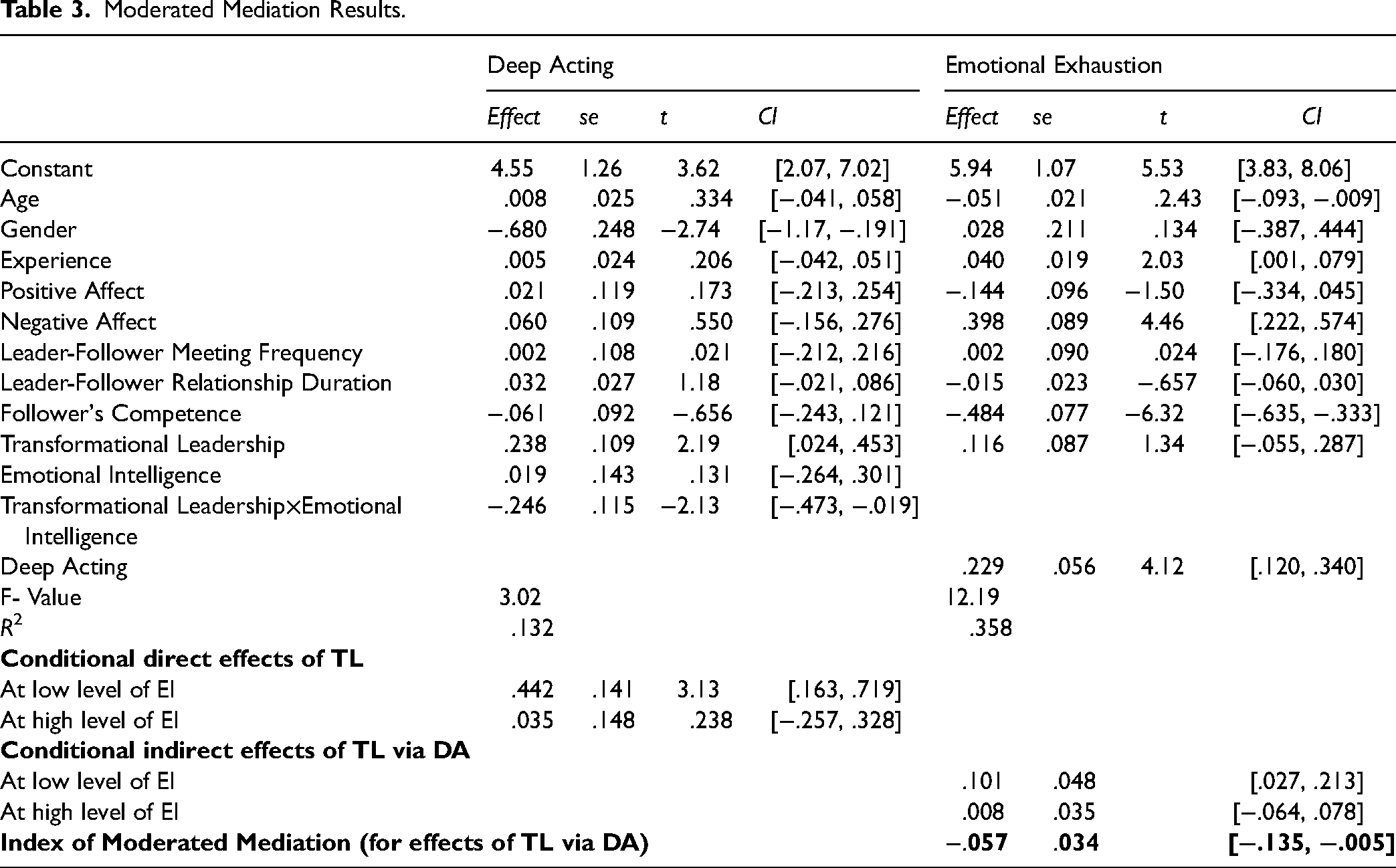
Table 3 further details the results of the moderated mediation model. Hypothesis 3 predicted the indirect conditional effects of transformational leadership on leaders’ emotional exhaustion, such that, transformational leaders with low levels of emotional intelligence would indicate higher emotional exhaustion via deep acting than their counterparts. Outcome of inferential tests supported this hypothesis as well. The conditional indirect effects of transformational leadership on emotional exhaustion were significant at low levels of emotional intelligence (b = .101, se = .048, CI = [.027, .213]) and were non-significant at high levels of emotional intelligence (b = .008, se = .035, CI [−.064, .078]).
Robustness Check
Following the recommendations of Dasborough et al. (2022), we re-estimated our results based on the conditional effects of the individual dimensions of emotional intelligence. That is, we investigated the moderating effects of transformational leaders’ self-emotions appraisal (SEA), others-emotions appraisal (OEA), use of emotions, and regulation of emotions in determining the levels of their deep acting and subsequent emotional exhaustion. Dimension-wise analysis of EI revealed expected patterns of effects in our model. First, leaders’ SEA significantly moderated the effects of transformational leadership on deep acting (b = −.22, se = .092, p = .017, CI = [−.402, −.038]), and subsequently on emotional exhaustion such that leaders with low level of SEA indirectly experienced higher emotional exhaustion (conditional indirect effect = .122, se = .044, CI = [.047, .217]), whereas results were insignificant for leaders with high levels of self-emotion appraisal (conditional indirect effect = .025, se = .036, CI = [−.039, .103]). Second, leaders’ OEA significantly moderated the effects of transformational leadership on deep acting only at the p < .10 level (b = −.177, se = .092, p = .056, CI = [−.358, .005]). However, transformational leaders with lower levels of OEA experienced higher emotional exhaustion via deep acting (conditional indirect effect = .098, se = .043, CI = [.027, .194], index of moderated mediation = −.041, CI = [−.091, −.005]). Third, leaders’ use of emotions did not significantly moderate the effects of transformational leadership on leaders’ deep acting behavior (b = −.143, se = .096, p = .138, CI = [−.332, .046]) and on emotional exhaustion. Lastly, leaders’ regulation of emotions moderated the effects of transformational leadership on deep acting (b = .091, se = .108, p = .030, CI = [−.435, −.022]) and subsequently on leaders’ emotional exhaustion, such that leaders’ with low level of regulation of emotion experience higher emotional exhaustion via deep acting (conditional indirect effect = .097, se = .042, CI = [.026, .191]), whereas these effects were insignificant at high levels of regulation of emotions (conditional indirect effect = −.001, se = .041, CI = [−.092, .076]). Figures 3, 4, and 5 provide plots of the significant interaction effects with values plotted at the ±1 SD from the mean.
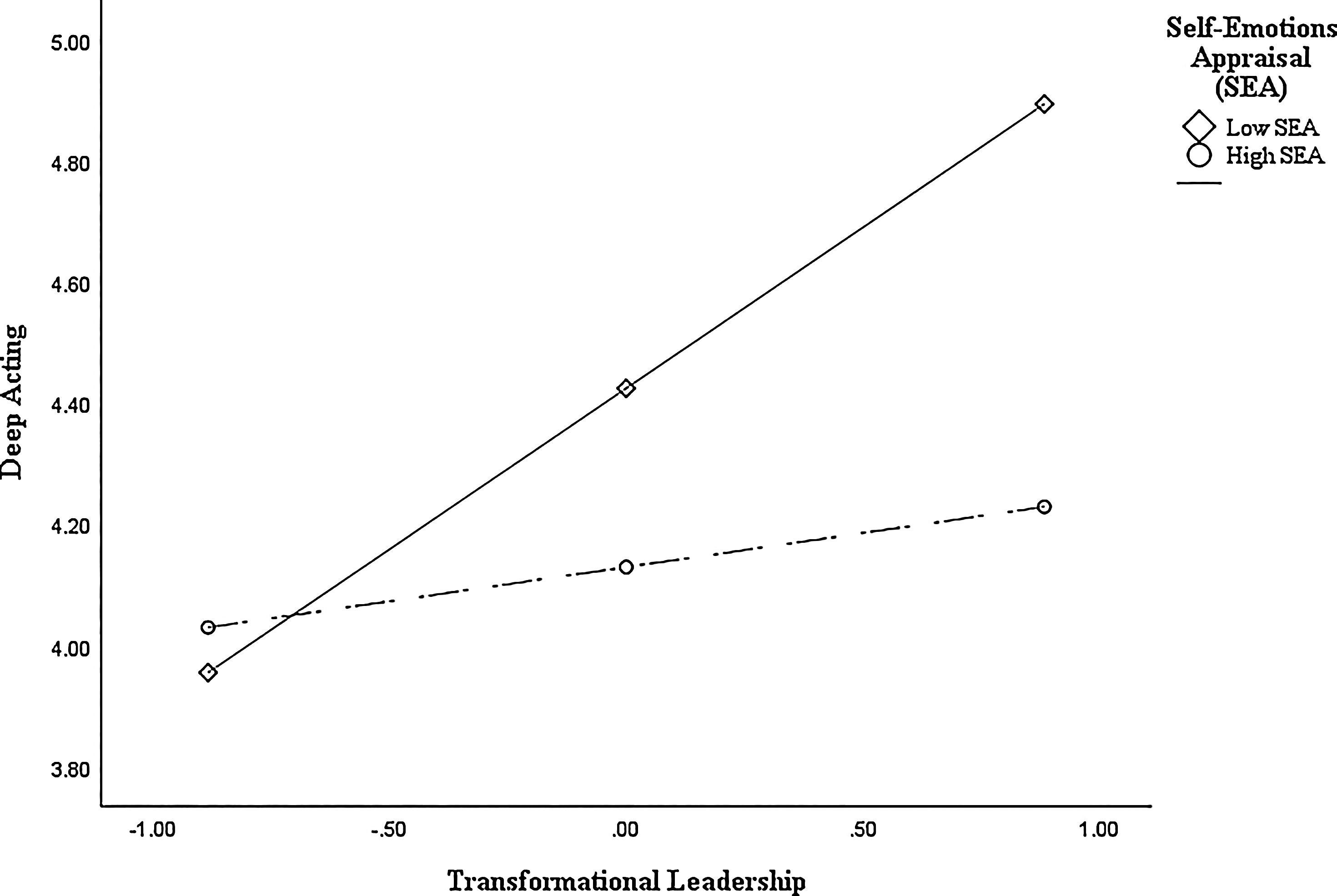
Interaction effect of transformational leadership and leaders’ self-emotions appraisal on leaders’ deep acting.
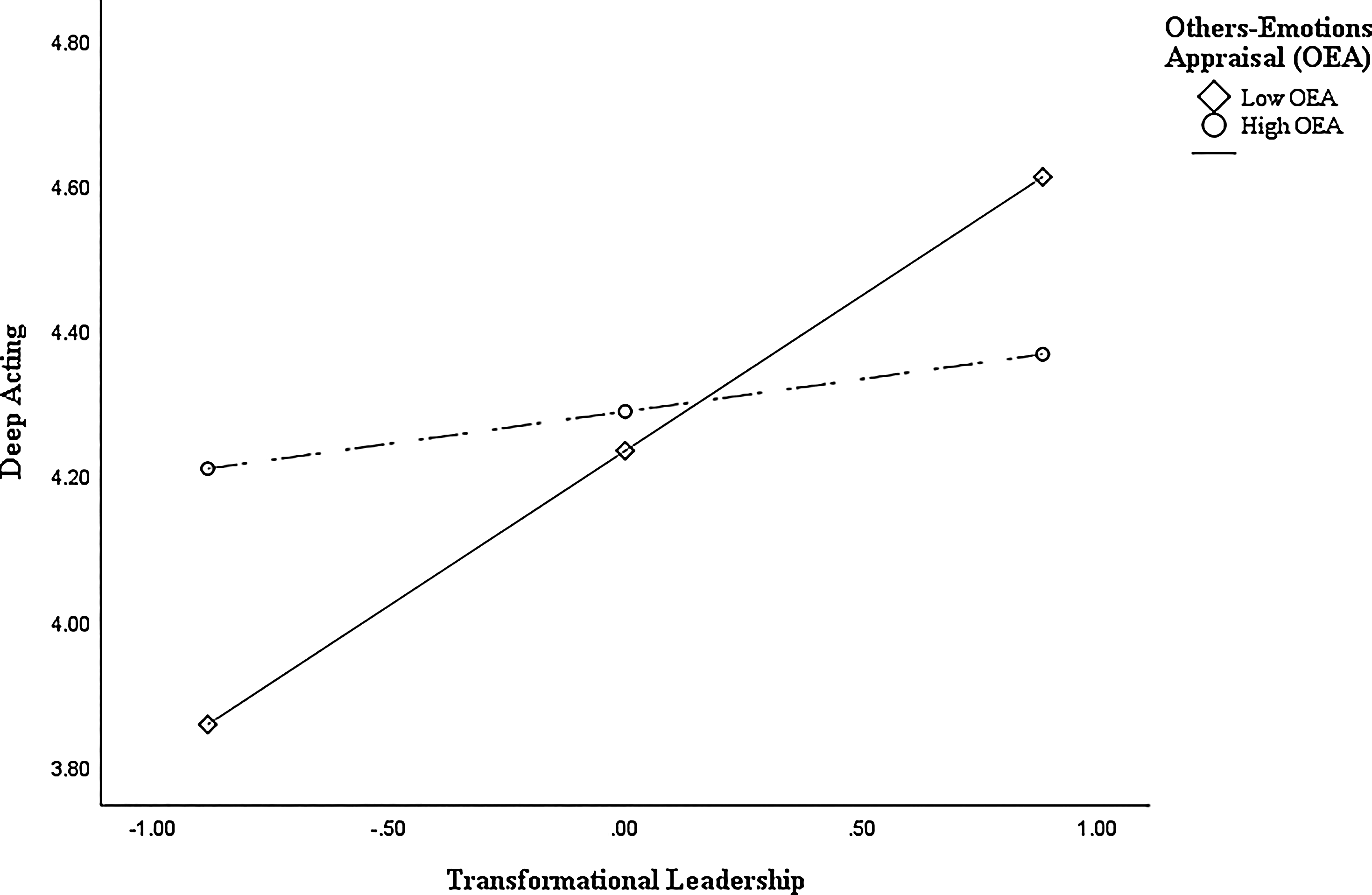
Interaction effect of transformational leadership and leaders’ others-emotions appraisal on leaders’ deep acting.
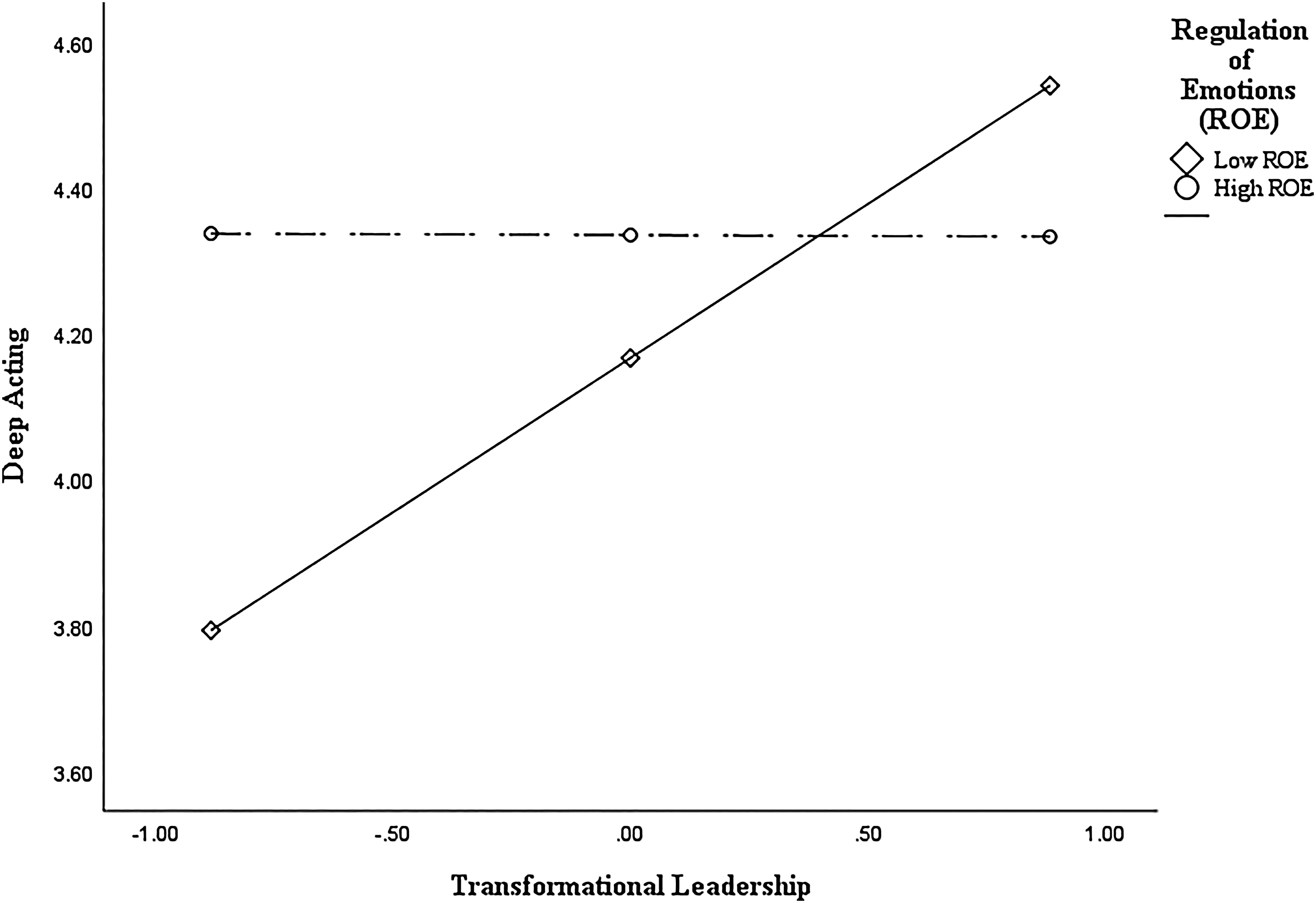
Interaction effect of transformational leadership and leaders’ regulations of emotions on leaders’ deep acting.
Discussion and Conclusion
This study applies the model of emotional labor as emotion regulation (Grandey & Melloy, 2017) to investigate the indirect effects of transformational leadership behaviors on the leaders’ emotional exhaustion. Using data from multiple sources, the study reveals that transformational leaders’ use of deep acting as an emotion regulation strategy significantly mediates the effects of transformational leadership behaviors on emotional exhaustion. However, this effect is only observed for transformational leaders with low levels of emotional intelligence, who display higher levels of deep acting, which is associated with increased emotional exhaustion.
This study contributes to the literature on transformational leadership in public administration in several ways. First, it fills a gap in the public management scholarship by investigating the effects of transformational leadership behaviors on leaders’ emotional exhaustion. Drawing on the model of emotional labor as emotion regulation (Grandey & Melloy, 2017), the study shows that transformational leaders’ use of deep acting as an emotion regulation strategy is a significant factor that leads to the leaders’ emotional exhaustion. In this manner, our finding differs from previous research (Lin et al., 2019; Zwingmann et al., 2016) that has found direct effects of transformational leadership behaviors on leaders’ emotional exhaustion in a non-public context. This finding also challenges the previous research that has generally suggested that deep acting has positive outcomes compared to surface acting but has also recognized that deep acting is demanding and requires a lot of personal resources (Grandey & Melloy, 2017; Huang et al., 2015; Webb et al., 2012). This study extends this understanding by demonstrating that deep acting can be emotionally harmful for transformational leaders, beyond their affective states.
Second, this study contributes to the understanding of the critical role of emotional intelligence for transformational leaders. Previous research has mainly examined the relationship between emotional intelligence and the effectiveness of transformational leadership for followers and organizations (Gómez-Leal et al., 2022; Gransberry, 2022; Kim & Kim, 2017). This study examines the role of emotional intelligence of transformational leaders in using the emotion regulation strategy of deep acting. The results show that transformational leaders with high emotional intelligence can regulate their deep acting behavior at work more effectively, which helps them conserve their energy and avoid emotional exhaustion. These results are robust even after controlling for the factor of incompetent followers, which was found to be a contributing factor to transformational leaders’ emotional exhaustion in a previous study (Lin et al., 2019). However, transformational leaders with low emotional intelligence tend to exert more emotive efforts in deep acting, which makes them vulnerable to emotional exhaustion. This is because they lack the ability to recognize and manage their own and others’ emotions, which consumes their cognitive and emotional resources as they try to constructively reappraise their feelings and experiences (i.e., deep act). Therefore, emotional intelligence seems to be a key resource for effective emotion management that helps preserve the emotional well-being of transformational leaders.
The study also contributes to the literature on emotion regulation by applying the model of emotional labor as emotion regulation (Grandey & Melloy, 2017) to the domain of transformational leadership and public administration. Specifically, the study examined transformational leadership behavior as an emotional event that triggers transformational leaders to use an antecedent-focused emotion regulation strategy (deep acting) toward their followers. Depending on their ability to regulate emotions (emotional intelligence), this strategy of deep acting affected their emotional well-being in different ways. The model of emotional labor as emotion regulation is a comprehensive and complex model that addresses emotional processes at multiple levels in a work context. Therefore, future research needs to use more elaborate and robust research designs to capture the essence of this framework.
From a practical standpoint, our study highlights the importance of focusing on the personal well-being of leaders. While deep acting may be necessary for effective leadership, it can also exhaust leaders’ psychological, emotional, and physical resources. Therefore, policy makers and human resources departments in the public sector should develop policies and practices that help to replenish these resources. For example, they could offer wellness programs, counseling services, social support networks, and recognition and rewards for leaders who demonstrate transformational leadership behaviors (e.g., Bakker & Demerouti, 2017; Goleman et al., 2013; Levitats et al., 2019). The public sector has increasingly recognized the need for transformational leadership in improving the performance of public organizations (Lauritzen et al., 2021), and it is important to ensure that transformational leaders have the resources they need to sustain their efforts. Investing in leaders’ well-being is not only beneficial for the leaders themselves, but also for their subordinates, their organizations, and the public they serve. Therefore, it should be a high priority for public organizations that aim to foster a culture of excellence (e.g., Mastracci, 2022) and innovation.
Previous research found that motivational effects of transformational leadership training programs faded away over time (Bro & Jensen, 2020). However, our findings suggest that policy makers and managers should adopt a holistic approach to encourage and train transformational leaders. Such an approach should encompass training and development in not only transformational leadership, but also emotional intelligence and emotion regulation strategies. This could also enhance the likelihood of long-lasting transfer of training for those individuals who may not benefit from transformational leadership training alone.
Emotional intelligence not only helps transformational leaders to be effective in their interaction with subordinates, establish effective public relationships, and enhance organizational performance, but it is also serves as a valuable resource for their own well-being (Levitats & Vigoda-Gadot, 2020; Supramaniam & Singaravelloo, 2021). Research on emotional intelligence training suggests that a combination of emotional abilities and emotion regulation strategies is most effective (Geßler et al., 2021). Public organizations should invest in training programs that enhance emotional intelligence, such as mindfulness, self-awareness, self-management, and empathy (e.g., Gilar-Corbi et al., 2019; Goleman et al., 2013; Levitats et al., 2019). Public management practitioners can also support these leaders by appointing mentors, arranging behavioral modeling experiences, and providing constructive feedback at various hierarchical levels within the organization. This can help leaders remain authentic and healthy, both psychologically and physically, as they perform their roles and express their emotions.
Moreover, organizations should also provide training programs that teach leaders how to select and apply appropriate strategies to regulate their emotional displays in various situations and how to practice these strategies regularly to maintain their productivity and emotional well-being. While emotion regulation training is mainly done in clinical settings with individuals suffering from anxiety and depression (Denny, 2020), organizations need to proactively implement emotion regulation interventions using advance modalities such as interactive technologies (Sadka & Antle, 2022) or psychotherapies (Denny, 2020) to train their leaders and employees for effective emotion management. Furthermore, there is lack of research on ways to improve emotional intelligence and emotion regulation among public sector leaders, making this an important area for future study.
There are a few limitations to this study and directions for future research. First, the study used data from leader-follower dyads to minimize concerns about common method bias (Podsakoff et al., 2003), but future research could take additional steps to address this issue. Building on this point, we followed the past practice of using subordinates’ ratings of their leaders’ transformational behaviors in this study (Lin et al., 2019; Zwingmann et al., 2016). However, existing research also shows that transformational leadership behavior is transient, i.e., leaders vary in how much they display these behaviors within-person (e.g., Bakker et al., 2022; Lin et al., 2019). Therefore, future research could investigate how leaders’ fluctuations in a specific leadership style affect their combinations of antecedent-focused emotion regulation, felt emotions, and response-focused emotion regulation strategies. This could further explain the physiology, expressions, experiences, and outcomes of these within-person variations for the leaders themselves.
Similarly, we also acknowledge that leaders display various types of behaviors daily (Johnson et al., 2012; Kuonath et al., 2017), so we recommend future studies to examine the within-person differences in full-range leadership styles (laissez faire, transactional, and transformational) and emotion management (Nguyen et al., 2022; Riforgiate et al., 2022) using designs such as experience sampling (e.g., Hülsheger et al., 2015). Research also contends that the types and levels of leadership behaviors also depends upon the degree of publicness of the organizations (e.g., Jacobsen, 2017; Jensen et al., 2019a), therefore, future research could also explore the effects of publicness on the expressions of leadership behaviors by using a cross-sectoral sample. Furthermore, in light of the criticism on the framework of transformational leadership with four dimensions and the recent developments in the field (Jensen et al., 2019a; Stock et al., 2023), future research could benefit from using the general transformational and transactional leadership measures developed by Jensen et al. (2019a).
Second, the results of this study are based on data collected in a cross-sectional design, which limits the ability to determine the causality of the relationships between the study variables. Following the example of Zwingmann et al. (2016), future studies should incorporate longitudinal research designs to better understand the causal relationships between transformational leadership, deep acting behavior, and emotional exhaustion. Such a design could also provide insight into how these factors evolve and interact over time for a leader. We also note that one of our team members personally invited leaders and followers from various Punjab Government offices to participate in our study. This approach may have some drawbacks, such as bias or self-selection among our sample, as participants may have been more willing or motivated to engage. However, it also has some benefits. For example, it increased response rate, reduced cost and time of data collection, and fostered trust and rapport between researchers and participants (Lee et al., 2012). Moreover, it is important to consider that collecting data from bureaucrats is challenging, and having personal contacts helps in accessing this exclusive group. Nevertheless, we encourage future research to use more advanced data collection methods (Stritch et al., 2017; Walker & Enticott, 2004) to design their research methodologies (Wright & Grant, 2010).
Future research could also test the “too much of a good thing” effect (Pierce & Aguinis, 2013) by examining whether emotional intelligence always protects the emotional well-being of transformational leaders. However, given the criticism and controversy on emotional intelligence (Dasborough et al., 2022), future research should follow the best practices for conceptualizing and measuring emotional intelligence before conducting more complex studies in work contexts. In this study, we followed Dasborough et al. (2022) recommendations and re-analyzed our results based on each dimension of emotional intelligence (Wong & Law, 2002). We found that all dimensions except “use of emotions” moderated the effects of transformational leadership behavior on deep acting. This could be due to the limitations of the scale we used, as discussed in recent debates (Dasborough et al., 2022). Alternatively, the “use of emotions” could be an ability that helps leaders cope with the consequences of their emotion regulation behavior. More research is needed to understand the factors that affect the relationship between emotion management and leaders’ well-being. For example, we have only tested the effect of emotional intelligence on the relationship between transformational leadership behavior and deep acting behavior. The model of emotional labor as emotion regulation suggests that personal characteristics (like emotional intelligence) influence not only how individuals regulate their emotions but also regulatory depletion, goal achievement, emotional performance, or organizational citizenship behavior (Grandey & Melloy, 2017). Therefore, future research should also address these gaps in our knowledge of emotional intelligence.
Considering the complex dynamics of deep acting behavior, it is likely that its effects are curvilinear. For example, deep acting could be exhausting, but it could also yield social benefits such as friendliness, loyalty, and support over time (Hülsheger & Schewe, 2011). The question is how long and how sustainable these social benefits are, especially in the public sector, and how they balance the personal costs of deep acting. Therefore, longitudinal studies can shed more light on these issues. Future research can also explore how personality types influence this dynamic, for example, extroverts may value social rewards more than introverts (Fors Connolly & Johansson Sevä, 2021; Lucas et al., 2000). Similarly, it is possible that a higher alignment of emotional intelligence levels and deep acting behaviors among team members is associated with more positive outcomes for all the members (Becker & Cropanzano, 2015; Laulié et al., 2022).
Besides deep acting, future research could also explore other types of antecedent-focused emotion regulation strategies (e.g., situation reappraisal, situation modification) that transformational leaders use with their subordinates. For example, transformational leaders may create stressful, ambiguous, or conflicting situations when they intellectually challenge and stimulate their subordinates (Podsakoff et al., 1990). In this context, they may use situation reappraisal or situation modification to regulate their emotions toward their subordinates. It is also possible that transformational leaders use multiple types of antecedent-focused ER strategies depending on the situation and their personal orientation (cf. Waterschoot et al., 2023). However, having multiple strategies may have contradictory effects and consequences. For example, any type of antecedent-focused ER requires attention, energy, and effort, so using multiple antecedent-focused ER strategies may exhaust leaders when there is a mismatch between the situation and the strategy. This effect could be stronger for leaders with low emotional intelligence, as we found that they were more likely to experience emotional exhaustion. Alternatively, future research could examine if leaders’ emotional intelligence helps them choose the right type(s) of ER strategy(ies) for their interactions with their followers. Moreover, such research could also investigate the temporal relations between antecedent-focused ER, felt emotions, and response-focused ER for transformational leaders as proposed by Grandey and Melloy (2017).
There are other personal and contextual factors that can influence the process of emotion regulation and its consequences. Some examples of personal factors that could affect emotion regulation include social skills (see Berman & West, 2008), while contextual factors could include team performance or lack of resources (e.g., Brijová et al., 2022). Future research could benefit from examining the role of these factors in the process of emotion regulation and how they may influence the outcomes of this process. It has also been suggested that transformational leaders who are low in emotional intelligence may experience decreased levels of organizational commitment (Sarisik et al., 2019) and job satisfaction (Nikolaos et al., 2006), and increased levels of work-family conflict (Mostafa, 2022) and turnover intentions (Green et al., 2013); work outcomes that are also considerably important for public sector organizations. Therefore, future research could explore the effects of transformational leaders’ emotion management on these outcomes.
Future research could also consider the cultural or regional factors in studying transformational leadership and emotion management. For example, a developing country like Pakistan, with a high-power distance and collectivist culture, might affect how leaders behave, interact, and express emotions with their followers. In a meta-analysis, Crede et al. (2019) found that transformational leaders had stronger effects on their followers in developing countries, especially in Sub-Saharan Africa, the Middle East, Southern Asia, and Latin America. Similarly, Engelen et al. (2014) found that the effects of each type of transformational leadership behavior on firm's innovation orientation depended on the national culture of the region. Specifically, many transformational leadership behaviors were influenced by collectivism, high-power distance, and uncertainty avoidance characteristics of national cultures. However, in the public sector, continental European and East Asian administrative traditions weakened the relation between leadership-outcomes, compared to the Anglo-American traditions (Backhaus & Vogel, 2022). Moreover, Crede et al. (2019) and Hulu (2022) suggested that governments of developing countries (especially those with moral degradation crises) needed transformational leaders more than developed countries in current times. All this research emphasizes the importance and relevance of national culture and administrative traditions for transformational leadership, so we urge future research to account for these factors as well.
Specifically, research on how different cultures affect how (transformational) leaders manage emotions and the consequences of their emotion management is scarce. Research has shown that the outcomes of emotional labor for employees depend on cultural factors as well, especially on individualism and collectivism dimensions (Humphrey, 2023; Mastracci & Adams, 2019). For example, Singh (2010) found that individuals who were high on collectivism tended to engage in emotional labor, specifically in surface acting, more than those who were low on collectivism; but power distance and femininity had no effect in this context. And research has also shown that individuals’ emotional intelligence is influenced by their cultural experiences (e.g., Herkenhoff, 2004; Huynh et al., 2018). Considering these effects, we urge future research to investigate the effects of leadership and emotion management in the cultural context as well.
Furthermore, future research can also explore the effects of a leader's gender on his or her experiences of emotional exhaustion at work. For example, research suggests that there are gender-specific expectations of how one should express his or her emotions at work (Brescoll & Uhlmann, 2008; Ganapati et al., 2022), that public service motivation strongly associates with deep acting behaviors for male workers (Potipiroon et al., 2019), and that surface acting has stronger negative effects on female employees’ well-being (Johnson & Spector, 2007). Moreover, research also reports that the gender ratio in the workplace also affects the influence of transformational leadership behaviors in public sector organizations (Jong, 2023). In our sample, we also observed that the male to female ratio was quite high, as we had more than 80% of responses from males both in leader and follower roles. Additionally, there are specific challenges that women face at work, such as the glass ceiling (e.g., Guy & Newman, 2004) or the glass cliff (Sabharwal, 2015), and such contextual challenges can increase female leaders’ emotional demands. Therefore, we urge future research to investigate the gendered implications of leaders’ emotion regulation on leaders’ emotional health and well-being. In suggesting this, we agree with Ganapati et al. (2022) who contend that public administration research should consider the role of gender beyond a control variable.
Lastly, in this study, we have focused on transformational leadership style specifically because it is the most mature leadership framework that has been investigated and tested in myriad contexts and conditions and has been linked to several effective outcomes (Crede et al., 2019; Koh, Lee, & Joshi, 2019; Jensen et al., 2019a; Stock et al., 2023). However, research also recognizes the variety and complexity of leadership styles in the public administration context (Backhaus & Vogel, 2022; Van Wart, 2013). For example, Backhaus and Vogel (2022) discuss some recent examples of leadership styles, such as entrepreneurial leadership, ethical leadership, servant leadership, shared leadership, and paradoxical leadership. They argue that these styles may have some commonalities, but also differ in the source, object, and result of leadership. Therefore, we also suggest future research exploring the effects of these leadership styles on the leaders themselves, specifically in terms of their emotion regulation, well-being, and performance.
Footnotes
Declaration of Conflicting Interests
The authors declared no potential conflicts of interest with respect to the research, authorship, and/or publication of this article.
Funding
The authors received no financial support for the research, authorship, and/or publication of this article.
