




Abstract
Within the large body of literature on government contracting, the effect of public sector unionization on contracting out is still unsettled even after decades of research. Previous literature proposes that unionization may both inhibit and motivate contracting out, making the net effect difficult to predict. Through a meta-analysis of 232 effects drawn from 49 existing studies spanning over four decades, we find that jurisdictions with higher levels of public sector unionization generally contract out more in public service delivery. Further metaregression analysis suggests that unionization has a weaker effect when governments engage in intergovernmental contracting but a stronger effect when governments contract out for technical services. Unionization also has a stronger effect on how much a government contracts out than on whether a government contracts out. Overall, unionization is a relevant, but not necessarily robust, factor in driving contracting out, and its exact effect may vary slightly by context.
Introduction
Over the past several decades, under the new governance model, government contracting has become a prevalent government tool in public service delivery (Salamon, 2002). When providing public services to citizens, governments may choose not to rely on their own employees (in-house delivery) but to hire third-party contractors (contracting out). Although contracting out has been used widely in the public administration landscape, its benefits and risks are always under scrutiny (Bel et al., 2010; Brunjes, 2022; Hodge, 2000; Leland et al., 2021; Peng & Lu, 2021; Savas, 2000; Sclar, 2000). Given the pros and cons of contracting out, a lingering line of inquiry in public administration research seeks to understand what factors lead governments to contract out service delivery rather than providing services in-house. The large volume of literature on government make-or-buy decisions identifies a myriad of economic, ideological, managerial, and political forces (Alonso & Andrews, 2020; Bel & Fageda, 2007; Chen et al., 2022; Fernandez et al., 2008; Ferris & Graddy, 1986; Hefetz & Warner, 2012).
Within this body of literature, an often-debated subject is the effect of public sector unions. 1 Unions are formed to represent the interests of government employees, and they play an active role in shaping various aspects of government operations. In the context of government contracting, the effects of unionization on government contracting out are inconclusive. On the one hand, given that contracting out may bring a series of negative consequences to government employees (Lee et al., 2021; Vrangbæk et al., 2015), unions are likely to exert political pressures to oppose contracting out. This argument is supported by the empirical findings that jurisdictions with more unionized public employees are associated with lower levels of contracting out (Foged & Aaskoven, 2017; Jerch et al., 2017; Lopez-de-Silanes et al., 1997). On the other hand, union activities including collective bargaining and lobbying substantially increase the labor costs of in-house delivery (Anzia & Moe, 2015; Chandler & Gely, 1995), motivating public managers to contract out service delivery to achieve cost savings. This line of argument is supported by the studies reporting that jurisdictions with higher levels of unionization contract out less (Lu, 2013; McGuire et al., 1987; Warner et al., 2021). In addition, these two opposing mechanisms may cancel each other out, resulting in unionization having a null effect on contracting out (Ferris, 1986; Warner & Hefetz, 2020). These competing arguments and empirical findings, although they highlight the complex nature of the relationship, call for an effort to synthesize existing findings.
In the present study, we employ meta-analysis to synthesize previous findings of the unionization–contracting relationship, with a focus on two questions: (1) what is the generalized impact of unionization on government contracting out, and (2) under what conditions does the impact vary? Through a meta-analysis of 232 effects drawn from 49 existing studies spanning over four decades, we find that jurisdictions with higher levels of unionization generally contract out more in the delivery of public services. Further metaregression analysis suggests that the relationship is weaker when governments engage in intergovernmental contracting (as compared to contracting with for-profit and nonprofit providers), but it is stronger when governments contract out for technical services (as compared to social services). Unionization also has a stronger effect on how much governments contract out than on whether governments contract out. Overall, unionization seems to be a catalyst of, rather than a barrier to, contracting out, and its exact effect may vary slightly by context. This study offers a systematic synthesis of previous findings and adds new knowledge to the government contracting literature.
Literature Review
Public sector unions represent the job interests of public employees and are an important force in democratic governance and public policy (Goldfield & Bromsen, 2013; Kearney & Mareschal, 2014). In the United States, after decades of explosive growth in membership since the 1960s, public sector unions have been “formidable players in electoral campaigns, as well as in every major sphere of governmental decision making” (Moe, 2009, p. 156). According to the U.S. Bureau of Labor Statistics (2022), 7.0 million employees in the public sector belonged to unions in 2021, equivalent to a union membership rate of 33.9%, a rate more than five times higher than that of private sector workers (6.1%). In public administration scholarship, a growing body of literature examines the impacts of public sector unions on various aspects of government operations and performance (Bolton, 2021; Davis, 2011; Nicholson-Crotty et al., 2012; Oberfield, 2021; Riccucci, 2011). However, the effects of unionization on government make-or-buy decisions are still inconclusive.
In the government contracting literature, there is much evidence suggesting that contracting out would adversely affect public employees on a wide range of parameters, including job security, wages and benefits, working conditions, and work-related attitudes. For example, Fernandez et al. (2007) found that contracting out leads to declines in full-time employment and increases in part-time employment in local governments, with the net employment effect being negative. Lee et al. (2021) reported that increases in contracting activities among federal agencies reduce employees’ job satisfaction and increase their turnover intention. Hebdon (2006) also noted that contracting out has a deunionizing effect, causing previously unionized jobs to lose union status after the work has been contracted out. Vrangbæk et al. (2015, p. 17) systematically reviewed this body of literature and concluded that “the negative effects of contracting out would outweigh positive effects for the employees.”
All these negative consequences inevitably lead unions to oppose contracting out and to seek maintenance of in-house delivery. Union strategies for opposing contracting out can take different forms (AFSCME, 2013; Chandler & Gely, 1995; Flavin & Hartney, 2015; Jalette & Hebdon, 2012). For example, unions can mobilize resources to exert pressure on governments through collective bargaining, striking, and lawsuits. They can also indirectly influence policy making through public campaigns, legislative lobbying, and electoral mobilization. Cases of unions successfully blocking contracting out and keeping service delivery in-house are reported in the news and literature (AFSCME Council 31, 2021; Isitt & Moroz, 2007). However, although unions generally are not in favor of contracting out and attempt to challenge it, their opposition efforts are “neither predictable nor consistently effective” (Naff, 1991, p. 23), which makes the effect of unionization on government make-or-buy decisions less clear. In particular, the relationship may proceed in three possible directions.
First, through various political and legal measures, unions restrict the government's consideration and adoption of contracting out. This line of argument is supported by empirical studies demonstrating a negative association between unionization and contracting out. For example, Chandler and Feuille (1994) found that the existence of a municipal sanitation union reduces the likelihood that a municipality considers or adopts sanitation service contracting. Foged and Aaskoven (2017) found that higher union membership rates among public eldercare workers are associated with lower levels of privatization of elderly home care services among Danish municipalities. Lopez-de-Silanes et al. (1997) noted that even if governments initially contract out service delivery, union opposition could eventually push local governments to bring contracted services back in-house.
Second, unionization and its associated activities (e.g., bargaining, striking, and lobbying) increase the labor costs of in-house delivery. Some studies suggest that unionized employees have higher wages and better benefits than their nonunionized counterparts do, which increases in-house delivery costs (Anzia & Moe, 2015; Chandler & Gely, 1995; Jerch et al., 2017). Given cost saving as a primary reason for contracting out, increased labor costs would motivate public managers to consider contracting out to cut service costs. This line of argument is supported by empirical findings of a positive association between unionization and contracting out. For example, using a panel of U.S. local governments from 2007 to 2012, Warner and Hefetz (2020) noted that unionized governments reported more switches from in-house service delivery to contracting out. More recently, Warner et al. (2021) found that more unionized local governments contracted out more public services to private providers in 2017.
Third, the two opposing mechanisms noted above could balance each other out. This line of reasoning is supported by empirical studies showing a null effect of unionization on contracting out. For example, Ferris (1986) found that a city's level of unionization does not affect its level of contracting out. Mitchell and Butz (2019) analyzed prison privatization among U.S. states from 1979 to 2010 and found that states’ union coverages do not affect their contracting out of correction management. This null relationship is also confirmed in Nicholson-Crotty's (2004) study of prison privatization across U.S. states.
Put together, unionization paradoxically adds both political pressures and cost pressures to government decision-making: the former blocks contracting out, while the latter induces contracting out (Ferris, 1986; Warner & Hefetz, 2020). The puzzle, as Chandler and Feuille (1991, p. 15) once nicely summarized, is that “public sector unions generally are portrayed either as a reason why private service delivery is needed or as an impediment to privatization initiatives,” making the net effect of unionization on contracting out difficult to predict. Indeed, even after decades of research, the debate about the overall impact of unionization on government contracting out is still without resolution. The inconsistent empirical findings from previous studies call for an effort to synthesize existing findings and gauge a net effect.
In addition to examining the generalized effect of unionization on contracting out, this study also explores the moderating conditions under which the relationship may vary. Informed by the literature, this study focuses on the following four moderators.
Unionization Measure
Measuring the strength and influence of unions across jurisdictions is not an easy job because of the political and legal variations (see Moe [2009] and Oberfield [2021] for more elaborations). As a result, there is no one best way to capture the entire spectrum of unionization effects as existing studies measure the variable differently. How to measure unionization is thus of considerable importance to understanding the impact of unionization (Merkle & Phillips, 2018). Among the studies on government contracting, two measures of unionization are most widely used: union membership (e.g., the percentage of public employees who are union members) and collective bargaining rights (e.g., whether public employees are covered by a collective bargaining agreement) (Anzia & Moe, 2015; Hirsch & Macpherson, 2003; Oberfield, 2021). The two measures could capture different aspects of unionization and may lead to the divergences in the results of the unionization–contracting relationship among existing studies.
Contracting Measure
Existing studies on the unionization–contracting relationship generally use two types of variables to measure the extent to which governments contract out their service delivery: a dummy variable measuring whether a government adopts contracting out or not (yes = 1, no = 0) and a continuous variable measuring the level of contracting out (e.g., percentage of government budget contracted out, number of public services contracted out). For example, Chandler and Feuille (1994) found that unionization reduces a municipality's likelihood of adopting sanitation service contracting. Jalette and Hebdon (2012) reported that more unionized cities in Canada are associated with lower percentages of city services that are contracted out. However, no studies have compared the unionization effects on contracting adoption and contracting level. By differentiating these two types of measure, we can understand if the effect of unionization on whether to contract out and how much to contract out varies.
Sector Choice
When a government outsources its service delivery, it can choose to contract out with private sector providers like for-profit and nonprofit organizations (“government–private contracting”) or other governments (“government–government contracting”) (Anguelov & Brunjes, 2023; Ferris & Graddy, 1986). Contracting with private vendors typically aims to reduce government size and increase efficiency (Savas, 2000), while contracting with other governments may aim for other benefits such as ensuring service uniformity and reducing service redundancy (Miranda & Lerner, 1995; Warner et al., 2021). In addition, compared with the transfer of service delivery to private vendors in government–private contracting, service delivery is still public in government–government contracting. The literature suggests that the impacts of these two types of contracting on governments differ (Hebdon, 2006; Morgan et al., 1988). For example, Fernandez et al. (2007) found that increases in government–private contracting lead to significant decreases in government full-time employment but increases in government–government contracting result in increases in government full-time employment. Unions thus tend to react differently to these two types of contracting. Hebdon (2006) noted that unions oppose contracting out only when private contractors are involved, but in cases of contracting between governments, union opposition is quite limited. Therefore, it is interesting to distinguish these two types of contracting in the discussion of the unionization–contracting relationship.
Service Type
Governments can contract out for a wide range of services. Broadly, these services can be categorized into two types, technical (“hard”) services and social (“soft”) services (Amirkhanyan, 2009; Bel & Fageda, 2017; Petersen et al., 2015, 2018). The former includes services such as waste collection, road maintenance, and IT, while the latter refers to services like child welfare, elderly care, and mental health. Research highlights that contracting for technical services differs from contracting for social services because social services usually feature less competitive markets, more labor-intensive work, and difficult-to-measure outcomes (Lamothe & Lamothe, 2010; Romzek & Johnston, 2005; Van Slyke, 2003). These characteristics complicate social service contracting management and undermine contracting outcomes. From the lens of transaction cost economics, governments are better positioned to contract out technical services due to lower transaction costs throughout the contracting process (e.g., specifying performance indicators, soliciting vendors, and enforcing accountability mechanisms) (Brown & Potoski, 2003; Hefetz & Warner, 2012). Even if both types of service are contracted out, the outcomes of social service contracting could be less than ideal. Both Hodge's (2000) and Petersen et al.'s (2018) systematic reviews of international evidence on the effects of contracting out find that cost savings are much greater in technical services than those in social services. As a result, governments could more readily contract out technical services. Along with that, given the different service characteristics and contracting outcomes, unions may respond to contracting for technical and social services differently.
Methods
This study employs meta-analysis to explore the relationship between unionization and contracting out. Meta-analysis is a quantitative research synthesis method used to combine results on an effect across all relevant studies. By drawing and aggregating statistical information from prior research, meta-analysis allows researchers to estimate a generalized effect between variables and examine whether and how the effect varies in certain circumstances. Although initially developed by scholars in other fields such as education, psychology, and medical research, meta-analysis has been increasingly utilized by public administration scholars to compare and combine results from separate studies toward generalization (Bel et al., 2010; Belle & Cantarelli, 2017; Ding et al., 2021; George et al., 2021; Hsu & Lu, 2023).
Literature Search
Our meta-analysis began with a systematic literature search to locate relevant studies for the analysis. Since each search strategy has its advantages and weaknesses and no one single search strategy can exhaust all relevant studies, we followed the best practice of employing three complementary search strategies (Reed & Baxter, 2009; Ringquist, 2013).
2
The joint use of these search strategies could maximize the total coverage of the search and ensure no groups of studies were systematically ignored:
We conducted the search in three databases, including Web of Science (for peer-reviewed articles), EBSCO (for peer-reviewed articles), and ProQuest (for theses and dissertations). The profile used in abstract searches was (union*) AND (contract* OR privatize*) AND (government* OR public). We screened articles that included reviews of previous research on government contracting out and drew studies from their reference lists (Bel & Fageda, 2007, 2009, 2017; Boyne, 1998). We conducted an ancestor search to screen the references of the studies found in the last two steps. We employed a descendant search in Google Scholar to find later studies that cite three early and highly cited articles on government make-or-buy decisions (i.e., Ferris, 1986; Hefetz & Warner, 2004; Lopez-de-Silanes et al., 1997).
3
Google Scholar covers various forms of scholarly literature, including articles, working papers, dissertations, and books.
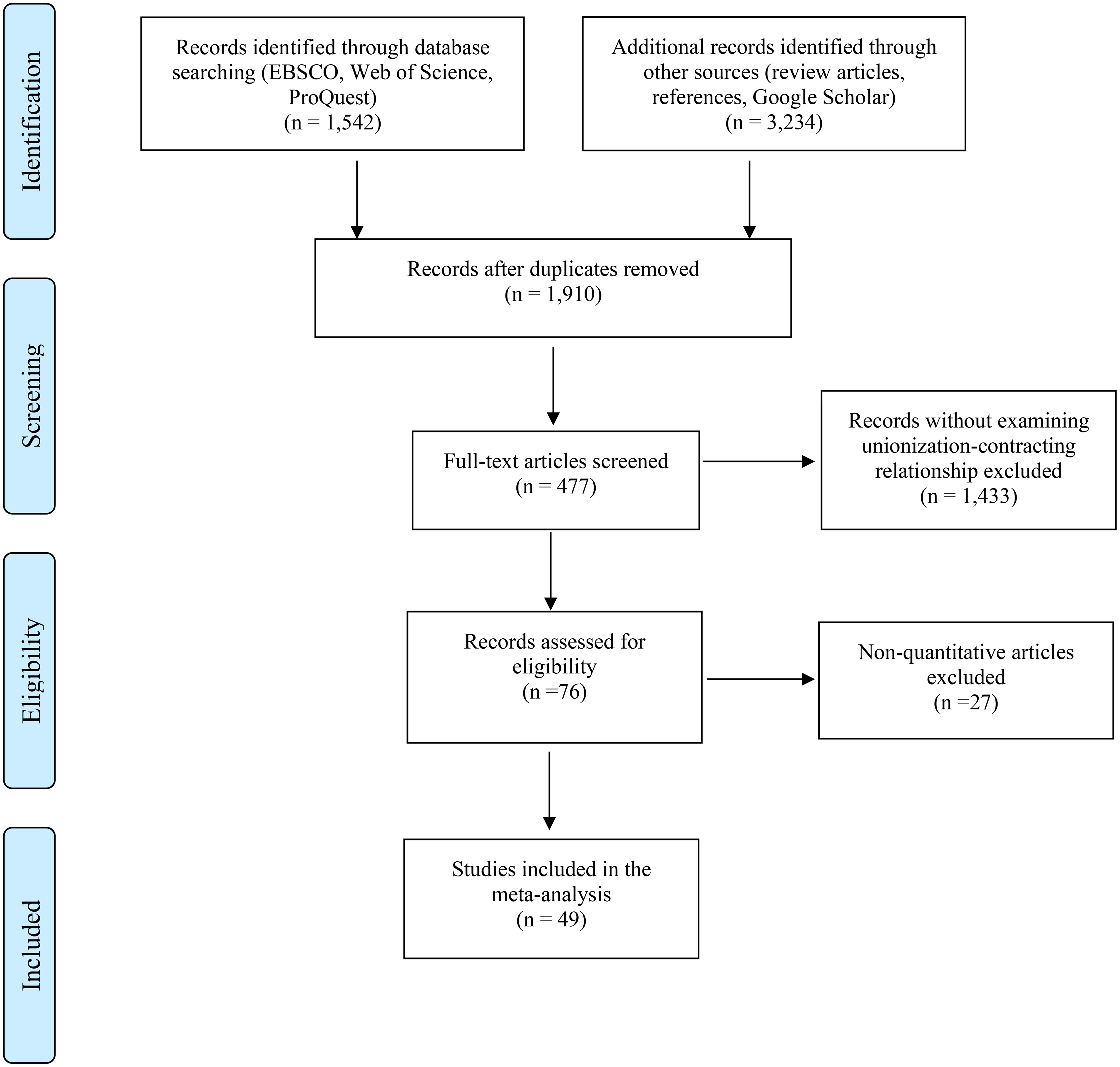
The literature search procedure is summarized in the PRISMA (Preferred Reporting Items for Systematic Reviews and Meta-Analyses) flow diagram in Figure 1. We completed the search in mid-October 2021.
PRISMA flow diagram.
Inclusion Criteria
A relevant study had to satisfy all the following six criteria for inclusion in the present meta-analysis:
The study must quantitatively explore the effect of unionization on contracting out. The study subjects must be government agencies rather than for-profit or nonprofit organizations. The dependent variable, contracting out, must be measured as the extent to which a government contracts out its service delivery. Analyses examining the consideration of contracting out were excluded (e.g., Chandler & Feuille, 1994; Jalette & Hebdon, 2012), as consideration and adoption of contracting out could be different. Studies focusing on other privatization or government restructuring efforts were also excluded (e.g., Warner & Hebdon, 2001). The focal predictor, unionization, must be measured as a strength and influence of public sector unions in a jurisdiction. Studies using indirect proxies of unionization, such as unemployment rate and ratio of government employees to local population, were excluded (e.g., Gradus & Budding, 2020), as they do not directly measure the focal predictor. Sufficient statistical information for effect size calculations can be drawn from the study or obtained from the study's author(s). The study must be written in English.
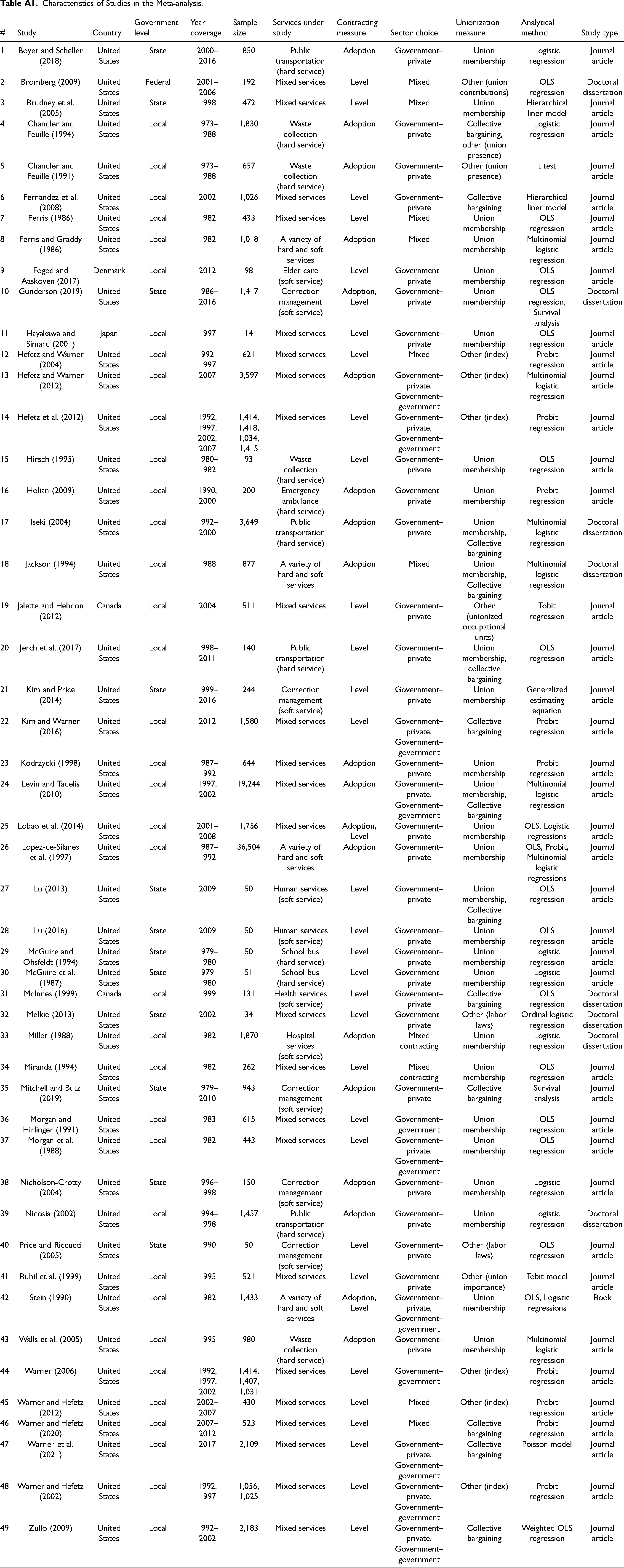
Using these criteria, we identified a final sample of 49 studies for the meta-analysis, including 40 published journal articles and nine unpublished studies (eight dissertations and one book).
4
These studies are listed and summarized in the Appendix.
Effect Size Calculation
Effect sizes, standardized associations between two variables, are the central metric for meta-analysis. They enable meta-analysts to put results from different studies on the same scale and then combine them for synthesis purposes. In this study, effect sizes measure the standardized association between unionization (focal predictor) and contracting out (dependent variable). Given that the vast majority of the included studies rely on regression-related analysis, we employed a correlation-based effect size (Pearson product–moment correlation coefficient, or Pearson's r) to measure the relationships in the original studies.
When calculating r-based effect sizes, we adopted the formulas and strategies developed by Ringquist (2013):
In most cases, we directly calculated r-based effect sizes using correlation coefficients and regression-related estimators (e.g., regression coefficients, standardized regression coefficients, t scores, z scores). If original studies reported odds ratios, we first calculated odds-based effect sizes and then converted them into r-based effect sizes. If original studies reported multiple effect sizes for the relationship due to different variable measures or multiple independent samples, we coded all relevant effect sizes in order to maintain within-study variation. If original studies reported parameter estimates and their statistical significance levels using asterisks, we first estimated t scores or z scores using the values at the symbol levels and then converted them into correlation-based effect sizes. If original studies only reported the parameters of interest that were not statistically significant, we set the effect sizes as zero.
After these steps, we corrected the small bias associated with Pearson's r by transforming Pearson's r correlations into Fisher's z correlations. In this way, we normalized effect sizes and corrected the skewed distribution of Pearson's r around a given population.
Results
Sample Description
We finally drew 232 effect sizes from 49 original studies, ranging from −.72 to .81 in Pearson's r. Among them, 106 effect sizes indicate a positive association, 110 effect sizes indicate a negative association, and 19 effect sizes indicate a null association. Figure 2 delineates the distributions of effect sizes by study and by data year, respectively. 5 As can be seen from Figure 2(a), there is much inconsistency across existing studies regarding the unionization–contracting relationship. Figure 2(b) delineates how the evidence on the relationship has developed over the past four decades, implying further that the inconsistency in the existing findings seems to persist over time, without a clear time trend. In sum, both distributions highlight the inconclusiveness of existing evidence, which confirms the need to synthesize the net effect and explore the reasons for the competing findings.
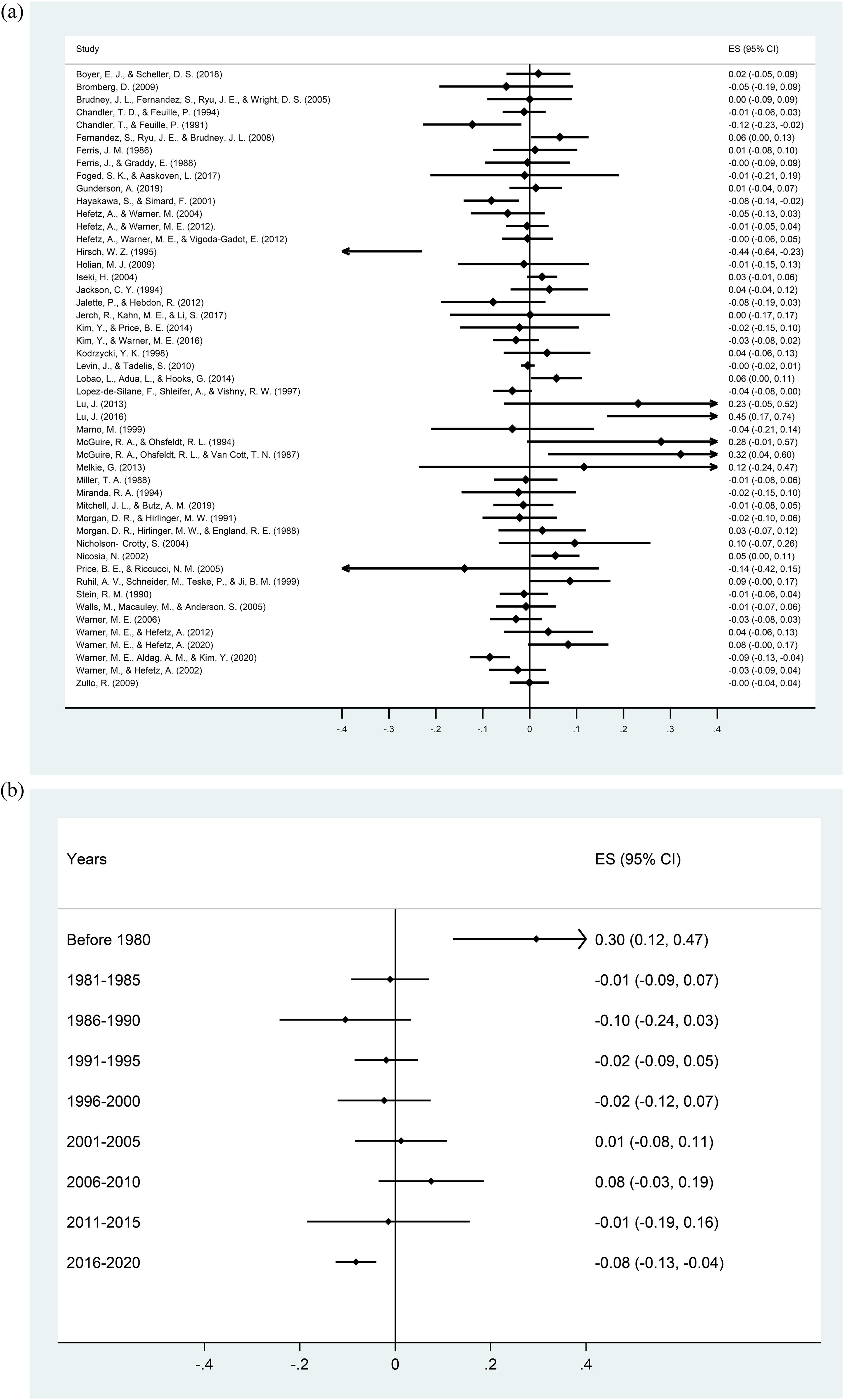
Distributions of effect sizes across existing studies. (a) by study and (b) by data year.
Some characteristics of the included studies are worth mentioning. In terms of research context, the existing literature is dominated by studies of the unionization–contracting relationship in the United States. Among all the effect sizes under consideration, 213 effect sizes (92%) are U.S.-based and 19 are non-U.S.-based (eight from Canada, eight from Denmark, and three from Japan). 6 Moreover, the majority of effect sizes (84%) focus on the unionization–contracting relationship at the local government level, probably because there are more data and variations at the local level. In terms of publishing status, 170 effect sizes are from published journal articles, and 62 are from unpublished studies like books and dissertations. More description of the included studies can be seen in the Appendix.
Average Effect Size
While combining the effect sizes to estimate an average effect size, we first assessed effect size heterogeneity to inform the choice between a fixed-effects model and a random-effects model. We conducted the Q test to examine whether the variation among the effect sizes could be explained by sampling error alone. The null hypothesis was rejected (Q = 1520.47, p < .001). We further calculated the I2 statistic to gauge the proportion of the variation in the effect sizes that could not be attributed to sampling error. The I2 of 84.9% indicates significant heterogeneity across effect sizes (Higgins & Thompson, 2002). Based on these findings, we employed a random-effects model to synthesize all the 232 effect sizes. The weighted average effect size in Pearson's r is .015 (z = 3. 08, p < .01), with a 95% confidence interval of [0.006, 0.025]. This finding has two implications. First, the positive direction of the relationship indicates a positive association between a jurisdiction's level of unionization and its level of contracting out in public service delivery. Second, the magnitude of the relationship, according to the practices in interpreting correlation coefficients, implies that the association is quite small.
Moderating Effects
We further explored the moderating effects using metaregression. The dependent variable is the raw effect size in Fisher's z from an original study. All the moderators were coded as dummy variables, including unionization measure (union membership = 1, collective bargaining rights = 2, and others = 3), contracting measure (contracting adoption = 1 and contracting level = 2), sector choice (government–private contracting = 1, government–government contracting = 2, and mixed contracting = 3), and service type (social services = 1, technical services = 2, and general services = 3). Table 1 reports the distribution of moderators across all the effect sizes under study.
Sample Distribution (N = 232).
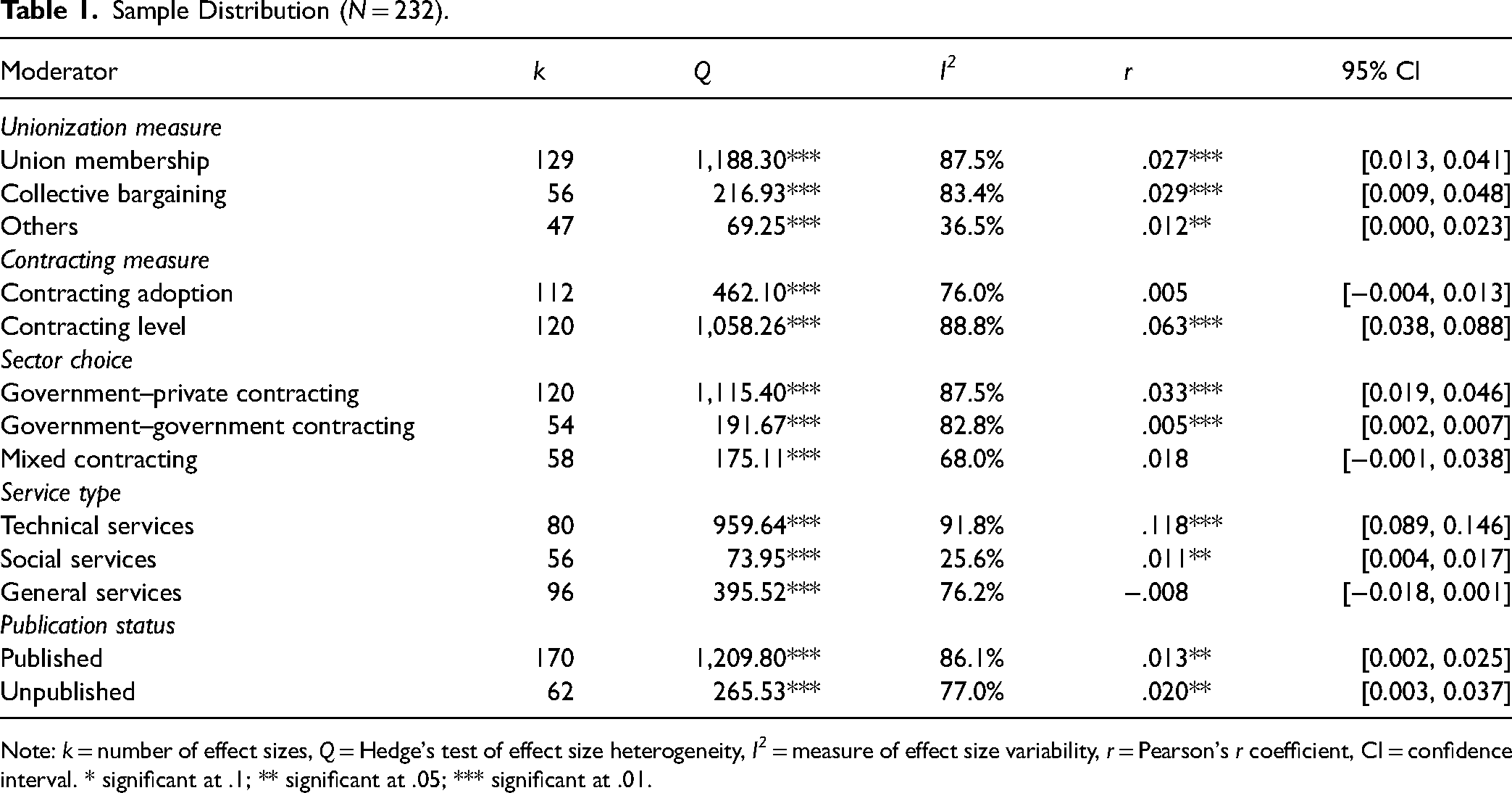
Note: k = number of effect sizes, Q = Hedge's test of effect size heterogeneity, I2 = measure of effect size variability, r = Pearson's r coefficient, CI = confidence interval. * significant at .1; ** significant at .05; *** significant at .01.
We followed Ringquist (2013) to employ generalized estimating equations (GEE) to specify the metaregression model. 7 The GEE method addresses clustered observations by placing less emphasis on effect sizes from studies generating more effect sizes. Table 2 reports the metaregression results. Overall, the model is statistically significant (p < .0001).
Metaregression for Moderator Analysis.
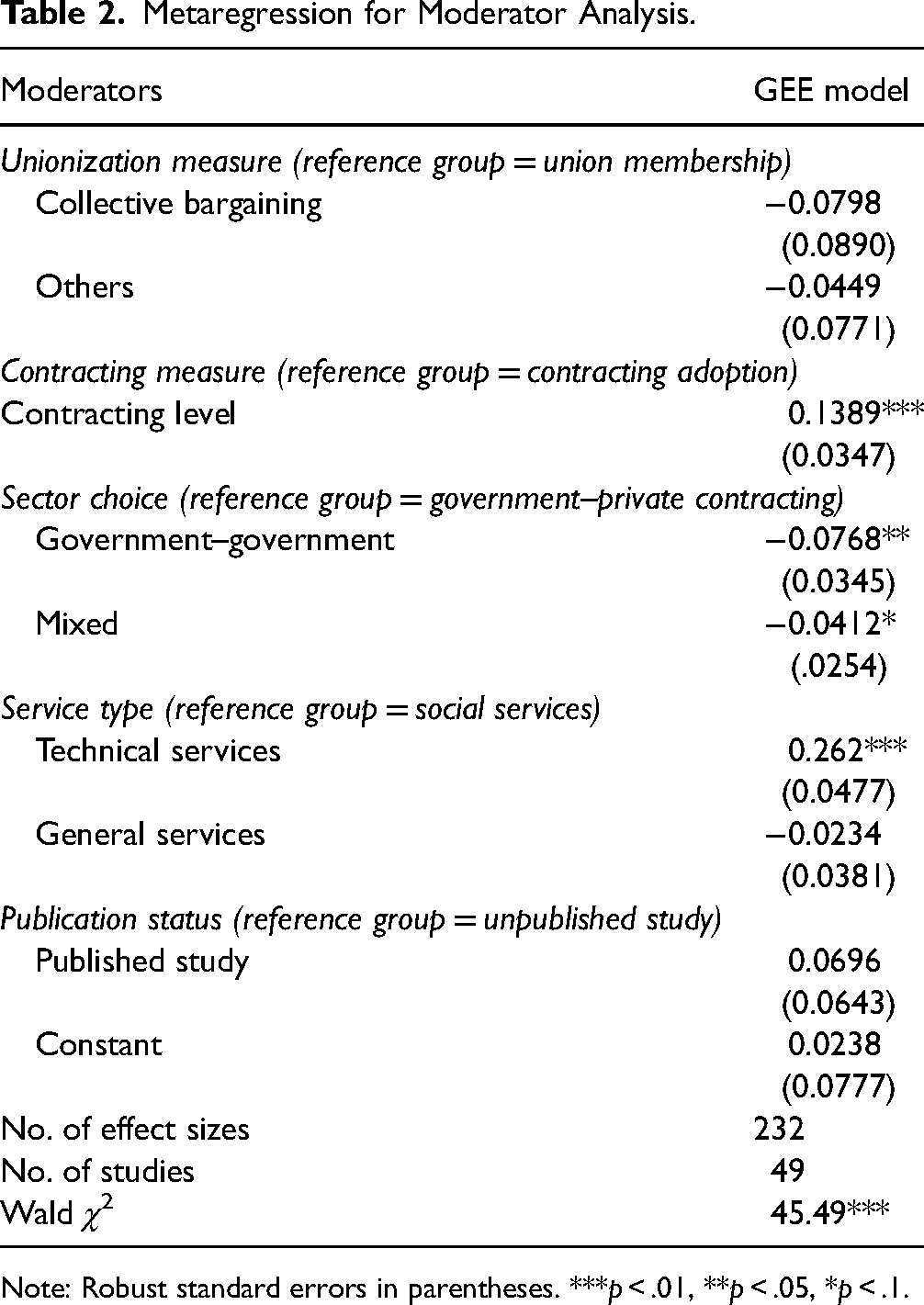
Note: Robust standard errors in parentheses. ***p < .01, **p < .05, *p < .1.
Unionization Measure
Among all the effect sizes under study, 56% are estimated using measures of union membership, 24% using measures of collective bargaining rights, and 20% using other measures (e.g., strength of union laws, union contributions to legislative members). The estimates that measure unionization by collective bargaining rights have a higher average effect size (r = .029, p < .01) than union membership (r = .027, p < .01) and others (r = .012, p < .05). We employed metaregression to examine whether the differences in effect sizes are statistically significant. The metaregression results suggest that, compared with effect sizes using union membership, effect sizes using measures of collective bargaining rights and effect sizes using other measures are not statistically different (p > .1). In other words, the results show no support for the moderating effect of unionization measure. How to measure unionization seems not to make much difference in the unionization–contracting relationship.
Contracting Measure
Among all the effect sizes in the analysis, 48% of them are based on contracting adoption and 52% on contracting level. The average effect size for contracting adoption is not statistically significant (r = .005, p > .1), indicating a null effect. In contrast, the average effect size for contracting level is larger and statistically significant (r = .063, p < .01), suggesting a positive effect. We further explored the moderating effect of contracting measure in the metaregression, after controlling for other factors. The metaregression results confirm a significant difference between these two groups of effect sizes: compared with the effect sizes for contracting adoption, the effect sizes for contracting level are on average statistically larger (p < .01). In this way, the contracting measure moderates the unionization–contracting relationship. Unionization seems not to affect whether a government contracts out but has an effect on how much a government contracts out.
Sector Choice
In our analysis of 232 effect sizes, 52% involve government–private contracting, 23% involve government–government contracting, and 25% involve mixed types of contracting. The estimates for government–private contracting have a higher average effect size (r = .033, p < .01) than the ones for government–government contracting (r = .005, p < .01) and mixed contracting (r = .018, p > .1), respectively. The metaregression analysis further reports that, compared with effect sizes for government–private contracting, effect sizes for government–government contracting are significantly smaller (p < .05), holding other factors constant. In sum, sector choice helps moderate the unionization–contracting relationship. Specifically, unionization plays a role in driving both types of contracting, but the relationship is smaller in the context of intergovernmental contracting. In other words, unionization has a weaker impact on contracting out when governments contract out with other governments.
Service Type
In our meta-analysis, 35% of the effect sizes are specifically related to contracting for technical services, 24% are related to contracting for social services, and 41% involve contracting for general public services without specifying service names or types. 8 The estimates for technical services have a higher average effect size (r = .118, p < .01) than those for social services (r = .011, p < .05) and general services (r = −.008, p > .1). The metaregression results indicate the moderating effect of service type: compared with effect sizes involving social services, effect sizes related to technical services are significantly larger (p < .01), ceteris paribus. In sum, service type seems to moderate the unionization–contracting relationship in that the relationship is stronger in contracting for technical services.
Publication Bias
Publication bias, or the “file drawer problem,” is a major threat to the validity of systematic reviews (Rosenthal, 1979; Sutton, 2009). In particular, if studies with null or small effects are less likely to be published and a meta-analysis only focuses on published results, meta-analysis could overestimate the effect. We addressed the threat of publication bias in several ways. First, as an ex ante prevention, we tried to reach as much gray literature as possible in the literature search and included nine unpublished studies in the analysis. These unpublished studies contributed 62 effect sizes, accounting for 26% of all the effect sizes in the analysis. Second, as a visual check, we drew a funnel plot (in Figure 3). The slight asymmetry in the plot may indicate the presence of publication bias. Third, we calculated average effect sizes for published and unpublished studies, respectively. The estimates from published studies have a smaller average effect size (r = .013, p < .05) than the estimates from unpublished studies (r = .020, p < .05), indicating that we would not overestimate the real effect. Fourth, we further employed metaregression to test whether the difference in effect sizes is statistically significant by including a moderator on whether an effect size is drawn from a published study (yes =1 and no = 0). The presence of publication bias is not supported by the metaregression results. In the regression model, the moderator is not statistically significant at the 10% level, suggesting that the effect sizes from published studies do not systematically differ from those from unpublished ones. Putting all the evidence together, we concluded that publication bias is not a serious concern in the present meta-analysis.
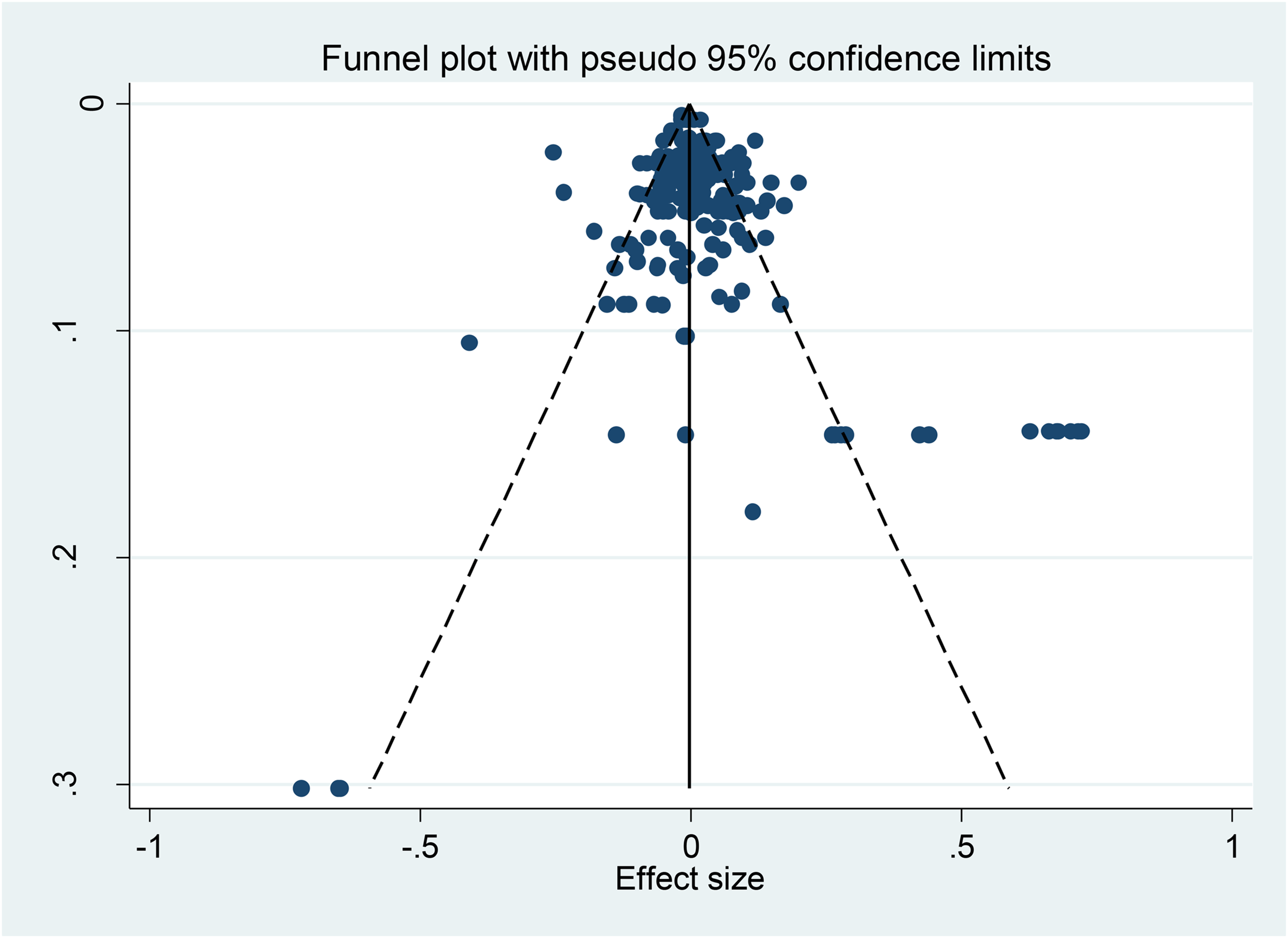
Funnel plot.
Discussion
In the government contracting literature, the role of unions in government make-or-buy decisions is a highly contested topic. Although unions are usually believed to be active players in influencing government decisions, their effect is still inconclusive after decades of empirical research. In the literature, unions are often conceived of as both activators and inhibitors of contracting out, since they simultaneously exert cost pressures to motivate contracting out and political pressures to impede contracting out. These two opposing mechanisms, as a result, make the net effect hard to predict. In this study, we employed meta-analysis to synthesize empirical findings from existing studies to estimate a generalized association between unionization and contracting out and explore moderators underlying this relationship.
We first combined 232 effect sizes from 49 existing studies and found that jurisdictions with higher levels of unionization generally contract out more in public service delivery, although the magnitude of the unionization effect is small. This finding has several implications for government contracting research and practice. The positive direction of the relationship suggests that the cost pressures of unionization outweigh its political pressures in shaping government make-or-buy decisions, leading to that governments in more unionized jurisdictions would engage more extensively in contracting out. The small magnitude of the relationship suggests that net effect of unionization on contracting out might be limited, even though unions may actively participate in the decision-making process. Put together, unionization is a relevant, but not necessarily robust, factor in government contracting decisions, and the cost pressures associated with unionization may lead governments to contract out in service delivery. The finding seems to concur with the argument that contracting out has been driven more by pragmatic factors than ideological and political factors (Bel & Fageda, 2007, 2009; Kim & Warner, 2016). Contracting out is a government tool used by public managers to serve pragmatic needs such as cost savings.
In addition to estimating a generalized effect for the unionization–contracting relationship, we also explored the moderators that could help account for different results in existing studies. Those findings contribute new knowledge to the literature in several ways.
First, unionization measure does not explain the different results in the literature. Measuring unionization is complex due to a range of challenges such as different legal and political environments and data limitations. As a result, researchers measure unionization in different ways. There is some discussion in the literature concerning the pros and cons of each measure (Anzia & Moe, 2015; Lovenheim, 2009; Moe, 2009), but whether and to what extent unionization measures matter have not been systematically studied. In the government contracting literature, union membership and collective bargaining agreements are the two most common measures. Conceptually, these two measures capture different aspects of unionization. For example, union membership could capture unionization that is not represented by the presence of a collective bargaining agreement. However, our analysis suggests that the estimates obtained from different unionization measures are not significantly different. In other words, although these measures may capture different aspects of unionization, they seem not to make a difference in empirical results. This finding may inform future empirical research on unions and labor relations.
Second, contracting measure plays a moderating role underlying the unionization–contracting relationship. The result implies that unionization does not affect whether a government contracts out, but have an impact on how much a government contracts out. In this way, unionization seems not a determinant in the decision to contract out or not, but a relevant factor in shaping the level of contacting out. The finding further concurs with the argument in the labor management literature that unions have employed an increasingly cooperative labor–management strategy in the wake of government privatization and outsourcing (Givan & Bach, 2007; Jalette & Hebdon, 2012; Kim & Warner, 2016). Specifically, unions shift their practical attention from opposing the adoption of contracting out to collaborating with governments to ensure appropriate levels of contracting out and reduce adverse effects on public employees. As Warner and Hefetz (2020, p. 228) argued, “labour opposition has no effect on contracting dynamics, but unionized localities give more attention to ensure … the core features for successful contracting (monitoring, balancing interests, managing markets).”
Third, sector choice moderates the unionization–contracting relationship. The results indicate that unionization leads to more contracting with both private (for-profit and nonprofit) providers and other governments, but the relationship is weaker in cases of intergovernmental contracting. It is possible that although unions react more strongly to government–private contracting than to government–government contracting (Hebdon, 2006), such strong opposition will create substantial costs. Also, compared with government–government contracting, potential cost savings from government–private contracting could be more significant. Put together, the cost pressures would outweigh the political pressures and drive governments to engage in more government–private contracting. In contrast, unions are less sensitive to government–government contracting, resulting in a weaker role in shaping intergovernmental contracting. This finding joins some previous studies in suggesting that unionization has different effects on contracting with private providers and other governments (Hefetz & Warner, 2012; Kim & Warner, 2016; Morgan et al., 1988). It is imperative that future research differentiate these two types of contracting.
Fourth, service type matters to the unionization–contracting relationship. Our results indicate the relationship is stronger in contracting for technical services. In the literature, there is clearer evidence suggesting that the benefits from contracting out are greater for technical services than for social services (Hodge, 2000; Petersen et al., 2018). Moreover, compared with technical services, the complexity of the social services context (e.g., a less competitive market and difficult-to-measure outcomes) makes it harder to make a case for contracting out. Put together, when unionization pushes labor costs in producing technical services in-house to a high level, potential cost savings from contracting for technical services would motivate governments to contract out. In this way, unionization is more active in driving technical service contracting than social service contracting. Indeed, government contracting research has long noted the differences between technical and social services and their unique challenges for contracting management. Our finding adds to this body of literature by showing the moderating effect of service type underlying the unionization–contracting relationship. “By differentiating between technical and social services,” as Bel and Fageda (2017, p. 508) noted, we could “introduce a distinction that may prove useful in future research.”
Conclusion
This study synthesizes existing findings on the relationship between unionization and contracting out through a meta-analysis of 232 effects from 49 existing studies spanning over four decades. Overall, unionization is a relevant, but not necessarily robust, factor in leading governments to engage in contracting out in public service delivery, and its exact effect may vary slightly by context. In other words, unionization seems to be a catalyst of, instead of a barrier to, contracting out.
Our analysis is subject to a number of limitations, which may inform future research. First, given that most studies included in the analysis rely on cross-sectional data, the usual caveats related to cross-sectional analysis apply to the present meta-analysis. In particular, our results may imply association but not necessarily causality. Second, meta-analysis is not able to identify and test causal mechanisms. As a result, we could only observe the association between unionization and contracting, rather than delving into the mechanisms through which unions influence government make-or-buy decisions. Third, we could not include all potential moderators in the analysis since meta-analysis can only examine the factors that are explicit in existing studies. For example, although Figure 2(b) provides a preliminary examination of the time trend in the effect of unionization on contracting out, the challenges in measuring time prevent us from including a time measure in the metaregression analysis. 9 It would be interesting to explore the possible moderating effect of time and its underlying theoretical mechanisms.
In sum, this study consolidates existing empirical findings on the unionization–contracting relationship and provides an empirical generalization of the relationship. The findings extend the literature by bridging the divergences in existing studies and offering a more accurate interpretation of previous results. The results should lay the foundation for further explorations of contracting decisions and management.
Footnotes
Declaration of Conflicting Interests
The authors declared no potential conflicts of interest with respect to the research, authorship, and/or publication of this article.
Funding
The authors received no financial support for the research, authorship, and/or publication of this article.

Notes
Author Biographies
Appendix
Characteristics of Studies in the Meta-analysis.
| # | Study | Country | Government level | Year coverage | Sample size | Services under study | Contracting measure | Sector choice | Unionization measure | Analytical method | Study type |
|---|---|---|---|---|---|---|---|---|---|---|---|
| 1 | Boyer and Scheller (2018) | United States | State | 2000–2016 | 850 | Public transportation (hard service) |
Adoption | Government–private | Union membership | Logistic regression | Journal article |
| 2 | Bromberg (2009) | United States | Federal | 2001–2006 | 192 | Mixed services | Level | Mixed | Other (union contributions) | OLS regression | Doctoral dissertation |
| 3 | Brudney et al. (2005) | United States | State | 1998 | 472 | Mixed services | Level | Mixed | Union membership | Hierarchical liner model | Journal article |
| 4 | Chandler and Feuille (1994) | United States | Local | 1973–1988 | 1,830 | Waste collection (hard service) |
Adoption | Government–private | Collective bargaining, other (union presence) | Logistic regression | Journal article |
| 5 | Chandler and Feuille (1991) | United States | Local | 1973–1988 | 657 | Waste collection (hard service) |
Adoption | Government–private | Other (union presence) | t test | Journal article |
| 6 | Fernandez et al. (2008) | United States | Local | 2002 | 1,026 | Mixed services | Level | Government–private | Collective bargaining | Hierarchical liner model | Journal article |
| 7 | Ferris (1986) | United States | Local | 1982 | 433 | Mixed services | Level | Mixed | Union membership | OLS regression | Journal article |
| 8 | Ferris and Graddy (1986) | United States | Local | 1982 | 1,018 | A variety of hard and soft services | Adoption | Mixed | Union membership | Multinomial logistic regression | Journal article |
| 9 | Foged and Aaskoven (2017) | Denmark | Local | 2012 | 98 | Elder care (soft service) |
Level | Government–private | Union membership | OLS regression | Journal article |
| 10 | Gunderson (2019) | United States | State | 1986–2016 | 1,417 | Correction management (soft service) |
Adoption, Level | Government–private | Union membership | OLS regression, Survival analysis | Doctoral dissertation |
| 11 | Hayakawa and Simard (2001) | Japan | Local | 1997 | 14 | Mixed services | Level | Government–private | Union membership | OLS regression | Journal article |
| 12 | Hefetz and Warner (2004) | United States | Local | 1992–1997 | 621 | Mixed services | Level | Mixed | Other (index) | Probit regression | Journal article |
| 13 | Hefetz and Warner (2012) | United States | Local | 2007 | 3,597 | Mixed services | Adoption | Government–private, Government–government | Other (index) | Multinomial logistic regression | Journal article |
| 14 | Hefetz et al. (2012) | United States | Local | 1992, 1997, 2002, 2007 | 1,414, 1,418, 1,034, 1,415 | Mixed services | Level | Government–private, Government–government | Other (index) | Probit regression | Journal article |
| 15 | Hirsch (1995) | United States | Local | 1980–1982 | 93 | Waste collection (hard service) |
Level | Government–private | Union membership | OLS regression | Journal article |
| 16 | Holian (2009) | United States | Local | 1990, 2000 | 200 | Emergency ambulance (hard service) | Adoption | Government–private | Union membership | Probit regression | Journal article |
| 17 | Iseki (2004) | United States | Local | 1992–2000 | 3,649 | Public transportation (hard service) |
Adoption | Government–private | Union membership, Collective bargaining | Multinomial logistic regression | Doctoral dissertation |
| 18 | Jackson (1994) | United States | Local | 1988 | 877 | A variety of hard and soft services | Adoption | Mixed | Union membership, Collective bargaining | Multinomial logistic regression | Doctoral dissertation |
| 19 | Jalette and Hebdon (2012) | Canada | Local | 2004 | 511 | Mixed services | Level | Government–private | Other (unionized occupational units) | Tobit regression | Journal article |
| 20 | Jerch et al. (2017) | United States | Local | 1998–2011 | 140 | Public transportation (hard service) |
Level | Government–private | Union membership, collective bargaining | OLS regression | Journal article |
| 21 | Kim and Price (2014) | United States | State | 1999–2016 | 244 | Correction management (soft service) |
Level | Government–private | Union membership | Generalized estimating equation | Journal article |
| 22 | Kim and Warner (2016) | United States | Local | 2012 | 1,580 | Mixed services | Level | Government–private, Government–government | Collective bargaining | Probit regression | Journal article |
| 23 | Kodrzycki (1998) | United States | Local | 1987–1992 | 644 | Mixed services | Adoption | Government–private | Union membership | Probit regression | Journal article |
| 24 | Levin and Tadelis (2010) | United States | Local | 1997, 2002 | 19,244 | Mixed services | Adoption | Government–private, Government–government | Union membership, Collective bargaining | Multinomial logistic regression | Journal article |
| 25 | Lobao et al. (2014) | United States | Local | 2001–2008 | 1,756 | Mixed services | Adoption, Level | Government–private | Union membership | OLS, Logistic regressions | Journal article |
| 26 | Lopez-de-Silanes et al. (1997) | United States | Local | 1987–1992 | 36,504 | A variety of hard and soft services | Adoption | Government–private | Union membership | OLS, Probit, Multinomial logistic regressions | Journal article |
| 27 | Lu (2013) | United States | State | 2009 | 50 | Human services (soft service) |
Level | Government–private | Union membership, Collective bargaining | OLS regression | Journal article |
| 28 | Lu (2016) | United States | State | 2009 | 50 | Human services (soft service) |
Level | Government–private | Union membership | OLS regression | Journal article |
| 29 | McGuire and Ohsfeldt (1994) | United States | State | 1979–1980 | 50 | School bus (hard service) |
Level | Government–private | Union membership | Logistic regression | Journal article |
| 30 | McGuire et al. (1987) | United States | State | 1979–1980 | 51 | School bus (hard service) |
Level | Government–private | Union membership | Logistic regression | Journal article |
| 31 | McInnes (1999) | Canada | Local | 1999 | 131 | Health services (soft service) |
Level | Government–private | Collective bargaining | OLS regression | Doctoral dissertation |
| 32 | Melkie (2013) | United States | State | 2002 | 34 | Mixed services | Level | Government–private | Other (labor laws) | Ordinal logistic regression | Doctoral dissertation |
| 33 | Miller (1988) | United States | Local | 1982 | 1,870 | Hospital services (soft service) |
Adoption | Mixed contracting | Union membership | Logistic regression | Doctoral dissertation |
| 34 | Miranda (1994) | United States | Local | 1982 | 262 | Mixed services | Level | Mixed contracting | Union membership | OLS regression | Journal article |
| 35 | Mitchell and Butz (2019) | United States | State | 1979–2010 | 943 | Correction management (soft service) |
Adoption | Government–private | Collective bargaining | Survival analysis | Journal article |
| 36 | Morgan and Hirlinger (1991) | United States | Local | 1983 | 615 | Mixed services | Level | Government–government | Union membership | OLS regression | Journal article |
| 37 | Morgan et al. (1988) | United States | Local | 1982 | 443 | Mixed services | Level | Government–private, Government–government | Union membership | OLS regression | Journal article |
| 38 | Nicholson-Crotty (2004) | United States | State | 1996–1998 | 150 | Correction management (soft service) |
Adoption | Government–private | Union membership | Logistic regression | Journal article |
| 39 | Nicosia (2002) | United States | Local | 1994–1998 | 1,457 | Public transportation (hard service) |
Adoption | Government–private | Union membership | Logistic regression | Doctoral dissertation |
| 40 | Price and Riccucci (2005) | United States | State | 1990 | 50 | Correction management (soft service) |
Level | Government–private | Other (labor laws) | OLS regression | Journal article |
| 41 | Ruhil et al. (1999) | United States | Local | 1995 | 521 | Mixed services | Level | Government–private | Other (union importance) | Tobit model | Journal article |
| 42 | Stein (1990) | United States | Local | 1982 | 1,433 | A variety of hard and soft services | Adoption, Level | Government–private, Government–government | Union membership | OLS, Logistic regressions | Book |
| 43 | Walls et al. (2005) | United States | Local | 1995 | 980 | Waste collection (hard service) |
Adoption | Government–private | Union membership | Multinomial logistic regression | Journal article |
| 44 | Warner (2006) | United States | Local | 1992, 1997, 2002 | 1,414, 1,407, 1,031 | Mixed services | Level | Government–government | Other (index) | Probit regression | Journal article |
| 45 | Warner and Hefetz (2012) | United States | Local | 2002–2007 | 430 | Mixed services | Level | Mixed | Other (index) | Probit regression | Journal article |
| 46 | Warner and Hefetz (2020) | United States | Local | 2007–2012 | 523 | Mixed services | Level | Mixed | Collective bargaining | Probit regression | Journal article |
| 47 | Warner et al. (2021) | United States | Local | 2017 | 2,109 | Mixed services | Level | Government–private, Government–government | Collective bargaining | Poisson model | Journal article |
| 48 | Warner and Hefetz (2002) | United States | Local | 1992, 1997 | 1,056, 1,025 | Mixed services | Level | Government–private, Government–government | Other (index) | Probit regression | Journal article |
| 49 | Zullo (2009) | United States | Local | 1992–2002 | 2,183 | Mixed services | Level | Government–private, Government–government | Collective bargaining | Weighted OLS regression | Journal article |