




Abstract
While theories of local democracy mark political representation as highly important in determining the quality and perception of public services, little has been done to explore the empirical connection. This represents a lacuna in our understanding of how representation affects citizen wellbeing and how citizens determine their satisfaction with public services. We focus on descriptive and symbolic dimensions of representation to elucidate how representation influences citizens’, and minority citizens’ in particular, experience with public services. Utilizing a survey of residents of Haifa, Israel, our findings imply that beyond the descriptive makeup of municipal elected bodies, symbolic dimensions of representation might be even more important for understanding citizen satisfaction. Symbolic representation may impact satisfaction directly and through its contribution to other feelings about government. These findings expand understandings of the importance of diversity in political representation, determinants of satisfaction and how dynamics of good governance contribute to citizens’ experiences.
Introduction
Is there a connection between representation in local elected bodies and citizens’ satisfaction with municipal public services? While there is significant overlap in the themes and variables highlighted in the literature about both representation and citizens’ satisfaction, little has been done to examine the crossover between them. Some studies though hint that elected representation could be key to understanding satisfaction with administrative services (Grose, 2011; Lowande et al., 2019). Many have proposed that elected representation is also a significant determinant of administrative output (Furlong, 1998; Nielsen & Moynihan, 2017; Ritchie & You, 2019), and that boundaries between politicians and administrators are quite blurred (Alesina & Tabellini, 2007). We therefore propose that elected representation, especially representation of minority groups, might be key to understanding the citizen experience with services. We explore this potential connection, accounting for, and comparing between multiple dimensions of representation.
A better understanding of the potential connection between elected representation and satisfaction benefits both practitioners and researchers. From a theoretical perspective, conceptualizations of local democracy have tried to define the role that elected representation plays in determining citizens’ satisfaction (Haus & Sweeting, 2006). From a practical perspective, governments spend a great deal to improve their citizens’ experiences, meet diverse needs and increase equality in access to resources and representation. Better understanding the connection between representation and citizens’ satisfaction could help governments improve the experience of various groups with public services and could be especially useful in understanding how to improve the satisfaction of underrepresented and underserved minorities.
Recognizing representation as a multifaceted concept, we focus on the descriptive and symbolic dimensions as potential determinants of citizens’ experience with public services. Each create a potential pathway to develop a relationship between representation and satisfaction. In the case of descriptive representation, a representative elected body might generate policies that better meet the needs of diverse groups. Diverse representation can also create outlets through which more groups can access better services (Butler & Brookman, 2011; Grose, 2011; Lowande et al., 2019). Beyond how representation shapes actual services, symbolic representation could affect how people assess these services. If citizens feel that their representation is legitimate, responsive, or relatable, it could improve not just how they see their elected body, but also how they approach the entire public sector.
In order to test how the different dimensions of representation correlate with satisfaction, we use original survey data collected among residents of Haifa, Israel as well as data on the demographic makeup of the Haifa municipal council. We test the correlation between descriptive representation on satisfaction by observing the correlation between the rate of representation of minority groups on the city council and survey responses about the satisfaction of group members. We test the potential impact of symbolic representation by observing the correlation between respondents’ perceptions of representation and their satisfaction, as well as how these perceptions correlate with other determinants of satisfaction. We demonstrate how perception of representation contributes to other determinants of satisfaction by testing how its effect is mediated through citizens’ sense of trust. Our findings imply that while both dimensions of elected representation shape citizens’ satisfaction with services, the symbolic dimension might be far more significant. Not only does a feeling of representation potentially directly affect satisfaction, it also might enhance another measure of symbolic representation, which in turn, further increases satisfaction.
Determinants of Citizens’ Satisfaction with Services
Studies have investigated numerous determinants of citizens’ satisfaction with public services including service quality, perception of services, and demographic characteristics. Regarding service quality, studies have examined quality and organizational characteristics as determinants of output and satisfaction. Significant factors include timeliness, competence, courteousness of the staff (Cumberford et al., 1999), responsiveness, professionalism, leadership (Vigoda-Gadot et al., 2010) and degree of organizational autonomy (Song et al., 2020).
Perception of services has been found to be just as, or even more critical in determining satisfaction than objective measures of quality. Services that are perceived as high in quality correlate with higher levels of satisfaction (Roch & Poister, 2006). The public bases its level of satisfaction on the extent to which their expectations are confirmed by comparing the actual performance of the service with their expectations (Van de Walle, 2018; Van Ryzin, 2013).
Broader attitudes toward government, including trust in it, belief in transparency and a sense of political alienation also serve as determinants of satisfaction (Van de Walle, 2018; Park & Blenkinsopp, 2011). While trust in government correlates with increased satisfaction (Vigoda-Gadot et al., 2010; Van de Walle & Migchelbrink, 2022), political alienation reduces satisfaction (Brown & Coulter, 1983).
Among demographic variables, race is a significant predictor of citizens’ satisfaction. In US-based studies, African Americans in particular are less satisfied with public services (Roch & Poister, 2006). Systematic and individual racism might affect the quality of services minorities receive (Brown & Coulter, 1983). Additionally, minorities often report high levels of political alienation and less trust in government relative to the general population, which could lead to poorer assessments of public services (Roch & Poister, 2006). Demographic variables such as age, socioeconomic status and education have yielded inconsistent results (Brown & Coulter, 1983; Dahlström et al., 2018).
Unlike the demographic characteristics of citizens, the demographic makeup of the service providers themselves has been found to be influential. Public organizations reflective of the public they serve exhibit better outcomes, especially when serving underrepresented groups (Hibbard et al., 2022; Kennedy, 2013). The contribution of a representative bureaucracy to the real and perceived level of services can be considered in passive or active terms. 1 Passive representation manifests when administrators reflect the demographics of the clientele. This diverse representation could have a symbolic effect for citizens. Active representation happens when shared demographic characteristics between bureaucrats and the public result in the promotion and adoption of programs and policies that benefit the population being represented (Bishu & Kennedy, 2020; Mosher, 1968).
Modes of Influence of Political Representation
In order to understand the different ways elected political representation can be connected to both objective levels of service, as well as perceptions of service, we must account for the multidimensional nature of the concept. One of the most well-known frameworks for assessing the effects of elected representation is Hannah Pitkin's (1967) 4-part model. This model is composed of four dimensions of representation: formalistic, descriptive, substantive, and symbolic. Formalistic representation denotes the legal authority to act for another and refers to the formal process through which a political representative achieves their position. It is through the achievement of formalistic representation that the other three dimensions of representation are possible. Descriptive representation denotes the representation of a group by virtue of shared characteristics, which allow the representative to understand the experiences of group members (Celis & Childs, 2008). It too is often considered a precondition for the substantive and symbolic dimensions of representation (Swers & Rouse, 2011; Wängnerud, 2009). Substantive representation refers to the activities the representatives undertake on behalf of those they represent. Symbolic representation refers to the cultural significance of the representatives’ presence and the meaning they have for those they represent (Terjesen et al., 2009).
In this study, we focus on two of these four dimensions of elected political representation, descriptive and symbolic representation, parsing out the effects of these two dimensions, as well as comparing between them. By limiting ourselves to these two modes of political representation we are able to conduct the study within a single political context, rather than a comparative context. This neutralizes many possible intervening variables including variation in the quality of service, in minority experiences, and in divisions of power between the local and national political organizations. While there are benefits to limiting ourselves to a single context, it stops us from assessing the full range of dimension of representation. We address the significance of these limitations in the discussion.
An elected body that provides descriptive representation has been found critical for advancing and protecting minority interests, improving policy making, and ensuring a sense of legitimacy and trustworthiness of the legislature among citizens. Women and minorities have distinct policy priorities and advocate for their respective groups’ interests at the national (Swers & Rouse, 2011) and local level (Nye et al., 2015). The link between descriptive and substantive elected political representation also carries over to bureaucratic and administrative processes (Grose, 2011). For example, minority and female representatives are more likely to intervene on behalf of their respective group members with the federal bureaucracy than representatives not associated with their groups (Butler & Broockman, 2011; Lowande et al., 2019).
Symbolic representation differs from descriptive and substantive representation in that its unit of analysis is the voter rather than the representative. It refers to the effect of the elected representatives’ identity on citizens, rather than the representatives themselves. Greater minority representation improves citizens’ faith in the justice, legitimacy, and responsiveness of the electoral body (Mansbridge, 1999) and the bureaucracy (Dantas Cabral et al., 2022). With increased group elected political representation, minorities are likely to feel less political alienation, and have more confidence that the government will respond to them (Sanchez & Morin, 2011). As a result of this perception of shared interests, constituents are more likely to contact the elected political representatives with whom they share a racial or gender identity (Gay, 2002).
Theoretical Framework: How Does Political Representation Impact Citizens’ Satisfaction with Local Public Services?
While the connection between local elected representatives and municipal public services is theoretically indirect, many have proposed that the boundaries between politicians and bureaucrats are actually highly porous. Alesina and Tabellini (2007) found that the distinction between politicians as policy makers, and bureaucrats as policy implementers is overly simplistic, and that there is much overlap in roles. Democratic institutions shape nonelected public bureaucracies and assert control over public administration (Wood & Waterman, 1991; Furlong, 1998). Voters themselves make the connection between politicians and administration, often holding politicians accountable for positive and negative outcomes in services (Nielsen & Moynihan, 2017).
According to Haus and Sweeting representation can be key to understanding the link between local democracy and the interpretation of the common will and good in service delivery (2006, pp. 271–273). In both how representatives understand the common good, and how they use identity and ideology to make choices, personal attributes become key to understanding how representatives guide the public administration. Among other things, the gender, racial and religious identity of the representative has been found to be key in determining the policies and programs that they initiate (Wilson, 2010; Wängnerud, 2009). Beyond policy making, politicians may even directly involve themselves in administrative proceedings (Demir & Nyhan, 2008), and the actions that they choose to take will be to some extent dictated by their identity (Lowande et al., 2019). Given the potentially strong connection between political representation and administrative output, we propose a framework that recognizes and tests multiple dimensions of representation. We specifically focus on descriptive and symbolic representation. Figure 1 displays these two links.
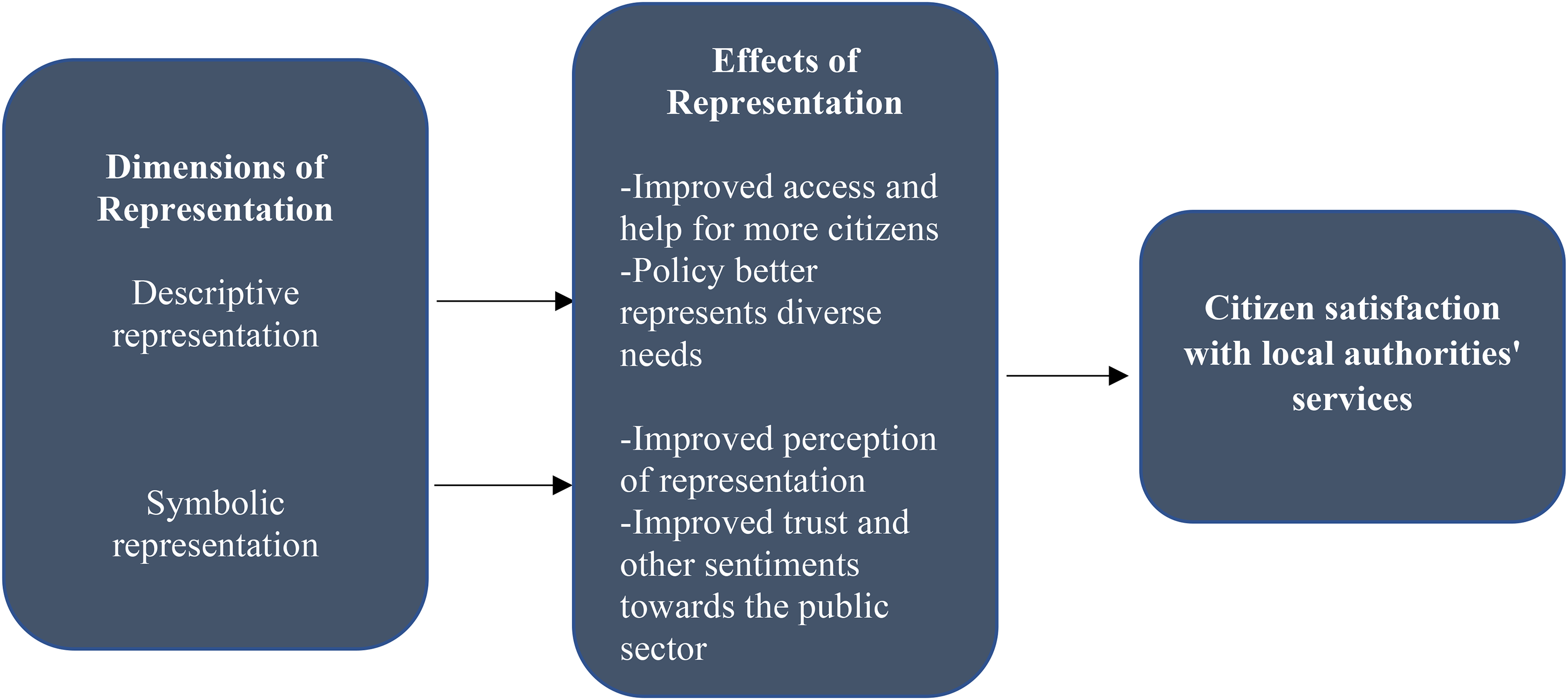
Pathways through which representation might improve satisfaction with services.
We assume that the influence of descriptive representation on satisfaction is a result of it providing substantive representation, although we do not test substantive representation directly. The first reason why descriptive representation can improve citizens’ satisfaction is that a representative who provides descriptive representation will likely provide substantive representation for a given group in the policy-making process (Wallace, 2014; Wilson, 2010). They will create policies that address the needs of the group that they represent. These policies would then affect the local services offered and administrative outcomes, leading to services that better address group needs, and thus result in greater satisfaction.
A second reason that descriptive representation might improve satisfaction with services is that citizens might get more help from representatives from their group, improving the outcomes of their interactions with public services. Citizens are more likely to ask for help from representatives who resemble them (Gay, 2002). In addition, minority representatives are also more likely than other representatives to help constituents who share their minority identity (Lowande et al., 2019). Thus, the more descriptive representation citizens have, the more likely they will be to have an advocate in their interactions with administrative services, leading to better outcomes. Based on these two reasons, we hypothesize:
H1: There will be a positive correlation between residents’ descriptive representation in local government and their satisfaction with local services.
Symbolic representation is the second key we use to understanding how elected representation connects to satisfaction with public services. Symbolic representation can improve satisfaction in a number of ways. First, a greater sense of representation might create a more positive feeling towards the public sector in general and the municipality in particular. This would include a more positive attitude towards administrative bodies, and a higher level of citizens satisfaction with local services. Therefore, we hypothesize:
H2: There will be a positive correlation between residents’ perceptions about symbolic representation in local government and their satisfaction with local services.
Second, symbolic representation might contribute to other feelings that residents have toward local government and services, which would in turn improve their satisfaction. Symbolic representation improves citizens’ trust in government (Gay, 2002; Mansbridge, 1999), reduces their sense of alienation and makes them more confident that the government will respond to the needs of their group (Sanchez & Morin, 2011). These things in turn are also known to improve satisfaction (Vigoda-Gadot et al., 2010; Brown & Coulter, 1983). Both alone, and through its contribution to determining other sentiments towards government, symbolic representation could impact citizens’ satisfaction with services. Thus, we hypothesize that symbolic representation impacts satisfaction both on its own, as well as through a mediating relationship. For the purpose of this study, we choose one sentiment that symbolic representation is known to impact, trust, in order to demonstrate this relationship (see research model in Figure 2), and hypothesize:
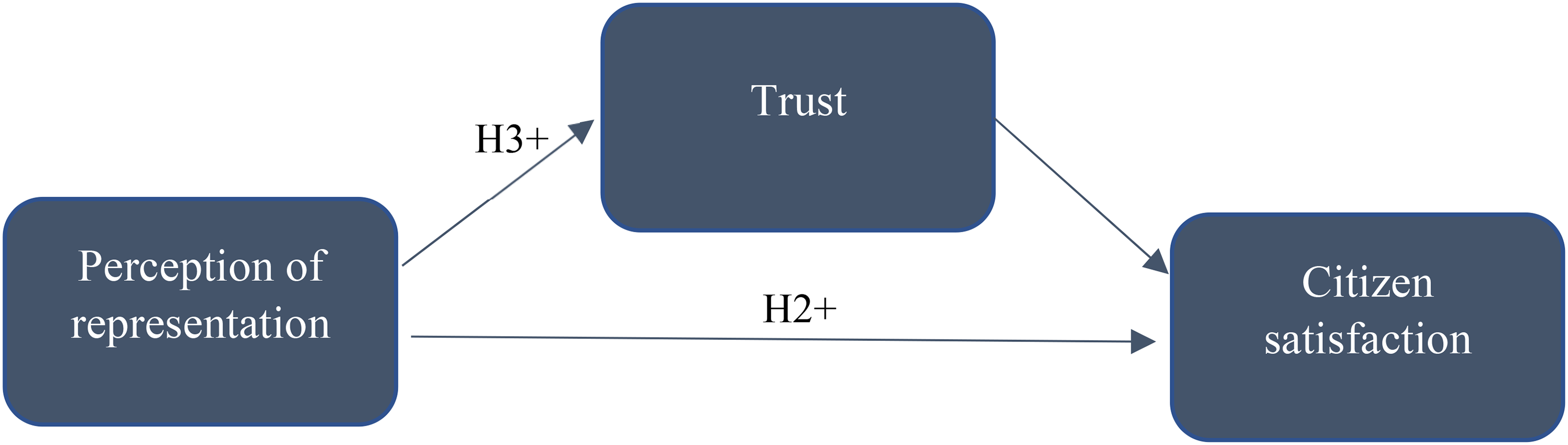
Direct and mediated pathways through which symbolic representation may enhance satisfaction with services.
H3: Residents’ trust in local government will mediate the positive relationship between symbolic representation and satisfaction with local services. Perceptions of improved representation will contribute to improved trust. These in turn contribute to greater satisfaction with services.
While there is an argument in the literature about the nature and direction of the causal pathway between satisfaction and trust (Van de Walle & Bouckaert, 2003), there is evidence of trust's role as a mediator between satisfaction and other perceptions of governance (Van de Walle, 2018). Though there is some question in the literature about directionality of causation, this study focuses on neither the causation nor the chronology of the relationship between trust and satisfaction. Additionally, there is existing literature showing correlation (Vigoda-Gadot et al., 2010; Brown & Coulter, 1983). We therefore make an assumption that we can consider trust as a mediator of representation's influence on satisfaction, for the sake of examining the impact of representation.
We add a final hypothesis to assess the relative strength of descriptive and symbolic representation in predicting citizens’ level of satisfaction with local services. Residents’ perceptions, including trust, are consistently found to be strong predictors of their satisfaction with local services (Park & Blenkinsopp, 2011; Van de Walle, 2018; Vigoda-Gadot et al., 2010). In comparison, demographic variables such as age, socioeconomic status and education are inconsistent in predicting satisfaction (Brown & Coulter, 1983; Dahlström et al., 2018).
Reinforcing this is findings from studies of representative bureaucracy that found that the symbolic identity of the representative can be even more important than the actual level of service (Hibbard et al., 2022). Given that determinants related to symbolic representation are stronger and more consistently significant predictors than descriptive identity or even acts of substantive representation, we hypothesize:
H4: Residents’ symbolic representation will be a stronger predictor of satisfaction with local services than their descriptive representation in local government.
Research Method
The Research Field: The Case of the Haifa Municipality
In order to test our hypotheses, we use original data collected from a survey conducted among residents of Haifa, Israel in 2019. Haifa is the third largest city in Israel and the largest city in Israel's Northern District. As of 2017, it had a population of approximately 281,100. It is considered one of the most diverse cities in Israel and an example of Jewish majority-Arab minority coexistence. Approximately 77.5% of the population is Jewish, 5.6% are Arab Christians, 5.5% are Arab Muslims, and 11.4% are other religious groups including Druze and Baha'i (Division for Strategic Planning and Research Division, 2019). Its diverse population allowed us to survey a large number of residents from both majority and minority groups.
Haifa's municipal council is made up of parties that are divided along ethnic lines, with two parties promoting themselves as nondenominational representatives of the non-Jewish minority. The Jewish vs. non-Jewish dichotomy is one of the most dominant identity sources in both Israeli society and politics, and these minority parties emphasize for residents the descriptive nature of their representatives. A recent election held in 2018 served as a catalyst for behaviors that we wanted to capture in the survey, such as trust (Flesken, 2018). Thus, conducting our survey after an election allowed us to see behaviors that at other times might be latent.
Though not perfectly match, the sample is very large (N = 584) and representative of the adult population in Haifa Israel (The Municipality of Haifa, 2015). To recruit participants, and in order to get input from the public in a real setting, research assistants specially trained for data collection approached Haifa residents in public and commercial and municipal centers such as train stations, community centers and public libraries at all city quarters, during a wide range of hours (7 AM to 8 PM). Research assistants were instructed to approach random passersby who agreed to spend 15–20 min filling out a questionnaire. Before filling in the survey, assistants confirmed that participants were residents of Haifa. Following the AAPOR guidance, in data collection, we employed post-stratification, weighting and correction procedure intended to reach a large sample size 2 and increase representation. The survey respondents had a slight overrepresentation of Jewish women, and an underrepresentation of both male and female minority members.
Some of the variables in this study are based on perceptions, making a survey the preferred method (George & Pandey, 2017). Though most of the variables come from the same source, special attention was paid to the possibility of common source bias, which can affect the outcomes of surveys. Following Podsakoff, MacKenzie and Podsakoff (2012), we reduced this risk by drawing our sample from respondents with enough expertise to answer the survey question, i.e., 3 years or more of residency, and we explained the study's aims and scope to participants. In addition, we reduced this risk by using clear language, labeling all response options, referring to actual situations, using different columns for the variables, and putting the dependent variable on a separate sheet. The descriptive representation data came from both the respondents’ self-identification reports and from the local municipal council and Haifa population databases. We also include a correlation table (Table 1) as an additional check.
Correlation Table of all Variables.
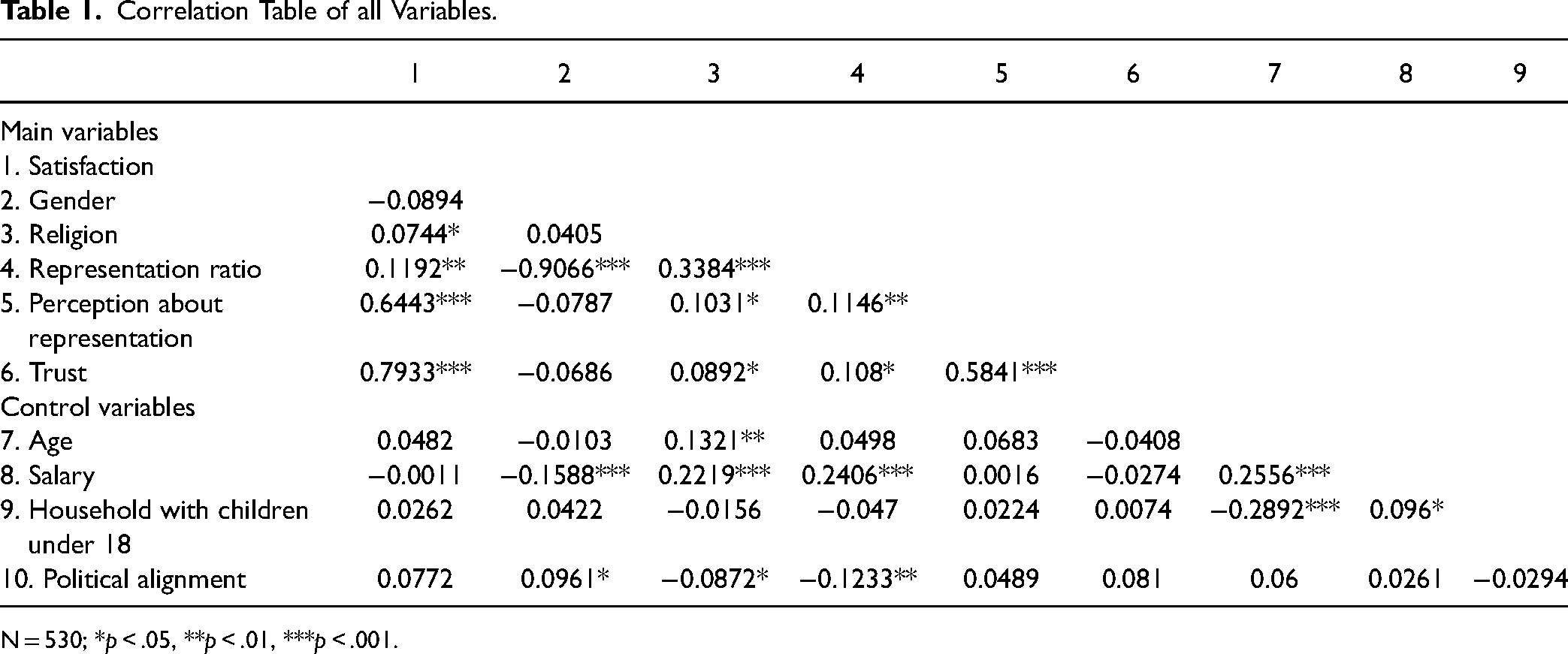
N = 530; *p < .05, **p < .01, ***p < .001.
Data and Measurements
Dependent Variable – Satisfaction with Local Services
The dependent variable is respondents’ ratings of their level of satisfaction with 13 local services on a Likert scale ranging from one (very unsatisfied) to five (very satisfied): payment and collection services, education, welfare services, culture and sports, sanitation and environment, business licensing and supervision, security and emergency services, infrastructure maintenance, municipal hotline, municipal website, urban planning, transportation and employment and commercial development. An aggregate score was created that averaged their ratings for all services. Internal consistency for this variable was high (Cronbach's alpha = .932). As an additional test of appropriateness of our aggregate variable, we generated an Item Response Theory Graded Response Model, which confirmed the internal validity of the composite variable. Full results of this test can be found in appendix A. In our sample there was an average satisfaction score of 2.56 (std. dev. 0.93).
While there could be concern about using a composite variable such as this, the structure of the local municipality not only neutralizes concern, but actually makes a composite variable the best option. The services in the survey are all provided by the Haifa Municipality by departments under the supervision of the Mayor and Council. This neutralizes concern that there could be variation in the services as a result of different agencies providing the service. There is also a significant degree of overlap and cooperation between the different departments. This could make it difficult for citizens to discern between different agencies. By using a composite variable, we capture the citizen's overall impression of municipal services, unhindered by their understanding of municipal division of responsibilities.
Independent Variables – Descriptive and Symbolic Representation
We have two groups of independent variables that capture descriptive and symbolic representation. For descriptive representation, we used two identity variables, male/female and majority/minority, to assign each participant to one of the following four groups: male/majority, female/majority, male/minority, and female/minority. We chose gender and ethnic minority status as our observed identity source because representation literature has cited both as among the most consistent predictors of elected representatives’ behavior, as well as primary sources of identity for both voters and representatives (e.g., Lowande et al., 2019; Swers, 2005).
There might be some concern about creating a single “minority group” given that we include Christians, Muslims, Druze and anyone who listed their religion as “other”. That said, while the group may be religiously diverse, ethnically it is fairly homogenous. The vast majority of Christians, Muslims and Druze in Israel all share an ethnic group as Arabs (Central Bureau of Statistics, 2020), distinct from the Jewish majority. In Israeli public administration and politics research it is very common to refer to Arabs as a homogenous group (e.g., Beeri, 2021; Arar & Abu Nasra, 2019). Thus, we put them into a single group.
Representatives of both the majority and the minority groups are distributed throughout numerous districts within the city both in reality and in our sample. The non-Jewish minority is spread out primarily over five of the eight districts in the city, with no single district being more than 26% non-Jewish minority. As no group is concentrated in a single area, either in the population or in our sample, we have no concerns that results will reflect differences in services between districts, rather than differences in perception or experience based on group affiliation.
As a second measure of extent of descriptive representation, we calculated the ratio of the descriptive representation of each group by dividing the percentage of council members of that group in the Haifa municipality by the percentage of residents of that group in the city of Haifa. Thus: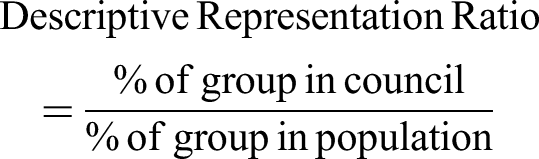
For symbolic representation, we measured the residents’ perceptions about their representation based on responses to two survey questions. First, respondents were asked to rate the extent to which they agreed with the statement: “People like me are not properly represented on the city council. Second, they were asked the extent to which they agreed with the statement: “There are populations whose interests do not receive adequate representation in the City Council.” They responded on a Likert scale of one (strongly disagree) to five (strongly agree). We averaged the responses to assess perceptions about symbolic representation. Within our models we used a reversed version of the scale so that a high score indicated strong perceptions about representation and a low score indicated perceptions about a lack of representation. Internal consistency for this variable was high (Cronbach's alpha = .883). 3
As symbolic representation refers to how citizens react to and process their representation, we measure it by the extent to which citizens feel that they are represented, independent of descriptive levels of their representation. Symbolic representation can only exist if the representatives are seen by citizens, thus leading to an impact on citizen behavior. While symbolic representation is often measured by changes in voters’ behavior (Lawless, 2004; Lombardo & Meier, 2019), we directly measure the degree to which voters perceive their identity symbolically reflected in representatives’ identity.
There could be a concern that measures of symbolic representation were a function of group identity, and therefore did not represent two individual dimensions of descriptive and symbolic representation, that could be observed independently. Therefore, following Schober et al. (2018) we ran a series of Spearman Rank Order Correlation tests between the ratio of the variable for descriptive representation and our measures of symbolic representation: perceptions about representation. Results of the Spearman correlation indicated that there was no significant association between the ratio of representation and an individual's sense of representation (rs(573) = .077, p = .064), or an individual's level of trust (rs(573) = .057, p = .173). These results tell us that we can indeed theoretically and methodologically differentiate between the measurement of descriptive and symbolic representation.
Mediating variable – Trust
In order to measure trust, and in accordance with the nature of Israeli local government (Beeri, 2021), we created a composite variable from the respondents’ answers to questions about how much they trusted main local stakeholders: the Mayor, city council, city director, municipal subsidiaries and corporations and the Local Planning and Building Commission. The average response was 2.42 (std. dev. 0.88). Internal consistency for this variable was acceptable (Cronbach's alpha = .789).
Controls
A number of sociodemographic controls are included in our descriptive representation model including age, income level and having children under the age of 18 in the household. Sociodemographic controls are critical to include when measuring satisfaction through surveys, as satisfaction can be colored by era in which an individual grew up, by the need for the service and by the extent to which an individual is dependent on government services (Clifton et al., 2022). Sociodemographic factors are also often determinants of the degree to which citizens can and do access services (Clifton et al., 2019).
We also controlled respondents’ political identifications at the national level. Respondents were asked to respond, on a scale of one to seven, the extent to which they identify as right or left in national politics. This variable was included to control for broader attitude differences between groups within Israel.
Statistical Procedures
To test our first hypothesis, we ran four Ordinary least-squares (OLS) models. While our original dependent variable of satisfaction was measured on a 5-point Likert scale, when we created our aggregated index, this rendered a variable with more than 45 unique values. We therefore used OLS models rather than ordinal models. Both models used the respondents’ average satisfaction score as the dependent variable. In the first model, the independent variables were gender and minority/majority status. This model established a baseline that connected group identity with satisfaction with services. Our second model used the more direct Descriptive Representation Ratio variable. For each of our two independent variables, we ran models with and without controls.
To test our second, third and fourth hypotheses, we first ran an OLS model to establish the relationship between symbolic representation and satisfaction, and then used Hayes’ PROCESS model #4 for mediation to simultaneously explore the direct effect of perception about representation and its mediation through trust. Model #4 allowed us to estimate the regression coefficients and examine each conditional indirect effect. The regression-based bootstrapping approach described in Hayes’s (2015) PROCESS macro was used both because it is powerful and based on realistic assumptions and because it uses bootstrap sampling. This allows for a very large number of random resamplings that produce confidence intervals for the parameters (Hayes, 2017). Both models included the Descriptive Representation Ratio variable to control for the effect of descriptive representation, and to test H4, which compares the impacts of descriptive and symbolic representation. While Figure 2 diagrams the theoretical model, Figure 3 diagrams the statistical model to test for mediation.
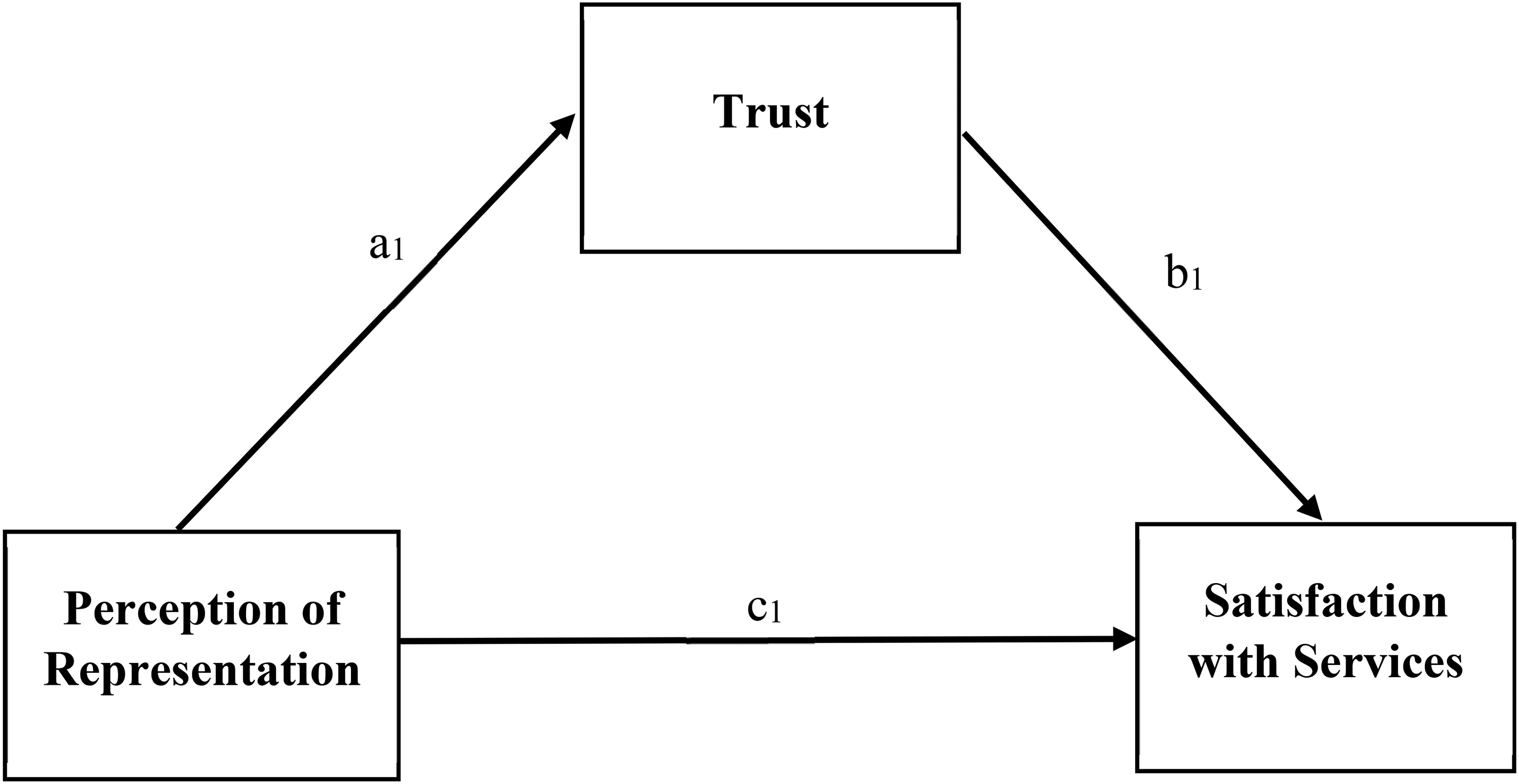
Statistical model for the mediation relationship.
The mediated model equations are therefore:
Findings
Descriptive Representation and Citizens’ Satisfaction
Table 2 summarizes the descriptive statistics for the presence of our different demographic groups in the general population and on the municipal council. There are 31 council members, including the Mayor. Jewish men have by far the most representation on the council both in absolute terms and in relation to their share of the population. Holding 67.7% of the council seats, they have almost twice the representation on the council relative to their share in the population, with a ratio of 1.81 of council members to the population. With a ratio of 0.59 and 0.56, respectively, both Jewish women and non-Jewish men have about half the amount of representation either group would expect to have if their council share mirrored their population share. Non-Jewish women have the lowest rate of representation, with only one council member. They have a ratio of council representation to share in the population of 0.28, less than a third of their share of council seats, relative to their share in the population.
Ratio of Presence in General Population to Presence on the Haifa Municipal Council.
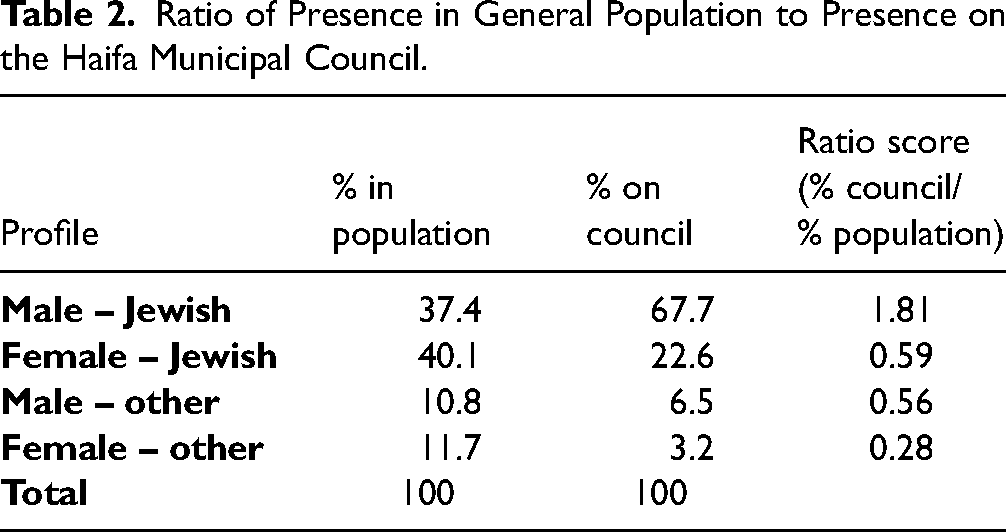
Table 3 displays the results of the regression models testing H1 on citizen satisfaction in correlation with descriptive characteristics of the citizens and council members. In Model 1, both citizens’ gender and majority/minority status correlate with satisfaction. Controlling for other aspects, men score 1/5 of a point higher on satisfaction than women on the 5-point scale. Majority members score a bit more than a 1/4 of a point higher than minority members. Having established that group status correlates with satisfaction, we then move on to Model 2, which uses a variable that directly captures the extent to which the council provides descriptive representation. The ratio variable was highly significant, indicating that as a group's representation relative to their share in the population increases, so too does their level of satisfaction. An increase of one in the ratio correlates with an increase in satisfaction of about 1/5 of a point. The findings in both models support H1.
Demographic Attributes of Voters and Council Members as Predictors of Citizens’ Satisfaction (OLS).
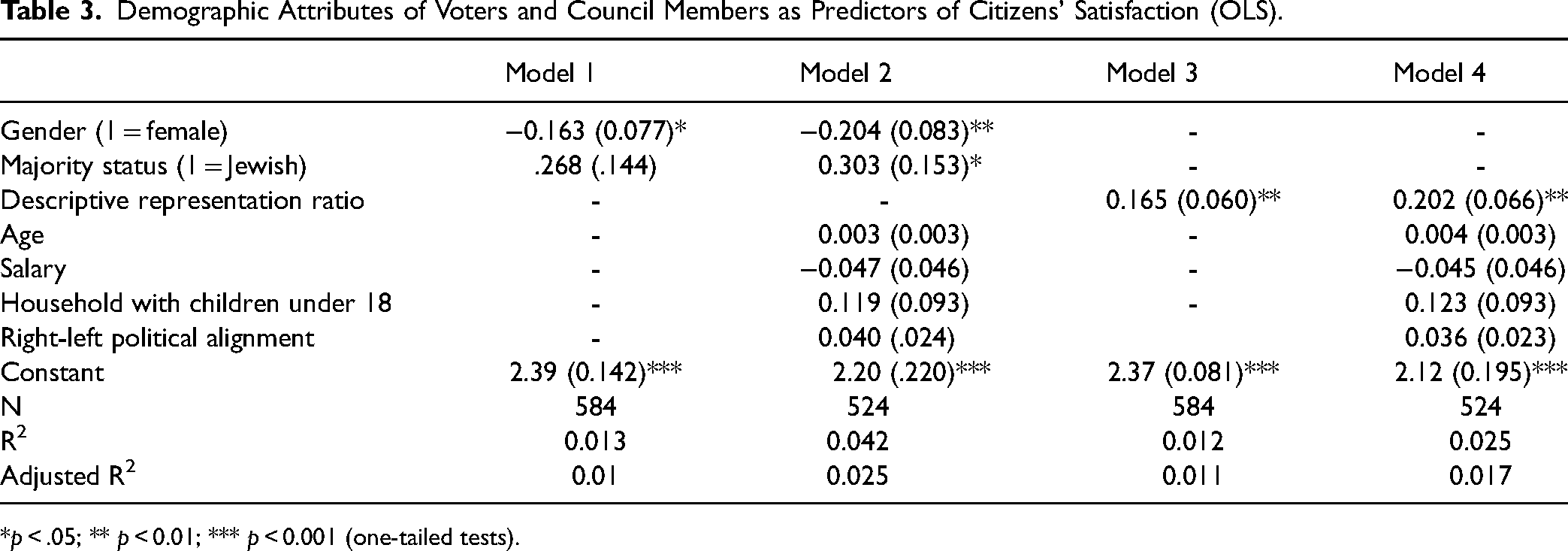
*p < .05; ** p < 0.01; *** p < 0.001 (one-tailed tests).
Figure 4 displays the medians, averages and distributions of the satisfaction scores for each group. The Jewish male group, with almost twice the presence on the municipal council than in the general population, has the highest average and median satisfaction score. The Jewish female group has the second highest level of satisfaction overall both on average and with regard to the median. The minority male group has the lowest average level of satisfaction and the third lowest median score. The minority female group, with the lowest rate of council representation, has the lowest median score, although it only has the third lowest average score.
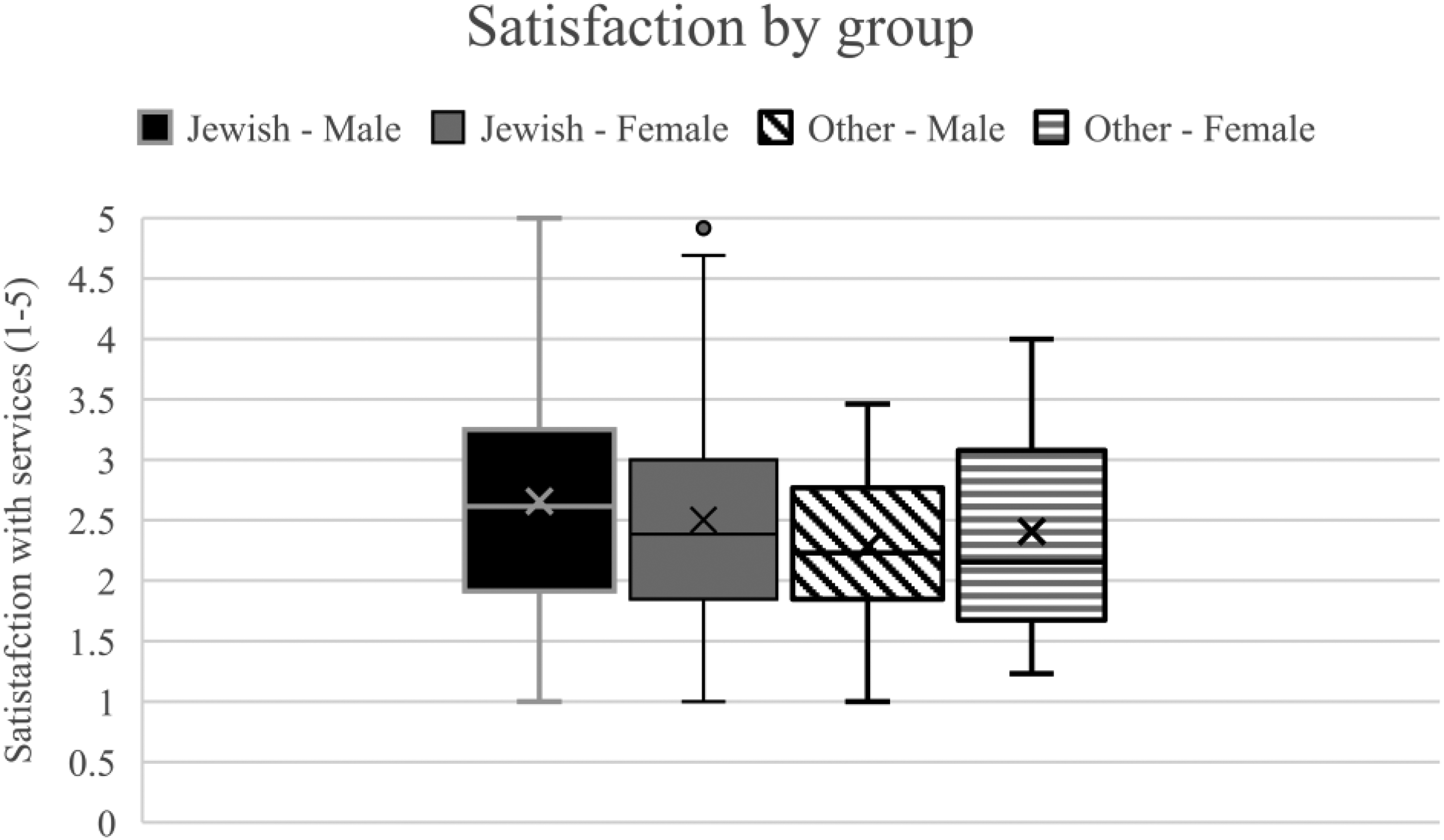
Satisfaction with services by group.
Symbolic Representation and Citizens’ Satisfaction
To explore the influence of symbolic representation on citizens’ satisfaction, we tested how citizens’ feeling about the degree to which they are represented would correlate with their level of satisfaction. Using survey responses on perception of representation allowed us to directly measure the degree to which the voters see representatives as symbols of group presence. This is rather than measure symbolic representation through changes in the political behavior or engagement of groups, presumably influenced by symbolic representation.
H2 hypothesized that there would be a positive correlation between symbolic representation and satisfaction with local services. Table 4 reports the results of the model testing the correlation between citizen's feelings of representation and their satisfaction with services. Figure 5 depicts a visualization of this positive relationship between symbolic representation and satisfaction with services.
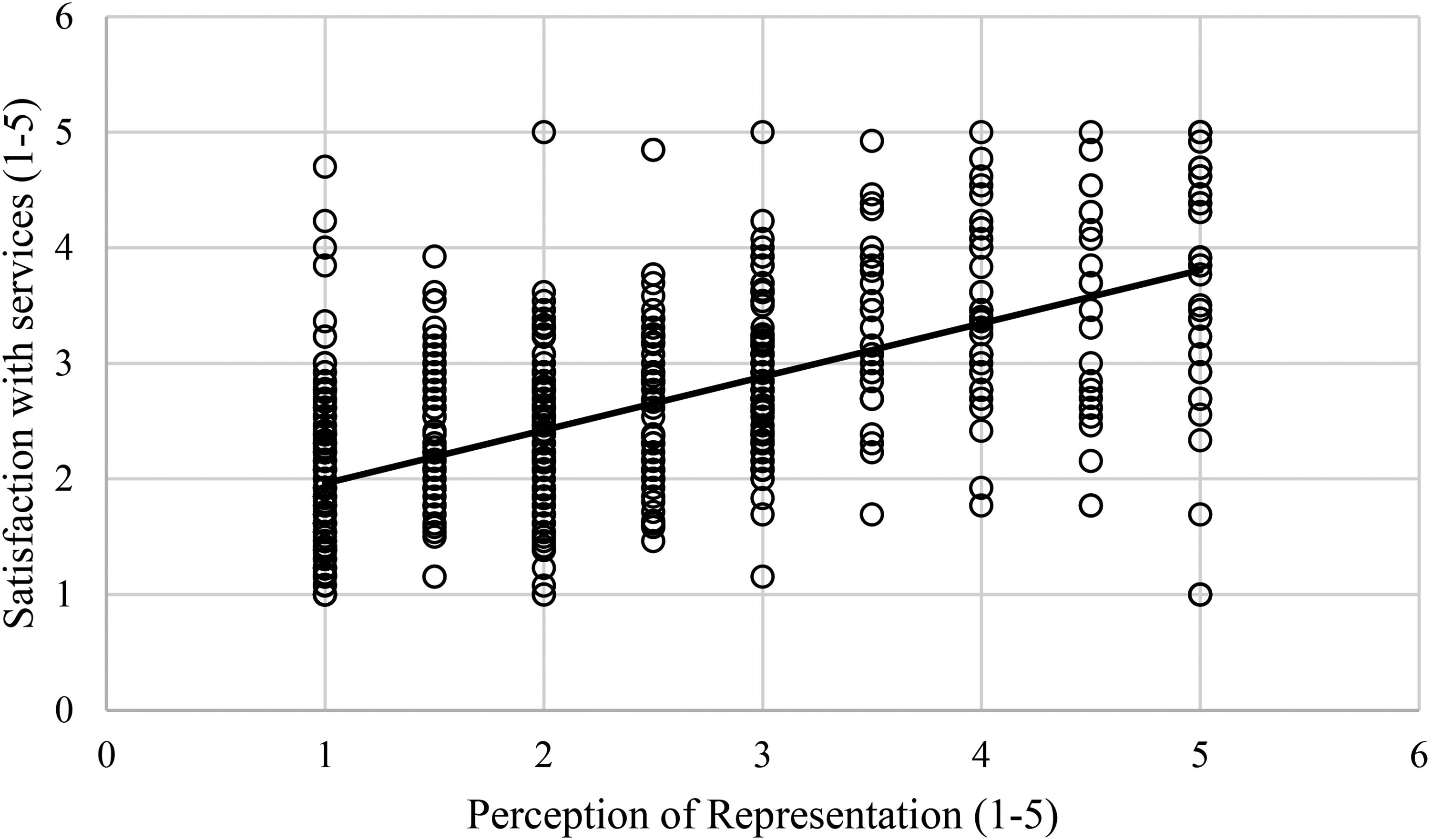
Relationship between perceptions of representation and satisfaction with services.
Perception of Representation and Descriptive Representation as Predictors of Citizens’ Satisfaction (OLS).
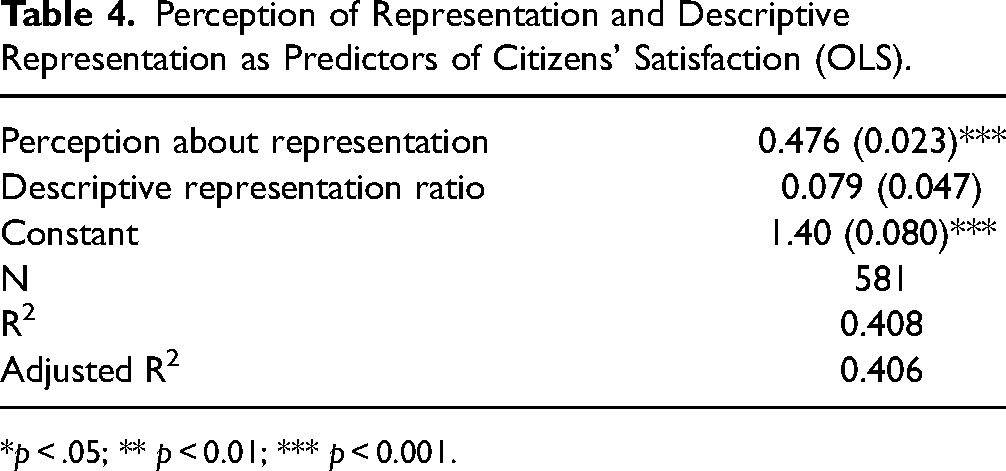
*p < .05; ** p < 0.01; *** p < 0.001.
Table 5 reports the findings for the analysis of the relationship between perceptions about representation and satisfaction, as well as the independent variable's relationship with our two mediating paths. In support of H2, there was a positive and significant relationship between perceptions about being represented and satisfaction with services. The findings imply that the greater people's perceptions about representation, the greater their satisfaction with services.
Mediation Analysis (PROCESS Model #4) of Indirect Effect Through Trust (H3).
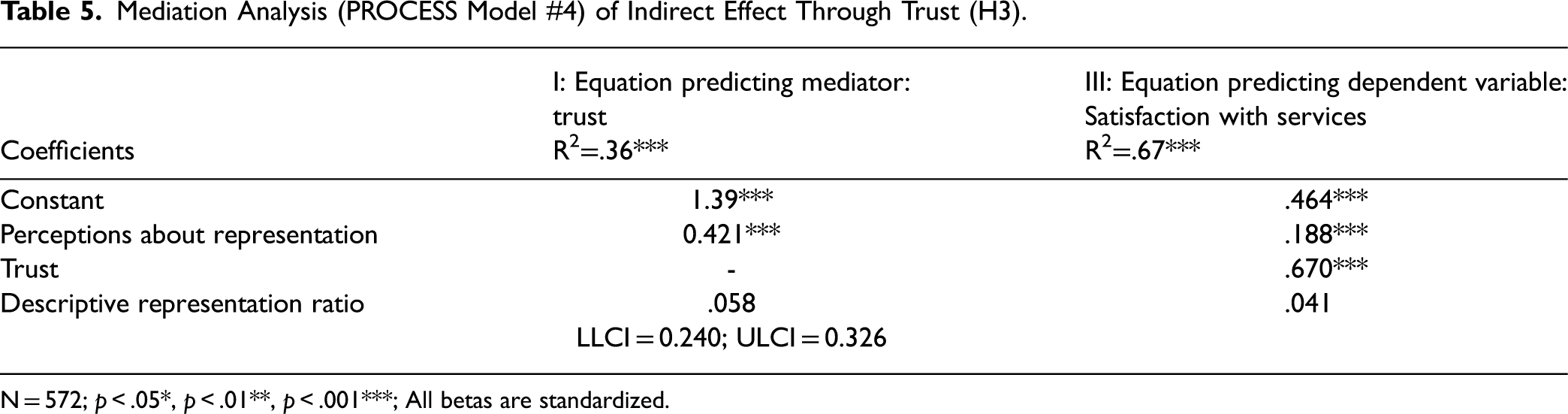
N = 572; p < .05*, p < .01**, p < .001***; All betas are standardized.
Using Hayes’ (2015) PROCESS (model #4) macro for SPSS, we tested the indirect effect of perceptions about representation on satisfaction through the respondents’ level of trust in the municipality. As Table 3 indicates, the results support H3. They provide evidence of a strong and significant indirect mediating effect through trust (Lower Limit Confidence Interval [LLCI] = .183; Upper Limit Confidence Interval [ULCI] = .269). Our findings are consistent with the proposal that an increased sense of representation contributes to a greater trust in government, which in turn leads to greater satisfaction with services.
Based on our equation, the coefficient for the direct effect of perceptions about representation is 0.188. In other words, for every 1-point increase in people's perceptions that they are represented on the council, there is a 0.188-point increase in their satisfaction with services. The indirect effect of these perceptions through trust is 0.282 for a total effect of 0.470. In other words, when accounting for how perceptions about representation directly impact satisfaction, as well as how they increase trust and a sense of connection, a 1-point improvement in these perceptions leads to a 0.470-point improvement in overall satisfaction with services. In contrast, the descriptive representation ratio variable failed to consistently achieve significance. This result supports H4 that symbolic representation has a stronger impact on satisfaction than descriptive representation.
Discussion and Conclusion
This study set out create a bridge between the literature on dimensions of representation, and the literature on the determinants of citizens’ satisfaction with public services. Despite theories tying elected representation to satisfaction with services, and similar themes in the two bodies of literature, the two areas have rarely been brought together in empirical studies. This study took a major step towards clarifying their connection and raised questions regarding what is necessary to improve citizens’ perceptions with public services.
The connection between local elected representation and municipal public services is indirect. Representatives function in elected bodies, while professional bureaucrats and administrators provide public services. It is perhaps for this reason that the connection between the two has been to some degree overlooked. However, multiple studies have found fluid boundaries between democratic and administrative institutions and have found significant political influence over administrative outcome. We therefore examined the correlations between descriptive and symbolic representation to see how the two forms might connect with citizens’ satisfaction with public services.
Our results supported our first hypothesis that the degree to which a citizen is represented on the city council, based on descriptive characteristics, correlates with their level of satisfaction. Our first model revealed that being male and being a member of the majority Jewish group correlated with an increase in a citizen's reported satisfaction with services. Given that men, Jews, and specifically Jewish men have disproportionate representation on the council, it would imply that higher levels of representation contribute to greater satisfaction. Our second model, which utilized a ratio of the size of the group in the population to representation on the council, confirmed that more representation correlated with greater satisfaction with services. Thus, Jewish men had the highest median rate of satisfaction, while non-Jewish women had the lowest median rate of satisfaction.
These findings imply that the makeup of elected councils affects the quality of the local administrative output for different groups. Minority group needs are likely met less effectively, as elected bodies do not have the insight from group representatives to make policy that fits diverse needs. This would then carry over to administrative bodies, whose activity is directed by edicts from the elected body. Thus, our findings would indicate that descriptive representation is critical not just in determining legislative outcomes, but also in determining the ability of administrative bodies to meet diverse needs.
Our next two hypotheses explored the modes through which symbolic representation could define satisfaction with services. Our findings supported H2 that feelings about being more or less represented would correlate with people's level of satisfaction. We found support for the idea that the symbolic significance of representation extends beyond the legislative body to other parts of the public sector.
In exploring the importance of symbolic representation, we hypothesized that trust would mediate the effect of perceptions of representation to create an even greater sense of satisfaction with services. Again, our findings supported this hypothesis. Our results implied that feelings of trust offer a channel for perceptions of representation to further enhance satisfaction. Not only would it appear that representation on its own increase satisfaction, but it also appears to contribute to increased trust, further strengthening its effect. While we only examined trust, symbolic representation is known to enhance other perceptions of government as well. Its effect might be even more potent than what we saw in our findings.
Our findings also lent support for the fourth hypothesis that symbolic representation would be more significant than descriptive representation. In both of our models, the variables related to descriptive representation had less impact and less significance than those for symbolic representation. Indeed, in the models with both types of variables, the descriptive representation variable lost its significance. Thus, our findings would imply that when people form their opinions about public services, their feelings about representation are more important than the actual type of representation provided.
Overall, our findings indicate that, despite the indirect relationship between elected politicians and local administrative services, representation is a significant factor in determining citizens’ satisfaction. However, the impact of symbolic representation seems to have a more powerful effect. How people feel about the nature of elected representation could be even more important than who actually represents them when it comes to making them satisfied with public services.
These findings leave us with several questions. First, what is the significance of descriptive representation when perceptions about representation seem to be more important, and not necessarily related to real levels of descriptive representation? These findings would imply that it is not just important to promote diversity in representation, but to also to give minority representatives the opportunity to be highly visible to the public. This could include ensuring diversity in leadership positions, visible committees, and press coverage. This would suggest that the power of symbolic representation can be used as a tool for administrators looking to improve perception or compliance among citizens. For example, if information about the existence or quality of an administrative service or program came from a representative of a given group, that group might have an overall improved perspective of the service or program being promoted. This could also encourage greater use of, or participation in, public services by certain groups. Administrators may therefore consider strategic cooperation with political representatives, and maybe even bureaucratic representatives of a certain group (though not tested in this paper), when trying to target or help a specific group.
A second question that arises from these findings relates to the significance of intersectionality in determining citizens’ experience and satisfaction. In our study, Jewish men had the highest level of satisfaction. Jewish women and non-Jewish men both reported similar levels of satisfaction and similar levels of representation. Both groups in some ways had both majority and minority status, and therefore had some overlapping similarities with a large number of representatives outside of their immediate group. This outcome implies that a better understanding of the nature of intersectional identities can improve citizens’ experience, even when we fail to achieve a perfect mirror of representation. It also provides insight into how different identities shape citizens’ experiences and their needs.
A final question relates to the ability of bureaucrats to improve citizen satisfaction by improving public services. If much of how citizens feel about public services is tied into how they feel about their representation, what is the role of bureaucrats themselves in improving services? While our study focused on elected representatives, we would propose that our findings might serve bureaucrats and administrators who aim to improve citizen satisfaction with services. Based on the knowledge of a connection between elected representation and satisfaction with services, bureaucrats might consider utilizing this connection. The public administration might cooperate with local politicians to reach different populations, both to promote the services, and help tailor services to group needs. The connection revealed her would imply that a representative could work as an intermediary between the public administration and a given population, both to promote use of a service, and help administrators adapt services to specific group needs. A representative working as a intermediary would improve both the services themselves, and the perception of services.
Some shortcomings of this study also leave room for further exploration. First, this study was conducted on the municipal level, using both theories of representation and units of analysis that focused on local contexts. Its findings have limited external validity when considering national level representation and services. A second shortcoming is that we limited ourselves to only two dimensions of representation, putting aside aspects of formalistic and substantive representation. Though substantive representation was implied as an influential factor, it was not tested. While we assumed that descriptive representation had some influence because of its relationship with substantive representation, we did not test if and how substantive representation existed at the local level, or how it influenced satisfaction. Formalistic representation was put aside as something that require a comparative design, which would weaken our ability to test descriptive and symbolic representation. That said, these two dimensions are critical to understand a complete picture of the relationship between representation and satisfaction with services. Further studies would need to operationalize the presence of substantive representation, rather than assume it exists by virtue of descriptive representation and utilize a comparative research framework to capture the effect of formalistic representation.
Third, this study was limited to one city. This city, Haifa, served this study well, offering a location with a large minority population, designated minority political parties, and heterogenous neighborhoods. The focus on ethnoreligious groups also provided a multidimensional approach to diversity, perhaps aiding its external validity. That said, the study took, place in Israel, a country with a longstanding history of tension between its Jewish and Arab-Muslim citizens. The role of identity and the strength of symbolic representation could be impacted by the ongoing tension and identity-divide between the majority and minority population. To strengthen the validity of this study, it should be performed in other cities and countries.
On a related note, as we conducted this study in only one city, we do not know how the character of the public administration affects the connection between dimensions of political representation and satisfaction with services. For example, the extent to which administrators are given latitude to exercise professional judgement in managing services and making policy might affect the extent to which citizens use political representation as a factor in assessing services. A future line of research might be to use a comparative framework to see how different characteristics of public administration moderates the relationship between the elected representatives and the satisfaction revealed in this study.
A final possible avenue for further study we might mention would be to see if and how the dimensions of representation impact perceptions of different types of public services. While this was beyond the scope of this study, further research might find that different services are more or less influenced by representation. Understanding the differences between different types of services both might help us both better understand the influence of representation, as well as impact our understanding of how citizens form opinions about services.
Footnotes
Declaration of Conflicting Interests
The author(s) declared no potential conflicts of interest with respect to the research, authorship, and/or publication of this article.
Funding
The author(s) received no financial support for the research, authorship, and/or publication of this article.

Notes
Appendix A: Results of Item Response Theory Graded Response Model of the aggregate dependent index of satisfaction with municipal public services.
The model tests the extent to which each item used in the index relates to the latent trait of satisfaction. We find that all items in our index sufficiently reflect the latent trait. See table A and figure A below for full details of the model results.