




Abstract
The public administration literature has demonstrated that the manner in which a network is led is related to its effectiveness. However, why this relationship occurs and whether it is dependent on external circumstances remain unclear. Relying on Provan and Milward's framework of interorganizational network effectiveness and the neo-institutional approach to local leadership, we propose that the manner in which the local authority leads the local network is related to the network's structure, which, in turn, influences its effectiveness. We also propose that this association is contingent on the characteristics of the local authority in which the network exists. Using a sample of 586 network participants from 68 Israeli networks, we demonstrate that the degree to which the local authority is centralized explains the link between the network's leadership and its effectiveness, but only in local authorities with a high socioeconomic status (SES). In addition, we find that in Israeli Arab municipalities such centralization is counterproductive, impeding the network's effectiveness. We discuss the theoretical and practical implications of these findings.
Introduction
As the conceptualization of local authorities moves from local government to local governance, interorganizational networks are increasingly viewed as a leading mode of public service delivery (Damgaard & Torfing, 2011; O’Leary, Gerard, & Bingham, 2006). Such networks allow the government to create strong partnerships with external agencies and replace competition and contracts with cross-sector collaborations (Blockson & Van Buren, 1999; Graddy & Chen, 2006). The current study focuses on the factors that enhance the effectiveness of such collaborations in purpose-oriented networks designed to deliver services in local authorities (Nowell & Kenis, 2019). According to Carboni et al. (2019), a purpose-oriented network is defined as “a network comprised of three or more autonomous actors who participate in a joint effort based on a common purpose” (p. 210). The term “purpose-oriented” networks (Berthod & Segato, 2019; Lemaire et al., 2019) was proposed as an extension and clarification of the well-known term “goal-directed networks.” According to this line of research (Nowell & Kenis, 2019), “goal-directed” implies that network members have identified and agreed on a set of goals that guide the work of the network, which in practice is often not necessarily true. The term purpose-oriented networks thus take into consideration the complexity of the relationship between the network members as well as the environment in which they operate. These networks highlight the collective purpose that is “translated into actionable goals whose achievement can be monitored” (Carboni et al., 2019, p. 15). Such networks are regarded as a means of solving the “wicked problems” that characterize service delivery in local authorities.
While public administration scholars have demonstrated a relationship between the extent to which network leaders use specific leadership behaviors to govern the network and its effectiveness, it remains unclear why this relationship occurs (Kenis & Provan, 2009; Provan & Kenis, 2008; Russell et al., 2015). Furthermore, given that not all studies found such a relationship between network leadership behaviors and effectiveness (O’Toole, 2015), it is important to identify and test the conditions under which such a relationship does occur. Such conditions are likely to regard the specific context in which the network functions (Emerson, Nabatchi, & Balogh, 2012; Romzek et al., 2014), since a network-leadership behavior that is effective in one context might not be effective in another, even if the networks have a similar purpose (Isett, Mergel, LeRoux, Mischen & Rethemeyer, 2011). Accordingly, our goal is to answer the question of why and when different leadership behaviors influence the effectiveness of lead organization-governed purpose-oriented networks. To begin answering this question, we focus on two specific contextual characteristics, that is, the socioeconomic status (SES) and ethnicity of the local authority in which the network operates. This focus aligns with the recent literature on network governance, which underscores the fact that variations in such context characteristics affect policy processes, including the effectiveness of service provision (Emerson, Nabatchi, & Balogh, 2012; Osborne et al., 2013).
The study draws on Provan and Milward’s (1995) model of interorganizational network effectiveness, which emphasizes the importance of the network's structure and context when explaining its effectiveness. It also relies on Sørenson and Torfing’s (2009) framework of democratic network governance, which maintains that the use of four meta-governance tools, by leaders, can enhance network effectiveness: network design, network framing, network management, and network participation. These tools translate into leadership behaviors which include deciding on the network's composition, setting goals and implementing procedures to achieve these goals, resolving conflicts between the network actors, and providing them with the needed resources.
This study`s main contribution addresses the theory of network effectiveness in the context of local governance. We emphasize the importance of social-cultural and political factors in the local arena, demonstrating that network leadership behaviors are related to network effectiveness only under certain conditions. This is especially important since when considering such cultural diversity contingencies as minorities and political factors, previous research has been inconclusive (Pollitt, 2013). From a practical perspective, as more and more local services are provided through interorganizational networks, in which the government must operate in horizontal and collaborative structures while simultaneously being accountable for the satisfactory provision of public services (Menachem & Stein, 2013), it is important for network leaders to be aware of the most appropriate leadership behaviors that are likely to enhance effectiveness.
To answer the research question presented above, we examined 68 purpose-oriented networks that are part of a national program aimed at improving the lives of young people at risk in Israel. Purpose-oriented networks usually include local authority representatives, local nonprofit organizations, private companies, and the citizenry. The idea behind such networks is that by combining the different actors’ capabilities, skills, and resources, the network's outcomes are improved (Prahalad & Krishnan, 2008). In this purpose-oriented network one lead organization, the local authority, coordinates activities and decisions, and also selects the other network partners (Provan & Kenis, 2008). The program is conducted under the auspices of the Ministry of Social Affairs and Social Services and in collaboration with five other government agencies. The local authority is the lead organization that integrates and manages all collaborations. It is responsible for designing the networks, while the Ministry of Social Affairs and the other government agencies are responsible for the formulation of the strategic policy. This policy requires all municipalities to convene round tables where the local representatives are key actors in shaping and implementing the program. In each network, we examined the outcomes of the network in terms of improvement in the average risk level of the children in the program. In addition, each network member assessed the frequency of the lead organization, that is, the local authority, used specific network leadership behaviors and reported regarding the network's structure. As for the leadership behaviors, we focused on frequency, that is, the intensity and consistency, with which local network leaders used a selected set of leadership practices, as we were interested in examining the extent to which the lead organization uses the different leadership behaviors and not simply whether it is capable of such use (Cepiku & Mastrodascio, 2021; Leithwood, 2019; Leithwood & Azah, 2016; McGuire & Silvia, 2009; Silvia & McGuire, 2010).
The Research Context: Local Governance in Israel
Israel is a unitary state. Traditionally, the central government has taken a centralist and conservative approach toward local authorities. As such, the power and strategic authority given to local authorities are not aligned with the level of responsibility it has toward the public.
The local government system in Israel is comprised of 257 local authorities. Israel's Central Bureau of Statistics classifies these local authorities into 10 clusters based on their residents’ socioeconomic level, ranked from 1 (lowest) to 10 (highest). The criteria for the clustering are based on various measures including the residents’ standard of living, need for governmental grants, level of education, employment, unemployment, and percentage of pensioners and new immigrants. Municipalities with a low socioeconomic score are subject to more interventions from the national government. Indeed, in such municipalities, governability and managerialism are often poorer (Reingewertz & Beeri, 2018).
In 2003, there was a reform in the management of local authorities in Israel with the national government declaring that it would no longer automatically cover local deficits. Up until the reform, 76% of local authorities operated with budget deficits. After 2003, 50% of the local authorities developed recovery plans. As part of the reform, the central government made grants, loans, and changes in local taxes conditional on improved performance, expropriated local powers, and imposed recovery plans that forced extensive cutbacks and mass layoffs. Moreover, beginning in 2003, the Minister of the Interior appointed external public managers where needed who were authorized to impose extra taxes, levies, and fees, and to control new appointments, contracts, and tenders within the local authority (Beeri, 2013). While the broad aim of the reform was to decentralize the authority of the central government, the Israeli central government remains highly centralized and still influences the local governments’ autonomy.
Israeli local authorities are also defined by the ethnicity of their population as either Jewish or Arab local authorities. About 70% of the local authorities have an almost totally Jewish population; a small minority (3%) has a mixed Jewish–Arab population and the remaining local authorities (27%) have entirely Arab populations. Arab local authorities differ in many ways from the Jewish local authorities. Arab local authorities are of great importance to Israeli democracy and are the central arena of Arab political activity since the national Arab leadership is usually excluded from national-level strategic policymaking. Arab local government is the representative and governing body of the Arab population, which controls all areas of the local life of the Arab citizens (Lambberger, 2007). However, the true focus of the Arab local authorities’ political power lies with the clans. Over the years, the power of the clans has deepened the mistrust between the Arab population and its political leadership as well as between the central government and Arab local governments. Given these differences, when examining local authority networks the SES of the local authority and whether it is an Arab or Jewish local authority, is likely to play an important role.
Theory and Hypotheses
Network Effectiveness and Network Leadership
Provan and Kenis (2008) proposed three modes of network governance: participant-governed networks in which there is no centralized governing party, lead organization-governed networks in which important activities and decisions are made by one of the participating network organization, and network administrative organizations which are governed by a separate, neutral administrative body, established to function as a central broker that coordinates the activities of the whole network. In addition, Provan and Kenis (2008) claimed that in publicly funded health and human services a core provider agency often assumes the role of network leader because of its central position in the flow of clients and key resources. Thus, the current study focuses on lead-organization networks in which important activities and decisions are made by one of the participating network organizations (e.g., the local authority). This lead organization usually has sufficient resources and legitimacy to lead as well as the capacity to take on most of the responsibilities of running and coordinating the network's activities. Nevertheless, the question remains regarding the manner in which these resources and responsibilities should translate into leadership behaviors to enable these lead organization-governed networks to be effective and what may explain their effect.
Network effectiveness has been defined in many ways. Provan and Milward (2001) defined network effectiveness as the extent to which the services delivered by the network are appropriate for the citizens’ needs. Other scholars defined network effectiveness as the ability of the network to achieve its stated goals (see Bazzoli et al., 2003; Conrad et al., 2003; Hasnain-Wynia et al., 2003; Huang and Provan, 2007; Shortell et al., 2002; Sofaer et al., 2003; Weiss et al., 2002) or as the capacity of the network to create innovative solutions to complex problems (Considine, Lewis & Alexander, 2009). Still, others defined network effectiveness as the extent to which the network is sustained and viable over time (Agranoff, 2003; Ferlie & Pettigrew, 1996; Fredericksen & London, 2000; Zacocs & Edwards, 2006). Finally, Provan and Kenis (2008) added to the previous definition and conceptualized network effectiveness as the “attainment of positive network-level outcomes that could not normally be achieved by individual organizational participants acting independently” (p. 230). Nevertheless, given that this definition is very broad, Kenis and Provan (2009) stated that “There is no scientific way to judge whether one criterion is ‘better’ than another in assessing the performance of a network” (p. 443), leaving the research on network effectiveness to vary greatly.
In the public administration arena, research on network effectiveness has focused on the management and leadership skills and behaviors that can enhance such effectiveness (Koppenjan, Koppenjan & Klijn 2004; Provan & Kenis 2008). Sørensen and Torfing (2007, 2009) referred to such effectivity-inducing behaviors as “metagovernance.” Other researchers have regarded metagovernance, as a form of network management or network leadership that involves facilitation behaviors, which increase cooperation and coordination between network members and thus change the network's rules and structure (Ansell & Gash, 2008; Klijn & Edelenbos, 2007; Klijn & Koppenjan, 2016; Klijn, Steijn & Edelenbos, 2010). The literature on collaborative leadership distinguishes among three facilitating roles of leaders: convener (or steward), mediator, and catalyst (Ansell & Gash, 2012). Conveners facilitate collaboration by promoting and safeguarding collaboration while maintaining integrity among parties. Mediators facilitate collaboration by managing conflict and arbitrating exchanges between stakeholders. Catalysts facilitate collaboration by helping identify and realize value-creating opportunities. According to Ansell and Gash (2012), “facilitative leadership will typically require leaders to play all three of these roles” (pp. 18–19). Yet, given that networks function in a complex environment, Hovik and Hanssen (2015) proposed that a network leader has a fourth role: that of a bridge-builder who must know how to maneuver in and between political and administrative authority levels, balancing them to promote accountability and legitimacy in the network. Given that networks can be unstable due to goal conflicts, incompatible organizational cultures, and competition for scarce resources, such maneuvering is critical (Agranoff & McGuire, 2004; O’Leary & Vij, 2012; Piatak, Romzek, LeRoux & Johnston, 2018). Thus, governing these networks requires a balance of formal and informal management skills (Amirkhanyan, 2009, 2010; Mandell & Keast, 2007; Nelson et al., 2016; Piatak et al., 2018) that include the ability to bring multiple collaborators together for a common goal, exert facilitative behaviors as well as use rewards and sanctions as part of their managerial behaviors (Piatak, Romzek, LeRoux and Johnston, 2018).
The Operationalization of Network Leadership Behaviors
Scholars have tried to create operational categories for leadership and managerial behaviors in a collaborative structure such as purpose-oriented networks. For example, Kickert, Klijn and Koppenjan (1997) classified managerial activities in terms of their purpose. They defined network management activities as involving the promotion of ideas designed to affect the perceptions of the network's members, and activities aimed at the interactions between the members. While the former involves behaviors such as bargaining to promote or reject an idea, the latter includes structuring and mediating interactions among network participants. Agranoff and McGuire (2001) proposed a more extended leadership framework, basing it on the network management, network governance, and collaboration literatures (Benson, 1975; Gray, 1989; Klijn, 1996; Klijn & Teisman, 1997; O’Toole, 1988), as well as on the literature related to local government studies (Agranoff & McGuire, 1999; Stoker & Mossberger, 1994; Stone, 1998).
According to McGuire and Silvia (2009), network leadership refers to the behaviors that help network actors develop an effective solution to a common problem. This description meets Sørenson and Torfing’s (2007) conceptualization of meta-governance, which refers to the coordination of structures and practices in complex, reciprocal, interdependent relationships. As mentioned above, Sørenson and Torfing (2007; 2009) identified four main meta-governance activities that leaders are involved in to achieve effective networks. The first, network design, refers to the scope, character, composition, and institutional procedures of the network. The second, network framing, refers to the political goals, fiscal conditions, legal basis, and discursive story line of the network. The third, network management, refers to the reduction of tensions, resolution of conflicts, empowerment of particular actors, and minimization of transaction costs by providing resources. The fourth, network participation, refers to setting the policy agenda, the range of feasible options, the premises for decision-making, and the negotiated policy outputs. While this categorization enhanced the theoretical understanding of network leadership behaviors, McGuire and Silvia (2009) took a more empirical approach and operationalized four “leadership behaviors.” Their four categories—activation, framing, mobilization, and synthesizing—are distinguished based on their operational function. Activation refers to behaviors such as identifying resources and implementing suggestions made by the network members. Framing involves behaviors designed to establish work rules. These two categories correspond to Sørenson and Torfing’s (2007) meta-governance network design and framing activities. Mobilization refers to the behaviors with network participants and external stakeholders that develop support for network processes. Finally, synthesizing describes behaviors promoting productive interactions among network participants by looking out for the personal welfare of network members, thus creating reciprocal trust. Mobilization and synthesizing correspond to the network management and network participation meta-governance activities discussed above. These behaviors have been examined empirically. For example, using a sample of over 500 network leaders, McGuire and Silvia (2009) tested the effect of leadership behaviors on managers’ perceptions of a network's effectiveness. Their findings demonstrated that different types of leadership behaviors played a role in these perceptions. Later, Silvia and McGuire (2010) showed the importance of examining the relative frequency of use of these leadership behaviors when examining network leadership. Utilizing this examination, scholars surveyed the frequency of leadership behaviors in school leadership networks (Leithwood, 2019; Leithwood & Azah, 2016) and in local government networks (Cepiku & Mastrodascio, 2021).
The Relationship Between Network Leadership and Network Effectiveness
Prior research investigated the relationship between the frequency of network leadership behaviors and network effectiveness. For example, McGuire and Silvia (2009), in the above-mentioned study, found that the frequency of mobilizing and synthesizing leadership behaviors had a positive association with managers’ perceptions of the effectiveness of their networks. In contrast, framing leadership behaviors had a negative relationship with such perceptions of effectiveness. The study found no relationship between activation behaviors and perceptions of the network's effectiveness. Another study, conducted by Kort and Klijn (2011), utilized project outcomes as an objective measure of effectiveness and showed that network leadership behaviors were indeed related to such outcomes. Their study focused on the effect of leaders’ managerial efforts using a sample of urban regeneration employees in the Netherlands. More recently, Cristofoli and Markovic (2016) demonstrated that facilitating and mediating leadership behaviors, combined with formalized coordination mechanisms, promoted network performance. In addition, the frequency of use of leadership behaviors of school leaders was also positively connected with network outcomes in educational contexts (Leithwood, 2019; Leithwood & Azah, 2016).
Based on Sørenson and Torfing's (2007) framework which connected network leadership behaviors to effectiveness and on the studies presented above, we maintain that a similar relationship is likely to be found in local governance purpose-oriented networks. Due to the capacity of lead organizations to take on most of the responsibilities of coordinating the network's activities, facilitating information sharing, and mobilizing resources, the network is likely to be governed quite effectively (Provan & Kenis 2008). More specifically, even exercising leadership behaviors such as framing is likely to enable the lead organization to arrange and establish the work rules, such as making sure the network members understand their individual roles and asking that network members follow them. Thus, the extent to which all four leadership behaviors are exerted by this organization is likely to be related to the effectiveness of this specific type of network. Therefore, we posit that:
H1: There is a positive relationship between the frequency with which the local administration uses network leadership behaviors and the effectiveness of the network, such that the higher the frequency of use of leadership behaviors the more effective the network is.
Network Structure and Network Effectiveness
Basing our work on Provan and Milward’s (1995) social network framework, we also posit that the network's structure is one of the most important factors related to its effectiveness. Social network theory maintains that an actor's position in the network predicts such outcomes as the actor's performance and behavior (Borgatti et al., 2013). Similarly, at the network level, the assumption is that the outcomes of a group of network actors are the result of the structure of the connections among them (Borgatti et al., 2013; Kadushin, 2012). Network structure concerns the degree of integration in the network (Raab et al., 2013), a necessary condition for network goal achievement (Provan & Milward, 1995). The literature regards three main types of interorganizational network integration: density-based integration, centralized integration, and integration through clique overlap. As we explain below, the current research focuses on the extent to which networks are integrated through centralization (i.e., via a central organization). In a fully centralized network structure, all members connect to a principal actor. The degree of centralization regards the extent to which one or more organizations in the network are considerably more connected than others (Raab et al., 2013). Centralization within networks refers to the relative concentration of interactions around one or more core members, while peripheral members remain relatively disconnected (Crawford & LePine, 2013).
We examine centralization as a main network structure characteristic in this study because the nature of the networks, specifically, local authority purpose-oriented networks, are coordinated through a local authority representative which handles all major network processing. Despite this role, each network may display a differing degree of centralization, since not all network actors necessarily connect to the local authority and there may be other organizations that have additional central roles, creating a variance in the extent to which the network is centralized. Management and public administration studies have investigated the relationship between the degree of centralization of a network's structure and different aspects of its effectiveness (Nowell et al., 2018; Provan & Sebastian, 1998; Russell et al., 2015; Selden et al., 2006). As Provan and Milward (1995, p. 24) argue, centralized structures are beneficial because they facilitate both integration and coordination, which are crucial to purpose-oriented networks. Such centralization is likely to help shape the manner in which diverse parties interact and ease their combined functioning (Ansell & Gash, 2008; Bevir, 2010; Sørenson & Torfing, 2007), through an organized exchange of information and the synchronizing of collective action (Bryk et al., 2011; Huang & Provan, 2007).
Empirical research supports these assertions. For instance, results from a network survey of health and human service networks confirmed that the extent of centralization of publicly funded networks is related to social outcomes such as trustworthiness, reputation, and influence (Huang & Provan, 2007). In addition, Raab, Mannak and Cambré (2013) found that centralized networks enhance networks’ effectiveness in terms of reducing the crime and improving public safety. Other scholars found that centralized networks perform better (Cross & Cummings, 2004; Mehra et al., 2001; Prell, 2012; Settoon & Mossholder, 2002; Sparrowe, Liden, Wayne, & Kraimer, 2001). This is due to centralization enabling more knowledge and information flow (Tsai, 2001) and due to the centralized organization's ability to monitor and control the other network members’ activities, preventing free-riding, avoiding redundancy in actions (Hollenbeck et al., 2011), and promoting collective learning (Noriega-Campero et al., 2018).
Thus, based on all this prior research, we assume that in networks that provide local services, the extent of centralization will be related to its effectiveness, since the more the local authority is located in a central network position, the more likely information regarding local affairs, policies, and resource allocation will be shared enabling all organizations to be “on the same page” in regards to the context, resources, and goals. Moreover, centralized organizations in these networks can better coordinate with other organizations to achieve network goals as they have the position and ability to monitor the activities of other network members (Raab, Mannak & Cambré, 2013) and align any organization that is in need of alignment with the collective goal. Based on the above we posit that:
H2: There is a positive relationship between the extent of a network’s centralization and its effectiveness, such that the more the network is centralized the more effective it will be.
Leadership Behaviors and Centralization
As the literature review above indicates, network leadership behaviors include encouraging network members, caring for their well-being, motivating them to collaborate (McGuire & Silvia, 2009), and ensuring that they operate according to the work plan and keep to the schedule (Ensley et al., 2003; Zohar & Tenne-Gazit, 2008). Therefore, leadership behaviors are likely to relate to the nature of the network actors’ interactions and relationships within the network.
In networks, the more an actor takes responsibility for coordinating activities the more likely that actor is to be regarded as a major player in the network (Provan & Kenis, 2008). Thus, local authorities that more frequently coordinate activities and serve as a lead organization are likely to be more deeply involved in the affairs of all of the other actors and have them rely on their leadership to perform the network's tasks (Ansell & Gash, 2008; Sørenson & Torfing, 2007 (. From a network perspective, the consequence of such behavior is the centralization of the network (Wassermann & Faust, 1994). In addition, interdependency theory (Rhodes, 1997) describes network actors as reciprocally dependent on resources. Given the lead organizations’ access to local legal, physical, social, and territorial resources, when their conduct improves coordination and cooperation regarding the use of these resources, the result is an increase in the central role of the network (Menachem & Stein, 2013; Kenis & Provan, 2009; Aggarwal et al., 2011). In brief, by promoting cooperation and coordination using leadership behaviors, the local administration will occupy a central and dominant role in the network (Agranoff, 2014; Agranoff & McGuire, 2003; Kenis & Provan, 2009). Therefore, we expect to find a positive relationship between the use of network leadership behavior and the centralization of the network. We posit that:
H3: There is a positive relationship between the frequency with which the local authority makes use of network leadership behaviors and the degree of network centralization, such that the higher the frequency of use of leadership behaviors by the local authority the more centralized the network will be.
Put together, we maintain that centralization might explain the relationship between leadership behaviors and the network's effectiveness. While the lead organization in such networks, that is, the local authority, has the legislative, administrative, and contractual power to impose mandated collaboration on the network's members (Agranoff, 2014; Provan & Kenis, 2008; Raab et al., 2015), such power does not ensure actual collaboration and does not necessarily lead to optimal network performance. Yet, leadership behaviors aimed at promoting collaboration among network members that use such power to share information and resources, are likely to involve the creation of structures that maintain the dependency on the lead organization (Ansell & Gash, 2008). The resulting centralized network should, in turn, increase the network's effectiveness. Taken together, we posit that:
H4: The extent to which a network is centralized mediates the relationship between the frequency with which the local authority utilizes leadership behaviors and network effectiveness, such that the positive relationship between the frequency with which the local administration makes use of network leadership behaviors and network effectiveness, is explained, at least partially, by the degree of network centralization.
The Moderating Effect of the Socioeconomic Status of the Local Authority
Context in the public administration literature often regards factors relating to government regulations, legal constraints, or a combination of organizational culture and management practices (O’Leary et al., 2016). In local government studies, the characteristics of the community as the context are of great importance (Beeri, Uster & Vigoda-Gadot, 2019). The consideration of socioeconomic and demographic characteristics such as the educational level of the community and its average income have become widespread in explaining the provision of both local goods and services at the local level (Beeri et al., 2018; De Borger & Kerstens, 1996; Loikkanen & Susiluoto, 2005; Milligan, Moretti & Oreopoulos, 2004). In fact, research has shown that the community's SES affects the local leader's capacity to govern (Howlett & Ramesh, 2015). Furthermore, cultural diversity in the community where the network operates can make it more or less difficult for the network to be effective (Hasnain-Wynia et al., 2003). Moreover, Klijn et al. (2013) found that the meso-level characteristics of network governance, meaning changes in the relationship between its constituent organizations, and micro-level characteristics such as the level of decision-making, and implementation depend on the cultural context.
As a consequence, the literature on public networks emphasizes various contextual factors impacting network effectiveness. According to Provan and Milward’s (1995) network framework, any externally generated change in the network's environment, such as financial instability, challenges the network's overall effectiveness (Milward & Provan, 2003; Provan & Milward, 1995; 2001). Financial instability such as that resulting from low SES affects the dependence of the local government on external network stakeholders such as the central government (Sarig, 2008). In addition, when the financial capability is limited, local authorities turn to external bodies such as nonprofits for additional resources. While this is the basis for forming collaborations through networks, such dependence on external parties and an inability to provide high-quality services on their own reflect negatively on a local authority's ability to govern (Beeri et al., 2019).
In his study of Israeli local authorities with low SES, Dahan (2018) provided support to the notion that the SES of the local authority, as a context, strongly influences the local leaders’ level of activity. Leaders who represent disadvantaged communities face many exogenous problems exacerbating their lack of financial and political resources while having almost no freedom to advance their own vision and values. In such cases, they usually solve problems reactively; they find immediate, short-term solutions, often using poor strategies, rather than designing long-term, sustainable plans (Dahan, 2018). Menachem and Stein’s (2013) research documented that municipalities from low socioeconomic clusters engaged in limited governance when coordinating local networks. This lack of governance was reflected in their limited ability to select the relevant players for the network, to promote work procedures, or to steer the network. In other words, they failed to create a centralized, integrated network.
As a result, even if local authorities from low socioeconomic clusters manage to engage in strong leadership behaviors, these behaviors are likely to be less associated with the centralization of the network than in high socioeconomic local authorities. Poorer local authorities have limited resources and depend on those of other network members. Therefore, even when they behave in ways aimed at coordinating the network members, they still share their power with other external stakeholders (Levi-Faur, 2011). Thus, other actors such as the central government and third sector representatives become overly involved in local affairs, engaging in leadership behaviors of their own that results in a less centralized network. Thus, we maintain that:
H5: The socioeconomic status of the municipality moderates the relationship between network leadership behaviors and the network's structure, such that when the municipality serves a low socioeconomic community, the positive relationships between the frequency of use of network leadership behaviors and centralization is attenuated.
The Moderating Effect of the Ethnicity (Arab/Jewish) of the Local Authority
As one of the main contextual factors in public organizations includes culture (Eglene & Dawes, 2006; Fitzpatrick et al, 2011; Pollitt, 2011; 2013), any examination of local government in Israel should consider the ethnicity (Arab/Jewish) of the local authority. Studies have found that Arab local authorities differ in many ways from those of the majority Jewish local population. Israeli Arabic-speaking minorities—Muslims, Druze, Christians, and Bedouin—constitute approximately one-fifth of the population (21%), and their local authorities constitute one-third (32%) of the local authorities ( Israel Central Bureau of Statistics, 2020). Arab local authorities consist of an ethnic majority largely identifying as Palestinian. Arab municipalities are characterized by traditional management practices, a clerical political culture based on family relations, clans or tribes (hamulas), and a less active civil society.
While Arab communities are not alone in the poor performance of their local governments (Dery, 2002; Razin, 2004), they tend to perform less successfully than their Jewish counterparts (Beeri & Yuval, 2012). The local Arab leadership has not fully adopted the basic principles of local participatory democracy or good governance practices (Ghanem & Mustafa, 2009). To date, local politics in these authorities have produced an ineffective public sector dominated by a culture of power conflicts, bypassing laws and formal procedures. The professional level is managed by lower-skilled employees who have generally been appointed because of political affiliation, with the result that decision-making related to professional matters becomes tainted by political considerations and societal structure (Ghanem, 2001; Jabareen & Agbaria, 2010; Lewin-Epstein & Semyonov, 2019; Rouhana & Ghanem, 1998; Smooha, 1990). As a result, in their study of the Arab educational system, Arar and Abu-Asbah (2013) argued that a centralized structure of local government is prone to failure. Similarly, Korten (1980) warned from centralized leadership that uses rigid bureaucracy and prevents the residents from sharing their knowledge and opinions. As a result, local projects do not provide appropriate solutions to real problems and needs (Alvord, Brown & Letts, 2004; Kortens, 1980; Ostrom, 1996). Moreover, citizens in Arab local authorities have little trust in and sense of legitimacy of their local authorities (Ghanem & Azayza, 2008; Khamaisi, 2014). Deficits in democratic representation and the absence of platforms for citizen engagement explain this mistrust (Khamaisi, 2014). Hence, network actors tend to regard the local Arab leadership as unprofessional and unreliable.
With regard to network effectiveness, the literature has found that the internal and external legitimacy of the network enhances its effectiveness (Human & Provan, 2000). Internal legitimacy reflects the degree of legitimacy the network possesses in the eyes of its participants, while external legitimacy reflects how legitimate the network seems to the external stakeholders and to the general public (Human & Provan, 2000). Enhancing the internal legitimacy of the network includes actions that coincide with Sørenson and Torfing’s (2007) network management tools for reducing tensions, resolving conflicts, and empowering particular actors. External legitimacy is achieved by seeking new members, promoting the network and its activities to outsiders, and providing outside resources (Provan & Lemaire, 2012). In many cases, the central government's lack of perceived legitimacy toward Arab politicians results in the exclusion of their mayors, council members, and local civil servants from local and regional planning and policymaking (Ghanem, 1998; Ghanem & Mustafa, 2009).
Despite the fact that the national government requires citizens to take part in many of its mandated programs, if the network is centralized in an environment of distrust and lack of legitimacy, it is likely to be difficult to achieve the network's goals. In such an environment, the network's outcomes are likely to be a result of the local authorities’ legitimacy irrespective of the network's structural characteristics. More specifically, while leadership behaviors are likely to enhance network centralization within the Arab municipalities, as suggested above, due to their limited internal and external legitimacy, when a network in an Arab local authority is centralized, it is not likely to be more effective. Indeed, it might even provoke dissatisfaction of the network's actors. The members of a highly centralized network in an Arab local authority are likely to see the network as giving extra power to the local government. Given their lack of trust in the local government and the limited alternative channels of information flow available to them, they may be suspicious about how the local government will use its increased access to information (Balkundi et al., 2009; Brass, Butterfield & Skaggs, 1998). In communities where there is a top-down approach to government, centralized coordination is likely to maintain the concentration of power in the hands of those who already have it, without this power being used to enhance coordination among network members (Abu-Asbah & Avishai, 2008). Therefore, our final hypothesis is that:
H6: The ethnicity of the local authority moderates the relationship between the network's structural characteristics and its effectiveness, such that in Arab local authorities the positive relationship between network centralization and network effectiveness will be attenuated.
Figure 1 shows the research model.
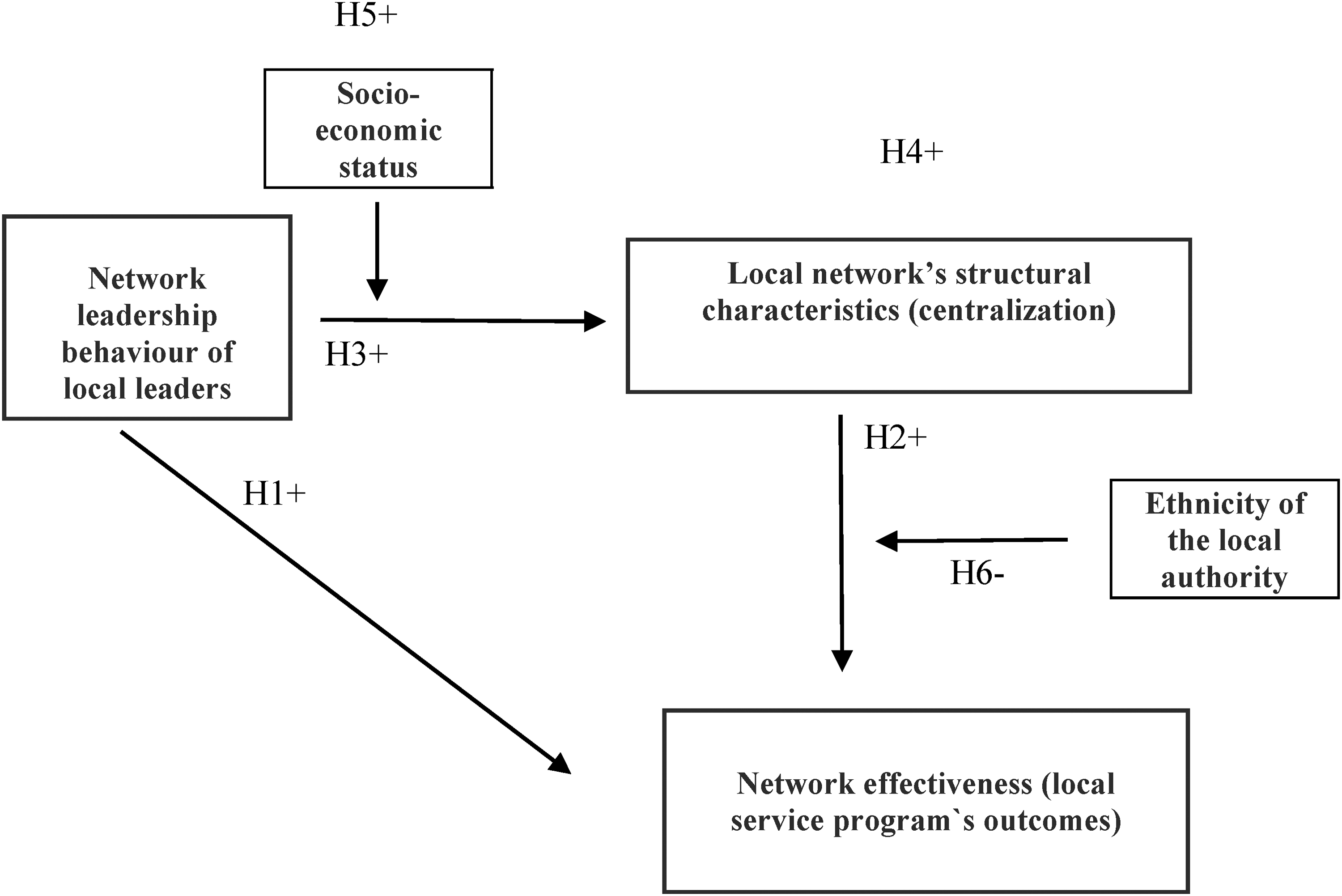
The research model.
Methods
To test these six hypotheses, we examined an interorganizational network called The National Program for Youth at Risk in local authorities in Israel. The study investigated local government networks participating in this social welfare program as implemented in 100 local authorities, with the aim of providing a response to the problem of youth at risk. The Ministry of Social Affairs and Social Services, in collaboration with five different government ministries (e.g., Health, Immigration and Integration, Education, Interior, and Economy), The Local Government Association, and the nonprofit organization Myers-JDC-Brookdale Institute conducted the program. According to the Ministry of Social Affairs’ policy, the local authority must lead the program and all of the collaborators in its area. Thus, in this study, the local authority was the lead organization for all of the networks.
The Ministry of Social Affairs gave us a list of the 100 local authorities in which the program had been implemented for more than 2 years. Networks operating for less than 2 years were not included, because the implementation of the project in a local authority takes about 2 years. In practice, after examining this list and following consultations with the central headquarters of the program, we found that only 80 localities were actually conducting the program. Two of the 80 local authorities were not included because we were worried about bias due to the municipal elections taking place that year. Thus, we approached 78 authorities and asked them to take part in this research and distribute questionnaires during their network committee meetings, which take place four times a year. In practice, scheduling issues permitted the successful involvement of 68 of these localities. Therefore, our response rate at the network level was 87%. Taken together, 586 out of the 678 participants in the 68 interorganizational networks responded to the questionnaires, with each respondent representing a different organization. Thus, the response rate at the individual level was 86%. Although 31% of the local authorities in Israel are Arab, in this study, we wanted to include the proportion of Arab municipalities relative to their representation in the national program being examined. In the overall youth at risk program, 45% of the local authorities were Arab. Based on our responses, 59% of the networks belonged to Jewish local authorities, while 41% belonged to Arab local authorities. The average number of network participants was 8.6 and ranged from 5 to 21 participants, according to the municipality's size.
Measures
Network Effectiveness was measured by the extent to which each network achieved the program's goals. As part of its cooperation with the government on this project, the Myers-JDC-Brookdale Institute (a center for applied social research) calculates outcome measures. The Institute examines seven areas in which young people's lives are expected to improve based on the program's goals. This division is derived from the Convention on Child Rights, which defines risks in seven areas of life: (1) physical health and development; (2) family affiliation; (3) learning and skills acquisition; (4) emotional well-being; (5) social belonging; (6) protection from others; and (7) protection from risky behavior (Brookdale Institute, 2019). Each child or teenager entering the program receives a grade according to his/her risk level in each area of life at the beginning of the school year (September) and at the end of the following calendar year (December). Thus, our study ranged from September 2016 to December 2017. The Institute then calculates the difference in the scores between these two points for each child in each area of life. It then computes the average score for each area of life for all of the participants in each local authority. Finally, the Institute calculates an overall score for all areas of life. This general score constituted our network effectiveness measure. The higher the score, the more improvement in the average risk level of the children in the program in the given local authority.
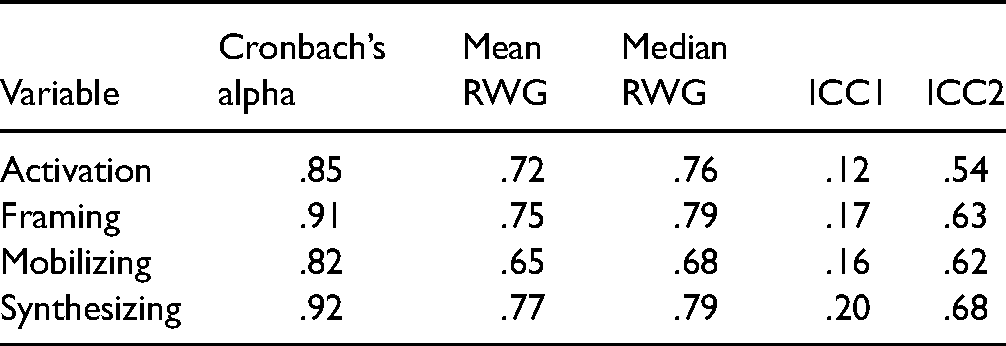
Network Leadership Behaviors were measured using McGuire and Sylvia’s (2009) network leadership questionnaire. We distributed the survey to all representatives of the organizations participating in each local network to obtain their perceptions regarding the behavior of the network leadership. As the local authority is, by definition, the lead organization in these networks, the questionnaire measured perceptions of the frequency with which the local authority representatives used the four categories of network leadership behavior: activation, framing, synthesizing, and mobilizing. For example, the respondents were asked: How often do local administrators require that network members follow standard rules and regulations? (Framing). How often do local administrators engage in the use of incentives to motivate network members? (Mobilizing). How often do local administrators engage in deciding how tasks will be performed? (Synthesizing). How often do local administrators put suggestions made by the network into operation? (Activation). The questionnaire included explanations of the meaning of each of the five Likert scale categories (e.g., never = never performed, seldom = performed once a year, occasionally = performed twice a year, often = performed once a quarter at least, and very often = performed at least once a month). We validated these meanings when collecting data in a pilot study. The questionnaire included 29 items. The responses for all participants in each local authority were aggregated after agreement indices were examined and found adequate (James, DeMaree & Wolf, 1984): the mean RWG was 0.72; ICC1 = .16; ICC2 = .62.
Network Centralization was measured based on an aggregation of individual network members’ responses (Scott, 2012; Zohar & Tenne-Gazit, 2008). Each member of the network was asked to identify all other members/organization representatives in the network with whom they interact. The respondents indicated the frequency of interaction with each of these members on a five-point Likert scale ranging from 1—“Not at all” to 5— “Very often.” A sample question was: “How often do you talk (by e-mail or telephone, in person, in meetings) with each of these organizational representatives on subjects related to the program?”
The survey responses were tabulated in an adjacency UCINET matrix where each node is assigned both a column and a row in the matrix. If a connection or tie exists between the two nodes, then a 1 is entered in the matrix cell, representing the intersection of these two nodes. If no tie exists, then a 0 is entered. The two cells for each pair of nodes do not necessarily receive the same value. If they had different values, we calculated the average of the scores (Borgatti et al., 2013). We then assessed the degree of network centralization using the UCINET software (Zohar & Tenne-Gazit, 2008)
SES and Ethnicity were defined based on the classifications from Israel's Central Bureau of Statistics in which cluster 1 indicates the lowest socioeconomic level and cluster 10 indicates the highest one. In addition, Arab local authorities were regarded as such if they were one of the 80 (out of the 257 local authorities in Israel) that are defined as Arab local authorities. In Israel, Arab local authorities include only Arab residents, while Jewish local authorities include both Arabs and Jews.
We also included four control variables: The size of the network (number of network actors), the size of the local authority (number of citizens), financial stability of the municipality, and the Peripheral Index score of the local authority. The size of the network regarded the number of organizations represented in the network and ranged from 5 to 21. The size of the local authority and its financial stability were obtained from the Israeli Central Bureau of Statistics (2017). We used a logarithmic transformation for the number of residents to address a possible bias of abnormality of the distribution (Field, 2005). Financial stability was calculated using the relative authority's budget deficit/surplus. The Peripheral Index is a quantitative measure created by the Israeli Central Bureau of Statistics that measures the centrality of the municipality, that is, the geographic proximity and potential accessibility to the center of the country (Tel Aviv-Yaffo district boundary) and to other major population centers (Beeri et al., 2018). The more central a local authority is, the higher its score on this index.
Data Analysis
Reliability coefficients (i.e., Cronbach's alpha) for the leadership behavior variables and citizen participation measures were acceptable and are shown in Table 1. As elaborated below, we conducted a confirmatory factor analysis to examine the structure that best fit the various dimensions of the independent variable, network leadership. We tested the hypotheses using multiple ordinary least squares (OLS) regression analyses and also tested the moderated mediation hypotheses using Hayes’ (2015) PROCESS, Model 21.
RWG and ICC Measures.
Results
Given the high correlations between the dimensions of network leadership, we had concerns about multicollinearity. Therefore, we conducted a confirmatory factor analysis and examined the goodness of fit of a leadership variable comprised of only one factor including all leadership behavior items (CFI = .90, NFI = .89, RMSEA = .072, SRMR = .05). As this model's fit indices were higher than a four-factor model, and due to the concern about multicollinearity, we decided to regard leadership as a unidimensional construct. Table 2 presents the intercorrelations.
Pearson's Correlations.
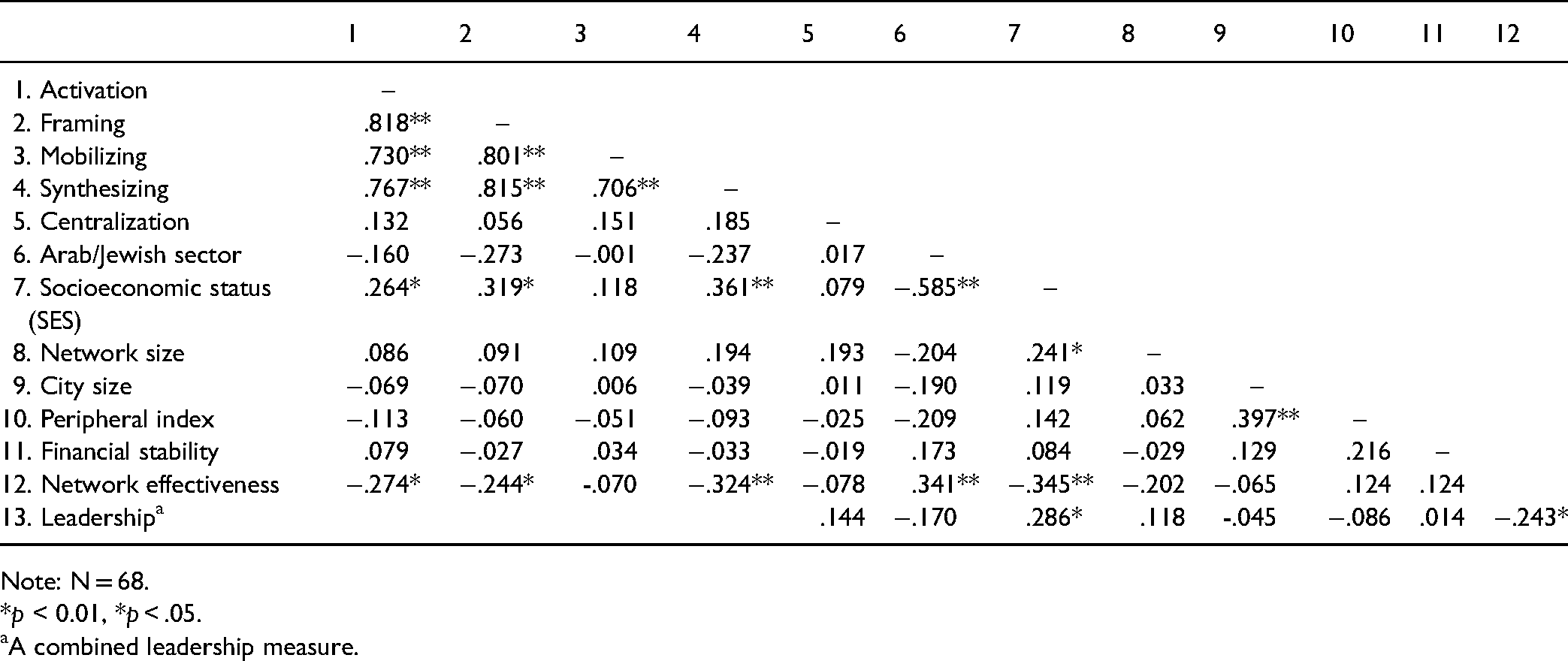
Note: N = 68.
*p < 0.01, *p < .05.
A combined leadership measure.
Testing the Hypotheses
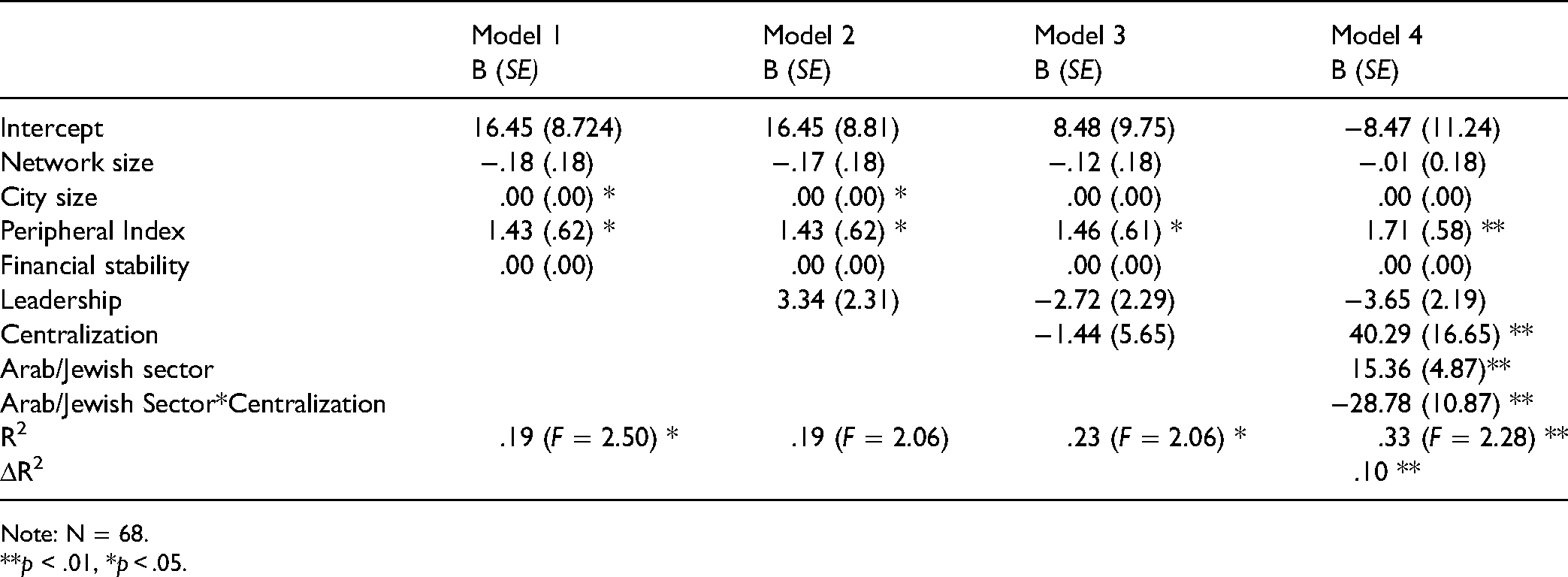
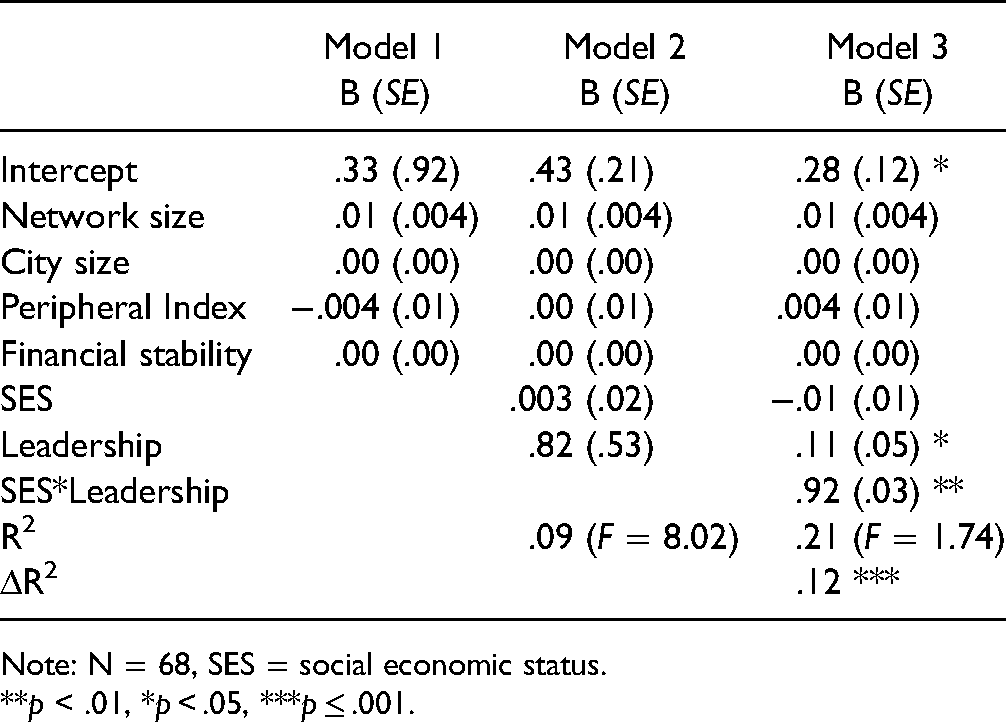
Tables 3 and 4 list the results of the regression analysis predicting network effectiveness, and the results of the regression analysis predicting network centralization, respectively. Our first research hypothesis proposed that the higher the frequency of use of network leadership behaviors by the lead organization, the more effective the network will be. However, as Model 2 in Table 3 indicates, there was no direct relationship between leadership behaviors and network effectiveness (B = 3.34; SE = 2.31, NS), thus refuting H1.
Regressions Predicting Network Effectiveness.
Note: N = 68.
**p < .01, *p < .05.
Regressions of Various Models Predicting Network Centralization.
Note: N = 68, SES = social economic status.
**p < .01, *p < .05, ***p ≤ .001.
The second hypothesis claimed that there would be a positive relationship between the network's structural characteristics and its effectiveness. Here again, based on Model 3 of Table 3, we rejected H2 because centralization was not significantly related to the network's effectiveness (B = −1.44; SE = 5.65, NS).
H3 assumed that the frequency with which the local administration uses network leadership behaviors would have a positive relationship with the network's centralization. As Model 2 in Table 4 indicates, there was no perceived main effect of leadership behavior on centralization, refuting H3. We thus had little basis on which to examine H4. However, as discussed below, the mediation proposed in H4 was not apparent because this mediated relationship is moderated.
H5 suggested that SES moderates the relationship between the network's leadership and its centralization, such that when the municipality is one of low SES, the positive relationship between the network's leadership and centralization will be attenuated. As the significant interaction in Model 3 of Table 4 indicates, the municipality's SES moderated the relationship between leadership and centralization (B = 0.92, SE = .032, p < .01).
In accordance with Aiken, West & Reno (1991), we conducted a simple slopes analysis to understand the nature of this interaction. Figure 2 shows that network leadership is significantly and positively (B = .51; p = < .01) related to network centralization in networks in local municipalities of high SES. By contrast, the effect approaches zero in local municipalities of moderate and low socioeconomic status (B = .12, N.S.; B = −.28, N.S., respectively). In high SES municipalities, the more the local authority uses network leadership behaviors, the more centralized the network. The model with the interaction explains 21% of the variance in centralization and 12% more of this variance above and beyond a model with the control variables and the main effect of leadership. Therefore, H5 was supported.
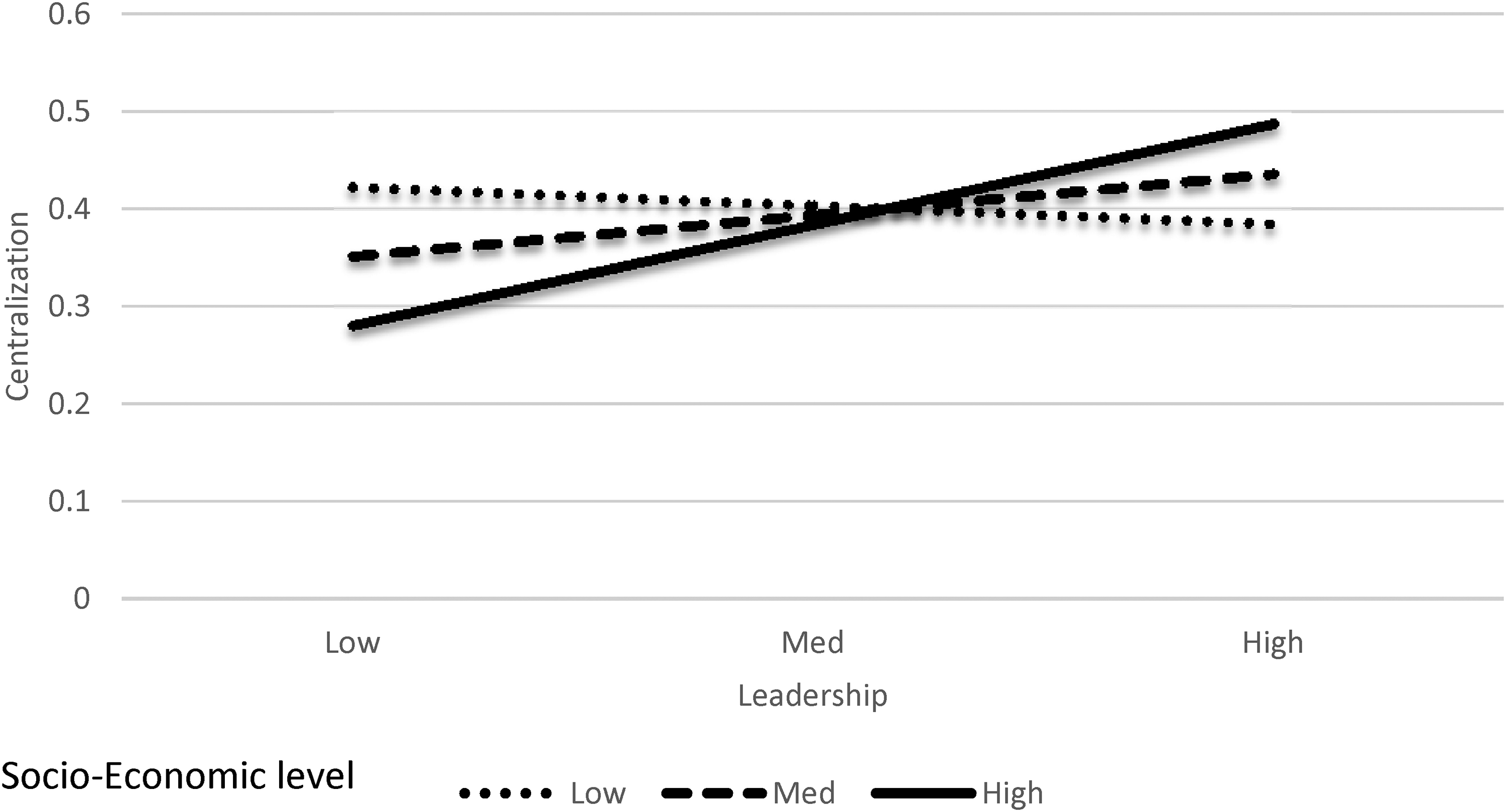
The relationship between network leadership and centralization by socioeconomic status (SES).
H6 claimed that the ethnicity of the municipality would moderate the relationship between the network's centralization and its effectiveness, such that when the municipality is from the Arab sector, the positive relationship between network centralization and network effectiveness will be attenuated. As Model 4 of Table 3 indicates, ethnicity was indeed a moderator (B = −28.78; SE = 10.87; p = < .01). A simple slopes analysis revealed the nature of this interaction (Aiken, West & Reno, 1991). Figure 3 shows that for Arab local authorities, the more centralized the network, the less effective it was. However, in Jewish local authorities, no relationship was found between centralization and effectiveness. The model explained 33% of the variance in local network effectiveness, enhancing the explained variance by 10% (p < 0.01) compared to a model with only control variables and the main effect.
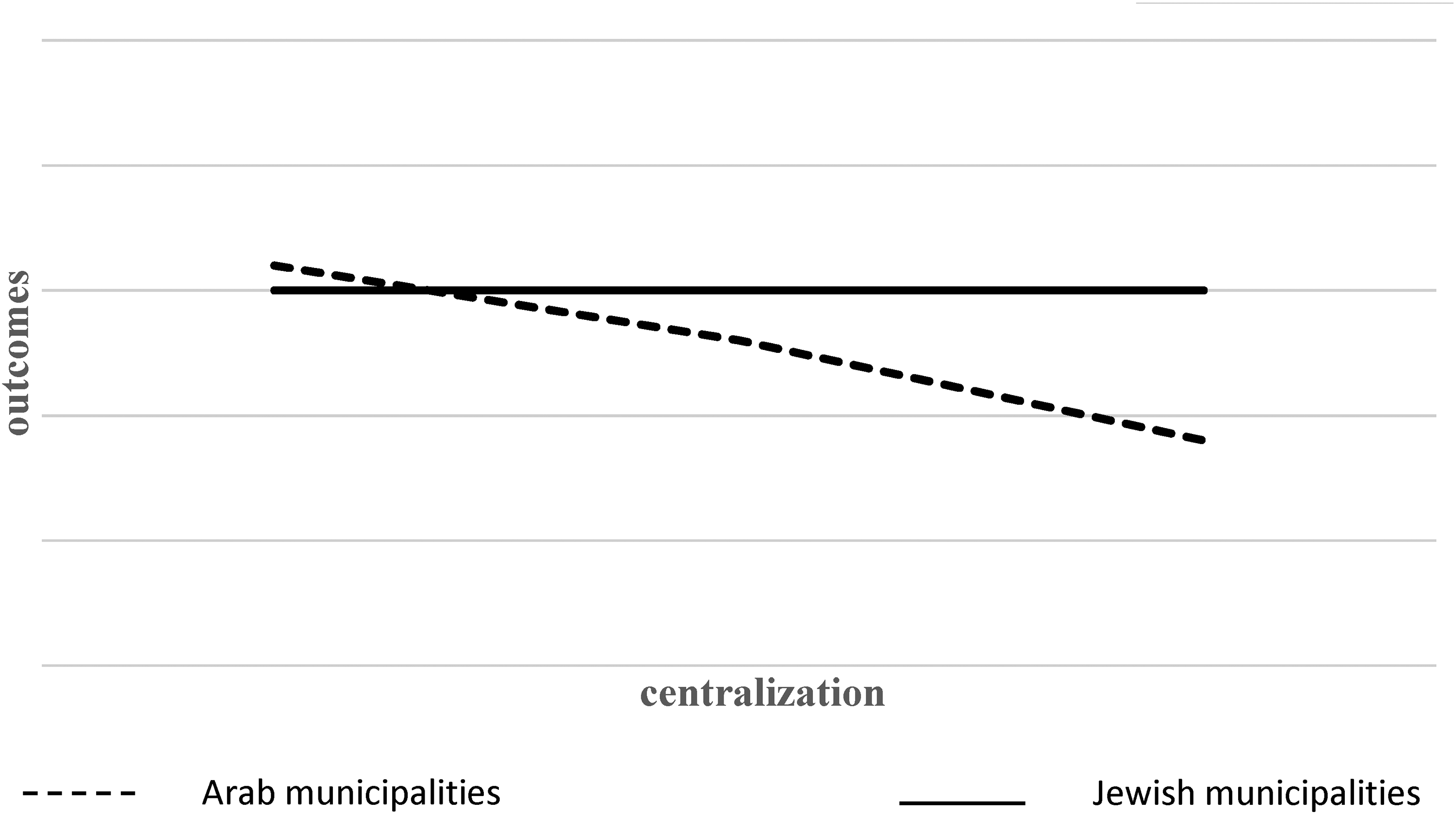
The relationship between network centralization and effectiveness by ethnicity.
Given the finding that SES and ethnicity moderated the relationship between leadership and centralization and between centralization and local network effectiveness, respectively, we examined a moderated mediation model. Table 5 presents the results. As Muller, Judd and Yzerbyt (2005) noted, moderated mediation happens when the effect of the treatment on the mediator and/or of the mediator on the outcome depends on the value of a moderator variable. To investigate this possibility, we analyzed the data using PROCESS, Model 21 (Hayes, 2015). This method allowed us to examine the entire model in a single step. In addition, PROCESS can generate a bootstrap CI for the indirect effects, which has become a widely recommended method for inferences about these effects in mediation analysis (Hayes, 2015). The bootstrap analysis found a significant conditional indirect effect of leadership on network effectiveness for two values of the moderators—ethnicity and SES: 95% CI: (−50.6, −6.96).
Bootstrap CIs for the Moderated Mediation Through Centralization.

Note: SES = social economic status.
The results in Table 5 indicate the mediated relationship between network leadership and effectiveness (through centralization) depends on the SES and ethnicity of the local authority. More specifically, centralization mediates the relationship between leadership and effectiveness in Arab municipalities of medium or high SES.
Discussion
This study examined 68 local purpose-oriented networks to reveal the role of network leadership, network structure, and the local context in explaining network effectiveness. Based on Provan and Milward’s (1995) framework, our basic premise was that the network's structure is related to the degree to which the network is effective. Based on our findings, it appears that this relationship is context specific. We found that under specific contextual circumstances, the structure of the network in terms of its centralization mediates the relationship between network leadership behaviors and network effectiveness. This result confirms the new institutional perspective of local leadership which underscores the importance of influencing institutional factors (Greasley & Stoker, 2008; Lowndes & Leach, 2004; Mouritzen & Svara, 2002). Accordingly, we found that the SES of the local authority and its ethnicity affect the relationship between local leadership and network effectiveness. In low SES local authorities, leadership does not relate to network centralization. One explanation for this finding may lie in the characteristics of Israeli local authorities and the differences between various socioeconomic clusters. In low SES local authorities, there is greater intervention and greater centralization of power at the national level, with the local governments conducting themselves according to “Ultra Vires” (Latin: beyond the powers) rules (Beeri, 2020). In such situations, government bodies such as local authorities have limited power (McKendrick, 1997). These limits are both financial and political, and result from the local government's bureaucracy being dependent on the central government. In addition, the SES of the local authority indicates the economic level of its population. These authorities are heavily dependent on external stakeholders such as private companies and nonprofits for financial, administrative, and professional services. When there are too many players interfering in the local authority's ability to lead and integrate the network (Anheier, 2014; Uster, Beeri & Vashdi, 2019), centralizing the network will be extremely difficult.
We also found that, contrary to previous studies reporting a positive relationship between centralization and performance, in Arab local authorities, network centralization had a negative relationship with the effective provision of local services. The explanation for this relationship may lie in previous studies concerning Israeli local authorities populated by minority groups such as Arabs and Druze (Ben Bassat et al., 2013). These studies reported that Arab local authorities differ in many ways from those of the Jewish majority, especially due to their traditional tribal organizational, managerial, and political culture. Therefore, these findings underscore the importance of the cultural factors that can affect the functioning of the network. The cultural diversity of the network organizations working within an Arab local authority, which includes both Jewish and Arab representatives, might enhance innovation and provide a wider pool of alternatives and perspectives when jointly solving problems (Huxham & Vangen, 2005). This direction also serves the general rational and importance of local democracy values, localism, and local autonomy (Saz-Carranza & Ospina, 2011). However, such diversity might also lead to misunderstandings and a reluctance to engage with the lead organization. More specifically, Vangen and Winchester (2014) explained that cultural diversity can generate friction within the network. Such cultural friction occurs because individual parties within the network have different expectations from the collaboration as well as different ways of communicating and different norms. Thus, scholars have suggested that network organizations should be sensitive to and aware of the different cultures, characteristics of communities, and understandings in the network and promote a joint language (Vangen & Winchester, 2014; Whelan, 2017). Future research may wish to examine if indeed these measures reduce friction and enhance network effectiveness in Arab local authorities and within local authorities populated by minorities.
We are aware that generalizing our insights to different contexts is a challenging mission. Moreover, as Goggin (1986) explained, “Even the most sophisticated and most costly statistical correlation studies to date do not yield a variegated theory of implementation” (p. 334). Indeed, Israel is a seemingly unique situation where a third of local authorities have a majority population of a national ethnic minority. This phenomenon is not yet very widespread globally. However, in light of the existing cultural heterogeneity in many countries and the large migrations occurring in recent years, our findings could become quite relevant to other contexts such as the United States and Europe. One example in the United States where such results may be relevant is to Native American areas, where both tribes and territories share a liminal status that imitates sovereignty (Frey, 2015). The United States is home to another set of semi-sovereign entities (Wellhausen, 2017): racial minority populations—especially Hispanic, Asian, and Black Americans—that continue to expand, leaving fewer parts of the country untouched by diversity. Similarly, in European cities growing Turkish and Moroccan Muslim communities combine their civic membership in the city and country of residence, shared with the national majority, with distinct ethnic and religious identities. In all sociopolitical contexts, participants are combining significant municipal and national identities with strong ethnic and religious identifications (Fleischmann et al., 2011). As minority populations grow, it is more likely that there will be more cities where they become the majority. Therefore, their cultural characteristics may affect how the networks are led.
According to the meta-governance theory (Sørensen & Torfing, 2007), networks should be governed by a combination of governance styles, such that control and monitoring behaviors are accompanied by a more decentralized approach. The theory maintains that involving network actors in decision-making and creating trust between them will render them more effective. Such trust can be developed among new network partners, but it requires reciprocity and transparency, clear communication, and information and knowledge-sharing. Trust between network actors facilitates cooperation through learning and by stimulating innovation (Huxham & Vangen, 2005; Nooteboom, 2002) and enhances network performance (Klijn, Steijn & Edelenbos, 2010; Klijn, Sierra, Ysa, Berman, Edelenbos & Chen, 2016; Provan, Huang & Milward 2009). However, in Israeli-Arab local authorities, new governance structures and network-based collaborations are still in their infancy (Beeri, 2020). Thus, Arab local authorities that still use traditional, hierarchical management behaviors have a double challenge. They need to find ways to build such trust in order for the network to be effective, as well as deal with a decentralized network.
Our results indicate that, while centralization seems to be a negative force in Arab local authorities, in Jewish local authorities it has little to no effect at all. Thus, it seems that centralized integration in purpose-oriented networks in the era of local governance is not the key to network effectiveness. However, as mentioned above, centralized integration does become relevant for network effectiveness in specific political and cultural conditions (e.g., in Arab local authorities). These findings are in line with the studies showing that centralized designs can limit the effectiveness of networks, especially when the tasks are complex (Cummings & Cross, 2003). They are also strengthened by recent studies claiming that the role of the network's structure in its effectiveness depends on other factors such as formalized coordination mechanisms, trust, socioeconomic class, informal relations, and spontaneous agreements between network participants (Cristofoli, Macció & Pedrazzi, 2015; Cristofoli, Markovic & Meneguzzo, 2014; Markovic, 2017; Provan & Kenis, 2008). According to Markovic (2017), “Different political environments, varying structures and diverse organizing principles may lead to success” (p. 376). Our results also accord with Korten’s (1980) research that to lead social programs at the local level leaders should be accountable in the eyes of the citizens, be sensitive to cultural diversity, decentralize their control and reduce bureaucracy. He concluded that when leaders use only centralized coordination, they neglect the learning process essential for rural community development.
Our study makes several additional theoretical and practical contributions. First, by demonstrating that at least in the local arena, network leadership behaviors are related to network effectiveness only in certain contexts, we extend the theory on network effectiveness in local governance. More specifically, we emphasize the important role that context plays in theories regarding network effectiveness in general and in the local arena in particular. Moreover, our study joins others in the leadership field discussing the conditions under which leadership is effective (Fiedler, 2015; Harrisson, 2018; Kriger & Seng, 2005).
From a practical perspective, our findings call for local administrators to take political, sociological, and cultural factors into consideration when deciding how to lead the network. In addition, when designing a network's structure, local leaders should be aware of the network actors’ attitudes toward them, namely, the extent to which they have internal and external legitimacy. Thus, in an environment of distrust and reluctance to participate in the network, leaders should not try to centralize it. In this case, network leaders may wish to minimize their role, sharing their power with other network actors.
Footnotes
Declaration of Conflicting Interests
The author(s) declared no potential conflicts of interest with respect to the research, authorship, and/or publication of this article.
Funding
The author(s) received no financial support for the research, authorship, and/or publication of this article.
