




Abstract
Experiential learning (EL) equips students with practical skills and real-world experience essential for professional success. Yet, there is limited research that explores what shapes students’ attitudes and intentions toward EL participation. This study investigates the motivational factors influencing undergraduate business students’ engagement in EL activities. Drawing on the theory of planned behavior and the technology acceptance model, a conceptual model was tested incorporating External Beliefs (Perceived Ease of Use, Perceived Usefulness, Instructor Readiness, Student Readiness, Perceived Self-Efficacy, Learning Relevance, and Learning Motivation), Attitudinal Constructs (Perceived Behavioral Control and Subjective Norms), and Behavioral Intention. Survey data from 194 undergraduate business students were analyzed using structural equation modeling in SmartPLS. Results show that Perceived Usefulness, Student Readiness, Learning Motivation, and Learning Relevance significantly influence Attitude, Subjective Norms, and Perceived Behavioral Control, which in turn predict Behavioral Intention to engage in EL. Conversely, Instructor Readiness and Perceived Ease of Use were not significant predictors. The findings underscore the need to align EL activities with students’ career goals to foster intrinsic motivation, enhance institutional support through resources, and clear communication of EL benefits. This study advances understanding of the behavioral drivers of EL adoption and develops an actionable EL implementation framework for enhancing EL engagement across various educational disciplines. Specifically, we propose seven implementation principles that articulate how a unified approach across students, educators, program directors, industry partners, and the broader academic institution can translate enhancement in EL into practice and strengthen EL integration within higher education curricula.
Keywords
Introduction
Experiential learning (EL) is defined as “the process whereby knowledge is created through the transformation of experience. Knowledge results from the combination of grasping and transforming experience” (Kolb, 1984, p. 41). It is an engaged learning process whereby students “learn by doing” and reflect on the experience (Kolb, 1984). The practice bridges the gap between theoretical knowledge and practical application. Engaging students in hands-on experiences fosters a deeper understanding of concepts, enhances critical thinking and problem-solving abilities, and cultivates a holistic grasp of the subject matter. For business students, EL holds particular significance as it immerses them in the dynamic and consumer-centric nature of the field. This field demands a keen understanding of consumer behavior, market trends, and creative strategies, which EL can provide through real-world projects and simulations. The Association to Advance Collegiate Schools of Business (AACSB), the long-standing, most recognized form of specialized accreditation that an institution and its business programs can earn, noted that “students appreciate programs that offer opportunities for EL; if courses are too theoretical or have no real-world application, students consider them irrelevant” (Lister, 2024). As such, this acknowledges the importance of EL in the future of university business education.
Despite the growing recognition of EL’s impact on student success, there is limited empirical research examining the specific factors associated with students’ attitudes toward and intentions to participate in such learning activities. Previous research has put a heavy emphasis on EL outcomes (Burch et al., 2019; Hajshirmohammadi, 2017; Rohm et al., 2021; Tomkins & Ulus, 2016; Zhang & Scribner, 2024) and general acceptance of EL (Dimitrijević & Devedžic, 2021; Tzafilkou et al., 2020). A meta-analysis on EL stated, “scholars should take care to explicate characteristics of the research setting and design” (Burch et al., 2019, p. 259), such as faculty background, design features, and variables of clear importance to the field (Burch et al., 2019). Furthermore, there is also limited scholarly research that has examined what factors students perceive as important in motivating them to participate in EL activities. Thus, the primary objective of this study is to identify and analyze the specific factors associated with undergraduate students’ attitudes toward and intention to participate in EL activities, with a particular focus on students enrolled in business and business-related programs.
Theory
Experiential Learning
EL is a pedagogical approach that emphasizes learning through direct interaction with material or situations rather than relying solely on passive methods, such as reading, hearing, or discussing, without firsthand experience (Keeton & Tate, 1978; Oh & Polidan, 2018; Valiente-Riedl et al., 2022). Based on the principle that active engagement, reflection, and real-world application are essential to meaningful learning, EL allows individuals to develop knowledge and skills in a more interactive and immersive manner (Azar et al., 2020; Kolb & Kolb, 2005). This immersive method encourages learners to actively participate in real-world scenarios, enhancing their understanding and retention of information (Motta & Galina, 2023).
The foundations of EL can be traced back to John Dewey (1963), who argued that education should be grounded in lived experiences. Since then, EL has gained widespread recognition as an EL approach, particularly in business education, where it fosters the development of critical thinking, problem-solving, adaptability, and decision-making skills (Ampountolas et al., 2019). By bridging the gap between theoretical knowledge and practical application, EL enhances students’ ability to navigate complex business environments and prepares them for real-world challenges (Kolb & Kolb, 2009; Waddell et al., 2018). Common EL approaches in business education include internships, laboratory experiments, fieldwork, and simulations (Aithal & Mishra, 2024; Lantu et al., 2022), as well as semi-structured classroom activities (e.g., solving a business problem in a small group) or loosely structured experiential activities (e.g., role-playing, debates) (Hamer, 2000). These approaches facilitate skill development, industry engagement, and professional preparedness, ensuring that learners gain both conceptual understanding and hands-on experience. Business schools have often been criticized for overemphasizing theoretical instruction while neglecting practical competencies (Lamb et al., 1995; Parker et al., 2023).
EL has regained prominence in modern education due to its effectiveness in enhancing student performance, deepening understanding, and better preparing learners for the complexities of professional business environments (Avramenko, 2012; Jääskä & Aaltonen, 2022). The increasing emphasis on EL reflects a broader recognition of its role in equipping students with essential skills, attributes, and competencies necessary for professional success. However, EL itself does not inherently improve learning outcomes unless it is implemented in a way that helps students meet clearly defined performance standards. Unlike passive learning methods that focus on memorization, EL opportunities foster deeper comprehension and skill development. However, EL’s effectiveness ultimately depends on how it is structured and assessed within an educational framework (Heyworth-Thomas, 2023; Vale & Barbosa, 2023).
Some of the most widely used EL methods in business education are internships and work placements, often referred to as work-integrated learning (WIL; Patrick et al., 2008), which provide students with direct industry exposure, allowing them to experience workplace culture and develop professional skills (Aithal & Mishra, 2024). However, WIL assessments can be complex and require significant resources to align students, the university, and industry (Ajjawi et al., 2020). Case studies and problem-based learning can help students develop their analytical and strategic thinking skills by engaging with authentic business scenarios, enabling them to assess risks, evaluate solutions, and make informed decisions—critical skills for future managers and entrepreneurs (Waddell et al., 2018). Other key EL methods are simulations and role-playing exercises, which allow students to practice decision-making in controlled environments, such as crisis management, negotiations, and strategic planning. These exercises improve students’ ability to manage uncertainty and think critically under pressure, preparing them for high-stakes situations in the workplace (Motta & Galina, 2023).
Beyond structured coursework, fieldwork and industry collaborations offer another avenue for EL by allowing students to work directly with companies on live projects. These partnerships provide students with valuable networking opportunities and exposure to industry professionals (Brundiers et al., 2010). Similarly, entrepreneurial and consulting projects encourage students to think innovatively by either developing their own business ventures or providing strategic recommendations to real companies. These experiences cultivate leadership, problem-solving, and risk assessment skills, which are essential for aspiring entrepreneurs and business consultants (Parker et al., 2023). Through these EL opportunities, business students also develop the confidence needed to transition into professional roles successfully.
While much of the EL literature emphasizes intrinsic motivation (Banfield & Wilkerson, 2014; Coker & Porter, 2016; Kong, 2021), prior research also acknowledges the role of extrinsic and structural motivators (Bradford, 2019; Coker & Porter, 2016; Diwakar et al., 2023), particularly when EL activities are compulsory components of course assessment. Studies note that grading requirements and course completion expectations can function as behavioral motivators that prompt initial participation, even when intrinsic interest varies across students (Billett & Henderson, 2011; Kuh, 2008), contributing to varied results from students (Winsett et al., 2016). From a self-determination perspective, such externally regulated motivations may still support engagement and learning outcomes when accompanied by meaningful task design and perceived relevance (Ryan & Deci, 2000), suggesting that compulsory EL should be understood not only as an outcome requirement but also as an influential contextual driver of participation.
While EL is increasingly prioritized by academic institutions, several factors can prevent students from translating their positive intentions into actual participation. This discrepancy between intention and action, known as the intention-behavior gap, is a well-documented phenomenon across various domains (Sheeran & Webb, 2016). In the context of EL, this gap can significantly hinder students from fully realizing its intended benefits. Interconnected barriers, such as limited time and financial resources, often present significant challenges. Students juggling demanding academic schedules, part-time jobs to cover educational expenses, and personal financial obligations may struggle to commit to time-intensive EL activities such as internships or extended research projects. This aligns with research highlighting the impact of time constraints on student academic performance (Nonis & Hudson, 2006; Nonis et al., 2021) and the challenges faced by working students (Nonis & Hudson, 2006; Nonis et al., 2021). In addition, the costs associated with some EL opportunities, including travel, certifications, professional attire, and living expenses during unpaid internships, can be prohibitive for students with limited financial means. Beyond logistical constraints, psychological factors also play a crucial role. Fear and uncertainty can deter students from engaging in EL, particularly when it involves stepping outside their comfort zones and navigating unfamiliar professional environments (Yi et al., 2022). Concerns about their ability to succeed in an internship, their preparedness for real-world work, or their capacity to balance academic responsibilities with an EL commitment can create anxiety (Yi et al., 2022) or lead to avoidance, even when students recognize the long-term benefits of participation. Competing demands and the pressures of academic coursework, part-time jobs necessary for financial stability, and family responsibilities create a web of obligations that leave little room for additional commitments (Michel et al., 2011). Burch et al. (2019) demonstrate in their meta-analysis that work–family conflict can significantly impact individuals’ time and energy, making it difficult to manage competing demands. While their focus is on work–family balance, the principle applies broadly to students juggling multiple responsibilities, including EL. The level of institutional support and guidance also plays a critical role in EL participation. A lack of clear information about EL opportunities, complex application processes, and insufficient support from faculty, advisors, or career services can leave students feeling overwhelmed and uncertain about how to proceed. The intention-behavior gap in EL underscores the need to address these multifaceted barriers when designing and implementing effective EL programs.
Theory of Planned Behavior and Technology Acceptance Model
The theory of planned behavior (TPB), developed by Ajzen (1985, 1991), is a widely recognized psychological framework used to predict and understand human behavior in specific contexts. According to TPB, an individual’s intention to perform a behavior is the most immediate determinant of that behavior, and this intention is influenced by three key factors: attitude toward the behavior, subjective norms (SNs), and perceived behavioral control (PBC) (Kan & Fabrigar, 2020). Attitude refers to the degree to which a person has a favorable or unfavorable evaluation of the behavior in question (Kan & Fabrigar, 2020). For students considering EL, this might involve weighing the perceived benefits, such as skill development and employability, against potential drawbacks like time commitment and academic pressure. To perform or not perform the behavior, SNs encompass the perceived social pressure (Kan & Fabrigar, 2020). In EL, these norms could be shaped by the expectations of peers, family, faculty, and industry professionals, influencing whether students feel encouraged or discouraged to participate. The PBC reflects the individual’s perception of their ability to perform the behavior (Kan & Fabrigar, 2020), which is influenced by past experiences and anticipated obstacles.
Although TPB is a well-established model for explaining behavioral intentions, alternative theories such as the technology acceptance model (TAM) provide additional insights. TAM, developed by Davis (1989), emphasizes the role of perceived usefulness (PU) and perceived ease of use (PEOU) in predicting technology adoption, which may be relevant in understanding students’ engagement with EL activities, as these often integrate or incorporate modern technologies. While TPB explains why individuals intend to engage in EL, it is less equipped to capture how students evaluate the design and usability of technology-mediated experiential activities. The TAM can be conceptualized as a boundary-spanning theory that bridges technology adoption, task evaluation, and experiential engagement. Rather than explaining technology use in isolation, TAM’s core constructs, PU and PEOU, capture individuals’ broader cognitive assessments of whether an innovation meaningfully enhances performance and whether participation is feasible within existing constraints. In EL contexts, technology functions less as the object of adoption and more as an enabling infrastructure through which learning experiences are designed, delivered, and evaluated. Accordingly, TAM provides a theoretically sound lens for examining how students assess the value, effort, and practical viability of technology-enabled EL activities, extending its applicability beyond traditional system adoption decisions to experience-centric, hybrid learning environments. Recent studies have effectively used the TAM to explore EL (e.g., Dimitrijević & Devedžic, 2021; Lai et al., 2024), but gaps remain. Notably, Lai et al. (2024) concluded that EL techniques such as blended learning result in positive learning experiences for university students. Dimitrijević and Devedžic’s (2021) review of utilitarian and experiential aspects in acceptance models for learning technology (focused on TAM) suggests “the experiential aspect has been found underexplored . . . research on acceptance of this category of learning technology still has not reached its peak” (p. 646). This notable gap in the EL literature highlights an important motivation for the current study. By integrating TPB with TAM, this study broadens its theoretical scope and uniquely advances EL theory, allowing for a more nuanced understanding of how students evaluate EL participation.
For online learning environments specifically, TAM has been extended into the general extended technology acceptance model for e-learning (GETAMEL) (Abdullah & Ward, 2016). GETAMEL builds on TAM by incorporating commonly used external factors, making it a valuable extension for analyzing e-learning contexts. This study acknowledges GETAMEL as a framework that could enhance the understanding of EL engagement, particularly in technology-mediated settings. By drawing on elements of GETAMEL, such as external influences, this research extends traditional TAM applications to EL contexts beyond conventional technology adoption studies.
The TPB framework is particularly relevant to this study as it provides a structured approach to understanding the factors that affect undergraduate students’ intentions to participate in EL activities. Notably, the inclusion of normative/external belief constructs such as Student Readiness (SR; Cheon et al., 2012), Learning Relevance (LR; Park et al., 2012), and Learning Motivation (LM; Huang, 2021) in our proposed model enriches both TAM and EL theories. LR and LM in particular address students’ willingness to learn, as relevance reveals their belief in whether or not EL provides value to their educational journey, and motivation can indicate the level of importance they place on EL activities as well as their willingness to participate in them (Tzafilkou & Protogeros, 2018). By applying TPB and TAM, this research explores how students’ attitudes, perceived norms, external beliefs, and control beliefs collectively shape their willingness to engage in EL, offering valuable insights into how to enhance participation rates among business students.
Development of Hypotheses
To better understand the factors influencing undergraduate business students’ intention to engage in EL activities, this study develops a conceptual model that integrates several constructs grounded in both TPB and TAM (Figure 1) and proposes 10 hypotheses. The model proposes that external beliefs are positively associated with attitudinal constructs and, in turn, are positively associated with behavioral intention to participate in EL activities. Each of the constructs is now described, including seven external beliefs constructs, three attitudinal constructs, and one behavioral intention construct.
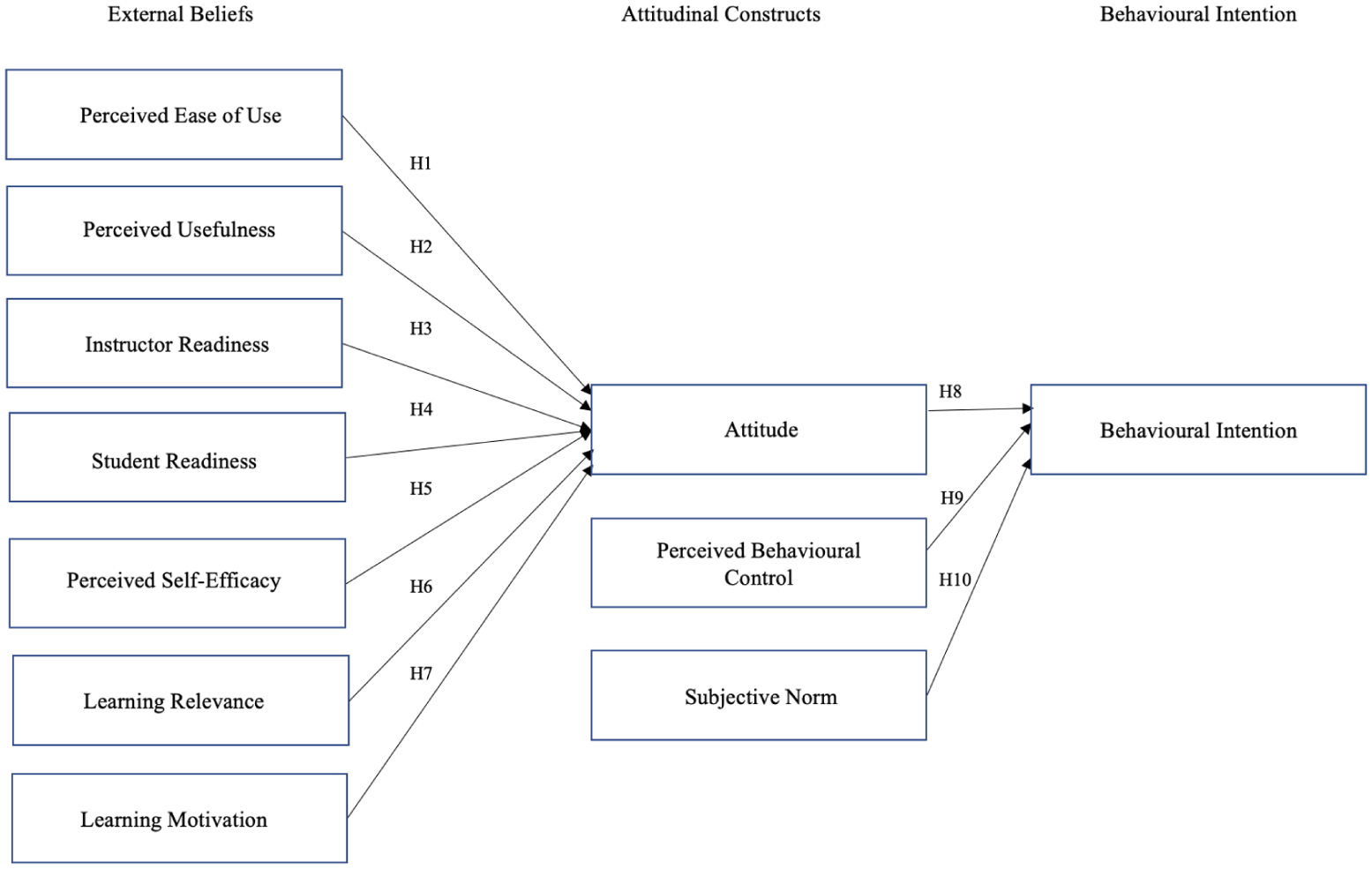
Conceptual Model.
Beginning with External Beliefs, PEU, and PU reflect students’ evaluations of the practicality and benefits of EL methods. These constructs have been empirically shown to influence students’ willingness to adopt new learning methods (e.g., Lai et al., 2024), making them essential for understanding how students evaluate the practicality and benefits of EL (Cheon et al., 2012; Tan et al., 2023). This study extends traditional applications of PEU and PU by considering how they apply not only to online learning but also to experiential classroom activities and hybrid EL environments, aligning with the framework established by Park et al. (2012). Given the alignment between TPB and TAM in predicting behavior, integrating PEU and PU within the conceptual model enhances its explanatory power. Therefore, we developed the following hypotheses:
Instructor Readiness (IR) and SR, categorized as External Beliefs, highlight the role of preparedness in facilitating or hindering engagement in EL activities. SR ensures students feel capable and confident when participating in EL (Wu et al., 2022), whereas IR ensures the activities are well-facilitated and aligned with educational goals (Cheon et al., 2012; Lim, 2023). Studies have demonstrated that when instructors are well-prepared, and students feel ready to engage, the effectiveness of EL activities is significantly enhanced (Cheon et al., 2012; Liu et al., 2010). Hence, we developed the following hypotheses:
Perceived Self-Efficacy (PSE) captures students’ confidence in their abilities, and LR represents the perceived applicability of the learning content. These two factors have been shown to strongly influence motivation and engagement in educational activities (Cheon et al., 2012; Huang, 2021). Thus, the hypotheses are as follows:
LM reflects the intrinsic desire of students to participate in learning activities. While motivation is a complex and multifaceted construct, empirical evidence suggests motivated students are more likely to find EL activities enjoyable and valuable, leading to higher engagement and commitment (Filgona et al., 2020; Lin et al., 2017). Thus, this research hypothesizes:
Finally, the impact of attitudes (Ulker-Demirel & Ciftci, 2020; Vermeir & Verbeke, 2006), peers, friends, and family (Hasbullah et al., 2016; Ulker-Demirel & Ciftci, 2020) and students’ confidence in their ability to successfully complete the activities (Sultan et al., 2020; Ulker-Demirel & Ciftci, 2020) are well-established indicators of behavioral intentions. For students, PBC could involve considerations of access to opportunities, resources, or support systems necessary to engage in EL activities. Thus, we hypothesize:
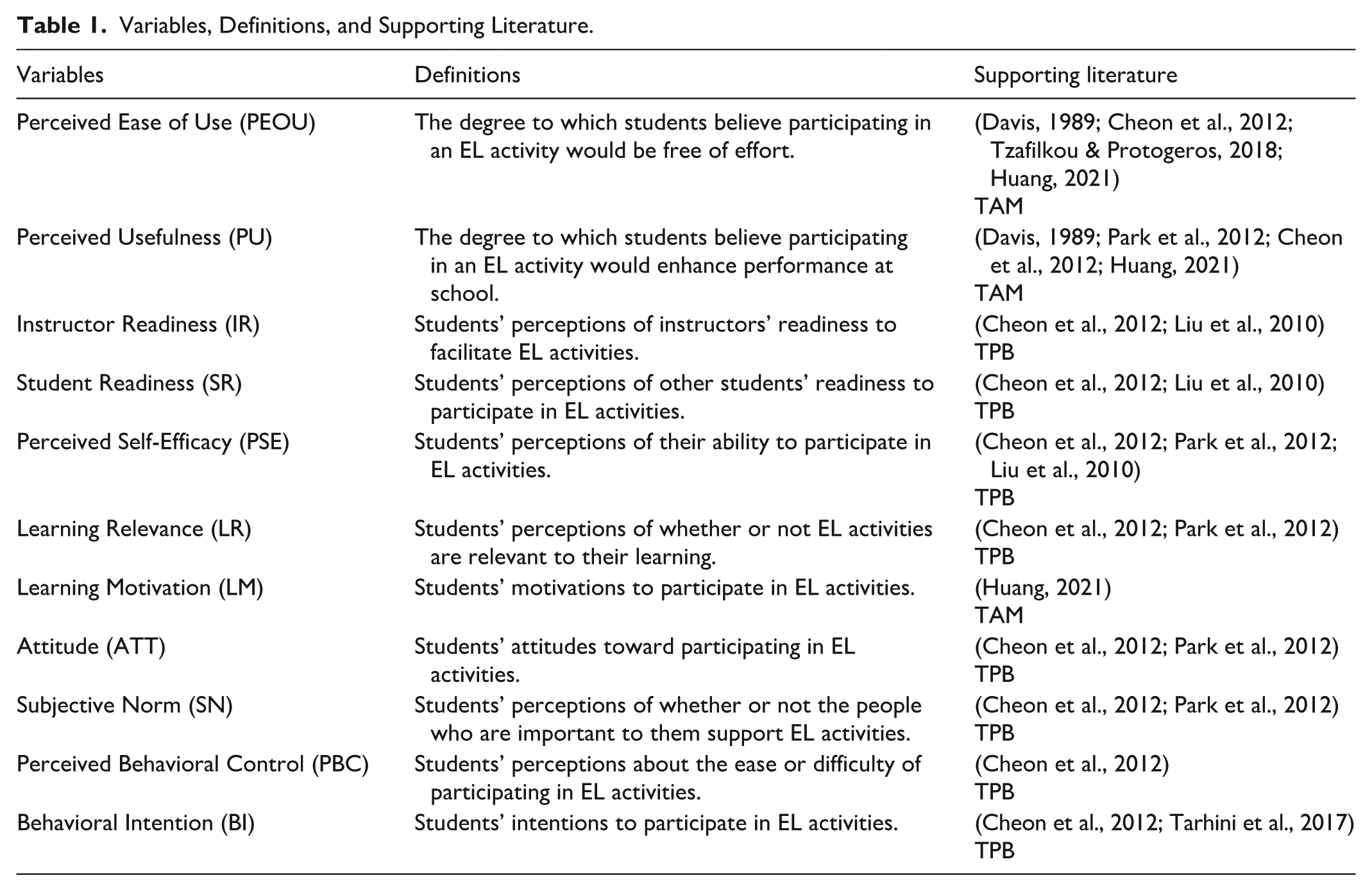
Table 1 presents definitions and supporting literature for each variable in the model. Figure 1 illustrates the 10 hypothesized relationships.
Variables, Definitions, and Supporting Literature
Method
Study Design and Measures
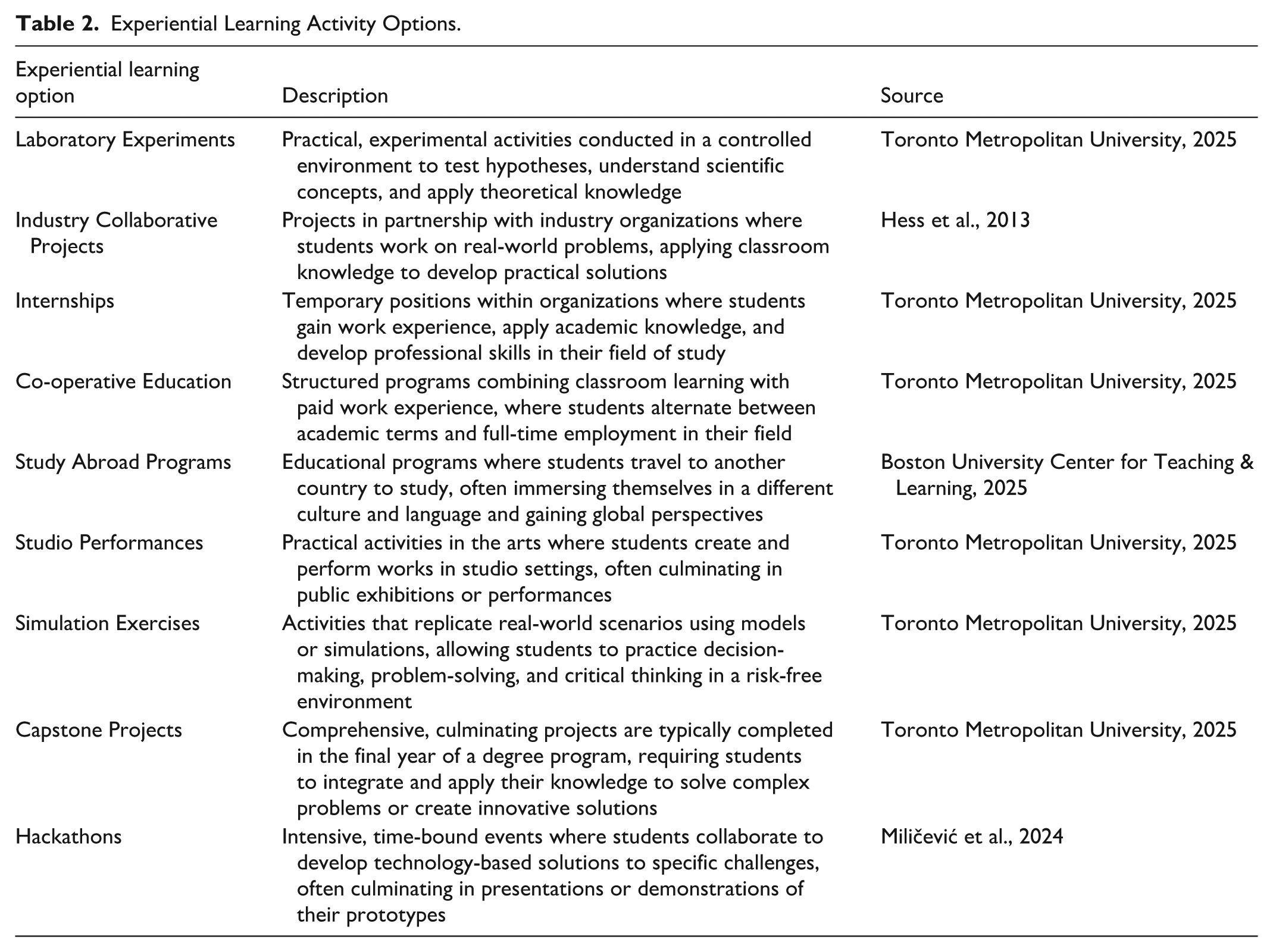
The authors developed a conceptual model that integrates measures based on TPB and TAM. The conceptual model (Figure 1) comprises three components: (a) External Beliefs, measured with seven exogenous latent variables—PEOU (H1), PU (H2), IR (H3), SR (H4), PSE (H5), LR (H6), and LM (H7); (b) Attitudinal Constructs, measured with three endogenous latent variables—Attitude (H8), PBC (H9), and SN (H10); and (c) Behavioral Intention, the endogenous latent variable. The model proposes that External Beliefs (H1 . . . H7) are positively associated with Attitudinal Constructs and, in turn, are positively associated with Behavioral Intention (H8 . . . H10). Initial items were developed based on a thorough review of the literature, previously validated measures, and the authors’ own items. Items were adapted to ensure the scale was appropriate for an EL-focused study (see the appendix for survey items, measures, and supporting literature). There were 64 initial items, and they ranged from five to seven items for each latent variable (PEOU-6, PU-6, ATT-6, IR-6, SR-6, SN-5, PSE-7, LR-6, PBC-6, BI-5, and LM-5). Based on the study objectives, an online survey instrument was developed using Qualtrics. The survey design considered both the participant’s experience (front-end survey interface) and the data outputs (back-end response storage) (Lauer et al., 2013). From a back-end perspective, Qualtrics provides a secure server and seamless exporting of results. From a front-end perspective, Qualtrics provides a mobile-friendly user experience. The survey included seven sections: (a) consent to participate, (b) qualifying criteria, (c) area of study information, (d) External Beliefs (including PEOU, PU, IR, SR, PSE, LR, and LM), (e) Attitudinal Constructs (including PBC and SN), (f) Behavioral Intention, and (g) demographics. Once the respondent consented and qualified to participate, EL was defined within the survey as an engaged learning process where students “learn by doing” and subsequently reflect on the experience. It can include, but is not limited to, industry collaborative projects, internships, co-ops, practicums, field exercises, studying abroad, and undergraduate research. To understand the respondents’ perceptions of EL, at the beginning of the survey, they were instructed to reflect on their undergraduate degree and choose one EL activity they are most interested in (see Table 2 for a list of EL activity options) and to then reflect on their selected EL activity when answering the subsequent survey questions. The purpose of the study is to identify what factors are associated with undergraduate university business students’ intentions to participate in EL activities; therefore, rather than assess their overall perceptions and intentions of EL activities in general (which vary in type, delivery, and mode), the respondents were asked to select one EL activity in particular and base their responses on it. Five procedural remedies, suggested by MacKenzie and Podsakoff (2012), were implemented within the survey design to minimize common method biases (CMB): (a) using straight forward language to mitigate confusion, (b) clearly explaining upfront the purpose and importance of the study, (c) keeping the length of survey to under 10 min (median time was 8 min, 42 s), (d) designing temporal and spatial separation of each of the seven sections of the survey, and (e) ensuring respondent confidentiality. In addition, a commitment question (e.g., Do you commit to providing thoughtful answers to the questions in this survey?) was included, instead of attention checks, to improve data quality (Geisen, 2022). Each construct was measured with multiple items using a 7-point Likert-type scale where respondents indicated the extent of their agreement, from 1 (strongly disagree) to 7 (strongly agree).
Experiential Learning Activity Options.
Sampling
A purposive sampling approach was employed to recruit undergraduate students studying in business or business-related programs. To qualify for the study, participants had to meet four criteria: (a) at least 18 years of age (age criteria), (b) enrolled in a business or related (discipline of study criteria), (c) studying in an undergraduate bachelor’s or associate degree program (level of study criteria), and (d) at a college or university in the United States (geography/region criteria). Business or related degree programs were defined as marketing, accounting, finance, real estate, business technology, economics, entrepreneurship, global management, human resources, health administration, law and business, retail management, and hospitality and tourism. A pilot survey was conducted with a small sample (N = 15) of undergraduate business students recruited from a student research pool at a university in Canada. Results from the pilot confirmed that the survey instructions were clear, the questions were interpreted as intended, and the survey length was appropriate (less than 10 min). For the main study, we chose not to recruit participants from a student research pool because it could limit the generalizability of the results, and as research suggests, convenience samples of students do not consistently provide satisfactory data quality (Peer et al., 2022). Therefore, the sampling strategy for this study involved recruiting undergraduate business students from a variety of colleges and universities across the United States. In a recent study, several popular online panel platforms, such as Prolific, Amazon Mechanical Turk, CloudResearch, Qualtrics, and Dynata, were assessed and scored on key aspects of data quality (attention, comprehension, honesty, reliability) (Peer et al., 2022). The study found that Prolific had the overall highest quality of data versus the other online panel platforms (Peer et al., 2022). Therefore, Prolific, an online panel platform, was selected to recruit participants for this study (Palan & Schitter, 2018). Respondents received a nominal incentive for participating in the survey. The data took 3 days to collect. With the qualifying criteria in place, Prolific identified 2,151 eligible participants. A total of 205 participants were recruited, resulting in an overall response rate of 9.53%. The sample included participants across 40 of the 50 U.S. states. Regarding the disciplinary distribution of the participants, marketing students represented the largest segment at 30% (N = 59), followed by business technology (26%) and health administration (18%). Students majoring in accounting and finance constituted 10% of the sample, while human resources, law and business, and economics accounted for 5%, 4%, and 4%, respectively. Finally, 5% of the participants were studying real estate, entrepreneurship, global management, retail management, and hospitality and tourism. The median time to complete the survey was 8 min and 42 s, which met the study’s goal of keeping it under 10 min. During data cleansing, 11 respondents were removed due to incomplete responses, missing data and/or suspicious response patterns such as straight-line responses. This left 194 respondents deemed valid for partial least squares structural equation modeling (PLS-SEM) analysis. To ensure adequate statistical power, this study followed the guidelines established by Hair et al. (2017) based on Cohen’s (1992) power tables. Our proposed model contains seven independent variables pointing to a single construct. The recommended minimum sample size to detect an R2 of .25 is 80; our sample of N = 194 is more than double this requirement, ensuring high sensitivity and reducing the risk of Type II errors. Structural equation modeling (SEM) with SmartPLS 4 was performed to analyze the model and test each of the 10 hypotheses. The data were inspected for skewness and kurtosis, and the analysis confirmed the data to have a slightly nonnormal (but not extremely nonnormal) distribution due to some negatively skewed items, which is considered appropriate for PLS-SEM (Hair et al., 2017).
Results
Descriptive Analysis
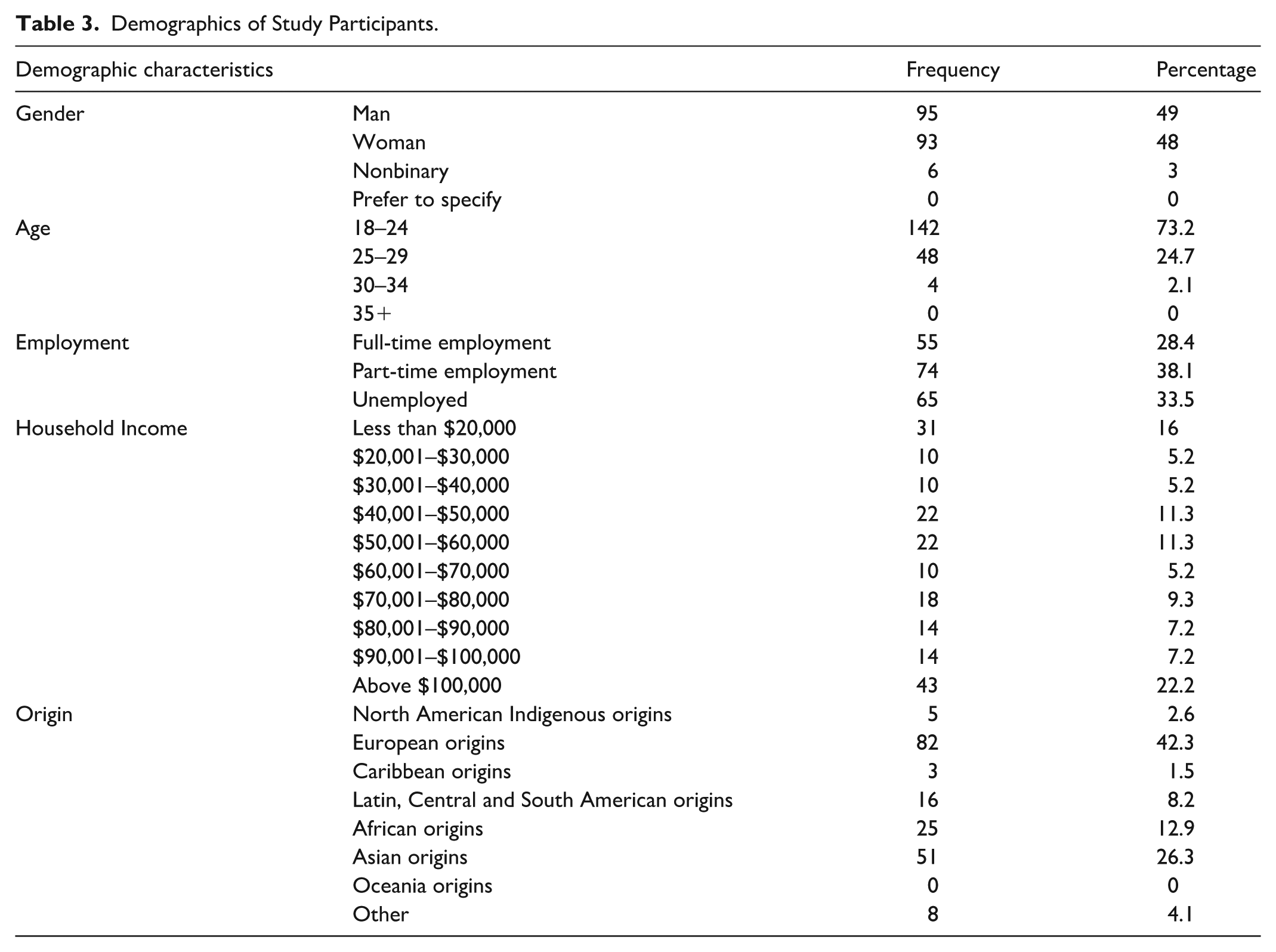
Of the 194 undergraduate student participants, about half (95 participants, 49%) identified as men. The ages ranged from 18 to 34 years, with 73.1% (142 participants) between 18 and 24 years of age. Regarding employment, 38.1% (74 participants) were employed part-time, and more than half of the participants reported a household income of $60,000 or less. However, 22.2% (43 respondents) reported having a household income of more than $100,000. Table 3 presents the demographic characteristics of the study participants. According to the AACSB (2021), 59.0% of business students are men and 41.0% are women. However, many U.S.-based institutions have recently announced gender parity or improvements toward gender parity in their business degree programs (Bleizeffer, 2024; Bregel, 2023). Thus, the resulting analytical sample for this study aligns with the target population in terms of the gender ratio of business students.
Demographics of Study Participants.
When a participant qualified for the survey, they were asked to select one EL activity that interested them. Internships were the most popular and selected by 35.1% (N = 68) of respondents. As their preferred EL activity, 21.1% (N = 41) selected study abroad programs, while 12.9% (N = 25) selected laboratory experiments. Other EL activities were as follows, in descending order: co-operative education (9.8%, N = 19), simulation exercises (9.3%, N = 18), industry collaborations (4.1%, N = 8), hackathons (3.1%, N = 6), studio performances (2.6%, N = 5), and capstone projects (2.1%, N = 4).
Measurement Model
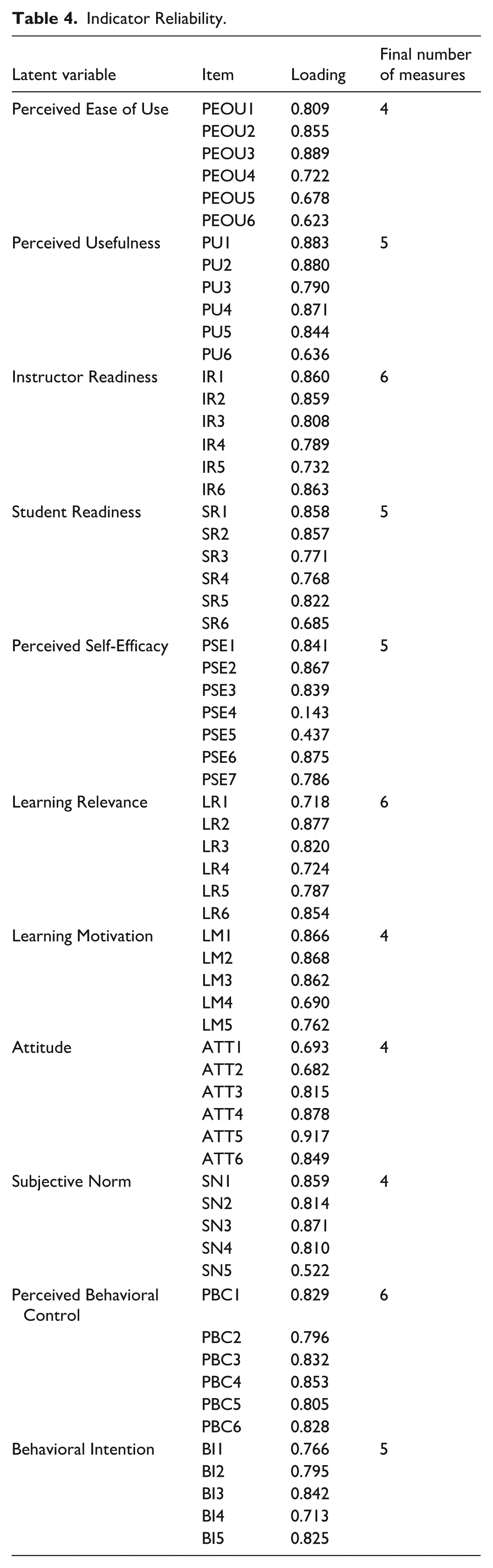
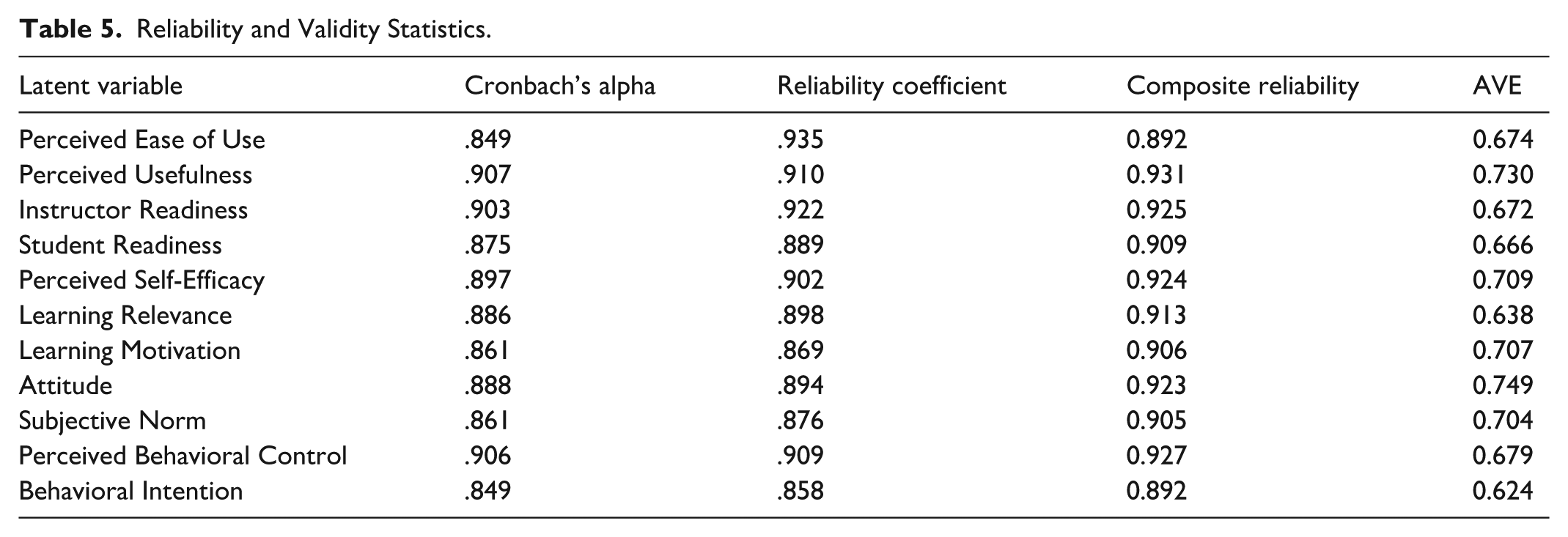
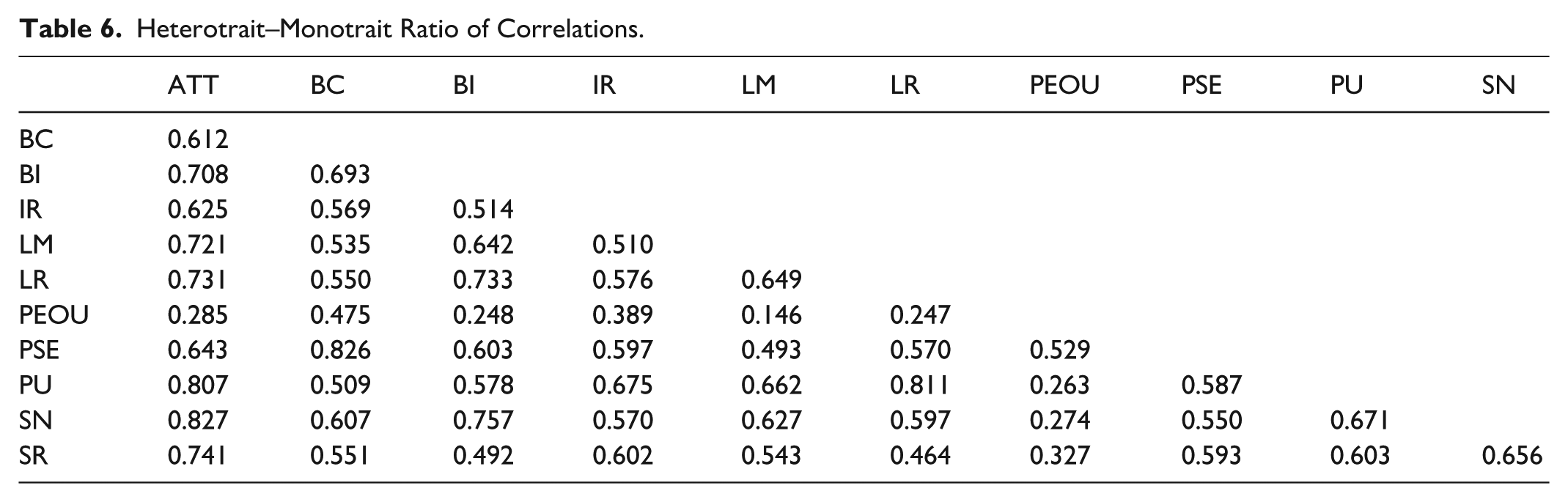
The model was analyzed using SmartPLS 4 (Ringle et al., 2024) and followed Hair et al.’s (2017) procedures for evaluating reflective measurement models. Thus, the reflective outer model was tested for indicator reliability, internal consistency reliability, convergent validity, and discriminant validity. All outer loadings were checked for indicator reliability, and 10 items (ATT 1, ATT 2, PEOU 5, PEOU 6, PSE 4, PSE 5, PU 6, SN 5, SR 6, and LM 4, ranging 0.143–0.693), which did not meet the minimum threshold of 0.708 (Hair et al., 2017), were removed from the model. The model was rerun with the remaining 54 items, and all factor loadings were within acceptable threshold ranges of 0.713 and 917 (see Table 4). The results for internal consistency reliability (Cronbach’s alpha, reliability coefficient, and composite reliability) were all above the recommended reliability criteria thresholds of 0.70 (Hair et al., 2017) (see Table 5). The average variance extracted (AVE) values were between 0.624 and 0.749, all exceeding the recommended thresholds of 0.50 (Hair et al., 2017); thus, it was concluded that convergent validity was achieved (see Table 5). To test discriminant validity, the square roots of the diagonal AVE were higher than the other correlation coefficient values, which confirmed that the model met the Fornell–Larcker criterion. Discriminant validity measures were also established as all correlation coefficients were less than 0.9 (Table 6), meeting the heterotrait–monotrait (HTMT) assessment criterion (Henseler et al., 2015). Model Fit was assessed using Henseler and Sarstedt (2013), √ [(average AVE) × average of R2 Values], where the 0.649 figure is greater than the recommended 0.3 threshold (Henseler and Sarstedt, 2013); therefore, the model fit is acceptable.
Indicator Reliability.
Reliability and Validity Statistics.
Heterotrait–Monotrait Ratio of Correlations.
Structural Model
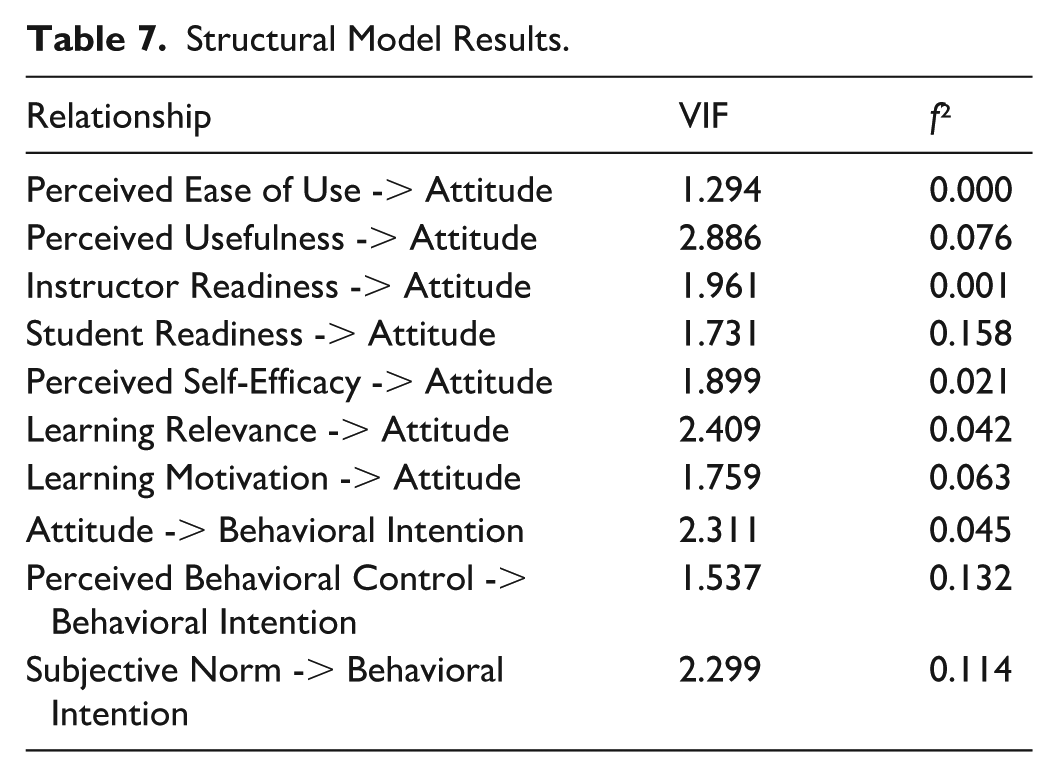
Testing the structural model involved examining the size and significance of the path coefficients, as well as the model’s explanatory and predictive power (Hair et al., 2017). To test for multicollinearity, the variance inflation factor (VIF) values were first evaluated. All VIF values were below the threshold of 3.3, so collinearity among the predictor constructs was not an issue (see Table 7). The results of the effect size (f²) tests demonstrated that PEOU (0.000), PU (0.076), IR (0.001), PSE (0.021), LR (0.042), and LM (0.063) had small effects on Attitude. The SR (0.158) had a medium effect on Attitude. Both PBC (0.132) and SN (0.114) have medium effects on Behavioral Intention (see Table 7).
Structural Model Results.
The R² value, or explanatory power, of the endogenous latent variables suggests Attitude (0.682) and Behavioral Intention (0.543) both have strong and significant in-sample predictive power (see Table 8). The results of hypothesis testing demonstrate that PU (H2), SR (H4), LR (H6), and LM (H7) are positively associated with undergraduate business students’ attitudes toward EL activities. As shown in Table 8, H1 (PEOU -> Attitude), H3 (IR -> Attitude), and H5 (PSE -> Attitude) were not supported. Regarding the relationships between External Beliefs and Attitudes, H2 (PU -> Attitude; β = 0.258, p < .01), H4 (SR -> Attitude; β = 0.289, p < .001), H6 (LR -> Attitude; β = 0.175, p < .05), and H7 (LM -> Attitude; β = 0.184, p < .01) were supported. H8 (Attitude -> Behavioral Intention; β = 0.216, p < .01), H9 (PBC -> Behavioral Intention; β = 0.302, p < .001), and H10 (Subjective Norms -> Attitude; β = 0.343, p < .001) were also supported. When examining the path coefficients, PU (β = 0.258) and SR (β = 0.289) demonstrated the strongest association with Attitude toward EL activities, and SN (β = 0.343) and PBC (β = 0.302) demonstrated significant associations with Behavioral Intention to participate in EL activities.
Results of Hypothesis Tests.
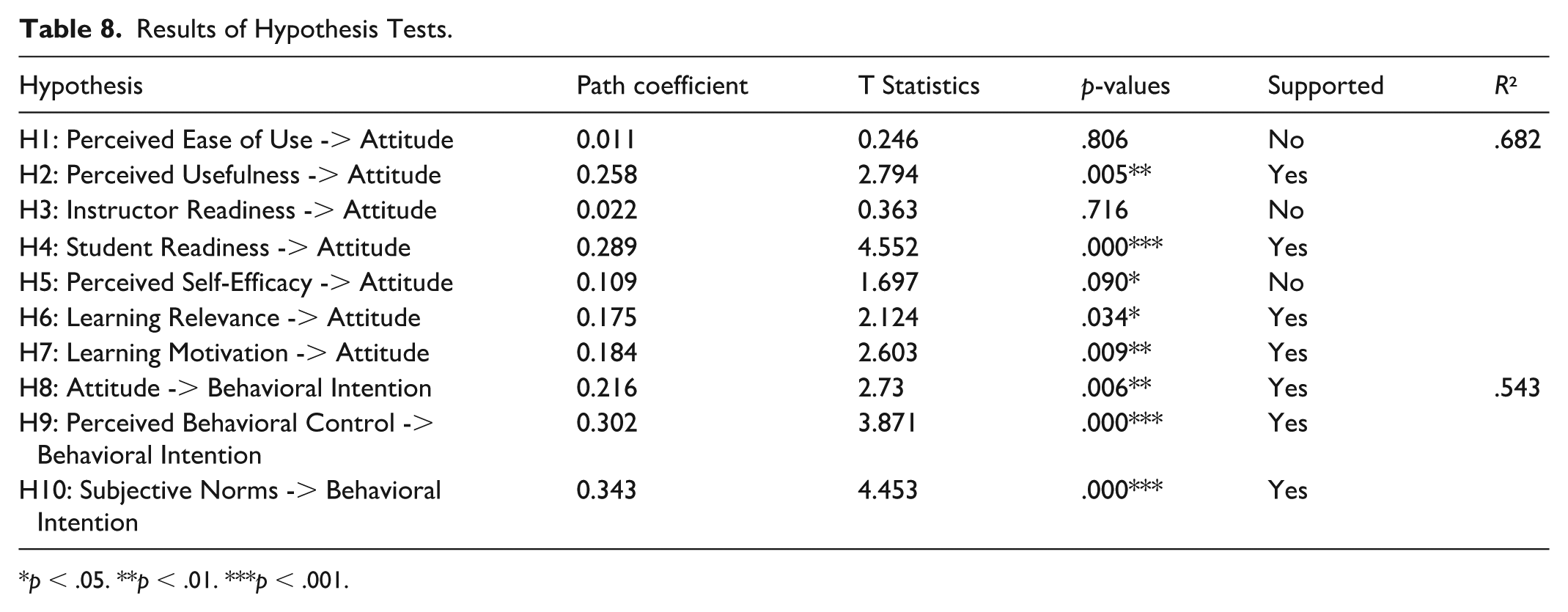
p < .05. **p < .01. ***p < .001.
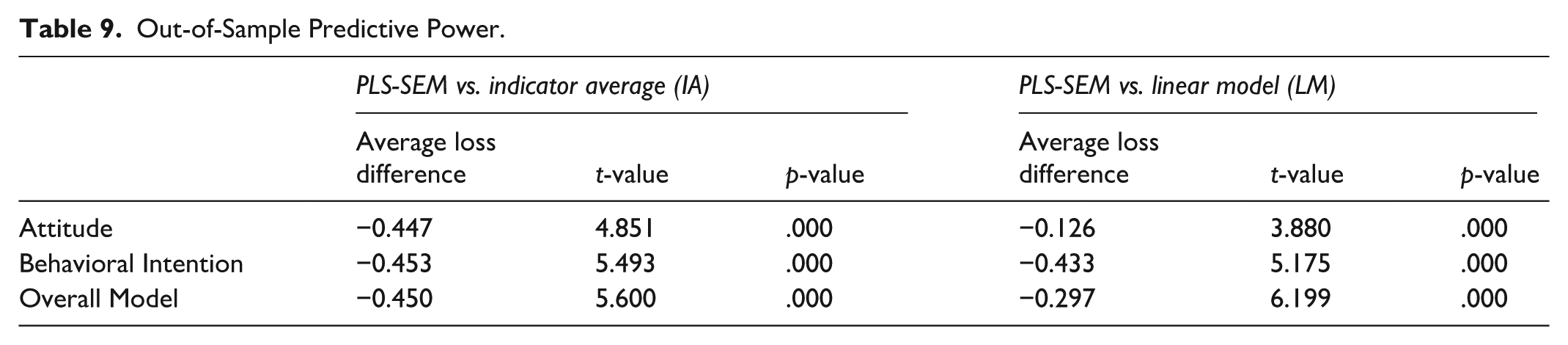
To evaluate and substantiate the model’s out-of-sample predictive power and capabilities, a cross-validated predictive ability test (CVPAT) was conducted. This is important since a model with out-of-sample predictive power can predict unseen or new data rather than simply explain or describe the results of a study (Liengaard et al., 2021). While model fit looks backward at the data, predictive power looks forward to new data. Thus, CVPAT serves as a more rigorous gauge of practical significance by demonstrating a model’s reliability in real-world forecasting. The results of the PLS-SEM versus indicator average (IA) and PLS-SEM versus linear model (LV) values both demonstrate a negative average loss difference for the overall model. The strong p-values (IA, p < .001; LV, p < .001) also demonstrate statistical significance (see Table 9). The difference in the average loss values is significantly below zero. Therefore, the overall model meets the CVPAT thresholds (Ringle et al., 2024), and the results support the high out-of-sample predictive power of the proposed model. By demonstrating out-of-sample predictive power, the model offers actionable insights rather than merely describing patterns unique to this specific data set (Sharma et al., 2023).
Out-of-Sample Predictive Power.
Discussion
This study highlights the expansion of TPB (Ajzen, 1985, 1991) and TAM (Davis, 1989) through the inclusion of domain-specific constructs such as SR, LR, and LM, which provide a deeper theoretical lens for understanding the complexities of EL engagement in higher education. While TPB has been widely used to predict behavioral intentions in various domains (Ajzen, 1991), its application in EL contexts has been limited to general adoption studies, often focusing on technology-enhanced learning (Dimitrijević & Devedžic, 2021). By integrating SR, LR, and LM as external beliefs that are associated with attitudinal constructs, this study advances the TPB framework by demonstrating how readiness and motivation serve as precursors to behavioral intention in EL adoption. This insight offers a novel way to conceptualize student engagement within EL by emphasizing psychological and contextual preparedness alongside traditional attitudinal factors.
Beyond TPB, this study also extends the TAM and its variant GETAMEL (Abdullah & Ward, 2016). TAM traditionally focuses on the role of PU and PEU in predicting user adoption of technology-based learning environments (Davis, 1989). However, our study integrates TAM and GETAMEL within the TPB framework to analyze EL participation more holistically, acknowledging that students’ decisions are shaped by both technological considerations and broader psychological and social factors. While TAM and GETAMEL have been widely applied in studies on digital learning environments (Lai et al., 2024; Park et al., 2012), their application in EL remains underexplored. This study addresses that gap by showing that perceptions of ease and usefulness extend beyond software or hardware to include EL approaches, where students evaluate EL based on practical relevance and engagement potential.
In addition, our findings suggest that SR, LM, and LR significantly shape students’ attitudes toward EL, reinforcing the notion that EL adoption extends beyond simple views of usefulness or collective norms (Filgona et al., 2020; Lin et al., 2017). This shows the influence of preparatory levels and intrinsic drive in shaping behavioral choices, implying that prior models of learning adoption may downplay the relevance of cognitive and affective readiness in EL (Cheon et al., 2012; Lim, 2023; Wu et al., 2022). Specifically, the findings suggest that students who possess higher readiness and intrinsic motivation are more inclined to develop supportive attitudes toward EL, which enriches the TPB framework by connecting external belief constructs to internal evaluative processes. From a self-determination theory perspective (Ryan & Deci, 2000), these findings indicate that when students feel competent and prepared (high readiness) and are driven by internal interests (high intrinsic motivation), they are satisfying basic psychological needs that fuel autonomous engagement. Even extrinsic drivers like career goals can become internalized as personal objectives when experiential activities align with students’ career orientation, thereby enhancing their intrinsic motivation to participate.
From a practical standpoint, our findings suggest that institutions should offer EL opportunities and focus on cultivating students’ psychological and academic readiness beforehand. Such readiness-building initiatives could include preparatory training, confidence-building sessions, and introductory experiential modules, ensuring that students approach EL with a supportive mindset. Likewise, institutions can boost intrinsic motivation by aligning EL opportunities with future career interests and providing personalized paths that deepen students’ commitment to the learning process. By leveraging students’ career orientation in this way (i.e., linking EL activities to their career aspirations), extrinsic incentives for participation become more internalized, further strengthening students’ motivation to engage (Ryan & Deci, 2000).
The results also indicate that students’ attitudes toward EL play a significant role in shaping their behavioral intentions (Ajzen, 1991), affirming that personal perceptions guide educational decision-making. However, intention does not always translate into actual engagement. Various barriers, such as scheduling conflicts, competing academic requirements, financial constraints, and perceptions of EL difficulty, can disrupt the path from intention to behavior (Sheeran & Webb, 2016). While our findings show that SR, LM, and LR are positively associated with attitude (a main driver of intention), these factors alone may be insufficient to ensure actual participation. Consequently, institutional strategies like embedding EL in the curriculum, introducing incentives, and providing logistical support should complement psychological drivers to reduce the gap between intention and behavior (Austin & Rust, 2015; Celik & Cagiltay, 2024).
Moreover, prior research has demonstrated that when students recognize the tangible benefits of EL, including skill development and career preparedness, they are more inclined to participate (Ahuja, 2024; Jackson & Dean, 2023). However, this study extends that argument by identifying the pathways through which SR and LM amplify the positive attitude toward EL, demonstrating that EL engagement is not only a matter of perceived benefits but also of preexisting preparedness and intrinsic drive. Although our sample focuses on students in business and business-related disciplines, these psychological and contextual dimensions are unlikely to be confined to a single discipline (Jamison et al., 2022; Poore et al., 2014). For instance, in health care education, students with higher SR and LR might readily engage in clinical rotations, whereas those who lack readiness may need structured simulations before moving into clinical practice. In engineering, a strong sense of relevance (LR) might lead students to pursue co-op programs or industry-led design challenges, while those who perceive lower relevance might opt for less demanding roles. Although we do not directly test such cases, the underlying contributions of readiness, motivation, and perceived relevance in participation decisions imply that these factors may hold similar value in fields beyond business.
Furthermore, our findings highlight the role of social influence as a key determinant of EL engagement, as seen in the strong impact of SN on students’ behavioral intentions (Ajzen, 1991). This aligns with findings in social learning theories, which suggest that peer and faculty expectations shape student behavior (Goh & Ritchie, 2011). Educational institutions can build on this by creating peer-mentoring initiatives, enhancing faculty support, and promoting success stories of EL within the curriculum (Rhee, 2018). In addition, PBC shows a significant association with behavioral intention, pointing to the necessity of creating easily accessible and well-supported EL opportunities that students find manageable. Previous research indicates that improved perceptions of control lead to stronger engagement and motivation (Baker & Robinson, 2017; Rahmania, 2023). The present study reinforces that enabling students to feel capable and supported is as fundamental as generating interest, illuminating a path for universities to simplify EL processes, remove barriers, and build confidence.
The nonsignificant associations between IR and PEOU with attitude present a compelling opportunity to reevaluate the student-centered nature of EL within professional disciplines. While traditional pedagogical models often position the instructor as the primary catalyst—and IR often surfaces as an important factor—for educational effectiveness (Cheon et al., 2012; Liu et al., 2010), these findings suggest that undergraduate business students may operate with a high degree of professional autonomy, with students placing greater emphasis on personal and communal factors when deciding whether to engage in EL. This outcome suggests that students place greater importance on their own preparation and the perceived value of EL experiences than on external facilitation, which diminishes the apparent influence of instructor-related or ease-of-use factors. Likewise, in this context, IR might function as a baseline expectation that must be met but does not actively drive a positive attitude once a minimum threshold is achieved. In a student-centered experiential paradigm (Dewey, 1963), learners view instructors as guides rather than the primary drivers of engagement; thus, our findings suggest that these business students focused more on personal and peer influences than on IR when forming attitudes toward EL. Similarly, the nonsignificance of PEOU indicates that once an EL activity is deemed useful and relevant, students may be willing to navigate through challenges or initial complexities. In other words, ease of participation becomes less critical when intrinsic motivation and PU are high. This interpretation aligns with TAM (Davis, 1989), where PEOU can have a diminished impact if the innovation’s value (PU) is strongly recognized or if adequate support is assumed to be available. This might point to a shift from instructor-led strategies to more student-driven approaches. For undergraduate business students, who are often focused on the high-stakes competitive advantages of EL opportunities such as internships and WIL, the difficulty of an assignment may even be interpreted as a signal of professional rigor and real-world authenticity. Consequently, if an EL activity is deemed essential for developing critical competencies, students appear willing to navigate significant administrative or logistical hurdles without it negatively impacting their overall attitude toward the experience. This interpretation points toward a fundamental shift from instructor-led strategies to a more pragmatic, student-driven approach where the perceived return on investment of the EL experience renders initial complexities and external facilitation secondary to the student’s personal career goals. Future research could investigate whether this pattern is specific to business contexts or if similar trends appear across other disciplines, as well as explore how faculty roles and teaching strategies adapt to changing student views on EL.
By integrating TPB with TAM and GETAMEL, this study provides a multidimensional perspective on EL participation, expanding theoretical boundaries beyond technology-driven learning environments. The combination of psychological (TPB), technological (TAM), and e-learning factors (GETAMEL) presents a more comprehensive approach to understanding EL engagement, reinforcing that EL is predicted not just by attitudes and norms but also by perceptions of usability, readiness, and effectiveness. To translate these findings into practice, we have developed a framework for enhancing EL engagement across various educational disciplines. Specifically, we propose seven implementation principles that articulate how educators and program directors can translate enhancements in EL into practice.
Principle #1: Design EL Experiences Aligned With Career Aspirations and Personal Goals
Students’ perceptions of usefulness were a strong driver of positive attitudes, so institutions should emphasize career-relevant EL opportunities. For example, faculty can incorporate real-world projects, internships, and case studies into the curriculum that mirror current industry demands and professional trajectories. Within the marketing discipline, this could be operationalized through a capstone project where students serve as junior consultants for a local organization to develop a comprehensive digital brand strategy. By conducting real-time market audits and designing data-driven social media campaigns that respond to actual consumer trends, students gain specialized skills that translate directly to the roles of digital strategists or brand managers, thereby reinforcing the perceived utility of their academic training. Establishing industry advisory panels to align EL activities with market trends and integrating employer-sponsored projects (where students solve actual business problems for companies) are concrete steps to ensure EL experiences are clearly tied to career development.
Principle #2: Empower Students Through Resources
Given the importance of SR, universities need to provide robust support to build students’ confidence and preparedness for EL. This can include preparatory workshops and “pre-EL” orientation modules that equip students with the necessary skills and information before they engage in any EL activity. For marketing educators, this might involve offering specialized workshops on search engine optimization (SEO) and marketing automation platforms before students embark on live client projects. By ensuring students are proficient in technical tools like Google Ads through these preparatory resources, institutions mitigate the intimidation often associated with professional environments and enable students to approach complex tasks, such as developing real-time consumer personas or managing digital ad spends, with greater professional autonomy and confidence. Institutions might also implement mentorship programs, pairing first-time EL participants with senior students or alumni mentors, to guide inexperienced students through the challenges of their initial experiential projects (Gunn et al., 2017).
Principle #3: Enhance the Relevance of EL Experiences
Because LR significantly shapes attitudes, EL activities should be tightly tailored to students’ personal goals and interests. Educators can allow students to choose or customize EL projects that align with their specific career paths (e.g., marketing majors working on brand consultancy projects, finance students engaging in investment simulations). For instance, rather than engaging in a generic business simulation, a marketing major could be permitted to focus on a brand consultancy project for a local nonprofit or conduct a digital sentiment analysis for a technology start-up, depending on their desired career goals. In addition, a faculty-led EL committee could continuously assess and update the menu of EL offerings based on student feedback, ensuring that each experience feels meaningful and directly applicable to real-world scenarios.
Principle #4: Foster Intrinsic Motivation
LM is a key predictor of attitudes, so it is key to create conditions that stimulate students’ internal drive to learn. Programs can offer academic incentives such as credit or formal recognition for self-initiated EL projects that reflect students’ passions and curiosity. In a marketing context, this could involve holding a digital marketing innovation challenge where students are encouraged to launch and manage a live social media campaign or an e-commerce storefront based on a personal interest, such as sustainable fashion or local artisanal goods. By utilizing real-time analytics to track engagement and conversion, students are motivated to apply their learning to practical scenarios. Schools should also recognize and celebrate EL achievements through digital badges, certificates, or transcript notations. Hosting EL showcase events (e.g., fairs where students present their projects) further fosters peer recognition and enthusiasm, reinforcing intrinsic motivation through a supportive community.
Principle #5: Amplify Positive Attitudes Through Clear Communication of Benefits
Since attitude toward EL influences intention, institutions should actively promote the benefits of EL to strengthen students’ positive perceptions. Targeted communication strategies could include sharing testimonial videos of successful alumni highlighting how EL experiences improved their skills and career prospects, as well as campus-wide campaigns summarizing data sets on EL’s employability advantages. Moreover, academic advisors can integrate discussions about EL into advising sessions, helping students map specific EL opportunities, such as a market research placement or a digital marketing analytics certification, to their long-term career aspirations. This ensures that each student understands the practical value of EL opportunities and how they link to desirable career outcomes.
Principle #6: Foster a Culture That Values EL
The strong effect of SNs on intention means that students are influenced by how much their environment endorses EL. Schools should cultivate an EL-supportive culture by publicizing student success stories and involving respected figures (e.g., industry partners or accomplished alumni) in EL initiatives. For example, an “EL Ambassador” program can empower high-achieving students to promote EL participation among their peers. Partnering with employers or professional bodies such as the American Marketing Association (AMA) or the Chartered Institute of Marketing (CIM) to cosponsor EL events or networking opportunities can increase the visibility and prestige of EL, and creating annual awards to recognize students, faculty, and industry partners who excel in EL further reinforces a collective commitment to EL.
Principle #7: Reduce Barriers to Engagement
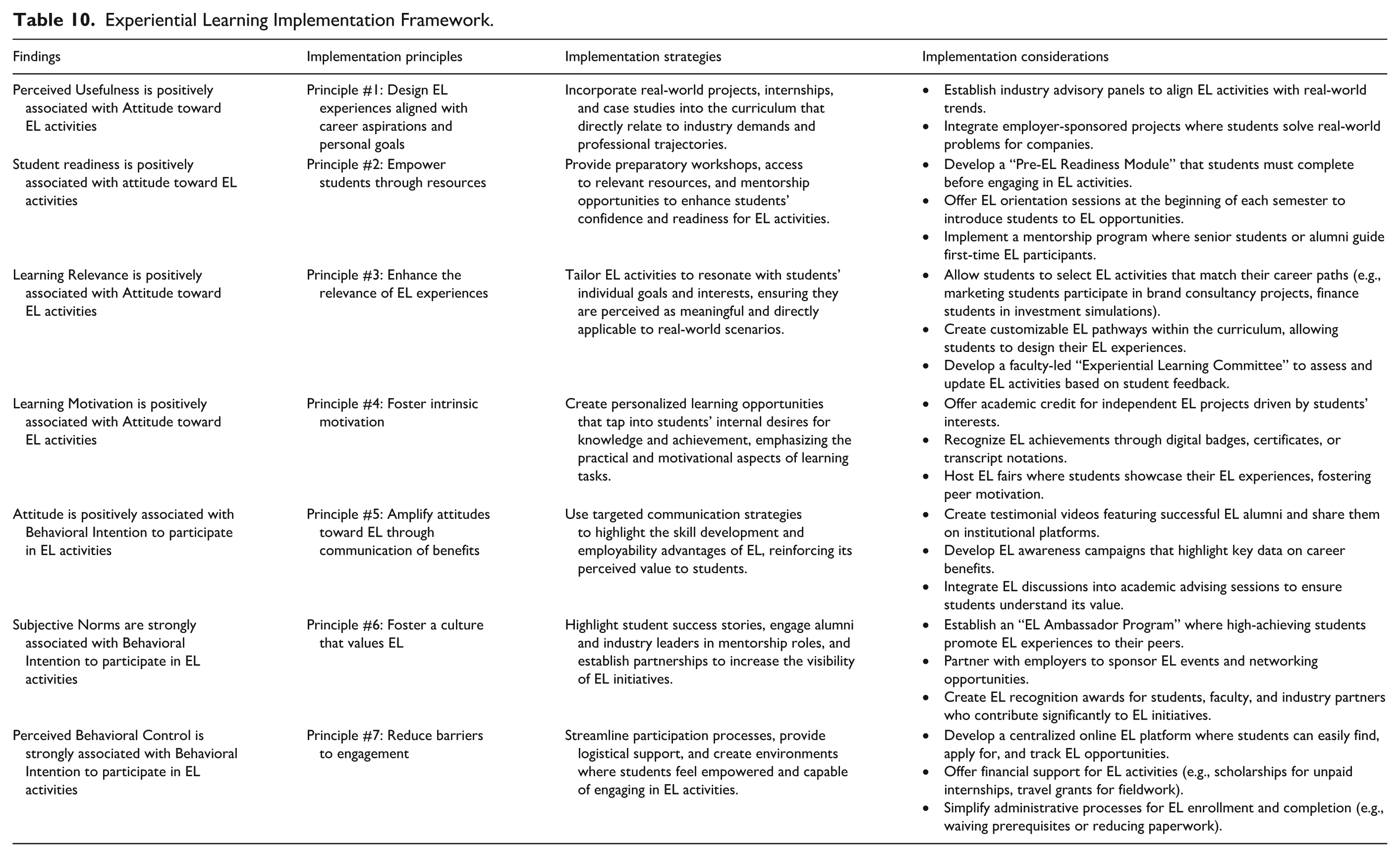
Finally, improving students’ PBC is essential to translate intention into action. The successful implementation of EL opportunities requires a unified commitment from students, educators, program directors, industry partners, and the broader academic institution. To reduce barriers, institutions can streamline EL processes by developing a centralized online platform where students can easily find, apply for, and track EL opportunities. Providing logistical and financial support at the department, faculty, or institutional level (e.g., offering scholarships or travel grants for unpaid internships and field projects) lowers the practical or socioeconomic obstacles that often impede student participation. For a marketing department, this could involve creating a main hub that aggregates all EL opportunities for marketing students (e.g., agency placements, digital marketing certification pathways) in one user-friendly interface. Simplifying administrative requirements (e.g., reducing paperwork, being flexible with prerequisites for EL courses, or encouraging professional certifications such as Google Ads to satisfy specific course requirements) will also empower more students to engage in EL activities by making the path to participation as accessible as possible. Table 10 presents this framework, linking each predictor to its relevant hypothesis and outlining our proposed seven principles for institutional implementation.
Experiential Learning Implementation Framework.
Conclusion, Limitations, and Future Directions
This study identified key factors associated with undergraduate business students’ attitudes toward EL activities and their behavioral intentions to participate in EL activities. Previous literature places heavy emphasis on EL outcomes (Burch et al., 2019; Hajshirmohammadi, 2017; Tomkins & Ulus, 2016), with limited research examining the specific factors associated with business students’ willingness to engage in EL activities. This research addresses this gap by focusing not only on the outcomes of EL but also on the factors associated with undergraduate business students’ attitudes and intentions toward such learning activities. Thus, this study provides a comprehensive understanding of the conditions under which EL is most effective, aligning with Burch et al.’s (2019) recommendation to explain the characteristics of the research setting and design.
This study contributes to theory in two ways. First, it applies TPB in a new context—EL activities within undergraduate business education. Second, it develops and tests a novel model that integrates the core components of TPB with additional constructs to examine students’ intentions to engage with different types of innovative learning. To the authors’ knowledge, this is the first application of the TPB framework to examine undergraduate business students’ attitudes and intentions toward EL activities. As higher education continues to evolve and seeks to improve students’ learning journeys, the study illuminates business students’ interest in context-rich learning environments that are more easily recalled compared with more traditional learning methods that draw on semantic memory (i.e., repetition and recall) (Conway & Pleydell-Pearce, 2000; Tulving, 1984). An essential practical contribution of this research is its EL Implementation Framework, which serves as a guide for educators, program directors, and academic institutions to translate empirical insights into practical steps through seven principles, effectively fostering students’ participation in EL activities and enriching their educational experience. Thus, from a practical implications perspective, insights from this study can help educators and policymakers design more effective EL programs. Tailoring learning experiences to emphasize PU, LR, and LM can significantly enhance student engagement with EL activities, thus enhancing educational strategies. This approach aligns educational goals with practical benefits, improving learning outcomes (Burch et al., 2019; Tomkins & Ulus, 2016). Recognizing the impact of SNs, institutions can foster supportive environments through peer mentoring and instructor endorsements. These initiatives strengthen social support for EL and encourage greater student participation. The insights from this study also suggest that higher education institutions should invest in preparatory workshops, orientation sessions, and resource accessibility to equip students adequately for EL opportunities. This proactive approach can boost students’ confidence and preparedness, facilitating higher engagement. To enhance LM, institutions can foster intrinsic motivation by designing EL opportunities aligned with students’ interests, career aspirations, and personal goals. This research also points to the importance of providing professional development opportunities for educators that focus on effective facilitation techniques, reflective practices, and incorporating diverse learning styles, which can enhance the quality and impact of EL experiences.
Regarding limitations and future research directions, this study developed and tested an EL model with findings and insights that provide a holistic understanding of the external beliefs, attitudes, and behavioral intentions associated with undergraduate business students’ engagement with EL activities. Although the study was limited to one country, the United States, it presents an opportunity for future research to examine EL in other regions and countries. In addition, since participants were asked to focus on a single EL format, these findings may not reflect the variety of EL methods, suggesting that future work should examine multiple approaches to gain a more expansive perspective on student engagement. Furthermore, the present study’s dependent variable was behavioral intention, not actual behavior. Indeed, previous research on the intention-behavior gap has examined a variety of consumer behavior contexts (e.g., ethical consumption) that suggest there could also be a gap between behavioral intention and actual behaviors of undergraduate business students to participate in EL activities; this presents an opportunity for future investigation in this area. The research did not examine potential biases, for example, whether women, when compared with men, are more inclined to engage in EL. Future research could investigate moderating effects (e.g., socioeconomic status, previous EL experience) or indirect pathways that could potentially further extend the explanatory reach of the model. The research could also be expanded upon by exploring business students’ intentions to participate in EL activities using qualitative methods, such as conducting in-depth interviews and/or focus groups, to reveal richer insights and nuances within their motivations. Future research could compare North American-based business students with those from other regions and undergraduate business students with nonbusiness students. As business schools look to enhance their student learning and engagement strategies, future research could examine students from specific business education programs (e.g., retail, organizational behavior, marketing, and finance) and compare them with students from other business programs to understand if their motivations to engage with EL activities are similar or different. It would be valuable for future research to investigate the long-term impact of EL activities on student outcomes, such as career success and employability. In addition, examining the influence of diverse educational and cultural contexts on EL engagement could offer insights to business schools looking to tailor strategies for different student populations.
Footnotes
Appendix
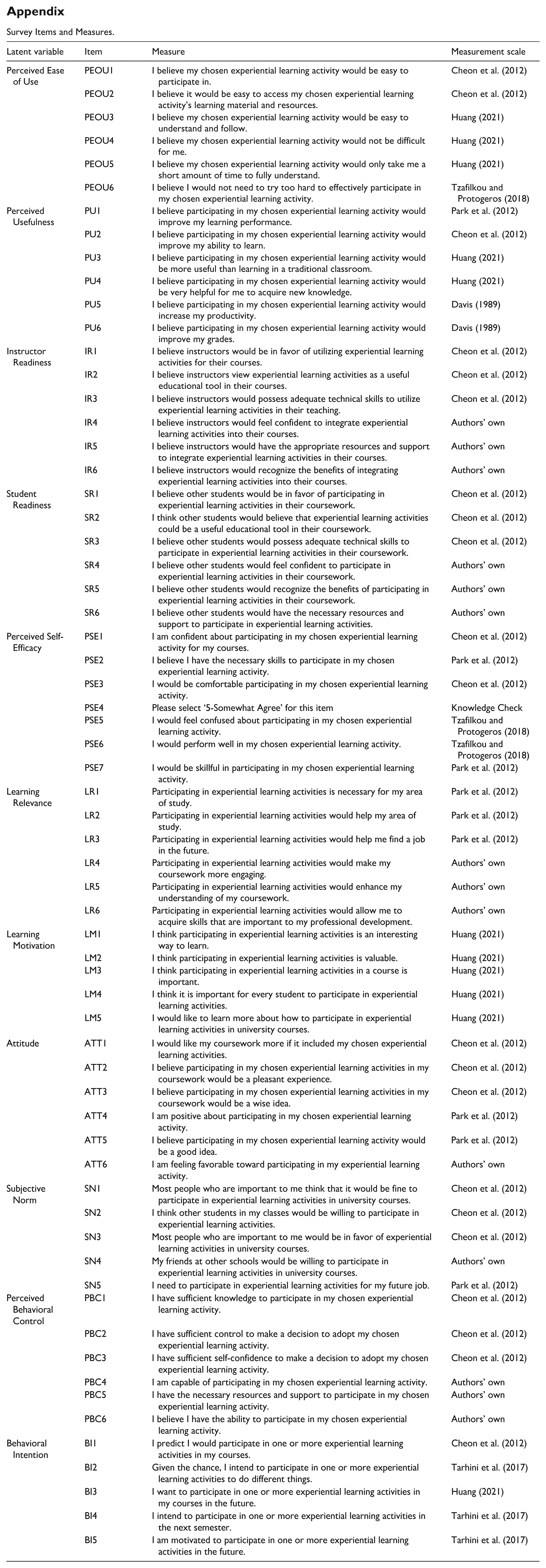
Survey Items and Measures.
| Latent variable | Item | Measure | Measurement scale |
|---|---|---|---|
| Perceived Ease of Use | PEOU1 | I believe my chosen experiential learning activity would be easy to participate in. | Cheon et al. (2012) |
| PEOU2 | I believe it would be easy to access my chosen experiential learning activity’s learning material and resources. | Cheon et al. (2012) | |
| PEOU3 | I believe my chosen experiential learning activity would be easy to understand and follow. | Huang (2021) | |
| PEOU4 | I believe my chosen experiential learning activity would not be difficult for me. | Huang (2021) | |
| PEOU5 | I believe my chosen experiential learning activity would only take me a short amount of time to fully understand. | Huang (2021) | |
| PEOU6 | I believe I would not need to try too hard to effectively participate in my chosen experiential learning activity. | Tzafilkou and Protogeros (2018) | |
| Perceived Usefulness | PU1 | I believe participating in my chosen experiential learning activity would improve my learning performance. | Park et al. (2012) |
| PU2 | I believe participating in my chosen experiential learning activity would improve my ability to learn. | Cheon et al. (2012) | |
| PU3 | I believe participating in my chosen experiential learning activity would be more useful than learning in a traditional classroom. | Huang (2021) | |
| PU4 | I believe participating in my chosen experiential learning activity would be very helpful for me to acquire new knowledge. | Huang (2021) | |
| PU5 | I believe participating in my chosen experiential learning activity would increase my productivity. | Davis (1989) | |
| PU6 | I believe participating in my chosen experiential learning activity would improve my grades. | Davis (1989) | |
| Instructor Readiness | IR1 | I believe instructors would be in favor of utilizing experiential learning activities for their courses. | Cheon et al. (2012) |
| IR2 | I believe instructors view experiential learning activities as a useful educational tool in their courses. | Cheon et al. (2012) | |
| IR3 | I believe instructors would possess adequate technical skills to utilize experiential learning activities in their teaching. | Cheon et al. (2012) | |
| IR4 | I believe instructors would feel confident to integrate experiential learning activities into their courses. | Authors’ own | |
| IR5 | I believe instructors would have the appropriate resources and support to integrate experiential learning activities in their courses. | Authors’ own | |
| IR6 | I believe instructors would recognize the benefits of integrating experiential learning activities into their courses. | Authors’ own | |
| Student Readiness | SR1 | I believe other students would be in favor of participating in experiential learning activities in their coursework. | Cheon et al. (2012) |
| SR2 | I think other students would believe that experiential learning activities could be a useful educational tool in their coursework. | Cheon et al. (2012) | |
| SR3 | I believe other students would possess adequate technical skills to participate in experiential learning activities in their coursework. | Cheon et al. (2012) | |
| SR4 | I believe other students would feel confident to participate in experiential learning activities in their coursework. | Authors’ own | |
| SR5 | I believe other students would recognize the benefits of participating in experiential learning activities in their coursework. | Authors’ own | |
| SR6 | I believe other students would have the necessary resources and support to participate in experiential learning activities. | Authors’ own | |
| Perceived Self-Efficacy | PSE1 | I am confident about participating in my chosen experiential learning activity for my courses. | Cheon et al. (2012) |
| PSE2 | I believe I have the necessary skills to participate in my chosen experiential learning activity. | Park et al. (2012) | |
| PSE3 | I would be comfortable participating in my chosen experiential learning activity. | Cheon et al. (2012) | |
| PSE4 | Please select ‘5-Somewhat Agree’ for this item | Knowledge Check | |
| PSE5 | I would feel confused about participating in my chosen experiential learning activity. | Tzafilkou and Protogeros (2018) | |
| PSE6 | I would perform well in my chosen experiential learning activity. | Tzafilkou and Protogeros (2018) | |
| PSE7 | I would be skillful in participating in my chosen experiential learning activity. | Park et al. (2012) | |
| Learning Relevance | LR1 | Participating in experiential learning activities is necessary for my area of study. | Park et al. (2012) |
| LR2 | Participating in experiential learning activities would help my area of study. | Park et al. (2012) | |
| LR3 | Participating in experiential learning activities would help me find a job in the future. | Park et al. (2012) | |
| LR4 | Participating in experiential learning activities would make my coursework more engaging. | Authors’ own | |
| LR5 | Participating in experiential learning activities would enhance my understanding of my coursework. | Authors’ own | |
| LR6 | Participating in experiential learning activities would allow me to acquire skills that are important to my professional development. | Authors’ own | |
| Learning Motivation | LM1 | I think participating in experiential learning activities is an interesting way to learn. | Huang (2021) |
| LM2 | I think participating in experiential learning activities is valuable. | Huang (2021) | |
| LM3 | I think participating in experiential learning activities in a course is important. | Huang (2021) | |
| LM4 | I think it is important for every student to participate in experiential learning activities. | Huang (2021) | |
| LM5 | I would like to learn more about how to participate in experiential learning activities in university courses. | Huang (2021) | |
| Attitude | ATT1 | I would like my coursework more if it included my chosen experiential learning activities. | Cheon et al. (2012) |
| ATT2 | I believe participating in my chosen experiential learning activities in my coursework would be a pleasant experience. | Cheon et al. (2012) | |
| ATT3 | I believe participating in my chosen experiential learning activities in my coursework would be a wise idea. | Cheon et al. (2012) | |
| ATT4 | I am positive about participating in my chosen experiential learning activity. | Park et al. (2012) | |
| ATT5 | I believe participating in my chosen experiential learning activity would be a good idea. | Park et al. (2012) | |
| ATT6 | I am feeling favorable toward participating in my experiential learning activity. | Authors’ own | |
| Subjective Norm | SN1 | Most people who are important to me think that it would be fine to participate in experiential learning activities in university courses. | Cheon et al. (2012) |
| SN2 | I think other students in my classes would be willing to participate in experiential learning activities. | Cheon et al. (2012) | |
| SN3 | Most people who are important to me would be in favor of experiential learning activities in university courses. | Cheon et al. (2012) | |
| SN4 | My friends at other schools would be willing to participate in experiential learning activities in university courses. | Authors’ own | |
| SN5 | I need to participate in experiential learning activities for my future job. | Park et al. (2012) | |
| Perceived Behavioral Control | PBC1 | I have sufficient knowledge to participate in my chosen experiential learning activity. | Cheon et al. (2012) |
| PBC2 | I have sufficient control to make a decision to adopt my chosen experiential learning activity. | Cheon et al. (2012) | |
| PBC3 | I have sufficient self-confidence to make a decision to adopt my chosen experiential learning activity. | Cheon et al. (2012) | |
| PBC4 | I am capable of participating in my chosen experiential learning activity. | Authors’ own | |
| PBC5 | I have the necessary resources and support to participate in my chosen experiential learning activity. | Authors’ own | |
| PBC6 | I believe I have the ability to participate in my chosen experiential learning activity. | Authors’ own | |
| Behavioral Intention | BI1 | I predict I would participate in one or more experiential learning activities in my courses. | Cheon et al. (2012) |
| BI2 | Given the chance, I intend to participate in one or more experiential learning activities to do different things. | Tarhini et al. (2017) | |
| BI3 | I want to participate in one or more experiential learning activities in my courses in the future. | Huang (2021) | |
| BI4 | I intend to participate in one or more experiential learning activities in the next semester. | Tarhini et al. (2017) | |
| BI5 | I am motivated to participate in one or more experiential learning activities in the future. | Tarhini et al. (2017) |

Ethical Considerations
REB file number (2024-093)
Funding
The authors disclosed receipt of the following financial support for the research, authorship, and/or publication of this article: This research received funding from the Ted Rogers School of Management at Toronto Metropolitan University.
Declaration of Conflicting Interests
The authors declared no potential conflicts of interest with respect to the research, authorship, and/or publication of this article.