




Abstract
Experiential learning is key to any discipline, and in marketing it is of particular interest to foster mastery and a sense of professionalism through a client project in the classroom. In the marketing education literature, the value of client projects is well documented. Building on the value cocreation (VCC) stream of research and project-based learning, we propose that a multicourse, full-service “agency-style” structure allows classes to realize VCC beyond the traditional client-based project. We define agency-style projects as those in which teams from different courses are assigned unique, interrelated tasks and ultimately offer a comprehensive recommendation for the client’s multidimensional marketing challenges. We teamed four marketing courses to document the process as we facilitated creation of amplified value to all parties. This agency-style approach has seldom been implemented and documented, and our study contributes to the discipline by suggesting unique ways to bring a holistic understanding of marketing to students and provide synergy for meaningful experiential learning. We compare this agency-style approach to the traditional client-based project which we define as a single class working for the same client independently of other marketing courses. The research also builds a theoretical framework illustrating the process by which value can be cocreated.
Keywords
It is widely acknowledged that experiential learning is paramount to marketing education. Increasingly, there is need for experiential learning activities in the classroom to transition students to work-ready professionals (Ewing & Ewing, 2017), as employers emphasize “soft skills” with some proposing soft skills are more valued by employers than marketing knowledge (Schlee & Karns, 2017), and others even quantify the value of such skills (Bacon et al., 2023). As marketing continues to evolve to include more digital platforms and data, a balanced approach of theoretical knowledge and soft and technical skills is needed (Kurtzke & Setkute, 2021), and this shift presents a challenge to marketing instructors.
Client-based projects are beneficial in this regard, as Kennedy et al. (2001) state, “there are significant benefits to moving toward greater process-focused teaching. These benefits include significant client-university contact, a challenged and stimulated faculty, and most important, the development of students’ abilities in areas that are crucial in today’s marketplace” (p. 151). Client-based projects can provide students with authentic real-life challenges, which may have a positive impact on students’ confidence in problem-solving, critical thinking, and teamwork skills (Childers et al., 2020), which have become even more complex as marketing has become more technology and data driven. Students often benefit from these projects and may indicate enhanced perceived career readiness when explicitly compared against nonclient-based projects (Tofighi, 2022). To effectively address new standards and to continue preparing students in ways that make a meaningful difference, the types of activities available must also change. The Association to Advance Collegiate Schools of Business (2020) recently updated standards for accreditation of its member schools, which now require, in part, that higher education provides evidence of continuous improvement in three key areas: engagement, innovation, and impact.
The client-agency model has existed in the marketing function for many years but has evolved rapidly in the 21st century to adapt to seismic shifts in consumer demand, shopping and purchase patterns, and technology. As Laurie and Mortimer (2019) highlighted, this partnership has traditionally been seen as a vendor–supplier relationship. But today, it has morphed into an integrated, interdependent model whereby business and marketing agencies rely on each other’s unique talents, insights, and data to drive marketing outcomes, requiring unique skill sets and driving perceived and quantifiable value.
This scrutiny only heightens the need for educators to better prepare students for their professional careers. While the benefits of client-based projects are rather clear, structuring client-based projects presents a challenge for educators who must balance the project scope and desired output requested by the client with meaningful and transferable skills seen as valuable by such organizations (Barr & Mcneilly, 2002) while also managing course learning objectives. Marketing degree programs typically offer several courses in marketing, from the introductory to a capstone, and several courses in between. As each course balances theory and practice, the breadth and depth of a project with increasingly complex marketing challenges which can be handled in just one course are simply limited. Herein lies a significant gap. Such projects require more resources and breadth of marketing topics than can be covered by just one instructor in the span of a semester.
To better understand how to bridge this gap, the present research aims to investigate the feasibility of agency-style client-based projects, whereby multiple teams from different marketing courses are assigned unique, interrelated tasks and ultimately offer a comprehensive recommendation for the client’s multidimensional marketing challenges. While considerable attention has focused on experiential learning, client-based projects, and teamwork as noted, few have investigated agency service projects. One such exception is Cromhout and Duffett (2022), who facilitated university students to perform multitude of tasks in integrated marketing communications (IMC) in an agency-like manner for small local businesses, and the clients were very satisfied with the wide scope of team deliverables. The present research aims to explore further the potential benefits and costs of agency-style structure, both theoretically and empirically.
In our exploratory study, we involved four marketing courses: MBA Advanced Marketing Management and three undergraduate marketing courses: Brand Management & Analytics, IMCs, and a Retailing course. The design was to directly involve students in how an external agency might work with a client and how distinct yet interrelated organizational functions work collaboratively to solve marketing challenges. In the next sections, we theoretically explore the inquiry, followed by our empirical analyses and interpretations that spanned two semesters with preproject and postproject student data. Practical recommendations for implementation as well as suggestions for future research are offered.
Conceptual Background
Client-Based Project Structures
Collaborative problem-solving and communication is among what is termed “meta skills” in Kurtzke and Setkute’s (2021) Practice-Informed model, which emphasizes dynamic skills related to group problem-solving, creativity, and collaboration (Kurtzke and Setkute, 2021; LeClair, 2018; Rohm et al., 2019). Typically, client-based projects are completed on teams within a class to address the client’s marketing challenges that match the scope of the course topic, while each team is working independently. It presents an opportunity to brainstorm ideas and respect dissimilar perspectives, act in a consultative manner with the client, and to develop creative solutions that otherwise may not be possible when working individually or when presented with a fictitious case. Cummins and Johnson (2023) report substantial benefits of live cases (i.e., client-based projects) including conflict handling, time management, communication, and related teamwork skills, based on the data obtained from 169 marketing professors whose input included percentages of course time dedicated to live cases. Ewing and Ewing (2017) also note “work-ready identity” which can be developed through experiential learning. Specific to teamwork, the authors suggest students transform from “focus on me in a team” to “focus on my team” as team work prepares students to apply situational meanings by interacting with others. The development of teamwork skills comes with costs, nonetheless. As suggested by Lindsay et al. (2023), there are a few challenges for the instructor. They need to be flexible and sensitive to the group dynamics as they learn to collaborate over time in their adaptive cultivation of effective teams. This becomes a greater issue when the client project spans multiple, different marketing courses. While considerably meaningful work and skill development could be cultivated through a client-based project, more research on the benefits, challenges, and the costs associated with different structures/formats by which a project is conducted is warranted.
Table 1 is a taxonomy of client-based project structures to organize the current state of our understanding. The present study explores the “agency-style” format, by which multiple specialized tasks are handled across multiple courses that cover the special topics to serve the client who has an overarching broad goal which requires specialized functional units working independently but coming together at the end. This structure may mimic the operation of a full-service professional agency as previously described. It is not the same as a typical client-based marketing assignment (noted as “traditional” in Table 1) by which a single or multiple teams within a single marketing class are involved and independently working on a project which matches the specialized area of marketing covered in the particular course.
Taxonomy of Client-Based Project Structures.
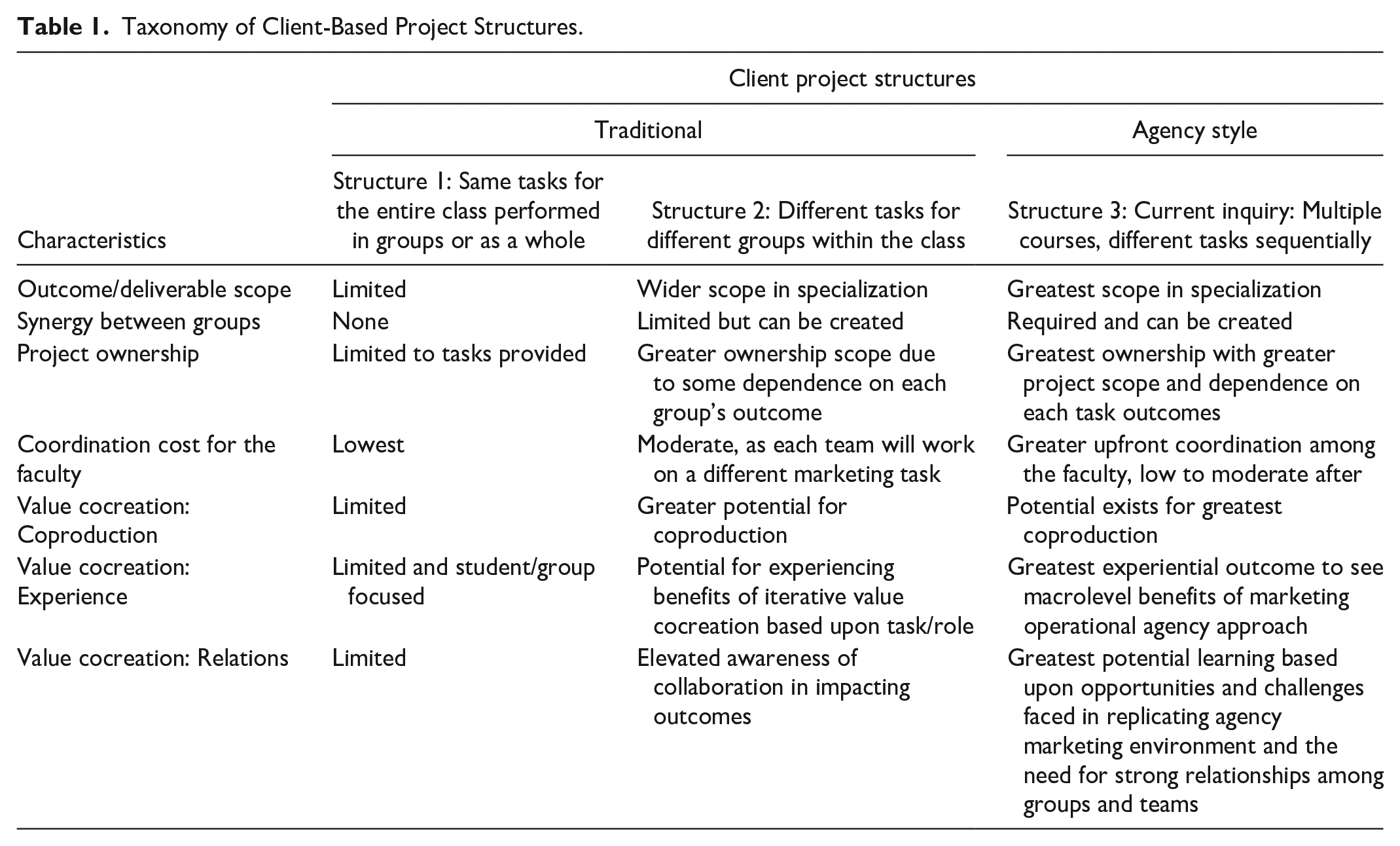
The agency-style structure has several characteristics that deserve greater discussion. First, because multiple marketing courses cover different marketing topic areas, the agency-style structure is better able to serve the client’s marketing needs that demand multiple functional areas (larger scope) coupled with a level of detail to satisfy clients focused on ease of implementation. This, then, allows for the project to have a greater breadth, which in turn helps the students to appreciate and experience more true-to-life client–agency relationships commonly seen in the industry. While synergy between groups is possible under Structure 2 (multiple tasks separately done by multiple groups within the same course), the agency-style structure is expected to create unique dependency on each group, as other groups are focused on their own specialized area not covered in the course they are enrolled in. From the instructor’s perspective, the coordination costs can be of significant concern. Structure 1 is perhaps the lowest cost to the instructor, as either the entire class is working on the same project or done in teams but on the same tasks and instructions. In Structure 2, because each group is focused on different tasks, the instructions are unique to each team, and the cost may also be incurred by way of project management supervision. The agency-style structure would be similar in terms of having to create instructions; however, because the entire class is working on the same tasks, the costs are less than Structure 2. In addition, agency-style structure broadens the scope of the project to include more than what one course specializes in, and time of the project can span over one semester which can add efficiency. From the instructor’s perspective, the agency-style structure may also mean (a) added coordination costs of collaborating with other instructors ahead of the semester for a longer term commitment, but (b) the entire class is working on the same tasks similar to Structure 1 which can reduce the within-class coordination costs. In the following section, we explore further the application of value cocreation (VCC) in this context.
Value Cocreation
To theoretically investigate the value of agency projects, we applied our study to the service-dominant logic of marketing and the concept of VCC, which has gained attention and support over the past two decades in the marketing literature. The theory suggests that “the customer is always a co-creator of value” while “the enterprise can only make value propositions” (Vargo & Lusch, 2008, p. 8). Service marketing logic focuses on interactions instead of exchange (Grönroos, 2006). As we view services as value-supporting processes, in higher education, educators can facilitate processes by which superior value may emerge using experiential learning projects. Judson and Taylor (2014) explain the roles of student and that of the instructor using this logic. In this regard, the student is the coproducer of the education value rather than being a mere recipient of service and knowledge “delivered” by the instructor via lecture and assignments. Similarly, Dollinger et al. (2018) argue students’ active role in cocreation of value stems from relational resources (e.g., interactions with others), knowledge sharing, and innovation in curriculum. The client, for example, in the client-based projects can also aid the VCC process with interactions and iterations of feedback to develop job-ready skills (Killian et al., 2023). In all, the instructor plays a pivotal role in VCC as a facilitator of additional growth opportunities (e.g., job readiness), and a client-based project offered in the class can be an effective experiential learning opportunity encompassing multiple stakeholders in the process.
Beyond the conceptual domain, Dziewanowska (2018) is among the few who apply the theoretical framework in empirical data to understand the process by which value is cocreated in higher education settings. Figure 1 depicts the three dimensions and components as the process for VCC in a university setting. First, coproduction refers to direct and indirect cooperation among actors (students, instructors, and the client) participating in the VCC process. Coproduction takes place in an environment where the actors are given control of the VCC process and dialogue between parties to the process. Second, experience refers to the extent to which a student is involved in the cocreation process as they exhibit intellectual stimulation in the given context. Third, relations is the dimension reflecting the social aspects of the experience where synergy may be created through interactions of knowledge sharing. The study’s empirical data led to a creation of five segments of VCC styles, which included “maximalists” whose perceived VCC during the university study experienced significantly greater perceptions and attitude toward acquired knowledge, loyalty, and positive image of the university they attended.
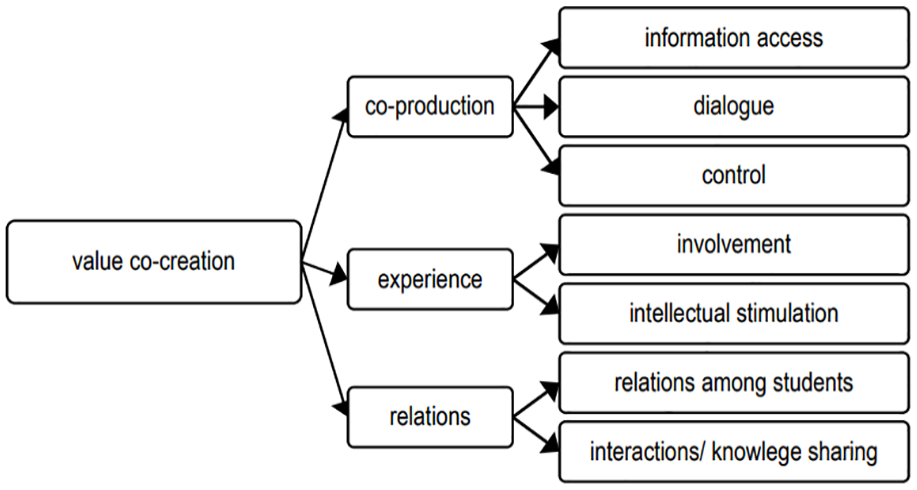
Dimensions and Components of the Value Cocreation Process in Higher Education.
Gronroos (2011) makes it clear that VCC is not that customers become cocreators of value, but rather that “firms when performing as service providers get opportunities to become co-creators of value with their customers” (p. 291; emphasis in original). To place it in a client-based project context, the instructors who facilitate the coproduction by organizing the projects benefit from the opportunities to create enhanced educational experience otherwise not possible in a nonclient-based project, hence the beneficiaries all around, including the client. The interactions of the participating faculty with each other, in using this agency-style model, result in cocreation of value between faculty and through this, across classes and students, amplifying the teaching effectiveness to promote further career readiness.
To this end, referring back to Table 1, the VCC in a client-based project for Structure 1 is present within the group of students working on the same task, as well as with the instructor and the client, but between-group coproduction concept is more readily present for Structures 2 and 3. With agency style spanning multiple courses allowing the cross-course tasks to tackle a wider scope of tasks with greater specificity more potential may be realized.
Similarly, intellectual stimulation in the experience aspect of VCC exhibits perhaps the greatest potential in the agency-style structure. Here, a wider coverage of marketing tactics are addressed with each of the other marketing courses contributing specific skills that are not possible within the same class. In the same line of thinking, the agency-style structure can also offer the highest degree of social interactions and knowledge sharing (or relations) between marketing courses to specialize in dissimilar skill sets, mimicking the more realistic marketing environment.
Therefore, agency-style structure affords VCC in a multidimensional, nonlinear fashion unlike the more traditional client-based project. In the end, greater value can be cocreated. Figure 2 depicts this process for value to be cocreated and interdependency among the classes in our proposed agency-based project framework.
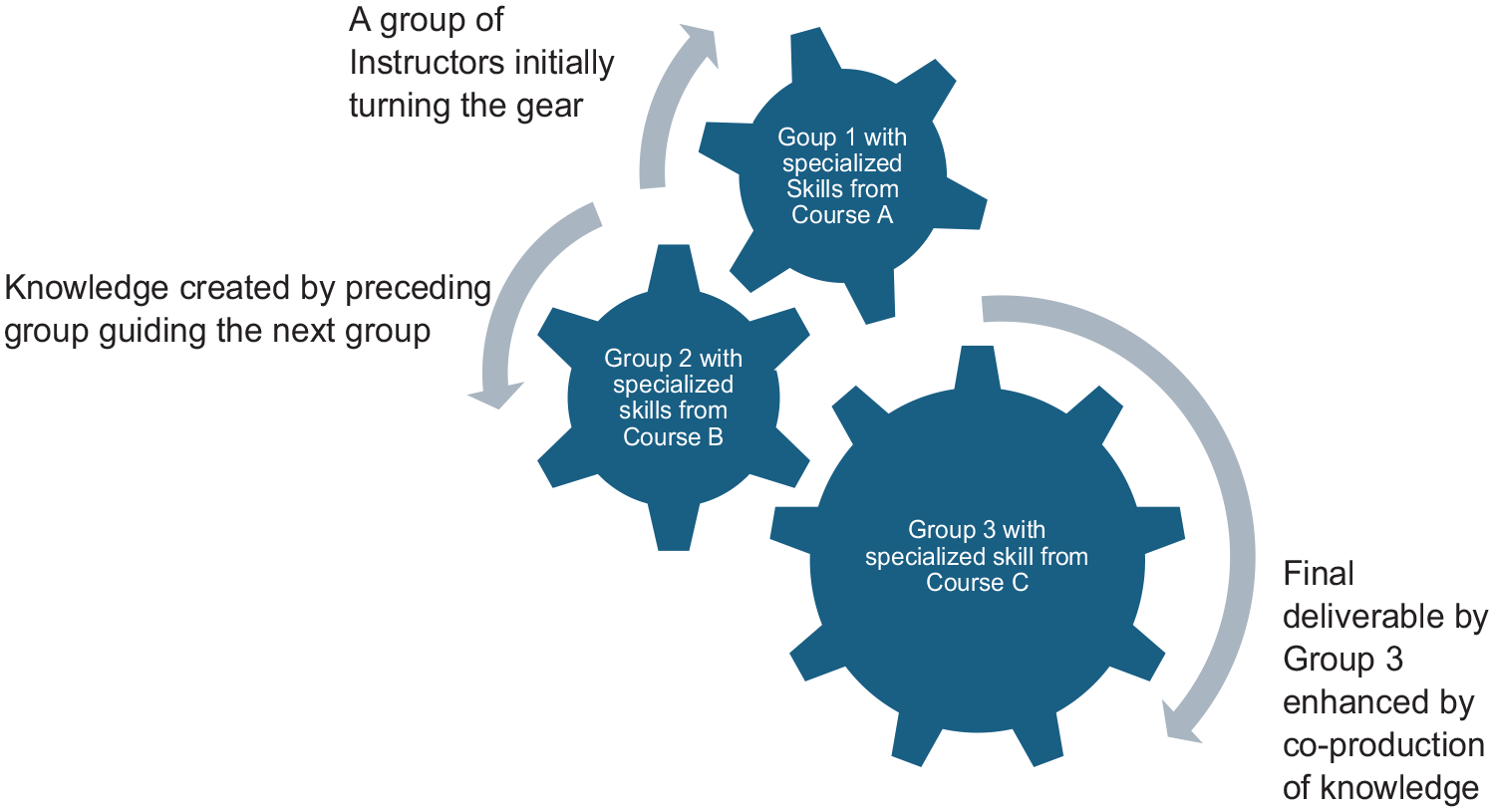
Multiclass Client-Based Agency Project Value Cocreation Process.
Multicourse Structure and Client Engagement
The client was an e-commerce start-up that markets products that highlight health benefits for people and are better for the physical environment. A key strategy for this company is donating a portion of its revenue to a nonprofit of the customer’s choosing. Table 2 shows the breakdown and summaries of the tasks assigned to each participating course.
Marketing Courses Involved and Their Tasks.
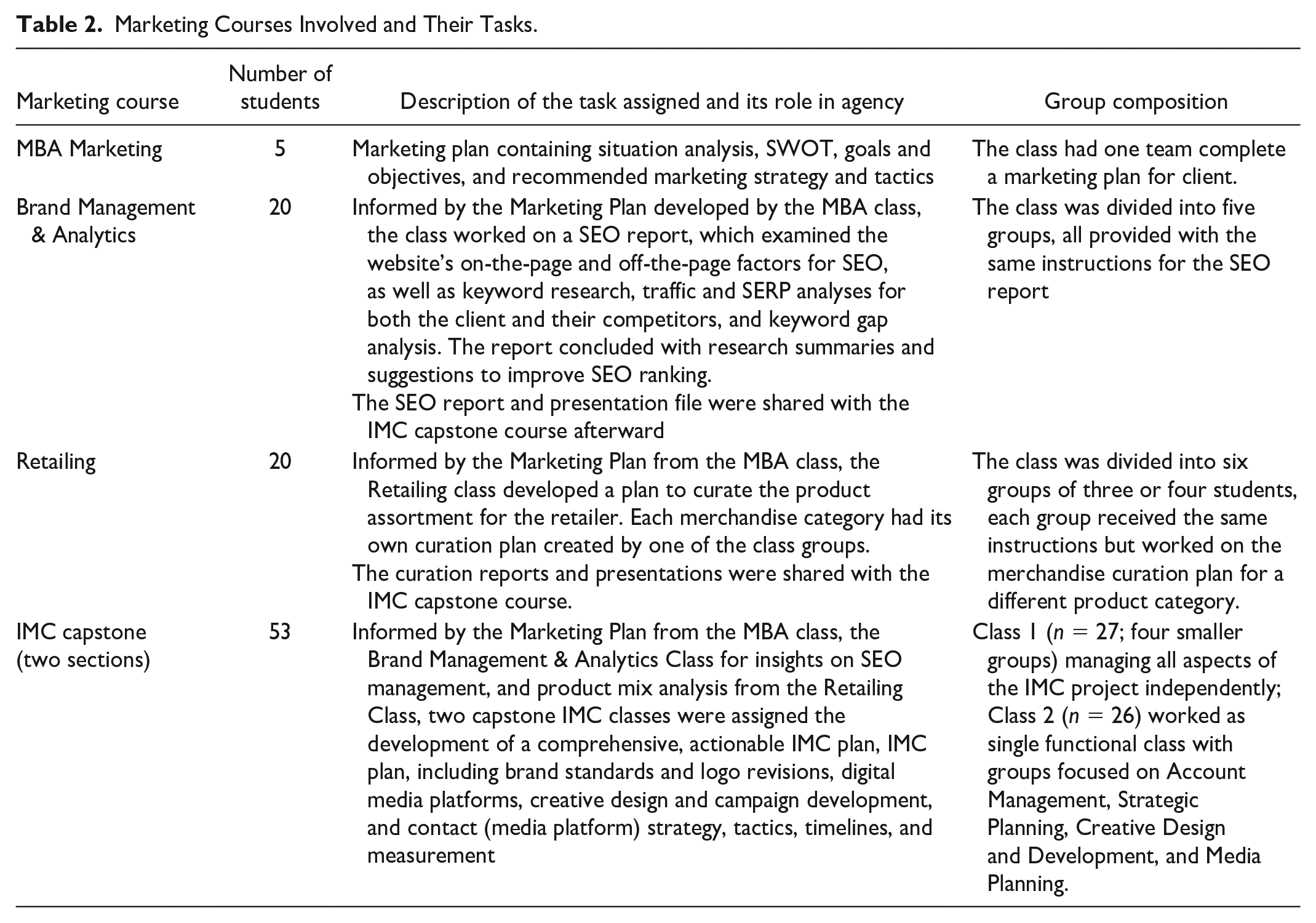
The MBA summer course shared marketing plan information it developed with the three other next semester (fall) courses. Specifically, this plan information was provided to an undergraduate Brand Management & Analytics course, which evaluated the client’s e-commerce site and current search engine optimization (SEO) strategy to drive customers to the client’s digital assets, resulting in recommendations to the client and students in the subsequent course, IMC. This course was an undergraduate capstone IMC client project intense course tasked with developing a comprehensive IMC plan, including creative development, brand standards and guidelines, and content (creative) and contact (media) strategies and tactics.
Two sections of this senior-level IMC class took the MBA-developed marketing plan, endorsed by the client, as the basis for creating both a project initiation brief and creative brief from which to design an IMC campaign. It also used SEO and related insights from the Brand Management & Analytics course. The client desired the strategic plan developed by the MBA class be the foundation used to design a comprehensive marketing campaign, including creative across digital platforms, customer journey and engagement through digital and social media, campaign timing and flighting using a predetermined budget of one million dollars and the updating of brand standards (fonts, iconography, photo/video standards, color palettes), and the option of a creating a new logo.
Separately, an undergraduate Retailing course evaluated the client’s online product assortment and curation process and made recommendations. Recommendations were based on the marketing plan provided by the MBA class pursuant to the client’s strategy. Recommendations were also consistent with results from the other courses participating in the project. Figure 3 has a timeline of how the courses engaged. Given the conceptualization of VCC processes, we develop hypotheses in the following section.
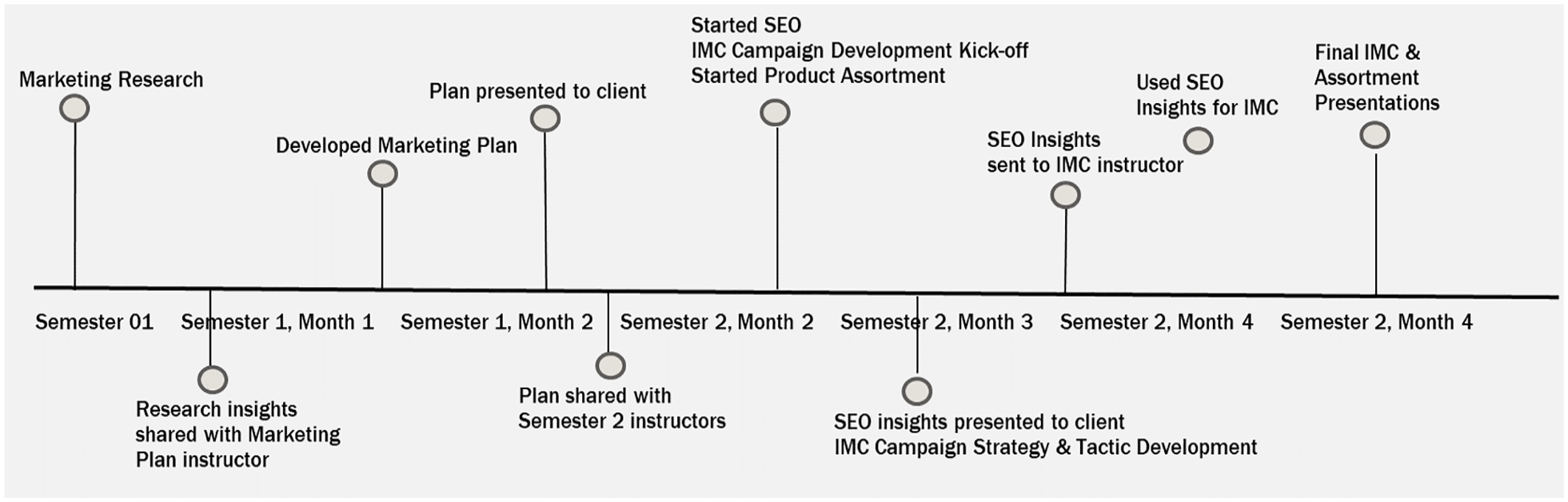
Project Management and Timeline.
Hypotheses
The present research, as discussed previously, explores an “agency-style structure” which is defined as multiple courses with different skill and/or content goals within each course working together for a common client in some sequence coordinated by the instructors of the courses to allow for a wider coverage of consulting work otherwise not possible.
In the literature, this actual practice of agency-style approach has seldom been documented (Ayers & Underwood, 2007; Bock & Randall, 2014; Hickman et al., 2021). An exception is the study by Elam and Spotts (2004) which documented a live case as an integrating project for three separate marketing courses. Student feedback after the project was somewhat critical of the difficulty of managing the process, but generally, it was a positive experience that highlighted the additional learning stemming from working with multiple groups, each focusing on a specific part of the project.
In a traditional client-based project, which is limited to a single course, the student feels a sense of experience (i.e., involvement and intellectual stimulation) and relations (i.e., among students and knowledge sharing/interactions) in comparison to a nonclient-based project. This is because a traditional client project creates a triad of cocreation expanding the contacts among students, the instructor, and the client. In an agency-style project, there is more experience (i.e., involvement and intellectual stimulation) and relations (i.e., among students and knowledge sharing/interactions) as the student interacts with the participating professors and the students in other participating classes, as the scope of the projects becomes more than what a single class would be able to handle. In addition, experience and relations among the participating faculty also create more opportunities for VCC that are communicated to students directly and indirectly with the expanded scope, therefore:
Increasing the experience and relations adds to the audience for each group, causing increases in feelings of shared responsibility as each student wants their group to perform well for the group of participating professors, a larger number of student groups, and the client. This is consistent with Ryan and Deci’s (2000) self-determination theory and the psychological needs for competence and relatedness. In addition, relations is a key component of VCC in higher education (Dziewanowska, 2018). Increasing interactions between teams should relate positively to perceived VCC. Using an agency-style project increases the number of connections among teams, and thus the number of interactions, as students in one class become aware of students in other classes working on the same project.
In addition to relations, another key component of VCC is knowledge sharing. Knowledge sharing is only positive if the knowledge shared is seen as valuable or useful. If the knowledge is seen as uninteresting or not valuable it will be viewed as negative. Social loafing is not doing the work required to gather or communicate useful knowledge. Aggarwal and O’Brien (2008) find that the incidents of social loafing increase with a greater scope and importance of the group project, and understandably, this is one of the most frequent complaints with group projects. While an agency-style client project entails a wide and deep scope, whether it leads to social loafing is yet to be examined. Due to heightened dissatisfaction and lowered motivation for the project, we posit that social loafing will have a negative impact on VCC.
Shared responsibility means that classes must rely on each other, must work together as equals, and must be accountable for their part of the project (Cao et al., 2022). Concurrently, the environment for cocreation must include control, dialogue, and information access (Dziewanowska, 2018). When students believe that they can rely on the other groups and the other groups are accountable for their part of the project, and that the other groups are equal, then students believe they have more control in that they can rely on the other groups. The dialogue is more open because the other groups are equal to their group, and information access is positive because the information is seen as credible, due to the other group being held accountable. This combination improves the conditions necessary for VCC. Therefore:
Taken together, due to the expanded scope of the project compared to a typical client project not involving multiple classes, we expect that students also need to imagine what the project entails beyond their immediate group. Interactive assignments are said to foster intellectual stimulation which then boost students’ skill development (Lamont & Friedman, 1997), and student interest may be sparked by perceived intellectual stimulation. As the students become more interested in the project, the amplified cognitive engagement may allow for greater VCC.
Research Method
Data Collection
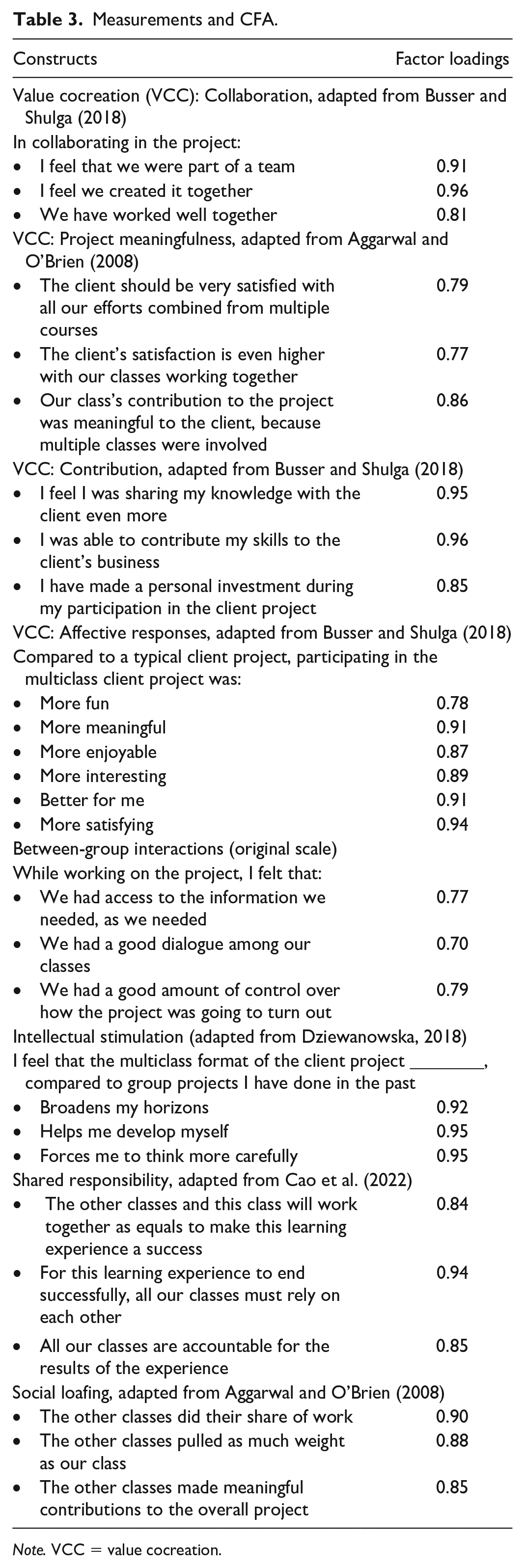
The courses involved with the agency model were an MBA Advanced Marketing Management course which developed a marketing plan for the client to chart overall strategy, and three undergraduate courses followed. A Brand Management & Analytics course first focused on SEO for the project to inform the next two courses: two sections of an IMC capstone course with focus on an IMC plan, and a Retailing course which focused on product assortment. Students were given survey questions at the start and end of the semester. The MBA summer class was excluded from the analysis due to too few students and their lack of interaction with the other three fall semester courses other than sharing the final marketing plan with them. Items used in the survey are found in Table 3.
Measurements and CFA.
Note. VCC = value cocreation.
Our data sample consists of a total of 88 students. Of these, 50 were from the IMC capstone (27 in Section 1 and 26 in Section 2), 17 in the Retailing Management class, and 11 in the Brand Management & Analytics class. On average 80% to 95% of the students completed the survey, and their participation was voluntary. Our institution is a public institution of higher education in the Midwestern United States with almost all traditional students which is also the case with our students who were involved in the projects.
Measurements
We conceptualized VCC to manifest in four facets of meaningfulness, collaboration, contribution, and affective response, following Busser and Shulga (2018). We identified their VCC scale to be most applicable in higher education settings, as others have adopted their scale (e.g., Bordian et al., 2023). One way by which a client project fosters VCC may be by increasing the sense of project meaningfulness, or the perceptions that the work devoted to the project was worthwhile. We adapted the Project Meaningfulness scale from Aggarwal and O’Brien (2008), which directly studied group projects in marketing education. Table 3 shows the measurement items we adapted to fit our study context of a unique, multiclass format. We also began our questions with a phrase “compared to a typical client project . . .” to gauge whether the agency-style format led to greater or less VCC. The other VCC scales of collaboration, contribution, and affective responses were adapted from the study by Busser and Shulga (2018). Collaboration refers to the extent to which the students feel they are part of a team and work together to achieve a common goal. Contribution refers to the extent of individual contribution to the project, which is comparatively greater than a typical client project. Affective response as a result of the project is captured by the feelings of how the project was more fun, meaningful, enjoyable, and other related affect.
Since we also established that between-group interactions are a critical part of VCC-building processes, we created a new, succinct measure of this variable. The scale measures the degree to which the student feels that they had sufficient access to other groups as pertinent information is sought. Intellectual stimulation refers to the extent to which the project broadens the students’ horizons, helps them develop, and encourages them to think carefully. The scale was adapted from the study by Dziewanowska (2018). Similarly, both shared responsibility and social loafing are critical aspects of a successful client project, and we also included them in our survey. Shared responsibility refers to the extent to which the student feels the responsibility to the client is shared among multiple classes. The scale was adapted from the study by Cao et al. (2022) to fit our current study context. Social loafing is a concept that attempts to measure the amount of free riding by other groups/classes that are supposed to be working together by sharing knowledge and making sufficient contribution for a collectively better project outcome. We adapted the measurement items from the study by Aggarwal and O’Brien (2008). All scale items in our study were measured using 7-point Likert-type scales (1 = strongly disagree, 7 = strongly agree).
Measurement Validation
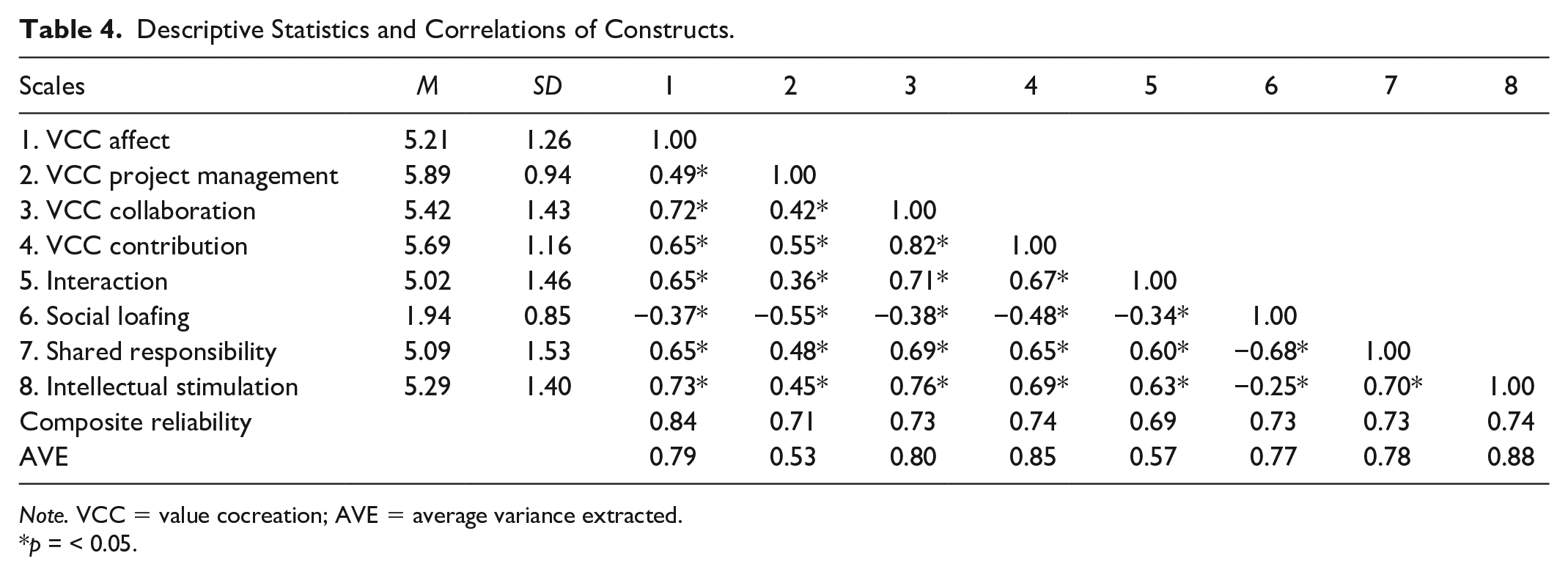
As a first step to evaluate the validity of the measurements, we tested the internal consistency of the measurements. The Cronbach’s alpha and composite reliability for all measurements exceeded the suggested value of 0.70, with an exception of interaction with 0.69 (Fornell & Larcker, 1981; Nunnally, 1978). Second, the average variance extracted (AVE) for all constructs is greater than the recommended value of 0.50 (Hair et al., 1998). Finally, the confirmatory factor analysis suggests that the overall measurement model yields satisfactory goodness-of-fit indices (χ2 = 445.67, df = 296, p < .01; Root mean square error of approximation [RMSEA] = 0.08, Comparative Fit Index [CFI] = 0.93, Tucker-Lewis index [TLI] = 0.91, Incremental Fit Index [IFI] = 0.93) with all items loading significantly (p < .001) on their constructs. Furthermore, the AVE of all constructs is greater than the shared variances of all pairwise relationships (Fornell & Larcker, 1981). Overall, the results indicate satisfactory validity and reliability of the measurements. Descriptive statistics and bivariate correlations are shown in Table 4.
Descriptive Statistics and Correlations of Constructs.
Note. VCC = value cocreation; AVE = average variance extracted.
p = < 0.05.
Hypothesis Testing Results
H1, which proposed that compared to the traditional client-based project, the agency-style format yields greater perceived VCC, is supported. Specifically, the median values for the VCC affect, VCC collaboration, VCC contribution, and VCC project meaningfulness were 5.21, 5.42, 5.69, and 5.89, respectively, which were significantly greater than four on the scale (i.e., about the same value as a traditional client-based project) based on a one-sample t-test (t = 8.45, 8.73, 12.71, 6.16, respectively, p < .0001). Figure 4 shows the histograms for all the VCC facets.
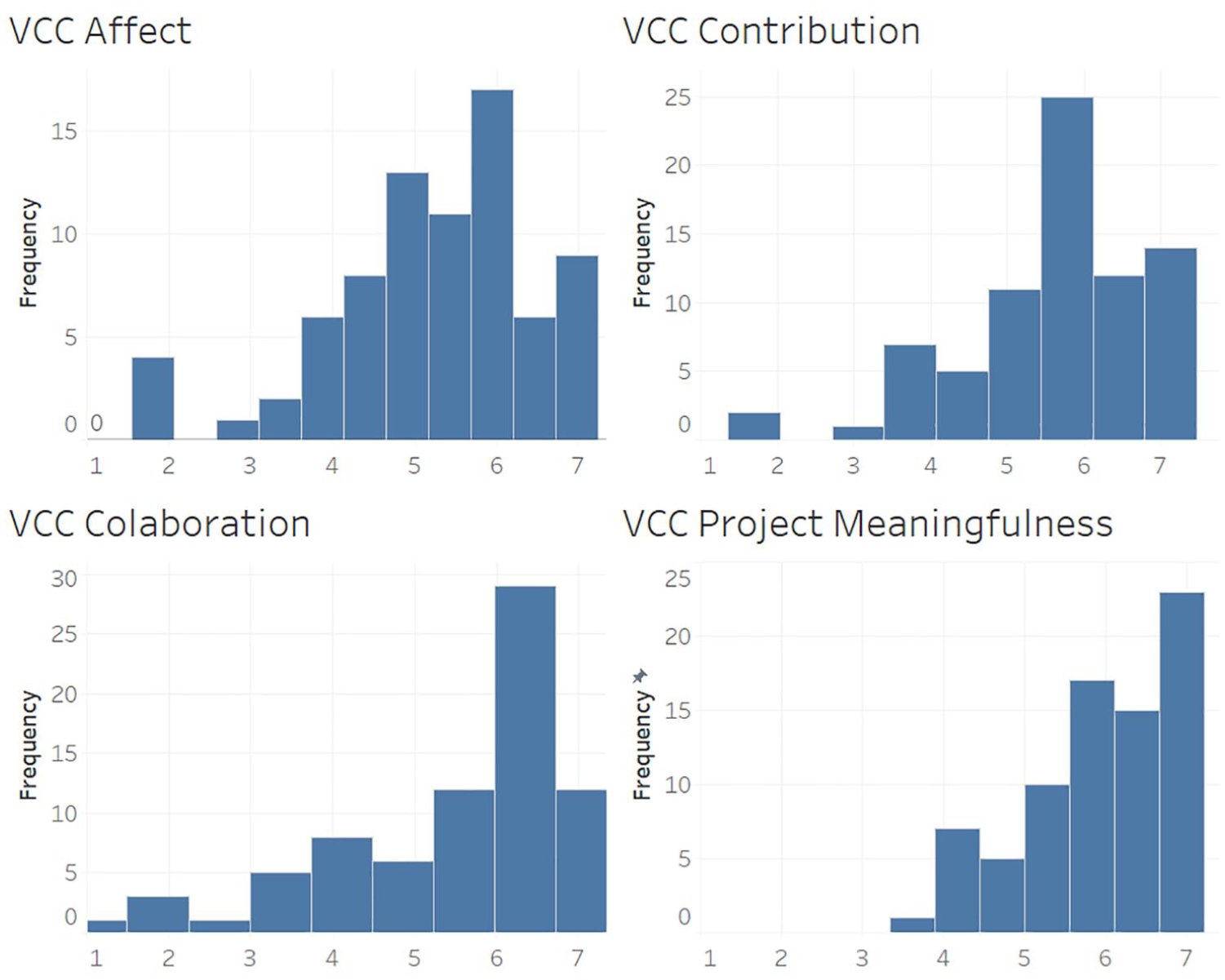
Value Cocreation Histograms.
Our next hypothesis (H2) stated that, compared to the traditional client-based project, the agency-style format yields an increased sense of shared responsibility at project launch, and the results seem to agree. The difference between the mean value (5.09) and four (i.e., about the same as a traditional client-based project) is statistically significant at p < .001 (t = 6.24). Figure 5 shows the histogram of the shared responsibility variable.
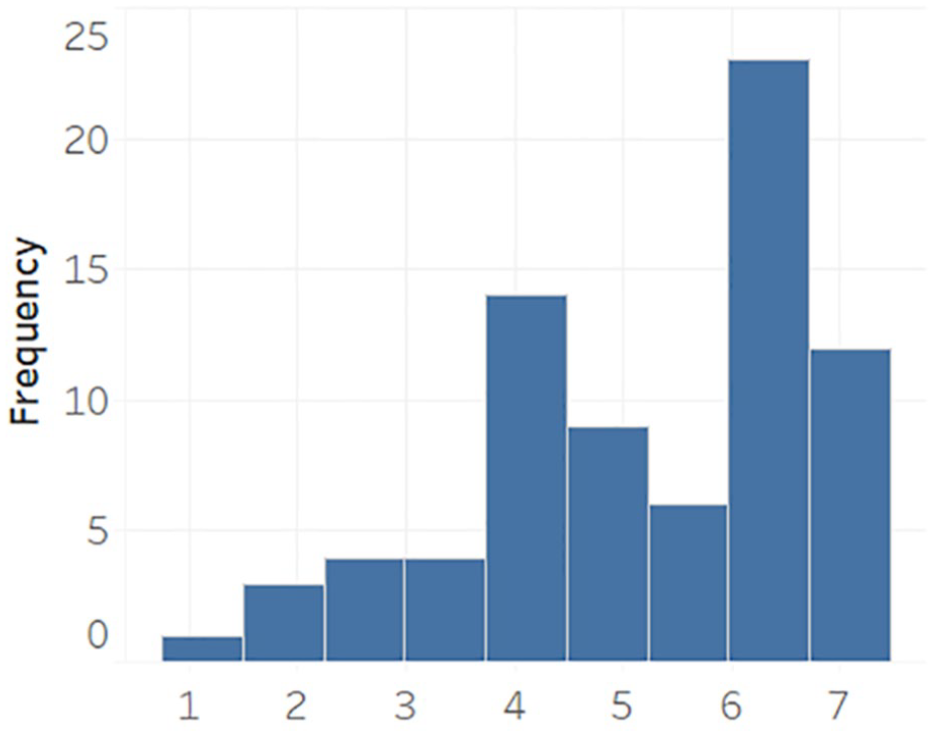
Shared Responsibility Histogram.
The remaining hypotheses were tested using bivariate regression analyses. The third hypothesis, that between-group interactions relate positively to perceived VCC, is also supported (b = 0.50, t = 8.04, p < .0001). This pertains to students having the requisite information needed and control over the process and its impact on perceived VCC. As expected, the next hypothesis (H4) positing that perceived social loafing relates negatively to overall perceived VCC is significant (b = −0.52, t = −4.13, p < .01). Not surprisingly, students who are not perceived to be substantively contributing to the project effort will impact perceptions of VCC. H5 which proposes that perceived shared responsibility relates positively to overall perceived VCC is supported (b = 0.49, t = 9.36, p < .0001). Perceptions of accountability by others and reliance on others did impact perceptions of VCC. Finally, H6 was also supported by the results that students’ perceived intellectual stimulation was positively related to VCC (b = 0.57, t = 10.94, p < .0001), suggesting that the agency-style client project was successful in terms of fostering intellectual stimulation compared to a regular client project. Figure 6 shows scatterplots and fitted regression lines for H3 to H6.
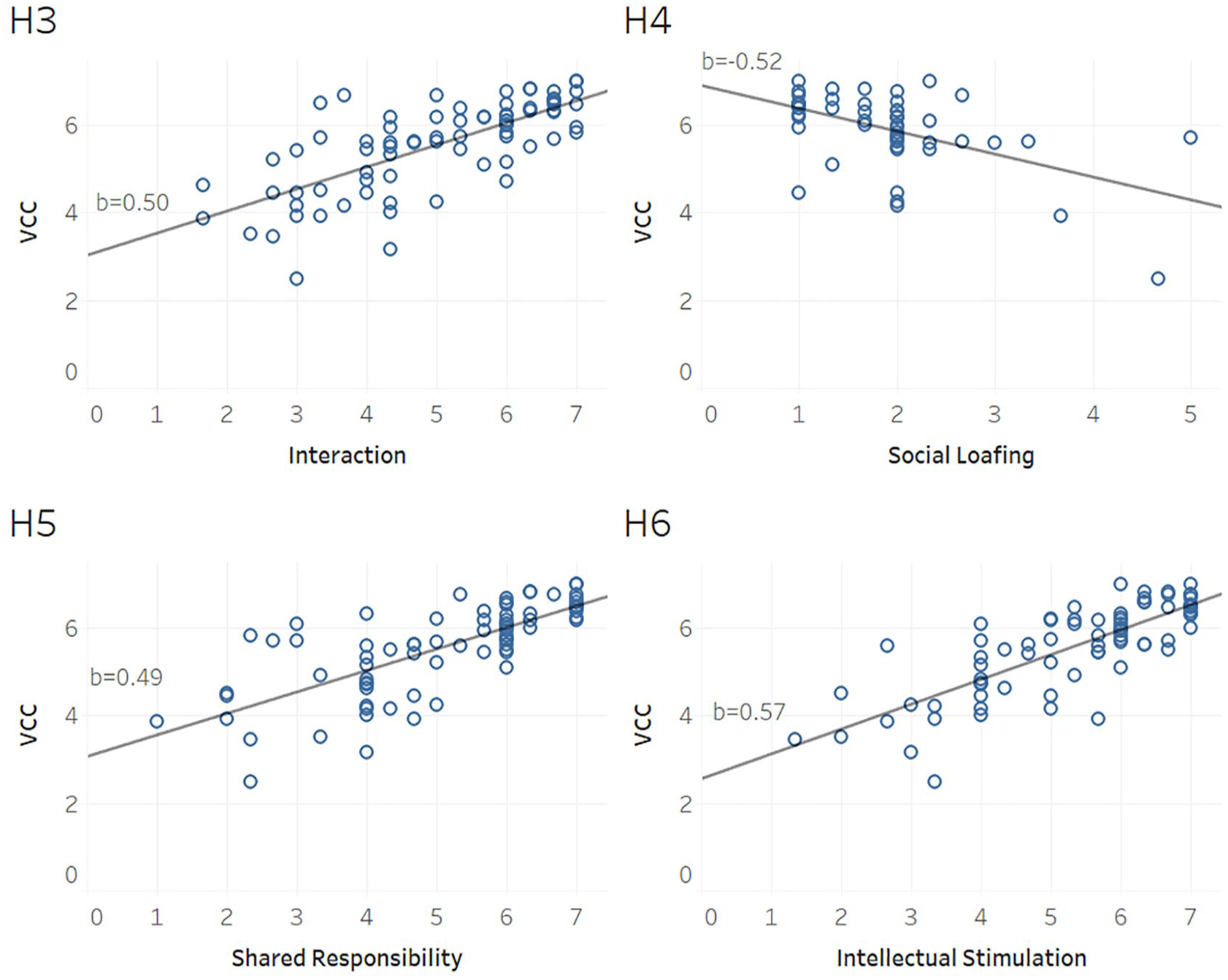
Scatterplots and Fitted Regression Lines for Hypothesis 3 to Hypothesis 6.
Post Hoc Analyses
Apart from the insights provided by the hypothesis testing, we also offer several post hoc insights that may help faculty at other institutions to offer a similar experience for students. First, we gained some insights from the open-ended comments provided before and after the project.
Preproject Launch Anticipation and Postproject Feedback
Before the project started, four themes emerged such as value for students’ professional development, uncertainty about teammate and other class team contributions given client expectations, anxiety about the nature of client-based work, but also confidence in their ability to complete well given prior student experience. Student comments that relate to these themes are below.
I am looking forward to this project because it’s going to be a very valuable experience for me. I also want to see how everything will work with multiple teams working on the same project. I think every group will have different insights. I also want to experience working in big groups because I feel like it mirrors the real world. I am slightly intimidated by this project this semester. I am feeling very lost on what to expect and how things will go with a class this size working together. Collaboration in larger groups often results in miscommunication. I think it is difficult to gauge how the project will go due to the fact that there is reliance on other classes of people we haven’t met. I would like to hope everyone will make equal contributions but at the same time I do not expect it. Some classes will put in more effort while others put in less. Due to a previous internship experience, I understand what it is like to work across a variety of teams that may not always share the same physical space. I know that I will be able to handle what is given to me, and I expect the same from my teammates as well.
After the project concluded for a given class, open-ended comments were collected. Themes emerged around wanting more communication between classes, relief at how well the experience went, and questions on points and grading. Below we share sample feedback.
I think the project overall was hard but it gave great insight into what really happens on a day to day in a marketing role. I enjoyed the feeling that it made it feel like it was a real world experience. It was a good project for students to know what the real world is like after school. The project was very enjoyable and very challenging. One side I think most of us are/were concerned with is the grading side. We were/are concerned with how points are allocated and where/how much. Other than the grading, I heavily enjoyed the ability to work with the entire class that were built into our smaller groups with specific roles. I think more information from other classes would’ve been helpful, in my opinion we weren’t really working together with the other classes more or less our own, so in the future it would be nice to see the information everyone gathered from each class presentable.
IMC Section 1 (One Big Group) and Section 2 (Four Small Groups) Comparisons
Second, we also analyzed the IMC team structural differences and their impact on the process and the outcomes. Both of the two sections of the capstone IMC course were assigned to the IMC plan development portion; however, one of the sections acted as one large team, while the other section was divided into four small groups (Structure 1 in Table 1). While both sections launched the project with some insights gained from the previous work by three other courses, the two sections within the IMC course afforded an opportunity for us to observe the differences if two different structures are employed between the sections. Specifically, Section 1 (27 students) was randomly divided into four smaller groups responsible for all aspects of account management, strategy development, creative and media strategy, and tactic development, acting as a small IMC agency (Structure 1 in Table 1). There was no interdependency between groups. The other section (26 students) tackled the project together but four groups were assigned to each of the four main tasks (Structure 2 in Table 1). In Section 2, after submitting their preferences for each area in ranked order, they were assigned to a role. Four themes were identified throughout this dual protocol project environment in the two sections (Structures 1 and 2) of the IMC class:
Individual participation seems significantly greater for Structure 1 which only had six to seven individuals per group. In one large group (Structure 2), each functional team experienced at least one team member who either failed to contribute significantly throughout the project or only engaged intermittently.
Students in the collectively working unit (Structure 2) produced better quality outcomes at the initial phases of the campaign strategy development (quality of SWOT analysis, mission statement development, creative brief). This is especially noteworthy given that Structure 2 class was involved collectively in driving these outcomes, generating shared ownership of the strategic direction. Meanwhile, Structure 1 class took longer to get these initiatives started and required more consulting and coaching upfront to complete those deliverables.
The single functional class (Structure 2) students managed outputs well within their assigned roles but struggled with coordinating and integrating their output with other functional groups. In Structure 1 without defined roles and responsibilities, teams adapted quickly and were more task focused versus role oriented. Thus, role clarity did not manifest as an aggravating issue for the smaller groups operating independently.
Overall, Structure 1 class produced more cohesive, compelling IMC marketing campaigns for the client. These smaller teams created strategies and tactics to execute those campaigns, and the overall presentations flowed more logically and convincingly. Conversely, Structure 2 class’s creative executions and presentation suffered, and the developed creative and the media platforms selected were not aligned, as if the efforts were parallel yet not coordinated.
Overall, the IMC section which had operated in Structure 2 was more challenging to execute, and compared to Structure 1 class they performed not as well. In fact, two of the four small group projects were judged by both the faculty and client as being the best, with the client actively adopting some of the suggested strategies, tactics, and enhancements to digital media platforms, creative messaging, and SEO optimization based on those campaigns.
As we reflect on our experiences in the four courses working as a team as well as the differences in the two IMC sections, referring back to Table 1, the agency-style structure involving multiple courses appears to be beneficial in the following aspects:
Outcome and scope: Each course is able to specialize in one functional area as part of the larger scope project. Trying to create a mini-agency structure within the same class was not fruitful as we experienced in one of the IMC sections.
Synergy: Challenges remain for creating more synergy between the courses as they share insights from one class to another. This could be said about a mini-agency structure within the same class.
Project ownership: Students appreciated the experiences with their own learning about what went well and what didn’t from the agency-style structure and gained greater macro exposure to how agency operates in the real world.
VCC: The learning outcomes centered around the elevated awareness of collaboration needs for the best possible outcomes not only within the team but also between the teams, which was heightened by using the agency-style structure.
Discussion: Suggestions for Implementation at Other Universities
The instructors involved with the project sought out this experience as a learning experience for the students and also for themselves. What follows are suggestions to those at other institutions who may wish to offer a multicourse agency-style pedagogical model. From this study, additional steps from the research’s outcomes are suggested to better prepare students for a functional approach to managing group marketing projects. These include better identifying, clarifying, and giving students examples of the roles and responsibilities required in each functional area prior to their preference signaling and selection. This may be achieved in conjunction with further understanding each student’s strengths and areas for development.
Another suggestion is to record a prior class’s final team presentations to the client and ask students from the subsequent class to review those presentations before embarking on their project focus. This addresses insights from open-ended student feedback about wanting more communication between classes. To be able to capture this engagement via video for future use when students have freedom in their schedules makes the learning experience more dynamic and interesting for the students versus being solely provided with a written document from a class. It is important to have a willing client who is invested in student learning. The client must be flexible and willing to visit each class multiple times for a kick-off, mid-term check-point, and close out, and be available for questions that may arise. Given the number of classes involved, the number of client visits is substantial. For the faculty involved, it is crucial that they have strong project management and communication skills both for their own classes and also with the other faculty involved. There are several hand-offs that need to occur. Ideally, but not required, these faculty will have run client projects in their classes before.
Apart from the practical firsthand aforementioned experience with this multiclass endeavor, relevant academic research on instructors’ tacit understanding of how to develop effective marketing student teams is relevant and helpful here (Lindsay et al., 2023). These researchers develop a framework of how instructors perceive effective teamwork, which is a dynamic interaction between three connected pieces of team effectiveness (team composition, team member actions, and team culture). Reflecting on this research elucidates another aspect that faculty did not consider and may also be helpful to those seeking to run a similar pedagogical model at their university: team composition. Using some type of personality assessment (or StrengthsFinder) to reveal student team member strengths shared with their team at project outset could help team members to better collaborate on their team. This insight, in addition to more information provided to teams on roles as noted previously, may yield better team effectiveness and perhaps blunt feelings of student unease and anxiety that were revealed post project in the open-ended student feedback.
Conclusion
Results of this study offer evidence that multicourse, agency-style client projects build upon the benefits of traditional client projects in marketing coursework through increasing students’ perceptions of VCC. Findings offer evidence that using an agency-style format can amplify the benefits of traditional client projects, so that by working together marketing faculty can have greater impact on student success. Due to the exploratory nature of our study, the study implications may be limited in that our findings are from one descriptive experience. Future research may replicate the study to offer further evidence that properly designed multicourse, agency-style client projects can offer maximum student learning outcomes and buy-in while minimizing resource and capacity constraints. If future research supports these findings, marketing education should consider how linkages between professors, classes, students, and clients could be used to efficiently create more value for all participants.
Footnotes
Declaration of Conflicting Interests
The author(s) declared no potential conflicts of interest with respect to the research, authorship, and/or publication of this article.
Funding
The author(s) received no financial support for the research, authorship, and/or publication of this article.
