




Abstract
This paper discusses the creation and implementation of an experiential learning assignment focused on the United Nation’s Sustainable Development Goal (SDG) 12, which aims to ensure sustainable consumption and production patterns. Using a grounded theory approach that combines analyzing 90 senior-level marketing students’ reflective essays alongside 63 pre- and post-assignment survey responses, we develop the “RESCUER” framework which combines active and passive learning elements. We demonstrate how active learning layered on top of passive methods can be an effective means to generate more responsible consumer behaviors within a complex food supply system. Students begin with passive learning components in the form of readings and lectures (labeled
Keywords
One way to address the recent emphasis on integrating sustainability into higher education (United Nations, 2022), especially marketing education, is to investigate the relationship between marketing and its social environment (Bartels & Jenkins, 1977; Schaefer & Crane, 2005) and to integrate societal perspectives into marketing (Peterson, 2022). In this vein, researchers are increasingly looking at ways to influence sustainable behaviors through macromarketing concepts (Kemper et al., 2022; Peterson, 2022; Samuel et al., 2022). However, what is missing from this accumulating body of evidence are some pragmatic solutions to foster positive behaviors. To this end, we sought to design an experiential learning exercise that addresses the United Nation’s Sustainable Development Goal 12 (SDG 12), which aims to ensure sustainable consumption and production patterns (United Nations Sustainable Development Goals, n.d.). We believe that education has an important role to play in raising the awareness of students living in a relatively wasteful region—North America (Chainey, 2015)—and provide tools to help alleviate some of these issues.
To influence responsible and sustainability-focused consumption behaviors among students, we developed an exercise centered on a unifying framework, entitled RESCUER, that helps students become more conscious consumers regarding food loss and waste. RESCUER also links individual-level consumption practices and wider systems-level sustainability challenges (Schaefer & Crane, 2005). The exercise design is based on Kolb’s (1984) experiential learning theory and specifically includes both passive and active learning components (Labrecque et al., 2021). The passive components require students to first complete a curated list of readings and attend a lecture on those readings, while the active components entail them planning, shopping for, and preparing the ingredients for a salad while journaling and reflecting on all stages.
An analysis of 90 senior-level marketing students’ reflective essays, alongside 63 pre- and post-assignment survey responses, led to the emergence of the RESCUER framework (Figure 1), which captures the essence of how positive social behavior can be affected. The framework depicts how Resources, Engagement in activities with mindfulness, and Social influence can be mobilized to generate Cognizance and Underlying problem salience. When these mobilizing and generating factors are facilitated by Expediting factors, Responsible behaviors can emerge, which are important for encouraging sustainable consumption practices (SDG 12) and raising awareness about systematic and unnecessary loss and waste. Students who went through the RESCUER process demonstrated more sustainable behaviors such as a greater willingness to choose imperfect produce (aesthetically imperfect produce that is often not sold or selected), being less picky about expiry dates, curbing plastic usage, and advocating for more sustainable consumption practices among friends and family.
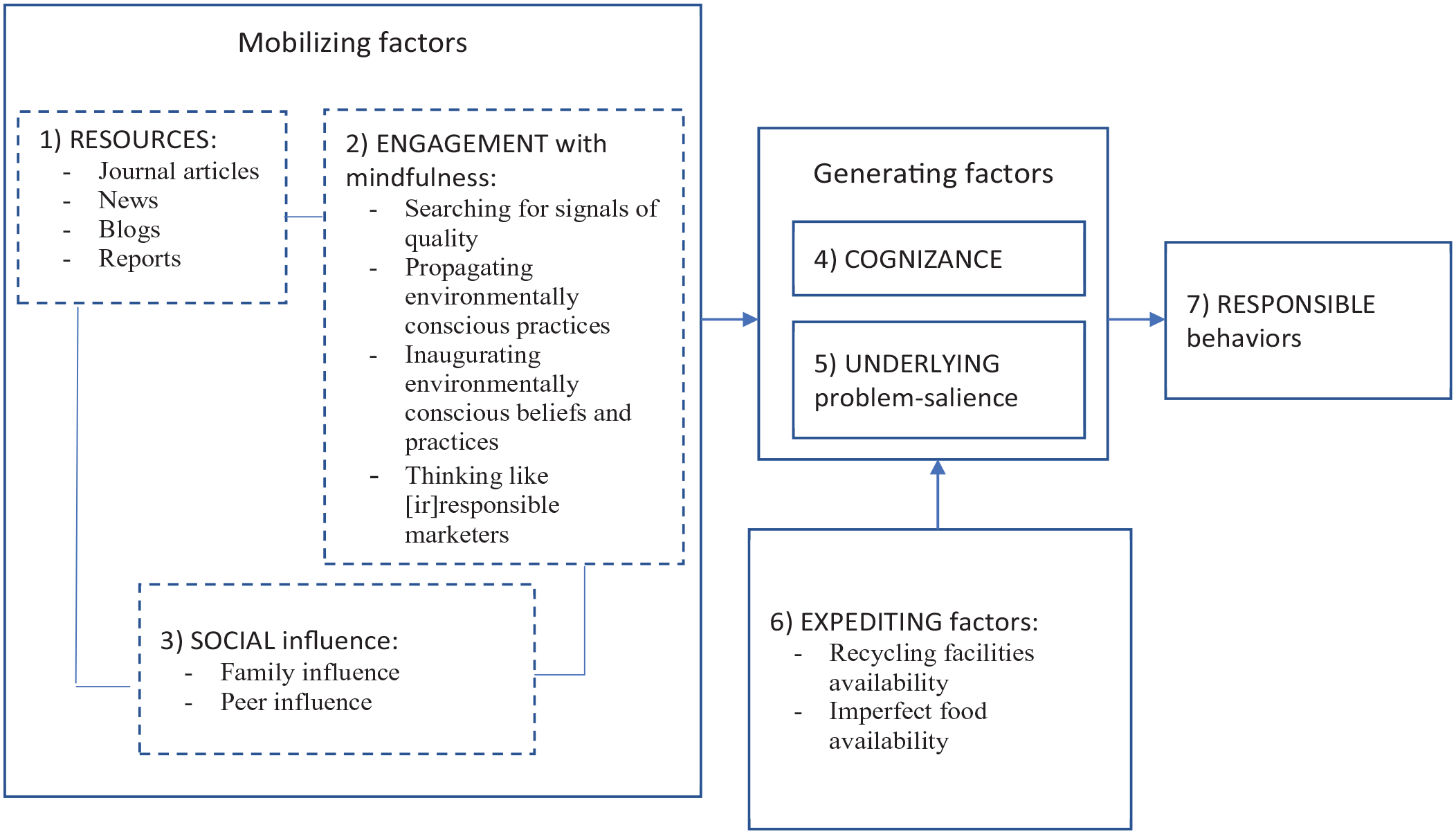
RESCUER Framework for Pedagogical Learning Through Food Sustainability
Literature Review
Food Loss and Waste Within the Food Supply System
The food supply chain is a complex and multi-layered system in which a large volume of food gets “lost” or “wasted.” The two differ primarily in terms of where they occur along the food chain. Food loss refers to food that is discarded along the food supply chain from harvest to retail level (Food and Agriculture Organization of the United Nations [FAO], 2021; Hamish & O’Connor, 2021), while food waste refers to food discarded anywhere from retail, food service, or household levels (UN Environmental Programme, 2021; Varese et al., 2023). Together, food loss and waste represent an enormous environmental burden and come at great societal and financial costs (Aschemann-Witzel, de Hooge, et al, 2018; Gooch et al., 2019). The high rates of food loss and waste speak to systematic supply chain inefficiencies, but also to profligate consumer behaviors, resulting in a significant waste of resources such as water, energy, and land (FAO, 2013; van Giesen & de Hooge, 2019). For researchers, systems thinking is a holistic type of analysis focused on identifying and understanding the dynamics found in and among the multiple entities that constitute the system, and adopting a systems thinking approach better allows researchers to determine where within dynamic, complicated systems changes might be enacted (Kemper et al., 2022; Kennedy et al., 2020).
Approximately one-third of all food produced globally for human consumption ends up being lost or wasted, often rotting in consumers’ or retailers’ garbage, or spoiling during harvest or transportation (FAO, 2011; Porter et al., 2018), which works out to approximately 1.3 billion tons (FAO, 2011) or $989 billion USD worth of food (Louis & Lombart, 2018) per annum. On a per capita basis, consumers in Europe and North America waste between 95 and 115 kg (209–254 lb) of food annually (FAO, 2011; Louis & Lombart, 2018). Food production accounts for between 10% and 12% of global greenhouse gas emissions (Porter et al., 2018, see also Garnett, 2011), with food loss and waste contributing greatly. Moreover, emissions accumulate along the food supply chain, so the further along the chain that loss or waste occurs, the higher its environmental impact (Scherhaufer et al., 2018). Making systematic and concerted efforts toward avoiding food loss and waste is seen by researchers, academic and otherwise (e.g., industry and UN researchers), as a key step toward creating a sustainable food supply (Aleksandrowicz et al., 2016; Aschemann-Witzel et al., 2015; FAO, 2013; Garnett, 2011; Godfray et al., 2010).
Stemming the loss or wastage of agricultural produce for being aesthetically imperfect is one area of potential progress. An estimated 40% of harvested fruits and vegetables are lost to being imperfect (Porter et al., 2018), largely due to long-held industry beliefs that consumers will refuse to buy food of suboptimal appearance (FAO, 2011). Stipulations are placed on food producers from downstream actors like regulators and retailers to maintain strict cosmetics-centered quality criteria based on perceived physical attractiveness (Bloom, 2010). Supermarkets often reject produce “at the farm gate due to rigorous quality standards concerning weight, size, shape and appearance of crops” (FAO, 2011, p. 11), so consumers often do not see rejected food (Aschemann-Witzel, Giménez, & Ares, 2018; FAO, 2011; Lombart et al., 2019). Another source of waste is consumers less frequently selecting food that is closer to its expiry date, so it ends up being disposed of rather than sold (Göbel et al., 2015).
Encouragingly, however, some marketers and entrepreneurs are raising awareness of these issues with companies such as Misfits Market selling misshapen and ugly produce in subscription boxes (Misfits Market, n.d.), apps like Food Hero allowing customers to find deals on food approaching its best before date (CTV News, 2019), and retail conglomerates like Loblaw Companies Ltd launching its “Naturally Imperfect” line of food (Kashty, 2015). When produce that has cosmetic imperfections or food approaching its expiry date is chosen for consumption rather than disposal, land, energy, and water resources are not wasted (FAO, 2013; Göbel et al., 2015). Furthermore, when one adopts these better consumption practices (choosing imperfect produce or products nearing expiry) positive changes to household practices can also result (Chang & Su, 2022). As rejecting food for aesthetic imperfections represents such wanton waste, we sought to incorporate “ugly” foods into our learning exercise.
Sustainability in Marketing Education
This paper is a response to calls by marketing and management education scholars to teach students the links between individual consumption and sustainability at a societal level (Schaefer & Crane, 2005), societal attitudes toward the environment, and how to change consumption behaviors (Kilbourne & Carlson, 2008). The United Nation’s SDGs are important tools for addressing such challenges (Azmat et al., 2023). There has been a growing call among scholars (e.g., Leal Filho, 2020) and accreditation bodies like the Association to Advance Collegiate Schools of Business (AACSB) (Steidle & Henderson, 2023), for business schools to incorporate SDGs in teaching to address issues of sustainability and other global problems. In addition, there have been calls for marketing scholarship to more directly address the societal challenges that SDGs represent and to incorporate them into research (e.g., Rosenbloom, 2022; Voola et al., 2022). For many, marketing’s responsibility to be part of the solution stems from it being one of the main causes of the problems. As Benton (2015, p. 119) states, “[i]t is doubtful we would be where we are, in this saga of waste, without the help of marketing professionals” and that we should “begin in the classroom” when it comes to figuring a way out (see also Prothero & McDonagh, 2021). We see merit in this point of view and further agree with Shapiro and colleagues (2021) that educational institutions “need to prepare students to think proactively, respond effectively, and bring about positive change” through sustainability education (pp. 104–105).
Sustainability is increasingly being integrated into marketing education at all levels (Borin & Metcalf, 2010; Bridges & Wilhelm, 2008; Nicholls et al., 2013; Watson et al., 2022). Topics now covered include green building marketing, sustainable marketing management, sustainability communications, product stewardship and sustainability, and innovation processes for sustainable products (Bridges & Wilhelm, 2008). Moreover, the increasing complexity of business and marketing—including the rise in Big Data, analytics, and artificial intelligence—has necessitated that business schools consider educating students in sustainability from systems perspectives to better capture and understand these complexities (Peterson, 2022). A diverse range of methods exist to teach about systems and sustainability, with case studies, discussions (Wu et al., 2010), and presentations from invited practitioners being popular (Matten & Moon, 2004). Educators use various experiential exercises, including simulations, segmenting consumers based on sustainability attitudes, product life cycle analyses, and site visits (such as visiting local landfills) (Borin & Metcalf, 2010). We argue that while these pedagogical tools can be successful in developing an awareness of sustainability challenges and industry practices, there are further opportunities to effectively teach students about sustainability by blending passive and active methods (MacDonald & Frank, 2016).
Passive and Active Learning
Passive forms of learning occur when learners receive rather than select information (MacDonald & Frank, 2016) and often require less effort of learners (Krugman & Hartley, 1970). One passive form is the traditional university lecture, as students listen without being deeply engaged in the material (Benjamin, 1991). Active learning is a more personalized form of learning (Diamond et al., 2008). It is intended to allow learners to engage in higher-order thinking and develop deeper understandings of materials (Anderson, 1997) as it requires students to dynamically apply theory to real-life situations (Lewis & Williams, 1994).
Experiential learning is a form of active learning that helps students understand how their enacted experiences relate to course content (Gremler et al., 2000) with hands-on experiences taking them outside of conventional passive learning domains. For Kolb (1984), learning is “the process whereby knowledge is created through the transformation of experience. . . [and] [k]nowledge results from the combination of grasping and transforming experience (p. 41).” Marketing education is replete with experiential learning examples, from running (Russell-Bennett et al., 2010) or launching (Daly, 2001) simulated businesses, client projects with marketing organizations (Brennan, 2014), working on marketing ethics challenges (Gaidis & Andrews, 1990), online auctions (Wood, 2003), and service-learning projects (Klink & Athaide, 2004).
Active learning is often presented as a superior method to passive learning (Daly, 2001; Russel-Bennet et al., 2010; Wynd, 1989). However, other research demonstrates the value of combining the two (e.g., Diamond et al., 2008) and shows that receiving passive learning before layering active learning on top can lead to better learning and might be especially advantageous in complex learning situations (MacDonald & Frank, 2016) such as interrogating complex macro level issues related to food. Students engage in activities outside of the classroom that allow them to contextualize and personalize information that they had read about in advance (Hamer, 2000). Hence, we include passive and active learning in our activity (Labrecque et al., 2021).
Methodology
A key goal in the learning exercise was to educate students on the broader systems within which marketing operates (Watson et al., 2022) and their roles as consumers within these systems. We devised an experiential assignment (worth 15% of the semester grade) on food sustainability. This was part of a course completion requirement in a consumer behavior class for senior undergraduate marketing majors at a business school at a mid-sized Canadian university. The assignment had three components: (a) a passive learning component where students were introduced to the food waste problem through readings, an in-class presentation by their peers, and a lecture; (b) an active learning component where students engaged in an exercise where they reflected upon the potential environmental impact of their lifestyle and their actions by connecting theory with practice in a 1,500- to 2,000-word essay (Borin & Metcalf, 2010); and (c) pre- and post-assignment surveys to assess their sustainability knowledge and behaviors before and after the assignment. Using both active and passive components together is akin to the learning spiral, a framework that enables knowledge acquisition and retention through four different levels—tool description (such as pre-class required readings), tool application (such as group discussions), establishing a connection between tools and knowledge, and doing so across different contexts (Diamond et al., 2008). Moreover, it is shown that receiving passive learning before active learning is effective in newer situations where people are otherwise unlikely to discover the target concept (MacDonald & Frank, 2016).
The Passive Learning Phase
Students began by completing a series of readings and having an in-class presentation of these by a peer group along with the professor’s lecture. The readings informed their knowledge about the impact of food waste and food loss on sustainability. The reading list consisted of:
“The Scandalous Supermarket Waste that Stays Invisible” (Eat Grim, 2019)
“Food wastage footprint & Climate Change” (FAO, 2011)
“Household-level dynamics of food waste production and related beliefs, attitudes, and behaviours in Guelph, Ontario” (Parizeau et al., 2015)
“Who buys oddly shaped food and why? Impacts of food shape abnormality and organic labeling on purchase intentions” (Loebnitz et al., 2015).
These readings were selected with intent, although other papers or learning materials could serve the same function for other educators (e.g., de Hooge et al., 2017; van Giesen & de Hooge, 2019). Readings 1 and 2 introduced students to basic facts about loss and waste within food systems. Providing these details was important as our activity challenged students to enact and reflect upon their personal roles as consumers to develop understanding from within (Dolan, 2002). The focal city in Reading 3 is Guelph, which is in the same province as the researchers’ university and allowed for a rich, locally-relevant discussion of the city’s intensive recycling program. Reading 4 contains empirical evidence of consumer behaviors related to abnormally shaped foods.
The Active Learning Phase
Readings, class presentations, and discussions are quite passive in nature. For an active next step, students were tasked with completing a five-step creative learning experience assignment (Table 1) that was modeled on Kolb’s (1984) experiential learning cycle where (a) concrete experiences lead the learner to (b) observe and reflect, (c) draw conclusions through abstract conceptualization, and (d) use these to actively experiment in their actions, all of which results in new concrete experiences (Kolb, 1984). As is school practice, students were provided with a grading rubric when they received the assignment. It was made clear to students in the rubric and by the professor on numerous occasions that they would be assessed on factors such as the thoroughness of their essays, the personal nature and depth of reflections on their consumer actions, their ability to connect theory to actions, and their cogency of expression. It was continually reinforced that personal opinions expressed, changes, or lack thereof, in their opinions, attitudes, and actions regarding sustainable consumption had no bearing on their grades.
Detailed Description of Assignment.
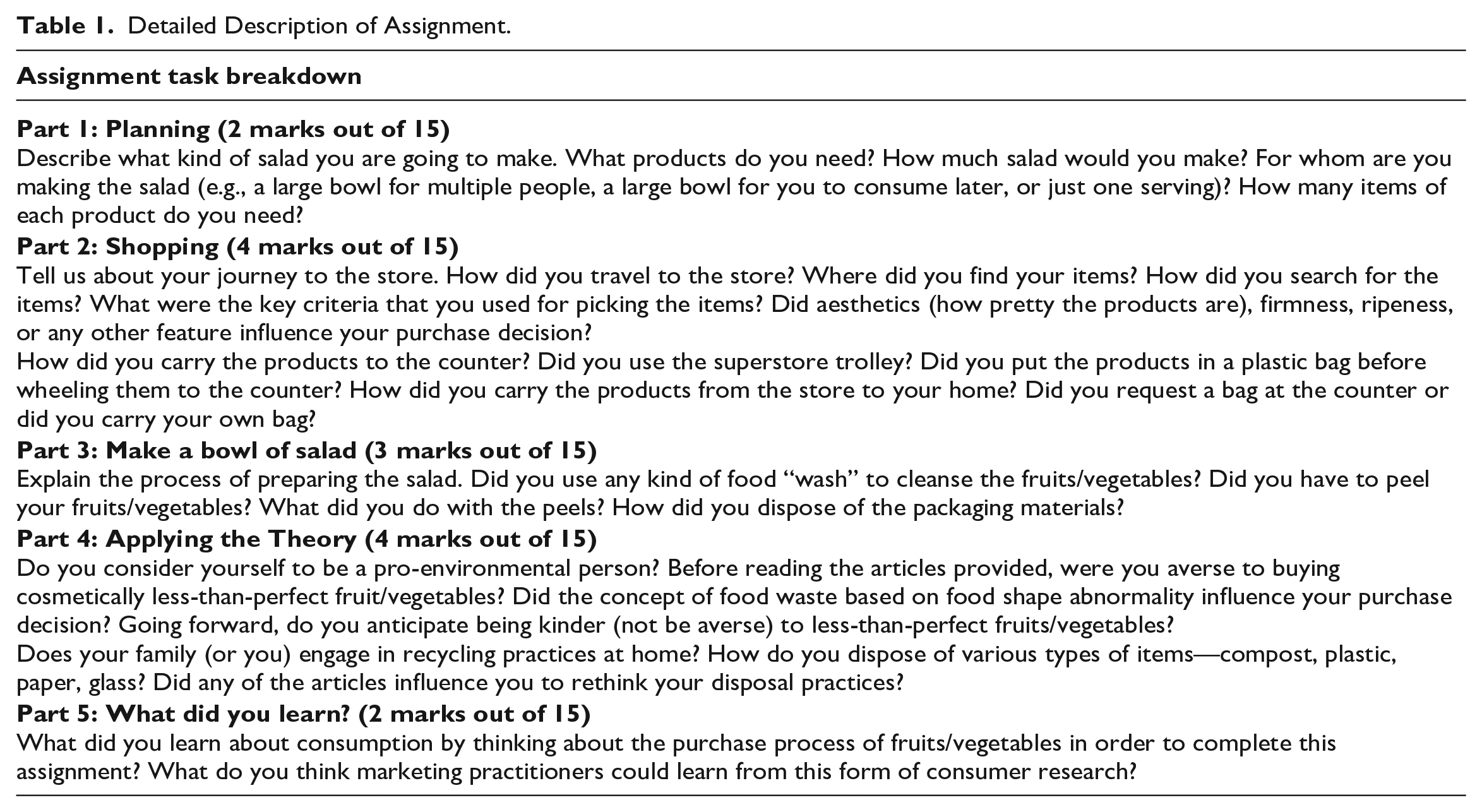
The assignment focused on students preparing a bowl of salad while being mindful of their own behavioral patterns throughout the ingredient procurement and salad preparation processes. A salad was selected for several reasons. First, salads come in a vast array of types and fit the requirements of vegans, vegetarians, carnivores, and those with religious restrictions or on special diets (e.g., gluten- or lactose-free). Second, a salad is a high-involvement dish in terms of the number and range of ingredients and their level of preparation. Finally, the flexibility of salads means that they can be prepared on a budget, making it more practical for cost-conscious students.
The exercise begins with the planning phase to ensure that students (a) avoid needless waste through duplicate purchases and (b) do not purchase pre-packaged salads, which would obviate the exercise’s purpose. Next is the implementation phase, when students physically acquire the ingredients, before phase 3, when students make a bowl of salad with the ingredients. These three phases reflect Kolb’s notion of concrete experience. Students experience sensory engagement as they visually assess the produce and feel it for signs of rot, dispose of unneeded food parts and wrapping, and save leftovers and unused ingredients for future use. The three phases involve Kolb’s active experimentation as the students’ sensory experiences, conceptualizations, and reflections are assessed in the context of actions (ingredient shopping and meal preparation).
Phase 4 is about abstract conceptualization, which involves integrating theories and concepts into the overall learning process (Kolb, 1984). Students critically reflect on their behaviors as consumers with reference to the theories and resources provided. Phase 5 is about reflective observation, which requires students to record and elaborate upon experiences (Kolb, 1984). They document their learning and draw connections between academic knowledge and practice, reflect on the assignment, and apply outcomes in their future behaviors as consumers (and hopefully later as marketing practitioners) (Borin & Metcalf, 2010). This reflective journaling of experiences engages students to evaluate the readings in relation to their own experiences to create personally meaningful connections which can enhance their self-awareness (Dahl et al., 2018) and develop their understanding of concepts and theory. The exercise helped to establish a deeper understanding of food sustainability and personal consumption in a real-world context.
Data Analysis
To evaluate whether the assignment was successful in instilling knowledge about food sustainability and effecting behavioral change, we employed two methods: (a) gaining an understanding from student essays about their awareness and standing on the topic and (b) measuring their responses through pre- and post-exercise sustainability-related questionnaires. (Note: all student names have been anonymized for reporting purposes.)
Essay Responses
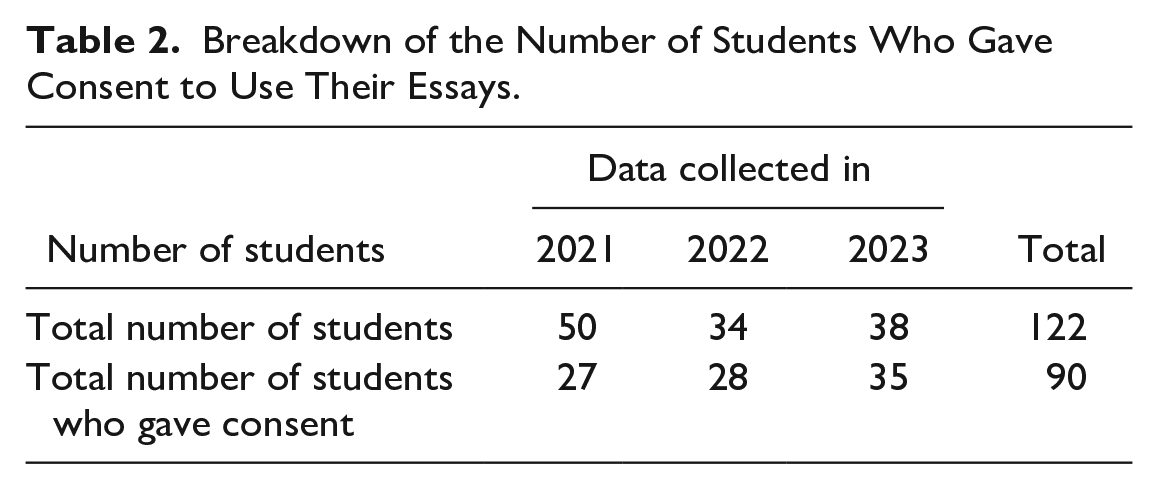
Students’ deliverable was a 1,500- to 2,000-word essay on their experience, which served as key data with all names anonymized. Of the 122 students from the 3 classes held over 3 years, 90 provided consent for the use of their essays in our research (Table 2).
Breakdown of the Number of Students Who Gave Consent to Use Their Essays.
For analysis, we began by reading every essay without coding or analysis to try to vicariously enter the students’ lives (Corbin & Strauss, 2015). Next, the analysis consisted of reading through the essay data, asking questions, making comparisons, looking for relationships, and identifying patterns (Corbin & Strauss, 2015). After the data were entered into NVivo qualitative data analysis software, the third author carried out open coding on 10 sample data points (essays) by reading line-by-line to assign codes to categories of responses based on language and expressions (Corbin & Strauss, 2015). Following this, the first author analyzed the same 10 essays and created further codes. Subsequently, sub-categories were assigned to the main coding categories, as we analyzed the remaining data. First and second-order analyses (Gioia et al., 2013) were done according to the emerging themes. Once the point of theoretical saturation was reached, we looked at how the themes connected with each other and explored possible interpretations. This form of gestalt analysis (Gioia & Chittipeddi, 1991) allowed us to explore new concepts, themes, and relationships and interpret the findings in a theoretically rich manner.
Pre- and Post-Assignment Survey Responses
In years 2 and 3, we had our students complete pre- and post-assignment questionnaires to statistically investigate where they stood prior to and after the completion of activities. We adapted Gericke et al.’s (2019) Sustainability Consciousness Questionnaire (see also Marcos-Merino et al., 2020) to measure “sustainability knowingness,” “sustainability attitude,” and “sustainability behavior.” The pre-assignment survey was completed in the first 2 weeks of the term before students were assigned readings. The same survey was administered at the end of each semester.
The pre-assignment survey enabled us to capture students’ initial perspectives on sustainability. The post-assignment survey allowed us to discover what changed through completing the exercise through comparison. A total of 63 students allowed us to use their data for analysis. A Wilcoxon signed-rank test was conducted given this test’s appropriateness for repeated measure design where the sample size was small (Rosner et al., 2006) and the same participants were evaluated under two different conditions (Scheff, 2016). To test the fit of data to our measurement model (Graham et al., 2003), we ran a confirmatory factor analysis (CFA) using the lavaan package (Rosseel, 2012). The model showed an acceptable fit to the data as items loaded onto the factors of sustainability knowingness, sustainability attitude, and sustainability behavior (CFI = 0.912; RMSEA = 0.045; TLI = 0.902).
Qualitative Data Findings
Pedagogical Learning Through Food Sustainability: A Framework
A conceptual model, entitled RESCUER (Figure 1), shows how the tripartite mobilizing factors of: (a)
List of Quotes Pertaining to the RESCUER Framework.
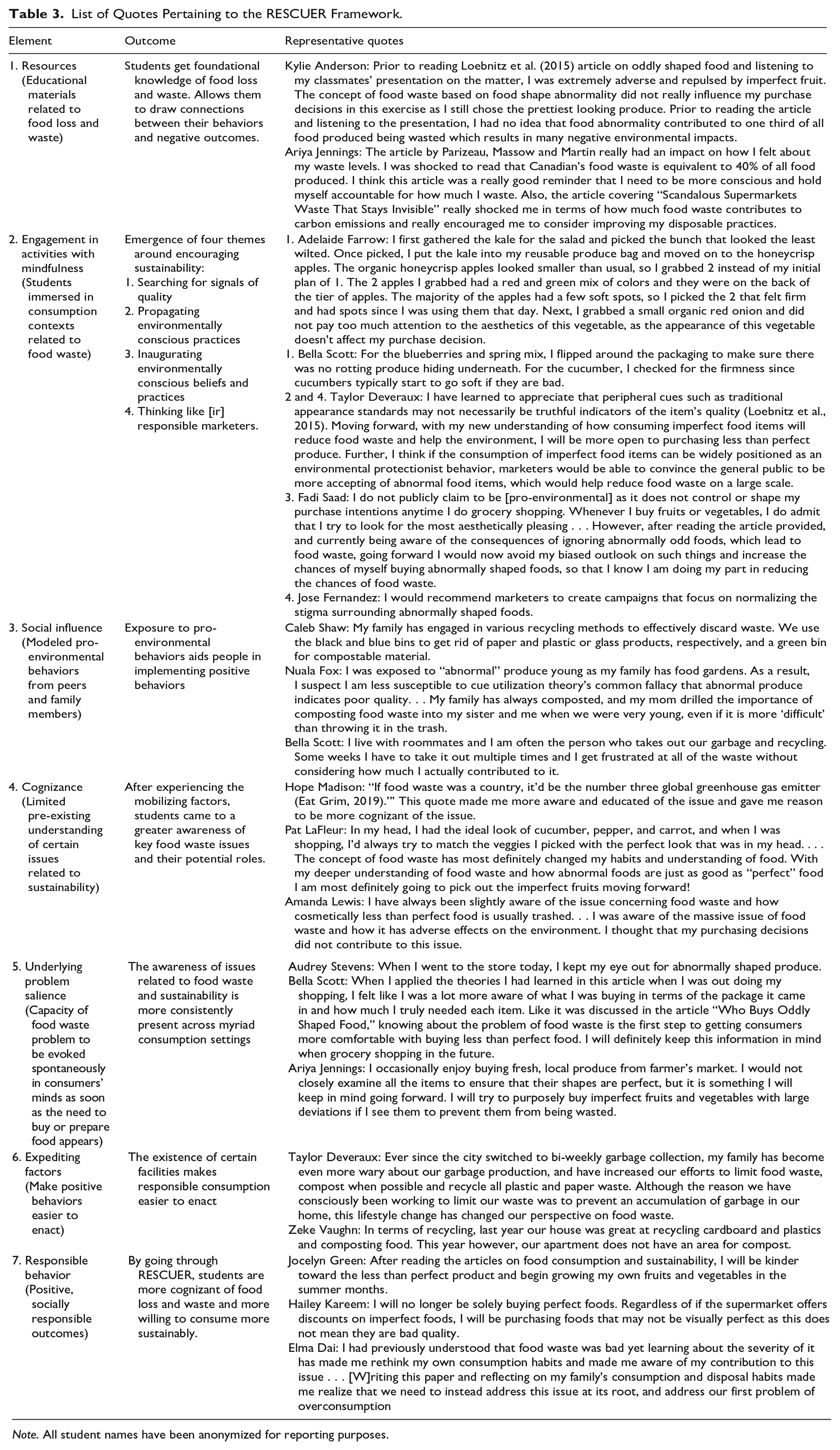
Note. All student names have been anonymized for reporting purposes.
Mobilizing Factors
Data analysis revealed that when a series of elements are mobilized, they can be effective in generating cognizance of the problem, creating underlying problem salience, and encouraging more responsible consumer behavior. We identify: (a) Resources, (b) Engagement in activities with mindfulness, and (c) Social influence to be effective elements for cognizance and salience generation. These three elements are described below.
Resources
The exercise commenced with students reading a set of educational resources as we assumed that not all had an in-depth working knowledge of sustainability (Borin & Metcalf, 2010). The readings are those in the passive learning section (Eat Grim, 2019; FAO, 2011; Loebnitz et al., 2015; Parizeau et al., 2015). Students read about issues related to food loss and waste from both market systems and behavioral perspectives. The readings also contained practical and personal solutions related to wasteful behaviors. Overall, they helped students to scratch the tip of the food loss and waste iceberg and begin to mindfully reflect on their own contributing actions.
Students frequently mentioned the importance of the readings in better informing them of key issues. For instance, Zeke explains his efforts to change his relationship to “imperfect” foods: Before reading this article, I remember going to grocery stores and avoiding cosmetically less than perfect fruit/vegetables. After reading this article, I now understand that fruits and vegetables that may not be as aesthetically pleasing are still perfectly fine to purchase as they are not much different from “perfect” fruits and vegetables aside from their appearance (Zeke Vaughn).
The readings also helped students to become more informed about food waste issues and to better draw connections between their behaviors as consumers and some negative outcomes.
The readings helped me realize that our lifestyle has a huge impact on the amount of waste we create and that there are many factors that influence us. Before reading this article, I had never really considered that people may choose to not purchase certain food based on its shape . . . I think the articles were a really good reminder that I need to be more conscious and hold myself accountable for how much I waste (Ariya Jennings).
The readings worked as the initial guide to sensitize students to the extent of the food waste problem and their contributing behaviors. Students became more aware of the issues and consequences, their responsibilities, and positive steps they can take (Watson et al., 2022). These resources helped students progress to the next steps of the assignment with greater mindfulness.
Engagement in Activities With Mindfulness
Mindfulness is “a state in which an individual focuses on present and direct experience and is intentionally aware and attentive” (Yeganeh & Kolb, 2009, p. 14). When more mindful, people view situations from several perspectives, recognize information as novel, attend to the contexts in which they perceive the information, and create new categories through which information may be understood (Langer, 2016). In the active learning phase, students are immersed in a context where they make personal decisions related to food waste. To begin, they prepare a shopping list, shop in-store to acquire their food, and then make a salad.
Consumers—our students included—have been conditioned to select food that contributes to waste (e.g., rejecting aesthetically imperfect foods or those with closer sell-by dates). We wanted them to be mindful of the food waste problem and their roles as consumers. For this, the readings were one step, but another important one was the challenge of doing and writing about their shopping and food preparation. Journaling allows students to articulate their feelings, thoughts, values, and lived experiences in situ (Dyer & Hurd, 2016; Hubbs & Brand, 2010) and can lead to high levels of self-reflection and reflexivity (Kennedy et al., 2022; Peltier et al., 2006). Reflexivity is important to achieve our learning outcomes as it involves students examining and challenging taken-for-granted assumptions, practices, and policies (Kennedy et al., 2022) and encourages students to be more alert when shopping for and preparing food. Students move beyond just comprehending learning materials to more actively engaging in learning that not only evokes previous knowledge, experiences, and what they covered in the passive learning phase but also is based on critically analyzing and questioning their accumulated knowledge, experiences, and what they read (Labrecque et al., 2021; Peltier et al., 2006; Watson et al., 2022). This mindfulness or present-moment awareness during food procurement and preparation is a crucial step toward curbing food waste.
In their writing, students revealed four main themes in relation to sustainability and waste: searching for signals of quality, propagating environmentally conscious practices, inaugurating environmentally conscious beliefs and practices, and thinking like [ir]responsible marketers. We cover each in brief.
Searching for the Signals of Quality
Students demonstrated a proclivity to buy food that personally signaled high quality in different ways. One way of determining quality was by assessing the look and feel of products. For produce, this included assessing physical features, the vibrancy of the colors, texture, and evident or subtle signs of rot.
For the ripeness and firmness, I assessed the potatoes by slightly pressing them; any soft potatoes or potatoes that had heavy, sunken holes that were soft, meant that the potatoes were rotten and not good for purchasing. Whilst for color, I looked at the coloring of the greens to ensure that they were not yellow/brown, as it translates to overstayed and rotting greens (Grace Kay).
In other instances, students prefer to actively pick products from the backs of shelves. These were perceived as having been touched less, which was taken as a marker of greater product cleanliness (Argo et al., 2006).
For my spinach, I looked for a box near the back of the shelf in hopes of finding one that had the latest possible best before date and that had been touched less often by other shoppers. I want everything that I buy to have been touched as little as possible by others! (Kiran Adarsh).
Propagating Environmentally Conscious Practices
Students described many behaviors that they felt helped them to be more sustainable in their consumption. Among the many examples in our data, students described planning meals to be less wasteful, ensuring not to over-shop, bringing reusable bags, and making conscious choices regarding packaging materials to minimize waste. Lily is one such student.
Many of my consumption decisions are made with the environment in mind. I have swapped to reusable beeswax paper and reusable lunch containers made of recycled plastic (Lily Newman).
In this and other examples, students described how they are enacting practices consistent with their self-conception as environmentally conscious individuals. However, this activity further helped them as they came to recognize gaps in their own knowledge and adapt their consumption behaviors to align with their self-conception.
Before I was definitely more averse to buying cosmetically less-than-perfect fruit and vegetables. I love cooking, and getting to go to the grocery store to pick the most perfect-looking and smelling fruits and vegetables is something I find very joyful, even romantic. However, having read the article, I will no longer be able to experience joy in this action, as I am cognizant of the negative effects that food abnormalities have on the environment due to food waste issues (Loebnitz et al., 2015). On that account, I will surely change some of my habits to match my perceived identity. Seeing myself as, and wanting to be more of, a pro-environmental person, I want my actions regarding food waste to match this desired self-identity (Ava Chelariu).
Inaugurating Environmentally Conscious Beliefs and Practices
The exercise not only encouraged more positive behaviors from those who pre-identified as environmentally conscious but also helped to shift the attitudes and behaviors of others who were less so. This is cogently expressed by Elma who references personal experiences, family influences, and learned behaviors and details how this assignment (active and passive parts) was a catalyst for change.
I never perceived myself to be an environmentally conscious person . . . I felt like I had no obligation to participate in these positive behaviors, and no one would hold me accountable for it. I partially hoped that since there were so many pro-environmental people, their impact on the environment would outweigh, or at least cancel out mine. . . I was taught [by family] to select high-quality foods, based on their look and feel, however, this may not have been an accurate way to determine quality, especially concerning abnormally shaped foods. Additionally, my grandparents grow their own produce at home, which usually ends up looking somewhat abnormally shaped, therefore at a grocery store we made sure to look for perfect looking items, since we would be paying for it, rather than growing it. . . . I had previously understood that food waste was bad yet learning about the severity of it has made me rethink my own consumption habits and made me aware of my contribution to this issue (Elma Dai).
Thinking Like [Ir]responsible Marketers
The assignment not only encouraged students to gain a deeper understanding of personal consumption in relation to pro-environmental behaviors but also encouraged them to think from a marketer’s (ideally, responsible) point of view. Students often considered potential positioning strategies for imperfect foods and suggested possible promotional strategies to raise awareness.
Marketers could play a huge role in changing the norms surrounding this issue because they assist in creating the standards in the first place. There is a movement about body positivity, so why not create a campaign that is directed toward food positivity? “This is what real food looks like” is the message they should be communicating while also spreading awareness regarding the amount of waste that is created. Marketers need to realize that they can push the boundaries and create change (Ariya Jennings).
In this section, we provided details about how students actively engaged in the experiential activity. In what follows, we look at the important impact that others can have on students’ knowledge and behaviors, responsible and otherwise.
Social Influence
In our framework, we identify how influences from family (Johnstone & Hooper, 2016) and peers (Lee, 2014) can have lasting effects on students’ behaviors. First, we see how parental influence can impact attitudes, values, beliefs (see also, Grønhøj & Thøgersen, 2012; Moore-Shay & Lutz, 1988), and behaviors, and how these can come to be perceived as acceptable norms (Grønhøj & Thøgersen, 2012).
I would consider myself to be a pro-environmental person mostly because of the habits instilled by my family’s disposal efforts (Bailley Fitzgerald). I inherited the method of disposal from my parents and when I moved to [current city], I continued to separate my trash between garbage, compost, and recycling (Andrew Taylor).
The data show how students’ learning in the context of family life happens through observation, reinforcement processes, and consumption experiences (Moschis, 1987). Overall, these parental influences resonate with extant research that links social norms to prosocial behaviors such as sustainable consumer behavior (Goldstein et al., 2008; White et al., 2019), with parents being key social agents in this being instilled (Casaló & Escario, 2016; Matthies et al., 2012).
Another form of social influence that impacts students’ pro-environmental behaviors is peer behavior (Collado et al., 2019; Kirakozian, 2016). Extant research shows how friends or acquaintances influence prosocial behavior directly (through urges to perform prosocial acts) or indirectly (through expectations) (Barry & Wentzel, 2006; Van Hoorn et al., 2016), with influence coming from closeness in terms of hobbies, age, or lifestyle (Collado et al., 2019). We see this in the case of Zeke who explains his peer influences.
I have had many friends who really care for the environment, for example, my two roommates who are currently in their third year of environmental engineering, have encouraged me to live an eco-friendlier lifestyle (Zeke Vaughn).
Generating Factors
Our analysis revealed that the three mobilizing factors (a) Resources, (b) Engagement in activities with mindfulness, and (c) Social influence generated two outcomes (generating factors) of (d) Cognizance and (e) Underlying problem salience.
Cognizance
Analyses of the essay and survey data found that, prior to the assignment, many students had limited understanding of sustainability issues, had never previously established links between food waste and imperfect food rejection, and were not cognizant of their role in the grander scheme of food waste. However, after experiencing the three mobilizing factors, many expressed and now demonstrated a greater cognizance of key issues.
In many cases, students began to recognize their roles as active participants in the food waste problem. This is shown in the following vignettes: I now understand the problem of food waste and how abnormally shaped fruits/vegetables play into this concept. Previously, I never thought about the implications of everyone ignoring these less than perfect produce items and did not even consider what kind of person would purchase these (Jennifer Gordon). Although I thought my family and I were environmentally-conscious people, clearly our oversights in this area have indirectly added to the huge amount of waste that occurs . . . I was not aware of the issue . . . Instead of buying more products once they are on sale, I am more mindful of buying what I need rather than what I want (Caleb Shaw).
Research shows how consumers with a higher awareness of food waste are more likely to consume in more sustainable ways, including purchasing abnormally shaped food (de Hooge et al., 2017; Loebnitz et al., 2015). Increased awareness through cognizance is one factor; another is when this environmental awareness is more consistently “activated,” which we cover next.
Underlying Problem Salience
The three mobilizing elements also generated Underlying problem salience, which we developed by drawing on brand salience—“the capacity of the brand to be evoked spontaneously in consumers’ minds as soon as the need to buy the product type appears” (Kapferer, 2012, p. 388). Brand salience is a foundational block of the brand resonance pyramid and supports the subsequent blocks required for ultimately creating brand resonance, or the highest level of consumer loyalty with a particular brand (Keller et al., 2015). Similarly, we define underlying problem salience as the capacity of the food waste problem to be evoked spontaneously in consumers’ minds as soon as the need to buy or prepare food appears. In underlying problem salience, if the concept of food waste is more consistently resonant or can be readily evoked in consumption settings, then consumers could behave in less wasteful ways. Thus, creating underlying problem salience is a crucial step toward a richer engagement with the issue.
I think I was really hyper-aware when making the bowl [of salad] . . . I was really aware of the portion size I was making, because it was only me eating the salad, I wanted to make sure I was not wasting any food if I didn’t have to (Karter Smith). When I went to the store today, I kept my eye out for abnormally shaped produce (Audrey Stevens).
Such responses indicate that the underlying problems related to wasteful consumption became salient in students’ minds after engaging with the resources and when partaking in the active learning exercise. While the activity we created is limited, it demonstrates ways that problems can become more salient and can influence positive consumption behaviors.
Expediting Factors
Expediting factors make behaviors easier to perform. In research, we see the importance of convenience on recycling behaviors (Knussen et al., 2004), including how the existence of a recycling bin positively influences sorting behavior (Guagnano et al., 1995) and how the lack of equipment can lead to lower levels of recycling behaviors (Vining & Ebreo, 1990). Our findings reflect these previous results and demonstrate the importance of expediting factors, such as the availability of recycling facilities, in encouraging pro-environmental behaviors.
Recycling and composting is much more common and important at my student home in [city]. I believe this is not only because of individual preferences, but also because access to the recycling and composting bins is much closer to my kitchen in my university town compared to my kitchen back home, therefore there is a stronger emphasis on these practices due to convenience (June Blyth).
In her comment, June articulates how people’s positive environmental attitudes alone (“individual preferences”) do not always translate into positive behaviors, and how expediting factors facilitate these behaviors.
Another factor in student narratives was the influence of product availability on purchase. For example, retailers tend to carry cosmetically perfect-looking produce, which can impede students’ efforts to purchase food that is “imperfect” or otherwise not deemed “shop-ready.”
When I bought my groceries at the store, I did not really have to think about the shape of the products I was buying because there were no abnormally shaped goods (Ariya Jennings). As someone motivated by price and discount, I would certainly be more inclined to purchase imperfect produce
These results demonstrate how positive mobilizing factors can be amplified by expediting factors. For instance, just as convenient facilities enable more recycling and composting, without options to purchase food typically destined for disposal, consumers are less able to positively contribute to reducing waste. While the expediting factors highlighted above are important, past research has shown the importance of other design-based control factors, and future research can further investigate factors that help people to consume responsibly more easily (Thaler & Sunstein, 2008).
Responsible Behavior
The framework is completed with an increase in responsible behaviors whereby students are encouraged or nudged toward more positive consumer behaviors. Becoming cognizant of food loss and waste, students expressed a willingness to consume more sustainably. Below are three examples from student essays.
I bought abnormal carrots and green onions and even considered some oddly shaped bell peppers in my purchase decisions (Hope Madison). Completing this assignment has increased my awareness to ensure to take the foods on the shelves that are approaching their best before date as opposed to selecting the freshest option each time (Andrew Taylor). Cherry tomatoes are only available in small plastic containers . . . Although I prefer cherry tomatoes because they are slightly sweeter, I could just as easily purchase Roma tomatoes, and cut them into the appropriate size, ultimately reducing my plastic intake (June Blyth).
In these and other examples, we see an uptick in students’ responsible behaviors such as choosing imperfect food, becoming less picky about expiry dates, and curtailing their plastic use. Students showed how they were applying what they learned from the exercise by demonstrating these positive personal behaviors.
Another insight was students’ potential to be catalysts for others’ environmental learning and green behavior involvement (Easterling et al., 1995) because of participating in this exercise. In the case of family and changes to household practices (Ballantyne et al., 2001), this is reverse socialization, where the influence on parents’ consumption emanates from their children (Ekström, 1995; Grønhøj & Thøgersen, 2012).
I try to advocate this type of shopping (sustainable fashion) to my friends and family . . . I am certainly going to share what I have learned from the readings with friends and family (Ariya Jennings).
In sum, we see how the RESCUER framework encourages a range of environmentally positive consumer behaviors by student participants and their ability to influence family and friends to consume more responsibly.
Survey Results
As well as gathering and analyzing qualitative data, we also surveyed students to statistically test for changes that resulted from engaging in this exercise. In our survey results, we find support for many of the key findings from our qualitative analysis.
A Wilcoxon signed-rank test to assess changes after completing the assignment showed that overall post-test ranks for sustainability consciousness/mindfulness were significantly higher than the pre-test ranks (Z = 4.26, p < .001), indicating that the RESCUER framework was effective at inculcating an overall sustainability consciousness or mind-set among students. The analysis also revealed that post-test ranks for sustainability knowingness/cognizance were significantly higher than the pre-test ranks (Z =3.35, p < .001), which shows how active engagement in the activity leads to students being more aware of the importance of the focal issues. Third, post-test ranks for sustainability behavior were significantly higher than the pre-test ranks (Z = 3.32, p < .001), indicating a change in (self-reported) positive behaviors after engaging in the RESCUER framework. The only factor that did not show significant change was students’ sustainability attitude (Z = 1.7, p > .05). Details of the Wilcoxon signed-rank test reports are reported in Table 4.
Summary of Wilcoxon Signed-Rank Test for Sustainability Factors Comparing Pre-Assignment and Post-Assignment Survey Responses.
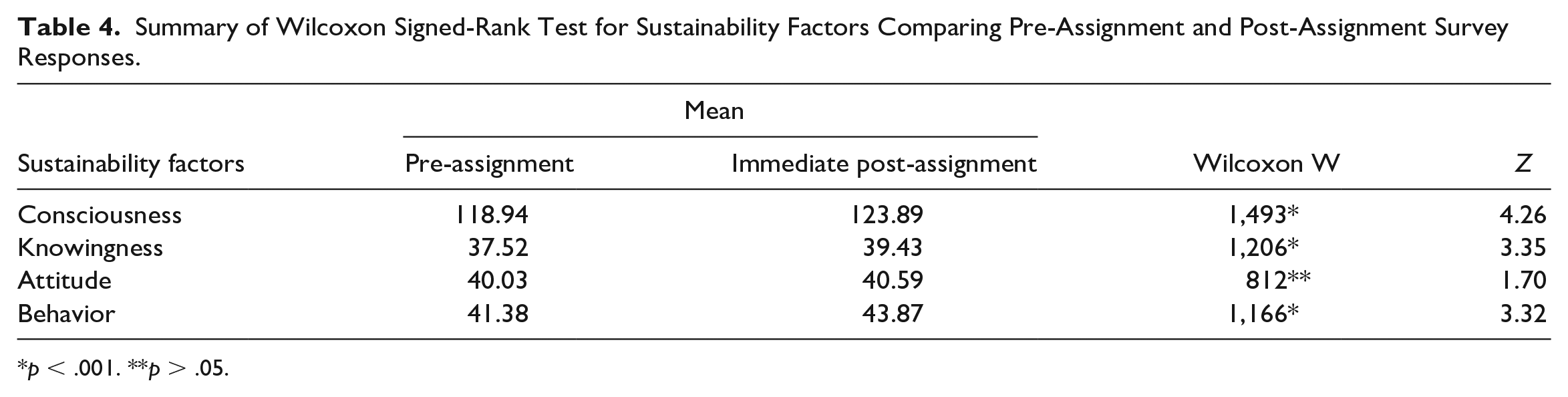
p < .001. **p > .05.
What these results show is that after engaging in the activity, students showed higher levels of sustainability consciousness and cognizance. Students also revealed important behavioral changes as they reported higher levels of sustainability behavior when compared to the pre-test scores. Our findings thus demonstrate, both qualitatively and quantitatively, the impact of the described exercise.
Discussion
The RESCUER framework helps students learn about the crucially important SDG on responsible consumption (SDG 12). This SDG resonated strongly with our students and we observed how, through partaking in the exercise, students experienced changes in beliefs and behaviors related to sustainability. In the framework, students initially gain knowledge through passive learning with the provided resources before engaging in food and sustainability activities with mindfulness. This engagement is enhanced by family and peer influences. All these factors (learning through resources, engaging in the actual experience, and the influence of family and friends) combine to create in students a greater cognizance and increased salience of food waste. In the final analysis, we also see how students, mindful of their actions, displayed responsible consumption behaviors after engaging in RESCUER, which shows it can positively shift their “mind-set towards sustainability by [making them] recognize the implications and consequences of their own consumption” (Mohammad et al., 2021, p. 483). We also see evidence of how students can foster changes in others’ (family and friends) pro-environmental behaviors (Grønhøj & Thøgersen, 2012). Finally, students proposed practical and often creative steps that marketers can take to help facilitate positive behavioral changes.
While our findings about how students, at an individual level, became more aware of their problematic personal consumption behaviors and learned how such behaviors could be changed, are valuable, what is even more important is that the RESCUER framework blends a systems-level approach alongside this personal one. Through their engagement, students learned how their consumer actions sit within a complex food system in which they are but one small actor. Through active and passive modes of learning, students gained valuable insights about food producers, suppliers, retailers, channel dynamics and asymmetries, consumers (both themselves and others), and interconnections with their peers and family members and the various influences they can have on one another. Here students are dealing with the interactions between these myriad actors, which leads to complexity (Wooliscroft, 2021), yet it is through becoming aware of and learning about these complexities that students can understand a topic more deeply (Faranda et al., 2021). Students will need to better appreciate the complex nature of systems, well beyond just the food one, in their personal and future professional lives. A common refrain within student feedback was a low level of awareness of how the food system worked, often despite students claiming very high levels of awareness of sustainability and environmental issues. Undergraduate students do not always know about important issues at these wider systems levels. By situating students as actors within the food system, the RESCUER framework allows them to understand the system better and produce important individual-level changes.
Scholars have presented SDG 12 as the “foremost global goal” (Rosenbloom, 2022, p. 115) for marketing and marketers. This places marketing at an important inflection point. SDG 12 is at odds with what much of marketing has been traditionally about, which is to serve as a driver of demand and consumption as the engine for more production. Yet, for SDG 12 to be achieved, sustainability must become an increasingly important part of marketing, which, as a socially mobilizing mechanism can help foster a shift in consumer mindsets, sentiments, and practices toward more sustainable, closed-loop relations between consumption and production (Benton, 2015). Yet, what of the marketers themselves, of those who do and will work in these roles in businesses? On its website, the United Nations focuses on what consumers and businesses (as aggregates) can do to help with SDG 12, with nothing about those who work within these businesses. They state it is “in businesses’ interest to find new solutions that enable sustainable consumption and production patterns,” while consumers are encouraged to help by “(1) [r]educing your waste and (2) [b]eing thoughtful about what you buy and choosing a sustainable option whenever possible” (United Nations Sustainable Development Goals, n.d.). However, much of what happens in businesses and how decisions get made are a function of marketers’ own individual belief and value systems (Woodall & Hiller, 2022), which for marketing students considering their future roles in the field, is rarely related to sustainability (Woodall et al., 2022). For SDG 12 to succeed, a paradigmatic shift is needed for marketers as much as it is for consumers. Marketing pedagogy must not only raise students’ awareness and understanding of SDGs and of how different businesses approach sustainability, but it must also instill in them a belief that they can enact positive change in their working lives and must equip them with the tools and decision-making skills to successfully do so.
Limitations and Suggestions for Future Pedagogical Endeavors
As this assignment was only one component of a course, we were limited in terms of understanding the students’ behaviors more deeply on a variety of levels. Although we conducted surveys about students’ pre-existing sustainability dispositions prior to the exercise, we could have learned more through methods such as reflective essays or surveys about their attitudes, behaviors, or ideological outlooks. We could have students reflect more deeply on and reveal their pre-existing attitudes toward, and knowledge about, sustainability. An instructor could then better tailor elements of the assignment toward different students (Faranda et al., 2021) and better understand any resulting attitudinal or behavioral changes. Including this as a longitudinal element would also be valuable to see how RESCUER components contribute to longer-term changes. Also, while students completed the post-assignment survey soon after finishing the exercise, a later survey can also be conducted to test for longer-term effects.
We could have accounted for and included various other outlooks or dispositions. For example, how might students hyper-focused on health or wellness consider foods typically deemed not fit for sale in relation to sustainability? Silchenko and Askegaard (2020) examine the ideology of healthism—“an individual’s preoccupation with and responsibility for health, raised to the level of super-value” (p. 134)—and how this powerful cultural discourse informs consumers’ decisions in relation to food. It would be interesting to research the impact of such perspectives on consumer preferences for, or the avoidance of, “ugly” foods, and whether such health-obsessed consumers behave differently in relation to such foods. It would also be beneficial to see more research at the intersection of sustainability and other consumer trends such as green consumption (Viswanathan & Varghese, 2018), ethical consumption (Papaoikonomou & Alarcon, 2017), “anti-consumption” (Hüttel et al., 2020), and slow food movement consumers (Chaudhury & Albinsson, 2015), or “Foodies” (Ulver, 2019).
The exercise can be modified to be a larger course component where a focus on transformative attitudinal and behavioral changes is embedded throughout the course, with these as both learning tools and outcomes (Kennedy et al., 2022). The framework can be used in conjunction with other activities and exercises that encourage critical reflection, and changes can be assessed. Significantly, using the RESCUER framework to study a system would cause feedback loops, as what students learn in an exercise like this can then become applied to other assignments and exercises that follow.
Finally, for their assignment, students were instructed to buy in-person. An avenue for future research, that overcomes a current limitation, would be to explore how students shop online in a manner that is mindful in terms of sustainability and food waste. Online shopping also presents myriad other factors, including how one can manage one’s personal carbon footprint based on choices such as delivery options.
Conclusion
Researchers have emphasized the importance of conducting research that will allow us to better understand consumers’ food-related behaviors in relation to their motives, value orientations, and social contexts (Beverland, 2014; Dolan, 2002). Our RESCUER framework and pedagogical exercise are useful contributions in that vein and add to debates on the roles and responsibilities of individual consumers with regard to sustainability vis-à-vis marketers and food suppliers, and help to address SDGs in relation to sustainable consumption. It seeks to educate students about sustainability, situate them within complex food supply systems, and simultaneously encourage positive decisions while demonstrating how challenging these can be to make (Xu et al., 2021). We also intend that our framework will be used as a blueprint for other marketing education exercises. We further anticipate that this framework will be helpful for researchers looking to nurture more responsible behaviors at a time when marketing is accused of stimulating unsustainable levels of consumption (Benton, 2015). The time is right to consider what “sustainability” and responsible consumption mean (Kemper & Ballantine, 2019), how they can be encouraged, and to explore how they can be woven into the fabric of marketing instruction (Davies et al., 2020). This exercise and article contribute to this vital wider effort.
Footnotes
Declaration of Conflicting Interests
The author(s) declared no potential conflicts of interest with respect to the research, authorship, and/or publication of this article.
Funding
The author(s) received no financial support for the research, authorship, and/or publication of this article.
