




Abstract
Advances in digital technologies coupled with the explosion of data are transforming the marketing education landscape at a rapid pace. Given the scale and speed of digital disruption in today’s industry, marketing academics face ongoing challenges of addressing the theory–practice gap, which will only accelerate. The purpose of the current study is to gain a better understanding of the current state of digital/social media marketing and analytics education through a review of past pedagogical research in the realm of digital/social media marketing and marketing analytics. The collected database (N = 54) was analyzed based on their category and scope, and sub-themes within each category. Our findings indicate that while business schools have been diligent in introducing important skill sets to their curriculum, the approach has been predominately tactical, rather than driven by an overarching strategic plan. Based on the findings, we discuss the implications for marketing educators and directions for future research that can help bridge the theory–practice gap as we proceed in the future data-driven digital environments.
The explosion of data coupled with the digitally disrupted environment has fundamentally changed the marketing landscape. Graduates must possess strong digital and analytics skills to successfully compete in today’s rapidly changing environment, requiring business schools to update their curricula in accordance with the needs and expectations of employers (Kurtzke & Setkute, 2021). From a pedagogical perspective, digital technologies and analytics have converged to create a fundamental impact on the requirements of the workplace and how business schools should prepare students to become more career-ready (LeClair, 2018). Specifically, the growing use of advanced technology and data in marketing strategy development has led to an increasing need for marketing educators to properly incorporate both digital/social media marketing and analytics into their curriculum.
However, with the scale of disruption and continuing fast-paced changes in today’s competitive marketplace, marketing academics face ongoing challenges of tackling the theory–practice gap that have been well documented in the literature (Cowley et al., 2021; Y. Liu & Levin, 2018; Rohm et al., 2019; Ye et al., 2017). Given that the change is only going to continue if not accelerate, it becomes critical for marketing educators to develop a pedagogical approach that can provide a sustainable vision for closing the gap existing between what is taught in the classroom and what is expected from industry.
An accumulating body of research attests to the fact that both digital/social media and analytical skills are emerging as important skills required by practitioners (for digital marketing programs, see Muñoz & Wood, 2015; for analytics, see Y. Liu & Levin, 2018). However, in the literature examining “career-readiness” or similar concepts (Cowley et al., 2021; Y. Liu & Levin, 2018; Rohm et al., 2019; Ye et al., 2017), it has been noted that marketing education is not adequately preparing students for today’s workplace. Specifically, digital/social media marketing and marketing analytics are frequently treated as two separate topics in the marketing curriculum. For example, research examining marketing analytics education generally revolve around discussing a curricular design (e.g., (Y. Liu & Levin, 2018; Walker & Moran, 2019; Weathers & Aragón, 2019) or analytical tools (e.g., Lim & Heinrichs, 2021), with little practical implications on how analytics can be taught within the context of digital/social media marketing. Likewise, research examining digital/social media marketing courses offered in business schools largely focus on the concepts and tools specific to that domain (e.g., Brocato et al., 2015; Muñoz & Wood, 2015; Spiller & Tuten, 2019) with limited integration of analytics in the curriculum. As such, there exists a theory–practice gap, created by the difference between what is taught in academia and what is required for employment.
Scholars have started to acknowledge the importance of developing a marketing curriculum that integrates digital/social media marketing and analytics in marketing courses (Langan et al., 2019; Zahay et al., 2022). For example, case studies have been used to demonstrate how to integrate a theme of digital marketing (Rohm et al., 2019) or analytics (Y. Liu & Levin, 2018) or both (Langan et al., 2019; Zahay et al., 2022) throughout an entire marketing curriculum. New course designs such as social media marketing analytics have also been suggested as an effective approach for integration (e.g., Y. Kim, 2019). While research increasingly points to a growing need for educators to take an integrated approach to enhance students’ career-readiness, to the best of our knowledge, there is no research that systematically reviews past pedagogical research in these emerging fields.
Against this backdrop, the purpose of this paper is to gain a comprehensive understanding of the current state of digital/social media marketing and analytics education through a review of pedagogical research conducted in these fields. Specifically, the current research examines how digital/social media marketing and marketing analytics topics have been incorporated into marketing curricula in higher education. By doing so, we expect our paper to contribute to the marketing pedagogical research in two main ways. First, a review of digital/social media marketing and marketing analytics topics will yield timely insights given the increasing demand for these topics to be integrated as part of the marketing curriculum. Specifically, rapid changes in the marketing environment are urging marketing educators to adapt their curricula to properly prepare graduates to accommodate market demands for new skills. Given that the theory–practice gap has been debated for many years (Cowley et al., 2021; Y. Liu & Levin, 2018; Rohm et al., 2019; Ye et al., 2017), a comprehensive review of the literature that synthesizes past findings will help provide valuable insights and directions for marketing educators and administrators.
Second, despite the interconnected nature of digital/social media marketing and analytics, the two fields are mostly treated as two separate topics in the marketing curriculum. Recent research advocates for an integrated perspective (Langan et al., 2019; Spiller & Tuten, 2015; Zahay et al., 2022), but specific and practical guidelines are still warranted. By conducting a systematic literature review of both fields, our paper can yield insights on how digital/social media marketing and marketing analytics topics can be integrated effectively into a marketing curriculum by identifying frequently implemented, overlapping, or missing content in current course offerings. We believe that insights generated from our paper will shed light on developing a marketing curriculum that can sustain in the future and address the continuing challenges of linking knowledge, skills, and abilities (KSA) to produce career-ready graduates. By understanding the current state of digital/social media marketing and marketing analytics education, this paper seeks to offer valuable insights and directions for marketing educators as we proceed in the fast-evolving future disrupted by digital technologies.
The rest of the paper is organized as follows. We begin by providing a brief overview of the core concepts related to this paper. Then, we present our methodology and the findings of our analyses. We conclude by discussing the implications for future research and practice.
Conceptual Framework
With growing reliance on digital technologies and data, there has been great demand for a workforce that can incorporate digital and analytical skills in marketing strategy development. Yet, academic curricula continue to be criticized for failing to properly prepare students for today’s changing job market (Y. Liu & Levin, 2018; Rohm et al., 2019). The theory–practice gap has been further exacerbated by the evolving trends such as big data and information technologies. Because data sets are becoming too large and complex, commonly defined as 3Vs (i.e., high volume, variety, and velocity), today’s analytics necessitates non-traditional forms of information processing and robust analytical techniques to extract meaningful insights (Clayton & Clopton, 2019).
When data analytics focus on deriving strategic and/or tactical recommendations that provide marketing insights to optimize firm performance (Y. Liu & Levin, 2018), it is referred to as marketing analytics. In general, analytics can be categorized into three levels: descriptive, predictive, and prescriptive (Attaran et al., 2018). Descriptive analytics focus on identifying patterns based on past business performances (e.g., data modeling, visualization), while predictive analytics focus on projecting future situations and subsequent decisions using statistical methods (e.g., data mining, forecasting). Prescriptive analytics go beyond the first two and attempt to plan the best course of action based on the evaluation of the effects of future decisions (e.g., simulation, optimization).
Data science and business intelligence are similar disciplines that are frequently discussed (Phelps & Szabat, 2017), but the difference is that these fields center on the use of computer-based analytical tools and computer programming skills (e.g., data mining, data warehousing, information system analytics, data science, data analytics, visualization), whereas marketing analytics focuses more on drawing an optimal course of action based on data (e.g., prescriptive analytics). Specifically, marketing analytics applications include (a) customer relationship management (CRM), with the goal of improving customers’ lifetime value to a firm, (b) the marketing mix, with efforts to allocate the resources and enhance the effectiveness of a firm’s marketing efforts, (c) personalization of the marketing mix to individual customers, and (d) privacy and security (Wedel & Kannan, 2016, as cited in Y. Liu & Levin, 2018).
Digital marketing is largely defined as utilizing digital technologies to create an integrated, targeted, and measurable communication to acquire and retain customers while building relationships with them (Langan et al., 2019, as cited in Wymbs, 2011). Digital marketing not only involves connecting with consumers through platforms but also leverages digital media including owned, paid, and earned media by using devices such as computers, tablets, and mobile phones (Langan et al., 2019). As such, digital marketing encompasses topics including, but not limited to, search engine optimization, social media, content marketing, mobile marketing, email marketing, and marketing analytics.
As a sub-category of digital marketing media, social media is generally defined as the online means of interactions, communication, and collaboration among interconnected networks of people to create, share, and/or exchange information enhanced by technological capabilities (Tuten et al., 2015). Social media comes in different forms including various social networks (e.g., Facebook, Twitter, Instagram), platforms (e.g., YouTube, TikTok), and virtual worlds such as metaverse (e.g., Roblox, Fortnite).
As shown in Figure 1, while each field has its own concepts and skills to be covered in its respective course and curriculum, the overlap between digital/social media marketing and marketing analytics represents their interconnected nature, where the rising demand for data-driven marketing is creating the need for a larger overlap between digital/social media marketing and marketing analytics. By responding to the demands through pedagogical efforts that seek to integrate the two fields, the state-of-the-art marketing curriculum will be better suited to produce more career-ready graduates who are equipped to link marketing insights with data-driven actions and outcomes.
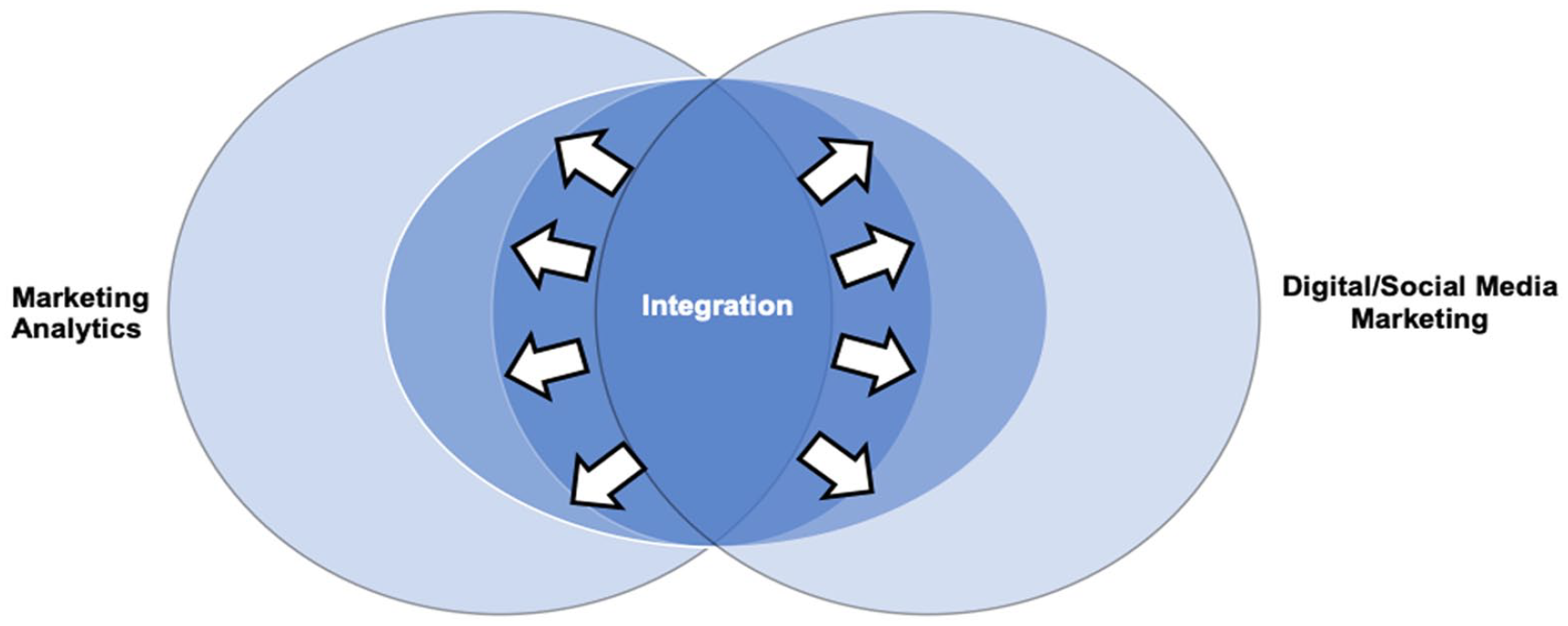
Conceptual Framework.
Method
To conduct our review, we began searching for peer-reviewed academic articles using the following databases: ABI/INFORM, Academic Search Premier, and Business Source Complete. We used the following keywords in the title and abstract fields for the initial search: at least one of the keywords from pedagogy, education, or curricula and at least one of the keywords from digital marketing, social media marketing, or marketing analytics. The review was not restricted by date. This process yielded a total of 572 articles. We further reviewed the collected articles to determine its relevance to the scope of the current research using explicit criteria.
The following criteria were employed for filtering purposes. First, for articles that examine the digital aspect of marketing education, it must cover more than just the effects related to internet-based education (e.g., online vs. in-person teaching) given that the effects of digital transformation that is evolving in the current state of pedagogy and curriculum involve more than simple course modality effects. However, we excluded articles that examine digital technologies that go beyond the scope of digital marketing pedagogies such as artificial intelligence (Elhajjar et al., 2021). Second, using the journal list suggested by Australian Business Deans Council (ABDC) as a guide, we went through the initial pool of articles and filtered out those not included in the list. Third, no books or proceedings or editorial papers were included. Following these criteria, 54 articles remained for the review.
Findings
We first present the descriptive analyses of the collected articles including publication volume by year and by journal. Then, we present the results of our analyses that categorize articles by topic (i.e., digital marketing, social media marketing, and marketing analytics) and scope (i.e., perspective, program/curriculum, and course). Finally, we discuss sub-themes and the type of research used within the analytics and digital categories, respectively.
Descriptive Analyses
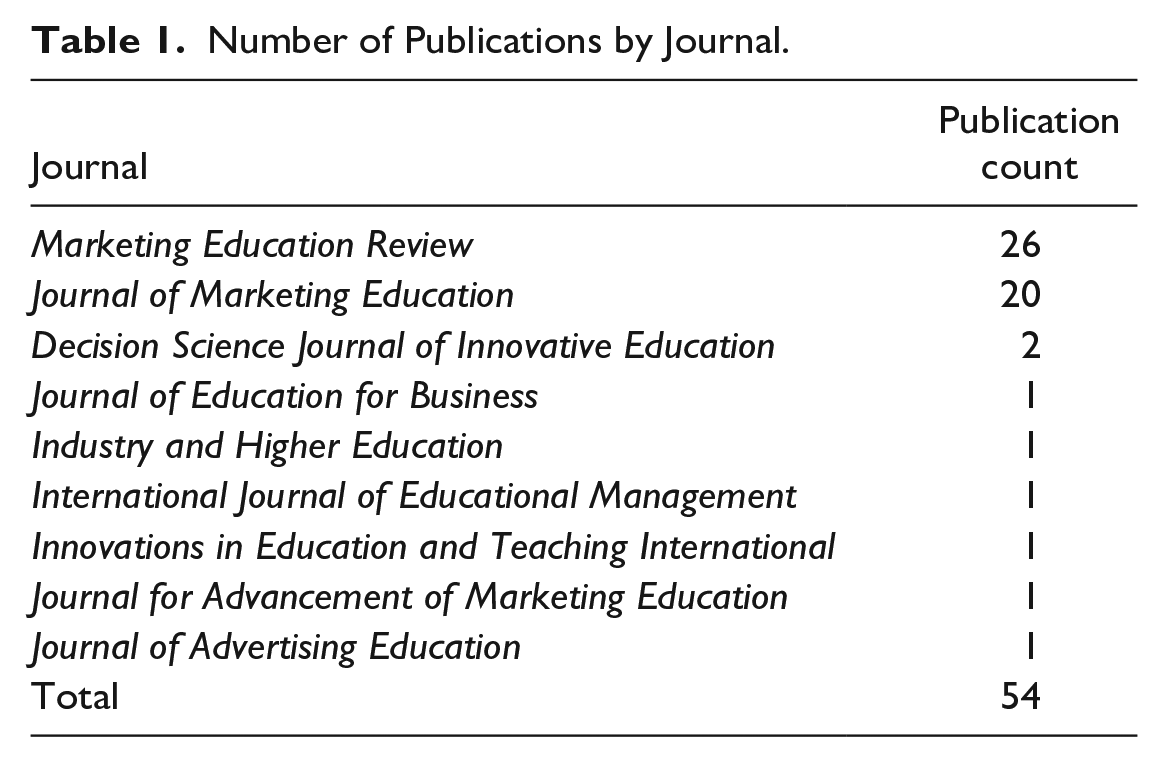
We began by examining the publication volume on the topic of digital/social media marketing and analytics education over time. The oldest article in our collected database was published in 2010. As shown in Figure 2, there has been fast growth over the last decade which testifies to the increasing scholarly interest in these topics. Research was sparse between 2016 and 2017, while a majority of articles appeared in 2015 and 2018–2019. A spike in publication volume in 2018 and 2019 can be partly attributed to the special issue call for papers on these topics. Specifically, Marketing Education Review had a special issue on the topic of social media in 2015 and analytics in 2018; the Journal of Marketing Education had a special issue on the topic of digital marketing in 2019. As shown in Table 1, the largest number of articles were published in Marketing Education Review (48%) followed by the Journal of Marketing Education (37%) and Decision Science Journal of Innovative Education (4%).
Number of Publications by Journal.
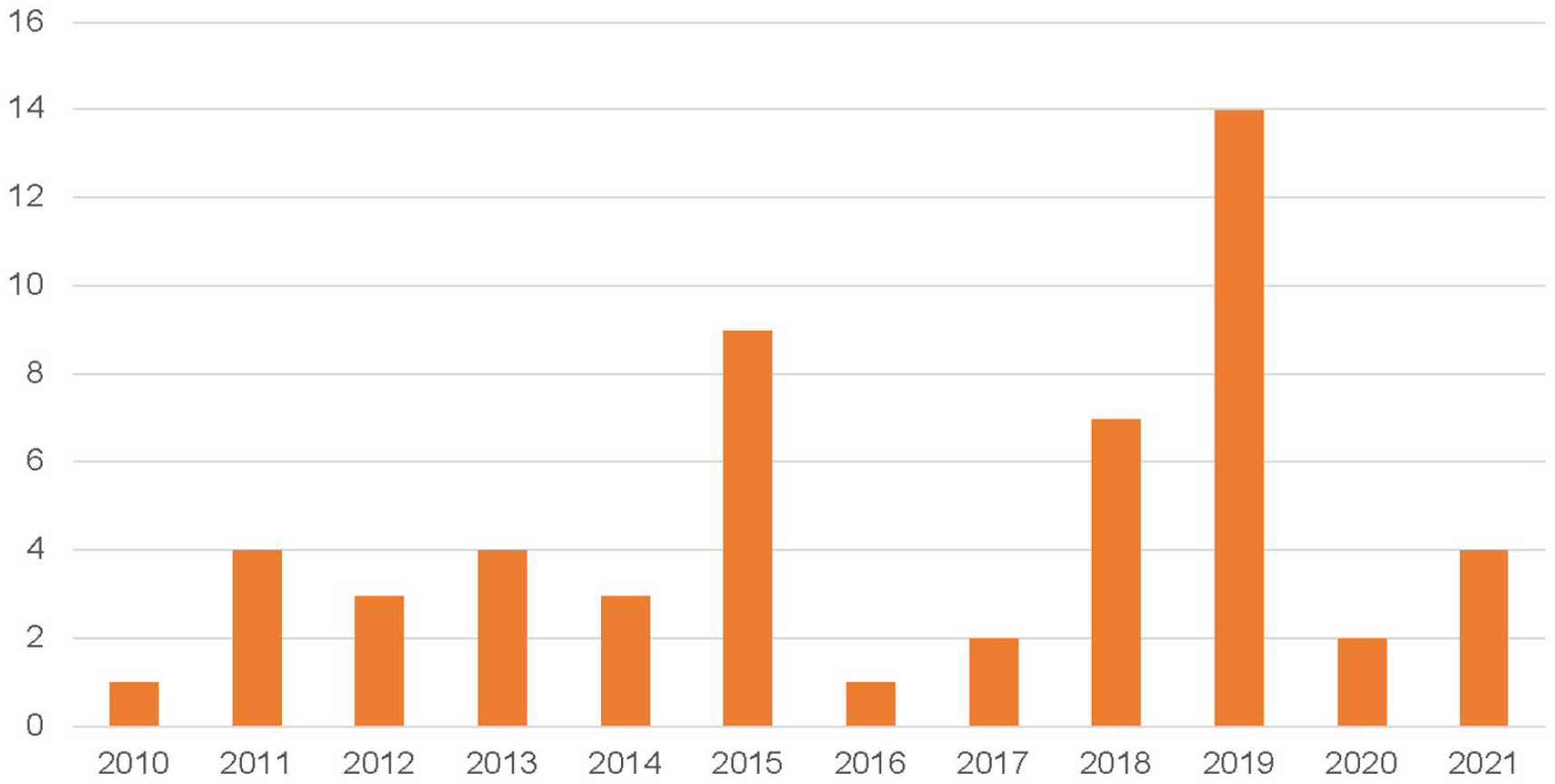
Number of Publications by Year.
To investigate the articles more closely, we first categorized them into one of the following three categories based on their research topic: digital marketing, social media marketing, and marketing analytics. When a paper dealt with pedagogical approaches, frameworks, or tools for teaching digital marketing, it was categorized into digital marketing. When a paper focused more narrowly on the social media aspect of digital marketing, it was categorized into social media marketing. Due to the unique nature of social media in the realm of digital marketing, many papers have restricted their focus solely on social media, which warrants a separate examination in the current study. Finally, when a paper focused on analytics within the context of marketing, it was categorized into marketing analytics.
Due to the interconnected nature of the three topics, there were a handful of papers that covered more than one area. In that case, we reviewed the paper closely and categorized based on the amount of weight it puts on a specific topic or topics. The amount of weight was gauged by reviewing whether the topic was mentioned in the paper’s title, abstract, and/or keywords and also by reviewing the level of discussions made on the topic(s) throughout the paper. There were three papers that placed about equal weights on more than one category (Y. Kim, 2019; Spiller & Tuten, 2015; Zahay et al., 2022), but all the remaining papers had prominent focus on one topic as other topics did not even appear in the paper’s title, abstract, and/or keywords. For those three papers, we categorized them into multiple topic areas to which they belong.
Of the 54 articles, 21% focused on marketing analytics while the other 79% focused on digital marketing (42%) or social media marketing (37%). As shown in Figure 3, it is notable that while earlier research centered on social media, research on marketing analytics and digital marketing have increased in recent years. Only one article focused on the topic of marketing analytics until 2017, but a steady growth has led to 11 articles between 2016 and 2021. When we expanded the search to include pedagogical papers related to business analytics, there were additional 27 papers between 2014 and 2021, attesting to the growing demand of analytics in business schools overall, not just in the marketing department. In contrast, research on social media grew and peaked in 2015 but only three articles appeared between 2016 and 2021.
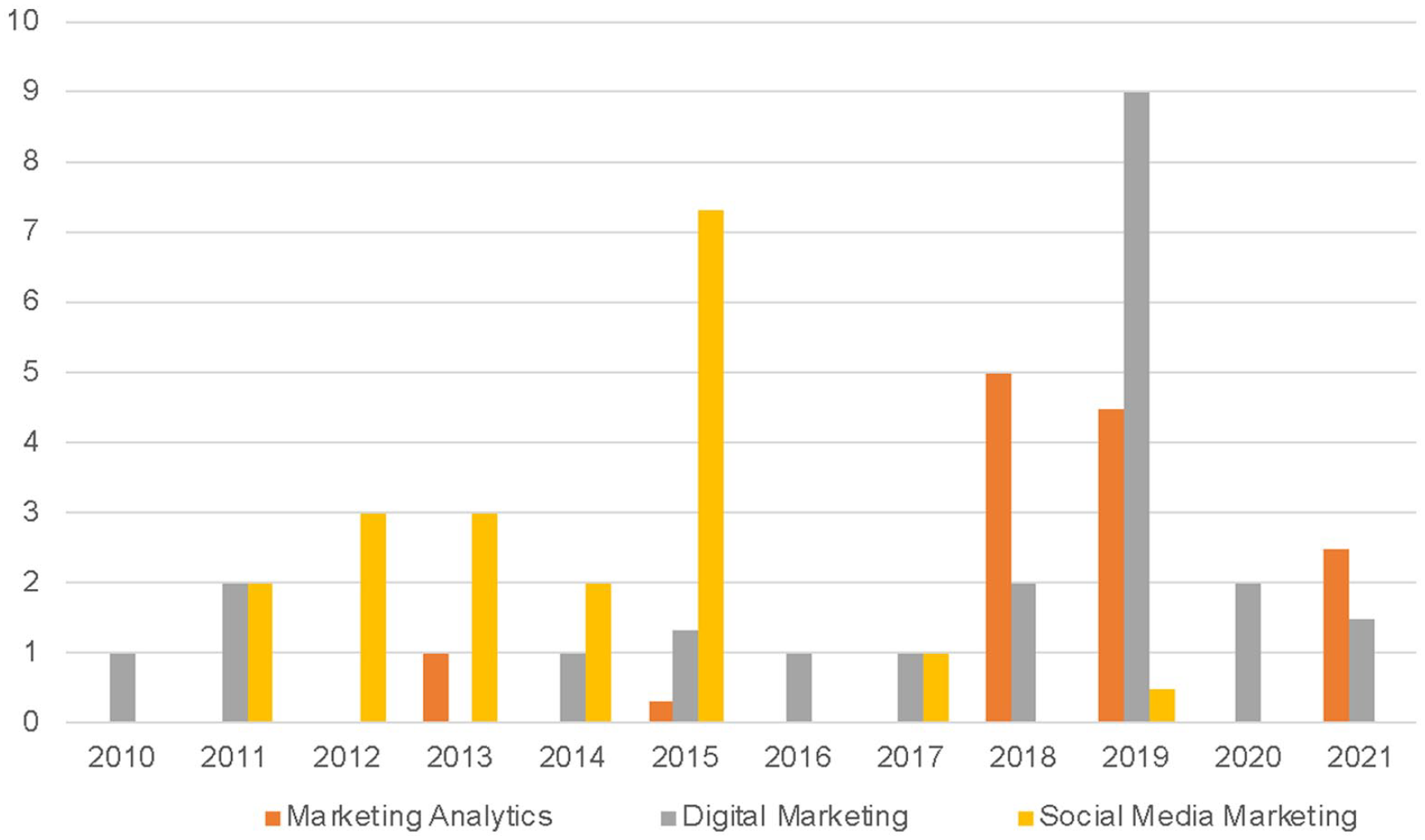
Publication Volume Over Time by Categories
Research Scope by Categories
To more effectively investigate the collected articles, we further categorized them based on the scope of their research. For example, if a paper demonstrated pedagogical elements (e.g., framework, approach, module, project, assignment) to be implemented within a course, we categorized it into the course level. If a paper was geared toward introducing a new program/curriculum, or a new approach to be implemented within the existing program/curriculum, we categorized it into the program/curriculum level. Finally, if the focus of a paper was on offering a general perspective of how the new phenomena and trends with regard to digital and/or analytics can affect higher education at different levels (e.g., college, program, course), we categorized it into the perspective level. Based on this rule, we categorized a paper into perspective rather than into program/curriculum if its main focus was to provide a direction for developing a program/curriculum (e.g., Muñoz & Wood, 2015; Rienzo & Chen, 2018). Consequently, the articles were classified into one of the three categories: perspective, program/curriculum, and course (see Table 2).
Number of Publications by Topic and Scope.
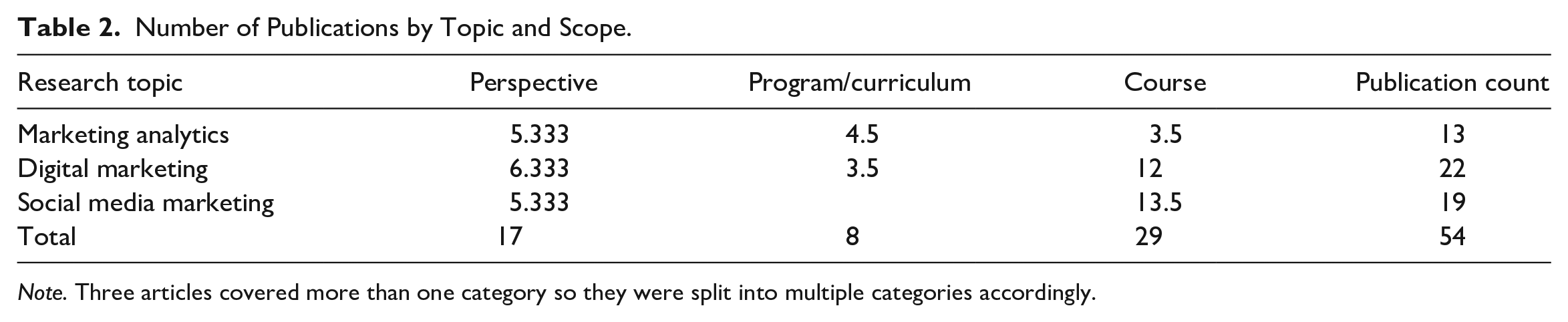
Note. Three articles covered more than one category so they were split into multiple categories accordingly.
The course level (29 articles) had the most count followed by perspective (17 articles) and program/curriculum (8 articles). At the course level, social media marketing was examined most frequently (47%) followed by digital marketing (41%). On the contrary, articles covering the topic of marketing analytics appeared more at the perspective level (40%), compared with the program/curriculum (32%) or course (28%) levels. A high number of analytics-related papers appearing at the perspective level can be attributed to the fact that it is still in the introductory stage of many institutions’ offerings (Turel & Kapoor, 2016) and that teaching analytics requires progressive adoption across the curriculum, rather than a stand-alone work in an individual course (Y. Liu & Levin, 2018). On the other hand, a majority of digital marketing-related papers were at the course level discussing specific pedagogical elements that can be implemented in digital or social media marketing courses, although a couple of papers highlighted the importance of integrating digital aspects in all courses through curriculum design (Rohm et al., 2019; Zahay et al., 2022). Table 3 provides a complete list of the articles that belong to each category.
Citations by Research Scope Within Categories.
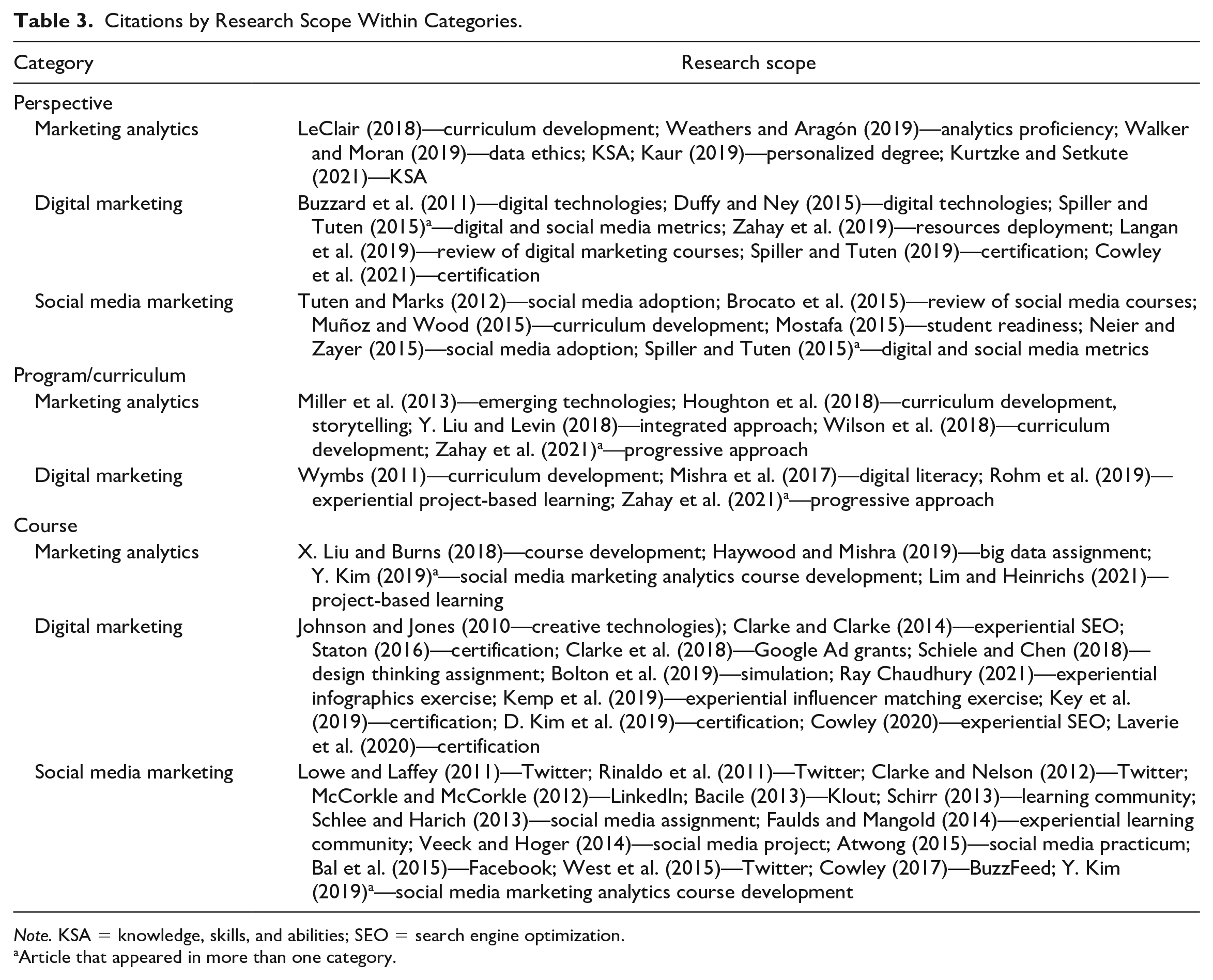
Note. KSA = knowledge, skills, and abilities; SEO = search engine optimization.
Article that appeared in more than one category.
At the Perspective Level
Marketing Analytics
Of the marketing analytics-related articles, 42% were classified into perspective, where the topics revolved around discussing ways to bridge the theory–practice gap from different perspectives, including KSA, data ethics, and a personalized degree (see Table 3). Specifically, based on his experiences at AACSB, LeClair (2018) provided recommendations across four areas of the marketing curriculum: content (e.g., knowledge and skills to be taught), pedagogy (e.g., teaching approaches), structure (e.g., organization of content and pedagogy), and purpose (e.g., overarching goals, themes, and values that the curriculum serves). Kurtzke and Setkute (2021) emphasized that a blend of knowledge and skills is needed and that the ability to communicate insights to stakeholders (i.e., KSA) should be required in a marketing curriculum to increase students’ employability. Relatedly, Walker and Moran (2019) described how a marketing course can be framed through a social science lens to teach emerging issues related to data ethics and help students better equip themselves with KSA to make data-driven decisions. Finally, Kaur (2019) proposed a personalized degree that supports a case for treating students as a customer for whom a customized product must be made available similar to how the service industry must operate based on this fundamental premise.
Digital Marketing
Of the articles centered on digital marketing, roughly 30% were classified into perspective. Articles in this category focused on demonstrating the landscape of digital marketing education in higher education and discussing the importance of incorporating emerging digital technologies in teaching (see Table 3). Specifically, Duffy and Ney (2015) presented the tripartite views of the challenges associated with using digital technologies as a pedagogical tool by conducting interviews with students, educators, and industry practitioners. Langan et al. (2019) conducted a systematic review of AACSB-accredited marketing programs (undergraduate) in the United States to show how digital marketing, in the forms of elective offerings, major requirements, and specialization options, has been incorporated in academia. To provide adequate support for faculty who teach digital marketing, Zahay et al. (2019) proposed that proper resource deployment from the top down is imperative given the unique nature of the topic. Cowley et al. (2021) examined the perceived effectiveness of certifications among educators by surveying faculty who teach digital marketing and suggested that they contribute directly to students’ career readiness.
Social Media Marketing
Of the social media-related articles, roughly 30% were dedicated to providing a general perspective, and the topics include how social media marketing is being adopted in higher education or how social media marketing courses are being taught (see Table 3). For example, Tuten and Marks (2012) surveyed marketing educators to identify the challenges associated with adopting social media as educational technology. Similarly, Muñoz and Wood (2015) surveyed marketing educators who taught social media and collected insights on the amount of topic coverage, teaching approach, instructional materials, type(s) of assessment, and challenges associated with teaching the course. Brocato et al. (2015) conducted a review of social media course syllabi (undergraduate) in the United States to demonstrate common learning objectives, topics, pedagogical approaches, assessments, and digital tools being employed.
At the Program/Curriculum Level
Marketing Analytics
Of the marketing analytics papers, 32% were classified into program/curriculum. Articles in this category focused on offering an approach to teaching marketing analytics through the demonstration of various innovative curriculum and design (see Table 3). For example, Wilson et al. (2018) described a marketing curriculum developed based on Bloom’s Taxonomy and experiential learning theory to fill the analytics skills gap, while Houghton et al. (2018) showcased the process of developing the masters’ program in customer analytics at Xavier University where storytelling was introduced as an important skill to cultivate. Y. Liu and Levin (2018) emphasized that analytics should be taught systematically by implementing analytics across different marketing courses through curriculum mapping and design.
Digital Marketing
Among the digital marketing-related articles, 18% were classified into program/curriculum. Articles in this category focused on discussing the need for a shift in the marketing curriculum to be more in tune with the ever-changing digital environment (Table 3). For example, Rohm et al. (2019) introduced the digital-first program at Loyola Marymount University where digital marketing is placed at the center of the curriculum through experiential and project-based learning. A few articles described a new curriculum designed with a goal to better prepare students for the changing job market (e.g., Mishra et al., 2017; Zahay et al., 2022). In particular, Zahay et al. (2022) suggested that developing a curriculum model that integrates digital marketing activities in all courses is critical to produce career-ready graduates.
There were no social media-related articles classified into program/curriculum.
At the Course Level
Marketing Analytics
Of the marketing analytics articles, 28% were classified into course (see Table 3). Specifically, Haywood and Mishra (2019) demonstrated a class exercise that involves text mining and sentiment analysis for a fictitious sporting company using R, designed to help students achieve a broader understanding of big data and data analytics. Lim and Heinrichs (2021) proposed a project-based learning approach for a senior-level course to help students gain experiences with dashboards, reports, and data visualization using HubSpot’s CRM software tools. Based on a collection of data sets including text mining results of one million tweets about marketing analytics, surveys from business executives, job postings, and course syllabi, X. Liu and Burns (2018) shed insights on the development and implementation of a successful marketing analytics course.
Digital Marketing
Of the 23 articles on digital marketing, over half (53%) were examined at the course level. Experiential learning methods such as Google Ad grants (Clarke et al., 2018), certifications (e.g., Cowley et al., 2021), simulations (Bolton et al., 2019), and other hands-on exercises (Ray Chaudhury, 2021; Kemp et al., 2019) were suggested as effective methods to prepare students for their job market (see Table 3). Specifically, Ray Chaudhury (2021) proposed an exercise that utilizes a data visualization tool such as infographics, while Kemp et al. (2019) demonstrated an exercise which asks students to recommend an influencer appropriate for a client and develop a value proposition and messaging for the campaign. A couple of articles focused specifically on teaching the components of search engine optimization (SEO) through video (Cowley, 2020) and experiential assignments (Clarke & Clarke, 2014).
Social Media Marketing
A majority of the social media-related articles (71%) were classified into course. While some scholars examined the perceived effectiveness of using a particular social media platform (e.g., Twitter, Facebook, LinkedIn) as a pedagogical tool in the classroom (e.g., Bacile, 2013; Bal et al., 2015; McCorkle & McCorkle, 2012; West et al., 2015), others proposed a new design of a social media course or a project (see Table 3). For example, Atwong (2015) proposed a social media practicum which utilizes an action-learning approach through working with a real company, while Y. Kim (2019) presented an interdisciplinary social media course tailored to respond to current industry demands. Relatedly, Cowley (2017) demonstrated a project called the BuzzFeed Challenge which provides an integrative real-world experience for students by having them generate 1,000 views in 1 week for an article they published on BuzzFeed.com.
Sub-Themes by Categories
Within Marketing Analytics
Most of the pedagogical research on marketing analytics appeared recently (see Figure 3), but a notable theme observed within the time span is that recent research has acknowledged the need for incorporating the prescriptive aspect of analytics in the marketing curriculum (see Table 3). For example, storytelling is defined as “conveying data-driven marketing insights and recommendations to decision makers in the form of a narrative that keeps the audience interested, engaged, and likely to retain and act on the recommendations given” (Houghton et al., 2018, p. 42). Similarly, using HubSpot’s CRM software tools, Lim and Heinrichs (2021) demonstrated a project that requires students to provide alternative courses of action regarding a firm’s e-commerce activities based on their real-time access to information and analytical tools displayed in the HubSpot portal. Haywood and Mishra (2019) also suggested a big data exercise that can help students in an introductory course understand how data are used in the industry and students in an advanced course develop strategic plans based on data analysis.
Another key topic that occurred frequently within analytics is the discussion on the importance of blending KSA into the curriculum to prepare graduates for career success (Kurtzke & Setkute, 2021; X. Liu & Burns, 2018; Walker & Moran, 2019). A couple of articles proposed an interdisciplinary (Hackbarth et al., 2020; Y. Kim, 2019) or an integrated approach that weaves analytics (Y. Liu & Levin, 2018) into the existing courses across the curriculum.
Within Digital/Social Media Marketing
A prominent trend was observed within this topic over time. Specifically, while earlier research in our review revolved around suggesting ideas around ways to incorporate digital technologies (e.g., Buzzard et al., 2011; Duffy & Ney, 2015; Johnson & Jones, 2010) or adopting social media in the marketing curriculum (Neier & Zayer, 2015; Tuten & Marks, 2012), recent research tends to dedicate their focus on exploring various experiential learning approaches that can be implemented in the classroom such as certification (e.g., Cowley et al., 2021), simulation (Bolton et al., 2019), project-based learning (Rohm et al., 2019), and other hands-on exercises (e.g., Kemp et al., 2019). Certification and experiential learning were the most frequently discussed topics (see Table 3). Articles examining certifications demonstrated the pedagogical value of the certification programs conceptually and empirically. One article further investigated how students’ learning styles (e.g., active-reflective, sensing-intuitive, visual-verbal, sequential-global) can affect their responses to the certification program delivered (D. Kim et al., 2019). Those that explored experiential learning suggested various teaching methods including Google Ad grants program (Clarke et al., 2018), video (Cowley, 2020), and other hands-on exercises (e.g., Chaudhury, 2019; Kemp et al., 2019).
Of the social media articles, more than one third examined how a specific social media platform or application can be used in the classroom to enhance students’ relevant knowledge and skills. Among the different social media platforms, Twitter was utilized most often (four articles) followed by Facebook, LinkedIn, and Klout (one article, respectively). A couple of other articles suggested learning communities as a way to innovate the curriculum in the classroom (Faulds & Mangold, 2014; Schirr, 2013). Some articles suggested an interdisciplinary (Y. Kim, 2019) or an integrated approach that leverages digital marketing (Zahay et al., 2022) or digital/social media metrics (Spiller & Tuten, 2015) in the marketing curriculum.
Research Type by Categories
Within Marketing Analytics
Of the articles that focused on analytics, 64% were conceptual, while the remaining 36% were empirical (see Table 4). Of those empirical articles, all except one (Y. Kim, 2019) incorporated surveys. Responses were mostly from students except one article (X. Liu & Burns, 2018) which collected responses from business executives. While most of the survey responses were collected toward the end of the semester (i.e., post-test), a couple of studies incorporated pre- and post-tests (Haywood & Mishra, 2019; Weathers & Aragón, 2019). Besides surveys, one article combined multiple studies that use different methods (X. Liu & Burns, 2018) and one article used students’ exam scores (Y. Kim, 2019) (see Table 4).
Citations by Research Type Within Categories.
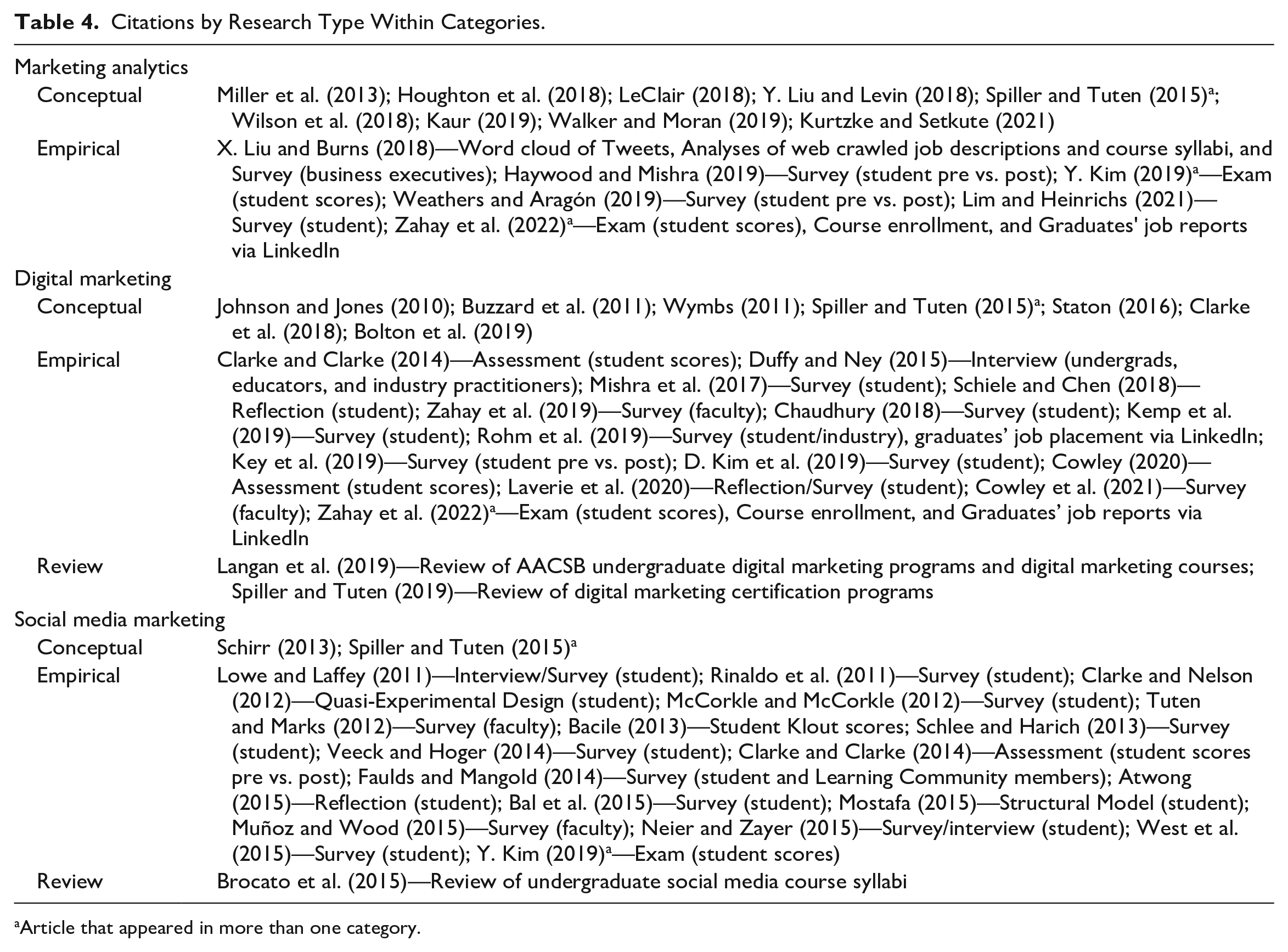
Article that appeared in more than one category.
Within Digital/Social Media Marketing
Of the articles that focused on digital and social media marketing, 74% were empirical while 19% were conceptual and the remaining 7% were reviews (see Table 4). Compared with analytics, it is noticeable that a higher number of papers in the digital realm were empirical. Of the empirical papers, 65% used surveys or surveys with other qualitative methods (e.g., interview, reflection). While most of the survey responses were collected toward the end of the semester (i.e., post-test), a couple of studies included pre- and post-tests (e.g., Clarke & Clarke, 2014; Key et al., 2019).
Besides surveys, other utilized methods include reviews (Brocato et al., 2015; Langan et al., 2019; Spiller & Tuten, 2019), statistical analyses (i.e., quasi-experiment—Clarke & Nelson, 2012; structural modeling—Mostafa, 2015), students’ learning outcomes (e.g., Bacile, 2013; Y. Kim, 2019), and reflections (e.g., Atwong, 2015). While most of the responses were collected from students, some gathered feedback from faculty (e.g., Cowley et al., 2021; Muñoz & Wood, 2015; Tuten & Marks, 2012; Zahay et al., 2019) or from various sources (Duffy & Ney, 2015; Faulds & Mangold, 2014; Rohm et al., 2019). Table 3 provides a complete list of the articles with specific research methods employed organized by categories.
Implications and Future directions
With the U.S. digital advertising and marketing market currently estimated at $460 billion and its global market projected to reach $786.2 billion by 2026 (Marino & McCormick, 2022), it is inevitable that business schools will, and should, continue to incorporate digital marketing and analytics topics in their curricula and courses. The prevalence of research in these fields attests to the fact that both digital and analytical skills are emerging as important skills required by practitioners. The rising demand for data-driven marketing is pushing the need for a larger overlap between digital/social media marketing and marketing analytics, as demonstrated earlier in Figure 1. Yet, in the literature examining concepts related to “career-readiness” (e.g., Ye et al., 2017), concerns still exist that marketing education is not adequately preparing students for their jobs. The theory–practice gap can be partly attributed to the fact that digital/social media marketing and marketing analytics are often treated as two separate tracks when a more integrated approach should be considered in the marketing curriculum (see Zahay et al., 2022).
By conducting a review of pedagogical research on digital/social media marketing and marketing analytics education combined, this article provides an overview of the current state of marketing education in these emerging fields and examines how the topic areas are incorporated into marketing curricula in higher education. In doing so, this paper contributes to providing insights and guidance for developing future direction in digital/social media marketing and marketing analytics education and research in several ways.
First, our analyses found that digital/social media marketing and marketing analytics are often treated as separate topics as most schools currently offer digital marketing, social media marketing, and marketing analytics as separate courses. Interestingly, research on digital/social media marketing education predominantly focused on the course level analysis, while research on marketing analytics focused on the perspective level analysis. While this may indicate that marketing analytics course offerings are still in the introductory stage of many institutions’ offerings (Turel & Kapoor, 2016), it may also suggest that marketing analytics, along with digital marketing, is a topic that should be integrated into the marketing curriculum across courses, rather than offered as an individual course (Y. Liu & Levin, 2018). We concur with Zahay et al. (2022) that digital/social media marketing and marketing analytics should not be discussed in isolation of one another. Specifically, as firms face a growing need to work with high volumes of data generated by various digital platforms, developing curricular content that focuses on bridging these two emerging fields will be imperative for effectively preparing students for future employment.
As such, we encourage marketing educators to investigate ways to effectively integrate digital/social media marketing and marketing analytics topics. Several papers have shown promising avenues for such endeavors, both at the micro- and macro-level. For example, Y. Liu and Levin (2018) have suggested a progressive approach, where marketing analytics topics are integrated into various marketing courses. Y. Kim (2019) showed that an interdisciplinary team-teaching course structure, where a semester-long project is divided into two parts—digital content creation (taught by a marketing professor) and data analytics (taught by an information systems and decision sciences professor)—can provide students with a holistic experience of working through different stages of a digital/social media marketing project from beginning to end.
We anticipate that advancements in technology will not only eliminate boundaries within the business school, but across the entire institution as well. An example is a course taught by an entrepreneur professor in the College of Engineering and Computer Science in one of the authors’ institutions. The course was developed to educate and provide guidance to engineers and computer scientists to foster the entrepreneurial mindset and help them transform their ideas into marketable products. We propose that integrating digital/social media marketing and marketing analytics topics into various interdisciplinary courses will also provide students with more opportunities to expand their knowledge of different perspectives while acquiring important skill sets that are valued in the marketplace.
Second, while pedagogical research on analytics has spiked in recent years, it has largely focused on presenting a perspective or making suggestions to the design of a program/curriculum, leading to a lack of empirical evidence on the effectiveness of marketing analytics pedagogy. We encourage more pedagogical research on marketing analytics on the course level discussing pedagogical elements that can be implemented in such courses and demonstrating its effectiveness with empirical results. As more empirical findings accumulate in the related literature, conducting meta-analyses on how effective the business schools have been overall with their efforts of closing the theory–practice gap would be an interesting avenue for future research.
On the contrary, research on digital/social media marketing has predominantly focused on the course level (vs. the program/curriculum or perspective levels), emphasizing the importance of incorporating experiential exercises (e.g., Chaudhury, 2019; Cowley, 2020; Kemp et al., 2019) and certifications (e.g., Key et al., D. Kim et al., 2019; Laverie et al., 2020). While examining the effectiveness of skill sets that are currently in demand is important, given the rapidly evolving world of digital and social media, future research that seeks to provide a broader perspective on the changing trends in the market and job requirements may also shed valuable insights. For example, incorporating feedback from the marketing industries by conducting interviews with practitioners in the field or analyzing the job requirements of the emerging industries would be a potential avenue for future research.
In terms of the methodologies employed, we observed that a large amount of the empirical papers in the social media category were mostly surveys with student samples that were assessed toward the end of the semester (i.e., post-test only). To increase the accuracy in measuring the pedagogical effectiveness, future research is encouraged to include pre- and post-tests or other controlled research methods (e.g., experiments). Marketing scholars would also benefit from future research that seeks to triangulate data by employing different samples (e.g., faculty, practitioners, and alumni) from various sources.
Third, what truly differentiates marketing analytics from other analytics programs (e.g., business analytics, business intelligence) is that it centers on deriving marketing insights to improve firm performance (e.g., prescriptive analytics), rather than focusing on the technical information management aspect (e.g., descriptive and predictive analytics). Future research can explore various ways to incorporate the prescriptive aspect of analytics to provide students with more opportunities to sharpen their skills on being able to draw specific marketing strategies based on their analysis of the data. Since there is an increasing emphasis on developing “storytelling” skills (Houghton et al., 2018; Jaggia et al., 2020), looking for ways to integrate analytics in digital/social media marketing courses to offer more hands-on experiences where students get to interact with real data generated by digital and social media platforms and derive actionable marketing strategies would be valuable. For example, an experiential project can be implemented in an introductory course where students are given social media data to conduct textual analyses and develop a course of recommended actions based on their understanding of consumers’ sentiments would be useful.
Finally, one of the main themes revealed through our review was the pedagogical efforts and challenges in integrating KSA in the marketing curriculum. With respect to the skills aspect of KSA, not surprisingly, most papers focused on the technical skills (e.g., specific types of software, programming languages, and analytic tools) given its high demand in the industry. However, marketing educators should also acknowledge the importance of students’ meta-skills that remain more permanent and fundamental (e.g., creative thinking, effective communication) compared with technical skills. Past research suggests that meta-skills such as self-management, problem solving, and adaptability were perceived by employers as important and high priorities, but the findings demonstrated that the capability level of business graduates in those areas did not meet their expectation (Azevedo et al., 2012; Finch et al., 2013).
Even if meta-skills are the bedrock of students’ learning and success, they are likely to be given a lower priority especially in today’s data-driven digital environment where students are bombarded with new technical skills to learn. However, these skills remain to be (or become even more) important for students to succeed in this fast-changing AI-fueled marketplace (e.g., ChatGPT). In an effort to address this issue, future marketing academics should consider pedagogical approaches that can promote a much-needed lifelong learning skill set such as embracing diversity and creativity, critical thinking, and ability to communicate insights in an effective manner.
Footnotes
Declaration of Conflicting Interests
The author(s) declared no potential conflicts of interest with respect to the research, authorship, and/or publication of this article.
Funding
The author(s) received no financial support for the research, authorship, and/or publication of this article.
