



Abstract
Social media is rapidly growing and evolving from the introduction of new platforms to platform-specific innovations. The dynamic nature of social media makes it difficult for even practitioners to keep up; therefore, the gap between academia and industry continues to grow. This gap presents significant challenges for marketing educators to keep course content current so students are ready for the workforce. To identify which types of social media pedagogical assessments best meet industry needs and make recommendations for bridging this gap, this article uses a three-study approach consisting of content analysis of job descriptions, practitioner interviews, and student perceptions of two commonly used pedagogical assessments: simulations and client-based projects. Results show the critical need for social media meta-skills and technical skills, with client-based projects significantly improving meta-skill acquisition by undergraduate students compared with simulations alone. Practical implications for helping educators improve market-ready graduates for entry-level jobs with a social media component are discussed.
Keywords
Article Social media is consistently growing in users, marketing dollars spent, and the number of social media-related marketing jobs (Beveridge, 2022; Gomez, 2022). At the same time, social media is rapidly changing with the introduction of new platforms, revisions of algorithms, updates to advertising options, and other innovations. Due to the evolving nature of our industry, the gap between academia and industry continues to grow (Reibstein et al., 2009). Marketing educators struggle to keep course content updated so that students are graduating ready for the workforce (Greenacre et al., 2017). If the primary function of business schools “is the preparation of marketing students to be productive performers in business and organizations” (Pefanis Schlee & Harich, 2010, p. 341), then marketing educators must ensure our curricula and pedagogical assessments used in the classroom change to best serve the industry and prepare students for social media marketing jobs.
Higher education institutions, especially business schools, face increasing threats in the number of available alternatives to traditional 4-year degrees. There is growing interest in skills-focused online credential programs, particularly from diverse and lower income individuals (Fain, 2020). Among certifications, distance learning options, and skill-specific training programs, numerous learning platforms exist with a specific focus on social media marketing. These options include courses and training programs from organizations like HubSpot or Hootsuite to platform-specific offerings on Facebook and Twitter. While some universities are capitalizing on opportunities to offer similar shortened online certifications and continuing education programs (i.e., Cornell’s 3-month online social media marketing certificate program), the majority of universities are still following traditional higher education models.
When social media marketing education was explored in a special issue in 2015, the research showed social media marketing in the classroom was still in its infancy (Brocato et al., 2015). These authors, along with Muñoz and Wood (2015), called for future research to focus on how educators can facilitate training in the classroom to align with skills desired by practitioners. This discussion returns to a debate we have seen in marketing education literature for some time: How should universities balance teaching more conceptual-based knowledge versus technical skills (Pefanis Schlee & Harich, 2010; Schibrowsky et al., 2002) and what classroom assessments best help facilitate both knowledge and skill development? While most educators advocate for a blend of the two approaches, the skills needed for entry-level positions are quite different from more senior-level managerial positions (Davis et al., 2002). Thus, this research seeks to provide guidance to two primary questions:
A review of marketing education research shows that marketing skills are typically broken into two categories: meta-skills and technical skills (Rohm et al., 2021). While studies have explored meta-skills versus technical skills for marketing education in general (Finch et al., 2013), we do not yet understand how different in-class social media assessments, such as simulations and client-based projects, allow students to obtain these skills. Building from this foundation, this research employs three studies to address the research questions above.
The article begins with an exploratory investigation of current job requirements for entry-level social media marketing positions from popular employment websites. Second, in-depth interviews are conducted with marketing managers involved in hiring entry-level social media positions. These interviews are used to gauge what skillsets industry practitioners are looking for while also asking practitioners to evaluate two of the most frequently employed pedagogical assessments in social media classes: simulations and client-based projects. Although both assessment types have been researched separately (Maher & Hughner, 2005), the authors are not aware of studies exploring how these two approaches compare to one another in terms of the skills gained. Finally, the last study evaluates the students’ perspectives of how simulations and client-based projects helped them gain specific skills as well as how such experiences impact their perceived learning satisfaction and preparedness for the job market.
Meta-Skills and Technical Skills
To overcome the emerging gap between marketing education and practice, business schools and their accreditation bodies have highlighted the need for education to adapt and align with industry trends. Discussions in this domain typically center around the skill sets needed by marketing graduates and the balance of theoretical knowledge and technical skills (Schibrowsky et al., 2002). For entry-level positions, recent marketing graduates typically rely heavily on skills and less on general marketing knowledge (Pefanis Schlee & Harich, 2010). As this research is built on what is needed for entry-level social media marketing positions, relevant marketing skills will serve as the primary focus.
Although different dichotomies of skills are used across industries and in popular press (i.e., hard vs. soft skills, knowledge vs. functional skills), marketing education research often categorizes skill sets into two categories: meta-skills and technical skills (Finch et al., 2013; Pefanis Schlee & Harich, 2010; Rohm et al., 2021). In this study, technical skills refer to industry-specific knowledge and expertise that can be applied to complete tasks. Meta-skills are more broadly focused skills that translate to multiple facets of life such as communication, critical thinking, and interpersonal skills (Finch et al., 2013). These types of skills are interpersonal and applicable to all jobs in business (Pefanis Schlee & Harich, 2010).
When considering all types of marketing jobs, the literature explains how meta-skills are important for all levels of employment from entry-level to upper management, while technical skills play a more dominant role in lower-level positions (Pefanis Schlee & Harich, 2010). As people can obtain technical skills through various types of alternative training, it is recommended that marketing educators at higher education institutions offer a competitive advantage through a focus on foundational meta-skills (Finch et al., 2013). What is currently lacking from the literature is a clear understanding of what specific technical and meta-skills are needed for entry-level social media marketing positions today. To answer this initial question, an exploratory content analysis of employment boards was conducted in Study 1.
Study 1: Content Analysis of Social Media Marketing Job Descriptions
In Study 1, an exploratory content analysis was used to examine entry-level job descriptions on Indeed and LinkedIn. We examined 100 job descriptions in the United States with social media-specific job titles (e.g., social media specialist and social media coordinator). We chose 50 jobs from each platform (LinkedIn and Indeed) and randomly selected companies to show a mix of agencies, products, and services companies. The search function of both platforms was used to specify full-time, entry-level positions only. To have the most up-to-date information, we filtered to only show jobs that were posted within the last 30 days. The sampling process began on October 24, 2022, and ended on November 2, 2022, when 50 job descriptions were obtained from each platform.
The coding and data entry were conducted by one of the authors and a graduate research assistant. Another author and the two coders discussed any discrepancies until a consensus was reached. This method is comparable to the method used in a similar education study by Pefanis Schlee and Harich (2010). Data entries included the job title, location, company, responsibilities, requirements, and link to the job description.
Study 1 addressed RQ1 to determine what types of skills companies are looking for in entry-level social media marketing jobs. Each job description was read through by the coders to identify skills consistently mentioned in the data. Ten dominant skills emerged, which were coded into meta-skills and technical skills, consistent with prior literature (Pefanis Schlee & Harich, 2010). Meta-skills were broken down into collaboration, project management, oral presentation, professional writing, and critical thinking. Technical skills included social media softwares and programs, content creation, budget allocation, the ability to measure success through analytics and key performance indicators (KPIs), and targeting various audiences using different social media platforms. Table 1 provides a brief description of each skill and summarizes the skills listed in the examined job descriptions as well as software programs that were frequently mentioned. Table 2 provides a breakdown of educational requirements and specific social media platforms listed in the job descriptions. Fifty-four percent of these entry-level positions required a bachelor’s degree, although 38% listed no specific educational requirement. The most frequently mentioned platforms in the job descriptions included Facebook (58%), Instagram (55%), Twitter (40%), YouTube (33%), and TikTok (32%).
Meta and Technical Job Skills Descriptions and Software as a Percentage of Job Listings.
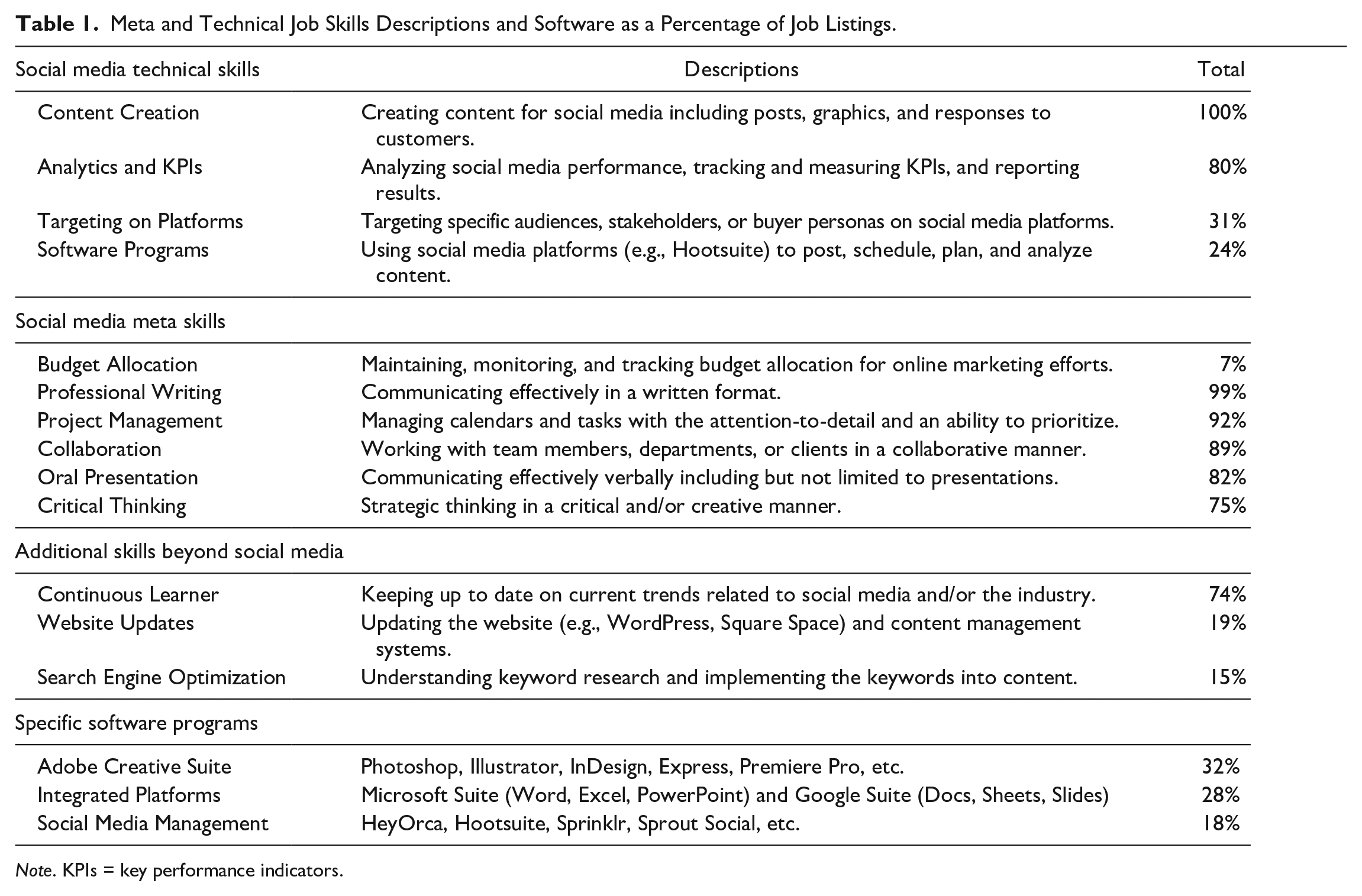
Note. KPIs = key performance indicators.
Educational Requirements and Social Media Platforms as a Percentage of Job Listings.
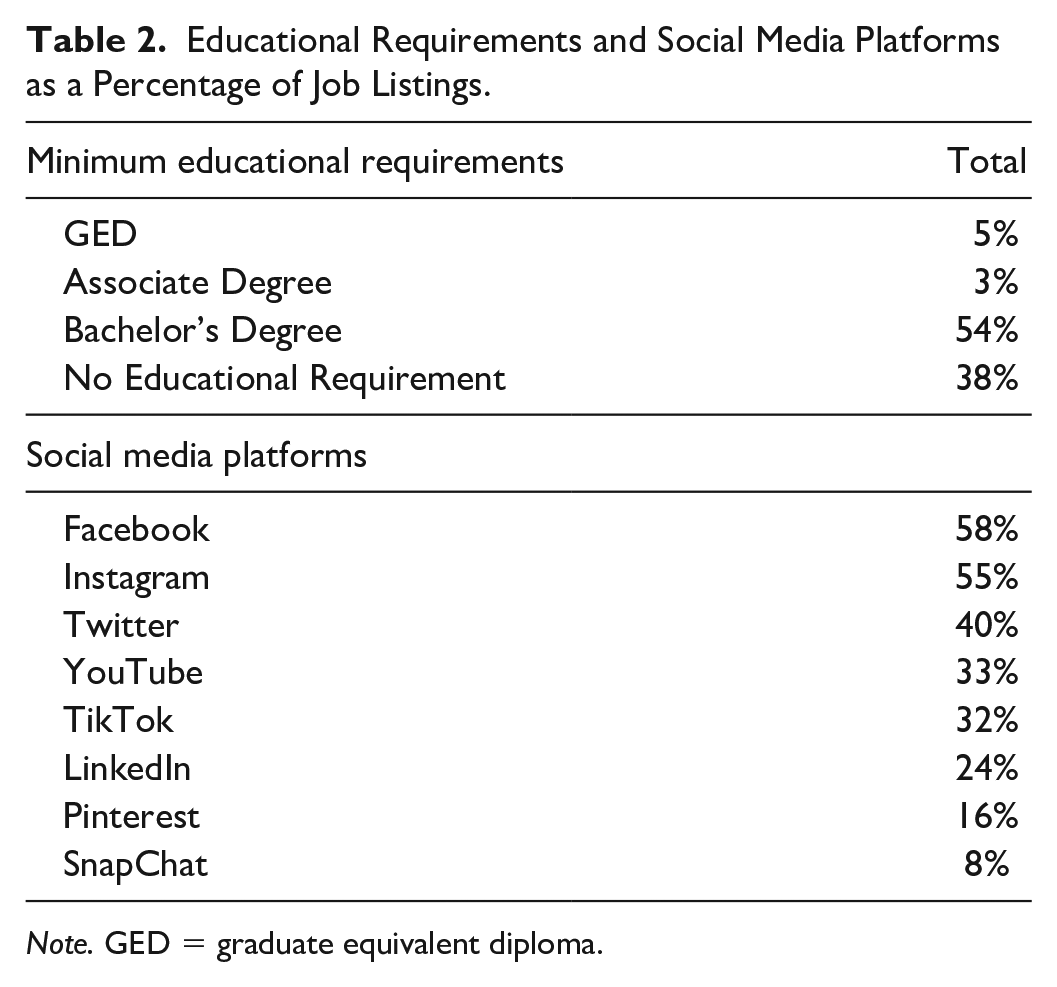
Note. GED = graduate equivalent diploma.
In looking at the technical skills, social media content creation (e.g., social media posts, graphics, video, reels) was found in 100% of the job descriptions. With the increased use of video in social media marketing communications, it is also important to note that 57% of the job descriptions mentioned video creation and/or editing as part of the content creation expectations. Analytics or tracking and measuring KPIs (key performance indicators) were listed in 80% of the examined job listings. An understanding of how to target different audiences across various social media platforms was included in 31% of the descriptions, followed by experience with social media software programs (e.g., posting, scheduling) at 24%, and budget allocation at 7%.
Meta-skills were frequently listed across all job descriptions. Professional writing was the most frequently listed (99%), specifically focusing on written communication efficacy. Project management (managing calendars and deadlines) was mentioned in 92% of the job descriptions. Collaboration was listed in 89% of job listings and includes working with team members, other departments, and/or clients. Oral presentation skills consist of effective verbal communication and include but are not limited to presentations; this skill was in 82% of the listings. Critical thinking was included in 75% of the job descriptions, which entailed any mention of strategic or creative thinking but did not formally mention the execution of these skills (which falls under technical skills above).
In addition, the data collected showed a smaller miscellaneous category that included skills outside of typical social media responsibilities or did not fit into the existing skills framework. This included the ability to update websites in popular content management platforms (e.g., WordPress, Squarespace) or basic HTML, mentioned in 19% of the job descriptions. In addition, 15% of the listings included a call for search engine optimization (SEO) knowledge such as on-site SEO edits, keyword research, and implementing keywords into the content. Finally, being motivated to learn and a willingness to stay up to date on current industry and digital marketing trends were mentioned in 74% of the job listings. These results highlight the current state and possible future of job requirements for entry-level social media marketing positions. Furthermore, nearly all the job descriptions called for work experience, which ties directly into the need for both meta-skills and technical skills for marketing graduates leaving business schools.
Overall, this study provides a deeper understanding of the requirements currently listed in entry-level social media job descriptions. First, content creation and the ability to track and analyze social media performance are essential technical skills for applicants looking to qualify for these positions. Second, meta-skills are included in a vast majority of these job descriptions, more than most of the social media technical skills. These results show the importance for marketing educators to not only ensure the development of the social media technical skills of content creation, analytics, and reporting but also continue to emphasize improving meta-skills to best prepare students for the current job market. The implications will be discussed further in the general discussion. Building from these results, the second study examines practitioners’ perspectives on what they consider when hiring for these entry-level positions, as well as evaluations of various pedagogical assessments used in social media classes.
Social Media Marketing Education Assessments
The results from Study 1 not only illustrate the importance of meta-skills and technical skills but also highlight the need for students to obtain social media experience before entering the workforce. Experiential learning projects such as client-based projects have long been encouraged in business schools (Maher & Hughner, 2005), although such projects are not without their challenges, especially for a field as dynamic as social media. Recent literature in fields such as computer science, engineering, and technology now suggests a focus on “immersive learning” opportunities (Beck, 2019). In immersive learning, students are able to apply their knowledge and get immediate feedback through an iterative learning process (De Freitas et al., 2010). Although new types of immersive learning technologies are on the rise through augmented and virtual reality, the most widely adopted form of immersive learning used in social media marketing classrooms today is simulations. So, the question that still remains is which type of pedagogical assessment (simulations and client-based projects) helps students obtain the meta and technical skills most desired by the industry?
Client-Based Projects
Significant support exists for client-based projects, as they allow students to gain both meta-skills and technical skills (Rohm et al., 2021) while also preparing them to deal with ambiguity, challenges, and real-world interactions (Lange et al., 2018; Strauss, 2011). While offering many benefits, such projects require significant demands for the marketing educator (Shanahan et al., 2021) to ensure proper oversight of the student’s work and set reasonable expectations with the client. As social media client projects often involve public-facing business accounts, the expectations of work quality are typically higher than a traditional class project, which can place added pressure on already-taxed marketing educators. Such projects typically involve the use of management platforms (e.g., Hootsuite), which may add additional costs to marketing departments’ budgets to pay for these annual subscription plans. In addition, the platform-specific advertising suites (e.g., Meta Business Suite) often utilized in client projects are continually updating and adding additional features, requiring the educator to routinely revamp course materials to stay relevant in the classroom.
Marketing Simulations
As marketing faculty members must balance research, teaching, and service obligations, the additional time investment required to facilitate client-based projects may not always be feasible. In addition, the interpersonal interactions that take place during client projects typically work best in a face-to-face setting, so course setup (i.e., hybrid or online courses) may be another determining factor in looking for alternative learning assessments that still provide social media experience. Thus, many marketing educators opt to use simulations for digitally focused topics such as social media to provide enhanced learning experiences that align with industry standards (Bolton et al., 2019) while lessening the risk and commitment often associated with client projects. These immersive learning environments allow students to apply social media marketing strategies, learn from the analytics, and improve the next round of the simulation. In fact, a comparison study of both formats (simulations and client projects) shows enhanced perceptions of reality, favorable project evaluations, and increased perceptions of learning (Maher & Hughner, 2005). However, given the complexities of social media that have been discussed, an updated investigation of this comparison is warranted with a specific focus on understanding the skills gained from each format. Furthermore, it is unclear how practitioners perceive these two pedagogical assessments when evaluating applicants’ prior experience. The next study adds to the results of Study 1 by assessing practitioner perspectives of not only the skills needed by social media marketing graduates but also which types of social media classroom assessment they prefer with justification.
Study 2: In-Depth Interviews With Marketing Hiring Managers
Expanding the exploratory analysis of job postings, this study utilizes qualitative in-depth interviews with marketing managers. This inductive research approach was deemed appropriate as the goal was to gain an in-depth, comprehensive understanding of what marketing practitioners want from recent social media marketing graduates. Specifically, the interviews seek to understand the skill set social media marketing graduates need before entering the job market and how various pedagogical assessments used in the classroom are viewed by hiring managers. In-depth interview designs using marketing practitioners have proven to be useful in helping guide marketing education curriculums (Harrigan & Hulbert, 2011) through probing and interpretation of qualitative comments.
Interviews were conducted with marketing managers that have experience hiring for entry-level social media marketing positions. Interviews were administered until data saturation was reached, and adequate data were available to develop a robust understanding of entry-level social media marketing hiring expectations. A total of 10 marketing managers participated in the in-depth interviews. This sample consisted of six females and four males, with an average of 16 years of marketing experience in industries and areas such as health care, legal, insurance, software, consulting, and agencies.
The study utilized a semi-structured interview guide to ensure interviews were valid but also flexible enough to encourage engagement and rapport building with participants (Patton, 2002). The interviews were carried out via Zoom by the authors and audio-recorded using Otter.ai software. Interviews lasted an average of 15 min and took place within the same month. Interview transcripts provided rich text that was analyzed by three trained marketing researchers and coded based on recurring themes guided by the data. A codebook was then used to code each response based on the primary three questions. These questions included: (a) “When hiring entry-level social media employees, what skills are you looking for recent graduates to have?”; (b) “How do you view social media simulations being used in the classroom to help prepare students for such a position?”; and (c) “How do you view client projects being used in the classroom to help prepare students for such a position?”
The first question was purposely vague in asking about overall skills and not specifically meta or technical skills to understand the types of skills mentioned most frequently without prompting participants. The next two questions sought to understand their opinions on simulations and client-based projects. To ensure respondents understood what was involved in these various projects, the simulations and client-based projects were briefly described before the questions were asked. In the event of rare coding discrepancies, the coders discussed the individual text until a consensus was reached. The three judges showed acceptable levels of interrater agreement for each question, averaging 0.93. Sample qualitative quotes were then gathered to illustrate these various themes in the data. For a full list of questions, themes, frequencies, and quotes, see Table 3.
Marketing Manager Perceptions of Required Entry-Level Social Media Skills.
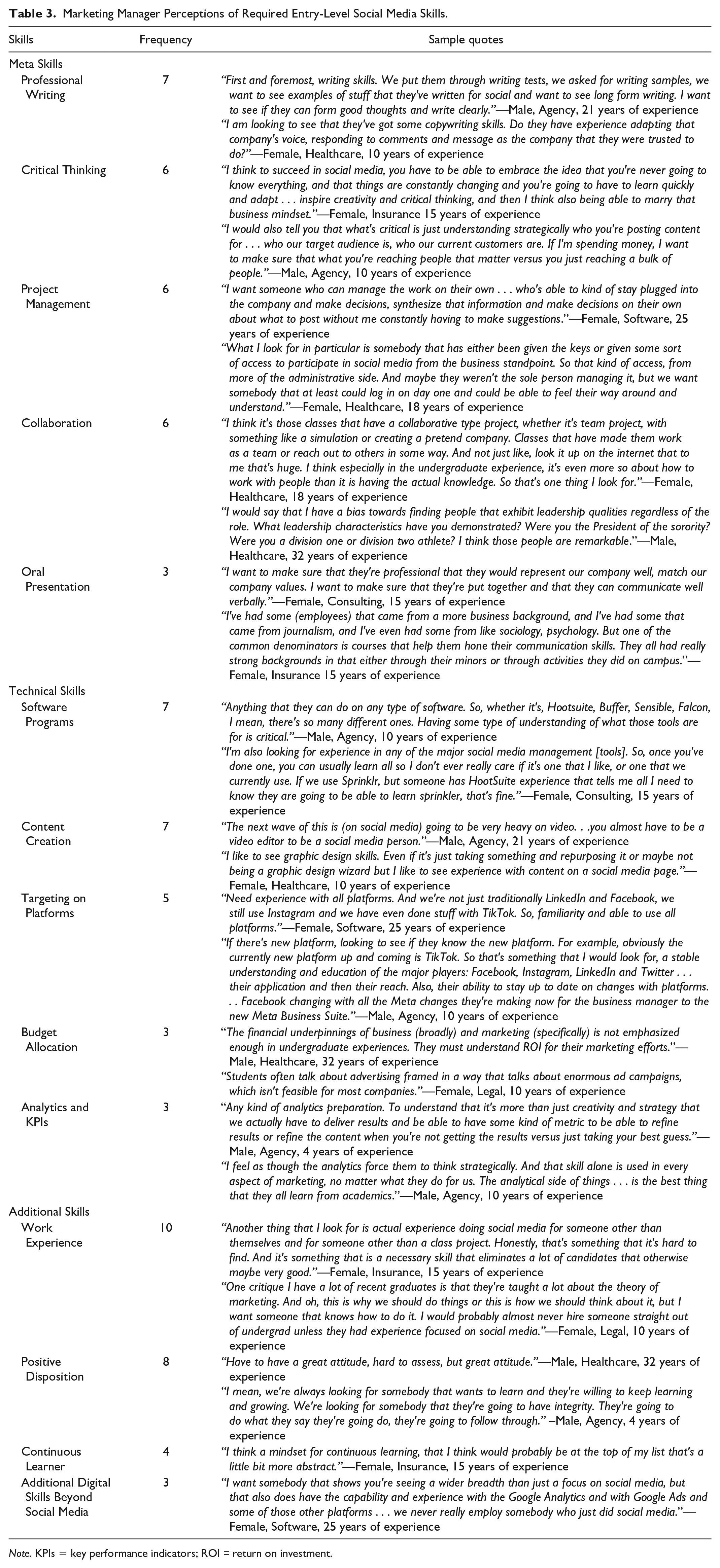
Note. KPIs = key performance indicators; ROI = return on investment.
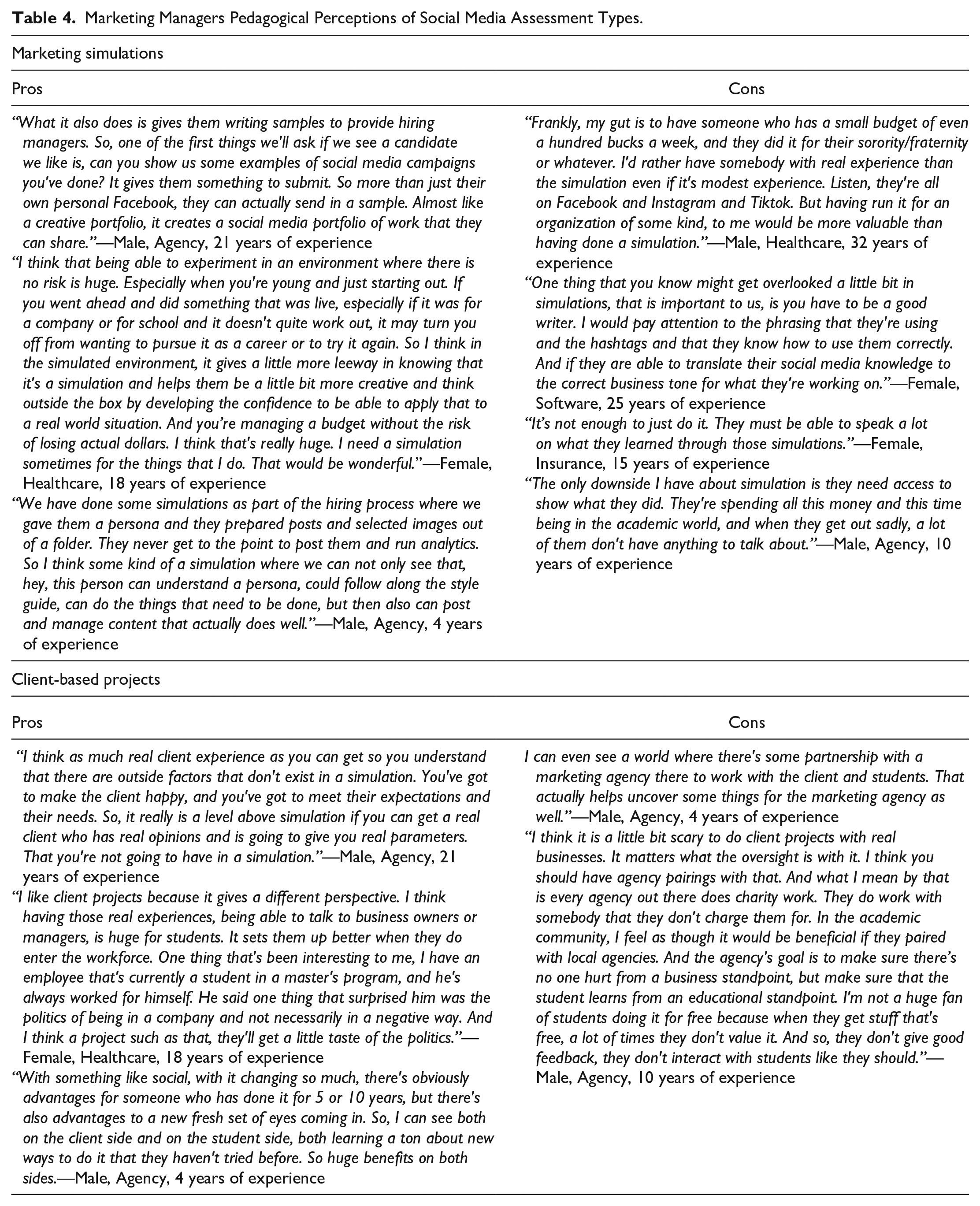
Marketing Managers Pedagogical Perceptions of Social Media Assessment Types.
Skills Needed: Marketing Manager Perspectives
For the first question, responses were first broken down into meta and technical skills based on the existing marketing literature foundations previously discussed. Outside the scope of these skill categories were “other skills” mentioned by the majority of respondents but fell outside the boundaries of technical and meta-skills. First, all respondents mentioned the importance of work experience, even for entry-level social media positions. Marketing managers commented on the importance of managing social media accounts for organizations, other than personal accounts. In addition, managers commented that understanding the theory behind marketing needs to be supported with actual experience executing job requirements. The second general skill was that candidates should have a positive disposition. Comments that fell under this category include having a positive attitude, integrity, and general optimism toward working in that specific role for that particular company.
Meta-skills mentioned by marketing managers fell into five categories, including professional writing; critical thinking; project management; collaboration; and oral presentation. Professional writing and copywriting skills were mentioned by the majority of managers as one of the top requirements for entry-level social media positions. Many managers ask applicants for writing samples and completion of writing assignments as part of the interview process. In addition, specific writing-related requirements were also mentioned including being able to write in the company’s voice, targeting writing samples at distinct audiences, and engaging with customers in a professional manner. Critical thinking comprised any specific mentions of general marketing strategy, creative strategy, or critical thinking skills required, which was mentioned by six of the managers and included the ability to adapt to social media’s ever-changing landscape and understanding the overall objective of the marketing strategy. This category focused on broad mentions of strategic or creative thinking but did not include the actual execution of such strategies. Next, the project management category was frequently mentioned by managers. They spoke of the need for participants to take over managing social media accounts without the need for close oversight. The fourth category, labeled collaboration, included the need for social media applicants that can work with a team and clients as well as an ability to take on leadership roles within a team setting if needed. Finally, the oral presentation was surprisingly the least frequently mentioned meta-skill by managers, with only three managers discussing professional verbal communication.
For technical skills, the comments from marketing hiring managers are broken into five overarching categories: social media software programs; content creation; targeting on different platforms; budget allocation; and social media analytics and KPIs. The two most frequently mentioned technical skills were familiarity with software programs and content creation. Managers claimed to look favorably on candidates that had experience with various social media marketing software programs (e.g., Hootsuite, Sprinklr, Buffer, and Sensible). The specific program students have experience with was deemed less important than having such experience itself, as “once you’ve done one, you can usually learn all.” Content creation was also mentioned by most managers and focused on the actual execution of building creative content including videos, graphic design, caption writing, and so on.
The next highest category focused on applicants having experience with using various social media platforms and targeting different audiences on each channel. Managers cited the need for applicants to understand the foundations of the platforms, the target audiences they could reach on each platform, and the applicability of currently popular platforms such as Facebook, Twitter, LinkedIn, and Instagram. Comments in this category also focused on the importance of incoming applicants being aware of upcoming new platforms (e.g., Tik Tok) and being able to adapt when significant changes are made to existing platforms (e.g., Facebook Business Manager transitioning to Meta Business Suite). Surprisingly, only three respondents mentioned a focus on analytics and KPIs for entry-level social media positions. Analytics were discussed as being important to show the success/failure of the content produced and to aid with strategic decision-making. It is interesting to note that all of the managers that discussed analytics were managers working within marketing agencies. This was the first noticeable distinction between agency and non-agency managers in terms of desired job requirements.
The final technical skills category focused on budget allocation and return on investment (ROI). Managers stated that an understanding of the financial aspects of social media marketing is most often the skill they find lacking in recent graduates. Specific recommendations were offered to focus on the ROI of social media efforts and provide realistic budget suggestions based on the size and financial constraints of the company.
The majority of managerial comments could be categorized into one of the themes discussed earlier. Other smaller takeaways shown in the last two rows of the table show other frequently mentioned themes found throughout the interview data that mirror the results of Study 1. A small group of the managers preferred social media candidates that also had additional digital marketing experience, including proficiencies such as paid search and Google Analytics. Finally, four managers are looking for “continuous learners” or applicants who are continually looking to hone their skills by completing additional training, certifications, or learning new programs while also staying up to date with industry trends and changes. These things will be further considered in the general discussion that follows Study 3.
Marketing Manager Evaluations of Simulations and Client-Based Projects
After assessing the skills marketing students need to obtain an entry-level social media position, marketing managers were asked their perceptions of the two most frequently used pedagogical assessments in social media marketing classrooms: simulations and client-based projects. The pros and cons for each approach will be discussed below, with supporting sample quotes from hiring managers displayed in Table 4.
Marketing Simulations Managerial Feedback
Regarding simulations, nearly all marketing managers had a positive outlook on simulations. From the managers’ perspective, simulations show that students understand the social media marketing process, and the simulations help bridge the gap between business and academia. Managers cited simulations as the easiest way for students to get experience for their resumes, especially if they can talk about posting across multiple platforms and their justification for their content-related decisions. The main advantage of simulations from the managers’ perspective relates to the ability to utilize the content they create from the simulation for their professional portfolios.
In addition to helping students create sample content, managers also praised simulations for their low-risk, high-reward setup. Specifically, when using simulations, businesses, students, and professors do not take on added risk by allowing undergraduates to manage actual business accounts. Instead, this simulated low-risk environment enables students to experiment and be more creative than they sometimes can in a client-project environment. This less-risk mentality is especially true when considering managing social media advertising budgets with only simulated dollars spent compared with real money. Finally, the other benefit classroom simulations offer is the practice they give students in preparing for similar situations while on the job market. Managers indicated that some of their businesses are using simulations during their hiring process but stated they prefer simulated experiences that entail the entire process from content creation through posting and analytics.
While marketing managers were generally positive toward simulations, they did convey concerns. It is important to note that nearly all marketing managers preferred client projects over simulated projects, even smaller scale real-world experiences. The main downside of simulations that was discussed by hiring managers is the lack of human interaction that takes place. Real clients can present real problems and often have opinions that differ from student perspectives, which can be an advantageous learning opportunity. The absence of personal feedback from a real business and human engagement was the most frequently reported downside to simulations. Similarly, different clients require different types of posting strategies in terms of tone, platforms, hashtag usage, and so on. Simulations typically do not allow students to show their ability to adapt to different client needs.
Besides the missing human component, managers also discussed students’ inability to effectively convey what they learned from simulations. Simulations allow students to gain experience creating content, but students must be able to access this content after the simulation ends, discuss what they learned in the process, and explain how this experience can translate to the job market and real industries. Managers called for marketing professors to stress this point to students upon completion of the simulation and to help students effectively communicate their experiences with the simulation during a job interview.
Client Project Managerial Feedback
The client project was viewed more favorably among marketing managers. These projects provide students with an opportunity to work with real people, for a real company, with real needs—which adds interpersonal complexity to the project. Some managers further elaborated on this notion, stating that client projects help students have a better grasp of what it would be like to work in an office environment. This includes basic interpersonal skills such as what it is like to be in professional meetings, experience in communication with clients, presentations, and even navigating office politics.
In addition to the personal touch points and feedback gained from client-based projects, managers discussed the mutually beneficial outcomes that may result. For students, client projects enable them to gain resume experience while still being able to ask questions for additional guidance from the professor. As noted by several managers, these projects are also great opportunities for students to be hired by the client after the project is completed. Businesses can enhance their social media presence for little to no cost while learning what strategies work best for their specific accounts. The fresh perspectives that students may offer were also recognized by managers.
The opportunity for a marketing agency to become involved with client-based projects was also discussed by a few managers with agency backgrounds. These comments brought up the potential issues with client projects that may negatively impact the businesses and the students. This was the second instance in which notable differences were shown between agency and non-agency-specific managers, with agencies having more concerns about client-based projects compared with other industries. Specifically, agencies were suggested as a middleman (especially when professors have little outside-of-the-classroom experience in social media marketing) to ensure that businesses are receiving high-quality work that aligns with their overall strategic goals. As these projects often involve public-facing accounts, businesses do take a risk in allowing undergraduate students to post from their business profiles, with these students having limited experience and occasionally minimal effort. There were also concerns about doing client-based projects for free, as it may encourage less buy-in from the businesses. As discussed, the interaction with clients is one of the primary benefits of this project; however, if businesses do not feel invested, they may feel less compelled to put forth effort into engaging with the students:
Overall, this study provided in-depth insights on two fronts. First, marketing hiring managers discussed what skillsets they look for in entry-level social media marketing positions. Second, managers discussed the pros and cons of both simulations and client-based projects from the practitioners’ perspective. These results highlight both opportunities and challenges that marketing educators may face when implementing either or both types of projects in the classroom. These implications will be further discussed in the general discussion below. The final study that follows combines the results from the first two studies to test how the students perceive the types of skills they gain from participating in simulations and/or client-based projects and how these experiences impact their overall learning perceptions and levels of satisfaction.
Study 3: Student Perceptions of Simulations and Client Projects
Study 1 provides insight into the job requirements for current entry-level social media marketing positions. Study 2 complements these findings by exploring what skills marketing practitioners say are important for new hires while also evaluating two pedagogical assessments used to provide students with experience in the classroom: simulations and client-based projects. In Study 3, the student perspective was explored through a survey distributed via Qualtrics to undergraduate students at the end of their social media marketing course. The sample consists of 92 students across four class sections from two large public universities in the United States, one in the southeast and the other in the northeast. Two classes completed only the simulation during their semester-long course (N = 48). Two other classes completed both the simulation and a client-based project (N = 44). The simulations were all completed as individual assignments, while the client projects were completed as part of a team. The social media marketing courses were all senior-level courses taken as marketing electives. Regarding the sample, 57% of respondents were female, 71% were seniors, and the average age was 22 years old.
Participants were asked to assess the meta and technical skills gained from each pedagogical assessment (simulations and client-based projects) using scales adapted to the social media context from Rohm et al. (2021) with support from the prior two studies. In addition, students were asked to evaluate perceptions of learning and overall learning satisfaction by using existing scales from the literature on 1 to 7 scales ranging from “strongly disagree” to “strongly agree” (Abney et al., 2019; Maher & Hughner, 2005). Students also provided overall qualitative assessments of the simulation and/or client-based project. The scales proved to be reliable (α ≥ .70; Nunnally & Bernstein, 1994) and demonstrate validity based on existing marketing guidelines and the heterotrait–monotrait method (HTMT; Fornell & Larcker, 1981; Henseler et al., 2015). All average variance extracted (AVE) measures exceeded .50 and HTMT ratios were below the recommended level of .85 with the exception of one instance, which still fell below the .90 recommendation for conceptually similar constructs such as skills (Henseler et al., 2015). The results of the confirmatory factor analysis indicated an acceptable fit (Hu & Bentler, 1999) of the model to the data. The Chi-Square fit statistics/Degree of Freedom (CMIN/DF) is 2.26, p < .001; Comparative Fit Index (CFI) is .93, Incremental Fit Index (IFI) .93. Tables 5 and 6 show a detailed view of scale psychometric properties.
Confirmatory Factor Analysis and Reliability Results.
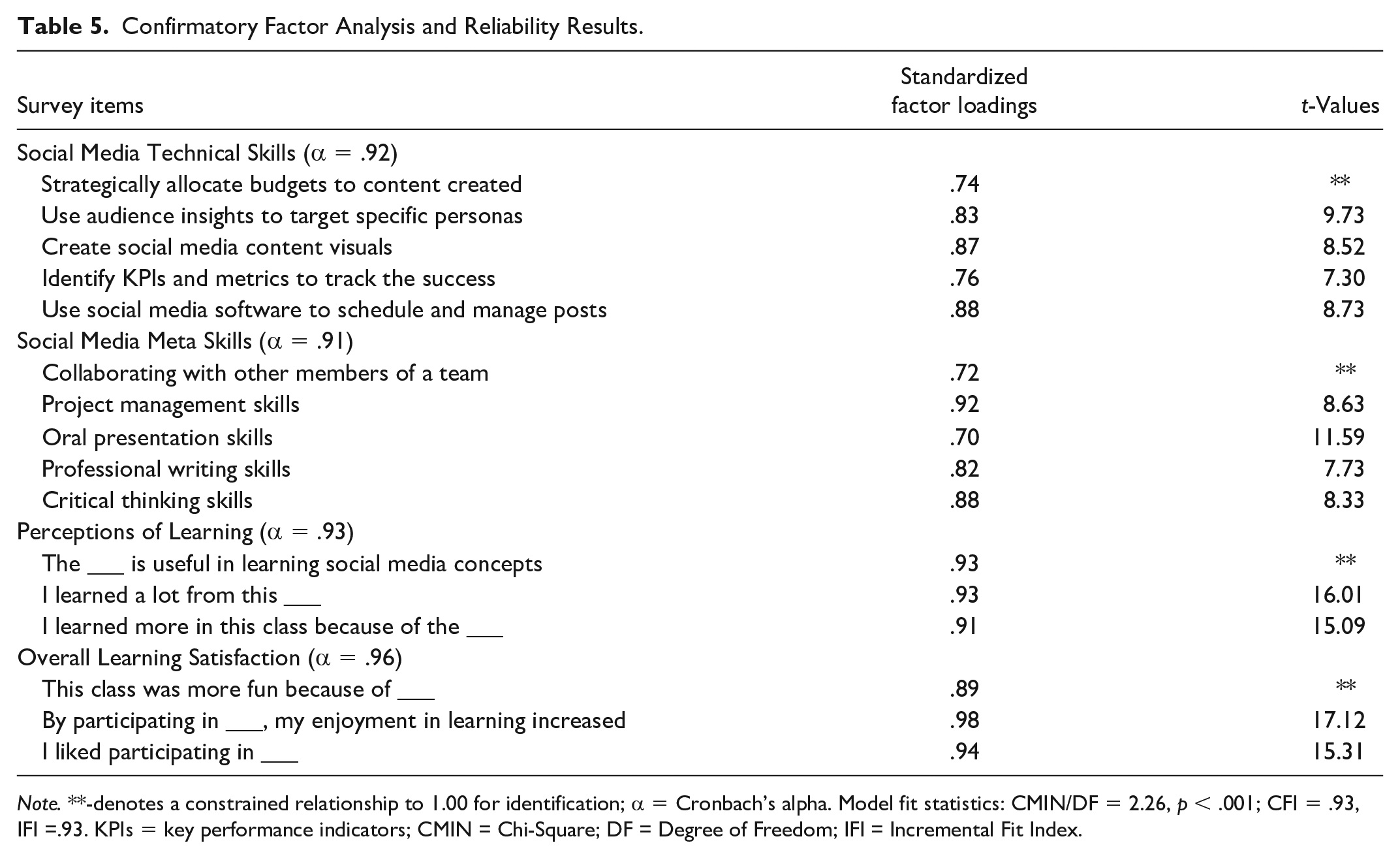
Note. **-denotes a constrained relationship to 1.00 for identification; α = Cronbach’s alpha. Model fit statistics: CMIN/DF = 2.26, p < .001; CFI = .93, IFI =.93. KPIs = key performance indicators; CMIN = Chi-Square; DF = Degree of Freedom; IFI = Incremental Fit Index.
Overall Means, Standard Deviations, AVEs, and Correlations of Constructs.
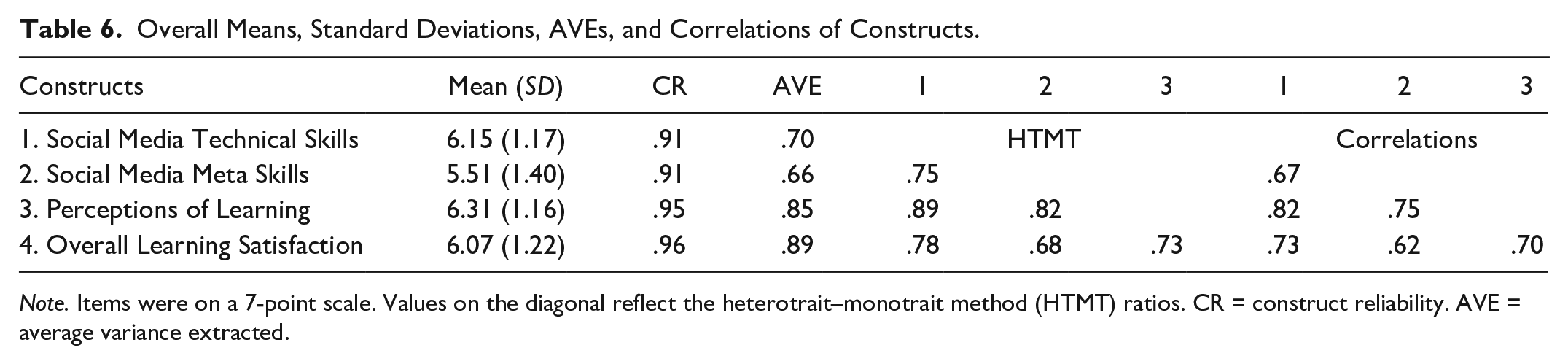
Note. Items were on a 7-point scale. Values on the diagonal reflect the heterotrait–monotrait method (HTMT) ratios. CR = construct reliability. AVE = average variance extracted.
The purpose of Study 3 was to address RQ2, how do students evaluate the various types of skills they gain from simulations alone versus those they gain from a client-based project. In addition, this study explores how these two approaches impact student perceptions of learning and overall learning satisfaction from their social media marketing course. Mean scores were calculated for each dependent variable, and then differences were assessed through multivariate analysis of covariance (MANCOVA). This particular method was chosen to control which university the student attended, the number of face-to-face meetings, and the gender of the participants. Professor was not controlled for as the professor remained the same for each section at the individual universities.
First, as both class formats (those that only completed the simulation alone vs. those that did both the simulation and client-based project) utilized the simulation, we compared how these two groups of students evaluated the overall effectiveness of the simulation. Results showed no significant differences in how students evaluated the simulation in terms of meta-skills (p = .11), technical skills (p = .48), or any of the dependent variables (perceptions of learning: p = .71; learning satisfaction: p = .11). This analysis was initially run to ensure that all students felt that they had a similar simulation experience. Thus, since no significant differences exist and to keep group sizes as equal as possible, the main analyses will use the simulation-only class for the simulation comparison group and the combined client project plus simulation class results for the client project comparison group.
For the overall comparison, we found a significant difference between those that did the simulation alone compared to those that also completed a client-based project, F = 5.21 p < .001; Wilks’s Λ = .788; η2 = .20. Specifically, perceptions of meta-skills gained during the course were significantly higher for those that participated in the client-based project compared to the simulation alone (F = 9.51, p = .00, η2 = .10). However, when assessing technical skills gained from each course setup, no significant differences were found (F = 0.02, p = .88, η2 = .001). Similarly, no significant difference was found across student perceptions of learning (F = 1.14, p = .28, η2 = .013). In terms of students’ overall learning satisfaction from the course, students who completed the client-based project reported significantly higher satisfaction scores (F = 2.86, p = .09, η2 = .032). The full MANCOVA results are shown in Table 7.
Student Perceptions of Simulations Versus Simulations With Based Projects.
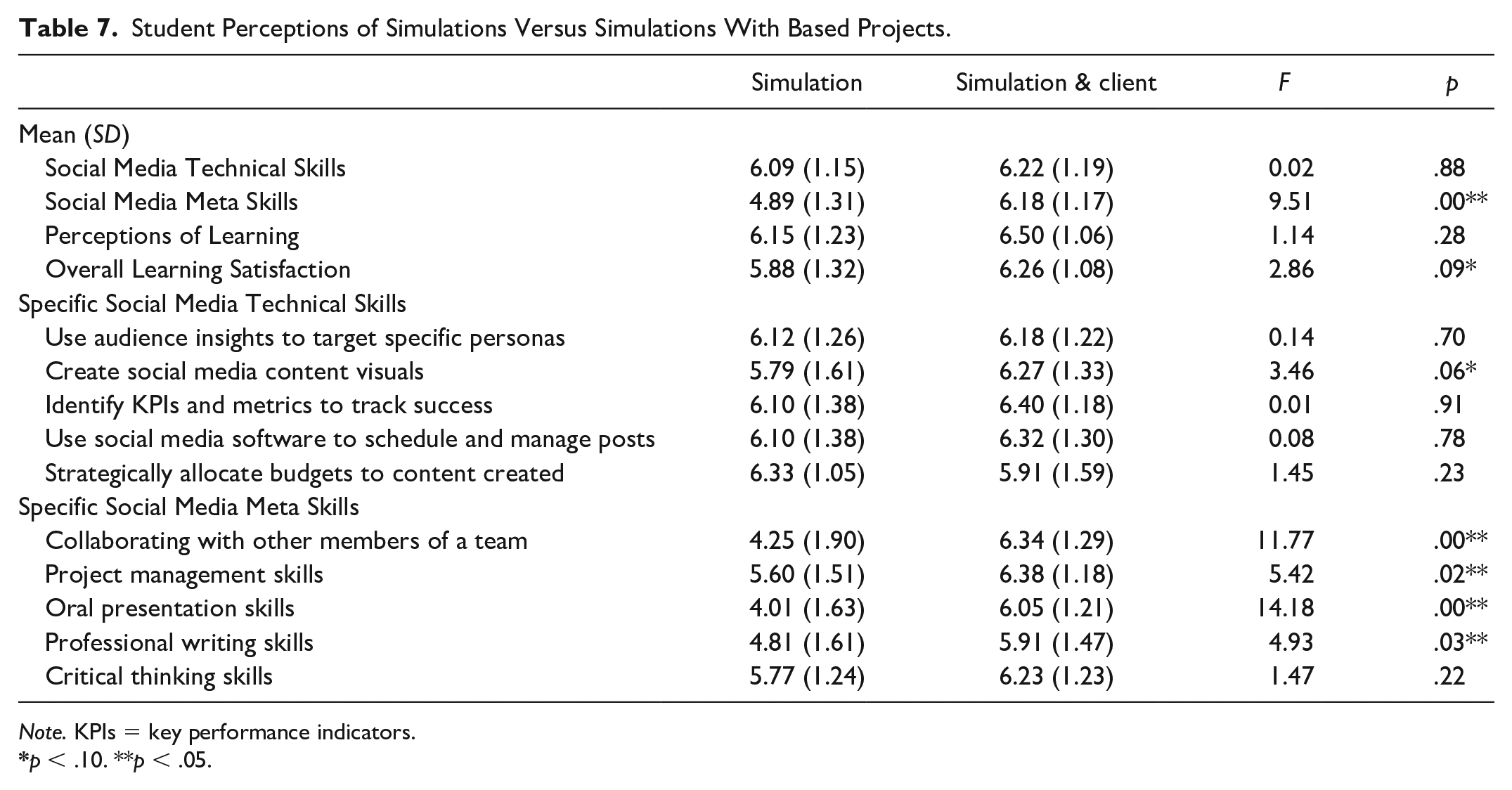
Note. KPIs = key performance indicators.
To gain a more in-depth understanding of how simulations and client-based projects differ in terms of the meta and technical skills gained (from the student’s perspective), we tested differences across the individual meta and technical skills. Similar to the overall meta-skill results reported earlier, the client-based project scored significantly higher than the simulation across all meta-skills with the exception of “critical thinking skills” (p = .22). For technical skills, the only significant difference found was for “creating social media content visuals” with client-based projects scoring higher than simulations (p = .06). It is also important to note that while client-based projects scored higher across nearly all categories, simulations did score higher in terms of “strategically allocating budgets to content created.” This finding makes sense given that client-based projects focused on organic posting and did not include social media marketing budgets.
Overall, the results of Study 3 suggest that from the student perspective, the simulation alone can provide adequate technical skills as there were no significant differences found by adding the client-based project. Qualitative comments from what the students gained most from the simulation support the simulation’s ability to help them learn technical skills, for example: “How to allocate the marketing budget, schedule posts, and how to drive up engagement metrics,” and “learning how different personas and posting at different times of the day are more important than what I generally thought” are two examples of student answers to the open-ended question.
Similarly, although means were consistently higher for client-based project respondents, there were no additional gains in how much students felt they learned overall. The addition of the client-based project, however, did show significantly larger gains in meta-skills learned and the student’s overall satisfaction and enjoyment in the course. Qualitative student comments regarding what students gained from the client-based project showed mostly meta-skills such as: “collaborating with a team”; “finding creative ways to come up with new strategies”; and “getting feedback from and experience presenting results to real-world clients.” Implications of these results will be further elaborated on in the general discussion that follows.
Discussion
In reviewing the job descriptions, conducting the practitioner interviews, and assessing student survey responses to their experiences in the classroom, several themes emerged that may help better prepare marketing students for social media marketing careers. The collective results of the above studies highlight the importance of meta-skills, the need for technical skills, and explore how simulations compare with client-based projects. We also discuss how educators can better help students communicate their experience with simulations to potential employers. Additional relevant findings are also briefly discussed to help educators better understand the current job market expectations for entry-level social media positions that are continuously evolving. Below, each of these themes is briefly discussed, with recommendations for social media marketing professors.
First, meta-skills are essential, and client-based projects better equip students with these skills. Specifically, collaboration, project management, professional writing, and critical thinking were not only mentioned in a majority of the job descriptions but were also highlighted by the practitioners. Study 3 showed that students obtain more of these meta-skills when a client-based project is included as part of their social media courses compared with the simulation alone. Specifically, students who work on client-based projects benefit from collaboration (both with the client and team members) and can obtain a more realistic understanding of the industry through navigating client feedback, company politics, and other external factors that are difficult to replicate in a simulation. Taken together, when possible, client-based projects should be integrated into social media marketing courses to improve the meta-skills of these students, which also acts to increase their overall learning satisfaction. Ideally, these client-based projects should contain at least a small advertising budget to help students better understand the budget allocation process. These projects can also be listed on student resumes as experience, which is called for by the practitioners.
Second, social media technical skills are essential. Specifically, creating social media content, measuring and reporting analytics, and experience with social media software programs (e.g., Hootsuite, Sprout Social). Although simulations and client-based projects are both incredibly useful for technical skills, simulations are not as effective as client-based projects when it comes to creating social media visuals. Many simulations used today allow students to create text content, choose pre-created images/videos to supplement the text, schedule posts across multiple platforms, create ads using audience targeting, and examine performance analytics and ROI for strategic decision-making. However, these simulations also come with the limitations of not providing students with the ability to create their own visuals (images, videos, reels, etc.) and are often conducted without real human interaction (i.e., teamwork and client communication). When using simulations, educators should consider making the simulation a group project to improve collaboration opportunities.
Third, students need help communicating what they are learning in social media classes in their portfolios, resumes, and job interviews—especially when it comes to simulations. Over the years, simulations have evolved and become increasingly more realistic. As hiring managers may have personal experience with older, outdated simulation types, students need to be able to efficiently communicate what they learned in the simulations in a way that explains not only what they did, but also what they learned in the process—ideally with examples. Therefore, students should be encouraged to capture the content and corresponding analytics they create for simulations (i.e., take a screenshot) to be used in their professional portfolios. A final reflection paper may also help students become better prepared to explain what they learned from each of the simulation rounds and be able to communicate the value of their experiences during a job interview.
Finally, it is also essential to note that the current research highlights the increasing use of video across the digital landscape; therefore, helping students obtain basic video creation and video editing skills can greatly assist them in the present and future job market. Furthermore, additional digital marketing skills that fell outside the scope of social media were mentioned in several of the job posts and by three of the hiring managers. Thus, basic HTML knowledge and familiarity with content management platforms (WordPress, Shopify, Webflow, etc.) can also be beneficial when competing for these entry-level social media marketing jobs. Also, basic search engine optimization knowledge, including keyword research, may provide an additional advantage to new graduates. If these topics are not taught in other courses within the marketing curriculum, it may be helpful to at least introduce these concepts in social media marketing courses.
Overall, educators are tasked with developing both social media meta and technical skills in marketing students while also adapting to the constantly changing marketing landscape. When possible, client-based projects and simulations can be used in tandem to improve the likelihood that students have the skill sets they need for the current job market upon degree completion. In addition, integrating social media scheduling and posting platforms (e.g., Hootsuite, Sprinklr), graphic design tools (e.g., Canva, Photoshop), SEO, and basic video shooting and editing skills can greatly increase the marketability of these students upon entering the job market. Finally, encouraging students to remain up to date on the changing market trends and tactics can also help students better prepare for their future careers.
Limitations and Future Directions
As with all studies, there are limitations to the above studies. First, we only examined entry-level positions. One avenue for future research involves looking at mid-level and senior-level positions in social media marketing and related areas. Do these more senior-level positions require similar or different meta and technical skills in the current market? Due to the nature of the industry, some of these positions were exclusively containing social media responsibilities, while others were entry-level positions that also required other job duties beyond simply social media.
Second, we only tested simulations versus simulations combined with client-based projects. We did not test only those who conducted a client-based project, nor those who did neither a simulation nor a client-based project. Future studies can also take into consideration classes only offering a client project (no simulation) as well as classes without any type of immersive or experiential learning project. As discussed, the client projects were completed as part of a team, whereas simulations were individual assignments. Future research could explore the differences in skills gained through team versus individual simulations, and determine if meta-skills such as collaboration are enhanced by allowing students to work as a team in simulated experiences.
As noted in Study 2, agency versus non-agency jobs showed a few distinctions in terms of desired skills and evaluations of client-based projects. Future research could build from this finding to further delineate how skills needed by marketing graduates may differ based on industry. Finally, the studies in this manuscript did not examine professor perceptions, which would add a more holistic understanding of how successful these various pedagogical assessments are. What do professors believe are the key ways to assist students with obtaining these meta and technical skills? What are faculty views and concerns regarding social media marketing simulations and client-based projects? These areas are ripe for research and can expand the scope of the present studies.
Footnotes
Declaration of Conflicting Interests
The author(s) declared no potential conflicts of interest with respect to the research, authorship, and/or publication of this article.
Funding
The author(s) received no financial support for the research, authorship, and/or publication of this article.
