



Abstract
Introduction
Black communities are deeply underrepresented in research, due, in large part, to research mistrust. It is critical to shift the burden of trust building from communities to researchers and research institutions, which have perpetrated harm against Black communities for centuries. In this study, we examine researchers’ perspectives on how to become trustworthy to Black-identifying participants and communities.
Methods
We conducted semi-structured interviews with researchers affiliated with our institution’s Clinical and Translational Science Institute. Participants were recruited through email and responded to the study team if they wished to participate. Interviews occurred through Zoom, took 60 minutes, and were audio recorded. We used an inductive thematic data analysis approach.
Results
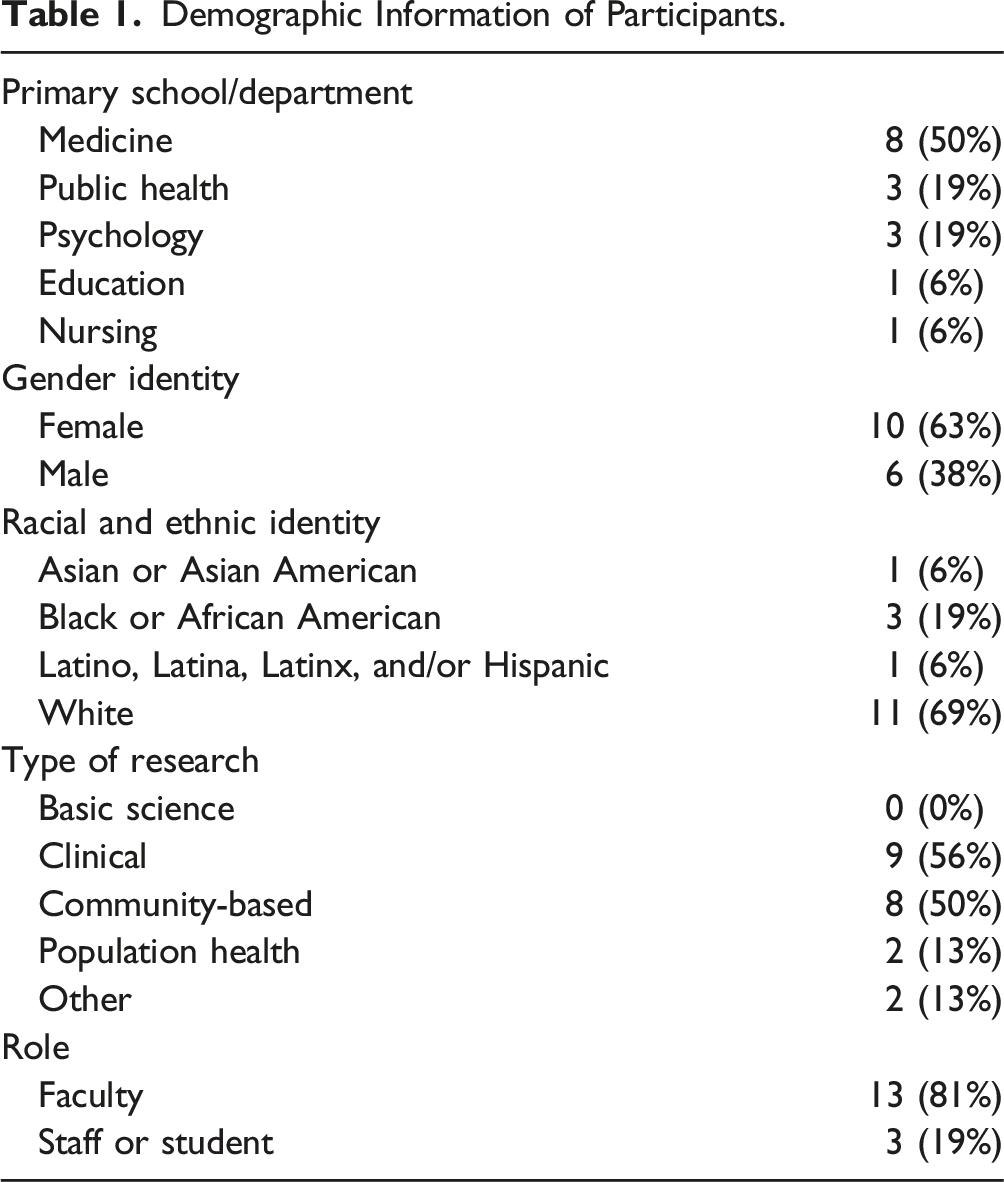
Sixteen researchers, who were affiliated with medicine, public health, psychology, education, and nursing, participated in this study. Participants agreed that researchers bear the responsibility for building trust and noted how critical it is to address the underrepresentation of Black participants in research through equitable recruitment and that researchers must be transparent and engage in reciprocal research practices. Community-partnered research was highlighted as a way to develop trustworthiness. Finally, participants noted that trustworthiness must also be built at the institutional level, rather than just by individual researchers.
Discussion
To our knowledge, this is one of the first studies to examine researchers’ perspectives on how to build their own trustworthiness, with a specific focus on trust-building with Black communities. Explicit training and resources are needed to build trustworthiness into academic centers.
Introduction
Despite calls to action by the National Academy of Medicine and National Institutes of Health, Black communities are deeply underrepresented in clinical trials and other forms of research.1–4 Multiple barriers exist for Black communities being included in research including lack of access to trials, lack of information about clinical trials, financial burdens of participating in a trial, and lack of insurance.5–6 Importantly, much attention has been paid to the role of research mistrust as a driving force behind the inequitable representation in research studies.7–9 Mistrust is defined as the notion that “the entity or object of mistrust is acting against one’s best interest or wellbeing (page 2)” and can occur at the interpersonal or system level. 7 A systematic review exploring underrepresented racial and ethnic minoritized communities in clinical trials showed that Black participants mistrusted research and thought research findings would only help white communities. 6 More recently, studies have demonstrated that Black participants were less likely to participate in COVID-19 vaccine trials due to mistrust10,11 and that Black participants had the highest level of research mistrust. 10
While addressing mistrust of research is critical, focusing on research hesitancy perpetuates racist paradigms by placing the burden on communities to trust research despite centuries of trauma perpetrated by researchers against Black communities. While the US Public Health Services Syphilis Study at Tuskegee (Tuskegee Study) is one of the more well-known atrocities, 12 there are innumerable examples of egregious, traumatic, and abusive mistreatment perpetrated by researchers and the institutions where they work. 13 Specifically, these research studies are rooted in anti-Blackness: not seeing Black bodies and minds as whole and complex, leading to disregard for health and wellbeing through denial of treatment as it became available; removal of body parts against the will or permission of the person; and the replication of data and specimen beyond the research period and/or without consent.7,12–14 Studies have shown that these historical and current day traumas have influenced Black participants' mistrust of research.7,15–17
In light of centuries of research trauma perpetrated against Black communities, there has been a call-to-action imploring researchers and research institutions to focus on building their trustworthiness.18–20 Trustworthiness is the notion that researchers and research institutions are deserving of trust. 21 Rather than “educating” communities about why they should participate in research, trustworthiness places the responsibility of trust-building on researchers and research institutions. Emerging work has described community members’ perspectives about building research trustworthiness. For example, a recent qualitative study examining the opinions of Black, Latino/a/e, and white adults found that research trustworthiness centers around characteristics of the individual researchers, histories of unethical and unjust research influencing mistrust, and attributes of the institution where a research study is being conducted. 21 However, little research has focused on elucidating perspectives of researchers themselves on how to initiate and sustain trustworthiness. A move from trust to trustworthiness in research, which requires seismic shifts at the individual and institutional level, necessitates buy-in from researchers. Understanding these perspectives is key to developing policies and practices that dismantle research mistrust by researchers becoming more trustworthy.
Parallel to this unpacking, it is essential to deeply examine where and how institutional whiteness directs trust building and trustworthiness practices through assimilation, coddling of white comfort and fragility, and the absence of discussing and putting action towards social justice. 22 Examples of anti-Blackness also lack explicit exploration of whiteness, white supremacy, or Eurocentric values. As a theoretical framework, anti-Blackness is “not simply racism against Black people,” but rather a “broader antagonistic relationship between Blackness and (the possibility of) humanity (page 429).” 23 Exposing and exploring anti-Blackness allows history to tell the true story of how we got here together, and how we play a role in its perpetuation. If we don’t talk about anti-Blackness, especially in a Predominantly White Institution, have we only renegotiated the cycle of violence, as Dancy et al. (2018) noted in their whiteness and anti-Blackness in higher education article. 24
Therefore, the goals of this exploratory study were to examine researchers’ perspectives about how to initiate and sustain trustworthiness with Black communities. Our specific objectives included examining: 1) researcher knowledge and attitudes about trustworthiness; 2) how researchers are currently working to develop their trustworthiness; and 3) recommendations for building trustworthiness.
Methods
Study Conceptualization
This work emerged from a community-academic partnership---the Community Vaccine Collaborative (CVC)---a regional group focused on promoting COVID-19 vaccine equity. 25 One of the CVC workgroups has focused specifically on building vaccine trustworthiness; as our conversations evolved, we began discussing research trustworthiness more broadly. Our research question was conceptualized through discussion of another study our team was conducting examining Black and Latine adults’ perspectives on COVID-19 vaccines. 26 Our team noted how this work was important but also perpetuated burdening communities with surveys rather than understanding researchers' perspectives. Therefore, a small group from the trustworthiness workgroup convened to conduct this study. We used the 32-item Consolidated Criteria for Reporting Qualitative Studies (COREQ) to describe our methods in this article. 27 The University of Pittsburgh Institutional Review Board deemed this study exempt.
Study Design
We used a descriptive qualitative research approach to ground this study.28,29 Descriptive approaches, defined as research to “produce low-inference descriptions of a phenomenon” is an inductive approach that can be used for hypothesis generation. 28 This framework is particularly helpful for topics with little or no past research. We used this approach so we might understand the perspectives of researchers and generate ideas for future research and practice.
Reflexivity and Positionality of the Research Team
Throughout the research process, we attended to reflexivity, or the impact of the research team on data collection, analysis, and interpretation. 30 We share our identities to highlight how we see ourselves in this work and how our lived experiences may have contributed to this work. Positionality probes how identities influence, shape, and organize our relationship with information, 31 while also thinking more deeply about how biases and structural inequities are revealed through positionality statement-making, holding the authors accountable to this implicitness ahead of making an imprint in the scientific record. 32 We seek to identify and develop our positionality in connection to the research topic, participants, and context and process. Among other intersectional identities, our team identifies in the following way: a Black cisgender woman, a Black cisgender woman, a white non-binary person, a Black cisgender woman, a Black cisgender woman, a Japanese Jewish cisgender woman, and a South Asian American cisgender woman. Our team has affiliations with academic institutions in different ways including as research coordinators (TS, CH), community engagement specialists focusing on equity (EH, BS), community partnered researchers (FSF, EM, MR) and clinician researchers (EM, MR). All team members have experience conducting community-partnered research and are members of the trustworthiness workgroup through the CVC. The two first authors (CH, TS), both of whom are trained in qualitative research, completed the interviews.
Using a culturally responsive team model, where biweekly we reflected and revisited our intentions for the study as a team, we intentionally centered the use of culture as opposed to making it neutral. Culture here is defined as “a cumulative body of learned and shared behavior, values, customs and beliefs common to a particular group or society” and ‘responsive’ is defined as substantively and politically attending to culture and race in research practices. 33 Instead of crafting study processes prescriptively, being culturally responsive grounded the team in thinking together about cultural references, assets, gaps and interests of the collaborators at large, tying us back to our dedication to the why, positionality and how to build trust and be trustworthy.
Participants and Recruitment
Eligibility criteria included self-identification as a researcher (either principal investigator, research staff, or graduate student) working at the University of Pittsburgh. To ensure that participants had some level of knowledge about community partnerships, we recruited from a list of participants who have sought consultation from Community PARTners (the community engagement core) within our university’s Clinical and Translational Science Institute. A list of 70 participants were emailed, with three subsequent emails sent to the group. Potentially interested participants could contact the research team for further information. Sixteen participants (23%) agreed to participate and the remaining did not respond to our email; no one refused participation.
Interview Guide
We created the interview guide based on extant literature and the team’s experiences. The initial questions were drafted by CH, TS, and MR and then reviewed and revised by the full team three times. We pilot-tested our interview guide with one researcher and made additional changes based on their feedback. We also received feedback from the CVC trustworthiness workgroup. The guide comprised three sections: 1) knowledge about origins and histories of mistrust (i.e. “please describe your knowledge about the ways research and researchers have perpetrated trauma against Black communities?“); 2) how trustworthiness is defined and understood by researchers (i.e. “please describe how you define trustworthiness in research? Do you believe that you are a trustworthy researcher?“); and 3) how researchers can become more trustworthy with Black communities (i.e. “please describe how you and your research institution can conduct more equitable research within the Black communities?”).
Data Collection
After completing verbal consent, a team member (CH or TS) conducted interviews through Zoom. Interviews were completed confidentially and participants had the choice to keep their videos on or turn them off. All interviews took 60 minutes, were audio recorded, and transcribed verbatim by a professional transcription service. Participants received a $40 gift card. We continued conducting interviews until we reached thematic saturation, when no new codes or themes emerged. 34
Data Analysis
We used an inductive thematic analysis approach, where codes and themes were derived from the data rather than determined apriori.29,35 Two coders (TS, CH) created a codebook with a list of codes and definitions, and then coded 5 transcripts to demonstrate consistency. We used the Dedoose qualitative software program as an organizational tool. 36 Discrepancies were reviewed, discussed, and adjudicated with support from a third coder (MR). After finalizing the codebook, one of the two coders (either TS or CH) coded the remaining transcripts independently, with every third transcript co-coded and reviewed with MR for adjudication. Codes were reviewed with the broader team to determine emerging themes, and then shared with the CVC, who provided additional insight and guidance to finalize themes.
Results
Demographic Information of Participants.
Theme 1: Researchers bear the responsibility for trust-building, due to historical and current day traumas perpetrated against Black participants and communities
Participants expressed knowledge about historical atrocities committed by researchers and research institutions against Black communities and how this decreased the trustworthiness of research. The Tuskegee Syphilis experiment was discussed frequently: “... Moving into the 20th Century with Tuskegee, this is where men were just watched. Even though we knew how to treat syphilis, we just watched to see how the disease progressed. I think that’s something that is often talked about . . . in terms of egregious research practices.” [1]. Another participant shared: “I think the history is really important, and not just the super well-known ones like Tuskegee, but maybe the lesser well-known ones and also not the ones that happened 70 years ago . . . but actually the stuff that’s literally happening today because racism is not the past. It’s still very much alive and well” [2]. Similarly, one participant noted current disparities, particularly in their work related to the recent pandemic, “...because I’m engaged in COVID work, what we see in the data is younger people are not getting vaccinated. The thought is, well, it’s just Tuskegee . . . I feel that’s not important, but it’s a bigger sorta issue of feelin’ exploited, experimented on, or even contemporary discrimination or racism in the medical system.” [7]
Due to persistent and immense trauma perpetrated on Black communities by researchers and research institutions, participants noted how the responsibility of trust-building falls with the researcher: “You can’t build trustworthiness if the researcher hasn’t done their own work. It’s not on the onus of the participant to figure out the work that you need to do to be antiracist. The researcher has to do that, and that’s how the trust will build” [14]. Another participant shared a similar opinion: “I think for people who have good reason to distrust scientists, I think it’s reasonable to ask for us to explain what we’re doing and why we’re doing it better” [16]. When discussing trustworthiness in research, one participant described [Trustworthiness] boils down to really earning the trust of participants by being open and honest and constantly self-reflective and questioning throughout the research process… I think it’s something that is absolutely earned or needs to be earned. The onus is on the researchers and the medical community to not only talk that talk, but really walk that walk throughout the research process. [7]
Theme 2: Equitable and intentional recruitment of Black participants into research studies is needed
Participants described how thoughtful inclusion of Black participants in research was paramount to improving trustworthiness including using inclusive language, hiring Black-identifying staff, and oversampling in Black communities. A researcher noting using inclusive language: “The advertisements that we use, the way we write our consents, the language that we use . . . We try to think about how it is as inclusive as possible” [5]. Other participants noted the importance of workforce equity in research: “I hire people for our team, particularly the recruiters, who are Black women from Pittsburgh and who help to serve in an advisory capacity, but they also do the recruitment so that I can show people we put our money where our mouth is” [4]. Another participant shared a similar perspective when probed for recommendations to successfully build trustworthiness: “It’s to diversify your workforce. When you’re having these uncomfortable discussions, it’s a relief to me when it’s not just white people in the room. If your particular lab or research group isn’t diverse enough, how to make that happen and not feel like you’re just tokenizing somebody by bringing them into the discussion” [9].
However, a few participants noted challenges in recruiting Black participants. “I think most of the research I’ve done, we try to probably over-select because there aren’t that many people of community of colors in [my city] it’s a relatively low prevalent site. We often work with sites in other areas that have more patients who are Black to try to make sure that we do have a diverse population” [4]. A few participants shared that harm can be caused when researchers excuse the lack of participation of Black communities: “because somebody might be questioning you or not trusting . . . then you’re like, well, I can’t fix that so I’m not even gonna try. I think it’s like the challenges get in the way” [8]. Another participant shared a similar sentiment ...if it's difficult to identify participants from Black communities and if it's difficult to get members of those communities to trust me, then the easiest thing is just not to include them… the exclusion from research is not traumatic in the easily or usually defined sense, but it perpetuates injustice and it perpetuates a scientific self-delusion in the sense that we think that our results apply to all individuals, but we haven't included all individuals in our research. [6]
Theme 3: Community Partnerships are Key to Promoting Research Trustworthiness
Many participants highlighted the importance of community partnerships in building trustworthiness with Black communities. One interviewee discussed, “I think part of rebuilding trust is making sure that it’s truly community-engaged from the beginning. It’s not addressing the issues that researchers think will make people’s lives better but truly addressing issues that people think will make their lives better. It’s an iterative process” [1]. Another interviewee recommended: “I think starting with the wisdom of others is really critical to doing this work well and working together with the community from the get-go in terms of understanding what questions are relevant to ask and what the best ways are to ask them, rather than focusing on research for research sake” [7]. Similarly, one interviewee described, “I think having champions, having connections within the community, people that you partner with who are supportive and who are willing to be visible on behalf of the study is also helpful” [5].
Some participants shared
Theme 4: To Become Trustworthy, Researchers Must Listen and Show up for Communities
Participants noted the responsibility individual researchers have in building trustworthiness, particularly around improved transparency, communication, and reciprocity. One investigator emphasized the importance of listening: “There’s so much power in just listening, both in the community context and research context” [1]. Several researchers also described the importance of transparency in the face of mistrust: “...I do what I can to be transparent about what it is that I plan to do, but I understand that someone with very, very deep-seated distrust, I’m gonna have a hard time in a ten- or fifteen-minute interaction addressing that. The only thing I can do is be compassionate and say I understand” [9].
The importance of reciprocity, or that research with Black participants benefits them as much as it does investigators, was also discussed: I think to build trust with the Black community. . . It would be not just saying something, but actually showing with your actions, with resources, with assets, with reparations, that you are in it for the long haul. You’re not going anywhere and that you’re not just planning to use them for this one research study, and you’re gonna walk away like every other researcher. [10]
Another researcher shared a similar perspective, “I think you used the term ‘meeting people where they’re at.’ I think that’s what we try to do. We really try to avoid being coercive in any way. I think just being willing and able to talk to people, even if no is the answer” [5].
Theme 5: Institutional Level Challenges for Building Research Trustworthiness and Conducting Equitable Community-Partnered Research
While participants highlighted several ways that individual researchers can initiate and sustain trustworthiness, they also emphasized the importance of institutional buy-in and the need to dismantle challenges created by institutions, particularly around developing equitable community partnerships. One participant noted: “The way that funding is set up and the research enterprise is set up doesn’t necessarily support those critical pieces in the same way it supports gathering data. It is a challenge to figure out how to build in the sustainability and the resource pieces that are so critical to doing work in partnership” [7]. Another participant noted additional challenges related to funding, particularly as health equity funding has become more prevalent, The NIH put out a call in the area of [Black] maternal child health, so everybody’s now talkin’ about Black maternal health. Many of us have been doin’ this work for a while, and we’re glad people are at the table, but what I saw recently in this NIH call that came out very quickly [was] that many people were not able to just jump up and submit… the majority of researchers that got funded to do this equity maternal health call were all white researchers except for one. I don’t know what all their teams looked like, but it’s problematic to me. [9]
Similarly, another researcher shared challenges related to funding specifically for community-engaged research: “It’s hard to get grants for community-based research. It takes so much time. You can’t get enough publications out because it takes time. Yes, institutions perpetuating that cycle of mistrust” [2]. Interviewees also discussed challenges around compensating participants: “We wanted to make sure we were compensating people for their time and not adding to the ‘Black tax’ or ‘minority tax’ by asking people to just do this on their own time [but] we could not use the grant money to pay people who were also employees. We ended up getting a workaround in that we could pay them with Grubhub gift cards... Some people were like, “I already have $150 of Grubhub gift cards. I don’t need another one.” [1].
Another participant shared a similar perspective: “I’m pullin’ teeth just to compensate community researchers for certain things, and the red tape and the bureaucracy to move paperwork forward, and requirements, and all kinds of things” [12].
To address institutional-level challenges, participants noted how research institutions must prioritize time, resources, and funding to building trustworthiness. A participant expressed, “I believe that when we look at institutions…it’s important and valuable to have an understanding of the social political dynamics of that particular institution. If the trustworthiness that we’re trying to attain is out of sync with the actual product of the larger value system of the institution—if there’s a disconnect there, that’s something that we should address” [13]. Another participant noted reimagining what research looks like: I think the fact that it’s an institution… it’s hard because it’s not just a single person. Institutional change related to policies and practices. . . Probably asking those questions, right, like can we really make it right in the current model, or do we need to re-imagine it? Dismantle and re-imagine something that’s bigger and better that really centers the community’s needs and wants rather than being driven by funding or tenure and promotion. [15]
Discussion
Our results are one of the first to identify multidisciplinary researchers’ perspectives about how researchers and academic centers can initiate and sustain trustworthiness with Black communities. Participants described challenges and solutions at the individual, research team, and institutional levels. Our findings are aligned with recent work describing community members' perceptions of research trustworthiness 21 and provide exploratory evidence that researchers support individual and institutional changes to become more trustworthy. Similar to multiple commentaries on trustworthiness,18–20,37 reflected in our data is an understanding among researchers who have experience with community-based projects that researchers should bear responsibility in building trustworthiness and that mistrust is rooted in historical and current day trauma perpetrated against Black communities. Our findings are also aligned with the American Association of Medical College’s trustworthiness toolkit, which emphasizes the need for sustained, reciprocal, and respectful partnerships to increase trustworthiness. 38
Our results highlight the importance of equitable recruitment of Black participants as central to building trustworthiness. Promoting workforce equity, especially through hiring and supporting Black-identifying research team members was paramount and aligned with prior work, noting that racial and ethnic concordance between research staff and participants is a strong facilitator of research participation. 39 Our study builds on this past literature by demonstrating that to develop trustworthiness, research teams must prioritize workforce equity and develop policies and practices focused on equitable recruitment. Results also highlight the perpetuation of inequities when researchers excuse low recruitment of diverse samples of participants by simply stating that specific communities are smaller, hard to reach, or more mistrustful, and therefore more challenging to recruit.
Our study also demonstrates the importance of institutional trust-building and the role an academic institution can play in making research trustworthy for Black communities. Individual researchers’ ability to conduct equitable research is inherently linked to institutional policies and practices. Aligned with our study, past work has shown how complicated compensation systems for participant incentives, lack of institutional recognition of community partnership building in the promotion process, and prioritization of academic “outputs” (e.g., grants, manuscripts)40–42 may limit researchers in being able to develop themselves as trustworthy and engage in equitable research. We also highlight a well-described phenomenon called “health equity tourism (see work by Lett et al.” 42 ) where investigators without prior experience or commitment receive financial and other support to conduct health equity work;43,44 institutional trustworthiness must be built by more intentional allocation of resources. Interestingly, the majority of the results from the current study focused on how institutions create barriers for researchers in both conducting their work and attaining promotion and tenure. While changing policies to support researchers conducting trustworthy research is a critical first step, building institutional trustworthiness more broadly must include academic leaders atoning for harm their institutions have done. Redressing past institutional atrocities requires academic leaders to improve communication, increase transparency, attend to access barriers, and create systems to amplify community priorities and expertise.
Equitable community partnerships were amplified in this study as critical to building trustworthiness. While participatory methods are gaining more widespread recognition, traditionally research questions and methods have been decided by researchers without involving communities, and, in many cases researchers have exploited communities of color by using them to gain access to participants without proper inclusion as scientific partners. 45 A plethora of research has highlighted the importance of community-partnered work to achieving health equity;42,44–46 our study also demonstrates that community engagement is key to building trustworthiness. Our study reinforces the need to continue emphasizing the nuances of partnership development, as well as provide training, institutional support, and resources for community-partnered research.
Our study is subject to multiple limitations. The majority of participants identified as cisgender women, non-Hispanic white, and faculty; therefore, this work may not be generalizable and is subject to selection bias. However, qualitative methods are not meant to generalize but rather generate hypotheses and elucidate a heterogeneity of experiences. We continued recruiting until we reached thematic saturation and 16 interviews is considered sufficient to achieve up to 90% saturation in past studies. 47 Our study was also not intended to compare responses based on participants’ identities; we recognize that Black-identifying participants may have different thoughts and perspectives compared with those who identify as white or non-Black people of color.
We also recognize that while the interviews were confidential, they were not anonymous and people may have felt uncomfortable sharing as this topic can create discomfort. The interviewers focused on supporting participants to lean into the discomfort and use it as an opportunity to reflect. However, we also offered participants the opportunity to engage and disengage in different ways, including providing the option to turn their cameras off or on. Finally, we focused our study on researchers who engaged with our CTSI’s community engagement core and therefore likely had already begun thinking about trustworthiness and community partnered research. This is evident as 50% of participants reported engaging in community-partnered research. We chose this approach for our hypothesis generating work, as we hoped to interview people who have started thinking about trust-building. Future studies should consider inclusion of all researchers.
Implications and Conclusion
These limitations notwithstanding, our work sets the stage for encouraging and operationalizing research on building trustworthiness as well as practice and policy change. Future research should consider surveying large groups of researchers to better understand their perspectives on becoming trustworthy and multilevel strategies to implement specific practices. In particular, future work should focus on researchers who identify as men, gender non-binary, people of color, and graduate students, all of whom have unique and important perspectives to share and were less represented in this sample. Further, our work primarily included those working in academic medicine, which is at a unique intersection of research, education, and clinical care, where trustworthiness of research may be deeply related to historical and current day traumas perpetrated in clinical spaces. Additional work should consider the perspectives from researchers working in other academic spaces, who may have unique experiences rooted in their disciplines’ history. We also recommend that further studies explore the perspectives of potential research participants on how to build trustworthiness. We also purposefully chose to focus our work on building trustworthiness with Black communities due to the centuries of trauma perpetrated by researchers specifically rooted in anti-Black racism. Future work should consider understanding how to initiate and sustain trustworthiness with other marginalized communities, including other communities of color (i.e., Latino/a/e, Indigenous, Asian), as well as immigrants and refugees, and those groups with intersecting oppressed identities such as sexual and gender minoritized individuals. These data can also inform the development of validated tools to help measure research trustworthiness and determine how trustworthiness changes over time.
Our data inform practices and policies that should be enacted to amplify community partnerships and intentional trust building as the norm rather than the exception in research. All researchers should receive training in historical and present-day research practices which have perpetrated harm against Black communities. Researchers should also receive guidance in conducting equitable community-based research where communities are treated as equal scientific partners. Academic centers should create policies and practices to develop trustworthiness, including atoning for harm done by the institution, amplifying the importance of community-partnered work and relationship building, prioritizing workforce equity, providing funding opportunities for researchers interested in becoming more trustworthy, and creating compensation systems that make it easier to pay community partners. There needs to be intentional movement to disrupt systems that maintain power, even in spaces where community-academic relationships are meant to be equalized. Explicit acknowledgement of whiteness, anti-Blackness and positionality as well as social justice orientations should be a part of ongoing professional development and curriculum building for faculty, staff and students.
Conclusions
To our knowledge, this is one of the first studies to examine researchers’ perspectives on building trustworthiness and dismantling research mistrust among Black communities. Participants described how trust-building is the responsibility not just of the individual researcher but also the research institution. Policies and practices at the individual and institutional levels are necessary to promote trustworthiness and ensure equitable and intentional inclusion of Black participants in science.
Footnotes
Acknowledgements
We wish to thank the Community Vaccine Collaborative (CVC) for their support in developing the interview guide and finalizing themes.
Declaration of conflicting interests
The author(s) declared no potential conflicts of interest with respect to the research, authorship, and/or publication of this article.
Funding
The author(s) disclosed receipt of the following financial support for the research, authorship, and/or publication of this article: Our work was supported by a University of Pittsburgh Momentum Scaling grant (PI: Miller).
Ethical approval
The University of Pittsburgh Institutional Review Board approved this study as exempt.
