




Abstract
Early adolescents internalize perceptions of parenting practices to derive affiliative rewards. However, gendered socialization may alter both exposure to different parenting practices and the internalization process itself, leading to differences in experienced affiliative reward. To test this hypothesis, we collected self-reported data from 1132 early adolescents, who completed the Alabama Parenting Questionnaire and the Network of Relationships Inventory. Relative to girls, boys reported: (1) similar levels of positive parenting and involvement, (2) higher levels of poor monitoring, inconsistent discipline and corporal punishment, and (3) lower levels of affiliative reward derived from relationships with mothers, fathers and best friends. The pathways from parenting practices to affiliative reward were similarly strong across groups, except for corporal punishment, which impacted boys more strongly. The findings suggest that the internalization process is similar for boys and girls, but boys’ exposure to more negative parenting impacts their bonds by altering the inputs of this process.
Introduction
Internalised Parenting Practices and Affiliative Reward
The early adolescence period represents a particularly important developmental pivotal point: it is during this time that children become acutely self-aware and alert to other people’s appraisals of them (Lerner, 2002), prompting the questions ‘who am I?’ and ‘what am I like?’, and thus instigating the development of a nuanced internal self-concept. As this self-concept is constructed, revised and maintained through the internalisation of appraisals from significant others (Harter, 2012), social bonds can be said to provide the framework for this critical process. Simultaneously, by filtering others’ actions through own cognitive and emotional filters, adolescents form ‘counter-appraisals’ of others and therefore the social bonds themselves are expected to suffer alterations (i.e. the framework itself is continually shaped by the processes it hosts).
Current empirical work falls short of testing how the ways in which others’ actions are internalised may affect social bonds and resulting psychopathological elements of emotional alienation, such as callous and unemotional traits. Instead, work has mostly examined the presence of a direct correlation between exposure to specific parental actions and psychopathology (e.g. parenting practices and callousness), thus bypassing the potential role played by internalisation; or have tapped into general (and therefore shallow) outputs of internalisation, for example ‘relationship satisfaction’.
In a recent attempt to bridge this gap, we demonstrated that early adolescents’ perceptions of their parents’ parenting practices alter their experiences of affiliative reward (Roman et al., 2023). Affiliative reward, first posited within the ‘Affiliative Bonding’ theory for the study of animal behaviors (Depue & Morrone-Strupinsky, 2005a, 2005b), is defined as a dual-phase process: (a) affiliative behaviors aimed at building social bonds (i.e. the appetitive phase), and (b) experiences of affiliative reward in the form of feelings of pleasure derived from social bonds (i.e. the consummatory phase). The concept was recently introduced to study children’s callous and unemotional traits (Waller & Wagner, 2019). Here, the focus has been affiliation-seeking behaviors and inherited sensitivity to affiliation, with items referring to responsiveness to and enjoyment of physical contact and non-physical bonding activities (e.g. Perlstein et al., 2022). Building on this work, we developed a related construct, aimed at capturing the experience of affiliation-induced emotional rewards, with items capturing four dimensions, namely feelings of companionship, intimacy, affection and perceived sense of worth (i.e. perceived worth as assigned to oneself by the significant other). This conceptualisation focuses to subjective feelings derived from bonds, implies social malleability as opposed to inherited sensitivity, and highlights the fact that social bonds both promote emotional wellbeing and provide the context for adolescents’ sense of self.
Employing this framework, we found that 12-year old adolescents’ perceptions of specific parenting practices were internalised and distilled into experienced affiliative reward (Roman et al., 2023). Specifically, adolescents who reported higher exposure to parental involvement also reported experiencing higher levels of affiliative reward in relation to their parents and best friends. Perceptions of higher levels of monitoring and lower levels of corporal punishment further translated into higher levels of parent-related affiliative reward. In turn, at this age, affiliative reward, especially as derived from parent-child relationships, translated into lower callous and uncaring traits, and further to lower levels aggression and rule-breaking. However, the study omitted one important nuance that is prevalent in the literature on parenting, callous-unemotional traits and antisocial behaviour, namely the fact that boys tend to show worse scores on all the dimensions involved. As such, it is possible that the results obtained by Roman and colleagues (2023) were mainly driven by scores for boys. Crucially, as summarised in the following sections, boys and girls: (a) are exposed to different parenting practices, (b) have differential perceptions of their exposure to various parenting practices, (c) undergo gendered socialisation practices that foster divergent relationship-relevant attributes, and (d) report differences in bonding experiences with parents and peers. Therefore, sex-based differences may exist in both the extent to which boys and girls experience different relationship outcomes and the underlying processes that create them. Understanding these differences is of paramount importance due to implications for targeted prevention and treatment interventions that discard a ‘one size fits all’ approach in favour of more nuanced and effective frameworks. To address this important topic, the current study focuses on sex differences in the relationship between perceived parenting practices and experienced affiliative reward. Reflecting the population under investigation, this study focuses only on gender-conforming early adolescents whose gender identity is binary and corresponds to their biological sex.
Gender-Based Perceptions of Exposure to Different Parenting Practices
Past research has highlighted that the parenting of boys encourages agency and assertiveness, whereas girls are reared towards communion attributes such as kindness and care (e.g. Helgeson, 1994). For younger children, this differential socialisation is conducted via parental modelling of gender-typed behaviours, the provision of a gendered environment in the home and the enactment of gendered parenting (e.g. Dittman et al., 2022; Endendijk et al., 2018). In contrast, only a handful of studies have examined gendered socialisation in adolescence. With respect to the ‘parenting’ dimension of socialisation, which is the focus of this work, the few existing studies have focused mainly on the roles of parental control, monitoring and parental knowledge, with heightened parental monitoring and parental knowledge reported for girls than boys (e.g. Racz & McMahon, 2011).
Even less is known about adolescents’ own gender-based perceptions of the parenting practices they are exposed to. This is a crucial gap because early adolescents’ gender-based perceptual differences of parenting practices arguably play a more important role in internalisation and gender-based self-schemas than the actual parenting practices enacted by their parents. Existing evidence indicates that early adolescent boys report more perceived psychological control than girls (Chen et al., 2019; Finkenauer et al., 2005) and lower levels of relationship quality with parents than early adolescent girls (Shek, 2007). Furthermore, in a sample of 12-year-old early adolescents, Essau and colleagues (2006) found that boys reported slightly more corporal punishment from both parents, whereas girls reported more positive parenting and heightened levels of inconsistent discipline from both parents. Furthermore, boys reported more father involvement than girls, whereas girls reported more mother involvement than boys. No differences were reported with regard to parental monitoring (Essau et al., 2006). Our study aims to extend these findings by drawing on a sample from Eastern Europe as opposed to a Western culture. Hence, a main aim of this paper is to examine the extent to which early adolescents report different levels of exposure to five well-established parenting practices: positive parenting, parental involvement, poor monitoring, inconsistent discipline and corporal punishment.
Differential Boding Experiences: Experienced Affiliative Reward
In line with the recency of this construct’s introduction to the field of child and adolescent psychology, no direct studies currently exist to test sex differences in experienced affiliative reward. However, research on related constructs, such as parent-child attachment, indicate similar levels of parent attachment for boys and girls, but higher levels of peer attachment for girls than boys (e.g. Murphy et al., 2017). Furthermore, with regard to peer bonds, a meta-analytic review that summarised the findings of 54 studies confirmed that adolescent girls exhibited higher levels of peer attachment than boys (Gorrese & Ruggieri, 2012). Attachment is not the same as affiliative reward, with the former representing a degree of bonding directed from the adolescent to the significant other (i.e. the love and care one feels towards one’s parents and friends), whereas affiliative reward represents the perception of bond directed from the significant other to the adolescent (i.e. the love and care one feels from one’s parents and friends). Nonetheless, under the assumption that these two elements are mutually reinforcing, our hypothesis is that adolescent girls derive higher levels of affiliative rewards from their relationships with peers, but not with their parents.
Parenting Practices and Experienced Affiliative Reward
The presence or absence of sex differences in the internalisation process through which early adolescents distil their perceptions of parental actions in order to derive affiliative rewards is yet to be investigated. In theory, if girls are socialised more to exhibit communion attributes than boys (e.g. Helgeson, 1994), then it is likely that girls may also develop a higher sensitivity to external cues such that perceived parenting may be translated into experienced affiliative reward more strongly than for boys. Empirical evidence is provided by one recent longitudinal study of Chinese adolescents, which investigated how adolescent’s perceptions of maternal autonomy support and psychological control relates to adolescents’ ‘relationship quality’ with mothers and peers, by utilizing largely the same instrument as our measure for affiliative reward, thus making this the closest existing empirical study to our current study (Xiang et al., 2023). In this study of Chinese adolescents, a single significant sex difference emerged, indicating that perceived maternal autonomy support translated into higher positive mother-adolescent relationship quality marginally more strongly for girls than boys (Xiang et al., 2023). Their results, thus, support a ‘gender similarities hypothesis’ (Hyde, 2005). On the other hand, the reliance on a different set of parenting practices and a more specific concept for affiliative reward, paired with the presence of known cultural differences between Asian and European societies, means different results may emerge.
Thus, our overarching research question is: ‘How are early adolescents’ perceptions of their parents’ parenting practices internalised and translated into experiences of affiliative reward and is this process different for boys and girls?’.
This is divided into three main hypotheses:
With regard to perceptions of parenting practices, relative to early adolescent girls, boys will report higher exposure corporal punishment, lower exposure to positive parenting and inconsistent discipline, and similar levels of parental involvement and parental monitoring.
With regard to experienced affiliative reward, relative to early adolescent girls, boys will report lower levels of experienced affiliative reward in relation to their best friends, but similar levels in relation to mothers and fathers.
Parenting practices will translate into experiences of affiliative reward similarly strongly for boys and girls. Taken together, if confirmed, these 3 hypotheses would indicate that the underlying internalisation processes are the same for boys and girls, but the inputs (i.e. perceived parenting) and therefore outputs (i.e. experienced affiliative reward) differ.
Methods
Sample and Measures
The sample draws on a larger cross-sectional study of Romanian adolescents’ psychological adjustment, with procedures described in full in (Roman et al., 2023). In total, 1132 early adolescents with a mean age of 12.14 years (SD = 0.68 years), took part in the study. Of these, 54% were girls and 46% were boys. Measures were collected as self-reports and drew on known questionnaires, which were translated into Romanian (full procedure described in Roman et al., 2023).
Adolescents’ perceptions of their exposure to different parenting practices were measured using the short form of the Alabama Parenting Questionnaire (APQ; Frick, 1991; Scott et al., 2011), which measures positive parenting, parental involvement, inconsistent discipline, poor monitoring and corporal punishment. Each domain is measured by three items, with answers recorded on a five-point Likert scale whereby each parenting practice is examined by the frequency of its occurrence (i.e., 1. Never – 5. Always). Scale reliability was acceptable for all constructs and both sexes: positive parenting (α male = .62, α female = .62), poor monitoring (α male = .60, α female = .73), and corporal punishment (α male = .84, α female = .87), parental involvement (α male = .49, α female = .55) and inconsistent discipline (α male = .50, α female = .58).
Experienced affiliative reward was measured using four subscales of the Network of Relationships Inventory – Social Provisions Version (NRI-SPV; Furman & Buhrmester, 1985), specifically those tapping into companionship, intimacy, affection, and worth (i.e. perceived worth as assigned by the significant other). Each subscale comprised 3 items scored on a five-point Likert scale, and data were collected separately for relationships with mothers, fathers and one best friend. Scale reliability scores were good in relation to mothers (companionship, α male = .73, α female = .75; intimacy, α male = .77, α female = .85; affection, α male = .89, α female = .89; and worth, α male = .80, α female = .82), fathers (companionship, α male = .74, α female = .78; intimacy, α male = .76, α female = .84; affection, α male = .92, α female = .92; and worth, α male = .80, α female = .84) and best friends (companionship, α male = .67, α female = .68; intimacy, α male = .77, α female = .78; affection, α male = .80, α female = .84; and worth, α male = .79, α female = .79).
Analytic Strategy
For the first two aims, separately for the constructs of parenting practices and affiliative reward, we first specified a confirmatory factor analysis for the entire sample (Roman et al., 2023). We then specified a multiple-group confirmatory factor analysis and measurement invariance tests at three levels: configural (equal factorial structure), metric (equal factor loadings) and scalar (equal item intercepts). These models provided information about the extent to which the constructs of interest were interpreted similarly by boys and girls. Additionally, the scalar models directly provided information about mean group differences. To examine measurement invariance, we used both chi-square difference tests and difference tests pertaining to the other indicators of fit, following the standards put forth by Chen (2007). Furthermore, Wald tests were applied to the scalar model in order to examine whether the correlations between the various parenting practices, and between mother-, father- and friend-related affiliative reward, respectively, showed the same pattern for boys and girls.
To investigate the third aim, we conducted a multiple-group structural equation model. The predictor variables were the factors of parenting practices and the outcome variables were the factors of affiliative reward regarding relationships with mothers, fathers and best friends. To balance parsimony with cross-sex comparability, non-significant paths were removed only if they were non-significant in both groups. Wald tests and chi-square difference tests were applied to each regression path to investigate whether the strength of the relationship under scrutiny was significantly stronger in one group than the other.
In the deployment of Wald tests, to correct for the presence of false positives, we used the ‘false discovery rate’ p-value (FDR p) coefficient correction proposed by Benjamini and Hochberg (1995), which provides a correction that is less prone to rejecting true positives than the classical Bonferroni correction (Jafari & Ansari-Pour, 2019). Here, each p-value coefficient is ranked in ascending order and the final coefficient is computed by multiplying the original p-value by the number of tests (i.e. obtaining the Bonferroni-corrected p-value) and then dividing it by the rank (Benjamini & Hochberg, 1995, as cited by Jafari & Ansari-Pour, 2019).
In line with the fact that constructs were measured on five-point Likert scales and in accordance with previous findings related to the factorial structure and estimation of these constructs in this specific sample, all models were estimated using the robust maximum likelihood estimator (MLR) (Roman et al., 2023). Scores were obtained for at least 93% of the sample (1048 adolescents) for each questionnaire item and data were assumed to be missing at random or completely at random. Model fit was assessed using the following fit indicators: the Comparative Fit Index (CFI: excellent fit ≥ .95; adequate fit ≥ .95), the Tucker-Lewis Index (TLI: excellent fit ≥ .95; adequate fit ≥ .95), the Root Mean Square Error of Approximation (RMSEA: excellent fit ≤ .06; adequate fit ≤ .08) and the Standardized Root Mean Residual (SRMR: excellent fit ≤ .08; adequate fit ≤ .08) (Bentler, 1990; Hu & Bentler, 1999). To avoid model overfitting on account of residual correlations between items, in particular given the high complexity of the models, we only applied minimal model fit improvement.
Results
Perceived Parenting Practices
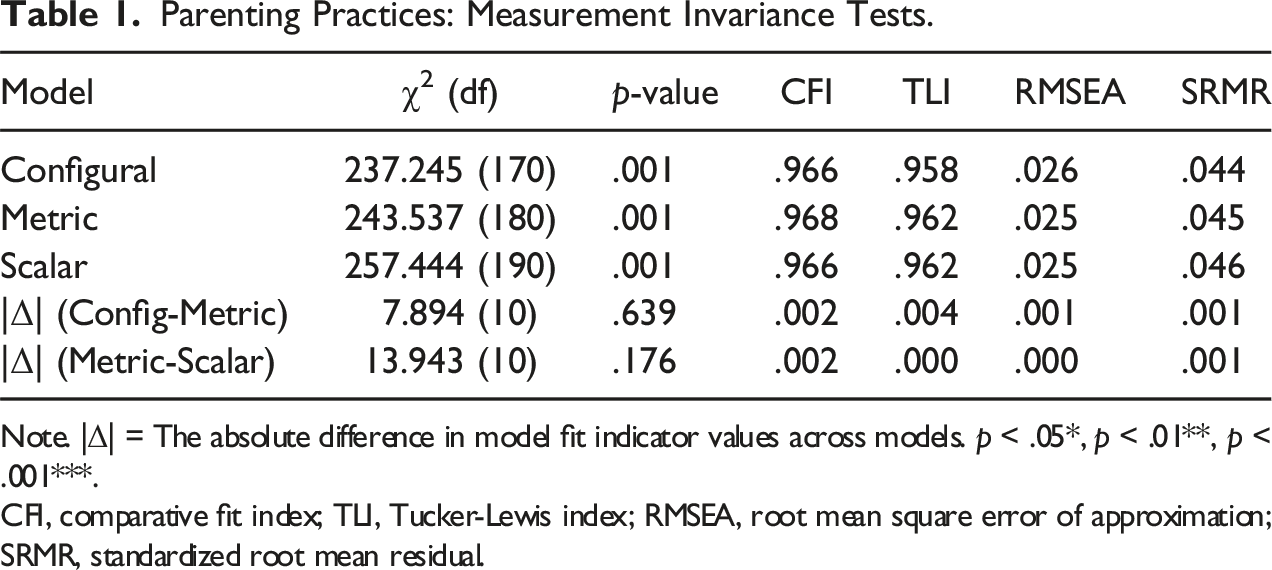
The factorial structure for perceived parenting practices included five correlated factors, representing dimensions of positive parenting, parental involvement, poor monitoring, inconsistent discipline and corporal punishment (see Figure 1). As indicated by Table 1, the model fitted the data excellently and measurement invariance was achieved at the scalar level. In other words, the meaning of the constructs was the same for boys and girls. Furthermore, boys and girls showed similar degrees of heterogeneity with regard to exposure to each parenting practice (see Table 2). Parenting practices: Multiple-group confirmatory factor analysis for the scalar model. Note: Standardized coefficients are presented. Coefficients in boldface correspond to girls. Results are presented from a model with scalar invariance and non-significant inter-factor correlations removed when non-significant in both groups. p < .05*, p < .01**, p < .001***. Model fit: χ2 = 257.444*** (190), CFI = .966, TLI = .962, RMSEA = .025 [.017 – .033], SRMR = .046. CFI, comparative fit index; TLI, Tucker-Lewis index; RMSEA, root mean square error of approximation; SRMR, standardized root mean residual. Parenting Practices: Measurement Invariance Tests. Note. |Δ| = The absolute difference in model fit indicator values across models. p < .05*, p < .01**, p < .001***. CFI, comparative fit index; TLI, Tucker-Lewis index; RMSEA, root mean square error of approximation; SRMR, standardized root mean residual. Wald Tests Regarding Group Differences in the Heterogeneity of Exposure to Different Parenting Practices and the configuration of Relationships Between the Different Parenting Practices. Note. The variances represent unstandardized coefficients whereas the correlation coefficients represent standardized coefficients. Results are presented from a model with scalar invariance and non-significant inter-factor correlations removed when non-significant in both groups.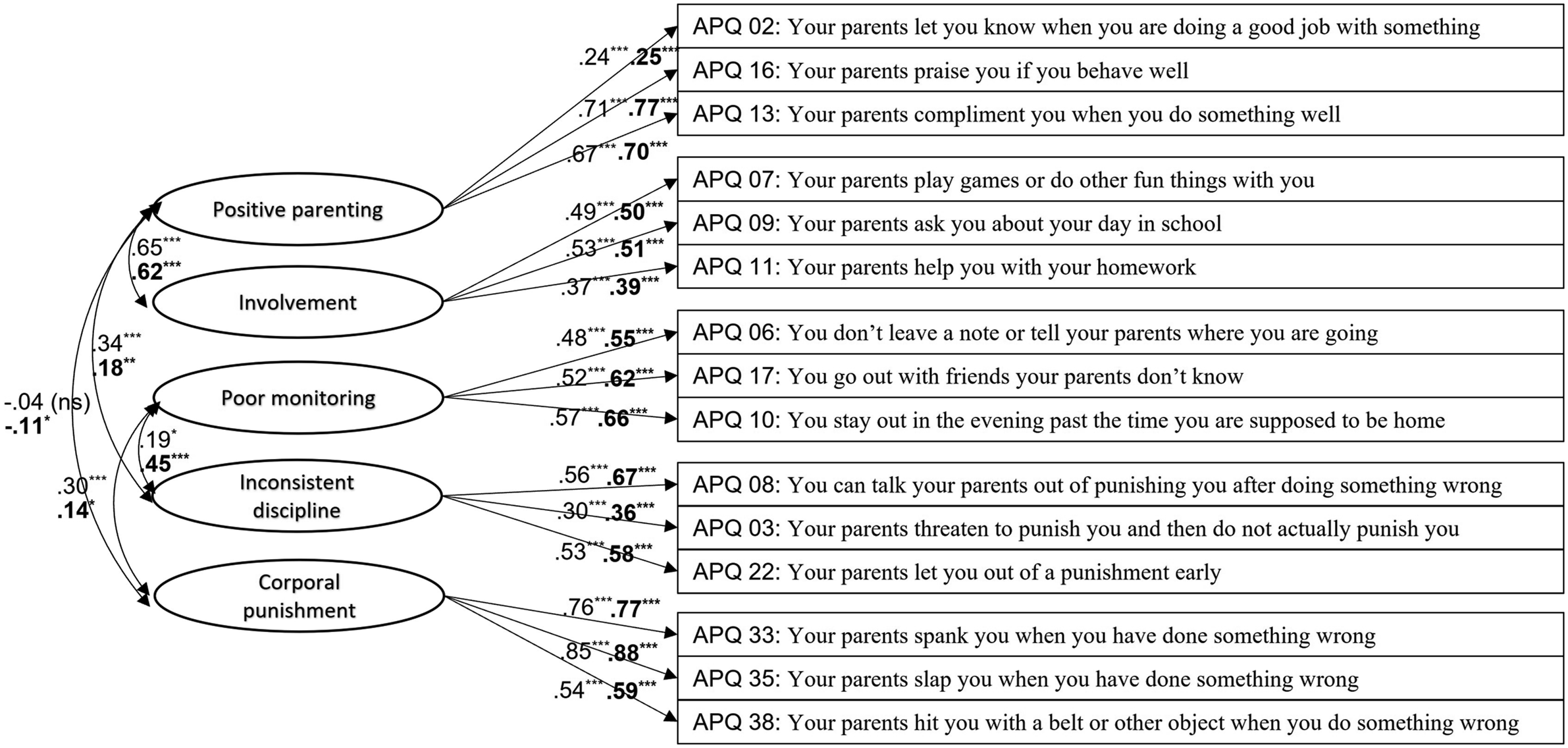
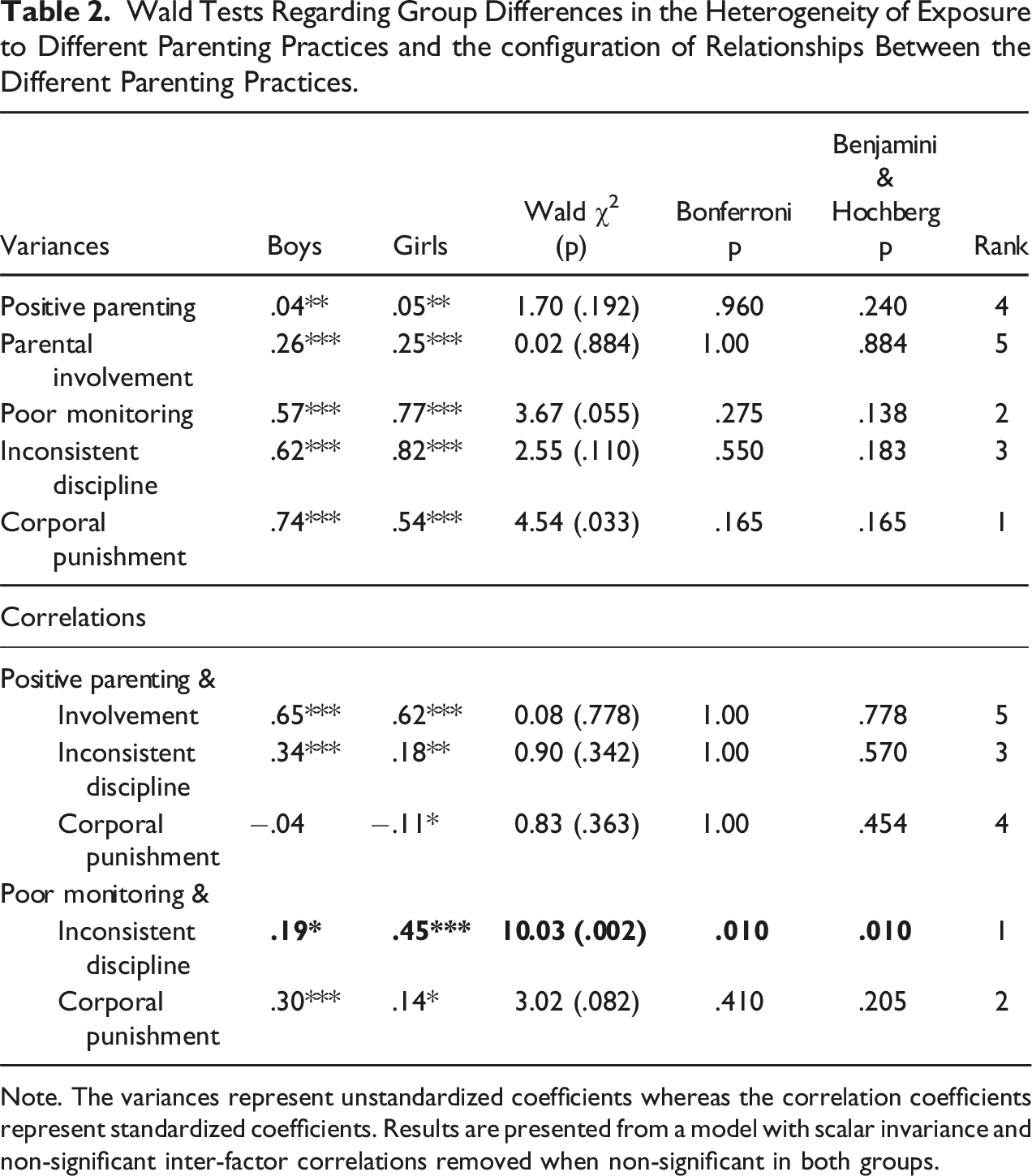
There were no mean group differences in levels of perceived positive parenting practices (Δμ = −.03, p = .12) or parental involvement (Δμ < .01, p = .98). However, relative to boys, girls reported significantly higher levels of parental monitoring (Δμ = .24, p < .001), as well as lower levels of inconsistent discipline (Δμ = −.19, p = .01) and corporal punishment (Δμ = −.23, p < .001).
The dimensions of parental involvement and positive parenting were strongly related in both groups (Table 2). A further, weaker relationship was observed between positive parenting and inconsistent discipline, as well as between poor monitoring and both inconsistent discipline and corporal punishment. The strength of relationships between the different parenting practices was remarkably similar across groups, with a single difference emerging to show that the relationship between poor monitoring and inconsistent discipline was stronger for girls than boys (see Table 2).
Experienced Affiliative Reward
The factorial structure for experienced affiliative reward, depicted in Figure 2, included three second-order factors representing affiliative reward derived from relationships with mothers, fathers and best friends. Each of these second-order factors comprised four first-order factors representing early adolescents’ perceptions of companionship, intimacy (i.e. intimate disclosure), affection (i.e. perceived received affection) and worth (i.e. perceptions of the level of worth assigned to the respondent by the significant other). Experienced affiliative reward: The higher-order component of the multiple-group confirmatory factor analysis. Note: Standardized coefficients are presented. Coefficients in boldface correspond to girls. Results are presented from the model with partial scalar invariance. p < .05*, p < .01**, p < .001***. Model fit: χ2 = 2077.509*** (1163), CFI = .937, TLI = .932, RMSEA = .038 [.035 – .040], SRMR = .083. CFI, comparative fit index; TLI, Tucker-Lewis index; RMSEA, root mean square error of approximation; SRMR, standardized root mean residual.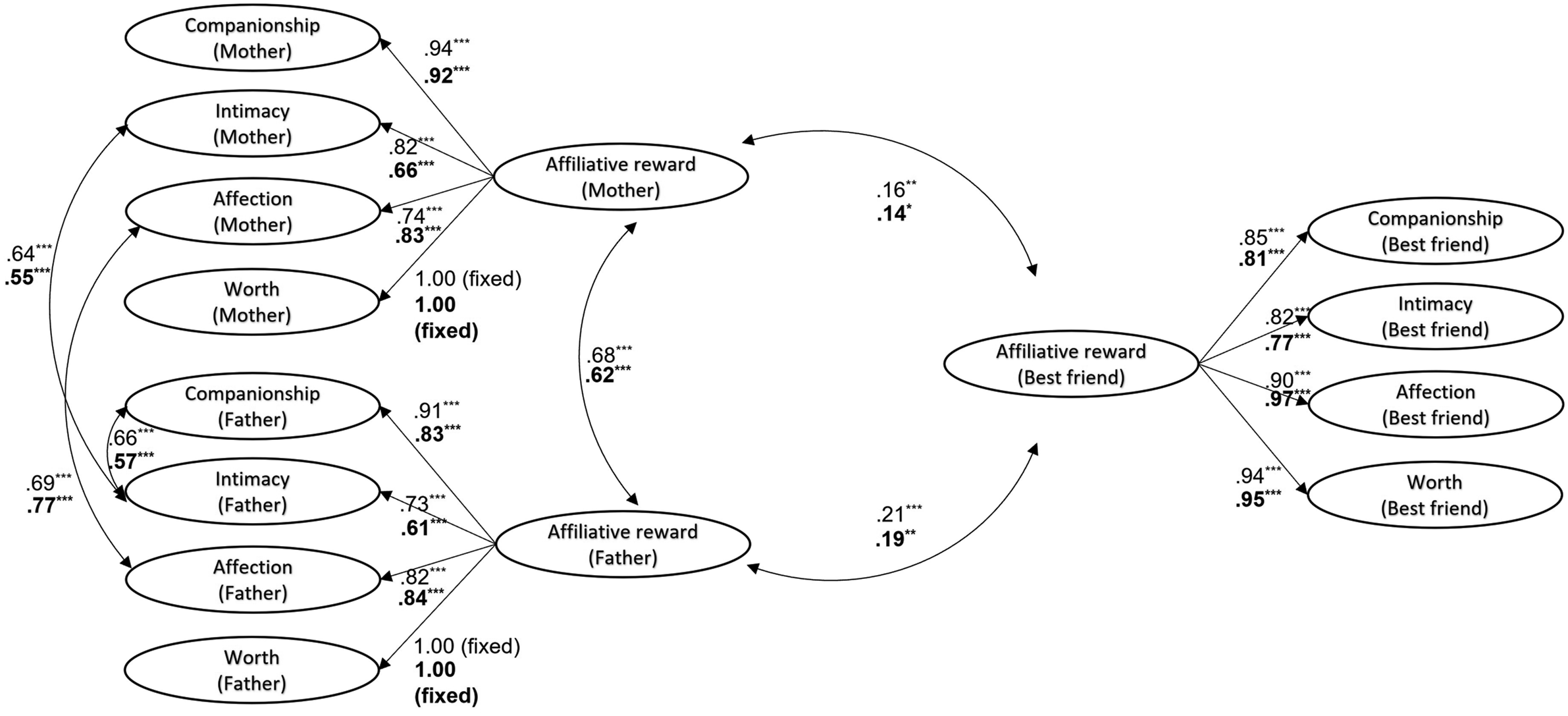
Experienced Affiliative Reward: Measurement Invariance Tests.
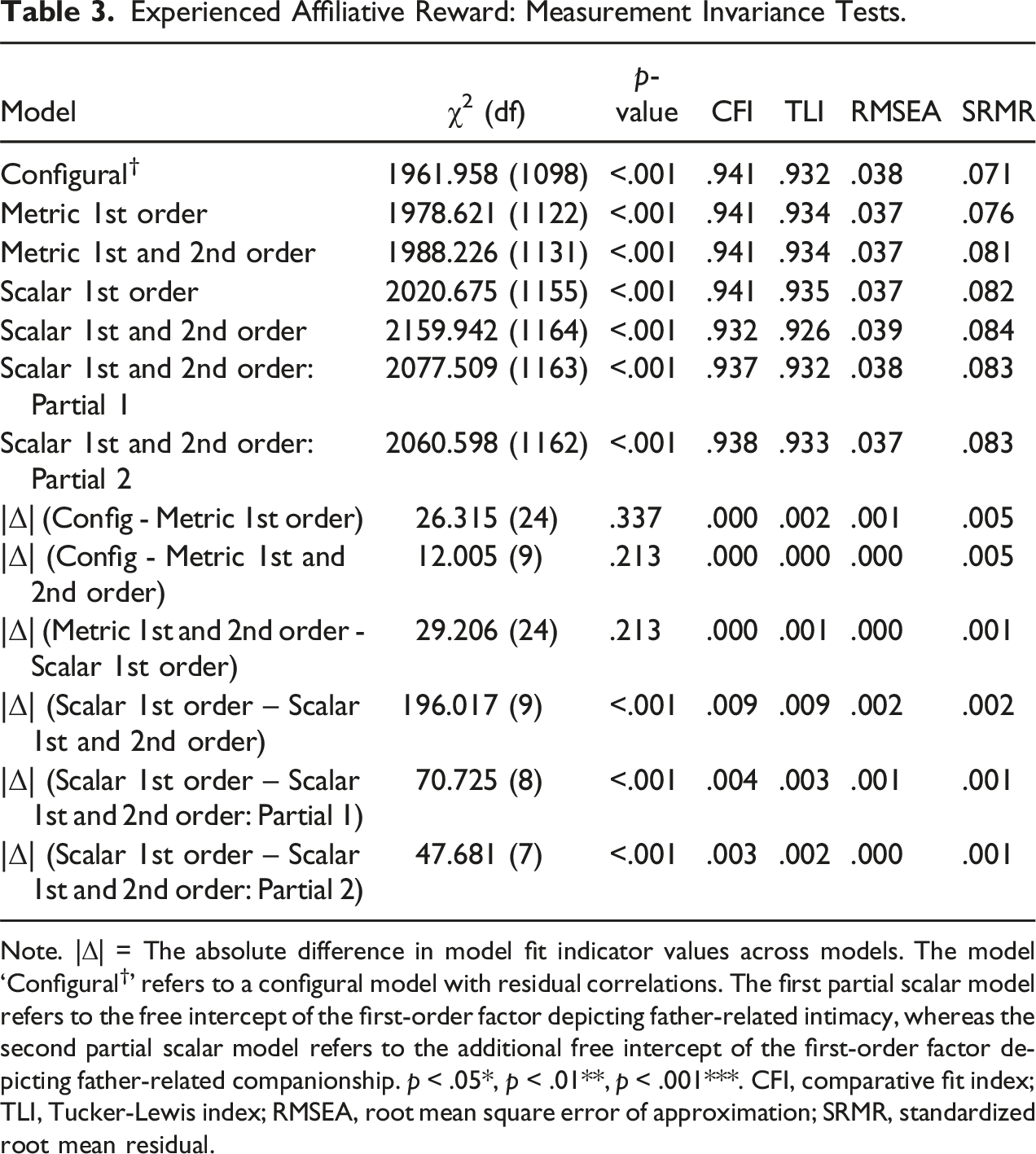
Note. |Δ| = The absolute difference in model fit indicator values across models. The model ‘Configural†’ refers to a configural model with residual correlations. The first partial scalar model refers to the free intercept of the first-order factor depicting father-related intimacy, whereas the second partial scalar model refers to the additional free intercept of the first-order factor depicting father-related companionship. p < .05*, p < .01**, p < .001***. CFI, comparative fit index; TLI, Tucker-Lewis index; RMSEA, root mean square error of approximation; SRMR, standardized root mean residual.
Wald Tests Regarding Group Differences in the Heterogeneity of Experienced Affiliative Reward and the configuration of Correlations Regarding Affiliative Reward Derived From Relationships With Different Significant Others.
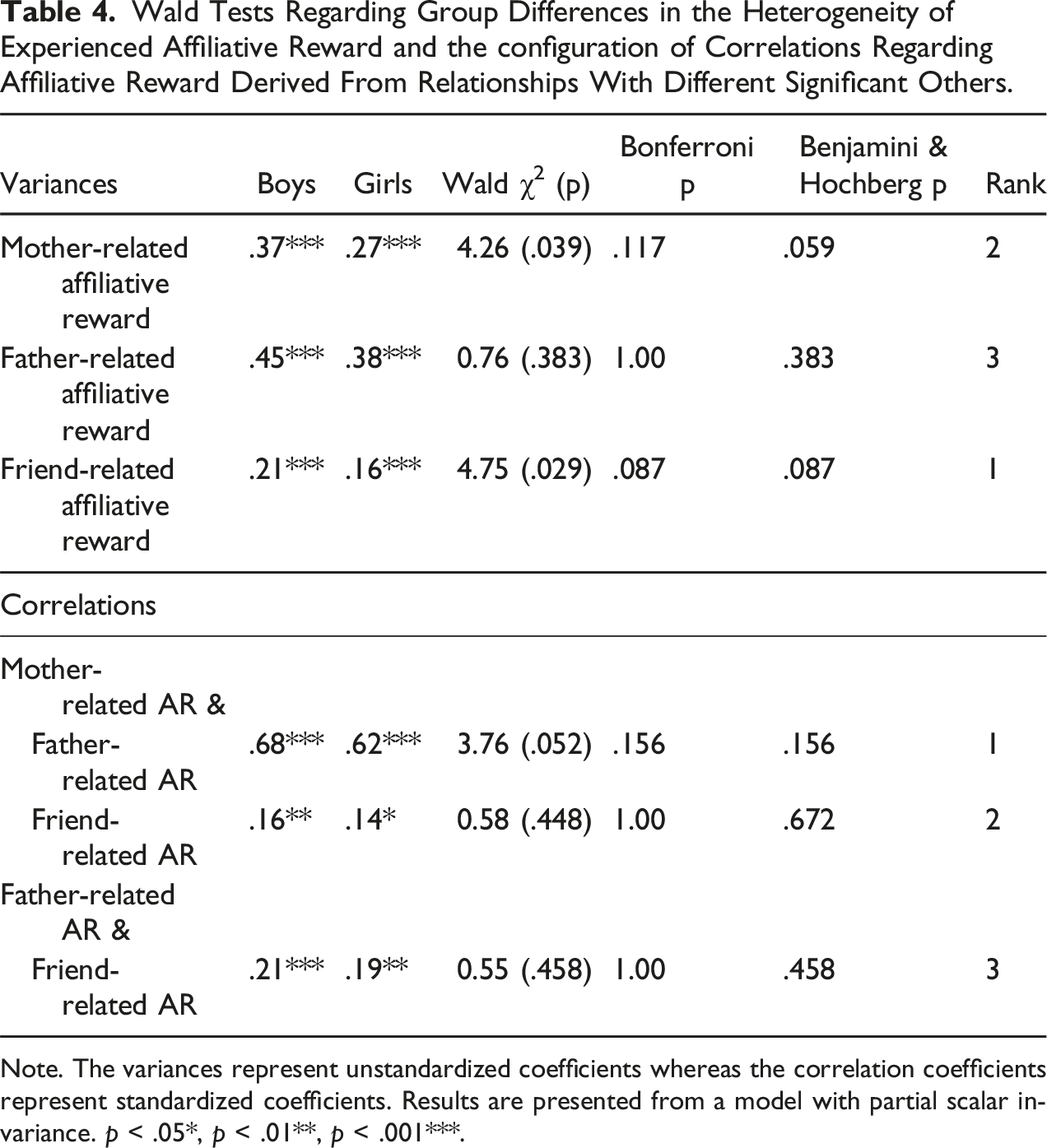
Note. The variances represent unstandardized coefficients whereas the correlation coefficients represent standardized coefficients. Results are presented from a model with partial scalar invariance. p < .05*, p < .01**, p < .001***.
Mother- and father-related experiences of affiliative reward were strongly related for both boys and girls. In contrast, parent-related affiliative reward was only mildly related to friend-related affiliative reward and this result was similar for boys and girls (Table 4).
The Relationship Between Perceived Parenting Practices and Experienced Affiliative Reward
As depicted in Figure 3 and Table 5, the structural equation model revealed a single statistically significant group difference, indicating that heightened exposure to corporal punishment was related to lower mother-related affiliative reward for boys but not girls. This effect was supported by both Wald tests and chi-square difference tests, but the corresponding “false discovery rate” adjusted p-values (i.e. to account for the multiple tests) did not meet the significance threshold. The structural model component of an SEM examining the relationship between parenting practices and parent-related and friend-related affiliative reward. All constructs represent factors. Note: Standardized coefficients are presented. For readability, first-order affiliative reward factors and manifest variables were omitted from the figure. Coefficients in boldface correspond to girls. Non-significant paths were removed when non-significant in both groups. p < .07†, p < .05*, p < .01**, p < .001***. Model fit: χ2 = 3832.384*** (2511), CFI = .927, TLI = .923, RMSEA = .032 [.030 – .034], SRMR = .075. CFI, comparative fit index; TLI, Tucker-Lewis index; RMSEA, root mean square error of approximation; SRMR, standardized root mean residual. Wald Tests for the SEM Relating Parenting Practices to Affiliative Reward. Note. Results supported by consistent and relatively strong coefficients are highlighted in 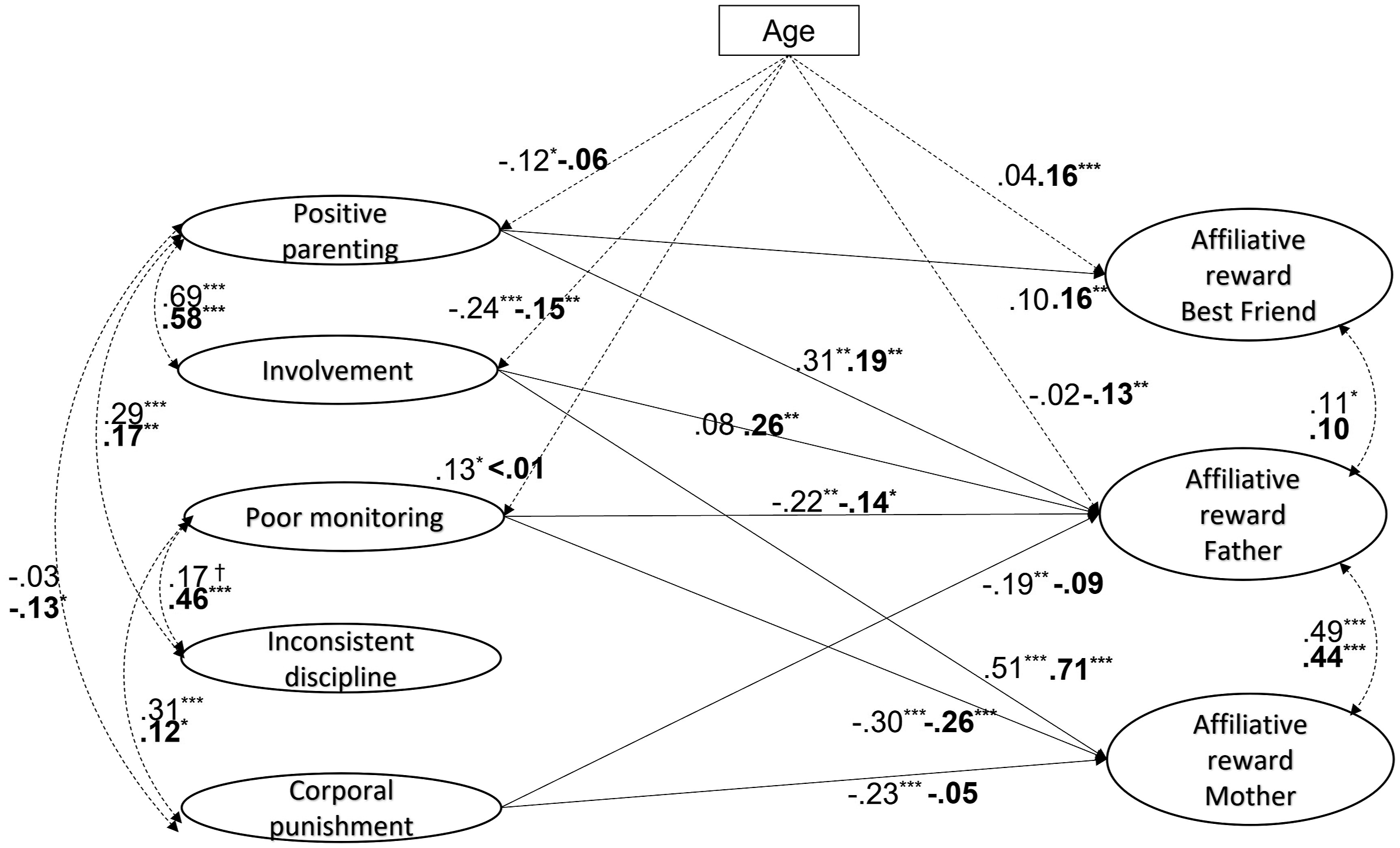
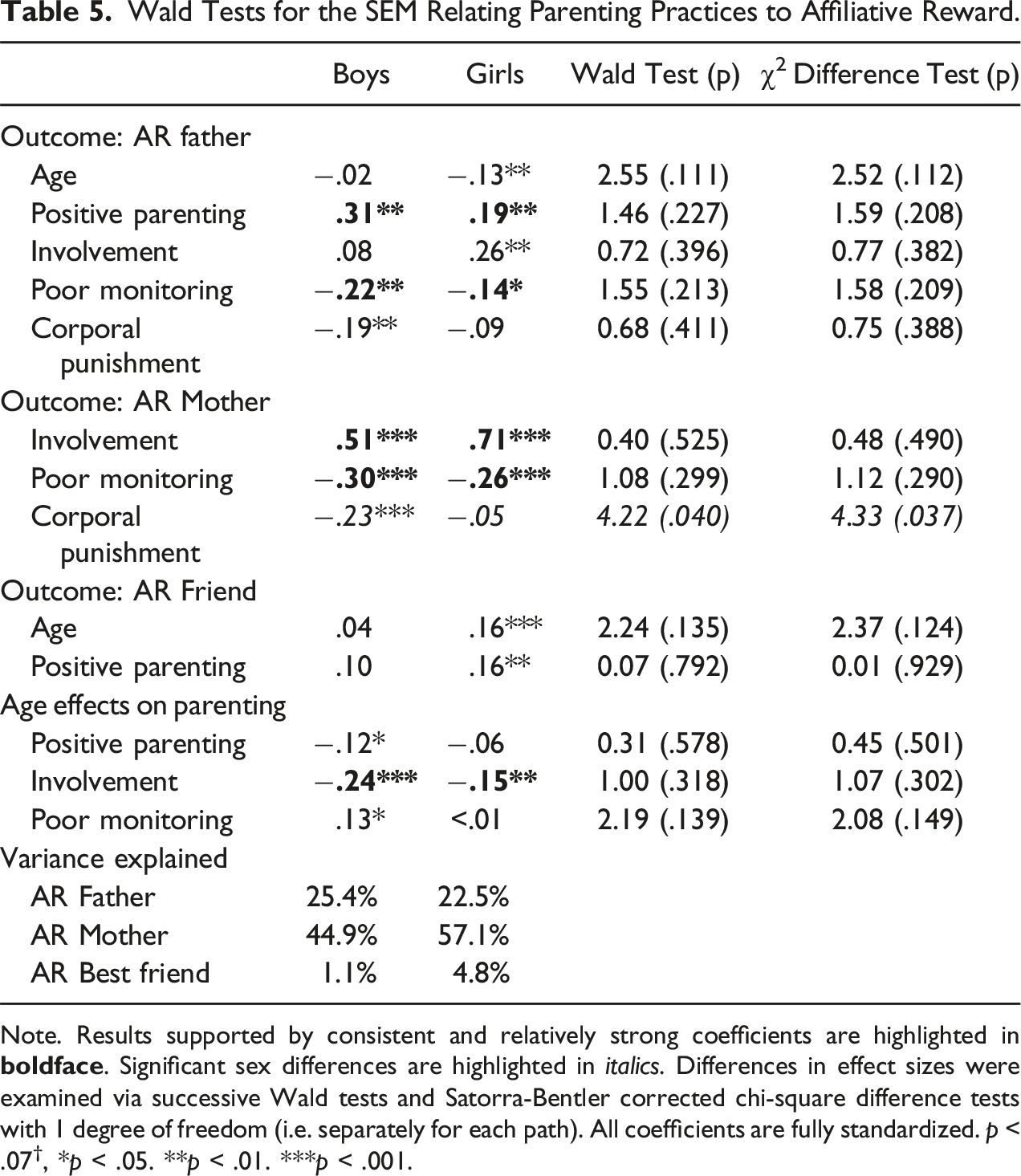
Four gender-general effects were also noted. In brief, for both boys and girls poor monitoring was related to lower levels of both mother-related and father-related affiliative reward. Additionally, heightened positive parenting translated into heightened father-related affiliative reward for both boys and girls. Finally, heightened involvement, while showing a significant decrease with age in both genders, also showed a strong relationship to mother-related affiliative reward.
The structural equation model, depicted in Figure 3, included 2511 degrees of freedom stemming from the inclusion of 52 observed variables and 8 latent variables, and was based on a large sample of early adolescents. Hence, the model had extremely high power to detect small effects as statistically significant, which led to very small effects (.10–.20) being detected as statistically significant. Consequently, group comparisons whereby one group exhibited a small significant effect and the other exhibited a slightly smaller non-significant effect, indicated no significant difference between groups. Therefore, keeping in mind that small effects may not easily replicate, we refer to these effects as ‘trends’.
Seven such trends existed (see Table 5). Four trends indicated a potential group-specific relationship for girls only: age was related to lower father-related affiliative reward and heightened friend-related affiliative reward, parental involvement was related to heightened father-related affiliative reward, and positive parenting was related to heightened friend-related affiliative reward. Three trends emerged for boys only: corporal punishment was related to lower father-related affiliative reward and an increase in age was related to a decrease in positive parenting and an increase in poor monitoring.
Together, parenting practices explained a substantial amount of variance in mother-related affiliative reward for both girls (R2 girls = 57.1%) and boys (R2 boys = 44.9%), with effects driven in both boys and girls by poor monitoring and involvement, and, in boys only, by corporal punishment. Additionally, about a quarter of the variance in father-related affiliative was also explained by parenting practices (R2 girls = 22.5%; R2 boys = 25.4%), with effects largely coming from poor monitoring and positive parenting. Finally, almost no variance in friend-related affiliative reward was explained by parenting practices (R2 girls = 4.8%; R2 boys = 1.1%), an indication that bonds with friends are not necessarily vulnerable to parenting practices and bonds created at home.
Discussion
This study aimed to investigate whether there were significant differences between boys and girls in: (a) their levels of perceived exposure to different parenting practices and experienced affiliative reward, and (b) the process through which exposure to specific parenting practices translated into experienced affiliative reward in relation to mothers, fathers and best friends.
Importantly, the present paper provides evidence that scores on perceived parenting practices and affiliative reward, at least as measured with the instruments used here, can be reliably compared between girls and boys, as the measures used here functioned similarly for boys and girls. The support found for the scalar measurement invariance of perceived parenting practices as measured via the Alabama Parenting Questionnaire (Frick, 1991) is congruent with results from the previous studies (e.g., Florean et al., 2022; Kyriazos & Stalikas, 2019). With regard to affiliative reward, this was the first study to examine the sex-based measurement invariance of any scale aimed to tap into this novel psychological construct (Waller & Wagner, 2019; Roman et al., 2023) and the findings indicated that the selected four subscales of the Network of Relationships Inventory (Furman & Buhrmester, 1985) provide comparable constructs for boys and girls.
Perceived Parenting Practices
In line with findings from previous work, we hypothesised that, relative to boys, girls would report heightened levels of positive parenting and inconsistent discipline, lower levels of corporal punishment, and similar levels of parental monitoring and involvement (Essau et al., 2006). We found partial support for our hypothesis: sex differences were evidenced along a dimension of ‘positive’ and ‘negative’ parenting, such that no differences were observed in terms of ‘positive parenting’ (i.e. positive parenting and parental involvement), but boys reported higher levels of exposure to negative parenting (i.e. corporal punishment, inconsistent discipline and poor monitoring) than girls. Surprisingly, our results were contrary to those of Essau and colleagues (2006), with boys reporting more, not less exposure to inconsistent discipline. A potential explanation for the discrepant results might be provided by cultural differences between the locations where data were collected for the study by Essau et al. and ours, namely Germany and Romania, respectively. We note that the 4 items of the inconsistent discipline sub-scale appear to include dimensions of ‘punishment threats’ and ‘punishment enactment hesitance’. As such, sex differences in Germany may take place in a context where adolescents have some negotiation leeway in their relationship with parents and therefore girls may be more prone to eliciting punishment hesitance from their parents. By comparison, Romanian adolescents continue to be expected to fully obey parents and boys are viewed as ‘tougher’ than girls, hence boys may elicit both more punishment threats and less punishment enactment hesitance than girls. Research delving into such cross-cultural comparisons could elucidate this point and provide an excellent contribution to our understanding of cultural modulations of sex differences. Overall, the findings of this study are consistent with a hypothesis of differential socialization strategies used by parents to raise their sons and daughters (Dittman et al., 2022; Endendijk et al., 2018; Racz & McMahon, 2011), and suggest overwhelmingly that boys tend to experience harsher and potentially less effective parenting than girls.
Experienced Affiliative Reward
Regarding affiliative reward, we found that girls reported deriving more affiliative reward from relationships with all significant others considered in this study, namely mothers, fathers, and best friends. This is the first study to rigorously compare early adolescent girls and boys with respect to experienced affiliative reward. With regard to peer-related affiliative reward, our results are consistent with the broader literature, which indicates that girls tend to have higher levels of peer attachment in early adolescence than boys (e.g. Gorrese & Ruggieri, 2012; Murphy et al., 2017). However, with regard to parent-related affiliative reward, our results do not match the corresponding literature on attachment. Specifically, existing studies show no sex differences in parent-child attachment in adolescence (Murphy et al., 2017), but we found that boys experienced lower levels of parent-related affiliative reward than girls, and this was true in relation to both mothers and fathers. This is not necessarily a contradiction, as attachment refers to a perceived bond (e.g. affection towards the parent), whereas affiliative reward captures perceived emotional rewards. Hence, although boys and girls may experience a similarly strong bond towards their parents (i.e. attachment) as evidenced by existing literature, boys perceive receiving lower levels of affection, lower levels of companionship and intimate discloser, and lower levels of assigned worth (i.e. worth assigned by the parent) than girls.
This difference in experienced affiliative reward between boys and girls is crucial when considering the effects of affiliative reward on callous and uncaring traits (Roman et al., 2023), which is the main precursor of antisocial and criminal behavior (e.g. Frick et al., 2003). Future work is now needed to disentangle whether the lower levels of affiliative reward perceived by boys are due to actual differences in parental behaviors (i.e. the parents actually exhibit lower levels of affection, admiration, companionship, etc.) relative to girls or whether this difference is purely perceptual (i.e. boys internalize parental affection and admiration differently). Here, future studies comparing parent and child reports on affiliative reward could shed light into whether interventions should be aimed primarily at parents or adolescents. Moreover, future work is necessary to examine the potential gender dependence of the process through which lower levels of affiliative reward may translate into heightened callous-unemotional traits, antisocial behavior and other outcomes of social alienation, such as loneliness and depression.
Translating Perceived Parenting into Affiliative Reward
With respect to the strength of effects with which exposure to different parenting practices translate into experienced affiliative reward we found a single significant group difference, indicating that corporal punishment translated into lower levels of mother-related affiliative reward for boys, but not for girls. A similar, but nonsignificant trend was found regarding the effect of corporal punishment on father-related affiliative reward. A major limitation of this study is that adolescents only reported parenting behaviors jointly for both parents and therefore we could not match whether corporal punishment from one parent exhibited spillover effects on affiliative reward from the other parent. Nonetheless, the joint result that: (a) boys reported significantly higher exposure to corporal punishment than girls and (b) heightened levels of corporal punishment translated more strongly into lower levels of experienced affiliative reward for boys than for girls, indicates the existence of a dual vulnerability for boys and the need for targeted interventions that support the decrease of parental physical punishment of boys.
Our results also highlight four gender-general effects, all of which were in reference to parent-related affiliative reward. First, early adolescent girls and boys who perceived more parental monitoring also reported deriving heightened levels of affiliative reward from their relationships with their mothers and fathers. Furthermore, higher levels of perceived parental involvement were related strongly to heightened mother-related affiliative reward, and higher levels of positive parenting were related to heightened levels of father-related affiliative reward. These results are in line with literature on mother-adolescent relationship, which showed that maternal monitoring and warmth is related to adolescent-reported attachment (e.g. Hart et al., 2019). However, the results of this current study indicate that both mothers and fathers are important sources of affiliative reward for their early adolescent sons and daughters and provides further evidence that parenting interventions aimed at fostering family relationships may benefit from supporting both parents and parent-child opposite-sex dyads (e.g. Young et al., 2019).
Friend-related affiliative reward was only mildly related to parent-related affiliative reward, with a similar pattern for girls and boys. Moreover, differential perceptions of parenting practices did not show any effects on friend-related affiliative reward: although a small significant effect from positive parenting to friend-related affiliative reward was noted for girls, this was not significantly different from the effect coefficient for boys, which was not itself significant. These findings indicate that in early adolescence peer relationships may act as a buffer against exposure to harsh and ineffective parenting practices, but also that positive parenting does not necessarily provide support for the development of bonds with peers at this stage.
Limitations and Future Directions
A main limitation of this study concerns the cross-sectional nature of the data, which casts a question over the temporal ordering of effects. Although this study cannot conclusively establish statistical causality, the model was specified based on the solid theoretical foundations which posit that parenting practices act as an antecedent to affiliative reward (Waller et al., 2021; Waller & Wagner, 2019). Additionally, a recent longitudinal study that examined the relationship between perceived parenting practices (in the form of autonomy support and psychological control) with perceived ‘relationship quality’ measured with the instrument we used here to tap into affiliative reward (i.e. the Network of Relationships Inventory) showed temporal precedence for parenting relative to relationship quality (Xiang et al., 2023).
Future studies are also needed to replicate our findings in samples from different cultures, including those cultures where gender is defined on a non-binary scale and different from sex. Reflecting the local culture and societal structure, this study was applied specifically to a population of binary-identified children whose gender corresponds to their biological sex. More broad cultural differences may also play a role, as parents from Eastern European countries such as Romania have been shown to socialize their children into different broad values than those from Western countries (e.g. Friedlmeier & Trommsdorff, 2011; Gherasim et al., 2017).
A strength of the present study is that we modelled our analyses on a sample of early adolescents. Early adolescence is a critical period characterized by major physical and psychological changes that are prompted by the onset of puberty (Berger, 2015), which is only partially understood. This paper contributes to the understanding of two pivotal factors in the social development of adolescents, namely their relationship with parents and the emotional reward they gain from their social bonds. However, it has long been indicated that the parent-child dynamic changes over time (Frick, 1991; Gross et al., 2017). Hence, it is important to examine how time-related dynamics between parents and adolescent offspring modulate the relationship between parenting practices and affiliative reward.
Footnotes
Declaration of Conflicting Interests
The author(s) declared no potential conflicts of interest with respect to the research, authorship, and/or publication of this article.
Funding
The author(s) disclosed receipt of the following financial support for the research, authorship, and/or publication of this article: This work was supported by a grant from the Romanian Ministry of Research, Innovation and Digitization, Program 1/Sub-program 1.2 – RDI Funding Excellence Projects, contract number 21PFE/2021.
