




Abstract
This study examined the intersecting experiences of perceived racial discrimination, poverty-related stress (PRS), and civic efficacy with psychological functioning in preadolescents. The sample consisted of 129 low-income, racially and ethnically diverse preadolescents. Hierarchical linear regression analyses found that perceived racial discrimination and PRS were associated with greater psychological problems, as reported by parents and youth. High levels of both perceived racial discrimination and PRS together resulted in even higher psychological problems, as reported by parents. Lastly, civic efficacy significantly moderated the relationship, where higher civic efficacy in the presence of both discrimination and PRS was associated with fewer psychological problems. In conclusion, these findings suggest that considering both stressors as intersecting rather than additive stress may better explain the mental health disparities among low-income and Black, Indigenous, and People of Color (BIPOC) youth. Additionally, empowering resources, such as civic efficacy, may promote positive development.
Introduction
While numerous factors contribute to an individual’s risk for developing psychopathology, the stress stemming from membership in marginalized Black, Indigenous, and People of Color (BIPOC) and low socioeconomic status (SES) groups plays an important proximal role in conferring this risk (Carlson & Grant, 2008; Pascoe & Smart Richman, 2009; Seaton et al., 2008; Wadsworth, 2011). For example, elevated risk of developing psychological problems in BIPOC youth appears to stem, in part, from stressors associated with racial discrimination (Sellers et al., 2006). Similarly, individuals of low SES are at significantly elevated risk for developing internalizing and externalizing psychological problems (Wadsworth & Achenbach, 2005), with evidence that poverty-related stress (PRS) serves as a central mechanism (Wadsworth et al., 2011). Few studies have examined the joint effects, or the intersection, of exposure to both types of stress in adolescence.
Even less is known about protective factors that may mitigate the adverse effects of these stressors on adolescent mental health. Protective resources that empower youth, such as civic efficacy, may protect adolescent mental health in the face of stressors stemming from racial and economic inequality. Identifying such proximal mechanisms of mental health disparities and protective resources among low-income and BIPOC youth could illuminate the developmental trajectories toward risk and protection, which may be informative for crafting more effective early intervention efforts. Therefore, this study will examine the moderating effects of perceived racial discrimination, PRS, and civic efficacy on each other in association with psychological problems in a sample of racially diverse, BIPOC and low-income preadolescents.
Preadolescence
According to the integrative model posed by Garcia Coll et al., (1996) experiences of racism, stress from social class, neighborhoods, culture, and family influence youth development, especially for BIPOC and low-income youth. All have significant implications on youth’s emotional, cognitive, and social competencies. The preadolescent period, or the ages between 10 and 12, may be a particularly influential and important time to understand. Stressors occurring during the preadolescent developmental period may significantly impact future psychological problems. This preadolescent period marks several biological and psychological changes influencing the risk of developing psychological problems (Cicchetti & Rogosch, 2002). The preadolescent period appears to be particularly important regarding the effects of stressful life experiences on subsequent brain development. For instance, Pechtel & Lyons-Ruth (2014) found that the amygdala, the central region for emotions, was significantly more enlarged in adults due to early life stress that occurred between the ages 10 and 11 years old compared to early life stress occurring at any other age within the first 18 years. Hence, our human physiology is primed to respond to stress during preadolescence in unique and potentially critical ways (i.e., sensitive developmental period). In addition, preadolescence may also open a window of plasticity for especially potent intervention effects (Beauchaine et al., 2019).
Racial/Ethnic Discrimination
Racial discrimination—defined as experiencing biased behavior from others based on racial prejudice—is an example of an external stressor shown to be sufficiently potent to elicit psychological distress (Stuber et al., 2008) in BIPOC youth (Brown et al., 2000; Greene et al., 2006; Sellers et al., 2003). As mentioned, the integrative model posits that racial discrimination impacts youth development and may contribute to worsened psychological problems in youth. Similarly, Clark et al. applied the Biopsychosocial Model to racial discrimination and posited that an individual’s social environment, coping, and biology are impacted by racial discrimination stress and help explain the formation and maintenance of physical and psychological problems. For example, many may respond to racial discrimination with heightened vigilance or a state of being highly aroused to the exposure or potential exposure of threat. This chronic state of arousal may be detrimental as vigilance against racial discrimination has been associated with higher depressive symptoms (LaVeist et al., 2014) and poor psychological health (Lindström, 2008).
Racial/ethnic discrimination is highly prevalent across BIPOC youth (Avery et al., 2008; LaVeist et al., 2003) and was linked with a host of psychological problems. These stressors could be the catalyst for developing psychological problems. In samples of BIPOC youth and adolescents, perceived racial discrimination was linked with lower levels of psychological well-being (Sellers et al., 2006), increased depression and perceived stress (Simons et al., 2002; Szalacha et al., 2003), and increased substance use (Gibbons et al., 2007). One study found that perceived racial discrimination was associated with higher rates of many psychological symptoms, including symptoms related to mood, anxiety, eating, and substance use in Asian American, Hispanic American, and African American adults (Chou et al., 2012). While perceived racial discrimination is evidenced to impact psychological functioning, less is known about how racial discrimination interacts with other stressors, such as poverty stress in a racially diverse sample.
Poverty-Related Stress
Research across disciplines has revealed mental health disparities among low and high SES groups, which may be explained by the burdens of PRS (i.e., day-to-day financial hassles, exposure to violence, frequent moves, family conflict). Economic and financial distress has also been directly linked with youth psychological functioning (Finegood & Blair, 2017; Perzow et al., 2018; Wadsworth & Compas, 2002). Wadsworth and Berger (2006) created the term poverty-related stress to better capture the stressors associated with poverty as an amalgam. The Adaptation to the Poverty-Related Stress Model posits that poverty contributes to psychological distress via both stress and coping processes (Wadsworth et al., 2011). PRS has direct effects on psychological problems over time (Santiago et al., 2011), as well as indirect effects via the constraints it places on one’s ability to enact typically efficacious coping. As a result of the energy and resources expended from PRS, families also tend to have higher levels of family conflict and depression (Conger et al., 1994; Mayo et al., 2022) that may impact children and their psychological development. The constraints imposed by PRS have been examined in diverse samples of African American, European American, and Latino families and consistently found that PRS directly related to worsened psychological problems (Wadsworth et al., 2013; Santiago et al., 2011). BIPOC families tend to experience poverty at higher rates. Specifically, White individuals comprise 10.1% of the U.S. population living below poverty, while Black individuals comprise 19.5%, and Hispanic/Latinx individuals comprise 17.0% (U.S. Census, 2021). Given that Black and Hispanic/Latinx families are disproportionately experiencing PRS, further research is needed to understand how this stressor might interact with co-occurring stressors, such as perceived racial discrimination.
Civic Efficacy
The presence of psychosocial resources may buffer the negative effects of difficult stressors on psychological problems, especially for those experiencing multiple stressors. For example, a child with generalized anxiety symptoms may also have strong social skills and positive community interactions, which coalesce to influence the child’s overall adjustment. Normative developmental social, physical, and emotional changes occurring during the preadolescent period drive preadolescents to begin developing their own identity and independence outside of their family (Fabes et al., 1999). Meaningfully contributing to one’s community and family through civic engagement may be increasingly important for the adolescent journey (Crocetti et al., 2012), marked by an emerging exploration of independence and self-efficacy. Civic efficacy, or the perceptions and confidence one has in engaging with community and contributing to positive change, may be a useful tool to assess. Civic efficacy is a measure of youth’s sense of their capability of change rather than the likelihood that they have or will engage.
Civic efficacy may positively associate with positive adjustment overall. For example, Fenn et al. (2021) found that civic efficacy positively associated with perceived well-being and even mediated a positive relationship between civic engagement and well-being in a sample of undergraduate students. Moreover, higher civic-efficacy also increased youth’s positive expectations for their future (Braun-Lewensohn, 2016). Notably, although civic efficacy may be indicative of positive youth development, it may also contribute to complicated feelings for BIPOC communities as they are often advocating for basic human rights. One study found that engaging in civic activities was associated with higher perceived discrimination over time in a sample of Latino and Asian students that ranged within low and middle SES (Ballard, 2016). Ballard (2016) theorized that the increase in perceived discrimination might be necessary to unveil structural inequities so individuals are informed as they try to contribute to their communities.
Civic efficacy and engagement are often explored within marginalized individuals experiencing stressors, including racial discrimination or poverty. A strong sense of civic efficacy is thought to improve youth’s belief that they can address real-world problems (Pfister et al., 2022). Littenberg-Tobias and Cohen (2016)Littenberg‐Tobias and Cohen (2016) found when African American and Latinx youth engaged in democratic practices (e.g., researched topics, shared opinions with media, organized meetings, and created plans), they significantly reported higher levels of civic efficacy compared to White youth. Civic efficacy is a positive tool to help youth feel capable of mobilizing and engaging in their communities and has been associated with positive outcomes. For example, higher civic efficacy was associated with significantly more positive prosocial behaviors in a sample of racially diverse young adults with economic stress (Davis et al., 2022). Examining civic efficacy as a protective factor may be particularly important to explore for youth to cope with the systemic stressors of PRS and discrimination.
Intersection of Discrimination and Poverty-Related Stress
While a disproportionate number of BIPOC live in low SES settings, little research has explicitly examined the combined contribution of PRS and perceived racial discrimination on adolescent psychological functioning. The additive effect of these stressors alone may not be sufficient to understand the total impact on youth (Bowleg, 2008) because it cannot account for how it may feel to experience multiple stressors simultaneously. Intersectionality theory provides a framework to better understand the stress stemming from multiple and simultaneous marginalized identities (Crenshaw, 1989). There has been a recent push to incorporate intersectionality within developmental science (Ghavami et al., 2016; Seaton et al., 2018). Properly measuring intersectional marginalized identities and oppression is complex; measurement often utilizes qualitative or mixed-methods approaches. Although quantitative methods alone may limit the nuance captured, it begins to illuminate the multidimensionality of experiences. Examining the interaction effects of multiple identities or experiences is a common approach (Bowleg, 2008; Else-Quest & Hyde, 2016). Intersectionality of identities would ideally explore the full range of identities; however, examining specific overlapping identities may still begin to investigate the multidimensionality of stressors. Specifically, understanding the simultaneous impact of perceived racial discrimination and PRS experiences may help identify individuals most vulnerable to negative developmental trajectories due to being marginalized by race and class. Incorporating the simultaneous impact of racial discrimination and PRS on psychosocial resources may move this work forward by identifying potential pathways to positive development and well-being.
The Current Study
There is a dearth of studies examining the unique and compounding effects of perceived racial discrimination and PRS on psychological functioning. This study aimed to test the individual and multiplicative association of racial discrimination, PRS, and civic efficacy as a potential protective factor. This study utilized data collected as part of a randomized control trial (RCT) testing a coping skills intervention and used pre-intervention data. In our study, preadolescents and their caregiver were asked to take similar assessments about the child as parents and youth reports often show discrepancies in the literature (De Los Reyes & Kazdin, 2005; Stokes et al., 2011). With access to both informants, we utilized both and replicated our model using predominately parent-reported data and predominately youth self-reported data. The following hypotheses were tested in this study: • • •
Methods
This current study used data collected at baseline in an ongoing, randomized control trial testing the efficacy of a preventative intervention addressing stress, coping, and identity development in young adolescents.
Participants
Baseline data were collected from 129 low-income caregiver-child dyads participating in a randomized control trial (RCT) testing the efficacy of an intervention targeting stress, coping, and identity in an under-resourced urban northeastern community. The intervention was created to provide developmentally appropriate coping skills to specifically target poverty-related stress. As a result, all children and families recruited were required to have a family income at or below 200% of the federal poverty threshold. Youth were between 11 and 12 years old and were 58% female and 42% male. Youth race was reported as 53% Black or African American, 14% White, 2% Native American, 1% Native Hawaiian/Pacific Islander, 18% Mixed race, 8% Other, and 3% did not report their race. Forty-three percent reported ethnicity as Hispanic/Latinx. Participants were recruited through local community and school events. For this study and the focus on racial discrimination and poverty, White-non-Hispanic/Latinx were removed from the dataset as they are a group that does not face racial discrimination. Additionally, too few participants identified as Native Hawaiian/Pacific Islander (n = 1) were removed from this study.
Families were screened to determine eligibility, which required: family income at or below 200% of the federal poverty, child fluency in English, and parent fluency in English or Spanish. Average household income was $24,422 (SD = $32,396), with an average household size of 5.18 (SD = 1.97), which was below the 2017 federal poverty threshold for a family of five set at $28,780. As part of the RCT, exclusions were made if the child had a lifetime diagnosis of an intellectual disability or autism spectrum disorder, met clinical cut-off criteria for current depression on the Children’s Depression Inventory or current anxiety on the Beck Anxiety Inventory, or were enrolled in pull-out special education services for more than 50% of the day.
Parents and their children are often inconsistent with each other in their reporting (Asscher et al., 2014; Ringoot et al., 2015; Sourander et al., 1999) and may contribute to inconsistent results. To reduce parent and child reporting discrepancy and bias, models using youth self-reported variables and parent-reported variables about the youth were conducted separately for each study hypothesis.
Procedures
Initial assessments were 3 hours and were conducted in a local school and community settings located within the urban, northeastern community. Informed consent was collected from guardians, and assent was collected from preadolescents. Parents answered questionnaires in a separate room while an experimenter worked with the preadolescents. Preadolescents completed interviews and questionnaires with an experimenter and completed a modified Trier Social Stress Test. Randomization to control or intervention occurred after the initial assessment. If participants were assigned to the intervention, they attended 16 two-hour sessions held across eight weeks. They took place at a local community health center or local middle school. During the intervention, participants learned positive coping strategies, explored their cultural and social identities, and worked on a collective action community project to address a group need (e.g., community garden, park clean-up). Regardless of condition, preadolescents and parents were given $20 each for participating and were debriefed after the initial assessment. Participants assigned to the intervention and control group were assessed at four different waves, including prior, post-intervention, and two follow-up assessments. Study procedures all complied with the protocol approved by the Institutional Review Board.
Measures
Perceived Racial Discrimination
Parents and youth both completed the Multicultural Events Schedule for Adolescents (MESA; Gonzales et al., 1995; Gonzales et al., 2001). The MESA includes a subscale assessing discriminatory events experienced by the youth. This measure includes six items, such as “You were called a racial name that was a put down” and “You were excluded from a group because of your culture or race.” Parent and child respondents are asked to indicate whether each listed event did not happen or happened in the last 12 months. The MESA and its subscales were developed and validated within ethnically diverse and low-income samples.
Poverty-Related Stress
A subscale of the MESA assessed for economic-related stress. This measure included nine items, such as “Your parent was upset because he or she could not find work” and “Your family had to stay in a homeless shelter or public place,” and were measured with the response did not happen and happened, either to the self if reported by the child, or to the child if reported by a parent.
Parent-reported household change and stress due to economic hardship were additionally assessed using the Economic Hardship Questionnaire (EHQ), adding more information about distress related to poverty. Parent scores of PRS were calculated by creating a composite score (i.e., averaging z-scores) of the economic stress subscale of MESA and EHQ. Preadolescent scores were only measured by the MESA subscale.
Psychological Problems
The Child Behavior Checklist (CBCL) Total Problems Scale was used to measure parent-rated symptoms of both internalized and externalized psychological problems. The CBCL Total Problems Scale, a commonly used scale combining both types of problems, was used as a proxy for overall psychological problems. The Youth Self-Report (YSR) Total Problems Scale was used to measure the youth’s self-perception of internalizing and externalizing to create an overall score of psychological problems similarly. Both scales had high reliability (Cronbach’s alpha = .82 - .92).
Civic Efficacy
A subscale was used from the Civic Engagement Scale. Of the 18-item scale, three items compose the civic efficacy subscales (Zimmerman et al., 2018). (e.g., “I can be involved to change my community,” “I can make my community a better place by helping,” and “There are things I can do to make the world better”). Other subscales included questions regarding adult resources available, resource mobilization, and school engagement, for example. The specific questions about civic efficacy targeted the participants' perceptions of their agency and ability to be involved in community action. Participants selected between a range of 1 = strongly agree to 5 = strongly disagree (Cronbach’s alpha = .70).
Data analysis
A series of hierarchical linear regressions were conducted to test (a) the hypotheses that perceived racial discrimination and PRS positively related to psychological problems individually and (b) the hypothesis that perceived racial discrimination and PRS moderate each other to amplify pernicious effects beyond the individual effects and (c) civic efficacy moderates the moderation of perceived racial discrimination and PRS on psychological problems. Interaction terms were calculated using centered variables. All models included child sex, ethnicity (e.g., Hispanic/Latinx or Not Hispanic/Latinx), and dummy coded race variables with Black as the reference majority group (e.g., White (Hispanic/Latinx only), Mixed, Native, and Other) as covariates to account for differences in psychological functioning and stressors. Listwise deletion methods were used to handle missingness.
Results
Bivariate Correlation and Descriptive Statistics of Key Variables.
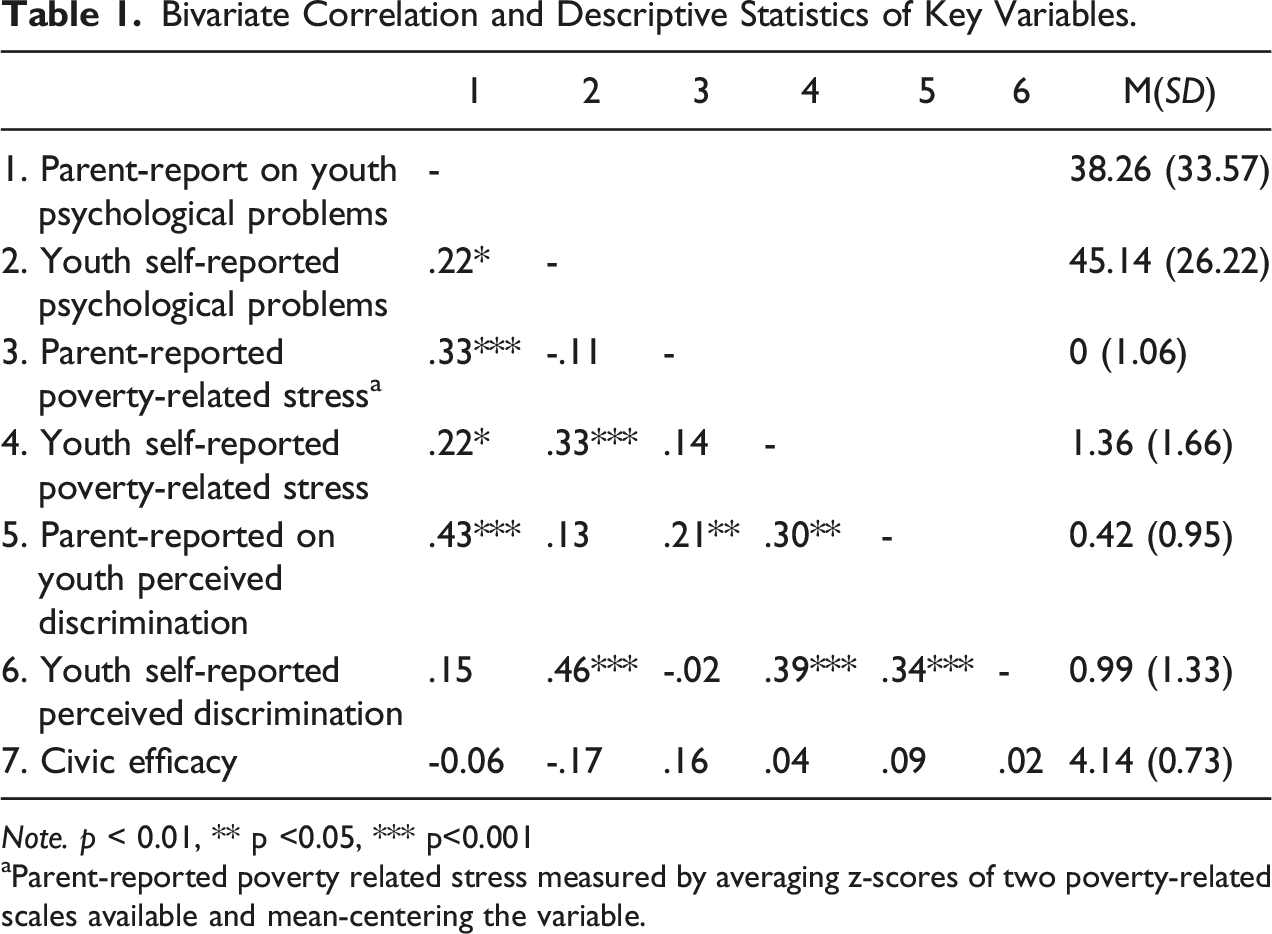
Note. p < 0.01, ** p <0.05, *** p<0.001
aParent-reported poverty related stress measured by averaging z-scores of two poverty-related scales available and mean-centering the variable.
Hierarchical Regression of Parent-Reported Psychological Problems Regressed on Key Variables.
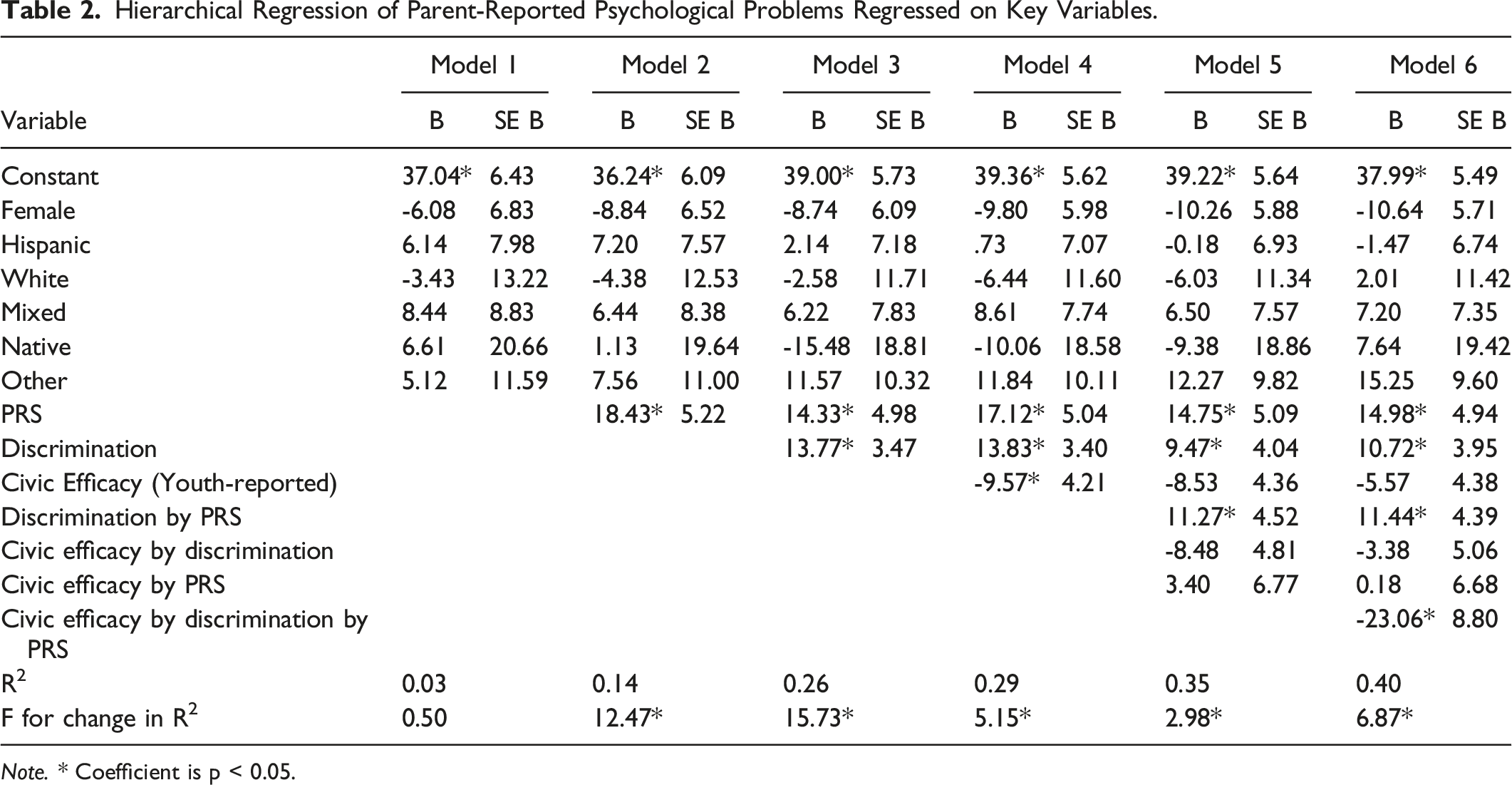
Note. * Coefficient is p < 0.05.
Hierarchical Regression of Youth-Reported Psychological Problems Regressed on Key Variables.
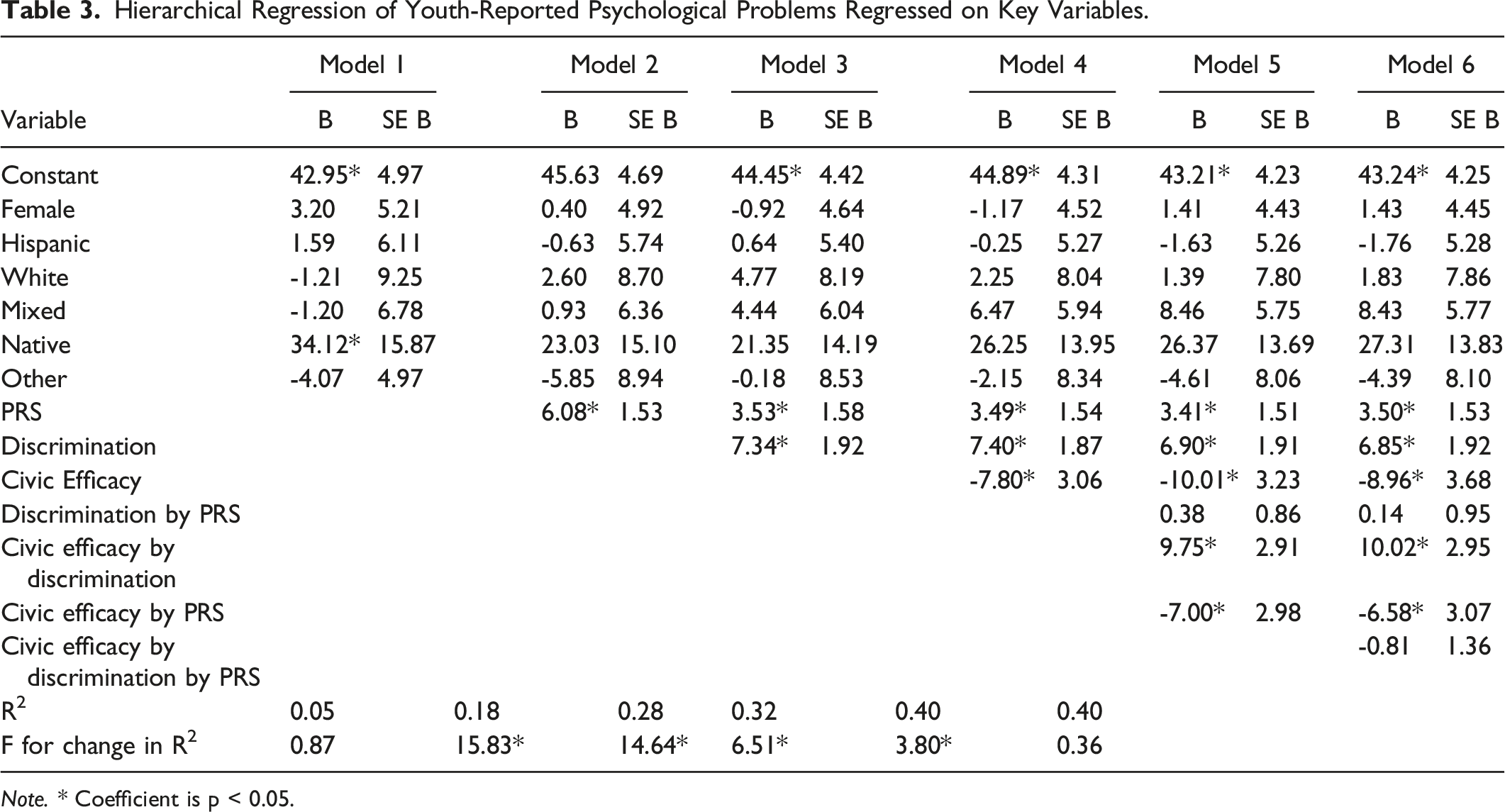
Note. * Coefficient is p < 0.05.
Next, we added a step to the hierarchical regression to test the hypothesis that perceived racial discrimination interacts with the effect of PRS on psychological problems. Using a model with parent-reported variables, an interaction term of PRS and perceived racial discrimination was added to the model with the individual stressors. Two-way interactions of PRS, perceived racial discrimination, and civic efficacy were also added to be able to examine the three-way interaction in the following step. The model with the interactions explained significantly more variance than the additive model: F(12,95) = 4.32, R2 = .35, p < .001, ∆R2 = .06, p = .03. PRS and perceived racial discrimination remained significant in the model even after adding an interaction term of both stressors. The two-way interactions of civic efficacy with stressors were not significant in the model. Using youth-reported variables, adding in the interaction of stressors did not significantly explain variance in psychological problems; however, PRS and perceived racial discrimination remain significant additively. Additionally, although not a part of the hypotheses, the two-way interactions of civic efficacy and stressors were both significant F(12, 97) = 5.29, R2 = .40, p < .001, ∆R2 = .07, p = .01.
Lastly, the three-way interaction of civic efficacy, perceived racial discrimination, and PRS was added to the hierarchical regression to test the hypothesis that civic efficacy buffered the negative combination effects of perceived racial discrimination and PRS on psychological problems. Using a model with parent-reported variables, the three-way interaction term model explained significantly more variance: F(13,94) = 4.76, R2 = .40, p < .001, ∆R2 = .04, p = .01 than a model with individual and two-way interaction variables. Civic efficacy significantly moderated the association between the interaction of stressors and psychological problems; fewer psychological problems were recorded for youth with greater civic efficacy (B = −23.06, t(107) = −2.62, p = .01, 95% CI [-40.53–5.59]). PRS and perceived racial discrimination remained significant in the model even after adding an interaction term of both stressors. The two-way interactions of civic efficacy with stressors were not significant in the model. Using youth-reported variables, adding in the interaction of civic efficacy by both stressors did not significantly explain variance in psychological problems but did remain a unique promotive factor as civic efficacy alone was associated with fewer psychological problems (B = −8.96, t(107) = −2.44, p = .02, 95% CI [-16.26, −1.66]).
Discussion
This study examined the associations between perceived racial discrimination, PRS, the interaction of both stressors, and civic efficacy as a protective factor against psychological problems. Results illuminated a complicated relationship between racial discrimination, PRS, civic efficacy, and psychological problems. The findings suggest that perceived racial discrimination and PRS significantly exacerbated the harmful effects of each other on psychological problems. In other words, BIPOC youth confronted with racial discrimination and PRS may have a qualitatively different experience than peers only experiencing one stressor. The intersection of these two stressors may better explain mental health disparities in low SES and BIPOC youth, further supporting the use of intersectional identities in research (Bowleg, 2008). Moreover, consistent with the hypotheses, civic efficacy served as a significant protective factor in the face of perceived racial discrimination and PRS. These findings shed light on the detrimental effects of perceived discrimination and PRS while illuminating potential avenues for resiliency building via civic efficacy and engagement.
As hypothesized, greater perceived racial discrimination and PRS individually were significantly associated with greater psychological problems according to parent- and youth-report in our final model. These findings are consistent with the literature examining each stressor separately and support the Integrative Model and the Adaptation to Poverty Related Stress Model (Garcia Coll et al., 1996; Wadsworth et al., 2011). The interaction of both stressors was significant, according to parent-report but did not replicate when using youth-reported variables. Although perceived racial discrimination only interacted with PRS on psychological problems in the model using parent variables, this finding suggests the two stressors amplify the negative impact on psychological functioning. Considering both stressors as intersecting rather than additive stress may better explain mental health disparities among low-income and BIPOC youths. Of note, race or ethnicity was not a significant covariate in any of our models.
Moreover, civic efficacy served as a positive resource; however, it functioned differently based on parent and youth models. Notably, our civic efficacy measure was only administered to youth to report about themselves. Thus, civic efficacy was a youth-reported measure even in the parent-reported model. In the model where parents reported all other variables, civic efficacy significantly and uniquely was associated with improved psychological problems. Interestingly, although not hypothesized, civic efficacy did not significantly interact with any single stressor but significantly moderated only in the presence of both stressors via a three-way interaction. To elaborate, adding civic efficacy significantly lessened the association between PRS and discrimination with the total psychological problems in our sample. This finding may suggest that civic efficacy is promotive overall and has protective properties beneficial during high-stress situations.
In Figure 1, the three-way interaction graph displays some nuances to acknowledge. First, it was clear that youth in extreme situations generally benefited from civic efficacy. Youth with high civic efficacy that also experienced low PRS and low levels of discrimination had the least psychological problems. At high levels of PRS and high discrimination, youth with low civic efficacy had the greatest psychological problems. Youth in less extreme situations with low levels of at least one stressor had differing experiences with civic efficacy. Specifically, low levels of civic efficacy for participants with either low discrimination or PRS were comparable to youth with low levels of all stressors and high civic efficacy. These nuances may be due in part to the experiences highlighted by Ballard (2016). Civic efficacy and experiences of marginalization through discrimination or poverty may bidirectionally impact each other. Even with this considered, civic efficacy may continue to have an overall positive impact on youth. Given civic efficacy may play a role in directly counteracting stressors in our model (e.g., feeling confident they can pull resources together in the community, having agency to respond and actively cope with stressors), it may be a salient psychosocial resource in response to stressors and marginalization like PRS and racial discrimination during the sensitive preadolescent period (Brewer & Nicotera, 2021; Chan et al., 2014; Pechtel et al., 2014). Interaction graph examining psychological problems at different levels of perceived. discrimination, poverty-related stress, and civic efficacy.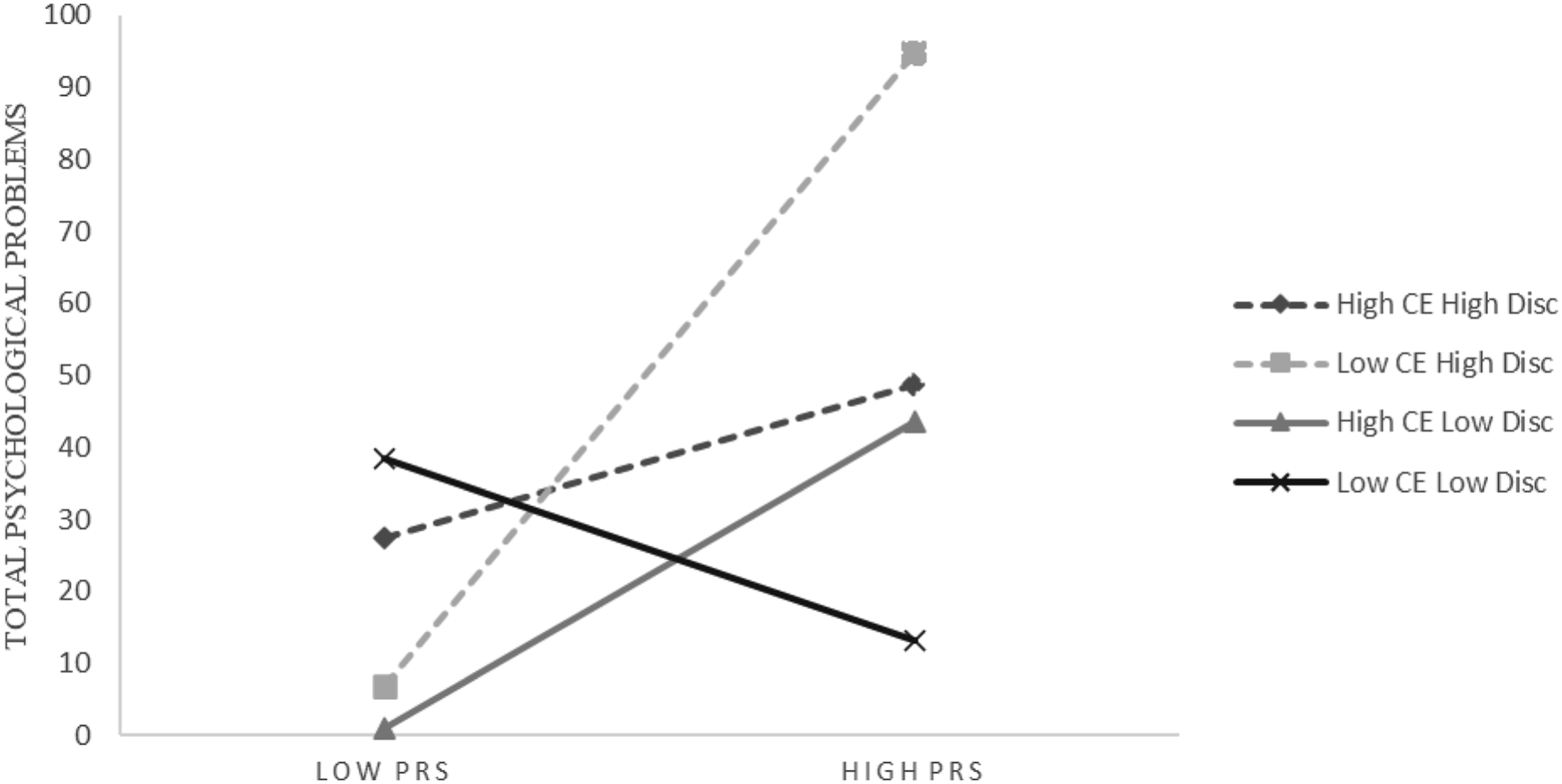
Civic efficacy did not have the same moderating properties in the youth-reported model as in the parent-reported model. Consistent with the parent-model, civic efficacy was a unique promotive factor associated with fewer psychological problems. Because perceived racial discrimination did not moderate the association between PRS and psychological problems in the youth-reported model, civic efficacy did not significantly moderate both stressors either. However, civic efficacy significantly interacted with both individual stressors in the youth-reported model. Civic efficacy moderated the harmful effects of PRS and, contrastingly, increased psychological problems for those that reported higher perceived racial discrimination. This finding is unexpected and sheds more light on the complicated nature of psychosocial resources. Future examination of additional stressors and resources interacting may help understand a child’s overall experience psychologically.
The availability of parent and youth self-reported measures allowed models to be estimated separately for parents and youth to preserve their unique perspectives. While there was good convergence between parent and youth reports of external stressful events, correlations between parent and child reports of more internal processes, such as perceptions of civic efficacy and perceived discrimination, were small and nonsignificant, as is common in the literature on youth psychological functioning. Stokes et al. (2011) found similar patterns with their parent-child agreement across reports of psychological problems as it ranged from weak to moderate effect sizes. It is noteworthy that youth-reported PRS significantly correlated with parent-reported variables, whereas youth-reported perceived racial discrimination and youth-reported psychological problems did not. As suggested by Achenbach (2011), parents and children have different viewpoints and opportunities to observe a child’s behavior which can impact their reports on behavior scales, for example. De Los Reyes and Kazdin (2005) also add that caregivers and children may rate differently due to differences in attributions. Youth reports are primarily based on the context and environment of their behavior, while parents may attribute behavior to the youth’s disposition. Both viewpoints are important to consider when assessing youth psychological problems (De Los Reyes & Kazdin, 2005). Perceived racial discrimination and their perception of psychological problems reported by the youth may represent personal experiences not privy to parents. PRS, on the other hand, may capture a shared experience by the family and household which could explain why PRS has stronger cross-informant associations with various parent-reported variables.
Differences between youth and parent perceptions may also explain the differences between youth and parent models. One explanation may be that youth are only beginning to understand the scope of their PRS and discrimination compared to their parents. An important distinction between both models is that the parent-report model included a measure of the level of household adjustments needed to adjust to economic hardship that was only administered to parents. Following similar methods previously recorded to measure PRS (Wadsworth et al., 2011), the availability of this measure allowed for household context to be included in the parent measure of PRS. Youth report lacked the additional household context and, rather, reported on individual adjustments that needed to be made in response to poverty, which may not have captured the full picture, as poverty is a stressor often experienced by the entire family (Santiago et al., 2011). Including the youth perspective of household stress and adjustment due to poverty could be important for future studies to better capture their perceptions of PRS.
The current study adds to the growing body of literature on race/ethnicity, SES, underlying mechanisms driving potential disparities, and potential protective factors in psychological functioning. First, the results support the hypothesis that perceived racial discrimination and PRS are associated with greater psychological problems. Findings supported hypotheses and were consistent with the biopsychosocial model, in which the individual stressors significantly related to problems with psychological functioning (Belsky & Pluess, 2009; Clark et al., 1999). The significant relationship between stressors and psychological problems is consistent with previous studies examining the individual stressors of PRS and perceived racial discrimination. This study adds to the literature in a few ways. First, previous studies of perceived racial discrimination focused on homogeneous samples (Sellers et al., 2006; Szalacha et al., 2003). This study adds to the literature by examining perceived racial discrimination and PRS in a more diverse sample of low-income racial/ethnic minority preadolescents and found a significant relationship with psychological problems. Findings suggest that perceived racial discrimination and PRS are individually and significantly associated with psychological problems even in diverse-low-income preadolescents. Second, this study adds to the literature by including both stressors additively in the same model, isolating the unique effects of each. Both stressors were significant predictors of psychological problems, supporting that each stressor captures a unique aspect of a low-income, BIPOC youth’s stressful life experience. Therefore, it seems critical that studies involving such youth include measures of both PRS and perceived racial discrimination.
Moreover, this study adds to the knowledge of sources of mental health disparities seen in racial/ethnic and low SES groups and areas of growth that protect against harmful stressors. In particular, this study provided evidence to support a compounding effect of perceived racial discrimination and PRS on psychological problems, which are often conflated with each other. Further, this study aimed to provide more insight into the protective properties of psychosocial resources, like feelings of civic efficacy related to one’s engagement and confidence in their ability to contribute meaningfully to their family and community. Consistent with the intersectionality approach, the intersection of both stressors provided information beyond just the individual stressors, and the experience of having civic efficacy also explained how some alter their trajectory by reducing the harmful effects of stressors (Bowleg, 2008).
This study was limited to two major sources of stress in minority youth - perceived racial discrimination and PRS. Future studies can continue to build an intersectional understanding of youth stress effects by including stressors associated with other identities. For example, marginalization stemming from being a gender minority or sexual minority may be added to the model to increase understanding further. In addition, we were limited in our measure of psychosocial resources as we only looked at one facet of psychosocial resources overall. In conjunction with civic efficacy, other measures of independence, self-efficacy, autonomy, and community involvement may further illuminate the protective features of psychosocial resources on overall psychological functioning.
Limitations of this study include the exclusionary criteria of clinical levels of anxiety and depression. This exclusion removed potential participants experiencing the most serious psychological problems and limited our ability to generalize our findings to clinical populations. Second, parent and youth reports of key variables were not always highly correlated, consistent with previous studies showing informant discrepancies (De Los Reyes & Kazdin, 2005; Sourander et al., 1999). Subsequently, we used separate models for each informant. However, our measure of civic efficacy was only measured by youth self-report. The lack of parent reports of civic efficacy limited the interpretation of the parent-reported model. Additionally, the use of self-report data may always pose limitations and may be improved upon by integrating objective measures. Additionally, our sample had limitations with the assessment of race and ethnicity. Many participants identified as Hispanic/Latinx reported not knowing exactly how to record their race separately but completed the items as best as possible. Magaña Lopez et al. (2017) similarly described that many self-identified Hispanic/Latinx individuals do not conceptualize themselves as another race (e.g., White). Due to this, we included White and Hispanic/Latinx participants as a group that still may experience racial discrimination. Improvement is necessary for the ongoing measurement of racial and ethnic classifications.
Moreover, although our sample provided diversity in race and ethnicity, we had a relatively small sample size overall. Future research might address this limitation by increasing sample size while emphasizing recruitment from racially and ethnically diverse populations. Increased power may include other aspects of the integrative model, such as coping, physiology, and other environmental stressors (Garcia Coll et al., 1996). Lastly, there are constraints to the generalizability of our findings, as our sample consisted of preadolescents residing in a minority-majority community marked by high levels of concentrated socioeconomic disadvantage. Experiences of stress and sources of protection may differ in communities with more resources or less racial and ethnic diversity. Hence these findings may not apply to populations with varying levels of risks and protective factors.
Despite these limitations, this study adds to the literature by illuminating the unique and compounding effects of perceived racial discrimination and PRS on psychological problems and the promotive and protective nature of having civic efficacy. These results have meaningful clinical implications. First, interventions targeting and serving racial/ethnic minorities and low SES preadolescents should consider assessing race-related stress along with PRS. Assessment of racial discrimination and PRS may better identify youth needing intervention and provide information on the potential level of psychological problems. Second, a multi-informant approach may be necessary to assess these complex stressors, emphasizing PRS. One informant may not provide a complete understanding of individual and shared stress. Lastly, these findings also support the need to foster civic efficacy in youth as part of improved prevention efforts targeting the individual and the larger system. Allocation of resources for these youths experiencing both race-related stress and PRS will be vital to improve and prevent the worsening of psychological problems. Though not directly examined in this paper, racial and socioeconomic stressors stem from our social institutions' ingrained structural inequalities (Feagin & Bennefield, 2014). Hence, individual-level prevention efforts must be accompanied by efforts to improve and eradicate inequities in our society and institutions. A combined approach of reducing exposure to discrimination and PRS via advocacy and public policy while also enhancing youth’s ability to respond to stress is needed to optimize the mental health of our youth.
Footnotes
Declaration of Conflicting Interests
The author(s) declared no potential conflicts of interest with respect to the research, authorship, and/or publication of this article.
Funding
The author(s) disclosed receipt of the following financial support for the research, authorship, and/or publication of this article: This work was supported by the National Institute of Mental Health; R21/R33 MH107631.
