




Abstract
Experiences of dating violence are widespread among adolescents. Therefore, increasing the understanding on the developmental antecedents is crucial. However, most existing studies involve cross-sectional designs, which poses a challenge in better understanding the developmental precursors of dating violence victimization. To address this, we examine age 13 predictors of age 17 dating violence victimization in a culturally diverse sample of 643 participants (57.3% girls). Negative binomial regression models showed some significant associations between self-reports of anxiety and depression, poly-victimization, endorsement of violence-legitimizing norms of masculinity, and having initiated sexual relationships and dating at age 13 with dating violence victimization at age 17, with variations depending on the gender of the victim and the form of dating violence measured. Findings increase longitudinal evidence in the field with the aim of informing prevention and intervention strategies that address factors associated with dating violence early in adolescence.
Introduction
Adolescent dating violence (ADV) victimization refers to the occurrence of any intentional psychological/emotional, physical, or sexual abuse perpetrated by a dating partner upon adolescents engaged in a romantic relationship (Offenhauer & Buchalter, 2011). ADV is a pervasive issue with significant prevalence. For instance, a meta-analysis based on 101 prevalence studies on ADV revealed that nearly one in four teenagers between the ages of 13 and 18, experiences physical ADV (Wincentak et al., 2017).
Adolescent dating violence encompasses three primary forms of violence. Firstly, physical violence involves acts such as scratching, slapping, or choking (Foshee et al., 2007). Secondly, psychological violence, often combining concepts of emotional abuse, monitoring behaviors, and verbal abuse, entails behaviors that aim to undermine the victim’s self-esteem and independence (Offenhauer & Buchalter, 2011). This can involve insulting, humiliating, criticising, or attempting to socially isolate the victim. Thirdly, sexual violence includes non-consensual, painful, unprotected, or degrading sexual acts (Smith & Donnelly, 2001). Certain manifestations of psychological and sexual violence specifically can be facilitated through the use of electronic technologies, including social media and mobile phones (Draucker & Martsolf, 2010; Zweig et al., 2013). Importantly, the prediction and measurement of ADV requires a consideration of its different forms of violence (Leadbeater et al., 2018).
Adolescents who experience specific forms of dating violence victimization are at risk of enduring severe mental health consequences, such as depression, anxiety, substance use, suicidal ideation, and post-traumatic stress disorder symptoms (Exner-Cortens et al., 2013; Shen, 2014). Furthermore, a systematic review investigating the causes and consequences of dating violence revealed that this type of violence is linked to an increased likelihood of experiencing subsequent victimization by an intimate partner during adulthood (Taquette & Monteiro, 2019).
Developmental Antecedents of Dating Violence Victimization
Following the developmental victimology perspective, the likelihood of various forms of victimization can, to some extent, be predicted by specific contextual factors earlier in life (Finkelhor, 2007). With respect to ADV, it seems particularly plausible to expect that certain experiences and characteristics shaped in early adolescence can be predictive of subsequent victimization, as well as to contribute to adverse mental health outcomes. This perspective highlights the importance of understanding the early developmental influences on ADV and its associated consequences.
Extensive research has documented numerous risk and protective factors, which are variables that respectively increase or decrease the likelihood of a particular outcome within a population of subjects (Kraemer et al., 1997). This follows the assumption that violence is the result of a complex interaction of individual, relationship, social, cultural, and environmental factors (Krug et al., 2002). However, a significant challenge arises from the predominance of cross-sectional designs in most published studies on ADV (See Spencer et al., 2020), which limits causal inference (Exner-Cortens et al., 2013). The absence of clear temporal sequencing in cross-sectional studies hinders the interpretation of factors discussed, as they could be interpreted as both predictors and outcomes of ADV. For instance, depressive symptoms have been found to be positively associated with earlier experiences of ADV victimization while also predict such type of victimization (Exner-Cortens et al., 2013; Lehrer et al., 2006). Although temporal antecedence is not sufficient for establishing causality (Murray et al., 2009), longitudinal research examining factors preceding victimization is necessary to substantiate the order of variables and to help determine whether the posited predictors are not outcomes themselves.
Adolescence is characterized by rapid growth, learning, adaptation, and formational neurobiological development (Dahl et al., 2018). It is also the period when gender roles can be consolidated or challenged and transformed (UNICEF, 2018). Moreover, at the onset of adolescence, the first signs of mental health issues may also appear, especially in females (UNICEF, 2018). For these reasons, adolescence is a critical period in which policies can have a significant positive impact on individuals’ developmental trajectories.
Given that very few studies have examined developmental risk markers of dating violence, specifically in early adolescence, and considering that the social network patterns that individuals establish early in life influence their vulnerability to victimization later in life (East & Hokoda, 2015), it is crucial to better understand potential risk factors at its earliest stages, before any compounding dynamics get consolidated.
Factors Associated With Dating Violence Victimization
Research has explored various factors associated with ADV victimization, including aggression, substance use, depression and anxiety, conflict resolution and communication patterns, socialization with deviant peers, social support, timing of certain dating characteristics, gender norms, and poly-victimization.
While aggressive behavior has predominantly been explored within the context of ADV perpetration (e.g., Centers for Disease Control and Prevention, 2022; White & Widom, 2003), there is evidence indicating that high levels of reciprocal aggression are also linked to ADV victimization (e.g., Cyr et al., 2006). This suggests that individuals who engage in aggressive behaviors are more susceptible to being involved in violent dynamics where they also become victims. In fact, the results of a meta-analysis by Spencer et al. (2020) demonstrated that perpetration of ADV is one of the most robust indicators for predicting ADV victimization.
Substance use is another factor that has received relatively extensive attention in the context of victimization by dating partners, with some evidence suggesting that it is longitudinally associated with subsequent ADV (Boyce et al., 2022; East & Hokoda, 2015; Maas et al., 2010; Thulin et al., 2021). Studies have been primarily focused on substances such as alcohol and marijuana. Spencer’s et al. (2020) meta-analysis noted that substance use may be also used by victims as a coping mechanism. This indicates a bi-directional interplay between substance use and ADV victimization, suggesting the need for further longitudinal evidence.
Existing research indicates a concurrent association between ADV and a range of internalizing symptoms, particularly depression and anxiety symptoms (Ludin et al., 2018; Van Ouytsel et al., 2017). Some evidence suggests that high internalising symptoms may predict higher vulnerability to later ADV victimization. For instance, a longitudinal study found that high levels of depressive symptom at around age 16 were associated with elevated risk of experiencing moderate to severe ADV in females measured 5–6 years later (Lehrer et al., 2006).
The role of poor conflict resolution and communication skills has been mainly studied in adult couples or samples that included small adolescent sub-samples (e.g., Bonache et al., 2019; Cornelius et al., 2007; Katz & Myhr, 2008; Salwen & O’Leary, 2013). Considering the changes in coping mechanisms individuals experience from adolescence to adulthood (Cocoradă & Mihalaşcu, 2012), further evidence is needed to better understand the role of poor conflict resolution and communication skills as a developmental predictor of ADV victimization.
In the relationships sphere, socializing with deviant peers who engage in risky behaviors has also been associated with an increased dating violence victimization (Hébert et al., 2019). In addition, previous research has suggested that the developmental timing of dating relationships, such as an early sexual debut, may increase the risk of dating violence victimization in males and females (Ihongbe & Masho, 2018). At the same time, social support, defined as “social network’s provision of psychological and material resources intended to benefit an individual’s ability to cope with stress” (Cohen, 2004), has been identified as a protective factor in the context of dating violence victimization (Shorey et al., 2015; Vives-Cases et al., 2021).
Gender norms have been examined in the context of violence perpetrated by an intimate partner, shedding light on the underlying motivations and social attitudes behind such behaviors. Previous studies have indicated that adhering to more traditional masculinity norms is longitudinally associated with ADV victimization among girls (Boyce et al., 2022; Vives-Cases et al., 2021) and boys (Vives-Cases et al., 2021). This connection may arise from the fact that adherence to traditional masculinity norms contributes to increased relationship conflicts, while at the same time making it challenging for victims to efficiently identify situations of abuse and seek help when these occur (Bates, 2020; Javaid, 2017; Pérez-Martínez et al., 2021).
Lastly, experiences of poly-victimization in early adolescence represents a potential predictor of subsequent ADV victimization. A nationally representative study, drawing on data from the National Survey of Children’s Exposure to Violence (NatSCEV) and based on a sample of 1680 youth aged 12 to 17, found that victims of physical ADV were more likely to also experience other forms of victimization (Hamby et al., 2012). This is consistent with the notion that many youths experience inter-connected victimization across multiple settings and by multiple perpetrators (Hamby et al., 2018). Longitudinal research further suggests that prior emotional abuse, childhood maltreatment, victimization by peers, and poly-victimization precede instances of ADV victimization (Maas et al., 2010; Sabina et al., 2016; Wekerle et al., 2009).
Purpose of the Study
To better understand the developmental antecedents of ADV victimization in late adolescence, we examine predictors at age 13 for dating violence victimization at age 17 in a culturally diverse sample in Switzerland. There is little consolidated knowledge on how early adolescence characteristics longitudinally associate with ADV victimization in mid/late adolescence. We therefore examine a range of factors that have been identified in cohort and, mainly, cross-sectional research (e.g., Ludin et al., 2018; Van Ouytsel et al., 2017; Vives-Cases et al., 2021). Tested factors of dating violence include: anxiety and depressive symptoms, aggressive behavior, substance use, conflict coping strategies, endorsement of violence-legitimizing norms of masculinity, level of deviance of friends, social support by adults, poly-victimization, and the start of dating and sexual relationships in early adolescence. We propose the following hypotheses: (1) Levels of anxiety and depression, aggressive behavior, substance use, deviancy of friends, endorsement of violence-legitimizing norms of masculinity, and poly-victimization, and engaging in dating and sexual relationships at age 13, will be positively associated with certain forms (i.e., physical, sexual, monitoring) of dating violence victimization at age 17; (2) Conversely, we anticipate that greater social support and competent conflict coping skills will be negatively associated with later dating violence victimization (physical, sexual, monitoring). (3) We also explore whether the significance and strength of the association between these predictors and outcomes will vary based on the specific type of ADV examined (i.e., physical, sexual, monitoring) as well as the gender of the victim. This allows us to uncover nuanced patterns and potential gender differences in the relationships between predictor variables and dating violence victimization.
Findings from a recent meta-analysis showed that ADV perpetration is among the strongest predictors of ADV victimization (Spencer et al., 2020). We therefore control for concurrent ADV perpetration at age 17 in our analyses. In addition, we control for socioeconomic status (SES) of participants, as it has been found to be a risk marker for ADV victimization, particularly for physical violence (Spencer et al., 2020). Findings will contribute to better understanding the complexity of the emergence of victimization and to improving the targeting of associated factors in prevention and intervention strategies.
Methods
Procedure
This study uses data from the Zurich Project on the Social Development from Childhood to Adulthood (z-proso), a longitudinal and experimental study that examines the social development of a culturally diverse young sample in Switzerland. The study initiated with 1675 children who started first grade in the selected schools in autumn 2004 and it consists of nine waves of data collection to date.
Z-proso’s overall sample was obtained from 56 primary schools in 113 classes that were randomly selected by means of a stratified sampling procedure by small versus large school size. The sampling frame considered seven school districts in the country of Switzerland (Ribeaud et al., 2022). The sampling procedure produced a slight overrepresentation of low socio-economic status school districts in the sample (Ribeaud et al., 2022).
At the start of the study, the study team contacted primary caregivers of eligible children to give informed consent. The questionnaire was translated into nine different languages by the z-proso team, who made efforts to recruit and retain non-German-speaking immigrant-background families (Eisner and Ribeaud, 2007). All the data and relevant study documents were translated to English by the study team.
Data from waves 5 and 7 (T1 and T2 henceforth, respectively) were included in this study. In the waves that concern the current study, paper and pencil questionnaires were self-administered in group setting sessions in schools that served as data collection centres during out-of-school hours (Ribeaud et al., 2022). All eligible participants were contacted for participation irrespective of the current educational or occupational path. At least one z-proso team member supervised the process and was available to provide guidance to participants. Data collection for T1 and T2 took place in summer 2011 and spring 2015, respectively. We focused on these two waves because T1 provided relevant data on early adolescence factors and T2 was the first wave in which data on dating violence victimization was collected. Responding to the questionnaire took around 120 min and participants were offered an incentive at each wave of data collection (the equivalent to around 32USD at T1 and around 62USD at T2) to thank them for their time. Participation rate was 81.5% at T1 and 77.9% at T2 (Ribeaud et al., 2022). Between these two waves (ages 13–17), being a boy, having a low level of education, and having a migration background was associated with a higher likelihood of drop out, but there was no attrition by behavior problems (Eisner et al., 2019).
Ethics approval was provided by the Ethics Committee at the Faculty of Arts and Social Sciences of the University of Zurich (Ribeaud et al., 2022). Informed consent from participants was obtained following relevant national regulations.
Sample
Participants who reported having a dating partner at T2 or in the past 12 months, and that completed the ADV instrument were included in the analysis (N = 643; 57.3% girls).
Measures
Predictors (T1)
Depression and Anxiety
Depressive and anxiety symptoms were self-reported by the participants using nine items from the Social Behavior Questionnaire’s (SBQ; Tremblay et al., 1991) version for youth. Items cover self-reported feelings of sadness, fear, boredom, loneliness, and unhappiness, and worrying, self-injury, difficulties with sleeping in the last month (e.g., “I was unhappy, miserable, or distressed”). Items refer to the previous month and response categories are a Likert scale (from “never” to “very often”). (Cronbach’s alpha = .82).
Aggressive Behavior
Aggression was measured with nine items adapted from the SBQ (Tremblay et al., 1991) asking participants about physical (e.g., “You got into fights”), proactive (“e.g., “You threatened other people”), and reactive (e.g., “You hit someone when they tried to take something from you”) aggressive behaviors for the past 12 months. (Cronbach’s alpha = .86).
Substance Use
The five-items scale created by the z-proso Project Team measures the self-reported average frequency of alcohol, marijuana and tobacco use in the past 12 months, with yes/no and frequency response categories (e.g., “Have you ever taken this? Cigarettes, tobacco, shisha). (Cronbach’s alpha = .70).
Level of Deviance of Friends
This scale, adapted by the z-proso Project Team on the basis of Wetzels et al. (2001), asks participants about their friends’ deviant behaviors, including violence, theft, truancy, and substance use, over 6 items (e.g., “Damaging or destroying property, writing graffiti”) with yes/no response categories. (Cronbach’s alpha = .81).
Social Support by Adults
The self-reported scale, created by the z-proso Project Team and Tina Malti, measures the availability of social support sources from adults throughout four items, asking respondents if there are adults with whom they can talk to about their problems, to discuss their problems, who can be trusted, and who they admire. Response categories are 4-point Likert scale (from “false” to “true”). (Cronbach’s alpha = .77).
Competent Conflict Coping
Four items adapted by the z-proso Project Team from Wetzels et al. (2001) assess competent coping strategies by asking respondents whether they take the other’s perspective, listen to avoid misunderstandings, try to control their anger, and calmly explain why do not like something without shouting. Response categories are 5-point Likert scale (from “never” to “very often”). (Cronbach’s alpha = .70).
Endorsement of Violence-Legitimizing Norms of Masculinity
This three-item scale was adapted from Nisbett and Cohen (1996) to measure masculinity norms and the culture of honour, including whether a real man should be able to hit someone when he is insulted or if someone insults his family, and if a real man should be strong and should protect his family. Responses are given on of 4-point Likert scale (from “fully untrue” to “fully true”). (Cronbach’s alpha = .70).
Poly-Victimization
A poly-victimization score was computed based on 13 dichotomized items from three different self-report scales, including (1) Five items from the bullying victimization scale, developed by the z-proso Project Team (Eisner et al., 2000) and based on Alsaker (2012), in the past 12 months with a 6-points Likert scale (from “never” to “nearly daily”) (e.g., “Since June 2010 how many times have other adolescents purposely ignored you or excluded you from something?“); (2) Four items corresponding to the physical punishment scale mainly based on the Alabama Parenting Questionnaire (Shelton et al., 1996) and the Parenting Scale from the KFN, with 4-points Likert scale (from “never” to “often/always”) (e.g., “Your parents yell or scream at you?“); and (3) Four items from the serious victimization instrument, adapted by the z-proso Project Team on the basis of the KFN Pupils’ Survey, which covered prevalence of robbery, assault with and without weapon, and sexual assault in the past 12 months with yes/no response categories.
Relationship Characteristics
Two items “You had (or still have) a romantic relationship with another boy or a girl” and “You had sex with your romantic partner (boy/girl)”, with yes/no response categories, as part of the Life Events Scale, developed by the z-proso Project Team, were included in the analysis.
Outcome (T2)
Dating Violence Victimization
Dating violence victimization in the past 12 months was self-reported by participants at T2. The instrument was adapted from Taylor et al. (2011) and Zweig et al. (2013) and evaluates violence by a dating partner, including six items on physical aggression (Cronbach’s alpha = .71), four items on monitoring behavior (Cronbach’s alpha = .82), and four items on sexual aggression (Cronbach’s alpha = .69) (see Appendix 1 for list of items). Response categories are 4-point Likert scale (from “never” to “over 9 times”).
Confounding Variables
Dating Violence Perpetration at T2
The same fourteen item wordings used for perpetration were parallel to those used to capture. Participants responded on a 4-point Likert scale whether they had perpetrated those identical behaviors to their dating partner. (Cronbach’s alpha = .70).
Socioeconomic Status at T1
Socioeconomic Status (SES) was based on the profession of care-givers. This was transformed into a nominal-level variable and subsequently translated into an International Socio-Economic Index of Occupational Status (ISEI) score (Ganzeboom et al., 1992). ISEI-values ranged from 16–90, 90 being the highest ISEI.
Analysis
Sociodemographic Information.
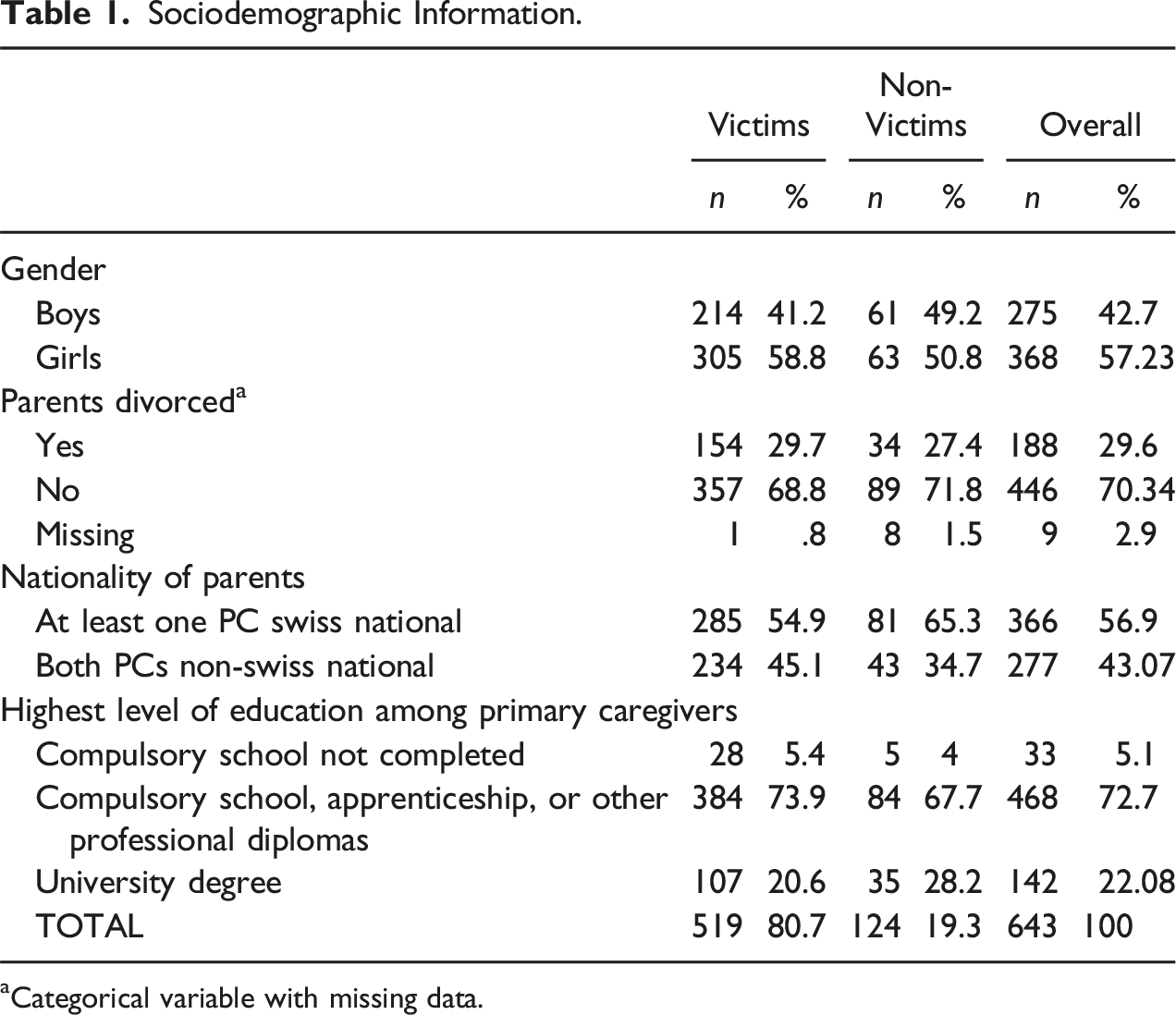
aCategorical variable with missing data.
Descriptive Statistics for Early Adolescence Factors at T1.
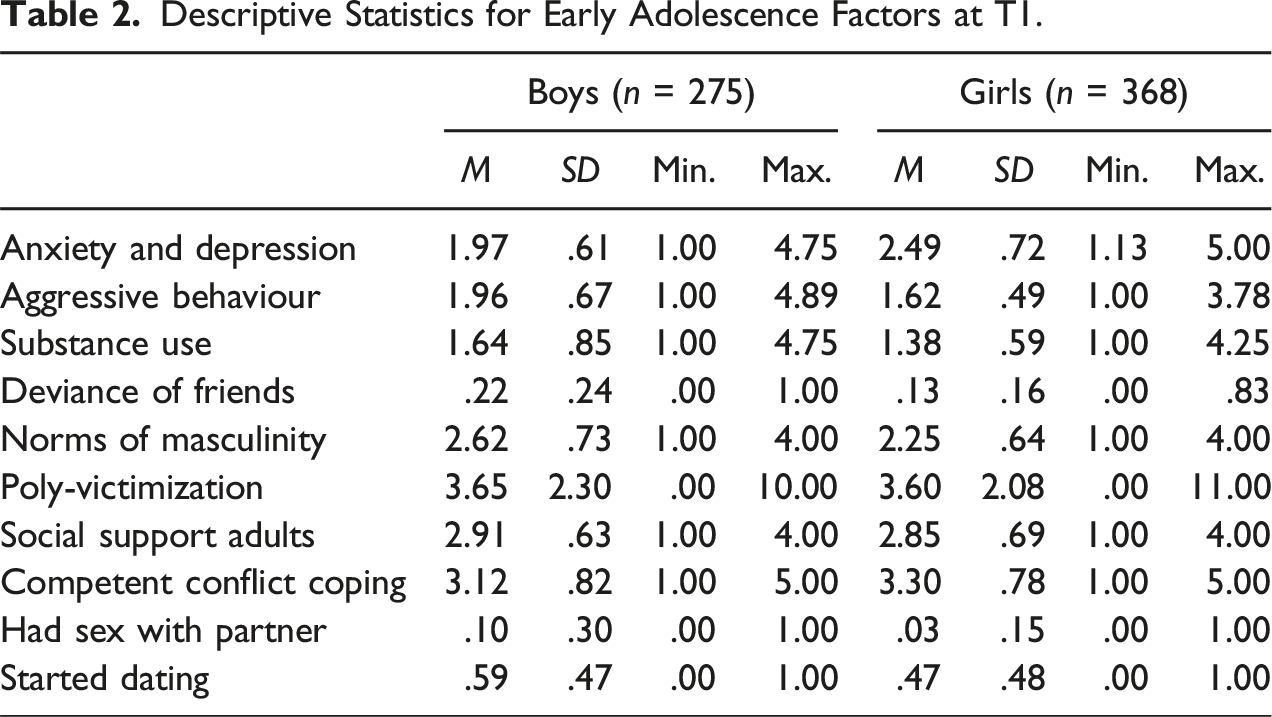
Results
Characteristics of the Sample (T2)
Predictors were measured at T1 (Mage = 13.68, SD = .36, range 12–15) and dating violence victimization was measured at T2 (Mage = 17.46, SD = .38, range 16–18). Participants had recently started secondary school. Although around 90% of our sample was born in Switzerland, 53.19% had one or two primary caregivers that were born outside the country, in over 90 different countries. Chi-square tests showed no significant differences between victims and non-victims in the sociodemographic characteristics of our sample (T2) provided in Table 1.
Relationship Characteristics (T2)
From all z-proso participants at T2, 38.60% reported dating a partner at the time of the data collection or having dated in the past 12 months and were included in our sample (n = 643; 31.90% of boys and 45.80% of girls), and 23.50% had never dated a partner (23.30% of boys and 23.80% of girls). From our final sample (n = 643), 28.90% of respondents had been in a relationship for under three months, 40.90% between 4 months and a year, 21.30% for 1–2 years, 8.40% for 2–5 years, and .50% for over 6 years. Time in a relationship was positively correlated with ADV victimization in boys (r (273) = .21, p < .001) and in girls (r (366) = .32, p < .001). Some 62.10% had sex with an intimate partner. Girls (Mage = 17.46, SD = .15, range 16–18) were, on average, one year and three months younger than their partners (Mage = 18.69, SD = 7.94, range 15–58), while boys (Mage = 17.46, SD = .13, range 16–18) were, on average, one year and eight months older than their partners (Mage = 16.81, SD = 1.84, range 14–25). From our sample, 3.26% of the respondents reported being in a same-sex relationship.
Prevalence of ADV Victimization
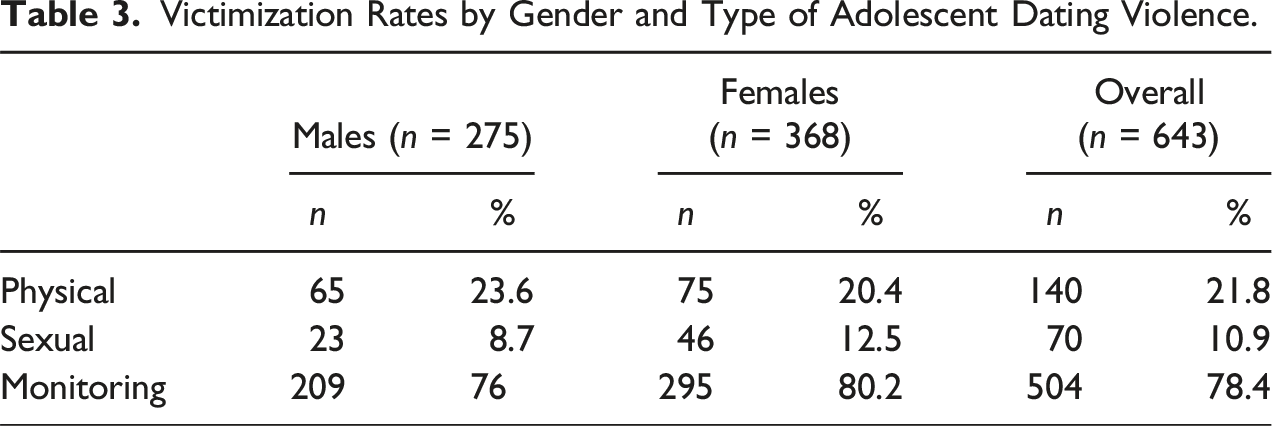
Victimization Rates by Gender and Type of Adolescent Dating Violence.
Early Adolescence Factors Predicting Physical Dating Violence Victimization at T2: Negative Binomial Regression Coefficients.
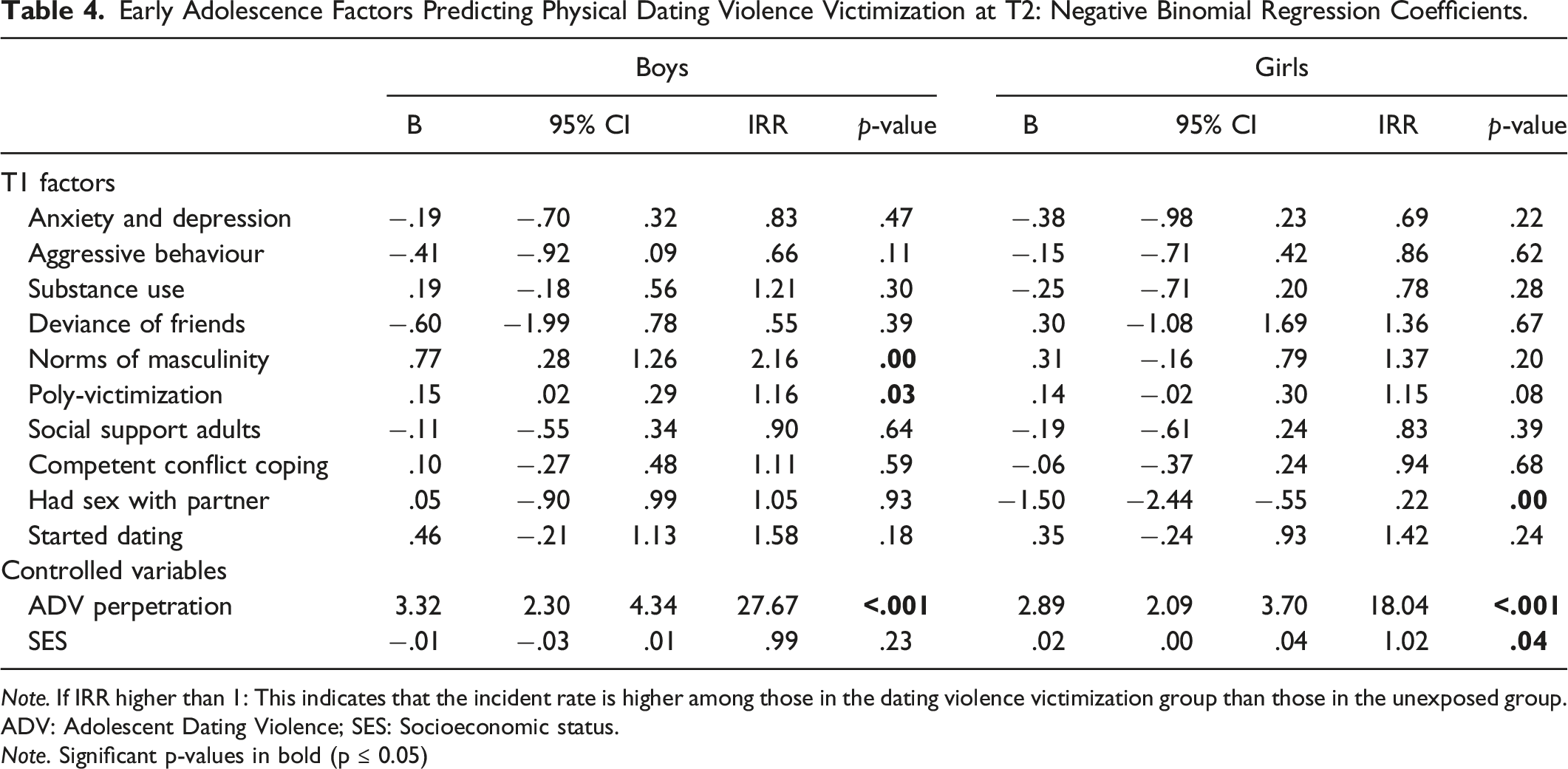
Note. If IRR higher than 1: This indicates that the incident rate is higher among those in the dating violence victimization group than those in the unexposed group.
ADV: Adolescent Dating Violence; SES: Socioeconomic status.
Note. Significant p-values in bold (p ≤ 0.05)
Early Adolescence Factors Predicting Sexual Dating Violence Victimization at T2: Negative Binomial Regression Coefficients.
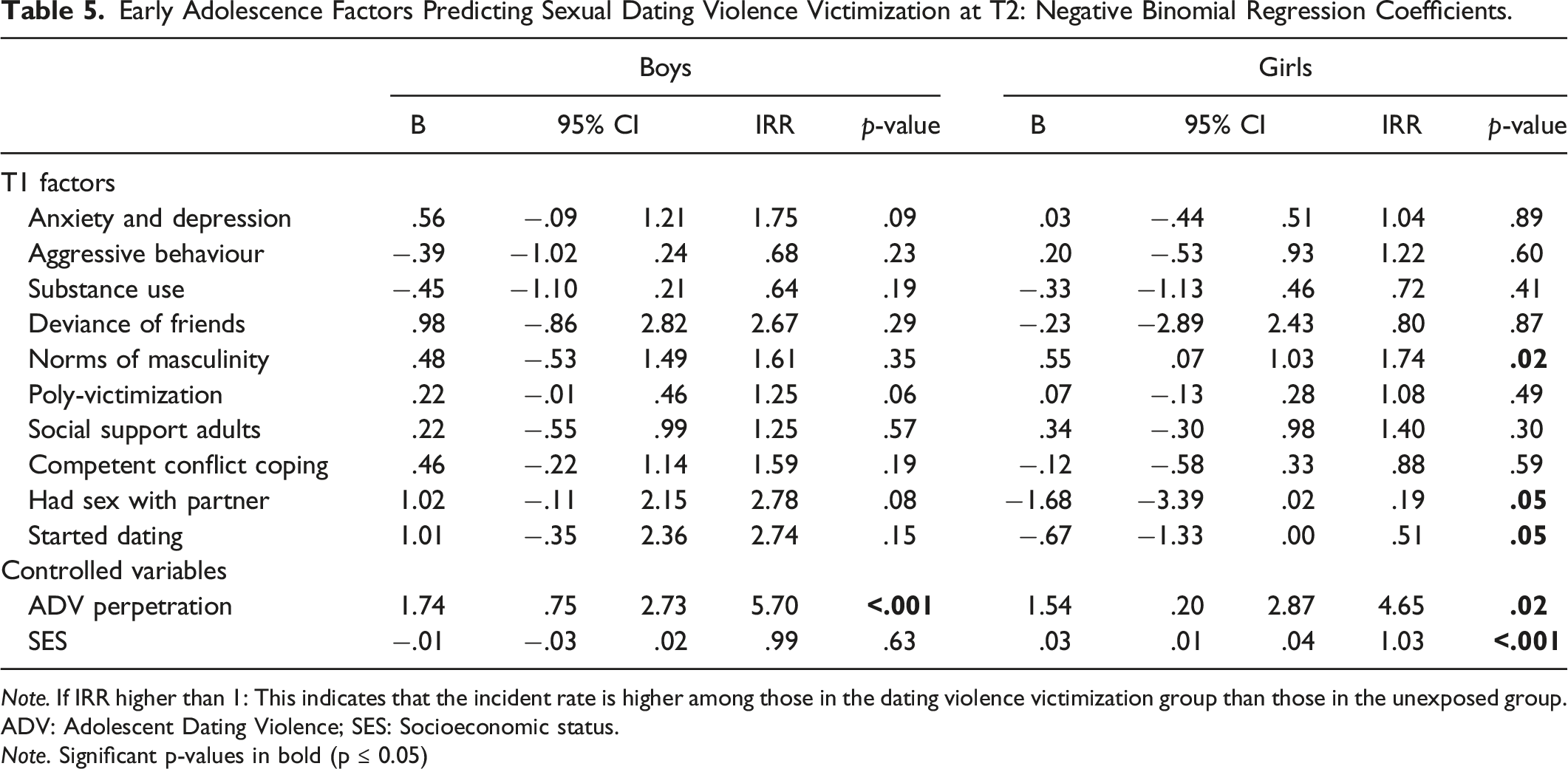
Note. If IRR higher than 1: This indicates that the incident rate is higher among those in the dating violence victimization group than those in the unexposed group.
ADV: Adolescent Dating Violence; SES: Socioeconomic status.
Note. Significant p-values in bold (p ≤ 0.05)
Early Adolescence Factors Predicting Monitoring Dating Violence Victimization at T2: Negative Binomial Regression Coefficients.
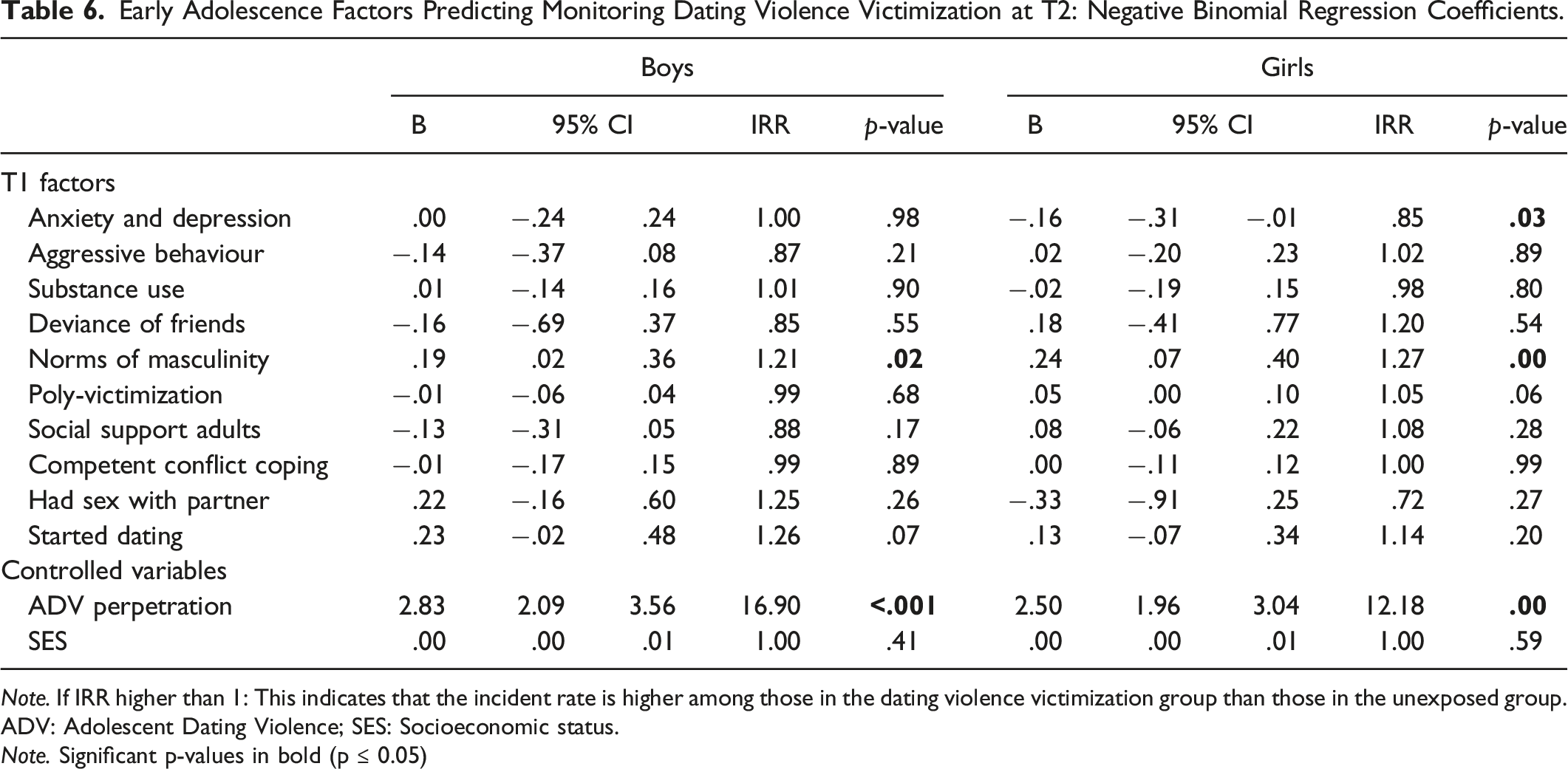
Note. If IRR higher than 1: This indicates that the incident rate is higher among those in the dating violence victimization group than those in the unexposed group.
ADV: Adolescent Dating Violence; SES: Socioeconomic status.
Note. Significant p-values in bold (p ≤ 0.05)
Factors Associated with ADV Victimization in Boys at Age 17
In boys, greater endorsement of violence-legitimizing norms of masculinity held at T1 was associated with increased exposure to physical victimization (b = .77, 95% CI [.28, 1.26], p = .00) and monitoring behaviors by a dating partner (b = .19, 95% CI [.02, .36], p = .02) at T2. For every one unit increase on these two factors, predicted victimization changed by an Incidence Rate Ratio (IRR) factor of 2.16 and 1.21, respectively. Reported poly-victimization at T1 was predictive of physical victimization at T2 (b = .15, 95% CI [.02, .29], p = .03), but not of any other type of ADV in boys. None of the examined factors at T1 predicted sexual ADV victimization at T2. Neither anxiety and depressive symptoms, aggressive behavior, substance use, levels of deviance of friends, social support from adults, competent conflict coping, nor having initiated dating or sexual relationships at T1 were significantly associated with any form of ADV at T2 in boys.
Factors Associated with ADV Victimization in Girls at Age 17
In girls, higher endorsement of violence-legitimizing norms of masculinity was significantly associated with an increase in sexual victimization (b = .55, 95% CI [.07, 1.03], p = .02) and monitoring behavior by a partner (b = .24, 95% CI [.07, .40], p = .00). The IRR indicates that for every one unit increase on this variable, the predicted incidence rate changes by a factor of 1.74 and 1.27. In addition, self-reported anxiety and depressive symptoms (b = −.16, 95% CI [−.31, −.01], p = .03) at T1 was negatively associated with instances of monitoring behavior by a partner at T2. Having initiated sexual relationships at T1 was negatively associated with a physical ADV victimization (b = −1.50, 95% CI [−2.44, −.55], p = .00) and sexual ADV victimization (b = −1.68, 95% CI [−3.39, .02], p = .05) at T2. Dating at T1 was also negatively associated with sexual ADV victimization (b = −.67, 95% CI [−1.33, .00], p = .05) at T2. Neither aggressive behavior, substance use, levels of deviance of friends, poly-victimization, social support from adults, competent conflict coping predicted any form of ADV victimization at T2 in girls.
Discussion
In order to enhance comprehension of the emergence of victimization and expand our understanding of factors preceding ADV, we examined predictive factors at age 13 for dating violence victimization at age 17 within a culturally diverse sample in Switzerland. Previous studies have used the z-proso sample to explore predictors for dating violence involvement in childhood (Pereda et al., 2022) and middle adolescence (Schuster et al., 2021), including victims and perpetrators and just perpetrators, respectively. This research contributes to increasing evidence, particularly on early adolescence factors preceding ADV victimization, with a focus on the differences observed between physical, sexual, and monitoring ADV and the gender of the victim.
In this study, almost one in four participants reported having been physically victimized by a dating partner in the past 12 months, whereas sexual violence was experienced by one in 10. These rates are in line with findings from a comprehensive meta-analysis on the prevalence of ADV (Wincentak et al., 2017). The most common form of ADV in this study was monitoring behavior by a partner, which was experienced in at least one of its forms by around eight in 10 participants. Our measure comprised controlling behaviors and efforts to socially isolate the victim. The high rates are similar to previous quantitative survey data on psychological violence, with figures often exceeding 50% and some studies suggesting that all participants self-reported at least one experience of psychological ADV (Exner-Cortens et al., 2016). It should be noted that individuals are more commonly victimized by a partner slightly later in life, between the ages of 18–24 (Truman & Rachel, 2014), and that severe acts of violence may increase in a subset of relationships later in adolescence (O’Leary et al., 2008; Roberts et al., 2006). Therefore, it could be expected that the obtained rates would vary in the upcoming years, possibly increasing in high risk longer-lasting relationships.
Overall, nine out of 60 tested associations between age 13 factors and age 17 ADV victimization were found to be significant. ADV victimization at age 17 was positively associated with earlier endorsement of violence-legitimizing norms of masculinity and poly-victimization, with differences depending on the type of ADV explored and the gender of the victim. In addition, self-reported anxiety and depression symptoms and having initiated sexual and dating relationships with a partner in early adolescence were negatively associated with subsequent ADV victimization, particularly in girls. None of the examined factors consistently predicted dating violence (ADV) victimization across the three forms of violence analyzed. However, among the factors considered, endorsement of violence-legitimizing norms of masculinity emerged as the most influential, displaying higher significant associations, specifically with physical victimization for boys, sexual victimization for girls, and monitoring victimization for both boys and girls.
Early adolescence is a critical period for the development of gender norms and socialization (UNICEF, 2018). During this time, individuals may be exposed to traditional gender role expectations, including notions of dominance, aggression, and control. These beliefs could contribute to the acceptance or normalization of dating violence, leading to higher rates of victimization. In the United States, for example, evidence suggest that harmful ideas of what it means to be a ‘real man' can lead to unhealthy beliefs and entitlements in relationships for teenagers (Duckworth & Trautner, 2019). In this study, there was a relatively consistent positive association between the endorsement of violence-legitimizing norms of masculinity and ADV victimization in boys and girls. This study expands on previous research by demonstrating that the endorsement of violence-legitimizing norms of masculinity not only affects individuals’ roles as perpetrators but also their likelihood of experiencing victimization (Nydegger et al., 2017; Shen et al., 2012). In boys, this concurs with previous research that states that endorsing traditional gender norms leads to experiencing more violence (Heilman et al., 2017). One possible factor that may contribute to this association is the connection between supporting less egalitarian gender roles and having witnessed violence at home, which might then influence victimization rates (Karakurt et al., 2013; Reitzel-Jaffe & Wolfe, 2001). It should be noted that Switzerland has a relatively low score on gender inequality index, according to a study based on 91 countries that accounted for 85% of the global population (UNDP, 2023). However, in the same report, it was found that 54.86% of respondents in Switzerland still held at least one gender norm bias. Understanding the presence and impact of violence-justifying masculinity norms among boys and girls in early adolescence may raise awareness about the importance to address these attitudes early in life to prevent ADV later in adolescence.
Our findings show that depressive and anxiety symptoms at age 13 were negatively associated with some forms ADV victimization, specifically in girls that reported monitoring behavior by a partner at age 17. Research, on the contrary, has previously identified the presence of internalizing symptoms as a risk factor for ADV. A possible explanation for the difference is that previous studies had cross-sectional designs or measured symptoms at a later stage of adolescence (e.g., Lehrer et al., 2006; Van Ouytsel et al., 2017). Additionally, research on this topic has generally consisted of samples based on clinical populations and has been characterised by lacking representativeness and disregarding ADV perpetration in the analysis (Bhavsar et al., 2020). Previous research has also highlighted the link between low self-esteem and higher depressive symptoms and elevated risk of dating violence (Bolívar-Suárez et al., 2022; Fiorilli et al., 2019). Our findings contribute to the evidence that anxiety and depressive symptoms may be more likely a consequence of ADV victimization rather than a developmental risk factor.
It is important to consider other forms of abuse in victimization research, as evidence shows that around half of the children and youth experience two or more types of victimization (Finkelhor et al., 2013) and that this may increase the likelihood of exposure to ADV (Sabina et al., 2016) and subsequent risk of injury (Tharp et al., 2017). Our measure of poly-victimization at age 13 considered bullying, physical punishment by parents, and serious victimization. Poly-victimization at age 13 was not predictive of five of the six examined outcomes at age 17, suggesting a limited developmental continuity of victimization.
Although greater social support has been linked to lower prevalence of physical and/or sexual ADV victimization (Jankowiak et al., 2020), our results suggested no significant associations for boys or girls, regardless of type of ADV. This finding is in line with Richards et al. (2014), who concluded in a longitudinal study with a female sample that social support from adults – parents specifically – was not linked to a decrease in ADV victimization. It is possible that this factor may protect against the negative effects of ADV victimization but not against victimization itself. Considering the influence of parental support on ADV, a meta-analysis by Hébert et al. (2019) revealed that study quality not only influences the effect sizes on parental support but that trivial effect sizes are obtained when only high-quality studies are considered. Besides, in their study no moderation analyses regarding the study design (longitudinal vs. cross-sectional) could be performed given the insufficient number of longitudinal studies examining this factor.
Finally, findings suggest that romantic and sexual involvement in early adolescence may decrease the chances for subsequent ADV victimization in girls, with differences based on the type of ADV experienced. This relationship should be further explored in future research, while considering that initiation of romantic and sexual behaviors among adolescents vary across cultures and genders (Cavazos-Rehg et al., 2009; Shen et al., 2020).
Strengths and Limitations
This study has several notable strengths. First, the longitudinal design of the z-proso study adds to the limited evidence on the developmental predictors of ADV victimization. Second, the inclusion of participants with a considerable proportion of immigrant parents enhances the sample’s multicultural representation, adding diversity to the findings. Third, the study comprises a range of risk and protective factors in early adolescence, a critical period characterized by numerous developmental milestones. Fourth, we examined different types of dating violence, offering a nuanced understanding of the various forms of victimization. Fifth, we took into account ADV perpetration and SES in our analyses, minimizing potential confounding factors and strengthening the validity of our findings.
However, some limitations should be also acknowledged. First, the dating violence items only assessed physical aggression, sexual aggression, and monitoring behavior, omitting the measurement of other crucial forms of ADV, such as verbal violence. Second, dating violence victimization was first captured at T2, roughly four years after T1. This did not allow us to examine the shorter-term effect on the outcome nor to acknowledge any potential fluctuations on the association between predictors and outcomes. Third, the preponderance of our sample was heterosexual, which limits knowledge on how the examined factors influence ADV victimization in LGTBQ + couples. Fourth, no data on whether the respondents’ partners were included in the study sample was collected. Data on this variable would have allowed a more in-depth understanding of couples’ dynamics, in addition to explore potential inconsistencies within couples’ reports. Moreover, the independence assumption could be violated in your data if two members of the same couple are included. Fifth, while a significant proportion of participants have a multicultural background, this study was conducted in Switzerland and findings may be only relevant to other similar sociocultural contexts. Sixth, it is important to acknowledge that data collected in this study relied on self-reports, which can introduce potential self-report bias, particularly when reporting socially undesirable behaviors. Seventh, due to the lack of baseline data on the outcome variable, we were unable to control for its initial levels in our analyses.
Conclusion and Implications
Findings suggest that endorsement of violence-legitimizing norms of masculinity, anxiety and depression, poly-victimization, and having initiated sexual relationships and dating at the age of 13 are significantly associated with ADV victimization at age 17. However, there are some differences on the significance and strength of these associations depending on the type of ADV explored and the victim’s gender, and most associations examined longitudinally showed no statistical relationships.
Future intervention strategies should be mindful of the complexity and variety of early adolescence predictors to better target those factors that may predispose individuals to ADV victimization. Some aspects to consider in future interventions could include: • Addressing high rates of monitoring behavior: Prevention programs should consistently address the high rates of monitoring behavior found in research. Educating individuals early in life on healthy relationship dynamics and how to detect and seek help in instances of abusive behaviors could have a positive impact on future intimate interactions. • Addressing social norms: Intervention strategies should consistently target social norms held by adolescents, including the endorsement of violence-legitimizing norms of masculinity. Cultural aspects should be taken into consideration when implementing these strategies. • Targeting multiple forms of victimization: Paying attention to previous instances of various forms of victimization, such as bullying or physical punishment, could help identify and prevent subsequent forms of victimization. • Involving school staff: School staff members, who have a unique position to observe adolescent interactions, should play an active role in programs aimed at identifying accepted social norms, risky behaviors, or signs of power imbalances within adolescents that may lead to adverse outcomes. • Considering timing and educational systems: The timing of interventions should consider the educational system of the country where they are being implemented, identifying the best and earliest opportunities for effective intervention. • Secondary intervention programs: Secondary intervention programs could raise awareness about monitoring behaviors, providing guidance on recognizing and stopping such behaviors for perpetrators and on detecting them and seeking support for victims.
Based on our findings and the limitations of this study, we make the following suggestions for future research: • Inclusion of comprehensive measures: Future studies should include comprehensive measures of dating violence that encompass various forms of ADV. This would provide a more complete understanding of the different dimensions of ADV and their relationships with predictors. • Consider multiple data collection points: To capture shorter-term effects and fluctuations in the association between predictors and outcomes, it is recommended to collect data at multiple time points, allowing for a more dynamic examination of the relationships over time. This longitudinal approach would provide a deeper understanding of the temporal dynamics of ADV and its associated factors. • Diverse samples: Future research should examine on ADV victimization in more diverse populations, including other cultural backgrounds and LGBTQ + couples. • Inclusion of dating partners: Collecting data from both individuals in a dating couple could enhance the validity and reliability of the data. • Cross-cultural comparisons: Future research should aim to conduct cross-cultural studies to examine the relevance and generalizability of findings across different sociocultural contexts. This would help determine the extent to which the identified predictors and their relationships with ADV are consistent or vary across different cultural settings.
Footnotes
Declaration of Conflicting Interests
The author(s) declared no potential conflicts of interest with respect to the research, authorship, and/or publication of this article.
Funding
The author(s) disclosed receipt of the following financial support for the research, authorship, and/or publication of this article: This work was supported by the Swiss National Science Foundation (Grants 405240-69025, 100013_116829, 100014_132124, 100014_149979, 10FI14_170409/1, 10FI14_170409/2, 10FI14_198052/1), the Jacobs Foundation (Grants 2010-888, 2013-1081-1), the Jacobs Center for Productive Youth Development, the Swiss Federal Office of Public Health (Grants 2.001391, 8.000665), the Canton of Zurich’s Department of Education, the Swiss Federal Commission on Migration (Grants 03-901 (IMES), E-05-1076), Economic and Social Research Council (ES/P000738/1), and Cambridge Trust.
